US Business

Recession fears deepen as US economy contracts again

The US economy contracted for a second straight quarter between April and June, government data showed Thursday, adding fuel to recession fears in a headache for President Joe Biden ahead of midterm elections.

Gross domestic product declined at an annual rate of 0.9 percent in the second quarter, following a bigger drop in the first three months of the year, according to the Commerce Department.

While not the official definition, two quarters of negative growth is commonly viewed as a strong signal that a recession is underway, and a downturn in the world’s largest economy would have global consequences — as well as domestic political costs.

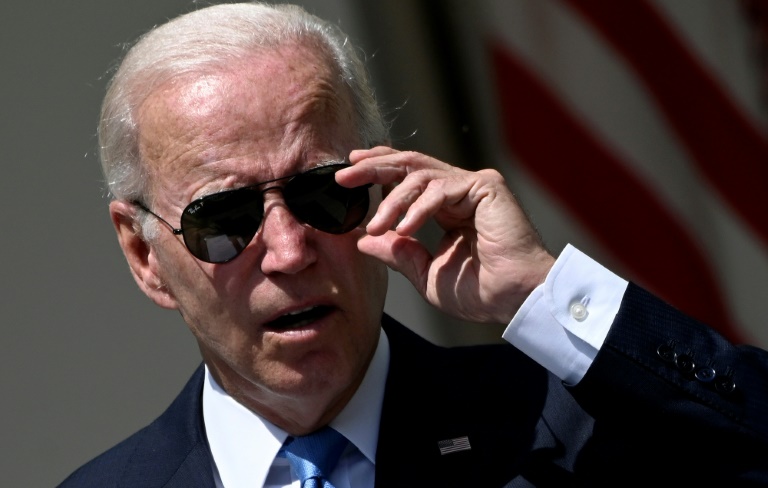
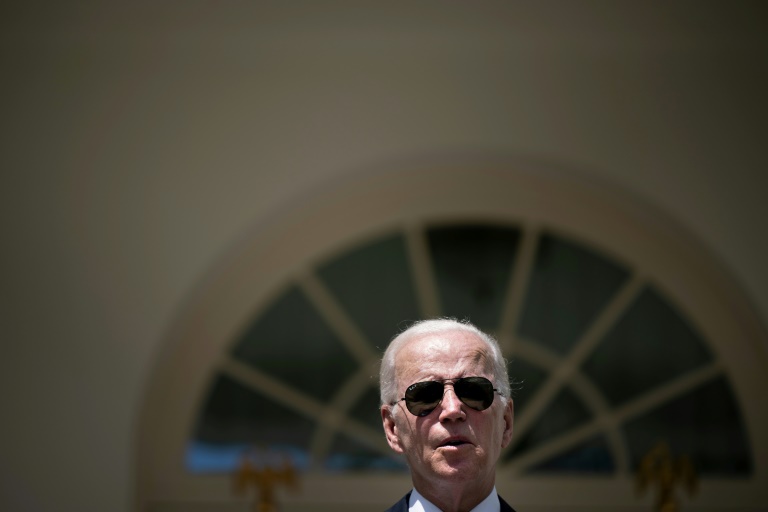
Biden insisted that the US economy is “on the right path” despite the slowdown, touting the strong labor market.

“That doesn’t sound like a recession to me,” he said in remarks at the White House.

But his critics are sure to seize on the report as proof of the veteran Democrat’s mismanagement.

After a 1.6 percent decline in the first three months of the year, the report said the slowdown in the latest quarter was largely due to drops in government spending at all levels, in private investment on goods including autos, and on residential buildings, despite an increase in exports.

But personal consumption expenditures (PCE) continued to increase, though at a slower rate than the prior quarter, the data showed.

The US economy also continues to battle sky-high inflation, as a result of supply chain snarls due to Covid-19 lockdowns, as well as the fallout from Russia’s war in Ukraine which has sent food and fuel prices soaring.

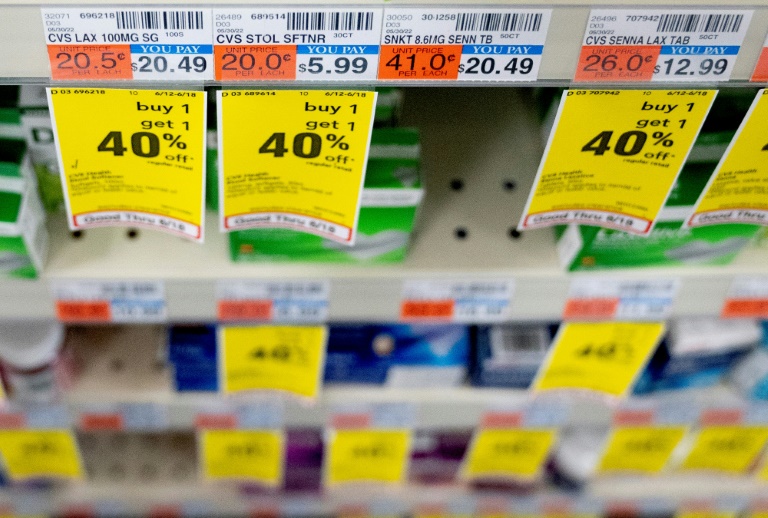
Consumer prices topped nine percent in June, the highest in more than four decades, while the GDP data showed another key inflation measure, the PCE price index, rose a still-high 7.1 percent in the latest three months, the same as in the January-March period.

The US central bank has been raising interest rates aggressively — with the latest big hike on Wednesday — to try to cool the economy and tamp down price pressures.

“It’s no surprise that the economy is slowing down as the Federal Reserve acts to bring down inflation,” Biden said in a statement shortly after the GDP report was released. 

“But even as we face historic global challenges, we are on the right path and we will come through this transition stronger and more secure,” he said.

– Recession debate –

It would be highly unusual for an economy still adding jobs at a rapid pace, and with near record-low unemployment, to fall into recession. Even so, many economists say the discussion of a downturn is more a matter of when, not if.

That poses a major political headache for the president, who has seen his approval ratings plummet in recent months as American families struggle to make ends meet due to surging inflation.

Fed Chair Jerome Powell agreed with Biden and other economists who say the GDP figures are inconsistent with other strong data.

Powell on Wednesday said he does not think the country is currently in a recession because “there are too many areas of the economy that are performing too well.”

Treasury Secretary Janet Yellen said Thursday there was a path to lower inflation without triggering an uptick in joblessness, though she acknowledged “numerous risks” to the economic outlook.

Mike Fratantoni, chief economist of the Mortgage Bankers Association, was among those who echoed Powell’s view, saying “the ongoing strength in the job market and other signs of growth make it unlikely that this will be categorized as a recession.”

Powell also said it is possible to cool price pressures without causing a downturn or a big jump in joblessness, although he acknowledged the path to thread that needle is narrowing.

But economist Mohamed El-Erian said on Twitter that the data point to “deepening stagflation and flashing red recession risk.”

That impression may be the one that sticks in the minds of investors and consumers.

Wall Street was initially not happy with the data, but stocks rebounded and were solidly higher at mid-afternoon.

Recession fears deepen as US economy contracts again

The US economy contracted for a second straight quarter between April and June, government data showed Thursday, adding fuel to recession fears in a headache for President Joe Biden ahead of midterm elections.

Gross domestic product declined at an annual rate of 0.9 percent in the second quarter, following a bigger drop in the first three months of the year, according to the Commerce Department.

While not the official definition, two quarters of negative growth is commonly viewed as a strong signal that a recession is underway, and a downturn in the world’s largest economy would have global consequences — as well as domestic political costs.

Biden insisted that the US economy is “on the right path” despite the slowdown, touting the strong labor market.

“That doesn’t sound like a recession to me,” he said in remarks at the White House.

But his critics are sure to seize on the report as proof of the veteran Democrat’s mismanagement.

After a 1.6 percent decline in the first three months of the year, the report said the slowdown in the latest quarter was largely due to drops in government spending at all levels, in private investment on goods including autos, and on residential buildings, despite an increase in exports.

But personal consumption expenditures (PCE) continued to increase, though at a slower rate than the prior quarter, the data showed.

The US economy also continues to battle sky-high inflation, as a result of supply chain snarls due to Covid-19 lockdowns, as well as the fallout from Russia’s war in Ukraine which has sent food and fuel prices soaring.

Consumer prices topped nine percent in June, the highest in more than four decades, while the GDP data showed another key inflation measure, the PCE price index, rose a still-high 7.1 percent in the latest three months, the same as in the January-March period.

The US central bank has been raising interest rates aggressively — with the latest big hike on Wednesday — to try to cool the economy and tamp down price pressures.

“It’s no surprise that the economy is slowing down as the Federal Reserve acts to bring down inflation,” Biden said in a statement shortly after the GDP report was released. 

“But even as we face historic global challenges, we are on the right path and we will come through this transition stronger and more secure,” he said.

– Recession debate –

It would be highly unusual for an economy still adding jobs at a rapid pace, and with near record-low unemployment, to fall into recession. Even so, many economists say the discussion of a downturn is more a matter of when, not if.

That poses a major political headache for the president, who has seen his approval ratings plummet in recent months as American families struggle to make ends meet due to surging inflation.

Fed Chair Jerome Powell agreed with Biden and other economists who say the GDP figures are inconsistent with other strong data.

Powell on Wednesday said he does not think the country is currently in a recession because “there are too many areas of the economy that are performing too well.”

Treasury Secretary Janet Yellen said Thursday there was a path to lower inflation without triggering an uptick in joblessness, though she acknowledged “numerous risks” to the economic outlook.

Mike Fratantoni, chief economist of the Mortgage Bankers Association, was among those who echoed Powell’s view, saying “the ongoing strength in the job market and other signs of growth make it unlikely that this will be categorized as a recession.”

Powell also said it is possible to cool price pressures without causing a downturn or a big jump in joblessness, although he acknowledged the path to thread that needle is narrowing.

But economist Mohamed El-Erian said on Twitter that the data point to “deepening stagflation and flashing red recession risk.”

That impression may be the one that sticks in the minds of investors and consumers.

Wall Street was initially not happy with the data, but stocks rebounded and were solidly higher at mid-afternoon.
Gorgosaurus sells for $6.1 mn at New York auction

The first skeleton of a Gorgosaurus dinosaur to go under the hammer sold for $6.1 million at auction in New York Thursday, Sotheby’s said.

The specimen is 10 feet tall (three meters) and 22 feet long, and had been expected to fetch between $5 million and $8 million.

“The result places the Gorgosaurus among the most valuable dinosaurs ever sold at auction, and establishes a new benchmark for a Gorgosaurus skeleton,” Sotheby’s said in a statement.

The Gorgosaurus roamed the earth approximately 77 million years ago. 

A typical adult weighed about two tonnes, slightly smaller than its more famous relative, the Tyrannosaurus rex.

Paleontologists say it was fiercer and faster than the T-Rex, with a stronger bite of around 42,000 newtons compared to 35,000.

The skeleton was discovered in the Judith River Formation near Havre, in the US state of Montana in 2018.

The sale marked the first time that Sotheby’s had auctioned a full dinosaur skeleton since it sold Sue the T-Rex in 1997 for $8.36 million.

“Today’s Gorgosaurus came to auction without a name, providing the buyer the exclusive opportunity to name the dinosaur,” Sotheby’s said.

Sotheby’s did not reveal the buyer.

Unlike other countries, the United States does not restrict the sale or export of fossils, meaning the skeleton could end up overseas.

Deal reached for generic drug to prevent HIV infection

A deal has been reached to allow for distribution of a low-cost generic version of a long-term preventative treatment against HIV in low-income countries where most of the world’s infections occur, Unitaid and the Medicines Patent Pool announced Thursday.

The deal will see ViiV Healthcare, a subsidiary of British pharmaceutical giant GSK, allow selected manufacturers to produce generic versions of Cabotegravir LA, its long-acting pre-exposure prophylaxis (PrEP) treatment for HIV.

The deal will provide access to the injectable version of cabotegravir, which has been shown to provide two months of protection against infection, in 90 countries where over 70 percent of all new HIV infections occurred in 2020, said Unitaid. 

“Access to an effective long-acting HIV prevention option could significantly contribute to the goal of ending HIV transmission and ending the epidemic by 2030,” said Unitaid spokesman Herve Verhoosel.

“Efforts to increase access to Cabotegravir LA for PrEP will be especially impactful for groups that experience particularly high rates of infection, such as men who have sex with men and sex workers,” he added.

Long-lasting cabotegravir injections only recently became available, and have been shown to be much more effective than an oral version that needed to be taken daily.

But the cost — the price of a year’s treatment cost $22,000 in the United States earlier this year — was an obstacle for widespread rollout in all but high-income countries.

– ‘Top global priority’ –

The World Health Organization released new guidelines about cabotegravir on Thursday, calling for countries to work towards making the drug swiftly available for those in need.

“We hope these new guidelines will help accelerate country efforts to start to plan and deliver CAB-LA alongside other HIV prevention options,” Meg Doherty, director of the WHO’s global HIV, hepatitis and sexually-transmitted infection programmes, said in a statement.

The news comes one day after a new report presented at the International AIDS Conference in Montreal, Canada, that found the global fight against HIV has stalled from shrinking resources due to Covid-19 and other crises.

Some 1.5 million new infections occurred last year –- more than a million over global targets of fighting the virus.

“Long-acting PrEP could play a major role in ending the HIV pandemic, but right now, very few people can get it,” said Adeeba Kamarulzaman, president of the International AIDS Society which convenes the conference.

“Scaling up affordable access to this game-changing prevention tool must be a top global priority,” she said in a statement.

Unitaid is a global health initiative which works on ensuring equitable access to medical innovations in low- and middle-income countries.

The Medicines Patent Pool, founded by Unitaid and UN-backed, works to licence needed medicines for generic distribution in low- and middle-income countries.

Deadly Russian strikes target military bases in central Ukraine

Russian strikes on military facilities and residential buildings across war-scarred Ukraine Thursday left several dead in attacks President Volodymyr Zelensky described as “missile terrorism”.

The deadliest attacks, which struck the central Kyrovograd region, came as the country was marking its first Day Of Ukraine Statehood that was announced by Zelensky earlier.

Russia’s invasion has morphed into a gruelling war of attrition and frontline artillery battles. Both sides are striking targets behind the frontlines to dent the others ability to fight a protracted conflict.

“Twenty-five people have been transferred to medical facilities and are receiving treatment. Five are dead,” the region’s governor Andriy Raikovich said in a video on his social media.

The Interfax-Ukraine news agency quoted Raikovich as saying that there were 12 servicemen among the wounded.

City officials said the attacks on the region’s administrative centre, Kropyvnytskyi, damaged “aviation equipment,” aircraft and nearby buildings, Interfax-Ukraine reported.

Kropyvnytskyi lies some 300 kilometres (186 miles) south of the capital Kyiv and three people, including one Ukrainian serviceman were killed in Russian strikes on railway and military infrastructure over the weekend.

Russian strikes reported earlier on Thursday meanwhile destroyed one building at a military base north of Kyiv.

Senior Ukrainian military official Oleksiy Gromov said the missiles that hit the town 30 kilometres (19 miles) north of Kyiv were fired from the Crimea peninsula, annexed by Russia in 2014.

– ‘Troubled morning’ –

At least one person was also killed and two more injured in a strike on the central Dnipro region, its governor Valentin Reznichenko said on social media.

“It’s a troubled morning. Again there is missile terror. We will not give up,” Ukraine’s President Volodymyr Zelensky said on social media.

Russia launched its full-scale invasion of Ukraine in February, displacing millions and killing thousands more. 

Moscow’s forces first tried and failed to wrest control of Kyiv and the country’s second-largest city of Kharkiv, and have since turned their attention to capturing the eastern Donbas region.

There, in the town of Toretsk, Russia launched deadly strikes on a five-story residential building.

“Rescue workers today found and removed the remains of two people — a man and a woman. In total two people died and three were rescued,” regional emergency services said.

They added separately that the toll from strikes on a hotel one day earlier in the Donbas town of Bakhmut under Ukrainian control had increased to four.

AFP journalists in the area reported Bakhmut and nearby Siversk had also been experiencing electricity cuts following strikes in the area.

While fighting since February has centred on the eastern Donbas region, Ukraine’s forces are also building momentum in their counter-offensive for the southern Kherson region.

In the neighbouring southern region of Mykolaiv — key for supplying efforts to recapture Kherson — one person was injured and a school building was destroyed following “extensive” shelling, governor Vitaliy Kim said.

Wall Street shrugs off US economy contracting

Wall Street stocks rose on Thursday despite data showing the US economy contracted for a second straight quarter as investors took it as a signal the Federal Reserve may slow interest rate hikes.

The increase follows a surge in Wall Street’s main stock indices on Wednesday, after investors welcomed comments by US Federal Reserve chief Jerome Powell suggesting its next super-sized increase could be its last.

The Fed hiked interest rates by three-quarters of a percentage point, its second hike in a row of that magnitude and the fourth increase this year.

“The reported basis for the positive response was a belief that the Fed Chair effectively lowered the temperature on the future pace of rate hikes,” said market analyst Patrick J. O’Hare at Briefing.com.

In late morning trading, the Dow and S&P 500 were both 0.6 higher. Meanwhile, the tech-heavy Nasdaq Composite — which jumped 4.1 percent on Wednesday, added 0.4 percent.

US gross domestic product (GDP) fell at an annual rate of 0.9 percent in the April-June quarter, following a 1.6 percent decline in the first quarter.

Two consecutive quarters of contraction in GDP is generally accepted as the technical definition of a recession.

Powell also said that future hikes will depend on economic data, and the markets took the GDP data as an indication that rate hikes will slow.

“Well, GDP was quite poor, so there won’t be a hattrick of 75 basis point hikes in September, that’s for sure,” said Fawad Razaqzada at City Index and FOREX.com.

“The US GDP data has re-affirmed my view that the Fed will have to slow down the pace of the hikes and potentially go in reverse in early 2023,” he added.

Meanwhile, a key inflation measure, the personal consumption expenditures price index, rose 7.1 percent in the latest three months, the same pace as in the first quarter, data showed.

The Fed and other central banks have been raising interest rates to rein in soaring inflation, but that risks slowing growth or even tipping the economy into recession.

Stephen Innes at SPI Asset Management said the market is “far too over-focused on the September 50 vs 75 debate, and not enough on the Fed’s underlying message.”

He said Fed policymakers have been clear they are “unequivocally prepared to allow a deeper economic slowdown and even a short-dipped recession if that is the price to be paid to get underlying inflation under control.”

European stock markets finished mostly higher.

Europe’s energy sector was in particular focus with Britain’s Shell and France’s TotalEnergies posting bumper second-quarter profits on elevated oil and gas prices. 

Asian indices mostly climbed following a surge on Wall Street, fuelled by hopes that the US central bank could slow its pace of inflation-fighting interest rate hikes.

The dollar bounced back against the euro and pound from a sell-off that came in response to Powell’s comments, but slumped to a month low against the yen. 

Oil prices pushed on data showing a big drop in US stockpiles, as well as the market expectations that the Fed will slow interest rate hikes.

– Key figures at around 1530 GMT –

New York – Dow: UP 0.6 percent at 32,377.88 points

EURO STOXX 50: UP 1.2 percent at 3,652.20

London – FTSE 100: DOWN less than 0.1 percent at 7,345.25 (close) 

Frankfurt – DAX: UP 0.9 percent at 13,282.11 (close)

Paris – CAC 40: UP 1.3 percent at 6,339.21 (close)

Tokyo – Nikkei 225: UP 0.4 percent at 27,815.48 (close)

Hong Kong – Hang Seng Index: DOWN 0.2 percent at 20,622.68 (close)

Shanghai – Composite: UP 0.2 percent at 3,282.58 (close)

Euro/dollar: DOWN at $1.0164 from $1.0200 Wednesday

Pound/dollar: DOWN at $1.2128 from $1.2158 

Euro/pound: DOWN at 83.80 pence from 83.89 pence

Dollar/yen: DOWN at 134.46 yen from 136.57 yen

Brent North Sea crude: UP 0.9 percent at $107.58 per barrel

West Texas Intermediate: UP 0.8 percent at $98.04 per barrel

burs-rl/har

Alabama to execute man despite objections of victim's family

A man convicted of murdering his ex-girlfriend is to be executed in the southern US state of Alabama on Thursday despite the objections of the victim’s family.

Joe Nathan James, 49, was sentenced to death in 1996 for the 1994 murder of 26-year-old Faith Hall.

James is scheduled to be executed by lethal injection at 7:00 pm Eastern time (2300 GMT).

He has petitioned the US Supreme Court to stay his execution “pursuant to the wishes of the surviving members of the family of the victim.”

“The victims and their families are paramount in our justice system, and deserve to be heard on the matter of the ultimate punishment of offenders,” James’ lawyer said in an appeal to the Supreme Court.

Hall’s daughters, who were six and three years old when their mother was murdered, have said they want his life to be spared.

“I don’t want it to go forward. We’re not God,” Terryln Hall told CBS 42.

“An eye for an eye has never been a good outlook for life,” added her sister, Toni Hall.

James was convicted of shooting Faith Hall to death after she broke off their short relationship.

If his execution goes ahead, James would be the eighth person executed in the United States this year.

Biden is suddenly winning (just don't say the 'R' word)

Overcoming Covid and outfoxing the Republicans: Joe Biden’s having an unusually good week — and he won’t let Thursday’s recession talk spoil his mood.

When the 79-year-old tested positive for the coronavirus last week, it seemed nature had decided to pile in on his already daunting list of manmade woes: highest inflation in four decades, lowest polls of his presidency, and a tiny Democratic congressional majority apparently unable to get anything done.

Fast forward to Wednesday and Biden, declared Covid free by his doctor, emerged from the White House residence to cheers from staff in the Rose Garden.

The sun was shining — literally and politically.

“Now I get to go back to the Oval Office,” he said to applause, sounding as if he were opening a birthday present.

There were reasons for the spring in Biden’s step well beyond the beneficial effects of the five-day course of the therapeutic Paxlovid that helped him through Covid.

The Senate, where Democrats and Republicans are split 50-50 and almost never cooperate, chose Wednesday to pass a bill pouring $52 billion into domestic manufacturing of semiconductors — the high-tech widgets at the heart of almost every piece of modern equipment. Republicans were on board.

If approved by the House, the decision to throw federal weight behind private homegrown production will create thousands of high-skilled jobs and, crucially, begin addressing dangerous US overreliance on foreign companies.

For Biden the bill fits neatly into one of his core priorities, restoring the kind of government-backed research and development that he says will decide whether the United States can keep up with China.

Then a few hours later, with Biden still in the Oval Office, came startling news of another potential Senate win.

This time it wasn’t warring Republicans who had been brought around but the ever-unpredictable Senator Joe Manchin — a conservative Democrat from tiny West Virginia whose one vote in a 50-50 Senate gives him veto power over just about everything.

For 18 months, Manchin has played with Biden’s nerves, haggling on every item. When it came to the president’s signature Build Back Better bill, a behemoth of social and climate-related spending, the West Virginian negotiated seemingly forever before finally refusing to go along and leaving Biden defeated.

So it was a surprise Wednesday when Manchin announced he supports a smaller, yet still impressive bill set to allocate $369 billion for clean energy and climate initiatives and $64 billion for state-funded healthcare.

Biden thanked Manchin for his “extraordinary effort.”

– Recession, what recession? –

Not only did Manchin finally come good, but he cannily announced his move only after Republicans had been lured into voting for the semiconductors bill — something some of them say they would never have done if they knew the Democrats were about to spring the second, bigger spending package.

Democrats are suddenly on a roll and Biden, even with approval ratings stuck below 40 percent, feels his constant optimism will be proved right.

As data came out showing the US economy shrinking for a second successive quarter, his staff worked overtime to get the ‘R’ word out of the conversation.

“The way that we see is that we are not currently in a recession or a pre-recession,” Press Secretary Karine Jean-Pierre said.

Biden, for sure, was not apologizing: “We are on the right path,”  he said as the news came out.

Biden, Xi hold talks on Taiwan, trade dispute

President Joe Biden and Chinese counterpart Xi Jinping spoke by phone for well over two hours on Thursday on mounting tensions over Taiwan, a festering trade dispute and their bid to keep the superpower rivalry in check.

The White House said that the call lasted two hours and 17 minutes. A statement was expected later.

While this was Biden’s fifth talk with Xi since becoming president a year and a half ago, it’s getting hard to mask deepening mistrust between the two countries.

Already stuck in a trade war, Beijing and Washington increasingly risk open conflict over Taiwan, with little sign of resolution on either front.

“Tensions over China’s aggressive, coercive behavior in the Indo-Pacific” will be high on the agenda, said White House National Security Council spokesman John Kirby.

The latest flashpoint is a possible trip by Biden ally and speaker of the House of Representatives, Nancy Pelosi, to the island, which Beijing claims is part of China but has its own distinct, democratic government.

Although US officials frequently visit Taiwan, separated by a narrow strip of water from the Chinese mainland, Beijing considers a Pelosi trip as a major provocation. She’s second in line to the US presidency and given her position may travel with military transport.

Washington will “bear the consequences” if the trip, which Pelosi has yet to confirm, goes ahead, China warned Wednesday.

General Mark Milley, chairman of the US joint chiefs of staff, told reporters that if Pelosi asks “for military support, we will do what is necessary to ensure a safe, safe conduct of their business.”

And the dispute around Pelosi is the tip of an iceberg, with US officials fearing that Xi is mulling use of force to impose control over democratic Taiwan.

Once considered unlikely, an invasion, or lesser form of military action, is increasingly seen by China watchers as possible — perhaps even timed to boost Xi’s prestige when he moves later this year into a third term.

Biden’s contradictory comments on whether the United States would defend Taiwan — he said in May that it would, before the White House insisted there was no change in the hands-off “strategic ambiguity” policy — have not helped the tension.

– No face-to-face –

Biden prides himself on a close relationship with Xi going back years but — in large part due to Covid travel restrictions — the two have yet to meet face-to-face since he took office.

According to the White House, Biden’s chief goal is to establish “guardrails” for the two superpowers.

This is meant to ensure that while they sharply disagree on democracy, and are increasingly rivals on the geopolitical stage, they can avoid open conflict.

“He wants to make sure that the lines of communication with President Xi on all the issues, whether they’re issues again that we agree on or issues where we have significant difficulty with — that they can still pick up the phone and talk to one another candidly,” Kirby said.

Where to place the guardrails, however, is challenging amid so many unresolved disputes, including a simmering trade war begun under Donald Trump’s presidency.

Asked whether Biden could lift some of the 25 percent import duties placed on billions of dollars of Chinese products by Trump, Kirby said there was still no decision.

“We do believe… that the tariffs that were put in place by his predecessor were poorly designed. We believe that they’ve increased costs for American families and small businesses, as well as ranchers. And that’s, you know, without actually addressing some of China’s harmful trade practices,” Kirby said.

But “I don’t have any decision to speak to with respect to tariffs by the president. He’s working this out.”

Recession fears deepen as US economy contracts again

The US economy contracted for a second straight quarter between April and June, government data showed Thursday, adding fuel to recession fears in a headache for President Joe Biden ahead of midterm elections.

Gross domestic product declined at an annual rate of 0.9 percent in the second quarter, following a bigger drop in the first three months of the year, according to the Commerce Department.

While not the official definition, two quarters of negative growth is commonly viewed as a strong signal that a recession is underway, and a downturn in the world’s largest economy would have global consequences, as well as domestic political costs.

Biden insisted that the US economy is “on the right path,” despite the slowdown, but his critics are sure to seize on the report as proof of the veteran Democrat’s mismanagement.

After a 1.6 percent decline in the first three months of the year, the report said the slowdown in the latest quarter was largely due to drops in government spending at all levels and in private investment on goods, including autos, and on residential buildings, despite an increase in exports.

But personal consumption expenditures (PCE) continued to increase, though at a slower rate than the prior quarter, the data showed.

The US economy also continues to battle sky-high inflation, as a result of supply chain snarls due to Covid lockdowns, as well as the fallout from Russia’s war in Ukraine which has sent food and fuel prices soaring.

Consumer prices topped nine percent in June, the highest in more than four decades, while the GDP data showed another key inflation measure, the PCE price index, rose a still-high 7.1 percent in the latest three months, the same as in the January-March period.

The US central bank has been raising interest rates aggressively — with the latest big hike on Wednesday — to try to cool the economy and tamp down price pressures.

“It’s no surprise that the economy is slowing down as the Federal Reserve acts to bring down inflation,” Biden said in a statement shortly after the GDP report was released. 

“But even as we face historic global challenges, we are on the right path and we will come through this transition stronger and more secure,” he said, noting the US “job market remains historically strong” and the economy created more than a million jobs in the past three months.

– Recession debate –

It would be highly unusual for an economy still adding jobs at a rapid pace and with near record-low unemployment, to fall into recession, but even so many economists say the discussion of a downturn is more a matter of when, not if.

That poses a major political headache for the president, who has seen his approval ratings plummet in recent months as American families struggle to make ends meet due to surging inflation.

Fed Chair Jerome Powell agreed with Biden and other economists who say the GDP figures are inconsistent with other strong data.

Powell on Wednesday said he does not think the country is currently in a recession because “there are too many areas of the economy that are performing too well.”

Mike Fratantoni, chief economist of the Mortgage Bankers Association, was among those who echoed Powell’s view, saying “the ongoing strength in the job market and other signs of growth make it unlikely that this will be categorized as a recession.”

Powell also said it is possible to cool price pressures without causing a downturn or a big jump in joblessness, although he acknowledged the path to thread that needle is narrowing.

But economist Mohamed El-Erian said on Twitter that the data point to “Deepening stagflation and flashing red recession risk.”

That impression may be the one that sticks in the minds of investors and consumers.

Wall Street was not happy with the data. After big jumps in the wake of the Fed rate hike, all three major stock indices were lower in mid-morning trading.

Close Bitnami banner
Bitnami