US Business

In energy-starved South Africa, whites-only town basks in solar power

Most of South Africa is wallowing in endless power cuts, but a remote whites-only farming town in the country’s sun-drenched centre is close to producing enough electricity to be self-sufficient.

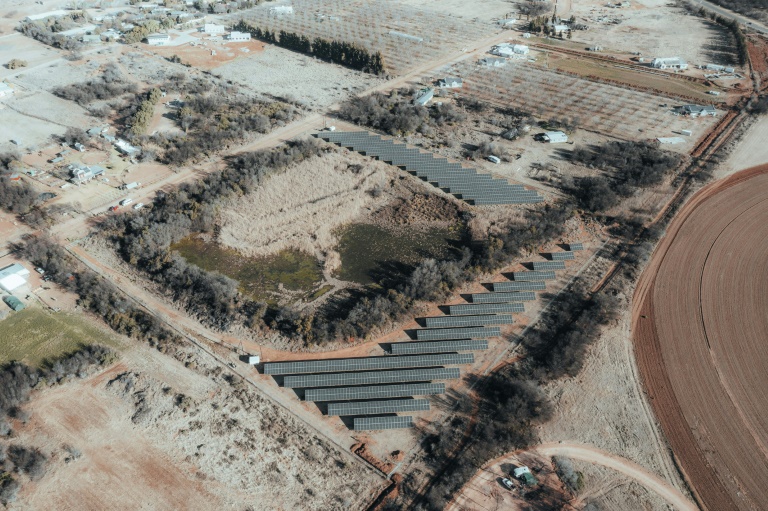
At the end of a gravel track outside the Afrikaner town of Orania, a diamond mesh gate opens onto hundreds of photovoltaic panels mounted in rows.

In energy-starved South Africa, the small settlement of 2,500 people is the only town nationwide close to reaching energy supply autonomy and freeing itself from the failing national power grid.

“The solar farm is quite a huge game changer for us. It brings energy sustainability to the town,” said Gawie Snyman, 43, who manages the municipality.

“Our big dream is to become an energy exporter”.

Africa’s most developed economy has in recent years been plagued by epileptic power supply, which many blame on the ageing coal-fired plants operated by the state-owned energy giant Eskom.

After weeks of some of the worst blackouts in recent years, President Cyril Ramaphosa on Monday announced energy reforms, urging South Africans to “join in a massive rollout of rooftop solar” and sell excess to the grid.

Orania, a town some 620 kilometres (380 miles) southwest of Johannesburg, was already well on its way to becoming totally energy independent in just several years’ time.

– Solar independence –

Built on privately acquired land along the Orange River during the dying days of apartheid, Orania manages its affairs autonomously from the central government.

It was set up to preserve the “culture” of the Afrikaners — descendants of the Dutch and French-Huguenot Protestant settlers who came to South Africa in the 17th century.

Town spokesman Joost Strydom, 28, said the town in the Karoo region now aimed to make the best of year-round sunshine in order to enjoy “total electricity independence”.

With funding from the municipality and private investors, Orania started building its 10.5-million-rand ($620,000) solar farm in June last year. 

Just 12 months later, the town was generating 841 KW of electricity per hour — almost enough to power half the town and surrounding farms growing corn, wheat and nuts, local authorities say.

“It was the basic idea of self-sufficiency that drove us towards doing this,” said Francois Joubert, the engineer who designed what has become known as the “Orasol” plant.

Standing next to a row of solar panels, the 69-year-old in a grey flat cap said Eskom had “failed dismally” to provide the town with the necessary power.

“You can’t rely on anybody to supply you with basic ingredients to live here in the Karoo,” he said. 

“We had to do that ourselves, we had to work it out… And it’s working for us.”

– Thirsty pecans –

A few kilometres from the solar plant, at the De Groot Boord farm, Joubert’s wife Annatjie watched as a mechanical tree shaker released pecan nuts onto a red net during early morning harvesting.

The 66-year-old former IT specialist turned farmer said a stable power supply was crucial for her orchard to flourish.

When Eskom rations electricity to prevent the grid from collapsing, her trees go thirsty as she can’t pump water from the river, she explained.

Yet “it’s vital to complete your irrigation cycles especially with pecans nuts because they use a lot of water,” she said.

The new solar plant would allow her to do just that, she added.

As the world grapples with a food crisis sparked by Russia’s invasion of Ukraine, her husband said countries could ill afford more challenges to domestic food production.

“We need to produce as much as possible of our own food, and therefore we need water… we need electricity,” Joubert said.

The town was proud to be playing its part through producing clean energy, said the engineer.

“We are very glad that we can assist the green idea,” he said.
US rapper JayDaYoungan shot dead: police

US rapper JayDaYoungan, known for his hit song “23 Island,” was shot dead in Louisiana on Wednesday evening, police said.

The musician, who had recently posted photos on Instagram showing him playing with his young son, died in his hometown of Bogalusa, local police said in a statement.

“Javorius Scott has died as a result of his injuries” after the shooting, which took place just before 6:00 pm (23:00 GMT), police said, also identifying Scott by his rap alias JayDaYoungan.

A “close family member” who was also shot is in stable condition in hospital, the statement added.

Media reports identified the other victim as the 24-year-old rapper’s father.

“Detectives are currently conducting interviews and working leads. Further information will follow as it becomes available,” the Bogalusa police department said.

“23 Island” was released three years ago and has 173 million views on YouTube, with another 121 million streams on Spotify.

Shell profit rockets on high oil prices

British energy giant Shell said Thursday that its net profit soared more than five-fold to $18 billion in the second quarter, fuelled by resurgent oil and gas prices, and rewarded shareholders with another bumper buyback.

The surge in profits in the three months to June was partially attributable to a reversal of $4.3 billion in impairments after the company raised its forecasts for the gas and oil market.

“We delivered strong financial results,” said chief executive Ben van Beurden alongside the results statement.

The London-listed energy major announced a $6-billion share buyback programme, having already returned $8.5 billion to shareholders.

Van Beurden warned also that “with volatile energy markets, economic turbulence and the ongoing need for action to tackle climate change, 2022 continues to present challenges to consumers, to government, and to companies”.

Shell had rebounded into a $3.4-billion profit in second quarter of 2021 from a $18.1-billion loss in the same period of 2020 when it took a massive impairment charge on the Covid-ravaged oil market.

However, oil and gas prices have soared this year owing to the Ukraine war and after countries lifted pandemic lockdowns.

Gas prices, which sky-rocketed in March after Russia launched its invasion of Ukraine, are soaring once more this week after Moscow curbed crucial deliveries to Europe in recent days.

The world’s energy majors are reaping the benefits of this year’s surge in global oil and gas prices as a result of the war in Ukraine.

France’s TotalEnergies said Thursday that net profit more than doubled in the second quarter to 5.7 billion euros ($5.8 billion) from a year earlier.

“The energy sector continues to ride high on the supply and demand imbalance caused by the crisis in Ukraine,” said Laura Hoy, equity analyst at Hargreaves Lansdown.

The Ukraine war has meanwhile sparked an exodus of Western energy companies from Russia.

Earlier this year, Shell logged a first-quarter profit of $7.1 billion, despite taking a $3.9-billion charge on its withdrawal from Russian activities.

China lockdown, chip shortage hit Nissan profits

Japanese car giant Nissan said on Thursday that net profit sank nearly 60 percent in the three months to June as pressures including a lockdown in Shanghai and chip shortages weighed on business.

The firm, which in May reported a positive full-year net profit for the first time in three years, said it logged a net profit of 47.1 billion yen ($347 million), down 58.9 percent on-year. 

The slump was also the result of a one-time boost in the first quarter of last financial year when Nissan unloaded Daimler sales.

But the firm said it was facing a range of headwinds.

“During the first quarter, the extremely challenging business environment put pressure on earnings,” Nissan said in a statement.

“Production was constrained by the Shanghai lockdown caused by spread of the new coronavirus, and semiconductor supply shortages, while external factors such as soaring raw material prices and logistics costs also intensified their impact.”

“The pandemic understandably remains a priority challenge,” chief operating officer Ashwani Gupta told reporters.

“At the same time, we experienced tailwinds with favourable foreign exchange rates,” he added, referring to the yen’s recent slump against the dollar, which helps inflate overseas profits for Japanese firms.

The firm left its full-year forecast unchanged, projecting a net profit of 150 billion yen.

That would be a 30.4 percent slump, however, from the previous year’s 215.5 billion yen.

Operating profit was down 14.2 percent to 64.9 billion yen, but that beat analyst estimates, according to Bloomberg.

– Ghosn saga –

The firm was on a rollercoaster even before the disruption caused by the pandemic and the conflict in Ukraine.

It had been struggling with increasing sales costs, and is currently implementing a plan involving slashing models, cutting costs and restructuring operations.

“Nissan is making progress after an excessive expansion policy in North America in the past that was a factor causing it to lose money,” said Satoru Takada, auto analyst at TIW, a Tokyo-based research and consulting firm.

“Profits declined year-on-year relative to the robust rebound in last year’s April-June quarter, when there was a recovery from the pandemic’s impact and cost-cutting efforts,” Takada told AFP ahead of the earnings report.

“Nissan’s challenge is how to minimise the impact of the chip shortage and sell attractive new cars, including those recently released,” he said.

Gupta said the firm was looking to “invest in building greater resilience” as it battles the effects of obstacles such as China’s lockdowns.

He said its suppliers and dealerships had reopened, and “showroom traffic is recovering”.

On chips, he said Nissan was looking to develop alternatives as well as to replace custom-made semiconductors with general-purpose versions.

And he added that the automaker was attempting to cut its use of precious metals in response to the rising cost of raw materials.

“As always, we move forward with cautious optimism while challenging ourselves to maintain (the) four million sales outlook for the fiscal year,” he said.

Nissan has also been buffeted by the saga surrounding its former chief Carlos Ghosn.

The one-time auto tycoon was detained in Japan in 2018, accused of financial misconduct charges that he denies, but jumped bail and fled to Lebanon the following year.

A Tokyo court in March handed a six-month suspended sentence to former Nissan executive Greg Kelly over allegations that he helped his boss attempt to conceal income.  

The company had pleaded guilty in a separate case, and was ordered to pay a fine of 200 million yen.

In April, French authorities issued an international arrest warrant for Ghosn, who has lived in Lebanon since his daring getaway from Japan, on allegations including corruption, misuse of company assets and money laundering. 

US Senate passes bill to boost domestic chip manufacturing

The US Senate passed a bill on Wednesday to boost domestic production of semiconductors, the in-demand microchips that power everything from smartphones to cars to weapons.

Global semiconductor supplies were disrupted by fallout from Covid-19 shutdowns, sparking widespread shortages of the chips — many of which are made in Asia.

The legislation, which now goes back to the House of Representatives for final passage, provides $52 billion to increase domestic semiconductor production and more than $100 billion over five years for research and development.

The CHIPS Act was passed in the Senate by a rare bipartisan vote of 64 to 33, with 17 Republicans joining hands with Democrats.

President Joe Biden welcomed Senate passage of the legislation that he said will “accelerate the manufacturing of semiconductors in America, lowering prices on everything from cars to dishwashers.”

Global chip shortages notably slowed production of new automobiles last year, causing prices to increase.

“It will mean more resilient American supply chains, so we are never so reliant on foreign countries for the critical technologies that we need for American consumers and national security,” Biden said in a statement.

But Beijing hit out at the details, with foreign ministry spokesman Zhao Lijian saying that while the act “claims to be aimed at improving the competitiveness of US technology and chips, (it) contains provisions that restrict normal scientific and technological cooperation between China and the United States.”

“China is firmly opposed to this,” Zhao told reporters at a regular briefing on Thursday.

The version of the CHIPS Act passed Wednesday provides $39 billion to finance semiconductor manufacturing plants in the United States and another $13 billion for research.

Senate passage of the bill came a day after the South Korean group SK announced a huge investment in US semiconductors and other cutting edge industries.

The conglomerate said in a statement it plans to “increase its new investment in the United States by $22 billion in areas including semiconductors, green energy, and bioscience, creating tens of thousands of new high-tech, high-paying American jobs.”

US Senate passes bill to boost domestic chip manufacturing

The US Senate passed a bill on Wednesday to boost domestic production of semiconductors, the in-demand microchips that power everything from smartphones to cars to weapons.

Global semiconductor supplies were disrupted by fallout from Covid-19 shutdowns, sparking widespread shortages of the chips — many of which are made in Asia.

The legislation, which now goes back to the House of Representatives for final passage, provides $52 billion to increase domestic semiconductor production and more than $100 billion over five years for research and development.

The CHIPS Act was passed in the Senate by a rare bipartisan vote of 64 to 33, with 17 Republicans joining hands with Democrats.

President Joe Biden welcomed Senate passage of the legislation that he said will “accelerate the manufacturing of semiconductors in America, lowering prices on everything from cars to dishwashers.”

Global chip shortages notably slowed production of new automobiles last year, causing prices to increase.

“It will mean more resilient American supply chains, so we are never so reliant on foreign countries for the critical technologies that we need for American consumers and national security,” Biden said in a statement.

But Beijing hit out at the details, with foreign ministry spokesman Zhao Lijian saying that while the act “claims to be aimed at improving the competitiveness of US technology and chips, (it) contains provisions that restrict normal scientific and technological cooperation between China and the United States.”

“China is firmly opposed to this,” Zhao told reporters at a regular briefing on Thursday.

The version of the CHIPS Act passed Wednesday provides $39 billion to finance semiconductor manufacturing plants in the United States and another $13 billion for research.

Senate passage of the bill came a day after the South Korean group SK announced a huge investment in US semiconductors and other cutting edge industries.

The conglomerate said in a statement it plans to “increase its new investment in the United States by $22 billion in areas including semiconductors, green energy, and bioscience, creating tens of thousands of new high-tech, high-paying American jobs.”

Asia, Europe track post-Fed surge on Wall St but caution urged

Asian and European markets rose Thursday following a surge on Wall Street fuelled by hopes that the Federal Reserve could slow its pace of inflation-fighting interest rate hikes.

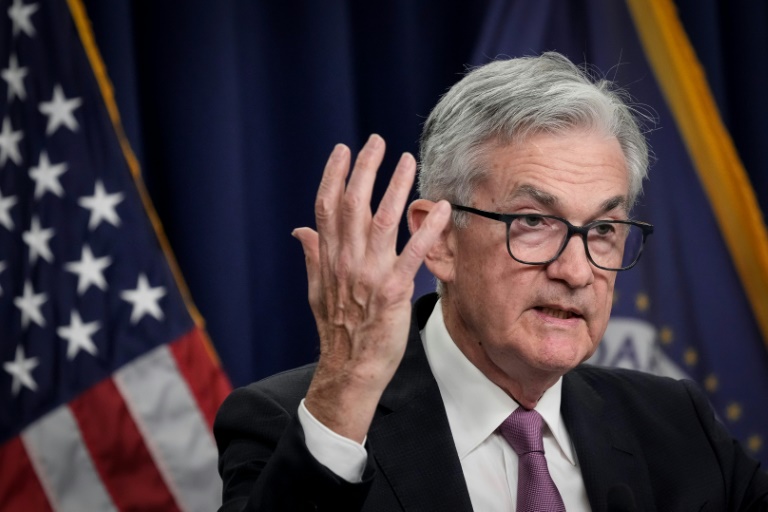
The dollar also struggled to bounce back from a sell-off — sitting at a three-week low against the yen — that came in response to comments by Fed chief Jerome Powell suggesting its next super-sized increase could be its last.

However, analysts cautioned that the initial joy, which sent New York’s three main indexes soaring, could be short-lived as the global economy continued to face several headwinds and inflation would likely not come down quickly.

As expected, the Fed lifted borrowing costs 75 basis points to a range of 2.25 to 2.5 percent, close to the neutral level it considers neither stimulating nor slowing economic growth.

Forecasts have rates going as high as 3.8 percent in 2023, as the bank tries to control runaway inflation.

There is a growing concern that the sharp rise in rates is bearing down on the world’s top economy and could send it into recession.

In his post-meeting comments, however, Powell said he did not consider that was the case, because “there are too many areas of the economy that are performing too well”. 

He did note that growth was slowing.

Powell added that officials would not give any guidance on their next move, instead taking each decision on a meeting-to-meeting basis. 

While he said another “unusually large increase could be appropriate” in September and officials “wouldn’t hesitate” to lift by one percentage point, markets took heart from the suggestion that the bank was ready to take its foot off the gas towards the end of the year.

On Wall Street, the Dow and S&P rallied and the Nasdaq soared more than four percent — its best one-day rise since late 2020 — as tech firms caught a wave of optimism. The sector is more susceptible to higher rates.

And Asia followed suit, though with more muted gains.

Shanghai, Tokyo, Sydney, Seoul, Singapore, Mumbai, Manila, Jakarta and Wellington were also well in the green.

But Hong Kong dipped as the city’s de facto central bank followed the Fed in lifting rates owing to its currency peg.

London, Paris and Frankfurt were up in the morning.

The prospect of a slower pace of rate hikes weighed on the dollar against most other currencies, and on Thursday it hit its lowest level against the yen since July 6.

There was a warning that the positive mood likely will not last, however.

“This market move is the victory of hope over experience,” Jeffrey Rosenberg, at BlackRock Inc, told Bloomberg Television. “I’d be a little bit cautious here.”

And Citigroup’s Andrew Hollenhorst and Veronica Clark added that traders appeared to be misjudging Powell’s remarks.

“We read Chair Powell’s press conference as more hawkish than the market’s interpretation,” they said, adding that inflation readings excluding food and energy will “push the Fed to hike more aggressively than they or markets anticipate”.

All eyes are now on the release of second-quarter growth data later Thursday. After a 1.6 percent contraction in the previous three months, another negative reading would put the economy into a technical recession.

An expected phone call between US President Joe Biden and his Chinese counterpart Xi Jinping will also be high on the agenda for investors as the world’s superpowers try to navigate a period of rising tensions. Updates on US tariffs and Taiwan will be among the main areas of focus.

Oil prices rose after data showed a big drop in US stockpiles, while Powell’s comments on the economy eased recession concerns and the weaker dollar made the commodity cheaper for buyers with other currencies.

– Key figures at around 0810 GMT –

Tokyo – Nikkei 225: UP 0.4 percent at 27,815.48 (close)

Hong Kong – Hang Seng Index: DOWN 0.2 percent at 20,622.68 (close)

Shanghai – Composite: UP 0.2 percent at 3,282.58 (close)

London – FTSE 100: UP 0.1 percent at 7,353.01

Euro/dollar: DOWN at $1.0200 from $1.0201 late Wednesday

Pound/dollar: UP at $1.2185 from $1.2151 

Euro/pound: DOWN at 83.71 pence from 83.85 pence

Dollar/yen: DOWN at 135.60 yen from 136.51 yen

West Texas Intermediate: UP 1.3 percent at $98.48 per barrel

Brent North Sea crude: UP 0.9 percent at $107.57 per barrel

New York – Dow: UP 1.4 percent at 32,197.59 (close)

'Thrones' prequel 'House of the Dragon' holds world premiere

“House of the Dragon” creators and stars were eager to leave behind the difficult final season of “Game of Thrones” as they launched its prequel at a glittering world premiere in Los Angeles on Wednesday.

The original “Thrones,” with its unique blend of fantasy, violence, medieval politics and dragons, became a global phenomenon that hooked audiences and swept television awards, but its finale was panned by fans and critics.

“It’s a real shame that they were so disappointed — but it has been four years, and this is a different story,” said Miguel Sapochnik, the director of several much-loved “Thrones” episodes, who returned for the prequel.

“So now they get the chance to have a different experience. I hope they will,” he told AFP on the premiere’s red carpet.

Reviews and plot details of the first episode of “House of the Dragon,” out August 21, are under embargo, but its screening drew a glowing reception at the recently opened Academy Museum in Los Angeles. 

Set years earlier in the same universe of George R.R. Martin’s fantasy books, “House of the Dragon” depicts the glory days of the ancestors of popular “Thrones” characters, such as Daenerys Targaryen.

“Whereas the original ‘Game of Thrones’ was about multiple different families that are spread over multiple continents, ours is a much more intimate story,” said Sapochnik.

“It’s really about the dissolution of one family. So in a way, it wasn’t hard for it to be different.”

Ryan Condal, who serves as the new series’ showrunner along with Sapochnik, told AFP that it had been “very difficult” to end the original “Thrones” but that its prequel is “a totally new deal, it’s 170 years in the past.”

“I think there was a grieving process for the fans,” he said. “They had spent 10 years with these characters, they’d grown up with them.”

Condal said he believed there was still “a really strong underlying fan base” for the new series.

In “House of the Dragon,” Paddy Considine plays the kindly King Viserys, while Matt Smith is cast as his ambitious brother Prince Daemon.

Milly Alcock and Emma D’Arcy play younger and older versions of the king’s only child Princess Rhaenyra, with the show’s timeline spanning at least a decade.

Olivia Cooke, who plays a key role as Rhaenyra’s best friend Alicent Hightower, said it was “scary” to dwell on how the original series’ ending had been received, or could impact its successor.

“It’s hard to please everyone,” she said.

“I haven’t really thought about that at all… I’m super proud of this.”

US GDP data due with all eyes on possible recession

The United States is set to release key data on economic growth Thursday and global investors are watching closely as the world’s largest economy flirts with recession — while President Joe Biden walks a political tightrope.

Though Biden says he is confident the US economy is not suffering a downturn, a report showing a second consecutive quarter of negative growth — meeting one of the common definitions of a recession — would increase fears of a wider downturn.

Biden’s critics would seize on such a report as proof of the veteran Democrat’s mismanagement of the economy.

With crucial midterm elections just over three months away, the stakes could not be higher, and the Biden administration has spent the past week talking up the positive signs in the US economy, including job growth and solid consumer spending.

It would be highly unusual for an economy still adding jobs at a rapid pace, and with near record-low unemployment, to fall into recession.

The consensus forecast among analysts is for an annualized 0.5 percent increase in the gross domestic product in the second quarter, after a 1.6 percent decline in the first three months of the year.

But many economists say recent figures suggest GDP may have contracted in the April-June period.

With the labor market showing some signs of cooling and supersized interest rate hikes by the Federal Reserve slowing the economy — the latest coming on Wednesday — many economists say the recession discussion is more a matter of when, not if.

And that poses a major political headache for the president, who has seen his approval ratings plummet in recent months as American families struggle to make ends meet due to surging inflation.

– Way out? –

In recent days, Biden has led his administration in a chorus of denial.

“We’re not going to be in a recession, in my view,” he insisted Monday.

Treasury Secretary Janet Yellen argued that while growth is slowing, the data does not necessarily point to an extended downturn.

“I’m not saying that we will definitely avoid a recession, but I think there is a path that keeps the labor market strong and brings inflation down,” she said.

Fed Chair Jerome Powell agreed, saying even with ongoing interest rate hikes to slow the economy, it is possible to cool price price pressures without causing a downturn or a big jump in joblessness.

The central bank announced another big interest rate hike of 75 basis points on Wednesday, the fourth increase this year, and stressed it would not hesitate to go for “another unusually large increase” if needed — or an even bigger one.

Powell said the overriding aim was to get sky-high inflation moving back down toward two percent, but the Fed wants to strike a balance.

“We’re trying to do just the right amount. We’re not trying to have a recession and we don’t think we have to,” he told reporters.

Nevertheless, the International Monetary Fund downgraded its growth forecast for the United States earlier this week — and said a recession may already have begun.

IMF chief economist Pierre-Olivier Gourinchas said the path to avoiding a downturn was “very narrow” and warned that even a “small shock” could tip the economy into the abyss.

Indebted Evergrande looks to sell Hong Kong headquarters again

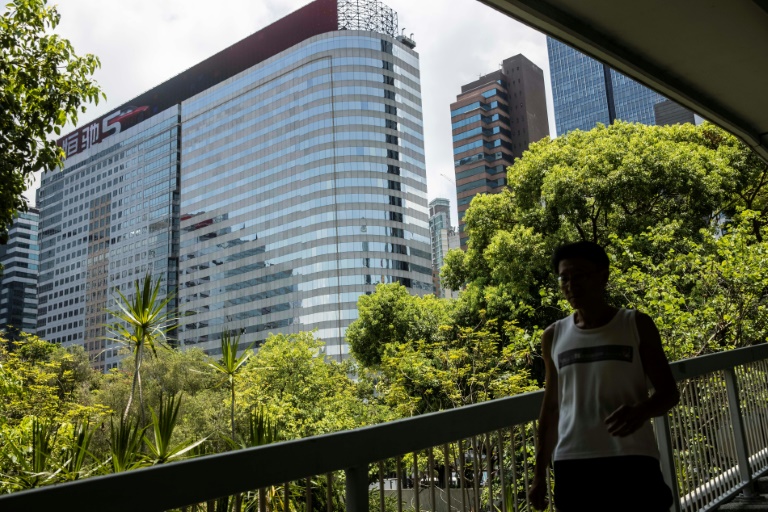
Troubled Chinese property developer Evergrande has found a potential buyer for its Hong Kong headquarters, reports said Thursday, days before an expected announcement of the firm’s long-awaited restructuring plans. 

CK Asset Holdings, founded by Hong Kong billionaire Li Ka-shing, said it had submitted a tender for the 26-storey building, which is currently valued at HK$9 billion ($1.1 billion) according to Hong Kong media. 

Evergrande has been involved in restructuring negotiations after racking up $300 billion in liabilities, as Beijing continues its wide-ranging crackdown on excessive debt and rampant consumer speculation in the real estate sector.

The group previously said it was on track to deliver a preliminary restructuring plan by the end of July.

In 2015, when it acquired the headquarters for $1.61 billion, the deal set a record for the single largest transaction for an office building in Hong Kong, as well as the price per square foot, according to the South China Morning Post.

Last October, the building was offered to Chinese state-owned developer Yuexiu for $1.7 billion, but the buyer pulled out over concerns about Evergrande’s unresolved indebtedness.

Once a leading light in China’s real estate sector, Evergrande has in recent months scrambled to offload assets, with chairman Hui Ka Yan paying off some of its debts using his personal wealth. 

In a further sign of turmoil, Evergrande last week ousted its CEO and CFO after an internal investigation into why banks seized over $2 billion from the firm’s property services arm.

Evergrande’s woes have had knock-on effects throughout China’s property sector, with some smaller companies also defaulting on loans and others struggling to find enough cash. 

China’s real estate firms, long heavily dependent on loans to finance their massive developments, have found themselves in trouble as a push by Beijing to reign in debt has cut cash flows.

Analysts have said that if the property crisis spreads to China’s financial system, the shock would be felt far beyond its borders.

But on Thursday, Hong Kong Financial Secretary Paul Chan said the difficulties of Chinese developers would have a “very limited” impact on the financial hub’s banking stability. 

“We have been monitoring this situation very carefully, and we do not find cause for alarm,” Chan said.

Evergrande did not immediately reply to AFP’s request for comment.

Close Bitnami banner
Bitnami