US Business

Bot battle: The tech that could decide Twitter's Musk lawsuit

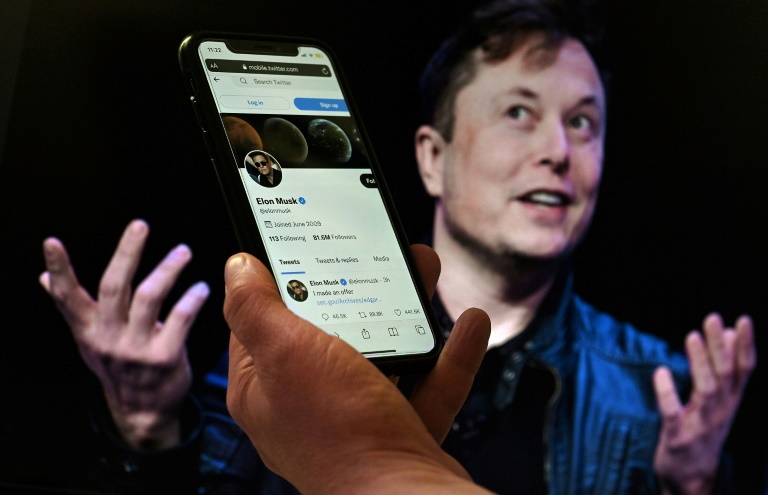
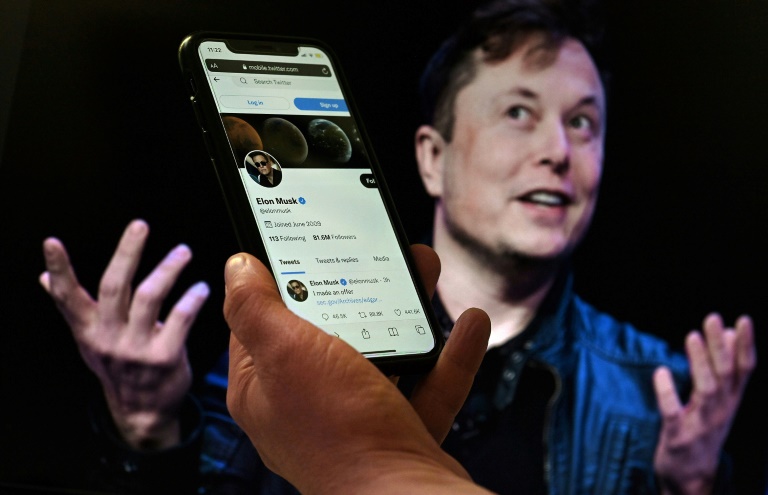
If Twitter’s lawsuit over Elon Musk’s $44 billion buyout bid ever reaches trial, the case will likely center on a ubiquitous and often unloved technology: bots.

The information Twitter has or has not provided on its tally of fake or spam accounts is Musk’s stated reason for backing away from the deal — a move that prompted the firm to sue him this week.

Here’s a closer look at the complications around bot accounts, and how they would be key in deciding the case.

– Good bot, bad bot –

At a basic level, “bots” are software programs that do automated tasks online, often with the aim of emulating how people behave.

Twitter tolerates some automated uses, like an account that tweets every time the Hubble space telescope crosses the sky over a given city.

But Twitter has rules about automated actions by accounts, including barring software from posting about hot topics, firing off spam, attempting to influence online conversations, and operating across multiple accounts.

The company says it wages a daily campaign against spam or fake accounts that keeps their number to less than five percent of users. 

Musk’s lawyers, in notifying Twitter on July 8 he was “terminating” the agreement to buy the company, alleged the platform made “false and misleading representations” about bots and had not provided details he needed to check its assertions. 

– Thorny question –

Determining the number of bots on the site is a bit of an art because the tally is determined in part by Twitter’s internal definitions and the workers who apply the rules.

While some cases are clear cut violations, some can require the judgement of people who have to weigh various facts.

“People can disagree on what should be considered a bot or a spam account,” said Edwin Chen, a former Twitter employee, who is now CEO of content moderation firm Surge AI. 

The figure would also be tricky for an outsider like Musk to confirm because the bot weeding process can include checking IP or email address or other sensitive user data.

“I think a lot of people, not even just my former colleagues but people just generally within the tech industry, know that this is a thorny, thorny question,” Chen added.

Twitter’s lawsuit, which urges a court to force Musk to honor his buyout offer, could result in a trial or settlement talks that would need to plunge into the finer points of things like the firm’s bot definitions and policies.

Musk’s lawyers said he has already asked for but had not received “Twitter’s methodology and performance data” about finding and suspending spam and fake accounts.

“In short, Twitter has not provided information that Mr. Musk has requested for nearly two months,” the lawyers wrote in laying out the argument for aiming to abandon the deal.

– The deal with Twitter –

Speculation has mounted that the bot issue — with its tricky, detailed and case-by-case aspects — is just a convenient route for Musk to abandon or renegotiate his proposal.

Yet, bots are a problem online.

“Bad actors have nearly infinite resources and incentives to use bots for nefarious purposes,” said Tamer Hassan, co-founder and chief of cybersecurity firm HUMAN.

Bots are used in more than three quarters of security and fraud incidents that happen online, from spreading socially divisive posts to snapping up hot concert tickets and hacking, Hassan told AFP. 

Also, Twitter makes its money from ads, and marketers pay for reaching people, not software.

Thus “advertising to bots isn’t going to have a good close rate because bots don’t buy products,” analyst Rob Enderle told AFP previously.

If advertisers are paying Twitter fees based on how many people see ads, and those numbers are inflated due to bots in the online audience, they are being overcharged, Enderle added.

If Twitter has way more bots than it is letting on, its revenue could plunge when those accounts are exposed and closed.

Or as Musk’s lawyers put it, Twitter’s true daily users who can be shown advertising are “a key component of the company’s business, given that approximately 90 percent of its revenues come from advertisements.” 
Bot battle: The tech that could decide Twitter's Musk lawsuit

If Twitter’s lawsuit over Elon Musk’s $44 billion buyout bid ever reaches trial, the case will likely center on a ubiquitous and often unloved technology: bots.

The information Twitter has or has not provided on its tally of fake or spam accounts is Musk’s stated reason for backing away from the deal — a move that prompted the firm to sue him this week.

Here’s a closer look at the complications around bot accounts, and how they would be key in deciding the case.

– Good bot, bad bot –

At a basic level, “bots” are software programs that do automated tasks online, often with the aim of emulating how people behave.

Twitter tolerates some automated uses, like an account that tweets every time the Hubble space telescope crosses the sky over a given city.

But Twitter has rules about automated actions by accounts, including barring software from posting about hot topics, firing off spam, attempting to influence online conversations, and operating across multiple accounts.

The company says it wages a daily campaign against spam or fake accounts that keeps their number to less than five percent of users. 

Musk’s lawyers, in notifying Twitter on July 8 he was “terminating” the agreement to buy the company, alleged the platform made “false and misleading representations” about bots and had not provided details he needed to check its assertions. 

– Thorny question –

Determining the number of bots on the site is a bit of an art because the tally is determined in part by Twitter’s internal definitions and the workers who apply the rules.

While some cases are clear cut violations, some can require the judgement of people who have to weigh various facts.

“People can disagree on what should be considered a bot or a spam account,” said Edwin Chen, a former Twitter employee, who is now CEO of content moderation firm Surge AI. 

The figure would also be tricky for an outsider like Musk to confirm because the bot weeding process can include checking IP or email address or other sensitive user data.

“I think a lot of people, not even just my former colleagues but people just generally within the tech industry, know that this is a thorny, thorny question,” Chen added.

Twitter’s lawsuit, which urges a court to force Musk to honor his buyout offer, could result in a trial or settlement talks that would need to plunge into the finer points of things like the firm’s bot definitions and policies.

Musk’s lawyers said he has already asked for but had not received “Twitter’s methodology and performance data” about finding and suspending spam and fake accounts.

“In short, Twitter has not provided information that Mr. Musk has requested for nearly two months,” the lawyers wrote in laying out the argument for aiming to abandon the deal.

– The deal with Twitter –

Speculation has mounted that the bot issue — with its tricky, detailed and case-by-case aspects — is just a convenient route for Musk to abandon or renegotiate his proposal.

Yet, bots are a problem online.

“Bad actors have nearly infinite resources and incentives to use bots for nefarious purposes,” said Tamer Hassan, co-founder and chief of cybersecurity firm HUMAN.

Bots are used in more than three quarters of security and fraud incidents that happen online, from spreading socially divisive posts to snapping up hot concert tickets and hacking, Hassan told AFP. 

Also, Twitter makes its money from ads, and marketers pay for reaching people, not software.

Thus “advertising to bots isn’t going to have a good close rate because bots don’t buy products,” analyst Rob Enderle told AFP previously.

If advertisers are paying Twitter fees based on how many people see ads, and those numbers are inflated due to bots in the online audience, they are being overcharged, Enderle added.

If Twitter has way more bots than it is letting on, its revenue could plunge when those accounts are exposed and closed.

Or as Musk’s lawyers put it, Twitter’s true daily users who can be shown advertising are “a key component of the company’s business, given that approximately 90 percent of its revenues come from advertisements.” 
In New York, America's oldest cricket club turns 150

Baseball is America’s national pastime, but in New York, a cricket club is celebrating 150 years not out thanks to the city’s large immigrant communities.

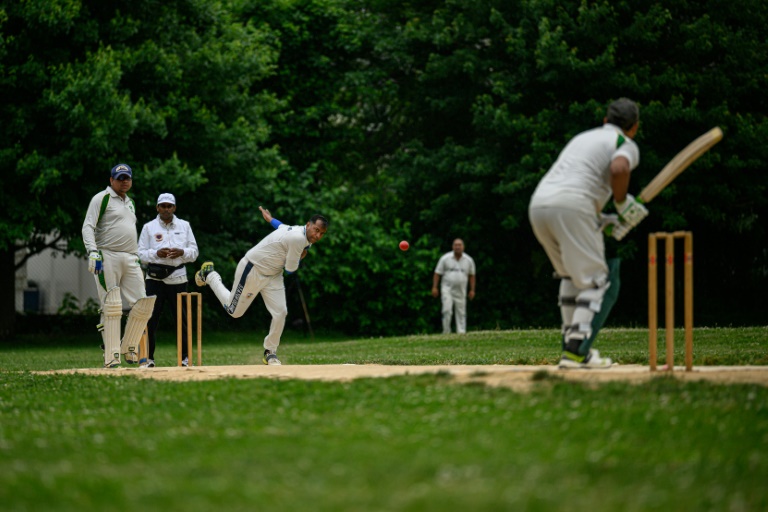
Staten Island Cricket Club (SICC) is the oldest continuously active cricket club in the United States, with matches played there every year since it was founded in 1872 by British armed forces officers and Wall Street traders.

Along the way, it has hosted some of the game’s greats, including Don Bradman, Geoffrey Boycott and Garry Sobers.

“There’s plenty to be proud of in a non-cricket-playing country to have a club that has withstood the test of time. It’s not been easy,” says 92-year-old president Clarence Modeste.

SICC has survived two world wars, the loss of a clubhouse to fire and the Covid-19 pandemic. It has also navigated rudimentary facilities and indifference from local officials. 

Before each match at the club’s home ground of Walker Park, city-run since the 1930s, players nail down a canvas matting wicket and hammer in stumps.

Grass several inches high in the field forces batters to lift the ball rather than hit the groundstrokes that many of the club’s 80-odd members learned to play as youngsters.

“You can’t hit a lovely cover drive. It won’t go anywhere,” laments 66-year-old Charu Choudhari, who nonetheless travels two hours from his home on Long Island to play.

A footpath marks the boundary while shots that hit the leaves of a large tree are deemed a six. Bowling is only allowed from one end due to homeowners worried about well-struck balls hitting their property.

“This is the sort of handicap one faces,” says Modeste, who hopes to persuade the parks department to erect netting 40 feet (12 meters) high so both ends can be used.

When Trinidad and Tobago-born Modeste joined SICC in 1961, some 90 percent of members were white — mostly British, with some Australians, New Zealanders and South Africans.

Today, the overwhelming majority are people of color from cricket-loving countries in South Asia such as India and Sri Lanka, and the Caribbean.

For many, the club is a connection to home.

“It means everything to me. Whenever I play cricket, I remember always my country,” says 50-year-old Sunil Nayyar, who moved to the United States from New Delhi 30 years ago.

– T20 World Cup –

The club has one or two American-born players, like Staten Island native Billy Teague, who joined recently. The 60-year-old wishes he’d known about cricket when he was growing up.

“I thought it was no different than croquet. It just seemed like a weird, strange game and now I’m in love with it,” he says.

Cricket was popular in the United States in the 1800s but declined as bat-and-ball cousin baseball soared in popularity, partly because it was quicker.

Today, there are just 200,000 cricketers in America, according to governing body USA Cricket, representing less than one percent of the population.

Officials hope interest will be spurred when the United States hosts matches in the 2024 ICC Men’s T20 World Cup.

SSIC has a youth program for players aged five to 18, and Modeste believes cricket will only grow in America when it is introduced into schools.

“As long as cricket is replenished mainly with migrants rather than with homegrown stock, I think it will be extremely difficult to find the success that many of us have dreamt of for the game,” he says.

New York City boasts the country’s liveliest scene, with an estimated 100 matches taking place every weekend during warmer months.

SICC is at the heart of it. As well as competing in domestic leagues, the club welcomes sides from abroad and conducts its own tours overseas.

Batting great Bradman was part of an Australian team that played at Walker Park in 1932 while Sobers led an international XI there in 1988.

This weekend, SICC will celebrate its sesquicentennial year with a plaque unveiling and a match against a Philadelphia team.

Modeste attributes the club’s longevity to stable beginnings and international recognition.

“The club is known around the world and we continue to make sure that happens,” he says.

'True balance': Japan's quiet telework revolution

Posted far from home for his job at Japanese conglomerate Hitachi, father of two Tsutomu Kojima was “really lonely” until he began working remotely during the pandemic for the first time.

Covid-19 has upended office routines worldwide, but in Japan — where punishing hours and reliance on paper files, ink stamps and fax machines has long been the norm — some say the shake-up was sorely needed.

Pre-pandemic, just nine percent of the Japanese workforce had ever teleworked, compared with 32 percent in the United States and 22 percent in Germany, according to Tokyo-based consultancy firm Nomura Research Institute.

But a quiet revolution in the country’s rigid business culture is underway, with firms working to digitise operations and offer more flexibility to staff who were once expected to stay late, go drinking with the boss and accept far-flung transfers.

Kojima used to live alone in accommodation provided by Hitachi near Tokyo, an hour and a half by bullet train from his family in Nagoya.

Back then he would return only twice a month, but now the 44-year-old works exclusively from home, and says he is more productive and closer to his teenage daughters.

“I have more time to help them with their studies. My youngest told me she hopes things stay like this,” he told AFP.

“I used to feel really lonely” in Tokyo, Kojima said, but he has since realised that “true balance means not giving up on family”.

– Old habits –

Nearly a third of jobs in Japan were done remotely during the first Covid wave in spring 2020, the Japan Productivity Center says, even though the government never imposed strict stay-at-home orders.

The rate has since fallen to 20 percent, but that is still far higher than before the pandemic, according to quarterly surveys by the non-profit organisation.

To encourage telework, the government and some companies made efforts to phase out personalised ink stamps used to certify documents, as well as the ubiquitous fax machine.

Often in Japan, “business has to be done in person, on paper”, habits dating back to the 1970s and 80s, when the Japanese economy was booming, said Hiroshi Ono, a professor at Hitotsubashi University specialising in human resources.

“One of the things Covid has done is bring those barriers down: work doesn’t have to be done at the office, men can work at home,” he told AFP.

Companies are realising that new ways of working can be more efficient, he added.

“Before Covid, it was so important for employees to show that they’re working hard, instead of actually producing results.”

– ‘New balance’ –

Reflecting trends elsewhere, people are also fleeing the big city.

A record number of company headquarters moved out of Tokyo last year, according to Teikoku Databank, while the capital’s population decreased for the first time in 26 years.

Among those who have upped sticks are Kazuki and Shizuka Kimura, who left their cramped Tokyo apartment for a custom-built house near the sea.

The couple now mostly do their jobs in communication and marketing remotely from Fujisawa, southwest of the capital, having struggled to both work from home in Tokyo.

“It was really Covid that made us take this decision,” said Kazuki Kimura, who used to seek out other places to do meetings — at his parents’ home or in cafes, remote-work boxes set up in train stations, and even karaoke booths.

“Sometimes you could hear singing from the booth next door,” which made it difficult to concentrate, recalls the 33-year-old, who is now learning to surf.

Shizuka Kimura, 29, thinks “more and more people are now prioritising their wellbeing, rather than their job”, but questions how quickly things will change on a wider scale.

This is a concern shared by Hiromi Murata, an expert at Recruit Works Institute, who says smaller companies may be slower to adapt to new work styles than big firms like Hitachi, Panasonic or telecoms giant NTT.

Remote work can also pose a problem for training new recruits, because “you learn on the job”, Murata said.

“Before, it was so important to meet in the office… each business must find a new balance, in their own way and time.”

US Secret Service deleted text messages from Jan 6 insurrection: watchdog

The US Secret Service, the law enforcement agency that protects the president, deleted agents’ text messages sent during the January 6 Capitol riot, a government watchdog said in a letter published Thursday.

Joseph Cuffari, the inspector general of the Department of Homeland Security, told Congress in the letter dated Wednesday that his office has had difficulties obtaining records from the Secret Service from January 5 and 6, 2021.

The messages could be crucial to the House of Representatives and Justice Department investigations into whether Donald Trump and his close advisors encouraged the deadly insurrection by the former president’s supporters at the US Capitol, which aimed to prevent the certification of Democratic rival Joe Biden as the winner of the November 2020 election.

Secret Service agents were with Trump during the day of the uprising, and were also with vice president Mike Pence, who went into hiding at the Capitol after pro-Trump rioters called for him to be hanged.

On June 29 a former White House staffer told the House January 6 investigation that Trump had attempted to force the Secret Service to take him to the Capitol to join his supporters on that day. 

“The Department notified us that many US Secret Service (USSS) text messages, from January 5 and 6, 2021, were erased as part of a device replacement program,” Cuffari wrote in the letter first reported by The Intercept and later published by Politico.

“The USSS erased those text messages after OIG requested records of electronic communications” for a review of January 6, he said, referring to the Office of the Inspector General.

In addition, he said, the department has stalled on providing other records to the OIG.

In a statement, Secret Service spokesman Anthony Guglielmi rejected the inspector general’s allegation.

He said the agents’ phones were being wiped as part of a planned replacement program that began before the OIG requested the information six weeks after the insurrection.

“The Secret Service notified DHS OIG of the loss of certain phones’ data, but confirmed to OIG that none of the texts it was seeking had been lost in the migration,” he said.   

Cuffari’s letter was addressed to the leaders of the Senate and House Homeland Security Committees. 

The chairman of the House Homeland Security committee is Representative Bennie Thompson, who is also the chairman of the House committee investigating January 6.

Their investigation has sought to show that Trump knowingly incited the insurrection as an attempted “coup.”

The Secret Service has been criticized for not adequately anticipating the threat of the violent action by armed Trump supporters on January 6.

Trump had made a senior Secret Service official at the time, Tony Ornato, his personal deputy chief of staff.

Ornato has denied the account given to the January 6 committee by former Trump aide Cassidy Hutchinson that Trump tried to force the Secret Service to drive him to the Capitol as his supporters massed at the building, the seat of the US legislature.

But other then-White House officials have backed Hutchinson’s story.

Airlines' fragile recovery from Covid

Airlines are recovering from huge Covid fallout but face fresh turbulence from rocketing inflation while airports battle to cope with booming demand.

Here is an assessment of the state of airlines ahead of next week’s Farnborough airshow that traditionally witnesses big deals struck for new Airbus and Boeing planes.

– Flying back to profit –

Global airlines suffered cumulative losses of almost $190 billion between 2020 and 2022, according to industry body the International Air Transport Association (IATA).

However, particularly in Europe and the United States, carriers are now regaining customers with demand boosted by vaccinations and the lifting of Covid restrictions.

A return to profitability appears within reach for airlines in 2023, according to the IATA, predicting a rebound in passenger numbers this year to 83 percent of pre-pandemic levels.

– Consolidation –

There is rapid consolidation as the sector faces headwinds from historically-high fuel prices and big salary increases in the face of decades-high inflation.

Many carriers are also suffering from severe staff shortages, having slashed thousands of jobs in the pandemic.

A lack of staff is constraining capacity at the world’s biggest airports.

In the United States, Spirit Airlines is the subject of a takeover tussle between rival carriers JetBlue and Frontier.

In Europe, Air France and Lufthansa are vying for control of Italy’s ITA Airways, formerly known as Alitalia.

And in South America, Brazilian airline Gol and Colombia’s Avianca agreed to merge to create a regional titan.

– Air traffic recovery –

North America and Europe are soon expected to return to pre-pandemic levels of air traffic, but Asia is lagging behind as Beijing’s strict zero-Covid policy hampers recovery. 

The IATA forecasts the world’s domestic air traffic will return to pre-crisis levels by next year. 

In the meantime, major European hubs — including Amsterdam, Dublin, Frankfurt, London and Paris — are suffering major travel chaos.

Top airports have been plagued by mountains of misplaced luggage and vast security queues, while some passengers have been stranded on planes owing to shortages of ground staff.

Airlines, including British Airways and Lufthansa, have been forced to axe thousands of flights owing to a lack of staff.

And air traffic control has faced delays, including as a result of planes being re-routed to avoid Belarusian, Russian and Ukrainian airspace because of the war.

– Eyeing takeoff –

European planemaker Airbus and its fierce US rival Boeing are experiencing a surge in orders, having slashed production during the early stages of the coronavirus pandemic.

Airlines are readying for a strong rebound in international travel following the lifting of Covid restrictions.

Carriers are urgently seeking to replace ageing fleets with greener, more fuel-efficient aircraft that emit less carbon dioxide — a key theme of this year’s Farnborough airshow.

Airbus had slashed its production rate by 40 percent in the initial stages of the pandemic.

But with recovery on track, it eyes record production of single-aisle A320 passenger jets of 65 per month for the second half of next year.

This despite Airbus and Boeing coming up against a global supply-chain crisis as economies reopen from pandemic lockdown.

Boeing is meanwhile mired in problems and still seeking to transform the fortunes of its crisis-hit MAX jet after two deadly crashes in 2018 and 2019.

The US giant has not delivered a 787 long-haul plane for more than a year due to production issues, while its 77X has had its certification postponed until 2025.

Aviation buzzing for return of Farnborough airshow

Aviation’s biggest players descend on the renowned Farnborough airshow next week, buoyed by the travel sector’s nascent recovery from the Covid pandemic and as Russia’s invasion of Ukraine boosts defence spending.

Farnborough, southwest of London and one of the largest civilian and defence shows alongside Dubai and Paris, is abuzz with anticipation as the aerospace sector fires up its engines for the first time since being ravaged by the pandemic.

At the same time, however, the industry faces headwinds from rocketing inflation fuelled by historically high energy prices and higher wages, while staff shortages constrain airports.

At Farnborough, US titan Boeing and its European arch-rival Airbus will take to the skies to show off their latest hi-tech wares — and engage in their traditional dogfight for multi-billion-dollar jet orders.

– Celebration –

“This is the first major global airshow for three years since Paris 2019 and therefore there is definitely a bigger excitement and buzz than I have seen before about Farnborough,” airshow chief executive Gareth Rogers told AFP.

“People are excited to be coming back together and really looking forward to seeing each other. I think it’s going to be a bit of a celebration.”

Civil aerospace has been energised this year by the return of international travel after the lifting of Covid restrictions.

Farnborough was axed in 2020 owing to the deadly coronavirus pandemic and was last held in 2018.

An estimated 80,000 trade visitors will flock to the five-day event, which kicks off Monday and opens to the public Friday.

The show will this year zero in also on green themes of decarbonisation and sustainability, as the sector eyes future electric and hydrogen-fuelled flight.

– Dizzying air displays –

Farnborough visitors will be thrilled by dizzying air displays by Britain’s Red Arrows — and also by South Korea’s Black Eagles.

Other eye-catching aircraft taking to the skies include the US-made F-35 stealth fighter jet and Turkish drones, while Boeing’s pilotless electric air taxi will make its European debut.

Airbus and Boeing will meanwhile showcase their latest twin-aisle passenger aircraft, the A350-900 and the 777X.

A year after the last Farnborough airshow in 2018, Airbus canned production of its A380 superjumbo owing to collapsing demand for the double-decker jet.

The planemaker nevertheless forecasts the number of global aircraft will double over the next 20 years on a post-Covid travel boom and increasing demand for fuel-efficient jets.

Boeing, which will release its outlook at Farnborough, is seeking to revive the fortunes of its crisis-hit MAX jet after two deadly crashes in 2018 and 2019.

– Ukraine brings defence focus –

Russia’s assault on Ukraine has thrown the spotlight on defence aerospace, as governments worldwide seek to bolster capability of their armed forces.

Companies from Russia have been banned from Farnborough owing to the conflict.

“The war in Ukraine — it’s brought defence into sharp focus,” said Rogers, noting however that defence deals were not usually unveiled at the show, unlike big commercial agreements.

“Anecdotally we are certainly seeing a greater interest in the defence element of the show — it is becoming a wider and larger part of this event,” he added.

Rogers lamented that the civil aviation’s recovery was being hampered by forces outside of its control.

– Turbulent recovery –

“I definitely feel the recovery is underway,” added Rogers.

“The issue is how quickly can it go, and I think the staffing and workforce restraints are probably slowing that down more than the industry would like.”

Airlines have also been suffering strike action, as workers seek higher pay in the face of soaring inflation.

Global air transport is on course to return to profit in 2023 after two pandemic-battered years, the International Air Transport Association predicts.

The sector was sent reeling by the pandemic, with passenger numbers plunging more than half.

Airlines lost nearly $200 billion over two years, according to IATA estimates, forcing them to slash thousands of jobs.

Coming and glowing: How Saudis receive US presidents

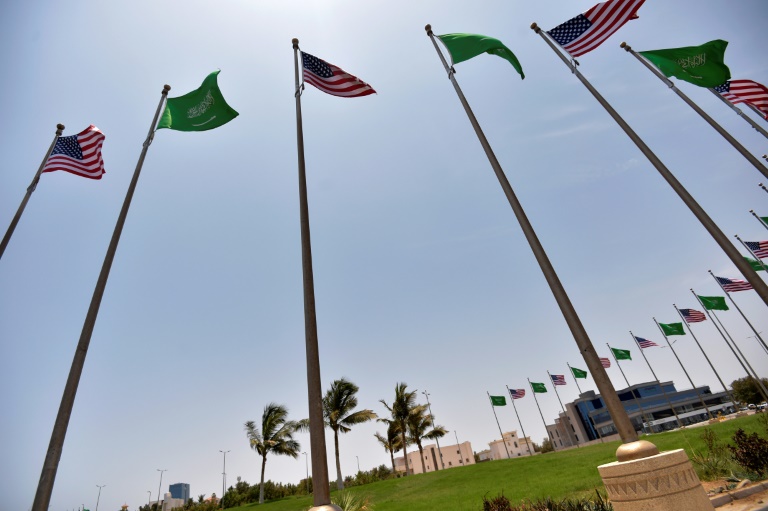
When President Joe Biden arrives in Saudi Arabia Friday, the first clues about his visit will be visible on the airport tarmac, where US leaders have received markedly different welcomes.

Following Biden’s oft-cited comment about making Saudi a “pariah”, here is a look at how the Saudis have greeted some of his predecessors during the ups and downs of a stormy bilateral relationship.

– A kiss for George W. –

George W. Bush waited until the last year of his term to visit the kingdom, then came twice in the span of four months, pressing for more oil output as energy prices skyrocketed. 

King Abdullah greeted Bush warmly at the airport in May 2008, showing no signs of the tensions that had roiled their 2002 meeting at Bush’s Texas ranch –- when Abdullah, then crown prince, threatened to storm out over disagreements about the Israeli-Palestinian conflict. 

After Bush and his wife Laura descended from Air Force One, Abdullah kissed the president on both cheeks, in a traditional Arab greeting, and a military brass band played the American national anthem. 

But the Saudi leadership refused to give ground on oil. Much like today, Saudi officials said they did not believe there was a supply shortage and that market fundamentals were “sound”. 

– Obama’s downgrade –

President Barack Obama first came to Riyadh in 2009, less than five months after being sworn in, for a quick stop ahead of a much-hyped speech in Cairo intended to rehabilitate Washington’s image in the Muslim world after the Bush years. 

The visit was partly symbolic. Obama, following the customary cheek-kissing and anthem-playing, was publicly seeking the advice of Saudi Arabia — home to the holiest sites in Islam — before reorienting American engagement with the region. 

But Obama was also trying to coordinate a strategy to address Iran’s nuclear programme and looking to advance normalisation between Arab countries and Israel, said Dan Shapiro, then-senior director on the National Security Council. 

On the latter question, “Abdullah was not receptive, and he made clear that he was not prepared to make any significant moves in that direction”, said Shapiro, now with the Atlantic Council think tank. 

US-Saudi ties grew chilly under Obama as the 2015 deal to curb Iran’s nuclear programme took shape. 

For a visit in 2016, towards the end of Obama’s term, King Salman –- who took power the previous year after Abdullah’s death –- sent the governor of Riyadh to meet him on the tarmac, and Obama’s arrival was not broadcast on state television. 

– Trump-era glow –

That greeting was a far cry from the effusive reception given to President Donald Trump, who chose Saudi Arabia for his first foreign trip the following year. 

Saudi rulers lavished the Trump family with gifts, a sword dance and a fly-past of air force jets.

But the stop will forever be remembered for the viral photo of Trump, King Salman and Egyptian leader Abdel Fattah al-Sisi with their hands on a translucent white globe at the opening of a Riyadh-based centre to combat extremist ideology. 

The men kept their hands on the orb for nearly two full minutes, sending the internet into overdrive with parodies and memes.

“The welcome for Trump is likely to stand as the most overwhelming ever,” said Bruce Riedel, author of the 2017 book “Kings and Presidents” examining US-Saudi ties. 

The relationship suffered later in the Trump term, especially following what the Saudis perceived as Trump’s tepid response to attacks on Saudi oil facilities in 2019 claimed by Iran-backed Huthi rebels in Yemen. 

But Riedel said Saudi leaders remain “close” to key figures from the Trump era, notably his son-in-law Jared Kushner.

– A hug for Biden? –

Unlike during the Obama era, it would be unsurprising if Biden, 79, is welcomed at the airport by King Salman, 86, who spent much of the pandemic in relative isolation and has already been hospitalised twice this year. 

The White House has said Biden will meet Crown Prince Mohammed bin Salman in the context of a larger discussion with King Salman’s leadership team, but Riedel said there was a possibility the crown prince will also “be the welcome committee”. 

“The Saudis are determined that the visit is a validation of the crown prince. They control the venue,” he said. 

Riyadh dismisses the notion that Saudi leaders need a legitimacy boost from Biden, but the president can nonetheless expect to be received warmly, said Mohammed Alyahya, senior fellow at the Washington-based Hudson Institute.

“The Saudis realise that America is in a very confused time. Sometimes you hear irrational things that don’t make sense. But there are larger, more important interests at play than focusing on something like that,” Alyahya said. 

“When your friends are being incoherent, sometimes you give them a hug.”

G20 finance chiefs meet as Indonesia warns of energy, food catastrophe

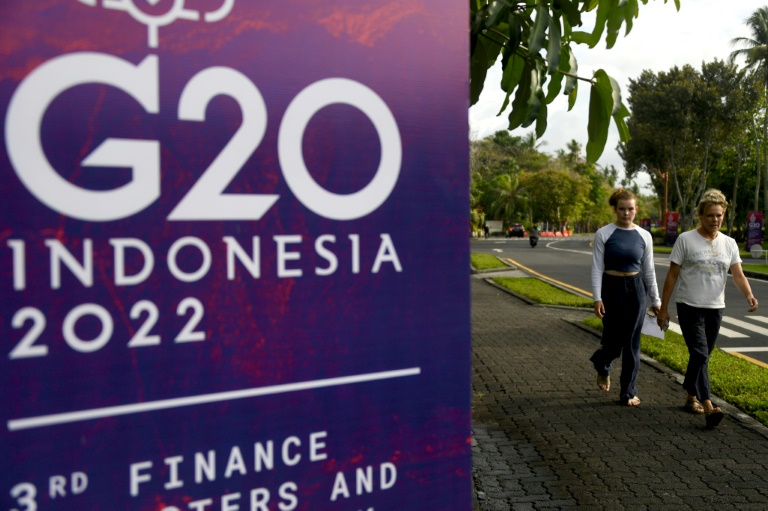
Group of 20 finance ministers and central bank chiefs from top economies met in Indonesia Friday for talks on the fallout from Russia’s invasion of Ukraine, with the host warning them failure to tackle energy and food crises would be catastrophic.

The two-day meeting on the resort island of Bali started under the shadow of a war that has roiled markets, spiked food prices and stoked breakneck inflation, a week after Moscow’s top diplomat walked out of talks with the forum’s foreign ministers.

In her opening remarks, Indonesian Finance Minister Sri Mulyani Indrawati called on ministers to work together with a spirit of “cooperation, collaboration and consensus” because “the world is watching” for solutions.

“The cost of our failure is more than we can afford,” she told delegates. “The humanitarian consequences for the world and for many low-income countries would be catastrophic.”

Top global finance figures, including US Treasury Secretary Janet Yellen, will discuss the rebound from the coronavirus pandemic. But the impact of the Ukraine war –- weighing on an already brittle global recovery –- will top the agenda.

A day before the meeting, Yellen set the tone, calling Russia’s war in Ukraine the “greatest challenge” to the global economy and saying members of Putin’s government “have no place” at the talks.

“We are seeing negative spillover effects from that war in every corner of the world, particularly with respect to higher energy prices and rising food insecurity,” she said.

Yellen is expected to press G20 allies for a price cap on Russian oil to choke off President Vladimir Putin’s war chest and pressure Moscow to end its invasion while bringing down energy costs.

Both Russian Finance Minister Anton Siluanov and Ukrainian Finance Minister Serhiy Marchenko are participating virtually in the meeting.

Yellen in April led a multinational walkout of finance officials as Russian delegates spoke at a G20 meeting in Washington. No communique was issued at the end of that meeting.

It is unclear if a similar walkout will take place at this meeting, after no foreign minister walked out last week, but Yellen would not be drawn on if they would repeat their joint action.

There is also unlikely to be a final communique issued when talks end on Saturday because of disagreements with Russia.

– World tax overhaul deadline set – 

G20 chair Indonesia -– which pursues a neutral foreign policy –- has refrained from uninviting Russia despite Western pressure.

Italy and Canada’s finance ministers are in attendance, but Chinese Finance Minister Liu Kun and Britain’s new Finance Minister Nadhim Zahawi are only attending virtually.

International Monetary Fund chief Kristalina Georgieva will appear in person after saying Wednesday the global economic outlook had “darkened significantly” because of Moscow’s invasion.

European Central Bank president Christine Lagarde is participating virtually, but World Bank chief executive David Malpass will not attend.

The meeting is a prelude to the leaders’ summit on the Indonesian island in November that was meant to focus on the global recovery from the Covid-19 pandemic.

Other issues to be tackled by the ministers include digital financial inclusion –- with more than a billion of the world’s population still without access to a bank account -– and the deadline for an international tax rules overhaul.

The Organisation for Economic Cooperation and Development (OECD) will present the ministers with an update on the progress of international tax changes that will set a global minimum corporate tax rate of 15 percent by 2024, a year later than originally planned.

The deadline for the passing of legislation underpinning the new rules was set at mid-2023, the OECD said.

Saudi opens airspace to 'all carriers' in gesture to Israel

Saudi Arabia announced Friday it was lifting restrictions on “all carriers” using its airspace, an apparent gesture of openness towards Israel ahead of US President Joe Biden’s arrival.  

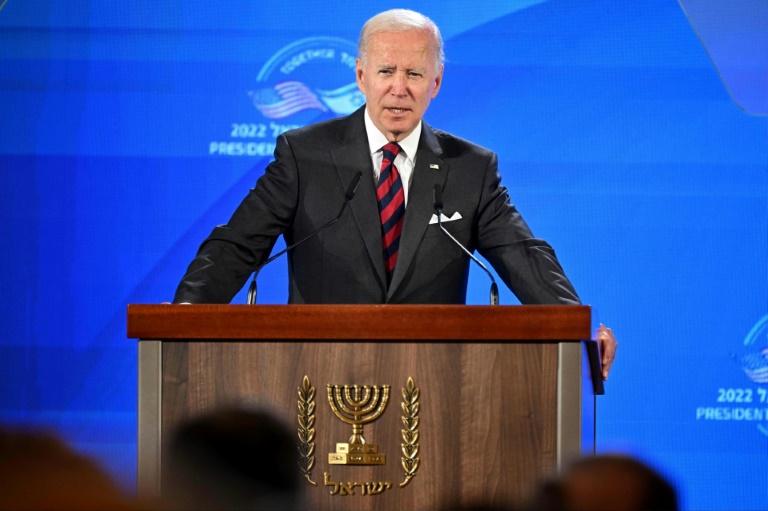
The US leader welcomed the “historic” decision, the latest conciliatory move by Riyadh concerning the Jewish state, which it has refused to recognise despite intensive efforts by the Israelis to establish ties with Arab countries. 

The Saudi civil aviation authority “announces the decision to open the Kingdom’s airspace for all air carriers that meet the requirements of the authority for overflying”, it said in a statement on Twitter.  

The decision was made “to complement the Kingdom’s efforts aimed at consolidating the Kingdom’s position as a global hub connecting three continents”. 

“This decision is the result of the President’s persistent and principled diplomacy with Saudi Arabia over many months, culminating in his visit today,” US National Security Adviser Jake Sullivan said in the statement, adding that Biden “commends” it.

He said the US president, who will land in Saudi Arabia for a controversial visit later Friday as part of a trip to the Middle East, “will have more to say on this breakthrough later today.”

Prior to Biden’s arrival in Israel at the start of his Middle East trip on Wednesday, Washington had hinted that more Arab nations could take steps to pursue relations with Israel, spurring speculation about whether Riyadh would alter its long-held position of not establishing official bilateral ties until the conflict with the Palestinians is resolved. 

The kingdom did not show any opposition when its regional ally, the United Arab Emirates, established diplomatic ties with Israel in 2020, followed by Bahrain and Morocco under the US-brokered Abraham Accords. 

Yet analysts have stressed that any immediate gains are likely to be incremental and that Riyadh will probably not agree to formal ties — not during Biden’s visit or while King Salman, 86, still reigns. 

Biden will travel to the Saudi city of Jeddah on the Red Sea coast Friday afternoon, despite a previous vow to treat the kingdom as a “pariah” over the 2018 murder and dismemberment of Saudi journalist Jamal Khashoggi. 

He is to travel directly from the Jewish state to Saudi Arabia — becoming the first US president to fly from there to an Arab nation that does not recognise it.  

In 2017, his predecessor, Donald Trump, made the journey in reverse.  

– ‘A major change’ –

Shortly after the Abraham Accords were announced in 2020, Saudi Arabia allowed an Israeli aircraft to pass over en route to Abu Dhabi and announced that UAE flights to “all countries” could overfly the kingdom. 

Friday’s announcement effectively lifts overflight restrictions on aircraft travelling to and from Israel. 

Israel has been pushing for the overflight rights to shorten links to destinations in Asia. 

Israeli authorities also want Muslim pilgrims from Israel to be able to travel directly to Saudi Arabia. 

Currently they are required to make costly stopovers in third countries. 

There has been “a major change in Saudi thinking” concerning Israel under de facto ruler Crown Prince Mohammed bin Salman, who Biden is expected to meet on Friday, said Dan Shapiro, Washington’s former ambassador to Israel. 

Prince Mohammed “and to some degree even the king himself have indicated that they see normalisation with Israel as a positive”, said Shapiro, now with the Atlantic Council. 

“They supported the Abraham Accords. Their own normalisation may take time and may be rolled out in phases, but it seems close to inevitable that it will happen.”

Close Bitnami banner
Bitnami