US Business

Stocks tumble, euro dips below $1.00 on US inflation data

Global stocks fell Wednesday and the euro dipped below $1.00 for the first time in nearly 20 years after data showed a surge in US inflation last month, convincing investors that further increases in borrowing costs are on their way. 

Stock prices on Wall Street fell at the open after a pick-up in US inflation to 9.1 percent in June increased the risk of a possible recession.

European stock markets were also sharply lower by mid-afternoon, with London’s blue-chip FTSE-100 index down 0.7 percent, Frankfurt’s DAX down 1.4 percent and Paris’s CAC-40 down 1.1 percent. 

The euro fell below the symbolic level of $1.00 for the first time since December 2002, dipping as low as $.0998, as the prospect of higher interest rates rendered the dollar more attractive to investors.

The economic prospects for the 19-country eurozone are also darkening as a possible halt to Russian gas supplies increases the risk of recession. 

– Inflation tops 9% – 

US inflation surged to a 40-year high in June on a 12-month basis, much worse than expected, US Labor Department data showed.

“The inflation reading has blown past all expectations today and there is no doubt now that the (Federal Reserve) will be even more aggressive,” said Naeem Aslam, analyst at Avatrade.

“Inflation at 9.1 pecent makes you sick as a consumer and as a central banker.” 

Markets fear the reading will prompt the Fed to keep hiking interest rates aggressively after it ramped up borrowing costs by three-quarters of a percentage point last month.

Consumer prices are soaring worldwide after economies reopened from pandemic lockdowns and as the Ukraine war keeps energy prices elevated.

In a further sign of the pressure being felt around the world, the New Zealand and South Korean central banks each lifted interest rates by 0.5 percentage points Wednesday.

It was the steepest increase by Seoul since 1999.

– Europe gas crisis –

The euro briefly fell below parity to the dollar as a worsening energy crisis fans expectations for a recession in the single currency area. But the unit quickly moved back above the $1.00 mark.

With Russian energy giant Gazprom starting 10 days of maintenance Monday on its Nord Stream 1 pipeline, the bloc — and particularly gas-reliant Germany — is waiting nervously to see if the taps are turned back on.

The single currency has been hit also by the European Central Bank’s reluctance to raise rates — in contrast to monetary policy elsewhere.

“A prolonged cut to the gas supply would halt a lot of economic activity, sending (Germany) deep into recession,” said Tapas Strickland at National Australia Bank.

He said July 21 — when the gas should be switched back on — will be a crucial date.

“That date also happens to be the day of the next ECB meeting,” Strickland added. 

“Either of these events are key risk events. Russia playing gas politics by not switching on the gas supply would likely see the euro lurch much lower.”

– Key figures at around 1345 GMT –

New York – Dow: DOWN 0.8 percent at 30,737.57 points

London – FTSE 100: DOWN 0.7 percent at 7,159.99

Frankfurt – DAX: DOWN 1.4 percent at 12,728.88

Paris – CAC 40: DOWN 1.1 percent at 5,978.65

EURO STOXX 50: DOWN 1.3 percent at 3,441.67

Tokyo – Nikkei 225: UP 0.5 percent at 26,478.77 (close)

Hong Kong – Hang Seng Index: DOWN 0.2 percent at 20,797.95 (close)

Shanghai – Composite: UP 0.1 percent at 3,284.29 (close)

Euro/dollar: DOWN at $1.0024 from $1.0037 Tuesday

Pound/dollar: UP at $1.1873 from $1.1889 

Euro/pound: UP at 84.42 pence from 84.40 pence

Dollar/yen: UP at 137.55 yen from 136.84 yen

West Texas Intermediate: UP 0.7 percent at $96.54 per barrel

Brent North Sea crude: UP 0.2 percent at $99.71 per barrel

burs-spm/cdw
Biden visits Israel on first Middle East tour as US president

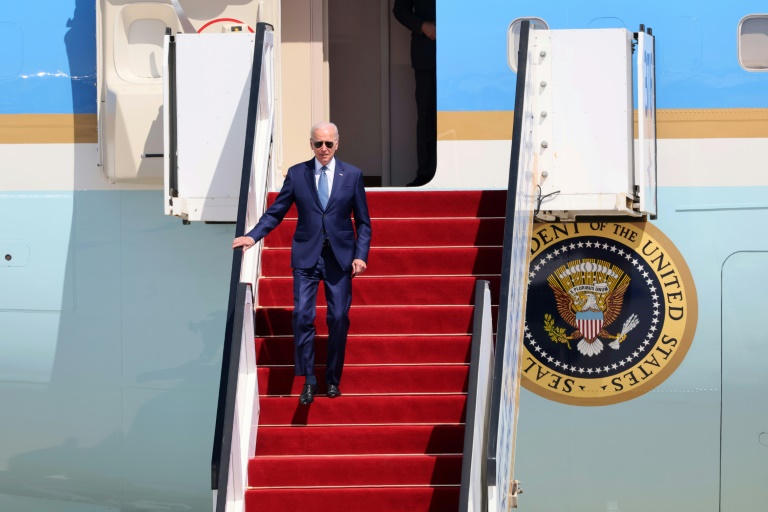
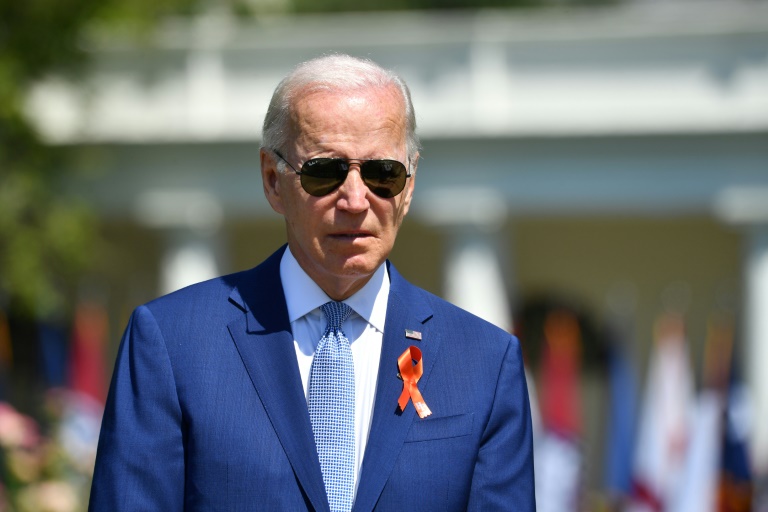
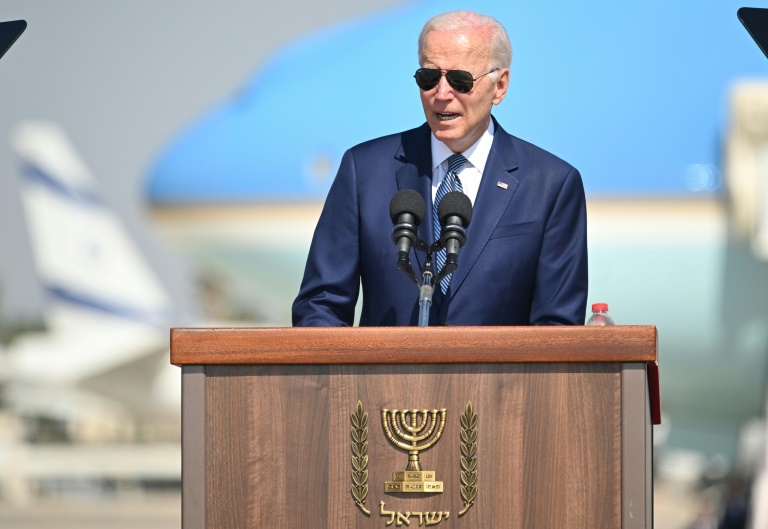
US President Joe Biden on Wednesday kicked off a Middle East tour in Israel where both sides vowed to deepen the Jewish state’s integration in the region as they face their common foe Iran.

Biden — whose first regional tour since taking office will also take him to Saudi Arabia — pledged strong backing for Israel, which has forged ties with several Arab states in recent years and hopes to do so with Riyadh as well.

“We’ll continue to advance Israel’s integration into the region,” Biden said after Air Force One touched down at Ben Gurion airport near Tel Aviv to a red-carpet welcome.

Israel’s caretaker prime minister Yair Lapid said that “we will discuss building a new security and economy architecture with the nations of the Middle East”, following US-brokered accords in 2020 with the UAE, Bahrain and Morocco.

“And we will discuss the need to renew a strong global coalition that will stop the Iranian nuclear programme,” he added, amid ongoing efforts by world powers to salvage Iran’s frayed 2015 nuclear deal, which Israel opposes.

Biden’s visit to Saudi Arabia on Friday will be the major focus of the tour, after he branded the oil-rich kingdom a “pariah” over the 2018 murder of dissident Saudi journalist Jamal Khashoggi.

The trip is seen as part of efforts to stabilise oil markets rattled by the war in Ukraine, by re-engaging with a long-time key US strategic ally and major energy supplier.

Air Force One will make a first direct flight from Israel to Saudi Arabia amid efforts to build ties between the Jewish state and the conservative Gulf kingdom, which does not recognise Israel’s existence.

– Palestinian anger –

Moments after Biden landed, Israel’s military was to show him its new Iron Beam system, an anti-drone laser it claims is crucial to countering Iran’s fleet of unmanned aerial vehicles.

Israel insists it will do whatever is necessary to thwart Iran’s nuclear ambitions, and remains staunchly opposed to a restoration of the 2015 deal that gave Tehran sanctions relief.

Iran’s President Ebrahim Raisi warned earlier Wednesday that if Biden’s goal on the trip was to bolster Israel’s security, he was destined to fail.

If US visits “to the countries of the region are to strengthen the position of the Zionist regime… their efforts will not create security for the Zionists in any way,” Raisi said, referring to Israel.

Israel has raised 1,000 flags across Jerusalem to welcome the US leader, who has not reversed former president Donald Trump’s controversial decision to recognise the city as the capital of the Jewish state.

Biden, 79, will also meet Palestinian leaders angered by what they describe as Washington’s failure to curb Israeli aggression.

The persistent frustrations of Israeli-Palestinian diplomacy are nothing new for Biden, who first visited the region in 1973 after being elected to the Senate.

Palestinians claim Israeli-annexed east Jerusalem as their capital and, ahead of the visit, accused Biden of failing to make good on his pledge to restore the United States as an honest broker in the conflict.

– Jerusalem to Bethlehem –

“We only hear empty words and no results,” said Jibril Rajoub, a leader of the secular Fatah movement of Palestinian president Mahmud Abbas.

Biden will meet Abbas in the occupied West Bank city of Bethlehem on Friday, but there is no expectation of bold announcements toward a fresh peace process.

Israel for now is again mired in political gridlock ahead of a November 1 parliamentary election, the fifth in less than four years.

Biden is scheduled to have a short meeting Thursday with Israel’s former prime minister Benjamin Netanyahu, who will try to reclaim power in the upcoming polls.

US-Palestinian ties have been strained by the May killing of Al Jazeera reporter Shireen Abu Akleh while she was covering an Israeli army raid in the West Bank.

The United Nations has concluded the Palestinian-American journalist was killed by Israeli fire. Washington has agreed this was likely, but also said there was no evidence the killing was intentional.

Abu Akleh’s family has voiced outrage over the Biden administration’s “abject response” to her death, and the White House has not commented on their request to meet the president in Jerusalem.

Biden’s National Security Advisor Jake Sullivan said Wednesday that Secretary of State Antony Blinken “has invited the family to the United States to be able to sit down and engage with him directly”. 

aue-gl/bs/fz/lg

Biden lands in Israel on first Middle East tour as US president

US President Joe Biden started a Middle East tour on Wednesday in Israel, where leaders will urge tougher action against their common foe Iran, before a delicate stop in oil-rich Saudi Arabia. 

Biden’s visit to Jeddah on Friday will be the focus of the tour, after he branded Saudi Arabia a “pariah” over the 2018 murder of dissident Saudi journalist Jamal Khashoggi.

Air Force One will make a first direct flight from Israel to Saudi Arabia amid efforts to forge a relationship between the Jewish state and the conservative Gulf kingdom that does not recognise Israel’s existence.

Before that, Biden, 79, will meet Israeli leaders seeking to broaden cooperation against Iran, and Palestinian leaders angered by what they describe as Washington’s failure to curb Israeli aggression.

The persistent frustrations of Israeli-Palestinian diplomacy are nothing new for Biden, who first visited the region in 1973 after being elected to the Senate.

Israel and Iran were allies then, but they are now sworn enemies that have been engaged in a “shadow war” of attacks and sabotage.

Israel’s caretaker prime minister, Yair Lapid, who greeted Biden at the airport, has said talks “will focus first and foremost on the issue of Iran”.

Iran’s President Ebrahim Raisi warned that if Biden’s goal on the trip was to bolster Israel’s security, he was destined to fail.

“If the visits of the American officials to the countries of the region are to strengthen the position of the Zionist regime… their efforts will not create security for the Zionists in any way,” Raisi said, referring to Israel.

– Jerusalem to Bethlehem –

Moments after Biden landed, Israel’s military was to show him its new Iron Beam system, an anti-drone laser it claims is crucial to countering Iran’s fleet of unmanned aerial vehicles.

Israel insists it will do whatever is necessary to thwart Iran’s nuclear ambitions, and is staunchly opposed to a restoration of the frayed 2015 deal that gave Tehran sanctions relief.

Israeli police fanned out across central Jerusalem on Wednesday, with major roads closed as Air Force One touched down.

Israel has raised 1,000 flags across Jerusalem to welcome the US leader, who has not reversed former president Donald Trump’s controversial decision to recognise the city as the capital of the Jewish state.

Palestinians claim Israeli-annexed east Jerusalem as their capital and, ahead of the visit, accused Biden of failing to make good on his pledge to restore the US as an honest broker in the conflict.

“We only hear empty words and no results,” said Jibril Rajoub, a leader of the secular Fatah movement of Palestinian president Mahmud Abbas.

Biden will meet Abbas in the occupied West Bank city of Bethlehem on Friday, but there is no expectation of bold announcements toward a fresh peace process, meaning the visit could end up deepening Palestinian frustration.

Israel for now is again mired in political gridlock ahead of a November 1 parliamentary election, the fifth in less than four years.

Biden is scheduled to have a short meeting Thursday with Israel’s former prime minister Benjamin Netanyahu, who will try to reclaim power in the upcoming polls.

– Normalisation steps?  –

US-Palestinian ties have been strained by the May killing of Al Jazeera reporter Shireen Abu Akleh while she was covering an Israeli army raid in the West Bank.

The United Nations has concluded the Palestinian-American journalist was killed by Israeli fire. Washington has agreed this was likely, but also said there was no evidence the killing was intentional.

Abu Akleh’s family has voiced outrage over the Biden administration’s “abject response” to her death, and the White House has not commented on their request to meet the president in Jerusalem.

Biden’s National Security Advisor Jake Sullivan said Wednesday that Secretary of State Antony Blinken “has invited the family to the United States to be able to sit down and engage with him directly”. 

Biden’s trip to Saudi Arabia is seen as part of efforts to stabilise oil markets rattled by the war in Ukraine, by re-engaging with a long-time US key strategic ally and major energy supplier.

Israel hopes the visit will also signal the start of a process toward building diplomatic ties with Saudi Arabia.

Israel expanded its regional reach with US backing in 2020, when it formalised ties with the United Arab Emirates, Bahrain and Morocco — breakthroughs that came after its peace accord with Egypt in 1979 and Jordan in 1994.

While there is no expectation of Saudi Arabia recognising the Jewish state in the immediate future, a senior Israeli official said Tuesday that Biden’s visit marked an important step toward that goal.

Russia and Ukraine try to solve grain crisis in Turkey

Russia and Ukraine met UN and Turkish officials on Wednesday in a bid to break a months-long impasse over grain exports that has seen food prices soar and millions face hunger.

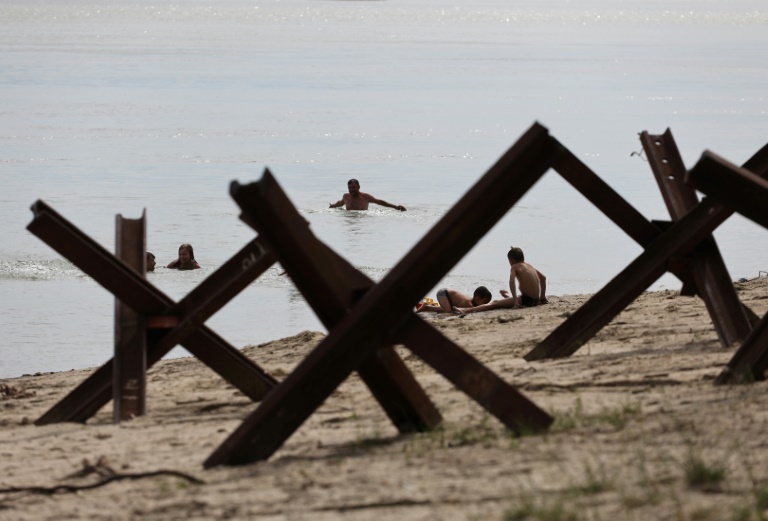
The high-stakes meeting in Istanbul came with Russia’s invasion of Ukraine showing no signs of abating and the sides locked in a furious long-range shooting battle that is destroying towns and leaving people with nothing.

Ukrainian officials said at least five people were killed in Russian shelling on the region surrounding the Black Sea port city of Mykolaiv.

“You can’t run away from war and you never know where it will find you,” 60-year-old agronomist Lyubov Mozhayeva said, while picking up a humanitarian food package in the partially destroyed frontline city of Bakhmut.

The first face-to-face talks between Russian and Ukrainian delegations since another meeting in Istanbul on March 29 comes with the threat of food shortages spreading across the poorest parts of the world.

Ukraine is a vital exporter of wheat and grains such as barley and maize. It has also supplied nearly half of all the sunflower oil traded on global markets.

But shipments across the Black Sea have been blocked by Russian warships and mines Kyiv has laid to avert a feared amphibious assault.

– ‘Two steps from agreement’ –

The Istanbul negotiations are being complicated by growing suspicions that Russia is trying to export grain it has stolen from Ukrainian farmers in regions under its control.

US space agency data released last week showed 22 percent of Ukraine’s farmland falling under Russian control since the February 24 invasion.

The two sides say they have made progress but are sticking to firm demands that could collapse the talks.

Ukrainian Foreign Minister Dmytro Kuleba said Kyiv was “two steps from an agreement with Russia”.

“We are in the final stages and everything now depends on Russia,” he told Spain’s El Pais newspaper.

Russia said its requirements included the right to “search the ships to avoid the contraband of weapons” — a demand rejected by Kyiv.

UN Secretary-General Antonio Guterres tried on Tuesday to play down expectations of an imminent breakthrough.

“We are working hard indeed, but there is still a way to go,” the UN chief told reporters.

– Grain corridors –

NATO member Turkey has been using its good relations with both the Kremlin and Kyiv to try and broker an agreement on a safe way to deliver the grain.

Turkey says it has 20 merchant ships waiting in the region that could be quickly loaded and sent to world markets.

A plan by the UN proposes the ships follow safe “corridors” that run between the known location of mines.

Kyiv has also asked that its vessels be accompanied by warships from a friendly country such as Turkey.

Experts say de-mining the Black Sea is a complex operation that could take months — too long to address the growing global food crisis.

Kuleba said he did not think Moscow actually wanted to reach an agreement because proceeds from grain sales would help support a Western-backed government in Kyiv that the Kremlin brands as “Nazis”.

“They know that if we start to export, we will get proceeds from world markets, and this will make us stronger,” Kuleba said.

– ‘Operational pause’ –

The talks in Istanbul precede a meeting in Tehran next Tuesday between Turkish President Recep Tayyip Erdogan and his Russian counterpart Vladimir Putin.

The war in Ukraine has contributed to Turkey’s mounting economic problems and further complicated Erdogan’s path to a third decade in power in elections due within the next year.

Erdogan’s ultimate goal is to bring Putin and Ukrainian President Volodymyr Zelensky down to Istanbul for talks aimed at pausing the fighting and launching formal peace talks.

But the Ukrainian army warned this week that Russia was preparing to stage its heaviest attack yet on the Donetsk region — the larger of the two areas comprising the Donbas war zone.

The Russian army has not conducted any major ground offensives since taking the last points of Ukrainian resistance in the war zone’s smaller Lugansk region at the start of the month.

Analysts believe the Russians are taking an “operational pause” during which they are rearming and regrouping forces before launching an assault on Sloviansk and Kramatorsk — Ukraine’s administrative centre for the east.

Ukraine is trying to counter the Russians by staging increasingly potent attacks with new US and European rocket systems targeting arms depots.

US officials believe the Russians are trying to recoup their losses by negotiating to acquire hundreds of combat drones from Iran.

Former bosses of Fukushima operator ordered to pay $97 billion damages

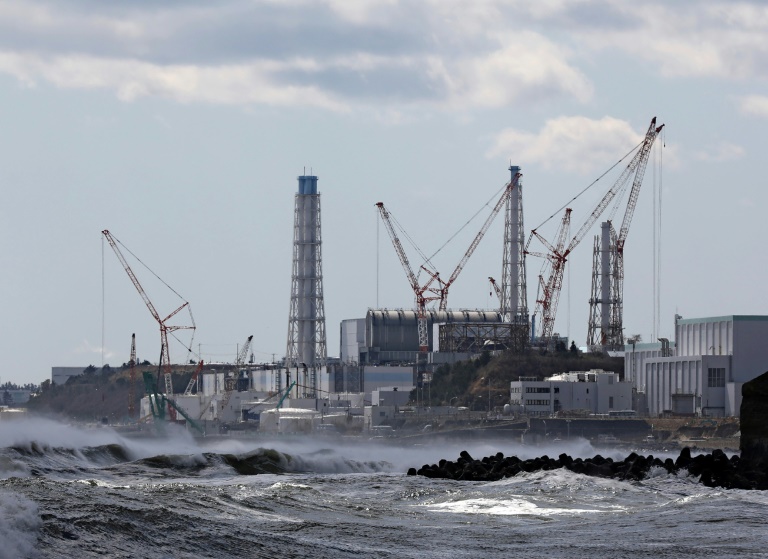
A Tokyo court Wednesday ordered former executives from the operator of the devastated Fukushima nuclear plant to pay 13.32 trillion yen ($97 billion) for failing to prevent the disaster, plaintiffs said.

Four ex-bosses from the Tokyo Electric Power Company (TEPCO) were ordered to pay the damages in a suit brought by shareholders over the nuclear disaster triggered by a massive tsunami in 2011.

Plaintiffs emerged from the Tokyo court holding banners reading “shareholders win” and “responsibility recognised”.

Lawyers for the plaintiffs hailed the ruling, and said they believed it to be the largest amount of compensation ever awarded in a civil lawsuit in Japan.

“Nuclear power plants can cause irreparable damage to human lives and the environment,” the plaintiffs said in a separate statement after the ruling.

“Executives for firms that operate such nuclear plants bear enormous responsibility, which cannot compare with that of other companies.”

The shareholders argued that the disaster could have been prevented if TEPCO bosses had listened to research and carried out preventative measures like placing an emergency power source on higher ground.

Defendants said the studies they were not credible and the risks unpredictable.

But the court ruled nuclear plant operators have “an obligation to prevent severe accidents based on the latest scientific and expert engineering knowledge”, and the executives failed to heed credible warnings.

– ‘Historic’ –

In a statement read to AFP by a TEPCO spokesman, the firm declined to comment on the ruling, saying only: “We again express our heartfelt apology to people in Fukushima and members of society broadly for causing trouble and worry” with the disaster.

The damages are intended to cover the costs to TEPCO for dismantling the reactors, compensating affected residents, and cleaning up contamination.

The lawsuit is designed so the money will go to TEPCO itself, which the plaintiffs own partially as shareholders.

Hiroyuki Kawai, a lawyer representing the plaintiffs, called the decision “historic”.

“We realise that 13 trillion yen is well beyond their capacity to pay,” he told reporters, adding that the plaintiffs expect the men to pay as much as their assets allow.

There was no immediate word on whether the executives would appeal, though the plantiffs’ legal team insisted “if they have heart to feel regret… they should deeply apologise to residents and follow the judgement without appealing”.

The size of the award is enormous. 

As a point of comparison, in 2015 British oil giant BP was ordered to pay $20.8 billion for the Gulf of Mexico oil spill in what was described at the time as the highest fine ever imposed on a company in US history. 

– ‘Retirement years in misery’ –

Three of the Fukushima Daiichi nuclear plant’s six reactors were operating when a massive undersea quake triggered a devastating tsunami on March 11, 2011.

They went into meltdown after their cooling systems failed when waves flooded backup generators, leading to the worst nuclear disaster since Chernobyl.

Around 12 percent of the Fukushima region was once declared unsafe but no-go zones now cover around two percent, although populations in many towns remain far lower than before.

TEPCO has been pursued in the courts by survivors of the disaster as well as shareholders, and six plaintiffs this year took the firm to court over claims they developed thyroid cancer because of radiation exposure.

In 2019, a court acquitted three former TEPCO officials in the only criminal trial to stem from the disaster. 

They were among the four men ordered to pay damages in Wednesday’s ruling: former chairman Tsunehisa Katsumata, former vice presidents Sakae Muto and Ichiro Takekuro and former president Masataka Shimizu.

The men had faced up to five years in prison if convicted of professional negligence resulting in death and injury, but that court ruled that they could not have predicted the scale of the tsunami that triggered the disaster.

Kawai said when the shareholder suit was filed in 2012 that senior managers at TEPCO must be made to pay.

“You may have to sell your house. You may have to spend your retirement years in misery,” he said then.

“In Japan, nothing can be resolved and no progress can be made without assigning personal responsibility.”

TEPCO is currently engaged in a decades-long effort to decommission the plant, a costly and difficult process.

No one was killed in the nuclear meltdown, but the tsunami left 18,500 dead or missing.

European stocks fall before key US inflation data

European equities fell Wednesday with traders on edge before key June inflation data in the United States.

The London stock market sank by nearly one percent, around half-way through the session, despite news of rebounding UK economic growth in May.

Eurozone stocks were down by about one percent after a mixed close in Asia.

The euro clawed back slightly, one day after hitting dollar parity for the first time in two decades on concerns about a possible recession in the eurozone.

Oil rebounded slightly having fallen sharply Tuesday on weaker demand expectations.

– Tenterhooks –

“Markets are on tenterhooks ahead of the US inflation data which will hold great sway over the Fed’s rate-hike plans,” said Exinity Markets analyst Han Tan.

“A fresh four-decade high, along with more signs of unabating inflationary pressures, may well force the Fed to punch harder and faster in its battle against runaway consumer prices.”

Markets fear more evidence of red hot US inflation will prompt the Fed to keep hiking interest rates aggressively after it ramped up borrowing costs by three-quarters of a percentage point last month.

US inflation had spiked to a four-decade high of 8.6 percent in May.

Inflation is soaring worldwide after economies reopened from pandemic lockdowns and as the Ukraine war keeps energy prices elevated.

In a further sign of the pressure being felt around the world, the New Zealand and South Korean central banks each lifted interest rates by 0.5 percentage points Wednesday.

It was the steepest increase by Seoul since 1999.

– Europe gas crisis –

The euro held above $1 a day after hitting parity for the first time since late 2002, as a worsening energy crisis fanned expectations that the eurozone would plunge into recession.

With Russian energy giant Gazprom starting 10 days of maintenance Monday on its Nord Stream 1 pipeline, the bloc — and particularly gas-reliant Germany — is waiting nervously to see if the taps are turned back on.

The single currency has been hit also by the European Central Bank’s reluctance to raise rates — in contrast to monetary policy elsewhere.

“A prolonged cut to the gas supply would halt a lot of economic activity, sending (Germany) deep into recession,” said Tapas Strickland at National Australia Bank.

He said July 21 — when the gas should be switched back on — will be a crucial date.

“That date also happens to be the day of the next ECB meeting,” Strickland added. 

“Either of these events are key risk events. Russia playing gas politics by not switching on the gas supply would likely see the euro lurch much lower.”

– Key figures at around 1130 GMT –

London – FTSE 100: DOWN 0.8 percent at 7,149.84 points

Frankfurt – DAX: DOWN 1.0 percent at 12,770.74

Paris – CAC 40: DOWN 0.9 percent at 5,989.00

EURO STOXX 50: DOWN 1.0 percent at 3,451.61

Tokyo – Nikkei 225: UP 0.5 percent at 26,478.77 (close)

Hong Kong – Hang Seng Index: DOWN 0.2 percent at 20,797.95 (close)

Shanghai – Composite: UP 0.1 percent at 3,284.29 (close)

New York – Dow: DOWN 0.6 percent at 30,981.33 (close)

Euro/dollar: UP at $1.0055 from $1.0037 Tuesday

Pound/dollar: UP at $1.1919 from $1.1889 

Euro/pound: DOWN at 84.37 pence from 84.40 pence

Dollar/yen: UP at 137.08 yen from 136.84 yen

West Texas Intermediate: UP 1.0 percent at $96.84 per barrel

Brent North Sea crude: UP 0.6 percent at $100.05 per barrel

Former bosses of Fukushima operator ordered to pay $97 bn damages

A Tokyo court Wednesday ordered former executives from the operator of the devastated Fukushima nuclear plant to pay 13.32 trillion yen ($97 billion) for failing to prevent the disaster, plaintiffs said.

Four ex-bosses from the Tokyo Electric Power Company (TEPCO) were ordered to pay the damages in a suit brought by shareholders over the nuclear disaster triggered by a massive tsunami in 2011.

Plaintiffs emerged from the Tokyo court holding banners reading “shareholders win” and “responsibility recognised”.

Lawyers for the plaintiffs hailed the ruling, and said they believed it to be the largest amount of compensation ever awarded in a civil lawsuit in Japan.

“Nuclear power plants can cause irreparable damage to human lives and the environment,” the plaintiffs said in a separate statement after the ruling.

“Executives for firms that operate such nuclear plants bear enormous responsibility, which cannot compare with that of other companies.”

The shareholders argued that the disaster could have been prevented if TEPCO bosses had listened to research and carried out preventative measures like placing an emergency power source on higher ground.

Defendants said the studies they were not credible and the risks unpredictable.

But the court ruled nuclear plant operators have “an obligation to prevent severe accidents based on the latest scientific and expert engineering knowledge,” and the executives failed to heed credible warnings.

In a statement read to AFP by a TEPCO spokesman, the firm declined to comment on the ruling, saying only: “We again express our heartfelt apology to people in Fukushima and members of society broadly for causing trouble and worry” with the disaster.

The damages are intended to cover the costs to TEPCO for dismantling the reactors, compensating affected residents, and cleaning up contamination.

The lawsuit is designed so the money will go to TEPCO itself, which the plaintiffs own partially as shareholders.

Hiroyuki Kawai, a lawyer representing the plaintiffs, called the decision “historic”.

“We realise that 13 trillion yen is well beyond their capacity to pay,” he told reporters, adding that the plaintiffs expect the men to pay as much as their assets allow.

There was no immediate word on whether the executives would appeal, though the plantiffs’ legal team insisted “if they have heart to feel regret… they should deeply apologise to residents and follow the judgement without appealing.”

– ‘Retirement years in misery’ –

Three of the Fukushima Daiichi nuclear plant’s six reactors were operating when a massive undersea quake triggered a devastating tsunami on March 11, 2011.

They went into meltdown after their cooling systems failed when waves flooded backup generators, leading to the worst nuclear disaster since Chernobyl.

Around 12 percent of the Fukushima region was once declared unsafe but no-go zones now cover around two percent, although populations in many towns remain far lower than before.

TEPCO has been pursued in the courts by survivors of the disaster as well as shareholders, and six plaintiffs this year took the firm to court over claims they developed thyroid cancer because of radiation exposure.

In 2019, a court acquitted three former TEPCO officials in the only criminal trial to stem from the disaster. 

They were among the four men ordered to pay damages in Wednesday’s ruling: former chairman Tsunehisa Katsumata, former vice presidents Sakae Muto and Ichiro Takekuro and former president Masataka Shimizu.

The men had faced up to five years in prison if convicted of professional negligence resulting in death and injury, but that court ruled that they could not have predicted the scale of the tsunami that triggered the disaster.

Kawai said when the shareholder suit was filed in 2012 that senior managers at TEPCO must be made to pay.

“You may have to sell your house. You may have to spend your retirement years in misery,” he said then.

“In Japan, nothing can be resolved and no progress can be made without assigning personal responsibility.”

TEPCO is currently engaged in a decades-long effort to decommission the plant, a costly and difficult process.

No one was killed in the nuclear meltdown, but the tsunami left 18,500 dead or missing.

Biden heads to Israel on first Middle East tour as US president

US President Joe Biden was to start a Middle East tour on Wednesday in Israel, where leaders will urge tougher action against their common foe Iran, before a delicate stop in oil-rich Saudi Arabia.

The 79-year-old’s visit to Jeddah on Friday will be the focus of the tour, after Biden branded Saudi Arabia a “pariah” over the 2018 murder of dissident Saudi journalist Jamal Khashoggi.

Air Force One will make a first direct flight from Israel to Saudi Arabia amid efforts to forge a relationship between the Jewish state and the conservative Gulf kingdom that does not recognise Israel’s existence.

Before that, Biden will meet Israeli leaders seeking to broaden cooperation against Iran, and Palestinian leaders angered by what they describe as Washington’s failure to curb Israeli aggression.

The persistent frustrations of Israeli-Palestinian diplomacy are nothing new for Biden, who first visited the region in 1973 after being elected to the Senate.

Israel and Iran were allies then, but they are now sworn enemies that have been engaged in a “shadow war” of attacks and sabotage.

Israel’s caretaker prime minister, Yair Lapid, has said talks “will focus first and foremost on the issue of Iran”.

Iran’s President Ebrahim Raisi warned that if Biden’s goal on the trip was to bolster Israel’s security, he was destined to fail.

“If the visits of the American officials to the countries of the region are to strengthen the position of the Zionist regime… their efforts will not create security for the Zionists in any way,” Raisi said, referring to Israel.

– Jerusalem to Bethlehem –

Moments after Biden lands, Israel’s military will show him its new Iron Beam system, an anti-drone laser it claims is crucial to countering Iran’s fleet of unmanned aerial vehicles.

Israel insists it will do whatever is necessary to thwart Iran’s nuclear ambitions, and is staunchly opposed to a restoration of the frayed 2015 deal that gave Tehran sanctions relief.

Israeli police fanned out across central Jerusalem on Wednesday, with major roads set to close as Air Force One touches down at around 1230 GMT.

Israel has raised 1,000 flags across Jerusalem to welcome the US leader, who has not reversed former president Donald Trump’s controversial decision to recognise the city as the capital of the Jewish state.

Palestinians claim Israeli-annexed east Jerusalem as their capital and, ahead of the visit, accused Biden of failing to make good on his pledge to restore the US as an honest broker in the conflict.

“We only hear empty words and no results,” said Jibril Rajoub, a leader of the secular Fatah movement of Palestinian president Mahmud Abbas.

Biden will meet Abbas in the occupied West Bank city of Bethlehem on Friday, but there is no expectation of bold announcements toward a fresh peace process, meaning the visit could end up deepening Palestinian frustration.

Israel for now is again mired in political gridlock ahead of a November 1 parliamentary election, the fifth in less than four years.

Biden is scheduled to have a short meeting Thursday with Israel’s former prime minister Benjamin Netanyahu, who will try to reclaim power in the upcoming polls.

– Normalisation steps?  –

US-Palestinian ties have been strained by the May killing of Al Jazeera reporter Shireen Abu Akleh while she was covering an Israeli army raid in the West Bank.

The United Nations has concluded the Palestinian-American journalist was killed by Israeli fire. Washington has agreed this was likely, but also said there was no evidence the killing was intentional.

Abu Akleh’s family has voiced outrage over the Biden administration’s “abject response” to her death, and the White House has not commented on their request to meet the president in Jerusalem.

Biden’s trip to Saudi Arabia is seen as part of efforts to stabilise oil markets rattled by the war in Ukraine, by re-engaging with a long-time US key strategic ally and major energy supplier.

Israel hopes the visit will also signal the start of a process toward building diplomatic ties with Saudi Arabia.

Israel expanded its regional reach with US backing in 2020, when it formalised ties with the United Arab Emirates, Bahrain and Morocco — breakthroughs that came after its peace accord with Egypt in 1979 and Jordan in 1994.

While there is no expectation of Saudi Arabia recognising the Jewish state in the immediate future, a senior Israeli official said Tuesday that Biden’s visit marked an important step toward that goal.

Supply risks still haunt market despite high oil prices: IEA

High oil prices have yet to dampen demand which is set to continue rising and may soon outstrip supply, the International Energy Agency warned Wednesday.

It cautioned that the global economic recovery could be derailed unless governments take measures to reduce consumption and fuel prices that pose a threat to stability in some nations.

“Without strong policy intervention on energy use, risks remain high that the world economy falls off-track for recovery,” the Paris-based agency that advises industrialised nations on energy policy said in its latest monthly report on oil markets.

Oil prices have surged from around $80 per barrel earlier this year to over $120 at times as Russia’s invasion of Ukraine has sparked supply concerns and the reopening of China’s economy from Covid lockdowns has boosted demand.

If high petrol prices have started to dent demand in industrialised nations, the IEA said this has been counterbalanced by larger-than-expected rebounds in demand by China and some emerging and developing nations.

The IEA now expects oil demand to rise this year to 99.2 million barrels per day (mbd) and to 101.3 mbd next year.

Meanwhile, supply climbs to 100.1 mbd this year. But even if it hits an expected record of 101.1 mbd next year, it will fall below demand.

The IEA noted that the world has little spare capacity to increase production, with the combined buffer of Saudi Arabia and the United Arab Emirates set to fall to just 2.2 mbd in August.

It said the production of OPEC+ nations could even fall next year if Russia’s supply is impacted as expected by tightening international sanctions.

Coupled with tight refinery margins causing imbalances in certain product markets and putting upward pressure on prices, “it may be up to demand side measures to bring down consumption and fuel costs that pose a threat to stability, most notably in emerging markets,” the IEA said.

It added the strengthening of the dollar versus other currencies as the US Federal Reserve hikes interest rates has compounded the pain of already rising import costs for food and oil for numerous developing and emerging nations, including Sri Lanka which has been gripped by social unrest.

Asian stocks, crude bounce from losses but recession fears linger

Asian stockswere mixed Wednesday as trader struggled to recover some of the losses suffered at the start of the week, while oil bounced from a rout, though recession alarms continue to ring loud.

The euro clawed its way back slightly after hitting parity with the dollar for the first time in two decades, though it remains under pressure from growing concerns about an energy crisis across the eurozone and the European Central Bank’s slower pace of monetary tightening.

Traders are also awaiting the release of a series of key indicators this week, including the all-important consumer price index later Wednesday, with expectations for another increase to a fresh 41-year high.

Another big spike in prices will reinforce the Federal Reserve’s determination to lift interest rates 75 basis points for a second successive month in July, adding to concerns that officials could go too far and tip the economy into recession.

Still, Lauren Goodwin of New York Life Investments said policymakers were unlikely to shift from their hawkish tilt for now.

“This is widely expected to be a really strong print,” she told Bloomberg Television.

“Even if it is not, I don’t think that changes the Fed’s perspective in a couple of weeks. We won’t have enough evidence that inflation is convincingly turning over.”

In a further sign of the pressure being felt around the world from surging prices, the New Zealand and South Korean central banks each lifted rates 0.5 percentage points Wednesday, the first such increase by Seoul since 1999. 

After losses on Wall Street, Asian equities were mixed. Shanghai edged up after data showed a forecast-beating jump in Chinese exports, while there were also gains in Tokyo, Sydney, Seoul, Wellington and Taipei.

However, Hong Kong was unable to hold earlier gains, while Singapore, Manila and Jakarta and Mumbai were in the red.

London fell despite data showing the UK economy unexpectedly saw growth last month. Paris and Frankfurt also fell. 

– Europe gas crisis –

Stephen Innes at SPI Asset Management said equities could continue to struggle owing to a perfect storm of crises engulfing trading floors.

“Typically, equity markets can deal with one risk relatively well,” he said in a note. “But the current setup of sticky inflation, rapid Fed tightening, growth/recession risks and excessive rates volatility, to name a few, have at times left investors defenceless. 

“And with the market coalescing to a bearish consensus, stocks are having trouble sustaining a meaningful rally.”

Both main crude contracts rose but were and nowhere near recovering the more than seven percent drops suffered Tuesday, hit by bets on a drop in demand and fears of more Covid-19 lockdowns in Shanghai.

The commodity has lost a large chunk of the gains seen after Vladimir Putin’s invasion of Ukraine, despite bans on imports from Russia, with some analysts saying consumers were simply choosing not to buy fuel because of the high price.

Data from the American Petroleum Institute showed US stockpiles rose 4.76 million barrels last week, Bloomberg News reported citing people familiar with the figures, indicating demand slacking off even during the key summer driving season.

Joe Biden’s visit to Saudi Arabia on Friday will be followed intently as he tries to persuade the crude giant to pump more to help reduce prices.

On currency markets, the euro held just above $1.0 a day after hitting parity on Tuesday for the first time since late 2022, with a worsening energy crisis fanning expectations that the eurozone will plunge into recession.

With Russian energy giant Gazprom starting 10 days of maintenance Monday on its Nord Stream 1 pipeline, the bloc — and particularly gas-reliant Germany — is waiting nervously to see if the taps are turned back on.

“A prolonged cut to the gas supply would halt a lot of economic activity, sending (Germany) deep into recession,” said Tapas Strickland at National Australia Bank.

He said July 21 — when the gas should be switched back on — will be a crucial date.

“That date also happens to be the day of the next ECB meeting,” he added. “Either of these events are key risk events. Russia playing gas politics by not switching on the gas supply would likely see the euro lurch much lower.”

– Key figures at around 0810 GMT –

Tokyo – Nikkei 225: UP 0.5 percent at 26,478.77 (close)

Hong Kong – Hang Seng Index: DOWN 0.2 percent at 20,797.95 (close)

Shanghai – Composite: UP 0.1 percent at 3,284.29 (close)

London – FTSE 100: DOWN 0.9 percent at 7,143.57

Euro/dollar: DOWN at $1.0035 from $1.0037 Tuesday

Pound/dollar: UP at $1.1912 from $1.1889 

Euro/pound: DOWN at 84.27 pence from 84.40 pence

Dollar/yen: UP at 137.07 yen from 136.84 yen

West Texas Intermediate: UP 0.9 percent at $96.74 per barrel

Brent North Sea crude: UP 1.0 at $100.51 per barrel

New York – Dow: DOWN 0.6 percent at 30,981.33 (close)

Close Bitnami banner
Bitnami