US Business

Party's over: Airbnb bans events permanently

Airbnb has made permanent its pandemic-era prohibition of parties at the properties rented out globally through its app, saying Tuesday the rules have been effective against problematic events.

The rental platform has gradually tightened its policies on parties after complaints and some high-profile trouble, including a 2019 shooting that killed five in California.

Airbnb provisionally barred events in 2020 as a measure against the spread of Covid, but it turned out to also be effective against large or disruptive gatherings.

“Over time, the party ban became much more than a public health measure. It developed into a bedrock community policy,” the company said.

In the past, property owners were given the room to use their best judgment on whether to allow parties, but rules tightened to bar “party houses” as well as large events advertised on social media.

After the pandemic hit, bringing the closure of many nightlife venues, people in some cases turned to hosting events at places rented through Airbnb, which in turn became a problem.

But Airbnb argued the tighter rules have been effective in reducing the rate of rowdiness complaints it has received.

Under the new policy Airbnb will also lift its 16-person cap at rental properties, a rule enacted against Covid but which will now take into account that certain larger or outdoor sites are OK for bigger groups. 

The company said people breaking the rules face consequences from account suspension to full removal from the platform, adding that in 2021, over 6,600 guests were suspended over the party ban.

Party's over: Airbnb bans events permanently

Airbnb has made permanent its pandemic-era prohibition of parties at the properties rented out globally through its app, saying Tuesday the rules have been effective against problematic events.

The rental platform has gradually tightened its policies on parties after complaints and some high-profile trouble, including a 2019 shooting that killed five in California.

Airbnb provisionally barred events in 2020 as a measure against the spread of Covid, but it turned out to also be effective against large or disruptive gatherings.

“Over time, the party ban became much more than a public health measure. It developed into a bedrock community policy,” the company said.

In the past, property owners were given the room to use their best judgment on whether to allow parties, but rules tightened to bar “party houses” as well as large events advertised on social media.

After the pandemic hit, bringing the closure of many nightlife venues, people in some cases turned to hosting events at places rented through Airbnb, which in turn became a problem.

But Airbnb argued the tighter rules have been effective in reducing the rate of rowdiness complaints it has received.

Under the new policy Airbnb will also lift its 16-person cap at rental properties, a rule enacted against Covid but which will now take into account that certain larger or outdoor sites are OK for bigger groups. 

The company said people breaking the rules face consequences from account suspension to full removal from the platform, adding that in 2021, over 6,600 guests were suspended over the party ban.

Stocks split on China, US consumer confidence

European and Asian stocks climbed Tuesday and oil prices rallied further as China slashed the quarantine time for visitors, fuelling hopes of recovery for the world’s second largest economy.

But US equities were hit by another disappointing economic sentiment indicator, reviving investor concerns about the impact of a likely recession.

The news from China came as Beijing and Shanghai appeared to have contained a Covid outbreak that had forced officials to impose lockdowns that compounded global supply chain snarls, further pushing up inflation.

Authorities said inbound travellers would have to quarantine for only 10 days instead of three weeks.

The news boosted share prices, already striving to rebound from recent sharp losses triggered by fears of a global recession.

“The Covid crisis appears to be rapidly retreating in China,” noted Susannah Streeter, senior investment and markets analyst at Hargreaves Lansdown.

“The prospects of rapid recovery for the world’s second largest economy is helping lift miners, as metals prices rise in expectation of a surge in demand in the commodity-hungry economy.”

Asian markets closed higher, with both Hong Kong and Shanghai rising 0.9 percent.

At the same time, G7 leaders meeting in Germany condemned China’s “non-transparent and market-distorting” international trade practices in an end-of-summit statement that hit out directly at Beijing for the first time.

Traders also digested comments from European Central Bank President Christine Lagarde, who said the ECB would go “as far as necessary” to fight inflation that is set to remain “undesirably high”.

Paris rose 0.6 percent and Frankfurt added 0.4 percent. London climbed 0.9 percent.

Global equity markets have been recovering ground as investors believe central banks could decide to raise interest rates by more modest amounts than previously thought.

The US Federal Reserve and its peers are hiking borrowing costs in an attempt to cool inflation, which has soared around the world to the highest levels in decades.

Such action has increased the prospect of a global recession, causing economists to think that future rate hikes could be less steep than in recent months.

But early gains on Wall Street evaporated following a new report showing a drop in US consumer confidence.  

The Conference Board’s monthly consumer confidence index fell to 98.7 from 103.2, its lowest level since February 2021, as US consumer prices rise at their fastest pace in more than four decades.

“It looks like investors are potentially underestimating the big macro risks facing them by bidding up equity prices over the last few days,” City Index analyst Fawad Razaqzada told AFP.

“It is far too early to be optimistic that this latest recovery will hold.”

The Dow was down 0.4 percent in late morning trade, while the S&P 500 slid 0.7 percent and the tech-heavy Nasdaq Composite fell 1.4 percent.

– Oil jumps as G7 targets Russia –

Oil prices, a major driver of the soaring inflation, rose on fears of further supply tightening, in addition to prospects for higher Chinese demand.

This comes after G7 leaders agreed to work on a price cap for Russian oil, a US official said Tuesday, as part of efforts to cut the Kremlin’s revenues.

International sanctions placed on Russia following its invasion of Ukraine are taking their toll.

Moody’s ratings agency has confirmed that Russia defaulted on its foreign debt for the first time in a century, after bond holders did not receive $100 million in interest payments.

– Key figures at around 1530 GMT –

New York – Dow: DOWN 0.4 percent at 31,324.65 points

EURO STOXX 50: UP 0.2 percent at 3,506.13

London – FTSE 100: UP 0.9 percent at 7,323.41 (close) 

Frankfurt – DAX: UP 0.4 percent at 13,231.82 (close)

Paris – CAC 40: UP 0.6 percent at 6,086.02 (close)

Tokyo – Nikkei 225: UP 0.7 percent at 27,049.47 (close)

Hong Kong – Hang Seng Index: UP 0.9 percent at 22,418.97 (close)

Shanghai – Composite: UP 0.9 percent at 3,409.21 (close)

Brent North Sea crude: UP 2.0 percent at $113.22 per barrel

West Texas Intermediate: UP 1.4 percent at $111.11 per barrel

Euro/dollar: DOWN at $1.0527 from $1.0583 Monday

Pound/dollar: DOWN at $1.2188 from $1.2268

Euro/pound: UP at 86.35 pence from 86.24 pence

Dollar/yen: UP at 136.26 yen from 135.48 yen

burs-rl/kjm

Erdogan in crunch NATO expansion talks at Madrid summit

The leaders of Finland and Sweden met Turkish President Recep Tayyip Erdogan on Tuesday ahead of a NATO summit in Madrid in a bid to get him to drop objections to them joining.

Erdogan has stubbornly refused to greenlight the applications from the Nordic pair — lodged in response to Russia’s war on Ukraine — despite calls from his NATO allies to clear the path for them to enter.

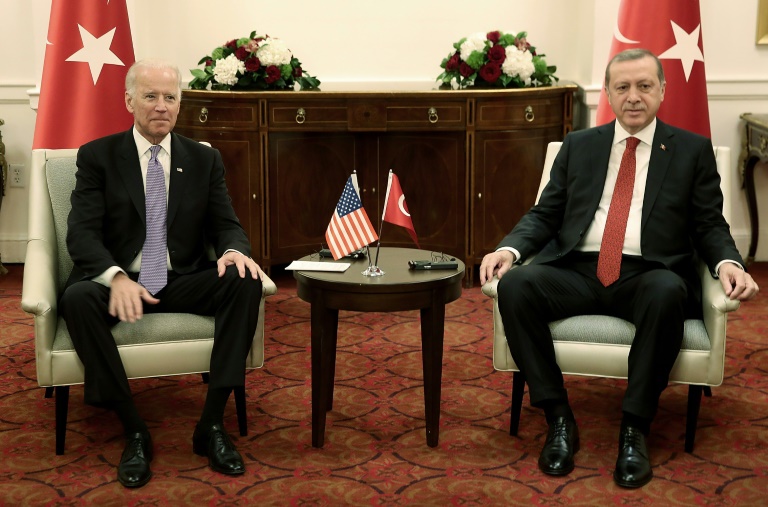
He was expected to meet with US President Joe Biden on Wednesday on the sidelines of the gathering focused on responding to the Kremlin’s invasion of its pro-Western neighbour.

Turkey can essentially veto Finland and Sweden from joining NATO since all members must agree to taking on new members.

Ankara has accused Finland and more particularly Sweden of offering a safe haven to Kurdish militants who have been waging decades-long insurgency against the Turkish state.

The Turkish leader has also called on the two countries to lift arms embargoes imposed on Turkey in 2019 over Ankara’s military offensive in Syria.

Sweden and Finland went into the NATO meeting open to the possibility that Turkey might only lift its objections after the summit concludes on Thursday.

“We have made progress. That is definitely the case,” said Swedish Foreign Minister Ann Linde.

“We are prepared for something positive to happen today, but also for it to take more time,” she added. “We must be patient and continue discussions even after the summit.”

Finnish President Sauli Niinisto said he was neither “optimistic nor pessimistic at this stage”.

But Erdogan said he wanted to see the results of preparatory talks held on Monday in Brussels before deciding whether Sweden and Finland had done enough to lift his objections to their membership of NATO.

“We will see what point they (Finland and Sweden) have reached,” he said on Monday before flying to Madrid for the summit. 

“We do not want empty words. We want results.”

– ‘Interest of the alliance´-

Speaking to reporters aboard Air Force One, US National Security Advisor Jake Sullivan said Biden and Erdogan would “at some point” meet on Wednesday on the sidelines of the summit.

But he stressed the United States was not adopting a “brokering role” and would leave the NATO secretary general in charge.

“Rather, we’re going to do what many other allies have done which is indicate publicly and privately that we believe it is in the interest of the alliance to get this done,” he added.

“And we also believe that Finland and Sweden have taken significant steps forward in terms of addressing Turkey’s concerns.”

Analysts believe the meeting between Erdogan and Biden could play a crucial role in breaking down Turkey’s resistance to bids by Sweden and Finland to join the Western defence alliance in response to the war.

The two leaders have had a chilly relationship since Biden’s election because of US concerns about human rights under Erdogan.

Biden and Erdogan last met briefly in October on the sidelines of a G20 summit in Rome.

– Fighter jet talks –

Erdogan’s ability to maintain a close working relationship with Russian President Vladimir Putin while supporting Ukraine’s war effort has made him an important player in the conflict.

But those ties have also complicated his relations with Biden and NATO.

Washington has sanctioned Ankara for taking delivery of an advanced Russian missile defence system in 2019.

The purchase saw the United States drop Turkey from the F-35 joint strike fighter programme and impose trade restrictions on its military procurement agency.

But Washington has signalled it may be willing to move past the dispute.

Biden’s administration has dangled the possibility of supplying Ankara with older-generation F-16 jets that could replenish Turkey’s ageing air force fleet.

“The most important issue is the F-16 issue. It is still on the table,” Erdogan said of his upcoming talks with Biden.

burs-ds/del/raz

South Africa's Eskom announces further power cuts

South Africa, a country plagued by power shortages, on Tuesday imposed the the toughest electricity rationing in two and a half years after labour disputes disrupted production at several plants.

Power rationing to consumers was ramped up to so-called Stage 6 load-shedding to prevent countrywide blackouts.

Stage 6 means that South Africans will now experience multiple cuts per day, each lasting several hours.

Africa’s leading industrialised country last experienced such drastic outages in December 2019. 

“There is a high risk that the stage of load-shedding may have to change at any time, depending on the state of the plant,” power utility Eskom said in a statement.  

Power cuts are a major source of frustration and discontent in South Africa, where protests broke out near Eskom’s offices last year.

Record Ernst & Young fine in US for cheating on ethics exams

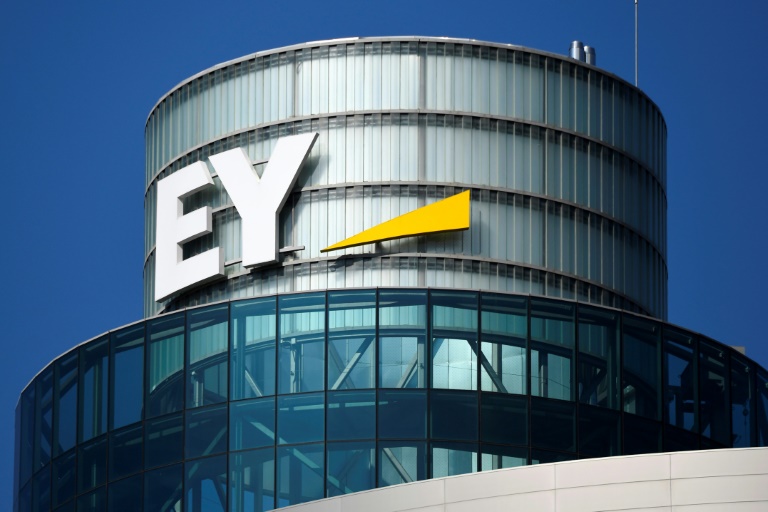
US authorities fined Ernst & Young a record $100 million over cheating on accounting ethics exams that the firm initially covered up from regulators, officials announced Tuesday.

From 2017 to 2021, 49 audit professionals with the “Big Four” firm sent or received answer keys to Certified Public Accountant (CPA) ethics exams, according to a Securities and Exchange Commission order.

Hundreds of other Ernst & Young professionals cheated on other exams, while a “significant” number of staff did not cheat themselves but failed to report the misconduct, said the SEC order, part of the agency’s settlement agreement with the firm.

“It’s simply outrageous that the very professionals responsible for catching cheating by clients cheated on ethics exams of all things,” said Gurbir Grewal, head of the SEC’s division of enforcement. 

The order also took Ernst & Young to task over its lack of candor with the agency.

On June 19, two days after the SEC fined KPMG $50 million over similar ethical misconduct, the agency sent Ernst & Young a formal request asking if the firm had received any ethics or whistleblowing complaints.

Ernst & Young’s response to the SEC implied that the firm did not have any current issues, even though it had received a report on June 19 from an employee describing how a colleague had emailed the answers to the CPA ethics exam.

The firm undertook an internal probe of the incident that was broadened in October 2019. Ernst & Young did not disclose the problem until March 2020, the order said.

“The SEC will not permit the submission of misleading information or any action that delays or frustrates our mandate to protect investors and our markets,” said Melissa Hodgman, associate director of the SEC’s enforcement division. 

Besides the fine, Ernst & Young must retain two independent consultants to review its ethics policies and its disclosure failures.

“We have repeatedly and consistently taken steps to reinforce our culture of compliance, ethics, and integrity in the past,” said an Ernst & Young media statement. 

“We will continue to take extensive actions, including disciplinary steps, training, monitoring, and communications that will further strengthen our commitment in the future.”

Record Ernst & Young fine in US for cheating on ethics exams

US authorities fined Ernst & Young a record $100 million over cheating on accounting ethics exams that the firm initially covered up from regulators, officials announced Tuesday.

From 2017 to 2021, 49 audit professionals with the “Big Four” firm sent or received answer keys to Certified Public Accountant (CPA) ethics exams, according to a Securities and Exchange Commission order.

Hundreds of other Ernst & Young professionals cheated on other exams, while a “significant” number of staff did not cheat themselves but failed to report the misconduct, said the SEC order, part of the agency’s settlement agreement with the firm.

“It’s simply outrageous that the very professionals responsible for catching cheating by clients cheated on ethics exams of all things,” said Gurbir Grewal, head of the SEC’s division of enforcement. 

The order also took Ernst & Young to task over its lack of candor with the agency.

On June 19, two days after the SEC fined KPMG $50 million over similar ethical misconduct, the agency sent Ernst & Young a formal request asking if the firm had received any ethics or whistleblowing complaints.

Ernst & Young’s response to the SEC implied that the firm did not have any current issues, even though it had received a report on June 19 from an employee describing how a colleague had emailed the answers to the CPA ethics exam.

The firm undertook an internal probe of the incident that was broadened in October 2019. Ernst & Young did not disclose the problem until March 2020, the order said.

“The SEC will not permit the submission of misleading information or any action that delays or frustrates our mandate to protect investors and our markets,” said Melissa Hodgman, associate director of the SEC’s enforcement division. 

Besides the fine, Ernst & Young must retain two independent consultants to review its ethics policies and its disclosure failures.

“We have repeatedly and consistently taken steps to reinforce our culture of compliance, ethics, and integrity in the past,” said an Ernst & Young media statement. 

“We will continue to take extensive actions, including disciplinary steps, training, monitoring, and communications that will further strengthen our commitment in the future.”

G7 takes aim at China over 'market-distorting' practices

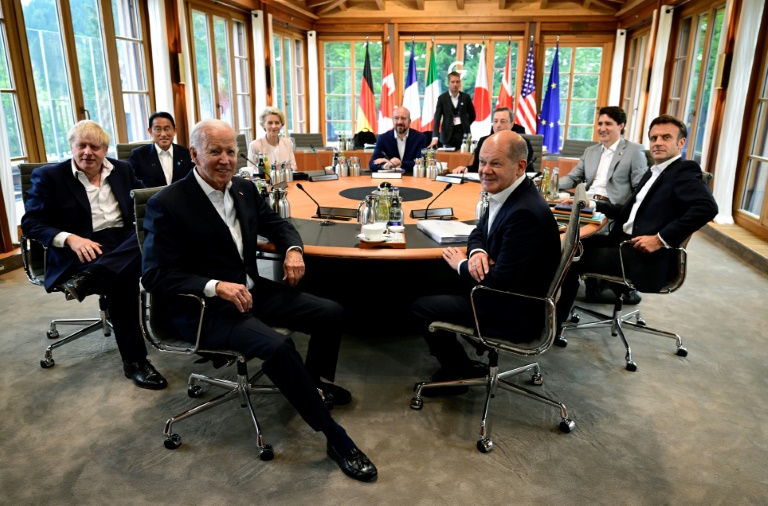
G7 leaders on Tuesday condemned China’s “non-transparent and market-distorting” international trade practices in an end-of-summit statement billed as “unprecedented” by the United States.

The statement, which also pledged to reduce “strategic dependencies” on China, came hours before the leaders join a larger group of their counterparts at a NATO summit in Madrid.

There, the 30-member alliance was also poised to toughen its stance against Beijing in an update of its “strategic concept”.

The United States has long cast a wary eye at China over its trade practices, which Washington believes are designed to accord an unfair advantage to Chinese companies over foreign firms.

Russia’s invasion of Ukraine and Beijing’s refusal to distance itself from Vladimir Putin has prompted other countries, including export giant Germany, to also reconsider their economic reliance on the Asian giant.

Beijing’s increasingly strident claims over much of the South China Sea has also sparked alarm over its military ambitions.

In their closing statement following a three-day summit in the Bavarian Alps, the G7 leaders signalled that they would seek to extricate themselves from economic dependence on China. 

They vowed to “foster diversification and resilience to economic coercion, and to reduce strategic dependencies”.

A US official called the collective statement “unprecedented in the context of the G7” in acknowledging “the harms caused by China’s non-transparent, market distorting, industrial directives”. 

The leaders also voiced concern about human rights violations in China, urging Beijing to respect fundamental freedoms. 

They stressed that the situation in Tibet, and in Xinjiang, where there is “forced labour”, “is of major concern to us”.

The statement also urged China to “honour its commitments” under the Sino-British Joint Declaration, in which Beijing agreed Hong Kong could keep some freedoms and autonomy for 50 years under a “One Country, Two Systems” model.

It pressed Beijing to get Russia to withdraw from Ukraine.

– ‘Serious danger’ –

German Chancellor and summit host Olaf Scholz underlined the “ambivalence” in the West’s relationship with China.

But he said in an interview with Welt daily it was now “very clear that we need to diversify our supply chains and exports”.

That means also “having an eye on the entire Asian zone, because many countries have risen, not just China”.

After several years of detente and cooperation as China caught up economically with the West, Beijing has since taken a more assertive tone on the world stage.

Western allies acknowledge that the world’s biggest challenges, including climate change, cannot be solved without Beijing’s cooperation, but have become more cautious about China’s actions and aims.

The export powerhouse has over recent years offered billions in investments and loans to build roads, rail and bridges in poorer countries around the world.

While greeted enthusiastically in the beginning, some receiving countries have later found themselves mired in debt.

Scholz recently warned that China’s years-long lending spree in poorer countries, particularly in Africa, poses a “serious danger” that could plunge the world into the next financial crisis.

Critics have also accused Beijing of seeking to buy influence in the south.

To offer an alternative to the world’s poorest, the G7 on Sunday pledged $600 billion for global infrastructure programmes.

European Commission President Ursula von der Leyen said the huge programme showed partners in the developing world “that they have a choice”. 

Beyond economic aid, Western allies are also poised for the first time to pivot their military strategy to address the challenges posed by China as they gather in Madrid for a NATO summit. 

The update of the “strategic concept” is the alliance’s first in a decade.

Red Bull announce 'milestone' move into hypercar market

Red Bull announced on Tuesday its first foray into the exclusive world of the hypercar with a limited production run of 50 starting in 2025.

The RB17 road car will carry a price tag of £5 million (5.79 million euros), before tax, a statement reported, with the project overseen by Andrew Newey, the Chief Technical Officer who designed Red Bull’s four Formula One world championship winning cars.

Production on the two-seater hybrid V8 engine producing over 1100bhp will be at Red Bull’s Milton Keynes site.

Red Bull team principal Christian Horner said the RB17 “marks an important milestone in the evolution” of their Advanced Technologies arm which for the first time is producing a car with the energy drinks giant’s logo on the bonnet.

Newey said the RB17 “distills everything we know about creating championship-winning Formula 1 cars into a package that delivers extreme levels of performance in a two-seat track car”.

He added: “Driven by our passion for performance at every level, the RB17 pushes design and technical boundaries far beyond what has been previously available to enthusiasts and collectors.”

Red Bull are joining a club which was valued at USD 13.7 billion in 2019 and which counts among its members pitlane rivals Ferrari, McLaren, and Aston Martin, whose Valkyrie supercar was designed by Newey.

Hypercars are a rare breed, with only around a dozen marques, their natural habitat the wealthier corners of the earth with Europe’s place as the leading sales region due to be challenged by Asia Pacific according to industry forecasts.

US likely to avoid recession, but rates need to climb: Fed official

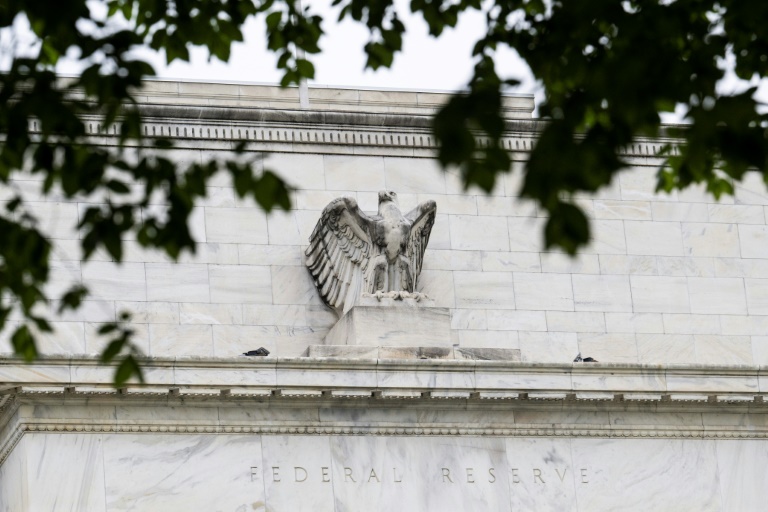
The US economy will slow this year as intended and is expected to avoid a downturn, but the Federal Reserve will have to raise borrowing rates quickly, a top central bank official said Tuesday.

“Recession is not my base case right now. I think the economy is strong,” New York Fed President John Williams said on CNBC.

But he said policymakers need to hike rates “expeditiously” to tamp down inflationary pressures and get the key policy interest rate to 3.0-3.5 percent by later this year.

With American families struggling in the face of soaring gas and food prices, the Fed has shifted into high gear, implementing the biggest rate hike in nearly 30 years earlier this month to try to cool the economy and rein in inflation.

The Fed since March has raised the benchmark borrowing rate 1.5 percentage points, from zero where it had been since the start of the Covid-19 pandemic, and is expected to announce another three-quarter-point increase at its July policy meeting, with further hikes coming.

That has raised fears the campaign to quell the highest inflation in four decades will tumble the world’s largest economy into recession.

But Williams echoed the cautiously optimistic view of Fed chief Jerome Powell, saying there is a path forward that avoids a contraction.

“I’m expecting growth to slow this year quite a bit relative to what we had last year,” with GDP expanding by 1.0 to 1.5 percent, he said.

“It’s not a recession, it’s a slowdown that we need to see in the economy to reduce the inflationary pressures and bring inflation down.”

The Russian invasion of Ukraine has been a major factor contributing to rising food and oil prices worldwide, and Williams noted that the main risks to the US economy “are coming from abroad.”

He said it was “perfectly reasonable” to expect the Fed to raise the policy rate to 3.5-4.0 percent next year, but that the final path will depend on the economic data.

“We need to raise interest rates quite a bit this year and into next year,” he said. “We’ve got to get interest rates higher and we have to do that expeditiously.”

Close Bitnami banner
Bitnami