US Business

Ghislaine Maxwell put on suicide watch ahead of sentencing: lawyer

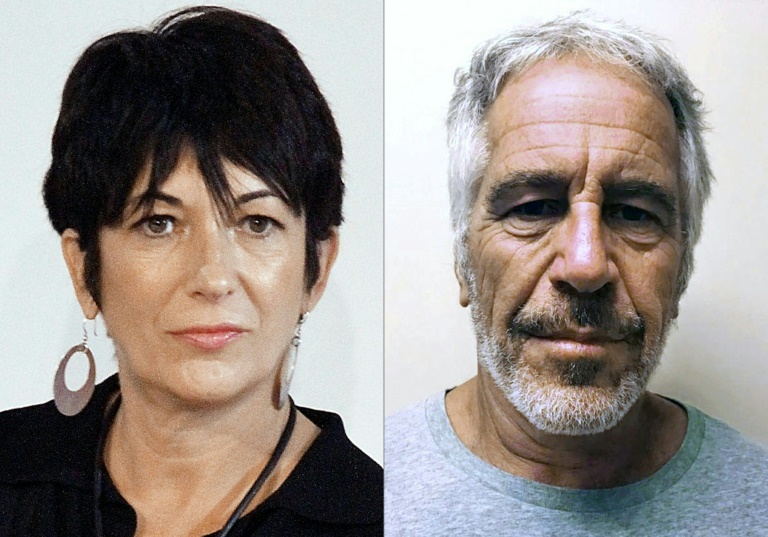
Jailed former socialite Ghislaine Maxwell has been placed on suicide watch — despite not being suicidal — according to her lawyers, who said they would move to postpone her sentencing for sex trafficking if she remained in isolation. 

“Ms. Maxwell was abruptly removed from general population and returned to solitary confinement” on Friday, attorney Bobbi Sternheim wrote in a letter Saturday to Judge Alison Nathan.

She has been denied access to legal documents and time to meet with lawyers and this has “prevented her from preparing for sentencing,” which is set for Tuesday, she added.

Maxwell, who was convicted in New York federal court for helping the late financier Jeffrey Epstein sexually abuse girls, was placed on suicide watch without a psychological evaluation “and without justification,” Sternheim said. 

A psychologist evaluated the 60-year-old on Saturday and “determined she is not suicidal,” she added.

If Maxwell remains on suicide watch, her lawyers will move on Monday to postpone her sentencing, Sternheim said.

The Oxford-educated daughter of the late British press baron Robert Maxwell was convicted late last year on five of six sexual abuse counts, the most serious for sex trafficking minors, and her sentence could amount to an effective life term behind bars.

Prosecutors have asked that Maxwell receive between 30 and 55 years in jail.

Her lawyers have called on Nathan to hand down a sentence less than the US probation office’s recommended 20 years, citing a traumatic childhood and claiming that Maxwell is being unfairly punished because Epstein escaped trial.

Epstein killed himself in 2019 while awaiting his own sex crimes trial in New York.

Maxwell has already been held in detention for some two years following her arrest in New Hampshire in the summer of 2020.

burs-sw/ec/jh

GlobalWafers announces plans for massive US plant

Taiwan’s GlobalWafers on Monday unveiled plans to establish a massive plant in northern Texas to produce a component vital to making semiconductors with an investment of up to $5 billion.

However, the plan to produce silicon wafers, which would reinforce fragile supplies of computer chips, is contingent largely on legislation pending in the US Congress.

“With the global chips shortage and ongoing geopolitical concerns, GlobalWafers is taking this opportunity to address the United States semiconductor supply chain resiliency,” GW Chairman and CEO Doris Hsu said in a statement.

“Instead of importing wafers from Asia, GlobalWafers USA (GWA) will produce and supply wafers locally.”

The material is used to produce chips needed for everything from cars to smartphones, and the global shortage in recent months has been a factor in driving up US prices.

Construction of the new facility — the first of its kind in more than two decades — is due to begin this year in Sherman, Texas, with the first production coming off the line as early as 2025, creating as many as 1,500 jobs, the statement said.

However, GW President Mark England said the impasse in Congress over the $52 billion “CHIPS Act” designed to boost the US industry could hinder the plans.

“The size and possibly the actuality of the Texas investment” are at stake, he said in an email to AFP.

Democrats and Republicans are wrangling over the differing versions passed by the Senate and House of Representatives and have not agreed on the final form of the legislation that would provide subsidies to manufacturers.

England said in a statement that the legislation would help “level the global incentive playing field,” and would be instrumental in ensuring semiconductor investments and supply.

US and state officials cheered the announcement but Commerce Secretary Gina Raimondo urged quick passage of the CHIPS Act.

“We are at a make-or-break moment to expand domestic semiconductor production,” she said. “Moving quickly to pass this bill will demonstrate America’s commitment to robust domestic semiconductor capacity and provide more companies throughout the supply chain the confidence they need to move forward with investments here.”

The 300-millimeter silicon wafers are the starting material for all advanced semiconductor fabrication sites (or fabs), including recently announced US expansions by GlobalFoundries, Intel, Samsung, Texas Instruments and TSMC, but most are imported from Asia.

GlobalWafers announces plans for massive US plant

Taiwan’s GlobalWafers on Monday unveiled plans to establish a massive plant in northern Texas to produce a component vital to making semiconductors with an investment of up to $5 billion.

However, the plan to produce silicon wafers, which would reinforce fragile supplies of computer chips, is contingent largely on legislation pending in the US Congress.

“With the global chips shortage and ongoing geopolitical concerns, GlobalWafers is taking this opportunity to address the United States semiconductor supply chain resiliency,” GW Chairman and CEO Doris Hsu said in a statement.

“Instead of importing wafers from Asia, GlobalWafers USA (GWA) will produce and supply wafers locally.”

The material is used to produce chips needed for everything from cars to smartphones, and the global shortage in recent months has been a factor in driving up US prices.

Construction of the new facility — the first of its kind in more than two decades — is due to begin this year in Sherman, Texas, with the first production coming off the line as early as 2025, creating as many as 1,500 jobs, the statement said.

However, GW President Mark England said the impasse in Congress over the $52 billion “CHIPS Act” designed to boost the US industry could hinder the plans.

“The size and possibly the actuality of the Texas investment” are at stake, he said in an email to AFP.

Democrats and Republicans are wrangling over the differing versions passed by the Senate and House of Representatives and have not agreed on the final form of the legislation that would provide subsidies to manufacturers.

England said in a statement that the legislation would help “level the global incentive playing field,” and would be instrumental in ensuring semiconductor investments and supply.

US and state officials cheered the announcement but Commerce Secretary Gina Raimondo urged quick passage of the CHIPS Act.

“We are at a make-or-break moment to expand domestic semiconductor production,” she said. “Moving quickly to pass this bill will demonstrate America’s commitment to robust domestic semiconductor capacity and provide more companies throughout the supply chain the confidence they need to move forward with investments here.”

The 300-millimeter silicon wafers are the starting material for all advanced semiconductor fabrication sites (or fabs), including recently announced US expansions by GlobalFoundries, Intel, Samsung, Texas Instruments and TSMC, but most are imported from Asia.

Protesters meet Ecuador govt after rejecting fuel price cut

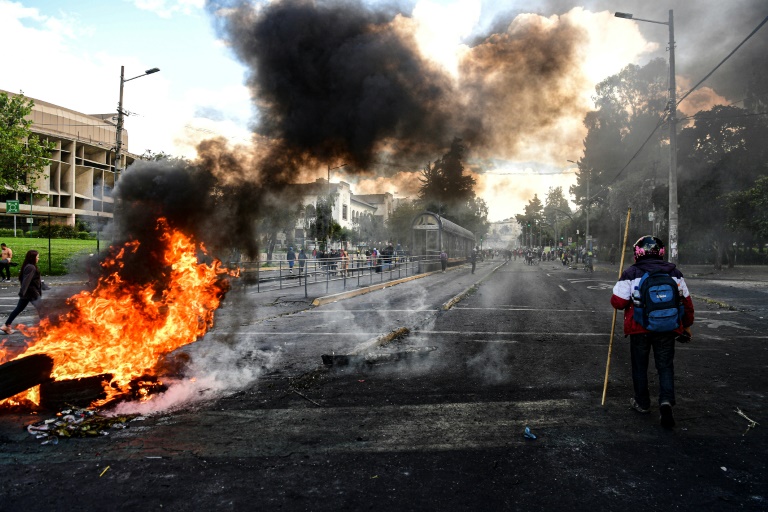
Indigenous protesters in Ecuador met with the government on Monday in an attempt to end nationwide demonstrations against high living costs that have rocked the country for two weeks.

The meeting came after protesters rejected a fuel price cut announced by the government as insufficient and vowed to continue demonstrations. 

President Guillermo Lasso on Sunday announced a 10-cents-per-gallon reduction to the fast-rising diesel and gasoline prices that sparked the uprising, now in its fifteenth day and severely hampering the oil-dependent economy.

The cut was not nearly as much as protesters had demanded and the powerful Confederation of Indigenous Nationalities of Ecuador (Conaie), which has been blockading roads and occupying oil wells since June 13, said the gesture was “not enough, it is insensitive.”

It showed, said a statement signed by Conaie leader Leonidas Iza, that the government “does not sympathize with the situation of poverty faced by millions of families.”

“Our struggle is not over,” the group added.

But later on Monday, Conaie met with the government in a meeting that was broadcast online.

Iza said the group’s aim was to agree “a policy that can benefit the poorest,” while reiterating that Indigenous people had been “insulted” by Lasso’s gesture.

Indigenous people make up more than a million of the South American nation’s 17.7 million people, and Conaie is credited with unseating three presidents between 1997 and 2005.

Fuel prices, which are subsidized in oil-producing Ecuador, have risen sharply since 2020, almost doubling for diesel from $1 to $1.90 per gallon and swelling from $1.75 to $2.55 for gasoline.

Conaie wants the price to be lowered to $1.50 per gallon for diesel and $2.10 for gasoline.

– ‘Critical’ level –

An estimated 14,000 protesters are taking part in a nationwide show of discontent against rising hardship in an economy dealt a serious blow by the coronavirus pandemic.

Most of the ire is concentrated in the capital Quito, where some 10,000 people are gathered, mainly from other parts of the country.

Other than fuel price cuts, the protesters also want jobs, food price controls, and more public spending on healthcare and education.

The action has been costly, with losses of some $50 million per day to the economy, and production of fuel — Ecuador’s biggest export — halved from about 520,000 barrels per day, according to the energy ministry.

Hundreds of wells are besieged.

On Sunday, the ministry said oil production had reached a “critical” level and could be halted entirely within 48 hours if the protests continued.

Ecuador’s economy is highly dependent on oil revenues, with 65 percent of output exported in the first four months of 2022.

The demonstrations have also crippled transportation, with roadblocks set up in 19 of the country’s 24 provinces, blocking the delivery of food and flowers — another key export — and dealing a blow to tourism.

Shortages are already being reported in the capital, where prices have soared and irate workers and shop owners have launched counter-protests against the disruption of their lives and livelihoods.

– ‘Full force’ –

Lasso, an ex-banker who took office last year, finds himself in a tough spot between the protesters and politicians who blame him for the drawn-out standoff.

At the request of opposition parties, parliament started an impeachment hearing for the president over the weekend, suspended until Tuesday.

Once the hearings conclude, lawmakers will have 72 hours to vote.

Impeachment would require 92 of the 137 possible votes in the National Assembly, where the opposition holds a fragmented majority.

Seeking to appease protesters, Lasso on Saturday lifted a state of emergency that had been in place in six provinces, with Quito under a night-time curfew.

There was also a first meeting between protesters and the government, although no details emerged of what was discussed.

In two weeks of protests to date, five people have died in clashes with police, and hundreds have been injured on both sides.

International organizations and rights bodies have called for an end to the violence, while Pope Francis on Sunday urged “dialogue.”

Both sides have accused each other of intransigence.

Lasso insisted Sunday that those seeking a peaceful settlement would find an “outstretched hand,” adding, however, that “those who seek chaos, violence and terrorism will face the full force of the law.”

Louisiana judge temporarily halts new state abortion bans

A Louisiana judge blocked enforcement of new laws prohibiting abortion Monday in one of the first of many expected challenges to bans following the Supreme Court’s decision to end the federal right to the procedure.

The judge in the state district court in New Orleans issued an order preventing implementation of three separate laws severely restricting abortions that were to come into effect upon the high court’s ruling on Friday.

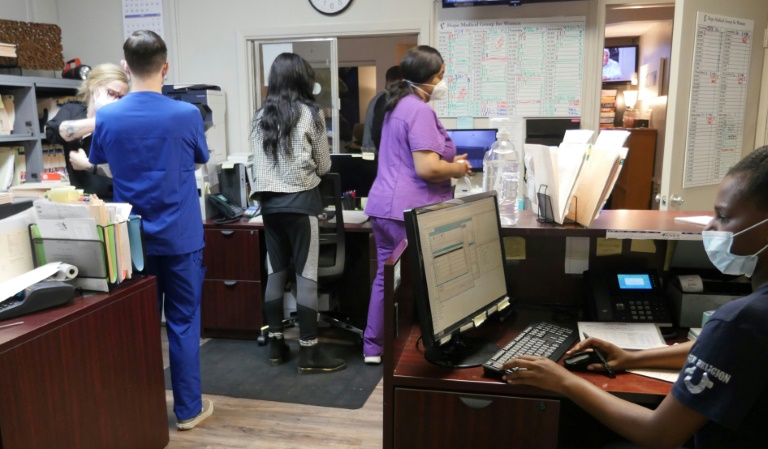
The move responded to a lawsuit by one of the state’s three abortion providers, Hope Medical Group for Women, and the pro-abortion rights group Medical Students for Choice.

The suit challenged laws passed in expectation that the Supreme Court would overturn the nearly five-decade old Roe v. Wade judgement, which said the US constitution protected a woman’s right to abortion.

The plaintiffs argued that the three “trigger bans” were vague in not saying specifically what conduct is banned, or when.

“There is no process in place to determine that any one of the trigger bans has, in fact, gone into effect,” the suit said.

It cited state and local officials issuing conflicting statements on Friday over which of the three laws was in effect and how they would be enforced, if at all. 

“There is tremendous urgency around this petition and emergency motion,” they said. 

Nevertheless, the trigger laws had momentarily forced the three abortion providers in the state to halt their work.

The Supreme Court’s decision “has precipitated a tidal wave of canceled appointments and the withdrawal of critical services in states with trigger laws throughout the nation, perhaps none more so than in Louisiana where the trigger laws are immediately effective,” the suit said.

The judge placed a temporary restraining order on implementation of the three laws, in advance of a hearing on July 8 in which the groups behind the suit hope to gain a permanent injunction.

The Center for Reproductive Rights, which supported the lawsuit, said that abortion services would continue in Louisiana in the meantime.

The suit was one of several challenging full or partial abortion bans triggered by the Supreme Court’s decision in states including Florida, Ohio, Texas, Idaho, Mississippi and Utah.

In Utah, Planned Parenthood said a court had granted a temporary restraining order to block a 2020 abortion ban that took effect after the Supreme Court ruling last week.

“We’re grateful for this temporary restraining order that will allow abortion services to resume in Utah,” said Karrie Galloway, the group’s president in the western state.

“Today is a win, but it is only the first step in what will undoubtedly be a long and difficult fight,” she said in a statement.

Such bans are expected to be implemented in some 26 of the 50 states, and will force women in those states seeking abortions to travel sometimes hundreds of miles to a state where the procedure remains legal.

Three dead, multiple injuries in US train derailment

Three people died Monday when a long-distance train collided with a dump truck in a rural region of the US state of Missouri, leaving multiple passengers injured, local officials said.

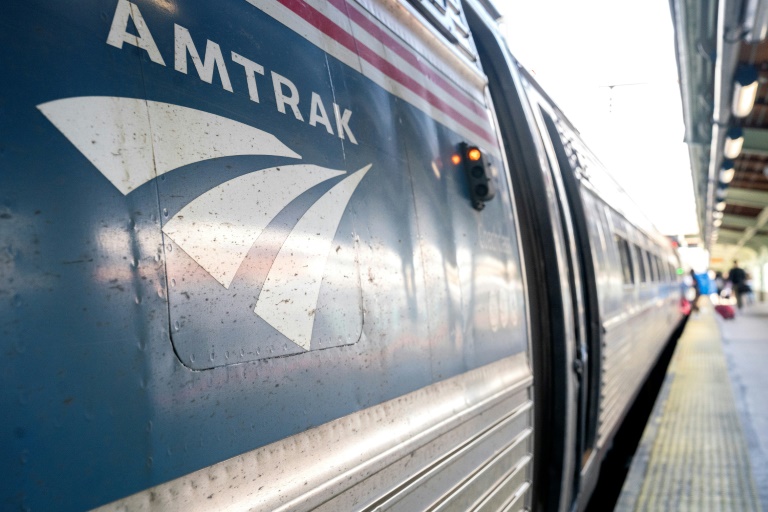
Seven of the Amtrak train’s approximately eight cars derailed on a route from Los Angeles to Chicago when it struck the truck at a rail crossing southwest of Mendon, Missouri.

Railcars were seen toppled on their sides along a farm field as passengers climbed out the windows and doors in images posted to social media.

“It all happened like slow motion. It started to rock and, and rock, and then flicker, and then it just all of a sudden — all this dust was through my window,” Robert Nightingale, who had been asleep in the train, told CNN.

Blocked in his car, he climbed into a hallway before exiting through the side of the train, he said, adding that the dump truck appeared to have been carrying big boulders.

Justin Dunn, a spokesman for the Missouri State Highway Patrol, told reporters at a press conference that the investigation “is in its preliminary stages.”

The train was carrying more than 200 passengers and around a dozen crew when it crossed the intersection on a gravel road, which officials said had neither lights nor electronic control devices marking the tracks, which is common in rural areas.

“There are multiple injuries and we can confirm there were three fatalities — two on the train and one in the dump truck,” Dunn said.

Emergency responders from surrounding counties arrived at the scene and some injured were carried to trauma centers in medical helicopters, officials said.

The National Transportation Safety board, the US agency responsible for investigating transportation incidents, said on Twitter that a 14-member team would probe the derailment.

The accident comes one day after another Amtrak-operated train collided with a passenger vehicle at a railroad crossing in California, resulting in three deaths.

The crossing involved did not have guards, and a local fire official said it was not uncommon to have accidents there, the local NBC affiliate reported.

Brazil's Petrobras board approves Bolsonaro choice as president

The board of directors at Brazilian oil giant Petrobras on Monday approved President Jair Bolsonaro’s pick to be the state-controlled company’s chief.

Caio Paes de Andrade will be the company’s fourth president in less than four years. His mandate is due to run until April 2023 but his predecessor Jose Mauro Coelho only lasted 40 days.

Coelho had been due to stay in place until his successor was appointed but resigned last week following harsh criticism by Bolsonaro over a new hike in fuel prices.

The two previous Petrobras presidents, Joaquim Silva e Luna and Roberto Castello Branco, also left the post following stinging Bolsonaro criticism.

Bolsonaro, who is up for re-election later this year, has repeatedly tried in vain to change Petrobras’ price policy, which is tied to the international market.

Rising fuel prices are affecting Bolsonaro’s popularity with elections just three months away.

“Today, Caio (Paes de Andrade) is taking over Petrobras, we will have a new dynamic in fuels in Brazil. Everything will be analyzed on the basis of the law… without interfering in anything,” Bolsonaro said Monday at a ceremony in Brasilia.

The new appointment was welcomed by the markets, with Petrobras shares up 6.75 percent at closing on the Sao Paulo stock exchange.

Paes de Andrade has been a civil servant since Bolsonaro came to power, first in the public technology and information company Sepro, and then in the economy ministry.

Nike profits dip on lower sales in North America, China

Lower sales in North America and China dented Nike’s quarterly results as the sports giant on Monday projected modest revenue growth amid the strong dollar, rising inflation and other headwinds.

The Oregon company — which has enjoyed strong pricing at times during the pandemic but also faced Covid-19 factory lockdowns in Asia that have crimped its inventories — reported lower profits for its fiscal fourth quarter.

For the quarter ending May 31, Nike reported profits of $1.4 billion, down five percent from the prior year on a one percent dip in revenues to $12.2 percent.

Neil Saunders, managing director of GlobalData, a retail consultancy, said the results were “reasonably good” but with some unfortunate “devils in details.”

These include the tough North American inflationary environment, which has led some consumers to cut back on discretionary investments.

Another issue is China where lockdowns “are creating sudden swings in consumer behavior,” Saunders said in a note.

“In theory there should be a recover as China reopens, but this could quickly be reversed if further lockdowns are imposed.”

Shares retreated as Nike forecast revenues of flat to “slightly up” in the coming quarter.

Nike Chief Financial Officer Matthew Friend said the company was monitoring consumer behavior over “implications of high inflation” and adopting a “cautious approach” to Greater China given the country’s restrictive Covid-19 policies.

Friend also said the forecast reflects a drag from the strong dollar in overseas markets, as well as the continued hit from lofty freight costs and supply chain investments.

Shares dropped 3.0 percent to $107.20 in after-hours trading.

Nike profits dip on lower sales in North America, China

Lower sales in North America and China dented Nike’s quarterly results as the sports giant on Monday projected modest revenue growth amid the strong dollar, rising inflation and other headwinds.

The Oregon company — which has enjoyed strong pricing at times during the pandemic but also faced Covid-19 factory lockdowns in Asia that have crimped its inventories — reported lower profits for its fiscal fourth quarter.

For the quarter ending May 31, Nike reported profits of $1.4 billion, down five percent from the prior year on a one percent dip in revenues to $12.2 percent.

Neil Saunders, managing director of GlobalData, a retail consultancy, said the results were “reasonably good” but with some unfortunate “devils in details.”

These include the tough North American inflationary environment, which has led some consumers to cut back on discretionary investments.

Another issue is China where lockdowns “are creating sudden swings in consumer behavior,” Saunders said in a note.

“In theory there should be a recover as China reopens, but this could quickly be reversed if further lockdowns are imposed.”

Shares retreated as Nike forecast revenues of flat to “slightly up” in the coming quarter.

Nike Chief Financial Officer Matthew Friend said the company was monitoring consumer behavior over “implications of high inflation” and adopting a “cautious approach” to Greater China given the country’s restrictive Covid-19 policies.

Friend also said the forecast reflects a drag from the strong dollar in overseas markets, as well as the continued hit from lofty freight costs and supply chain investments.

Shares dropped 3.0 percent to $107.20 in after-hours trading.

Alec Baldwin to interview Woody Allen on Instagram live

Actor Alec Baldwin announced Monday he will chat live on Instagram with disgraced comedian and movie director Woody Allen.

“I have ZERO INTEREST in anyone’s judgments and sanctimonious posts here,” said Baldwin, himself at the center of a scandal after a cinematographer was shot dead last year on a film set by a gun Baldwin was holding. 

The announcement of the interview, set for Tuesday, came just days after the release of “Zero Gravity,” the latest book by Allen, whose career has been overshadowed for decades by allegations of sexual abuse by his adopted daughter Dylan Farrow.

“I am OBVIOUSLY someone who has my own set of beliefs and COULD NOT CARE LESS about anyone else’s speculation,” Baldwin wrote in a message accompanying a short video announcing the conversation, in which he held up a copy of Allen’s new book.

In less than 24 hours, the post garnered more than 1,000 comments, many of them critical. “I’ve supported u 100% thru everything. But woody Allen? Bye” wrote one follower.

“If you believe that a trial should be conducted by way of an HBO documentary, that’s your issue,” said Baldwin, 64, referring to the documentary “Allen vs Farrow”, which came out on the streaming channel in 2021, and cast Allen in a poor light. 

In the first of the four episodes of the show, Dylan Farrow, adopted by Allen and his ex-wife Mia Farrow, reiterated her accusations that the Oscar-winning director sexually abused her when she was seven years old, in 1992. 

The 86-year-old director of “Annie Hall” and “Manhattan” has denied the allegations and has faced multiple investigations. 

“I love you Woody,” said a smiling Baldwin in his video. 

Baldwin has spent several months in the eye of the storm himself after he fatally shot his director of photography on set in New Mexico while rehearsing a scene for his movie “Rust.” 

Baldwin said that the conversation with Allen will start at 2:30 pm GMT on his Instagram account. 

Close Bitnami banner
Bitnami