US Business

Rival camps dig in for fight after US abortion ruling

Elected leaders across the US political divide rallied Sunday for a long fight ahead on abortion — state by state and in Congress — with total bans in force or expected soon in half of the vast country.

Two days after the US Supreme Court scrapped half-century constitutional protections for the procedure, abortion rights defenders kept up their mobilization, with a candlelight vigil planned outside the high court in Washington Sunday night.

Dozens of arrests and some instances of vandalism were reported during a weekend of mostly peaceful protests that turned disorderly in places — as the country grapples with a new level of division: between states where abortion is or will soon be illegal, and those that still allow it.

Conservative-led US state legislatures have moved swiftly, with at least eight imposing immediate bans on abortion — many with exceptions only if a woman’s life is in danger — and a similar number to follow suit within weeks.

In a first glimpse of the legal battles ahead, the nation’s largest abortion provider Planned Parenthood filed suit in Utah seeking to block the state’s ban.

And Democratic governors in Michigan and Wisconsin have stepped in to try to keep abortion legal in their Midwestern states.

Defending the ban now in effect in South Dakota, which makes no exception for victims of rape or incest, Republican Governor Kristi Noem called the Supreme Court’s ruling “wonderful news in the defense of life.”

Speaking on ABC’s “This Week,” Noem also voiced support for legislation banning “telemedicine abortions” in which a doctor prescribes pills to end a pregnancy — set to become a key resource in many places where abortion is illegal.

Governor Asa Hutchinson of Arkansas likewise argued that “forcing someone to carry a child to term” in order to save an unborn baby was an “appropriate” use of government power.

States now should now focus on helping mothers and newborns by expanding services including adoption, he said on NBC’s “Meet the Press.”

But the Republican also opposed calls to go further with a federal abortion ban — an ultimate goal of many on the religious right — or restrictions on contraception, which he said is “not going to be touched” in Arkansas.

Fears that the Supreme Court’s strong conservative majority — made possible by Donald Trump — will now seek to target other rights like same-sex marriage and contraception have fueled the nationwide mobilization since Friday.

– ‘Appalling’ –

President Joe Biden has condemned the Supreme Court’s ruling as a “tragic error” — but with power now resting with often anti-abortion state legislatures, he has also acknowledged his hands are largely tied.

The president’s main hope is for voters to turn out in defense of abortion rights in November’s midterm elections — and in the meantime, Biden’s Democrats have vowed to defend women’s reproductive rights every way they can.

In Wisconsin, where an 1849 law banning abortion except to save the life of the mother may go into effect, Governor Tony Evers vowed to offer clemency to any doctors who face prosecution, according to local media.

And Michigan’s Governor Gretchen Whitmer promised to “fight like hell,” saying a temporary injunction has been filed to keep abortion legal in her state.

Congresswoman Alexandria Ocasio-Cortez warned nightmare scenarios may soon come true — as women are forced to continue with unwanted pregnancies, travel long distances to states where abortion remains legal, or undergo clandestine abortions.

“Forcing women to carry pregnancies against their will will kill them. It will kill them,” the progressive lawmaker told NBC, urging Biden to explore opening health care clinics on federal lands in conservative states in order to help people access abortion services.

A CBS poll released Sunday showed that a solid majority — 59 percent — of Americans and 67 percent of women disapproved of the court’s ruling.

While thousands of people rallied peacefully through the weekend — most of them in protest, but many others celebrating — there were isolated incidents of violence, as police fired tear gas on protesters in Arizona and a pickup truck drove through a group of protesters in Iowa.

In the Virginia city of Lynchburg, police were investigating a case of vandalism Saturday at an anti-abortion pregnancy center — which was spray-painted with graffiti and had its windows smashed.

And in Colorado, police were probing a suspected arson attack Saturday at a similar anti-abortion center in the town of Longmont, which was painted with graffiti reading: “If abortions aren’t safe, neither are you.”

Menswear regains its muscle at Paris Fashion Week

Menswear proved to be in reinvigorated form as Paris Fashion Week ended on Sunday, with spectacle, innovation and the return of big-name designers to the catwalk.   

The week was set to conclude with the surprise return of Hedi Slimane, the former Dior and Saint Laurent designer, now with French brand Celine. Just two years ago he announced he was done with the official fashion calendar.

Slimane — who became hugely influential as the stylist behind bands such as The Libertines and Daft Punk in the 2000s — has not presented a live show in Paris since February 2020. He had dismissed them as “obsolete”, preferring to present collections with videos shot in luxurious French locales. 

He gave no explanation for his reappearance on the catwalks, but he returns when there is a sense of a renaissance in menswear.

– ‘A boom’ –

The past few seasons have often seen men’s and women’s shows merging into one — with London Fashion Week doing away with the distinction altogether. 

But this week in Paris seemed to reaffirm the divide, with houses wanting to boost their focus on menswear at a time when demand is booming.  

US designer Matthew Williams presented his first-ever standalone menswear show for Givenchy this week.

“It’s good to give space to men and women, to each and everyone their platform to tell a story,” Williams told fashion site WWD. “There’s more room for more looks.”

His show was grounded in real-life styles from his native California, he said, with a lot of utilitarian knee-length shorts, cargo trousers and relaxed knitwear — much of it in monochrome with a few splashes of pastel colours. 

“Commercially, menswear is a market that has developed a lot with a particularly strong dynamic in Asia that has created a boom for pret-a-porter men’s designers,” said Serge Carreira, fashion expert at Sciences Po University. 

– ‘More accessible’ –

Also marking her first menswear show was France’s Marine Serre, one of the biggest names to emerge in recent years. 

The 30-year-old has made sustainability and inclusivity central to her brand, and that was evident at her sports-themed show in a stadium outside Paris on Saturday. 

Many pieces were upcycled from old scarves and linen — that had been turned into everything from speedos to flags and leotards. 

The models came in all shapes and sizes, from children to older people, alongside celebrities such as ex-footballer Djibril Cisse and Paralympic gold medallist Alexis Hanquinquant, as well as Madonna’s daughter Lourdes Leon in one of the house’s trademark moon-patterned bodysuits. 

“Thirty percent of our sales have been for menswear in the last collections — we’re not at 50/50 but we do quite a bit of men’s and we have no intention of doing less,” Serre told AFP after the show.

“Upcycling is quite rare in men’s but the locker-room lends itself very well to it,” she added. 

“These are shapes that are less complex: it’s easier and we can have better prices that mean it is more accessible for everyone to wear upcycled pieces.” 

Meanwhile, familiar names also made a mark this week. 

Dior took inspiration from the childhood Normandy home of the label’s founder, with a flower-filled garden runway and some straw hats and chic outdoor loungewear among the outfits. 

Hermes was also in a relaxed, pastel-infused mood, which designer Veronique Nichanian told AFP was inspired by “lightness, comfort, fun and colours that pop.”

Ghislaine Maxwell put on suicide watch ahead of sentencing: lawyer

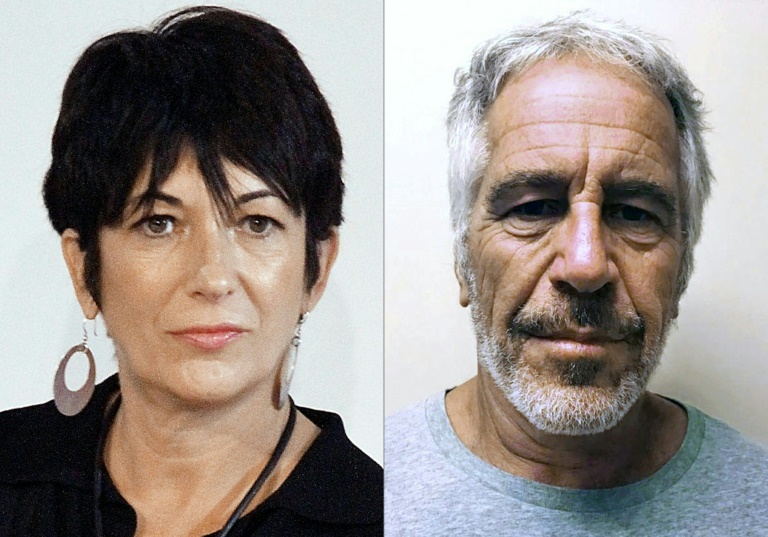
Jailed former socialite Ghislaine Maxwell has been placed on suicide watch — despite not being suicidal — according to her lawyers, who said they would move to postpone her sentencing for sex trafficking if she remained in isolation. 

“Ms. Maxwell was abruptly removed from general population and returned to solitary confinement” on Friday, attorney Bobbi Sternheim wrote in a letter Saturday to Judge Alison Nathan.

She has been denied access to legal documents and time to meet with lawyers and this has “prevented her from preparing for sentencing,” which is set for Tuesday, he added.

Maxwell, who was convicted in New York federal court for helping the late financier Jeffrey Epstein sexually abuse girls, was placed on suicide watch without a psychological evaluation “and without justification,” Sternheim said. 

A psychologist evaluated the 60-year-old on Saturday and “determined she is not suicidal,” he added.

If Maxwell remains on suicide watch, her lawyers will move on Monday to postpone her sentencing, Sternheim said.

The Oxford-educated daughter of the late British press baron Robert Maxwell was convicted late last year on five of six sexual abuse counts, the most serious for sex trafficking minors, and her sentence could amount to an effective life term behind bars.

Prosecutors have asked that Maxwell receive between 30 and 55 years in jail.

Her lawyers have called on Nathan to hand down a sentence less than the US probation office’s recommended 20 years, citing a traumatic childhood and claiming that Maxwell is being unfairly punished because Epstein escaped trial.

Epstein killed himself in 2019 while awaiting his own sex crimes trial in New York.

Maxwell has already been held in detention for some two years following her arrest in New Hampshire in the summer of 2020.

burs-sw/ec

G7 touts $600 bn global infrastructure plan to rival China

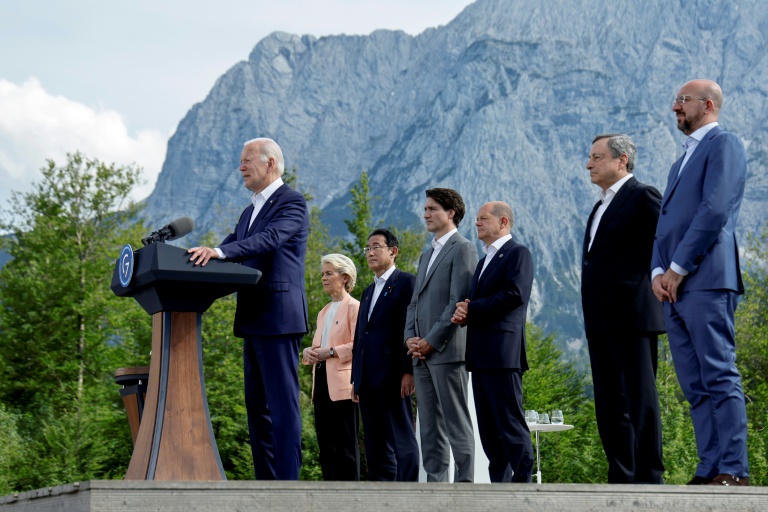
The G7 group of rich democracies on Sunday announced an attempt to compete with China’s formidable Belt and Road Initiative by raising some $600 billion for global infrastructure programmes in poor countries.

The Partnership for Global Infrastructure and Investment, unveiled with fanfare by US President Joe Biden and G7 allies from Canada, Germany, Italy, Japan and the European Union, aims to fill a huge gap left as communist China uses its economic clout to stretch diplomatic tentacles into the furthest reaches of the world.

Biden said the target was for the United States to bring $200 billion to the table, with the rest of the G7 another $400 billion by 2027.

Funding the kinds of projects that China currently dominates — everything from roads to harbours in far-flung corners of the world — is not “aid or charity,” Biden said.

Highlighting the geostrategic thinking behind the plan, Biden said such projects “deliver returns for everyone, including the American people and the people of all our nations.”

Around the world, the role of China’s democratic rivals is “a chance for us to share our positive vision for the future” and for other countries to “see for themselves the concrete benefits of partnering with democracies,” he said.

European Commission chief Ursula von der Leyen echoed this, saying “it is up to us to give a positive, powerful investment impulse to the world, to show our partners in the developing world that they have a choice.”

Although China was not referred to by name, the rivalry loomed large over the leaders’ presentation, a relaunch of a first attempt at a Western infrastructure fund that Biden laid out during last year’s G7 summit in Britain.

Unlike China’s state-run BRI initiative, the proposed G7 funding would depend largely on private companies being willing to commit to massive investments and is therefore not guaranteed.

According to US officials, however, that is a good thing.

In this capitalist vs communist scenario, US officials say, recipient countries will be able to avoid the debt traps and other strongarm tactics allegedly used by the Chinese.

– ‘Not too late’ –

Between now and 2027, the US government and allies will shoot for the $600-billion figure “through grants, federal financing, and leveraging private sector investments,” the White House said.

“This will only be the beginning: the United States and its G7 partners will also seek to mobilise hundreds of billions in additional capital from other like-minded partners, multilateral development banks, development finance institutions, sovereign wealth funds, and more.”

With the investment target largely aspirational, a senior US official acknowledged that the West is currently in second place behind China.

“There’s no doubt that the Belt and Road Initiative has been around for several years and it’s made a lot of cash disbursements and investments — and that we’re coming to this after years of their investments,” the official said.

“But I would argue that it is definitely not too late. And I’m not even sure that it is late.”

The official, briefing reporters on condition of anonymity, said that “many countries” which partnered with China were suffering buyer’s remorse, concluding that Beijing was more interested in establishing economic and geostrategic footholds than benefiting locals.

By contrast, “we’re coming to you with an offer to make investments to actually improve your country, to improve the economy and to have lasting effects on GDP and your populations,” the official said.

“I think that is the deal that is being offered.”

While the obvious targets for the US-led initiative are in Africa, South America and much of Asia are also on the radar. Fallout from Russia’s devastating invasion of Ukraine means that “even places in eastern Europe” could be brought into the fold, the official said.

Bankrupt Sri Lanka seeks discounted Russian oil

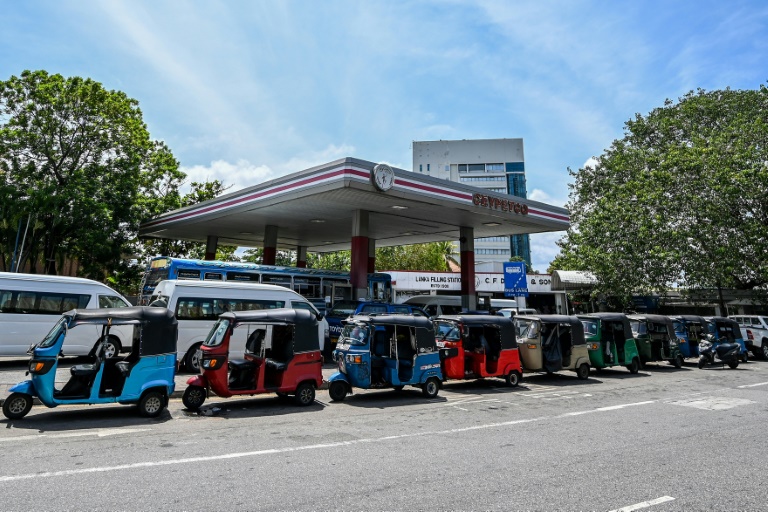
Cash-strapped Sri Lanka on Sunday announced sending ministers to Russia and Qatar to try and secure cheap oil a day after the government said it had all but run out of fuel.

The government meanwhile extended a two-week closure of non-essential state institutions until further notice in order to save fuel, maintaining only a skeleton staff to provide minimum services.

Energy Minister Kanchana Wijesekera said two ministers will travel to Russia on Monday to discuss getting more oil following last month’s purchase of 90,000 tonnes of Siberian crude.

That shipment was arranged through Coral Energy, a Dubai-based intermediary, but politicians have been urging the authorities to negotiate directly with President Vladimir Putin’s government.

“Two ministers are going to Russia and I will go to Qatar tomorrow to see if we can arrange concessionary terms,” Wijesekera told reporters in Colombo.

Wijesekera had announced on Saturday that Sri Lanka was virtually out of petrol and diesel after several scheduled shipments were delayed indefinitely due to “banking” reasons.

Fuel reserves were sufficient to meet less than two days’ demand and it was being reserved for essential services, Wijesekera said while apologising for the situation.

The state-run Ceylon Petroleum Corporation on Sunday hiked the price for diesel by 15 percent to 460 rupees ($1.27) a litre and petrol by 22 percent to 550 rupees.

Since the beginning of the year, diesel prices have gone up nearly four-fold and gasoline has almost tripled.

Wijesekera said there would be an indefinite delay in getting new shipments of oil and urged motorists not to queue up until he introduces a token system to a limited number of vehicles daily.

– US takes stock-

A delegation from the US Treasury and the State Department meanwhile arrived to “explore the most effective ways for the US to support Sri Lankans in need”, the US embassy in Colombo said.

“As Sri Lankans endure some of the greatest economic challenges in their history, our efforts to support economic growth and strengthen democratic institutions have never been more critical,” US ambassador Julie Chung said in a statement.

US Deputy Assistant Secretary of Treasury for Asia Robert Kaproth and Deputy Assistant Secretary of State for South and Central Asia Kelly Keiderling were in the delegation.

The embassy said it had committed $158.75 million in new financing in the past two weeks to help Sri Lankans.

About 1.7 million residents need “life-saving assistance”, according to the United Nations which issued a flash appeal last week.

Four out of five people in the nation of 22 million have reduced their food intake due to severe shortages and galloping prices, the UN noted.

Prime Minister Ranil Wickremesinghe warned parliament on Wednesday that more hardships were on the way.

“Our economy has faced a complete collapse,” Wickremesinghe said. “We are now facing a far more serious situation beyond the mere shortages of fuel, gas, electricity and food.”

Unable to repay its $51 billion foreign debt, the government declared it was defaulting in April and is negotiating with the International Monetary Fund for a possible bailout.

Sri Lanka’s official inflation at the end of May was 45.3 percent, according to official data, but private economists have placed it at 128 percent, the second-highest in the world after Zimbabwe.

French energy giants urge consumers to cut back

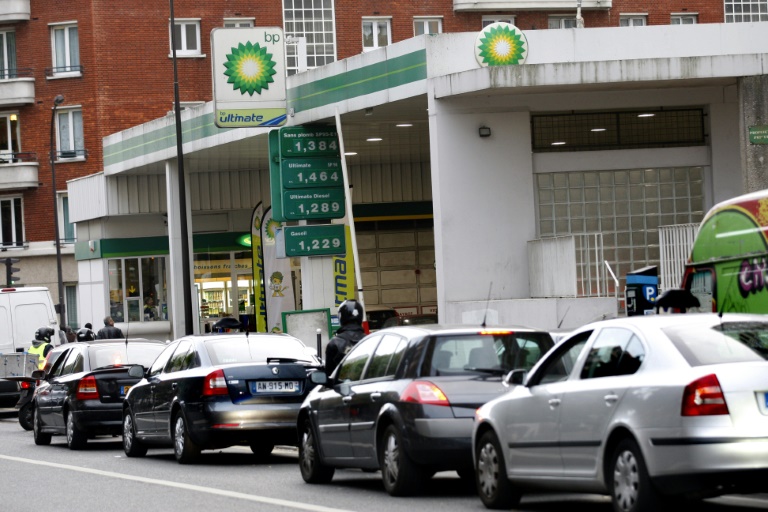
Consumers should start cutting back on their energy use immediately, the bosses of France’s three big energy companies urged Sunday, warning of social tensions next winter unless reserves are replenished.

“The effort has to be immediate, collective and massive,” Patrick Pouyanne of TotalEnergies, Jean-Bernard Levy of EDF and Catherine MacGregor of ENGIE wrote in an op-ed piece in the JDD weekly.

The call came after the French government said this week it aimed to have its natural gas reserves at full capacity by autumn as European countries brace for supply cuts from major supplier Russia with the Ukraine war dragging on, and would build a floating terminal to receive more gas supplies by ship.

The three energy bosses said in the article that European energy production was further hampered by hydro-electric production suffering from drought.

“The surge in energy prices resulting from these difficulties threatens our social and political fabric and impacts families’ purchasing power too severely,” they said, adding: “The best energy is the one we don’t use.”

They said “every consumer and every company must change their habits and immediately limit their energy consumption, be it of electricity, gas or oil products”.

Replenishing reserves of natural gas over the summer is a priority, as is “eliminating the national waste” of energy, they said.

France is less dependent than neighbour Germany on Russian gas deliveries as it covers close to 70 percent of its electricity needs from nuclear energy.

But according to the International Energy Agency (IEA), France needs to accelerate the deployment of low-carbon energy technologies and energy efficiency solutions if it wants to reach its energy and climate targets.

France notably needs “more sustained and consistent policies” to develop alternatives to fossil fuels, such as wind and solar energy, the IEA said.

Abortion pills to become next battleground in US reproductive fight

As conservative US states rush to enact abortion bans following the Supreme Court’s bombshell decision, the fight over reproductive rights in America is poised to shift to a new battleground: abortion-inducing pills.

With little other means at its disposal, the Biden administration will focus on expanding access to abortion pills for women living in states where the procedure is banned or restricted — while those states and powerful conservative groups are sure to mount legal challenges to prohibit their use.

Hours after the high court shredded 50 years of constitutional protections for abortion rights on Friday, President Joe Biden ordered health officials to make sure abortion pills were available to American women.

“I will do all in my power to protect a woman’s right in states where they will face the consequences of today’s decision,” he said in televised address to the nation.

The pills, which can be used without significant risk to terminate a pregnancy up to 10 weeks’ gestation, already account for half of all abortions carried out in the United States.

Demand is set to soar further after 11 states mostly in the Republican-led conservative South moved to severely restrict or fully ban abortion, with others set to follow suit.

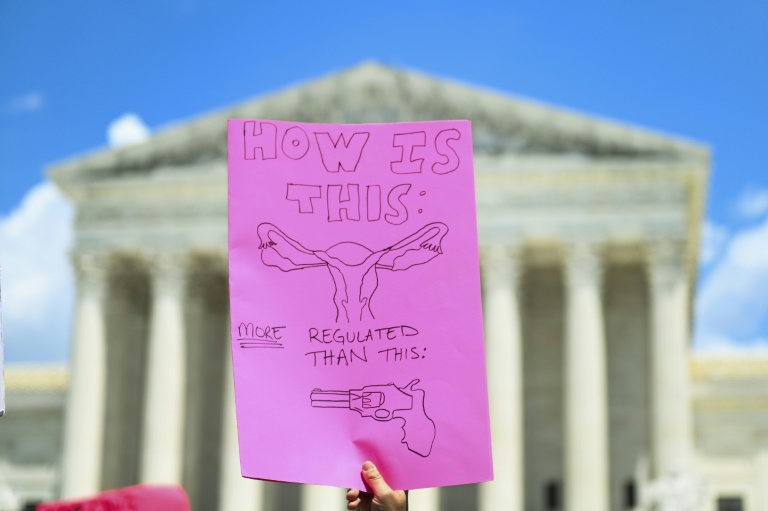
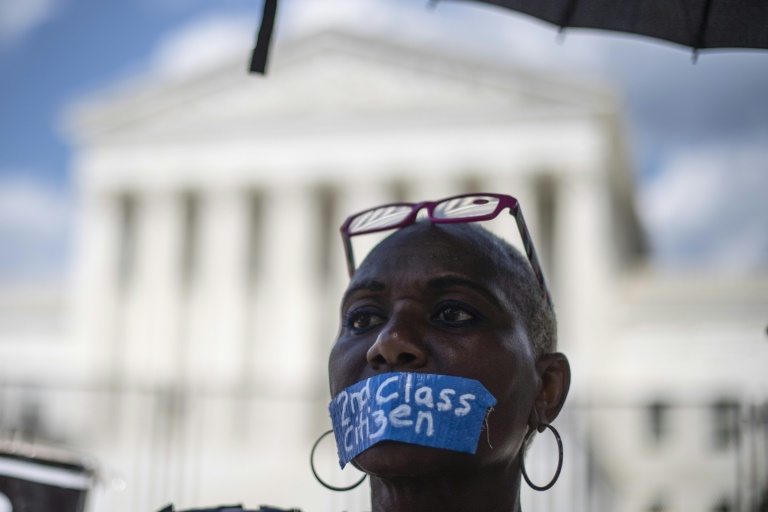
Already Saturday, some activists rallying outside the Supreme Court in the US capital Washington held up posters with instructions on where women can get abortion pills, while others chanted “My body, my choice.”

Rebecca Gomperts, a Dutch physician who runs Aid Access, an Austria-based organization that provides abortion pills over the internet, is confident that the situation now faced by American women is not as tragic as it was 50 years ago, before the landmark Roe vs. Wade ruling of 1973 that enshrined abortion rights in America.

“The abortion pills cannot be stopped,” Gomperts told AFP in a phone interview. “So there is always access to a safe abortion if a woman has an unwanted pregnancy.”

But after Friday’s ruling, that may be easier said than done.

– A legal grey area –

The Food and Drug Administration, America’s health regulator, approved the use of abortion pills two decades ago and last year allowed for them to be prescribed via telemedicine and delivered by mail.

But their use in anti-abortion states remains a legal grey area and will likely become a front line in future court battles over reproductive rights.

According to the Guttmacher Institute, a research group that supports access to abortion, 19 US states require that abortion pills be physically administered by a clinician, thus prohibiting their delivery by mail.

And in states that ban all methods of abortion, women may be prohibited from seeking tele-health appointments with out-of-state doctors or foreign clinicians, like Gomperts’ group. 

In this case, they may have to travel to a state where reproductive tele-health appointments are allowed and get the medication delivered to an out-of-state address.

But there is another complication.

A medication abortion requires two drugs: first, a dose of mifepristone is taken to block the hormones that support a pregnancy; then, 24 to 48 hours later, misoprostol is taken to induce contractions.

That raises a question: can a woman from an anti-abortion state be prosecuted if she receives the first dose elsewhere, but takes the second dose after returning home?

As liberal states take action to facilitate abortions for women from other parts of the country, there are fears that conservative states may seek to prosecute health workers and advocacy groups involved in those efforts — and even the patients themselves.

Anticipating such plans, Biden’s Attorney General Merrick Garland on Friday warned that states cannot ban abortion pills, authorized by the federal regulator, “based on disagreement with the FDA’s expert judgment about its safety and efficacy” since federal law preempts state law.

As these legal battles prepare to play out, anti-abortion advocate Savannah Craven said she and her colleagues will work on getting all methods of abortion, including with pills, banned across the United States.

“I believe in the sanctity and dignity of human life. Life begins in the womb, life begins at conception,” she said.

But the argument fell flat with Elizabeth Kellogg and her husband Dan Reitz, who showed up to protest outside the Supreme Court with their eight-month-old daughter Lorelei.

“If it were about life, they’d be worried about the life of the birther, they’d be worried about life after birth,” Kellogg told AFP. 

“Very little is being done to actually hold up the sanctity of life in the way that it is proclaimed.”

Sri Lanka hikes fuel prices as US delegation arrives

Sri Lanka hiked fuel prices on Sunday, creating further pain for ordinary people as officials from the United States arrived for talks aimed at alleviating the island’s dire economic crisis.

Ceylon Petroleum Corporation (CPC) said it raised the price of diesel, used widely in public transport, by 15 percent to 460 rupees ($1.27) a litre while upping petrol 22 percent to 550 rupees ($1.52).

The announcement came a day after Energy Minister Kanchana Wijesekera said there would be an indefinite delay in getting new shipments of oil.

Wijesekera said oil due last week had not turned up while shipments scheduled to arrive next week would also not reach Sri Lanka due to “banking” reasons.

Wijesekera apologised to motorists and urged them not to join long queues outside pumping stations. Many have left their vehicles in queues hoping to top up when supplies are restored.

Official sources said the island’s remaining fuel supply was sufficient for about two days, but that authorities were saving it for essential services. 

– US assesses crisis –

A delegation from the US Treasury and the State Department arrived for talks to “explore the most effective ways for the US to support Sri Lankans in need”, the US embassy in Colombo said.

“As Sri Lankans endure some of the greatest economic challenges in their history, our efforts to support economic growth and strengthen democratic institutions have never been more critical,” US ambassador Julie Chung said in a statement.

The embassy said it had committed $158.75 million in new financing in the past two weeks to help Sri Lankans.

The UN has already issued an emergency appeal to raise $47 million to feed the most vulnerable segments of the island’s 22 million people.

About 1.7 million residents need “life-saving assistance”, according to the UN, with four out of five people reducing their food intake due to severe shortages and galloping prices.

Last week, the government closed non-essential state institutions and schools for two weeks to reduce commuting because of the energy crisis.

Several hospitals across the country reported a sharp drop in the attendance of medical staff due to the fuel shortage.

Prime Minister Ranil Wickremesinghe warned parliament on Wednesday that more hardships were on the way.

“Our economy has faced a complete collapse,” Wickremesinghe said. “We are now facing a far more serious situation beyond the mere shortages of fuel, gas, electricity and food.”

Unable to repay its $51 billion foreign debt, the government declared it was defaulting in April and is negotiating with the International Monetary Fund for a possible bailout.

Despite strong summer start, Europe's aviation industry frets

Air traffic is booming this summer, but after European vacations are over will passenger demand hold up?

The question was the focus of the annual congress of the Airports Council International (ACI) Europe in Rome this week, held at the cusp of the approaching peak season.

The summer period is shaping up to be by far the best since the beginning of the coronavirus crisis that has severely affected the airline industry since 2020.

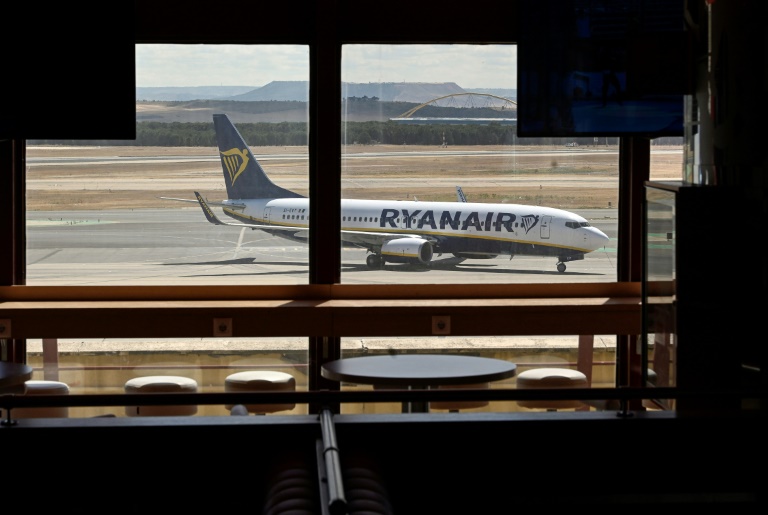
Some airlines, such as Ryanair, and countries, in particular Greece, have already recovered or even exceeded their 2019 daily flight numbers, according to Eurocontrol, a pan-European air traffic agency.

Across the continent, air traffic was last week at 86 percent of the same period in 2019, Eurocontrol said, and expected to reach up to 95 percent in August under its most optimistic estimate.

And companies are filling seats for the coming weeks despite the sharp rise in ticket prices, long lines in various airports from Frankfurt to Dublin to Amsterdam and strikes by flight attendants, pilots or air traffic controllers.  

But after that? 

“Visibility is low because there is a lot of uncertainty,” said Olivier Jankovec, director general of ACI Europe. 

“We’re now in a war economy in Europe, we have the prospect of a quite harsh recession, we have inflation at record levels, so how all of this is going to play into consumer sentiment… the jury’s still out.”

The director general for transport and mobility at the European Commission, Henrik Hololei, echoed that thought.

“We really need to tighten the seatbelt because there’s going to be a lot of turbulence,” he told delegates. 

“We are entering… a period of uncertainty which we have never experienced in the last decade. And that of course is the biggest enemy of the business,” he said. 

– Too many unknowns –

Hololei listed the war in Ukraine, high energy prices and shortages of energy, food and labour.  

“We have also interest rates which are going up for the first time in a decade,” he said. 

The price of jet fuel has doubled over the past year, with a refinery capacity shortage compounding the explosion in crude oil prices. 

Fuel accounts for about a quarter of the operating costs of airlines, which have passed them on to consumers in ticket prices as they seek to refill coffers drained by the two-year health crisis. 

Still, strong demand has returned, confirmed Eleni Kaloyirou, managing director of Hermes Airports, which manages the airports of Larnaca and Paphos in Cyprus, where the high tourist season extends into November. 

“People want to take their holidays,” she said, acknowledging, however, “we do worry about next year”. 

The general manager of Athens International Airport, Yiannis Paraschis, similarly expressed fears that “the increase in energy costs and inflation will consume a great part of European households’ disposable income”.

The head of Istanbul International Airport, Kadri Samsunlu, voiced concerns about inflation’s effect in Western Europe.

And if consumer confidence is damaged, “We don’t know what’s going to happen to the demand,” he warned.

The last unknown hanging over European air travel in the medium term is a possible new outbreak of coronavirus.

“Covid has not disappeared, and it is not a seasonal flu either,” Hololei warned.

Inflation a thorn in the side of Bulgaria rose oil makers

Business is not a bed of roses for Bulgaria’s rose oil makers these days.

Made from Damask roses grown in the aptly named Rose Valley, the oil is a vital ingredient in the perfumes made by the world’s top luxury brands such as Christian Dior, Estee Lauder and Chanel.

But a heatwave has slashed this year’s harvest of rose petals, labour is hard to find and the global surge in energy prices has increased costs for a product so precious that it is dubbed “liquid gold”.

This year’s oil will be “considerably more expensive,” Plamen Stankovski, a partner at rose oil producer and exporter Bulattars, told AFP in his distillery near Pavel Banya, in Bulgaria’s famed Rose Valley.

Production costs for one kilogram of rose oil stood at around 6,000 euros ($6,300) in 2021, but they have surged by as much as 40 percent this year.

The price of petals alone doubled since last year, according to producers.

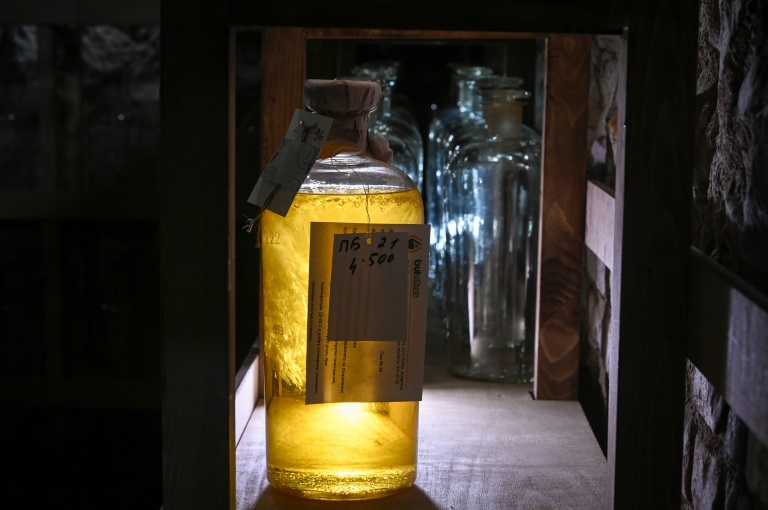
This means that a 4.5-kilo glass jar filled with the thick, golden-yellow oil could sell for more than 45,000 euros this year.

Bulgaria is the world’s top rose oil maker along with Turkey and the distilleries to make the precious substance run on natural gas, diesel and fuel oil — commodities whose prices soared after Russia invaded Ukraine in late February.

“The price of fuel has gone up two or even three times,” Stankovski said.

– ‘Not all roses’ –

Small amounts of rose oil are used in almost every high-quality perfume — not for its aroma, but because its fixative qualities help blend other ingredients and prolong the scent on the skin. 

To produce it, huge amounts of petals are boiled in massive metal vats. The vapours are then distilled to separate the oil in a process nearly unchanged since the days of the Ottoman empire in the 17th century.

On his family’s rose fields near Pavel Banya, Dimitar Dimitrov laments that a chronic labour shortage has plagued the sector for years.

“Picking is the most expensive as it is done solely by hand. If you don’t pick the open roses today, tomorrow they’re gone,” said the 40-year-old, who plucked petals with his father and brother-in-law. 

Fertiliser, fuel, ploughing and pruning have all become more expensive, he said.

With petal prices almost doubling, he said he hoped “this will cover at least our production costs so we don’t end up in the red”.

To make things worse, a heatwave scorched rose buds before they could open, slashing yields and reducing the picking season by half.

The flowers that survived excrete less oil. To extract one kilo of rose oil, 4,000 kilograms of petals are now needed, 15 percent more than usual.

“We are worried by the increased cost of our production,” said exporter Filip Lissicharov, CEO of the Enio Bonchev Production company in the nearby village of Tarnichane.

“The picture is not all roses,” he added.

More fuel is now needed to sustain production, which is interrupted by irregular petal deliveries, but the industry association’s calls for fuel subsidies have thus far gone unanswered by the government. 

Rose oil production is expected to drop below its usual annual haul of 2.5 tonnes.

– Certified as ‘pure’ –

Nearly 100 percent of the oil produced in Bulgaria is exported to places such as France, Germany, Switzerland, the United States, China, Japan, South Korea and Taiwan.

Lissicharov is anxious about how the market will react to higher prices.

“There’s interest (from buyers),” he said. “But whether this interest will turn into deals depends on the price.”

To prevent counterfeit products from entering the market, the oil is certified by a few designated labs, such as the state Bulgarska Rosa Laboratory in Sofia.

The product leaves the lab in hermetically-sealed aluminium flasks with a label that guarantees “100-percent pure and natural genuine Bulgarian rose oil”.

Cutting corners, Stankovski said, is not an option: “Regardless of our troubles, we will preserve the high quality of the rose oil.” 

Close Bitnami banner
Bitnami