US Business

Google agrees to pay for beefed-up Wikipedia service

Google has agreed to pay for ramped-up Wikipedia services, part of a growing trend for the US tech giant to strike commercial deals with other web companies.

The Wikimedia Foundation, the charity that oversees the online encyclopedia, said Google was the first paying customer for its commercial venture Wikimedia Enterprise, which it launched last year.

The Internet Archive, a non-profit that runs a site called the Wayback Machine that saves snapshots of websites and is used to fix Wikipedia links, will be offered the commercial services for free.

“We’re thrilled to be working with them both as our longtime partners,” said Wikimedia’s Lane Becker in a statement on Tuesday.

Wikipedia, one of the world’s most visited websites, is free to use, updated by volunteers and relies on donations to keep afloat.

The new commercial venture will not change that arrangement for individual users, the foundation said.

Google uses material from the site for its “knowledge panel” — a sidebar that accompanies the main search results.

The source of the information is not always shown, a practice that had sparked complaints from Wikimedia.

The foundation said its new product gave customers a “feed of real-time content updates on Wikimedia projects” beyond what is available to the public.

The product was “designed to make it easier for these entities to package and share Wikimedia content”, it said in a statement.

Google has previously given money to Wikipedia through donations and grants but the new deal puts their relationship on a more formal commercial footing.

“We have long supported the Wikimedia Foundation in pursuit of our shared goals of expanding knowledge and information access for people everywhere,” said Google’s Tim Palmer.

The foundation’s statement did not reveal the value of the Google contract.

Google has long had a troubled relationship with other websites — it even attempted to create a rival to Wikipedia called Knol, though the venture failed.

But the company has changed tack in recent years and is increasingly making deals, particularly with media companies.

French regulators and Google ended a years-long dispute on Tuesday by agreeing a framework for the US firm to pay news outlets for content.

Google said it had already made deals with hundreds of news outlets across Europe, Agence France-Presse among them.

Troubled Canada pipeline no longer profitable: budget watchdog

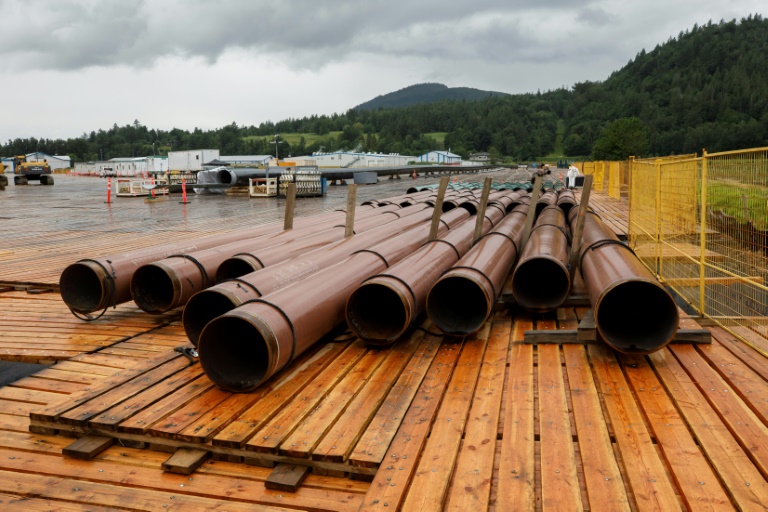
The controversial Trans Mountain pipeline expansion project, now under construction in western Canada after being nationalized, is no longer profitable as costs have spiralled, Parliament’s budget watchdog said Wednesday.

In a report, the office of the Parliamentary Budget Officer said a review of the project’s finances found “that the government’s 2018 decision to acquire, expand, operate, and eventually divest of the Trans Mountain assets will result in a net loss for the federal government.”

Ottawa purchased the pipeline for Can$4.4 billion (US$3.4 billion) from Kinder Morgan four years ago to salvage the troubled expansion project.

But its current value, the PBO estimated, is only Can$3.9 billion, after construction costs soared to $21.4 billion — a threefold increase from the original price tag — and its completion was pushed one year to late 2023. 

The negative valuation is based on the pipeline’s future cash flows over 40 years, minus construction costs.

In response, Adrienne Vaupshas, the spokeswoman for Deputy Prime Minister Chrystia Freeland, told AFP the project is “in the national interest and will make Canada and the Canadian economy more sovereign and more resilient.”

She cited independent analyses from BMO Capital Markets and TD Securities that concluded the project remains commercially viable at the higher costs.

The pipeline’s sale, Vaupshas added, will only proceed after further consultations with Indigenous groups and the risks associated with it are reduced.

The project is to replace an aging conduit built in 1953 to deliver 890,000 barrels of oil a day from landlocked Alberta to the Pacific coast for shipping to new markets in Asia and elsewhere.

Prior to the government taking over the project, it had been stalled by legal challenges and protests by Indigenous groups and environmental activists.

On Wednesday, Environmental Defense called the project a “financially dangerous boondoggle” that will lead to “more carbon emissions for the planet.”

“As the costs of the project keep ballooning, the government should cut its losses and cancel construction of the expansion pipeline — before even more of our dollars are wasted,” the group said in a statement.

Key Ukrainian city under 'massive' Russian bombardment

“Massive” Russian bombardment of Ukraine’s battleground eastern Lugansk region and key city Severodonetsk has been “hell” for soldiers there, Kyiv said Wednesday, while insisting that defenders would hold on “as long as necessary”.

Moscow’s troops have been pummelling eastern Ukraine for weeks and are slowly advancing, despite fierce resistance from the outgunned Ukrainian military.

With President Vladimir Putin’s forces tightening their grip on the strategically important city of Severodonetsk in the Donbas, its twin city of Lysychansk is now coming under heavier bombardment.

“The Russian army is… just destroying everything” in Lysychansk, Sergiy Gaiday, governor of the Lugansk region, which includes both cities, wrote on Telegram.

“It’s just hell out there,” after four months of shelling in Severodonetsk, across the Donets river, he wrote later.

“Our boys are holding their positions and will continue to hold on as long as necessary,” he added.

Pro-Russian separatists claimed they were close to surrounding both Lysychansk and Severodonetsk.

“Over the past several days enormous work has been accomplished,” Andrei Marochko, an officer in the separatist army of Lugansk, told Russian state television.

– ‘Only grannies left’ –

Taking control of the two cities would give Moscow control of the whole of Lugansk, allowing them to press further into the Donbas.

After being pushed back from Kyiv and other parts of Ukraine following their February invasion, Moscow is seeking to seize a vast eastern swathe of the country.

But daily bombardment also continues in other parts of the country.

The northeastern city of Kharkiv near the Russian border was near empty on Wednesday, AFP reporters said, a day after Russian shelling killed five people in the city.

Leyla Shoydhry, a young woman in a park near the opera house, said the situation was “very bad”.

“Last night the building next to mine collapsed from the bombardment while I was sleeping,” she said.

Roman Pohuliay, a 19-year-old in a pink sweatshirt, said most residents had fled the city.

“Only the grannies are left,” he said.

In his daily address Tuesday, Ukrainian President Volodymyr Zelensky accused the Russian army of “brutal and cynical” shelling in the eastern Kharkiv region, where the governor said 15 people had been killed Tuesday.

In a briefing Wednesday, the Russian defence ministry claimed responsibility for a missile strike it said killed a number of Ukrainian troops in the southern city of Mykolaiv.

Mayor Oleksandr Senkevych told Ukrainian television that the strike hit two firms and a school, sparking a blaze that authorities could not put out.

In the central city of Zaporizhzhia, women were training to use Kalashnikov assault rifles in urban combat as Russian forces edged nearer.

“When you can do something, it’s not so scary to take a machine gun in your hands,” said Ulyana Kiyashko, 29, after moving through an improvised combat zone in a basement.

Aid group Doctors Without Borders said it had gathered accounts of an “outrageous lack of care to distinguish and protect civilians” during the war in Ukraine.

Most patients it had evacuated by train blamed Russian or Russian-backed forces for a spectrum of gruesome injuries, it added.

– Ship leaves Mariupol –

On the Russian side, officials said Wednesday two drones had hit an oil refinery in the Rostov region bordering Ukraine, causing an explosion and a fire but no casualties.

Away from the battlefield, Moscow summoned Brussels’ ambassador in a dispute with EU member Lithuania over the country’s restrictions on rail traffic to the Russian outpost of Kaliningrad.

The territory is around 1,000 miles (1,600 kilometres) from Moscow, bordering Lithuania and Poland.

By blocking goods arriving from Russia, Lithuania says it is simply adhering to European Union-wide sanctions on Moscow.

The United States made clear its commitment to Lithuania as an ally in NATO, which considers an attack against one member an attack on all.

And Germany urged Russia not to “violate international law” by retaliating against Lithuania.

Also on Wednesday, a Turkish cargo ship left the Russian-occupied city of Mariupol on Ukraine’s Sea of Azov coast.

Moscow and Ankara have negotiated for weeks towards getting millions of tonnes of desperately needed grain out of the war zone and on to Africa and the Middle East.

But it was not immediately clear whether the Azov Concord was carrying wheat.

Turkey’s defence ministry said four-way talks would be held “in the coming weeks” between Russia, Turkey, Ukraine and the United Nations, with media reporting the meeting could happen next week.

– ‘Marshall Plan’ –

Reporters Without Borders (RSF) said in an investigation published Wednesday that a Ukrainian photojournalist, Maks Levin, had been killed and possibly tortured by Russian troops after his capture on March 13.

In Brussels, ministers unanimously agreed Tuesday to grant Ukraine and neighbour Moldova candidate status for membership in the European Union.

German Chancellor Olaf Scholz told parliament in Berlin on Wednesday that Ukraine “needs a Marshall Plan for its reconstruction”, a reference to the post-World War II aid from Washington that helped a devastated Europe get back on its feet.

Ukraine and Russia were “still far from negotiations… because Putin still believes in the possibility of a dictated peace”, he added, urging Kyiv’s Western allies to keep up their military and financial support.

Spain’s Foreign Minister Jose Manuel Albares on Wednesday said the Ukrainian president would join a NATO summit to be held in Madrid next week via video link.

Moscow, meanwhile, complained that its delegates to an Organization for Security and Cooperation in Europe (OSCE) assembly in Britain next month had been refused UK visas.

The Kremlin was Wednesday turning to other members of the so-called “BRICS” grouping that also includes Brazil, India, China and South Africa.

Russia is “actively redirecting its trade flows and external economic contacts towards reliable international partners, above all the BRICS countries,” Putin told a business forum by video link ahead of a virtual leaders’ summit Thursday.

burs-sr/ah/har

New antibody therapies fight cancer, drum up investment

Antibody therapies are offering promising treatment breakthroughs for cancer and other illnesses, generating greater investor interest more than 20 years after they were first commercialised.

Antibodies are proteins that recognise foreign substances, known as antigens, attaching themselves to them to alert the rest of the human immune system.

In 1975, scientists Georges Koehler and Cesar Milstein discovered how to produce them in a laboratory, which later earned them a Nobel Prize for medicine. Dozens of synthetic antibodies have since been developed.

New antibody treatments to be used with chemotherapy have arrived on the scene in recent years.

Most recently, a clinical trial of an antibody developed by pharmaceutical groups Daiichi Sankyo and AstraZeneca caught the attention of leading cancer specialists gathered at the American Society of Clinical Oncology’s annual congress in Chicago this month.

The treatment, Enhertu, was already authorised for breast cancer patients who had large amounts of a protein called HER2. 

The antibody also performed well in patients with smaller quantities of the protein — increasing the number of people who could benefit.

The antibody latches onto the surface of a cancer cell whose receptors no longer work and the cell then “digests” the receptors to recycle them, activating the chemotherapy, explained cancer specialist William Jacot.

“We hadn’t seen such progress, in terms of survival, with a chemotherapy treatment for dozens of years,” said Jacot, a professor at the Montpellier Cancer Institute in southern France.

Although antibody therapy technology has a complex production process, it is less difficult to implement than new treatments using cellular therapy.

Antibodies can be used in different ways to fight cancer. They can target and destroy the proteins necessary to produce cancer cells or act to regulate the immune response.

French biotech firm Inatherys is in the first stage of clinical trials of an antibody treatment for leukaemia, its boss Pierre Launay said.

He said the company’s antibody will be designed act as a “guided missile” and target a receptor that lets iron enter cancer cells, which need the substance. 

The antibody will then release a poison within the cell to destroy it.

Some antibody treatments are being used preventively while others are treatments. For example, AstraZeneca’s Evusheld antibody treatment is used preventively to ward off Covid-19, while Xevudy by British company GSK is used as a treatment.

Treatments are also being developed for inflammatory diseases, which are also a major killer. 

– Booming market –

The promising announcements have triggered interest beyond the scientific community and a flood of investment. French biotech firm ImCheck Therapeutics recently raised almost 100 million euros ($106 million) for an antibody treatment in development.

Pharmaceutical giants are also prepared to spend big to ensure they do not miss out. French company Sanofi bought Belgian biotech firm Ablynx and its mini antibodies, nanobodies, for almost four billion euros in 2018.

Dupixent, Sanofi’s flagship immunotherapy antibody medication, earned more than five billion euros for the pharma giant last year, and Keytruda, an oncological treatment by US firm MSD, generated more than $17 billion in 2021.

According to predictions by research firm Market Data Forecast, the market could grow to reach $249 billion in three years’ time.

UK inflation hits fresh 40-year high in cost-of-living crisis

British annual inflation has hit a fresh 40-year high, official data showed Wednesday, further eroding workers’ wages in a cost-of-living crisis, and heaping more pressuring the Bank of England to keep raising interest rates.

The inflation rate edged higher to 9.1 percent in May from 9.0 percent in April, remaining at the highest level since 1982, the Office for National Statistics (ONS) said.

UK inflation is set to top 11 percent before the end of the year according to the Bank of England, fuelled by soaring energy prices that have raised the prospect of a global recession.

Decades-high inflation is causing a cost-of-living crisis in Britain and elsewhere.

UK railway staff are this week staging the sector’s biggest strike action in more than 30 years, as soaring prices erode the value of wages.

Inflation increased in May on “continued steep food price rises and record high petrol prices”, said ONS chief economist Grant Fitzner.

This was offset by clothing costs rising by less than a year earlier and a drop in prices of computer games, he added.

– ‘Severe pressure’ –

“The further increase in Consumer Prices Index inflation to 9.1 percent underscores the severe pressure that businesses and households are under,” said David Bharier, head of research at the British Chambers of Commerce.

“This inflationary surge sits alongside a poor economic outlook and unless the government acts with urgency to encourage businesses to invest, the chances of a recession will only increase.”

Countries around the world are being hit by soaring inflation as the Ukraine war and the easing of Covid restrictions fuel energy and food price hikes.

That has forced central banks to hike interest rates, risking the prospect of recession as higher borrowing costs spark more pain for businesses and consumers.

The Bank of England has raised its key interest rate five times since December.

“The modest rise in CPI inflation… won’t prevent the Bank of England from raising interest rates further, but it may encourage it to opt again for a quarter-point rate hike at its next meeting in August rather than upping the ante” with a half-point rise, predicted Paul Dales, chief UK economist at Capital Economics.

– Strike action –

The rise comes as Britain faces strikes in several sectors.

Next week, senior lawyers in England and Wales begin a walkout in a row over legal aid funding.

Teaching staff, workers in the state-run National Health Service and the postal service are also mulling strike action.

The Rail, Maritime and Transport workers trade union confirmed Wednesday that rail staff will stage the second of three walkouts on Thursday after talks with Network Rail and train operators broke down.

A third strike is scheduled for Saturday, as a war of words escalated between the RMT and the government.

“We will continue with our industrial campaign until we get a negotiated settlement that delivers job security and a pay rise for our members that deals with the escalating cost of living crisis,” said RMT boss Mick Lynch.

Lynch accused Transport Secretary Grant Shapps of having “wrecked” the negotiations by not allowing Network Rail to withdraw a letter threatening redundancies of 2,900 RMT members.

But Shapps called that “a total lie”, accusing the RMT of trying to “deflect from the fact that the only people responsible for the massive public disruption this week is them”.

Key Ukrainian city under 'massive' Russian bombardment

“Massive” Russian bombardment of Ukraine’s battleground eastern Lugansk region and key city Severodonetsk has been “hell” for soldiers there, Kyiv said, while insisting that defenders would hold “as long as necessary”.

Moscow’s troops have been pummelling eastern Ukraine for weeks and are slowly advancing, despite fierce resistance from the outgunned Ukrainian military.

With President Vladimir Putin’s forces tightening their grip on the strategically important city of Severodonetsk in the Donbas, its twin city of Lysychansk is now coming under heavier bombardment.

“The Russian army is… just destroying everything” in Lysychansk, Sergiy Gaiday, governor of the Lugansk region, which includes both cities, wrote on Telegram.

“It’s just hell out there,” after four months of shelling in Severodonetsk, across the Donets river, he wrote later.

“Our boys are holding their positions and will continue to hold on as long as necessary,” he added.

Pro-Russian separatists claimed they were close to surrounding both Lysychansk and Severodonetsk.

“Over the past several days enormous work has been accomplished,” Andrei Marochko, an officer in the separatist army of Lugansk, told Russian state TV.

– ‘Outrageous lack of care’ –

Russian forces have been occupying villages in the area. Taking control of the two cities would give Moscow control of the whole of Lugansk, allowing them to press further into the Donbas.

After being pushed back from Kyiv and other parts of Ukraine following their February invasion, Moscow is seeking to seize a vast eastern swathe of the country.

In a briefing Wednesday, the Russian defence ministry claimed responsibility for a missile strike it said killed a number of Ukrainian troops in southern Mykolaiv.

City mayor Oleksandr Senkevych told Ukrainian television that the strike hit two firms and a school as well as starting a blaze that authorities could not put out.

In the central Ukrainian city of Zaporizhzhia, women were training to use Kalashnikov assault rifles in urban combat as Russian forces edged nearer.

“Of course, when you can do something, it’s not so scary to take a machine gun in your hands,” said Ulyana Kiyashko, 29, after moving through an improvised combat zone in a basement.

In his daily address Tuesday, Ukrainian President Volodymyr Zelensky accused the Russian army of “brutal and cynical” shelling in the eastern Kharkiv region, where the governor said 15 had been killed Tuesday.

Aid group Doctors Without Borders (MSF) said it had gathered accounts of an “outrageous lack of care to distinguish and protect civilians”.

Most patients it had evacuated by train blamed Russian or Russian-backed forces for a spectrum of gruesome injuries, it added.

– ‘Simply destroys’ –

On the Russian side, officials said Wednesday two drones had hit an oil refinery in the Ukraine-bordering Rostov region, causing an explosion and a fire but no casualties.

Away from the battlefield, Moscow summoned Brussels’ ambassador in a dispute with EU member Lithuania over the country’s restrictions on rail traffic to the Russian outpost of Kaliningrad.

The territory is around 1,000 miles (1,600 kilometres) from Moscow, bordering Lithuania and Poland.

By blocking goods arriving from Russia, Lithuania says it is simply adhering to European Union-wide sanctions on Moscow.

The United States made clear its commitment to Lithuania as an ally in NATO, which considers an attack against one member an attack on all.

And Germany urged Russia not to “violate international law” by retaliating against Lithuania.

Also Wednesday, a Turkish cargo ship left the Russian-occupied city of Mariupol on Ukraine’s Sea of Azov coast.

Although Moscow and Ankara have negotiated for weeks over getting millions of tonnes of desperately needed grain out of the warzone to worse-off countries in Africa and the Middle East, it was not immediately clear whether the Azov Concord was carrying wheat.

Turkey’s defence ministry said four-way talks would be held “in the coming weeks” between Russia, Turkey, Ukraine and the UN, with media reporting the meeting could happen next week.

– ‘Marshall Plan’ –

With US-Russia tensions soaring, the State Department on Tuesday confirmed a second American, 52-year-old Stephen Zabielski, was killed fighting for Ukraine.

A White House spokesman, John Kirby, voiced alarm at Russian statements that it would not apply the Geneva Conventions on the humane treatment of prisoners to two other Americans captured last week, calling suggestions of a death sentence “appalling”.

Reporters Without Borders (RSF) said in an investigation published Wednesday that a Ukrainian photojournalist, Maks Levin, had been killed and possibly tortured by Russian troops after his capture on March 13.

In Brussels, ministers unanimously agreed Tuesday to grant Ukraine and neighbour Moldova candidate status for membership in the European Union.

German Chancellor Olaf Scholz told parliament in Berlin on Wednesday that Ukraine “needs a Marshall Plan for its reconstruction”, a reference to the post-World War II aid from Washington that helped a devastated Europe get back on its feet.

Scholz added that Ukraine and Russia were “still far from negotiations… because Putin still believes in the possibility of a dictated peace”, urging Kyiv’s Western allies to keep up their military and financial support.

Moscow meanwhile complained that its delegates to an Organization for Security and Cooperation in Europe (OSCE) assembly in Britain next month had been refused UK visas.

The Kremlin was Wednesday turning to other members of the so-called “BRICS” grouping that also includes Brazil, India, China and South Africa.

Russia is “actively redirecting its trade flows and external economic contacts towards reliable international partners, above all the BRICS countries,” Putin told a business forum by video link ahead of a virtual leaders’ summit Thursday.

burs-sr/tgb/jh/jj

US Fed chair admits recession a 'possibility' after rate hikes

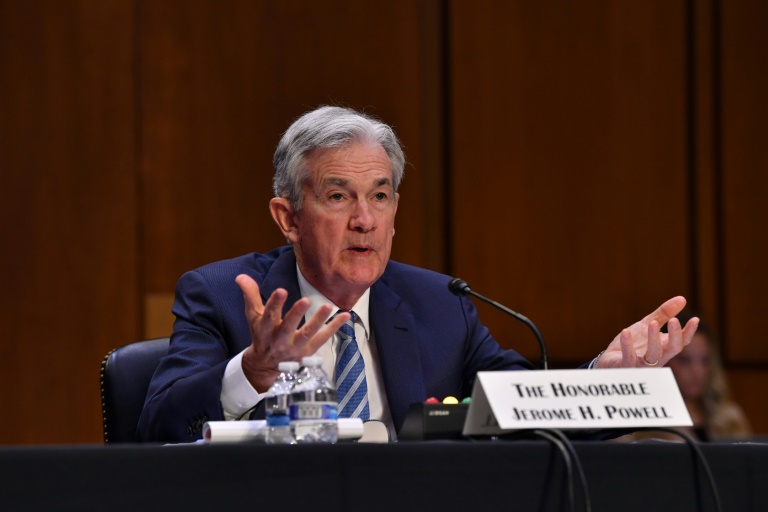
The US economy remains strong but a series of aggressive rate hikes meant to cool soaring inflation could eventually trigger a recession, Federal Reserve Chair Jerome Powell cautioned Wednesday.

Powell, whose testimony before senators was closely watched by investors and analysts, also said the world’s largest economy faces an “uncertain” global environment and could see further inflation “surprises.”

The Fed chair again stressed that the US central bank understands the hardship caused by rising prices and is committed to bringing down inflation, which has reached a 40-year high.

Last week, the Fed announced the sharpest interest rate increase in nearly 30 years and promised more action to combat the price surge, with gas and food costs skyrocketing and millions of Americans struggling to make ends meet.

But when peppered with questions about the prospect of a recession, Powell admitted it could not be ruled out.

“It’s not our intended outcome at all, but it’s certainly a possibility,” he told the Senate Banking Committee.

“And frankly, the events of the last few months around the world have made it more difficult for us to achieve what we want, which is two percent inflation and still a strong labor market.”

In his opening remarks, Powell insisted the US economy “is very strong and well positioned to handle tighter monetary policy.”

“Inflation has obviously surprised to the upside over the past year, and further surprises could be in store,” the Fed chief said in his semi-annual appearance before Congress.

Policymakers “will need to be nimble” given that the economy “often evolves in unexpected ways,” he said.

The Fed is facing intense criticism that it was too slow to react to the changing economy, which benefited from a flood of federal government stimulus.

Last week’s super-sized 0.75-percentage-point increase in the benchmark lending rate was the third since March, taking the policy rate up a total of 1.5 points. Powell at the time said more such increases were likely in July.

“I think it’s going to be very challenging. We’ve never said it was going to be easy or straightforward,” Powell said when asked about efforts to stave off recession.

– ‘Essential’ to curb inflation –

In addition to easing the financial strain on less-wealthy American families, the Fed chief said tamping down inflation was “essential… if we are to have a sustained period of strong labor market conditions that benefit all.”

The US economy recovered quickly from the Covid-19 pandemic, helped by robust consumer spending, and has continued to create jobs at a strong pace, averaging 408,000 in the past three months. 

Unemployment is near a 50-year low.

But the buoyant demand for homes, cars and other goods clashed with transportation and supply chain snarls in parts of the world where Covid-19 has remained a challenge.

That fueled inflation, which got dramatically worse after Russia invaded Ukraine in late February and Western nations imposed stiff sanctions on Moscow, sending food and fuel prices up at a blistering rate.

Powell said the fallout from the conflict “is creating additional upward pressure on inflation.”

In addition, “Covid-19-related lockdowns in China are likely to exacerbate ongoing supply chain disruptions.”

But he noted that the issue is not unique to the United States.

“Over the past year, inflation also increased rapidly in many foreign economies,” he said.

In fact, many major central banks have joined the Fed in beginning to tighten monetary policy — with the notable exception of the Bank of Japan.

Powell pointed to signs that rising rates are having an impact, as business investment slows and “activity in the housing sector looks to be softening, in part reflecting higher mortgage rates.”

Average home loan rates jumped to 5.23 percent in May for a 30-year, fixed-rate mortgage, from 4.98 percent in April, according to Freddie Mac, while the median price for homes topped $400,000 for the first time.

“The tightening in financial conditions that we have seen in recent months should continue to temper growth and help bring demand into better balance with supply,” Powell said.

US Fed chair admits recession a 'possibility' after rate hikes

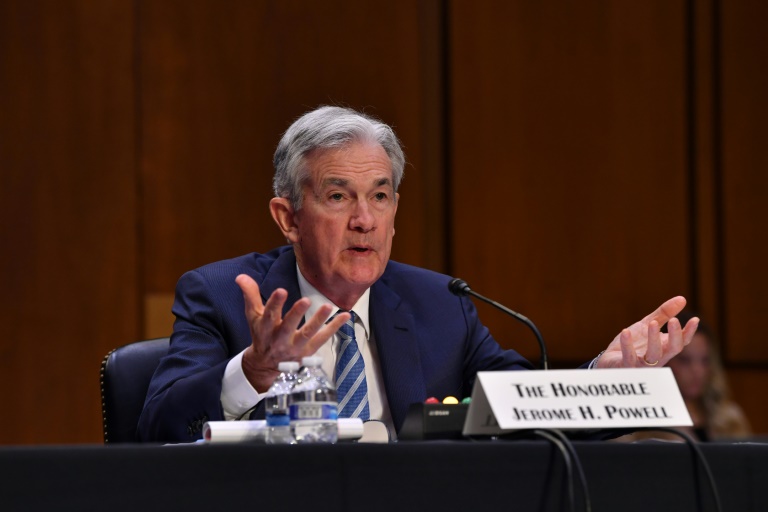
The US economy remains strong but a series of aggressive rate hikes meant to cool soaring inflation could eventually trigger a recession, Federal Reserve Chair Jerome Powell cautioned Wednesday.

Powell, whose testimony before senators was closely watched by investors and analysts, also said the world’s largest economy faces an “uncertain” global environment and could see further inflation “surprises.”

The Fed chair again stressed that the US central bank understands the hardship caused by rising prices and is committed to bringing down inflation, which has reached a 40-year high.

Last week, the Fed announced the sharpest interest rate increase in nearly 30 years and promised more action to combat the price surge, with gas and food costs skyrocketing and millions of Americans struggling to make ends meet.

But when peppered with questions about the prospect of a recession, Powell admitted it could not be ruled out.

“It’s not our intended outcome at all, but it’s certainly a possibility,” he told the Senate Banking Committee.

“And frankly, the events of the last few months around the world have made it more difficult for us to achieve what we want, which is two percent inflation and still a strong labor market.”

In his opening remarks, Powell insisted the US economy “is very strong and well positioned to handle tighter monetary policy.”

“Inflation has obviously surprised to the upside over the past year, and further surprises could be in store,” the Fed chief said in his semi-annual appearance before Congress.

Policymakers “will need to be nimble” given that the economy “often evolves in unexpected ways,” he said.

The Fed is facing intense criticism that it was too slow to react to the changing economy, which benefited from a flood of federal government stimulus.

Last week’s super-sized 0.75-percentage-point increase in the benchmark lending rate was the third since March, taking the policy rate up a total of 1.5 points. Powell at the time said more such increases were likely in July.

“I think it’s going to be very challenging. We’ve never said it was going to be easy or straightforward,” Powell said when asked about efforts to stave off recession.

– ‘Essential’ to curb inflation –

In addition to easing the financial strain on less-wealthy American families, the Fed chief said tamping down inflation was “essential… if we are to have a sustained period of strong labor market conditions that benefit all.”

The US economy recovered quickly from the Covid-19 pandemic, helped by robust consumer spending, and has continued to create jobs at a strong pace, averaging 408,000 in the past three months. 

Unemployment is near a 50-year low.

But the buoyant demand for homes, cars and other goods clashed with transportation and supply chain snarls in parts of the world where Covid-19 has remained a challenge.

That fueled inflation, which got dramatically worse after Russia invaded Ukraine in late February and Western nations imposed stiff sanctions on Moscow, sending food and fuel prices up at a blistering rate.

Powell said the fallout from the conflict “is creating additional upward pressure on inflation.”

In addition, “Covid-19-related lockdowns in China are likely to exacerbate ongoing supply chain disruptions.”

But he noted that the issue is not unique to the United States.

“Over the past year, inflation also increased rapidly in many foreign economies,” he said.

In fact, many major central banks have joined the Fed in beginning to tighten monetary policy — with the notable exception of the Bank of Japan.

Powell pointed to signs that rising rates are having an impact, as business investment slows and “activity in the housing sector looks to be softening, in part reflecting higher mortgage rates.”

Average home loan rates jumped to 5.23 percent in May for a 30-year, fixed-rate mortgage, from 4.98 percent in April, according to Freddie Mac, while the median price for homes topped $400,000 for the first time.

“The tightening in financial conditions that we have seen in recent months should continue to temper growth and help bring demand into better balance with supply,” Powell said.

US wants to ban Juul vaping products: report

US health authorities are expected to order Juul Labs to stop selling e-cigarettes in the world’s biggest economy, the Wall Street Journal reported Wednesday.

The announcement, which could come as early as Wednesday, follows a two-year review of data presented in connection with Juul’s application to sell tobacco- and menthol-flavored products in the United States, said the newspaper, which cited anonymous sources.

Juul did not immediately respond to a request for comment. The FDA also did not respond to a query. 

Juul has come under fire over its marketing of fruit and candy flavored e-cigarettes that had drawn in young consumers.

In January 2020, the FDA said sale of e-cigarettes in flavors other than tobacco or menthol would be illegal unless specifically authorized by the government.

The agency has approved some e-cigarette products from other makers such as Reynolds American, while taking a hard line on sweet or flavored products.

Juul has argued that vaping products can provide a solution to the harmful health impacts from conventional cigarettes.

Juul’s products “exist only to transition adult smokers away from combustible cigarettes,” Chief Executive KC Crosthwaite said on the company’s website, adding that the company is “working hard” to rebuild its reputation following an “erosion of trust over the past few years.”

On Tuesday, President Joe Biden’s administration announced it would develop a new policy requiring cigarette producers to reduce nicotine to non-addictive levels.

The initiative requires the FDA to develop and then publish a rule, which will likely be contested by industry.

Biden seeks fuel tax suspension to help fight inflation pain

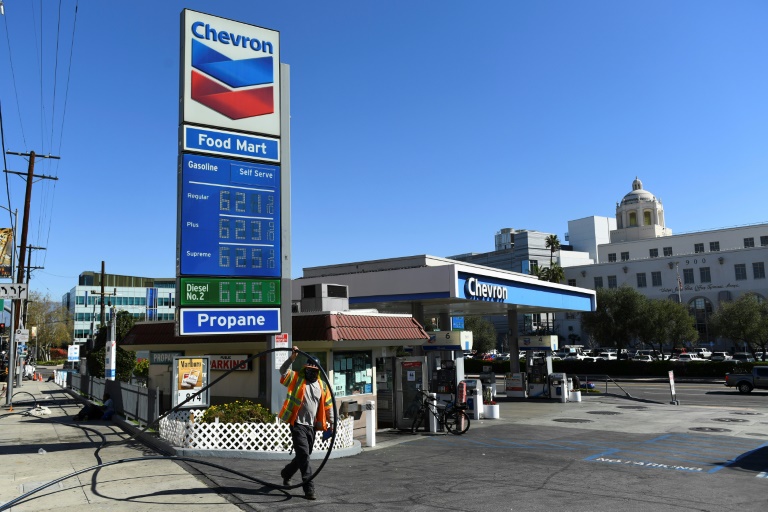
Joe Biden pitched a temporary fuel tax break Wednesday to help American drivers face the highest inflation in four decades, but critics called it attempted window dressing by an unpopular US president ahead of difficult midterm elections.

Biden is asking Congress to suspend the federal fuel tax for three months as price increases — in large part spurred by fallout from President Vladimir Putin’s invasion of Ukraine and subsequent Western sanctions on Russia — drive general inflation.

It seems unlikely so far that Congress will give the green light.

The White House wants to lift the 18 cents a gallon federal tax on gasoline and 24 cents a gallon on diesel until September, and will call on state governments to suspend their own taxes to “provide direct relief to American consumers who have been hit with Putin’s price hike,” a senior administration official said.

The official noted that gasoline prices — now averaging near $5 per gallon (3.78 liters) — had gone up almost $2 since the start of the Ukraine invasion.

“The president recognizes the significant challenge that high gas prices pose to working families,” the official said, while conceding the tax suspension alone would not offset household costs.

A handful of states including New York and Connecticut have already suspended fuel taxes or delayed planned tax increases.

But according to analysts, some 46 states have yet to act, including Democratic-governed California, where gasoline is the most taxed and the most expensive, at well over $6 a gallon.

Federal tax revenues on gas and diesel help pay for the Highway Trust Fund, which maintains roads and supports public transport, but Biden will call on Congress to ensure the estimated $10 billion gap that would be caused by a three month tax break is made up from other sources.

Whether Congress, where Democrats hold only a narrow majority over Republicans, will pass tax relief is a big question. Even Biden’s backers are lukewarm.

“I’ve not been a proponent,” Steny Hoyer, a senior leader of the Democratic party in Congress, told Politico. “I just don’t know that it gives much relief.”

Jason Furman, a former top economic adviser to president Barack Obama — who himself once dismissed so-called gas tax holidays as a “gimmick” — also said the move would not help regular people. 

“It would be very unlikely that gas prices would fall by more than a dime because of this change. And oil company profits would go up by billions of dollars,” he told NPR.

– Biden’s populist mission –

Biden will urge retailers at filling stations to apply any tax cuts immediately, as well as push refiners to expand their crude-processing capacity in hope that the combined measures could cut the price of gasoline by as much as a dollar a gallon.

He has previously tried other measures, including releasing a million barrels of oil a day from the Strategic Petroleum Reserve, negotiating the release of an additional 60 million barrels from international partners, and expanding access to biofuels.

Nothing so far has had an appreciable effect.

With Democrats fearing a severe defeat in November midterm elections — thereby leaving Biden weakened for the rest of his first term in office — the president has turned to an increasingly populist message, portraying himself as fighting for the middle class against profiteering big oil.

The White House recently called out groups including ExxonMobil and Chevron, denouncing their profit margins as “well above normal” and calling it their patriotic duty to increase output.

“Exxon has made more money than God this quarter,” Biden has said.

Energy Secretary Jennifer Granholm is due to meet with refiners Thursday to urge them to contribute to these measures, including increasing their production output.

On Tuesday, Biden dismissed a complaint from Chevron’s CEO that the industry was being vilified.

“I didn’t know they’d get their feelings hurt that quickly,” Biden said.

Close Bitnami banner
Bitnami