US Business

SpaceX fires workers behind letter criticizing Musk

Elon Musk’s SpaceX has fired several employees behind a letter critical of the outspoken billionaire’s public behavior, the aerospace firm said in a message to staff confirmed by AFP on Friday.

A “small group” of employees sought their colleagues’ signatures in a show of support for the letter and participation in a survey, SpaceX chief operating officer Gwynne Shotwell wrote in an email late Thursday. 

The mercurial billionaire regularly uses Twitter to provoke, speak directly to customers as well as fans and sometimes offend with unfiltered or crude comments.

Shotwell’s message said some workers felt “uncomfortable, intimidated and bullied, and/or angry because the letter pressured them to sign onto something that did not reflect their views.”

“We have too much critical work to accomplish and no need for this kind of overreaching activism,” she added.

After conducting an investigation, the company “terminated a number of employees involved,” Shotwell said, without specifying how many.  

The workers’ letter, first reported by website The Verge, criticized Musk’s behavior in public, as well as recent accusations of sexual harassment against him, as “a frequent source of distraction and embarrassment for us.” 

“As our CEO and most prominent spokesperson, Elon is seen as the face of SpaceX — every Tweet that Elon sends is a de facto public statement by the company,” the letter added.

Musk, who also heads electric car maker Tesla, is in the midst of roller-coaster $44 billion bid to buy Twitter that has brought even more attention to the entrepreneur.

TikTok says Oracle to keep US user data safe

TikTok on Friday said Oracle will store all the data from its US users, in a bid to allay fears about its safety in the hands of a platform owned by ByteDance in China.

The announcement came as the popular video snippet sharing service fended off concerns about the ability of engineers in China to access information about US users that isn’t public.

ByteDance employees have repeatedly accessed information about US TikTok users, according to a Buzzfeed news report citing leaked audio from TikTok in-house meetings.

It is common for some engineers at internet firms to be granted access to data, and TikTok told AFP it is trying to minimize that kind of system privilege.

“Similar to industry peers, we will continue to drive our goal of limiting the number of employees who have access to user data and the scenarios where data access is enabled,” TikTok chief information security officer Roland Cloutier said in a blog post highlighted by the company.

“Our goal is to minimize data access across regions so that, for example, employees in the (Asia Pacific) region, including China, would have very minimal access to user data from the EU and US.”

TikTok has been adamant that it has never given US user data to Chinese officials and that it would refuse if asked to do so.

Last month, TikTok created a new US data security devoted to strengthening protection policies and protocols to safeguard user information, a TikTok spokesperson told AFP.

“We’ve brought in world class internal and external security experts to help us strengthen our data security efforts,’ the spokesperson said.

TikTok will continue to use its own datacenters in Virginia and Singapore to backup information as it works to “fully pivot” to relying on Oracle in the United States, it said in a post.

“We know we are among the most scrutinized platforms from a security standpoint, and we aim to remove any doubt about the security of US user data,” said Albert Calamug, who handles US security public policy at TikTok.

President Joe Biden last year revoked executive orders from his predecessor Donald Trump seeking to ban Chinese-owned apps TikTok and WeChat from US markets on national security concerns.

Trump had given his blessing to a plan that would have given TikTok to US tech giant Oracle with investments from retail powerhouse Walmart, but that deal failed to win approval in Beijing.

Biden’s new executive order nixed the unimplemented ban and called for “an evidence-based analysis to address the risks” from internet applications controlled by foreign entities.

WeChat, part of Chinese tech giant Tencent, is a “super app” which includes social networking, messaging, e-commerce and more.

TikTok revealed late last year that it had a billion users worldwide.

“Today, 100 percent of US user traffic is being routed to Oracle Cloud Infrastructure,” Calamug said.

“In addition, we’re working closely with Oracle to develop data management protocols that Oracle will audit and manage to give users even more peace of mind.”

TikTok says Oracle to keep US user data safe

TikTok on Friday said Oracle will store all the data from its US users, in a bid to allay fears about its safety in the hands of a platform owned by ByteDance in China.

The announcement came as the popular video snippet sharing service fended off concerns about the ability of engineers in China to access information about US users that isn’t public.

ByteDance employees have repeatedly accessed information about US TikTok users, according to a Buzzfeed news report citing leaked audio from TikTok in-house meetings.

It is common for some engineers at internet firms to be granted access to data, and TikTok told AFP it is trying to minimize that kind of system privilege.

“Similar to industry peers, we will continue to drive our goal of limiting the number of employees who have access to user data and the scenarios where data access is enabled,” TikTok chief information security officer Roland Cloutier said in a blog post highlighted by the company.

“Our goal is to minimize data access across regions so that, for example, employees in the (Asia Pacific) region, including China, would have very minimal access to user data from the EU and US.”

TikTok has been adamant that it has never given US user data to Chinese officials and that it would refuse if asked to do so.

Last month, TikTok created a new US data security devoted to strengthening protection policies and protocols to safeguard user information, a TikTok spokesperson told AFP.

“We’ve brought in world class internal and external security experts to help us strengthen our data security efforts,’ the spokesperson said.

TikTok will continue to use its own datacenters in Virginia and Singapore to backup information as it works to “fully pivot” to relying on Oracle in the United States, it said in a post.

“We know we are among the most scrutinized platforms from a security standpoint, and we aim to remove any doubt about the security of US user data,” said Albert Calamug, who handles US security public policy at TikTok.

President Joe Biden last year revoked executive orders from his predecessor Donald Trump seeking to ban Chinese-owned apps TikTok and WeChat from US markets on national security concerns.

Trump had given his blessing to a plan that would have given TikTok to US tech giant Oracle with investments from retail powerhouse Walmart, but that deal failed to win approval in Beijing.

Biden’s new executive order nixed the unimplemented ban and called for “an evidence-based analysis to address the risks” from internet applications controlled by foreign entities.

WeChat, part of Chinese tech giant Tencent, is a “super app” which includes social networking, messaging, e-commerce and more.

TikTok revealed late last year that it had a billion users worldwide.

“Today, 100 percent of US user traffic is being routed to Oracle Cloud Infrastructure,” Calamug said.

“In addition, we’re working closely with Oracle to develop data management protocols that Oracle will audit and manage to give users even more peace of mind.”

50 years after Watergate, Woodward still wonders why Nixon did it

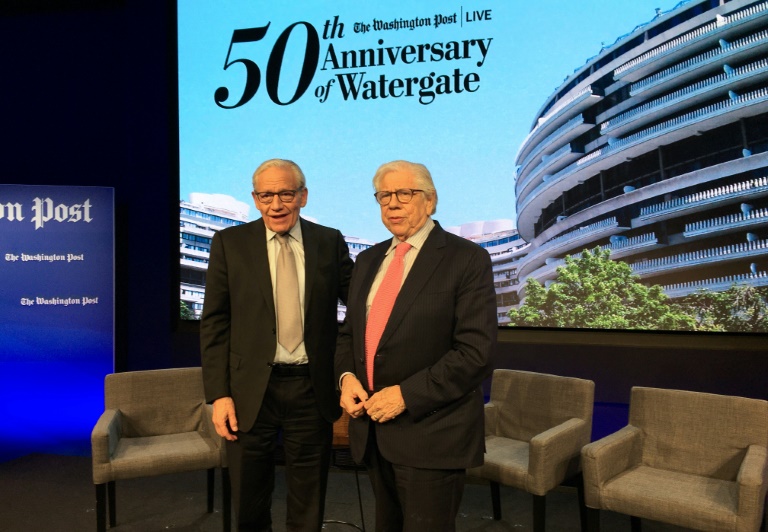
Fifty years after the Watergate burglary that led to the downfall of US president Richard Nixon, Washington Post reporter Bob Woodward is still haunted by one question.

“The unanswered question that pulses through all of this is ‘Why?’ Woodward said at an event at Post headquarters with his former reporting colleague Carl Bernstein.

Why did top members of Nixon’s re-election committee organize a break-in at the Democratic National Committee headquarters at the Watergate on June 17, 1972?

Nixon had won the White House in 1968, the 79-year-old Woodward noted, and was cruising to what looked like another certain victory in the 1972 election.

“He had the brass ring,” Woodward said of Nixon, who resigned in 1974 rather than face impeachment over a cover-up of the burglary.

“And so what is the psychology — which I think we never cracked really — of somebody who’s attained their goal and fails to ask the question… what do the people need?

“For Nixon, it really didn’t come up,” he said.

Woodward and Bernstein praised the late Washington Post publisher Katharine Graham for the support she gave them while reporting the Watergate story.

The 78-year-old Bernstein recounted a visit to the paper one day by someone bearing a subpoena to seize his notes.

Managing editor Ben Bradlee went to see Graham and came back five minutes later, he said.

“And he says, ‘Katharine says they’re not your notes. They’re her notes. And if anybody’s going to go to jail, it’s her,'” Bernstein recalled.

“To me, it’s one of the historic moments in American journalism history,” he said.

Woodward said the pair received a note from Graham after Nixon resigned warning them to keep their feet on the ground.

“It said ‘Dear Carl and Bob, now that Nixon has resigned, you did some of the stories, fine.

“‘Don’t start thinking of yourself too highly,'” Woodward quoted the note as saying. “‘Let me give you some advise and the advise is ‘Beware the demon pomposity.'”

– ‘Are you dumb?’ –

Woodward and Bernstein also recalled encounters with Mark Felt, the FBI deputy director whose identity as the source famously codenamed “Deep Throat” was revealed decades later.

They said Felt was constantly pushing them to look beyond the Watergate burglary to a more wide-ranging conspiracy.

“It was kind of like ‘Don’t you understand what you have here? This is not just the Watergate burglary, it’s dirty tricks,'” Woodward said.

“Mark Felt kind of laid it out and said, ‘No, this is a much bigger thing. Are you dumb?'”

Artifacts from the Watergate break-in and the newspaper’s coverage were on display during the event at the Post’s new glittering headquarters in downtown Washington.

Clips were shown from the 1976 movie “All the President’s Men” starring Robert Redford as Woodward and Dustin Hoffman as Bernstein.

The artifacts included a door latch from the Watergate which had been covered by a piece of tape by the burglars and was spotted by an alert security guard — a key step in the plot coming to light.

Woodward said it had been purchased at auction by Amazon founder Jeff Bezos, the owner of the Post.

“We’re trying to find out how much Bezos paid,” he said.

Biden downplays meeting with Saudi prince

President Joe Biden distanced himself Friday from an upcoming encounter with controversial Saudi leader Mohammed bin Salman, saying the reason for his trip to the oil-rich nation was not to meet the crown prince.

Biden is attending a regional Gulf Cooperation Council summit in Saudi Arabia in mid-July. The White House says he will meet the formal leader, King Salman, but also his team, notably de facto leader Prince Mohammed, commonly known as MBS.

US intelligence blames MBS for the horrific 2018 murder of Saudi-born critic Jamal Khashoggi, a US resident who wrote for The Washington Post.

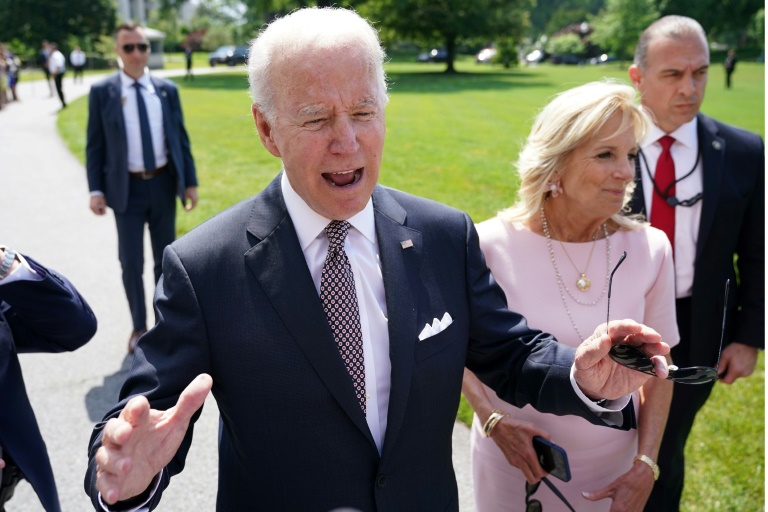
Asked by reporters about how he would handle the subject when he meets MBS, Biden said, “the same way I’ve been handling it. I’m not going to meet with — I’m not going to meet with MBS.”

“I’m going to an international meeting and he’s going to be a part of it, just like there were people part of the discussion today,” Biden said, referring to an international climate summit he hosted earlier Friday.

Biden, who once said the Khashoggi killing had made Saudi Arabia a “pariah,” is expected to press for increased Saudi oil production during his trip, in hope of taming spiraling fuel costs and inflation back in the United States.

White House Press Secretary Karine Jean-Pierre has also framed the trip as one where the MBS meeting is a sideshow, not the focus.

“The president is going to see over a dozen leaders on this trip,” she said. “We can expect the president to see the crown prince as well.”

However Saudi Arabia issued a more direct statement, noting simply that Biden would meet with King Salman and then the young heir to the throne.

Stocks waver, oil prices fall on recession fears

Stock markets wobbled and oil prices sank on Friday amid growing fears that inflation-fighting interest rate hikes by central banks could trigger recession.

Investors were shaken this week after the US Federal Reserve unleashed its biggest hike in borrowing costs for almost 30 years to tackle red-hot consumer prices.

The third Fed increase was followed by the fifth straight hike by the Bank of England and the first in 15 years by the Swiss central bank, underscoring the growing global concerns about inflation.

The moves caused a global selloff on Thursday. US and European markets tried to stage a rebound on Friday, but some indices were back in the red later in the day.

On Wall Street, the Dow Jones Industrial Average ended back under 30,000 points while the broad-based S&P 500 eked out a positive close and the tech-heavy Nasdaq rose 1.4 percent.

But the S&P lost 5.8 percent for the week, its worst performance since 2020.

European markets seesawed, with London finishing in the red, Paris almost flat and Frankfurt closing higher.

“Sentiment has been shattered and equities could suffer further,” Craig Erlam, an analyst at online trading platform OANDA, told AFP.

Karl Haeling of LBBW agreed, saying “markets are oversold, but probably not oversold enough to call for a bottom.”

He said the modest gains Friday likely mark “a little technical pause.”

Sentiment turned sour again as US official data showed industrial production in May had risen by just 0.2 percent, much slower than April and weaker than expected.

“We see that the positive attempts get rapidly killed as the market prices in a higher recession risk as inflation doesn’t ease,” Ipek Ozkardeskaya, analyst at Swissquote bank, told AFP.

Asian stock markets mostly closed lower Friday.

Recession fears also gripped the oil market as WTI, the US benchmark, fell by 6.4 percent to $110.04 per barrel. The international benchmark, Brent North Sea Crude, dropped 5.4 percent to $113.29.

Energy prices have soared since Russia invaded Ukraine, driving inflation higher, which has prompted central banks to spring into action. 

– BoJ bucks the trend –

Investors worry that while the rate increases can help tame inflation, they also crimp demand and economic growth.

The Bank of Japan bucked the global trend on Friday as it stood by its decision not to raise its rate, sending the yen close to the lowest level against the dollar since 1998.

Officials in Tokyo insist that low rates are still needed to nurture a struggling economy, though the BoJ did say it “was necessary to pay due attention to developments in financial and foreign exchange markets”.

Stock markets have been tumbling for months as traders contemplate the end of the era of cheap cash that had sent share prices to record or multi-year highs.

Inflation worldwide stands at levels not seen for decades owing in particular to surges in energy and food prices.

US markets will be closed on Monday for the Juneteenth holiday.

– Key figures at around 2100 GMT –

New York – Dow: DOWN 0.1 percent at 29,888.78 (close)

New York – S&P 500: UP 0.2 percent at 3,674.84 (close)

New York – Nasdaq: UP 1.4 percent at 10,798.35 (close)

London – FTSE 100: DOWN 0.4 percent at 7,016.25 (close) 

Frankfurt – DAX: UP 0.7 percent at 13,126.26 (close)

Paris – CAC 40: DOWN 0.1 percent at 5,882.65 (close)

EURO STOXX 50: UP 0.3 percent at 3,438.96 (close)

Tokyo – Nikkei 225: DOWN 1.8 percent at 25,963.00 (close)

Hong Kong – Hang Seng Index: UP 1.1 percent at 21,075.00 (close)

Shanghai – Composite: UP 1.0 percent at 3,316.79 (close)

Euro/dollar: DOWN at $1.0493 from $1.0549 late Thursday

Pound/dollar: DOWN at $1.2221 from $1.2353

Euro/pound: UP at 85.83 pence from 85.41 pence

Dollar/yen: UP at 134.99 yen from 132.21 yen

Brent North Sea crude: DOWN 5.4 percent at $113.33 a barrel

West Texas Intermediate: DOWN 6.3 percent at $110.21

burs-lth/har/hs/dw

US stocks end rocky week lower ahead of holiday

New York equities ended a rocky week mostly higher on Friday but lower for the week amid worsening fears of recession as the US central bank takes aggressive action against inflation. 

In the last session before the holiday weekend, the broad-based S&P 500, which entered a bear market earlier this week, added 0.2 percent to finish at 3,674.84, while the tech-rich Nasdaq Composite Index gained 1.4 percent to 10,798.35.

The Dow Jones Industrial Average slipped 0.1 percent to 29,888.78, after closing below 30,000 on Thursday for the first time since January 2021.

The S&P lost 5.8 percent in the week, its worst performance since 2020, while the Dow and Nasdaq dropped 4.8 percent.

Wall Street stocks have been battered amid moves to raise interest rates to combat blistering inflation.

Investors initially welcomed the Federal Reserve’s super-sized rate hike on Wednesday, but retreated after other central banks including the Bank of England joined.

The Fed promised there are more big rate hikes to come, and recent economic data has not helped sentiment, including weak manufacturing data that followed a surprising resurgence in inflation in May.

Karl Haeling of LBBW said “markets are oversold, but probably not oversold enough to call for a bottom.”

He said the modest gains Friday likely mark “a little technical pause.”

But Kim Forrest of Bokeh Capital Partners did not read a lot into the session.

“We’ve had a pretty dramatic sell off yesterday. And it’s a holiday on Monday and people probably left, so there are fewer traders out there today,” Forrest told AFP.

'The Watergate Girl' and lessons on scandal in the Trump era

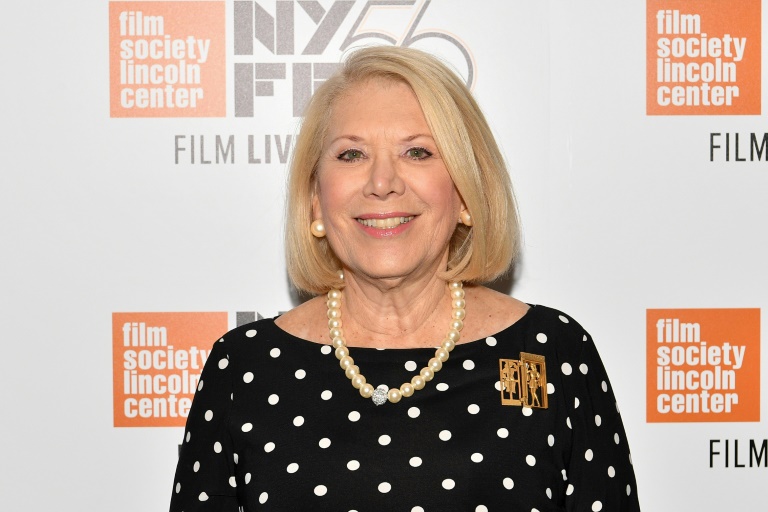
A sprawling conspiracy, a cornered president clinging to power, a White House cover-up: for Watergate prosecutor Jill Wine-Banks, the mushrooming controversy around Donald Trump’s alleged plot to take down US democracy is a movie she’s seen before.

It is 50 years to the day since five burglars were arrested at the Democratic National Committee headquarters at the Watergate complex in Washington — touching off a firestorm that would bring down president Richard Nixon.

The break-in plunged Wine-Banks — barely out of her 20s — into a starring role in the most enduring political scandal in US history, as the only woman on the Watergate prosecution team.

Half a century later, she has been watching with the rest of Washington as Trump finds himself in similar peril to Nixon, as a straightforward accusation — incitement of a riot at the US Capitol — metastasizes into a much bigger deal.

Numerous top officials — all Republican or conservative, many among Trump’s closest allies — have testified that the deadly violence was the culmination of his plot to overthrow an election.

In some respects the parallels are uncanny, but as she watches the congressional hearings into the burgeoning Trump scandal, Wine-Banks reflects on how much the world has changed.

“It is, first of all, a very different environment, both in terms of politics and in terms of the media,” the 79-year-old, now a cable news legal analyst, tells AFP in her unmistakable Chicago contralto.

Now, with hundreds of live TV channels and streaming services competing for America’s attention — not to mention a political landscape attenuated by tribalism — getting people to care about political scandal is a tougher challenge, Wine-Banks says.

– ‘Riveted’ –

“During Watergate, the media had three networks and they all have the same facts. They all broadcast the hearings… and all of America was riveted,” she said. 

Wine-Banks began her career as the first woman to serve as an organized crime prosecutor at the US Justice Department. 

Four years of impressive trial wins brought her to the attention of the Watergate team and she became the only woman to try the obstruction of justice case that saw Nixon’s top aides jailed.

Never setting out to be a trailblazer, Wine-Banks found she had no choice given the numerous barriers placed in front of successful women in the 1970s.

Her own boss, special prosecutor Leon Jaworski, insisted on calling her “lady lawyer” despite her repeated objections, and she was demeaned as “young lady” in court when her colleagues were addressed as “esteemed counsel.”

Her appearance took up far too many column inches in newspapers that dubbed her the “mini-skirt prosecutor” and the judge even said of her famous dismantling of Nixon’s secretary Rose Mary Woods: “We have enough problems without two ladies getting into an argument.”

The title of her 2021 memoir — “The Watergate Girl: My Fight for Truth and Justice Against a Criminal President” — is in part an ironic reference to the hurdles she faced to be taken seriously.

“‘Girl’ captured the era. We were called girls,” she says of the book, which has been optioned for a movie starring Katie Holmes (“Batman Begins”).   

“And there are many stories in the book that refer to someone saying to me, ‘Well, you can’t do that — you’re a girl.'”

– No John Dean –

The turning point in Watergate came with the marathon testimony of White House counsel John Dean to US senators that ultimately led to Nixon’s resignation.

Dean, now 83, became an overnight sensation as the first administration official to accuse Nixon of involvement in the cover-up.

The hearings into the US Capitol riot have been at a disadvantage because they don’t have their own “John Dean,” says Wine-Banks.

“John Dean could narrate from start to finish what had led up to the break-in and what was part of the cover-up, and how everybody was participating in the cover-up,” Wine-Banks tells AFP.

She suggests that Trump’s chief of staff Mark Meadows, who handed over a trove of damning text messages before stonewalling the inquiry, could be a good candidate, along with Trump White House counsel Pat Cipollone, who has reportedly been in discussions with the committee about a potential public appearance.

When the Watergate investigation started, there was none of the sky-high expectation for epoch-making revelation that has accompanied the Trump probe. 

And Wine-Banks has a warning for the Capitol assault committee, which has spent months raising expectations about what to expect from its public hearings.

“Jamie Raskin, Representative Raskin of Maryland, had said, ‘This will blow the roof off the House.’ And that’s a big promise to make — if you don’t deliver it,” she told AFP.

But she added that the committee has done “brilliantly” so far, exceeding her expectations with a series of presentations that make up for the lack of a single star with compelling storytelling.

“I think they have come up with technological ways of narrating this very effectively, using videotapes of depositions interspersed with live witnesses, interspersed with the committee’s investigative counsel narrating what they know,” she said.

“And I think it’s been very effective.”

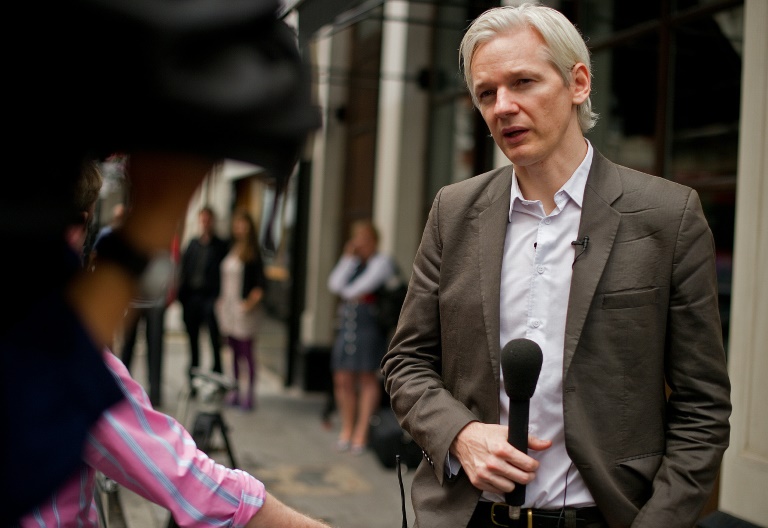
Secrets vs press freedom: the US case against Julian Assange

Wikileaks founder Julian Assange, whose extradition to the United States was approved by Britain on Friday, faces charges of espionage in a case that could prove an unprecedented legal battle pitting national security against fundamental press freedom rights.

– What charges against Assange?

In 2009 WikiLeaks rocked the world when it published around 750,000 classified US documents and diplomatic cables which exposed possible war crimes, torture and secret military operations, as well as unveiling the often-unseemly behind-the-scenes activities of US diplomacy.

A US military intelligence officer, Chelsea Manning, was arrested and sentenced to prison for leaking the files to WikiLeaks. 

US authorities allege that Assange directed and abetted Manning in stealing the files, when he tried to help her break a passcode to a Pentagon computer system.

On that basis, on April 11, 2019 the Department of Justice (DOJ) unsealed initial charges against Assange for conspiracy to break into a classified computer system to obtain “national defense information,” and requested his extradition from Britain.  

Twelve days later, the department issued a superseding indictment, charging him with 17 counts under the US Espionage Act.

It said that Assange, a citizen of Australia, had stolen US defense and national security information and disclosed it, putting the country, its officials and confidential sources at risk.

– Journalist or not? –

The charges under the espionage act are particularly troubling to civil liberties defenders and the media. 

Assange calls himself a journalist, and though Wikileaks when created in 2006 was a new kind of activity — a website that collected secret documents and published them online for anyone to see — it was not deeply different from traditional media publishing government secrets.

Viewed from that angle, Assange’s publishing activities could be protected by the US Constitution’s First amendment, which explicitly guarantees freedom of the press.

“The new charges focus on receiving and publishing classified material from a government source. That is something journalists do all the time,” the New York Times wrote in an editorial on the day the indictment was released.

“This is what the First Amendment is designed to protect: the ability of publishers to provide the public with the truth.”

The government of Barack Obama, president from 2009-2017, opted to not go after Assange to avoid a constitutional fight over what is journalism and what is not.

But the next administration of Republican president Donald Trump took a hard line, branding Assange a foreign threat and Wikileaks a “hostile intelligence service.”

“The department takes seriously the role of journalists in our democracy. But Julian Assange is no journalist,” Trump’s assistant attorney general John Demers said when the charges were unveiled.

– What awaits Assange in US? –

Assange could stall any extradition with his appeals both in Britain and the European Court of Human Rights.

But if he is finally sent to the United States, he will stand trial in a federal court in Alexandria, known for its tough handling of sensitive intelligence and espionage-related cases.

On the original charge, of helping an attempt to break into Pentagon computers, Assange would face up to five years in prison.

But the charges under the Espionage Act could bring up to 175 years in prison.

Assange’s attorneys in Britain originally blocked extradition last year arguing that he was at risk of suicide and would not be safe in poorly managed US prisons.

On appeal, US authorities promised to the British courts that Assange would be closely watched, would not be subjected to solitary confinement, and would not be sent to a “supermax” prison that the US reserves for the most dangerous offenders terrorists.

– Political fight –

If the case goes to trial, the issues of what Wikileaks did and what damage it may have caused could be subsumed by the issues of national security.

Assange has called it a political prosecution, and his attorneys will seek to paint it as such.

It is not clear how President Joe Biden’s Justice Department, which inherited the case from Trump’s, views it. Biden was Obama’s vice president.

Much of the US intelligence community want Assange prosecuted. US media and rights groups are meanwhile squaring up for a fight on constitutional principle.

“By continuing to extradite Assange, the Biden DOJ is ignoring the dire warnings of virtually every major civil liberties and human rights organization in the country that the case will do irreparable damage to basic press freedom rights of US reporters,”  Trevor Timm, executive director of the Freedom of the Press Foundation, said.

Deal reached on US 5G antennas near airports: FAA

The Federal Aviation Authority said Friday that mobile operators AT&T and Verizon have reached an agreement with airlines for the gradual deployment of additional 5G antennas around US airports. 

“We believe we have identified a path that will continue to enable aviation and 5G C-band wireless to safely co-exist,” said the FAA’s acting administrator Billy Nolen in a statement. 

Tensions between the two sectors flared at the end of 2021 when the FAA voiced concerns about possible interference between the altimeters of some aircraft — vital instruments for landing in certain weather conditions — and the deployment of 5G frequencies for which AT&T and Verizon shelled out tens of billions of dollars. 

AT&T and Verizon finally agreed in January to delay by six months the activation of mobile phone antennas around certain airport runways. 

As the end of that voluntary moratorium approaches, companies have agreed to a “gradual” approach. 

The regional companies most exposed to possible interference have agreed to modify their radio altimeters by the end of the year. 

Telephone operators have at the same time agreed to further delay the activation of 5G antennas located around the airports most likely to be affected for another 12 months, with a gradual lifting of restrictions. 

“Through close coordination with the FAA over the last several months, we have developed a more tailored approach to controlling signal strength around runways that allows us to activate more towers and increase signal strength,” an AT&T spokesperson said. 

The company chose to act “in good faith” by agreeing not to deploy all of its antennas right away “so that airlines have additional time to retrofit equipment,” he added.

Close Bitnami banner
Bitnami