US Business

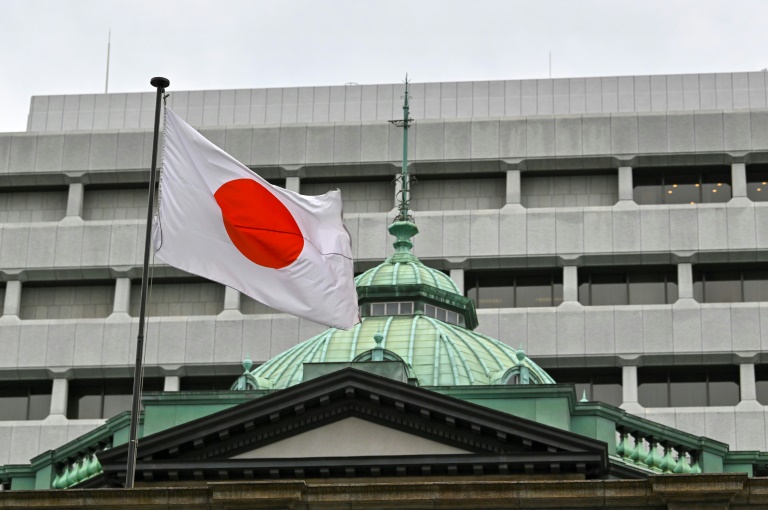
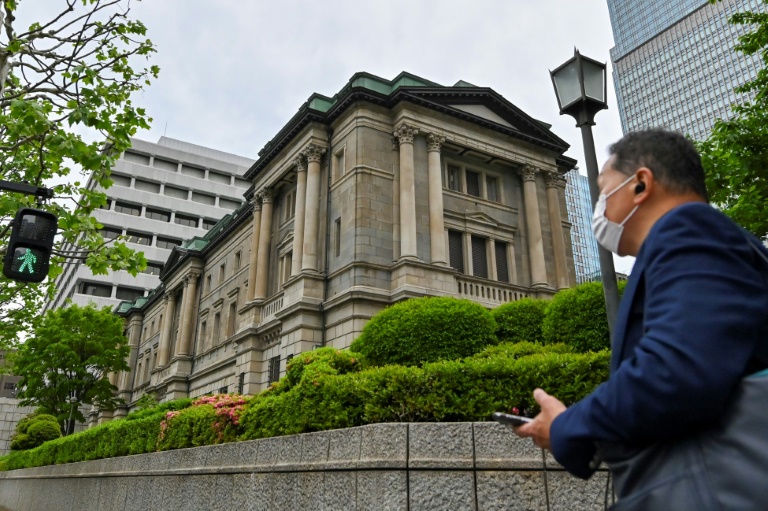
Bank of Japan keeps easing despite global rate hikes

The Bank of Japan on Friday stuck to its monetary easing policy even as other central banks raise interest rates to tame inflation, but said it would “pay due attention” to forex markets as the yen struggles at a 24-year low.

The decision to hold rates at minus 0.1 percent — part of a decade-old plan to boost the world’s third-largest economy — bucks a tightening trend by central banks globally aimed at battling sky-high fuel and food prices linked to the Ukraine war.

The hikes have been led by the US Federal Reserve, which this week announced its most aggressive increase in nearly 30 years and signalled more were in the pipeline.

The European Central Bank also plans to start a series of rate increases next month, the first in more than a decade, while the Bank of England announced a fifth straight increase on Thursday and Switzerland surprised markets with its own rate hike, the first since 2007.

The widening chasm between Japanese and US monetary policy this week pushed the yen to its lowest level against the dollar since 1998, a cause for increasing concern that even the central bank made reference to after its meeting Friday.

“It is necessary to pay due attention to developments in financial and foreign exchange markets and their impact on Japan’s economic activity and prices,” the BoJ said, in an unusual reference to forex movements.

After the announcement, one dollar bought 134.63 yen, up from 133.41 yen earlier in the day.

A weaker yen helps Japanese exporters as it inflates repatriated profits, noted Yoshikiyo Shimamine, executive chief economist of Dai-ichi Life Research Institute.

For the BoJ, it may be that “these benefits overwhelm the negative aspects of a cheaper yen — high prices for imported goods, which causes people to suffer without sufficient pay rises,” he told AFP.

The bank’s ultra-loose monetary policy aims to achieve two-percent inflation, a target that has been stubbornly out of reach during years of price stagnation.

In April, core consumer prices hit the target for the first time since 2015, but the BoJ has cautioned that it sees recent rising prices as a temporary and volatile trend.

Inflation has been rising for months in the United States and elsewhere as buoyant demand for homes, cars and other goods clashes with supply problems caused by Covid-19 lockdowns in China and other pandemic hold-ups.

The problem became dramatically worse after Russia invaded Ukraine in February and Western nations imposed steep sanctions on Moscow, sending food and fuel prices soaring, a particular problem in resource-poor Japan.

Stephen Innes at SPI Asset Management said the BoJ may have decided that a potential rout of Tokyo stocks caused by “a hawkish pivot… could see Japanese investors worse off than the current hit to purchasing power via a weaker currency.” 

The statement on forex is a nod to the government’s concerns over the yen’s weakness, but “does not, on its own, indicate an imminent change in policy”, he said.

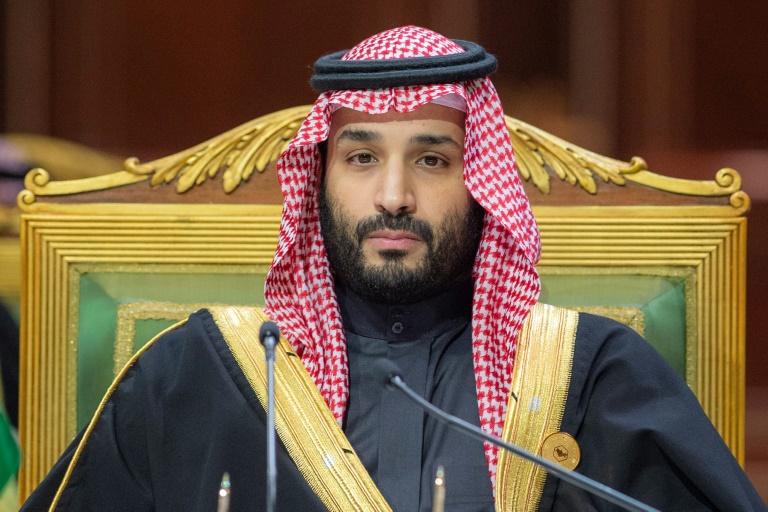
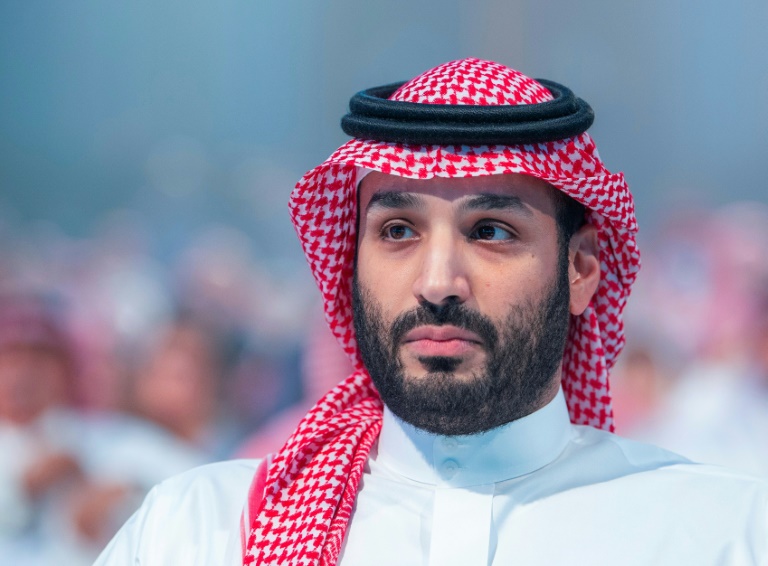
Mohammed bin Salman, hard-charging heir reshaping Saudi Arabia

Saudi Crown Prince Mohammed bin Salman has shaken up his conservative kingdom with head-spinning reforms while quashing any threats to his status as de facto ruler -– a role he assumed five years ago.

The hard-charging heir has earned plaudits for allowing women to drive and envisioning an economy less dependent on oil, but he has also drawn widespread revulsion over the gruesome murder of journalist Jamal Khashoggi and other state abuses.

A towering man with a full-face beard, a deep growling voice and seemingly boundless energy, Prince Mohammed is known for his super-sized ambitions, from building the futuristic megacity known as NEOM to waging the seven-year-old war in neighbouring Yemen.

The brash 36-year-old, said to have a fondness for fast food and the “Call of Duty” video games, is also fabulously rich, owning a $500 million yacht, a French chateau and, according to officially denied reports, a $450 million Leonardo da Vinci painting.

Unlike other Saudi princes with British accents, sharp suits and Oxford degrees, he has embraced the country’s Bedouin roots, usually donning a traditional robe and sandals, and treating friends and relatives to lavish roast lamb meals in luxury desert camps.

Having plotted his path to power from relative obscurity, he has overseen the biggest transformation in the modern history of Saudi Arabia, the world’s top crude oil exporter and host of Islam’s two holiest sites, Mecca and Medina.

Under his rule, the Islamic religious police have been de-fanged, cinemas have reopened, foreign tourists have been welcomed, and Saudi Arabia has staged a film festival, operas, a Formula One Grand Prix, professional wrestling and a huge rave festival.

Yet he has also jailed critics and, in a sweeping purge of the nation’s elite, detained and threatened some 200 princes and businessmen in Riyadh’s Ritz-Carlton hotel in a 2017 anti-corruption crackdown that tightened his grip on power.

His image was most severely tarnished by the brutal murder and dismemberment of Khashoggi inside the kingdom’s Istanbul consulate in October 2018, which prompted an international outcry despite Riyadh’s insistence that rogue agents carried out the killing.

“MBS is a hugely divisive character, praised by supporters as a long-awaited game-changer in a region aching for it and dismissed by foes as a brutal dictator in the making,” wrote Ben Hubbard in “MBS: The Rise to Power of Mohammed bin Salman”.

“He is determined to give Saudis a shining, prosperous future and exercises an unflinching willingness to crush his foes. Combined in different doses, those attributes will likely guide his actions far into the future.”

– ‘Mr Everything’ –

Prince Mohammed was born on August 31, 1985, as one of the hundreds of grandchildren of the country’s founder, King Abdulaziz Ibn Saud. He grew up in a Riyadh palace with his mother, Fahda, one of his father’s four wives, and his five brothers.

“As the sixth son of the 25th son of the founding king, there was little reason to expect that he would rise to prominence,” wrote Hubbard. “And for most of his life, few people did.”

He earned a law degree from Riyadh’s King Saud University but never studied abroad, and soon worked as a special adviser to his father, the then-Riyadh governor.

When King Salman assumed the throne in early 2015, he named Prince Mohammed as defence minister.

Soon the young man also coordinated economic policy, oversaw the state oil company Saudi Aramco and supervised the kingdom’s military intervention in Yemen. 

Within a year, he held so many portfolios that diplomats called him “Mr Everything”.

The prince — now a father of three boys and two girls, who unlike other Saudi royals has only one wife — reportedly worked 16-hour days and drew inspiration from Winston Churchill and Sun Tzu’s “The Art of War”.

His stunning ascent seemed almost Shakespearean. He replaced his elder cousin Prince Mohammed bin Nayef to become heir to the throne in 2017. Three years later Prince Nayef, along with a brother of King Salman, were reportedly detained.

Prince Mohammed has pledged to forge a “moderate” Saudi Arabia and wooed international investors for his wide-ranging Vision 2030 plan to diversify the oil-reliant economy.

“We want to live a normal life,” he once told business leaders in Riyadh. “All we are doing is going back to what we were — a moderate Islam that is open to all religions and open to the world.

“Seventy percent of the Saudi population is under 30 and, honestly, we will not spend the next 30 years of our lives dealing with extremist ideas. We will destroy them today.”

– ‘Fire hose of ideas’ –

As he rose to prominence, he toured the United States and charmed leaders in the White House and on Wall Street, in Silicon Valley and Hollywood. 

New York Times writer Thomas Friedman recounted how in an interview that lasted late into the night, the prince “wore me out with a fire hose of new ideas for transforming his country”.

Perhaps his most hyper-ambitious project is the $500 billion NEOM project on the Red Sea coast, to be powered by solar energy and staffed by robots, which the prince describes as a “civilisational leap for humanity”.

Reflecting the hopes of the country’s youthful population, Prince Mohammed has eased restrictions on women’s rights, allowing them to drive, attend sports events and concerts alongside men, and obtain passports without the approval of a male guardian.

Along with the reforms, though, came a crackdown on dissidents, including intellectuals and women’s rights activists, part of an apparent strategy to stamp out any trace of opposition before a formal transfer of power from King Salman.

Internationally, he has pursued a more assertive foreign policy, plunging the kingdom into the quagmire of regional rivalries: the Yemen war, hostility toward Shiite power Iran, a three-year blockade of Qatar until 2021, and the reported detention of Lebanon’s prime minister for several tense days. 

Prince Mohammed, who once publicly berated US president Barack Obama for criticising Saudi Arabia’s rights record, forged a strong bond with Donald Trump and especially his son-in-law, Jared Kushner, which would serve him well after Khashoggi’s death.

The prince faced renewed scrutiny of his human rights record under US President Joe Biden, who released an intelligence report that said MBS had “approved an operation” to capture or kill Khashoggi. 

Biden did not, however, take action against the presumed future king. And next month, the US president plans to travel to Saudi Arabia, a stark reversal after he vowed to make the country a “pariah” during a debate in 2019.

This shift is perhaps an acknowledgement that Prince Mohammed, still in his 30s, could rule Saudi Arabia for half a century or more.

WTO strikes landmark deals package after tense talks

The World Trade Organization concluded hard-won deals Friday on fishing subsidies, food insecurity and Covid-19 vaccines in a landmark bundle of agreements secured through hectic round-the-clock talks.

WTO director-general Ngozi Okonjo-Iweala said the trade ministers’ conference had struck an “unprecedented package of deliverables” which would make a difference to people’s lives across the planet.

The talks at the global trade body’s Geneva headquarters began Sunday and were due to wrap up on Wednesday.

But instead the WTO’s 164 members went straight through on into Friday, finally concluding at around 5:00 am (0300 GMT).

The ministerial conference also agreed on deals on e-commerce, responding to pandemics and reforming the organisation itself.

“Not in a long while has the WTO seen such a significant number of multilateral outcomes,” Okonjo-Iweala said.

“The package of agreements you have reached will make a difference to the lives of people around the world. The outcomes demonstrate that the WTO is in fact capable of responding to the emergencies of our time.”

With ministers struggling to conclude agreements on each topic separately, countries began making trade-offs in a bid to get several measures through in a grand bargain.

– Big fish deal netted –

The fisheries deal was the last one to get over the line.

Delegations were frantically haggling in the early hours of Friday on the flagship issue being thrashed out at the WTO conference.

Negotiations towards banning subsidies that encourage overfishing and threaten the sustainability of the planet’s fish stocks have been going on at the WTO for more than 20 years.

Okonjo-Iweala, who took over in March 2021, hinged her leadership on breathing new life into the sclerotic organisation.

The former foreign and finance minister of Nigeria positioned herself as someone who can bang heads together and get business done.

The last ministerial conference in Buenos Aires in December 2017 was seen as a flop after failing to strike any heavyweight deals.

The new WTO chief wanted to prove that the organisation could still make itself relevant in tackling the big global challenges.

Some delegations accused India of being intransigent on every topic under discussion at the WTO — where decisions can only pass with the agreement of every member.

But Indian Commerce and Industry Minister Piyush Goyal insisted: “India is not a roadblock on anything… People are realising that we were the ones who actually helped create the sole consensus.”

The second major issue on the table was the plan for a Covid-19 vaccine patents waiver.

Some countries that host major pharmaceutical companies, like Britain and Switzerland, were finding some of the draft wording problematic, while big pharma feared a deal that would strangle innovation.

But Britain’s ambassador in Geneva, Simon Manley, told Okonjo-Iweala late Thursday that after clarification and improvements were achieved, London was “now ready to join the consensus”.

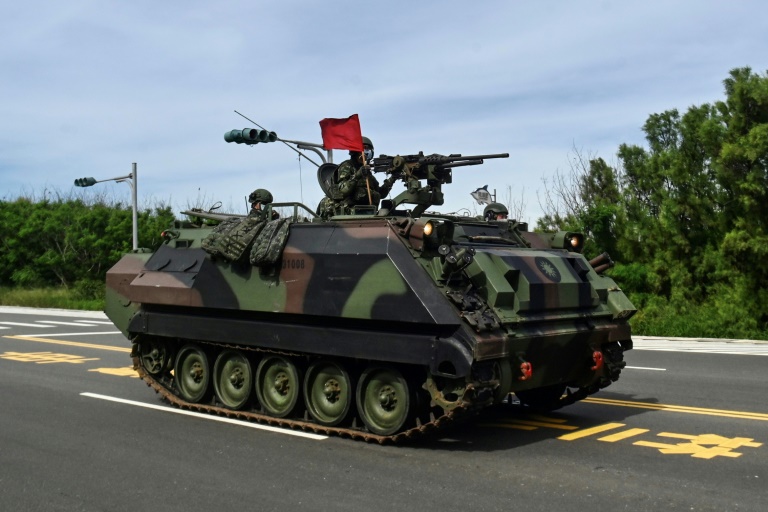
A Chinese invasion of Taiwan: Too costly to countenance?

On Taiwan’s tiny Penghu islands, the missile bases that sit next to white-sand beaches and bustling fish markets are a visceral reminder of the constant threat of attack from China.

Despite the huge military discrepancy between the two sides, many analysts believe Taiwan’s location, inhospitable terrain and US support mean China would find a full-scale invasion extremely hard — and possibly too costly to countenance. 

Communist China and Taiwan split at the end of a civil war in 1949 with the losing Kuomintang forces retreating to the island. But Beijing insists now-democratically run Taiwan is part of its territory, and that it will one day re-take it, by force if necessary. 

Recent record Chinese fighter jet incursions into Taiwan’s air defence identification zone and increasingly aggressive rhetoric under President Xi Jinping have raised fears China might contemplate acting on that pledge sooner rather than later. 

The Chinese defence ministry last week said it would “not hesitate to start a war” to stop Taiwan becoming independent.

One US admiral has said an attack could come by 2027, the centenary of China’s People’s Liberation Army (PLA).

“If we were to go head to head militarily, we don’t stand a single chance,” retired admiral Lee Hsi-min, who was head of Taiwan’s armed forces until 2019, told AFP bluntly.

But Russia’s failure to quickly overrun Ukraine stands as a cautionary tale to Beijing, while simultaneously providing Taipei with both tactical blueprints and inspiration on how to hold off a much larger enemy.

“Our soldiers here are all Taiwanese and will be fighting to defend their homeland,” said Chen Ing-jin, a Penghu historian and architect. “That makes a difference. Just look at Ukraine.”

– ‘A defender’s dream’ – 

Taiwan’s biggest advantage is its geography.

Amphibious assaults are exceedingly difficult and if China was to invade Taiwan — and crucially hold it — Beijing would need to move hundreds of thousands of troops as well as equipment across the Taiwan Strait.

Even at its narrowest point the strait is 130 kilometres (80 miles) and weather conditions are notoriously unforgiving with two monsoon seasons. 

That leaves just two brief “windows of attack” — May to July and October — for such a large-scale operation, according to a US Naval War College report.

In addition, studded into the waters are outlying islands like the Penghu chain — bristling with radar and missiles pointing straight out into the strait.  

With the likely early warning, and the weaponry Taipei has at its disposal, the PLA would probably incur high losses even in that first stage of transit, said James Char, an Associate Research Fellow at Singapore’s S. Rajaratnam School of International Studies.

And while the small, flat outlying islands might in the end prove easy for Beijing to subdue, on Taiwan’s main island, the opposite applies.

The coastal terrain there “is a defender’s dream come true”, according to Ian Easton, author of “The Chinese Invasion Threat”.

He and his colleagues estimate that Taiwan only has 14 small beaches suitable for landing, and even they are bordered by mountains, cliffs or dense urban infrastructure. 

“Landing on Taiwan is only part of the problem,” Bonny Lin, director of the China Power Project at the Center for Strategic and International Studies (CSIS), told AFP. 

Progress through Taiwan’s wetlands, mountains and densely populated urban areas will require a huge range of different combat skills and weapons.

“How is it going to sustain those forces once they’re in position and advancing — how is it going to do the logistics?” Lin asked.

– Weapons –

China has spent hundreds of billions of dollars upgrading its military capabilities over the past decade, and its statistical dominance over Taiwan is enormous. 

The PLA has over one million ground force personnel to Taiwan’s 88,000, 6,300 tanks compared with 800, and 1,600 fighter jets to 400, according to the US Department of Defence.  

Washington also estimates Beijing has the world’s largest Navy by ship number. A recent US Naval War College paper described those ships as “increasingly sophisticated, capable vessels”.

But many experts, including both Char and Lin, question whether they are yet capable enough.

Atlantic Council senior advisor Harlan Ullman put it more forcefully in a February paper: “China simply lacks the military capability and capacity to launch a full-scale amphibious invasion of Taiwan for the foreseeable future”.  

In the meantime, Taiwan has plans to counter China’s might in numbers, with retired admiral Lee highlighting asymmetric warfare — an emphasis on mobility and precision attacks — an approach US officials are reportedly encouraging. 

Lee pointed to the success of the Ukrainian mobile missile launcher that sank Russia’s Black Sea flagship, the Moskva.

Taiwan has built up stockpiles of mobile missile batteries and shoulder-launched weapons but he said they needed lots more. 

– US support –

The factor that preoccupies Beijing most is who else might get involved in the conflict, Chinese military expert Song Zhongping told AFP. 

“The difficulty of liberating Taiwan lies in the potential intervention of the United States. It’s the biggest obstacle for the PLA to clear,” he said. 

The United States officially maintains a “strategic ambiguity” on whether it would intervene militarily in the event of an invasion. But it supplies Taiwan with military hardware and President Joe Biden has said multiple times that Washington would intervene. 

The “extent, depth and breadth” of US and other allies’ involvement would greatly determine how any conflict would play out, said Song. 

Some wargame scenarios see the PLA taking out US bases in the Pacific to kneecap its ability to respond. Washington would be heavily reliant on aircraft carriers operating far from home. 

To counter that threat China has prioritised the development of hypersonic “carrier killer” missiles and militarised multiple atolls in the disputed South China Sea.

But an attack on US forces could provoke a more determined backlash and draw American allies into a global conflict.

Even without a military intervention, Char said the threat of economic sanctions like those placed on Russia would give the Chinese leadership pause for thought.

– Political willpower –

The question of whether China would be prepared to cause mass casualties with an invasion, while risking its domestic and international image, is a fundamental one.

“You need to let China know that it will suffer tremendous losses, and even then it may still not be able to occupy Taiwan,” said Lee. 

“So that China will think that the best way to resolve the Taiwan problem is by peaceful means.”

There are a range of other options short of all-out invasion Beijing could use to bring Taipei to its knees — including a Taiwan Strait blockade, annexation of the outlying islands, or incapacitation of military and cyber systems.

“China might come up with other formulations or creative diplomatic strategic solutions to declare unification with Taiwan without actually having achieved that,” CSIS’ Lin said.  

Chinese analyst Song said Beijing has made its invasion trigger clear. 

“The timing depends on the behaviour of the Taiwanese separatists and if they insist on advocating for Taiwan’s independence,” he said.

The island’s 23 million people have increasingly embraced a distinct Taiwanese identity and President Tsai Ing-wen, who views the island as a sovereign state, has won two elections. 

The next presidential elections are next due in 2024 and Ukraine’s fate has only further hardened attitudes towards China.

In a survey conducted in May, 61.4 percent of respondents said they were willing to take up arms in the event of an invasion. 

The decision ultimately rests with Xi Jinping, the most authoritarian Chinese leader since Mao Zedong, who has been central to the rising fears that China will invade Taiwan.

Xi is on the cusp of securing an unprecedented third term this year. And since he came to power, Char said, “there’s been a total shift from the previous mantra of peace and development” towards Taiwan.

Instead, he added, Xi has pushed the mantra “accomplish something magnificent and great”.

In a landmark 2019 speech on Taiwan, Xi said unification was “an inevitable requirement for the great rejuvenation of the Chinese people”.

RIP Internet Explorer: South Korean engineer's browser 'grave' goes viral

A South Korean engineer who built a grave for Internet Explorer — photos of which quickly went viral — told AFP Friday that the now-defunct web browser had made his life a misery.

South Korea, which has some of the world’s fastest average internet speeds, remained bizarrely wedded to Microsoft’s Internet Explorer, which was retired by the company earlier this week after 27 years.

In honour of the browser’s “death”, a gravestone marked with its signature “e” logo was set up on the rooftop of a cafe in South Korea’s southern city of Gyeongju by engineer Kiyoung Jung, 38.

“He was a good tool to use to download other browsers,” the gravestone’s inscription reads. 

Images of Jung’s joke tombstone quickly spread online, with users of social media site Reddit upvoting it tens of thousands of times.

Once dominant globally, Internet Explorer was widely reviled in recent years due to its slowness and glitches.

But in South Korea, it was mandatory for online banking and shopping until about 2014, as all such online activities required sites to use ActiveX — a plugin created by Microsoft. 

It remained the default browser for many Seoul government sites until very recently, local reports said.

The websites of the Korea Water Resources Corporation and the Korea Expressway Corporation only functioned properly in IE until at least June 10, according to a report by the Maeil Economic Daily.

– ‘Suffering’ for IE –

As a software engineer and web developer, Jung told AFP he constantly “suffered” at work because of compatibility issues involving the now-defunct browser. 

“In South Korea, when you are doing web development work, the expectation was always that it should look good in Internet Explorer, rather than Chrome,” he said.

Websites that look good in other browsers, such as Safari or Chrome, can look very wrong in IE, which often forced him to spend many extra hours working to ensure compatibility.

Jung said that he was “overjoyed” by IE’s retirement.

But he also said he felt genuinely nostalgic and emotional about the browser’s demise, as he remembers its heyday — one of the reasons he was inspired to erect the grave stone.

He quoted Japanese animator Hayao Miyazaki: “People are often relieved that machines don’t have souls, but we as human beings actually give our hearts to them,” Jung told AFP, explaining his feelings for IE.

He said he was pleased by the response to his joke grave and that he and his brother — who owns the cafe — plan to leave the monument on the rooftop in Gyeongju indefinitely.

“It’s been very exciting to make others laugh,” he said.

Problems soar for airlines despite pandemic recovery

Desperate to put the coronavirus pandemic behind them, airlines will hold talks on Sunday ahead of a potential summer of chaos with shortages and strikes that could threaten their recovery.

While trade is roaring back to life, representatives from the aviation sector meeting for three days in Qatar have a packed agenda with multiple geopolitical crises including the war in Ukraine and the environment.

Cracks are already showing in the sector’s recovery, though industry figures are optimistic about the future despite the issues.

In the past few weeks, delays and cancellations caused by a lack of staff at airports and strikes for better pay have wreaked havoc upon travellers.

The problems originate with the pandemic when airlines and airports laid off thousands of workers during its worst-ever crisis.

Now, they are scrambling for workers.

Passenger numbers dropped by 60 percent in 2020, and in 2021 it was still down 50 percent. Airlines lost nearly $200 billion over two years.

While some firms in the sector went bankrupt, others — backed often by states — have emerged from the pandemic with profits intact.

European airlines are excited about the prospect for a “beautiful summer”, with some data showing booking rates higher than in 2019. In the United States, the domestic market has almost returned to pre-pandemic levels.

“Airlines are generating cash again, which is a real positive,” said Willie Walsh, head of the International Air Transport Association, during a visit to Paris earlier this month.

The sector’s morale was buoyant after “a very long and barren two years”, he told reporters.

– ‘Not up to speed’ –

The International Air Transport Association (IATA), which represents 290 airlines accounting for 83 percent of global air traffic, will host its annual general meeting in Doha instead of Shanghai after record-high Covid case counts forced it to relocate the forum.

There will be cause for celebration during the event.

In terms of Revenue Passenger Kilometres (RPKs), a measure of total distance flown by paying passengers, activity in April reached 62.8 percent compared with the same month in 2019.

That was the best figure since March 2020. 

Domestic routes, meanwhile, hit 74.2 percent in April, better than international markets which reached 56.6 percent compared with the same period in 2019.

After the Easter holidays fiasco at European airports, Walsh admitted “the system is not up to speed”, but vowed the issues would be addressed.

He was hopeful despite the war in Ukraine and its wider impacts, surging inflation and record prices for jet fuel.

Fuel makes up 25 to 30 percent of companies’ spending, and given the still-fragile state of airlines’ balance sheets, higher costs will be passed on to customers to preserve their profits.

But the effects of Russia’s war in Ukraine are already being felt.

European flights to Asia are constrained by long diverted routes to avoid Russian airspace after having slapped heavy sanctions on Moscow.

– Costly decarbonisation –

With inflation eroding people’s purchasing power, higher costs could weaken demand at a time when companies need to make serious investments to cut their carbon dioxide emissions.

The IATA pledged last October to achieve net-zero carbon emissions by 2050.

The issue will be raised at a general assembly meeting of the International Civil Aviation Organization in the autumn, but a deal between countries is far from certain.

The IATA, which expects 10 billion air passengers annually by the middle of the century compared with 4.5 billion in 2019, refuses to consider any restrictions on growth in order to contain the effects of climate change.

Commercial air travel, often the target of environmental activists, is responsible for between 2.5 and 3 percent of global emissions.

Between “cleaner” planes and sustainable fuel, investment worth $1.5 trillion over 30 years is needed to improve the sector’s environmental impact. The costs will be most likely handed down to the customer, again.

Asian markets hit by recession fears, yen drops after BoJ decision

Asian markets mostly fell Friday after another hefty drop in New York as central bank interest rate hikes fan fears of a recession, while the yen sank after the Bank of Japan said it would not yet follow its global peers in tightening policy.

Gone is the optimism that flowed through trading floors immediately after the Federal Reserve on Wednesday announced its biggest rate increase for 28 years as global finance chiefs followed suit, putting a squeeze on dealers’ ability to borrow.

Markets have been tumbling for months as traders contemplate the end of the era of cheap cash that sent valuations to record or multi-year highs, with inflation at levels not seen in decades owing to a surge in energy and food prices.

The Bank of England on Thursday lifted rates for a fifth straight time to their highest since 2009 during the financial crisis, just as the Swiss central bank shocked markets by unveiling its own half-point increase — its first rise in 15 years. 

The European Central Bank has also signalled it will announce a hike soon.

Equities plunged as expectations for recession continue to rise. The Dow ended below 30,000 for the first time in more than a year and the S&P 500 is now at its lowest since December 2020.

But with rates rising everywhere else, the Bank of Japan on Friday refused to move away from its ultra-loose monetary policy, despite inflation spiking and the yen sitting around a 24-year low.

Officials in Tokyo insist that low rates are still needed to nurture a struggling economy, though in a move away from its regular remarks in the post-meeting statement, the bank did say it “was necessary to pay due attention to developments in financial and foreign exchange markets”.

The yen tumbled to 134.63 against the dollar, from 133.37 before the decision, though it recouped some of those losses after the statement. Still, it is wallowing around a 24-year low and has lost around 13 percent this year.

But Stephen Innes at SPI Asset Management said: “No central bankers worth their weight would put inflation-fighting credentials on the line and import higher energy inflation via a weaker currency.”

He added that “in what is a highly ominous signal for stock market investors, given the broader index’s sensitivity to rising bond yields… the global race to hike rates is nowhere near the finishing line”. 

On equity markets, Tokyo, Shanghai, Sydney, Seoul, Singapore, Wellington, Taipei, Bangkok, Manila and Jakarta were all in the red, though Hong Kong was slightly higher after steep losses on Thursday.

– Key figures at around 0310 GMT –

Tokyo – Nikkei 225: DOWN 2.2 percent at 25,858.50 (break)

Hong Kong – Hang Seng Index: UP 0.5 percent at 20,958.37

Shanghai – Composite: DOWN 0.3 percent at 3,274.38

Dollar/yen: UP at 134.30 yen from 132.14 yen late Thursday

Euro/dollar: DOWN at $1.0527 from $1.0550

Pound/dollar: DOWN at $1.2307 from $1.2350

Euro/pound: UP at 85.54 pence from 85.40 pence

West Texas Intermediate: DOWN 0.5 percent at $117.00

Brent North Sea crude: DOWN 0.4 percent at $119.32 per barrel

New York – Dow: DOWN 2.4 percent at 29,927.07 (close)

London – FTSE 100: DOWN 3.1 percent at 7,044.98 (close)

— Bloomberg News contributed to this story —

Biden coup buoys Saudi crown prince after five years at helm

Saudi Arabia’s Crown Prince Mohammed bin Salman has long been sidelined on the world stage but as he prepares to mark five years as de facto leader, he is finally coming in from the cold.

Next month’s visit by US President Joe Biden will complete the international rehabilitation of the 36-year-old prince, who was widely reviled over the 2018 killing of journalist Jamal Khashoggi.

Biden’s trip — after Russia’s invasion of Ukraine sent oil prices soaring, piling on economic pain — follows visits by the leaders of France, Britain and Turkey.

It represents an unqualified victory for Prince Mohammed, who has led his country on a rollercoaster ride since being named the heir of his father King Salman, 86, on June 21, 2017.

In his time as unofficial ruler of Saudi Arabia, the world’s biggest oil exporter and the home of Islam’s two holiest sites, “MBS” has liberalised many aspects of daily life while asserting stern control over others.

Yet his drive to transform the conservative kingdom risked being completely overshadowed by Khashoggi’s murder, an act so abhorrent that Biden’s trip — a routine move for past American leaders — has sparked controversy.

Saudi agents killed and dismembered Khashoggi, an insider turned critic, in the kingdom’s Istanbul consulate in October 2018.

US intelligence concluded that Prince Mohammed “approved” an operation to capture or kill Khashoggi, a charge he denies.

Following the visits by France’s President Emmanuel Macron, Britain’s Prime Minister Boris Johnson and Turkey’s President Recep Tayyip Erdogan, the planned meeting with Biden is a major validation of Prince Mohammed.

“Washington was kind of the hub of opposition to MBS when it comes to official public statements and mobilisation in the West,” said Yasmine Farouk of the Carnegie Endowment for International Peace.

“This is exactly what MBS was aiming to get through the last year-and-a-half: a meeting and a picture with Biden as a counterpart,” said one Riyadh-based diplomat.

– Women at the wheel –

When he arrives, Biden will find Prince Mohammed’s stamp almost everywhere. But no group has been affected more than Saudi women.

The axing of notorious rules concerning what women can wear and where they can go is a centrepiece of the new Saudi liberalisation narrative.

Abaya robes and hijab headscarves are now optional, women are no longer banned from concerts and sporting events, and in 2018 they gained the right to drive.

The kingdom has also eased so-called guardianship rules, meaning women can now obtain passports and travel abroad without a male relative’s permission.

Yet the story for women has not been entirely positive, especially for those who dare to speak out.

In 2018, authorities arrested at least a dozen women activists, most of them right before the ban on female motorists was lifted.

The move was preceded by a clampdown that hit princes and senior officials suspected of graft or disloyalty, dozens of whom were rounded up in November 2017 in Riyadh’s luxury Ritz-Carlton hotel.

Prince Mohammed “has coupled his dramatic and thoroughgoing cultural, social and artistic revolution from the top down… with an equally dramatic concentration of power politically”, said Hussein Ibish of the Arab Gulf States Institute in Washington.

– Next phase ‘critical’ –

Some of Prince Mohammed’s most striking policies have played out beyond his country’s borders.

Two months after his father, King Salman, ascended the throne in 2015 and named Prince Mohammed defence minister, Riyadh rallied a coalition to intervene in war-hit Yemen.

The conflict between the Saudi-backed Yemeni government and Iran-aligned Huthi rebels has gone on to kill hundreds of thousands of people directly and indirectly and drive millions to the brink of famine.

Signs of a more muscular Saudi foreign policy were also seen in a three-year blockade of Qatar that began in June 2017, the same month Prince Mohammed became heir.

More recently, the kingdom has adopted what analysts call a somewhat conciliatory approach in the region, for example by engaging in talks with rival Iran. Prince Mohammed has also referred to Israel as a “potential ally”.

Perhaps the most significant element of Prince Mohammed’s Vision 2030 reform agenda is his bid to remake an economy long dependent on oil.

The effort includes a push for some 30 million foreign tourists annually by 2030, some of them lured by mega-projects like NEOM, a $500 billion futuristic megacity complete with robot maids and flying taxis.

Other changes, such as drawing more Saudis into the workforce, are less flashy and, like other recent moves, were discussed before Prince Mohammed’s rise.

“He is the powerhouse, but he didn’t do something that wasn’t already the subject of discussion in the public sphere,” said Farouk, referring to the reforms generally.

Nevertheless, Prince Mohammed now owns Saudi Arabia’s reform process and his legacy will hinge on its success, said Kristian Ulrichsen of Rice University’s Baker Institute in the United States.

“Having made so much of the fact that he, and only he, can transform Saudi Arabia by 2030, the next several years will be critical for Mohammed bin Salman as he seeks to deliver tangible results.”

US makes billions from prison labor as inmates earn pennies: rights group

Montrell Carmouche praises Mexico’s white beaches and coral reefs, selling it by telephone as a holiday destination while trying not to reveal that he has never been there — or that he is, in fact, an inmate imprisoned in the United States.

His story — and his pay, a meager $6 commission per sale — are featured in a report released this week by the powerful American Civil Liberties Union (ACLU) and the University of Chicago which documents the work of the US prison population. 

Inmates “are paid pennies for their work in often unsafe working conditions even as they produce billions of dollars for states and the federal government,” according to ACLU researcher Jennifer Turner, lead author of the paper.  

The US incarceration rate is among the highest in the world, with more than 1.2 million people held in state and federal prisons. 

Two-thirds of them have jobs behind bars and produce more than $11 billion worth of goods and services each year, according to the report, “Captive Labor: Exploitation of Incarcerated Workers,” which compiles other surveys, official documents and interviews with inmates. 

The vast majority — more than 80 percent — are employed to keep their prisons running as cleaners, cooks, electricians and plumbers for wages ranging from $0 to $1.24 an hour. 

The Bureau of Prisons described the work program in a statement to AFP as a means of reducing “inmate idleness, while allowing the inmate to improve and/or develop useful job skills, work habits, and experiences that will assist in post-release employment.”

In 2004, a conservative estimate of the value from their work was $9 billion, the ACLU report says. 

“All the jobs we are doing in prison are not really benefiting us; it is more benefitting the prison system,” commented Latashia Millender, an Illinois inmate quoted in the paper. 

“I work a job making $450 for a whole year. If they were to pay a civilian for the same job that would be his pay for just one week.” 

– ‘Fundamental human rights’ – 

Some 50,000 prisoners provide goods and services that are sold to other government agencies — jobs including washing sheets for hospitals, or making uniforms for public employees.

That labor was worth $2.09 billion in 2021, according to the National Prison Industries Association. 

Again, the wages are nominal: in Oregon, for example, the vehicle registration agency pays inmates $4 to $6 a day to make license plates, compared to $80 for free employees. 

Finally, fewer than 5,000 inmates, including Montrell Carmouche, work for private companies, whose clients often do not know the origin of the products. 

These jobs, which pay slightly more, are in high demand. But most of the earnings are seized by the government, often to reimburse their legal fees. 

Regardless of the job, the report’s authors point out that inmates have little or no training for the tasks assigned to them, generally cannot refuse them and lack the equipment necessary for their safety. 

In its statement, the Bureau of Prisons said that “human treatment” of inmates was “a top priority,” and added that subject to approval prisoners can instead do drug treatment, education or vocational training in place of some or all of the work program.

Only inmates who are “physically and mentally able” are assigned to work programs, it said, adding that the programs “are to meet the appropriate minimum standards for health and safety,”

For the report’s authors, that was not enough.

“(T)he labor conditions of incarcerated workers in many US prisons violate the most fundamental human rights to life and dignity,” concluded Claudia Flores of the University of Chicago, co-author of the study, recommending a series of reforms, including the imposition of a minimum wage. 

Ferrari says 80% of its models will be electric or hybrid by 2030

Ferrari unveiled Thursday plans to turn 80 percent of its production into all-electric or hybrid cars by 2030 in a major shift for an iconic brand renowned for its powerful combustion engines.

“Electrification is a way to improve performance,” new chief executive Benedetto Vigna said as he unveiled a four-year strategic plan at the brand’s historic Maranello site in northern Italy.

The 2022-2026 plan will be driven by the launch of new products — including Ferrari’s first 100 percent electric car, set to be presented in 2025.

“Ferrari’s first all-electric car will be 100 percent a sports car,” commercial director Enrico Galliera told AFP.

“We will develop an electric car that will deliver the same emotions as when you drive a (traditional) Ferrari,” he pledged, without revealing any technical details.

The Italian luxury carmaker plans to expand the Maranello plant and create a third production line for hybrid and electric vehicles.

Under the plan, some 60 percent of its production would be all-electric or hybrid models by 2026, rising to 80 percent by 2030.

Other upcoming new products include Ferrari’s first SUV, “Purosangue” (Thoroughbred), which will be unveiled in September, with deliveries from 2023.

Including the all-electric offer, another 15 new launches are expected between 2023 and 2026, Vigna said.

Ferrari, which celebrates its 75th anniversary this year, broke results records in 2021, delivering 11,155 cars — up 22.3 percent  — and generating revenue of 4.3 billion euros (up 23.4 percent).

It said Thursday it was setting an ambitious target for revenues. The 6.7-billion-euro ($7-billion) goal for 2026 is well above this year’s estimated revenue of around 4.8 billion euros.  

Vigna did not give many details of the new Purosangue, other than that it will be a sports car and will have a V12 engine, a trademark of the mythical brand.

But he said: “I am confident it will exceed all expectations.”

He emphasised its exclusivity, saying it would make up on average fewer than 20 percent of total deliveries.

Under the previous strategic plan unveiled in 2018, Ferrari had also promised the launch of 15 cars — a target Vigna said had been reached.

Close Bitnami banner
Bitnami