US Business

Musk offers billion-user vision but few details to Twitter staff

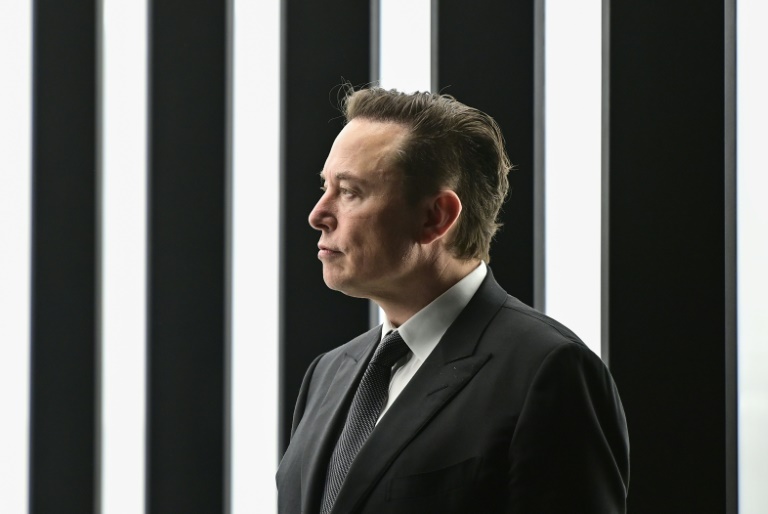
Elon Musk pitched a vision Thursday to Twitter staff of a one-billion-user platform, but was hazy on potential layoffs, free speech limits and what’s next in his chaotic buyout bid.

While fielding questions in his first meeting with wary staffers, the Tesla chief offered no updates on his $44 billion deal that he has thrown into doubt in recent weeks.

Yet in comments from the employees-only virtual meeting of less than one hour, Bloomberg and New York Times reports based on leaks relayed his claimed passion for self-expression on the platform.

Musk said he wants to have “at least a billion people on Twitter” in what would be massive growth for a platform that has about 229 million presently.

The Tesla chief has already made comments on how he’d run the platform — including lifting Donald Trump’s ban — but his words this time were addressed directly to workers’ concerns.

Musk told Twitter employees he personally favors moderate political positions, but that users should be able to say outrageous things, reports leaked from the meeting said. 

He qualified that by saying that freedom of speech doesn’t mean an intrinsic freedom for comments to reach far and wide, according to the reports.

Musk answered a question about possible layoffs by saying the company “needs to get healthy” when it comes to its financial situation.

He endorsed advertising and subscriptions as ways to make money at Twitter, saying ads should be entertaining as well as legitimate.

Musk talked anew about making money at Twitter by charging to verify identities of those behind accounts, then making verification a factor in which tweets get higher ranking at the platform.

Regarding Twitter’s policy of letting people work from home, Musk said it would be an option only for those proven to be exceptional at their jobs, he was reported to tell the gathering.

“The Musk Twitter all-hands call was the wrong call at the wrong time in our opinion,” Wedbush analyst Dan Ives said in a tweet.

“Lots of answers Musk could not provide given fluid nature of deal.”

Ives added that the virtual exchange spotlighted a contrast between the kind of culture fostered by Musk and the “Twitter DNA.”

– Market not convinced –

A would-be owner addressing the troops of a company he or she wants to buy is a routine part of the merger playbook, but Musk’s bid has been anything but ordinary.

He shocked the tech world with an unsolicited buyout bid in April for the platform that is a key exchange for news, entertainment and politics.

The board eventually came around to supporting his $54.20 per share offer, but since then he has cast doubt on the deal but clashing with the firm’s leadership over user numbers.

Musk has kept employees and Wall Street on edge over how the buyout saga will end.

Reports coming out of the meeting evidently left the market unconvinced about the buyout, with Twitter shares slipping more than two percent in mid-day trades far below the purchase price agreed to my Musk.

The proposed sale has stoked protest from critics who warn his stewardship will embolden hate groups and disinformation campaigns.

US securities regulators have also pressed Musk for an explanation of an apparent delay in reporting his Twitter stock buys.

For his part, Musk has repeatedly raised questions about fake accounts on the platform, saying on Twitter he could walk away from the transaction if his concerns were not addressed.

Musk offers billion-user vision but few details to Twitter staff

Elon Musk pitched a vision Thursday to Twitter staff of a one-billion-user platform, but was hazy on potential layoffs, free speech limits and what’s next in his chaotic buyout bid.

While fielding questions in his first meeting with wary staffers, the Tesla chief offered no updates on his $44 billion deal that he has thrown into doubt in recent weeks.

Yet in comments from the employees-only virtual meeting of less than one hour, Bloomberg and New York Times reports based on leaks relayed his claimed passion for self-expression on the platform.

Musk said he wants to have “at least a billion people on Twitter” in what would be massive growth for a platform that has about 229 million presently.

The Tesla chief has already made comments on how he’d run the platform — including lifting Donald Trump’s ban — but his words this time were addressed directly to workers’ concerns.

Musk told Twitter employees he personally favors moderate political positions, but that users should be able to say outrageous things, reports leaked from the meeting said. 

He qualified that by saying that freedom of speech doesn’t mean an intrinsic freedom for comments to reach far and wide, according to the reports.

Musk answered a question about possible layoffs by saying the company “needs to get healthy” when it comes to its financial situation.

He endorsed advertising and subscriptions as ways to make money at Twitter, saying ads should be entertaining as well as legitimate.

Musk talked anew about making money at Twitter by charging to verify identities of those behind accounts, then making verification a factor in which tweets get higher ranking at the platform.

Regarding Twitter’s policy of letting people work from home, Musk said it would be an option only for those proven to be exceptional at their jobs, he was reported to tell the gathering.

“The Musk Twitter all-hands call was the wrong call at the wrong time in our opinion,” Wedbush analyst Dan Ives said in a tweet.

“Lots of answers Musk could not provide given fluid nature of deal.”

Ives added that the virtual exchange spotlighted a contrast between the kind of culture fostered by Musk and the “Twitter DNA.”

– Market not convinced –

A would-be owner addressing the troops of a company he or she wants to buy is a routine part of the merger playbook, but Musk’s bid has been anything but ordinary.

He shocked the tech world with an unsolicited buyout bid in April for the platform that is a key exchange for news, entertainment and politics.

The board eventually came around to supporting his $54.20 per share offer, but since then he has cast doubt on the deal but clashing with the firm’s leadership over user numbers.

Musk has kept employees and Wall Street on edge over how the buyout saga will end.

Reports coming out of the meeting evidently left the market unconvinced about the buyout, with Twitter shares slipping more than two percent in mid-day trades far below the purchase price agreed to my Musk.

The proposed sale has stoked protest from critics who warn his stewardship will embolden hate groups and disinformation campaigns.

US securities regulators have also pressed Musk for an explanation of an apparent delay in reporting his Twitter stock buys.

For his part, Musk has repeatedly raised questions about fake accounts on the platform, saying on Twitter he could walk away from the transaction if his concerns were not addressed.
Los Angeles warned over July 4 firework blazes during drought

The punishing drought gripping the western United States has claimed another victim: Independence Day fireworks, with Los Angeles city bosses warning private displays could spark dangerous blazes.

Americans celebrate the 1776 declaration of independence from British rule on July 4 every year with proudly patriotic parties that often include drinking and pyrotechnics.

But managers in Los Angeles, the second-biggest city in the country, are warning residents they should avoid backyard firework displays.

“All fireworks in the city are illegal for personal use and only professional and permitted firework shows are the places where Angelenos should go to celebrate the Fourth of July with a fireworks display,” City Attorney Mike Feuer said.

“The risk of devastating, quickly spreading fires sparked by fireworks is severe this year, not to mention the ever-present threat of serious, life-altering injuries. 

“That’s why we’re starting early this year, cracking down and urging Angelenos to leave fireworks to the pros.”

The western United States is in the midst of its driest period for a millennium, after years of below-average rainfall.

Firefighters say the wildfires they are dealing with across the region are larger and more ferocious, with dried-out plants and trees offering explosive fuel.

People living in southern California are being urged to save water to preserve dwindling supplies in local reservoirs.

That has included restrictions on outdoor watering, with many residents now expecting their once-luscious lawns will turn brown over the scorching summer.

Gazprom defends gas cuts as prices in Europe soar

Russian energy giant Gazprom on Thursday defended gas cuts to Europe as prices soared and tensions raged between Russia and the West over Ukraine.

Gazprom CEO Alexei Miller said that Moscow will play by its own rules after cutting daily gas supplies to Germany and Italy.

“Our product, our rules. We don’t play by rules we didn’t create,” Miller said during a panel discussion at the Saint Petersburg International Economic Forum in Russia’s second city.

Earlier this week, Gazprom slashed its natural gas deliveries via the Nord Stream pipeline, after saying Germany’s Siemens had delayed the repair work of compressor units at the Portovaya compression station. 

“For now, there is no way to solve the problem that arose with the compressor station,” Miller said.

“Siemens is still silent, trying to find a solution.”

Italian energy giant Eni also reported problems, saying it will receive only 65 percent of the gas requested Thursday from Gazprom.

Gazprom has said exports to countries that did not belong to the former Soviet Union were down 28.9 percent between January 1 and June 15 compared to the same period last year.

“Of course, Gazprom is reducing the volume of gas supplies to Europe,” Miller said, pointing out that the prices have increased several-fold.

“If I say we are not offended by anyone, then I am not pretending,” Miller said. 

Gas prices continued to soar on Thursday, galvanized by a sharp cut in supply from Russia. Europe’s reference natural gas price, Dutch TTF, reached almost 150 euros ($158) per megawatt/hour before falling to 134 euros in the afternoon. 

Moscow has lost several European gas clients after it demanded that all “unfriendly” countries pay for Russian natural gas in rubles in response to a barrage of Western sanctions over Russia’s military intervention in Ukraine.

Poland, Bulgaria, Finland and the Netherlands have had their natural gas deliveries suspended over refusing to pay in rubles. 

The Nord Stream pipeline was commissioned in 2012 and delivers gas from northwestern Russia to Germany via the Baltic Sea.  

The launch of the Nord Stream 2 pipeline that was set to double Russian gas deliveries to Germany was halted in response to Moscow’s military campaign in Ukraine. 

“Nord Stream 2 is under pressure and gas could be supplied to Germany even today via it. But it has not been put in operation because it is not certified,” Miller said.

EU countries have scrambled to reduce their dependency on Russian energy but are divided about imposing a natural gas embargo as several member states are heavily reliant on Moscow’s energy supplies.

US baby formula plant again halts production due to flooding

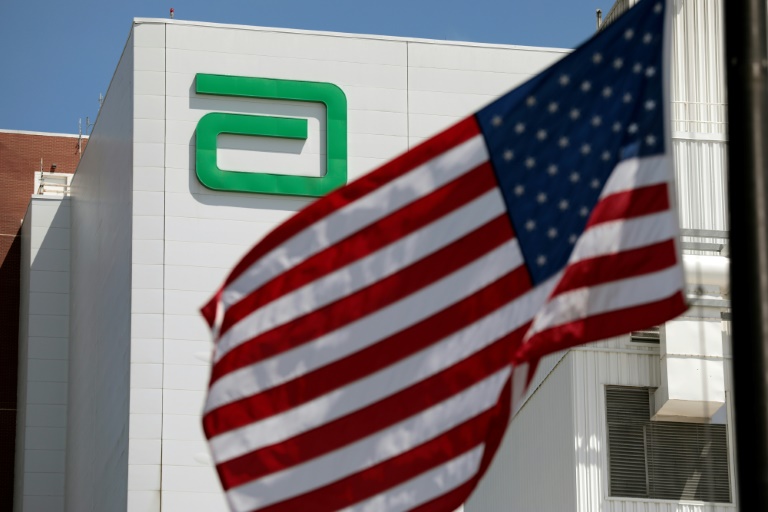
Abbott Nutrition has once again shut down a baby formula plant, this time due to heavy rains and flooding, less than two weeks after it reopened to try and mitigate a crippling US shortage.

The facility in Sturgis, Michigan resumed production on June 4, only to close down again earlier this week so the company could assess rain damage.

Severe thunderstorms that battered southwestern Michigan on Monday resulted in “high winds, hail, power outages and flood damage,” as well as “flooding in parts of the city, including areas of our plant,” Abbott said in a statement posted to their website Wednesday night.

“As a result, Abbott has stopped production of its EleCare specialty formula that was underway to assess damage caused by the storm and clean and re-sanitize the plant,” the statement said.

“This will likely delay production and distribution of new product for a few weeks.”

The plant, a major producer of formula, shut down in February and issued a product recall after the death of two babies raised concerns over contamination.

That worsened to a widespread forumla shortage caused by supply issues, which was particularly concerning to parents of infants with allergies or with certain metabolic conditions, who desperately scoured stores and online sources for the specialized formulas.

The crisis prompted President Joe Biden last month to bring in formula from Europe on commercial planes contracted by the US military. He also invoked the Defense Production Act to give baby formula manufacturers first priority in supplies.

Abbott, which controls about 40 percent of the US baby food market, had announced its hypoallergenic EleCare formula and should be back on store shelves around June 20.

In the statement Wednesday, the manufacturer assured consumers that it had “ample existing supply” of EleCare and most of its other specialty formulas to meet demand until production could resume again.

The formula shortage, coming at a time when soaring inflation and supply-chain delays have fanned a growing sense of unease among many American families, and Biden critics have seized on the situation to question the competence of his administration.

Binance boss bullish despite crypto crash

Cryptocurrencies are here to stay and their dramatic recent crash is just part of an economic cycle, Changpeng Zhao, one of crypto’s most influential figures, told AFP in an interview on Thursday.

The China-born Canadian entrepreneur heads Binance, the biggest exchange in the market that boasted $32 trillion in transactions last year and 120 million customers.

“It does cause worries,” Zhao said of a slump that has wiped $2 trillion from the value of crypto assets in the past seven months. “But we expect this, it’s not unusual, the markets go up and down, stock markets go up and down.” 

The unflappable mogul, who talked to AFP at the VivaTech conference in Paris, largely steers clear of the flashy displays of wealth associated with many crypto entrepreneurs.

Casually dressed in a company polo shirt, the 44-year-old, who describes himself as a “normal guy”, calmly explained how the firm had weathered a storm that saw others collapse.

“I think we’ve just been very frugal in our spending,” he said.

“We didn’t spend heavily on advertising, we didn’t name stadiums, we didn’t sponsor Super Bowl.” 

He quickly added that he did not believe such outlays were necessarily bad, seemingly keen not to directly criticise competitors.

Zhao had earlier tweeted a similar jibe that many took to be directed at Coinbase, a US exchange that spent heavily on flashy ads but is now laying off hundreds of workers.

By way of contrast, Zhao announced this week that Binance was hiring 2,000 new workers.

– ‘Bad tool’ for criminals –

Binance operates in a largely unregulated corner of the economy that is accused of being a haven for money-laundering, scams, sanctions busting and even terrorist funding.

Zhao called the money-laundering links a “complete myth”.

“We work with law enforcement everywhere in the world,” he said, highlighting that his firm employs ex-law enforcement officers.

“With large data you can really figure out who owns which address with a fairly high degree of certainty,” he said of blockchain, the digital ledger that underpins crypto. 

“Because of that, most criminals do not use blockchain for criminal activity. It’s just a very bad tool.”

Nevertheless, he treaded carefully when asked if he supported further regulation. 

“The regulators don’t know what to regulate,” he said.

“We have to wait for the industry to develop a little bit and then figure out the regulations.”

He said it could take decades, pointing out that even now banks continued to face new regulations. 

– Killer apps –

Critics see crypto as a glorified ponzi scheme and believe the industry will not last for decades, but enthusiasts like Zhao are keen to compare it with the tech industry of the early 2000s.

He said many companies went to the wall in the 2000s but the sector emerged stronger, helmed by titans like Google and Amazon.

But there is a crucial difference — those internet pioneers had an obvious utility. Few can clearly state the utility of crypto.

Zhao lists what he sees as the “killer apps”, which amount to facilitating fundraising for start-ups and generating income for artists.

“It allows artists and content creators to access a global audience, you cannot do that with traditional art galleries, the infrastructure is just not there,” he said.

He also repeated the idea that cryptocurrencies would allow those without bank accounts to have some means of storing their wealth and transferring money across borders.

Though critics point out that high transaction fees, tricky to use software and low security mean this is unlikely to become reality any time soon.

And Zhao is reluctant to be drawn on how the prices of crypto assets might recover in the short term, preferring to fall back on the comparison with tech firms whose services we use every day.

“I believe in 20 years everybody will be using blockchain technology for transacting value,” he said. “But they may not even think about it.”

US urges Russia to open Ukrainian ports for grain exports

US Agriculture Secretary Tom Vilsack called on Russia Thursday to rapidly open Ukraine’s ports to permit the export of millions of tonnes of stockpiled grain.

“They should be acting immediately to open up those ports and they should end this war,” Vilsack told reporters at the United Nations.

“This is serious thing, we shouldn’t be using food as a weapon,” he said.

The United Nations has been deep in talks between Moscow, Kyiv and Ankara for weeks on how to open up the Black Sea, where the Russian navy has created a blockade around Ukraine, to commercial cargo ships to carry the grain to global markets.

Such an agreement would also permit Russian fertilizer, now blocked by sanctions, to return to the global market.

With grain prices soaring internationally and key importers in the Middle East and Africa facing supply shortfalls, Moscow has demanded that economic sanctions on it be lifted in exchange for allowing the exports.

Vilsack said US and European sanctions do not apply to grains and fertilizers.

Addressing the ongoing talks on the issue, Vilsack said he hoped that Russia would “take this thing seriously and that they’re not just doing this to create an image.”

He urged Moscow “to make sure that they are negotiating in good faith about the reopening of the ports and they do so quickly. Because the need is immediate.”

Vilsack said a US proposal to build silos in Poland to receive Ukrainian grain was to reduce the possibility of spoilage before the grain can transported to markets.

On Wednesday, Turkish Foreign Minister Mevlut Cavusoglu said Ankara is ready to host a four-way meeting with the United Nations, Russia and Ukraine to organize the export of grain through the Black Sea. 

Under the plan, safe corridors for grain exports from Ukraine could be established without de-mining in the Black Sea, he said.

“If Russia answers positively, there will be a four-partite meeting in Istanbul,” Cavusoglu said.

There was no immediate comment from Moscow.

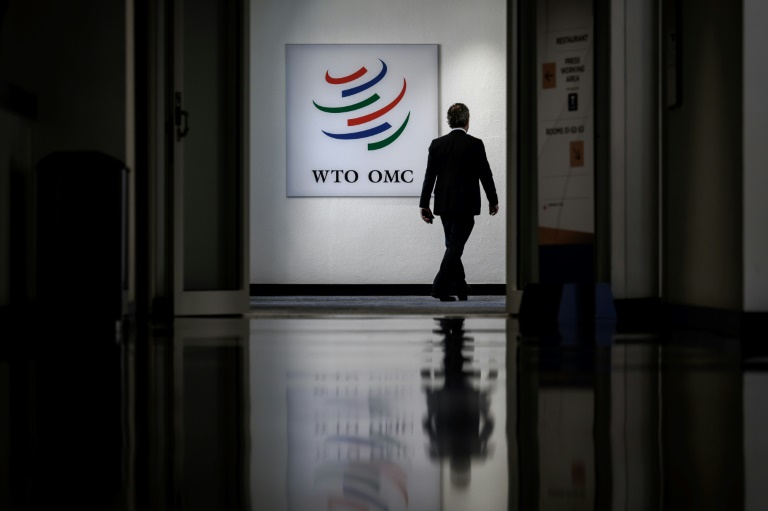
WTO talks go deep into overtime

Talks at the World Trade Organization went deep into overtime on Thursday with key holdout India talking up the prospects for a landmark deal spanning food security, fishing and combating Covid-19.

With ministers struggling to conclude agreements on each separate issue, countries were going round the clock making trade-offs which, they hope, could see several measures go through in a grand bargain.

Ministers from the global trade body’s 164 members have been negotiating face-to-face since Sunday at the WTO’s headquarters in Geneva, in their first such conference since the December 2017 flop in Buenos Aires.

They added a fifth day of talks to try to break the deadlock — and prove the organisation can play a role in tackling big global challenges.

Some delegations have accused India of being intransigent on every topic under discussion at the WTO — where decisions can only pass with the agreement of all 164 members.

But Commerce and Industry Minister Piyush Goyal sounded upbeat as the talks ploughed on into the evening.

“India is convinced that this will turn out to be one of the most successful ministerials that the WTO has seen in a long time,” he told reporters.

“We are very confident that the progress made… and the positivity with which everybody is engaged truly is a matter of celebration for the world.

“I’m sure that that spirit will help us cross the hump.

“We have taken some solid decisions… subject to a few issues being sorted out.”

– EU targets ‘positive outcomes’ –

EU trade commissioner Valdis Dombrovskis later told AFP negotiations were ongoing and “quite complicated” because there were “major issues to handle”.

“We are in a complicated geopolitical situation and also the views across different work streams are quite divergent,” he said.

“We need to address those divergences but I would say we’re working towards positive outcomes and hopefully we’ll be able to reach such positive outcomes.”

Ministers have been trying to secure deals on curbing harmful fishing subsidies; temporarily waiving Covid-19 vaccine patents; food security; agriculture; e-commerce; the WTO’s response to pandemics; and reform of the organisation itself.

Countries hit a brick wall late Wednesday trying to secure each separate deal on its own merits, so they spent the night horse-trading to try to keep them all afloat in some format.

Giant trays of sandwiches kept delegates going after they finished all the fruit juice in the building.

“They’re looking at a broad package: what can be achieved, trade-offs in different areas,” a Geneva trade official told reporters.

“We’re into the real bargaining.”

– Fisheries exemption –

WTO chief Ngozi Okonjo-Iweala, who took over in March 2021, has hinged her leadership on breathing new life into the sclerotic organisation.

The former foreign and finance minister of Nigeria is hoping to pull off a coup by finalising a long-sought deal on curbing harmful fishing subsidies.

Negotiations towards banning subsidies that encourage overfishing and threaten the sustainability of the planet’s fish stocks have been going on at the WTO for more than two decades.

Several sources close to the discussions said the draft agreement on the conference’s flagship issue has been heavily watered down.

India has been pushing for a 25-year exemption — far longer than many countries are comfortable with.

“India has always been a reluctant trading partner,” said Harsh V Pant, an international relations professor at King’s College London university’s India Institute.

“India has been notorious when it comes to signing free trade agreements,” he told AFP.

– E-commerce wrangle –

On waiving Covid-19 vaccine patents, a source said the deal needed yet more time.

Ministers have also been arguing over whether to extend the moratorium on imposing customs duties on electronic transactions, in place since 1998.

But India and South Africa say it has a negative impact, with Pakistan, Indonesia and Sri Lanka also sceptical.

WTO deputy director-general Anabel Gonzalez said there were “intense negotiations” going on in a packed room discussing e-commerce.

“It’s difficult, but I am hopeful,” she said.

The United States told an earlier meeting that the moratorium had supported the growth of digital commerce, which had provided an “economic lifeline” during the Covid-19 pandemic, according to a Geneva trade official.

rjm-burs/vog/imm

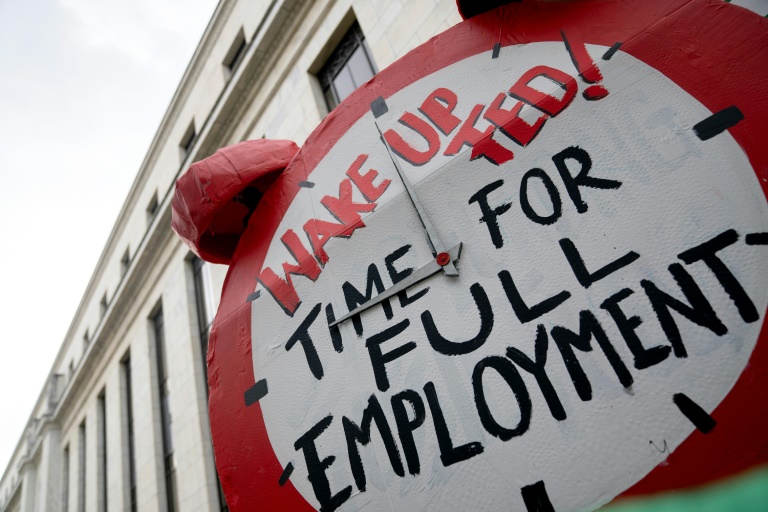
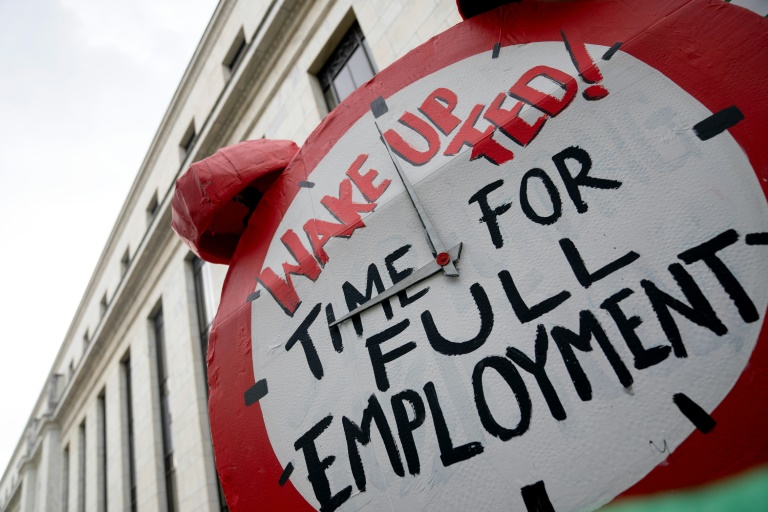
Is recession the only way out of US inflation scourge?

A massive interest rate hike by the US Federal Reserve and promises of more to come are fueling warnings that the only offramp from the searing price hikes engulfing American families is a full-blown recession.

The Fed remains hopeful it can slow activity and demand, cooling the blistering pace of inflation, without derailing the world’s largest economy. But skepticism is growing about the chances of success.

The central bank hiked the benchmark borrowing rate on Wednesday by three-quarters of a point, the biggest increase in nearly 30 years, and indicated a similar move is possible in July. 

The super-sized rate increase came as the Fed faces intense pressure to curb soaring gas, food and housing prices that have left millions of Americans struggling to make ends meet and sent President Joe Biden’s approval ratings plunging. 

The central bank has raised the key rate 1.5 points since March, as the Russian invasion of Ukraine and ongoing Covid-related supply chain issues combine to send prices up at the fastest pace in more than four decades.

Fed Chair Jerome Powell said recession is not the goal, but bringing down inflation “expeditiously” is “essential” since that is vital to a healthy economy.

But Kathy Bostjancic, chief US economist at Oxford Economics, warned that “it becomes very difficult to thread that needle.” 

The Fed will need a Goldilocks scenario where “a number of things fall into place and at the right time,” she told AFP.

The healthy US labor market and strong consumer demand, helped by a beefy stockpile of savings, are working in the Fed’s favor and could support activity even as the economy cools.

In the wake of the Fed decision, mortgage rates rocketed to their highest level in 13 years, with the average for a 30-year, fixed rate home loan reaching 5.78 percent.

Drivers still face gas prices at the pump of more than $5 a gallon, although for the first time in days, the national average fell on Wednesday, down from Tuesday’s record.

“My colleagues and I are acutely aware that high inflation imposes significant hardship, especially on those least able to meet the higher costs of essentials like food, housing and transportation,” Powell told reporters after the rate hike was announced.

– Higher unemployment –

With the shift towards prioritizing the aggressive tightening of lending conditions — which policymakers see rising to 3.8 percent next year — the best the Fed might be able to hope for now is a “softish” landing, which would include higher joblessness.

The economy has continued to create jobs: the unemployment rate in May was 3.6 percent, just a tick above its pre-pandemic level, and there are nearly two job openings for every unemployment person, compared to 1.3 pre-Covid.

The Fed chief said “a 4.1 percent unemployment rate with inflation of well on its way to two percent, I think that would be a successful outcome.”

But he stressed that “events of the last few months have raised the degree of difficulty” in achieving the soft landing, and it likely will “depend on factors that we don’t control.”

But a half-point increase in the jobless rate can signal the start of a recession.

Diane Swonk of Grant Thornton, a long-time Fed watcher, called the central bank’s outlook “fanciful.”

– Rising risks –

Steve Englander of Standard Chartered Bank and a former Fed economist does not expect a recession — usually defined as two quarters of negative growth — and said unemployment may not have to increase by that much to achieve the Fed’s goals.

But the central bank will have to shrink demand, and “it’ll be painful, even if it’s not a technical recession.”

“The risk of a recession is rising and it’s rising sharply,” he told AFP.

But it is a risk the Fed is willing to take since it has made fighting inflation the priority.

Bostjancic said a softish landing is still possible, but without tough action to contain prices, the US could face stagflation — lower or negative growth with high inflation — last seen in the 1970s and 80s.

“The Fed is worried that if they don’t take care of inflation, now, it’s going to linger and be a problem many years into the future,” she said.

hsto

Is recession the only way out of US inflation scourge?

A massive interest rate hike by the US Federal Reserve and promises of more to come are fueling warnings that the only offramp from the searing price hikes engulfing American families is a full-blown recession.

The Fed remains hopeful it can slow activity and demand, cooling the blistering pace of inflation, without derailing the world’s largest economy. But skepticism is growing about the chances of success.

The central bank hiked the benchmark borrowing rate on Wednesday by three-quarters of a point, the biggest increase in nearly 30 years, and indicated a similar move is possible in July. 

The super-sized rate increase came as the Fed faces intense pressure to curb soaring gas, food and housing prices that have left millions of Americans struggling to make ends meet and sent President Joe Biden’s approval ratings plunging. 

The central bank has raised the key rate 1.5 points since March, as the Russian invasion of Ukraine and ongoing Covid-related supply chain issues combine to send prices up at the fastest pace in more than four decades.

Fed Chair Jerome Powell said recession is not the goal, but bringing down inflation “expeditiously” is “essential” since that is vital to a healthy economy.

But Kathy Bostjancic, chief US economist at Oxford Economics, warned that “it becomes very difficult to thread that needle.” 

The Fed will need a Goldilocks scenario where “a number of things fall into place and at the right time,” she told AFP.

The healthy US labor market and strong consumer demand, helped by a beefy stockpile of savings, are working in the Fed’s favor and could support activity even as the economy cools.

In the wake of the Fed decision, mortgage rates rocketed to their highest level in 13 years, with the average for a 30-year, fixed rate home loan reaching 5.78 percent.

Drivers still face gas prices at the pump of more than $5 a gallon, although for the first time in days, the national average fell on Wednesday, down from Tuesday’s record.

“My colleagues and I are acutely aware that high inflation imposes significant hardship, especially on those least able to meet the higher costs of essentials like food, housing and transportation,” Powell told reporters after the rate hike was announced.

– Higher unemployment –

With the shift towards prioritizing the aggressive tightening of lending conditions — which policymakers see rising to 3.8 percent next year — the best the Fed might be able to hope for now is a “softish” landing, which would include higher joblessness.

The economy has continued to create jobs: the unemployment rate in May was 3.6 percent, just a tick above its pre-pandemic level, and there are nearly two job openings for every unemployment person, compared to 1.3 pre-Covid.

The Fed chief said “a 4.1 percent unemployment rate with inflation of well on its way to two percent, I think that would be a successful outcome.”

But he stressed that “events of the last few months have raised the degree of difficulty” in achieving the soft landing, and it likely will “depend on factors that we don’t control.”

But a half-point increase in the jobless rate can signal the start of a recession.

Diane Swonk of Grant Thornton, a long-time Fed watcher, called the central bank’s outlook “fanciful.”

– Rising risks –

Steve Englander of Standard Chartered Bank and a former Fed economist does not expect a recession — usually defined as two quarters of negative growth — and said unemployment may not have to increase by that much to achieve the Fed’s goals.

But the central bank will have to shrink demand, and “it’ll be painful, even if it’s not a technical recession.”

“The risk of a recession is rising and it’s rising sharply,” he told AFP.

But it is a risk the Fed is willing to take since it has made fighting inflation the priority.

Bostjancic said a softish landing is still possible, but without tough action to contain prices, the US could face stagflation — lower or negative growth with high inflation — last seen in the 1970s and 80s.

“The Fed is worried that if they don’t take care of inflation, now, it’s going to linger and be a problem many years into the future,” she said.

hsto

Close Bitnami banner
Bitnami