US Business

Watergate: A scandal for the ages that could yet be eclipsed

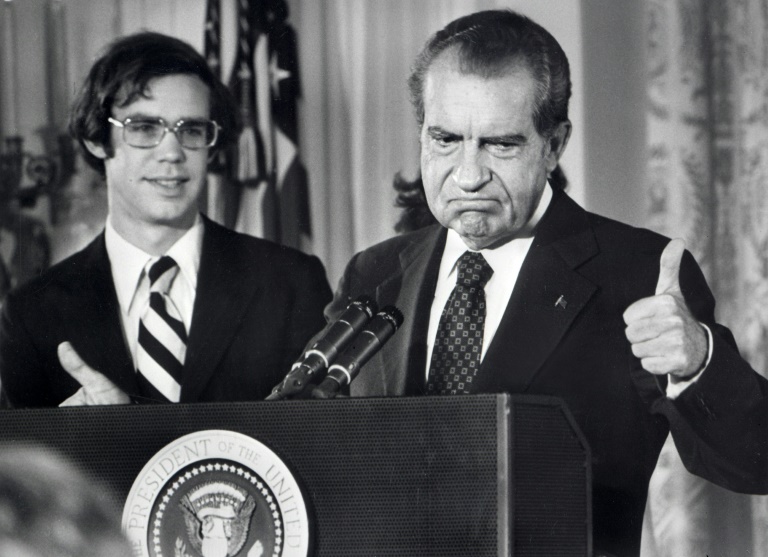
Fifty years since it ignited Washington, the Watergate affair remains a cautionary tale on the threat of untrammeled presidential power and the yardstick against which all other political scandals are judged.

Yet some historians believe its architect, Richard Nixon, risks being displaced as the norm-breaking exemplar of presidential corruption by Donald Trump and the firestorm over his role in the 2021 US Capitol assault.

Nixon’s underlying crime was covering up a break-in at the Democratic National Committee headquarters in Washington’s Watergate complex to steal documents that might have helped him in an election he would ultimately win by a landslide anyway.

The accusations against Trump — that he incited a deadly riot to disrupt the peaceful transfer of power as part of a conspiracy to overturn an election — appear “far more serious,” says history professor Michael Green.

Nixon “already has been knocked off his perch, frankly,” Green, of the University of Nevada Las Vegas, told AFP. 

“One of the ironies is that Nixon did not need to order a break-in to win that election,” he said. “And there is no evidence, even with all of the tapes, that there was ever a discussion or thought of overturning the result if it went against him.” 

Five Watergate burglars were caught red-handed on June 17, 1972 and it quickly emerged that some were linked to the Nixon campaign and the White House.

The ensuing probe eventually opened a Pandora’s box of abuses and dirty tricks that included political spying, the forgery of correspondence and even the theft of a pair of shoes to intimidate a Nixon rival.

But the cover-up was initially so successful that Nixon won 49 of the 50 states in his landslide victory over Democrat George McGovern in that year’s presidential election.

– ‘The first seditious president’ –

The whitewash might have succeeded were it not for the chance discovery in the summer of 1973 that the president had secretly recorded all of his White House meetings.

They included a “smoking gun” tape in which Nixon could be heard ordering that the FBI, which was set to investigate the Watergate break-in, be told to “stay the hell out of this.”

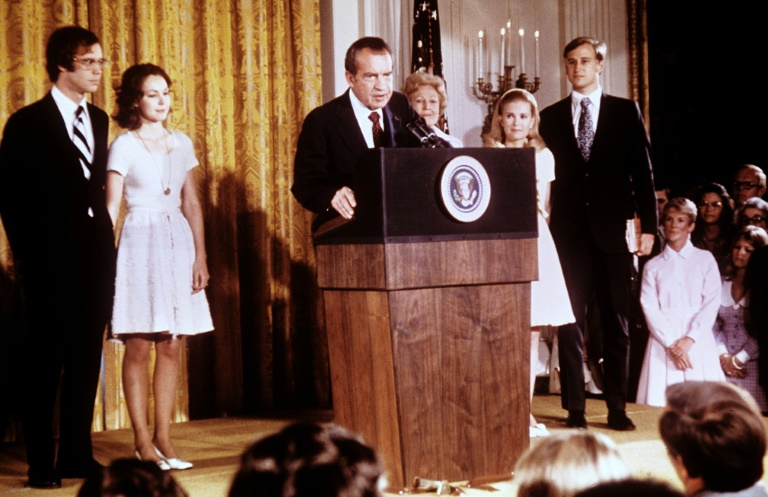
Nixon resigned after a delegation of Republican elders, led by ultra-conservative Barry Goldwater, came to the White House in 1974 to tell him he was likely to be impeached and the jig was up.

He was ultimately pardoned but many of his top aides went to jail.

Carl Bernstein and Bob Woodward, the reporters who played a pivotal role in bringing down Nixon, have written a new foreword for their iconic book “All the President’s Men” drawing parallels to Trump. 

Their comparison offers an insight into a pair of outsiders who felt besieged by enemies in the media and institutions of state.

But they suggest that Trump’s incitement of a mob to march on the Capitol constituted “a deception that exceeded even Nixon’s imagination.”

“By legal definition this is clearly sedition… thus Trump became the first seditious president in our history,” they say.

Analysts interviewed by AFP pointed to the vastly different political and media landscape Nixon and Trump faced when it came to consequences for their actions.

The Goldwater intervention, for example, would be inconceivable among the vast majority of today’s serving Republicans, who have stuck by Trump through two impeachments and numerous other controversies. 

– ‘Just another story’ –

And while the Senate voted unanimously to set up a cross-party investigative committee on Watergate, the Republicans of the 2020s vetoed a bipartisan commission and punished two members who joined the Democratic-led House committee investigating January 6.

Some 80 million Americans — considerably more than a third of the population — tuned in to White House counsel John Dean’s televised testimony against Nixon at the Watergate hearings.

Around 20 million — just six percent of Americans — watched the blockbuster first hearing put on by the January 6 panel.

For David Greenberg, author of “Nixon’s Shadow: The History of an Image,” the Watergate hearings were “instrumental” in bringing down a president attempting to subvert democracy.

“The difference, however, is that in 1973 and 1974 a great many Republican congressmen and senators loyal to Nixon ended up admitting that he was engaged in criminal activity,” he told AFP.

“Today, only a few… have been willing to acknowledge Trump’s complicity. Our polarized, partisan environment may prevent the January 6 hearings from achieving all they should.”

Meanwhile Trump’s impeachment for inciting the insurrection — and the apparent cover up of almost eight hours of his phone calls on January 6 — have not significantly eroded his support base.

“At the time of Watergate, Americans were united and trusted their media sources as part of one national conversation. Today that is impossible,” former CNN anchor Rick Sanchez told AFP.

If the right-wing cable news outlets that dominate current conservative discourse had been around in the 1970s, argues Sanchez, Watergate would have been “just another story in the 24-hour news cycle of America.”

Watergate: The president-toppling scandal triggered by a piece of tape

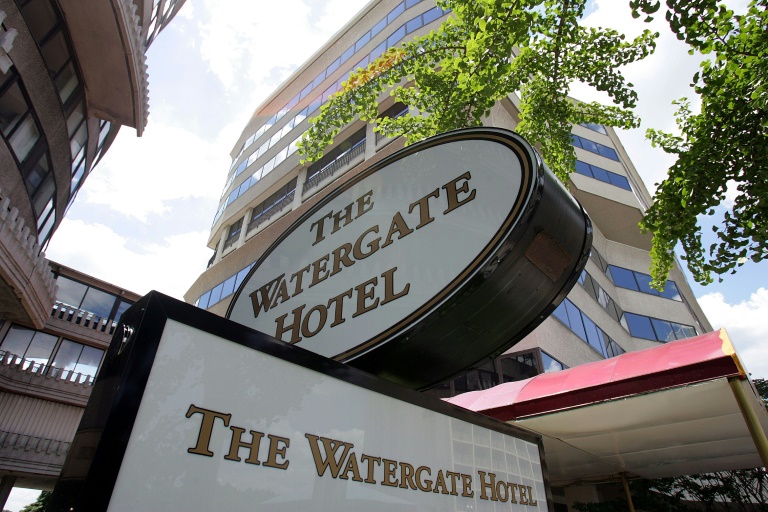
It all began when a vigilant night watchman noticed a piece of tape on a door of the building where the Democratic National Committee’s headquarters was located in Washington in June 1972.

Calling the police, he triggered the Watergate scandal that would topple the presidency of Richard Nixon, the only US leader ever to resign.

The tape, it turned out, was placed during a break-in by five men who had been tasked by officials with ties to the White House with placing microphones and taking pictures of documents to find compromising information on Nixon’s opponents.

– Tape on a door –

The night of June 16-17, 24-year-old security guard Frank Wills was making the rounds at the Watergate buliding complex when he noticed the tape on a door that prevented it from locking.

At first, he didn’t worry, removing it and continuing working.

But when he returned, so had the tape, leading him to suspect a break-in had occurred. Wills — who plays himself for a few seconds at the beginning of the film “All the President’s Men” that chronicles the saga — immediately called police.

“Found tape on door. Call police to make a inspection,” he wrote in a building security officer’s log, which has been preserved by the US National Archives.

Police officers arrived on the scene within “a minute, a minute and a half,” one of them, John Barrett, told ABC News in 2017.

He and fellow officer Paul Leeper were dressed in plain clothes, and were even a little scruffy.

That worked in their favor, as Alfred Baldwin, the man who was supposed to be keeping watch during the break-in, did not seem to notice them right away. His attention may have been focused on the movie “Attack of the Puppet People,” which was being shown on TV.

“He was glued to the TV set,” and by the time he warned the others, “it was too late and they had to run and hide like rats,” Barrett said.

– ‘Come out with your hands up’ –

Once inside the office, the two officers found tape on several doors, realizing that something fishy was going on.

“Our adrenaline is pumped,” Leeper told ABC.

They found ransacked offices and suspected that the perpetrators were still present, and started to search for them room by room.

Suddenly, Barrett saw an arm. “It scared the living bejeezus out of me,” he said.

“I scream something to the effect, ‘Come out with your hands up or I’m gonna blow your head off.'”

“Ten hands went up, and they came out, and that’s where the arrest occurred,” Barrett said.

Across the street, Baldwin had his ear to a walkie-talkie. “In a very soft whisper, I heard a voice: They’ve got us,” he said.

– Not a ‘typical burglary’ –

The 10 hands belonged to James McCord, Virgilio Gonzalez, Frank Sturgis, Eugenio Martinez and Bernard Barker.

The police soon realized that this “was not your normal, typical burglary,” Barrett said.

Not only were the burglars dressed in suits and ties, but they had bugging devices, tear gas pens, numerous rolls of film, locksmith tools, and thousands of dollars in hundred dollar bills, he said.

On June 18, The Washington Post published its first article on the subject. It was bylined Alfred E Lewis, the reporter covering the police. But its list of contributors at the end also included the names Bob Woodward and Carl Bernstein.

The two young reporters took over, investigating the details of the case that brought down Nixon’s presidency two years later, and winning the prestigious Pulitzer Prize for their work.

50 years ago, the Watergate scandal breaks

On June 17, 1972, Watergate erupted, one of the most spectacular political scandals in US history which led two years later to the resignation of president Richard Nixon.

Here is a timeline of how the events unfolded.

– Five ‘burglars’ –

On the night of June 16 to 17, 1972, five men are arrested at the Democratic National Committee headquarters in the Watergate hotel and office complex in Washington.

The so-called “plumbers,” clad in surgical gloves, are armed with photographic and recording equipment.

The next day The Washington Post slaps on its front page the break-in which took place at the height of the reelection campaign of Republican president Richard Nixon.

Two young journalists, Bob Woodward and Carl Bernstein, name James McCord, a member of Nixon’s reelection committee and an ex-member of the CIA, as one of the intruders.

The reporters say the break-in was clearly linked to the White House.

On June 22, Nixon denies any involvement by his administration in the affair, which attracts little public attention.

– ‘Deep throat’ –

But things don’t stop there. The reporter duo goes on to establish that two men who had worked for Nixon as well as his special aide Charles Colson guided the burglars in their mission, using walkie talkies from a hotel near the Watergate.

Their source is “Deep Throat,” named after a porn film popular at the time — and identified many years later, in 2005, as Mark Felt, deputy director of the FBI.

Between October 1972 and November 1973 he meets Woodward six times in a Washington parking lot.

On October 10, 1972 the two journalists reveal a massive spying and political sabotage scandal by the White House which is seeking to get Nixon reelected.

Hundreds of thousands of dollars from donations to the Nixon campaign were siphoned off to finance a secret campaign to destabilize the Democratic camp.

Despite the controversy Nixon is triumphantly reelected on November 6 against his Democratic rival George McGovern.

– Democratic senators open probe –

On January 8, 1973 the trial of the Watergate burglars opens in the face of public indifference.

On February 7, the Democratic majority in the Senate sets up a committee charged with investigating the 1972 electoral campaign. Broadcast live on television, the hearings end up transfixing Americans.

McCord soon admits to having lied before the court due to pressure from the White House.

On April 30, attorney general Richard Kleindienst and two of the president’s aides — Bob Haldeman and John Ehrlichman — resign. A third aide, John Dean, is fired.

On June 25, Dean tells the committee that the president was aware from September 15, 1972, of a cover-up of the burglary.

He says Nixon was ready to spend nearly a million dollars to buy the burglars’ silence.

He thus becomes the first witness to directly implicate the head of state.

– Oval Office bugged –

An earthquake erupts on July 16 when an employee at the White House tells the committee the Oval Office is packed with hidden microphones. This secret bugging system, installed in 1970, is the beginning of a new scandal.

On July 23, 1973 Nixon refuses to provide the recordings to the committee.

Cornered, he ends up handing over nine tapes on October 20. But two are missing and a conversation between Nixon and his aide Dean on June 20, 1972, three days after the Watergate break-in, is inaudible.

– Resignation before impeachment –

On May 9, 1974 the Judiciary Committee of the House of Representatives launches hearings with a view to impeaching Nixon.

After a bitter year-long battle the Supreme Court orders Nixon on July 24 to hand over the missing tapes. With his back to the wall, the president agrees on August 5.

On July 30 the committee votes for three grounds for a future impeachment: obstruction of justice, abuse of power and contempt of Congress.

To avoid impeachment proceedings, Nixon announces his resignation on August 8, a first in the United States.

On September 8, 1974, his successor Gerald Ford grants him a total pardon.

Shorthand for scandal, from Watergate to Partygate

The break-in 50 years ago by Republican operatives at a Washington office led to the historic resignation of US president Richard Nixon — but arguably it reverberated more deeply around the world with the coining of a single term: Watergate.

Ever since the Potomac riverside building lent its name to one of Washington’s greatest political crimes, -gate has become the signifier of choice for scandals worldwide — a fact not lost on British Prime Minister Boris Johnson, nearly undone just this year by his own Partygate.

Over the past five decades there have been more than 200 -gate scandals, according to a Wikipedia list, and the suffix is used by many without any recollection of the original Watergate.

Indeed, it was already going global when Nixon, embroiled in a snowballing mess of his own making, was forced to resign the presidency in 1974.

That same year, the shocking news that Bordeaux vintners were doctoring their product was dubbed Winegate.

The year after that, the United Brands company was exposed for paying bribes to the president of Honduras to cut export taxes on fruit: Bananagate.

And then in 1976 Koreagate swept Washington, when US congressmen were shown taking payoffs from a foreign lobbyist.

“Gate” had officially become shorthand for “scandal.”

– Monicagate –

It didn’t always stick. 

When in the early 1980s president Ronald Reagan became caught up in the self-made web of secretly selling arms to US enemies in Iran to fund US-backed “Contra” paramilitaries in Nicaragua, pundits experimented with Irangate and Contragate.

But it went down in history as the “Iran-Contra Affair.”

In the 1990s Republicans sought their revenge over Watergate by trying to tag the suffix onto any whiff of controversy around president Bill Clinton and his wife Hillary.

More than a dozen -gates came and went around the Clintons, the most famous Troopergate and Travelgate, and finally, Monicagate — from Bill Clinton’s affair with intern Monica Lewinsky.

Clinton barely avoided Nixon’s fate, yet Monicagate as a term of political shame did not take deep root. 

By that point, says former senior New York Times editor Merrill Perlman, US media had developed an aversion to using -gate every time scandal erupted.

In addition, she added, “Language is fickle.” 

“Monicagate doesn’t roll trippingly off the tongue. It’s three syllables.”

– Gate in Italian is… –

Over time -gate as a metonym for scandal spread well beyond American politics.

In 1992 The Sun newspaper published juicy details from phone conversations between Britain’s Princess Diana and her close friend James Gilbey. 

The shock that someone had been able to eavesdrop on her calls, and that The Sun obtained the recordings and published them, gave rise to a moniker based on Gilbey’s affectionate nickname for Diana: Squidgygate.

Janet Jackson’s supposedly inadvertent baring of a breast in the 2004 Super Bowl halftime show became Nipplegate.

IPhone maker Apple had its turn with Antennagate. Its iPhone 4, introduced in 2010, lost connections when in the left hand of a user, due to a design flaw that the tech giant denied at first.

In Italy, -gate replaced the homegrown suffix -opoli — born from a vast 1990s corruption scandal dubbed Tangentopoli (“Bribesville”) — with Rubygate, the sordid story of politician Silvio Berlusconi’s affair with a 17-year-old Moroccan woman who used the name Ruby Rubacuori.

And a football scandal first branded Calciopoli was renamed Calciogate.

Perlman said her favorite is the rhyming Deflategate: the allegation that the king of Super Bowls, New England Patriots quarterback Tom Brady, deliberately played in 2016 with underinflated balls to earn an advantage.

Deflategate caught on widely. “Whether you believe Tom Brady or not, it has everything to do with the rhythm of it.”

– Political heft –

Perlman said the expanded use has watered down the term from its original roots in Nixon-level political scandal, perhaps understandably, as few people under 40 know what Watergate was.

“It’s already lost a lot of its political heft … the presidential disgrace part, because of things like Nipplegate and Deflategate,” she said.

Yet it persists. Former president Donald Trump faced Russiagate, Ukrainegate and others, none of which stuck, perhaps because the twice-impeached leader had an surfeit of controversies.

But his across-the-Atlantic contemporary, Johnson, has carried on the tradition.

Early this month he barely escaped the fate of Nixon due to the cover-up scandal of his secret booze-fueled Downing Street bashes during the Covid-19 lockdown: Partygate.

A forlorn fight to stop America's gun factories

Clai Lasher-Sommers alternates between tears and fury over the flow of guns from the factories in her home state of New Hampshire, a top producer in America’s multi-billion dollar firearms industry. 

Speaking just miles from the house where an abusive stepfather shot her with a hunting rifle when she was 13, the survivor-turned-activist said she thinks about moving — just to get away from the gun makers.

“I don’t want to be anywhere near them, and the damage that they perpetuate every day,” she said. “I want them to close, but that’s not going to happen.”

The American state that produced and shipped out the most firearms since 2015, New Hampshire has funneled millions of weapons into the already-flooded domestic market of a nation beset by a gun death epidemic.

Recent tragedies were unlikely to disrupt the flow from the small northeastern state, where a lawmaker can walk the legislature’s halls with his pistol, guns aren’t necessarily blamed in deadly shootings and firearms firms provide thousands of jobs.

“It’s definitely a David vs. Goliath situation,” Melissa Rigazio, another state anti-gun violence activist, says of efforts to confront the industry. 

“It simply equals more death by guns… The gun manufacturers are very responsible for what’s going on.”

One of the biggest producers is Sig Sauer, which operates a factory surrounded by a green lawn, flapping American flag and “no trespassing” signs in the town of Newington.

The other local heavyweight is Ruger, about two hours’ drive away in Newport. Neither company granted AFP requests for an interview or a factory visit.

Between them, the two firms produced over 1.7 million rifles and handguns in New Hampshire in 2020, a year that saw firearms purchases explode in a nation rattled by the pandemic, a bruising election and mass social justice protests.

– Lack of gun restrictions –

Just over eight million handguns and rifles for domestic sale were produced in the state from 2015-2020 or about 17 percent of the national total, according to the most recent government figures.

While giants like Texas have more gun-linked business — with constellations of suppliers for firearms, parts and ammunition — New Hampshire dominates in per capita number of gun industry jobs, economic output and federal excise taxes, according to industry group NSSF.

The state with a motto of “Live free or die” has long been home to gun makers, as have other manufacturing hubs on America’s eastern seaboard.

A key factor that sets New Hampshire apart from neighbors New York or Massachusetts is a lack of gun restrictions.

It’s among half of America’s 50 states with rules that generally allow people legally able to buy guns to also carry them in many public places without a special license.

States that have tightened gun rules have in turn seen gun makers take their operations — and jobs — to friendlier places.

Mike Hammond, legislative counsel for hardline advocacy group Gun Owners of America, pointed to events after the mass shooting at Sandy Hook elementary school in the eastern state of Connecticut that killed 20 children in 2012.

“Connecticut, after Newtown, basically outlawed certain types of firearms that were made in Connecticut. Guess what?” he asked. 

“The firearms manufacturer left Connecticut.”

Advocates like Hammond note that although New Hampshire has made millions of guns, firearm violence mostly happens elsewhere in America.

But homicides take lives in the state too — one of them was Amy Innarelli’s 22-year-old son Chandler, who was shot dead in 2020 while waiting for his girlfriend and young child.

– ‘Guns didn’t murder my son’ –

Innarelli wore an orange t-shirt with her son’s smiling picture for an anti-gun violence vigil in New Hampshire’s largest city Manchester.

She sees the problem as complex, and requiring a multi-fronted response to tackle broader social ills — a sentiment echoed by others at the rally. 

“The gun didn’t murder my son, a person did,” she said afterwards.

“We have systematically broken down family dynamics, they are missing humanity in a lot of these kids.”

For Lasher-Sommers, the activist shot by her own stepfather, there’s no escaping that access to weapons is the core of the problem.

“It’s the gun, it’s the gun,” the 65-year-old told AFP at her home in Westmoreland, a small town near the border with Vermont.

But on the other end of the spectrum are people like John Burt, a representative in New Hampshire’s state legislature dedicated to fighting firearms restrictions — who wore a revolver-shaped pin on his lapel, and a handgun holstered on his belt when interviewed.

“The manufacturers help us stay a pro-gun state,” he said, noting his state had not enacted new gun laws after high-profile mass shootings in the country.

“I really do believe some of it is from the manufacturers, their support here. And we don’t want them to leave,” said Burt, speaking to AFP outside the legislature. 

Wearing his pistol, the lawmaker walked into the gold-domed building, which had no metal detectors — noting later with a chuckle that neither food nor water are allowed in the house chamber, “but I can have my gun.”

Small gun makers boom as US demand soars

Tony Hook flipped through cell phone pictures of finished work by his New Hampshire shop, explaining how one customer wanted mementos of major life events: a gun to mark each of his children’s births.

Smaller gun makers like him are booming in the United States, thanks to ravenous and sometimes specialized demand for pricey limited-production pistols and custom rifles, engraved with bible passages or the American flag.

“He had us build a gun for every newborn he had,” explained Hook, the owner of RTD Arms & Sport. “So this is his son’s name and his date of birth,” he said, showing the engraving on a rifle.

The millions of guns produced annually in the United States are primarily made by the nation’s biggest manufacturers, yet smaller operators have poured into a market that saw production nearly triple from 2000 to 2020.

The smaller makers can churn out parts destined for major firms like Sig Sauer or Smith & Wesson and for enthusiasts and gun shops, or they can be manufacturers themselves of specialized or customized weapons.

“It’s just like maybe stitching your name onto your baseball glove or having custom pinstriping put on your car,” said Hook. “People do the same with their guns. It’s a piece of them.” 

– $1,700 guns –

The United States has a deep culture of gun ownership centered around a constitutional guarantee for Americans to keep and bear arms, and as a result has a sprawling market of weapons, gear and accessories. 

America also sees roughly 40,000 gun deaths a year, about half of which are suicides, though homicides increased at historic rates during the pandemic. 

In this context, the gun and ammunition industry added an estimated $70 billion to the US economy in 2021 according to industry group NSSF — perhaps not surprising when a single rifle from a smaller workshop like Hook’s can sell between $1,295-$1,695.

“Seeing that the gun doesn’t have to look so generic, it’s attracting people in that never considered it before,” he added.

The boom in gun making is illuminated in US federal firearms license statistics, with the number of so-called “type 7” permits that allow production as well as sales increasing by over 694 percent from 2000 to 2020.

Getting one of those permits requires paperwork from applicants that includes their photo, fingerprints and other information, while the government also does a background check and in-person interview.

Big states like Texas and Florida each had hundreds of manufacturers of all sizes that reported, as required by law, their production to federal authorities for 2020, the most recent figures available. 

Matrix Arms in New Hampshire is one of those makers and its CEO and owner Allen Farris said so many manufacturers have joined the industry that the market has been saturated for at least the past six years now. 

– ‘People are the problem’ –

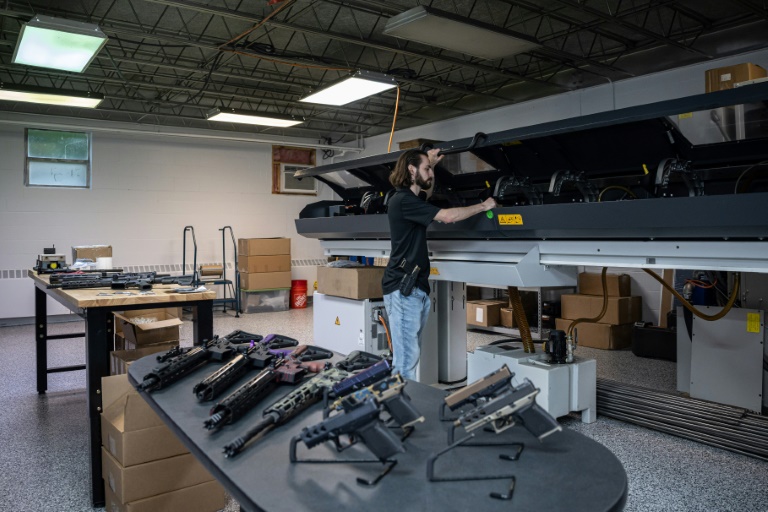
Yet his company appeared to be staying busy, with a row of machines the size of shipping containers churning out gun parts on a recent weekday. 

He noted that each week they produce 4,300-5,300 rifle receivers — key central components to making a gun.

“Our state motto in New Hampshire is ‘Live free or die’ and I think the firearm industry kind of goes hand in hand with that,” he added.

Hook and Farris emphasized they did not want their guns to be used in crime or mass murder and said they followed the law — with Hook also citing his own instinct, if a would-be buyer sets off alarm bells — to try to prevent that.

Inevitably, as the gun making industry has grown, more people face the risk the firearms they produce could be used in a crime, mass shooting or suicide.

“We don’t look at it as guns are the problem. People are the problem. Whether it’s a gun, a knife or a rock — Cain didn’t kill Abel with a gun. He killed him with a rock,” Hook said.

Farris added: “If somebody has the motivation to go out and try to kill people, first of all they could choose a million different ways.”

“Obviously I don’t want my guns being used in that way, but there’s nothing I can do to prevent it at that point.”

Small gun makers boom as US demand soars

Tony Hook flipped through cell phone pictures of finished work by his New Hampshire shop, explaining how one customer wanted mementos of major life events: a gun to mark each of his children’s births.

Smaller gun makers like him are booming in the United States, thanks to ravenous and sometimes specialized demand for pricey limited-production pistols and custom rifles, engraved with bible passages or the American flag.

“He had us build a gun for every newborn he had,” explained Hook, the owner of RTD Arms & Sport. “So this is his son’s name and his date of birth,” he said, showing the engraving on a rifle.

The millions of guns produced annually in the United States are primarily made by the nation’s biggest manufacturers, yet smaller operators have poured into a market that saw production nearly triple from 2000 to 2020.

The smaller makers can churn out parts destined for major firms like Sig Sauer or Smith & Wesson and for enthusiasts and gun shops, or they can be manufacturers themselves of specialized or customized weapons.

“It’s just like maybe stitching your name onto your baseball glove or having custom pinstriping put on your car,” said Hook. “People do the same with their guns. It’s a piece of them.” 

– $1,700 guns –

The United States has a deep culture of gun ownership centered around a constitutional guarantee for Americans to keep and bear arms, and as a result has a sprawling market of weapons, gear and accessories. 

America also sees roughly 40,000 gun deaths a year, about half of which are suicides, though homicides increased at historic rates during the pandemic. 

In this context, the gun and ammunition industry added an estimated $70 billion to the US economy in 2021 according to industry group NSSF — perhaps not surprising when a single rifle from a smaller workshop like Hook’s can sell between $1,295-$1,695.

“Seeing that the gun doesn’t have to look so generic, it’s attracting people in that never considered it before,” he added.

The boom in gun making is illuminated in US federal firearms license statistics, with the number of so-called “type 7” permits that allow production as well as sales increasing by over 694 percent from 2000 to 2020.

Getting one of those permits requires paperwork from applicants that includes their photo, fingerprints and other information, while the government also does a background check and in-person interview.

Big states like Texas and Florida each had hundreds of manufacturers of all sizes that reported, as required by law, their production to federal authorities for 2020, the most recent figures available. 

Matrix Arms in New Hampshire is one of those makers and its CEO and owner Allen Farris said so many manufacturers have joined the industry that the market has been saturated for at least the past six years now. 

– ‘People are the problem’ –

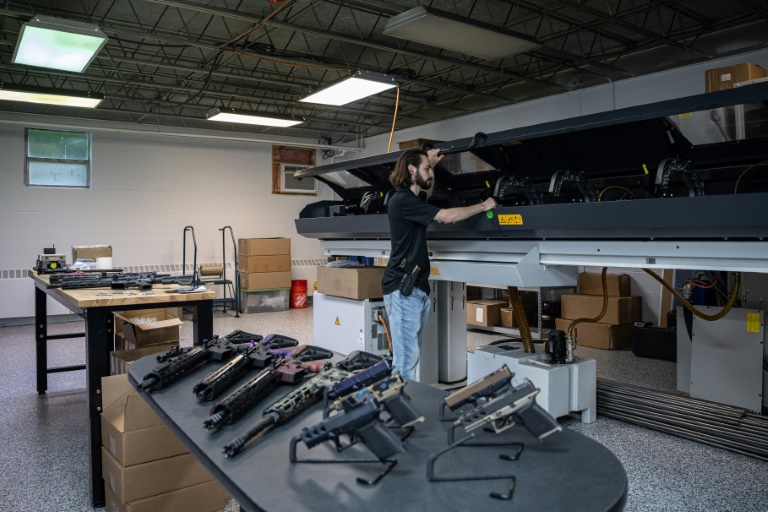
Yet his company appeared to be staying busy, with a row of machines the size of shipping containers churning out gun parts on a recent weekday. 

He noted that each week they produce 4,300-5,300 rifle receivers — key central components to making a gun.

“Our state motto in New Hampshire is ‘Live free or die’ and I think the firearm industry kind of goes hand in hand with that,” he added.

Hook and Farris emphasized they did not want their guns to be used in crime or mass murder and said they followed the law — with Hook also citing his own instinct, if a would-be buyer sets off alarm bells — to try to prevent that.

Inevitably, as the gun making industry has grown, more people face the risk the firearms they produce could be used in a crime, mass shooting or suicide.

“We don’t look at it as guns are the problem. People are the problem. Whether it’s a gun, a knife or a rock — Cain didn’t kill Abel with a gun. He killed him with a rock,” Hook said.

Farris added: “If somebody has the motivation to go out and try to kill people, first of all they could choose a million different ways.”

“Obviously I don’t want my guns being used in that way, but there’s nothing I can do to prevent it at that point.”

US panel recommends Covid vaccines for youngest children

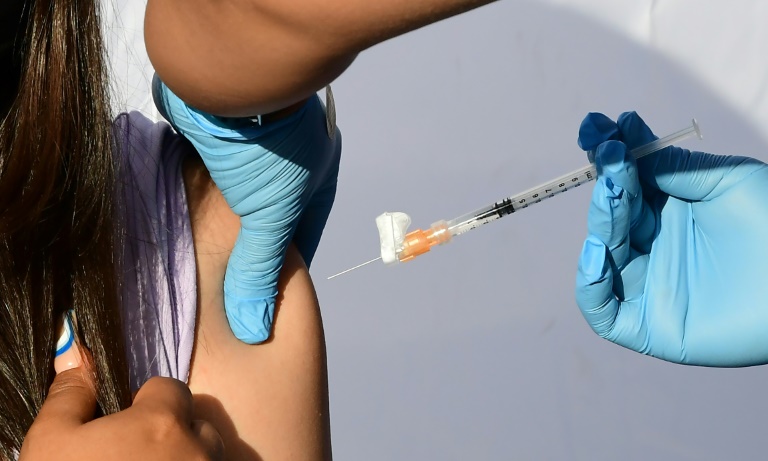
A panel of experts convened by the US Food and Drug Administration unanimously recommended Covid-19 vaccines Wednesday for children under five, the final age group awaiting immunization in most countries.

Formal authorizations for Moderna and Pfizer should follow soon, with the first shots in arms expected early next week, just over a year-and-a-half after the first Covid vaccines were greenlighted for the elderly in December 2020.

“This recommendation does fill a significant unmet need for a really ignored younger population,” said Michael Nelson, a professor of medicine at the University of Virginia, one of the 21 experts asked to vote for the milestone meeting.

Unlike regulators in other countries, FDA offers livestreams of its internal deliberations and its stamp of approval is considered the global gold standard.

Opening the discussion, senior FDA scientist Peter Marks said that despite studies showing the majority of children have now been infected with the coronavirus, the high rate of hospitalizations among infants, toddlers and young children during last winter’s Omicron wave underscored an urgent need for vaccination.

“We are dealing with an issue where we have to be careful we don’t become numb to the pediatric deaths because of the overwhelming number of older deaths,” he said.

“Every life is important and vaccine-preventable deaths are something we would like to try to do something about.”

The United States has recorded 480 Covid deaths in the 0-4 age group in the pandemic — far higher than even a bad flu season, Marks said.

As of May 2022, there have been 45,000 hospitalizations in that group, nearly a quarter of which required intensive care.

Ahead of the meeting, the FDA posted its independent analyses of the pharmaceutical companies’ vaccines, deeming both safe and effective.

Both vaccines are based on messenger RNA, which delivers genetic code for the coronavirus spike protein to human cells that then grow it on their surface, training the immune system to be ready. The technology is now considered the leading Covid vaccination platform.

Pfizer sought authorization for three doses at three micrograms given to children aged six months through four years, while Moderna asked for the FDA to authorize its vaccine as two doses of a higher 25 micrograms for ages six months through five years.

Both vaccines were tested in trials of thousands of children. They were found to cause similar levels of mild side effects as in older age groups and triggered similar levels of antibodies.

– Two doses, or three? –

Efficacy against infection was higher for Pfizer, with the company placing it at 80 percent, compared to Moderna’s estimates of 51 percent for children aged six-months to two years old and 37 percent for those aged two to five years.

But the Pfizer figure is based on very few cases and is thus considered preliminary. It also takes three doses to achieve its protection, with the third shot given eight weeks after the second, which is given three weeks after the first.

Moderna’s vaccine should provide strong protection against severe disease after two doses, given four weeks apart, and the company is studying adding a booster that would raise efficacy levels against mild disease.

However, Moderna’s decision to go with a higher dose is associated with higher levels of fevers in reaction to the vaccine compared to Pfizer.

There are some 20 million US children aged four years and under. 

Although obesity, neurological disorders and asthma are associated with increased risk of severe disease among young children, it’s not easy to predict severe outcomes.

In fact, 64 percent of hospitalizations in those under five occurred in patients without comorbidities.

Children can also go on to contract multisystem inflammatory syndrome in children (MIS-C), a rare but serious post-viral condition. Some three to six percent can experience long Covid symptoms for more than 12 weeks.

The FDA is expected to soon act on the panel’s recommendation, and the matter will go to the Centers for Disease Control and Prevention for a final say.

White House officials last week said the rollout of 10 million shots at pharmacies and doctors’ offices could begin as soon as June 21.

Parts of storm-wrecked Yellowstone to remain shut all year

Parts of Yellowstone will remain closed for the rest of the year because of extensive flood damage, managers say, with the oldest national park in the United States completely shuttered Wednesday.

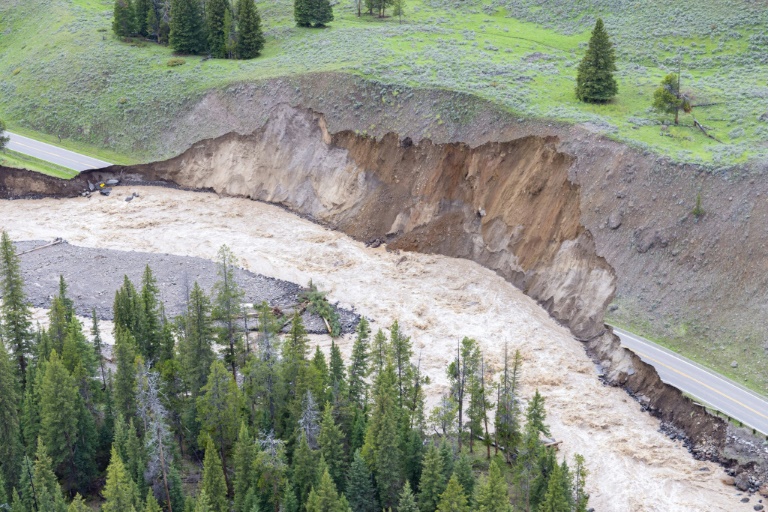
Roads have been washed out in the northern portion of the 9,000 square kilometer (3,400 square mile) park after torrential rainfall and snowmelt sent months’ worth of run-off into rivers in just a couple of days.

All the entrances to the park, which sits chiefly in Wyoming and is home to the Old Faithful geyser, remained closed Wednesday for a third consecutive day.

Images released by the National Park Service showed large sections of paved road had been swept away by raging rivers.

Aerial reconnaissance revealed “major damage to multiple sections of road” in the northern part of the park, the agency said in its latests assessment.

“Many sections of road in these areas are completely gone and will require substantial time and effort to reconstruct.

“The National Park Service will make every effort to repair these roads as soon as possible; however, it is probable that road sections in northern Yellowstone will not reopen this season.”

Several communities on the north side of the park in Montana also experienced significant flooding, with bridges and roads washed out in Park County. 

Montana Governor Greg Gianforte declared a statewide disaster on Tuesday “to help impacted communities get back on their feet as soon as possible,” he said on Twitter.

A huge dome of high pressure is sitting over the United States, sending temperatures soaring for 120 million people.

Meteorologists say the edge of that dome, where colder air meets warm air, is experiencing wild weather, including heavy rainfall.

Higher-than-usual temperatures have also caused snowpack on the high mountains to melt, adding to the influx of water into rivers.

Forecasters at CNN calculated that several months’ of run-off in Yellowstone has cascaded into rivers in just two days, resulting in their overflow.

Park service officials said they will look at conditions in the southern section of Yellowstone, to see when visitors can be allowed back in, but will likely limit admissions to avoid placing too much strain on the area.

Yellowstone Park, which welcomed more than 4.8 million visitors last year, is America’s oldest national park.

The park was the inspiration for Jellystone Park in the 1960s cartoon “Yogi Bear.”

Countries haggle through the night to salvage WTO deals

Ministers were frantically haggling through the night into Thursday at the World Trade Organization in a bid to salvage deals on food security, fishing and combating Covid-19.

The global trade body’s 164 members added on an extra fifth day of talks to try to break the deadlock gripping the WTO headquarters in Geneva.

But despite relaxing their original Wednesday deadline, countries were trading concessions through the early morning hours to cobble together a wide-ranging set of results.

Countries have hit a brick wall trying to secure each separate deal on its own merits, so are now making tit-for-tat offers in an attempt to keep them all afloat.

“They’re looking at a broad package: what can be achieved, trade-offs in different areas,” a Geneva trade official told reporters.

“It’s basically, ‘what can I get here, (in exchange) for this’,” the official said.

“We’re into the real bargaining part of the meeting. This is where all the action is happening and hopefully where some deals are going to be struck.”

– Juice and sandwiches –

US Trade Representative Katherine Tai was seen heading in and out of the late-night talks, while a giant tray of sandwiches was brought in to keep the deal-makers going.

“It’s going to go all night. Everything. People look tired,” the Geneva-based trade official told AFP, adding: “They’re negotiating, which is good news.”

He said the talks had run out of juice — but only fruit juice, rather than energy.

The WTO is hoping to prove it still has a role to play in tackling big global challenges.

WTO chief Ngozi Okonjo-Iweala, who took over in March 2021, has hinged her leadership on breathing new life into the sclerotic organisation.

“Progress is being made but it needs a little more work and more time,” the director-general said.

“It requires that we work and work nights; whatever it takes.”

The last WTO ministerial conference, in December 2017 in Buenos Aires, was widely considered a flop, closing without a major agreement and Okonjo-Iweala wants no repeat.

The global trade body only takes decisions by consensus among all 164 members, making deals all the harder to conclude.

Okonjo-Iweala was hoping to pull off a coup by securing a long-sought deal on curbing harmful fishing subsidies.

– India in the firing line –

Negotiations towards banning subsidies that encourage overfishing and threaten the sustainability of the planet’s fish stocks have been going on at the WTO for more than two decades.

Diplomats say a deal is closer now than ever before.

But India threw a spanner in the works late Tuesday, insisting it would not sign up without a 25-year exemption — far longer than many are comfortable with.

Some emerging from the negotiating rooms are blaming Indian intransigence on not just fisheries but across the board.

Citing their “destructive tactics”, one diplomatic source close to the negotiations said: “The question is are they really going to pull the whole edifice down, or whether they’re willing to go along with the views of the vast majority of members.”

On fishing, the source added: “Now is the time… civil society wants this, fishing communities want it, and our fish need it.”

WTO reform, agriculture and e-commerce deals are also on the table.

– ‘Saving WTO, not lives’ –

“There are things that are going in the right direction and others that unfortunately are not progressing very much,” France’s foreign trade minister Franck Riester told reporters before the all-night talks, with health issues looking among the most promising.

One pandemic-related text seeks to tackle supply constraints faced by certain countries in getting hold of Covid-fighting tools.

Ministers are also discussing the possibility of imposing a temporary waiver on Covid-19 vaccine patents.

But some countries that host major pharmaceutical companies, like Britain and Switzerland, are finding some of the draft wording problematic.

NGOs believe the text does not go nearly far enough.

Civil society activists staged a “die-in” protest in the WTO’s atrium, accusing the EU, Britain, Switzerland and the United States of scuppering a meaningful Covid intellectual property waiver.

“The proposal on the table is intended to save the reputation of the WTO but it will not save a human life from the pandemic,” demonstration organiser Deborah James told AFP.

Swiss economy minister Guy Parmelin insisted he remained against a wide-ranging waiver, adding: “Patents have not slowed access to vaccines — quite the opposite”.

Close Bitnami banner
Bitnami