US Business

It's (not) alive! Google row exposes AI troubles

An internal fight over whether Google built technology with human-like consciousness has spilled into the open, exposing the ambitions and risks inherent in artificial intelligence that can feel all too real.

The Silicon Valley giant suspended one of its engineers last week who argued the firm’s AI system LaMDA seemed “sentient,” a claim Google officially disagrees with.

Several experts told AFP they were also highly skeptical of the consciousness claim, but said human nature and ambition could easily confuse the issue.

“The problem is that… when we encounter strings of words that belong to the languages we speak, we make sense of them,” said Emily M. Bender, a linguistics professor at University of Washington.

“We are doing the work of imagining a mind that’s not there,” she added.

LaMDA is a massively powerful system that uses advanced models and training on over 1.5 trillion words to be able to mimic how people communicate in written chats. 

The system was built on a model that observes how words relate to one another and then predicts what words it thinks will come next in a sentence or paragraph, according to Google’s explanation.

“It’s still at some level just pattern matching,” said Shashank Srivastava, an assistant professor in computer science at the University of North Carolina at Chapel Hill.

“Sure you can find some strands of really what would appear meaningful conversation, some very creative text that they could generate. But it quickly devolves in many cases,” he added.

Still, assigning consciousness gets tricky. 

It has often involved benchmarks like the Turing test, which a machine is considered to have passed if a human has a written chat with one, but can’t tell.

“That’s actually a fairly easy test for any AI of our vintage here in 2022 to pass,” said Mark Kingwell, a University of Toronto philosophy professor.

“A tougher test is a contextual test, the kind of thing that current systems seem to get tripped up by, common sense knowledge or background ideas — the kinds of things that algorithms have a hard time with,” he added.

– ‘No easy answers’ –

AI remains a delicate topic in and outside the tech world, one that can prompt amazement but also a bit of discomfort. 

Google, in a statement, was swift and firm in downplaying whether LaMDA is self-aware.

“These systems imitate the types of exchanges found in millions of sentences, and can riff on any fantastical topic,” the company said.

“Hundreds of researchers and engineers have conversed with LaMDA and we are not aware of anyone else making… wide-ranging assertions, or anthropomorphizing LaMDA,” it added.

At least some experts viewed Google’s response as an effort to shut down the conversation on an important topic.

“I think public discussion of the issue is extremely important, because public understanding of how vexing the issue is, is key,” said academic Susan Schneider.

“There are no easy answers to questions of consciousness in machines,” added the founding director of the Center for the Future of the Mind at Florida Atlantic University.

Lack of skepticism by those working on the topic is also possible at a time when people are “swimming in a tremendous amount of AI hype,” as linguistics professor Bender put it. 

“And lots and lots of money is getting thrown at this. So the people working on it have this very strong signal that they’re doing something important and real” resulting in them not necessarily “maintaining appropriate skepticism,” she added.

In recent years AI has also suffered from bad decisions — Bender cited research that found a language model could pick up racist and anti-immigrant biases from doing training on the internet.

Kingwell, the University of Toronto professor, said the question of AI sentiency is part “Brave New World” and part “1984,” two dystopian works that touch on issues like technology and human freedom.

“I think for a lot of people, they don’t really know which way to turn, and hence the anxiety,” he added.
No, Happy the elephant isn't a person, New York's top court says

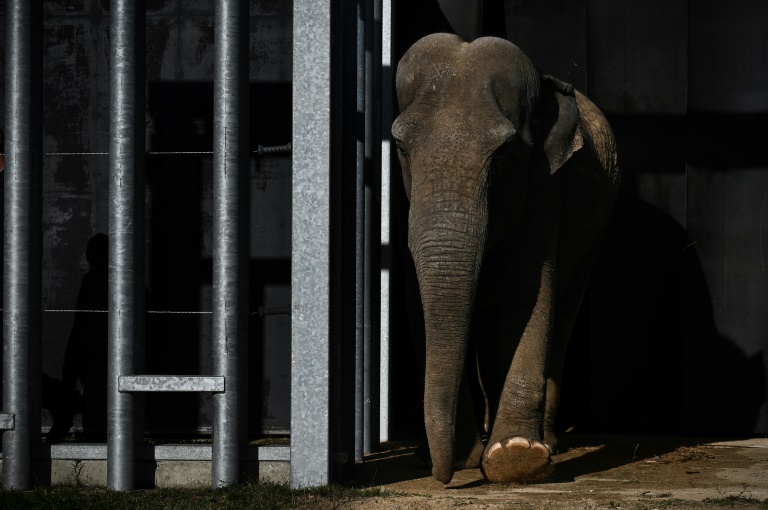
As intelligent as she is, Happy the elephant doesn’t meet the definition of a “person” and is therefore not being illegally confined in the Bronx Zoo, New York’s top court ruled Tuesday in a closely watched case for animal rights.

The state’s Court of Appeals 5-2 verdict against the habeas corpus proceeding filed by the Nonhuman Rights Project (NRP) means Happy will remain in her one-acre lot, where she has lived for 45 years, rather than moving to a much larger sanctuary.

NRP had contended Asian elephant, who was born in the wild in 1971, is an “extraordinarily cognitively complex and autonomous nonhuman” who should be “recognized as a legal person with the right to bodily liberty protected by the common law.”

It was the latest legal defeat for the organization, which has previously made similar petitions on behalf of other elephants as well as chimpanzees throughout the United States.

The majority decision, written by Chief Justice Janet DiFiore, acknowledged “no one disputes that elephants are intelligent beings deserving of proper care and compassion.” 

But she affirmed the decisions of lower courts that previously heard the case, writing: “Because the writ of habeas corpus is intended to protect the liberty right of human beings to be free of unlawful confinement, it has no applicability to Happy, a nonhuman animal who is not a ‘person’ subjected to illegal detention.”

“Granting legal personhood to a nonhuman animal in such a manner would have significant implications for the interactions of humans and animals in all facets of life, including risking the disruption of property rights, the agricultural industry (among others), and medical research efforts,” DiFiore added.

If such relief were granted to elephants, “What of dolphins — or dogs? What about cows or pigs or chickens –species routinely confined in conditions far more restrictive than the elephant enclosure at the Bronx Zoo?”

Reacting to the news, NRP praised the two dissenting judges, and said their views, as well as the fact that the case was heard in New York’s highest court, represented hope for the cause in the future.

Justice Rowan Wilson wrote: “When the majority answers, ‘No, animals cannot have rights,’ I worry for that animal, but I worry even more greatly about how that answer denies and denigrates the human capacity for understanding, empathy and compassion.”

Wilson recalled the case of Ota Benga, a member of the Mbuti pygmy people who was kidnapped from Africa and placed on exhibit at the Bronx Zoo in 1906, attracting a quarter of a million visitors.

Wilson said that while Benga was a human being and Happy was not, “The crucial point from both Mr Benga’s and Happy’s confinement… is that both suffered greatly from confinement that, though not in violation of any statutory law, produced little or no social benefit.”

DiFiore retorted that was “an odious comparison with concerning implications,” adding, “We are unpersuaded.”

She concluded with the observation that enormous interest generated by the case was “a testament to the complicated and ever-evolving relationship between human beings and other animals,” but stressed that ongoing debate should be settled by legislation, not the courts.

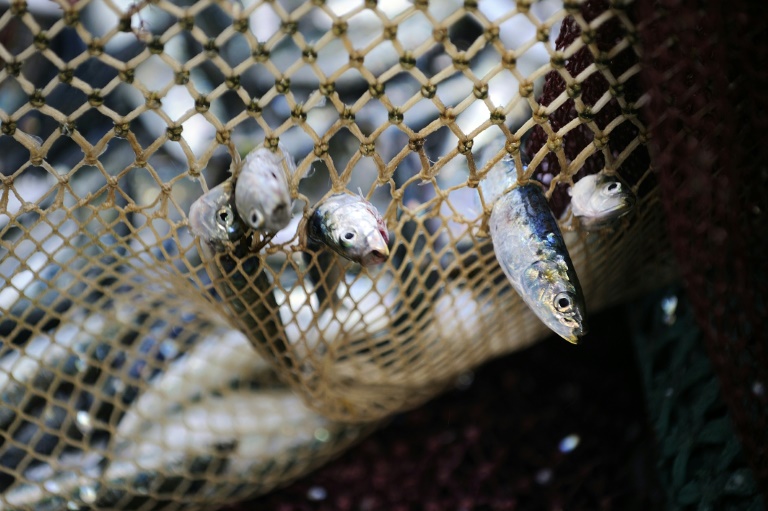
India all but sinks WTO sustainable fishing deal

India all but sank the WTO’s bid to net a long-sought deal on curbing harmful fishing subsidies, insisting Tuesday it would not sign up without a 25-year exemption.

Negotiations towards banning subsidies that encourage overfishing and threaten the sustainability of the planet’s fish stocks have been going on at the World Trade Organization for more than two decades.

The global trade body only takes decisions by consensus and its 164 members were seemingly closer than ever to sealing a deal at their four-day conference of trade ministers, which is scheduled to wind up on Wednesday.

But India stuck to its demand for a quarter of a century in which to adapt to the proposals on subsidies — a position many others are at odds with.

“The transition period of 25 years sought by India is not intended as a permanent carve-out. It is a must-have for us and for other similarly placed non-distant water fishing countries,” Commerce and Industry Minister Piyush Goyal said in a statement.

“Without agreeing to the 25-year transition period, it will be impossible for us to finalise the negotiations, as policy space is essential for the long-term sustainable growth and prosperity of our low-income fishermen.”

– ‘Completely unacceptable’ –

Besides fisheries, the WTO conference in Geneva is trying to strike deals on e-commerce, agriculture, food security, Covid-19 vaccine patents and WTO reform.

But some emerging from the negotiating rooms are pointing the finger at Indian intransigence on not just fisheries but on every topic being thrashed out at the WTO’s lakeside headquarters.

“India is being obstructive across the piece, whether it be on e-commerce, fisheries, agriculture,” said one Geneva-based diplomat.

“In no negotiation are they playing a constructive part.”

Goyal said the concerns of a small number of fishermen were prevailing over the lives of nine million fishermen in India.

“This is completely unacceptable! And that is the reason India is opposed to the current text,” he said.

Fishing subsidies is the flagship deal that the WTO’s leader Ngozi Okonjo-Iweala was hoping to get passed at the global trade body’s first ministerial conference in nearly five years.

The Nigerian former finance minister, who took office in March 2021, has staked her leadership on getting deals over the line, breathing new life into the organisation by proving it has a role to play in tackling big global challenges.

On fisheries, special treatment for the poorest countries is widely accepted, but some self-identified developing countries have been holding out for an exemption from subsidy constraints, including large fishing nations like India.

EU trade commissioner Valdis Dombrovskis said that some countries were taking “very strong positions, very far-reaching demands”.

That “weakens the purpose of this agreement which is to ensure the sustainability of fish stocks and ensure that the way fishing is subsidised does not contribute to unsustainable fishing practices”, he told reporters.

– ‘It’s crunch time’ –

Okonjo-Iweala, who turned 68 on Monday, hoped that a couple of the topics being negotiated in Geneva would reach a conclusion.

“My own dream for my birthday is to get a successful ministerial,” she said.

“One or two packages passed… I think that would do.”

WTO spokesman Daniel Pruzin said late Tuesday that the organisation was “still optimistic of getting some outcomes” from the conference.

“The not so good news is that we’re running out of time. It’s crunch time,” he added.

He said ministers were “very close” to concluding an agreement on the WTO’s response to pandemics, while on temporarily waiving patents on Covid-19 vaccines, “there’s still work to do, but I do think there is some optimism that that can be achieved”.

Pruzin said some countries had suggested working through the night and going on into Thursday in the hope of reaching agreements.

Tampon shortage latest sign of supply chain woes in US stores

Tampons are the latest product disappearing from store shelves in the United States, another illustration of supply chain problems that are complicating daily life, following the troubling shortage of baby formula.

Drugstore chains CVS and Walgreens confirmed in messages to AFP that some brands of tampons are temporarily unavailable in some areas.

Procter & Gamble, which makes the ubiquitous Tampax line among other products, said customers might not be able to find their usual brand in American stores.

“We understand it is frustrating for consumers when they can’t find what they need. We can assure you this is a temporary situation in the US, and the Tampax team is producing tampons 24/7 to meet the increased demand for our products,” they said in a statement.

A spokesperson for Edgewell, maker of Playtex and o.b. tampons and Carefree and Stayfree liners and pads, acknowledged inventory issues due to “extensive workforce shortages” caused by two Covid-19 outbreaks at a US plant in late 2021 and a Canadian supplier early this year.

The company said they “anticipate returning to normal levels in the coming weeks.” 

Kimberly-Clark, which makes a variety of consumer products including Kotex tampons, told AFP it has not experienced inventory shortages.

Walgreens meanwhile said it was working with suppliers to “ensure we have supply available” in all its stores.

And CVS said that “if a local store is temporarily out of specific products, we work to replenish those items as quickly as possible.”

The situation has been going on for months, but has received increasing media attention in recent days.

– Like pandemic stockpiling –

Patrick Penfield, a supply chain management specialist at Syracuse University, says demand has increased recently in particular because of additional purchases by consumers who see the shortage of certain brands and panic that they won’t be able to get more product.

He compared it to people stockpiling toilet paper at the start of the pandemic.

There is also a shortage of certain raw materials, including cotton and plastic, he said.

“This is the third straight year where demand for cotton in the US has exceeded what US firms are producing,” Penfield said, pointing to the increased need for masks and personal protection equipment.

In addition, some factories are struggling to operate at full capacity due to staff shortages or Covid-19 spikes, he said.

But the situation is different from the baby formula shortage: Initially caused by supply chain snarls and labor shortages, formula supplies dropped sharply when manufacturer Abbott shut down one Michigan plant in February and issued a product recall after the death of two babies raised concerns over contamination.

When it comes to tampons, “the factories are operating,” Penfield said, predicting a return to normal within the next six months.

In the meantime, the shortage has offered Republicans a new angle of attack against US President Joe Biden, with the Republican National Committee slamming “Biden’s war on women” on Twitter.

Tampon shortage latest sign of supply chain woes in US stores

Tampons are the latest product disappearing from store shelves in the United States, another illustration of supply chain problems that are complicating daily life, following the troubling shortage of baby formula.

Drugstore chains CVS and Walgreens confirmed in messages to AFP that some brands of tampons are temporarily unavailable in some areas.

Procter & Gamble, which makes the ubiquitous Tampax line among other products, said customers might not be able to find their usual brand in American stores.

“We understand it is frustrating for consumers when they can’t find what they need. We can assure you this is a temporary situation in the US, and the Tampax team is producing tampons 24/7 to meet the increased demand for our products,” they said in a statement.

A spokesperson for Edgewell, maker of Playtex and o.b. tampons and Carefree and Stayfree liners and pads, acknowledged inventory issues due to “extensive workforce shortages” caused by two Covid-19 outbreaks at a US plant in late 2021 and a Canadian supplier early this year.

The company said they “anticipate returning to normal levels in the coming weeks.” 

Kimberly-Clark, which makes a variety of consumer products including Kotex tampons, told AFP it has not experienced inventory shortages.

Walgreens meanwhile said it was working with suppliers to “ensure we have supply available” in all its stores.

And CVS said that “if a local store is temporarily out of specific products, we work to replenish those items as quickly as possible.”

The situation has been going on for months, but has received increasing media attention in recent days.

– Like pandemic stockpiling –

Patrick Penfield, a supply chain management specialist at Syracuse University, says demand has increased recently in particular because of additional purchases by consumers who see the shortage of certain brands and panic that they won’t be able to get more product.

He compared it to people stockpiling toilet paper at the start of the pandemic.

There is also a shortage of certain raw materials, including cotton and plastic, he said.

“This is the third straight year where demand for cotton in the US has exceeded what US firms are producing,” Penfield said, pointing to the increased need for masks and personal protection equipment.

In addition, some factories are struggling to operate at full capacity due to staff shortages or Covid-19 spikes, he said.

But the situation is different from the baby formula shortage: Initially caused by supply chain snarls and labor shortages, formula supplies dropped sharply when manufacturer Abbott shut down one Michigan plant in February and issued a product recall after the death of two babies raised concerns over contamination.

When it comes to tampons, “the factories are operating,” Penfield said, predicting a return to normal within the next six months.

In the meantime, the shortage has offered Republicans a new angle of attack against US President Joe Biden, with the Republican National Committee slamming “Biden’s war on women” on Twitter.

Eletrobras goes private with Bolsonaro bell ring

Brazilian President Jair Bolsonaro rang the bell at the Sao Paulo stock exchange Tuesday to mark the start of trading in shares of newly privatized electricity company Eletrobras, the second-biggest stock offering worldwide this year.

The launch dilutes the Brazilian government’s stake in Eletrobras, Latin America’s biggest electricity company, from 72 percent to 45 percent.

It is part of Bolsonaro’s plans to privatize state-run companies en masse — a promise he has largely failed to deliver on nearing the end of his four-year term and facing an uphill battle to win reelection in October.

The share offering raised around 30 billion reais ($6 billion).

Economy Minister Paulo Guedes hailed it as a victory for private-sector efficiency.

“The biggest clean-energy generating company in the world is now free,” he said at the event.

“It’s like a child who left home at 18 and is going to go out and triumph. It no longer needs the protection of the state, which was becoming detrimental.”

Bolsonaro grinned and embraced Guedes as a hail of confetti fell, but did not speak at the event.

Guedes says Eletrobras needs to invest 16 billion reais a year to maintain its market share, but was previously only managing around three billion reais a year.

Critics worry the privatization could lead to higher bills for customers.

The event drew a small protest by dozens of demonstrators outside the stock exchange.

The Bolsonaro administration has also voiced interest recently in privatizing oil firm Petrobras, the biggest company in Brazil.

The state-run firm has drawn the far-right president’s ire with a series of recent price increases that are fueling high inflation.

Stocks mostly fall as markets await aggressive Fed action

Global equity markets mostly fell on Tuesday as markets awaited a key Federal Reserve decision amid rising expectations for an even tougher rate hike than previously telegraphed.

Panic has swept through trading floors since data on Friday showed US consumer prices rising at their fastest pace in decades on surging energy and food costs caused by the Ukraine war and supply chain snarls.

Investors are now bracing for the Fed’s interest rate decision on Wednesday as the central bank struggles to walk a fine line between reining in inflation and trying to keep the economy on track.

“While there is no doubt that inflation is a considerable challenge for the US at this point, slamming on the brakes too hard risks pushing the economy off its track,” said Tai Hui, chief market strategist for Asia at JP Morgan Asset Management. 

The inflation reading has raised expectations the US central bank could raise rates by a hefty 75 basis points, higher than its previous 0.5-percentage-point hike — something futures markets now consider likely.

“It looks like it’s going to be a 75 basis point hike,” said Quincy Krosby, chief equity strategist of LPL Financial. “We haven’t seen any sign that the Fed wanted to clarify this expectation. In fact, if the Fed stayed with a 50 basis point hike, the market could be disappointed.”

Krosby said the Fed’s sharp increase in lending rates will dampen economic growth but the central bank has little choice at this point.

“The wake-up call was the CPI on Friday and the preliminary consumer confidence,” she said. “The Fed got the message. It needs to maintain its credibility.”

Recession fears sent Wall Street plunging on Monday, with the broad-based S&P 500 stocks index sinking into a bear market, with a drop of more than 20 percent from its recent peak.

After opening higher on Tuesday, US stocks weakened thereafter. The Dow and S&P 500 finished lower, while the Nasdaq mustered modest gains. 

London, Paris, Frankfurt and most Asian equities closed in the red.

Cryptocurrencies have mirrored the falls in the stock markets, with bitcoin tumbling to an 18-month low under $23,000.

Digital currency exchange Coinbase said Tuesday it will lay off 18 percent of staff, citing tight economic conditions and an overly rapid expansion.

– Key figures at around 2030 GMT –

New York – Dow: DOWN 0.5 percent at 30,364.83 (close)

New York – S&P 500: DOWN 0.4 percent at 3,735,48 (close)

New York – Nasdaq: UP 0.2 percent at 10,828.35 (close)

Frankfurt – DAX: DOWN 0.9 percent at 13,304.39 (close)

Paris – CAC 40: DOWN 1.2 percent at 5,949.84 (close)

London – FTSE 100: DOWN 0.3 percent at 7,187.46 (close)

EURO STOXX 50: DOWN 0.8 percent at 3,475.18 (close) 

Tokyo – Nikkei 225: DOWN 1.3 percent at 26,629.86 (close)

Hong Kong – Hang Seng Index: FLAT at 21,067.99 (close)

Shanghai – Composite: UP 1.0 percent at 3,288.91 (close)

Euro/dollar: UP at $1.0420 from $1.0409 late Monday

Pound/dollar: DOWN at $1.1993 from $1.2134

Euro/pound: UP at 86.84 pence from 85.79 pence

Dollar/yen: UP at 135.33 yen from 134.42 yen 

Brent North Sea crude: DOWN 0.9 percent at $121.97 per barrel

West Texas Intermediate: DOWN 2.0 percent at $118.93 per barrel

burs-jmb

Floods, fires, heat waves: US struggles with climate catastrophes

Raging floods, devastating fires, powerful thunderstorms and a dangerous heat wave affecting a third of the population: the United States was being walloped Tuesday by climate-related catastrophes.

A series of slow motion disasters is gripping the country as it enters summer, with warnings of misery for months to come in some areas.

Around 120 million people were under some sort of advisory as a heat wave scorched the Upper Midwest and the Southeast.

“A dome of high pressure is expected to generate well-above-normal to record-breaking temperatures across the region both today and tomorrow,” with heat indices “well into the triple digits in many locations,” the National Weather Service (NWS) said.

Parts of Indiana, Kentucky and Ohio were warned to expect the mercury to reach 109 degrees Fahrenheit (43 Celsius).

NWS meteorologist Alex Lamers said the high pressure dome was sparking extreme events around its periphery.

“A lot of times you get a pretty big heatwave and if you look around the edges of that you’ll see thunderstorms and tornadoes, flash flooding, extreme rainfall,” he told AFP.

– Storms –

The heat dome’s northern edge, where high temperatures collided with colder air, saw some violent storms Monday.

Hundreds of thousands of people were without power in the Midwest after thunderstorms tore through the area.

That cold front was expected to bring more unsettled weather, with hail and damaging winds forecast.

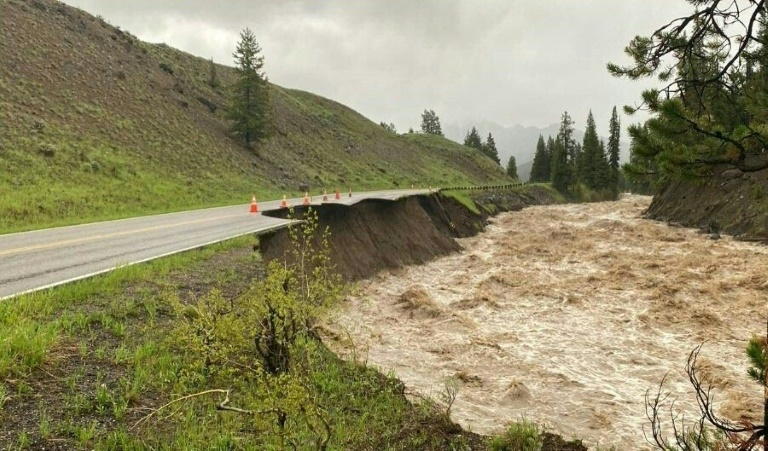
Further west, dramatic photographs and videos published by the National Park Service showed the devastation wreaked by flooding in Yellowstone, the country’s oldest national park.

The 3,400 square-mile (8,900 square-kilometer) park in Wyoming, which is home to the famous Old Faithful geyser, was shuttered on Monday after a flooded river swept away roads and cut off a nearby community.

Rangers warned of “extremely hazardous conditions” and told anyone still in the park to get out.

“Flood levels measured on the Yellowstone River are beyond record levels,” the NPS said on its website.

“Preliminary assessments show multiple sections of roads throughout the park have been either washed out or covered in mud or rocks, and multiple bridges may be affected.”

The small community of Gardiner, which sits just outside the park boundary in the state of Montana, was cut off, with water and power out to several properties, the NPS said.

– Furnace –

There were also warnings of excessive heat for parts of California and Arizona, which were blasted by furnace-like conditions at the weekend.

The soaring temperatures, coupled with a lengthy drought are worsening seasonal wildfires.

Two huge blazes, each of more than 300,000 acres (120,000 hectares), continued to rage Tuesday in New Mexico.

Firefighters battling the Black Fire and the Hermits Peak fire are working to contain flames that are fuelled by exceedingly dry undergrowth.

New Mexico and much of the Southwest has been gripped by a punishing drought that has left rainfall levels below normal for years.

Dozens of other fires have sprung up throughout the region.

Wildfires are an expected part of the natural cycle, which help to remove dead plants and eliminate disease while promoting new growth.

But their size and ferocity has increased in recent years, firefighters say, as effects of the crippling drought make themselves felt.

“Dry conditions and gusty winds are expected to produce another day of elevated to critical fire weather conditions across portions of the Southwest into the central and southern High Plains,” NWS said on its website.

Fire chiefs are warning that 2022 looks set to be a terrible year for wildfires.

“Given the fuel conditions, the fire conditions that we’re here talking about, I foresee a very tough four, five, six months in front of us,” Orange County, California Fire Chief Brian Fennessy said last week.

Scientists say global warming, which is being driven chiefly by humanity’s unchecked burning of fossil fuels, is making extreme weather events more likely.

Lamer, of the National Weather Service, said while it was difficult to conclude the changing climate was behind an individual episode, global warming was an underlying factor.

“Any weather event that you’re looking, there’s some combination of bad luck, the atmosphere has to be set up in a certain way,” he said.

“But they all happen in the context of climate, and basically climate change loads the dice and makes more extreme outcomes more likely.”

Biden signals US-Saudi thaw with prince meeting on Mideast trip

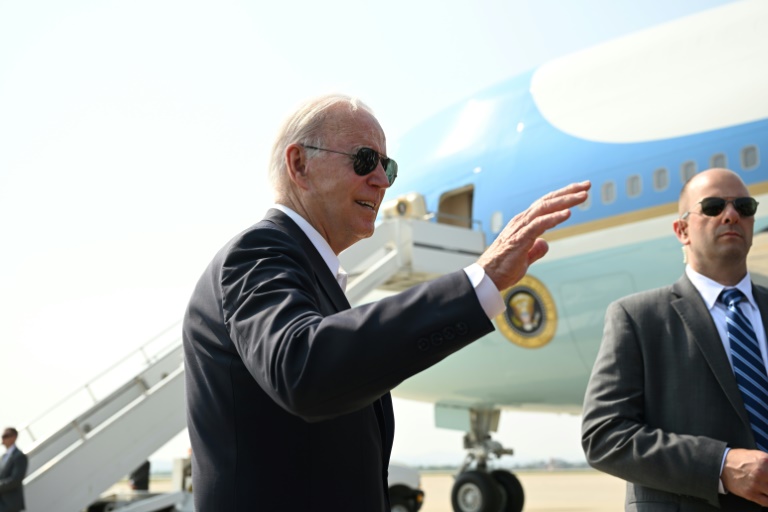
US President Joe Biden will meet with Saudi Arabian Crown Prince Mohammed bin Salman next month, abandoning efforts to ostracize the kingdom’s de facto leader over the horrific murder of a dissident.

The White House ended weeks of speculation Tuesday, announcing that Biden will travel to Israel, the Palestinian West Bank, and Saudi Arabia from July 13-16 — his first trip to the Middle East since taking office.

In addition to meetings with individual leaders in all three places, he will attend a regional Gulf Cooperation Council summit in Saudi Arabia.

Biden is expected to press for increased Saudi oil production, in the hope of taming spiraling fuel costs and inflation at home ahead of midterm congressional elections in which his Democratic party risks a drubbing.

But his meeting with the crown prince, often referred to as MBS, will mark a controversial shift.

As a presidential candidate, Biden said the 2018 murder and dismemberment of Jamal Khashoggi — a Saudi-born US resident known for writing critical articles about the kingdom’s rulers for The Washington Post — had made the country a “pariah.”

US intelligence findings released by the Biden administration identified MBS as the mastermind of the operation.

The White House sought to play down the encounter, not specifically mentioning MBS in its statement.

Pressed by reporters, White House Press Secretary Karine Jean-Pierre said “the president is going to see over a dozen leaders on this trip… We can expect the president to see the crown prince as well.”

Saudi Arabia’s statement was more direct, noting simply that Biden would meet with King Salman and then the young heir to the throne.

– Oil and inflation –

US inflation is at 8.6 percent, the highest rate in 40 years, with high fuel costs largely to blame. Political fallout has been swift as voters vent over Biden’s inability to change global oil markets.

John Kirby, a White House foreign policy spokesman, told MSNBC on Tuesday that oil production “absolutely… is going to be part” of Biden’s discussions in Saudi Arabia.

But while the White House also confirmed that “energy security” will be a topic, officials stressed that the whole trip has broader aims.

Jean-Pierre emphasized that “this visit to the Middle East region culminates months of diplomacy,” as opposed to being driven by recent domestic political concerns.

Biden’s multiple leader-level engagements during the brief yet intense journey will demonstrate “the return of American leadership” to the region, a senior US official told reporters.

– Re-establishing Palestinian links –

The tour starts with meeting Prime Minister Naftali Bennett in Israel, with emphasis on the lavish US support for Israel’s armed forces. That includes the Iron Dome anti-rocket system at a time of tension over ongoing failure to resurrect an international pact curtailing Iran’s nuclear development.

“While in Israel, the president will likely visit an area where these defensive systems are utilized, as well as discuss new innovations between our countries that use  laser technologies to defeat missiles and other airborne threats,” the official said, speaking on condition of anonymity.

“The president will reaffirm the ironclad commitment to Israel’s security.”

Biden will meet Palestinian president Mahmud Abbas, likely in Bethlehem, the US official said.

Biden will stress “his lifelong commitment to a two state solution” for Palestinians and Israelis and restore US ties with Palestinians that were “nearly severed” under his predecessor Donald Trump.

– History and controversy –

Biden’s flight from Israel to Jeddah will be the first by a US president from Israel to an Arab state that does not recognize the country. In 2017, Trump made the journey in reverse.

Once there, Biden will attend the Gulf Cooperation Council meeting with leaders from Bahrain, Kuwait, Oman, Qatar, Saudi Arabia and the United Arab Emirates, as well as being joined by the leaders of Egypt, Iraq and Jordan, the US official said.

A priority for Biden will be maintaining the recently extended truce in Yemen, as well as deterring Iran, “advancing human rights, and ensuring global energy and food security,” the official said.

Biden will also join a virtual summit of the so-called I2-U2 diplomatic group of India, Israel, the UAE and the United States, with focus on “the food security crisis” sparked by Russia’s invasion of major agricultural exporter Ukraine.

The most closely watched meeting will be between Biden and MBS.

The senior official said that despite the Khashoggi murder, the US-Saudi relationship goes back eight decades and while there had been a “recalibration,” there was no desire for “rupture.”

However, one Democratic senator, Ron Wyden, said in a statement that Biden “cannot value Saudi oil more highly than the blood” of MBS’ victims. 

“Embracing MBS only makes our people more vulnerable to the whims of tyrants,” Wyden said.

India all but sinks WTO sustainable fishing deal

India all but sunk the WTO’s bid to net a long-sought deal on curbing harmful fishing subsidies when it insisted Tuesday it would only sign up if it is given a 25-year exemption from the restrictions.

Negotiations towards banning subsidies that encourage overfishing and threaten the sustainability of the planet’s fish stocks have been going on at the World Trade Organization for more than two decades.

The global trade body only takes decisions by consensus and it was thought that members were tantalisingly close to sealing a deal at their four-day conference of trade ministers which winds up on Wednesday.

But India insisted on carving out a quarter of a century in which to adapt to the proposals on subsidies.

“The transition period of 25 years sought by India is not intended as a permanent carve-out. It is a must-have for us and for other similarly placed non-distant water fishing countries,” Commerce and Industry Minister Piyush Goyal said in a statement.

“We feel that without agreeing to the 25-year transition period, it will be impossible for us to finalise the negotiations, as policy space is essential for the long-term sustainable growth and prosperity of our low-income fishermen.”

The conference mood darkened earlier Tuesday with several diplomats pointing the finger at Indian intransigence on not just fisheries but on every topic being thrashed out at the WTO’s lakeside headquarters.

The WTO conference is trying to strike deals on e-commerce, agriculture, food security, Covid-19 vaccine patents and WTO reform.

“India is being obstructive across the piece, whether it be on e-commerce, fisheries, agriculture,” said one Geneva-based diplomat.

“In no negotiation are they playing a constructive part.”

Goyal said the concerns of a small number of fishermen were prevailing over the lives of nine million fishermen in India.

“This is completely unacceptable! And that is the reason India is opposed to the current text,” he said.

Fishing subsidies is the flagship deal that the WTO’s leader Ngozi Okonjo-Iweala was hoping to get passed at the global trade body’s first ministerial conference in nearly five years, being held in Geneva this week.

The Nigerian former finance minister, who took office in March 2021, has staked her leadership on banging heads together and getting deals over the line, breathing new life into the organisation by proving it has a role to play in tackling big global challenges.

On fisheries, special treatment for the poorest countries is widely accepted, but some self-identified developing countries are demanding exemption from subsidy constraints, including large fishing nations like India — and the idea has met resistance from others.

EU trade commissioner Valdis Dombrovskis earlier urged the assembled ministers to embrace compromise amid the hectic negotiations.

On fisheries, “there are countries taking very strong positions, very far-reaching demands, which in a sense weakens the purpose of this agreement which is to ensure the sustainability of fish stocks and ensure that the way fishing is subsidised does not contribute to unsustainable fishing practices”, he told reporters.

Okonjo-Iweala, who turned 68 on Monday, hoped that a couple of the topics being negotiated in Geneva would reach a conclusion.

“My own dream for my birthday is to get a successful ministerial,” she said.

“One or two packages passed… I think that would do.”

Remi Parmentier, who heads the Varda Group which advises on environmental issues, said on Twitter: “If India is so unhappy at the World Trade Organization, maybe they should just suspend their membership, and let the rest of the members get on.” 

Close Bitnami banner
Bitnami