US Business

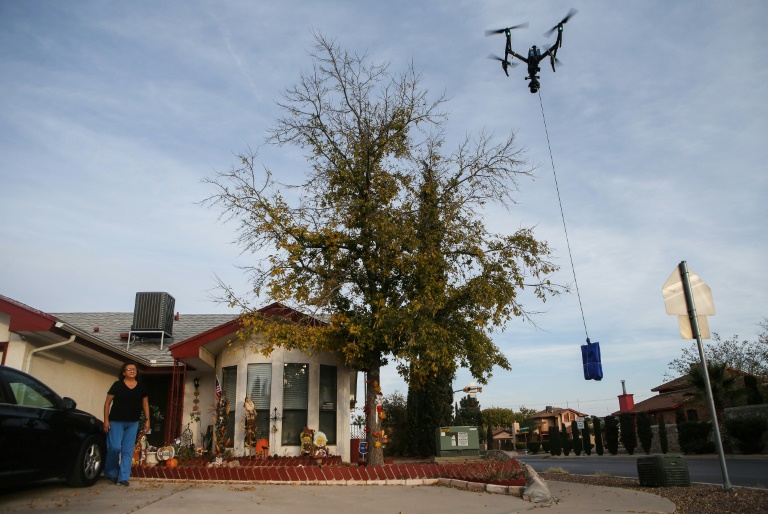
Amazon to start delivering by drone in California town

Amazon plans to start flying some purchases to customers later this year, the e-commerce giant said Monday, announcing drone delivery that will debut in a California town.

Retail rival Walmart already offers drone delivery and in May announced it is dramatically ramping up the service, expanding to six states by year-end with the potential to drop off one million packages annually.

Amazon customers in the Northern California town of Lockeford will be able to sign up for free delivery by “Prime Air” drones, the company said in a post.

“Air-eligible” items ordered at the retailer’s website will be packed into drones that will fly to the delivery addresses, deposit packages outside from safe heights, then fly away, according to Amazon.

Amazon said it has created a sophisticated system to enable its drones to detect and avoid aircraft, people, pets and other obstacles.

“We designed our sense-and-avoid system for two main scenarios: to be safe when in transit, and to be safe when approaching the ground,” the company said.

Feedback from the service in California will be used to expand the drone service.

A variety of companies ranging from new startups to major tech firms such as Google-parent Alphabet are working on autonomous drone delivery.

Alphabet’s drone project Wing completed its first real-world deliveries in 2014 in rural Australia where they successfully transported first-aid supplies, candy bars, dog treats, and water to farmers, according to the company’s website.

Two years after that, Wing drones were used to deliver burritos to students at a university in Virginia.

“The logistics industry is abuzz with all-things drones,” the Amazon team said.

EU chief, Italian PM in Israel for energy talks

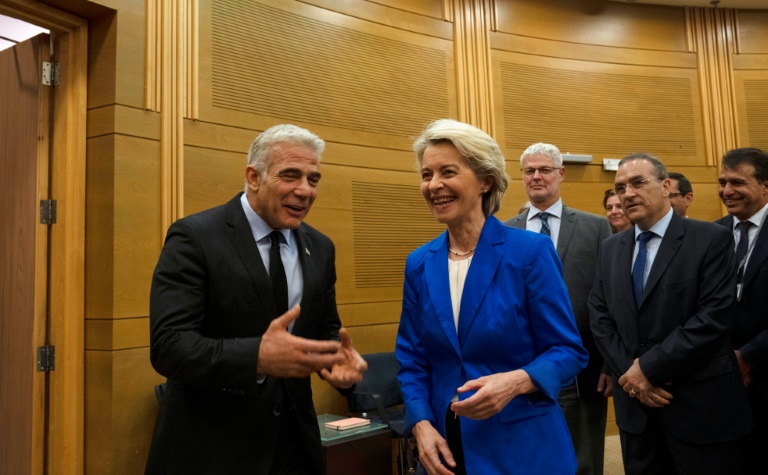
European Commission chief Ursula von der Leyen and Italian Prime Minister Mario Draghi began meetings in  Israel on Monday as the EU seeks to wean itself off Russian fossil fuel imports. 

Both leaders embarked on energy talks with Israel, which has turned from a natural gas importer into an exporter in recent years thanks to major offshore finds.

Von der Leyen was set to meet Prime Minister Naftali Bennett on Tuesday, with talks expected to focus “in particular on energy cooperation”, a commission statement said.

On Monday, she met with Foreign Minister Yaid Lapid, who said in a statement that Israel’s ties with the EU were a “strategic asset”, and later met with Energy Minister Karine Elharrar, whose spokesperson told AFP Von der Leyen reiterated “the EU need for Israeli gas.”

Draghi, on his first Middle East trip since taking office last year, will also discuss energy and food security during his two-day trip, Italian media reported.

He was also set to meet with Bennett on Tuesday, the Israeli premier’s office said.  

Speaking at a synagogue in Jerusalem shortly after landing, the Italian premier said his government was “committed to strengthening the memory of the Holocaust and to fighting against discrimination of all kinds against Jews”.

Draghi later met with Lapid, with the Israeli foreign minister’s office saying the “two discussed strengthening and deepening ties between Israel and Italy, the geopolitical situation in the wake of the war in Ukraine, and cooperation between their two countries.”

Draghi and Von der Leyen will on Tuesday meet Palestinian prime minister Mohammed Shtayyeh in the Israeli-occupied West Bank.

The EU this month formally adopted a ban on most Russian oil imports, its toughest sanctions yet over the war in Ukraine. Von der Leyen has said the bloc hopes to end its dependence on Russian hydrocarbons, including gas, by 2027.

Draghi and other EU leaders have warned European customers may need protection as energy costs continue to rise.  

Elharrar and other Israeli officials have said their country could help meet EU demand if it can deliver gas from its offshore reserves estimated at nearly 1,000 billion cubic metres.

– Export options –

Ahead of Von der Leyen’s visit, European Commission spokeswoman Dana Spinant told reporters to “stay tuned for announcements that we are going to make on energy cooperation with Israel and other partners in the region”.

For now, getting Israeli gas to Europe is fraught with challenges and would require major and long-term infrastructure investments. 

With no pipeline linking its offshore fields to Europe, one option for now is piping natural gas to Egypt, where it could be liquified for export by ship to Europe. 

Another possible scenario is building a pipeline to Turkey. 

Israel’s ties with Ankara have thawed after more than a decade of diplomatic rupture and experts have said Turkey’s desire for joint energy projects has partly triggered its outreach to Israel.  

That pipeline project would take $1.5 billion and two to three years to complete, according to Israel’s former energy minister Yuval Steizitz, now an opposition lawmaker. 

Option three is known as the EastMed project, a proposal for a seafloor pipeline linking Israel with Cyprus and Greece. 

Experts have, however, raised concerns about the cost and viability of the project, while Israel has said it would like to see Italy sign on. 

A spokesperson for the Israeli energy minister told AFP on Monday that there have been talks since March to create an agreement or legal framework to enable Israeli gas exports to Europe via Egypt.

Further complicating Israel’s offshore gas production is a long-running maritime border dispute with Lebanon. 

The neighbours technically remain at war but have agreed to US-mediated talks aimed at delineating the border to allow both countries to boost exploration. 

Talks broke down last year but Israel has urged Lebanon to re-engage. 

Tensions flared this month following a Lebanese claim that Israeli production was taking place in contested waters.

Israel countered that the area was clearly located south of the disputed zone. 

The US envoy mediating the maritime border talks, Amos Hochstein, was due in Lebanon on Monday. 

Ukraine forces pushed back from Severodonetsk centre

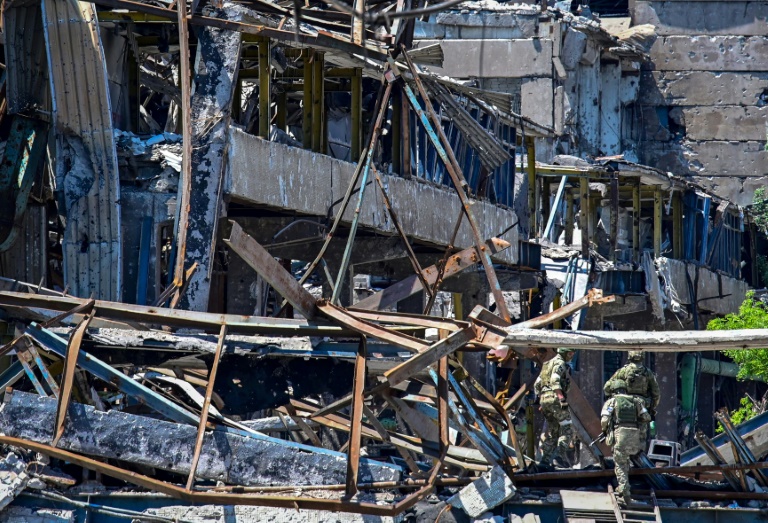
Ukraine said Monday its forces had been pushed back from the centre of key industrial city Severodonetsk, where President Volodymyr Zelensky described a fight for “literally every metre”.

The twin cities of Severodonetsk and Lysychansk have been targeted for weeks as the last areas still under Ukrainian control in the eastern Lugansk region.

Regional governor Sergiy Gaiday said Monday Russian forces control 70 to 80 percent of Severodonetsk but had not captured or encircled it.

“They destroyed all the bridges, and getting into the city is no longer possible. Evacuation is also not possible,” he told Radio Free Europe.

Ukrainian forces in the area had two choices, “to surrender or die”, said Eduard Basurin, a representative for pro-Russian separatists.

The capture of Severodonetsk would open the road to Sloviansk and another major city, Kramatorsk, in Moscow’s push to conquer Donbas, a mainly Russian-speaking region partly held by pro-Kremlin separatists since 2014.

Ukrainian forces were fighting for “every town and village where the occupiers came”, Zelensky said on Monday in a message to mark the eighth anniversary of the liberation of Mariupol in the earlier conflict.

In May, Russian troops captured the port city in southern Ukraine after a weeks-long siege.

“We are once again fighting for it and all of Ukraine,” Zelensky said.

– ‘War crimes’ –

On Monday, Amnesty International accused Russia of war crimes in Ukraine, saying that attacks on the northeastern city of Kharkiv — many using banned cluster bombs — had killed hundreds of civilians. 

“The repeated bombardments of residential neighbourhoods in Kharkiv are indiscriminate attacks which killed and injured hundreds of civilians, and as such constitute war crimes,” the rights group said in a report on Ukraine’s second-biggest city.

In Bucha, a town near Kyiv synonymous with war crimes allegations, local police said Monday they had discovered another seven bodies in a grave.

“Several victims had their hands tied and knees bound,” Kyiv regional police chief Andriy Nebytov said on Facebook.

Dozens of bodies in civilian clothing were found in the town in April after Russian troops withdrew from the area following a month-long occupation.

Elsewhere in northern Ukraine on Monday, Russian rocket strikes hit the town of Pryluky, local authorities said. 

Pryluky, which lies about 150 kilometres (90 miles) east of the capital, is home to a military airfield.

In Lysychansk, Russian bombardments killed three civilians in the last 24 hours, including a six-year-old boy, Lugansk governor Gaiday said Monday.

While in the city of Donetsk, separatist authorities said three people were killed and four wounded in Ukrainian shelling on a market.

– Weapons call –

Russia’s invasion of its neighbour has prompted Finland and Sweden to give up decades of military non-alignment and seek to join the NATO alliance. 

In terms of security, Sweden is now “in a better place now than before it applied”, NATO chief Jens Stoltenberg said on Monday, even though its application is in limbo with Turkey currently withholding its approval.

In a joint press conference with Swedish Prime Minister Magdalena Andersson, Stoltenberg said NATO was working “hard and actively” to resolve Ankara’s concerns “as soon as possible” ahead of a meeting on June 15.

It was at the summit in Brussels that Kyiv said Monday it was hoping for a decision on further Western arms deliveries to support its war effort.

“Being straightforward — to end the war we need heavy weapons,” Ukrainian presidential advisor Mykhaylo Podolyak said on Twitter.

Podolyak listed items he said the Ukrainian army requires, including hundreds of howitzers, tanks and armoured vehicles.

– WTO meeting –

Away from the battlefield, World Trade Organization members gathered in Geneva Sunday, with the threat posed to global food security by Russia’s war top of the agenda.

Tensions ran high during a closed-door session, in which around three dozen delegates “walked out” before a speech by Russia’s deputy economic development minister Vladimir Ilichev, WTO spokesman Dan Pruzin told journalists.

Ukraine’s deputy agriculture minister on Monday said a quarter of his country’s arable land had been lost but insisted national food security was not threatened.

On a farm near the southern Ukrainian city Mykolaiv, the harvest has been delayed by the need to undo the damage done by Russian troops that passed through the area in March.

“We planted really late because we needed to clear everything beforehand,” including bombshells, Nadiia Ivanova, 42, told AFP.

The farm’s warehouses currently hold 2,000 tonnes of last season’s grain but there are no takers.

The railways have been partially destroyed by the Russian army, while any ship that sails faces the threat of being sunk.

burs-sea/imm/pvh

Heard says online 'hate and vitriol' during Depp trial not 'fair'

Amber Heard said the “hate and vitriol” she suffered on social media during her libel trial against Johnny Depp was not “fair,” but insisted in an interview released Monday she did not blame the jury for largely siding with her ex-husband.

After a six-week legal tussle between the former Hollywood power couple, a US jury awarded Depp more than $10 million in damages for defamation, in contrast to just $2 million for Heard who had counter-sued.

The case, live-streamed to millions, featured lurid and intimate details about the celebrities’ private lives, and Heard was targeted by countless social media posts and internet memes throughout.

“I don’t presume the average person should know those things,” Heard told NBC in her first major interview since the verdict. “And so I don’t take it personally.”

“But even somebody who is sure I’m deserving of all this hate and vitriol, even if you think that I’m lying, you still couldn’t look me in the eye and tell me that you think on social media there’s been a fair representation.”

“You cannot tell me that you think that this has been fair,” she said in a clip from the interview, which airs in full on NBC News’ Dateline on Friday.

Depp sued Heard over a Washington Post op-ed in which she did not name him, but described herself as a “public figure representing domestic abuse.” Heard counter-sued after Depp’s lawyer described her abuse claims as a “hoax.”

Online public opinion during the trial appeared to come down heavily on Depp’s side, and Heard’s lawyers accused his legal team of working to “demonize” her.

Heard’s attorney Elaine Bredehoft has said the “Aquaman” star wants to appeal the verdict.

“How could they make a judgement, how could they not come to that conclusion?” Heard asked in the interview.

“I don’t blame them. I actually understand he’s a beloved character. And people feel they know him. He’s a fantastic actor.

When interviewer Savannah Guthrie suggested it was the jury’s duty to not be swayed by Depp’s A-list status, Heard responded: “Again, how could they (not be) — after listening to three and a half weeks of testimony about how I was a non-credible person, not to believe a word that came out of my mouth?”

Trump was told fraud claims behind Capitol riot were false: aides

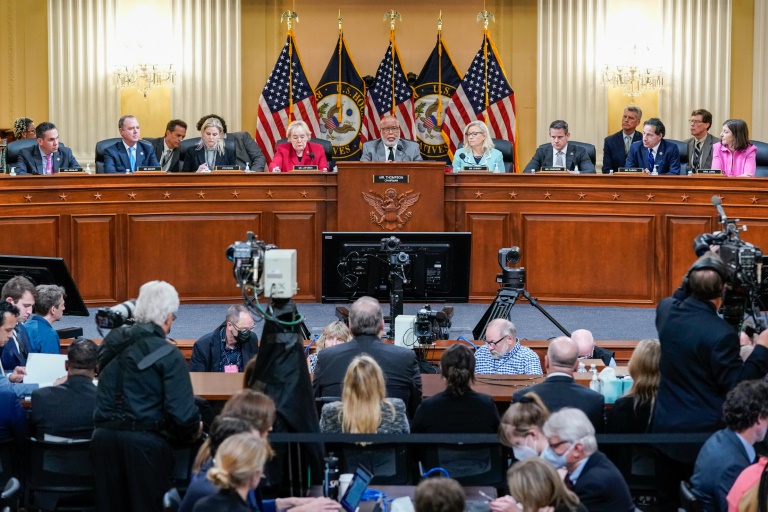
Donald Trump ignored repeated warnings from top aides against claiming the 2020 election was stolen, according to testimony unveiled Monday by the congressional panel probing the 2021 assault on the US Capitol.

The second of a series of June hearings was shown videotaped accounts from the former president’s aides, including campaign manager Bill Stepien, saying they advised him not to declare victory on election night because he hadn’t won — but that Trump went ahead anyway.

“He thought I was wrong, he told me so, and that they were going to go in a different direction,” Stepien said.

Monday’s hearing followed a prime-time session last week in which the panel began making its case that the January 6, 2021 insurrection was the culmination of a conspiracy by Trump and his aides to overturn his defeat to Joe Biden.

“This morning, we will tell the story of how Donald Trump lost the election — and knew he lost the election — and as a result of his loss, decided to wage an attack on our democracy,” Democratic panel chairman Bennie Thompson said in his opening remarks.

Trump’s closest campaign aides, his attorney general Bill Barr and White House officials revealed in video testimony shown to the hearing how they had repeatedly warned Trump his election voting fraud narrative was bogus.

“I told him that it was crazy stuff,” Barr said.

– ‘Far flung conspiracies’ –

Thompson’s Republican deputy Liz Cheney said Trump instead listened to the advice of “apparently inebriated” Rudy Giuliani, a former mayor of New York and one of the former president’s closest allies, “to just claim he won, and insist that the vote counting stop — to falsely claim everything was fraudulent.”

After crucial swing states were called for Biden, Giuliani and his associates pushed a campaign of debunked theories about massive voter fraud that put them at odds with the White House lawyers that Stepien referred to as “Team Normal.”

“The Trump campaign legal team knew there was no legitimate argument — fraud or irregularities or anything — to overturn the election,” said Cheney.

The Wyoming congresswoman highlighted “far-flung conspiracies” — pushed by Giuliani and lawyer Sidney Powell, but dismissed as “nonsense” by Barr — of fraud involving voting machines “with a deceased Venezuelan Communist allegedly pulling the strings.” 

The claims are the subject of a multibillion-dollar lawsuit by Dominion Voting Systems.

The committee had planned to hear in-person testimony from Stepien but he canceled an hour before the hearing after his wife went into labor. 

Trump started pushing what came to be known as his “Big Lie” around 2:30 am on November 4, 2020, making baseless allegations of fraud and prematurely declaring victory on the night of an election he ultimately lost to Joe Biden by seven million votes.

Barr told the committee in previously unseen video testimony that Trump claimed there was major fraud underway “right out of the box on election night… before there was actually any potential of looking at evidence.”

– Conspiracy –

The committee says that initial claim grew quickly into a conspiracy to cling to power by Trump and his inner circle — and a fundraising campaign that raised $250 million between election night and the insurrection.

The panel hopes to demonstrate that the clips from Stepien, Barr and others prove Trump should have known that what he was being told by Giuliani and Powell wasn’t true. 

But legal analysts are split on whether that is sufficient to argue intent, as Trump would likely argue in his defense that he took extreme measures to cling to power because still genuinely believed he had won.

Zoe Lofgren, a Democratic committee member, said the defeated president laid the groundwork for spreading his false allegations about the election months in advance.

“As early as April 2020, Mr Trump claimed that the only way he could lose an election would be as a result of fraud,” she said.

“We’ll also show that the Trump campaign used these false claims of election fraud to raise hundreds of millions of dollars from supporters who were told their donations were for the legal fight in the courts but the Trump campaign didn’t use the money for that,” Lofgren added.

“The big lie was also a big rip-off.”

WTO seeks shot in the arm with Covid jab IP idea

The WTO’s search for a role in fighting the pandemic sharpened up on Monday as ministers seek a compromise to lift intellectual property rights on Covid-19 vaccines.

The World Trade Organization’s first ministerial meeting since December 2017 is wrestling with the wording of a text that would temporarily waive patents on coronavirus jabs.

It is the main pandemic-combating idea being negotiated at MC12, the global trade body’s 12th ministerial conference, being held from Sunday to Wednesday at its headquarters in Geneva.

But serious objections remain from some of the countries that host major pharmaceutical companies, like Britain and Switzerland — a problem at the WTO, where decisions are taken by consensus rather than by majority.

The world’s big pharma firms are dead set against the idea, insisting that stripping patents will cripple investment and innovation.

They also say the plan — first proposed in October 2020 when the pandemic was raging and before jabs were even rolled out — has gone past its sell-by date as the world now has a surplus of vaccine doses rather than a dearth.

After Sunday’s opening ceremony and countries setting out their positions, ministers from the 164 WTO members went into rooms at the organisation’s HQ — the grand 1920s, classical Florentine-style Centre William Rappard on Lake Geneva — to start talking it out face to face.

– Birthday present? –

This week’s conference is a crunch moment for WTO chief Ngozi Okonjo-Iweala, who has staked her leadership on breathing new life into the crippled organisation, where progress has been stumbling for years.

The Nigerian former finance and foreign minister took over in March 2021 on a mission to make the WTO relevant again.

But on her 68th birthday Monday, there was no immediate sign of a breakthrough on vaccine patents.

“A broad-ranging IP waiver is a red line,” Swiss ambassador Markus Schlagenhof told reporters.

“Pretending that a sweeping IP waiver would solve the problem does not correspond to reality. IP is not part of the problem but part of the solution.”

British trade minister Anne-Marie Trevelyan said the challenge was to reach a “workable decision” on the waiver “which supports business and governments”.

Public interest groups say the draft text falls far short of what is needed, by time-limiting and complicating the vaccine patents waiver — and by leaving out Covid treatments and diagnostics.

Non-governmental organisations staged a protest in the WTO’s central atrium, chanting slogans and unfurling banners reading: “No monopolies on Covid-19 medical tools” and “End vaccine apartheid”.

“The WTO rules are contributing to exacerbating the pandemic, because it’s the WTO that enforces IP rules,” demonstration organiser Deborah James told AFP.

“Folks have been campaigning on this for two years and it’s been a complete wall by a few countries,” she said.

“It’s an indictment of the WTO system: it’s completely broken, it can’t respond to a pandemic, it has no ability to put anything other than maximising profits for corporations ahead of anything else.”

– ‘We are choosing death’ –

In October 2020, India and South Africa began pushing for the WTO to lift IP rights on Covid-19 vaccines, tests and treatments to help ensure more equitable access in poorer nations.

After multiple rounds of talks, the United States, the European Union, India and South Africa hammered out a compromise.

The text would allow most developing countries, although not China, to produce Covid vaccines without authorisation from patent holders.

Beijing has promised not to use the facilities granted to developing countries in the draft agreement, but, according to several diplomats, Washington wants this commitment in writing.

“In a pandemic, sharing technology is life or death and we are choosing death,” said the UNAIDS agency’s executive director Winnie Byanyima.

Besides production, a second text being negotiated seeks to tackle some of the supply constraints faced by certain countries in getting hold of Covid-fighting tools.

And beyond the pandemic, the WTO faces pressure to eke out long-sought trade deals on a range of issues and show unity amid an impending global hunger crisis.

Okonjo-Iweala voiced cautious optimism on Sunday that ministers could reach agreement on food security threatened by Russia’s invasion of Ukraine, overfishing and on Covid vaccines.

She said to expect a “rocky, bumpy road with a few landmines along the way”.

US Supreme Court deals migrant rights setback on detention

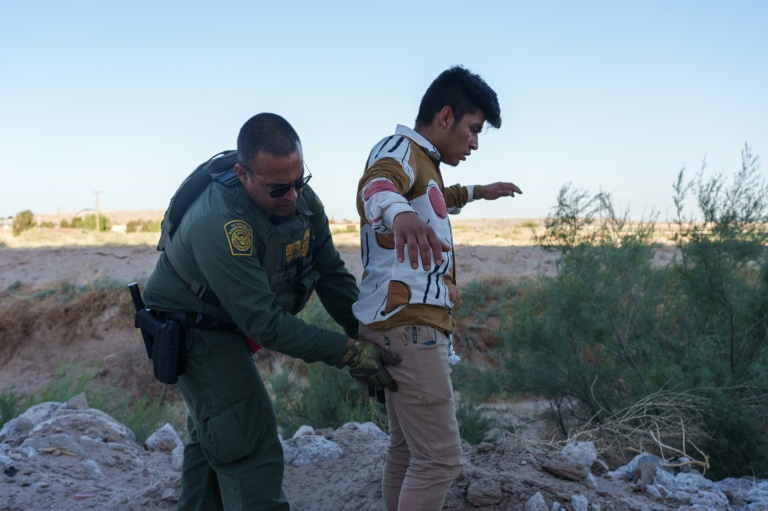
The US Supreme Court dealt a setback to the rights of undocumented migrants detained after crossing into the country in cases that pitted the administration of President Joe Biden against immigration advocates.

The high court ruled that migrants do not have a constitutional right to a bond hearing that could permit their release after spending six months in detention.

Two cases decided in tandem by the court Monday addressed the bond hearing requests of Mexican citizens who had been arrested by US officials after illegally crossing the southern border.

In both cases, the men had been previously deported from the United States and attempted to reenter the country.

The detainees argued against being sent back to Mexico on grounds that they faced threats of persecution or torture, and in one of the cases sought asylum.

US authorities, holding the men for months ahead of official removal proceedings, opposed a bond hearing on the grounds that it could lead to the men’s release and disappearance.

But their attorneys argued that denying them a bond hearing after lengthy detention was unjust and unconstitutional.

In 2019 lower courts ruled they had rights to such hearings after being held for six months.

But the high court ruled Monday that US law in these cases does not guarantee migrants like them that right. 

The original case was brought to the Supreme Court by the administration of president Donald Trump, who, as part of his fight against immigration, took a hard line against rights for undocumented migrants.

The case was inherited by the Biden administration, which although more sympathetic to migrants, continued to pursue it.

The American Civil Liberties Union criticized Biden at the time as being “decidedly on the wrong side of this fight.”

The ACLU noted that one of the men after being sent back to Mexico the first time had been kidnapped by police officers and held for ransom.

Another was tortured by gang members “because of his sexual orientation,” the ACLU said.

The Supreme Court justices said their ruling applied only to the claim of a right to a bond hearing, and not to the broader issue of constitutional protection against indefinite detention.

Ukraine forces pushed back from Severodonetsk centre

Ukraine said Monday its forces had been pushed back from the centre of key industrial city Severodonetsk, where President Volodymyr Zelensky described a fight for “literally every metre”.

The cities of Severodonetsk and Lysychansk, which are separated by a river, have been targeted for weeks as the last areas still under Ukrainian control in the eastern Lugansk region.

Regional governor Sergiy Gaiday said Monday Russian forces were “gathering more and more equipment” to “encircle” Severodonetsk.

Moscow’s troops had “pushed our units from the centre and continue to destroy our city”, he said.

Severodonetsk had been “de facto” blocked off after Russian forces blew up the “last” bridge connecting it to Lysychansk on Sunday, Eduard Basurin, a representative for pro-Russian separatists, said Monday.

Ukrainian forces in the area had two choices, he said, “to surrender or die”.

The capture of Severodonetsk would open the road for Moscow to Slovyansk and another major city, Kramatorsk, in their push to conquer the whole of Donbas, a mainly Russian-speaking region partly held by pro-Kremlin separatists since 2014.

Ukrainian forces were fighting for “every town and village where the occupiers came”, Zelensky said on Monday in a message to mark the eighth anniversary of the liberation of Mariupol in the earlier conflict.

In May, Russian troops captured the port city in southern Ukraine after a weeks-long siege.

“We are once again fighting for it and all of Ukraine,” Zelensky said.

– ‘War crimes’ –

On Monday, Amnesty International accused Russia of war crimes in Ukraine, saying that attacks on the northeastern city of Kharkiv — many using banned cluster bombs — had killed hundreds of civilians. 

“The repeated bombardments of residential neighbourhoods in Kharkiv are indiscriminate attacks which killed and injured hundreds of civilians, and as such constitute war crimes,” the rights group said in a report on Ukraine’s second biggest city.

In Bucha, a town near Kyiv synonymous with war crimes allegations, local police said Monday they had discovered another seven bodies in a grave.

“Several victims had their hands tied and knees bound,” Kyiv regional police chief Andriy Nebytov said on Facebook.

Dozens of bodies in civilian clothing were found in the town in April after Russian troops withdrew from the area following a month-long occupation.

Elsewhere in northern Ukraine on Monday, Russian rocket strikes hit the town of Pryluky, local authorities said. 

Pryluky, which lies about 150 kilometres (90 miles) east of the capital, is home to a military airfield.

In Lysychansk, Russian bombardments killed three civilians in the last 24 hours, including a six-year-old boy, Lugansk governor Gaiday said Monday.

While in the city of Donetsk, separatist authorities said three people were killed and four wounded in Ukrainian shelling on a market in the Budonivskyi district of the city.

– Weapons call –

Russia’s invasion of its neighbour has prompted Finland and Sweden to give up decades of military non-alignment and seek to join the NATO alliance. 

In terms of security, Sweden was “in a better place now than before it applied”, NATO chief Jens Stoltenberg said on Monday, even though its application is in limbo with Turkey currently withholding its approval.

In a joint press conference with Swedish Prime Minister Magdalena Andersson, Stoltenberg said NATO was working “hard and actively” to resolve Ankara’s concerns “as soon as possible” ahead of a meeting on June 15.

It was at the summit in Brussels that Kyiv said Monday it was hoping for a decision on further Western arms deliveries to support its war effort.

“Being straightforward — to end the war we need heavy weapons,” Ukrainian presidential advisor Mikhaylo Podolyak said on Twitter.

Podolyak listed items he said the Ukrainian army requires, including hundreds of howitzers, tanks and armoured vehicles.

Russian forces said Sunday they had struck a site in the town of Chortkiv in western Ukraine storing US- and EU-supplied weapons. 

The strike — a rare attack by Russia in the relatively calm west of Ukraine — left 22 people injured, regional governor Volodymyr Trush said.

– WTO meeting –

Away from the battlefield, World Trade Organization members gathered in Geneva Sunday, with the threat posed to global food security by Russia’s war top of the agenda.

Tensions ran high during a closed-door session, in which around three dozen delegates “walked out” before a speech by Russia’s deputy economic development minister Vladimir Ilichev, WTO spokesman Dan Pruzin told journalists.

On a farm near the southern Ukrainian city Mykolaiv, the harvest has been delayed by the need to undo the damage done by Russian troops that passed through the area in March.

“We planted really late because we needed to clear everything beforehand,” including bombshells, Nadiia Ivanova, 42, told AFP.

The farm’s warehouses currently hold 2,000 tonnes of last season’s grain but there are no takers.

The railways have been partially destroyed by the Russian army, while any ship that sails faces the threat of being sunk.

burs-sea/spm

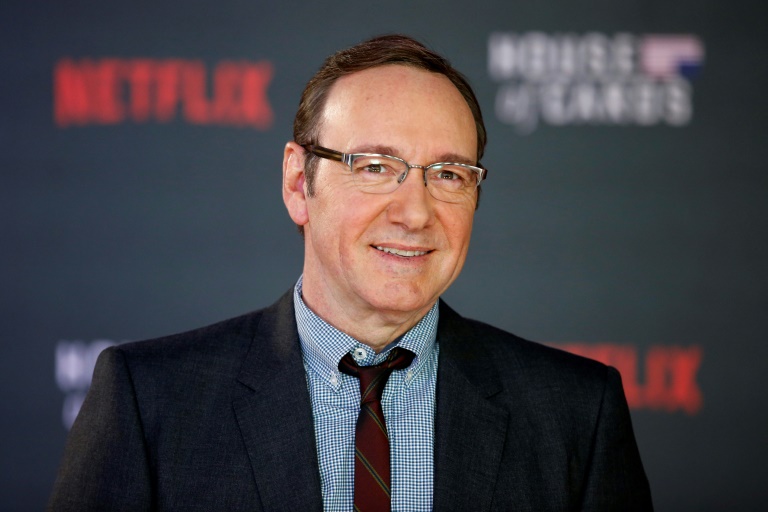
Kevin Spacey due in London court on Thursday: police

Hollywood actor Kevin Spacey has been formally charged with sexual assault and will appear before a court in London later this week, police said on Monday.

The Metropolitan Police said the 62-year-old actor would appear at Westminster Magistrates Court at 0900 GMT on Thursday to face four counts of sexual assault against three men.

Prosecutors announced last month that they had authorised charges against the two-time Oscar winner, who was artistic director of The Old Vic theatre in London between 2004 and 2015.

Spacey said in response he was “disappointed” with the decision, but promised to voluntarily appear in the UK to defend himself.

He said in a statement to the Good Morning America TV show that he was confident of proving his innocence.

Allegations against Spacey first emerged in the wake of the #MeToo movement that saw numerous claims of sexual assault and harassment in the movie industry.

That prompted an investigation by the Met and a review by The Old Vic of Spacey’s time in charge there.

Reporting restrictions are in place that prevent the media going into detail about the charges to avoid prejudicing a jury at any trial.

The Met has said that the first two charges of sexual assault date from March 2005 in London, and concern the same man, who is now in his 40s.

The third is alleged to have happened in London in August 2008 against a man who is now in his 30s. 

Spacey has also been charged “with causing a person to engage in penetrative sexual activity without consent” against the same man.

The fourth sexual assault charge is alleged to have occurred in Gloucestershire, western England, in April 2013 against a third man, who is now in his 30s.

None of the alleged victims can be identified under English law.

Major markets tumble on heightened recession fears

Global equities, oil prices and bitcoin plunged Monday on heightened recession fears triggered by runaway inflation.

The dollar, however, gained versus major rivals, benefiting from its status as a haven investment and expectations of aggressive interest-rate hiking from the Federal Reserve. 

Bond yields also rose, with 10-year US Treasuries above 3.3 percent and Italy’s 10-year debt breaking four percent for the first time in more than eight years.

The US currency struck a 24-year peak against the yen before retreating, while it broke above 78 Indian rupees for the first time. It jumped one percent versus the pound.

“The hangover from a higher-than-expected US inflation reading is continuing to cause scissoring pain throughout the markets, as it extinguishes the hope the US Federal Reserve might be able to take its foot off the pedal on interest rate rises,” noted AJ Bell investment director Russ Mould.

US and European stocks had already tumbled Friday following the inflation data, with Asia following suit Monday.

European stock markets extended pre-weekend losses with drops of over two percent, while London took a hit also from data showing the UK economy contracted in April for a second month in a row.

Wall Street also tumbled, with the blue-chip Dow down around 2.3 percent in late morning trading and the tech-heavy Nasdaq falling nearly four percent.

World oil prices, whose surge has contributed massively to soaring inflation, slid around 1.5 percent as the high cost of living increased recession expectations.

The possibility of more Covid restrictions in China’s biggest cities also weighed on crude futures as the country is a major oil consumer.

Fresh coronavirus outbreaks in Shanghai and Beijing have seen authorities reimpose containment measures.

“This has fed into a narrative that the global economy will slow even further at a time when prices are showing little sign of doing the same,” said market analyst Michael Hewson at CMC Markets UK.

– Bitcoin crash –

Bitcoin tumbled to an 18-month low of under $23,000 as investors shunned risky assets in the face of the vicious global markets selloff. 

The unit took a heavy knock also from news that cryptocurrency lending platform Celsius Network paused withdrawals, citing volatile conditions.

“It is not very surprising to see such a strong downturn as we have noticed an increased correlation over the last few years between traditional stocks, which have also tanked recently, and the cryptocurrency market,” noted XTB chief market analyst Walid Koudmani.

Patrick O’Hare, analyst at Briefing.com, said the carnage in the crypto market “is compounding worries about growth prospects due to the reduced wealth effect that also incorporates falling stock and bond prices.”

Investors were left surprised Friday when data showed US inflation jumped to 8.6 percent in May, the fastest pace in more than 40 years, as the Ukraine war further fuelled energy and food prices.

The reading has led to fervent speculation that the Fed will now be contemplating a single interest-rate lift of 75 basis points at its meeting this week.

With the central bank forced to be more aggressive, there is heightened concern that the US economy could be sent into recession next year.

“The market is now thinking much more about the Fed driving rates sharply higher to get on top of inflation and then having to cut back as growth drops,” said SPI Asset Management’s Stephen Innes.

– Key figures at around 1530 GMT –

New York – Dow: DOWN 2.3 percent at 30,663.44 points

EURO STOXX 50: DOWN 1.9 percent at 3,444.93

London – FTSE 100: DOWN 1.5 percent at 7,205.81 (close)

Frankfurt – DAX: DOWN 2.4 percent at 13,427.03 (close)

Paris – CAC 40: DOWN 2.7 percent at 6,022.32 (close)

Tokyo – Nikkei 225: DOWN 3.0 percent at 26,987.44 (close)

Hong Kong – Hang Seng Index: DOWN 3.4 percent at 21,067.58 (close)

Shanghai – Composite: DOWN 0.9 percent at 3,255.55 (close)

Dollar/yen: DOWN at 134.13 yen from 134.42 yen late Friday

Euro/dollar: DOWN at $1.0433 from $1.0526

Pound/dollar: DOWN at $1.2161 from $1.2309

Euro/pound: UP at 85.78 pence from 85.39 pence

Brent North Sea crude: DOWN 1.5 percent at $120.13 per barrel

West Texas Intermediate: DOWN 1.6 percent at $118.72 per barrel

burs-rl/pvh

Close Bitnami banner
Bitnami