US Business

US Capitol riot hearings to link Trump election plots to insurrection

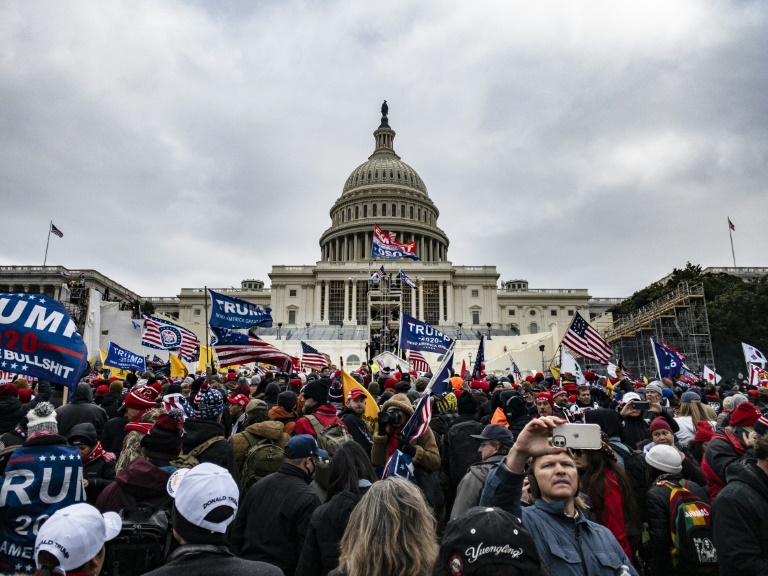
The year-long congressional panel probing the 2021 assault on the US Capitol begins outlining its findings Thursday, promising explosive new revelations that will tie the deadly violence to Donald Trump’s attempts to overturn his election defeat.

The first hearing — an evening primetime presentation — will serve as an “opening statement” on the January 6 insurrection, according to aides of the investigating House select committee, which began its work last July.

It will also aim to demonstrate that the violence was part of a broader conspiracy by Trump and his inner circle to illegitimately hold on to power, tearing up the Constitution and more than two centuries of peaceful transitions from one administration to the next.

“We will be revealing new details showing that the violence of January 6 was the result of a coordinated multi-step effort to overturn the results of the 2020 election and stop the transfer of power from Donald Trump to Joe Biden,” a select committee aide said.

“And indeed that former president Donald Trump was at the center of that effort.”

A slickly-produced 90-plus minutes of television — and five subsequent hearings over the coming weeks — will focus on Trump’s role in the multi-pronged effort to return him to the Oval Office as an unelected president by disenfranchising millions of voters. 

The case the committee plans to make is that Trump laid the groundwork for the insurrection through months of lies about fraud in an election described by his own administration as the most secure in history.

His White House is accused of involvement in several potentially illegal schemes to aid the effort, including a plot to seize voting machines and another to appoint fake “alternative electors” from swing states who would ignore the will of their voters and hand victory to Trump. 

– ‘Chilling’ conspiracy –

The select committee’s Republican vice-chairwoman Liz Cheney said on Sunday that the assault on the Capitol was part of a “chilling” conspiracy.

“It is extremely broad. It’s extremely well organized,” she told CBS.

The committee is planning to present live testimony Thursday from two people who interacted with members of the neofascist organization the Proud Boys on January 6 and in the days leading to the violence.

Cheney and chairman Bennie Thompson will make opening arguments before explaining how each of the six hearings, organized by theme, is expected to play out.

They will feature previously unseen video clips of the violence itself and excerpts from a trove of 1,000 interviews, including a “meaningful portion” of discussions with Trump’s senior White House and campaign officials — as well as members of his family.

Trump’s daughter Ivanka and her husband Jared Kushner, as well as the former president’s eldest son Don Jr., have all cooperated voluntarily with the committee.

British documentary filmmaker Nick Quested will testify Thursday about his experience shadowing members of the Proud Boys in the days leading up to January 6 and his interactions with them on the day itself.

The Emmy Award-winning director’s evidence is seen as crucial, said a committee aide, because he was on the scene during the first moments of violence against the Capitol Police and “all the chaos that ensued.”

– ‘Ongoing threats’ –

Capitol Police Officer Caroline Edwards, who was present at the breach of the first barricade, will describe sustaining head injuries in clashes with the far-right group, which saw its leader and four lieutenants charged on Monday with seditious conspiracy.

The hearings will differ from Trump’s two impeachments, however, in that he will not be represented in the room as he is not on trial — except perhaps in the court of public opinion.

Nevertheless, a number of his most loyal counter-punchers are expected to circle the wagons on Capitol Hill, questioning any damning testimony and challenging the validity of the investigation in TV appearances. 

“It is the most political and least legitimate committee in American history,” the leader of the House Republican minority, Kevin McCarthy, told reporters at the Capitol.

In fact, Congress has wide-ranging oversight powers, and a Trump-appointed federal judge last month emphatically rejected Republicans’ arguments that the committee is illegitimate, overtly partisan and has no real legislative or oversight purpose.

AFP asked Trump spokesman Taylor Budowich for details of the plan for Trump’s defense, but there was no response.

The committee has not confirmed its plans for after the initial slate of hearings, but at least one more presentation and a final report are expected in the fall.

The panel, which sees Trump as a potential threat to the next election, will make legislative recommendations to ensure there is no repeat of the events of January 6.

“The investigation has flagged ongoing threats to our democracy, and our job is to tell the story of what happened,” said an aide.

“And, frankly, to let others judge about continuing threats and what needs to be done.”
Stocks extend losses as ECB eyes multiple rate hikes

Global stocks moved deeper into the red on Thursday after the European Central Bank said it was planning a series of rate hikes from next month to rein in runaway inflation.

The ECB said after its policy meeting that it would raise interest rates for the first time in over a decade in July, bringing the curtain down on the era of cheap money in the single currency area.

While the announcement had been widely anticipated, stock prices in Frankfurt, London and Paris — which had been weaker all morning — closed in the red and yields on eurozone countries’ sovereign bonds moved higher.

On the other side of the Atlantic, Wall Street stocks also traded lower in midday trading. 

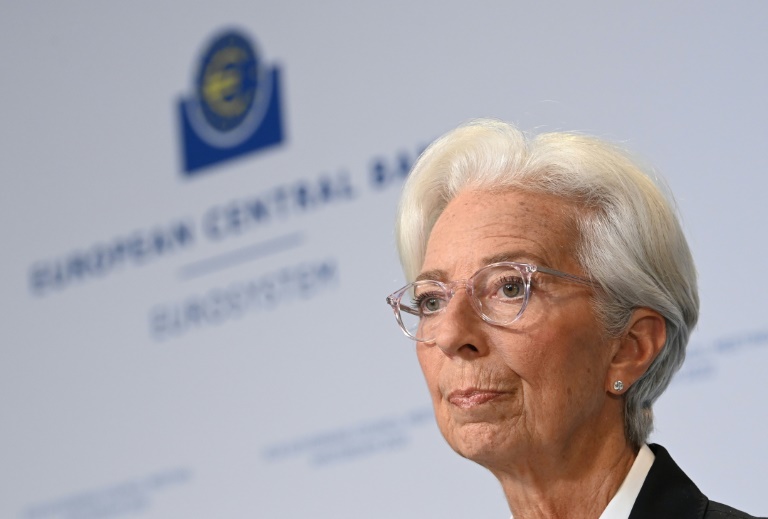
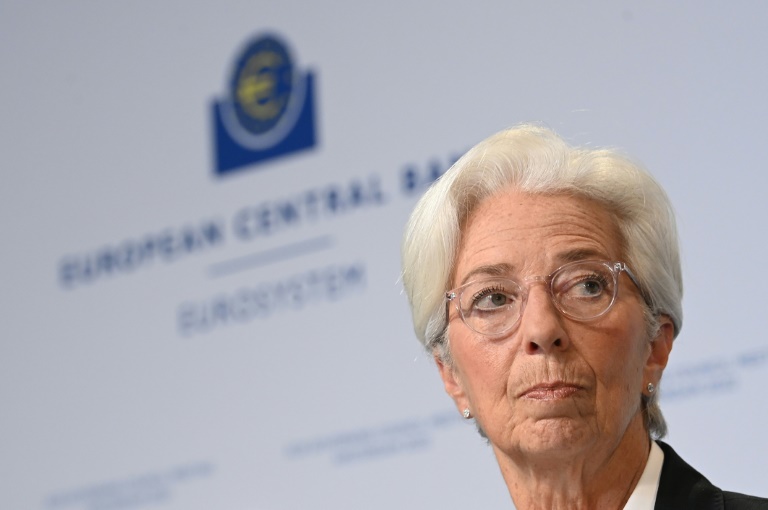
After refusing to act while other central banks around the world already started tightening monetary policy, ECB chief Christine Lagarde cautioned that the first quarter-point rate hike in July was not expected to have an immediate effect on inflation.

As a first step, the ECB said it would end its massive bond-buying stimulus as of July 1.

The central bank also sharply upgraded its inflation forecasts for this year and 2023 while lowering the economic growth outlook.

Craig Erlam, market analyst at online trading platform OANDA, said that while the ECB took a “hawkish shift”, it “doesn’t come out of today looking particularly good”.

“It’s sat by and watched all year while other central banks have conceded defeat and made this move assuming its situation would be different. The reality is it never was and now it’s left itself a lot to do,” he added.

In foreign exchange, the euro softened against the dollar and pound.

Inflation around the world has soared to the highest levels in decades, fuelled largely by rocketing oil and gas prices.

Energy demand has surged as economies emerge from pandemic lockdowns, while supplies have been disrupted by the invasion of Ukraine by major producer Russia.

Oil prices fell slightly on Thursday.

– ‘Gloomy summer’ –

Traders were also awaiting US inflation data due Friday.

Analysts expect the Federal Reserve to stick to its hawkish path and hike US interest rates by half a point for at least three more meetings this year as it tries to tame American consumer prices.

“Until we reach peak inflation, which will trigger a less hawkish Fed and lower recession odds, it could be a gloomy summer for global stock pickers,” forecast SPI Asset Management’s Stephen Innes. 

There was fresh uncertainty over the economic outlook in China as Covid fears linger over the world’s second-biggest economy.

While data showed China’s exports rebounded strongly in May, with factories restarting and supply chains untangling as Shanghai slowly emerged from a gruelling lockdown, the metropolis will Saturday shut a district of 2.7 million people for mass coronavirus testing.

– Key figures at around 1530 GMT –

London – FTSE 100: DOWN 1.5 percent at 7,476.21 points (close)

Frankfurt – DAX: DOWN 1.7 percent at 14,198.80 (close)

Paris – CAC 40: DOWN 1.4 percent at 6,358.46 (close)

EURO STOXX 50: DOWN 1.7 percent at 3,724.45

New York – Dow: DOWN 0.5 percent at 32,752.12

Tokyo – Nikkei 225: FLAT at 28,246.53 (close)

Hong Kong – Hang Seng Index: DOWN 0.7 percent at 21,869.05 (close)

Shanghai – Composite: DOWN 0.8 percent at 3,238.95 (close)

Brent North Sea crude: DOWN 0.2 percent at $123.39 per barrel

West Texas Intermediate: DOWN 0.3 percent at $121.69 per barrel

Dollar/yen: DOWN at 134.06 yen from 134.29 yen late Wednesday

Euro/dollar: DOWN at $1.0657 from $1.0720 

Pound/dollar: DOWN at $1.2522 from $1.2535

Euro/pound: DOWN at 85.10 pence from 85.54 pence

burs/imm/lth

Foreign fighters in Ukraine sentenced to death by pro-Russians

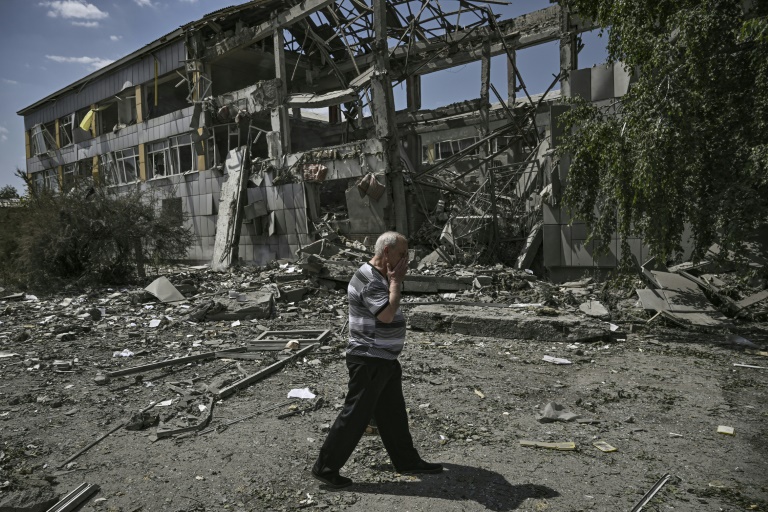
Pro-Russian rebels sentenced to death two British fighters and a Moroccan who were captured while fighting for Ukraine, as a Ukrainian governor called for western arms on Thursday to win the battle for a crucial eastern city.

The death sentences come as Moscow concentrates its firepower on the strategic industrial hub of Severodonetsk, where Ukrainian President Volodymyr Zelensky says the fierce fighting could determine the fate of the entire Donbas area.

Separatist authorities in the Donetsk region, which is part of the Donbas, ordered the death penalty for Aiden Aslin, Shaun Pinner and Saaudun Brahim after they were accused of acting as mercenaries for Kyiv, Russian media reported.

Britain said it was “deeply concerned” by the sentences.

“Under the Geneva Convention, prisoners of war are entitled to combatant immunity,” said a spokesman for Prime Minister Boris Johnson.

The two Britons surrendered in April in Mariupol, the southern port city that was captured by Russian troops after a weeks-long siege. They later appeared on Russian TV calling on Johnson to negotiate their release.

Brahim surrendered in March in the eastern town of Volnovakha.

During a trial that lasted three days, the men pleaded guilty to committing “actions aimed at seizing power and overthrowing the constitutional order of the Donetsk People’s Republic”, Russian news agency Interfax said.

– ‘Fate of Donbas’ –

Western countries have provided weapons and aid for Ukraine since the February 24 invasion, while a number of people from abroad have come to fight against Russian forces.

The fiercest fighting is now focused on Severodonetsk in the Lugansk region, where Ukrainian officials say their outgunned forces are still holding out amid street battles despite the city being mostly under Russian control. 

The regional governor of Lugansk — also part of the Donbas — said Western artillery would quickly help secure a Ukrainian victory for the bombarded city.

“As soon as we have long-range artillery to be able to conduct duels with Russian artillery, our special forces can clean up the city in two to three days,” governor Sergiy Gaiday said.

In his evening address to the Ukrainian people on Wednesday, Zelensky said the battle for the city was “probably one of the most difficult throughout this war.

“In many ways, the fate of our Donbas is being decided there.”

Up to 100 Ukrainian soldiers were being killed every day in frontline fighting and as many as 500 wounded, Defence Minister Oleksiy Reznikov said.

The city of Lysychansk, which is separated from Severodonetsk by a river, is still in Ukrainian hands but under fierce Russian bombardment.

– ‘Foreign mercenaries’ –

After being repelled from Kyiv following their February 24 invasion, Russian President Vladimir Putin’s troops have refocused their offensive on the Donbas. 

Pro-Russian separatists have held part of that region since 2014.

Moscow, which has repeatedly warned the West against getting involved in the conflict, said it had targeted a Ukrainian training centre for “foreign mercenaries” in the Zhytomyr region, west of Kyiv.

The Ukrainian presidency said four people were killed in a Russian air strike on Toshkivka, a village around 25 kilometres (14 miles) south of Severodonetsk.

Four more people were killed in fighting in Donetsk and shelling killed two in the north-eastern city of Kharkiv, it said. Another person was killed in the Mykolayiv region in the south. 

The war’s shockwaves are spreading around the world. At the United Nations, Secretary-General Antonio Guterres added his voice to increasingly dire warnings. 

“For people around the world, the war is threatening to unleash an unprecedented wave of hunger and destitution, leaving social and economic chaos in its wake,” he said.

Zelensky on Thursday called for Russia to be expelled from the UN’s Food and Agriculture Organization (FAO), blaming Moscow for “causing hunger” and spurring the global grain crisis by invading his country.

– ‘Nobody to help’ –

Ukraine’s Black Sea ports usually export millions of tonnes of grain each year but have been blocked since the invasion, while western sanctions on Russia have prevented Moscow selling much of its grain abroad, sending food prices soaring.

The FAO warned that poor countries will suffer the most from the crisis as they were “paying more but receiving less food.”

Russia and Turkey made little headway during talks on Wednesday in striking a deal to secure safe passage for grain exports stuck in Ukraine.

The situation on the ground is increasingly desperate. 

In Severodonetsk’s twin city Lysychansk, residents who had chosen to stay were facing fierce Russian bombardments. 

“Every day there are bombings and every day something burns. A house, a flat… There is nobody to help me,” 70-year-old Yuriy Krasnikov told AFP.

“I tried to go to the city authorities, but nobody’s there, everyone has run away.”

Separately, English football’s Premier League suspended its six-year deal with a Russian broadcaster following the Ukraine invasion.

burs-dk/jm

ECB gears up for 'series' of rate hikes to fight inflation

The European Central Bank on Thursday ended its bond-buying stimulus and unveiled plans for a series of interest rate hikes from July, the first in more than a decade, to combat soaring inflation.

The keenly-awaited announcements bring down the curtain on the ECB’s cheap money era, after policymakers faced growing pressure to catch up with other major central banks that have already moved to rein in prices.

ECB governors, exceptionally meeting in Amsterdam instead of Frankfurt, agreed as a first step to halt their multi-billion-euro bond-buying stimulus as of July 1.

The bank’s governing council then plans “to raise the key ECB interest rates by 25 basis points” at its next meeting on July 21, the ECB said in a statement.

It will raise rates again in September, with the size dependent on the economic outlook. 

ECB president Christine Lagarde, who said Thursday’s decisions were unanimous, said the bank was embarking on “a journey” that would include “a series of moves over the course of the next months”.

The last time the ECB hiked rates was in 2011.

Inflation in the 19-nation euro area rose to a record 8.1 percent in May, well above the ECB’s two-percent target.

The surge has largely been driven by Russia’s war against Ukraine, which has pushed up the cost of energy, food and raw materials around the globe.

The ECB on Thursday made “a correct move, but one that comes too late”, said Clemens Fuest, president of the Ifo think tank in Munich. “Price increases are spreading beyond energy and food to impact other areas.”

Several ECB governors had on Thursday argued for a 50 basis point hike in July already, a central banking source told AFP — a more aggressive move already undertaken by the US Federal Reserve.

– Wages rising –

In updated forecasts, the ECB said it expected eurozone consumer prices to soar to 6.8 percent in 2022, up from 5.1 percent previously.

Inflation is seen easing to 3.5 percent in 2023 before falling back to 2.1 percent in 2024.

The ECB also slashed its economic growth forecast for the 19-nation club to 2.8 percent in 2022 and 2.1 percent in 2023, from 3.7 and 2.8 percent previously.

The weaker outlook underscores the difficult task ahead for Lagarde in finding the right balance between raising borrowing costs enough to cool inflation, without jeopardising the eurozone’s already stuttering economy.

The war in Ukraine “is disrupting trade, is leading to shortages of materials, and is contributing to high energy and commodity prices,” the ECB said, while renewed coronavirus restrictions in China were worsening supply chain bottlenecks.

But the ECB still saw reason for optimism.

“Once current headwinds abate, economic activity is expected to pick up again,” it said.

“The conditions are in place for the economy to continue to grow on account of the ongoing reopening of the economy, a strong labour market, fiscal support and savings built up during the pandemic.”

Policymakers are, however, keeping a close eye on eurozone wages, Lagarde said, in a nod to fears of a “wage-price spiral” where higher prices push workers to demand salary increases, in turn pushing prices up further.

– ‘Lift off’ –

The July 1 end to the ECB’s bond-buying scheme will draw a line under the last in a series of debt-purchasing measures worth a total of around five trillion euros ($5.4 trillion) since 2014.

Scrapping the scheme paves the way for what Lagarde has called a “lift off” in rates.

The ECB has three key rates: a main refinancing operations rate that currently stands at zero, a marginal lending facility at 0.25 percent and a bank deposit rate of minus 0.5 percent — meaning lenders pay to park their excess cash at the ECB. 

The roadmap laid out by Lagarde sees the central bank exiting eight years of negative rates by the end of September.

The former French finance minister kept the door open to a September hike higher than 25 basis points.

Quizzed on how the bank would respond if borrowing costs started to diverge across the eurozone, Lagarde said the ECB “will not tolerate fragmentation”.

She declined to spell out what action the bank might take, saying only that “we know how to deploy new instruments if and when necessary”.

The spread between Italian and benchmark German 10-year bonds is currently at its widest since the early stages of the pandemic.

The US Capitol riot public hearings: six questions

The investigation into last year’s assault on the US Capitol by a mob of Donald Trump’s supporters is entering a public phase, with two weeks of blockbuster televised hearings slated to start Thursday.

The seven Democrats and two Republicans who make up the House of Representatives committee probing the insurrection will set out exactly what happened on January 6, 2021 and who they believe aided the ringleaders.

A final hearing in September is expected to reveal the committee’s finished report, outlining its findings and recommendations to prevent such attacks in the future.

Republicans including House Minority Leader Kevin McCarthy say the committee is partisan and “not conducting a legitimate investigation” — an argument that has been rejected by a Trump-appointed federal judge.

– What has the committee been doing? –

The panel has issued around 100 subpoenas and has conducted around 1,000 interviews, with star witnesses including two of Trump’s children — Ivanka and Don Jr. — as well as his son-in-law and senior advisor Jared Kushner.

Investigators have collected more than 100,000 documents, including emails, texts and official White House photographs allowing the committee to dig into the goings-on in and around the Oval Office.

– What have we learned? –

Revelations around who knew what and when have largely dripped out via court filings in civil cases involving potential committee witnesses and separate criminal cases against the insurrectionists.

Among the most explosive was a trove of text messages between Trump’s chief of staff Mark Meadows and lawmakers, media allies and the Trump family urging the then-president to call on his supporters to end the riot. 

Other texts among more than 2,000 handed over by Meadows show Ginni Thomas, the wife of US Supreme Court Justice Clarence Thomas, agitating for the election results to be overturned.

– What will the hearings reveal? –

The committee will seek to distill a sprawling, multi-faceted year-long probe into a compelling narrative that will “paint a picture as clear as possible as to what occurred,” chairman Bennie Thompson told reporters.

Investigators hope to set out through public testimony the role the Trump White House played in the campaign to overturn his 2020 election defeat by Democrat Joe Biden.

Those efforts allegedly include an illegal scheme to send fake “electors” — the people appointed to vote for president in the state-by-state “Electoral College” — to Congress.

They also take in an authoritarian plan to seize voting machines and the alleged plot to delay the certification of Biden’s win through the violence at the Capitol.

Investigators want to get to the bottom of a 187-minute delay before law enforcement was beefed up to protect the Capitol and learn why there is a gap of almost eight hours in White House logs of Trump calls as the violence played out.

– Will anyone face charges? –

A federal judge ruled in March that Trump more likely than not committed a crime in the run-up to January 6, 2021.

While the Justice Department is prosecuting more than 800 suspects for alleged lawbreaking at the Capitol, the committee itself has no powers to issue indictments.

The panel is expected to turn over evidence to federal prosecutors but has not announced whether it will recommend charges, a largely symbolic gesture.

– How will the hearings work? –

The committee will hold prime-time hearings at 8:00 pm (0000 GMT) on June 9 and 23, bookending 10:00 am hearings on June 13, 15, 16 and 21. 

Testimony is expected to be accompanied by visual illustrations such as text messages, photographs and videos.

Thursday’s hearing is set to feature testimony from US Capitol Police officer Caroline Edwards, the first to be injured by rioters, and filmmaker Nick Quested, who recorded the first moments of violence.

J. Michael Luttig, a former federal judge who advised Trump’s vice president Mike Pence, is expected to testify.

Other witnesses could include Marc Short, a chief of staff to Pence, Justice Department official Richard Donoghue and Jeffrey Rosen, Trump’s last attorney general.

All four were party to much of the relevant discussion between Trump’s election defeat and the insurrection two months later, investigators say.

– Will they change any minds? –

Supporters see the committee’s work as vital in ensuring one of the darkest episodes in the history of US democracy is never repeated.

Yet Democrats worry the hearings could be seen as another “partisan” attack on Trump, imperiling bipartisan efforts at reform and obscuring the broader story of a slow-moving coup attempt aided by a violent insurrection.

“The top issues for most US voters have nothing to do with the January 6 insurrection, unfortunately,” Democratic analyst Mike Hernandez told AFP as his party faces tricky midterm elections later this year. 

“Inflation, gas prices, school shootings, school safety and reproductive rights are all issues that more Americans care about.”

US ready to deliver millions of Covid vaccines to youngest children

The White House on Thursday said it had an operational plan to deliver 10 million doses of Covid vaccine for the nation’s youngest children by June 20, pending clearance by regulators.

The Food and Drug Administration will convene a panel of experts on June 15 to weigh recommending the Pfizer vaccine for children aged six months through four years given in three doses, and Moderna’s vaccine for those aged six months through five years given in two shots.

Both appear safe and effective, according to results announced by the companies, though the FDA’s independent analysis of the data should be posted in a few days’ time.

Children under five are the only age group not yet eligible for immunization against Covid in most countries, a source of concern for many parents. FDA authorization is widely considered the global gold standard.

Severe disease from Covid is very rare among under-fives but can occur, with 482 US deaths in this age group since the start of the pandemic, or about 0.1 percent of all deaths, according to official data.

Children can also contract a rare post-viral condition called multisystem inflammatory syndrome in children (MIS-C), which has affected some 8,525 US children and killed 69. 

Like adults, some children who get Covid may go on to develop long Covid, with new, ongoing or returning symptoms, including brain fog and fatigue.

Stocks extend losses as ECB eyes multiple rate hikes

Stock markets moved deeper into the red on Thursday after the European Central Bank said it was planning a series of rate hikes from next month to tame runaway inflation in the single currency area.

The ECB said after its policy meeting that it would raise interest rates for the first time in over a decade in July, bringing the curtain down on the eurozone’s era of cheap money.

While the announcement had been widely anticipated, stock prices in Frankfurt, London and Paris — which had been weaker all morning — extended their losses and yields on eurozone countries’ sovereign bonds moved higher.

“Inflation expectations are higher than anticipated, which is worrying the markets and explains the rise in long-term rates,” said Guillaume Truttmann, bond trader at Meeschaert Amilton.

Over on the other side of the Atlantic, Wall Street also opened lower. 

After refusing to act while other central banks around the world already started tightening monetary policy, ECB chief Christine Lagarde cautioned that the first quarter-point rate hike in July was not expected to have an immediate effect on inflation.

As a first step, the ECB said it would end its massive bond-buying stimulus as of July 1.

The central bank also sharply upgraded its inflation forecasts for this year and next year while lowering the economic growth outlook.

But for Clemens Fuest, head of the Ifo economic think tank in Munich, the move comes too late. 

“It is the right step, but it comes too late,” he said. “It was not acceptable that, with an inflation rate of eight percent, the ECB stuck to negative interest rates and asset purchases.” 

In foreign exchange, the euro softened against the dollar and pound.

Inflation around the world has reached the highest levels in decades, fuelled largely by soaring oil and gas prices.

Energy demand has surged as economies emerge from pandemic lockdowns, while supplies have been hit by the invasion of Ukraine by major producer Russia.

Oil prices fell slightly on Thursday.

– ‘Gloomy summer’ –

Traders were also awaiting US inflation data due Friday.

Analysts expect the Federal Reserve to stick to its hawkish path and hike US interest rates by half a point for at least three more meetings this year as it tries to bring down American consumer prices.

“Until we reach peak inflation, which will trigger a less hawkish Fed and lower recession odds, it could be a gloomy summer for global stock pickers,” forecast SPI Asset Management’s Stephen Innes. 

There was fresh uncertainty over the economic outlook in China as Covid fears linger over the world’s second-biggest economy.

While data showed China’s exports rebounded strongly in May, with factories restarting and supply chains untangling as Shanghai slowly emerged from a gruelling lockdown, the metropolis will Saturday shut a district of 2.7 million people for mass coronavirus testing.

“There are lingering concerns that China’s brisk recovery could be a false dawn given that the zero-Covid strategy is staying firmly in place and that could mean rolling lockdowns will continue,” noted Hargreaves Lansdown analyst Susannah Streeter.

– Key figures at around 1340 GMT –

London – FTSE 100: DOWN 1.1 percent at 7,506.85 points

Frankfurt – DAX: DOWN 1.6 percent at 14,210.49

Paris – CAC 40: DOWN 1.5 percent at 6,351.45

EURO STOXX 50: DOWN 1.7 percent at 3,724.65

New York – Dow: DOWN 0.3 percent at 32,806.43

Tokyo – Nikkei 225: FLAT at 28,246.53 (close)

Hong Kong – Hang Seng Index: DOWN 0.7 percent at 21,869.05 (close)

Shanghai – Composite: DOWN 0.8 percent at 3,238.95 (close)

Brent North Sea crude: DOWN 0.5 percent at $122.94 per barrel

West Texas Intermediate: DOWN 0.8 percent at $121.11 per barrel

Dollar/yen: DOWN at 133.70 yen from 134.29 yen late Wednesday

Euro/dollar: DONW at $1.0698 from $1.0720 

Pound/dollar: UP at $1.2548 from $1.2535

Euro/pound: DOWN at 85.24 pence from 85.54 pence

burs/spm/lth

Rocketing petrol prices fuel British PM's woes

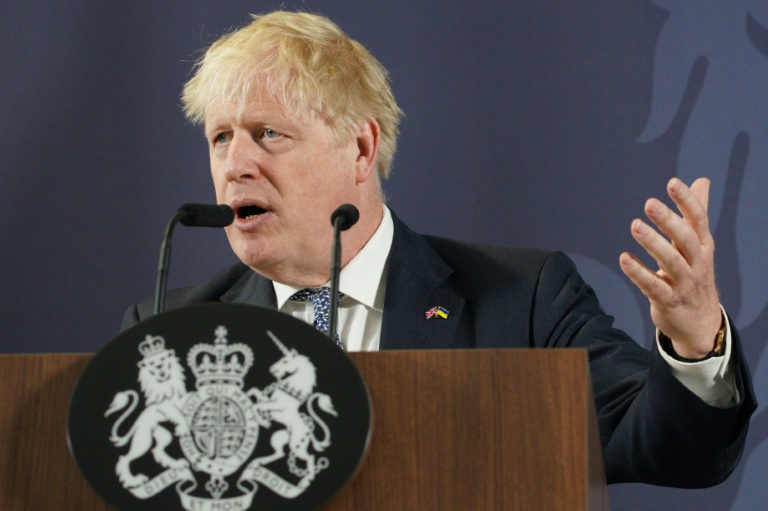
Prime Minister Boris Johnson on Thursday sought to reset his embattled leadership with vows to tackle Britain’s cost-of-living crisis, including contentious new measures to boost home ownership.

After narrowly surviving a no-confidence vote among his own Conservative MPs on Monday, Johnson is under pressure to turn the page on a series of scandals including lockdown-breaching parties in Downing Street.

In a speech in Blackpool, northwest England, he promised new reforms “to help people cut costs in every area of household expenditure — from food to energy to childcare to transport and housing”. 

“This government is on the side of the British public in coping with those pressures,” Johnson insisted.  

The scale of the inflationary crisis hitting millions of Britons was underlined as the price of filling up the average family car topped £100 ($125) for the first time, according to the RAC motoring group.

RAC spokesman Simon Williams called it “a truly dark day” for hard-pressed drivers, and urged the government to slash sales tax on petrol and diesel.

Johnson said much of the crisis was caused by factors beyond the government’s control, such as the impact of the Covid pandemic and the war in Ukraine.

But with two difficult by-elections coming up this month, unhappy Tory MPs want bolder measures including tax cuts after 40 percent of them voted against Johnson on Monday.

The Organisation for Economic Co-operation and Development (OECD) has warned that Britain must cut taxes or raise spending, forecasting it will suffer the developed world’s weakest economic growth next year.

Johnson did not promise any such cuts in Blackpool, although he and his finance minister Rishi Sunak are working on another tax-focussed speech for the coming days. 

Johnson did warn against a “wage-price spiral” by workers, and signalled no compromise with Britain’s biggest rail union, which is planning to shut down the train network this month to press wage demands.

– Back to the 80s –

Updating a signature policy of 1980s predecessor Margaret Thatcher, Johnson’s speech detailed a plan to enable more low-income renters to buy their own social housing in England.

Senior minister Michael Gove told Sky News that “home ownership is not just good for individuals, it’s good for society overall”.

He vowed the measures would help redress a crippling shortage in housing stock that has seen both purchase and rental prices rocket well out of reach of many Britons, especially younger adults.

But the opposition Labour party noted that the plan would need billions in extra money, which Gove admitted was not on offer, relying instead on existing funding at a time when the Treasury is already trying to rein in government spending.

“By their own reckoning, this will help a few thousand families a year,” senior Labour MP Lisa Nandy told BBC radio.

“For those families that will be very welcome,” she said, while warning it could make “the housing crisis worse for everybody else”.

The government plan focusses on making it easier for benefit claimants to save towards a mortgage deposit. 

But it said little about building new homes in England, which is often hampered by local planning objections.

Housing policy expert Toby Lloyd doubted the plan would have much effect.

“I’d be very surprised if it happens in anything like the scale they expect, and if it does I don’t expect it to have that much impact,” he told BBC radio.

– Fight with EU –

Under current Conservative party rules, Johnson cannot be challenged again for a year, which leaves little time for any new leader to emerge before the next general election due by 2024.

But Johnson’s Tory enemies still appear to be manoeuvring, with reports that he faces “vote strikes” to paralyse the government’s legislative agenda. 

Such tactics hurt Theresa May’s three-year stint in Downing Street, before she was brought down in 2019 by Johnson and his allies over how to execute Britain’s exit from the European Union.

Johnson is set to launch another counter-offensive on the Brexit front, by introducing legislation next week to rewrite a pact with the EU governing trade with Northern Ireland, unless Brussels agrees to changes.

Gove denied the prime minister was seeking to appease Brexit hardliners on the Tory backbenches after this week’s vote.

ECB begins inflation fightback with July rate hike

The European Central Bank on Thursday said it would raise interest rates for the first time in over a decade next month to combat runaway inflation, bringing the curtain down on the eurozone’s era of cheap money.

ECB governors, exceptionally meeting in Amsterdam instead of Frankfurt, provided markets with an unexpectedly precise statement setting out their path to monetary policy normalisation after years of ultra-low rates and easy credit.

As a first step, the ECB said it would end its massive bond-buying stimulus as of July 1.

The bank’s governing council then plans “to raise the key ECB interest rates by 25 basis points” at its next meeting on July 21, the ECB said in a statement.

It will raise rates again in September, with the size dependent on the economic outlook.

The last time the ECB hiked rates was in 2011.

“The ECB officially ends its long era of unconventional monetary policy,” said ING bank economist Carsten Brzeski.

Pressure had been growing on the ECB to take tough action after other major central banks like the US Federal Reserve and the Bank of England already moved to rein in prices with aggressive rate hikes. 

Inflation in the 19-nation euro area rose to a record 8.1 percent in May, well above the ECB’s two-percent target.

The surge has largely been driven by the war in Ukraine, which has pushed up the cost of energy, food and raw materials around the globe.

The ECB lowered its eurozone economic growth forecast while raising its projections for inflation.

“High inflation is a major challenge for all of us,” the ECB said in a statement.

Attention now shifts to ECB chief Christine Lagarde’s afternoon press conference, where she will be grilled about the ECB’s next moves.

– ‘Dampened growth’ –

The biggest challenge facing Lagarde right now is finding the right balance between raising borrowing costs to cool inflation, without jeopardising the eurozone’s already stuttering economy.

Underscoring those worries, the ECB slashed its growth outlook for the 19-nation club to 2.8 percent in 2022 and 2.1 percent in 2023, from 3.7 and 2.8 percent previously.

The war in Ukraine “is disrupting trade, is leading to shortages of materials, and is contributing to high energy and commodity prices,” it said, adding that “these factors will continue to weigh on confidence and dampen growth, especially in the near term.”

The July 1 end of its bond-buying scheme will draw a line under the last in a series of debt-purchasing measures worth a total of around five trillion euros ($5.4 trillion) since 2014.

Scrapping the scheme paves the way for what Lagarde has called a “lift off” in rates.

Of the ECB’s three main rates, the so-called deposit rate currently stands at minus 0.5 percent — meaning lenders pay to park excess cash at the bank.

Lagarde has said the ECB aims to exit eight years of negative rates by the end of September.

“Today’s decision shows it’s managed to find a compromise between the doves and the hawks,” Brzeski said. 

“A 50 basis point rate hike in July seemed to be fended off by opening the door for 50 basis points in September.”

– Strong labour market –

The size of September’s hike will depend to a large extent on how the outlook for the economy changes.

Despite unveiling a downgraded forecast for economic growth on Thursday, the ECB expressed optimism over the longer term outlook.

“Once current headwinds abate, economic activity is expected to pick up again,” it said.

“The conditions are in place for the economy to continue to grow on account of the ongoing reopening of the economy, a strong labour market, fiscal support and savings built up during the pandemic.”

On inflation, the ECB said it expected consumer prices to soar to 6.8 percent in 2022, up from 5.1 percent in its previous forecast.

Inflation is seen easing to 3.5 percent in 2023 and 2.1 percent in 2024 — both also higher than earlier estimates.

“These projections indicate that inflation will remain undesirably elevated for some time,” it said.

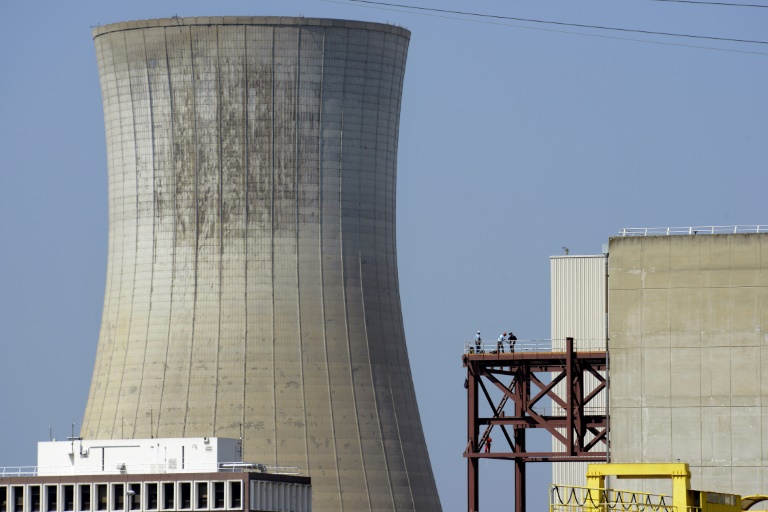
France probes alleged nuclear power cover-up: source

French prosecutors are investigating claims that officials at a nuclear power station covered up incidents of malfunction at an ageing plant, a source close to the probe told AFP on Thursday.

The move follows a legal complaint filed by a whistleblower, a former engineer at the Tricastin power station in the southeast of the country.

In his complaint to police in October 2021 targeting nuclear plant operator EDF, the engineer, whose identity was not given, said he had repeatedly alerted the company to the incidents and also written to the environment minister.

Events that the nuclear operator failed to declare to the national safety agency ASN, or played down, include an unexplained power surge at one of the reactors in 2017 and flooding inside the station the following year, according to the engineer.

An investigating magistrate in the southern port city of Marseille is now probing the power station for fraud and “endangering the lives of others”, the legal source said.

Other suspected violations include damage to the environment by leakage of toxic substances, obstructing checks by nuclear inspectors and workplace harassment of the engineer, who says he was sidelined after sounding the alarm.

France, which derives around 70 percent of its electricity from nuclear power, has been exploring a possible extension of the lifetime of its ageing stations, several of which have come up against their 40-year limit.

That includes Tricastin, built in 1980-81 — making it one of France’s oldest nuclear stations.

It is on a list of installations that the ASN agency said last year could be renovated to extend their lifespan.

Currently operations at 12 of France’s 56 nuclear reactors are shut down because of corrosion issues, EDF said last month.

In February, President Emmanuel Macron called for a “rebirth” of France’s nuclear industry, with 14 new plants, as part of efforts to move away from fossil fuels.

The launch of the Tricastin probe was evidence of the accusations’ “extreme gravity”, the whistleblower’s high-profile lawyers Vincent Brengarth and William Bourdon said in a statement to AFP.

Contacted by AFP, both EDF and ASN declined to comment.

Last November, however, ASN chief inspector Christophe Quintin told AFP that routine checks at Tricastin had not revealed any incidents that might have gone unreported.

Independent radioactivity research association CRIIRAD welcomed the investigation, saying it raised important issues such as nuclear safety and transparency on nuclear issues.

“The judiciary is sending a strong signal, but will it be able to get to the bottom of this?” asked the association’s spokesman, Roland Desbordes.

cal-jpa-ol-gd/jh/sjw/ach 

Close Bitnami banner
Bitnami