US Business

OECD sees lower world growth due to Ukraine war's 'hefty price'

The OECD warned Wednesday that the world economy will pay a “hefty price” for Russia’s invasion of Ukraine as it slashed its 2022 growth forecast and projected higher inflation.

The Paris-based organisation, which represents 38 mostly developed countries, is the latest institution to predict lower GDP growth due to the conflict, which has sent food and energy prices soaring.

In its latest economic outlook, the Organisation for Economic Co-operation and Development said global gross domestic product would grow by three percent in 2022 — down sharply from the 4.5 percent estimated in December.

The OECD also doubled its forecast for inflation among its members — which range from the United States to Australia, Japan, and Latin American and European nations — to 8.5 percent, its highest level since 1988. 

“The world is set to pay a hefty price for Russia’s war against Ukraine,” wrote the OECD’s chief economist and deputy secretary-general, Laurence Boone, adding that a “humanitarian crisis is unfolding before our eyes”.

“The extent to which growth will be lower and inflation higher will depend on how the war evolves, but it is clear the poorest will be hit hardest,” Boone said.

“The price of this war is high and will need to be shared.”

Before the war broke out, the outlook had appeared “broadly favourable” for 2022-23, with growth and inflation expected to return to normal after the devastating Covid-19 pandemic, said the OECD.

However, “the invasion of Ukraine, along with shutdowns in major cities and ports in China due to the zero-Covid policy, has generated a new set of adverse shocks,” it said.

– Food shortage risk –

The OECD was supposed to publish its outlook in March, but it delayed its detailed assessment until now due to uncertainty over the war. At the time, it said the conflict could cut global GDP growth by “over one percentage point”.

The World Bank revised its own figures on Tuesday, lowering its global growth forecast from 4.1 percent to 2.9 percent. The IMF cut its forecast by nearly one point to 3.6 percent in April.

The OECD cut its growth forecast for the United States from 3.7 percent to 2.5 percent and that of China, the world’s second biggest economy, from 5.1 percent to 4.4 percent. The eurozone’s GPD is now seen growing by 2.6 percent instead of 4.3 percent while Britain’s outlook was lowered to 3.6 percent from 4.7 percent.

The OECD noted that commodity prices had risen, hitting real income and spending, “particularly for the most vulnerable households”.

“In many emerging-market economies the risks of food shortages are high given the reliance on agricultural exports from Russia and Ukraine,” it said.

The report warned that the “effects of the war in Ukraine may be even greater than assumed”, raising as an example a scenario of Russia cutting gas supplies to Europe.

As central banks tighten their monetary policies to counter inflation, the report said sharp increases of interest rates could also hit growth more than anticipated.

– Covid risk –

The Covid pandemic, meanwhile, could take another turn for the worse.

“New more aggressive or contagious variants may emerge, while the application of zero-Covid policies in large economies like China has the potential to sap global demand and disrupt supply for some time to come,” the OECD said.

Faced with these challenges, governments needed to protect the most vulnerable from the economic shockwaves, it added.

In the short term, “temporary, timely and well-targeted” fiscal measures would help the poorest households, the OECD said.

Over the medium- and long-term, governments would have to invest more in clean energy and defence spending.

“The world is already paying the price for Russia’s aggression,” wrote Boone.

“The choices made by policymakers and citizens will be crucial to determining how that price will be distributed across people and countries.”

Stocks lower as investors weigh recession risk

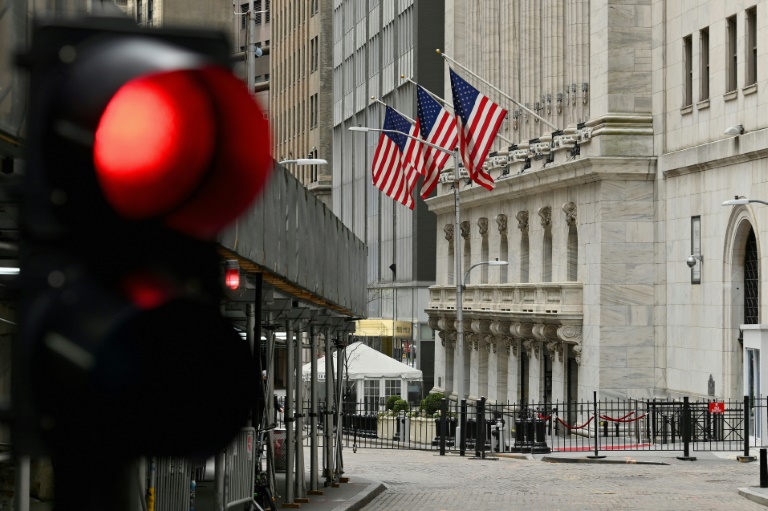
Stock markets were lower on Wednesday as investors weighed the prospect of recession with inflation soaring around the world. 

The yen fell to new lows against both the dollar and euro after the Bank of Japan — in contrast with other central banks — decided not to raise interest rates to rein in combat runaway consumer prices.

Just a day after the World Bank slashed its forecasts for global growth, the OECD warned that the world economy would pay a “hefty price” for Russia’s invasion of Ukraine and inflation would keep rising.

The Paris-based Organisation for Economic Co-operation and Development predicted that the world economy would grow by three percent this year — much slower than its previous estimate of 4.5 percent in December.

Market sentiment “continues to remain extremely fickle, prone to the ebb and flow of inflation expectations, followed by fears that central banks will overreact in combatting inflation (and) concern about what that might do to global growth,” said CMC Markets analyst Michael Hewson. 

“This argument over whether we see a recession… is likely to become a lot clearer over the next week or so,” he said, pointing in particular to the release of US inflation data on Friday. 

European stock markets were in the red in mid-afternoon trading and Wall Street also opened lower following two days of gains. 

Earlier in Asia, stock prices had rallied as China eases Covid lockdown restrictions and is forecast to lift its crackdown on the tech sector.

China’s approval of dozens of new video game releases sent shares of some of its biggest tech firms soaring Wednesday.

Global equities have enjoyed some respite in recent weeks from a painful sell-off caused by central bank monetary tightening, in particular by the US Federal Reserve.

The new inflation data on Friday will provide a clearer idea about the pace of future Fed rate hikes.

In Europe, the European Central Bank is on Thursday expected to signal an end to its bond-buying, paving the way for an interest rate increase further down the line. 

“The reality for the economy and probably the stock markets is that aggressive central bank rate hikes are likely to take a sharp bite out of household consumption,” said SPI Asset Management’s Stephen Innes.

Hungarian inflation has reached double figures for the first time in 20 years, official data showed Wednesday.

High oil prices, a major factor behind the surge in inflation, were up again on Wednesday. 

– Key figures at around 1340 GMT –

New York – Dow: DOWN 0.7 percent to 332,958.91 points

London – FTSE 100: DOWN 0.4 percent at 7,568.47

Frankfurt – DAX: DOWN 0.9 percent at 14,423.15

Paris – CAC 40: DOWN 1.1 percent at 6,431.22

EURO STOXX 50: DOWN 0.7 percent at 3,781.13

Tokyo – Nikkei 225: UP 1.0 percent at 28,234.29 (close)

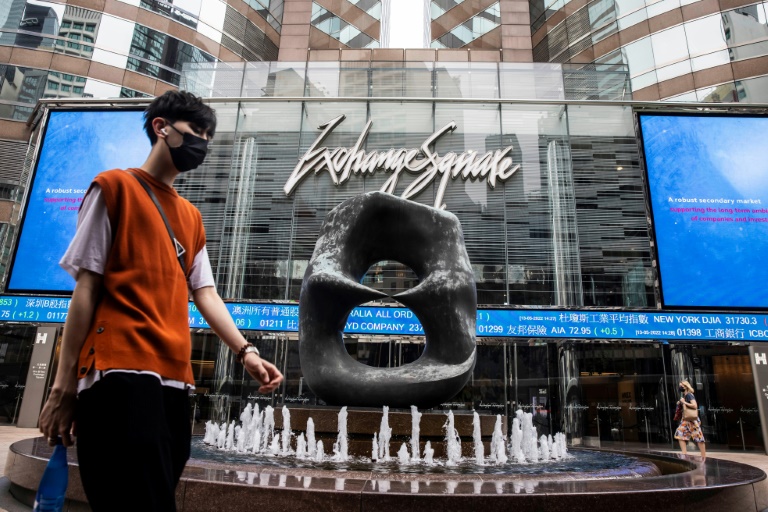
Hong Kong – Hang Seng Index: UP 2.2 percent at 22,014.59 (close)

Shanghai – Composite: UP 0.7 percent at 3,263.79 (close)

Dollar/yen: UP at 134.05 yen from 132.62 yen late Tuesday

Euro/dollar: UP at $1.0747 from $1.0715 

Pound/dollar: DOWN at $1.2558 from $1.2592

Euro/pound: UP at 85.59 pence from 85.02 pence

Brent North Sea crude: UP 0.8 percent at $121.58 per barrel

West Texas Intermediate: UP 0.6 percent at $120.10 per barrel

burs/spm/jj

11-year-old US school massacre survivor to testify in Congress

An 11-year-old who smeared herself with her murdered friend’s blood to play dead during last month’s school shooting in the US state of Texas was set to relive her trauma before a panel of lawmakers on Wednesday.

Miah Cerrillo, a fourth grader at Robb Elementary School in Uvalde, Texas, will recount the terrifying ordeal when 19 of her classmates and two teachers were killed by an 18-year-old gunman.

She is experiencing nightmares and is still healing from bullet fragments in her back and wrestling with trauma, her father, Miguel Cerrillo, told USA Today.

Her testimony comes with Congress facing mounting pressure to respond to spiraling gun violence — and particularly mass shootings — across the country.

Massacres at Miah’s school and days earlier at a supermarket in Buffalo, in upstate New York, have convulsed the nation, reigniting urgent calls for gun safety reforms.

Miah will speak before the House Oversight and Reform Committee, which is holding what is expected to be a harrowing hearing on gun violence. 

The panel will hear from survivors and family of victims in recent mass shootings, including Felix and Kimberly Rubio, the parents of Lexi Rubio, one of Miah’s murdered schoolmates.

Roy Guerrero, a pediatrician who attended to several victims in Uvalde, and Zeneta Everhart, the mother of a survivor of the racist killing spree that left 10 Black people dead in Buffalo, are also due to speak out.

“It is my hope that all my colleagues will listen with an open heart as gun violence survivors and loved ones recount one of the darkest days of their lives,” Oversight chairwoman Carolyn Maloney said.

“This hearing is ultimately about saving lives, and I hope it will galvanize my colleagues on both sides of the aisle to pass legislation to do just that.”

A cross-party group of senators is working on a narrow collection of controls that could develop into their first serious attempt at gun regulation reform in decades.

– ‘Elected to protect us’ –

The package would boost funding for mental health services and school security, narrowly expand background checks, and incentivize states to institute so-called “red flag laws” enabling authorities to confiscate weapons from individuals considered a threat. 

Crucially, the package does not include an assault weapons ban or universal background checks, meaning it will fall short of the expectations of President Joe Biden, progressive Democrats, and anti-gun violence activists.

But even this compromise deal has to run the gauntlet of an evenly divided Senate and earn the votes of at least 10 Republicans, although most are against significant regulatory reform.

“We know that we’re not going to get everything we want, we know that the push for even more meaningful gun safety will continue after this debate, but making real progress is very important,” Democratic Senate Majority Leader Chuck Schumer said on Tuesday.

On the other side of the Capitol, House Democrats are set to pass the much broader package of proposals later Wednesday that includes raising the purchasing age for semi-automatic rifles from 18 to 21.

The proposals are going nowhere — they do not have the 60 votes they would need to advance in the Senate — but Democratic leadership has been keen to act after the spate of recent mass shootings.

Garnell Whitfield Jr, the son of Buffalo massacre victim Ruth Whitfield, who was 86, testified Tuesday before the Senate Judiciary Committee on white supremacist violence.

“We are people of decency. We are taught to love even our enemies, but our enemies don’t love us. So what are we supposed to do with all of our anger and pain?” the retired fire commissioner said in an emotional appeal to senators. 

“You expect us to continue to forgive and forget over and over again? And what are you doing? You were elected to protect us and protect our way of life.”

No progress at Russia-Turkey talks on Ukraine grain exports

Russia and Turkey made little headway on Wednesday in talks aimed at securing safe passage for Ukrainian grain exports, as a Russian sea blockade triggered new warnings of deadly famine.

Prior to the war, Ukraine was a major exporter of wheat, corn and sunflower oil, but shipments have been blocked since Russia invaded its neighbour in late February, causing food prices to soar worldwide.

Countries in the Middle East and Africa depend on Ukraine’s exports, raising fears of hunger in those countries.

At the request of the United Nations, Turkey has offered its services to escort maritime convoys from Ukrainian ports, despite the presence of mines — some of which have been detected near the Turkish coast.

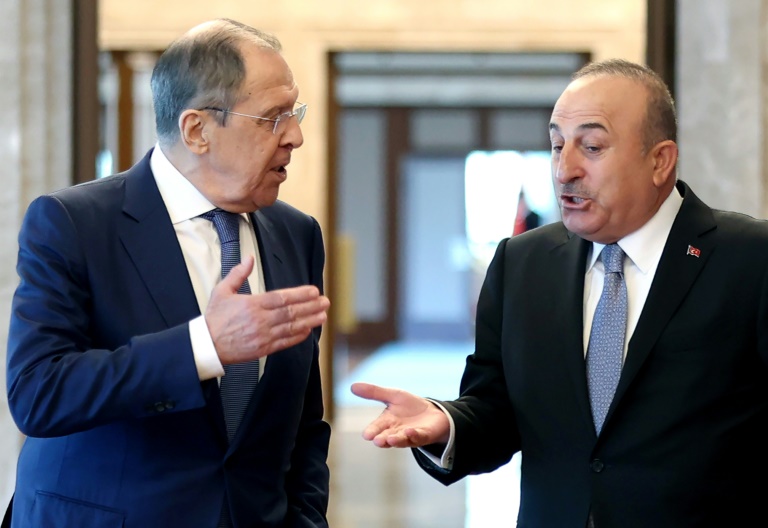
“We are ready to ensure the safety of ships that leave Ukrainian ports,” Russian Foreign Minister Sergei Lavrov said at a news conference with Turkish counterpart Mevlut Cavusoglu after talks in Ankara.

Ukraine, which was not part of the talks in Turkey, has said it is ready to create conditions to resume exports from its ports, but it seeks security guarantees not to be attacked by Russia. 

But Russia’s chief diplomat blamed Ukraine for the situation.

“Grain can be freely transported to destinations, there are no obstacles from Russia,” Lavrov said. 

Referring to Ukraine’s president, he said “it is necessary that Mr (Volodymyr) Zelensky give an order, if he is still in charge of something there, to allow foreign and Ukrainian ships to enter the Black Sea.”

Lavrov also said Russia was ready to provide guarantees it would not launch any attacks if Ukraine de-mined ports.

“We are ready to do this in cooperation with our Turkish colleagues.”

– ‘Condemning millions to death’ –

Cavusoglu said the UN plan was “reasonable” and “implementable”, and he offered to host a meeting in Istanbul to discuss the details of the scheme.

“We prepared a plan for food corridors,” a Turkish diplomatic source said. 

“We presented it to Russia but as you see during the press conference, Russia sends the ball into the court of Ukraine,” added the source, who declined to be named.

Zelensky said this week that the amount of grain blocked by the war could triple within several months.

At separate talks on the global food crisis, Italian Foreign Minister Luigi Di Maio warned that millions of people could die of hunger unless Russia lifted its blockade.

“The next few weeks will be crucial to resolving the situation,” he said after a virtual meeting involving Turkey and Lebanon among other Mediterranean countries, alongside G7 president Germany and the UN’s Food and Agriculture Organization.

“I want to say clearly, we expect clear and concrete signals from Russia, because blocking grain exports means holding hostage and condemning to death millions of children, women and men.”

– Russian exports –

Turkey, which hosted talks between Russian and Ukrainian foreign ministers in March aimed at ending the war, has positioned itself as a neutral mediator as it maintains a delicate balancing act between its two Black Sea neighbours. 

At the press conference, Cavusoglu said it was also important to export Russian goods as much as the Ukrainians, calling Moscow’s demands for an end to sanctions to help grain onto the world market “legitimate.”

“If we need to open up the international market to Ukrainian grain, we see the removal of obstacles standing in the way of Russia’s exports as a legitimate demand,” he said.

Soner Cagaptay, a specialist on Turkey for the Washington Institute think tank, said the UN-led plan that would allow Russia to trade with the outside world “could work.”

“Because ultimately this is about food security. Yes, people don’t want Russia to make money but at the same time nobody wants famine,” he told AFP.

Russia and Ukraine produce 30 percent of the global wheat supply.

Cagaptay said some progress could be made in the future, but it might require Turkish President Recep Tayyip Erdogan to meet Russian counterpart Vladimir Putin in the Russian southwestern city of Sochi, “where there’s nobody around to eavesdrop.” 

Moderna announces positive results for Omicron vaccine

US biotech company Moderna on Wednesday announced positive results for a new vaccine that targets both the original Covid strain and Omicron.

This so-called “bivalent” vaccine was tested in a trial of 814 adults, who had all received their first three doses of Moderna’s original Spikevax vaccine. 

Around half the group then received a fourth dose of Spikevax, while the rest received the bivalent vaccine.

Those who received the bivalent vaccine had significantly higher levels of neutralizing antibodies  — Y-shaped immune system proteins that block the virus — against Omicron. 

On average, these levels were around 75 percent higher in the group who got the bivalent vaccine as a fourth dose compared to those who got the original vaccine as a fourth dose. They also received slightly superior protection to the ancestral strain of Covid compared to Spikevax.

“We are thrilled,”  said Stephane Bancel, CEO of Moderna in a statement, adding he anticipated this vaccine would be the company’s lead candidate for authorization as a booster this fall.

“We want to be as ready as early as August for shipping,” he told investors in a call.

Stephen Hoge, the company’s president, did concede that antibody levels would be lower against Omicron’s sub variants that are now in circulation, but said he believed it was still a superior booster than repeating Spikevax.

The company doesn’t yet have data on durability — how the new vaccine booster will fare three months and six months out.

A panel of Food and Drug Administration experts will meet June 28 to discuss considerations and strategies for boosters in fall and winter.

Disney pulls blockbuster from French cinemas in streaming row

Disney will not release blockbuster animation “Strange World” in French cinemas, it said Wednesday, in protest against the country’s strict streaming rules.

Under French law, the company’s streaming platform, Disney+, would have to wait 17 months to show the movie after its release in cinemas, which had been due in November.

Disney told AFP it would instead send “Strange World” straight to streaming and skip cinemas entirely, confirming reports by movie website Deadline and French paper Les Echos.

Helene Etzi, Disney France president, told Les Echos that France’s rules were “unfair, constraining and poorly adapted to audience demands.”

“Strange World” is one of its most-anticipated releases of the year, with Jake Gyllenhaal voicing the lead character in the English version of the fantasy adventure tale. 

France has tried to prevent streaming platforms from undermining its large cinema network and the TV stations — notably Canal Plus — that finance many of its films and get a shorter wait for prime releases.

The National Federation of French Cinemas said it “protested with the greatest vigour against Disney’s desire to deprive the French of its Christmas animated film.”

The debate over how long to wait between cinema and streaming releases has also been fierce in Hollywood — though with much shorter delays being considered. 

After trying various strategies at the height of the Covid-19 pandemic, the US industry has settled on 45 days as the optimum gap. 

Scarlett Johansson sued Disney last year for loss of earnings after it released “Black Widow” simultaneously to cinemas and streamers. 

Director Denis Villeneuve said the same move by Warner Bros for his sci-fi blockbuster “Dune” showed “absolutely no love for cinema”. 

Even a 45-day window was reportedly not enough for Tom Cruise, who is rumoured to have launched legal action against Paramount to get a longer delay for his next “Mission: Impossible” instalment next year. 

So far, Disney has no plans to pull “Lightyear” from French cinemas — the “Toy Story” spin-off is due later this month. 

But the fate of other massive productions — including sequels to “Black Panther” and “Avatar” — rests in the balance. 

“We continue to evaluate the situation film by film and country by country,” said Disney’s Etzi.

Ukrainian troops may have to retreat from flashpoint city: governor

Kyiv’s forces may have to retreat from the eastern city of Severodonetsk, a senior Ukrainian official conceded on Wednesday, as diplomatic efforts intensified to unblock grain stuck in Ukraine’s ports.

The strategic city has become the focus of Russia’s offensive as it seeks to seize an eastern swathe of Ukraine, after being repelled from other parts of the country. 

Moscow claimed on Tuesday they had full control of residential areas while Kyiv was still holding the industrial zone and surrounding settlements, but Ukrainian officials insisted the Russians were not in control of the city.

On Wednesday, Sergiy Gaiday — governor of the Lugansk region, which includes the city — said Ukraine’s forces might have to pull back as Severodonetsk is being shelled by Russian troops “24 hours a day”.

“It is possible that we will have to retreat” to better fortified positions, he said in an interview on the TV channel 1+1.

In his daily address late Tuesday, Ukrainian President Volodymyr Zelensky had struck a defiant tone: “The absolutely heroic defence of Donbas continues.” 

Russia’s offensive is now targeting the Donbas region, which includes Lugansk and Donetsk, after its forces were pushed back from Kyiv and other areas following the February invasion.

The cities of Severodonetsk and Lysychansk, which are separated by a river, are the last areas still under Ukrainian control in Lugansk.

As concerns mounted over grain trapped at Ukrainian ports, Russian Foreign Minister Sergei Lavrov said Moscow was ready to ensure the safe passage of ships from Ukraine.

“We are ready to do this in cooperation with our Turkish colleagues,” Lavrov told reporters in Ankara amid stark warnings of shortages worldwide partly blamed on Russia’s invasion of Ukraine.

His Turkish counterpart Mevlut Cavusoglu called Russian demands for an end to sanctions to help grain onto the world market “legitimate”.

“If we need to open up the international market to Ukrainian grain, we see the removal of obstacles standing in the way of Russia’s exports as a legitimate demand,” he said. 

– ‘Millions’ could die –

But Ukraine said on Wednesday it would not demine waters around the Black Sea port of Odessa to allow grain exports, citing the threat of Russian attacks on the city.

At the request of the United Nations, Turkey has offered its services to escort maritime convoys from Ukrainian ports, despite the presence of mines — some of which have been detected near the Turkish coast.

Both sides accuse one another of destroying agricultural areas, which could worsen global food shortages.

As he hosted Mediterranean ministers on the global food crisis, Italian Foreign Minister Luigi Di Maio warned “millions” could die unless Russia unblocked Ukraine’s ports.

The war’s economic impact continued to reverberate, with the World Bank cutting its global growth estimate to 2.9 percent — 1.2 percentage points below the January forecast — due largely to the invasion.

The toxic combination of weak growth and rising prices could trigger widespread suffering in dozens of poorer countries still struggling to recover from the upheaval of the Covid-19 pandemic, the bank said.

“The risk from stagflation is considerable with potentially destabilising consequences for low- and middle-income economies,” World Bank President David Malpass told reporters.

“For many countries recession will be hard to avoid,” Malpass said.

The bank additionally announced $1.5 billion more in aid for Ukraine, bringing the total planned support package to more than $4 billion.

The OECD also warned the world economy would pay a “hefty price” for the Russian invasion as it slashed its 2022 growth forecast and projected higher inflation.

– ‘Bombings every day’ –

Severodonetsk appeared close to being captured just days ago but Ukrainian forces launched counterattacks and managed to hold out, despite warnings they are outnumbered by superior forces.

Lanny Davis, a US lawyer for Ukraine tycoon Dmytro Firtash, said 800 civilians had taken refuge in the bunkers inside Firtash’s huge Azot chemical plant in the city.

The situation was also increasingly desperate in Lysychansk.

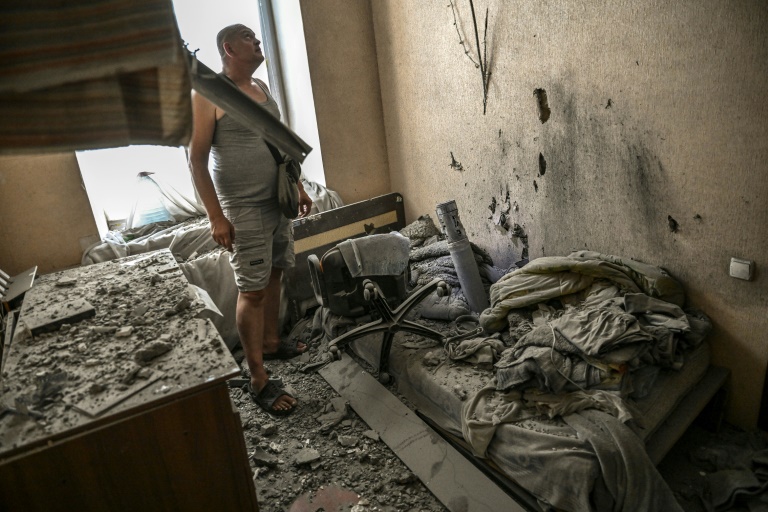
“Every day there are bombings and every day something burns. A house, a flat… And there is nobody to help me,” 70-year-old Yuriy Krasnikov told AFP.

“I tried to go to the city authorities, but nobody’s there, everyone has run away.”

Ivan Sosnin was among some residents who decided to stay despite the war.

“This is our home, that’s all we know. We grew up here, where else should we go?” said the 19-year-old.

The leader of Ukraine’s pro-Russian separatists in Donetsk, Denis Pushilin, on Tuesday confirmed the death of another Russian general in the fighting.

Pushilin expressed on Telegram his “sincere condolences to the family and friends” of Major General Roman Kutuzov, “who showed by example how to serve the fatherland”.

Ukraine’s forces have claimed to have killed several of Russia’s top brass but their exact number is not known as Moscow is tight-lipped on losses. 

On Tuesday, Zelensky announced the launch next week of a “Book of Torturers”, a system that will collect details of alleged war crimes and Russian soldiers accused of committing them. 

“I have repeatedly stressed that they will all be held accountable. And we are approaching this step by step,” he said.

“Everyone will be brought to justice.”

burs-dlc/raz

Stocks mixed as traders assess recession risk

Stock markets diverged Wednesday as investors weighed recession prospects and inflation around the world hit the highest levels in decades.

The yen hit fresh multi-year lows against the dollar and euro with the Bank of Japan refusing to raise interest rates to combat high consumer prices, in contrast to rival central banks.

The OECD on Wednesday warned that the world economy would pay a “hefty price” for Russia’s invasion of Ukraine as it slashed its 2022 world growth forecast and said inflation to keep rising.

The Organisation for Economic Co-operation and Development predicted that the world economy would grow three percent this year — down sharply on its 4.5-percent estimate in December.

“This argument which the market appears to be having with itself, over whether we see a recession… is likely to become a lot clearer over the next week or so, starting with US” inflation data Friday, noted Michael Hewson, chief market analyst at CMC Markets UK.

European stock markets were lower Wednesday approaching the half-way stage and after Asian indices had rallied as China eases Covid lockdown restrictions and is forecast to lift its crackdown on the tech sector.

China’s approval of dozens of new video game releases sent shares of some of its biggest tech firms soaring Wednesday.

Global equities have enjoyed some respite in recent weeks from a painful sell-off caused by central bank monetary tightening, in particular by the Federal Reserve.

All eyes are on the release of US inflation data for a clearer idea about the pace of future Fed rate hikes.

India on Wednesday announced a fresh hike of its own, one day after Australia unveiled an increase to borrowing costs twice as big as forecast.

The European Central Bank is Thursday expected to signal an end to its bond-buying, paving the way for an interest rate increase in the eurozone.

“The reality for the economy and probably the stock markets is that aggressive central bank rate hikes are likely to take a sharp bite out of household consumption,” said SPI Asset Management’s Stephen Innes.

Hungarian inflation has reached double figures for the first time in 20 years, official data showed Wednesday.

High oil prices, a major inflationary contributor, were up more than one percent.

– Key figures at around 1045 GMT –

London – FTSE 100: DOWN 0.4 percent at 7,571.83 points

Frankfurt – DAX: DOWN 0.5 percent at 14,484.59

Paris – CAC 40: DOWN 0.7 percent at 6,456.96

EURO STOXX 50: DOWN 0.3 percent at 3,796.44

Tokyo – Nikkei 225: UP 1.0 percent at 28,234.29 (close)

Hong Kong – Hang Seng Index: UP 2.2 percent at 22,014.59 (close)

Shanghai – Composite: UP 0.7 percent at 3,263.79 (close)

New York – Dow: UP 0.8 percent to 33,180.14 (close)

Dollar/yen: UP at 133.98 yen from 132.62 yen late Tuesday

Euro/dollar: UP at $1.0722 from $1.0715 

Pound/dollar: DOWN at $1.2538 from $1.2592

Euro/pound: UP at 85.51 pence from 85.02 pence

Brent North Sea crude: UP 1.2 percent at $122.02 per barrel

West Texas Intermediate: UP 1.4 percent at $121.03 per barrel

Zara owner Inditex profits up despite Ukraine war

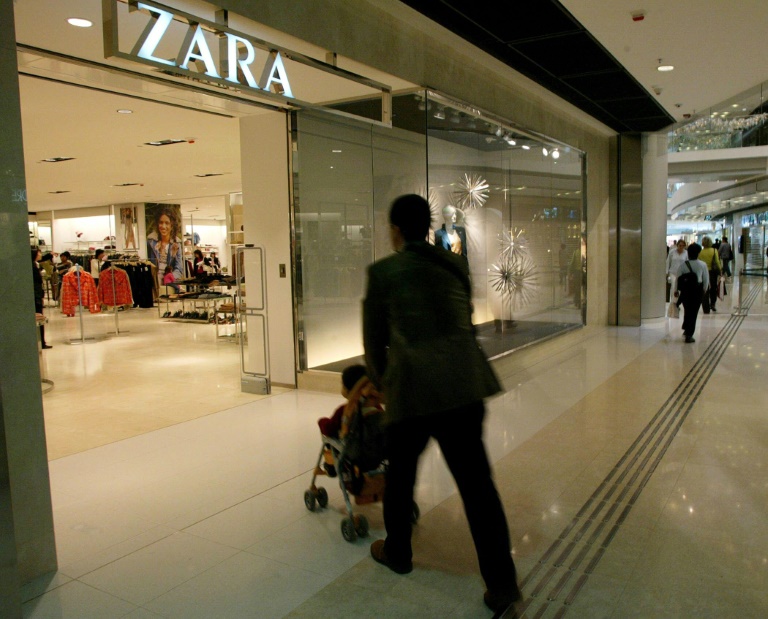
Global clothing giant Inditex, which owns Zara, posted Wednesday a surge in its first-quarter profits despite closing its stores in Russia after its invasion of Ukraine.

The world’s biggest fashion retailer said its net profit increased by 80 percent in the first three months of its financial year to April 31, compared to the same period last year.

It said it made 760 million euros ($812 million) in profit, against 440 million euros ($470 million) during the first quarter of the 2021 financial year, which was hit hard by the coronavirus pandemic.

The hike in profits came despite a 216-million-euro provision for estimated costs arising from the impact of the Ukraine war, without which its income would have risen to almost “940 million euros”, it said.

The group, which since April has been led by Marta Ortega, daughter of its multi-billionaire founder Amancio Ortega, reported sales of 6.74 billion euros, up 36 percent from the same period in 2021. 

The fashion group, which owns eight brands including upmarket Massimo Dutti and teen label Stradivarius, had warned that 2022 sales would be impacted by Russia’s invasion of Ukraine.

After Russia sent in troops in late February, Inditex closed all its stores in Ukraine and on March 5 suspended all retail activity in Russia, its biggest market after Spain, shutting its 502 shops and suspending all online transactions. 

Inditex said that stopping sales activity in Russia had been offset by “strong growth” in other regions, notably the United States.

Analysts had expected the Spanish retail giant to be hard hit by its Russian pullout decision given that it generates 10 percent of its turnover and 8.5 percent of its operating profit in the country. 

Wednesday’s results were broadly in line with analysts’ expectations, with Factset seeing profits of 770 million euros against a turnover of 6.27 billion euros. 

Online sales, which had surged during the pandemic, fell by 6.0 percent, although Inditex said it expected the figure to reach “30 percent of total sales” by 2024.

Shares in the world’s biggest fashion retailer were trading 4.23 percent higher in late morning trade on the Madrid stock exchange. 

When the pandemic first took hold two years ago, the group saw its profits nosedive as the virus forced it to shutter most of its shops in the first half of 2020. 

US lays out more pledges as Biden woos Latin American leaders

US President Joe Biden heads Wednesday to a Latin America summit on a mission to woo back the region as his administration pushed out pledges, including a plan to train half a million health workers.

The long-awaited Summit of the Americas was marred by a boycott from Mexico’s president, who was upset that Biden did not invite the leftist leaders of Cuba, Nicaragua and Venezuela on the grounds that they did not meet democratic standards.

The Biden administration insisted there were no hard feelings and moved forward on initiatives aimed at cementing ties across Latin America, where a rising China has increasingly made inroads despite the historic US influence.

Hours before Biden was to arrive, his administration announced a new Americas Health Corps that will aim to improve the skills of 500,000 health workers across the region, building on the lessons from Covid-19, which hit the Western Hemisphere especially hard.

The health training will cost $100 million, although the United States will not contribute all of it and will seek to raise funds, including through the Pan American Health Organization.

The pandemic “showed us the many cracks in our global health systems and underscored the importance of strong and resilient health systems for the entire population,” a White House statement said.

China has stepped up its role in Latin America since the pandemic started, moving early to supply vaccines. 

Cuba has also long exported its state-employed doctors, a practice that so infuriated the previous administration of Donald Trump that he suspended funding for the Pan American Health Organization over alleged ties.

The health announcement comes a day after Vice President Kamala Harris detailed another $1.9 billion in commitments by businesses to invest in impoverished and violence-ravaged El Salvador, Guatemala and Honduras.

The troubles in the so-called Northern Triangle, as well as Haiti, have generated a soaring number of migrants to the United States, setting off a domestic furor as Trump’s Republican Party demands efforts to stop them.

“We know the American people will benefit from stable and prosperous neighbors. And when we provide economic opportunity for people in Central America, we address an important driver of migration,” Harris said.

– ‘Nearshoring’ –

Mauricio Claver-Carone, the president of the Inter-American Development Bank (IADB), said that Latin America can increasingly be seen as a “sea of peace” for investors amid the global turbulence from Russia’s invasion of Ukraine and rising risks associated with manufacturing juggernaut China.

The head of the IADB, which provides development funding in Latin America, said he saw a rise of “nearshoring,” with businesses moving closer to markets rather than in China.

Since the first Summit of the Americas in 1994, “each dollar that went to China was one dollar, one investment, one job less for Latin America and the Caribbean,” he told AFP in an interview in Los Angeles.

In Latin America, “whether they are governments of the left or the right, they all want foreign investment, they all want nearshoring, they all want economic growth,” he said.

The first summit, held in Miami by Bill Clinton, aimed to create a vast free-trade zone that would span the hemisphere other than communist Cuba.

Biden is holding only the second Summit of the Americas on US soil at a time that the political appetite for free trade has waned in Washington, with Trump rising to power in part by attacking trade liberalization as hurting workers.

But Biden has stood firm on another core principle of the Summit of the Americas — democracy — even as he considers going next month to Saudi Arabia, a critical oil supplier.

Mexican President Andres Manuel Lopez Obrador insisted that all nations of the hemisphere should be included, a stance backed by several other regional leaders who nonetheless agreed to come.

Biden is separately expected to meet President Jair Bolsonaro of Brazil, Latin America’s most populous nation, despite rising fears that the Trump ally will not accept the legitimacy of upcoming elections.

Close Bitnami banner
Bitnami