US Business

In Utopia and elsewhere in Texas, school teachers carry guns

In a tiny Texas town called Utopia, a sign at the entrance to its only school warns that staffers are packing guns — a measure designed to prevent shootings like the one that left 19 kids and two teachers dead down the road in Uvalde.

Utopia is a speck on the map in the giant Lone Star state, a hamlet of 200 people tucked away among hills and fields. It’s just a few streets, its main drag boasting a handful of stores and not much else.

Like people elsewhere in Texas, the United States in general and even around the world, its citizens are still trying to digest what happened 30 miles (50 kilometers) away on Tuesday when a teenager shot up Robb Elementary School in Uvalde before being killed by police.

It was the latest in a particularly bad stretch of mass shootings in America and the deadliest US school massacre in a decade.

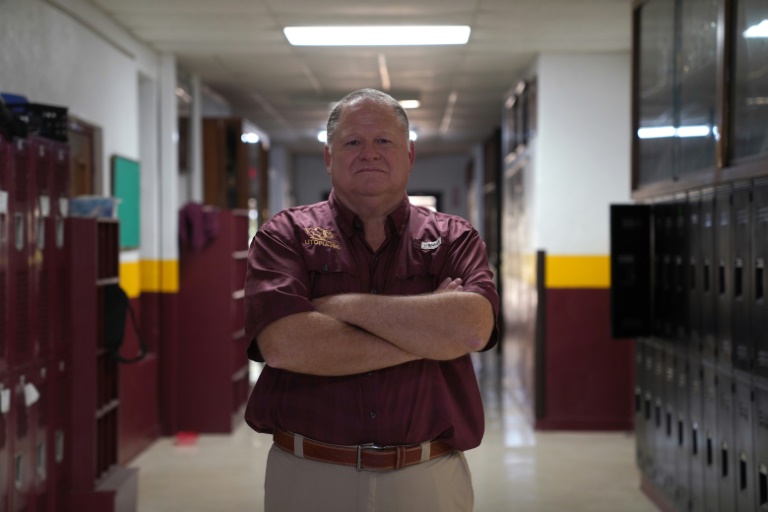
“There is no 100-percent-of-the-time way to stop those type of things from happening,” said Michael Derry, who has led the Utopia School District since 2020. The only school in town has kids ranging from pre-kindergarten through high school.

“But I think this is a huge deterrent when you know that there’s people in here that are armed and we’ll do whatever is necessary to protect our children,” he said.

Texas, where affinity for firearms is deeply ingrained, began letting school teachers and staff carry guns in 2013 and dozens of schools have embraced the policy.

This defense measure is once again part of a frantic national debate on how to halt the unthinkable — children being shot in their classrooms.

In Utopia, teachers or other staff who want to carry guns on the job must present an application and have a firearms license. The school board then does a background check before deciding, said Derry, who is 56.

He said this policy is also a way to offset the lack of law enforcement personnel in the area.

“We are very secluded in the northeastern corner of the county. And now the sheriff’s department is very tied up in the southern part of the county, with the folks that are coming across the border” with Mexico, Derry said.   

“So it takes minimum 25 or 30 minutes for us to be able to get law enforcement here. It’s too late,” he added.

– ‘Eliminate the problem’ – 

In a classroom with a glass case showing off school sports trophies, science teacher Bryson Dalrymple, 50, tears up thinking of the shooting rampage in Uvalde, where he grew up.

“It’s heartbreaking and it makes me scared for the kids,” said Dalrymple, who is also the school’s head of security.

He said that having teachers armed is a way to “eliminate the problem before it gets worse.”

Texas attorney general Ken Paxton went on Fox News Tuesday after the Uvalde massacre and said more schools should arm their staff.

“We can’t stop bad people from doing bad things,” he said, echoing the pro-gun rights argument that rogue people are to blame for mass shootings, rather than the ease with which you can buy a gun in America.

“We can potentially arm and prepare and train teachers and other administrators to respond quickly. That, in my opinion, is the best answer,” Paxton said.

The National Education Association dismisses that idea.

“Bringing more guns into schools makes schools more dangerous and does nothing to shield our students and educators from gun violence,” NEA president Becky Pringle said in a statement this week.

“We need fewer guns in schools, not more. Teachers should be teaching, not acting as armed security guards,” she added.

– ‘Makes me feel safer’ – 

Sugar Bennett, whose son Jason goes to the Utopia elementary school, said that at first she opposed its policy of arming teachers but changed her mind as she saw mass shooting after mass shooting in the United States.

“It makes me feel safer,” said Bennett, sitting in Lost Maples, one of the few restaurants in Utopia.

Sitting across from her, Jason said he supports teachers carrying guns, especially after the tragedy in Uvalde.

“They’re experienced enough with weapons that they can protect us,” the young Bennett said.

A few blocks from the restaurant, back in the classroom full of sports trophies, Dalrymple said he would do anything to protect his students.

“The kids here are just like my own. And if something bad ever happened like that, I would give my last breath to defend those kids,” he said.


NRA: The powerful US gun rights lobby

The National Rifle Association is the central and fiercest promoter of gun rights in America, and is again holding its annual convention days after a mass school shooting.

Just like the NRA’s meeting after the 1999 Columbine attack, which defined an era of gun massacres in America’s schools, the gathering opening Friday in Houston follows the killing of 19 children and two teachers in a Texas classroom.

The NRA has been weakened by scandal and turmoil, but remains the main force dedicated to advocating for the owners of the tens of millions of weapons that are readily obtainable across the country.

Here are some key points about the organization:

– Potent political force –

The 150-year-old NRA concentrated its focus on battling gun restrictions in the late 1970s and has become one of the most powerful lobbying groups in US history.

Its past influence on lawmakers has been far-reaching. 

From 2000 to 2012, the NRA and its allies in the firearms industry combined to pour $80 million into US House of Representatives, Senate and presidential races, according to an analysis by the Center for Responsive Politics.

In the 2016 presidential election, the NRA spent about $20 million for ads attacking Democrat Hillary Clinton and another $10 million for ads supporting Republican Donald Trump.

Since the 1990s, the NRA has been able to deliver a powerful punch against local and national politicians it views as a threat to gun rights, contributing to the defeat of numerous centrist candidates.

– Many guns, many deaths –

The NRA has been a key proponent for an industry that has produced more than 139 million guns for the commercial market over the two decades from 2000, including 11.3 million in 2020 alone, according to government data.

At the same time, America annually records a toll of tens of thousands of gun deaths, with US authorities saying killings underwent an “historic” increase in 2020.

The US racked up 19,350 firearm homicides in 2020, up nearly 35 percent over 2019, and 24,245 gun suicides, up 1.5 percent.

– The post-Columbine era –

In the April 20, 1999 shooting at Columbine high school in Littleton, Colorado, two students killed 12 of their classmates and a teacher, and signaled a new era of classroom killings in America.

The NRA’s annual conference was scheduled to open less than two weeks later in Denver, a short drive from Littleton, prompting state and local politicians to criticize the planned meeting.

In the end, the NRA went ahead with a scaled-down gathering but voiced a defiant tone defending gun rights.

“Over the next two decades, this unapologetic message would come to define the NRA’s tone in the wake of mass shootings at American schools,” US broadcaster NPR wrote, after publishing recordings it said captured the group’s debate over the response to Columbine.

– A troubled NRA – 

The state of New York sued the group and its leader Wayne LaPierre in 2020 for financial fraud and misconduct, aiming to dissolve the powerful lobby.

Top NRA officials were accused of using dues and donations of members for years as a “personal piggy bank,” spending tens of millions of dollars on themselves and their cronies in violation of laws governing non-profit organizations.

The group called it a baseless political attack, and in March a New York judge ruled that alleged self-dealing by the group’s leader, if proven, would not warrant such a strong penalty as the disbanding of the association.

New York’s lawsuit seeking to boot LaPierre from his post will, however, be allowed to proceed.

– Group in decline? –

NRA claims more than five million members, but there are signs that figure is on the wane, including a 2021 legal deposition from LaPierre in which he said numbers were “under 4.9 million.”

US network CBS reported NRA’s revenue declined 23 percent from roughly $367 million in 2016 to $282 million in 2020, the most recent year for which its tax filings are available.

It added that contributions and grants from members and corporations also have slipped 15 percent during that time.

Yet after an 18-year-old man opened fire this week at an elementary school in Uvalde, Texas, the group spoke up as the voice explaining why yet another mass shooting had happened.

“We recognize this was the act of a lone, deranged criminal,” their statement said. “As we gather in Houston, we will reflect on these events… and pledge to redouble our commitment to making our schools secure.”

Harry, Meghan to attend queen's jubilee service: biographer

The Duke and Duchess of Sussex are set to attend a cathedral service early next month as part of celebrations for Queen Elizabeth II’s Jubilee year, their biographer said Friday.

Prince Harry and his wife, Meghan, stepped down from royal duties and moved to California early in 2021. Since then they have visited the UK together only once.

Omid Scobie, who co-authored a favourable biography of the couple, told reporters in London: “We’ll definitely see Harry and Megan at the Thanksgiving service at St Paul’s Cathedral.”

The service on June 3 will be “really the first official moment” when the couple join the Platinum Jubilee celebrations, he said. 

“That’s really what they’ve been planning all along,” Scobie said, calling jubilee events a “glimpse” into the royal family’s future.

The service at the landmark cathedral where Harry’s father wed Lady Diana Spencer in 1981 is designed to give thanks for the queen’s long reign and one of the main events during four days of public celebrations.

British newspapers had reported that Harry and Meghan were likely to attend the service but Scobie’s comment will be seen as confirmation, given his close links.

The queen’s disgraced second son Prince Andrew — who earlier this year settled a US civil claim for sexual assault — is reportedly also planning to go.

Scobie said the public could witness a “special moment” of the queen meeting Meghan and Harry’s two children, Lilibet and Archie, her great-grandchildren.

Lilibet — who turns one on June 4 — has never met her 96-year-old great-grandmother who was called the nickname when she was a girl. 

He added there were rumours that Harry and Meghan would hold the christening of Lilibet in the UK, but to his knowledge, this would not happen during jubilee events.

Harry and Meghan’s decision to move to north America, for privacy and financial independence, caused shockwaves through the royal family.

But it was compounded by public criticisms from the couple, including in a television interview when they accused an unnamed senior royal of racism.

The palace is bracing for more potential revelations from Harry in an upcoming autobiography.

In April, Harry and Meghan made their first joint trip to the UK since emigrating, seeing the Queen in private during a flying visit.

Scobie said Harry and Meghan “will not be out” on the balcony of Buckingham Palace alongside prominent royals on June 2 to watch the Trooping of the Colour and a flypast.

But he said they could make a “surprise appearance” on June 5, when the queen may emerge onto the balcony again with family members.

The queen has suffered recent health issues that could affect her participation in national events marking her record-breaking 70th year on the throne.

British media reported on Friday that has gone to her Scottish estate of Balmoral for a short break ahead of the celebrations.

Why South America's breadbasket isn't the answer to global wheat crisis

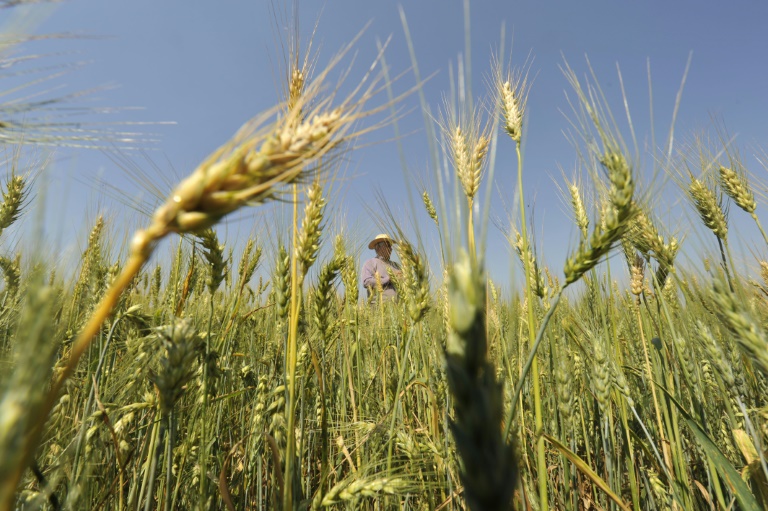
As the world faces a growing food crisis provoked by Russia’s invasion of Ukraine, many have looked to South America’s “breadbasket” — major wheat producers Brazil and Argentina, along with Uruguay and Paraguay — as a possible solution.

But experts and analysts say a variety of factors — climate, cost, domestic needs — make such a solution highly unlikely.

Russia and Ukraine alone produce 30 percent of the world’s wheat supply.

Moscow’s military offensive in Ukraine and subsequent sanctions on Russia have disrupted supplies of fertilizer, wheat and other commodities from both countries, pushing up prices for food and fuel, especially in developing nations.

A suspension of India’s exports have further exacerbated the problem.

Here’s a look at the major wheat producing countries in South America, and how they might, or might not, be able to help alleviate the crisis:

– Brazil: higher yield, but big needs at home –

Agricultural giant Brazil is due to increase its wheat crop coverage by between three and 11 percent this year, according to Embrapa Wheat, a state-run research unit affiliated with the Brazilian agriculture ministry.

Record prices, surging demand and the “expectation of favorable weather, strengthen the projection of an increase in the planted area” from 2.7 million hectares in 2021 (6.7 million acres) to a little over three million in 2022, said Embrapa Wheat.

But the country of 213 million people is already unable to meet domestic demand — estimated at 12.7 million tons a year, and rising.

Internal logistical and transport costs have pushed many farmers, particularly in the south, to favor exporting, thus ramping up the need to import.

Brazil is actually the world’s eighth largest importer of wheat, most of which (87 percent) comes from Argentina.

– Argentina: lack of water reserves –

Argentina, home to 45 million people, is also traditionally a major wheat producer — but current climatic conditions are unfavorable, meaning it is unlikely to help fill the global void.

“We expect about an eight percent drop in the land area planted with wheat,” Tomas Rodriguez Zurro, an analyst at the Rosario grains exchange, told AFP.

That amounts to a drop from 6.8 million to 6.3 million hectares, due mostly to a drought affecting the country, Rodriguez Zurro explained.

“In general, we plant wheat to then plant soybean, but the water reserves are very low, so the producers don’t want to risk planting wheat in case it reduces the humidity reserves even more” for subsequent plantings, said Rodriguez Zurro.

On top of that, farmers say they will use less fertilizer due to soaring prices — another factor limiting production, the analyst said.

Russia is the world’s largest exporter of fertilizers with more than 12 percent of the global market, but its sales have been virtually paralyzed by sanctions.

– Paraguay and Uruguay: small global impact –

Both Paraguay, a country of 7.5 million, and Uruguay (population: 3.5 million) enjoy good wheat yields — but they have a much smaller global impact and neither expects to increase production. 

“Wheat production is expensive, very expensive,” said a source at Uruguay’s agriculture ministry.

Farmers there expect a yield “similar to last year, or slightly higher,” the source said — a total that should satisfy domestic demand and allow exports to remain at roughly one million tons a year.

In Paraguay, production should also remain stable, according to Hector Cristaldo, president of Paraguay’s farmers’ union, but he added: “Our volumes are not significant on the world stage.”

Paraguay consumes 700,000 tons and exports as much again, almost exclusively to Brazil.

In mid-May, when India banned exports, wheat reached a record price of 438.25 euros ($456.68) per ton in European trading.

Global stocks push higher

Global stocks pushed higher on Friday as investors hoped that rising global interest rates may curtail sky-high inflation.

The latest data from the United States showed inflation was moderating, helping boost sentiment.

The PCE price index slowed sharply in April, increasing just 0.2 percent after several months of accelerating at more than twice that pace and 0.9 percent in March.

Over the last 12 months, the key inflation measure slowed to 6.3 percent from 6.6 percent in the prior month, according to the data. 

Excluding volatile food and energy goods, the increase in the “core” PCE price index was a more modest 4.9 percent.

The PCE is the US Federal Reserve’s preferred price gauge, and the central bank has launched a counter-offensive against inflation with a series of aggressive interest rate hikes to cool the economy.

Those have battered stock markets in recent months as investors worried that the sharp hikes in interest rates will push the global economy into a recession.

“The key takeaway from the report… is that there was a moderation in the year-over-year rates for the price indexes, which will support the peak inflation narrative,” said market analyst Patrick J. O’Hare at Briefing.com.

The report also showed US personal income rose 0.4 percent in April compared to March, and consumers continued to increase spending.

“Encouragingly the latest US personal spending data showed that US consumers were still inclined to spend money with a rise of 0.9 percent, which was slightly higher than markets had been expecting,” said Michael Hewson at CMC Markets.

– ‘Tentative green shoots’ –

Stock markets have bounced higher this week after the minutes of the last Federal Reserve meeting indicated that it could take a breather in hiking interest rates if inflation shows signs of easing later in the year.

“After a torrid few months, there are some tentative signs of green shoots emerging as investors become more comfortable with the stance of the central banks in tackling inflation,” said Richard Hunter, head of markets at Interactive Investor.

Back in Asia, investors were in a buying mood as Hong Kong jumped more than two percent, with market heavyweight Alibaba piling on more than 11 percent and search engine Baidu advancing 15 percent.

The two firms posted better-than-expected sales growth in the January-March quarter, soothing fears about the impact of Covid and inflation on their bottom lines.

Hong Kong’s tech index jumped nearly three percent, with other giants also enjoying buying interest with JD.com and Meituan sharply up.

The reports were much-needed pieces of good news out of the world’s second-biggest economy, which is being battered by lockdowns in major cities as leaders refuse to budge from their zero-Covid strategy.

– Key figures at around 1530 GMT –

New York – Dow: UP 1.0 percent at 32,946.04points

EURO STOXX 50: UP 1.8 percent at 3,808.60

London – FTSE 100: UP 0.3 percent at 7,585.46 (close)

Frankfurt – DAX: UP 1.6 percent at 14,462.19 (close)

Paris – CAC 40: UP 1.6 percent at 6,515.75 (close)

Tokyo – Nikkei 225: UP 0.7 percent at 26,7781.68 (close)

Hong Kong – Hang Seng Index: UP 2.9 percent at 20,697.36 (close)

Shanghai – Composite: UP 0.2 percent at 3,130.24 (close)

Euro/dollar: DOWN at $1.0711 from $1.0725 on Thursday

Pound/dollar: UP at $1.2614 from $1.2600

Euro/pound: DOWN at 84.92 pence from 85.12 pence

Dollar/yen: DOWN at 127.10 yen from 127.12 yen 

Brent North Sea crude: UP 0.6 percent at $118.07 per barrel

West Texas Intermediate: UP 0.2 percent at $114.07

burs-rl/ah

War in Ukraine: Latest developments

Here are the latest developments in the war in Ukraine:

– Pro-Russian forces claim key eastern town – 

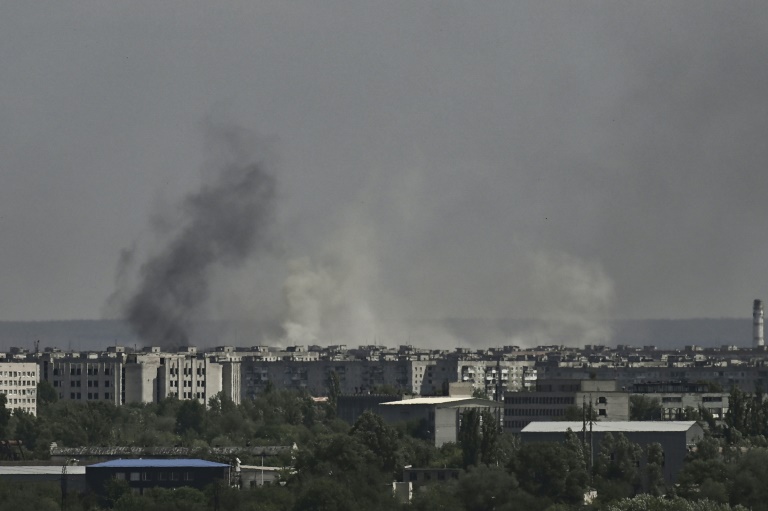
Moscow-backed separatist forces in eastern Ukraine say they have captured Lyman, a strategic town situated between the city of Severodonetsk and the eastern administrative centre of Kramatorsk, which remain under Kyiv’s control.

The pro-Russian separatists in the Donetsk region said they had “liberated and taken full control of 220 settlements, including Krasny Liman”, using an old name for Lyman.

Ukrainian forces are also battling to hold onto Severodonetsk, with senior local official Oleksandr Stryuk saying Russian forces control two-thirds of the city’s outskirts.

After failing to take Kyiv and being driven back from the outskirts of the second city of Kharkiv, Russia is waging all-out war for the Donetsk and Lugansk regions, which together make up Donbas, Ukraine’s industrial heartland.

– 10 killed in central city – 

The national guard says around 10 people have been killed in strikes on a military facility in the central city of Dnipro, which had so far been relatively spared by the fighting.

Earlier this week, Ukrainian President Volodymyr Zelensky revealed that 87 people had been killed in Russian strikes on a military base north of Kyiv on May 17. 

In a sign that Kharkiv is not yet out of harm’s way, nine people were killed in shelling of the northeastern city on Thursday.

– Zelensky warns of ‘genocide’ in Donbas –

Ukraine’s President Volodymyr Zelensky accuses Moscow of carrying out a “genocide” in Donbas, where Russian forces are also closing in on the cities of Severodonetsk and Lysychansk.

In his daily televised address, Zelensky warns that Russia’s offensive could empty Donbas of its population.

“All this, including the deportation of our people and the mass killings of civilians, is an obvious policy of genocide pursued by Russia,” he says.

Foreign Minister Dmytro Kuleba accuses allies of dragging their feet on arms deliveries, telling his German counterpart that Ukraine needs heavy weapons “as soon as possible.”

– Ukraine flag removed from Putin Peak –

Kyrgyzstan’s climbing federation said Friday that it has removed a Ukrainian flag from a mountain named after Russian President Vladimir Putin, following a police investigation of the stunt, and replaced it with the Kyrgyz flag.

A climber earlier this week posted a video of the flag on the mountain dubbed Putin Peak, which rises 4,446 metres (14,587 feet) above sea level.

– Two Russian lawmakers urge ‘immediate withdrawal’ –

Two Communist lawmakers in Russia’s far east urge Putin to put an end to Moscow’s offensive in Ukraine in a rare public show of dissent.

“We demand an immediate withdrawal of the Russian troops,” lawmaker Leonid Vasyukevich says in the assembly of the Primorsky Krai region, warning that if they do not “there will be even more orphans in our country.” He is backed by another lawmaker.

The head of the local Communist faction says the statement had not been agreed with the party and promises to take “the toughest measures” against the pair.

– Russian to boost grain exports –

Russia says it plans to ramp up grain exports against the backdrop of a looming global food crisis exacerbated by the war in Ukraine. 

Agriculture Minister Dmitry Patrushev says Russia will increase its grain exports from over 37 million tonnes in the 2021-2022 season ending June 30 to 50 million tonnes in the new season starting July 1.

Kyiv and the West blames Russia’s blockade of Ukrainian ports for stalling grain exports from Europe’s breadbasket.

President Vladimir Putin tells Austrian Chancellor Karl Nehammer in a telephone call that the accusations are “groundless” and blamed Western sanctions on Russia for spiralling food prices.

burs-cb/cdw

Johnny Depp lawyers urge jury to restore his 'name, reputation, career'

Lawyers for actor Johnny Depp urged a jury on Friday to find his ex-wife Amber Heard guilty of defamation over domestic abuse allegations and restore “his name, his reputation and his career.”

“Mr Depp is no saint and he has never claimed to be one,” Benjamin Chew, an attorney for the “Pirates of the Caribbean” star, said in closing arguments in Fairfax County Circuit Court near the US capital.

“He has struggled with drugs and alcohol,” Chew said. “But he is not a violent abuser.”

“He did not and does not deserve to have his life, his legacy destroyed by a vicious lie,” the lawyer said. “Miss Heard’s attempt to paint herself as a heroic survivor, an innocent survivor, and Mr Depp as a terrifying abuser are utterly false.

“We ask you, we implore you to give him his name, his reputation and his career back.”

Chew also referenced #Metoo, saying it’s “a movement that Mr Depp supports.”

“But it’s for true survivors of abuse, not Miss Heard,” he said. “Nobody has come out of the woodwork to say ‘me too.’ This is the unique and singular ‘me too’ case where there’s not a single ‘me too.'”

Camille Vasquez, another of Depp’s attorneys, told the jury the evidence has “shown that Miss Heard is the abuser.” “She was violent, she was abusive and she was cruel,” she said.

Lawyers for the two sides are making their closing arguments after six weeks of blistering mutual accusations of domestic violence between the couple.

Judge Penney Azcarate will give the case over to the seven-person jury later Friday. The panel will be off over the weekend and on Monday, a holiday, and resume deliberations on Tuesday.

The 58-year-old Depp filed suit against Heard over an op-ed she wrote for The Washington Post in December 2018 in which she described herself as a “public figure representing domestic abuse.”

The Texas-born Heard, who had a starring role in “Aquaman,” did not name Depp in the piece, but he sued her for implying he was a domestic abuser and is seeking $50 million in damages.

The 36-year-old Heard countersued for $100 million, claiming that she suffered “rampant physical violence and abuse” at his hands.

– ‘Monster’ –

Dozens of witnesses testified during the trial, including bodyguards, Hollywood executives, agents, entertainment industry experts, doctors, friends and relatives.

Depp and Heard each spent days on the witness stand during the televised trial which attracted hundreds of fans of the “Pirates” star daily.

Video and audio recordings of heated, profanity-laced arguments between the couple were played for the jury, which was also shown photographs of injuries allegedly suffered by Heard during their volatile relationship.

Hours of testimony featuring medical experts was devoted to a finger injury that Depp suffered while filming an installment of “Pirates” in Australia in March 2015.

Depp claimed the tip of the middle finger on his right hand was severed when Heard threw a vodka bottle at him. Heard said she did not know how the injury occurred.

Both agreed that Depp went on to scrawl messages on walls, lampshades and mirrors using the bloody digit.

Heard said Depp would become a physically and sexually abusive “monster” during alcohol- and drug-fueled binges and resisted her repeated efforts to curb his drinking and drug use.

Heard said Depp had promised to bring her “global humiliation” if she left him, and she has been the target of a vast #JusticeForJohnnyDepp social media campaign.

Depp testified that it has been “brutal” to listen to “outlandish” accusations of domestic abuse.

“No human being is perfect, certainly not, none of us, but I have never in my life committed sexual battery, physical abuse,” he said.

– Damaged Hollywood careers –

Heard, who was married to Depp from 2015 to 2017, obtained a restraining order against him in May 2016, citing domestic violence.

Depp, a three-time Oscar nominee, filed a libel suit in London against the British tabloid The Sun for calling him a “wife-beater.” He lost that case in November 2020.

Both sides have claimed damage to their Hollywood careers.

Heard’s legal team presented an entertainment industry expert who estimated that the actress has suffered $45-50 million in lost film and TV roles and endorsements.

An industry expert hired by Depp’s side said the actor has lost millions because of the abuse accusations, including a potential $22.5 million payday for a sixth installment of “Pirates.”

NRA gun lobby convenes in Texas in wake of school massacre

America’s powerful National Rifle Association kicked off a major convention in Houston Friday, days after the horrific massacre of children at a Texas elementary school, but a string of high-profile no-shows underscored deep unease at the timing of the gun lobby event.

Former president Donald Trump was among the scheduled speakers at the annual convention, held around four hours drive from the small town of Uvalde, where a teenage gunman killed 19 students and two teachers on Tuesday with an AR-15 assault rifle.

Thousands of gun enthusiasts descended on the meeting, filling a vast convention hall packed with booths of gun and gear manufacturers, walls of semi-automatic rifles and hunting products.

“This is it, this is the mega,” said a man in his 60s, as he handled a new Hellion rifle he was considering purchasing — as loud music blared from speakers nearby.

But with millions of Americans grieving and angry following the worst school shooting in a decade, “American Pie” singer Don McLean led a wave of country music dropouts from the three-day event, while the Republican state governor, Greg Abbott, said he would no longer appear in person.

McLean said it would be “disrespectful and hurtful” to perform at the “Grand Ole Night of Freedom” concert scheduled during the convention on Saturday. At least five other country music stars, including Lee Greenwood and Larry Gatlin, have also reportedly pulled out.

Abbott — who has brushed aside increasingly emotional calls for tougher gun laws in Texas, where attachment to the right to bear arms runs deep — is expected to make a pre-recorded video address instead. The governor’s lieutenant Dan Patrick also canceled plans to speak at the event.

Facing mounting scrutiny, the gun manufacturer Daniel Defense — which made the assault rifle purchased by the Uvalde shooter Salvador Ramos shortly after his 18th birthday — also decided not to attend in light of the “horrifying tragedy.”

The cancellations came as Texas police faced angry questioning over why it took an hour to neutralize the gunman, while video emerged of desperate parents begging officers to storm the school.

Daniel Myers and his wife Matilda — both local pastors — told AFP they saw parents growing frantic at the scene.

“One family member, he says: ‘I was in the military, just give me a gun, I’ll go in,'” said Daniel Myers, 72. 

– ‘Don’t forget them, please’ –

Facing rapid-fire questioning on the police response to the tragedy, Victor Escalon of the Texas Department of Public Safety said Thursday that investigators were still piecing together the timeline of events.

According to the accounts provided so far, Ramos first shot his grandmother, then drove and crashed her vehicle near the school, firing on bystanders before entering.

Officers went in minutes later, but were held back by gunfire and called for backup. About an hour later, a tactical team entered and killed the gunman.

In the interim, officers evacuated students and teachers and unsuccessfully tried to negotiate with Ramos, who kept firing while barricaded in a classroom.

The gunman’s victims included 10-year-old Amerie Garza — a little girl who loved her classes, drawing, and playing with clay.

“She was an innocent little girl, loving school and looking forward to summer,” her 63-year-old grandmother, Dora Mendoza, told reporters after paying respects at a makeshift memorial outside the school.

Mendoza pleaded for urgent action by authorities to prevent future shootings — as the country plunges again into the deeply divisive debate over guns.

“They need to do something about it. They need to not forget us, the babies… Don’t forget them, please,” she said through tears.

The Uvalde shooting was the deadliest since 20 children and six staff were killed at the Sandy Hook school in Newtown, Connecticut in 2012.

Despite the scourge of mass shootings, efforts at nationwide gun control — from banning assault rifles to mandating mental health and criminal background checks on buyers — have repeatedly failed, although polls show support from a majority of Americans.

President Joe Biden will visit Uvalde on Sunday to once again make the case for gun control, as activists set about galvanizing voters on the issue in the run-up to November’s midterm election.

And the March for Our Lives advocacy group — founded by survivors of the 2018 Parkland school shooting in Florida — has called for nationwide protests on June 11 to press the cause.

bur-st/ec

Higher cost of US cancer care doesn't improve survival rates: study

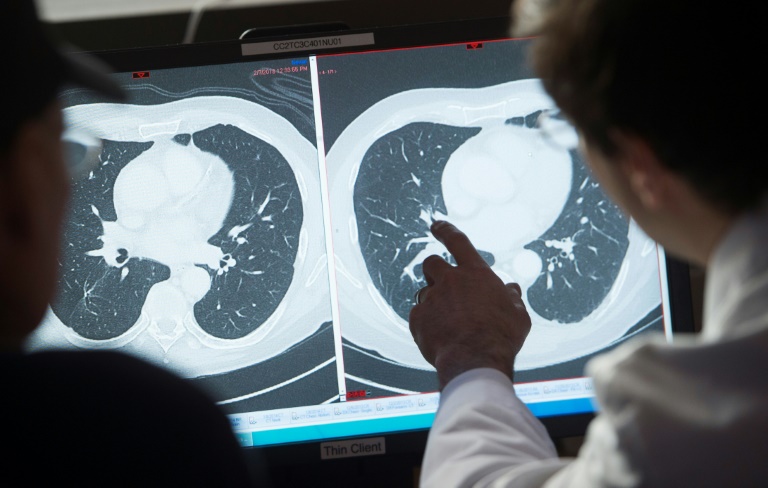
The United States spends twice as much on cancer care as the average high-income country, but gets only middle-of-the-table survival results, a study said Friday.

The results were published in the Journal of the American Health Association (JAMA) Health Forum.

“There is a common perception that the US offers the most advanced cancer care in the world,” said lead author Ryan Chow, who is pursuing a medical degree and PhD at Yale University, in a statement.

America is touted for developing advanced new treatments and approving them faster than other countries, and the team were curious about whether this translated into better outcomes.

Out of 22 high-income countries, the United States was found to have by far the highest spending rate: it spends $200 billion per year on cancer care, or roughly $600 per capita, compared to the average of $300 per capita in high-income countries.

But the researchers found this additional spending did not translate into better population-level cancer mortality rates. 

“In other words, countries that spend more on cancer care do not necessarily have better cancer outcomes,” said Chow.

The US was only slightly better than average, while six countries — Australia, Finland, Iceland, Japan, South Korea, and Switzerland — had both better outcomes and lower spending.

Of the countries examined, South Korea and Japan had the lowest cancer mortality rates, while Denmark had the highest, followed by France.

Smoking is the biggest driver of cancer deaths, a factor expected to make cancer outcomes appear more favorable in countries with traditionally low smoking rates such as the US.

After controlling for smoking rates, they found the US was exactly in the middle. Nine countries —  Australia, Finland, Iceland, Japan, Korea, Luxembourg, Norway, Spain, and Switzerland — had lower smoking-adjusted cancer mortality.

There are a constellation of factors behind surging costs in the US, the team wrote.

Cancer drug expenditures account for 37 percent of privately insured US cancer expenditure, and these drugs cost far more in the US than other countries.

Unlike countries with public health systems, US state-run insurance called Medicaid cannot negotiate drug prices.

Additionally, the US Food and Drug Administration (FDA) does not consider pricing when evaluating drug approvals, unlike other countries such as Britain where cost-effectiveness must be factored. 

Much of the growth in drug spending has been attributed to newer types of drugs such as monoclonal antibodies, kinase inhibitors, and immune checkpoint inhibitors, even though the evidence in their favor is often marginal.

Finally, medical care is also more aggressive in the US: “Within the last six months of life, US patients with cancer are admitted to the intensive care unit at twice the rate of other countries and are more likely to receive chemotherapy,” the team wrote.

Specialty societies advocate for more screening than guidelines suggest, further increasing costs, and low-risk tumors, such as early-stage prostate cancers, are more often subject to intervention despite evidence they would unlikely cause harm if untreated.

“Other countries and systems have much to teach the US if we could be open to change,” said co-author Elizabeth Bradley, president of Vassar College.

US price surge eased in April as shoppers continued to spend

The US inflation wave showed signs of waning last month, posting the smallest increase since late 2020, as rising wages supported continued spending by American shoppers, according to government data released Friday.

The relief was good news for consumers who have been the key support for the US economy, but also for President Joe Biden who has made battling rising prices his top domestic priority.

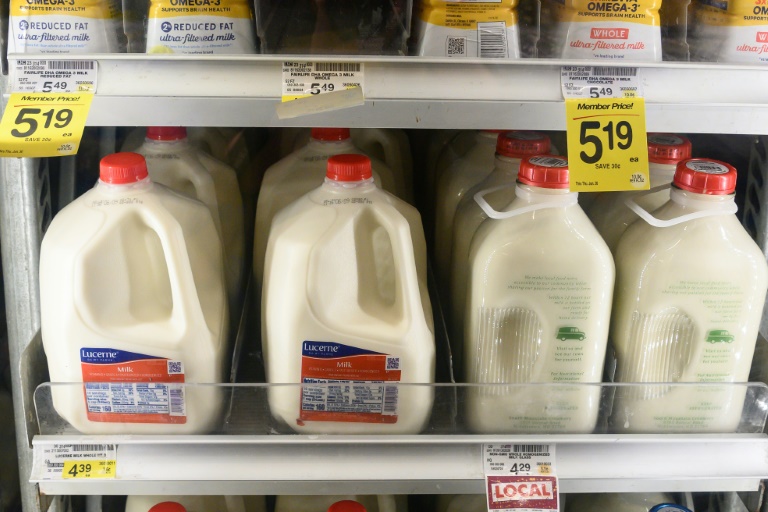
Surging prices at the grocery store and at the gas pump have hit families and become a political liability for Biden and his Democratic party heading into midterm congressional elections in November.

The personal consumption expenditures (PCE) price index slowed sharply in April, increasing just 0.2 percent — the smallest monthly rise since November 2020, according to the Commerce Department report.

The world’s largest economy has been battered for months by a cresting inflation wave, made more painful by the surge in energy prices sparked after Russian leader Vladimir Putin ordered the invasion of Ukraine in late February.

Over the last 12 months, the key inflation measure slowed to 6.3 percent, according to the data. 

Excluding volatile food and energy goods, the increase in the “core” PCE price index also lost speed, falling to 4.9 percent.

Biden cheered the signs of progress.

“This morning’s decline in inflation is a sign of progress, even as we have more work to do,” he said in a statement. 

“At the same time, inflation is still too high and Putin’s price hike continues to impact food and energy prices.”

He noted that annual core inflation for the latest three months averaged around four percent compared to six percent in the three months before it. 

PCE price index is the Federal Reserve’s preferred inflation gauge, as it reflects consumers’ actual spending, including shifts to lower cost items, unlike the more well-known consumer price index, which jumped 8.3 percent in April.

The central bank has launched a counter-offensive against inflation with a series of aggressive interest rate hikes to cool the economy.

The process began in March and was followed early this month by a half-point increase, the biggest since 2000, and the Fed signaled similar big hikes are likely in June and July.

– Consumers are resilient –

Fed policymakers argue that the US economy is strong enough to withstand the increased borrowing costs, and though the hot housing market has cooled, consumers show no signs of reducing spending.

Buoyed by rising wages, US personal income rose 0.4 percent compared to March, while personal consumption expenditures (PCE) increased 0.9 percent, slower than the prior month but far stronger than analysts were expecting.

But economists caution it may be too early to declare victory on inflation, given the continued pressure from the conflict in Ukraine on food and energy prices, and ongoing impact on supply chains from the Covid-19 lockdowns in China.

“Consumer spending remained resilient in April. That is a double-edged sword as those gains are creating a floor for how much inflation can moderate on its own,” said Diane Swonk, chief economist at Grant Thornton.

“In response, the Fed will have to more aggressively rein in demand to align with a supply-constrained economy.”

She said central bankers aim “to avert rather than repeat the mistakes of the 1970s.”

Outlays on services were the biggest element of the increase in spending last month, led by food services, but also travel, hotels, housing and utilities.

The report said spending rose across all categories, except for gasoline, led by outlays on autos.

Personal income increased $89.3 billion in April, while disposable personal income rose $48.3 billion and expenditures increased $152.3 billion, the report said.

Close Bitnami banner
Bitnami