US Business

Starbucks to completely exit Russia after Ukraine invasion

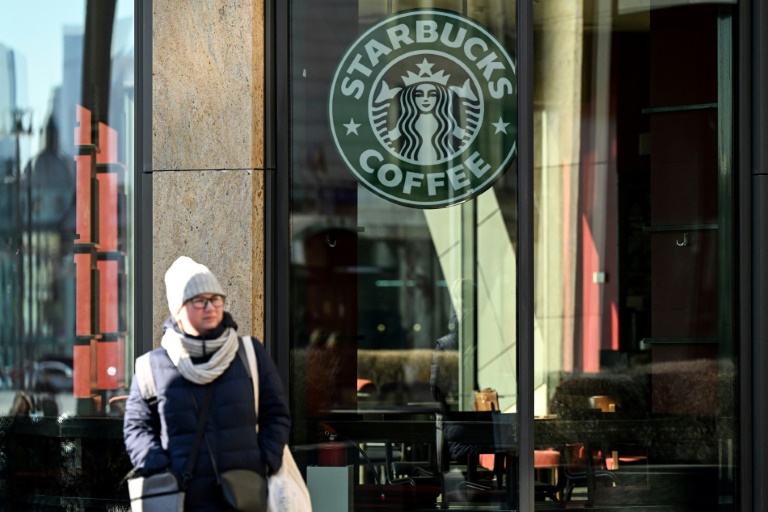
Starbucks said Monday it will cease operations in Russia, shuttering its 130 cafes in the country in the aftermath of the invasion of Ukraine.

The move comes a week after another iconic US brand, McDonald’s, also departed Russia, part of a wave of Western companies cutting the country off following the assault.

“Starbucks has made the decision to exit and no longer have a brand presence in the market,” the company said.

“We will continue to support the nearly 2,000 green apron partners in Russia, including pay for six months and assistance for partners to transition to new opportunities outside of Starbucks.”

The coffee chain suspended its operations in early March after Russia sent troops across the border into Ukraine in late February. 

Former chief executive Kevin Johnson at the time condemned Russia’s “unprovoked, unjust and horrific attacks on Ukraine.”

Starbucks had a relatively modest operation in Russia compared with McDonald’s, which owned 850 restaurants in the country employing 62,000 workers.

McDonald’s, which had operated in Russia since 1990, said its exit would result in one-time costs of $1.2 billion to $1.4 billion. The fast-food chain on Thursday said it reached a deal to sell the business to Russian investor Alexander Govor, a McDonald’s licensee.

French automaker Renault also left the country last week, handing over its assets in the country to the Russian government.

– Pariah –

Retail analyst Neil Saunders of GlobalData said the actions show “that Russia will become more of a commercial pariah as companies turn their backs on a country that represents things they do not wish to be associated with.”

But he predicted some other brands would probably stay put.

“Some will follow, but other consumer packaged goods and retail firms will likely hold out as, unlike Starbucks and McDonald’s, they have extensive exposure to, and interests in, Russia,” he said. “This includes luxury brands which, before the invasion of Ukraine, made good money from the lucrative market for high-end goods.”

Starbucks opened in Russia in 2007, with operations managed by a Kuwait-based licensing company.

In December 2010, executives highlighted the country as a key emerging market for the brand, along with China, Brazil and India.

Starbucks did not disclose the financial impact of leaving the country, but  Saunders said the chain’s limited operation in Russia means the hit to the bottom line likely will be modest.

Shares of Starbucks rose 0.8 percent to $73.96 near midday Monday.
Starbucks to completely exit Russia after Ukraine invasion

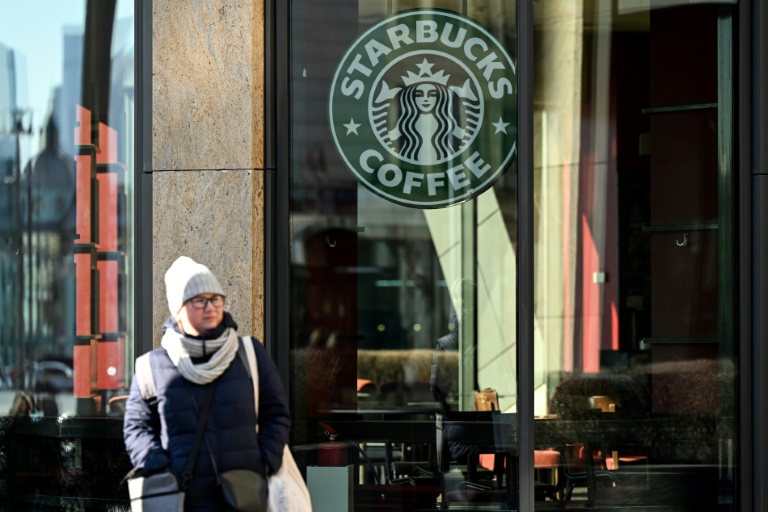
Starbucks said Monday it will cease operations in Russia, shuttering its 130 cafes in the country in the aftermath of the invasion of Ukraine.

The move comes a week after another iconic US brand, McDonald’s, also departed Russia, part of a wave of Western companies cutting the country off following the assault.

“Starbucks has made the decision to exit and no longer have a brand presence in the market,” the company said.

“We will continue to support the nearly 2,000 green apron partners in Russia, including pay for six months and assistance for partners to transition to new opportunities outside of Starbucks.”

The coffee chain suspended its operations in early March after Russia sent troops across the border into Ukraine in late February. 

Former chief executive Kevin Johnson at the time condemned Russia’s “unprovoked, unjust and horrific attacks on Ukraine.”

Starbucks had a relatively modest operation in Russia compared with McDonald’s, which owned 850 restaurants in the country employing 62,000 workers.

McDonald’s, which had operated in Russia since 1990, said its exit would result in one-time costs of $1.2 billion to $1.4 billion. The fast-food chain on Thursday said it reached a deal to sell the business to Russian investor Alexander Govor, a McDonald’s licensee.

French automaker Renault also left the country last week, handing over its assets in the country to the Russian government.

– Pariah –

Retail analyst Neil Saunders of GlobalData said the actions show “that Russia will become more of a commercial pariah as companies turn their backs on a country that represents things they do not wish to be associated with.”

But he predicted some other brands would probably stay put.

“Some will follow, but other consumer packaged goods and retail firms will likely hold out as, unlike Starbucks and McDonald’s, they have extensive exposure to, and interests in, Russia,” he said. “This includes luxury brands which, before the invasion of Ukraine, made good money from the lucrative market for high-end goods.”

Starbucks opened in Russia in 2007, with operations managed by a Kuwait-based licensing company.

In December 2010, executives highlighted the country as a key emerging market for the brand, along with China, Brazil and India.

Starbucks did not disclose the financial impact of leaving the country, but  Saunders said the chain’s limited operation in Russia means the hit to the bottom line likely will be modest.

Shares of Starbucks rose 0.8 percent to $73.96 near midday Monday.
Zelensky tells Davos: send us weapons, stop Russia trade

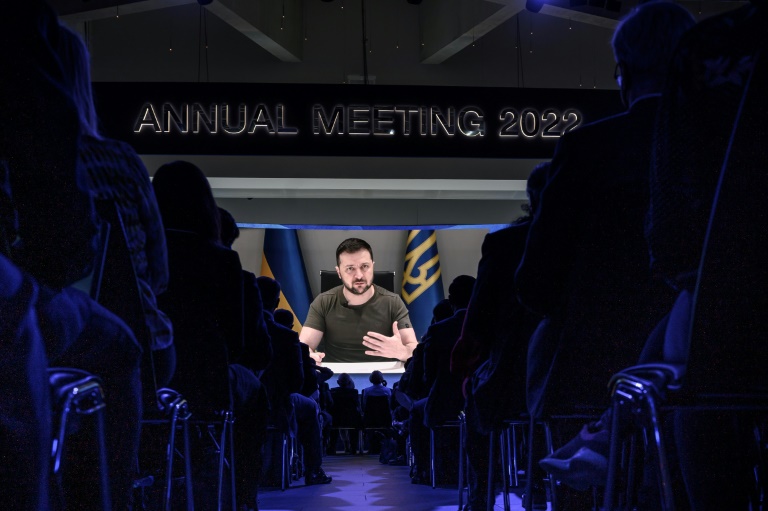
Ukrainian President Volodymyr Zelensky used the Davos summit Monday to appeal for more weapons and “maximum” sanctions against Russia, lamenting that tens of thousands of lives would have been saved had countries acted faster.

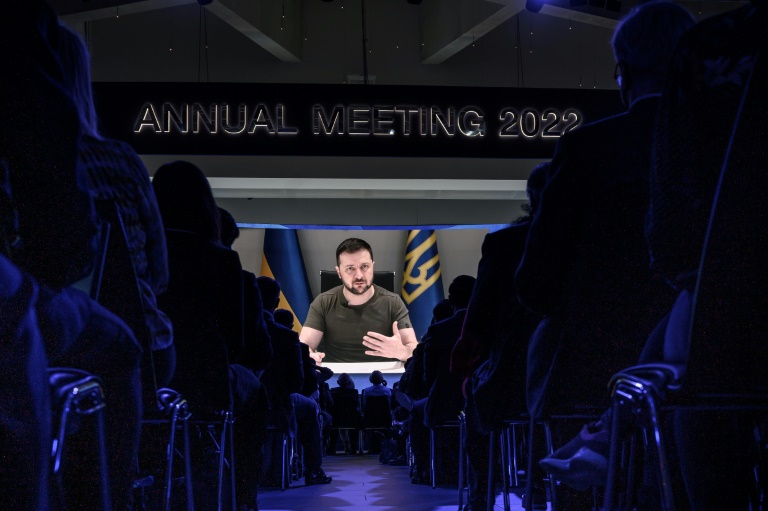
Appearing by video-link, Zelensky delivered the headline speech to the first World Economic Forum to be held in the Swiss Alps in more than two years after the Covid pandemic derailed the event.

The conflict shows “that support to the country under attack is more valuable the sooner it is provided: weapons, funding, political support and sanctions against Russia,” said Zelensky, who received a standing ovation.

Flanked by Ukrainian flags and wearing an olive-green T-shirt, he said through an interpreter that if Kyiv had received “100 percent of our needs at once back in February, the result would have been tens of thousands of lives saved”.

“This is why Ukraine needs all the weapons that we ask for, not just the ones that have been provided,” he said, adding that 87 people were killed in a May 17 strike by Russia on a military base in northern Ukraine.

Anastasia Radina, a Ukrainian lawmaker, told AFP that her country needs “NATO-style” weapons, including tanks and ground-based air defence systems.

“What we are looking for most importantly are fighter jets and this has been the most difficult discussion,” she said. 

“Three months into the war, and tens of thousands lives lost, we are still at the point of discussing if we need fighter jets. Frankly speaking this is outrageous.”

Ukraine is receiving howitzers “but that is not yet enough”, she said.

– End all Russia trade –

Zelensky called for an oil embargo on Russia, punitive measures against all its banks and the shunning of its IT sector, adding that all foreign companies should leave the country.

“There should not be any trade with Russia,” he told the gathering.

“I believe there are still no such sanctions against Russia — and there should be.”

WEF founder Klaus Schwab praised Zelensky for his “courageous leadership” and said Davos participants were eager to hear how they could assist Ukraine “because everybody is affected by what’s happening in your country”.

Western powers have imposed a slew of sanctions on Russia.

But while the United States, Britain and Canada have moved to ban Russian oil and gas, the European Union has been divided over imposing similar measures.

The war is dominating the four-day meeting of the world’s business and political elites, with Ukraine sending a strong contingent of officials, including the foreign minister, to plead for more aid.

Russian business and political leaders, who used to participate in debates and mingle with other A-listers at champagne parties, were excluded from this year’s gathering.

The Ukrainians have transformed the “Russia House” in Davos –- normally used by the Russian delegation — into the “Russia War Crimes House” to promote their cause.

More than 50 heads of state or government are among the 2,500 delegates at the WEF under the title “History at a Turning Point”.

– ‘Bonanza’ for billionaires –

When the WEF last took place in Davos in January 2020, the coronavirus was just brewing in China before morphing into a devastating pandemic.

A Davos forum took place virtually last year, with Russian President Vladimir Putin among the speakers.

While the summit is back, it lacks its usual snowy backdrop after the Omicron variant forced this year’s January meeting to be postponed until now. Instead, rain is forecast all week.

Climate change and concerns about the economic recovery from the pandemic are also at the forefront of the Davos talks.

Inflation has become a major concern as energy and food prices have soared further since Russia invaded major grain-exporter Ukraine, raising fears of hunger in countries dependent on wheat from the region.

A Russian blockade is preventing Ukraine from using its ports to export its agricultural goods, and Zelensky accused Russia of stealing grains on a daily basis.

He said he has talked with European Union, UK, Turkish and UN officials to look into establishing a “corridor which would allow exports of our wheat, sunflowers and other grains”.

Qatar’s emir Tamim bin Hamad Al-Thani, meanwhile, stepped up his offers at Davos to act as a mediator.

“We are in touch with all parties concerned in the Ukrainian crisis, and I am ready to contribute to every international and regional effort, to find an immediate, peaceful solution to the conflict,” he said.

Zelensky tells Davos: send us weapons, stop Russia trade

Ukrainian President Volodymyr Zelensky used the Davos summit Monday to appeal for more weapons and “maximum” sanctions against Russia, lamenting that tens of thousands of lives would have been saved had countries acted faster.

Appearing by video-link, Zelensky delivered the headline speech to the first World Economic Forum to be held in the Swiss Alps in more than two years after the Covid pandemic derailed the event.

The conflict shows “that support to the country under attack is more valuable the sooner it is provided: weapons, funding, political support and sanctions against Russia,” said Zelensky, who received a standing ovation.

Flanked by Ukrainian flags and wearing an olive-green T-shirt, he said through an interpreter that if Kyiv had received “100 percent of our needs at once back in February, the result would have been tens of thousands of lives saved”.

“This is why Ukraine needs all the weapons that we ask for, not just the ones that have been provided,” he said, adding that 87 people were killed in a May 17 strike by Russia on a military base in northern Ukraine.

Anastasia Radina, a Ukrainian lawmaker, told AFP that her country needs “NATO-style” weapons, including tanks and ground-based air defence systems.

“What we are looking for most importantly are fighter jets and this has been the most difficult discussion,” she said. 

“Three months into the war, and tens of thousands lives lost, we are still at the point of discussing if we need fighter jets. Frankly speaking this is outrageous.”

Ukraine is receiving howitzers “but that is not yet enough”, she said.

– End all Russia trade –

Zelensky called for an oil embargo on Russia, punitive measures against all its banks and the shunning of its IT sector, adding that all foreign companies should leave the country.

“There should not be any trade with Russia,” he told the gathering.

“I believe there are still no such sanctions against Russia — and there should be.”

WEF founder Klaus Schwab praised Zelensky for his “courageous leadership” and said Davos participants were eager to hear how they could assist Ukraine “because everybody is affected by what’s happening in your country”.

Western powers have imposed a slew of sanctions on Russia.

But while the United States, Britain and Canada have moved to ban Russian oil and gas, the European Union has been divided over imposing similar measures.

The war is dominating the four-day meeting of the world’s business and political elites, with Ukraine sending a strong contingent of officials, including the foreign minister, to plead for more aid.

Russian business and political leaders, who used to participate in debates and mingle with other A-listers at champagne parties, were excluded from this year’s gathering.

The Ukrainians have transformed the “Russia House” in Davos –- normally used by the Russian delegation — into the “Russia War Crimes House” to promote their cause.

More than 50 heads of state or government are among the 2,500 delegates at the WEF under the title “History at a Turning Point”.

– ‘Bonanza’ for billionaires –

When the WEF last took place in Davos in January 2020, the coronavirus was just brewing in China before morphing into a devastating pandemic.

A Davos forum took place virtually last year, with Russian President Vladimir Putin among the speakers.

While the summit is back, it lacks its usual snowy backdrop after the Omicron variant forced this year’s January meeting to be postponed until now. Instead, rain is forecast all week.

Climate change and concerns about the economic recovery from the pandemic are also at the forefront of the Davos talks.

Inflation has become a major concern as energy and food prices have soared further since Russia invaded major grain-exporter Ukraine, raising fears of hunger in countries dependent on wheat from the region.

A Russian blockade is preventing Ukraine from using its ports to export its agricultural goods, and Zelensky accused Russia of stealing grains on a daily basis.

He said he has talked with European Union, UK, Turkish and UN officials to look into establishing a “corridor which would allow exports of our wheat, sunflowers and other grains”.

Qatar’s emir Tamim bin Hamad Al-Thani, meanwhile, stepped up his offers at Davos to act as a mediator.

“We are in touch with all parties concerned in the Ukrainian crisis, and I am ready to contribute to every international and regional effort, to find an immediate, peaceful solution to the conflict,” he said.

Facebook's Zuckerberg targeted in US privacy lawsuit

Facebook founder Mark Zuckerberg was named personally in a Washington lawsuit Monday alleging he played a direct role in decisions that set the stage for the Cambridge Analytica privacy scandal.

The US capital’s attorney general argues that Zuckerberg was closely involved in conceiving the framework that allowed the Britain-based consulting firm to harvest over 70 million US Facebook users data

A whistleblower revealed in 2018 that Cambridge Analytica went on to use that data for political purposes, including trying to rally support for Donald Trump.

“Zuckerberg is not just a figurehead at Facebook; he is personally involved in nearly every decision the company makes,” Washington Attorney General Karl Racine wrote in the suit.

He added that Zuckerberg’s control is baked into the structure of the company, where the founder and CEO holds a majority of voting shares.

Racine’s office sued Facebook over its data privacy practices in 2018 as part of a case that is ongoing.

Facebook’s parent company Meta did not immediately respond to the new lawsuit’s allegations, but spokesman Andy Stone noted on Twitter that a judge had previously rejected Racine’s bid to add Zuckerberg as a defendant in the privacy case. 

US authorities imposed what they described as a “historic” $5 billion fine on Facebook in the wake of the scandal, and also required Facebook to ramp up privacy protections, provide detailed quarterly reports on compliance with the deal, and have an independent oversight board. 

Since the Cambridge Analytica scandal broke, Facebook has removed access to its data from thousands of apps suspected of abusing it, restricted the amount of information available to developers in general, and made it easier for users to calibrate restrictions on personal data sharing. 

Facebook's Zuckerberg targeted in US privacy lawsuit

Facebook founder Mark Zuckerberg was named personally in a Washington lawsuit Monday alleging he played a direct role in decisions that set the stage for the Cambridge Analytica privacy scandal.

The US capital’s attorney general argues that Zuckerberg was closely involved in conceiving the framework that allowed the Britain-based consulting firm to harvest over 70 million US Facebook users data

A whistleblower revealed in 2018 that Cambridge Analytica went on to use that data for political purposes, including trying to rally support for Donald Trump.

“Zuckerberg is not just a figurehead at Facebook; he is personally involved in nearly every decision the company makes,” Washington Attorney General Karl Racine wrote in the suit.

He added that Zuckerberg’s control is baked into the structure of the company, where the founder and CEO holds a majority of voting shares.

Racine’s office sued Facebook over its data privacy practices in 2018 as part of a case that is ongoing.

Facebook’s parent company Meta did not immediately respond to the new lawsuit’s allegations, but spokesman Andy Stone noted on Twitter that a judge had previously rejected Racine’s bid to add Zuckerberg as a defendant in the privacy case. 

US authorities imposed what they described as a “historic” $5 billion fine on Facebook in the wake of the scandal, and also required Facebook to ramp up privacy protections, provide detailed quarterly reports on compliance with the deal, and have an independent oversight board. 

Since the Cambridge Analytica scandal broke, Facebook has removed access to its data from thousands of apps suspected of abusing it, restricted the amount of information available to developers in general, and made it easier for users to calibrate restrictions on personal data sharing. 

Euro rallies as ECB signals end to negative rates

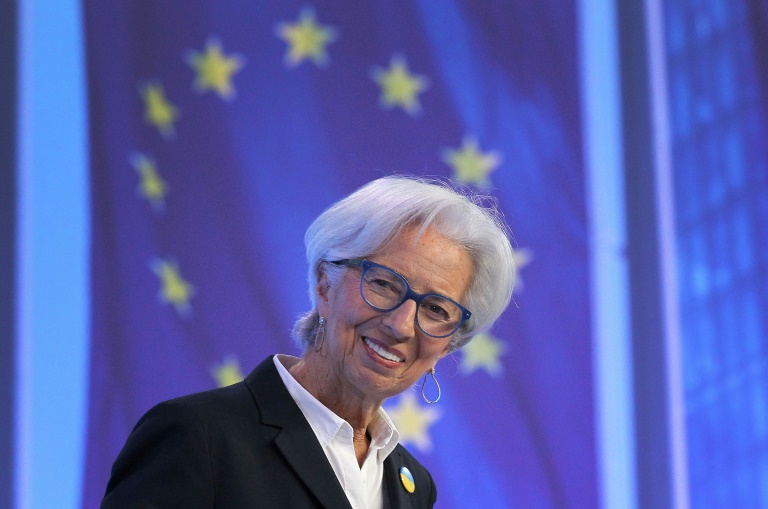
The euro jumped one percent versus the dollar Monday after European Central Bank chief Christine Lagarde signalled the end of negative interest rates.

The euro struck a one-month high at $1.0692 after Lagarde said the central bank would probably draw a line under the era of negative interest rates by September owing to soaring eurozone inflation.

“That’s something that we were waiting for, for so long,” noted Swissquote analyst Ipek Ozkardeskaya.

“Lagarde is finally showing that the (inflation) situation is serious in Europe as well,” she told AFP.

Central banks around the world are increasing interest rates to tackle the highest inflation in decades, but the ECB has so far refused to follow the likes of the Federal Reserve and Bank of England in hiking borrowing costs from record-low levels.

Eurozone inflation soared by an all-time high 7.5 percent in April.

The surge has been driven by soaring energy and food prices, as economies reopen from pandemic lockdowns and following Russia’s invasion of Ukraine.

Investors will be looking to the release on Wednesday of minutes from the last Federal Reserve meeting for clues on the pace of future interest rate hikes by the US central bank.

Oil prices jumped more than one percent Monday before pulling back.

Elsewhere, stock markets mostly climbed after US President Joe Biden said he was considering lifting some trade tariffs imposed on China by predecessor Donald Trump.

Tariffs on hundreds of billions of dollars of Chinese imports are due to expire in July, and Biden has faced growing calls to get rid of the punitive duties to help combat the highest US inflation in more than four decades.

Biden’s comments Monday came during a visit to Tokyo.

The president added that while a US recession was not inevitable, he acknowledged the economic pain felt by American consumers over soaring inflation.

Ending the tariffs could help cut roaring US inflation by making imports cheaper.

Biden also announced that 13 countries had joined a new, US-led Asia-Pacific trade initiative.

Wall Street may also be seeing a return of investors willing to take on risk following a huge slump in prices due to inflation and interest rate concerns.

“After seven straight weeks of declines, bargain hunters are out in force, snapping up stocks after they fell to fresh 18-month lows on Friday,” said Fiona Cincotta, senior financial markets analyst at City Index.

The Dow was up 2.1 percent in late morning trading.

– Key figures at around 1530 GMT –

Euro/dollar: UP at $1.0684 from $1.0564 on Friday

Pound/dollar: UP at $1.2577 from $1.2497

Euro/pound: UP at 84.94 pence from 84.50 pence

Dollar/yen: DOWN at 127.74 yen from 127.86 yen 

New York – Dow: UP 2.1 percent at 31,903.40 points

EURO STOXX 50: UP 1.1 percent at 3,604.75

London – FTSE 100: UP 1.7 percent at 7,513.44 (close) 

Frankfurt – DAX: UP 1.4 percent at 14,175.40 (close)

Paris – CAC 40: UP 1.2 percent at 6,358.74 (close)

Tokyo – Nikkei 225: UP 1.0 percent at 27,001.52 (close)

Hong Kong – Hang Seng Index: DOWN 1.2 percent at 20,470.06 (close)

Shanghai – Composite: FLAT at 3,146.86 (close)

Brent North Sea crude: UP 0.3 percent at $112.84 per barrel

West Texas Intermediate: DOWN less than 0.1 percent at $110.23

burs-rl/jj

US consumers in strong financial position: Fed

US families were in the best financial position in nearly a decade last year — before the Omicron variant of Covid-19 hit, the Federal Reserve said Monday.

Despite concerns about the overall economic situation, more Americans felt comfortable with their finances and were able to deal with an unexpected expense, according to the Fed’s annual Economic Well-Being of US Households report.

But the survey did not ask about inflation, which has become the major economic challenge for policymakers, politicians and consumers, as consumer prices have risen at the fastest pace in more than four decades. 

“Self-reported financial well-being reached its highest level since the survey began in 2013, with 78 percent of adults doing okay or living comfortably financially,” the report said.

And the share of adults who would be able to cover a $400 emergency expense like a car repair with cash or credit card also was the highest in the history of the survey, at 68 percent, compared to just 50 percent in 2013.

The survey of 11,000 adults was conducted in October and November of 2021, before the latest wave of infections, showed positive trends in financial wellbeing, and before inflation picked up speed causing the Fed to begin to raise interest rates aggressively to cool the economy.

The survey showed improvements all racial and ethnic groups, with a particularly large increase among Hispanic adults.

However, 11 percent of adults said they could not pay an emergency expense by any method, and nearly a quarter had difficulty paying bills that month or were close to it, the report said.

And in contrast to their personal financial situation, only 24 percent of adults rated the national economy as “good” or “excellent” in 2021, down two percentage points from 2020 and about half the rate seen in 2019.

“This important perspective helps the Federal Reserve better understand the economic challenges that existed during that phase of the pandemic recovery,” Fed Governor Michelle Bowman said in a statement.

Didi shareholders vote to delist from New York stock exchange

Shareholders of Chinese ride-hailing giant Didi Global voted Monday to delist the company in New York, the firm said in a statement, nearly one year since it was hit by a sweeping tech clampdown.

Didi, once known as China’s answer to Uber, got into hot water after ploughing ahead with an initial public offering in the United States in June 2021, reportedly against the wishes of regulators in Beijing.

Days after Didi raised $4.4 billion in its initial public offering, Chinese authorities launched cybersecurity investigations into the company, sending shares plunging. Its service was ordered off Chinese app stores soon after.

Monday’s decision came after an extraordinary general meeting in Beijing, where shareholders voted to “delist the company’s American Depositary Shares from the New York Stock Exchange as soon as practicable,” Didi said in a statement on Monday.

The resolution also stated that Didi’s shares “will not be listed on any other stock exchange before the delisting is completed,” so as to “better cooperate” with authorities’ cybersecurity review and rectification measures.

The statement did not offer any details as to why Didi was backtracking from its decision to raise funds in the United States.

The move is expected to pave the way for a Hong Kong listing, which was reportedly put on hold after China’s top internet watchdog told executives their proposals to prevent security and data leaks were insufficient.

Didi has dominated the Chinese ride-hailing market since winning a costly turf war against US titan Uber in 2016.

Its app claims to have more than 15 million drivers and nearly 500 million users.

Several US-listed China tech companies — including Alibaba — have held initial public offerings in Hong Kong in recent years as the United States stepped up scrutiny of Chinese firms.

Pfizer Covid vaccine for under-fives effective with three doses

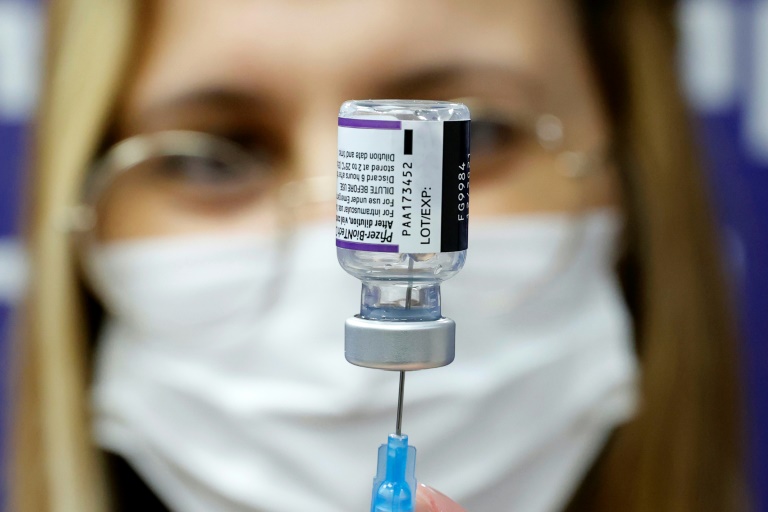
The Pfizer-BioNTech Covid vaccine is safe and effective when given as three doses to children under five years, the companies said Monday, welcome news for parents of the only age group not yet eligible for immunization in most countries.

The announcement comes as the US Food and Drug Administration (FDA) is planning highly-anticipated meetings in the coming weeks to weigh authorization. 

In a clinical trial, Pfizer-BioNTech evaluated three doses, given at three micrograms, and found the vaccine evoked a strong immune response in children aged from six months through four years.

Side effects were similar in the vaccine and placebo groups.

Vaccine efficacy was 80.3 percent, according to a preliminary estimate — though this was based on very low numbers and may change significantly by the time of the final estimate.

“We are pleased that our formulation for the youngest children, which we carefully selected to be one-tenth of the dose strength for adults, was well tolerated and produced a strong immune response,” said Pfizer CEO Albert Bourla in a statement.

“We look forward to soon completing our submissions to regulators globally with the hope of making this vaccine available to younger children as quickly as possible, subject to regulatory authorization,” he added.

The FDA has tentatively scheduled three dates in June where experts will meet and likely decide whether to authorize the Pfizer Covid vaccine for under-fives and the Moderna vaccine for under-sixes, which is given as two shots of 25 micrograms.

The agency was originally set to evaluate the Pfizer vaccine given as two doses in February, but data showed it did not provoke a strong enough immune response in children aged two to four. The FDA then asked to see data for a third shot.

– Results welcomed –

In the latest study, 1,678 children received a third dose at a time when Omicron was the predominant variant.

An analysis of a subset of participants showed antibody levels were similar to 16- to 25-year-olds who were given the full strength vaccine at two doses.

No new adverse events were identified, and the majority of side effects were mild or moderate.

Three doses of the vaccine “appear to be very safe and highly effective in preventing not only severe disease, hospitalization, and death from Covid, but even symptomatic Covid at a time when Omicron was the dominant variant,” Celine Gounder, editor-at-large for public health at Kaiser Health News told AFP.

“However, we know that protection against SARS-CoV-2 infection and milder symptomatic disease wanes over time,” added Gounder, an infectious disease specialist and epidemiologist.

“Pfizer is reporting follow-up data only out to seven days after the third dose of vaccine. It’s too early to say how the three-dose series would perform out to several months or a year.”

Jeremy Faust, of Brigham and Women’s Hospital Department of Emergency Medicine, told AFP: “My first impression is very positive. These numbers are exactly the kinds of signals we wanted to see.”

“I wish the two-dose series had worked for Pfizer-BioNTech. It didn’t. But the three-dose series appears to have given these very young children the protection we want them to have,” the doctor added. 

If and when both Pfizer’s and Moderna’s vaccines are authorized, parents will have to consider whether they want their children to receive Moderna’s two dose vaccine — which will offer faster protection — or Pfizer’s three doses — which will take longer to be effective but may ultimately be more protective.

As with adults, the first two doses of Pfizer’s vaccine are given to under-fives three weeks apart, but then the third is given two months after the second. 

Severe disease from Covid is very rare among under-fives but can occur, with 477 US deaths in this age group since the start of the pandemic, or about 0.1 percent of all deaths.

Children can also contract a rare post-viral condition called multisystem inflammatory syndrome in children (MIS-C), which has affected some 8,210 US children and killed 68. 

Like adults, some children who get Covid may go on to develop long Covid, with new, ongoing or returning symptoms, including brain fog and fatigue.

Close Bitnami banner
Bitnami