US Business

Asian markets rise as Biden 'considers' lifting China tariffs

Asian stocks rose Monday after US President Joe Biden said he was considering lifting some Trump-era trade tariffs imposed on China, although concerns over inflation and growth weighed on sentiment.

Tariffs on hundreds of billions of dollars of Chinese imports are due to expire in July, and Biden has faced growing calls to get rid of the punitive duties to help combat the highest US inflation in more than four decades.

Biden’s comments Monday during a visit to Tokyo come after Treasury Secretary Janet Yellen last week said some of the duties imposed by former president Donald Trump “seem to impose more harm on consumers and businesses” and do little to address real issues posed by the Asian giant.

The president also said a recession in the United States was not inevitable but acknowledged the economic pain felt by American consumers, saying “this is going to take some time”.

Ending the tariffs could help cut roaring US inflation by making imports cheaper.

Biden also announced that 13 countries had joined a new, US-led Asia-Pacific trade initiative, although there are questions about the pact’s effectiveness.

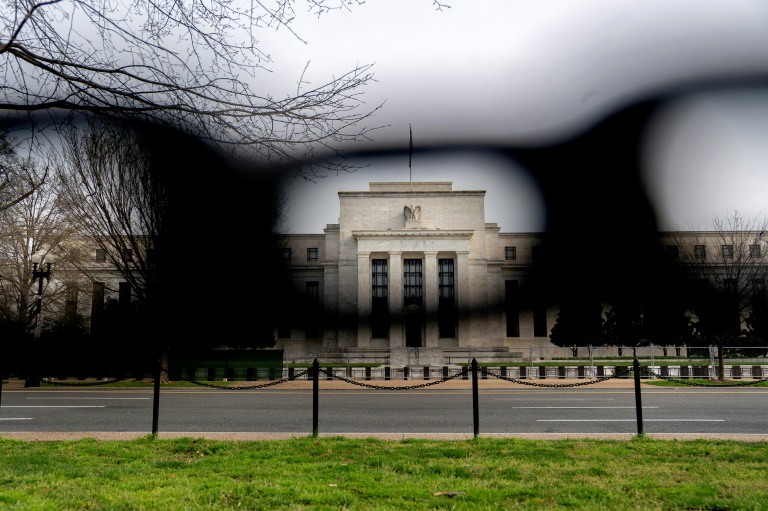
Investors will be looking to the release on Wednesday of notes from the latest Federal Reserve committee meeting for clues on further rate hikes by the US central bank.

Trade was cautious in Asia after Wall Street briefly dipped into a bear market Friday, with the S&P 500 index down about 19 percent from its January high. 

Tokyo closed 1.0 percent higher, while Shanghai ended flat. Hong Kong fell 1.2 and Singapore was down 0.6 percent but most other Asian markets saw gains, with Seoul, Bangkok, Taipei and Mumbai in the green.

Sydney ended marginally higher following a weekend election that saw the centre-left Labor party end a decade of conservative rule.

The new government of Prime Minister Anthony Albanese is expected to undertake some policy shifts, particularly on climate change, but economists said they were unlikely to upset growth forecasts.

An interest rate cut by Beijing did little to cheer Chinese markets, with investors concerned about continuing Covid restrictions that are hurting the world’s second-largest economy and snarling international supply chains.

European markets opened higher despite lingering concerns over inflation, with London up 0.8 percent, Frankfurt 1.4 percent higher and Paris adding 0.7 percent.

Downcast earning reports from retailers have also heightened market uncertainty at a time of rising interest rates, surging energy prices and Russia’s ongoing war in Ukraine, which is driving commodity prices higher.

“As macro-economic concerns stemming from aggressive monetary tightening, the Russia-Ukraine conflict and China’s stringent Covid lockdowns persist, we anticipate great volatility in the market,” Louise Dudley, portfolio manager global equities at Federated Hermes, said in a note, Bloomberg News reported.

Oil was higher, with US crude benchmark WTI up 0.9 percent and Brent gaining 1.0 percent.

The invasion of Ukraine has shaken up the global market and the outlook for key producer Russia, which has been largely shunned by Western countries.

“Concerns over demand destruction appear to be limiting the upside, while threats of oil embargoes are keeping a floor under the downside,” said Michael Hewson, chief market analyst at CMC Markets.

– Key figures at around 0730 GMT –

Tokyo – Nikkei 225: UP 1.0 percent at 27,001.52 (close)

Hong Kong – Hang Seng Index: DOWN 1.2 percent at 20,470.06 (close)

Shanghai – Composite: FLAT at 3,146.86 (close)

Dollar/yen: DOWN at 127.67 yen from 127.86 yen on Friday

Euro/dollar: UP at $1.0605 from $1.0564

Pound/dollar: UP at $1.2572 from $1.2497

Euro/pound: DOWN at 84.36 pence from 84.50 pence

West Texas Intermediate: UP 0.9 percent at $111.27 per barrel

Brent North Sea crude: UP 1.0 percent at $113.70 per barrel

New York – Dow: FLAT at 31,261.90 (close)

London – FTSE 100: UP 0.8 percent at 7,447.31

More than 100 million people forcibly displaced: UN

Russia’s war in Ukraine has pushed the number of forcibly displaced people around the world above 100 million for the first time ever, the United Nations said on Monday.

“The number of people forced to flee conflict, violence, human rights violations and persecution has now crossed the staggering milestone of 100 million for the first time on record, propelled by the war in Ukraine and other deadly conflicts,” said UNHCR, the UN Refugee Agency.

The “alarming” figure must shake the world into ending the conflicts forcing record numbers to flee their own homes, the UNHCR said in a statement.

UNHCR said the numbers of forcibly displaced people rose towards 90 million by the end of 2021, spurred by violence in Afghanistan, Burkina Faso, the Democratic Republic of Congo, Ethiopia, Myanmar and Nigeria.

Russia invaded Ukraine on February 24 and since then more than eight million people have been displaced within the country, while more than six million refugees have fled across the borders.

– ‘Wake-up call’ –

“One hundred million is a stark figure — sobering and alarming in equal measure. It’s a record that should never have been set,” said UN High Commissioner for Refugees Filippo Grandi.

“This must serve as a wake-up call to resolve and prevent destructive conflicts, end persecution and address the underlying causes that force innocent people to flee their homes.”

The 100 million figure amounts to more than one percent of the global population. Only 13 countries have a bigger population than the number of forcibly displaced people in the world.

The figures combine refugees, asylum-seekers and more than 50 million people displaced inside their own countries.

“The international response to people fleeing war in Ukraine has been overwhelmingly positive,” said Grandi.

“Compassion is alive and we need a similar mobilisation for all crises around the world. But ultimately, humanitarian aid is a palliative, not a cure.

“To reverse this trend, the only answer is peace and stability so that innocent people are not forced to gamble between acute danger at home or precarious flight and exile.”

UNHCR will provide the full data on forced displacement in 2021 in its annual Global Trends Report, due for release on June 16.

– ‘Plague of human suffering’ –

More than two years on since the start of the Covid-19 pandemic, at least 20 countries still deny access to asylum for people fleeing conflict, violence, and persecution based on measures to clamp down on the virus.

Grandi called on May 20 for those countries to lift any remaining pandemic-related asylum restrictions, saying they contravene a fundamental human right.

“I am worried that measures enacted on the pretext of responding to Covid-19 are being used as cover to exclude and deny asylum to people fleeing violence and persecution,” he said.

A joint report last week by the Internal Displacement Monitoring Centre (IDMC) and the Norwegian Refugee Council (NRC) said around 38 million new internal displacements were reported in 2021. Some of those were by people forced to flee multiple times during the year.

The figure marks the second-highest annual number of new internal displacements in a decade after 2020, which saw record-breaking movement due to a string of natural disasters.

Last year, new internal displacements specifically from conflict surged to 14.4 million — marking a 50-percent jump from 2020, the report showed.

“Today’s sobering 100 million displacement figure is indisputable proof that global leaders are failing the world’s most vulnerable people on a scale never before seen,” NRC secretary-general Jan Egeland said in a statement.

“We are witnessing an unprecedented plague of human suffering.”

He said the aid system would not be able to support 100 million people in need without more resources.

“It is twice the number of people compared to a decade ago, without a doubling of funding to match it,” Egeland said.

Natural disasters continued to account for most new internal displacement, spurring 23.7 million such movements in 2021.

US unveils Asia-Pacific trade framework, but questions remain

President Joe Biden launched a new Asia-Pacific trade initiative Monday in Tokyo, with 13 countries including India and Japan signing up, although questions about the pact’s effectiveness remain.

Biden formally unveiled the Indo-Pacific Economic Framework for Prosperity, or IPEF, on his second day in Japan, where he is also holding talks with Prime Minister Fumio Kishida before joining a regional Quad summit on Tuesday.

“This framework is a commitment to working with our close friends and partners in the region on challenges that matter most to ensuring economic competitiveness in the 21st century,” he said.

Unlike traditional trade blocs, there is no plan for IPEF members to negotiate tariffs and ease market access — a tool that has become increasingly unpalatable to US voters fearful of seeing homegrown manufacturing undermined.

Instead, the programme foresees integrating partners through agreed standards in four main areas: the digital economy, supply chains, clean energy infrastructure and anti-corruption measures.

The starting list of members in addition to the United States is Australia, Brunei, India, Indonesia, Japan, Malaysia, New Zealand, the Philippines, Singapore, South Korea, Thailand and Vietnam.

The countries touted IPEF as a framework for what will ultimately become a tight-knit group of trading nations.

“We share a commitment to a free, open, fair, inclusive, interconnected, resilient, secure, and prosperous Indo-Pacific region,” they said in a joint statement.

“Deepening economic engagement among partners is crucial for continued growth, peace, and prosperity.”

– Rebuilding alliances –

Together, the participants account for about 40 percent of global GDP and “there are other countries that could conceivably join us,” Biden’s national security adviser, Jake Sullivan, told reporters.

Biden has pushed to rapidly rebuild strategic military and trade alliances weakened under his predecessor Donald Trump since taking office in 2021.

IPEF is intended to offer US allies an alternative to China’s growing commercial presence across the Asia-Pacific.

However, there is no political will in Washington for returning to a tariffs-based Asia trade deal following Trump’s 2017 withdrawal from the Trans-Pacific Partnership — a huge trading bloc that was revived under a new name in 2018, without US membership.

While the TPP reduces trade barriers for members, US Secretary of Commerce Gina Raimondo emphasised to reporters that IPEF was not designed to go down the same route.

The “framework is intentionally designed not to be a same old, same old traditional trade agreement,” she said.

Even so, Japan’s Kishida said there is still an appetite for US involvement in the larger pact abandoned by Trump.

The country welcomes the new framework and will “participate and cooperate”, he said, but “from a strategic standpoint, Japan hopes that the United States will return to the TPP”.

– No Taiwan –

China has criticised IPEF as an attempt to create a closed club. Sullivan rejected this, saying “it is by design and definition an open platform.”

Taiwan, the self-governing democracy that China claims sovereignty over, has pointedly not been brought into the initial line-up — despite being an important link in supply chains for microchips.

Sullivan said nevertheless that the United States is “looking to deepen our economic partnership with Taiwan, including on high-technology issues, including on semiconductors and supply chains”.

This will happen, however, only “on a bilateral basis”.

The United States faces skepticism, given the lack of incentives to go along with IPEF’s plan for smoother integration.

Without offering increased access to the huge US market, it is unclear what enforcement mechanisms could be applied.

But Raimondo said that if IPEF had been in place before the Covid-19 pandemic triggered mass economic shutdowns, the United States would have “experienced much less disruption”.

And more broadly, the US trade-boosting initiative is welcomed by businesses that “increasingly look for alternatives to China”, she said.

Turkey dreams of far-fetched gas pipeline with Israel

Turkey is ready for energy cooperation with Israel after years of enmity, reviving a project to pipe Israeli gas to Europe as Ankara seeks to reduce its dependence on Russia.

But the plan faces Israeli scepticism over past diplomatic tensions and seems a pipe dream in the eyes of experts due to its logistical complexity and cost.

President Recep Tayyip Erdogan has voiced readiness to “cooperate (with Israel) in energy and energy security projects” with the prospect of shipping Israeli gas to Europe through Turkey as the conflict in Ukraine triggers supply fears.

“Turkey has the experience and capacity to implement such projects. The recent developments in our region has shown once again the importance of energy security,” he said in March.

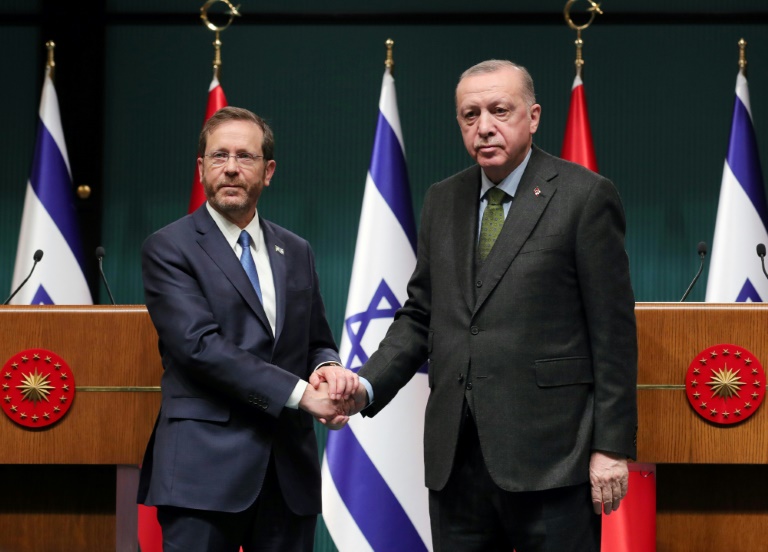
Israeli President Isaac Herzog made a landmark visit to Ankara in March to build relations with his Turkish counterpart when both leaders proclaimed a new era following more than a decade of diplomatic rupture.

Turkish Foreign Minister Mevlut Cavusoglu will visit Israel on Wednesday. Energy Minister Fatih Donmez is also expected to travel but it was not immediately clear if he will accompany Cavusoglu. 

But according to some experts, there is little Israeli interest in energy cooperation with Turkey.

– ‘Erdogan an untrustworthy party’ –

“Energy relations are forged by cooperative, trusting states — certainly not how one would describe the current dynamics between the two countries,” Gabi Mitchell, policy fellow at the Mitvim Institute in Israel, told AFP.

“There are those in Israel who argue that Erdogan is an untrustworthy party,” he said.

The Turkish leader is known for his angry outbursts at the Jewish state, especially over its policy towards the Palestinians.

In 2009, he stormed out of a Davos panel after a heated exchange with the then Israeli president, Shimon Peres. 

NATO member Turkey had been Israel’s key ally in the Muslim world until a 2010 crisis where 10 civilians died in an Israeli raid on a ship seeking to breach a blockade on the Gaza Strip.

In 2016, the two countries agreed to start examining the feasibility of an undersea pipeline to pump Israeli gas to Turkish consumers and on to Europe.

But no progress has been made amid the tension between the two sides, with Erdogan seeing himself as a champion of the Palestinian cause and a strong backer of Hamas.

Yet Erdogan has been muted in his criticism in recent months and only voiced sadness over the Israeli-Palestinian violence at the flashpoint Al-Aqsa mosque compound, in a phone call with Herzog in April.

The pipeline project runs through controversial waters in the eastern Mediterranean, where Turkey and EU members Cyprus and Greece are often at odds.

Mitchell said: “This isn’t something Israel is interested in pursuing as it would damage relations” with Cyprus, Greece and the European Union.

“I’ve never thought the project feasible,” the Foreign Policy Research Institute’s Middle East Program director Aaron Stein told AFP. 

“The idea of the project comes back every time there is a thaw but the logistics needed to take it from a dream to reality is complicated and expensive,” he said. 

The pipeline from Israeli fields to Turkey could cost $1.5 billion, according to some media reports.  

– ‘Difficult but reasonable’ –

Ankara is hugely dependent on Russia for its energy imports, with 45 percent of its gas demand last year met by Russian sources, and is keen to diversify supplies, with a close eye on Israel’s developing resources.

Turkey imports natural gas through pipelines from Russia, Azerbaijan and Iran. It also buys liquefied natural gas (LNG) from suppliers including Qatar, Nigeria, Algeria and the United States.

“A gas pipeline crossing the south of Turkey in theory makes sense,” said energy expert Necdet Pamir of Cyprus International University. 

Turkey consumed 48 billion cubic metres of gas in 2020. This reached 60 billion in 2021 and is estimated to be 62-63 billion this year, he said.

“We need alternative gas supplies and new agreements are in Turkey’s interests as long as the circumstances including the financing are ripe,” Pamir added.

The Turkish option has reappeared on the agenda especially after the United States snubbed an eastern Mediterranean pipeline aimed at transferring natural gas from Israeli waters to Europe via Cyprus and Greece. That project excluded Turkey.

Turkey sees the gas project with Israel as more feasible than the EastMed pipeline despite the challenges. 

“It is not a project that begins today and ends tomorrow,” a Turkish official told AFP. 

“It’s difficult but it’s reasonable and feasible, especially compared to the Greece-led EastMed,” the official, who wished to remain anonymous, said.

With the basic economics of the Turkey-Israel pipeline still being questioned, some experts indicate LNG is a desirable, cheaper option.

“Beyond the politics, and the issue of Cyprus, land-based LNG terminals make more sense,” Stein said. “Financially, and it’s easier politically.”

Asian markets mixed as inflation fears weigh

Asian stocks were mixed Monday as inflation fears and concerns about low economic growth weighed on markets.

Investors will be looking to the release on Wednesday of notes from the latest Federal Reserve committee meeting for clues on further rate hikes by the US central bank.

Wall Street ended the week essentially flat after the S&P 500 had briefly dipped into a bear market, with the index down about 19 percent from its January high.

A Chinese interest rate cut did little to cheer Asian markets, with investors concerned about continuing Covid restrictions that are hurting the world’s second-largest economy and snarling international supply chains.

Downcast earning reports from retailers have also heightened market uncertainty at a time of rising interest rates, surging energy prices and Russia’s ongoing war on Ukraine, which is driving commodity prices higher.

“As macro-economic concerns stemming from aggressive monetary tightening, the Russia-Ukraine conflict and China’s stringent Covid lockdowns persist, we anticipate great volatility in the market,” Louise Dudley, portfolio manager global equities at Federated Hermes, said in a note, Bloomberg News reported.

In Asian trade Monday, Tokyo climbed 1.3 percent while Hong Kong slipped 1.5 percent and Shanghai was down 0.5 percent.

Seoul, Kuala Lumpur and Bangkok were higher while Singapore and Manila were down and Sydney was flat following a weekend election that saw the centre-left Labor party end a decade of conservative rule.

The new government of Prime Minister Anthony Albanese is expected to undertake some policy shifts, particularly on climate change, but economists said they were unlikely to upset growth forecasts.

“In our view there was little proposed by the incoming government during the election campaign that at this stage requires us to revisit our economic forecasts,” Commonwealth Bank of Australia economists said in a note.

“Put another way, our economic forecasts and call on the (Australian central bank) are unchanged despite the change of national leadership.”

Oil was higher, with US crude benchmark WTI up 0.5 percent and Brent gaining 0.7 percent.

The invasion of Ukraine has shaken up the global market and the outlook for key producer Russia, which has been largely shunned by Western countries.

– Key figures at around 0300 GMT –

Tokyo – Nikkei 225: UP 1.3 percent at 26,872.01 (break)

Hong Kong – Hang Seng Index: DOWN 1.5 percent at 20,416.04

Shanghai – Composite: DOWN 0.5 percent at 3,131.23

Dollar/yen: DOWN at 127.30 from 127.86 yen on Friday

Euro/dollar: UP at $1.0592 from $1.0564

Pound/dollar: UP at $1.2543 from $1.2497

Euro/pound: DOWN at 84.45 from 84.50 pence

West Texas Intermediate: UP 0.5 percent at $110.81 per barrel

Brent North Sea crude: UP 0.7 percent at $113.29 per barrel

New York – Dow: FLAT at 31,261.90 (close)

London – FTSE 100: UP 1.2 percent at 7,389.98 (close)

More than 100 million people forcibly displaced: UN

Russia’s war in Ukraine has pushed the number of forcibly displaced people around the world above 100 million for the first time ever, the United Nations said Monday.

“The number of people forced to flee conflict, violence, human rights violations and persecution has now crossed the staggering milestone of 100 million for the first time on record, propelled by the war in Ukraine and other deadly conflicts,” said UNHCR, the UN Refugee Agency.

The “alarming” figure must shake the world into ending the conflicts forcing record numbers to flee their own homes, the UNHCR said in a statement.

UNHCR said the numbers of forcibly displaced people rose towards 90 million by the end of 2021, spurred by violence in Ethiopia, Burkina Faso, Myanmar, Nigeria, Afghanistan and the Democratic Republic of the Congo.

Russia invaded Ukraine on February 24 and since then, more than eight million people have been displaced within the country, while more than six million refugees have fled across the borders.

– ‘Wake-up call’ –

“One hundred million is a stark figure — sobering and alarming in equal measure. It’s a record that should never have been set,” said UNHCR chief Filippo Grandi.

“This must serve as a wake-up call to resolve and prevent destructive conflicts, end persecution, and address the underlying causes that force innocent people to flee their homes.”

The 100 million figure amounts to more than one percent of the global population, while only 13 countries have a bigger population than the number of forcibly displaced people in the world.

The figures combine refugees, asylum-seekers, as well as more than 50 million people displaced inside their own countries.

“The international response to people fleeing war in Ukraine has been overwhelmingly positive,” said Grandi.

“Compassion is alive and we need a similar mobilisation for all crises around the world. But ultimately, humanitarian aid is a palliative, not a cure.

“To reverse this trend, the only answer is peace and stability so that innocent people are not forced to gamble between acute danger at home or precarious flight and exile.”

UNHCR will outline the full data on forced displacement in 2021 in its annual Global Trends Report, due for release on June 16.

– ‘Never been as bad’ –

More than two years on since the start of the Covid-19 pandemic, at least 20 countries still deny access to asylum for people fleeing conflict, violence, and persecution based on measures to clamp down on the virus.

Grandi called Friday for those countries to lift any remaining pandemic-related asylum restrictions, saying they contravene a fundamental human right.

“I am worried that measures enacted on the pretext of responding to Covid-19 are being used as cover to exclude and deny asylum to people fleeing violence and persecution,” he said.

A joint report last week by the Internal Displacement Monitoring Centre (IDMC) and the Norwegian Refugee Council (NRC) said around 38 million new internal displacements were reported in 2021. Some of those were by people forced to flee multiple times during the year.

The figure marks the second-highest annual number of new internal displacements in a decade after 2020, which saw record-breaking movement due to a string of natural disasters.

Last year, new internal displacements specifically from conflict surged to 14.4 million — marking a 50-percent jump from 2020, the report showed.

“It has never been as bad as this,” NRC chief Jan Egeland told reporters.

“The world is falling apart.”

Natural disasters continued to account for most new internal displacement, spurring 23.7 million such movements in 2021.

Global elites return to Davos under Ukraine storm

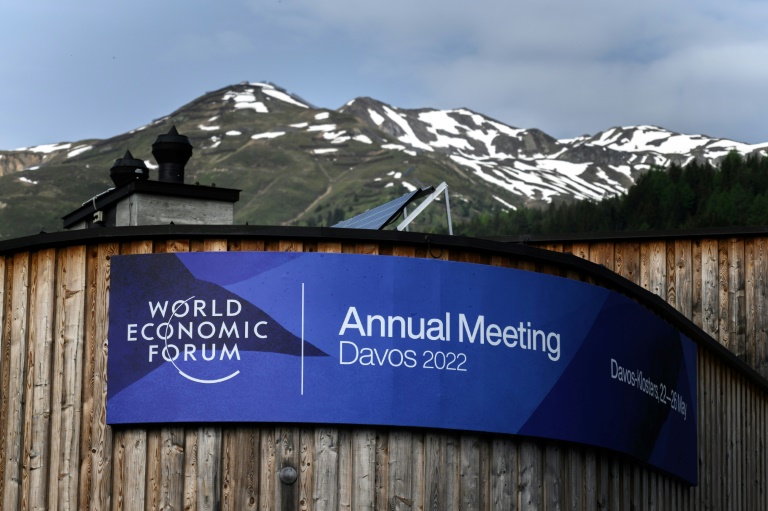
The Davos summit of global political and business elites returns Monday after a Covid-induced two-year break to face another momentous crisis: Russia’s invasion of Ukraine.

The theme of the World Economic Forum, “History at a Turning Point”, sets the tone for the four-day meeting in the glitzy Swiss mountain resort that will be dominated by the political and economic fallout from the conflict.

When the WEF last took place in Davos in January 2020, the coronavirus was just brewing in China before morphing into a devastating pandemic.

A Davos forum took place virtually last year, with Russian President Vladimir Putin among the speakers.

Russian business and political leaders, who used to participate in debates and mingle with other A-listers at champagne parties, were barred by organisers from attending this year’s gathering over the war.

Ukrainians, meanwhile, have deployed a strong contingent, including the foreign minister, to plead their case, with President Volodymyr Zelensky scheduled to address the forum via videolink on Monday.

“The major request to the whole world here is: do not stop backing Ukraine,” Ukrainian lawmaker Ivanna Klympush Tsintsadze told reporters on the eve of the summit.

Another lawmaker, Anastasia Radina, appealed for NATO-style heavy weaponry to “win the war”.

“We actually need weapons more than we need anything else,” she said.

The Ukrainians have transformed the “Russia House” in Davos –- normally used by the Russian delegation — into the “Russia War Crimes House” to promote their cause.

WEF founder Klaus Schwab said last week that Davos would do what it can to support Ukraine and its recovery.

“Russia’s aggression on the country will be seen in future history books as the breakdown of the post-World War II and post-Cold War order,” he said.

More than 50 heads of state or government will be among the 2,500 delegates, ranging from business leaders to academics and civil society figures.

Some of the biggest names include Germany’s new chancellor, Olaf Scholz, European Union chief Ursula von der Leyen, NATO head Jens Stoltenberg and US climate envoy John Kerry.

– ‘Bonanza’ for billionaires –

While the summit is back, it lacks its usual snowy backdrop as the Omicron variant forced this year’s January meeting to be postponed until now. Instead, rain is forecast all week.

Climate change and concerns about the economic recovery from the pandemic are also at the forefront of the Davos talks.

Inflation has become a major concern as energy and food prices have soared further since Russia invaded Ukraine, raising fears of hunger in countries dependent on wheat from the region.

Global charity Oxfam warned Monday that 263 million people could sink into extreme poverty this year, at a rate of one million every 33 hours.

By contrast, 573 new billionaires have emerged during the pandemic, or one every 30 hours, Oxfam said as it called for taxes on the rich.

“Billionaires are arriving in Davos to celebrate an incredible surge in their fortunes,” Oxfam executive director Gabriela Bucher said in a statement.

“The pandemic and now the steep increases in food and energy prices have, simply put, been a bonanza for them,” Bucher said.

“Meanwhile, decades of progress on extreme poverty are now in reverse and millions of people are facing impossible rises in the cost of simply staying alive,” she said.

US flight brings tons of needed baby formula from Germany

A US military plane bringing several tons of much-needed baby formula from Germany landed Sunday at an airport in Indiana as authorities scramble to address a critical shortage.

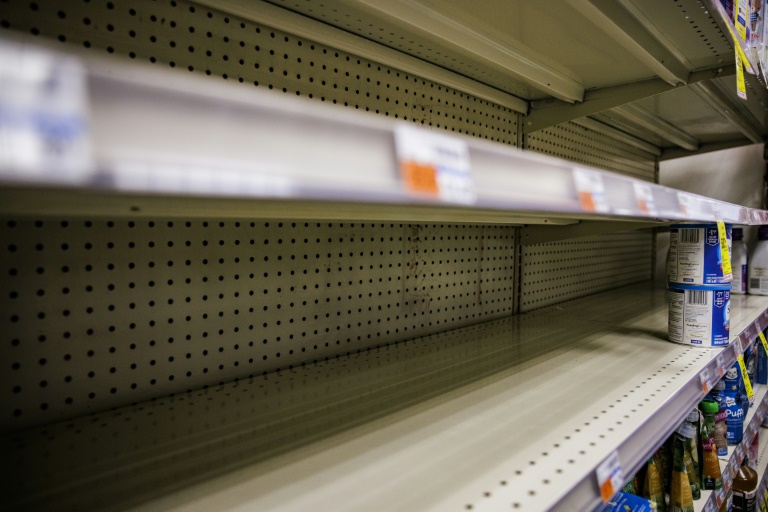
Scarcity of medical-grade baby formula caused by production problems and supply-chain issues has created grave problems for thousands of parents whose infants rely on it, sending them in frantic searches for the product.

The cargo plane took off from the US air base at Ramstein, Germany, carrying more than 70,000 pounds of powdered formula, the White House said. 

President Joe Biden posted about the flight on Twitter from Japan, where he is on a five-day Asia trip.

“Our team is working around the clock to get safe formula to everyone who needs it,” he said.

Biden tweeted an update later Sunday, saying more formula was on its way to the United States via a second shipment. 

“We have secured a second flight to transport Nestle specialty infant formula to Pennsylvania,” the president posted. 

“The flight and trucking will take place in the coming days, and I will continue to keep you updated,” he said.

The first shipment will cover about 15 percent of the immediate need, presidential economics advisor Brian Deese said on CNN.

He added there are “more flights in train that will be coming in early this week” as part of what the administration has dubbed “Operation Fly Formula.”

The formula was flown to Indiana because it is a hub for Nestle, a major domestic producer. It will be quality-tested at a nearby lab before being distributed.

The formula shortage has been developing for months, aggravated not only by supply-chain issues linked to the Covid-19 pandemic but by the closing of the largest US formula-making plant, a Michigan factory owned by Abbott Laboratories, amid concerns that contamination may have led to the deaths of two infants.

“We had a manufacturer that wasn’t following the rules, and that was making formula that had the risk of making babies sick,” Deese said. “So we have to take action.”

Another problem, he said, was that US formula production had become concentrated among just three companies. 

“We’re going to have to work” on ways to increase competition, he said.

Abbott’s CEO, Robert Ford, apologized to consumers in a Washington Post op-ed Sunday, saying: “We’re sorry to every family we’ve let down since our voluntary recall exacerbated our nation’s baby formula shortage.”

Deese was asked separately about growing concerns that the US economy — hit by high inflation, supply chain troubles and the war in Ukraine — may be headed toward a recession. 

“Well, there are always risks,” he said.

“But there’s also no doubt that the United States is in a better position than any other major country around the world to address inflation without giving up all the economic gains that we have had.”

The US inflation rate hit a 40-year high of 8.5 percent in March, but slowed slightly in April to 8.3 percent.

Biden warns of potentially 'consequential' monkeypox spread

Monkeypox has caught the attention of US President Joe Biden, who said Sunday that people should be on guard against the disease which has the potential for “consequential” impact, if it were to spread further.

Several cases of monkeypox have been detected in North America and Europe since early May, sparking concern the disease, endemic in parts of Africa, is spreading.

The US leader, on his maiden trip to Asia as president, said in Seoul that health officials have not fully briefed him about “the level of exposure” in the United States.

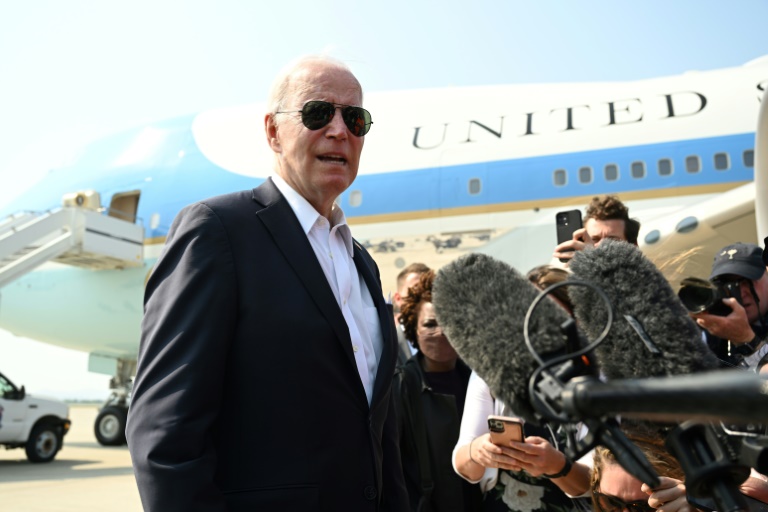
“But it is something that everybody should be concerned about,” Biden told reporters before boarding Air Force One to fly to Tokyo.

“It is a concern, in that, if it were to spread, it would be consequential,” he added.

“We’re working on it hard to figure out what we do, and what vaccine if any might be available for it.”

The first US case in the recent global spate was reported on May 18 in Massachusetts, which was joined on Sunday by Florida.

Health authorities said they were investigating the southern state’s first presumptive case of monkeypox in someone who had recently traveled abroad.

There have been thousands of human infections in parts of Central and Western Africa in recent years but it is rare in Europe and North America.

Most people recover within several weeks and monkeypox has only been fatal in rare cases.

The World Health Organization said that as of Saturday there were 92 confirmed cases of the disease in countries where monkeypox is not endemic.

The virus is transmitted to humans from animals, with symptoms very similar to smallpox but less severe clinically.

Polish leader lends support in Ukraine as Zelensky looks to Davos

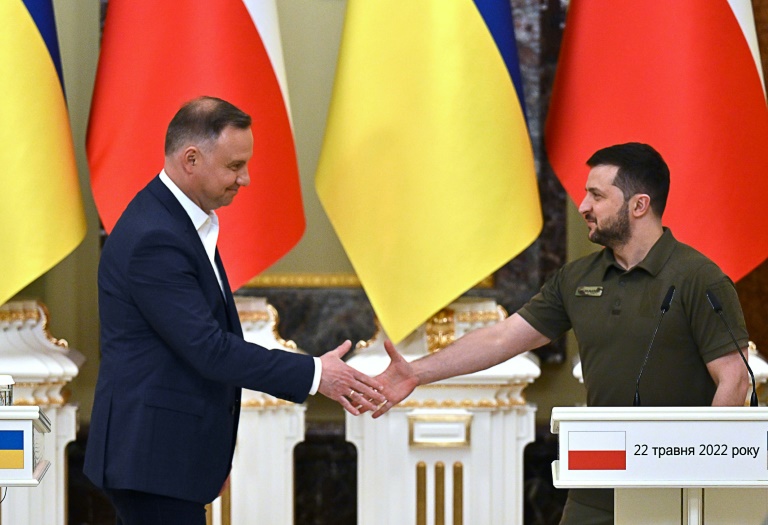
Polish President Andrzej Duda, speaking in Kyiv on Sunday, underscored his nation’s key support for embattled Ukraine as Russian forces pursued a relentless bombardment of frontline cities in the east.

Kyiv, meanwhile, continued a diplomatic counteroffensive, targeting the world’s business and political elite gathering in the Swiss mountain resort of Davos, as Western nations continued to rally behind Ukraine’s defence. 

Ukrainian President Volodymyr Zelensky is set to address the World Economic Forum via videoconference on Monday.

In another development, Russia’s lead negotiator in peace talks with Ukraine said Sunday that Moscow was willing to resume negotiations, but that the decision remained with Kyiv. 

“Freezing talks was entirely Ukraine’s initiative,” Vladimir Medinsky told Belarusian TV, adding that the “ball is completely in their court”.

He spoke a day after Zelensky said the war “will only definitively end through diplomacy”.

Duda’s visit to Kyiv, where he met with Zelensky, was noteworthy for the outsized role Poland has played in the conflict, welcoming millions of Ukrainian refugees — more than any other country — while serving as a vital staging post and transit point for Western arms and assistance headed to Ukraine. 

Duda struck a firm tone in his remarks in Kyiv.

“After Bucha, Borodianka, Mariupol, there cannot be business as usual with Russia,” he told the parliament, citing towns and cities where Russian forces have been accused of atrocities against civilians.

“An honest world cannot return to business as usual while forgetting the crimes, the aggression, the fundamental rights that have been trampled on,” he added.

– Martial law extended –

Shelling and missile strikes continued to pound Kharkiv in the north, and Mykolaiv and Zaporizhzhia in the south, Ukrainian officials said.

In the southern city of Enerhodar, the site of Europe’s largest nuclear power plant, the mayor appointed by Moscow after Russian troops took control of the city, Andrey Shevchik, was wounded in an explosion, a Ukrainian official and Russian news agencies said.

And in the eastern city of Severodonetsk, a focus of recent fighting, regional governor Sergiy Gaiday said Russian forces were “using scorched-earth tactics, deliberately destroying” the city.

Three months after launching their invasion, Moscow’s forces are focused on securing and expanding their gains in the Donbas region and on Ukraine’s southern coast.

Gaiday said Russia was drawing forces from a vast area — those withdrawn from the Kharkiv region, others involved in the siege and destruction of the southern port city of Mariupol, pro-Russian separatist militias, and even troops freshly mobilised from Siberia and the Russian Far East — and concentrating their firepower on the Donetsk and Lugansk regions. 

At least seven civilians were killed and eight others wounded in bombardment Sunday of the Donetsk region, according to the Ukrainian army’s Facebook page.

With the nation under relentless assault, Ukraine’s parliament voted on Sunday to extend martial law through August 23.

– Davos snubs Moscow –

Kyiv, meanwhile, is rallying international support, even as European Union members struggle to agree on expanding sanctions to Russia’s huge energy exports.

Zelensky is due to confer by videoconference with Davos delegates Monday evening to mark the opening of Ukraine House Davos, a forum for Kyiv and its international backers.

In March, Davos organisers cut ties with Russian firms and officials, and announced that anyone under international sanctions would not be welcome at the event.

Western nations have rallied behind Ukraine’s defence of its territories, led by the United States — which just approved a $40-billion war chest for Kyiv — and neighbours such as Poland.

But some European countries that are dependent on Russian oil supplies, including Hungary, are resisting calls for an embargo on crude, and major EU economic powers such as Germany remain huge gas importers.

Duda stressed that Poland and Ukraine have a “common future within the European Union”.

But some EU members are reticent.

France’s President Emmanuel Macron has suggested creating a “European political community” as a kind of antechamber to full membership.

But full membership might take “15 or 20 years”, France’s Europe minister, Clement Beaune, said Sunday on Radio J, adding, “I don’t want to offer Ukrainians any illusions.”

Zelensky has dismissed the idea of a conditional path to membership.

“We don’t need such compromises,” he said Saturday during a news conference with visiting Portuguese Prime Minister Antonio Costa.

– ‘No work, no food, no water’ –

While Russia’s top negotiator suggested Moscow remains open to negotiations, Kyiv — fighting to regain territory lost since Moscow began its offensive in February — has rejected concessions. But it has accepted that talks will come. 

“There are things that can only be reached at the negotiating table,” Zelensky said Saturday.

While Ukrainian forces have halted Russian attempts to seize Kyiv and Kharkiv, they continue to face intense pressure.

Millions of ordinary Ukrainians face a daily struggle to survive.

“There is no work, no food, no water,” said Angela Kopytsa, 52, breaking down into tears as she spoke to AFP reporters on a Russian-organised tour of Mariupol.

Kopytsa said her home had been destroyed during the fighting in the port and that “children at maternity wards were dying of hunger”. 

Once-bustling Mariupol has been without electricity since early March and has been reduced to a wasteland of charred buildings.

The Russian army and its separatist allies now patrol the streets.

Elena Ilyina, who used to teach at a Mariupol university, sobbed as she told AFP of how her apartment had been destroyed and that she now lives with her daughter.

“I’d like to live in my apartment, in peace, go to work and talk to my children,” the 55-year-old said.

But “I have nothing left.”

burs-dc/har/bbk/sw/caw

Close Bitnami banner
Bitnami