US Business

Asian markets mixed after US retail data boosts Wall Street

Asian stocks were mixed Wednesday following a strong start in some markets, which took the lead from Wall Street where traders were cheered by brisk US retail sales data.

The US Federal Reserve’s tightening of monetary policy to contain surging inflation has sent jolts through global markets, deepening the apprehensions of investors already roiled by China’s Covid lockdowns and the Russian invasion of Ukraine.

But there was some good news out of the United States Tuesday, with data showing increased spending by Americans in April. Retail sales rose 0.9 percent — partly boosted by a rebound in auto purchases.

“The economy is slowing but the consumer still looks good and that means the economy is still positioned to avoid a recession,” said Edward Moya of OANDA. 

Industrial production also rose in April — “another sign the economy isn’t falling apart just yet”, he added.

Wall Street closed with gains, with the tech-rich Nasdaq jumping nearly three percent.

Tokyo, Sydney and Singapore rose in Wednesday trade, thanks to the bounce in New York.

By mid-morning, however, Hong Kong and Shanghai dipped into negative territory after a positive start.

The US consumer data added to the boost from China earlier this week, where authorities said Shanghai — the economic engine of the world’s second-largest economy — will “gradually reopen” businesses.

Most of the city’s 25 million people were placed under lockdown for weeks as authorities battled a major Covid outbreak.

Millions were still confined to their homes Wednesday as confusion abounded over official statements about achieving zero Covid cases.

But just the indication of an easing was enough to boost markets, which have been concerned about the impact of China’s lockdowns on the global economy — especially supply chains.

– Fed inflation plans –

Central banks around the world are concerned about skyrocketing prices, and on Tuesday Fed chair Jerome Powell said it needs to see “clear” evidence that inflation is coming down before pulling back on efforts to cool the economy.

He acknowledged that it may be a “bumpy” ride that would inflict some pain.

His comments were in line with market expectations, said Stephen Innes of SPI Asset Management. 

“Still, the debate is evolving among the active trading community from recessionary capitulation mode to one that is short and not a particularly deep recession,” he said. 

“So while this is a tacit acceptance that the Fed is in catch-up mode and is prepared to constrain demand to get inflation down, they are unlikely to do it in a jackhammer fashion.”

– Key figures at around 0245 GMT –

Hong Kong – Hang Seng Index: DOWN 0.7 percent at 20,455.05 

Shanghai – Composite: DOWN 0.4 percent at 3,081.19 

Tokyo – Nikkei 225: UP 0.7 percent at 26,851.15 (break)

Brent North Sea crude: UP 0.5 percent at $112.50 per barrel

West Texas Intermediate: UP 1.1 percent at $113.50 per barrel

Euro/dollar: DOWN at $1.0533 from $1.0550 at 2030 GMT Tuesday

Pound/dollar: DOWN at $1.2476 from $1.2486

Euro/pound: DOWN at 84.43 pence from 84.47 pence 

Dollar/yen: DOWN at 129.18 yen from 129.37 yen

New York – Dow: UP 1.3 percent at 32,654.59 (close)

London – FTSE 100: UP 0.7 percent at 7,518.35 (close)

Pakistan and IMF to meet over release of funds as economy falters

The International Monetary Fund will begin talks with Pakistani officials on Wednesday over the release of crucial funds, a process slowed by concerns about the pace of economic reforms in the South Asian country.

Pakistan has repeatedly sought international support for its economy, which has been hit by crippling national debt, galloping inflation and a plummeting rupee.

The talks will be held in the Qatari capital Doha, Pakistan’s finance ministry said, and are expected to continue into next week. 

A major sticking point is likely to be over costly subsidies — notably for fuel and electricity — and Finance Minister Miftah Ismail said he wants the two sides to “find a middle ground”.

“The government will try to convince the IMF that for political stability purposes it is important to keep at least some of the subsidies,” said economist Shahrukh Wani. 

“The IMF will possibly, rightly, say that these are unsustainable and they should be rolled back to make the trade and budget deficit manageable,” he added.

A six billion dollar IMF bailout package signed by former prime minister Imran Khan in 2019 has never been fully implemented because his government reneged on agreements to cut or end some subsidies and to improve revenue and tax collection.

Islamabad has so far received $3 billion, with the programme due to end later this year.

Officials are seeking an extension to the programme through to June 2023, as well as the release of the next tranche of $1 billion.

Pakistani Prime Minister Shehbaz Sharif, who took power with a coalition that removed Khan in a no-confidence vote last month, has vowed to jumpstart the moribund economy, but analysts say his fragile government has failed to take tough decisions. 

“It’s an administration that has refused to take hard political steps to bring eventual economic relief — but that’s exactly the sacrifice it must make by going to the IMF,” said Michael Kugelman, deputy South Asia director at the Wilson Center in Washington.

Robot hives in Israel kibbutz hope to keep bees buzzing

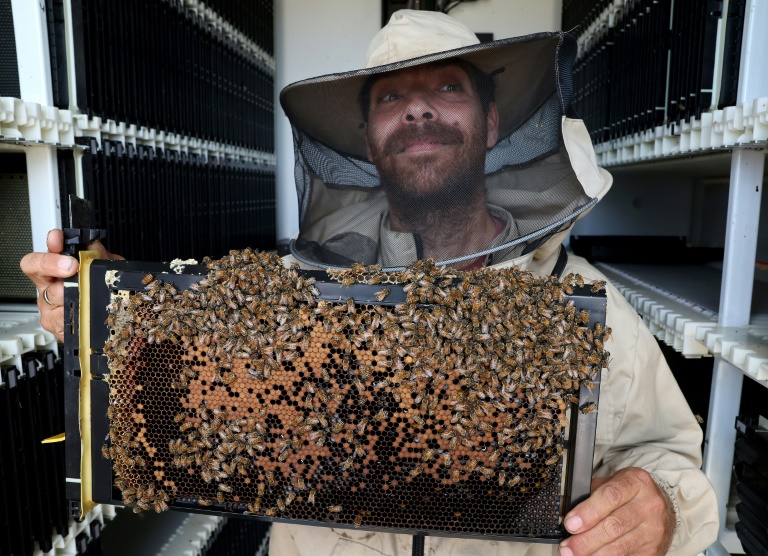
They function as normal hives, but apiaries built at a kibbutz in Israel’s Galilee are decked out with high-tech artificial intelligence systems set to ensure longevity for these vital pollinators.

“There are two million bees here,” said Shlomki Frankin as he walks into a 12-square-metre container in Kibbutz Beit Haemek in northern Israel.

Dubbed “Beehome”, the project is the brainchild of an Israeli startup and houses up to 24 hives, explained Frankin, clad in a hat and veil to protect himself from stings.

The 41-year-old told AFP that the hives feature a multi-purpose robot that does everything from monitor the bees to adjust the habitat and provide them with care.

Startup Beewise came up with the idea in an effort to reduce mortality rates in a species that has in the past years seen sharp rates of decline due to environmental threats.

– Artificial intelligence –

“The robot is equipped with sensors that allow it to know what is happening in the hive frames,” said Netaly Harari, director of operations at Beewise.

“Thanks to artificial intelligence, our software knows what the bees need,” she explained in the workshop where the hives are assembled.

The robots can automatically dispense sugar, water and medication.

If a problem comes up, the beekeeper is alerted through an application, allowing for intervention remotely via computer, or in person if necessary.

The hives operate on solar energy, have adjustable temperatures, eliminate pests and can even extract honey automatically using an integrated centrifuge, Harari said.

By the end of May, the startup hopes to be producing its own honey for the first time — the “first honey in the world made with artificial intelligence”, she enthused.

For Frankin, “the robot is a tool for beekeepers, but doesn’t replace them”.

They “save a lot of time”, he continued, because they allow him to “do a lot of simple things remotely”.

About a hundred of these high-tech hives are already functional in Israel, with a dozen others sent to the United States.

Beewise is eyeing a foothold in the European market in two years.

Launched in 2018, the startup has 100 employees and by April had raised about $80 million to develop its exports.

– World Bee Day – 

According to professor Sharoni Shafir, who heads the bee research centre at the Hebrew University of Jerusalem’s Rehovot campus, the technology can help protect increasingly threatened bee colonies.

“Sometimes, a beekeeper takes several months to realise there is a problem,” he told AFP, adding that “with the robot, beekeepers can deal with the problem in real-time, reducing the bees’ mortality rates”.

One in every six species of bees have gone regionally extinct somewhere in the world, with the main drivers thought to be habitat loss and pesticide use, according to a 2019 study. 

Shafir points in particular to the “decline in fields of flowers due to construction, which has reduced the sources and diversity of food for bees”.

Added to that are diseases and pests, such as the varroa destructor, a mite that has a devastating effect on honeybees, the professor added.

“In Israel, between 20 and 30 percent of hives disappear every year,” the entomologist said.

He noted that a significant portion of foods consumed by people are the result of cross-pollination by bees and other insects.

More than 70 percent of crops, including almost all fruits, vegetables, oilseeds, spices, coffee and cocoa are dependent on pollinators.

The United Nations’ Food and Agriculture Organization on May 20 celebrates World Bee Day, which aims to underline the importance of preserving bee species.

“Bees and other pollinators have thrived for millions of years, ensuring food security and nutrition, and maintaining biodiversity and vibrant ecosystems,” FAO has said.

“We depend on bees,” Shafir emphasised.

Morocco 'breathing again' as tourists back after Covid shutdown

Moroccan snake-charmer Youssef watched as long-absent tourists again thronged Marrakesh’s famous Jamaa El-Fna square, ending a long pause forced by the Covid pandemic.

“We’re breathing again,” he said.

The ancient southern city, famous for its views of graceful red buildings set against palm trees and snow-capped mountains, has long drawn visitors including celebrities from Madonna to Yves Saint Laurent.

But it was particularly hard hit by a two-year collapse in tourism that saw arrivals to the North African kingdom plummet to just a third last year from 2019.

For Youssef, taking a break from playing his oboe-like “ghaita” pipe before the seemingly mesmerised serpent, “it’s such a pleasure to be back here after these slow, painful months”.

Tourism — which accounts for some seven percent of Morocco’s economy and creates hundreds of thousands of formal and informal jobs — was battered by Morocco’s tight restrictions during the pandemic.

Today, Marrakesh residents see signs of hope again as tourists have returned to the UNESCO-listed old city’s narrow alleys.

Cafe terraces are full and foreigners browse shops and market stalls for traditional clothing, furniture and souvenirs.

“We’re not back to pre-pandemic levels but the situation has been improving over the past month,” said salesman Abdellah Bouazri, after serving an Argentinian customer in a Boca Juniors football top.

Bouazri, 35, said the coronavirus had forced him to temporarily abandon his shop and find alternative work as a security guard.

The father of two was one of many in the beleaguered industry forced to find an alternative income — including many informal workers without contracts or social security.

But he said he was optimistic about the future: “It has been hard, but today I’m delighted to be going back to my real job.”

– ‘Recovery incomplete’ –

Morocco this week reopened land borders with the Spanish enclaves of Ceuta and Melilla, two years after they were shut due to Covid and a major diplomatic row.

That was the latest step in a slow recovery for the tourism sector, backed by the government which has launched a two billion dirham (190 million euro) support fund, on top of 95 million euros it released to prop up hotels.

“The recovery might be underway, but it’s incomplete,” said the FNIH national hotels federation’s chief Lahcen Zelmat.

According to the tourism ministry, Morocco last year earned some 3.2 billion euros in tourism revenue — less than half the figure for the year before the pandemic. 

But revenue in the first quarter was up by 80 percent on last year, according to official figures, and the finance ministry predicts a “more favourable outlook for 2022”.

That was reflected in the steady flow of tourists outside the Medersa Ben Youssef, a 16th-century Koranic school in Marrakesh.

“This place is magical — I’m impressed by all the detail,” said Nick, a 29-year-old Londoner visiting for the first time. “Since Covid I’ve been missing exploring new cultures.”

Nearby, other visitors queued up to the Yves Saint Laurent museum, one of the city’s top tourist spots.

“The museum was a must,” said Coco, a Chinese student living in Germany. “We consider ourselves very lucky to be able to travel again, and we’re really charmed.”

Japan 1st-quarter GDP shrank as Omicron wave hit

Japan’s economy shrank slightly in the first quarter of 2022, official data showed Wednesday, hit by Covid-19 restrictions and higher prices.

The world’s third-largest economy shrank 0.2 percent quarter-on-quarter in the January-March period, slightly less than the market expectations of a 0.4 percent contraction.

It followed a modest rebound in the final three months of 2021 that proved short-lived after Japan put Covid restrictions in place as an outbreak fuelled by the Omicron coronavirus variant took hold in January.

Growth was also hit by the rising cost of imports with energy prices surging and the yen falling to its lowest level against the dollar in 20 years.

Economists expect the economy to recover again in the April-June quarter now that virus restrictions have been lifted, but caution there are some caveats.

“We see three headwinds to this expected recovery,” said UBS economists Masamichi Adachi and Go Kurihara in a note ahead of the GDP data release.

“First is a rise in food and energy prices. Second is a drag from the lockdown in China,” and third is the risk of a potential resurgence in virus infections, they said.

Others point to ongoing uncertainties linked to “tensions in international relations and military conflicts”, according to a survey among economists conducted by the Japan Center for Economic Research.

During the current earnings season, major Japanese firms such as Sony and Nissan have offered cautious forecasts because of the uncertainty, particularly over supply chain disruption and the effect of Covid lockdowns in China.

Wednesday’s data showed the economy’s rebound in the last quarter of 2021 was 0.9 percent, slightly weaker than an initial estimate of 1.1 percent growth.

– Rising prices –

Japan is battling a series of economic headwinds linked to the pandemic and Russia’s invasion of Ukraine, which has sent energy costs soaring.

The yen has also slumped against the dollar, with a widening gap between Japan’s ultra-loose monetary policy and tightening in the United States as the Federal Reserve attempts to combat inflation.

Rising energy prices and other hikes are squeezing Japanese consumers and businesses, with household spending dipping 2.3 percent in March from a year earlier.

Analysts have warned that the pace of nominal wage increases in Japan is unlikely to track rising prices, dampening spending appetites.

Last month, the government unveiled a 6.2 trillion yen (around $48 billion) economic package that included handouts for low-income families to help cushion the impact of rising prices and energy costs.

Looking ahead, “net trade will boost growth over the coming months as supply shortages ease and the weak yen boosts exports and softens demand for imports,” Tom Learmouth, Capital Economics economist, said in a note.

“With coronavirus cases continuing to fall and nearly 60 percent of the population triple-jabbed, another round of restrictions looks unlikely for now.”

“However, we expect GDP growth to disappoint across 2022 due to the hit to household income from higher inflation and signs that elderly consumers remain wary of catching the virus,” he added.

Japan has seen a smaller Covid outbreak than many countries, although cases surged because of the highly transmissible Omicron variant.

The country has recorded around 30,050 deaths despite avoiding harsh lockdowns.

Musk says no Twitter deal without clarity on spam accounts

Billionaire Elon Musk said Tuesday his bid to buy Twitter won’t proceed unless he gets proof of the number of spam accounts plaguing the platform, adding more uncertainty to his roller-coaster pursuit of the social media giant.

This latest twist to his $44 billion move to acquire the key platform sparked speculation over whether the world’s richest person was trying to shrink the price tag or even back away from the deal.

Hours after Musk’s early morning tweet over bots, Twitter insisted the deal push through, and without delay.

“Twitter is committed to completing the transaction on the agreed price and terms as promptly as practicable,” the company wrote in a statement accompanying a filing to US regulators.

Musk last week tweeted his bid for the company was “temporarily on hold,” pending questions over its estimates of the number of fake accounts, or bots.

Then early Tuesday he pushed for more information, writing to his almost 94 million followers on the social network: “Yesterday, Twitter’s CEO publicly refused to show proof of <5%.” 

“This deal cannot move forward until he does,” he added.

Twitter chief executive Parag Agrawal has said the platform suspends more than a half-million seemingly bogus accounts daily, usually before they are even seen, and locks millions more weekly that fail checks to make sure they are controlled by humans and not by software.

Internal measures show that fewer than five percent of accounts active on any given day at Twitter are spam, but that analysis cannot be replicated externally due to the need to keep user data private, Agrawal contended.

Musk posted that the real number of bots may be four times what Twitter claims and “could be *much* higher,” and has said he would make getting rid of them a priority if he owned the platform.

“So how do advertisers know what they’re getting for their money?” Musk tweeted in a subsequent response about the need to prove Twitter users are real people.

“This is fundamental to the financial health of Twitter.”

– ‘Under pressure’ –

The process used to estimate how many accounts are bots has been shared with Musk, Agrawal insisted.

According to an estimate published Friday by software firm SparkToro, 19.42 percent of Twitter accounts are fake or spam, but the company acknowledges its methodology for determining bots is likely different from that used by Twitter.

SparkToro has a tool on its website that shows more than 70 percent of Musk’s followers are fake accounts. 

“It appears the spam/bot issue is cascading and clearly making the Twitter deal a confusing one,” Wedbush analyst Dan Ives said in a note to investors.

“The bot issue at the end of the day… feels more to us like the ‘dog ate the homework’ excuse to bail on the Twitter deal or talk down a lower price.”

Another tech watcher, Grady Booch, tweeted to Musk that it “Seems like you have buyers remorse.”

After sliding ahead of the market bell, shares of Twitter closed up nearly 2.5 percent on Tuesday.

Meanwhile in a filing to the Securities and Exchange Commission, Twitter urged its shareholders to vote in favor of Musk’s buyout for $54.20 per share in cash, at an upcoming special meeting.

The filing also noted Musk discussed the company’s business and products with Agrawal over the course of three days, just prior to making his buyout proposal. 

Musk has described his motivation as stemming from a desire to ensure freedom of speech on the platform and to boost monetization of a website that is massively influential but has struggled to attain profitable growth.

He has also said he favored lifting the ban on Donald Trump, who was kicked off the platform in January 2021 over concerns the ex-president could incite violence.

burs-jm/ec

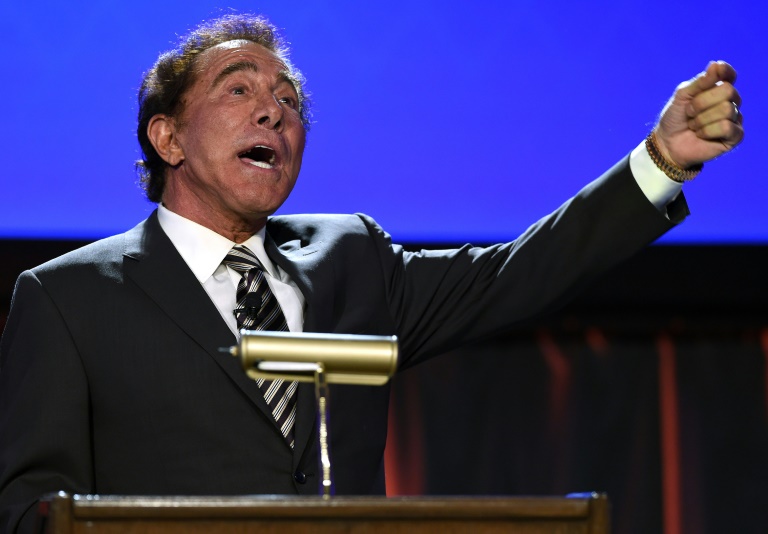
Casino mogul Wynn sued for acting as agent for China

The US Justice Department sued Las Vegas and Macau casino mogul Steve Wynn Tuesday to force him to register officially as an agent for the Chinese government.

Wynn, the founder and former chief executive of Wynn Resorts, acted on behalf of Beijing in 2017 when he met with president Donald Trump and senior administration officials in a Chinese effort to gain custody over exiled tycoon Guo Wengui, the department said.

Guo was wanted in China for financial fraud and other allegations, but was close to Trump advisor Steve Bannon, supporting Bannon’s media business and other activities, and had asked for political asylum in the United States.

The Justice Department said that in June and August 2017, Wynn contacted Trump and had dinner with the president to convey Beijing’s request that the US cancel Guo’s visa or have him otherwise removed from the country.

“Wynn engaged in these efforts at the request of Sun Lijun, then-vice minister of the MPS,” the Justice Department said, referring to China’s Ministry of Public Security.

Besides raising it with Trump, Wynn, who was a former Republican Party finance chairman,  also had “multiple discussions” with senior White House and National Security Council officials “about organizing a meeting with Sun and other PRC government officials” on the issue, it said. 

At the time Wynn’s company owned and operated three casinos in Macau, Asia’s largest gambling Mecca.

The Justice Department alleges that Wynn carried out Sun’s requests “out of a desire to protect his business interests in Macau.”

It says that Wynn was advised that he had to register as a lobbyist for China under the Foreign Agents Registration Act, but refused to do so.

Wyne was enlisted in the lobbying effort partly by another wealthy US businessman, Trump friend and former top Republican fundraiser, Elliott Broidy. 

In 2020, Broidy pleaded guilty to violating the Foreign Agents Registration Act and forfeited $6.6 million in a plea deal.

Wynn, 80, was forced to step down as CEO of Wynn Resorts in 2018 amid sexual misconduct allegations.

In September, three companies owned by Guo were ordered by the US Securities and Exchange Commission to pay $539 million in penalties to settle charges over illegal cryptocurrency sales.

The 'bots' at heart of Twitter buyout row

Elon Musk’s pausing of his bid to buy Twitter due to questions over “bots” has put the artificially-operated accounts at the heart of the proposed deal’s latest controversy.

The software is so commonplace and can be such a problem that tech giants such as Meta, Google and Twitter have teams devoted to banishing bots and cybersecurity firms sell defenses against them.

Here’s a closer look at bots:

– Human or software? –

At a basic level, “bots” are software programs that interact with online platforms, or their users, pretending to be real people, said Tamer Hassan, co-founder and chief of cybersecurity firm HUMAN.

Malicious bots have become sophisticated and are among this decade’s top cyber threats, said Hassan, whose firm specializes in distinguishing people from software online.

The term bots at Twitter is often used to describe fake accounts, powered by some version of artificial intelligence, that can fire off posts and even react to what is posted by others, said independent analyst Rob Enderle.

– Tickets and turmoil –

Bots are used in more than three quarters of security and fraud incidents that happen online, from spreading socially divisive posts to snapping up hot concert tickets and hacking, Hassan told AFP.

“The question is, what would you do if you could look like a million humans?” Hassan asked rhetorically.

“Across all social media platforms, bots can be used to spread content to influence people’s opinions, garner reactions and can even result in cybercrime.”

Bots can be used on social media to widely spread false news, direct users to misinformation, steer people to specious websites and make bogus posts seem popular using shares or “likes.”

Bots on social media can also sucker people into financial scams, Hassan added.

“Social media platforms have had bots for a long time,” analyst Enderle said. “Bots have been connected to attempts to influence the US election and shape opinions about Russia’s war on Ukraine.”

– The deal with Twitter –

Twitter makes its money from ads, and marketers pay for reaching people, not software.

“Advertising to bots isn’t going to have a good close rate because bots don’t buy products,” Enderle noted.

If advertisers are paying Twitter fees based on how many people see ads, and those numbers are inflated due to bots in the online audience, they are being overcharged, Enderle added.

If Twitter has way more bots than it is letting on, its revenue could plunge when those accounts are exposed and closed.

Twitter chief executive Parag Agrawal has said that fewer than five percent of accounts active on any given day at Twitter are bots, but that analysis cannot be replicated externally due to the need to keep user data private.

Musk posted that the real number of bots may be four times higher and has said he would make getting rid of them a priority if he owned the platform.

Twitter has rules about automated actions by accounts, including barring software from posting about hot topics, firing off spam, attempting to influence online conversations, and operating across multiple accounts.

Bots are a known social media problem, and having Musk make it a sticking point this late in the acquisition process appears to likely be “a vehicle to escape the purchase or get a lower price,” Enderle said.

US consumers remain resilient even as prices rise

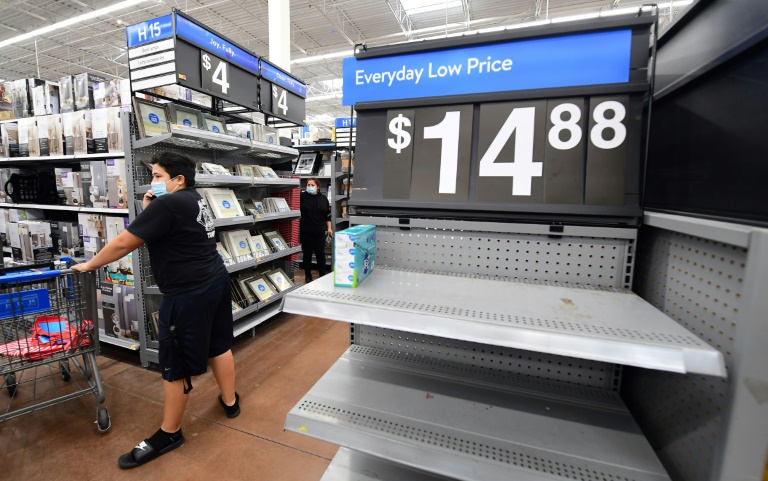
US consumers continued to increase spending in April, remaining resilient in the face of accelerating inflation, but retail giant Walmart still saw a big hit to its bottom line due to rising costs, according to reports released Tuesday.

Home Depot, however, benefitted from the ongoing spending spree, reporting higher profits and a better outlook for the year.

The reports come amid rising fears of recession in the wake of a 40-year peak in inflation that has prompted the Federal Reserve to raise borrowing costs aggressively to cool the economy and tamp down price pressures.

The healthy US consumer has underpinned the strong recovery in the world’s largest economy following the slowdown in the early months of the Covid-19 pandemic, but the surge in demand also has strained supply chains and helped push inflation to its fastest rate since the early 1980s.

Fed Chair Jerome Powell said Tuesday the central bank wants to see slowing growth and “clear” evidence inflation is coming down before it pulls back on efforts to cool the economy, and acknowledged that it may be a “bumpy” ride that would inflict some pain.

Consumers haven’t pulled back yet, and US retail sales rose 0.9 percent in April, boosted by a rebound in auto sales and increases in other categories, including electronics, home furnishings and restaurants, according to Commerce Department data. 

The report “is encouraging because it shows consumers are taking higher prices in stride and remain resilient,” said Jack Kleinhenz, chief economist of the National Retail Federation.

But prices continue to rise, and the cost of gas at the pump hit a record in May as the war in Ukraine pushes oil prices higher.

“Consumers’ tolerance to high inflation will continue to be tested and the renewed spike in gasoline prices, along with tighter financial conditions, will weigh on households’ willingness to spend on big-ticket items,” said Kathy Bostjancic, a chief US economist at Oxford Economics.

The Fed has gone to battle to try to cool price pressures, announcing earlier this month the biggest interest rate increase since 2000.

Powell said reducing inflation is critical, which means bringing down red-hot demand more in line with supply, and additional sharp rate hikes are “on the table” in June and July.

“What we need is to see… growth moving down from the very high levels that we saw last year, moving down to a level that’s still positive,” Powell said at an event with The Wall Street Journal.

And if that doesn’t happen, “then we’ll have to consider moving more aggressively,” he said.

– Labor, fuel costs rise –

Walmart executives pointed to a series of cost hits that converged in the quarter ending April 30, as the retail giant reported a 25 percent drop in profits to $2.1 billion — $1.30 a share, below the $1.48 expected by analysts — as revenues rose 2.4 percent to $141.6 billion.

Walmart raised its full-year sales forecast slightly but lowered its profit forecast. It now expects earnings per share to fall one percent after previously projecting an increase in the mid-single digits.

The company cited higher labor costs and a spike in energy costs when the Russian invasion of Ukraine sent oil prices soaring.

Another obstacle was a March fire that destroyed a warehouse in Indianapolis, Indiana.

Walmart US President John Furner said the company is seeing a “wide range” of responses from shoppers to the rise in prices.

While there is continued strong demand for pricey items such as game consoles and outdoor grills, he said some consumers are moving away from brand names in favor of Walmart’s own branded goods, which are lower-priced. 

“We need to do more to control costs, to make sure we can provide good value for our customers,” Furner said on an earnings conference call.

– Investing in homes –

In contrast, Home Depot raised its outlook after reporting that first-quarter profits rose two percent to $4.2 billion on a four percent increase in revenues, as executives with the home-improvement chain said consumers appeared to take higher prices in stride.

The spending has been propelled by a strong trend toward increased investment as homes increase in value, according to Chief Financial Officer Richard McPhail.

Walmart shares plunged 11.4 percent, while fellow Dow member Home Depot rose 1.7 percent.

Flight data shows China Eastern jet deliberately crashed: report

US investigators believe someone on board deliberately crashed a China Eastern flight in March, the Wall Street Journal reported Tuesday, in what was China’s deadliest air disaster in decades.

China Eastern flight MU5375 was travelling from Kunming to Guangzhou on March 21 when it inexplicably plunged from an altitude of 29,000 feet into a mountainside, killing all 132 people on board.

So-called black box flight data recorders recovered from the site were sent to the United States for analysis. 

That data shows that someone — possibly a pilot or someone who had forced their way into the cockpit — input orders to send the Boeing 737-800 into a nosedive, according to Wall Street Journal, which cited people familiar with the probe. 

“The plane did what it was told to do by someone in the cockpit,” the Journal quoted “a person who is familiar with American officials’ preliminary assessment” as saying. 

US officials believe their conclusion is backed up by the fact that Chinese investigators have so far not indicated any problems with the aircraft or flight controls that could have caused the crash and would need to be addressed in future flights, the newspaper said. 

Both the US National Transportation Safety Board and Boeing declined to comment on the investigation to AFP Tuesday. 

According to a report from Boeing, investigators found no evidence of “anything abnormal,” China’s Civil Aviation Administration (CAAC) said in April.

In a statement, the CAAC said staff had met safety requirements before takeoff, the plane was not carrying dangerous goods and did not appear to have run into inclement weather, though the agency said a full investigation could take years.

In the immediate aftermath of the crash, China’s ruling Communist Party moved quickly to control information, revving up its censorship machine as media outlets and local residents raced to the crash site.

It has maintained its tight grip over the narrative, with the preliminary probe leaving key questions unanswered.

After the fatal descent near the southern city of Wuzhou, authorities swiftly cordoned off a huge area and China’s internet regulator announced it had scrubbed vast amounts of “illegal information” on the crash from China’s tightly controlled web.

A social media hashtag bearing the plane’s flight number appeared to be censored.

The crash was China’s deadliest in around 30 years and dented the country’s otherwise enviable flight safety record.

Close Bitnami banner
Bitnami