US Business

Afghan money exchangers on strike after licence fee hike

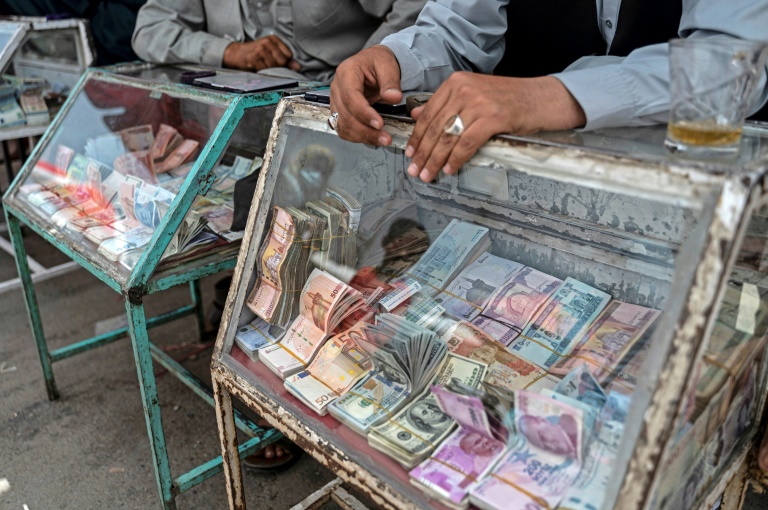
Thousands of money exchangers shut shop across Afghanistan on Sunday after Taliban authorities imposed a steep hike in licence fees, the brokers’ commission said, in a bid to slow down money laundering and terrorism financing according to financial analysts. 

Afghanistan’s formal banking system collapsed when the Taliban swept back to power in August last year, ending two decades of US-led military intervention in the deeply impoverished nation. 

Since then money exchangers — who swap currencies, make informal cash transfers and even give loans — have played a key role in meeting the financial needs of 38 million citizens mired in humanitarian crisis. 

“Thousands of money exchangers are shut in most parts of the country to protest against the central bank’s conditions,” Abdul Rahman Zeerak, spokesman for Afghanistan’s Money Exchange Commission, told AFP.

He said the central bank had raised licence fees to five million Afghanis ($56,000) from around 300,000. 

Zeerak also claimed the bank is insisting transactions are conducted online under new licences and brokers must have a minimum of 50 million Afghanis to operate. 

“This is a lot of money,” he said. “Money exchangers are not that strong financially.” 

The brokers’ commission said currency traders in the capital Kabul and cities such as Herat and Kunduz were shut as part of the strike. 

Meanwhile, Afghanistan’s central bank — Da Afghanistan Bank — warned that exchangers operating without a licence “will face legal action”. 

Spokesman Mohammad Sabir Momand said in a statement that the institution was “committed to transparency and security” in the financial sector. 

While informal money exchangers provide a vital service, they also lack oversight and analysts say their system can be used to launder money and finance militant organisations. 

Afghanistan central bank’s former deputy governor Khan Afzal Hadawal said the Taliban’s new initiative was motivated by a desire to demonstrate to the international community that it is stymying terror groups in the nation. 

“The easiest way for money launderers and terrorists was to go through the money exchangers,” Hadawal told AFP. 

“What they (Taliban government) have done is they have increased the requirements, so that those who cannot qualify … by default they will be shut down.”

After making a hasty withdrawal, the US seized billions of dollars in Afghan assets and international donors suspended the massive influx of aid money which was propping up the Afghan economy. 

Many foreign nations have made assistance to the nation conditional on the Taliban regime guaranteeing human rights and preventing international terror groups from organising in Afghanistan.
Saudi Aramco says Q1 profits jump 82% as oil prices surge

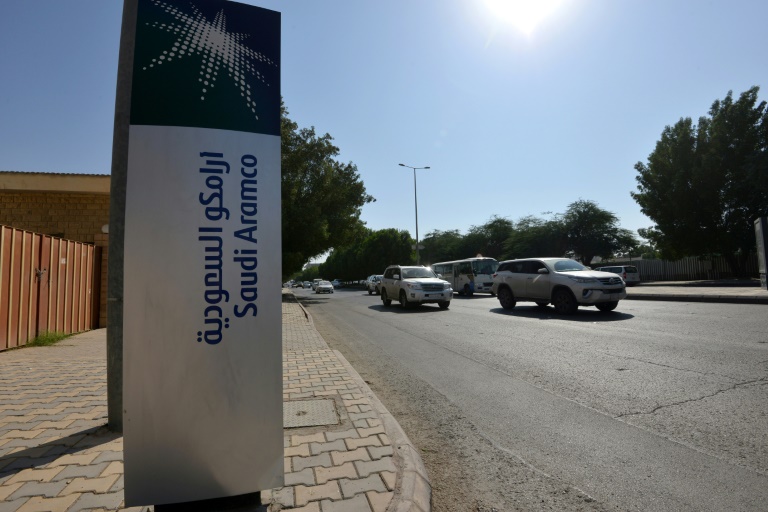
Saudi Aramco on Sunday posted an 82-percent jump in first quarter profits, buoyed by a global surge in oil prices that has made it the world’s most valuable company. 

The announcement continued a string of recent positive economic news for Saudi Arabia, where a booming oil sector is fuelling the fastest growth rate in a decade. 

Aramco’s net income of $39.5 billion was up from $21.7 billion compared with the same period in 2021, “primarily driven by higher crude oil prices and volumes sold, and improved downstream margins,” it said in a press release. 

The latest financial results were published four days after Aramco dethroned Apple as the world’s most valuable company, with shares worth $2.42 trillion compared to Apple’s $2.37 trillion. 

In March, Aramco reported a 124 percent net annual profit increase for 2021. 

But the firm, the kingdom’s “crown jewel” and primary source of government revenue, has faced security challenges from the war which involves a Saudi-led military coalition against Yemen’s Huthi rebels who have repeatedly targeted the kingdom, including Aramco sites.

A two-month truce in the war has generally been holding since it started in April, but in 2019 Huthi-claimed aerial assaults on two Aramco facilities in eastern Saudi Arabia temporarily knocked out half of the kingdom’s crude production. 

A March attack by the Huthis on facilities of the largely state-owned firm caused a “temporary” drop in production. 

The net income for the first quarter was a record for Aramco since its initial public offering in 2019.

Also on Sunday, Aramco announced it was issuing 20 billion bonus shares to shareholders — one share for every 10 shares already owned. 

A dividend of $18.8 billion will be paid in the second quarter, it said. 

“Against the backdrop of increased volatility in global markets, we remain focused on helping meet the world’s demand for energy that is reliable, affordable and increasingly sustainable,” Aramco president and CEO Amin Nasser said. 

– Oil-fuelled boom –

In early May, Saudi Arabia reported its fastest economic growth rate in a decade, as a booming oil sector fuelled a 9.6 percent rise in the first quarter over the same period of 2021.

The world’s biggest oil exporter has resisted US entreaties to raise output in an attempt to rein in prices that have spiked since the Ukraine war began. 

As the war got underway, Saudi Arabia and the United Arab Emirates stressed their commitment to the OPEC+ oil alliance, which Riyadh and Moscow lead, underscoring Riyadh’s and Abu Dhabi’s increasing independence from long-standing ally Washington. 

Saudi Arabia’s GDP is expected to grow by 7.6 percent in 2022, the International Monetary Fund said in April.

Saudi Arabia has sought both to open up and diversify its oil-reliant economy, especially since Mohammed bin Salman’s appointment as crown prince in 2017. 

Aramco floated 1.7 percent of its shares on the Saudi bourse in December 2019, generating $29.4 billion in the world’s biggest initial public offering. 

In February, the kingdom shifted four percent of Aramco shares, worth $80 billion, to the country’s sovereign wealth fund — a move analysts saw as a possible prelude to further opening up the oil giant.

Iraq's prized rice crop threatened by drought

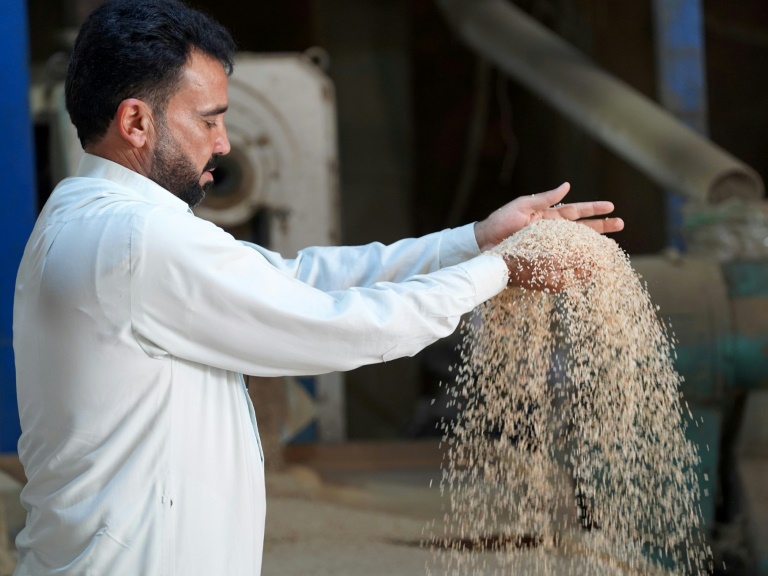
Drought is threatening the Iraqi tradition of growing amber rice, the aromatic basis of rich lamb and other dishes, and a key element in a struggling economy.

The long-grained variety of rice takes its name from its distinctive scent, which is similar to that of amber resin. It is used in Iraqi meals including sumptuous lamb qouzi, mansaf and stuffed vegetables.

But after three years of drought and declining rainfall, Iraq’s amber rice production will be only symbolic in 2022, forcing consumers to seek out imported varieties and leaving farmers pondering their future.

“We live off this land,” Abu Rassul says, standing near a small canal that in normal times irrigates his two hectares (five acres) near Al-Abassiya village in the central province of Najaf.

“Since I was a child I have planted amber rice,” says the farmer in his 70s, his face wrinkled and unshaven, dressed in a dazzling white dishdasha robe.

“Water enables us to plant every year.”

Except for this one.

Normally, rice fields planted in mid-May should stay submerged all summer until October — but that’s a luxury Iraq can no longer allow.

The country’s available water reserves “are well below our critical level of 18 billion cubic metres (4.8 trillion gallons)”, Shaker Fayez Kadhim, Najaf’s water resources manager, told AFP.

Rice drains between 10 and 12 billion cubic metres during its cultivation period of about five months, so it is “difficult to grow rice in Najaf or other provinces because of the high level of water it needs”, Kadhim said.

Previously, more than 70 percent of the amber crop was grown in Diwaniyah and neighbouring Najaf provinces.

In early May, officials limited total rice crop areas to 1,000 hectares (2,471 acres), in Najaf and Diwaniyah only, according to the agriculture ministry.

The normal quota is 35 times that.

Water shortages have also led to reduced quotas for wheat farmers.

The country’s annual rice production had been 300,000 tonnes (tons), according to Mohammed Chasseb, a senior official in the ministry’s planning department.

Iraq is known in Arabic as the “country of the two rivers” — the Tigris and the Euphrates. But despite those two legendary water sources, the supply of water has been declining for years and the country is classified as one of five most vulnerable to climate change effects and desertification.

The consequences are dire: depleted rivers, more intense sandstorms, declining crop yields — all of which add to the multiple challenges the country faces after decades of war and insurgency.

– Fearing the worst –

The Tigris and Euphrates, and their tributaries, originate in Turkey and Syria as well as Iran, which dams them upstream. This reduces the flow as they enter Iraq.

Kadhim says the Euphrates has dropped to about one-third of its normal level. He wants “political action” to get more water flowing.

Ahmed Hassoun, 51, president of the Najaf farmers’ association, fears the worst.

“There is a risk of seeing rice cultivation disappear for lack of water,” he said, blaming authorities.

“We know Iraq will have a shortage of rain in the coming years,” said Hassoun, an agricultural engineer. Despite that, nothing has been done to “modernise the irrigation system”, he complains.

But agriculture is not the only sector where the infrastructure needs upgrading in a country grappling with corruption and a financial crisis after decades of war.

Hassoun lamented that Iraq has become “a market for all its neighbours”, a reference to the deluge of Iranian and Turkish agricultural product imports.

Last year, Iraq’s own agricultural sector contracted by 17.5 percent “following severe droughts, energy outages, and the rising global price of inputs”, according to the World Bank.

That is significant in a country highly dependent on oil income but that wants to diversify its economy.

According to the World Food Programme, agriculture is the second-largest contributor to Iraq’s GDP, after oil, and employs about 20 percent of the workforce.

“We want the state to take an interest in farmers,” says Jassem Zaher, who is in his 60s and also exclusively farms amber rice.

“We don’t have other crops. It’s the farmers’ livelihood.”

Tech titans curb hiring in a 'challenging macro environment'

From e-commerce colossus Amazon to social networking star Facebook, US tech firms that once grew with abandon have reined in hiring to endure tumultuous times.

Internet giants that saw business boom during the pandemic have taken a hit from inflation, war, supply-line trouble and people returning to pre-Covid lifestyles.

Corporate belt-tightening was a common theme as big tech firms reported earnings from the first three months of this year.

Facebook parent Meta told analysts that hiring goals were being adjusted as it continued to look to a bright future.

“We regularly re-evaluate our talent pipeline according to our business needs, and in light of the expense guidance given for this earnings period, we are slowing its growth accordingly,” a Meta spokesperson told AFP.

“However, we will continue to grow our workforce to ensure we focus on long-term impact.”

Seattle-based Amazon,  the second largest employer in the United States, revealed that its ranks are overly plump after ending last year with more than twice as many workers as it had in 2019.

As the spread of the Omicron variant of Covid-19 slowed during the first quarter of this year and workers returned from time off, Amazon “quickly went from being understaffed to overstaffed,” chief financial officer Brian Olsavsky told analysts.

Twitter confirmed that it has flat-out suspended hiring, and even showed a few senior executives the exit, as it faces a takeover by Elon Musk, the richest person on the planet.

Musk sent mixed messages Friday about his proposed Twitter acquisition.

In an early-morning tweet, Musk said the $44 billion takeover was “temporarily on hold,” pending questions over the social media company’s estimates of the number of fake accounts or “bots.”

Two hours later, the unpredictable Tesla chief executive tweeted that he was “still committed to acquisition.”

“Our industry is in a very challenging macro environment — right now,” Twitter chief executive Parag Agrawal said Friday in a tweet.

“I won’t use the deal as an excuse to avoid making important decisions for the health of the company, nor will any leader at Twitter.”

At ride-share pioneer Uber, CEO Dara Khosrowshahi said they will “treat hiring as a privilege,” according to an email to employees seen by CNBC.

While big tech players have steered clear of budget-driven layoffs, such is not the case for stock trading platform Robinhood or Cameo, an app that sells custom video messages from celebrities.

Robinhood said in April that it will cut nearly 350 positions, about 9 percent of its workforce. Cameo terminated the contracts of 80 employees recently, according to news website The Information.

– Reasons behind the cuts –

Reasons for hiring curbs, freezes or cuts vary.

Meta, for example, put some blame on a tweak Apple made to software running its popular mobile devices that stymies the gathering of user data to target ads more effectively.

Uber, meanwhile, reported it was hit with a big loss in the first three months of the year, despite a rebound in its ride-share business.

The loss was due almost entirely to revaluation of its stakes in Grab and Didi in Asia and US-based autonomous driving firm Aurora, the earnings report said.

A common factor for many internet firms, though, was that brisk hiring done while demand was spiking during the pandemic has led to overweight staffing in leaner times.

“Many tech companies have been fulfilling this demand with notable growth in digital services, and as such, recruited and grew their business notably during the past two years,” said Terry Kramer, an assistant professor at the UCLA business school.

“A reasonable part of what we’re seeing now I believe is the normal maturity of technology adoption – where companies can’t/don’t need to continue growing at the same rate.”

Another factor weighing heavily is inflation, which has driven up costs overall and tightened consumer budgets.

The US central bank has been steadily raising interest rates this year, making it more expensive for companies to borrow money.

On Wall Street, an S&P 500 index comprising tech sector stocks has fallen more than 22 percent since the start of the year, and the tech-heavy Nasdaq is down slightly more overall.

Wedbush analyst Daniel Ives advised investors not to fear a recurrence of the epic Dot-com crash of the late 1990s.

“This is not a Dot-com Bubble 2.0,” Ives said in a note to investors.

“It’s a massive overcorrection in a higher rate environment that will cause a bifurcated tech tape, with clear haves and have-nots.”

US rate hikes strain Hong Kong's virus-weakened economy

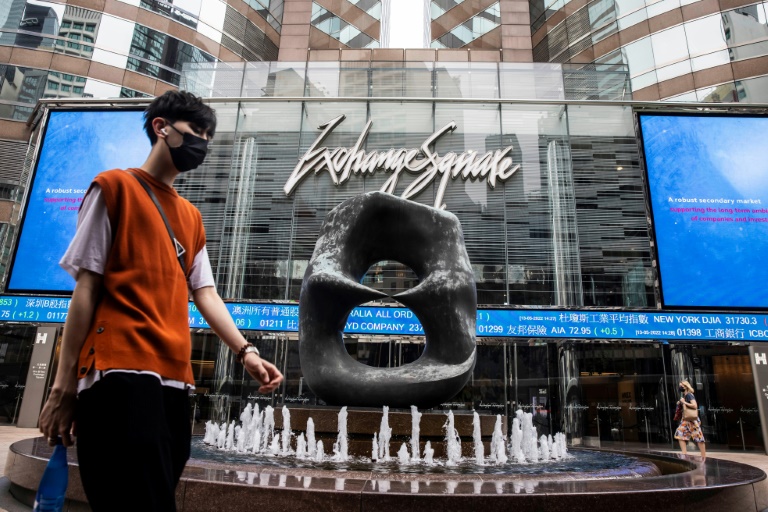
Recent rate hikes from the Federal Reserve have come at a bad time for Hong Kong which, thanks to its US dollar peg, must follow suit despite its own flagging economy.

Hong Kong has pegged its currency to the US dollar since 1983, which has helped the city weather economic storms such as the 1997 Asian financial crisis and underpinned its status as a major global finance hub.

But it also means Hong Kong has little choice but to follow the Fed’s latest round of hawkish rate hikes -– the biggest of its kind in 22 years.

“The Covid outbreak in Hong Kong and in mainland China is already hurting growth,” senior economist at Oxford Economics Lloyd Chan told AFP.

“The last thing that Hong Kong needs now is a rising interest rate.”

The city on Friday revised its 2022 GDP growth forecast down to between one and two percent, after a worse-than-expected four percent drop in the first quarter.

Financial Secretary Paul Chan wrote last week that Hong Kong was now facing a reversal of the low interest rate environment it had enjoyed for more than a decade.

“As the economy has not yet fully recovered from the epidemic, we have to pay attention to the impact of interest rate hike… (on) people and small and medium enterprises,” he wrote on his official website.

– Impact on housing market –

Hong Kong banks have so far kept their best lending rates steady, but they will feel the squeeze in three to six months, analysts say.

“The interest rate may increase quicker than in the past, given the faster pace from the Fed and also the change in the overall background risk sentiment in the world,” economist Gary Ng of Natixis told AFP.

Homebuyers whose mortgages are linked to the Hong Kong interbank offered rate (HIBOR) will be the first to feel the heat, said economist Heron Lim at Moody’s Analytics.

“This usually has a downward effect on housing prices, (which) should shrink in 2022 and into 2023 as well, especially if there’s low demand from mainland Chinese investors,” Lim told AFP.

The Hong Kong government on Friday said it expected signs of revival later this year following the relaxation of coronavirus curbs that ground the economy to a halt in the first quarter.

But the rate hikes could dampen a domestic rebound as the higher burden shouldered by homebuyers will eat into their consumption power.

Small and medium-sized businesses also potentially face a “really tough time” if the rising rates coincide with a Covid resurgence, economist Samuel Tse of DBS Bank told AFP.

Hong Kong is still hewing to a lighter version of China’s zero-Covid model that has taken a toll on businesses in the city.

– Dollar peg ‘defensible’ –

Hong Kong allows its currency to trade within a range of 7.75-7.85 to the greenback. 

Capital outflows and intense selling of the Hong Kong dollar in recent months have pushed it to the weak end of that trading band.

Last week, the Hong Kong Monetary Authority (HKMA)spent HK$8.53 billion ($1.08 billion) in three attempts to prop up the local currency, the first intervention since 2019.

Some commentators have begun questioning the sustainability of the peg, citing pressures of the pandemic and geopolitical tensions between China and the United States.

Responding to a Bloomberg op-ed, HKMA deputy chief executive Edmond Lau said earlier this month that the US dollar peg was a “highly robust and transparent system” and “highly resilient”.

“Hong Kong’s monetary base is fully backed by US dollar assets,” Lau wrote, adding that the government had ample fiscal reserves and no net debt.

All four analysts who spoke with AFP agreed that Hong Kong would hold on to the peg despite changes in the global economy.

“Although the foreign reserve has dropped from $500 billion to around $460 billion, it is still a relatively high level which should be enough to defend the Hong Kong dollar,” said Tse of DBS.

Lim at Moody’s said the HKMA war chest ensured the peg was “very defensible”, adding that the arrangement had policy value as Hong Kong remained an international gateway to China’s economy.

Ng of Nataxis noted that there has not been any selloff or panic offloading of Hong Kong dollar-related assets, which he said bodes well for the future of the peg.

“But in the medium or long run,” he added, “it depends on whether this currency stability still has benefits that outweigh the costs, such as the divergence… between China and the US.”

Peru sues Spain's Repsol for $4.5 bn over oil spill

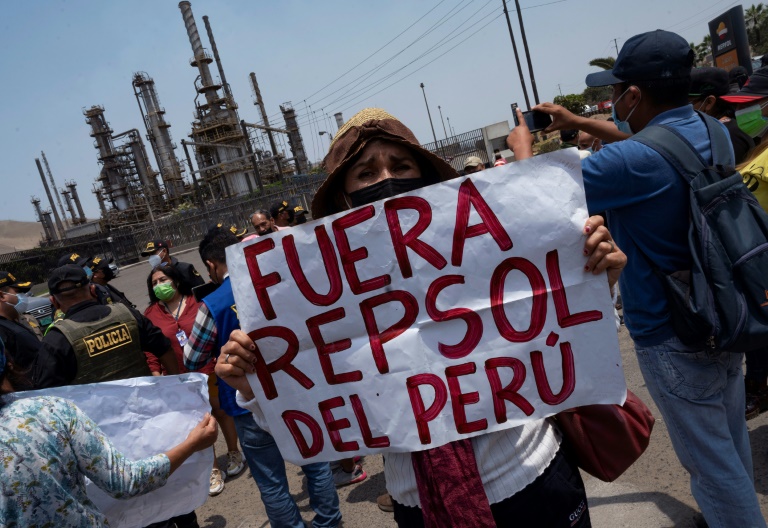
Peru has filed suit against Spanish energy company Repsol over the massive January oil spill that ravaged its coast, seeking $4.5 billion in damages.

The lawsuit was filed before the 27th civil court in Lima against six companies: Repsol (Spain), Mapfre Global Risks (Spain), Mapfre Peru Insurance and Reinsurance Companies (Peru), La Pampilla Refinery (Peru), Transtotal Maritime Agency (Peru) and Fratelli d’amico Armatori (Italy, owner of the tanker involved), Peru’s consumer protection agency said.

“These suits could create precedents for oil spills that cause damage and collective non-material damages due to environmental pollution of coastal areas,” said Julian Palacin, executive director of the National Institute for the Defense of Competition and Protection of Intellectual Property (INDECOPI), in a statement released late Friday.

INDECOPI has sought three billion dollars for environmental damage to Peru’s coast, and another 1.5 billion dollars as compensation to consumers, locals and others affected by the disaster, the suit says. 

Repsol in a statement Saturday rejected the suit as baseless.

“(INDECOPI’s) estimates are lacking the bare minimum needed to support the indicated figures,” the Spanish oil company said, regarding the $4.5 billion sought by Peru.

The spill occurred on January 15 while the Italian-flagged tanker “Mare Doricum” was unloading crude oil at the Repsol-owned La Pampilla refinery in Ventanilla, 30 kilometers north of Lima. 

The oil company attributed the incident to waves caused by a massive volcanic eruption on the island of Tonga, on the other side of the Pacific Ocean, and the Peruvian government described it as an “ecological disaster.”

The oil spill affected more than 700,000 residents, mostly fishermen, and forced the closure of twenty beaches and dozens of businesses in the area.

Myanmar’s gaming stars face barriers in tough eSports journey

Myanmar’s eSports athletes must battle not only online opponents but also a creaky national infrastructure in their bid to make it in the ferociously competitive world of gaming.

A relative newcomer to the fast-growing electronic sports scene, Myanmar sees eSports as a way of connecting to the outside world, a top gaming official from the country told AFP at the SEA Games in the Vietnamese capital Hanoi.

ESports are a popular choice among many Asian youths seeking the promise of fame and fortune on the digital battleground.

But Myanmar’s budding gaming stars face challenges that are unthinkable for many of their rivals. 

Power outages and internet connection problems are routine obstacles in the developing country where the civilian government of Aung San Suu Kyi was toppled by the army in February 2021.

“Blackouts are a challenging factor,” Myanmar Esports Federation vice president Kaung Myat San said, adding that gamers who do not have back-up generators “will find it difficult”.

Myanmar is plagued by a frail energy grid that particularly stumbles during the hot summer months when electricity use is high, forcing locals to buy costly generators for their power needs.

Another barrier is the country’s internet, which although “getting better” is still slower than other countries, said Kaung.

Gamers can suffer “high ping” — a lag between the player inputting a command and the server responding to it — which can be fatal in a sport where fractions of seconds are the difference between online life and death.

“High ping is an issue for some games, especially to enter international events that are hosted online,” he said, adding that was however “only a small percent”.

He declined to comment if his country’s political troubles were a factor on local eSports performance.

Underlining the fears people have of being seen to criticise the ruling junta, one eSports player at the SEA Games declined to give his name in describing how they sometimes have to hop from one location to another in the middle of the day when the power cuts out.

He said that they usually get about 18 hours of electricity a day.

– ‘Catch up to the world’ –

ESports made its debut at the biennial SEA Games in 2019 and was also set to feature at the Asian Games in China later this year, before those Games were postponed because of Covid. Talk has bubbled away for years about eSports one day making the Olympics.

International gaming competitions meanwhile can draw vast online and in-person audiences and prize pools in the tens of millions of dollars.

The obstacles teams from Myanmar face has not stopped some making their mark in eSports.

The Burmese Ghouls, a professional team, took second place at the Mobile Legends M2 World Championship in January 2021.

At the SEA Games in Hanoi, a row of Myanmar eSports players furiously tapped at their phones against Singapore in a Friday group-stage match of League of Legends: Wild Rift.

After a 15-minute battle, the Myanmar group bowed out from the brightly lit stage with their second loss of the day after being beaten earlier to Vietnam.

The athletes declined to speak to the media, shying away from queries.

Kaung said despite the defeat, the country’s 29-strong eSports squad still stand a chance at winning medals in two other mobile gaming events in Hanoi.

He is confident about Myanmar’s long-term gaming prospects, but the players need help.

“For our players to overcome these problems, they have to join professional eSports organisations which can support them. Sponsoring them can grow their careers,” he said.

“Through eSports we can catch up to the world.”

Lack of competition fueled US baby formula shortage

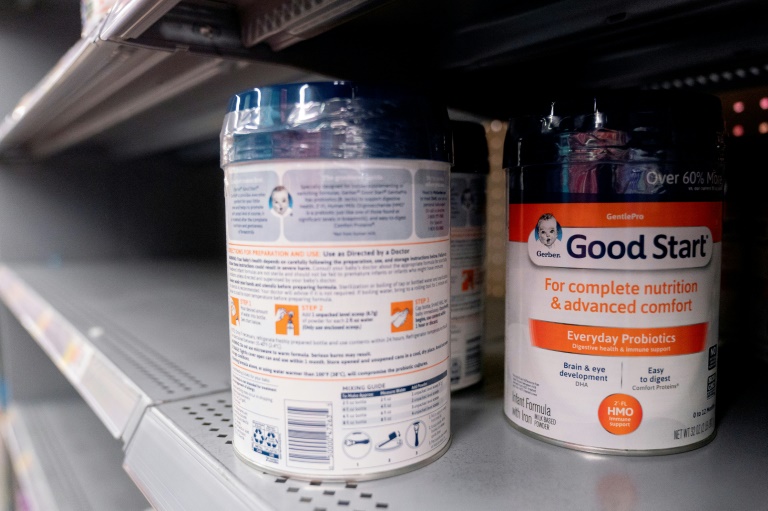
There’s no end in sight to America’s shortage of baby formula — and the crisis has highlighted the lack of competition that has spread to all parts of the US economy, even essential ones such as food for infants.

The problem “is not going to solve itself in a day or week,” Brian Deese, a top White House economic advisor, told CNN Friday.

He was unable to say how long the crisis would last.

Initially caused by supply chain blockages and a lack of production workers due to the pandemic, the shortage was exacerbated in February when, after the death of two infants, manufacturer Abbott announced a “voluntary recall” for formula made at its factory in Michigan and shut down that location.

The shortage has left many parents frantic and fearful their infants may starve. Formula is a necessity for many families, particularly in low-income households where mothers have to return to work almost immediately after giving birth and cannot breastfeed.

A further issue is that prices for the formula that remains have skyrocketed.

An investigation by the US Food and Drug Administration (FDA) cleared Abbott’s formula but made 483 “observations” about the factory, Abbott said in a statement Friday.

“We immediately began implementing corrective actions and subject to FDA approval, we could restart our Sturgis, Mich., site within two weeks,” the company said.

The FDA promised to announce plans next week that would allow, among other things, the import of formula produced overseas.

– ‘Matter of weeks’ –

The FDA currently bans most foreign infant formula, including products made in Europe, not because of health concerns but due to labeling and packaging standards.

“We believe these and other ongoing efforts will help dramatically improve the supply in the US in a matter of weeks,” FDA head Robert Califf said Friday on Twitter.

US President Joe Biden also said it “will be a matter of weeks or less” to start fully refilling shelves.

He said that stock levels in stores had begun to stabilize this week.

According to the data collection agency Datasembly, as of Tuesday, 43 percent of the usual formula supply was out of stock, up 10 percent from the April average.

Deese stressed that safety was key in solving the formula shortage and said that Biden’s administration had been running on all cylinders to try and provide enough supply.

Accused of a wait-and-see attitude or even indifference, the White House unveiled some measures Thursday to tackle the issue, but the scope seemed limited.

Biden said Friday that his administration had intervened as soon as it was aware of the problem, but that they had to “move with caution as well as speed.”

– Just three manufacturers –

“The White House… is considering all sorts of options for helping parents, which is good,” Amanda Starbuck, a research director at the Food & Water Watch group, a food safety NGO, told AFP.

She said the crisis was indicative of the problem with extreme concentration throughout the food production chain.

Three US companies control 95 percent of formula sales, according to Starbuck.

“It matters a little less if… we’re talking about soda or chips. But it matters a lot more when we’re talking about essential things like milk,” she said.

The current situation is the result of a decades-long movement. The concentration has benefited US companies that, in the absence of competition, have been able to agree on prices among themselves, Starbuck explained.

“But the blame is not completely on these companies,” she said. “Why has our government allowed for… just three companies to control so much?”

Not to mention that the companies’ giant size does not make them more efficient.

“It’s not efficient when there’s a single recall that affects every single parent across the country who needs to feed their child,” she said.

Starbuck said it’s time to turn back the clock, even if it means dismantling the huge corporations.

“What we need to do now is pass comprehensive antitrust legislation in order to better scrutinize companies, to break up companies that have gotten so big that they’re abusing their market power,” she said.

Musk sends mixed messages on Twitter deal, pressuring shares

Elon Musk sent mixed messages Friday about his proposed Twitter acquisition, pressuring shares of the microblogging platform amid skepticism on whether the deal will close.

In an early morning tweet, Musk said the $44 billion takeover was “temporarily on hold,” pending questions over the social media company’s estimates of the number of fake accounts or “bots.”

That sent Twitter’s stock plunging 25 percent.

Two hours later, the unpredictable Tesla chief executive added a tweet, saying “Still committed to acquisition.”

Shares recovered a bit, but traded in the red throughout Friday’s session, finishing down nearly 10 percent at $40.72.

While the reliability of user figures is an important benchmark for assessing revenues of Twitter and other social media companies, analysts generally interpreted Musk’s messages as an attempt to pull out of the deal or to try to force a lower price.

“Although we never questioned Musk’s ability to complete such a transaction from a financial perspective, we thought the biggest risk was Elon himself having a change of heart,” CFRA Research’s Angelo Zino said in an analyst’s note.

He said the move gives Musk “leverage” and increases the chance “that he either adjusts his offer price downward or just completely walks away.”

Meanwhile, Chief Executive Parag Agrawal took to the platform to explain moves earlier this week to shake up company leadership and freeze most hiring.

“While I expect the deal to close, we need to be prepared for all scenarios and always do what’s right for Twitter,” Agrawal said. “Im accountable for leading and operating Twitter, and our job is to build a stronger Twitter every day.”

– Skepticism in market –

The chief of SpaceX as well as Tesla, Musk is currently listed by Forbes as the world’s wealthiest person, with a fortune of some $232 billion, much of it in Tesla stock.

Seen by his champions as an iconoclastic genius and by his critics as an erratic megalomaniac, Musk surprised many investors with his pursuit of Twitter.

Musk has described his motivation as stemming from a desire to ensure freedom of speech on the platform and to boost monetization of an Internet site that is influential in media and political circles but has struggled to attain profitable growth.

On Tuesday, Musk said he favored lifting the ban on Donald Trump, who was kicked off the platform in January 2021 shortly after the former US president’s efforts to overturn his election defeat led to the January 6 assault on the US Capitol.

Analysts also have said the site can boost Musk’s other ventures, including Tesla, which so far has grown without following the auto-industry custom of spending heavily on marketing.

But markets have shown skepticism since the April 28 announcement that the Twitter board agreed to sell at $54.20 a share.

The share price has lagged that level, suggesting investors viewed deal closure as not assured, and  has fallen further as the broader tech market retreated this week.

– ‘Horror show’ –

In his first tweet about the deal Friday, Musk linked to an article from May 2 referencing Twitter’s latest filing to US regulators.

The document said an internal review showed Twitter had 229 million “monetizable daily active users” in the first quarter of this year, and just five percent were regarded as false or spam accounts. 

Analyst Dan Ives from Wedbush said the “circus show” was likely to translate into a “Friday 13th horror show.”

“The nature of Musk creating so much uncertainty in a tweet (and not a filing) is very troubling,” he said.

Musk has gotten into hot water with regulators over his tweets in the past, but the Twitter purchase agreement includes a clause specifying that he is free to tweet about the deal provided his posts “do not disparage the company or any of its representatives.”

Market analyst Susannah Streeter of Hargreaves Landsdown said the takeover bid “risks hitting the skids.”

There will be questions “over whether fake accounts are the real reason behind this delaying tactic,” Streeter said, adding that “it may be a strategy to row back on the amount he is prepared to pay to acquire the platform.”

Musk’s potential stewardship of the social media site has hit several bumps since the takeover attempt was made public, and sparked worry from activists, over lifting of the Trump ban as well as the possibility the new owner would open the gates to abusive and misinformative posts.

US media have reported that the transaction is being investigated by regulators, including the Securities and Exchange Commission with which Musk has frequently clashed.

The SEC is probing Musk’s tardy disclosure of his stake in Twitter, according to The Wall Street Journal.

US stocks finish bruising week on positive note

Wall Street stocks rebounded Friday after a bruising week beset with worries over inflation, the Ukraine war and the economic outlook.

Following a strong session in Europe and Asia, Wall Street closed the week robustly, with the tech-rich Nasdaq jumping nearly four percent and the S&P 500 pushing back above 4,000 points.

But even with Friday’s rally, all three major US indices posted losses for the week.

Gregori Volokhine of  Meeschaert Financial Services warned “it will take more than one session” to turn around the market, adding that there was no clear news catalyst for Friday’s gains.

Analysts at Briefing.com said the turnaround was largely due to “a sentiment-driven trade wrapped up in the notion that stocks are deeply oversold and due for a bounce.”

Stocks were under pressure for most of the week as fresh data showing elevated US inflation deepened expectations for aggressive action from the Federal Reserve as it tightens monetary policy.

Some analysts cited receding fears about China Covid-19 restrictions as supportive to stocks.

“Global sentiment seems to be getting some relief as China officials suggested that Covid-related lockdowns — which have been another source of uneasiness — may be set to ease,” analysts at Charles Schwab investment bank said.

Oil prices pushed higher Friday after much volatility, reaching around $110 a barrel yet again, with analysts pointing to hopes for a Chinese recovery in demand and the drag on Russian production from a potential European Union ban on crude imports from the country. 

On the corporate front, Twitter fell nearly 10 percent after Tesla Chief Executive Elon Musk said his purchase of the social media company was “temporarily on hold.” 

Analysts generally interpreted Musk’s messages as an attempt to pull out of the deal or to try to force a lower price.

He later tweeted that he was “still committed to acquisition.”

– Key figures at around 2130 GMT –

New York – Dow: UP 1.5 percent at 32,196.66 (close)

New York – S&P 500: UP 2.4 percent at 4,023.89 (close)

New York – Nasdaq: UP 3.8 percent at 11,805.00 (close)

London – FTSE 100: UP 2.6 percent at 7,418.15 (close)

Frankfurt – DAX: UP 2.1 percent at 14,027.93 (close)

Paris – CAC 40: UP 2.5 percent at 6,362.68 (close)

EURO STOXX 50: UP 2.5 percent at 3,703.42 (close)

Hong Kong – Hang Seng Index: UP 2.7 percent at 19,898.77 (close)

Shanghai – Composite: UP 1.0 percent at 3,084.28 (close)  

Tokyo – Nikkei 225: UP 2.6 percent at 26,427.65 (close)

Brent North Sea crude: UP 3.8 percent at $111.55 per barrel

West Texas Intermediate: UP 4.1 percent at $110.49 per barrel

Euro/dollar: UP at $1.0417 from $1.0380 at 2100 GMT Thursday

Pound/dollar: UP at $1.2262 from $1.2202

Euro/pound: DOWN at 84.92 pence from 85.07 pence

Dollar/yen: DOWN at 129.19 yen from 128.34 yen

Close Bitnami banner
Bitnami