US Business

Tourism recovering, but not back to pre-pandemic levels

Global tourism is roaring back to life despite Covid travel headaches and the effects of the war in Ukraine, but it has yet to return to its pre-pandemic health.

International tourist arrivals worldwide have more than doubled, up 130 percent in January 2022 on the same period last year, according to the latest UN World Tourism Organization figures.

Travellers are regaining confidence, and Europe and the Americas are leading the resurgence.

Worldwide, there have been 18 million additional visitors, the UNWTO said, “equivalent to the total increase recorded over the whole of 2021”.

In 2019, global tourism revenues reached $1.48 trillion. That figure dropped by almost two thirds due to the pandemic the following year.

While January confirms the recovery trend that began in 2021, the UNWTO highlighted how the Omicron Covid variant recently put the brakes on the rise. International arrivals in January 2022 were still 67 percent lower than before the pandemic.

Most regions have seen travellers return and rebound from the low levels of early 2021, with Europe faring three times better and the Americas twice as well.

That’s still some way off pre-pandemic numbers, but Larry Cuculic, general manager of the Best Western hotel company, is optimistic.

“I travelled earlier this week and I can tell you that the airports, the international terminals in the US are very crowded and there is a demand or an interest in travelling to Europe, because for several years we couldn’t do that,” he told AFP.

“We miss going to Paris, Rome and Berlin.”

The Middle East is also experiencing a boom, with arrivals up 89 percent on 2021, and so is Africa, with numbers up 51 percent — but these two regions are still very far from their 2019 totals, according to the UNWTO.

Perhaps unsurprisingly, the number of travellers is falling in the Asia-Pacific region, where several destinations remain closed. In January, international tourist arrivals were down 93 percent from pre-pandemic levels.

Travel by Chinese tourists, the world’s biggest spenders before the pandemic, is also severely affected by China’s zero-Covid policy.

According to travel analyst ForwardKeys, the second quarter of 2022 still looks “more promising for international travel in the world than the first quarter”.

The Caribbean and South America are drawing tourists looking for sea and sunshine in the northern hemisphere summer. Costa Rica, the Dominican Republic, Aruba and Jamaica are among the 20 most popular destinations, even exceeding pre-pandemic levels.

In Europe, tourists are flocking to France, Spain, Portugal, Greece and Iceland, but not in the same numbers as before Covid.

– The French exception –

France is doing well enough, though. In February, international tourism revenues in the country “came close to those of 2019”, according to France’s tourism minister Jean-Baptiste Lemoyne.

At 2.7 billion euros ($2.8 billion), revenues were up 1.5 billion compared to last year and down eight percent compared to 2019,  he told reporters.

In 2019, before the pandemic, the tourism sector in France represented 7.4 percent of GDP and 9.5 percent of jobs.

According to Lemoyne, France is “very well positioned” as the “number one destination for travel in Europe for Americans, Belgians, Italians and Spaniards”.

The French, for their part, are “a European exception”, the minister said, pointing out that 60 percent plan to stay in their own country over the holidays.

“With a domestic base that will remain very strong and the return of international customers, this means that we are in for a summer season that can be very, very dynamic,” he said.

But Didier Arino, director of the Protourisme consultancy, warned there could be trouble ahead.

“It is not the market that is going to be problematic, it is the cost of production of tourist stays, competitiveness, the suitability between the prices of products and purchasing power,” he said.

“The players are all increasing their prices, and right now it is going well because people want to enjoy themselves. But we are reaching the limit of what is acceptable for many customers.”

Nissan reports first full-year net profit in three years

Nissan said Thursday its full-year net profit to March 2022 returned to the black for the first time in three fiscal years, citing cost-saving efforts and positive US market conditions.

The Japanese auto giant reported an annual net profit of 215.5 billion yen ($1.67 billion), beating the company’s forecast of 205 billion yen and representing the first net profit since fiscal year 2018-19.

But looking ahead, it warned of a market environment “more severe than in fiscal year 2021, due to semiconductor supply shortages, higher raw material prices and logistics costs, the crisis in Ukraine as well as the impact of lockdowns on parts supplies in China.”

It projects a net profit for the current fiscal year of 150 billion yen, following the conservative lead of other automakers facing headwinds caused by supply disruption.

“It is clear that our industry and therefore our performance was impacted by intensifying headwinds in the last fiscal year,” said chief operating officer Ashwani Gupta.

“These challenges, magnified in the fourth quarter with rising energy prices, continued supply chain shortages and ongoing Covid disruptions,” he said.

“While Nissan has put in place agile business continuity plans, these continuous changes in the market are creating unprecedented uncertainty.”

The Japanese auto giant has faced a series of trials in recent years, from weak demand to the fallout from the arrest of former boss Carlos Ghosn, now an international fugitive in Lebanon. 

But the crisis-hit company has clawed its way back, helped in part by a recovery in demand for cars, and the effects of a weaker yen, which has hit 20-year lows against the dollar in recent months.

With Russians gone, French Riviera woos other big spenders

Private chef Selim M’nasri used to cook for wealthy Russians on the French Riviera once a month, but he says it has been “radio silence” from them since Moscow’s invasion of Ukraine.

So the 34-year-old Nice cook is now working for top athletes and other rich clients.

The Covid pandemic and now Western sanctions on Moscow over the Ukraine war have kept rich Russians away from the French Riviera, one of their favourite foreign destinations.

But the region does not appear to have had trouble finding big spenders from other countries to make up for the loss of its Russian visitors.

The pandemic had already caused an 80 percent drop in the number of Russian tourists in the Provence-Alpes-Cote d’Azur region, according to the head of the local tourism committee, Francois de Canson.

After Paris, it is the second most popular French destination for Russian visitors. And it is a historic hotspot, too — Russian visitors have stayed here in “sumptuous villas since the 19th century,” de Canson added.

Russia may not account for the largest number of tourists, but in the past, they could be relied on to bring enormous wealth to the coast.

“It’s not a huge volume,” said Denis Zanon, general manager of the Nice metropolitan tourist office. 

“But there is a fringe of this market with a lot of money, who live on the coast and whose guests rent villas nearby, bringing work to the luxury hoteliers, yacht rental companies, and private caterers,” Zanon said.

French Riviera workers in these industries have noticed the change.

Lea Combelonge, who worked as a private chef during the pandemic, has lost her rich Russian customers, too. 

They could be complicated clients –- sometimes making last-minute orders for caviar — but they were also generous, she said.

It hasn’t been difficult to make up the lost business though, she added, because “there are rich people everywhere”.

M’nasri agreed.

“There’s plenty of work,” he said.

– Replacing Russian visitors –

The European Union has blacklisted hundreds of Russian oligarchs and politicians since Moscow’s annexation of Crimea in 2014, adding many more following the outbreak of war in Ukraine.

But many ordinary Russian families living in France have stayed on the coast, according to Thomas de Pariente, deputy director of tourism in Cannes.

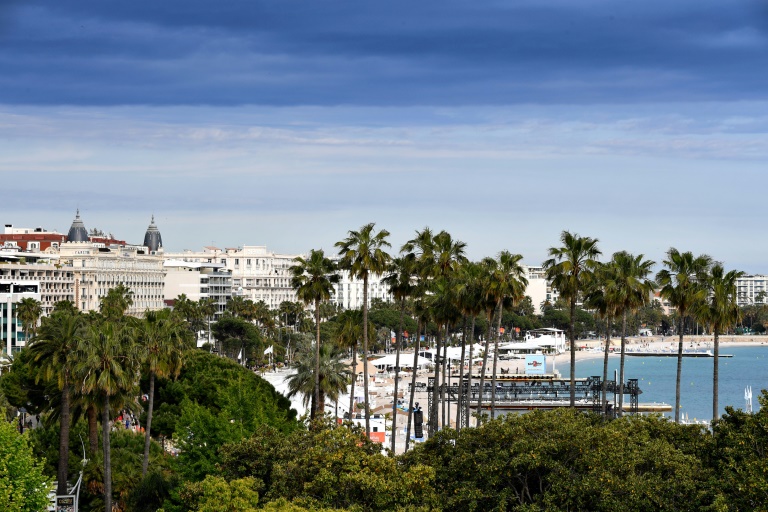
“You can still hear Russian spoken on the Croisette,” he said, referring to the city’s famous beachfront promenade.

But a new “high-contribution” clientele, from Qatar and the United States in particular, has helped tourism on the Riviera rebound since the reopening of borders, he said.

The tourism sector had been courting new customers, including Scandinavian and Canadian visitors, even before the pandemic began. 

Promotional campaigns have helped “limit the damage”, said president of the region Renaud Muselier.

“After the outbreak of the war in Ukraine (they) took up these communication campaigns and made considerable efforts towards the United States”, said de Canson.

There are now three daily direct flights between Nice and New York. A Nice-Montreal flight has also opened.

At the end of April 2022, bookings in the region were up 21 percent on the same period in 2019, according to the CRT.

In Cannes, high-end rental specialist Romain Benichou said “not a single villa is available” for July-August.

Meanwhile villas sold by Russians following the war in Ukraine have found buyers among the French, said Nicolas Dos Passos of the Albert Immobilier agency in Cannes.

Another sign that the rich are here: Yacht spaces at ports in Cannes and Marseille are full, according to Fabrice Viard, manager at Liberty Yachts company.

“It feels like the 2022 season will be a good one,” he said.

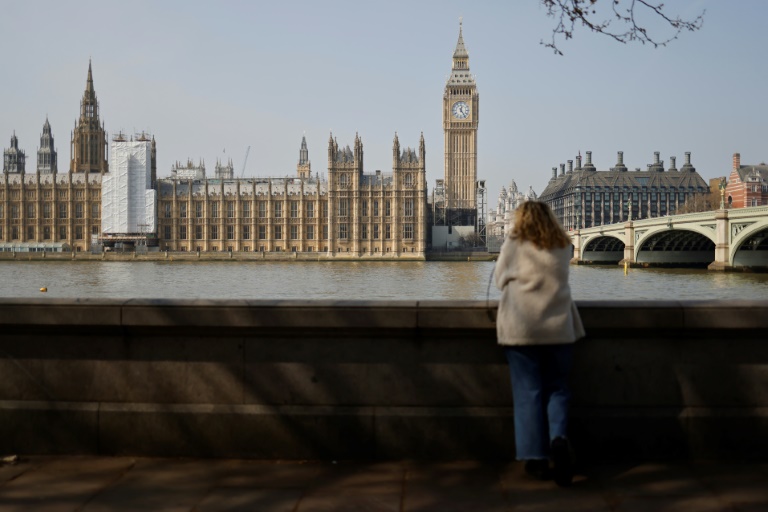
UK economic growth slows in first quarter

Britain’s economy grew at a slower pace in the first quarter compared with the final three months of last year as the country battled soaring inflation, official data showed Thursday.

The economy grew 0.8 percent in the January-March period compared with expansion of 1.3 percent in the fourth quarter of last year, the Office for National Statistics said in a statement.

After solid output in January, the UK economy posted zero growth the following month and contracted by 0.1 percent in March, ONS data showed.

It comes after the Bank of England (BoE) last week warned that Britain risks falling into recession with UK inflation expected to top 10 percent, a four-decade high, by the end of the year.

Consumer prices are surging worldwide on supply strains as economies reopen from pandemic lockdowns — and in the wake of the Ukraine war that is aggravating already high energy costs.

– ‘Russia disruption’ –

Responding to Thursday’s data, finance minister Rishi Sunak said Britain’s economic recovery from the pandemic was “being disrupted by (Russian President Vladimir) Putin’s barbaric invasion of Ukraine and other global challenges”.

Sunak, however, added in a statement that UK “growth in the first few months of the year was strong, faster than the US, Germany and Italy”.

While the UK economy grew for a fourth quarter in a row, and is above pre-pandemic levels, output in the first three months of 2022 was the lowest for a year.

“Our latest monthly estimates show GDP fell a little in March, with drops in both services and in production,” said Darren Morgan, director of economic statistics at the ONS.

“Construction, though, saw a strong month, thanks partly to repair work after the February storms.”

Growth over the entire first quarter was driven by expansion in a number of service sectors, including hospitality and transport, Morgan added.

However, the contraction in March and slower first-quarter output as a whole “suggest the economy had less momentum than we thought even before the full hit from the cost-of-living crisis has been felt”, noted Paul Dales, chief UK economist at Capital Economics.

“The risk of recession has just risen,” he said, adding that “strong price pressures will probably mean the BoE will raise interest rates further”.

The Bank of England last week raised its main interest rate by a quarter point to one percent to tackle runaway UK inflation.

It was the fourth straight increase by the BoE, while its key rate now stands at the highest level since the global financial crisis in 2009. 

That is hiking borrowing costs for consumers and businesses, further impacting spending.

Britain’s cost-of-living crisis was blamed in part for British Prime Minister Boris Johnson’s Conservative party losing control of key councils in recent local elections.

SoftBank reports record $13 bn full-year net loss

Japan’s SoftBank Group on Thursday logged a record annual net loss after a bruising period that saw its assets hit by a US tech-share rout and a regulatory crackdown in China.

The investment giant reported a net loss of 1.708 trillion yen ($13.17 billion) in the year to March 2022 — a vertiginous plunge from 4.99 trillion yen net profit the previous year, when huge market rallies boosted results.

SoftBank’s big stakes in global tech giants and volatile new ventures have made for unpredictable earnings, and the huge profit drop can be linked to tanking tech shares as the United States hikes interest rates to tackle inflation.

Reporting an eye-watering investment loss of 3.4 trillion yen, SoftBank said its tech-focused Vision Fund has suffered falls “due to a decline in the share prices of most listed portfolio companies”.

The losses have been deepened by the many shares they hold on Chinese ride-hailing giant Didi Chuxing and e-commerce group Alibaba, which have been hit by a crackdown by Beijing on the country’s private sector.

In 2019-20, SoftBank Group reported a then-record net loss of 961.6 billion yen, as the emergence of Covid-19 compounded woes caused by its investment in troubled office-sharing start-up WeWork.

But it rebounded in 2020-21 to report Japan’s biggest-ever annual net profit after people moved their lives online during the pandemic, sending tech stocks soaring.

In February, SoftBank said the $40 billion sale of chip powerhouse Arm to Nvidia had collapsed because of “significant regulatory challenges” over competition concerns, and it now plans to take the unit public.

– ‘Ups and downs’ –

Hideki Yasuda, senior analyst at Toyo Securities, said that while the tech sector SoftBank is focused on is not doing well right now, it’s worth taking the long view.

“It’s important for investors (like SoftBank) to think about what might happen in 20 years,” he told AFP before the earnings announcement.

“They must accept ups and downs in the short-run,” Yasuda said, noting that it took years for Chinese e-commerce giant Alibaba to become a viable investment for SoftBank.

CEO Masayoshi Son in November announced a share buyback worth one trillion yen, reportedly under pressure from shareholders frustrated by SoftBank’s sinking stock price.

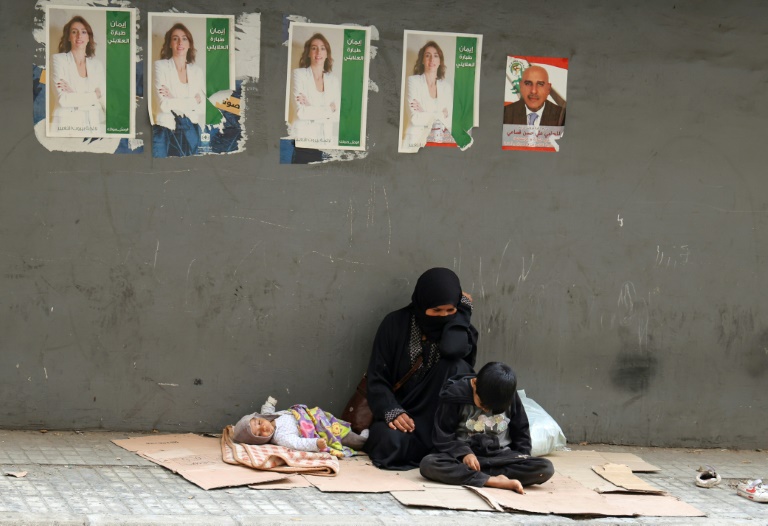
How will Lebanon vote impact the crisis-hit economy?

The Lebanese parliament voted in on Sunday will have to tackle overdue reforms required for international assistance the cash-strapped country desperately needs. 

After Lebanon struck a conditional deal with the International Monetary Fund for a $3 billion aid package, AFP looks at the challenges that await incoming lawmakers in a country where there is little consensus on a roadmap for financial recovery.

– How bad is the crisis? –

Since 2019, Lebanon has suffered an unprecedented economic decline caused by decades of mismanagement and corruption. 

The World Bank last year said Lebanon was likely to rank among the world’s worst financial crises since the mid-19th century.

The state’s bankrupcy has hampered imports of basic items including food, medicine and fuel.

Starved of hydrocarbons, the country’s power stations have scaled down their operations to a near minimum. Power cuts can last up to 23 hours a day, forcing residents to rely on expensive private generators to keep the lights on. 

The Lebanese pound, pegged at 1,507 to the dollar since 1997, has lost more than 90 percent of its value on the black market. 

More than 80 percent of people have fallen into poverty, according to the United Nations.

The monthly minimum wage, once worth $450, is now roughly equal to $25, and inflation has reached triple digits.

The situation is made worse by informal banking controls that have gradually tightened since they were first put in place in 2019. 

Depositors are denied access to foreign currency savings and forced to withdraw their money in Lebanese pounds at an exchange rate set by the central bank that is far below the market price. 

– Why is the IMF deal crucial? –

The IMF last month announced the conditional agreement for aid to help Lebanon emerge from financial ruin.

However, final IMF approval for the 46-month financing programme is contingent on timely implementation of critical reforms long demanded by Lebanon’s international donors, the global lender said.

The overdue reforms have been stymied by political divisions leading to deadlock in both parliament and government while the country sinks deeper into poverty.

“Lebanon has to show commitment and establish credibility in regards to reforms before the international community can commit to any financial support,” Deputy Prime Minister Saade Chami told AFP.

“The ball is in our court.”

Billionaire Prime Minister Najib Mikati has said there is “no choice” for Lebanon other than an IMF deal.

“Carrying out the required actions will bring solutions faster” for Lebanon, Mikati said, relaying a message from IMF representatives.  

– What must happen next? –

Chami, who heads Lebanon’s delegation in IMF talks, said that the new parliament will have to tackle four urgent tasks.

It will have to set a draft 2022 annual budget, which is already overdue, and pass a capital control law that formalises restrictions imposed by banks on deposits, Chami said.

The legislature will also have to approve two amendments to meet IMF demands, he said. 

One would affect banking secrecy laws that have hampered attempts to conduct financial audits of the central bank and other institutions.

Parliament will also have to amend its bank restructuring law, according to Chami, to reorganise a bloated financial sector that has lost the confidence of depositors and investors. 

“Failure to do that will have negative implications on the IMF deal and the economic situation,” Chami said. 

Lebanon, which defaulted on its debt in March 2020, estimates the total financial losses for the state, central bank and commercial banks at $69 billion. This number was the basis for the IMF negotiations.

Setting up a legal framework to reform and restructure the banking sector will be among the new parliament’s major tests, given the shared interests between Lebanon’s political and financial elite, said Sami Nader, director of the Levant Institute for Strategic Affairs.

Asian stocks down as inflation fears churn markets

Asian equities slumped on Thursday following Wall Street’s lead, as markets churned after a key US report renewed fears of inflation and a tightening of monetary policies.

Stocks have been volatile for much of 2022, fuelled by China’s Covid-19 lockdowns, Russia’s invasion of Ukraine, and surging inflation that has dampened consumer sentiment. 

Investors had been looking to the US consumer price report in hopes that easing inflation would lower pressure on the Federal Reserve to hike interest rates, but the rise of 8.3 percent was higher than expected.

“The April inflation report came in hotter-than-expected and triggered a complete reset in Fed rate hike expectations,” said Edward Moya, senior market analyst at OANDA. 

“Wall Street thought it was going to be done with inflation rearing its ugly head, but that does not appear to be the case.”

Inflation is still expected to decelerate over the next few months, he said, “but it won’t be sharp given the rising prices on gas, hotel, airfares”, as well as the impact of China’s Covid lockdowns on supply chains and exports.

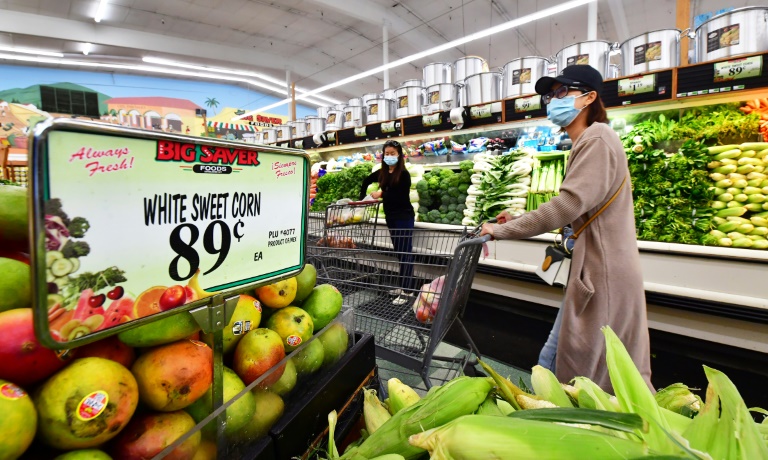
Americans have felt the pinch of rising food prices, including big increases in dairy and cereal products.

The index for meat, poultry, fish and eggs surged 14.3 percent — the biggest gain since May 1979.

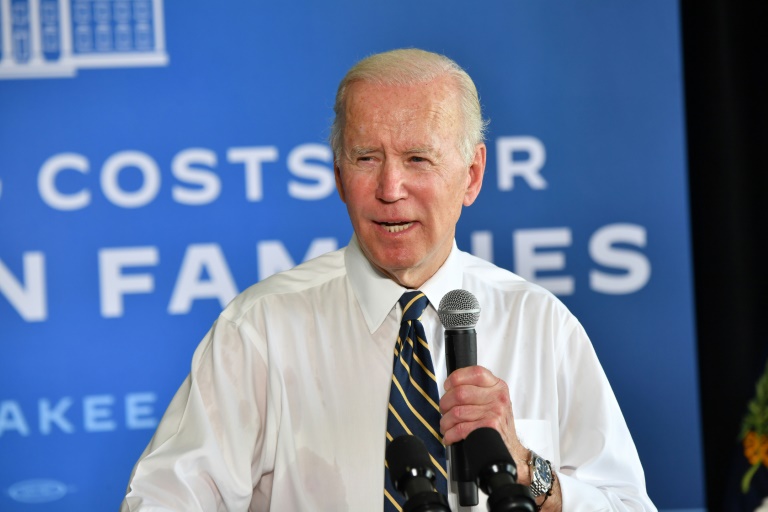
US President Joe Biden called April’s overall slow-down “heartening” — March saw a peak of 8.5 percent — but acknowledged inflation was still a major challenge, and said “bringing it down is my top economic priority.”

Post-report, US stocks gyrated — opening lower, rallying, retreating, and then with losses accelerating at close. 

All three major indices finished firmly in the red, with the tech-rich Nasdaq slumping 3.2 percent behind big drops by Apple and Facebook-parent Meta.

The tumble filtered to Asian markets — Seoul, Sydney, Tokyo, and Hong Kong opened Wednesday in the negatives. 

“We’re seeing the beginning of the capitulation and the great reset, if you want, in pricing,” Virginie Maisonneuve, global chief investment officer for equity at Allianz Global Investors UK, told Bloomberg.

Oil prices — which fell below $100 a barrel on the benchmark US crude contract WTI earlier this week — jumped around five percent amid ongoing worries over Russian energy supplies.

By Thursday morning, it traded around $104 a barrel.

Ukraine said Russia had halted gas supplies through a key transit hub in the east of the country, fuelling fears Moscow’s invasion could worsen an energy crisis in Europe.

The “choppy” nature of crude prices is also due to uncertainty about “the timing of an EU ban on Russian oil imports”, said Michael Hewson at CMC Markets.

– Key figures at around 0230 GMT –

Hong Kong – Hang Seng Index: DOWN 1.0 percent at 19,619.00  

Shanghai – Composite: DOWN 0.01 percent at 3,058.37 

Tokyo – Nikkei 225: DOWN 0.8 percent at 25,992.68 (break)

Brent North Sea crude: DOWN 1.1 percent at $106.30 per barrel

West Texas Intermediate: DOWN 1.1 percent at $104.50 per barrel

Euro/dollar: UP at $1.0516 from $1.0515 at 2050 GMT Wednesday 

Pound/dollar: DOWN at $1.2222 from $1.2248

Euro/pound: UP at 86.04 pence from 85.84 pence

Dollar/yen: DOWN at 129.70 yen from 130.00 yen

New York – Dow: DOWN 1.0 percent at 31,834.11 (close)

London – FTSE 100: UP 1.4 percent at 7,347.66 (close)

Saudi Aramco becomes world's most valuable company

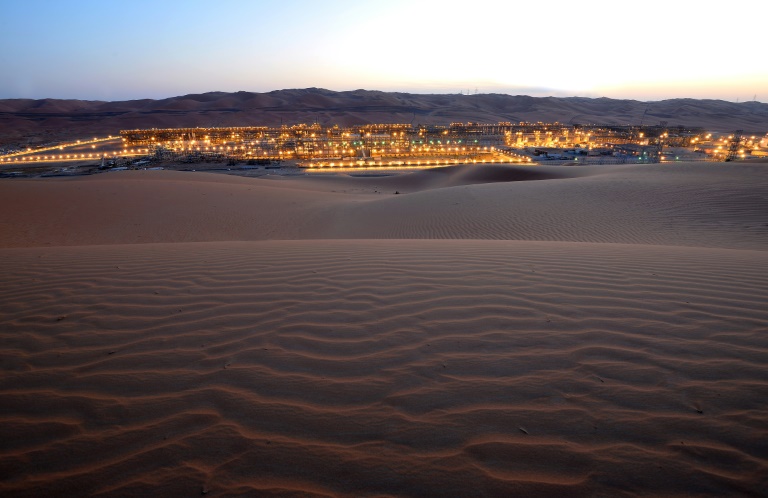
Saudi Aramco on Wednesday dethroned Apple as the world’s most valuable company as surging oil prices drove up shares and tech stocks slumped.

The Saudi Arabian national petroleum and natural gas company, billed as the largest oil producing company in the world, was valued at $2.42 trillion based on the price of its shares at close of market.

Apple, meanwhile, has seen its share price drop over the past month and was valued at $2.37 trillion when official trading ended on Wednesday.

The sinking share price came despite Apple reporting better-than-expected profits in the first three months of this year amid strong consumer demand.

But, Apple warned that the China Covid-19 lockdown and ongoing supply chain woes would dent June quarter results by $4 to $8 billion.

“Supply constraints caused by Covid-related disruptions and industry-wide silicon shortages are impacting our ability to meet customer demand for our products,” Chief Financial Officer Luca Maestri said on a conference call with analysts.

The results looked good following stumbles by some Big Tech peers as growth from the stay-at-home demand amid the pandemic slows and companies confront rising operating and labor costs.

Oil giant Saudi Aramco recently reported a 124 percent net profit surge for last year, hours after Yemeni rebels attacked its facilities causing a “temporary” drop in production.

As the world economy started to rebound from the Covid-19 pandemic, “Aramco’s net income increased by 124 percent to $110.0 billion in 2021, compared to $49.0 billion in 2020,” the company said.

The kingdom, one of the world’s top crude exporters, has been under pressure to raise output as Russia’s invasion of Ukraine and subsequent sanctions against Moscow have roiled global energy markets.

Aramco president and CEO Amin Nasser cautioned that the company’s outlook remained uncertain due in part to “geopolitical factors”. 

“We continue to make progress on increasing our crude oil production capacity, executing our gas expansion program and increasing our liquids to chemicals capacity,” Nasser said.

On the results, for 2021, he acknowledged that “economic conditions have improved considerably”.

A strong rebound last year saw demand for oil increase and prices recover from their 2020 lows.

Inflation could cause a drop in consumption, reducing demand for oil, while tech shares could continue to be dragged down by investor concerns over company costs, interest rate rises and supply chain woes.

US eyes trade deal-lite as Southeast Asian leaders gather

The United States is preparing a scaled-back version of a trade pact as Southeast Asian nations gather in Washington, where President Joe Biden is seeking to show solid commitment in the face of a rising China.

Leaders from the Association of Southeast Asian Nations will meet Biden for dinner Thursday at the start of a two-day summit, part of a renewed US focus on Asia after months of intense effort on Ukraine.

Before Russia’s invasion of Ukraine, the Biden administration had made clear that its top priority was competition with China due to its rapid technological advances and rising assertiveness both at home and abroad.

Kurt Campbell, the top White House official on Asia, said the United States would raise areas of cooperation with ASEAN leaders including fighting the Covid pandemic and disaster relief.

He also said he expected “substantial interest” by Southeast Asian nations in the Indo-Pacific Economic Framework, or IPEF, the latest acronym-branded US trade initiative, which was mentioned late last year by Secretary of State Antony Blinken in Indonesia.

“We’re quite confident that we’re going to be able to have a substantial launch with a very broad range of potential players,” Campbell said at the US Institute of Peace.

Koji Tomita, Japan’s ambassador to Washington, told a separate event that he expected IPEF to be unveiled formally a week later when Biden visits Tokyo and Seoul.

Former president Barack Obama had proposed the Trans-Pacific Partnership, billing it as a high-standards deal that would let the United States lead the emerging trade order in Asia.

His successor Donald Trump trashed the deal, calling free trade unfair to US workers. Biden, seeing the shifting US political mood, has made clear he is in no rush for trade deals — and China is now seeking to enter the Trans-Pacific Partnership’s successor.

– Not seeking ‘new Cold War’ –

Experts briefed on IPEF said it would formally commit the United States to work with partners on key economic priorities including ensuring smooth supply chains, fighting corruption and promoting green energy.

Unlike traditional trade deals, it would not guarantee market access to the United States, the world’s largest economy — the usual sweetener to persuade nations to make concessions.

Campbell said Biden knew that any initiative needed to be “fundamentally based on the needs and desires of the people of Southeast Asia.”

“He does not want to descend Southeast Asia or Asia into a new Cold War,” he said.

“I think we recognize quite clearly that any initiative that is simply designed for competition is likely to have difficulty gaining altitude in Asia.”

China for more than a decade has been ASEAN’s largest trading partner, despite widespread territorial rifts between Beijing and members of the bloc, especially Vietnam and the Philippines.

Evan Feigenbaum, a former senior State Department official, told a recent congressional hearing that the United States has historically enjoyed its privileged place in Asia due to both its security and economic leadership, only one of which remains.

“Even though America’s economic role is growing in absolute terms, it is receding in relative terms, which means that, to lead, we should be leaning harder on the other pillar of our economic leadership, which was to be a rule writer and standard setter,” said Feigenbaum, now at the Carnegie Endowment for International Peace.

Labor advocacy group Trade Justice has already voiced alarm at IPEF, saying many Southeast Asian nations did not have adequate treatment of workers.

Trade diplomacy has long been at the forefront of US interactions with Southeast Asia, often seen as a victim of its own success given its perceived stability.

But the Washington summit also comes after a year of intense US pressure on Myanmar, once hailed as a model of democratic transition, following its military coup.

US officials say they will seek to show support for democratic forces in Myanmar and may represent the country with an empty chair during the summit.

Solomons PM dismisses concerns over China maritime deal

The Solomon Islands’ prime minister dismissed criticism of a new maritime investment deal with China on Wednesday, saying there was nothing “sinister” in the draft agreement.

The new agreement, a copy of which has been leaked to the media, comes after a controversial security pact was signed last month.

The pact sparked alarm in Australia and the United States, which feared it could lead to Beijing securing a military foothold in the South Pacific. Honiara has ruled out hosting a Chinese military base.

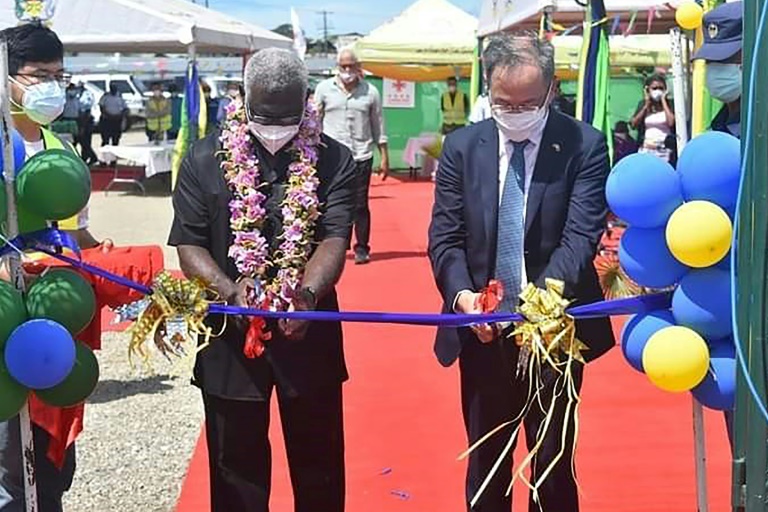
On Wednesday, Solomon Islands Prime Minister Manasseh Sogavare shrugged off criticism of the separate leaked memorandum of understanding on maritime investment, describing it as a “normal bilateral development initiative” that is yet to be formalised.

“There is nothing sinister nor trivial about the Blue Economy Memorandum of Understanding,” his office said in a statement.

A day earlier, Australian Prime Minister Scott Morrison had expressed concern regarding the memorandum, which covers undersea cables, port wharves, shipbuilding and other areas.

Morrison said he was “very concerned, as many other Pacific leaders are, about the interference and intrusion of the Chinese Government into these types of arrangements”.

The Solomons’ warming ties with China have been a key issue in Australia’s election campaign since a draft of the security agreement with China was first leaked on social media in March.

That draft allowed for Chinese naval deployments in the Solomon Islands, eliciting a warning from the United States that it would “respond accordingly” if China installed a military base in the Pacific archipelago. 

In April, Solomon Islands PM Sogavare said that his government would not allow a Chinese military base to be built in his country “under its watch”. 

The latest leaked maritime investment deal, dated just “2022”, covered investment in wharves, shipbuilding and ship repair, offshore gas and oil exploration and other “blue economy” industries.

Sogavare’s Wednesday statement said the memorandum of understanding was a broad document, which would be followed by a more detailed agreement.

Close Bitnami banner
Bitnami