US Business

Will Hong Kong reopen for business under new leader Lee?

Hong Kong’s next leader John Lee is inheriting a once vibrant Asian business hub mired in its third year of pandemic isolation but he may prioritise security over an economic reboot, business leaders and observers say.

Lee, a former security chief, is expected to be confirmed Hong Kong’s next chief executive on Sunday by a committee of 1,463 elites after running uncontested with Beijing’s blessing.

He has promised a “results-oriented” government and a new chapter for the southern Chinese city — although his manifesto announced few major policy shifts. 

Business leaders have expressed concern over Lee’s lack of details on how he might kickstart the city’s fortunes, including moving beyond Chinese-style travel curbs that have left the city cut off and sparked an exodus of talent.

“In order to reboot Hong Kong’s reputation as a business hub, we need a Covid exit plan,” Kristian Odebjer, head of the Swedish Chamber of Commerce in Hong Kong, told AFP.

Tara Joseph, former head of the city’s American Chamber of Commerce, said travel connectivity was a key first step for Hong Kong to regain its international stature after “so much reputation damage”.

But Lee appeared to brush aside those concerns last week, saying that he will instead prioritise reopening the border with mainland China — signalling any immediate policy U-turn is unlikely.

– ‘Stuck in the middle’ –

Lawmaker and businessman Michael Tien said the coronavirus has trapped Hong Kong’s leader between a rock and a hard place, no matter who fills that seat.

“Our country is going for zero-Covid while the rest of the world is living with the virus,” Tien told AFP.

“Hong Kong is stuck in the middle.”

The city was slammed by an Omicron-fuelled outbreak which killed more than 9,000 people and contributed to a four percent drop in economic output for the first quarter.

Siddharth Sridhar, a microbiologist at the University of Hong Kong, said Hong Kong was enjoying a “grace period between waves” and that Lee must waste no time in getting the elderly vaccinated.

In recent weeks outgoing leader Carrie Lam has eased some pandemic restrictions, including reducing quarantine to seven days and allowing non-residents in for the first time in some two years.

Last week Lee told reporters he would continue “a good balancing act” between keeping the virus out and the economy afloat.

His 44-page manifesto did not specifically address the coronavirus, aside from vowing to learn from the pandemic and set up a new emergency procedure to deal with future threats.

– Security background –

Lee spent some four decades within Hong Kong’s security services, prompting questions over his business acumen in a city that markets itself as the financial gateway between China and the world.

“The choice of John Lee illustrates Beijing’s priorities of security and control in Hong Kong,” former US chamber head Joseph said. 

“He will be the first HK leader with no business background.” 

Lawmaker Tien said Lee would be receptive to outside opinions — a compliment echoed by many of Lee’s supporters.

“Lee won’t listen in matters of security, but in other areas he has no choice, he must listen and consider opinions,” Tien said.

Discussing his own governance style, Lee said he was a pragmatist eager to streamline procedures for greater efficiency.

Pro-Beijing business mogul Allan Zeman, who praised Lee’s policy ideas, said “(Lee) came from the police and police used to make things happen”.

– Democrats shut out –

Lee was among 11 top Hong Kong and Beijing officials sanctioned by the US Treasury in 2020 in the wake of China’s imposition of a sweeping security law aimed at snuffing out dissent.

Last month, YouTube suspended Lee’s campaign channel citing the need to comply with sanctions.

Lee has defended his role in crushing the 2019 democracy protests and recently said his government will prioritise livelihood issues over democratisation.

He has presented himself as a no-nonsense leader who can get things done and cut through red tape. 

Kenneth Chan, a political scientist from Baptist University, warned that style could lead to even less public say and participation in how the city is governed.

Lee has also shown little appetite so far in reaching across political lines to heal social divisions. 

“He’s determined… to shut out democrats, to put pressure on civil society and to basically kill the entire issue of democratic reform in the coming five years,” Chan said.

“This is going to be a door shut very tightly.”

Ukraine's farmers risk death in bomb-strewn fields

It’s spring planting season in Ukraine, but this year farmers require more than fuel and fertiliser –- they also need flak jackets and deminers to destroy the bombs that have already killed or maimed others in their fields.

One of the unexploded rockets lay on an island of undisturbed black soil in Igor Tsiapa’s field in the nation’s southwest and posed a deadly threat to getting his corn crop planted on land that was otherwise ploughed and waiting.

“We first spotted the projectile a week and a half ago but just didn’t touch this part of the field and continued on getting ready for planting,” he told AFP on Thursday, a few metres from the deminers prepping the device for destruction.

“Everything has to be done on schedule if you want to have a more or less proper harvest… We had to keep working,” the nearly 60-year-old added in the area of the village of Grygorivka.

Farmers in Ukraine have found themselves on the front line of a Russian invasion that has tainted swathes of the country with undetonated mines, shells and rockets.

That’s because they face a unique risk of setting off one of the devices while working the soil, one more piece of worrying news for next year’s harvest in Europe’s breadbasket.

Police said the latest injury was in the Kyiv area where a farmer in the village of Gogoliv hit a mine on his tractor while in the fields on Wednesday.

Maria Kolesnyk, with analytics firm ProAgro Group, told AFP that about 20 incidents had been recorded of farmers being struck by accidental explosions of war ordnance, but it wasn’t clear how many instances were fatal.

“In the agro community today the most sought-after profession is the sappers,” she said. “We desperately need the help of the international community because Ukrainian professionals are working 24/7.”

– Improvised bomb markers –

In Tsiapa’s field the rocket was left where it landed, and the blue-helmeted sappers placed orange fist-sized blocks of explosives along its explosive payload before shovelling a mound of dirt over it.

“Every day since the start of the war we have been finding and destroying unexploded ammunition,” Dmytro Polishchuk, one of the deminers, told AFP before heading into the field.

“After farmers began working in the fields, we started getting regular calls from people alerting us to new devices,” he said, noting the team destroyed up to three per day.

He added people have not always waited for overstretched demining crews to arrive, noting some farmers have marked the explosives with sticks bearing plastic bottles or bags as warning and went on ploughing.

Leaving the unexploded missiles untouched is not a guarantee that they won’t explode, Polishchuk said, noting some have a self-destruct setting where they can go off at any time.

For Tsiapa, farmers in areas that haven’t been occupied have to pick up some of the slack, despite the risks, for places where planting could be disrupted by Russia’s invasion.

“So we here have double responsibility and double pressure to grow a good harvest. Things are that way because we don’t have active combat here, so we can work,” he added.

Ukraine is the world’s top producer of sunflower oil and a major exporter of wheat, yet the war’s disruption of labour and displacement of farmers from their land as well as fuel shortages have all raised worries.

Before the war, Ukraine was the world’s fourth largest exporter of corn and was set to become the third biggest exporter of wheat after Russia and the United States.

Russia and Ukraine alone account for 30 percent of global wheat exports.

In Tsiapa’s field, the deminers’ work came to an abrupt end with a controlled blast that sent up a puff of black smoke and thudded through the valley, where spring weather has begun to turn trees and grass back to green.

When the blast was over with, Tsiapa hopped into his red van and drove off. He had to get back to work.

Xbox makes 'Fortnite' game free to play on iPhones

Microsoft’s video game unit Xbox on Thursday said it will tap into cloud computing to make “Fortnite” free to play on mobile devices powered by Apple or Android software.

The popular battle royale title from Epic Games will be the first free-to-play game available through an Xbox Cloud Gaming service available in 26 countries, head of product Catherine Gluckstein said in a blog post.

Fortnite’s return to iPhones and iPads comes after the game was booted from Apple’s App Store for trying to bypass its payment system in violation of the iPhone maker’s rules.

Apple has clashed in court with Epic, which has accused the iPhone maker of operating a monopoly of its App Store shop for digital goods and services.

A US federal judge in November ordered Apple to loosen control of its App Store payment options, but said Epic had failed to prove that antitrust violations had taken place.

“Fortnite” will be free at Xbox Cloud Gaming as a result of a partnership with Epic.

Fans of the game can play on Apple iOS-powered devices, Android phones or tablets, as well as on Windows computers through web browsers, Gluckstein said.

Apple and Google dominate the market, with their operating systems running on the majority of the world’s smartphones.

“This is just the beginning for us,” Gluckstein said.

“We’re going to learn, implement feedback, and in time look to bring even more free-to-play titles to players through the cloud.”

Microsoft has courted the favor of antitrust regulators scrutinizing its plan to buy video game maker Activision Blizzard, promising that any app store it builds will treat developers fairly.

Microsoft’s $69 billion deal to buy the video game powerhouse needs to pass muster with regulators in Europe and the United States intent on reining in tech titans.

Principles outlined by Microsoft included allowing all developers access to its app store and not requiring them to use the technology firm’s payment system for in-app transactions.

Wall Street tumbles on Fed worries, pound slumps

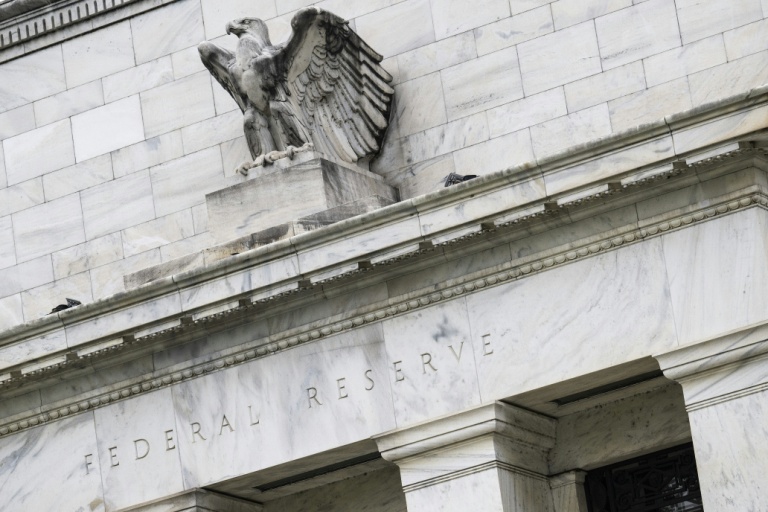
After breathing a sigh of relief when the Federal Reserve held off on signaling more aggressive measures ahead to fight inflation, Wall Street tumbled on Thursday amid renewed anxiety over rising interest rates, while the pound slumped on fears of a UK recession.

The sell-off was New York’s worst since 2020, and saw the Nasdaq — dominated by tech firms that are particularly sensitive to higher rates — lose five percent, while the Dow and S&P 500 fell more than three percent.

With US inflation at levels not seen since the 1980s, the Fed on Wednesday hiked the key lending rates by half a percentage point, but cheered markets, at least at first, by saying a three-quarter point increase was not in the cards.

That message was not as hawkish as feared, but the Fed still is engaged in “one of the most aggressive tightening cycles that we have seen in decades,” said Angelo Kourkafas, investment strategist at Edward Jones. 

“It didn’t necessarily change the narrative that economic growth is slowing, while the Fed will tighten monetary policy” at a fast pace, he said.

In Britain, the pound suffered after the Bank of England released an updated forecast, predicting annual inflation would rise above 10 percent and the economy would contract later this year, while hiking its main rate by an as-expected quarter-point.

The pound plunged more than two percent due to “the changes in the economic forecasts, which pointed to a potential recession by year end, and the warnings that rates may not rise as high as markets had been expecting in the months ahead,” said market analyst Michael Hewson at CMC Markets UK.

The BoE said UK output was expected to contract in the final quarter of the year when inflation is likely to enter double digits as household energy prices rise sharply, although the central bank does not forecast a full-blown recession for the moment.

“Uncertainty over inflation and growth puts rate setters in a tricky dilemma,” City Index analyst Fawad Razaqzada said.

“The key risk facing the UK is not necessarily tighter policy, but uncertainty over monetary policy and, more to the point, stagflation,” he added.

Central banks worldwide are raising interest rates to fight inflation that is sitting at the highest levels in decades as economies ease pandemic restrictions while dealing with the war in Ukraine, which increased already high energy costs.

News that Turkish inflation soared to 70 percent in April highlighted the battle policymakers face in controlling prices.

In European trading, London managed to hold onto a marginal gain but both Frankfurt and Paris fell.

– OPEC+ decision –

As expected, Saudi Arabia, Russia and other key oil producers in the OPEC+ group agreed to another marginal increase in output as they weighed tight supply concerns caused by the Ukraine war against the risk pandemic restrictions in China pose to demand.

That sent oil prices jumping by more than three percent to firmly above $110 per barrel, but they later gave up most of their gains.

Traders on Thursday also digested earnings updates from some of the world’s biggest companies.

Shares in Airbus soared around six percent in Paris after the European aircraft maker said late Wednesday that its net profit more than tripled in the first quarter to 1.2 billion euros ($1.3 billion), despite the impact of sanctions against Russia.

The results confirm the company’s recovery after the Covid-19 pandemic slammed the air travel industry in 2020.

– Key figures at around 2035 GMT –

New York – Dow: DOWN 3.1 percent at 32,997.97 (close)

New York – S&P 500: DOWN 3.6 percent at 4,146.87 (close)

New York – Nasdaq: DOWN 5.0 percent at 12,317.69 (close)

EURO STOXX 50: DOWN 0.8 percent at 3,696.63 (close)

London – FTSE 100: UP 0.1 percent at 7,503.27 (close)

Frankfurt – DAX: DOWN 0.5 percent at 13,902.52 (close)

Paris – CAC 40: DOWN 0.4 percent at 6,368.40 (close)

Hong Kong – Hang Seng Index: DOWN 0.4 percent at 20,793.40 (close)

Shanghai – Composite: UP 0.7 percent at 3,067.76 (close)

Tokyo – Nikkei 225: Closed for a holiday

Brent North Sea crude: UP 0.8 percent at $111.03 per barrel

West Texas Intermediate: UP 0.6 percent at $108.46 per barrel

Euro/dollar: DOWN at $1.0540 from $1.0625 on Wednesday

Pound/dollar: DOWN at $1.2353 from $1.2632

Euro/pound: UP at 85.29 pence from 84.06 pence

Dollar/yen: UP at 130.20 yen from 129.05 yen

burs-rl/lc/cs/hs

Boeing will move its headquarters to Washington area

Boeing announced Thursday it will relocate its headquarters from Chicago to the Washington suburb of Arlington, Virginia, moving the airplane maker and defense contractor closer to government decision-makers.

The big aerospace company, which has struggled of late with production difficulties that have weighed on profitability, said its Virginia campus that already houses its defense, space and security business will now also comprise its corporate headquarters.

“We are excited to build on our foundation here in Northern Virginia,” said Chief Executive Dave Calhoun. 

“The region makes strategic sense for our global headquarters given its proximity to our customers and stakeholders, and its access to world-class engineering and technical talent.”

Boeing also plans to establish a “research and technology” hub at the Virginia locale, part of an effort to enhance digital innovation, the company said.

In 2001, Boeing opted to move its headquarters from its original home in the Seattle area to Chicago following its acquisition of McDonnell Douglas. 

The company “will maintain a significant presence at its Chicago location and surrounding region,” Boeing said in a news release.

The Washington area is home to other leading defense contractors and has proximity to key officials at the Pentagon.

In October 2020, Boeing announced that it was consolidating production of the 787 Dreamliner to South Carolina after previously splitting manufacturing of the jet between that facility and Washington state.

But the 787 has been one of Boeing’s major trouble spots over the last year. 

While Boeing has resumed deliveries on the 737 MAX after a lengthy grounding following two fatal crashes, the company has halted deliveries of the 787 since May 2021 while it works through production problems.

The travails of the 787 were among the factors weighing down the company as Boeing reported a first-quarter loss of $1.2 billion.

US tech titans look to ditch passwords

Apple, Google and Microsoft said Thursday they are looking to get rid of passwords and replace them with a more secure way to access accounts or devices.

The US tech titans jointly announced support for a common standard that will let people sign in by unlocking their mobile phones, say, with fingerprint or face recognition.

“The complete shift to a passwordless world will begin with consumers making it a natural part of their lives,” said Microsoft vice president Alex Simons.

“By working together as a community across platforms, we can at last achieve this vision and make significant progress toward eliminating passwords.”

Reliance on passwords alone is decried as a major security flaw on the internet, with people keeping them overly simple or using the same one repeatedly to make it easier to manage many accounts.

Adopting standards created by the FIDO Alliance and the Word Wide Web Consortium will let websites and device makers build secure, passwordless options into their offerings, the groups said in a release.

Using secure keys instead of passwords would stymy phishing scams that trick people into disclosing log-in credentials and hackers that steal such data.

“Today is an important milestone in the security journey to encourage built-in security best practices and help us move beyond passwords,” US cybersecurity and infrastructure security agency director Jen Easterly said.

Support for password-free log-ins will be woven into Android and Chrome software over the course of the coming year, said Google product manager and FIDO Alliance president Sampath Srinivas.

Apple and Microsoft announced plans to do likewise with their software.

“This will simplify sign-ins across devices, websites, and applications no matter the platform – without the need for a single password,” Srinivas said in a blog post.

“When you sign into a website or app on your phone, you will simply unlock your phone.”

Mobile phones will store a FIDO credential referred to as a “passkey” that will be used to unlock online accounts, Srinivas explained.

“To sign into a website on your computer, you’ll just need your phone nearby and you’ll simply be prompted to unlock it for access,” Srinivas said.

Eliminating passwords was billed as more secure than two-factor authentication that involves getting one-time passcodes texted or emailed as secondary confirmation when logging into sites or services.

Turkey inflation spirals to nearly 70 percent

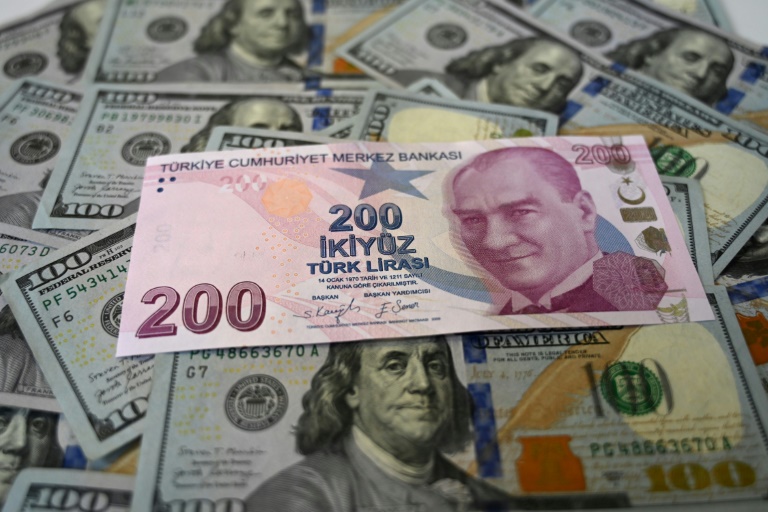
Turkey’s official inflation rate spiralled to nearly 70 percent in April, data showed on Thursday, posing a huge challenge to President Recep Tayyip Erdogan, whose unconventional economic policies are often blamed for the economic turmoil. 

The consumer price index rose by 69.97 percent year-on-year in April compared with 61.14 percent in March, the national statistics agency said.

Erdogan insists that sharp cuts in interest rates are needed to bring down soaring consumer prices, flying in the face of economic orthodoxy. 

The collapse of the lira has pushed up the cost of energy imports and foreign investors are now turning away from the once-promising emerging market. 

Russia’s invasion of Ukraine and the coronavirus pandemic have exacerbated the energy price spikes and production bottlenecks.

Turkey’s annual inflation rate — the highest since Erdogan’s ruling AKP party rose to power in 2002, is largely linked to his unconventional economic thinking, analysts say. 

Erdogan has put pressure on the nominally independent central bank to slash interest rates. 

In April, the bank kept its benchmark interest rate steady for the fourth consecutive month, bowing to the pressure despite high inflation. 

The biggest price increases in April were for the transport sector, standing at 105.9 percent, while the prices of food and non-alcoholic drinks jumped 89.1 percent.

– ‘Spectacular failure’ –

“True it’s about food and energy price increases but also the spectacular failure of monetary policy in Turkey,” Timothy Ash, emerging markets strategist at BlueBay Asset Management, said in a note to clients. 

“Low interest rates cause inflation. Period. Fact. The reality,” he said, accusing Erdogan of “trying to re-write economics to say the opposite which is the economics equivalent of calling the earth flat.”

Treasury and Finance Minister Nureddin Nebati on Monday brushed aside concerns, saying that the current inflationary trend was fleeting and would “not spread over the long term and be permanent”. 

“We will increase the welfare and purchasing power of our citizens over the past level,” he said.

At a bazaar in an Istanbul neighbourhood on the European side, shoppers vented their anger over soaring prices. 

“People are starving! I feel ashamed when I am shopping,” Rita Ezel, a retired woman, told AFP.

“My monthly pension vanishes in 10 days.”

Another retiree, Seckin Gozuyasli, said: “The prices change on a weekly basis. Milk, cheese, meat, everything, detergent, everything you can imagine is so expensive now.”

She blamed the “wrong economic policies” as well as Turkey’s playing home to 3.6 million Syrians who fled the war back home for surging prices. 

-‘We barely make ends meet’-

Turkey has cut taxes on some goods and offered subsidies for electricity bills for vulnerable households but even this has failed to stem inflation.

“I am a seller at the bazaar for 35 years now. In the past, one person in the family would work and we could get by. Now in my home four of us work and we hardly make ends meet,” Yuksel Cinar complained as he was tidying his vegetable stalls. 

The Turkish currency lost 44 percent of its value against the dollar last year and more than 11 percent since the start of January, making the cost of imported goods and fuel very expensive. 

Erdogan’s government has responded by using state banks to buy up liras in a bid to cut the currency’s losses. 

There is also speculation that the central bank sells dollars to stem the lira’s slide. 

The former deputy general manager of Turkey’s state bank Ziraat shared information he received from banking circles, Turkish media reported. 

“The central bank sells $2.5-3 billion a week through public banks,” he was quoted as saying this week. 

Jason Tuvey, emerging markets economist at the London-based Capital Economics, predicted that inflation would hover around the current high rates for much of this year.

He said there were “no signs that policymakers are about to shift tack and hike interest rates as they remain wedded to the ‘new economic model’,” of the government. 

Erdogan, who faces a crucial presidential vote next year, has also shifted policy to mend broken alliances with cash-rich Gulf states to draw financial support. 

Last week, he visited Saudi Arabia in a bid to reset relations that had been strained since the 2018 killing of Riyadh critic journalist Jamal Khashoggi in the kingdom’s consulate in Istanbul. 

Erdogan said his government agreed with Saudi Arabia to “reactivate a big economic potential”. 

Pound slumps, Wall Street tumbles

The pound slumped Thursday after the Bank of England flagged a possible recession and double-digit inflation, while Wall Street tumbled after having jumped the previous day on the Federal Reserve holding back on aggressively raising rates.

Meanwhile oil prices rose after OPEC+ only modestly hiked production targets.

The BoE’s quarter-point hike was widely expected by the market, but the central’s banks updated forecast for annual inflation to rise above 10 percent this year and the economy to contract later this year spooked investors.

The British pound plunged more than two percent after the BoE decision.

The drop in the pound was sparked by “the changes in the economic forecasts, which pointed to a potential recession by year end, and the warnings that rates may not rise as high as markets had been expecting in the months ahead,” said market analyst Michael Hewson at CMC Markets UK.

The BoE said UK output was expected to contract in the final quarter of the year when inflation is set to enter double digits as household energy prices rise sharply, although the central bank doesn’t forecast a full-blown recession for the moment.

“Uncertainty over inflation and growth puts rate setters in a tricky dilemma,” said City Index analyst Fawad Razaqzada as it makes striking the right policy balance very difficult.

“So, the key risk facing the UK is not necessarily tighter policy, but uncertainty over monetary policy and, more to the point, stagflation,” he added.

Central banks worldwide are raising interest rates, with inflation sitting at the highest levels in decades.

Prices are surging as economies reopen from pandemic lockdowns, and in the wake of the Ukraine war that is aggravating already high energy costs.

News that Turkish inflation soared to 70 percent in April highlighted the battle central bankers face in controlling prices.

The BoE’s latest move follows a half percentage point hike Wednesday by the US Fed as inflation soars also in the world’s biggest economy.

Wall Street’s main indices had surged around three percent in response, relieved that the central bank wasn’t moving more aggressively in steps that could cause the economy to slow.

But those gains were reversed on Thursday, with the tech-heavy Nasdaq Composite falling 4.6 percent in late morning trading.

In Europe, London managed to hold onto a marginal gain but both Frankfurt and Paris fell.

– OPEC+ decision –

Inflation has been dragged higher globally in large part owing to surging energy prices.

As expected, Saudi Arabia, Russia and other key oil producers in the OPEC+ group agreed to another marginal increase in output as they weighed tight supply concerns due to the Ukraine war against risks to demand amid coronavirus restrictions in China. 

That sent oil prices jumping by more than three percent to firmly above $110 per barrel, but they later gave up most of their gains.

Traders on Thursday digested also earnings updates from some of the world’s biggest companies.

Shares in Airbus soared around percent in Paris after the European aircraft maker said late Wednesday that its net profit more than tripled in the first quarter to 1.2 billion euros ($1.3 billion), despite the impact of sanctions against Russia.

The results confirm the company’s recovery after the Covid-19 pandemic slammed the air travel industry in 2020.

– Key figures at around 1530 GMT –

New York – Dow: DOWN 2.9 percent at 33,073.60 points

EURO STOXX 50: DOWN 0.8 percent at 3,696.63

London – FTSE 100: UP 0.1 percent at 7,503.27 (close)

Frankfurt – DAX: DOWN 0.5 percent at 13,902.52 (close)

Paris – CAC 40: DOWN 0.4 percent at 6,368.40 (close)

Hong Kong – Hang Seng Index: DOWN 0.4 percent at 20,793.40 (close)

Shanghai – Composite: UP 0.7 percent at 3,067.76 (close)

Tokyo – Nikkei 225: Closed for a holiday

Brent North Sea crude: UP 0.7 percent at $110.87 per barrel

West Texas Intermediate: UP 0.3 percent at $108.12 per barrel

Euro/dollar: DOWN at $1.0506 from $1.0625 on Wednesday

Pound/dollar: DOWN at $1.2337 from $1.2632

Euro/pound: UP at 85.12 pence from 84.06 pence

Dollar/yen: UP at 130.39 yen from 129.05 yen

burs-rl/lc

Sri Lanka police tear gas student protesters outside parliament

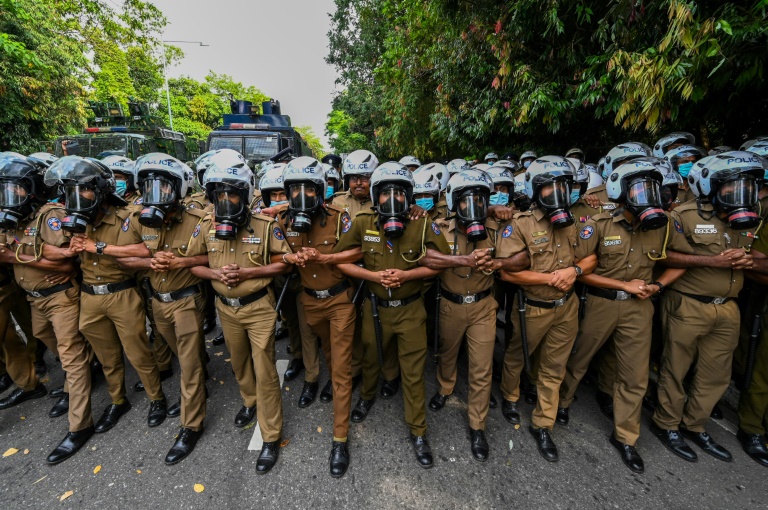
Police fired tear gas on students attempting to storm Sri Lanka’s parliament Thursday as the protesters demanded the resignation of President Gotabaya Rajapaksa over the country’s worst-ever economic crisis.

Protesters led by the Inter University Students’ Federation were about to pull down the yellow-painted iron barricades on the main drive leading to the legislature when riot police unleashed a barrage of tear gas.

The students had marched from a nearby university and closed in on the parliament building located on a man-made lake island when police moved in.

Even as the crowds dispersed, police kept firing tear gas canisters that hit shops in the nearby Diyatha Uyana park, witnesses said.

Police had earlier set up barricades around the sprawling parliament complex where a vacancy for the deputy speaker was being filled unopposed. 

Sri Lanka’s 22-million population has been facing acute shortages of food, fuel and medicines for months, bringing tens of thousands onto the streets to demand the resignation of Rajapaksa and other members of his powerful ruling family. 

The president and his family have made it clear that they will not step down despite escalating demonstrations across the island.

– Trade unions –

Sri Lanka’s trade unions have announced a one-day work stoppage on Friday.

The organisers of the strike have asked temples and churches to ring their bells for an hour on Friday morning in a show of solidarity.

Finance minister Ali Sabry warned on Wednesday that the country will have to endure its unprecedented economic hardships for at least two more years.

Sabry said the country now has less than $50 million in usable foreign exchange reserves, needed to finance essential goods to keep Sri Lanka’s import-dependent economy ticking over.

Official data shows reserves at $1.7 billion, but most of that figure includes a Chinese currency swap which cannot be used to pay for imports from other countries.

Sabry said the government faltered by delaying an approach to the International Monetary Fund for a bailout.

Sri Lanka’s economic crisis took hold after the coronavirus pandemic hammered income from tourism and remittances.

Last month, Colombo announced it was defaulting on its $51 billion foreign debt.

Musk secures $7.1 bn to finance Twitter deal

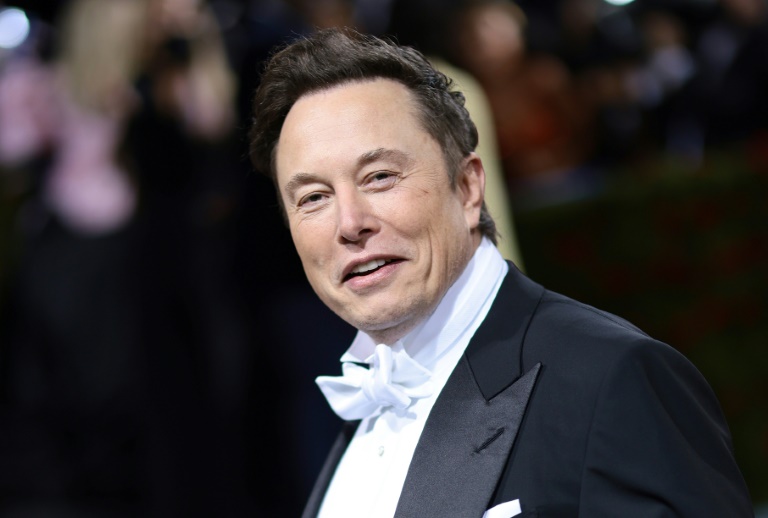
Elon Musk has raised $7.1 billion for his Twitter acquisition from investors that include Oracle founder Larry Ellison and Saudi Prince Alwaleed bin Talal, according to a securities filing Thursday.

Musk, chief executive of Tesla and SpaceX, listed 18 investors who agreed to cash investments including Ellison ($1 billion), Sequoia Capital ($800 million) and Vy Capital ($700 million). 

The Saudi prince, the head of the Kingdom Holding Company conglomerate, agreed to contribute about 35 million Twitter shares worth $1.9 billion so as to retain a stake in the company post-acquisition, the filing said.

Alwaleed had previously balked at Musk’s $54.20 per share offer as too low, but praised Musk on Twitter on Thursday, saying “I look forward to roll our ~$1.9bn in the ‘new’ @Twitter and join you on this exciting journey.”

The investments will reduce a $12.5 billion margin loan organized through Morgan Stanley and other banks to $6.25 billion, the filing said.

The new financing means less of Musk’s Tesla shares will be used as collateral under the margin loan. 

Musk “may receive additional financing commitments to fund additional portions of the total Merger Consideration,” the filing said, adding that the Tesla chief is in talks with former Twitter Chief Executive Jack Dorsey and others who may contribute shares to maintain an equity stake.

The Twitter takeover is expected to close later in 2022. 

CNBC reported that upon completion of the deal, Musk is expected to serve as temporary CEO of Twitter for a few months, the network said, citing unnamed sources.

Close Bitnami banner
Bitnami