US Business

Asian markets drop as US rout, China worries hit sentiment

Asian markets fell in holiday-thinned trade Monday following another tech-led rout on Wall Street, with focus on the Federal Reserve’s expected interest rate hike this week.

Adding to the dour mood was data showing Chinese manufacturing activity shrank last month at its fastest pace since the start of the pandemic owing to Covid lockdowns in the country’s biggest cities.

The government’s refusal to shift from its zero-Covid policy and strict containment measures is fanning fears about the world’s number two economy and key driver of global growth.

Trading floors around the world have been buffeted for months by a perfect storm of crises including China’s lockdowns, surging inflation, Fed plans to hike rates, elevated oil prices and the war in Ukraine.

All eyes are on the US central bank’s policy meeting this week, which is expected to see it hike borrowing costs by half a point — the most since 2000 — and follow it with several more increases before the end of the year.

And now some analysts are predicting it could even announce a three-quarter-point increase at some point as it battles more than 40-year-high inflation.

However, with some commentators warning rates could go as high as three percent, there are also worries the Fed could be too heavy-handed and tip the US economy into recession.

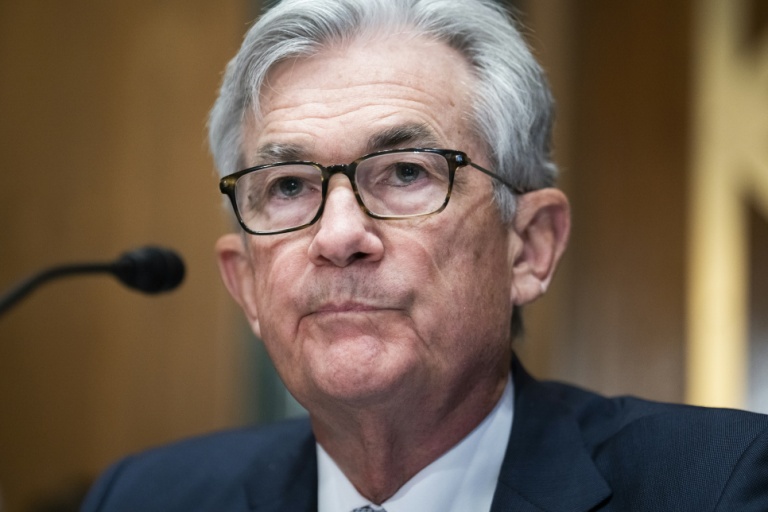
Fed boss Jerome Powell “could cement the view that 50 (basis points) is the new 25, but more worrying for stock pickers, there are lots of QE to unwind”, said SPI Asset Management’s Stephen Innes, referring to the quantitative easing bond-buying programme used by the Fed to keep rates low.

“So, the question is, how much of the impact of the balance sheet runoff” has been priced in.

The prospect of higher borrowing costs has been compounded by a sharp slowdown in China, with lockdowns in the biggest cities including Shanghai slamming output and snarling supply chains.

Data at the weekend showed the country’s manufacturing activity shrank the most it has since February 2020, and the near future does not look promising as officials shut down cinemas and gyms over the May Day holiday.

Beijing on Friday further flagged plans to provide support to the economy and signalled an easing of a painful tech crackdown. But the announcement follows several other recent pledges and traders are yet to see any concrete measures, with most wanting to see a softer approach to controlling the virus.

“We remain deeply concerned about growth,” Nomura Holdings economists said in a note.

“Despite the raft of policy measures announced by the Politburo meeting (Friday), we still believe markets should remain focused on the development of the pandemic and the corresponding zero-Covid strategy. All other policies are of secondary importance.” 

On equity markets, Tokyo, Sydney, Seoul and Wellington all fell, though Manila ticked up.

Hong Kong and mainland Chinese markets were closed along with those in Taipei, Singapore, Bangkok and Jakarta.

The struggles in China, the world’s biggest crude importer, led to a drop in prices of the commodity on demand concerns, offsetting worries about supplies from Russia caused by the Ukraine war.

European Union talks to scale back imports of oil from Russia, following embargoes by the United States and Britain, continue to provide support.

“But further gains will be limited to weaker oil demand prospects from China due to the continued expansion of lockdowns and mass testing across the region,” added SPI’s Innes.

– Key figures at around 0230 GMT –

Tokyo – Nikkei 225: DOWN 0.5 percent at 26,704.60 (close)

Hong Kong – Hang Seng Index: Closed for a holiday

Shanghai – Composite: Closed for a holiday

Dollar/yen: UP at 130.14 yen from 129.89 yen on Friday

Euro/dollar: DOWN at $1.0523 from $1.0550

Pound/dollar: DOWN at $1.2560 from $1.2578

Euro/pound: DOWN at 83.77 pence from 83.86 pence

West Texas Intermediate: DOWN 1.0 percent at $103.62 per barrel

Brent North Sea crude: DOWN 1.1 percent at $105.95 per barrel

New York – Dow: DOWN 2.8 percent at 32,977.21 (close)

London – FTSE 100: UP 0.5 percent at 7,544.55 (close)
Qantas to launch longest non-stop passenger flight

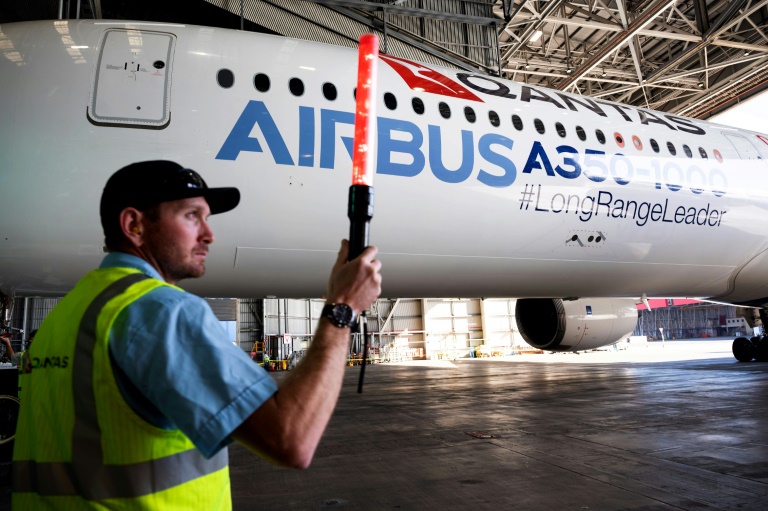
Qantas announced on Monday it will launch the world’s longest non-stop commercial flight, with passengers set to spend 19 hours in the air traveling from Sydney to London by the end of 2025.

After five years of planning, the airline said it was ordering 12 Airbus A350-1000 aircraft to operate the “Project Sunrise” flights to cities including London and New York.

Non-stop flights will start from Sydney by the end of 2025, it said, with long-haul trips later planned to include Melbourne.

“New types of aircraft make new things possible,” said Qantas chairman Alan Joyce, according to a statement.

“The A350 and Project Sunrise will make any city just one flight away from Australia,” he said.

“It’s the final frontier and the final fix for the tyranny of distance.”

Qantas operated research flights for the long-haul route in 2019, including a trial London-Sydney trek of 17,800 kilometres (11,030 miles), which took 19 hours and 19 minutes.

A trial New York-Sydney flight in the same year covered 16,200 kilometres (10,200 miles) and took a little over 19 hours.

Singapore Airlines currently operates the world’s longest non-stop commercial flight from Singapore to New York, covering 16,700 kilometres (10,400 miles) in a little under 19 hours.

Qantas already operates a 14,498-kilometre Perth-London trip that takes 17 hours.

– ‘Maximum comfort’ –

“As you’d expect, the cabin is being specially designed for maximum comfort for long-haul flying,” Joyce said.

Qantas said the new A350 aircraft would be configured for 238 passengers with first-class suites offering a separate bed, recliner chair and wardrobe.

It promised spacier economy sections and a “wellbeing zone” designed for “movement, stretching and hydration”.

At the same time, Qantas confirmed it was also ordering 40 A321 XLR and A220 aircraft from Airbus. In addition, it bought options for another 94 of these planes until the end of 2034.

“The A320s and A220s will become the backbone of our domestic fleet for the next 20 years, helping to keep this country moving,” Joyce said.

The newer aircraft would reduce emissions by at least 15 percent if running on fossil fuels, and more if using sustainable aviation fuel, he said.

“We have come through the other side of the pandemic a structurally different company,” the airline boss said.

“Our domestic market share is higher and the demand for direct international flights is even stronger than it was before Covid.”

Qantas said the total cost of the deal was a matter of commercial confidence, though it indicated it had obtained a significant discount on the standard price of the aircraft.

The A350-1000 planes will be powered by Rolls-Royce Trent XWB-97 turbofan engines, designed to be 25 percent more fuel efficient than the previous generation of aircraft, Qantas said.

Kenya boosts minimum wage as inflation bites

Kenyan President Uhuru Kenyatta announced Sunday a 12-percent hike in the minimum wage as the country confronts a surge in the cost of living.

Inflation in the East African economic powerhouse jumped to a seven-month high in April, mainly as a result of skyrocketing fuel and food prices, according to official figures.

“As a caring government, we find there is a compelling case to review the minimum wages so as to cushion our workers against further erosions,” Kenyatta said at a Labour Day rally.

He said the 12 percent increase would come into effect from May 1. It takes the minimum monthly wage from 13,500 Kenyan shillings (about $116.5, 110.5 euros) to 15,120 shillings ($130.5, 124 euros).

However the hike falls far short of the 24 percent that had been sought by the Central Organisation of Trade Unions-Kenya (COTU).

Kenyatta said the high cost of living was due to factors “beyond my control like the coronavirus pandemic and the Russia-Ukraine conflict”.

He castigated rival political leaders — including Deputy President William Ruto — for seeking to blame the government for the economic woes, as the country prepares for crucial elections in August.

Kenyatta cannot run again after serving two terms but has endorsed his former arch-rival Raila Odinga for the top job.

The August 9 presidential election is expected to be a two-horse race between Odinga and Ruto, who was initially anointed by Kenyatta as his successor, but found himself frozen out after a shock 2018 pact between Kenyatta and Odinga.

Kenya’s finance minister last month unveiled a $28 billion budget aimed at helping the economy recover after the Covid-19 pandemic threw hundreds of thousands of people out of work.

Kenyans are struggling to cope with rising costs of basic goods such as food and fuel, a crisis exacerbated by the Ukraine war, while several parts of the country are also suffering from a severe drought.

Inflation reached a seven-month high of 6.47 percent last month from 5.56 percent in March and 5.76 percent in April last year, the statistics bureau announced last week.

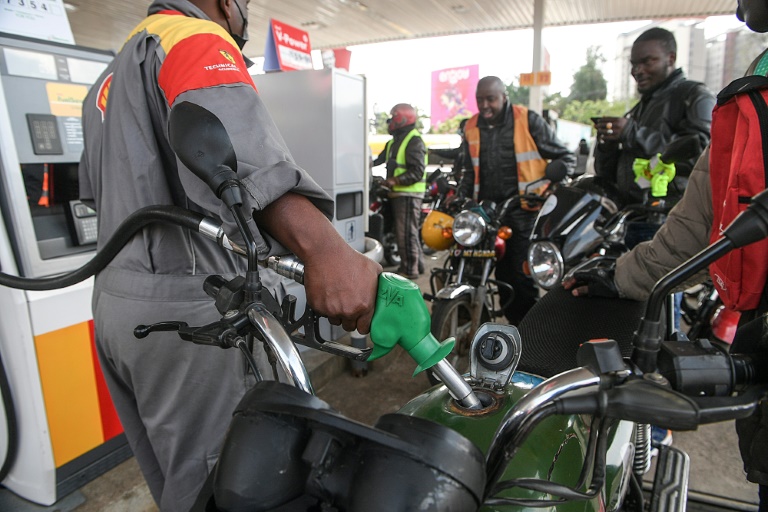
Last month the country was also hit by a fuel shortage that triggered long queues at petrol stations and strict rationing.

Beijing tourist sites empty in Covid-stalked public holiday

Major Beijing tourist venues were virtually deserted Sunday and restaurant traffic ground to a standstill, as a typically bustling public holiday was overshadowed by a Covid outbreak that has shunted millions under lockdown nationwide.

China’s staunch zero-Covid policy has kept the virus at bay for more than two years but it is currently facing its worst outbreak since the start of the pandemic thanks to an Omicron-fuelled wave.

Millions across the country — particularly in economic engine Shanghai — have been pushed to stay at home for weeks, as the lockdowns have dampened economic growth and investor sentiment in the world’s second-largest economy. 

Beijing so far has reported over 300 cases under the current wave, and authorities on Saturday banned city-wide dining services starting Sunday to May 4 — an attempt to curb infections during a holiday that is typically an annual peak consumption period. 

“It will have a definite impact on sales,” a restaurant employee surnamed An told AFP, as she scanned for customers around Beijing’s Dongcheng district — home to historic attractions like the Forbidden City.

Eateries nearby were shuttered, with some only allowing customers to order takeout if they have a negative covid test.

This restriction is the latest measure ordered by Beijing authorities, who say all visitors to public spaces must have a negative test result within the past 48 hours.

“Of course we will abide by the country’s rules,” An said. But “we make less profit through delivery and our sales volume is lower”. 

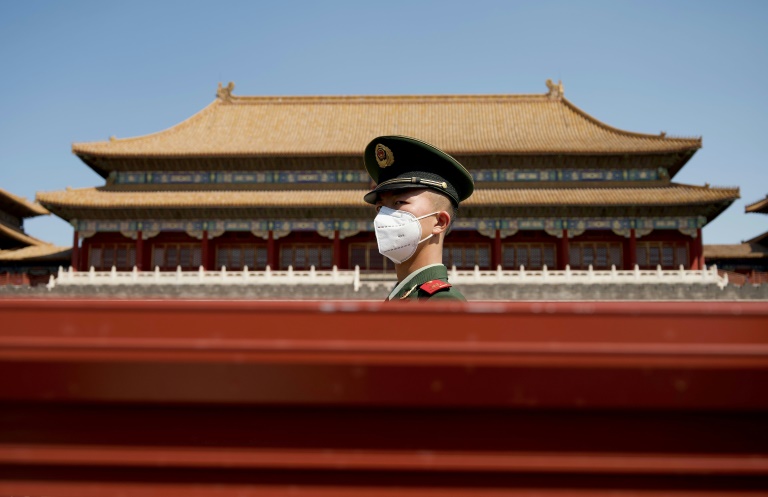
The Temple of Heaven — one of China’s biggest historical attractions — is usually heaving with tens of thousands of visitors a day elbowing each other. But on Sunday, masked families could snap selfies without any interruptions along the imperial complex.

Even the downtown shopping street Wangfujing — a commerce heaven of food stalls and fashionable outlets — was deserted. 

At a restaurant not far from the unusually quiet Forbidden City palace complex, stacks of marinated chicken feet, flatbreads and cold cuts in takeaway containers languished on an outdoor table as staff chatted idly inside. 

“Obviously it’s bad in terms of our own self-interest, but it’s necessary overall for the good of the country,” said a young waiter who did not give his name.

“We would normally sell 10,000 yuan ($1,500) worth of food in a day, but now it’s only 1,000 to 2,000 yuan ($300),” he added.

Instead of entering the Forbidden City, lines of people waited outside the palace complex to get a swab test — a new normal for Beijing residents.

– Universal Studios shuttered –

About 30 kilometres (24 miles) east of the palace on the city’s outskirts, Universal Studios — Beijing’s largest Western theme park boasting a Jurassic World and Harry Potter-themed zones — announced its indefinite closure Sunday. 

It was launched in September and has seen more than two million visitors in five months.

The Labour Day holiday was supposed to be a massive commercial coup for the park — which earlier this week had initially required a negative Covid test within 24 hours of visiting. 

The capital reported 59 new infections Sunday, as officials announced the reopening of a Covid quarantine hospital that has not been mobilised since the pandemic’s first wave in 2020.

All indoor fitness activities — like public gyms and pools — were suspended starting Sunday until May 4, while authorities say about 4,000 makeshift hospital beds had been prepared and larger quarantine centres were being constructed.

“There still exists a small number of hidden infected (patients) found through community screening,” Beijing health official Pang Xinghuo said at a Sunday briefing.

“The epidemic is overall at a high plateau period.”

Meanwhile in Shanghai, officials declared Sunday that “community transmission risk has been effectively curbed” and that daily infections are trending downwards.

The financial hub of 25 million has been locked down for almost a month, with residents complaining of food shortages and lack of timely medical care.

From recession to inflation, how the US Fed has dealt with crises

The US Federal Reserve has strongly signaled it will raise interest rates by half a percentage point this week to rein in soaring inflation, and likely continue hiking throughout this year.

The Fed has long played a decisive role when the world’s largest economy faces tough times. Here are some of its major actions since the 2008 global financial crisis:

– The financial crisis and recovery –

November 2008: The Fed began injecting liquidity into financial markets following the collapse of Lehman Brothers investment bank. The central bank launched three such programs before ending asset purchases in June 2014.

December 2008: The central bank cut its lending rate to zero amid the crisis, where it remained until December 2015.

October 2017: The Fed began reducing the holdings on its balance sheet, which had ballooned from less than $900 billion before the crisis to $4.5 trillion.

– Trade war slows growth –

December 2018 to August 2019: Interest rates peaked in the range of 2.25 percent to 2.5 percent.

Fall 2019: The Fed cut rates several times to the 1.5-1.75 percent range as the trade war launched by then-president Donald Trump slowed growth. The Republican leader had criticized the bank for its high rates.

– Support during the pandemic –

March 3, 2020: The Fed cut its lending rate by 50 basis points to between one and 1.25 percent.

March 16, 2020: As Covid-19 spread across the country and the economy shut down, the Fed slashed its lending rate by 100 basis points to zero and resumed its asset purchase policy, which eventually reached $120 billion per month in Treasury bonds and mortgage-backed securities.

– Economy recovers, inflation arrives –

November 3, 2021: The Fed announced it will begin slowing the pace of its asset purchases, with a view towards ending them entirely by the following June, which would set the stage for rate hikes to fight inflation.

December 15, 2021: Recognizing that inflation will not be “transitory,” as top officials had believed, the central bank accelerated the end of its asset purchases to March.

March 16, 2022: The central bank raised interest rates for the first time since 2018 to the 0.25-0.50 percent range.

April 6, 2022: The minutes from the Fed’s March policy meeting are released, showing that many participants see one or more 50-basis point rate hikes as necessary if inflation pressure continues.

April 29, 2022: The Fed’s preferred inflation gauge, the personal consumption expenditures price index, rises 6.6 percent year-on-year and 0.9 percent month-on-month in March, both faster paces than the month prior.

Fed gears up to attack inflation as US recession fears grow

The Federal Reserve this week is set to redouble its assault against record US inflation while facing an array of shocks both internal and external that analysts fear may one day put the world’s largest economy into a recession.

The policy setting Federal Open Market Committee (FOMC) will convene its two-day meeting on Tuesday, and top officials have strongly signaled they will hike interest rates by half a percentage point and announce plans to reduce their massive holdings of debt.

Both moves would further tighten lending conditions in the world’s largest economy and potentially take the steam out of consumer prices that are rising at rates not seen since the 1980s — driven, in part by the Fed’s own policies.

The rate hike is expected to be one of several the Fed makes this year, but with the economy also facing shocks from Russia’s invasion of Ukraine and Covid lockdowns in China, analysts warn the central bank must strike a delicate balance to stop a downturn.

“They’re going to have to be very, very nimble to keep the economy from going into a ditch,” Jay Bryson, managing director and chief economist at Wells Fargo’s Corporate and Investment Bank, said in an interview. 

– No more easy money –

Top Fed officials including Chair Jerome Powell have hinted strongly that a half-percentage point hike will be agreed to at the May 3-4 meeting, twice the amount of the quarter-point hike the FOMC implemented in March.

The central bank is also expected to announce plans to begin offloading the trillions of dollars in Treasury bonds and mortgage-backed securities it bought during the pandemic to support the economy, which would raise borrowing costs.

“They told us everything in advance,” said Roberto Perli, head of global policy at Piper Sandler. “I’d be shocked if they do anything different at this point.”

With consumer prices 8.5 percent higher in March compared to the same month in 2021, raising rates has become an imperative for the Fed, which cut rates to zero as the pandemic began but attracted criticism for keeping them there throughout last year, even as inflation rose.

“Inflation is still very high by all means, so full speed ahead for now with the hawkish rhetoric,” Perli said.

– Beyond their control –

The Fed’s tools are sharpest at pressuring demand, but the US economy is also being battered by shocks emanating from beyond its borders and therefore the central bank’s control, creating fears the Fed will raise rates, inflation will stay high and a downturn will follow.

The war in Ukraine has prompted a global spike in prices for oil as well as other commodities, while the pandemic lockdowns in China could worsen global supply snarls that have bedeviled the US economy in its recovery.

“They’re not very well equipped to deal with these shocks,” Perli said.

A recession is not viewed as imminent, despite last week’s release of government data showing GDP shrank in the first quarter of this year, which economists see as a consequence of trade issues that swamped otherwise healthy consumer and business spending.

The grim scenario could instead arrive next year, and Bryson said a harbinger would be if prices remain elevated even as the Fed tightens its lending rate.

“The probability of a recession is not insignificant at this point,” he said.

“If the inflation numbers continue to come in hot, then I’d say the probability of recession continues to go up.”

Perli sees signs that Powell himself worries about the Fed’s ability to pull off a “soft landing,” as the technique of quelling inflation without causing a recession is known.

In March, the Fed chair told a conference, “My colleagues and I will do our very best to succeed in this challenging task” — words Perli said he found troubling.

“It’s not a way of putting things that denotes a lot of confidence,” he said.

As tobacco burns out, Malawi looks to cannabis

Under a scorching sun at a trading post in Malawi, Chikumbutso Chekeni and his wife head to their tobacco sheds to dry their newly harvested leaf.

Nambuma, 35 kilometres (20 miles) northwest of the capital Lilongwe, used to be a thriving farming town, buoyed by vast tobacco farming businesses.

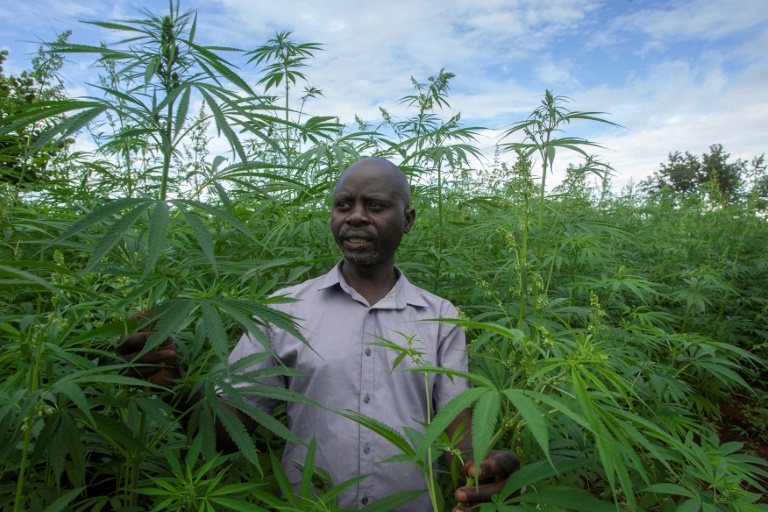
Today, even during harvest season the town is sleepy, leading some farmers to think about switching from tobacco to the newly legalised marijuana.

Malawi is one of the world’s poorest countries but a major tobacco producer, ranking first in the world for burley and seventh for overall production.

No other economy is more dependent on the leaf. Government statistics say over 70 percent of the nation’s export income comes from tobacco.

“The main challenge we face as farmers is the issue of low pricing, which is really killing us,” said Chekeni, who has been farming tobacco for 22 years.

Returns from tobacco, dubbed the ‘Malawi’s Green Gold’, have dwindled over the past decade due to declining global demands driven by anti-smoking campaigns.

Despite the low prices, he sees no other option but to continue farming. This is the only business he knows.

This year has particularly been bad. Low volumes and low prices at the auction floors in Lilongwe forced the Tobacco Commission to cut trade to three days a week.

Even on those three days, sales last only an hour.

“The future of tobacco farming is bleak,” said grower Yona Mkandawire. “By now we should have a lot of tobacco in the warehouses and more trucks at the receiving bay, but there is a lot of empty space here.”

Despite a sharp decline of tobacco earnings over the years, Malawi’s government still calls it a “strategic crop” and defends the country’s continuing investment in its production.

Last year tobacco earned Malawi $173.5 million, down 27 percent from the year before, the Tobacco Commission said.

– ‘Malawi Gold’ –

Tobacco Commission chief executive officer Joseph Chidanti Malunga told AFP that this year’s harvest will be 50 million kilogrammes short of what the buyers are looking for.

But he insisted Malawi needs tobacco because it’s the only crop earning foreign currency.

“We cannot abandon this no matter how,” he said. “All we do now is to make sure that we produce tobacco that is compliant with what the customers want.”

During the first week of sales, prices were down more than 20 percent from last year, according to local media.

The price drop has seen some farmers try out new crops, including the recently legalised cannabis.

Malawi legalised cannabis farming for medicinal and industrial use in February 2020.  

Falice Nkhoma, who is part of the Tilitonse Cooperative for Cannabis Growers, has dumped tobacco because of falling prices.

“I have been growing burley tobacco from 2014… but with very little benefit because the prices were always low,” said Nkhoma. She has little to show for producing the so-called green gold.

“So this year, when I heard that some people would be growing cannabis, I was really excited. I have bought the seeds, and hopefully cannabis farming will bring me good returns,” she said.

It’s about time Malawi diversified its economy, said Betchani Tchereni, economics professor at the Malawi University of Business and Applied Sciences.

“We just have to restart the economy. If it’s soya, then let’s do soya. If it’s cannabis, then let’s concentrate on cannabis,” he said.

But cultivation licences could be prohibitive for some aspiring farmers.

Growers, who operate in groups of around 30, have on average to cough out $10,000 per collective in farming licence fees alone. 

Easing the process of obtaining cannabis licences would give farmers an immediate boost.

“It takes just about three months to mature, and then boom, we have the forex,” said Tchereni. 

“Licences can’t be this expensive.”

Cannabis growing is not new in Malawi, but has yet to develop to industrial scale.

According to a 2011 World Bank report, Malawi’s hemp, known locally as ‘chamba’ or ‘Malawi Gold’ is among “the best and finest” sativas in the world.

India seizes $725m from China's Xiaomi over 'illegal' remittances

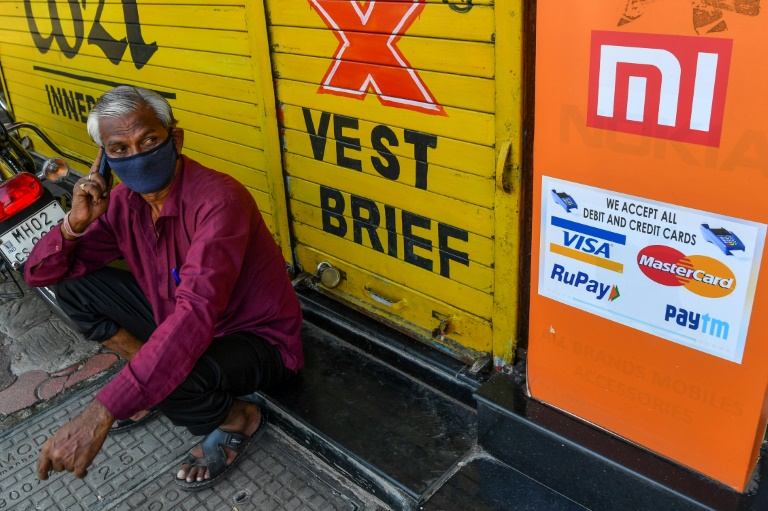
India seized $725 million from the local bank accounts of Xiaomi after a probe found the Chinese smartphone giant unlawfully sent money abroad in the guise of royalty payments, authorities said Saturday.

India’s financial crime investigations agency began investigating the company in February and said it seized the money from the firm’s local arm after discovering it had made remittances to three foreign-based entities.

“Such huge amounts in the name of royalties were remitted on the instructions of their Chinese parent group entities,” the Enforcement Directorate said in a statement.

Xiaomi India has denied the allegations, saying late Saturday that its “operations are firmly compliant with local laws and regulations”.

“We believe our royalty payments and statements to the bank are all legit and truthful,” Xiaomi India tweeted.

“We are committed to working closely with the government authorities to clarify any misunderstandings.”

The firm’s India office was raided in December in a separate investigation over alleged income tax evasion. 

Other Chinese smartphone makers including Huawei also had their Indian offices searched at the time.

Relations between New Delhi and Beijing have been at a low ebb since a deadly Himalayan border clash between soldiers from both countries in 2020. 

In the aftermath, India’s home ministry banned hundreds of mobile applications of Chinese origin, including the popular social media platform Tiktok. 

The government justified the bans on the apps as safeguarding against threats to India’s sovereignty.

Anti-China sentiment has grown in India since the fatal 2020 troop clash, sparking calls for consumer boycotts of Chinese goods.

China continues to be a key economic partner for India, with more than $125 billion in bilateral trade last year according to media reports.

'Right to be forgotten': Israel firm promises to purge digital footprint

Three young Israelis formerly serving in military cyber units have figured out how to locate your digital footprint — and give you the tools to delete it.

The company Mine, co-founded by Gal Ringel, Gal Golan and Kobi Nissan, says it uses artificial intelligence to show users where their information is being stored — like whether an online shoe store kept your data after a sneaker purchase three years ago.

Ringel said Mine’s technology has already been used by one million people worldwide, with over 10 million “right to be forgotten” requests sent to companies using the firm’s platform.

Mine launched after the European Union’s General Data Protection Regulation (GDPR) — now an international reference point — set out key rights for users, including the deletion of personal data that was shared with a site for a limited purpose.

The company’s AI technology scans the subject lines of users’ emails and flags where data is being stored.

Individuals can then decide which information they want deleted and use Mine’s email template to execute their right to be forgotten.

It means they can delete their digital footprint “with a click of a button”, Ringel said.

“We’re not telling people to not use Facebook or Google. We say: go ahead, enjoy, use whatever you want,” he said. 

“But as you enjoy using the internet, we’ll show you who knows what about you, what they know about you… what is the risk” and how to remove it, he added. 

– ‘Challenging’ –

Last year, hackers broke into the database of Atraf, an Israeli LGBTQ dating website, using the personal information there for extortion.

The year before, Shirbit, a major insurance company, was hacked and troves of data stolen.

Despite those and smaller breaches, Naama Matarasso Karpel from advocacy group Privacy Israel said the public was relatively indifferent.

She also criticised Israel’s privacy legislation as inadequate for tackling today’s online challenges.

“Privacy is a bit like health or air — we don’t really feel the need for it until we really see how much we lack it,” she said.

While public awareness on privacy rights has been slow on the uptake, she said many corporations were realising that better privacy practices made for good business.

“Nobody wants to be caught off-guard,” Matarasso Karpel said.

Companies are starting to see privacy “as a value that has to be maintained in order to establish trust with customers”, she added.

Mine’s co-founder Ringel said companies had contacted his firm for help with the “challenging and cumbersome” process of locating and removing information, in line with the right to be forgotten.

“We help companies to automate that process without any human involvement,” he said, reducing their efforts and costs.

But lawyer Omer Tene, co-founder of the Israel Tech Policy Institute, cautioned that deleting specific individual requests was “a complicated technical exercise”.

Some companies and organisations cannot legally delete information like blockchains or records of financial interactions needed for tax purposes.

Even information that can be deleted is often kept in varying degrees of identifiability, Tene said. 

“All of this nuance makes it difficult to deliver on a promise from both the consumer side and the corporate side, to enable deletion by pressing a button,” Tene warned.

Floods heap woes on South Africa trading hub

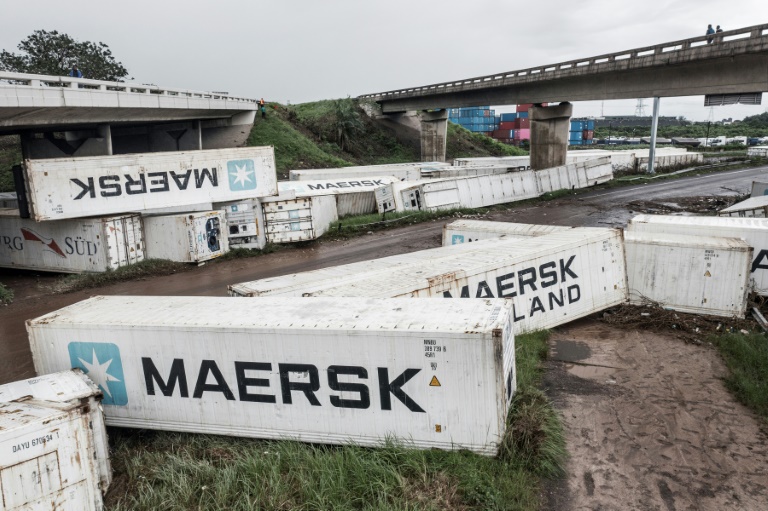
First it was Covid, then riots and now floods: KwaZulu-Natal (NZN) province, South Africa’s gateway to the Indian Ocean, is reeling from a unpredented string of disasters.

Here is factfile on the region:

– Economic giant –

KZN employs 2.4 million out of 14.5 million workers in South Africa’s formal economy and accounts for more than a sixth of national GDP.

It is the second-largest GDP contributor after the economic hub of Gauteng which houses Johannesburg, according to global auditors PwC.

The port of Durban is the country’s biggest trade platform for the agricultural, automotive and mining sectors.

Durban is the largest and busiest harbour in South Africa, handling over 60 percent of its container traffic, says PwC senior economist Christie Viljoen.

– Flood bill – 

Estimates of the cost of the floods that struck KZN this month, fuelled by record-breaking rains, are sketchy.

Many flooded areas remain inaccessible due to road damage.

The mayor of greater Durban, Mxolisi Kaunda says lost production alone will cost 740 million rand ($47.3 million / 44 million euros), according to preliminary estimates.

Most of the region’s 1,150 businesses are located on a flood plain and were badly battered.

But these “operational losses” do not include the cost of fixing roads, railway lines, bridges, power line, water pipes and sewerage, or damage to homes — a bill that will be many billions of rand.

Economists and business leaders say the floods could have a potentially crippling impact on growth in 2022.  

“The city will take about three months to get back to where it was to pre-flood levels and it should reduce the city’s annual GDP by about 1.8 percent,” said Ajiv Maharaj, a senior official in charge of local economic development.

– Pressure on exports – 

Experts say damage to businesses and the port of Durban, adding to the impact on the supply chain from the Ukraine war, will dampen exports.

Durban Chamber of Commerce and Industry CEO Palesa Phili said road freight between Durban and Gauteng was currently at half of normal levels.

“Export shipments and revenues will be under pressure in the short term,” said Viljoen.

“Damaged goods in warehouses and at ports cannot necessarily be replaced and will result in weaker export revenues.”

The Durban region makes food, beverage and tobacco products, textiles and leather goods and petroleum and chemical products.

Its automotive industry is also a big employer. 

Toyota has temporarily suspended operations at its Durban plant, warning of delays in delivering popular models such as the Hilux pickup — or “bakkie,” as these trucks are dubbed here.

– Agriculture hit – 

The province is a key farming region, known chiefly for its sugarcane fields in the Tongaat region. 

Agriculture Minister Thoko Didiza has estimated losses in the agriculture sector to be more than 500 million rand ($32 million).

Around half of those losses will be incurred by cane farmers, although no shortages of sugar are expected.

– Tourism worried – 

Durban is a leading tourism destination, favoured for its warm subtropical climate, idyllic beaches and nearby wildlife sanctuaries.

The region had been hoping for a rebound from the Covid-19 pandemic for the upcoming northern hemisphere summer, but is now bracing for cancellations from both local and international travellers.

A crucial test will come next month when Durban stages an annual trade conference — the Africa Travel Indaba, for which 6,000 people had been expected.

“The show is going ahead as we had planned,” said Themba Khumalo, head of SA Tourism.

“In times of crisis such as this, it is not time to lean back… it’s time for us to show our economic support for Durban,” he said.

Close Bitnami banner
Bitnami