US Business

Europe stocks shine but US mixed as Netflix plunges

European stocks rose Wednesday as investors tracked corporate earnings and developments in the Ukraine conflict, while US stocks ended mixed and Netflix shares tumbled after the streaming giant reported a drop in subscribers.

Oil prices slid further after having slumped the previous day on demand concerns.

“The upbeat market mood, which helped Wall Street close firmly higher yesterday, has followed through into Europe,” City Index senior market analyst Fiona Cincotta told AFP.

Frankfurt won 1.5 percent and Paris rose 1.4 percent, aided by news of a return to growth in eurozone industrial output in February.

London added 0.4 percent, held back by mining shares that were penalized following disappointing performance by Rio Tinto due to the pandemic and production issues.

Europe equities and oil had dropped Tuesday as Moscow launched its eastern offensive in Ukraine and after the IMF slashed its 2022 global economic growth forecasts by 0.8 percentage points, largely over inflationary concerns linked to the war and the pandemic.

“Whilst the Russian war remains a key driver in the markets, the bad news has been priced in for now,” Cincotta said.

“Instead, some areas of optimism are arising with banks outperforming after the ECB (European Central Bank) soothed nerves with news that all big banks in the eurozone can withstand Russian write-offs,” she added.

– Netflix ‘shocker’ –

Across the Atlantic, Wall Street had a mixed session, with the Dow seeing a decent gain but the Nasdaq dropping more than a point thanks to Netflix, which had released disappointing earnings following the close Tuesday.

The streaming giant plunged just over 35 percent after it announced its first drop in quarterly subscriptions in a decade, blaming the erosion to the suspension of its service in Russia due to Moscow’s invasion of Ukraine.

“There (are) no two ways to look at it, Netflix was a shocker and is likely to take the wind out of the Nasdaq’s recent rally, or at least put it on pause,” Cincotta said.

The tech-rich index closed 1.2 percent lower.

“That said, broadly speaking earnings season has been reasonably solid so far, economic data hasn’t revealed any major cracks either, which is helping to keep risk sentiment buoyant,” she added.

Michael Hewson at CMC Markets said that the slump in Netflix shares “appears to be prompting a significant de-risking in the more highly valued areas of the US market.”

In Asia trading, concerns about China’s economy hit trading in Shanghai and Hong Kong.

Shanghai’s main stock index was Asia’s biggest faller, losing 1.4 percent as the People’s Bank of China (PBoC) kept key lending rates unchanged amid uncertainty over the impact of ongoing Chinese Covid restrictions.

Hong Kong — which plummeted on Tuesday over concerns about Beijing’s ongoing tech-sector crackdown — also ended down.

“PBoC policymakers realize the futility of cutting rates during a lockdown as policies incentivizing lending will have a minimal short-term positive impact on activity so long as mobility restrictions remain in place,” noted independent analyst Stephen Innes.

– Key figures around 2055 GMT –

New York – Dow: UP 0.7 percent at 35,160.79 (close)

New York – S&P 500: DOWN 0.1 percent at 4,459.45 (close)

New York – Nasdaq: DOWN 1.2 percent at 13,453.07 (close)

EURO STOXX 50: UP 1.7 percent at 3,896.81 (close)

London – FTSE 100: UP 0.4 percent at 7,629.22 (close) 

Frankfurt – DAX: UP 1.5 percent at 14,362.03 (close)

Paris – CAC 40: UP 1.4 percent at 6,624.91 (close)

Tokyo – Nikkei 225: UP 0.86 percent at 27,217.85 (close)

Shanghai – Composite: DOWN 1.4 percent at 3,151.05 (close) 

Hong Kong – Hang Seng Index: DOWN 0.4 percent at 20,944.67 (close)

Euro/dollar: UP at $1.0850 from $1.0788 late on Tuesday

Dollar/yen: DOWN at 127.84 yen from 128.91 yen

Pound/dollar: UP at $1.3065 from $1.2998

Euro/pound: UP at 83.03 pence from 82.99 pence

Brent North Sea crude: UP 0.1 percent at $107.32 per barrel

West Texas Intermediate: FLAT at $102.56 per barrel

burs-rl/rlp/cs/caw
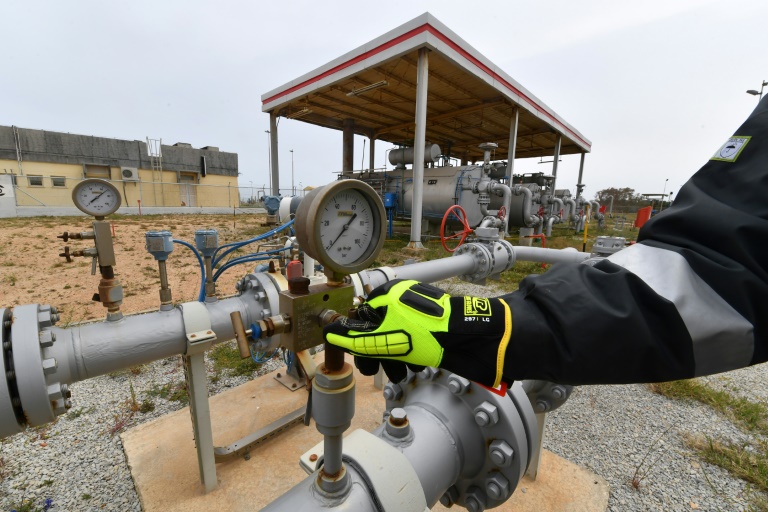
Italy signs gas deal with Angola seeking to end dependence on Russia

Italian ministers on Wednesday signed a deal with Angola to ramp up gas supplies from the southern African country as Italy urgently scrambles to break away from Russian gas over the Ukraine war.

A declaration of intent was signed to develop “new” natural gas ventures and to increase exports to Italy, a statement from the Italian foreign minister announced.

“Today we have reached another important agreement with Angola to increase gas supplies,” Foreign Minister Luigi Di Maio said in the statement.

“Italy’s commitment to differentiate energy supply sources is confirmed,” said Di Maio at the end of a two-and-half-hour long visit to Luanda. 

Prime Minister Mario Draghi wants to add Angola and the Congo Republic to a portfolio of suppliers to substitute Russia, which provides about 45 percent of Italian gas.

“We do not want to depend on Russian gas any longer, because economic dependence must not become political subjection,” he said in an interview with the Corriere della Sera daily published on Sunday.

“Diversification is possible and can be implemented in a relatively short amount of time — quicker than we imagined just a month ago,” he said.

Draghi was due to go himself but after testing positive for Covid-19, sent Di Maio and Ecological Transition Minister Roberto Cingolani in his place.

Cingolani described the deal as “an important agreement that gives impetus to the partnership between Italy and Angola in the fields of renewables, biofuels, LNG and training in technology and environment”.

The two ministers, accompanied by Claudio Descalzi, chief executive of Italian energy giant ENI, also met President Joao Lourenco. They were headed to neighbouring Brazzaville where they are expected to meet President Denis Sassou Nguesso on Thursday.

“This is a race against time to make sure we stock gas and oil for the next winter season,” said Francesco Galietti, head of Rome-based consultancy Policy Sonar.

A similar declaration will be signed in the Republic of Congo.

The foray follows the signing of agreements with Algeria and Egypt in recent weeks.

Algeria is currently Italy’s second-largest supplier, providing around 30 percent of its consumption.

ENI said the deal with Algeria’s Sonatrach would boost deliveries of gas through the Transmed undersea pipeline by “up to nine billion cubic metres per year” by 2023-24.

Transmed only had spare pipeline capacity of 7.8 billion cubic metres per year in 2021 — though it has said it is ready to expand.

Italy has also been in talks with Azerbaijan over the expansion of the Trans-Adriatic Pipeline (TAP).

– ‘Fanciful’ –

The Egypt accord could result in up to three billion cubic meters of liquefied natural gas (LNG) bound to Europe and Italy in particular this year, ENI said.

Italy is looking into buying or renting two floating storage and regasification units (FSRU) to allow it to import more LNG.

Diversification will not be cheap, warn experts, who foresee extra taxes passed on to businesses and families.

Davide Tabarelli, head of energy think tank Nomisma Energia, said Rome was rightly exploiting the “excellent relationships” that ENI has built up over 69 years in Africa, where it is the sector leader in terms of production and reserves.

But the idea of replacing Russian gas “in the short term” was “fanciful”, he told AFP. “It will take at least two or three years.”

The government said it expects to get the floating regasification units into place within 18 months.

It has also talked of kick-starting stalled projects for two onshore regasification plants, which would take some four years to build.

– ‘Operation thermostat’ –

Italy is one of Europe’s biggest guzzlers of gas, which currently represents 42 percent of its energy consumption, and it imports 95 percent of the gas it uses.

The government hopes to reduce that by accelerating the investment in renewables and has vowed to cut red tape on wind and solar farms.

Draghi has called for a collective sacrifice, asking Italians this month: “Do we want to have peace or do we want to have the air conditioning on?”

His rallying cry was met with some grumbling in a country feeling the effects of global heating, which science shows is driven by human burning of fossil fuels.

Undeterred, the government is readying so-called “operation thermostat”, which could see the public sector turn down heating in schools and offices by one degree, and the equivalent for air conditioning in the summer.

The rule would apply to private households and companies too, though it would be difficult to police.

It could save some four billion metric cubes of natural gas a year — or around 14 percent of the total gas imported from Russia, according to La Stampa newspaper.

US leads G20 boycott of Russian finance officials

US Treasury Secretary Janet Yellen led a multi-nation walkout of a meeting Wednesday of finance officials from the world’s richest countries when Russian officials spoke, in protest against Moscow’s invasion of Ukraine.

Russia’s attack on its neighbor loomed over the meeting of G20 finance ministers and central bank governors, the first since President Vladimir Putin ordered the invasion in late February.

British, French and Canadian officials joined the boycott, officials confirmed, underscoring the boiling tensions at the gathering of the Group of 20 which convened to address global challenges like rising debt and a possible food crisis.

“Multiple finance ministers and central bank governors including Ukraine Finance Minister (Sergiy Marchenko) and Secretary Yellen walked out when Russia started talking at the G20 meeting,” a source familiar with the event told AFP. 

“Some finance ministers and central bank governors who were virtual turned their cameras off when Russia spoke.”

Canadian Deputy Prime Minister Chrystia Freeland tweeted a photograph of the officials who left the meeting, saying, “The world’s democracies will not stand idly by in the face of continued Russian aggression and war crimes.”

And during the gathering French Finance Minister Bruno Le Maire called on Russian delegates to refrain from attending the sessions, saying “war is not compatible with international cooperation.”

Experts see little chance at this meeting for the bloc to find consensus on global challenges such as climate change and debt relief for poor nations.

“I think expectations should be extremely low,” said Matthew Goodman, senior vice president for economics at the Washington-based Center for Strategic and International Studies (CSIS). 

“It’s hard to see how the G20 is going to pull together in the face of… the Ukraine crisis,” he said in an interview.

The G20, chaired by Indonesia this year, includes major economies like the United States, China, India, Brazil, Japan and several countries in Europe, including Russia. 

The finance officials are gathering virtually on the sidelines of the World Bank and International Monetary Fund’s spring meetings in Washington. 

Despite the friction, IMF Managing Director Kristalina Georgieva said global cooperation “must and will continue,” pointing to multiple issues that “no country can solve on its own.”

Georgieva, who heads an institution with 189 members, told reporters, “I can vouch for the fact that it is more difficult when there are tensions, but it is not impossible.”

– Expected gridlock –

The meetings in Washington are focused on how to help the global economy recover from the new shock caused by Russia’s invasion, which has driven prices for food and fuel higher and caused the IMF to lower its global growth outlook to 3.6 percent for this year.

Western nations have retaliated for the bloody incursion with sanctions meant to harm Russia’s economy and turn it into a pariah state.

Speaking to reporters prior to the meeting, German Finance Minister Christian Lindner said the country, which chairs the G7 group of liberal democracies, would try to find common ground, but added: “We will not provide a stage for Russia to spread propaganda and lies.”

Russian Finance Minister Anton Siluanov attended the meeting virtually, and “called on the partners to avoid politicizing the dialogue and stressed that the G20 has always been and remains primarily an economic format,” the ministry said in a statement.

US President Joe Biden has proposed ejecting Russia from the G20.

But Mark Sobel, a former Treasury official who is now US chairman of the Official Monetary and Financial Institutions Forum, told AFP there was no obvious mechanism for booting Moscow, which is to varying degrees supported by China and India.

“I think that it really does raise a fundamental question about how are you going to manage global governance,” he said of the tensions.

The divide also bodes ill for the G20 Common Framework, created during the pandemic to help heavily indebted countries find a path to restructure their debt, but which Sobel said is “flailing” as China and private-sector creditors drag their feet on participating.

Europe stocks shine but US mixed as Netflix plunges

European stocks rose Wednesday as investors tracked corporate earnings and developments in the Ukraine conflict, while US stocks were mixed as Netflix shares tumbled after the streaming giant reported a drop in subscribers.

Oil prices slid further after having slumped the previous day on demand concerns.

“The upbeat market mood which helped Wall Street close firmly higher yesterday has followed through into Europe,” City Index senior market analyst Fiona Cincotta told AFP.

Frankfurt won 1.5 percent and Paris rose 1.4 percent, aided by news of a return to growth in eurozone industrial output in February.

London added 0.4 percent, held back by mining shares that were penalised following disappointing performance by Rio Tinto due to the pandemic and production issues.

Europe equities and oil had dropped Tuesday as Moscow launched its eastern offensive in Ukraine and after the International Monetary Fund slashed its global 2022 economic growth forecasts by 0.8 percentage points, largely over inflationary crises linked to the war and the coronavirus pandemic.

“Whilst the Russian war remains a key driver in the markets, the bad news has been priced in for now,” Cincotta said.

“Instead, some areas of optimism are arising with banks outperforming after the ECB (European Central Bank) soothed nerves with news that all big banks in the eurozone can withstand Russian write-offs,” she added.

– Netflix ‘shocker’ –

Wall Street was mixed in late morning trading, with the Dow adding 0.7 percent.

But Netflix shares plunged 36 percent after the streaming giant reported its first drop in quarterly subscriptions in a decade, blaming the quarter-over-quarter erosion to suspension of its service in Russia due to Moscow’s invasion of Ukraine.

“There is no two ways to look at it, Netflix was a shocker and is likely to take the wind out of the Nasdaq’s recent rally, or at least put it on pause,” Cincotta said.

The Nasdaq Composite was down 0.9 percent.

“That said, broadly speaking earnings season has been reasonably solid so far, economic data hasn’t revealed any major cracks either, which is helping to keep risk sentiment buoyant,” she added.

Michael Hewson at CMC Markets said that the slump in Netflix shares “appears to be prompting a significant de-risking in the more highly valued areas of the US market”.

In Asia trading, concerns about China’s economy hit trading in Shanghai and Hong Kong.

Shanghai’s main stocks index was Asia’s biggest faller, losing 1.4 percent as the People’s Bank of China (PBoC) kept key lending rates unchanged amid uncertainty over the impact of ongoing Chinese Covid restrictions.

Hong Kong — which plummeted on Tuesday over concerns about Beijing’s ongoing tech-sector crackdown — also ended down.

“PBoC policymakers realise the futility of cutting rates during a lockdown as policies incentivising lending will have a minimal short-term positive impact on activity so long as mobility restrictions remain in place,” noted independent analyst Stephen Innes.

– Key figures around 1530 GMT –

New York – Dow: UP 0.7 percent at 35,170.23 points

EURO STOXX 50: UP 0.7 percent at 3,770.86

London – FTSE 100: UP 0.4 percent at 7,629.22 (close) 

Frankfurt – DAX: UP 1.5 percent at 14,362.03 (close)

Paris – CAC 40: UP 1.4 percent at 6,624.91

Tokyo – Nikkei 225: UP 0.86 percent at 27,217.85 (close)

Shanghai – Composite: DOWN 1.4 percent at 3,151.05 (close) 

Hong Kong – Hang Seng Index: DOWN 0.4 percent at 20,944.67 (close)

Euro/dollar: UP at $1.0855 from $1.0788 late on Tuesday

Dollar/yen: DOWN at 127.77 yen from 128.91 yen

Pound/dollar: UP at $1.3048 from $1.2998

Euro/pound: UP at 83.21 pence from 82.99 pence

Brent North Sea crude: DOWN 0.5 percent at $106.71 per barrel

West Texas Intermediate: DOWN less than 0.1 percent at $102.48 per barrel

burs-rl/rlp

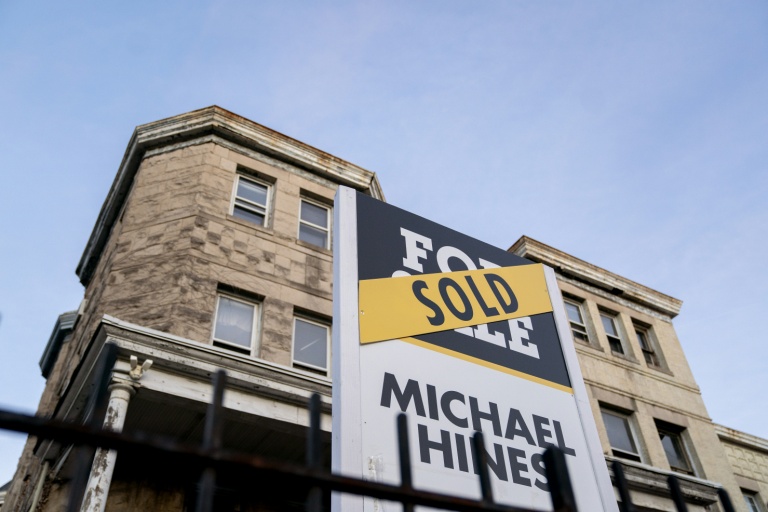
Higher prices cooled US housing market in March

Sales of existing US homes dropped for the second straight month in March, an industry survey said Wednesday, a sign that higher mortgage rates and rising prices are taking the wind out of the booming sector’s sails.

Sales fell 2.7 percent last month to a seasonally adjusted annualized rate of 5.77 million, which was 4.5 percent lower than in the same month last year, the National Association of Realtors (NAR) reported.

Home prices rose nationwide, and the median price increased to $375,300, a 15 percent jump compared to March 2021, according to the survey.

The drop in sales pushed supply up to two months at the current sales pace, 11.8 percent higher than in February. 

NAR Chief Economist Lawrence Yun pointed to the impact of tighter lending conditions and increasing prices across the economy.

“The housing market is starting to feel the impact of sharply rising mortgage rates and higher inflation taking a hit on purchasing power,” he said. “Still, homes are selling rapidly, and home price gains remain in the double-digits.”

Sales fell in all regions with the exception of the West, where they were flat. The Midwest saw the biggest decline of 4.5 percent, while in the South they dipped three percent, about the same as the drop in the Northeast.

The Federal Reserve is moving to hike interest rates this year to curb record US inflation, which will have effects across the economy.  

Mortgage rates have climbed above five percent and Yun predicted they would rise further, causing existing home purchases to fall 10 percent this year.

Lydia Boussour of Oxford Economics agreed that low supply and high prices would put downward pressure on sales, though she said they would only fall so far.

“Resilient demand and strong income gains should keep a floor under home sales, however, particularly if home price growth moderates,” she said.

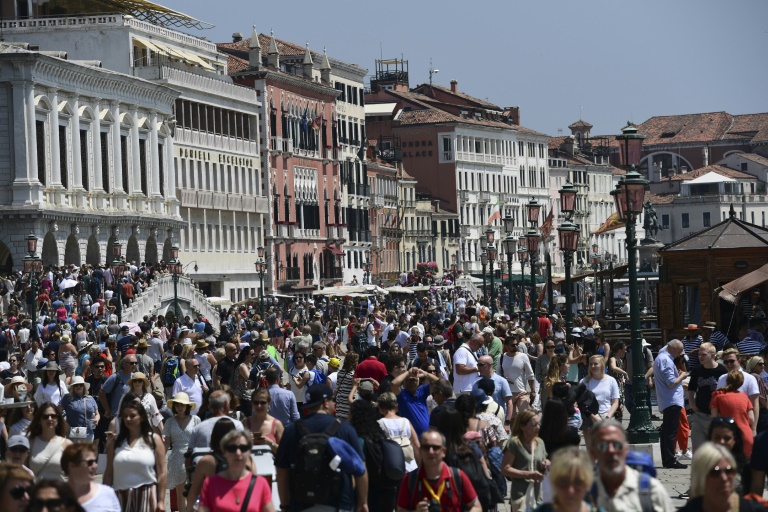
Venice readies day-trip booking system to ease crowds

Venice plans to trial a reservation system for day-trippers, an official said Wednesday, in a bid to ease over-tourism as visitors flock back to the Italian city following the pandemic.

The pay-to-visit scheme will not cap tourist numbers but aims entice some people to visit during the low season by charging them less.

“We will start with an experimental phase during which the reservation will not be mandatory, but optional” and will cost nothing, Venice’s deputy tourism councillor Simone Venturini told AFP.

Visitors just popping in for the day will be encouraged to sign up through incentives “such as discounts on museum admissions”, he said. The start date will be announced in the coming weeks.

The system, which has been in the works for years, will become compulsory in 2023 and will see day-trippers pay between three and ten euros (around $3 to $10), depending on the season.

Visitors who sleep in Venice, already subject to the so-called tourist tax, will be exempt.

Life in the hugely popular watery city has slowly been returning to normal after the coronavirus pandemic, when the Grand Canal was emptied of gondolas as tourists disappeared.

Easter weekend drew a vast number of visitors, with 100,000 sleeping over nightly and some 40,000 others coming in for a few hours, to marvel at St. Marks or sigh at the Bridge of Sighs, said Venturini.

The sheer numbers cause long lines at vaporetto ferry stops or in front of museums, and overbooking in hotels. The crowds also make life difficult for the few locals who still live in the historic centre.

Venice’s mayor Luigi Brugnaro, determined to save the city from becoming little more than a resort, said the reservation system was “the right road to take, for a more balanced management of tourism”.

“We will be the first in the world to carry out this difficult experiment,” he said on Twitter.

Once the reservation becomes mandatory, controls will be carried out at the bus and train stations, the two main access points to the city dubbed the “Serenissima”.

Stock markets rise but Netflix sinks

European and US stocks rose Wednesday as investors tracked developments in the Ukraine conflict and corporate earnings, with Netflix shares sinking after the streaming giant reported a drop in subscribers.

Oil rebounded slightly, having slumped the previous day on demand concerns.

“The upbeat market mood which helped Wall Street close firmly higher yesterday has followed through into Europe,” City Index senior market analyst Fiona Cincotta told AFP.

Frankfurt won 1.2 percent and Paris rose 1.4 percent, aided by news of a return to growth in eurozone industrial output in February.

London was barely in the green, however, as drops in industrial metals prices hit mining shares.

Europe equities and oil had dropped Tuesday as Moscow launched its eastern offensive and after the International Monetary Fund slashed its global 2022 economic growth forecasts by 0.8 percentage points, largely over inflationary crises linked to the Ukraine war and the coronavirus pandemic. 

“Whilst the Russian war remains a key driver in the markets, the bad news has been priced in for now,” Cincotta said. 

“Instead, some areas of optimism are arising with banks outperforming after the ECB (European Central Bank) soothed nerves with news that all big banks in the eurozone can withstand Russian write-offs,” she added.

– Netflix ‘shocker’ –

Wall Street opened higher following Tuesday’s rally on promising housing-starts data and solid earnings, with the Dow adding 0.7 percent.

But Netflix shares slumped after the streaming giant reported its first drop in quarterly subscriptions in a decade, blaming the quarter-over-quarter erosion to suspension of its service in Russia due to Moscow’s invasion of Ukraine.

“There is no two ways to look at it, Netflix was a shocker and is likely to take the wind out of the Nasdaq’s recent rally, or at least put it on pause,” Cincotta said.

The Nasdaq Composite rose 0.4 percent as trading got underway, however.

“That said, broadly speaking earnings season has been reasonably solid so far, economic data hasn’t revealed any major cracks either, which is helping to keep risk sentiment buoyant,” she added.

In Asia trading, concerns about China’s economy hit trading in Shanghai and Hong Kong.

Shanghai’s main stocks index was Asia’s biggest faller, losing 1.4 percent as the People’s Bank of China (PBoC) kept key lending rates unchanged amid uncertainty over the impact of ongoing Chinese Covid restrictions.

Hong Kong — which plummeted on Tuesday over concerns about Beijing’s ongoing tech-sector crackdown — also ended down.

“PBoC policymakers realise the futility of cutting rates during a lockdown as policies incentivising lending will have minimal a short-term positive impact on activity so long as mobility restrictions remain in place,” noted independent analyst Stephen Innes.

– Key figures around 1330 GMT –

London – FTSE 100: UP less than 0.1 percent at 7,606.05 points

Frankfurt – DAX: UP 1.2 percent at 14,320.62

Paris – CAC 40: UP 1.4 percent at 6,626.63

EURO STOXX 50: UP 0.6 percent at 3,766.81

New York – Dow: UP 0.7 percent at 35,144.31

Tokyo – Nikkei 225: UP 0.86 percent at 27,217.85 (close)

Shanghai – Composite: DOWN 1.4 percent at 3,151.05 (close) 

Hong Kong – Hang Seng Index: DOWN 0.4 percent at 20,944.67 (close)

Euro/dollar: UP at $1.0840 from $1.0788 late on Tuesday

Dollar/yen: DOWN at 127.81 yen from 128.91 yen

Pound/dollar: UP at $1.3058 from $1.2998

Euro/pound: DOWN at 82.97 pence from 82.99 pence

Brent North Sea crude: UP 0.7 percent at $107.99 per barrel

West Texas Intermediate: UP 0.8 percent at $102.83 per barrel

burs-rl/lth

Procter & Gamble profits rise on higher pricing

Quarterly profits edged higher at Procter & Gamble as the consumer goods giant implemented price increases with only a limited hit to demand, the company said Wednesday.

Maker of the Tide, Old Spice and Crest brands, P&G has been buffeted by the economy-wide surge in commodity prices and freight service costs, most recently exacerbated by the Russian invasion of Ukraine.

As the company has lifted prices in recent months to offset these expenses, the consumer reaction so far has been “about 20 to 30 percent more favorable than we would have assumed based on historical data,” Chief Financial Officer Andre Schulten said on a conference call with reporters.

But Schulten noted there is no guarantee this trend will continue, saying “as more pricing flows through to the consumer, we expect that volume will have somewhat of a negative impact.”

P&G reported a seven percent jump in revenues to $19.4 billion, due in part to five percent higher pricing. Profits rose three percent to $3.4 billion.

All five of P&G’s product divisions scored higher net sales, with health leading, in part due to much greater sales of items to treat coughs, colds and the flu.

The company now sees $3.2 billion in additional costs in 2022 due to higher expenses for commodities and freight and unfavorable movements in the foreign exchange markets. That’s $400 million higher than the prior estimate.

P&G lifted its full-year sales outlook, but maintained its profit forecast.

In the most recent quarter, P&G saw some deceleration in price increases in transportation and warehousing costs compared with the prior six months “but still significantly up,” Schulten said.

The company is planning for continued inflation pressures due to supply chain woes and the impact of the Ukraine war on energy costs, Schulten said.

“It’s not irrational to assume that we will see continued increases, but at a slightly slower pace,” he said.

Shares of P&G rose 0.4 percent to $159.97 in pre-market trading.

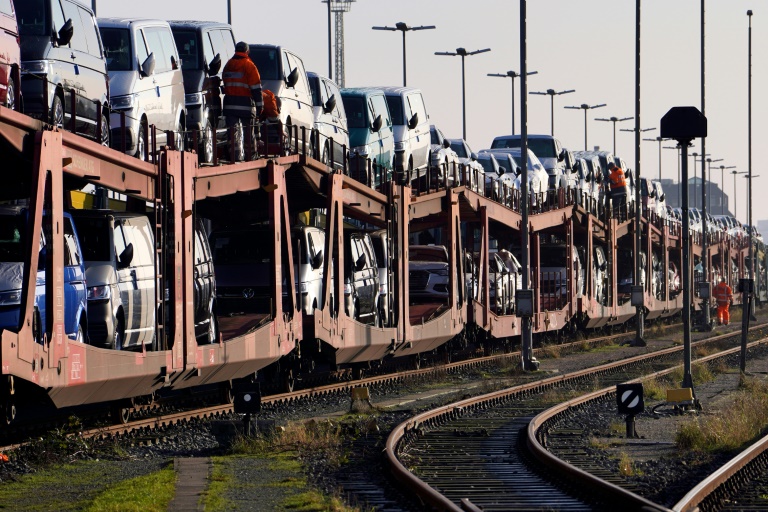
Ukraine war slams brakes on European car sales

European car sales sank in March as Russia’s invasion of Ukraine added more problems to a sector already struggling with shortages of semiconductors, industry data showed Wednesday.

Passenger car registrations fell 20.5 percent compared to the same period last year, with 844,187 units sold, according to the European Automobile Manufacturers’ Association (ACEA).

Excluding 2020 when the coronavirus pandemic paralysed the global economy, it was the worst performance for a month of March since statistics began in 1990. 

Car production has been hampered worldwide since last year by a severe shortage of semiconductors, a key component for modern cars as they power everything from anti-lock braking systems to airbags to parking assistance technology.

The war has led to shortages of other parts, such as the cables used in car wiring harnesses and of which Ukraine is a manufacturer.

Several factories in Europe have had to go idle due to the lack of cables, with Volkswagen temporarily suspending production at a number of German sites.

Europe’s top automaker saw sales fall by nearly a quarter in March, according to ACEA figures.

“The ongoing supply chain disruptions, further exacerbated by Russia’s invasion of Ukraine, negatively affected car production,” the ACEA said.

Most countries in Europe had double-digit drops in car sales in March, the association said, with a fall of 17.5 percent in Germany, the biggest market.

There were even larger falls of around almost 20 percent in France, around 30 percent in Italy and Spain, and nearly 40 percent in Spain.

Outside the European Union, sales fell by 14.3 percent in Britain.

Sri Lankan town under curfew after police kill protester

Police enforced a curfew on Wednesday in a Sri Lankan town where an anti-government demonstrator was killed, a death that triggered international condemnation just as the crisis-hit country seeks an IMF bailout. 

Regular blackouts and acute shortages of food and fuel have sparked increasing public discontent in the island nation, which is dealing with its worst economic downturn since independence in 1948.

Huge protests have demanded the government’s resignation, including the Tuesday blockade of a key highway and railway line on the day Sri Lanka’s main petrol retailer announced another sudden price rise.

Police dispersed the crowd in the town of Rambukkana with tear gas and a volley of live rounds that left a 42-year-old father of two dead, with nearly 30 others wounded in the confrontation.

“I was hit with a baton on my leg and hand,” Vasantha Kumara, a local chef, told AFP on Wednesday. “I begged the cops not to beat me, but they didn’t listen.”

“People are angry. We are all poor people fighting for basics.”

Authorities extended the curfew in Rambukkana, around 95 kilometres (60 miles) east of the capital Colombo, into Wednesday with shops closed through the morning. 

Spent bullet cartridges littered the road hours after the previous evening’s protest, which saw thousands of people blocking rail tracks and the highway to the central city of Kandy. 

President Gotabaya Rajapaksa said he was “deeply saddened” by the police shooting and promised the public’s right to peacefully protest against his government would not be hindered.

Sri Lanka’s police force “will carry out an impartial and transparent inquiry”, he wrote on Twitter.

Police said they were forced to act when the crowd was about to set alight a fuel tanker — a claim dismissed by Sri Lanka’s political opposition.

“These people are not suicidal to burn a tanker and get killed in the process,” lawmaker Rohini Kumari Wijerathna said in parliament.

– International concern –

Tuesday’s incident was the first fatal clash since widespread anti-government protests began this month. 

At least 29 people, including 11 police officers, were wounded in Rambukkana, according to official figures. 

Later that night, police fired tear gas to break up another protest in Sri Lanka’s south, one of the dozens of demonstrations staged simultaneously across the country.

Colombo-based diplomats have expressed concern over the police shooting.

“A full, transparent investigation is essential and the people’s right to peaceful protest must be upheld,” US ambassador Julie Chung said.

British High Commissioner Sarah Hulton condemned the violence and “call[ed] for restraint.”

– IMF talks –

Sri Lanka opened talks with the International Monetary Fund in Washington this week after announcing an unprecedented default on the government’s $51 billion foreign debt. 

The IMF said it had asked Sri Lanka to restructure its borrowings before the lender finalises a bailout programme.

Talks with Sri Lanka were still at an “early stage”, the IMF said, expressing concern over the hardships suffered by the country’s people.

Sri Lanka’s economic meltdown began after the coronavirus pandemic torpedoed vital revenue from tourism and remittances.

The country is short of dollars to finance even the most important essentials, including food, fuel and medicines. Runaway inflation has worsened the population’s hardships.

The Colombo Stock Exchange has suspended trading to prevent an anticipated market collapse and the government has urged citizens abroad to donate money to help pay for desperately needed essentials.

A large crowd has been camped outside President Rajapaksa’s seafront office in Colombo since April 9, demanding the leader step down. 

Rajapaksa has acknowledged public anger over the ruling family’s mismanagement and appointed a new cabinet to navigate the country out of the crisis, but has refused to entertain calls for his resignation.

Close Bitnami banner
Bitnami