US Business

Temporary aid can offset inflation hit to families: IMF official

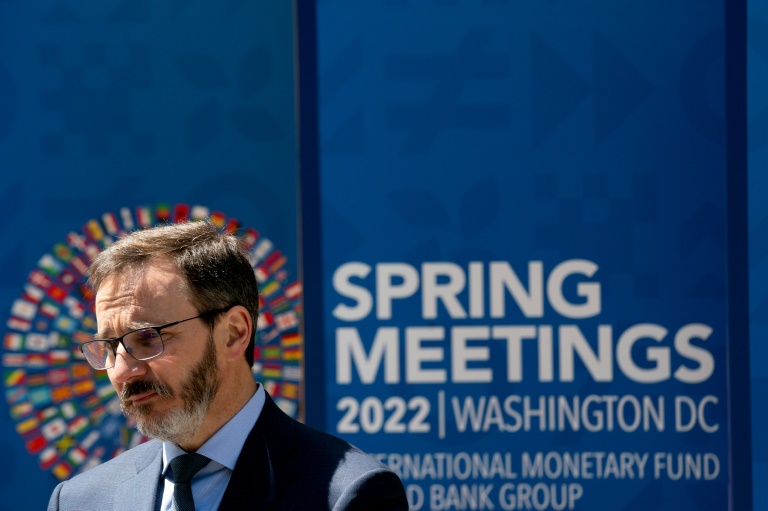
Faced with surging inflation that is hitting poor families especially hard, which has sparked unrest in some countries, policymakers should take immediate steps to offset the pain with targeted and temporary relief, IMF chief economist Pierre-Olivier Gourinchas said Tuesday.

“We’ve seen already in some countries people protesting when they see the price of food or basic items increasing very rapidly,” the official told AFP in an interview.

Governments can alleviate impact of the price jumps with “targeted measures to try to support vulnerable populations,” which can include steps like utility bill discounts or direct payments to poor families, he said.

Gourinchas earlier Tuesday unveiled the IMF’s latest World Economic Outlook which flags rising inflation as a key risk, made worse by the Russian invasion of Ukraine that has caused a surge in prices of fuel and food.

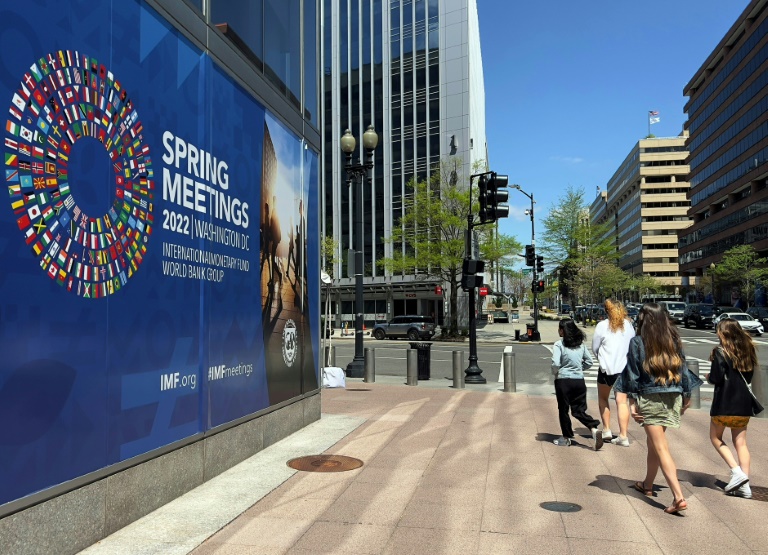
The damage the conflict is wreaking on the world economy, including the highest inflation in decades, is the key focus of global finance officials who are gathered this week for the spring meetings of the IMF and World Bank.

Support also could include “energy price subsidies, as long as they’re clear, they’re transparent and they’re temporary, so that they are not going to affect the budget for too long,” Gourinchas said.

That is an unusual stance for the Washington-based crisis lender, which historically abhorred subsidies and demanded countries eliminate them and tighten spending in exchange for financial support.

The IMF has often been cast as the villain in popular protests against austerity measures imposed by governments seeking to right their economies with the help of a loan package.

In recent weeks, demonstrators have taken to the streets in Peru and Sri Lanka to demand action from their leaders as the conflict in Ukraine and Western sanctions on Russia drove food and fuel prices to soar and created shortages that officials warn could cause a food crisis.  

Sri Lanka defaulted on its $51 billion in debt.

– Faster debt relief –

Gourinchas said some low income countries “with very limited fiscal space and elevated levels of debt,” will need outside help.

“The fund and other organizations are working on trying to address this food insecurity crisis, provide funding and food supplies to affected countries,” he said.

But for other countries the debt will become unsustainable and they will need to restructure those loans, he said, noting that about 60 percent of low income countries already face or are at high risk of debt distress.

During the Covid-19 pandemic, the Group of 20 adopted a Common Framework to provide a path to orderly debt restructuring, but only three countries have even applied for relief.

“It’s not been very successful yet, so we absolutely need to have a more rapid process,” he said, although he acknowledged that the process is complex.
Cheers and jeers in US as plane mask mandates are lifted

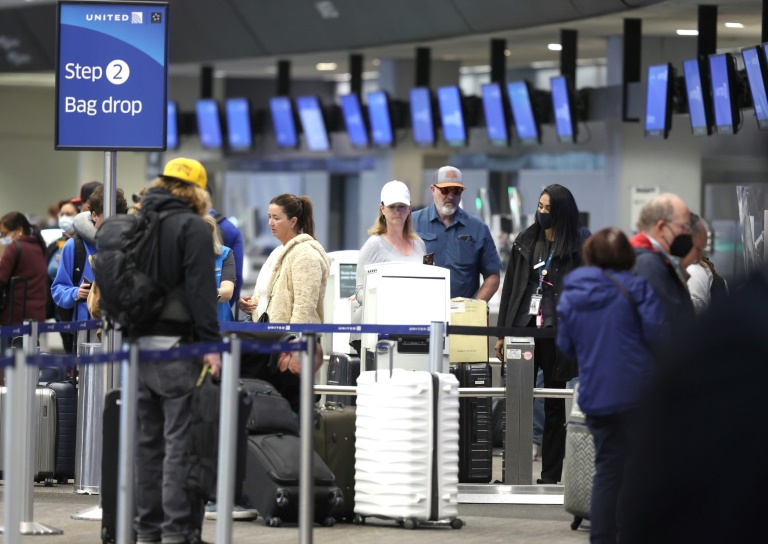
Airlines, subways and bus services across the United States moved quickly Tuesday to remove mask requirements following a federal court ruling that struck down face-covering mandates on public transportation, a hot-button issue throughout the pandemic.

Uber, Lyft and Amtrak were among the firms that announced an end to masking requirements hours after the decision was released, prompting reactions from travelers on social media.

In one clip, a Delta Air Lines pilot announcing the shift mid-flight is greeted by loud cheers. “Finally!” yells one passenger.

Less enthusiastic was Scott Hechinger, an expert in public defender law, who also heard cheers at the airport, but became increasingly alarmed during the flight. 

“There is so much sneezing and coughing. And people just breathing it in. Freedom,” Hechinger tweeted.

Policymakers in Washington had decided last week to extend the federal mask mandate through May 3, but a federal judge struck that down on Monday, prompting an immediate wave of announcements from major airlines, including United Airlines and American Airlines.

On Tuesday, both Uber and Lyft shifted to a policy intended to be respectful of those who wish to continue wearing masks, while no longer requiring it. 

“While mask usage is still recommended, we’ve updated our Covid safety policies,” Uber said. “Let’s move forward, safely together.”

Rail company Amtrak also changed its policy, announcing that while masks were no longer required, “anyone needing or choosing to wear one is encouraged to do so.”

One prominent transportation provider holding firm was New York’s Metropolitan Transit Authority, which will continue to require face coverings on the city’s subways and buses, a spokesman said. In Washington, the Metro bus and rail system lifted its mandate.

– Majority support –

The changes come on the heels of Monday’s ruling from US federal judge Kathryn Kimball Mizelle who found that the mask mandate exceeds the statutory authority of the Centers for Disease Control and Prevention (CDC).

Mizelle, a nominee of Republican former president Donald Trump, issued her ruling in a lawsuit filed in July 2021 by a conservative non-profit organization called the Health Freedom Defense Fund and two individual plaintiffs. 

Although the public has a “strong interest” in combating the spread of Covid-19, the judge said, the mask mandate “exceeded the CDC’s statutory authority,” and the agency “failed to adequately explain its decisions.”

White House Press Secretary Jen Psaki called the ruling a “disappointing decision,” but it was unclear whether the Biden administration intended to appeal — as some public health advocates have urged.

Polling suggests continued majority support for indoor mask mandates, but with a clear minority opposed.

A YouGov America poll conducted April 18, shortly before the ruling, found 63 percent “strongly” or “somewhat” support US government requirements for masks on public transport. 

Of the remainder, 19 percent were “strongly” opposed, 10 percent were “somewhat” opposed and nine percent weren’t sure.

Mask requirements have been a contentious topic throughout the pandemic and have proven particularly nettlesome on planes, where there has been a sharp uptick in assaults of flight attendants.

Flight attendants have been divided on whether to maintain the rule, Sara Nelson, president of the Association of Flight Attendants union said on CNBC Tuesday.

“There’s absolutely a sigh of relief from flight crews, but there are also people who are really concerned,” said Nelson, adding that the union did not take a position on whether to extend the mandate.

Representative Sam Graves of Missouri, the senior Republican on the House Transportation Committee, applauded Mizelle’s ruling. 

“It’s about time,” said Graves. “This hypocritical and overreaching mandate was never about health or science, since mask mandates were gone practically everywhere else. It’s time for this mandate to go once and for all.”

But Tatiana Prowell, an oncology professor at Johns Hopkins University School of Medicine, said she was hearing from those who are immunocompromised and others with cancer.

“In addition to wearing N95 masks, I’m advising them to travel on less popular days/times if possible during the pandemic for fewer crowds,” Prowell said on Twitter.

Shutdown of Libya oil sites spreads to second terminal

Libya’s National Oil Corporation announced Tuesday the closure of a second export terminal, paralysing the vital energy sector in a North African country gripped by political crisis.

The suspension of operations at Brega terminal, which has an export capacity of 60,000 barrels per day (bpd), follows a force majeur and closure on Monday of Zueitina port and several other major sites in the “Oil Crescent” region of eastern Libya.

The NOC, in a statement, said it “declares a state of force majeure on the oil port of Brega because it is impossible to implement its commitments towards the oil market”.

Force majeure, a legal move, allows parties to free themselves from contractual obligations when factors such as fighting or natural disasters make meeting them impossible.

The NOC made a similar declaration on Monday at another major oil field, Al-Sharara.

“A group of individuals put pressure on workers in the Al-Sharara oil field, which forced them to gradually shut down production,” it said.

Oil installations have often been attacked or blockaded by armed groups who hold sway in Libya.

Libya has had two rival executives since the eastern-based parliament in February appointed a new prime minister in a direct challenge to the UN-brokered government in the capital Tripoli.

The latest standoff pits Prime Minister Abdulhamid Dbeibah’s interim government against that of former interior minister Fathi Bashagha, who was chosen by the parliament.

The groups blocking the oil facilities are demanding “a fair distribution” of income and the transfer of power to Bashagha.

They have led to combined losses in production estimated at 600,000 bpd, about half of Libya’s daily output.

The NOC warned that Libya would pay a high price.

“At a time when oil prices are recovering significantly due to increased global demand… Libyan crude is being subjected to a wave of illegal closures, which will have serious damage to wells, reservoirs and surface equipment… as well as the loss of state treasury opportunities at prices that may not be repeated for decades to come,” it said.

The NOC is one of the few institutions in the troubled country to have stayed intact — and largely neutral — since the 2011 NATO-backed uprising that ousted longtime dictator Moamer Kadhafi.

Oil revenues are vital to the economy of a country sitting on Africa’s largest known reserves.

Oil prices plunge after IMF cuts global growth forecast

Oil prices plunged by more than five percent Tuesday as investors worried about a drop in demand after the International Monetary Fund cut its global growth forecast.

Around 1530 GMT the price of Brent crude, the main international oil contract, was down 5.4 percent to $107.11 per barrel, while the main US oil contract, WTI, fell 5.5 percent to $102.30.

European stocks were all down at close, as traders fretted over the IMF’s pessimistic outlook for 2022.

The IMF sharply downgraded its 2022 global growth forecast to 3.6 percent in its latest outlook report Tuesday, 0.8 percentage points lower than its previous estimate in January.

Energy prices are surging, debt levels are rising and shortages remain acute, the IMF noted, as multiple crises including the Ukraine war and coronavirus pandemic fuel an acceleration of inflation.

“The economic effects of the war are spreading far and wide — like seismic waves that emanate from the epicenter of an earthquake,” IMF chief economist Pierre-Olivier Gourinchas said in the report.

The downgrade was sharper for the eurozone, which is now expected to grow by 2.8 percent instead of 3.9 percent.

Michael Hewson, chief market analyst at CMC Markets UK, said Tuesday’s “sharp decline in oil prices offsets concerns that the start of a renewed Russian offensive on the Donbass region (in the east) could increase the pressure on the EU to look at a complete embargo on Russian oil and gas”.

Wall Street was up in late morning trading, with the three major indices reporting rises of more than one percent, a marked change from Monday when markets were lower over worries about higher interest rates.

Hewson noted that the IMF’s cut to the US growth forecast, from 4.0 percent to 3.7 percent, was more modest than that to the eurozone.

Asian markets diverged as the region weighed the impact of Covid lockdowns in China, analysts at Charles Schwab investment firm said in a note.

China’s economic growth accelerated in the first quarter of the year to 4.8 percent, official data showed Monday, but the government warned of “significant challenges” ahead.

– Key figures around 1530 GMT –

London – FTSE 100: DOWN 0.2 percent at 7,601.28 points (close)

Frankfurt – DAX: DOWN 0.07 percent at 14,153.46 (close)

Paris – CAC 40: DOWN 0.8 percent at 6,534.79 (close)

EURO STOXX 50: DOWN 1.0 percent at 3,744.35 (close)

Tokyo – Nikkei 225: UP 0.69 percent at 26,985.09 (close)

Shanghai – Composite: DOWN 0.05 percent at 3,194.03 (close)

Hong Kong – Hang Seng Index: DOWN 2.28 percent at 21,027.76 (close)

New York – Dow: UP 1.1 percent at 34,812.40

Dollar/yen: UP at 128.55 yen from 126.54 yen

Euro/dollar: DOWN at $1.0793 from $1.0802

Pound/dollar: DOWN at $1.3001 from $1.3023

Euro/pound: UP at 83.01 pence from 82.87 pence

Brent North Sea crude: DOWN 5.4 percent at $107.11 per barrel

West Texas Intermediate: DOWN 5.5 percent at $102.30 per barrel

burs-raz/rl

Fragmentation poses 'serious risk' to global prosperity: IMF

The threat of deglobalization that splits countries into divided blocs could undermine decades of gains in living standards and growth, an IMF official warned Tuesday.

While not an immediate threat “we see this as a serious risk,” IMF chief economist Pierre-Olivier Gourinchas said.

He spoke at the start of the IMF and World Bank Spring meetings, where the Russian invasion of Ukraine hangs over the discussions. The war has reverberated through the global economy, but some officials fear it also could break up years of hard-won gains in integration.

Globalization has “lifted hundreds of millions out of poverty and allowed emerging market economies to see their economies soar in the last 30, 40 years,” Gourinchas told reporters.

“A move towards more fragmentation would undo many of these gains.”

The IMF’s latest World Economic Outlook showed the integrated global supply chain preserved those gains even during the Covid-19 pandemic.

The rise of large emerging markets in the global economy has created a shift towards a “multipolar world,” he said. But splitting into “divided blocs… would be a disaster for the global economy.”

IMF slashes global growth forecasts amid Ukraine war

The “seismic” impact of the war in Ukraine is spreading worldwide, causing the IMF on Tuesday to sharply downgrade its 2022 global growth forecast to 3.6 percent.

That slowdown, 0.8 points lower than its previous estimate released in January, comes amid surging prices, shortages and rising debt levels, the IMF said in its latest World Economic Outlook.

The fallout has been felt most acutely in the poorest nations, threatening to erase recent gains as the world had begun to recover from the Covid-19 pandemic, and the risks and uncertainty remain high, the Washington-based lender warned.

“The economic effects of the war are spreading far and wide — like seismic waves that emanate from the epicenter of an earthquake,” IMF chief economist Pierre-Olivier Gourinchas said in the report.

Russia invaded Ukraine in late February, devastating the country’s infrastructure and ability to produce grain and other goods, while stiff sanctions on Moscow sent fuel prices higher.

The conflict also sparked a flood of refugees into neighboring countries.

The crisis will be the focus of global finance officials who gather in Washington this week — virtually and in person — for the spring meetings of the International Monetary Fund and World Bank.

The report shows Ukraine suffering a 35 percent collapse of its economy this year, while Russia’s GDP will fall 8.5 percent — more than 11 points below the pre-war expectations.

European nations will see much slower growth as the war drives up fuel and food prices, pushing inflation higher around the world and keeping it high for longer than expected.

The United States and China also will feel the effects of the war and the ongoing impact of the Covid-19 pandemic, with US growth expected to slow to 3.7 percent, and China’s to 4.4 percent.

– Surging inflation –

The official cautioned that the overall outlook is highly uncertain, and things could get drastically worse if the war is prolonged and tougher sanctions imposed on Moscow.

“Growth could slow significantly more while inflation could turn out higher than expected if, for instance, sanctions aimed at ending the war extend to an even broader volume of Russian energy and other exports,” he said.

Meanwhile, the pandemic is continuing, and lockdowns in China to defeat renewed coronavirus outbreaks are slowing activity, including in manufacturing hubs, which “could cause new bottlenecks in global supply chains.”

The latest crisis hit as the global economy “was on a mending path but had not yet fully recovered from the Covid-19 pandemic,” Gourinchas said.

That has fueled an acceleration of inflation — expected to hit 5.7 percent in advanced economies this year and 8.7 percent in developing nations — which endangers the gains of the past two years.

And inflation will be elevated for “much longer” than previously expected the report said.

The price pressures have prompted central banks in many countries to begin to raise interest rates to tamp down inflation, but that will hurt highly indebted developing nations, the report noted.

Rising prices were a concern even before the conflict and now shortages caused by the war “will greatly amplify those pressures, notably through increases in the price of energy, metals and food,” Gourinchas said.

The official dismissed comparisons with the wage-price spiral seen in the 1970s, but “nevertheless, inflation is a serious concern right now in the US and in other countries,” he told reporters during a briefing. 

And if price pressures continue to mount “that would call for much more forceful action” from central banks.

– Debt distress –

That would hit developing nations that have seen debt loads increase with rising interest rates.

Gourinchas added his voice to the call to help countries restructure their debt by improving the G20 Common Framework adopted last year, which was meant to offer a path to restructure large debt loads.

A key hurdle has been the lack of information on the size of debt owed to China, as well as some other lenders, by private companies as well as governments, and the need for private creditors to participate in the debt relief.

It’s in the interest of the borrowing country and the creditors “to have an expeditious process,” he told reporters.

“We need a process that works much faster and much better in dealing with situations of insolvencies.”

World Bank President David Malpass, who has been outspoken on the issue, has said 60 percent of low-income countries already face debt distress or are at high risk.

New York Times names next editor to lead US paper

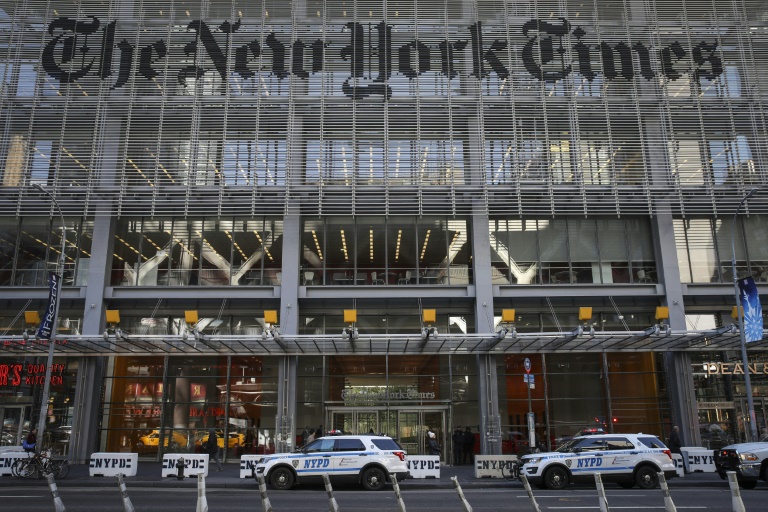
The New York Times on Tuesday announced the appointment of veteran journalist Joe Kahn as its next executive editor, the top newsroom position at the powerful US paper.

Kahn — currently the Times’s number two-ranked editor — will succeed Dean Baquet, whose eight-year reign is due to end in June, the daily said.

The 57-year-old will be tasked with shaping the digital future of the Times, a leading liberal voice in world journalism, as it vies for audiences around the globe.

Kahn said securing readers’ trust “in a time of polarization and partisanship” was one of his top priorities.

“We don’t know where the political zeitgeist will move over time,” the Times quoted Kahn as saying.

“Rather than chase that, we want to commit and recommit to being independent,” he said.

Kahn has been managing editor of the Times since 2016 and has been credited with helping guide the paper into the digital era.

In recent years the Times has moved heavily into podcasts and TV documentaries, while its games section is another key source of revenue.

Kahn previously led the Times’s international coverage and in 2006 shared a Pulitzer Prize for reporting in China.

Baquet was the first Black executive editor of the Times and his tenure brought 18 Pulitzer Prizes.

He oversaw hard-hitting expose pieces on Donald Trump’s finances and the sexual misconduct of disgraced former Hollywood mogul Harvey Weinstein.

But he also grappled with controversies, including an internal investigation which found that the paper’s award-winning podcast “Caliphate” had failed to meet editorial standards.

The Times said Baquet has reached the age when Times executive editors usually step down: 65. The paper said he would stay on “to lead an exciting new venture.”

Uber, Lyft join airlines in ending US mask mandate

Ride-hailing companies Uber and Lyft removed mask requirements on riders and drivers on Tuesday following a federal ruling striking down the mandate.

“You can now ride without a mask and use the front seat if you need to,” Uber announced on Twitter. 

“While mask usage is still recommended, we’ve updated our Covid safety policies. Let’s move forward, safely together.”

Uber’s rival, Lyft, also said it was making masks optional.

The company will also remove a restriction on riders in the front seat, and will no longer include health safety reasons — such as not wearing a mask — as a reason to cancel a ride, Lyft said.

“We know that everyone has different comfort levels, and anyone who wants to continue wearing a mask is encouraged to do so,” Lyft said in a blog post.

On Monday, US federal judge Kathryn Kimball Mizelle said the mask mandate exceeds the statutory authority of the Centers for Disease Control and Prevention.

Several major carriers, including American Airlines, Delta Air Lines and United Airlines, dropped mask mandates on domestic flights and some international flights following the ruling.

French court fines Deliveroo for 'undeclared labour'

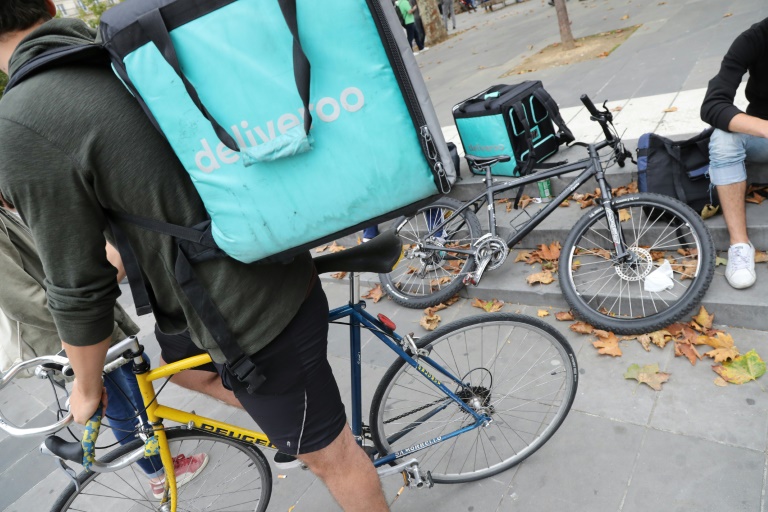
A Paris court on Tuesday fined the British meal delivery group Deliveroo after ruling it was guilty of “undeclared labour” for using freelance riders who should have been classified as employees, depriving the state of millions of euros in payroll taxes.

It was the latest move by European courts to recognise the rights of “gig economy” workers used by start-ups and other firms, which often claim they are simply go-betweens for clients and independent contractors.

The court ordered the maximum fine of 375,000 euros ($405,000) sought by prosecutors and also handed suspended one-year prison sentences and 30,000-euro fines to two former French executives at Deliveroo.

A third executive got a suspended four-month sentence and a 10,000-euro fine for complicity in the system, and Deliveroo was also ordered to pay 50,000 euros each in damages to five labour unions who joined the case as plaintiffs.

State prosecutor Celine Ducournau had sought in vain to question Deliveroo’s American founder and CEO Will Shu over a “fraud” that gave “all the benefits to the employer… without any of the inconveniences.”

“The question is not to determine if the status of independent contractor is appropriate, but to acknowledge that in this instance, Deliveroo used a fake legal arrangement that did not correspond to the reality of how the delivery riders work,” the presiding judge said in her ruling. 

A Deliveroo spokesman said the company “categorically contested” the decision and said it was considering an appeal.

“Our business model offers our deliverers the flexibility they need and which they tell us they appreciate,” he said. 

– Legal gray area –

Over 100 Deliveroo riders were plaintiffs in the case prosecutors opened in 2015 but which got fresh impetus in 2020, when France’s URSSAF agency in charge of employer social security collections demanded millions of euros in back payments.

Several riders told the court they had sought jobs that offered scheduling freedom only to find intense pressure to work at peak meal times, strict oversight of their routes and days off, and penalties if orders weren’t delivered fast enough.

Deliveroo France had already been found guilty of undeclared labour in a civil case in February 2000, when a court sided with a rider seeking to be recognised as an employee and not a contractor.

URSSAF is seeking to recover some 9.7 million euros from Deliveroo, and a court had already ordered in 2020 the seizure of three million euros in Deliveroo’s account while the case was ongoing.

The ruling comes as the European Union is taking aim at the business model of gig economy companies like Deliveroo and the ride-sharing service Uber, with plans that could force them to reclassify their workers as fully-fledged employees.

The companies insist the workers are self-employed, and courts across Europe have issued contradictory decisions — sometimes forcing companies to provide workers with standard contracts, at other times upholding their status as independent contractors.

In December, Deliveroo won a case in Belgium where a court found that riders did not have to be requalified as employees, with the requisite social security and tax obligations.

Shanghai reports more Covid deaths as officials push work resumption

China reported seven more Covid-19 deaths in Shanghai on Tuesday, as major firms such as Tesla forged ahead to resume production after a damaging weeks-long lockdown.

Supply chains have clogged and businesses have been forced to halt production in the metropolis of 25 million, as authorities cling to a zero-Covid approach to combat China’s worst outbreak since the virus first emerged in late 2019.

Beijing’s strategy of eliminating clusters as they surface — through hard lockdowns and mass testing — has kept fatalities low, but the measures are taking a toll on economic growth.

Authorities have called for a “whitelist” of key industries and companies to be drawn up so production can continue, with over 600 firms identified for early work resumption in Shanghai.

US electric car giant Tesla “officially resumed production” on Tuesday, state media reported, after suspending work at its multi-billion-dollar “gigafactory” in the city for over 20 days.

But this will take place in a “closed-loop system”, with staff sleeping on site and being tested for Covid, Bloomberg News reported.

Chinese automaker SAIC Motor said this week it was “launching production resumption stress tests”.

– Seven new deaths –

Tuesday’s fatalities bring Shanghai’s death toll since its lockdown to 10.

Some have cast doubt on official figures in a nation where the vast elderly population has a low vaccination rate. 

By comparison, Hong Kong — which also has a high number of unvaccinated people over the age of 60 — has tallied nearly 9,000 deaths among 1.18 million Covid-19 cases since the Omicron variant surged there in January.

Unverified social media posts have claimed Shanghai’s deaths are going unreported, and the messages have been quickly scrubbed from the internet.

Shanghai health officials said Sunday that less than two-thirds of residents over 60 had received two Covid jabs and under 40 percent had received a booster.

The seven newly reported deaths were all unvaccinated patients, city health official Wu Qianyu told a press conference on Tuesday.

They were aged between 60 and 101, and suffered from underlying conditions such as heart disease and diabetes, according to the Shanghai Municipal Health Commission.

The patients “became severely ill after admission to hospital, and died after ineffective rescue efforts, with the direct cause of death being underlying diseases”, the commission said.

Shanghai logged more than 20,000 new and mostly asymptomatic Covid cases Tuesday, defying officials’ efforts to stamp out the infection.

Many of the city’s residents have been confined to their homes since March, with some flooding social media with complaints of food shortages, spartan quarantine conditions and heavy-handed enforcement.

Protest footage has circulated faster than government censors can delete it.

Chinese officials have scrambled in recent weeks to contain an outbreak spanning multiple regions, largely driven by the fast-spreading Omicron variant.

By one estimate on Monday, at least 44 cities are currently under some form of lockdown in China, affecting around 350 million people.

Close Bitnami banner
Bitnami