US Business

Sri Lanka leader trims cabinet of relatives ahead of IMF talks

Sri Lanka’s embattled leader dropped two of his brothers and a nephew from his cabinet Monday, following public anger over the ruling family’s mismanagement of a crippling economic crisis and calls for his resignation.

President Gotabaya Rajapaksa has presided over the island nation’s most painful downturn in memory and his government is preparing for imminent bailout talks with the International Monetary Fund.

Dozens of lawmakers have turned against the administration and opposition parties have rebuffed invitations to join a unity government from the president, who insists he will remain in office to guide Sri Lanka through the crisis.

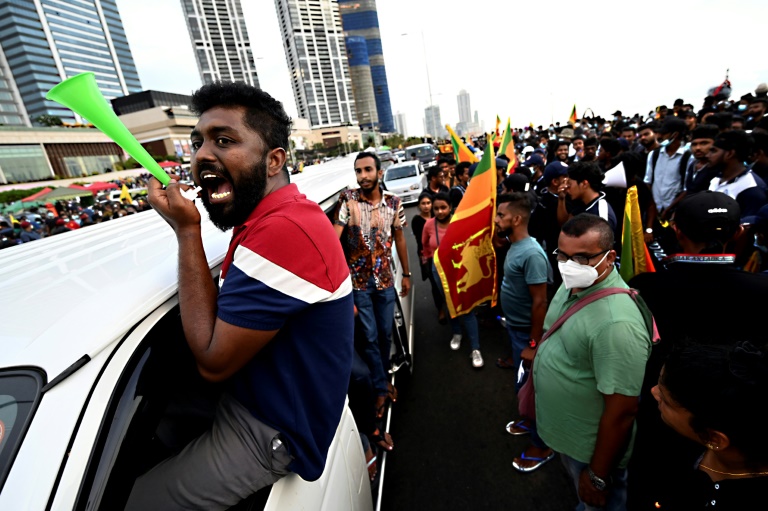
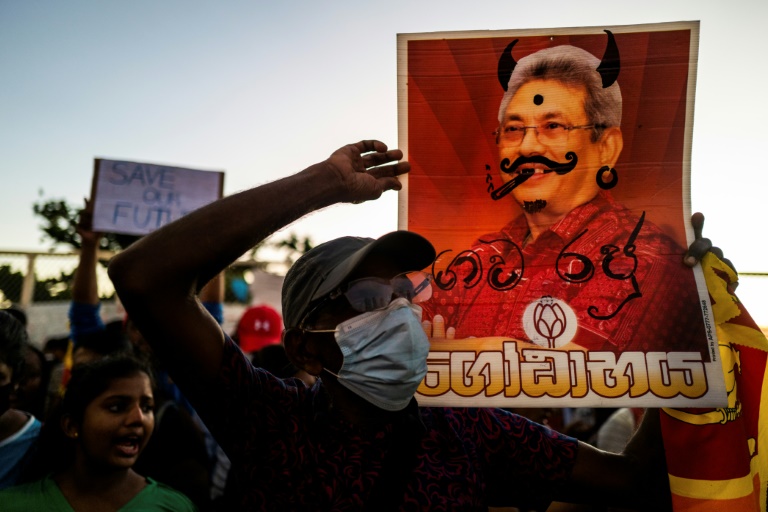
Huge protests have nonetheless demanded Rajapaksa stand down, including tens of thousands of people camped outside his seafront office for more than a week. 

The new cabinet retains Prime Minister Mahinda Rajapaksa, Gotabaya’s older brother and the head of Sri Lanka’s ruling clan, while leaving out eldest sibling Chamal and younger brother Basil, the former finance minister. 

Mahinda’s eldest son Namal, who ran the sports ministry and had been touted as a future leader before the crisis, was also dropped.

The 21-member cabinet is seven people fewer than its predecessor, which resigned en masse two weeks ago in response to public outrage over nepotism and corruption.

Ministers are entitled to several SUVs, a large contingent of bodyguards and unlimited fuel, as well as state housing and entertainment allowances.

New finance minister Ali Sabry led a delegation to Washington over the weekend to open talks with the International Monetary Fund from Tuesday, officials said.

Sri Lanka is seeking three to four billion dollars from the IMF to overcome its balance-of-payments crisis and boost depleted reserves.

– Fuel costs jump again –

Alongside the acute shortages, Sri Lanka is also facing record inflation and lengthy electricity blackouts, as the government has run out of foreign currency to import fuel.

Lanka IOC, a petrol retailer which accounts for a third of the local market, announced yet another steep hike in fuel costs on Monday to account for the collapse in value of the local currency. 

The cost of diesel, the fuel most commonly used for public transport, has risen by 138 percent since the start of the year while petrol prices have nearly doubled. 

The government last week announced a default on Sri Lanka’s $51 billion foreign debt and the Colombo Stock Exchange has suspended trading to prevent an anticipated market collapse.

Rajapaksa’s parliamentary majority has been thrown into question after former allies deserted the ruling coalition.

The opposition has said it will attempt to topple the government through a no-confidence vote in the coming weeks.

Monday marked the tenth straight day of protests outside Rajapaksa’s office, with demonstrators establishing a protest camp that they say will continue until the leader stands aside.

Activists shone digital projections on the office denouncing corruption and demanding the president “go home”, prompting police to hold up large screens to block the light beams. 

Asian markets slide on inflation, Covid fears

Asian stocks closed lower on Monday in cautious trade, as figures showed China’s economic growth accelerated in the first quarter of the year, but the government warned of “significant challenges” ahead.

Tokyo’s benchmark Nikkei 225 ended down more than one percent and Shanghai posted small losses, while Hong Kong and Sydney were closed for holidays.

Shanghai reported its first Covid-19 deaths since the start of its weeks-long lockdown.

China’s largest city and economic powerhouse has stewed under a patchwork of restrictions this year amid the country’s worst Covid-19 outbreak since the start of the pandemic.

The country reported first-quarter economic growth of 4.8 percent, the National Bureau of Statistics said, as the pandemic threatens Beijing’s ambitious annual growth target.

That figure was up from 4.0 percent in the final months of 2021.

The world’s second-biggest economy was already losing steam in the latter half of last year as it endured a property slump and regulatory crackdowns.

“We must be aware that with the domestic and international environment becoming increasingly complicated and uncertain, economic development is facing significant difficulties and challenges,” said NBS spokesman Fu Linghui.

“Overall, the data suggest that China started the year well, but as the quarter has moved on, the headwinds have gotten stronger,” said Jeffrey Halley, senior market analyst with OANDA.

“A slowing property market, sweeping Covid restrictions, the Ukraine invasion pushing up base commodity and energy prices, and a central bank still intent on deleveraging sectors of the economy, have all combined to weigh on China’s growth.

“About the only thing missing is a meaningful rise in inflation, which is some small sliver of comfort.”

Oil prices, which have been elevated since Russia’s February invasion of Ukraine, were up again, with Brent Crude topping $111 a barrel.

Stephen Innes of SPI Asset Management said the rise was “likely to fuel inflation fears and rate hike jitters around the meaningful Fed action required to snuff those fears out”.

Russia is a major global oil and gas supplier, and — along with Ukraine — is also a key player in the grain sector.

The conflict has shaken markets for these commodities, and the impact has been felt from the Middle East to South America.

The war has sent oil prices soaring, with reports swirling about further energy sanctions on Russia.

Central banks in several major economies including the United States, Canada and Britain have already started raising interest rates to contain prices, but the European Central Bank on Thursday kept its stimulus plans and rates unchanged.

– Key figures around 0730 GMT –

Tokyo – Nikkei 225: DOWN 1.08 percent at 26,799.71 (close)

Shanghai – Composite: DOWN 0.49 percent at 3,195.52 (close)

Hong Kong – Hang Seng Index: Closed for a holiday

Euro/dollar: UP at $1.0802 from $1.0798

Pound/dollar: DOWN at $1.3023 from $1.3037

Euro/pound: UP at 82.95 pence from 82.83 pence

Dollar/yen: UP at 126.54 yen from 126.53 yen

Brent North Sea crude: UP 0.04 percent at $111.75 per barrel

West Texas Intermediate: UP 0.05 percent at $106.90 per barrel

New York – Dow: DOWN 0.3 percent at 34,451.23 (close)

London – FTSE 100: UP 0.5 percent at 7,616.38 (close)

China economy accelerates in Q1 but virus stalks outlook

China’s economic growth accelerated in the first quarter of the year to 4.8 percent, official data showed Monday, but the government warned of “significant challenges” ahead while massive Covid-19 lockdowns started to bite.

The world’s second-biggest economy had lost steam in the latter half of last year with a property slump and regulatory crackdowns, pulling down growth.

But it exceeded expectations in the first three months of 2022, growing 4.8 percent on-year, the National Bureau of Statistics (NBS) said, with Lunar New Year spending and factory production cajoling growth.

The weeks ahead, however, appear treacherous for the economy with Beijing’s unrelenting zero-Covid approach to outbreaks clogging supply chains and locking down tens of millions of people — including in the economic dynamos of Shanghai and Shenzhen as well as the northeastern grain basket of Jilin.

Virus restrictions in March have already gouged at retail sales, as consumers shied away from shopping, and drove up unemployment.

“With the domestic and international environment becoming increasingly complicated and uncertain, economic development is facing significant difficulties and challenges,” NBS spokesman Fu Linghui said on Monday.

The pandemic rebound — as well as the sanctions binding Russia’s economy — ups the ante on officials to deliver Beijing’s full-year growth target of around 5.5 percent.

The target comes in a pivotal political year for President Xi Jinping who is eyeing another term in power at the Party Congress to be held this autumn.

The current virus outbreak is the worst since the peak of the first wave which emerged in Wuhan in late 2019, and the economy is beginning to weaken. 

Industrial production growth eased to 5.0 percent in March, NBS data showed, down from the January-February period.

Meanwhile, retail sales sank 3.5 percent and the urban unemployment rate ticked up to a 22-month high of 5.8 percent last month.

“March activity data suggests that China’s economy slowed, especially in household consumption,” Tommy Wu, lead China economist at Oxford Economics, said in a note.

– ‘Worse to come’ –

China’s government is trying to balance “minimising disruption against controlling the latest wave of Covid infections”, Wu said, but he warned of a drag on economic activity into May or beyond.

Last week, carmakers including XPeng and Volkswagen warned of severe disruptions to supply chains and possibly even a halt on production completely if the lockdown on Shanghai’s 25 million inhabitants persisted.

Already, goods are piling up at the world’s busiest container port in Shanghai, prompting shipping giant Maersk to say it will stop taking new bookings for refrigerated containers into the city.

“Further impacts from lockdowns are imminent,” said Iris Pang, chief economist for Greater China at ING.

As Shanghai struggles to rein in an outbreak that has seen tens of thousands of daily cases, Pang said other cities may attempt to replicate Shenzhen’s success in reopening swiftly by resorting to strict measures with just a few Covid patients.

The southern tech powerhouse went into full lockdown for almost a week in March, but has since eased restrictions.

Julian Evans-Pritchard of Capital Economics cautioned that “the worst is still to come”.

Fu of the NBS warned of high commodity prices on Monday with the Russia-Ukraine conflict leading to a decline in the availability of commodities such as corn and wheat.

Although China’s central bank has announced a reserve ratio cut, lowering the amount of cash banks must hold in a push to support small businesses, experts say officials were taking a restrained approach to stimulus.

But economists expect officials will eventually publish a growth figure consistent with official targets, as part of doubts that the numbers may be massaged for political reasons.

Sri Lanka fuel prices up ahead of IMF talks

A key fuel retailer in Sri Lanka raised prices by up to 35 percent on Monday as the cash-strapped government was set to open crucial bailout talks with the International Monetary Fund.

Sri Lanka is in the grip of its worst economic crisis since independence from Britain in 1948. It has led to shortages of fuel, food and essential medicines.

Lanka IOC, a fuel retailer which accounts for a third of the local market, said it raised the diesel price by 75 rupees to 327 a litre while petrol was increased by 35 rupees to 367 rupees ($1.20).

The state-run Ceylon Petroleum Corporation, which accounts for two-thirds of the market and imposed fuel rationing last week, did not immediately raise its prices, but most of its pumping stations were without fuel.

Lanka IOC, a local unit of the Indian Oil Corporation, said the sharp depreciation of the local currency forced it to carry out the latest revision, three weeks after a 20 percent hike.

Since the start of the year, petrol prices have increased by 90 percent while diesel — commonly used for public transport — has gone up by 138 percent.

“The rupee devaluation by more than 60 percent during last one month compelled Lanka IOC to again increase its retail selling prices with effect from today,” the company said.

The increase came as Sri Lanka’s new finance minister Ali Sabry led a delegation to Washington seeking between $3 billion and $4 billion from the IMF to overcome the balance-of-payments crisis and boost depleted reserves.

The government last week announced a sovereign default on its huge foreign debt and the Colombo Stock Exchange announced trading would be halted for five days from Monday amid fears of a market collapse.

Sri Lanka was in a deep economic crisis when the Covid-19 pandemic hit, reducing foreign-worker remittances and crippling the lucrative tourism sector — a key source of dollars for the economy.

The government imposed a broad import ban in March 2020 to save foreign currency. It is now facing record inflation.

China economy grows 4.8% in first quarter as virus bites

China’s economy grew 4.8 percent in the first quarter, the National Bureau of Statistics said Monday, warning of “significant challenges” ahead as a resurgence of the coronavirus threatens Beijing’s ambitious annual target.

The world’s second-biggest economy was already losing steam in the latter half of last year with a property slump and regulatory crackdowns.

But Beijing’s unrelenting zero-Covid approach to outbreaks in multiple cities this year has clogged supply chains and locked down tens of millions of people — including in the economic dynamos of Shanghai and Shenzhen as well as the northeastern grain basket of Jilin.

China’s gross domestic product growth was 4.8 percent on-year in the first quarter, said the NBS on Monday, a figure that beat analysts’ expectations and up on 4.0 percent in the final months of 2021.

But the data does not entirely take in the gnawing impact of the lockdown in Shanghai, which has left millions stuck at home for several weeks.

Virus restrictions hitting key cities in March also gouged at retail sales, driving up the unemployment rate.

It ups the ante on officials to meet the country’s full-year growth target of around 5.5 percent, in a pivotal political period for President Xi Jinping who is eyeing another term in power at the Party Congress to be held later this year.

“With the domestic and international environment becoming increasingly complicated and uncertain, economic development is facing significant difficulties and challenges,” said NBS spokesman Fu Linghui on Monday.

While China saw an uptick in manufacturing growth earlier this year — with a shot in the arm from spending during the Lunar New Year holiday — curbs on movement struck several parts of the country during March, disrupting businesses and keeping consumers at home.

Industrial production growth eased to 5.0 percent in March, NBS data showed, down from the January-February period.

Meanwhile, retail sales sank 3.5 percent and the urban unemployment rate ticked up to 5.8 percent last month.

“March activity data suggests that China’s economy slowed, especially in household consumption,” Tommy Wu, lead China economist at Oxford Economics, said in a note.

China’s central government is trying to balance “minimising disruption against controlling the latest wave of Covid infections”, he added, but warned of a drag on economic activity into May, if not longer.

Last week, carmakers including XPeng and Volkswagen warned of severe disruptions to supply chains and possibly even a halt on production completely if the lockdown on Shanghai’s 25 million inhabitants persisted.

Major cities struck by Covid outbreaks include southern tech powerhouse Shenzhen, which went into full lockdown for almost a week in March, although it has since been reopened.

On Monday, Shanghai reported its first Covid deaths since the start of its lockdown — all elderly patients — on top of over 22,000 new positive cases.

Asian markets slide, China growth behind target

Asian stocks opened lower on Monday in cautious trade, as China posted higher-than-expected economic growth but officials still warned of “significant challenges ahead”.

Tokyo’s benchmark Nikkei 225 index was down 1.25 percent in early trade, while Hong Kong and Sydney were closed for holidays.

Stocks in Shanghai, which reported the first Covid-19 deaths since the start of its weeks-long lockdown, were slightly down.

China’s largest city and economic powerhouse has stewed under a patchwork of lockdown restrictions this year amid the country’s worst Covid-19 outbreak since the start of the pandemic.

The country reported first-quarter economic growth of 4.8 percent, the National Bureau of Statistics said, as the pandemic threatens Beijing’s ambitious annual growth target.

That figure was up from 4.0 percent in the final months of 2021.

The world’s second-biggest economy was already losing steam in the latter half of last year with a property slump and regulatory crackdowns.

All of this adds to pressure on officials to meet the country’s full-year growth target of around 5.5 percent, in a key year for President Xi Jinping who is eyeing another term in power.

“We must be aware that with the domestic and international environment becoming increasingly complicated and uncertain, economic development is facing significant difficulties and challenges,” said NBS spokesman Fu Linghui.

Oil prices, which have been elevated since Russia’s February invasion of Ukraine, were up again, with Brent Crude topping $112 a barrel.

Stephen Innes of SPI Asset Management said the rise was “likely to fuel inflation fears, and rate hike jitters around the meaningful Fed action required to snuff those fears out”.

Russia is a major global oil and gas supplier, and — along with Ukraine — is also a key player in the grain sector.

The conflict has shaken markets for these commodities, and the impact has been felt from the Middle East to South America.

The war has sent oil prices soaring, with reports swirling about further energy sanctions on Russia.

Central banks in several major economies including the United States, Canada and Britain have already started raising interest rates to contain prices, but the European Central Bank on Thursday kept its stimulus plans and rates unchanged.

– Key figures around 0250 GMT –

Tokyo – Nikkei 225: DOWN 1.83 percent at 26,596.66

Shanghai – Composite: DOWN 0.42 percent at 3,197.72

Hong Kong – Hang Seng Index: Closed for a holiday

Euro/dollar: DOWN at $1.0798 from $1.0801

Pound/dollar: DOWN at 1.3037 from $1.3063

Euro/pound: UP at 82.83 pence from 82.67 pence

Dollar/yen: UP at 126.53 yen from 126.39 yen

Brent North Sea crude: UP 0.66 percent at $112.44 per barrel

West Texas Intermediate: UP 0.52 percent at $107.51 per barrel

New York – Dow: DOWN 0.3 percent at 34,451.23 (close)

London – FTSE 100: UP 0.5 percent at 7,616.38 (close)

Coachella's return brings big business to California desert

“We’ve waited years for this!” exclaims Jesus Medina as he dishes out burritos to the hungry masses at Coachella, the music festival that’s back on in the California desert after three years.

After a Covid-induced hiatus, Coachella Valley businesses are flourishing with the return of one of music’s most-touted events, a boon for the region that counts festivals as key to its economic engine.

With just a little over 90,000 residents, Indio’s motto is “The City of Festivals,” events that make it at least $3 million in direct revenue alone, according to municipal figures, which includes ticket-sharing dollars and transient occupancy taxes from campers.

The benefit to businesses from liquor stores to hotels to gas stations took that figure soaring even higher — until the pandemic stymied live performance and put Coachella on indefinite hiatus.

“We had everything ready in 2020, but the pandemic canceled everything,” Medina told AFP in Spanish. His business “Cena Vegana” sold more than a thousand burritos on Friday, during Coachella’s opening day.

“It doesn’t stop, the lines are endless — this is a great opportunity for us.”

Coachella draws in more than 125,000 people daily over the course of two three-day weekends. 

Thousands of people occupy hotels in neighboring areas including Palm Springs, the resort area bordered by the San Jacinto mountains and known for its palm trees, golf courses and spas.

Business has been “quiet for years, a couple years, but we’re full and it’s busy,” said Char Pershind, manager of the Zoso Hotel.

Nearly all of the 162 rooms at Zoso are booked by people attending and working at the festival, and virtually everything is sold out for the event’s second weekend.

In 2019, the last time Coachella attendees descended on the valley, Pershind worked at a different hotel, and says this year many more people are in town for the shows.

“People have been cooped up for so long… they want to get out and enjoy the air,” she said.

“I know they come for the music — but they come for a lot more.”

– ‘Reminder I was here’ –

For Mitchell Car, who works at a bustling vintage clothing and accessories shop, Coachella is a golden opportunity to expand sales.

“Lots of times people come and they don’t have their outfits,” Car told AFP.

This year, the festival’s giving 1970s vibes with bell-bottom silhouettes of yore, along with bursts of neon and glitter adding sheen to the Empire Polo Club grounds where the stages spring up each year.

“They’re always searching: what’s hip? What’s unique?” said Car, whose primary clientele come from New York, San Francisco and Los Angeles. “I had the photographer for Harry Styles in the store the other day.”

Food choices abound on the festival grounds, where Santiago Restrepo is dishing up traditional Venezuelan arepas to hungry concert-goers.

“At first it was a bit difficult for us, because it’s the first time we’ve used this sales model,” he told AFP. “But when people started arriving in the middle of the afternoon we were ready.”

“After 4:00 pm, we didn’t stop for a second until 1:00 am.”

A few feet away, Coachella partiers are lined up to snag souvenirs celebrating the festival’s return.

In the official store, it took people an hour-and-a-half to reach the front of the line where some 20 people doled out merch, the most expensive item ringing up at $150 for a 2022 sweatshirt.

“Some people spent thousands of dollars,” said one vendor who wished to remain anonymous. 

Charlie Dawson, who flew in from New York, told AFP he just wants “something, whatever — a reminder I was here.”

It’s his seventh Coachella: “I was looking forward to coming back.”

US judge deemed controversial Musk tweet on Tesla 'false': investors

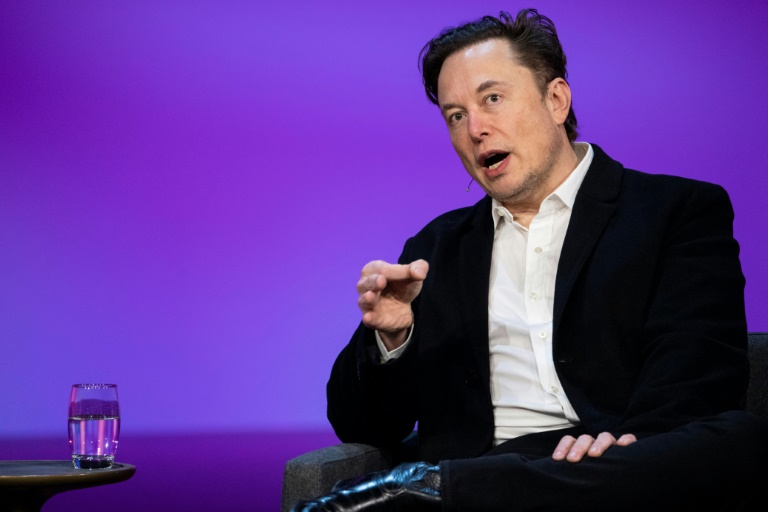
A 2018 tweet posted by Elon Musk in which he claimed to have secured the funding to take Tesla private was deemed “false and misleading” by a judge, according to documents filed by investors suing his electric car company.

The shareholders have accused Tesla of securities fraud over their stock market losses in the wake of the August 7, 2018 tweet, which caused the share price to fluctuate wildly for several days.

In a court filing late Friday, plaintiffs asked the federal judge in charge of the case, Edward Chen, to order Musk to stop saying publicly that he “secured” funding to take Tesla private at $420 a share, as he again stated on Thursday.

In the past, the billionaire entrepreneur has said he was in talks at the time with Saudi Arabia’s sovereign wealth fund and that he was confident he would reach a deal. But no agreement was ever announced.

According to the filing, Chen recently concluded in an order not made public that Musk’s statements were “false and misleading,” and made “recklessly and with full awareness of the facts that he misrepresented in his tweets.”

Plaintiffs accused Musk of engaging in “a high-profile public campaign to present a contradictory and false narrative regarding his August 7, 2018 tweets” — which could influence eventual jurors assigned to the trial set for later this year.

The Securities and Exchange Commission, the US market regulator, also charged him with fraud in the wake of the tweets.

He eventually agreed to a deal to settle the charges, which required Tesla’s lawyers to review any social media posts with information deemed “material” to shareholders. 

He also paid a $20 million fine and stepped down as Tesla’s chairman.

Musk, who has unveiled a $43 billion hostile takeover bid for Twitter, said Thursday he felt forced into the deal with the SEC to save Tesla.

Cruise ships at center of dispute in Florida's idyllic Key West

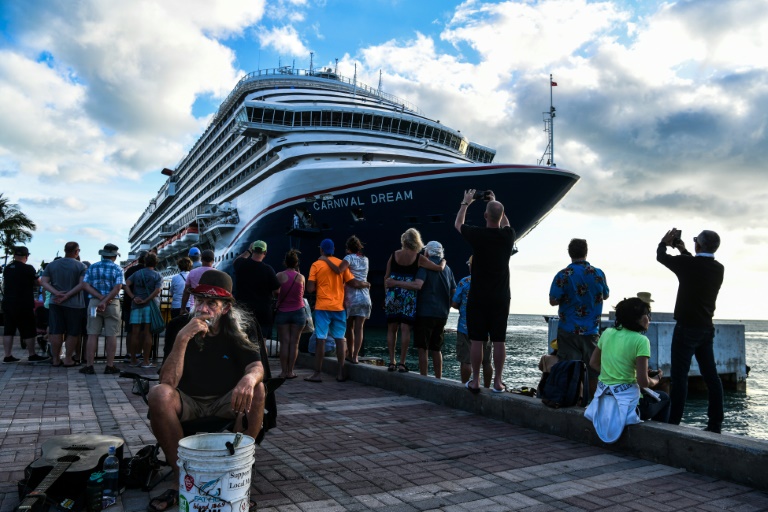
The island-city of Key West off the southern tip of Florida invites visitors to stroll slowly, enjoy turquoise waters and take in the sunset. But according to some residents, that idyllic peace is endangered — by lumbering, tourist-filled cruise ships.

The huge vessels bring thousands of visitors every day to the small city of 26,000 inhabitants, whose quaint, often pastel-colored Victorian homes line leafy, walkable streets.

Following a drawn-out local battle, the cruise tourist numbers are now down, but many residents say more still needs to be done.

While many businesses depend on the tourist throngs, residents such as Arlo Haskell find the ships to be a nuisance and believe they cause environmental harm. As a result, he founded the Safer Cleaner Ships non-profit.

“These cruise ships are an extraction industry that is profiting off of the beauty in Key West while harming that beauty and degrading the experience for everyone else,” Haskell said.

In 2020, his association put forth three local referendums: one to limit the size of cruise ships, another to allow no more than 1,500 people a day to disembark and a third to be able to prohibit boats that do the most damage to the environment.

The three proposals, each approved by between 60 to 80 percent of voters, were ratified by the city council. It was a victory for Haskell — or so he thought.

Then in June 2021, Florida Governor Ron DeSantis signed a law suspending the measures, arguing that voters could not meddle in matters of maritime trade. 

Local businesses, including ones also owned by the owner of Pier B — a huge beneficiary of the cruise ships as one of the city’s main docking locations — had donated almost $1 million to a political campaign committee supporting the governor, according to the Miami Herald.

– Public docks closed –

Relying on a bit of unexpected economic data, Safer Cleaner Ships returned to battle following DeSantis’ move. 

The info showed that cruise ship suspensions during the pandemic did not sink local finances.

To the contrary, in 2021, the city collected 25 percent more sales taxes than in 2019, before Covid.

Hotels and restaurants seem to have taken advantage of the fact that Florida promoted its open businesses in the middle of the pandemic while other states imposed rules and closings.

The city administration last month decided that since Key West cannot limit the number of cruise ships, it would close its two public docks. 

Now cruises can only park at private Pier B, which welcomes only one cruise ship per day. The era of two to three ships arriving daily is over.

The move has been a blow to some businesses. 

Although cruise tourists spend only a few hours in the city and usually eat before disembarking — generating little income for restaurants and hotels — they do buy souvenirs and snacks.

The visitors support the likes of tchotchke shops, ice cream parlors and tourist destinations, such as the Ernest Hemingway Home and Museum where the US writer lived between 1931 and 1939, according to Mayor Teri Johnston.

– Finding balance –

One morning this week, the streets of Key West were nearly deserted. Vanessa Wilder manned her downtown bike rental stand, waiting for the first passengers to disembark from a newly arrived cruise.

“The main shops and the bars down here, we thrive off of these cruise ships,” she said. 

“If we didn’t have them, a lot of businesses around here would have to shut.”

Despite his victories, Haskell maintains that things should move one step further, with cruise ships at the private dock not allowed to exceed a size specified by residents.

The boats, according to Haskell “do tremendous damage to our ecosystem” by clouding the water, which endangers the survival of corals.

But Scott Atwell, spokesman for the National Oceanic and Atmospheric Administration in Key West, said the evidence wasn’t so clear.

“We do not have specific studies on whether the cruise ship turbidity is any different than natural turbidity and whether turbidity from the ships’ channel reaches our coral reefs in a detrimental way,” he said.

In the meantime, Key West’s city council has decided to monitor water quality and also support coral restoration under an initiative that charges a fee to Pier B for disembarking passengers.

“We don’t want to get rid of the cruise ships but bring them into a moderate level so that we have good economic conditions and we also have good quality of life for our residents,” Johnston, the mayor, said.

China's economic growth under threat as virus takes hold

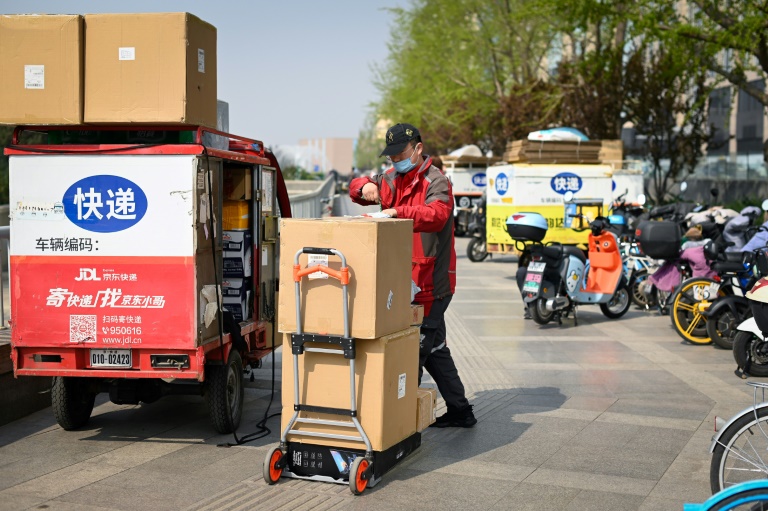
The mounting cost of China’s zero-Covid policy threatens to derail Beijing’s ambitious GDP target, analysts say, as supply chains snarl, ports face delays and Shanghai remains mired in lockdown.

Growth in the world’s second-largest economy was already slowing in the latter half of last year with a property market slump and regulatory crackdowns, leading policymakers to set their lowest annual GDP target in decades for 2022.

But analysts told AFP the figure of 5.5 percent would be tough to achieve with stay-at-home orders halting production and stunting consumer spending in key cities.

Experts from 12 financial institutions polled by AFP forecast GDP growth of 5.0 percent for the full year.

They expect a figure of 4.3 percent for the first quarter, just above the 4.0 percent recorded in the three months prior.

Official first-quarter data will be published Monday.

“China’s economy saw a good start in January and February with less energy constraints, domestic demand recovery… fiscal stimulus, and resilient exports,” said Gene Ma, head of China research at the Institute of International Finance.

But surging virus cases in March and lockdowns have “severely disrupted supply chains and industrial activities”, he added.

The analysts predicted the coronavirus outbreak would reverse the gains made earlier in the year.

Carmakers this week warned of severe disruption to supply chains and possibly even halting production completely if a lockdown in business hub Shanghai continues.

Premier Li Keqiang said this week that state support should be stepped up and tools including cuts to the reserve requirement ratio for banks could be tapped to help virus-hit sectors.

Other major cities struck by Covid outbreaks include southern tech powerhouse Shenzhen, which went into full lockdown for almost a week in March.

“The hit to retail sales could be even bigger, as dining-out services — around 10 percent of retail sales — were temporarily suspended in a few provinces,” Goldman Sachs said in a recent report.

But economists expect bigger consequences of the lockdowns to surface in April data and bog down growth.

– ‘Lesson’ –

With infections found in dozens of cities, Beijing has dug in its heels on the zero-Covid approach, which involves stamping out clusters as they emerge while conducting mass testing and isolating positive cases.

This has resulted in strict movement curbs in Shanghai for around two weeks now as the financial hub logs tens of thousands of cases daily — most asymptomatic.

The city is home to the world’s busiest container port and while operations are running, intercity travel restrictions and a shortage of truck drivers have snarled the passage of goods.

The daily flow of freight vehicles along highways has “weakened sharply” since the start of April, Capital Economics senior China economist Julian Evans-Pritchard said in a recent report.

Shanghai authorities have come under fire for allowing cases to spike and for failing to ensure supplies of fresh food reach all residents.

“Shanghai is a lesson, and local governments from other parts of China may become more sensitive to domestic flare-ups,” said Tommy Xie, head of Greater China research at OCBC Bank.

“If they want to lock down, they will try to lock down earlier rather than later,” he told AFP.

More short-term disruptions from Covid will likely arise, he added.

Controls in other coastal cities will also remain tight, said Dan Wang, chief economist at Hang Seng Bank China.

“It is not impossible for us to see maybe dozens or even more than 30 cities on lockdown at the same time,” she said.

“The economic cost is very high.”

Close Bitnami banner
Bitnami