US Business

US judge deemed controversial Musk tweet on Tesla 'false': investors

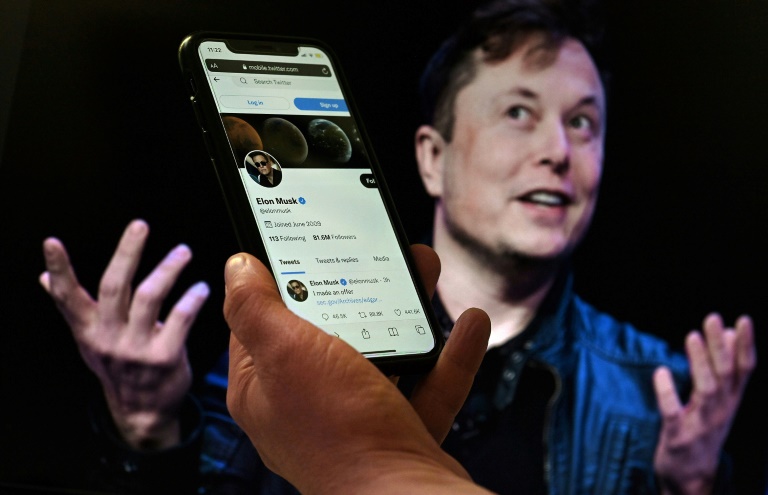
A 2018 tweet posted by Elon Musk in which he claimed to have secured the funding to take Tesla private was deemed “false and misleading” by a judge, according to documents filed by investors suing his electric car company.

The shareholders have accused Tesla of securities fraud over their stock market losses in the wake of the August 7, 2018 tweet, which caused the share price to fluctuate wildly for several days.

In a court filing late Friday, plaintiffs asked the federal judge in charge of the case, Edward Chen, to order Musk to stop saying publicly that he “secured” funding to take Tesla private at $420 a share, as he again stated on Thursday.

In the past, the billionaire entrepreneur has said he was in talks at the time with Saudi Arabia’s sovereign wealth fund and that he was confident he would reach a deal. But no agreement was ever announced.

According to the filing, Chen recently concluded in an order not made public that Musk’s statements were “false and misleading,” and made “recklessly and with full awareness of the facts that he misrepresented in his tweets.”

Plaintiffs accused Musk of engaging in “a high-profile public campaign to present a contradictory and false narrative regarding his August 7, 2018 tweets” — which could influence eventual jurors assigned to the trial set for later this year.

The Securities and Exchange Commission, the US market regulator, also charged him with fraud in the wake of the tweets.

He eventually agreed to a deal to settle the charges, which required Tesla’s lawyers to review any social media posts with information deemed “material” to shareholders. 

He also paid a $20 million fine and stepped down as Tesla’s chairman.

Musk, who has unveiled a $43 billion hostile takeover bid for Twitter, said Thursday he felt forced into the deal with the SEC to save Tesla.

Cruise ships at center of dispute in Florida's idyllic Key West

The island-city of Key West off the southern tip of Florida invites visitors to stroll slowly, enjoy turquoise waters and take in the sunset. But according to some residents, that idyllic peace is endangered — by lumbering, tourist-filled cruise ships.

The huge vessels bring thousands of visitors every day to the small city of 26,000 inhabitants, whose quaint, often pastel-colored Victorian homes line leafy, walkable streets.

Following a drawn-out local battle, the cruise tourist numbers are now down, but many residents say more still needs to be done.

While many businesses depend on the tourist throngs, residents such as Arlo Haskell find the ships to be a nuisance and believe they cause environmental harm. As a result, he founded the Safer Cleaner Ships non-profit.

“These cruise ships are an extraction industry that is profiting off of the beauty in Key West while harming that beauty and degrading the experience for everyone else,” Haskell said.

In 2020, his association put forth three local referendums: one to limit the size of cruise ships, another to allow no more than 1,500 people a day to disembark and a third to be able to prohibit boats that do the most damage to the environment.

The three proposals, each approved by between 60 to 80 percent of voters, were ratified by the city council. It was a victory for Haskell — or so he thought.

Then in June 2021, Florida Governor Ron DeSantis signed a law suspending the measures, arguing that voters could not meddle in matters of maritime trade. 

Local businesses, including ones also owned by the owner of Pier B — a huge beneficiary of the cruise ships as one of the city’s main docking locations — had donated almost $1 million to a political campaign committee supporting the governor, according to the Miami Herald.

– Public docks closed –

Relying on a bit of unexpected economic data, Safer Cleaner Ships returned to battle following DeSantis’ move. 

The info showed that cruise ship suspensions during the pandemic did not sink local finances.

To the contrary, in 2021, the city collected 25 percent more sales taxes than in 2019, before Covid.

Hotels and restaurants seem to have taken advantage of the fact that Florida promoted its open businesses in the middle of the pandemic while other states imposed rules and closings.

The city administration last month decided that since Key West cannot limit the number of cruise ships, it would close its two public docks. 

Now cruises can only park at private Pier B, which welcomes only one cruise ship per day. The era of two to three ships arriving daily is over.

The move has been a blow to some businesses. 

Although cruise tourists spend only a few hours in the city and usually eat before disembarking — generating little income for restaurants and hotels — they do buy souvenirs and snacks.

The visitors support the likes of tchotchke shops, ice cream parlors and tourist destinations, such as the Ernest Hemingway Home and Museum where the US writer lived between 1931 and 1939, according to Mayor Teri Johnston.

– Finding balance –

One morning this week, the streets of Key West were nearly deserted. Vanessa Wilder manned her downtown bike rental stand, waiting for the first passengers to disembark from a newly arrived cruise.

“The main shops and the bars down here, we thrive off of these cruise ships,” she said. 

“If we didn’t have them, a lot of businesses around here would have to shut.”

Despite his victories, Haskell maintains that things should move one step further, with cruise ships at the private dock not allowed to exceed a size specified by residents.

The boats, according to Haskell “do tremendous damage to our ecosystem” by clouding the water, which endangers the survival of corals.

But Scott Atwell, spokesman for the National Oceanic and Atmospheric Administration in Key West, said the evidence wasn’t so clear.

“We do not have specific studies on whether the cruise ship turbidity is any different than natural turbidity and whether turbidity from the ships’ channel reaches our coral reefs in a detrimental way,” he said.

In the meantime, Key West’s city council has decided to monitor water quality and also support coral restoration under an initiative that charges a fee to Pier B for disembarking passengers.

“We don’t want to get rid of the cruise ships but bring them into a moderate level so that we have good economic conditions and we also have good quality of life for our residents,” Johnston, the mayor, said.

China's economic growth under threat as virus takes hold

The mounting cost of China’s zero-Covid policy threatens to derail Beijing’s ambitious GDP target, analysts say, as supply chains snarl, ports face delays and Shanghai remains mired in lockdown.

Growth in the world’s second-largest economy was already slowing in the latter half of last year with a property market slump and regulatory crackdowns, leading policymakers to set their lowest annual GDP target in decades for 2022.

But analysts told AFP the figure of 5.5 percent would be tough to achieve with stay-at-home orders halting production and stunting consumer spending in key cities.

Experts from 12 financial institutions polled by AFP forecast GDP growth of 5.0 percent for the full year.

They expect a figure of 4.3 percent for the first quarter, just above the 4.0 percent recorded in the three months prior.

Official first-quarter data will be published Monday.

“China’s economy saw a good start in January and February with less energy constraints, domestic demand recovery… fiscal stimulus, and resilient exports,” said Gene Ma, head of China research at the Institute of International Finance.

But surging virus cases in March and lockdowns have “severely disrupted supply chains and industrial activities”, he added.

The analysts predicted the coronavirus outbreak would reverse the gains made earlier in the year.

Carmakers this week warned of severe disruption to supply chains and possibly even halting production completely if a lockdown in business hub Shanghai continues.

Premier Li Keqiang said this week that state support should be stepped up and tools including cuts to the reserve requirement ratio for banks could be tapped to help virus-hit sectors.

Other major cities struck by Covid outbreaks include southern tech powerhouse Shenzhen, which went into full lockdown for almost a week in March.

“The hit to retail sales could be even bigger, as dining-out services — around 10 percent of retail sales — were temporarily suspended in a few provinces,” Goldman Sachs said in a recent report.

But economists expect bigger consequences of the lockdowns to surface in April data and bog down growth.

– ‘Lesson’ –

With infections found in dozens of cities, Beijing has dug in its heels on the zero-Covid approach, which involves stamping out clusters as they emerge while conducting mass testing and isolating positive cases.

This has resulted in strict movement curbs in Shanghai for around two weeks now as the financial hub logs tens of thousands of cases daily — most asymptomatic.

The city is home to the world’s busiest container port and while operations are running, intercity travel restrictions and a shortage of truck drivers have snarled the passage of goods.

The daily flow of freight vehicles along highways has “weakened sharply” since the start of April, Capital Economics senior China economist Julian Evans-Pritchard said in a recent report.

Shanghai authorities have come under fire for allowing cases to spike and for failing to ensure supplies of fresh food reach all residents.

“Shanghai is a lesson, and local governments from other parts of China may become more sensitive to domestic flare-ups,” said Tommy Xie, head of Greater China research at OCBC Bank.

“If they want to lock down, they will try to lock down earlier rather than later,” he told AFP.

More short-term disruptions from Covid will likely arise, he added.

Controls in other coastal cities will also remain tight, said Dan Wang, chief economist at Hang Seng Bank China.

“It is not impossible for us to see maybe dozens or even more than 30 cities on lockdown at the same time,” she said.

“The economic cost is very high.”

In US, every dog has its… DNA test

The routine is now a familiar one: Open the kit, swirl a swab around, put it in solution and wait impatiently for the results. Except this time it’s not a test for Covid — it’s a DNA test for dogs.

The kits, which are used foremost to learn a dog’s breeds, first appeared some 15 years ago and their popularity has since exploded in the United States, where nearly 40 percent of all families have at least one canine companion.

“Having a dog and integrating them as a member of your family, you want to know where they’re from,” said Mila Bartos, a Washington lawyer.

One of the most popular test brands, Embark Vet, told AFP it experienced 235 percent growth between 2019 and 2020 alone. And the pandemic has only amplified the trend.

At around $100 to $200 a pop, the tests are not cheap. But in a country where dogs are king, the price hasn’t been a major deterrent for many pet owners.

In 2020 alone, Americans spent nearly $104 billion on their animal companions, according to the American Pet Products Association — a sum that is the equivalent of the GDP of Slovakia.

– ‘You want to know’ –

The tests are simple: a saliva sample is taken from inside a dog’s jowl and sent by mail, with results coming back generally two weeks to a month later.

Sometimes, when a new pup parent has adopted a purebred dog, the test is meant to verify that there has been no error in the dog’s one-breed lineage.

But for the owners of shelter pets, the burning question is — what IS my dog?

Bartos, 51, adopted three dogs — Natty, Maisie and Mabel — and did a DNA test for each.

Natty, she discovered, is a mix of pit bull, beagle, chow-chow and German shepherd. Results showed she even had a cousin living nearby in Baltimore.

With a luxuriously glossy brown coat, Maisie meanwhile turned out to be a descendant of a long line of show dogs.

Levi Novey, a 42-year-old consultant in the state of Virginia, said that getting a test allowed him to make more sense of his tiny dog Summer’s behavior.

“For instance, her athleticism, prey drive, interest in retrieving balls, and selective choice in people she wants to be cuddly and sweet with became easier to understand given her ancestry,” he said of the little black pup, who weighs only 13 pounds (six kilograms).

When New Jersey native Ashley Ternyila decided the German shepherd she adopted from a breeder looked a little too much like a wolf, she got a DNA test.

“He had quite a few wolf-like properties so for the fun of it and to put rumors to bed, we got him tested,” said Ternyila.

Allen McConnell, professor of psychology specializing in the relationship of humans and their pets, said “the owner’s desire to understand, predict and anticipate their dog’s actions makes wanting to know something about its breed useful in the owner’s eyes.”

Dog breeds carry stereotypes — Labradors as are good with children, pit bulls are aggressive watch dogs — which can often be inaccurate but also help guide understanding of the animal, he explained.

– Genetic marker –

In addition to revealing a dog’s breeds, DNA tests can also uncover predisposition to genetic disease.

The most expensive tests allow users to review their pet’s DNA in search of genes that cause heart abnormalities, kidney disorders and premature deafness, among other problems.

But beware, warns veterinarian Sarah Bowman of Washington: “Just because they have a genetic marker doesn’t necessarily mean they also have the condition.”

The tests make it possible to be cognizant of the risk and to exercise greater caution, she said.

The American Veterinary Medical Association said it encourages owners “to consult with their veterinarians before making any decisions based on their pets’ test results.”

Pet parents should also consider possible ramifications of finding out their dog’s breed. In many countries, certain breeds are seen as aggressive, such as pit bulls or Staffordshire terriers, and are banned from apartment buildings.

If the adoptee is half pit bull “could be an issue” with a landlord, Bartos the lawyer warned.

“If you don’t want to know that information, then you probably shouldn’t run a breed DNA on it” Bartos said.

Elon Musk's move to buy Twitter faces roadblocks

Even for the richest person on the planet, buying Twitter was always going to be a challenge –- a highly complex financial transaction now made even trickier by a defensive “poison pill” move from the platform’s board.

Musk’s $43 billion offer lays out the myriad potential pitfalls: possible government approvals, legal as well as regulatory due diligence, negotiations of a final agreement and, of course, how to pay for it all.

Then Twitter’s board on Friday showed it won’t go quietly, saying any acquisition of over 15 percent of the firm’s stock without its OK would trigger a plan to flood the market with shares and thus make a buyout much harder.

“Your move @elonmusk,” tweeted Silicon Valley journalist Kara Swisher. 

The offer itself, which Musk said was final, values Twitter at $54.20 per share — above the closing price ahead of his bid, but below a high of $77.06 hit in February of last year.

Even with a moderate and inflexible proposal, which could help the board argue for rejection, it’s a fraught moment that could end in lawsuits from just about everyone involved.

To succeed in repelling Musk’s offer, the Twitter board will need to be on solid ground making an argument that the company is worth more, said Wharton School finance professor Kevin Kaiser.

Shareholders who feel that the board is rejecting a profitable deal will be free to file lawsuits against Twitter.

– Sidestep the board? –

Musk has the option of sidestepping the board and trying to buy shares directly from shareholders on the market, but that could lead to tedious negotiations with some stock owners holding out for more money.

“The Twitter board has limited ability under Delaware law to stop a tender offer made directly to the shareholders, which Elon Musk hasn’t done, but which he could do if he chose to,” Kaiser said.

“If he does this, and if the shareholders elect to tender their shares, then he can succeed without needing board support or approval.”

While the serial entrepreneur’s net worth is estimated at $265 billion by Forbes, his fortune is not sitting in a bank account waiting to be spent.

Musk said at a TED Conference that he had “sufficient funds” to consummate the deal, but financial analysts describe the situation as more complicated.

Much of Musk’s wealth comes from shares of electric car maker Tesla, which he runs.

Musk would need to turn a chunk of his Tesla holding into cash, either by selling shares or taking out loans with stock as collateral.

“The specifics of how Musk would finance the deal will determine the ramifications for Twitter,” Moody’s said in a note to investors.

Moody’s estimated it would cost Musk $39 billion to buy all the outstanding Twitter shares, and that there would be “a strong chance” he would have to repay or refinance the San Francisco-based company’s billions of dollars of existing debt.

That was before the poison pill move by Twitter that ramps up the cost for Musk.

Musk tweeted a poll that hinted he might be thinking of taking his bid directly to shareholders. 

He asked whether taking the company private for his offered price should be up to shareholders and not the board.

As the poll neared its close on Friday, more than 2.7 million votes had been cast with nearly 84 percent of them in favor of the idea.

Selling a massive amount of shares in Tesla to buy Twitter would come with a large tax bill based on capital gains, and could cause shares in the electric car company to sink as the market is flooded with stock for sale.

Musk could keep hold of his shares and get a loan, absorbing the interest payments. Or he could team up with a deep-pocketed partner, but that could come with the strong-willed executive having someone to answer to regarding his decisions at Twitter.

Tech battles to show its worth in Ukraine war crimes probes

Russia’s war in Ukraine is still being counted in days, but images of atrocities already number in the hundreds of thousands.

The conflict is the first to throw up such rich evidence in real time, but the sheer volume of material poses a huge challenge for those trying to use it as evidence of war crimes.

“The amount of material that we see, we really haven’t seen before,” said Hadi al Khatib, whose organisation Mnemonic has gathered around 400,000 pieces of material since February.

Wendy Betts, whose eyeWitness to Atrocities group has a bespoke app to allow NGOs to gather evidence, is equally deluged.

“The last time I looked, we had roughly as much in the last six weeks as we normally would get globally in six months,” she told AFP.

International experts are part of a plan unveiled by Ukraine’s President Volodymyr Zelensky for a “special mechanism” to probe thousands of allegations of war crimes.

Betts has already handed some footage to Ukrainian prosecutors and Khatib has had to partner with other groups to process his material.

But for all the benefits of technology, this kind of footage has so far been prominent in only a handful of court cases.

Ukraine could well be the coming-of-age for technology-led evidence gathering.

– Training AI –

Khatib cut his teeth on the Syria war, where his team is still sifting an archive of four million records — he reckons only about five percent has been verified.

They are training artificial intelligence (AI) software to recognise items like Russian cluster bombs to allow that footage to be prioritised.

But it is slow progress and ultimately each record needs to be verified by a human.

“With technology, we are really not there yet, but we are trying,” he told AFP.

Khatib initially set out to use the material for advocacy and as a memorial, which requires only that the footage is what it purports to be.

But using footage to build a legal case is different.

It must be proved that nothing could have happened to the footage all along the evidence chain.

The eyeWitness app was designed especially for this, storing all the metadata securely inside the app.

“We can’t verify anything that’s already been taken on social media,” said Betts, “the footage has to be taken using the camera app”.

Her main challenge is to build trust among the NGOs and activists who might use the app.

In Ukraine, eyeWitness has already been working with people in the eastern conflict areas for five years, so they have a head start.

And both Betts and Khatib stress how the tech-savvy nature of Ukraine is helping their efforts hugely.

– ‘Two-edged sword’ –

Activists and investigators have learnt a lot since the civil war in Syria where smartphones were used for the first time en masse to document atrocities.

“The concept of a citizen investigator or citizen engagement in the investigative process… that really emerged in Syria in 2011,” said Bill Wiley, a Canadian who has been investigating war crimes for 25 years.

He has since worked on the so-called Islamic State’s brutal campaign in Syria and Iraq, when social media was widely used by the militants. 

His foundation, the Commission for International Justice and Accountability (CIJA), is still scouring thousands of smartphones and computer hard drives for usable information from the IS conflict. 

“Modern technology and its ubiquitous use in conflict zones is, from a narrow criminal investigative perspective, very much a two-edged sword, and mostly cutting the wrong way,” he said.

Both he and Khatib contrast the volume of material with the ability of software to provide accurate analysis.

Wiley suggested investigators needed to be picky in what footage they use, flagging the example of an attack on a theatre in Mariupol on March 16 where hundreds of civilians are thought to have been killed.

“You don’t need a photograph of the aircraft circling the target before the bomb was dropped,” he said.

Instead, he will be looking to safeguard any information that could link such attacks to whoever ordered them, whether that is phone call intercepts, email chains or old-fashioned paper trails.

But the investigators all agree that they are part of a team with similar goals.

“All of these pieces of information are going to be required to put this gigantic evidentiary puzzle together,” said Betts.

And they all believe that ultimately there will be accountability.

“It may take some time, but we will see arrest warrants issued against various Russian leaders,” said Wiley.

Washington resumes oil and gas drilling leases on federal land

The US government, under pressure to lower gas prices, announced Friday it will resume the sale of leases for oil and gas drilling on federal lands while imposing new conditions, including the first hike in royalties in more than 100 years. 

Shortly after coming to office in January 2021, President Joe Biden, who has made fighting climate change one of his priorities during his campaign, had proclaimed a moratorium on grants for new drilling leases on government-owned land and waters, pending a review. 

The Interior Department said in a statement that starting next week, it will auction some 173 parcels representing 144,000 acres (58,275 hectares) in nine states after making several changes. 

That area is 80 percent less than had been under consideration for leasing. 

The administration will also increase the royalties companies much pay on hydrocarbons extracted 12.5 percent — the rate that had been in place for at least a century —  to 18.75 percent of profits.

Companies interested in drilling will also have to meet new requirements, such as consultation with Native American tribes and compliance with “best available science” for the analysis of greenhouse gas emissions. 

“For too long, the federal oil and gas leasing programs have prioritized the wants of extractive industries above local communities, the natural environment, the impact on our air and water, the needs of Tribal Nations,” said Interior Secretary Deb Haaland, the country’s first ever Native American cabinet minister.

The move comes as the US president faces down record inflation, especially in gas prices, which is eroding his ratings. 

He has been taking initiatives in recent weeks aimed at lowering the price of crude oil, including ordering at the end of March the release of oil from the country’s strategic reserve.

The resumption of concessions for oil and gas exploitation on federal lands, however, is not likely to have an immediate impact, as the process can generally taking several years. 

The moratorium declared by Biden had already been put on hold by a judge in June 2021 on the basis that the administration needed to obtain congressional approval for such a move. 

A few weeks later the government launched an auction of offshore leases in the Gulf of Mexico, which were then canceled by Justice Department in January. 

The Department of the Interior also approved thousands of oil and gas permits on federal lands in 2021.

Twitter adopts 'poison pill' defense against Musk buyout bid

Twitter moved Friday to defend itself against Elon Musk’s $43 billion hostile takeover bid, announcing a “poison pill” plan that would make it harder for the billionaire to get a controlling stake.

Musk’s proposed buyout faces several hazards, including possible rejection and the challenge of assembling the money, but could have significant impacts on the key social media service if consummated.

Twitter said its board unanimously adopted a so-called shareholder rights plan, also known as a “poison pill,” which kicks in if an investor buys more than 15 percent in shares without the directors’ agreement. Musk holds nine percent.

The maneuver makes it harder for a buyer to build too big of a stake without board approval, by triggering an option that allows other investors to buy more of a company’s shares at a discount.

Twitter said the plan, which experts consider a potent tool against corporate raiders, does not prevent discussing or even agreeing to an acquisition.

Musk sent shockwaves through the tech world on Thursday with an unsolicited bid to buy the company, stating the promotion of freedom of speech on Twitter as a key motive for what he called his “best and final offer.”

The world’s richest person offered $54.20 a share, which values the social media firm at some $43 billion, in a filing with the Securities and Exchange Commission.

He has not directly addressed the poison pill, but tweeted after his bid was announced that the board would face “titanic” legal liability if it goes against the interests of shareholders in rejecting his offer.

Analyst Dan Ives predicted that the board’s move would “not be viewed positively by shareholders” given both the potential dilution of stock and the signal it sends of hostility towards being bought. He foresaw a “likely” court challenge.

Musk has already acknowledged he was “not sure” he would succeed and refused to elaborate on a “plan B,” though in the filing he noted a rejection would make him consider selling his existing shares.

He also said he “could technically afford” the buyout while offering no information on financing, though he would likely need to borrow money or part with some of his mountain of Tesla or SpaceX shares. 

– ‘Frightened’ by Musk ownership –

Some investors had already spoken against the proposal, including businessman and Saudi Prince Alwaleed bin Talal.

Morningstar Research analysts echoed that perspective, saying, “While the board will take the Tesla CEO’s offer into consideration, we believe the probability of Twitter accepting it is likely below 50 percent.”

Twitter stock closed down nearly two percent Thursday.

Musk’s move throws another curve into the roller-coaster ride of his volatile relationship with the global social media service, and raises many questions about what comes next.

He was offered a seat on the board but turned it down over the weekend.

Musk’s shock offer to buy Twitter drew worries — and some cheers — over putting the platform in the hands of a mercurial billionaire who advocates generally for few limits on what users can post.

He provided some detail Thursday on his vision, saying he’d like to lift the veil on the algorithm that runs on the platform, even allowing people to look through it and suggest changes.

He also reiterated his support for a more hands-off approach to policing the platform, a thorny matter particularly in high-profile cases such as Donald Trump who was banned after the assault on the US Capitol last year.

Critics argued that free speech absolutism on social media can be very messy in the real world.

“I am frightened by the impact on society and politics if Elon Musk acquires Twitter,” tweeted Max Boot, a Washington Post columnist, on Thursday.

“He seems to believe that on social media anything goes. For democracy to survive, we need more content moderation, not less,” Boot added.

Still Musk was rallying support on Twitter, where he has over 81 million followers, for the fight ahead.

“Thanks for the support!” he tweeted in reply to a poll that overwhelming backed his bid.

Twitter adopts 'poison pill' defense against Musk buyout bid

Twitter moved Friday to defend itself against Elon Musk’s $43 billion hostile takeover bid, announcing a “poison pill” plan that would make it harder for the billionaire to get a controlling stake.

Musk’s proposed buyout faces several hazards, including possible rejection and the challenge of assembling the money, but could have significant impacts on the key social media service if consummated.

Twitter said its board unanimously adopted a so-called shareholder rights plan, also known as a “poison pill,” as the struggle for control of the social media platform intensified.

The maneuver makes it harder for a buyer to build too big of a stake without board approval, by triggering an option that allows other investors to buy more of a company’s shares at a discount.

Musk sent shockwaves through the tech world on Thursday with an unsolicited bid to buy the company, stating the promotion of freedom of speech on Twitter as a key motive for what he called his “best and final offer.”

The world’s richest person offered $54.20 a share, which values the social media firm at some $43 billion, in a filing with the Securities and Exchange Commission.

He has not yet reacted to the poison pill, but tweeted after his bid was announced that the board would face “titanic” legal liability if it goes against the interests of shareholders in rejecting his offer.

The board’s “rights plan” kicks in if a buyer takes 15 percent or more of Twitter’s outstanding common stock in a transaction not approved by the board — Musk holds nine percent.

Analyst Dan Ives predicted that the board’s move would “not be viewed positively by shareholders” given both the potential dilution of stock and the signal it sends of hostility towards being bought. He foresaw a “likely” court challenge.

Musk has already acknowledged he was “not sure” he would succeed and refused to elaborate on a “plan B,” though in the filing he noted a rejection would make him consider selling his existing shares.

He also said he “could technically afford” the buyout while offering no information on financing, though he would likely need to borrow money or part with some of his mountain of Tesla or SpaceX shares. 

– ‘Frightened’ by Musk ownership –

Despite saying he wanted to take the company private, he said the firm would keep up to 2,000 investors — the maximum allowed.

Some investors had already spoken against the proposal, including businessman and Saudi Prince Alwaleed bin Talal.

Morningstar Research analysts echoed that perspective, saying, “While the board will take the Tesla CEO’s offer into consideration, we believe the probability of Twitter accepting it is likely below 50 percent.”

Twitter stock closed down nearly two percent Thursday.

Musk’s move throws another curve into the roller-coaster ride of his volatile relationship with the global social media service, and raises many questions about what comes next.

He was offered a seat on the board but turned it down over the weekend.

Musk’s shock offer to buy Twitter drew worries — and some cheers — over putting the platform in the hands of a mercurial billionaire who advocates generally for few limits on what users can post.

He provided some detail Thursday on his vision, saying he’d like to lift the veil on the algorithm that runs on the platform, even allowing people to look through it and suggest changes.

He also reiterated his support for a more hands-off approach to policing the platform, a thorny matter particularly in high-profile cases such as Donald Trump who was banned after the assault on the US Capitol last year.

Critics argued that free speech absolutism on social media can be very messy in the real world.

“I am frightened by the impact on society and politics if Elon Musk acquires Twitter,” tweeted Max Boot, a Washington Post columnist, on Thursday.

“He seems to believe that on social media anything goes. For democracy to survive, we need more content moderation, not less,” Boot added.

Tech battles to show its worth in Ukraine war crimes probes

Russia’s war in Ukraine is still being counted in days, but images of atrocities already number in the hundreds of thousands.

The conflict is the first to throw up such rich evidence in real time, but the sheer volume of material poses a huge challenge for those trying to use it as evidence of war crimes.

“The amount of material that we see, we really haven’t seen before,” said Hadi al Khatib, whose organisation Mnemonic has gathered around 400,000 pieces of material since February.

Wendy Betts, whose eyeWitness to Atrocities group has a bespoke app to allow NGOs to gather evidence, is equally deluged.

“The last time I looked, we had roughly as much in the last six weeks as we normally would get globally in six months,” she told AFP.

International experts are part of a plan unveiled by Ukraine’s President Volodymyr Zelensky for a “special mechanism” to probe thousands of allegations of war crimes.

Betts has already handed some footage to Ukrainian prosecutors and Khatib has had to partner with other groups to process his material.

But for all the benefits of technology, this kind of footage has so far been prominent in only a handful of court cases.

Ukraine could well be the coming-of-age for technology-led evidence gathering.

– Training AI –

Khatib cut his teeth on the Syria war, where his team is still sifting an archive of four million records — he reckons only about five percent has been verified.

They are training artificial intelligence (AI) software to recognise items like Russian cluster bombs to allow that footage to be prioritised.

But it is slow progress and ultimately each record needs to be verified by a human.

“With technology, we are really not there yet, but we are trying,” he told AFP.

Khatib initially set out to use the material for advocacy and as a memorial, which requires only that the footage is what it purports to be.

But using footage to build a legal case is different.

It must be proved that nothing could have happened to the footage all along the evidence chain.

The eyeWitness app was designed especially for this, storing all the metadata securely inside the app.

“We can’t verify anything that’s already been taken on social media,” said Betts, “the footage has to be taken using the camera app”.

Her main challenge is to build trust among the NGOs and activists who might use the app.

In Ukraine, eyeWitness has already been working with people in the eastern conflict areas for five years, so they have a head start.

And both Betts and Khatib stress how the tech-savvy nature of Ukraine is helping their efforts hugely.

– ‘Two-edged sword’ –

Activists and investigators have learnt a lot since the civil war in Syria where smartphones were used for the first time en masse to document atrocities.

“The concept of a citizen investigator or citizen engagement in the investigative process… that really emerged in Syria in 2011,” said Bill Wiley, a Canadian who has been investigating war crimes for 25 years.

He has since worked on the so-called Islamic State’s brutal campaign in Syria and Iraq, when social media was widely used by the militants. 

His foundation, the Commission for International Justice and Accountability (CIJA), is still scouring thousands of smartphones and computer hard drives for usable information from the IS conflict. 

“Modern technology and its ubiquitous use in conflict zones is, from a narrow criminal investigative perspective, very much a two-edged sword, and mostly cutting the wrong way,” he said.

Both he and Khatib contrast the volume of material with the ability of software to provide accurate analysis.

Wiley suggested investigators needed to be picky in what footage they use, flagging the example of an attack on a theatre in Mariupol on March 16 where hundreds of civilians are thought to have been killed.

“You don’t need a photograph of the aircraft circling the target before the bomb was dropped,” he said.

Instead, he will be looking to safeguard any information that could link such attacks to whoever ordered them, whether that is phone call intercepts, email chains or old-fashioned paper trails.

But the investigators all agree that they are part of a team with similar goals.

“All of these pieces of information are going to be required to put this gigantic evidentiary puzzle together,” said Betts.

And they all believe that ultimately there will be accountability.

“It may take some time, but we will see arrest warrants issued against various Russian leaders,” said Wiley.

Close Bitnami banner
Bitnami