US Business

Iraqis queue for fuel as stations protest government

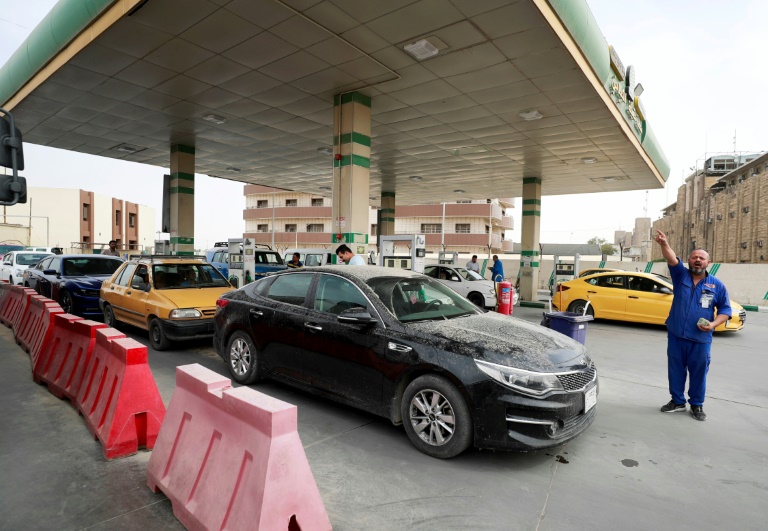
Motorists in Iraq formed long queues for fuel Thursday after some owners of filling stations shut off their pumps to protest government policies on fuel distribution and pricing.

Some government-run fuel stations have been ordered to operate around the clock to meet demand, the official news agency INA reported.

Dozens of vehicles were lined up at stations that remained open.

Some owners of petrol stations have denounced the method of fuel distribution imposed by the authorities, complaining they end up paying more for the quantity of fuel they receive from the government than what they say it is worth.

Iraq is the second largest producer in the Organization of the Petroleum Exporting Countries (OPEC), and oil provides more than 90 percent of its income.

But the country, with a population of about 41 million, is also grappling with a major energy crisis and regular power cuts.

In recent days, private stations had already suspended their activities in the southern city of Najaf, according to INA.

The government has played down the problem, saying it is limited to “certain stations” in the capital Baghdad and the central and southern provinces, said Ihsan Mussa Ghanem, deputy head of the Iraqi agency in charge of distributing petroleum products.

In a statement, his agency said the owners of the closed stations were “manufacturing crises and obstructing the distribution of gasoline to citizens”.

Owners do not have the right to stop supplies, it said, and “inspection committees will identify all stations that contravene instructions.” 

Those that have shut their pumps face having their licenses suspended and supplies of oil stopped, the statement said.

Former UK Coca-Cola boss caught taking £1.5m in bribes

A former Coca-Cola boss in the UK on Thursday avoided jail despite taking more than £1.5 million ($1.95 million, 1.8 million euros) in bribes in return for channeling lucrative contracts to favoured companies.

Noel Corry, 56, provided companies with confidential information to give them an advantage over rivals when bidding for electrical services contracts for bottling plants in the UK.

In return, he received payments through “bogus” contracts for work at Coca-Cola Enterprises that was never carried out, or overpaying for work done and pocketing the difference, prosecutors said.

At London’s Southwark Crown Court on Thursday, he was given a 20-month suspended sentence, while two directors of the other companies involved in the scheme, which ran between 2004 and 2013, were each given a 12-month suspended sentence.

“Corry had established a corrupt culture in the procurement exercise, awarding contracts to those companies whose senior managers were prepared to bribe him for doing so,” said Alistair Dickson of the Crown Prosecution Service. 

“Coca-Cola Enterprises were wholly unaware of Corry’s corrupt actions to enrich himself.

Citigroup sets aside $1.9 bn for Russia as US banks report mixed results

Citigroup said Thursday it set aside $1.9 billion in reserves due to Russia’s invasion of Ukraine as large US banks reported mixed results amid a backdrop of geopolitical upheaval and fast-changing monetary policy.

About $1 billion in the Citi reserves are for direct exposure to Russia, while the $900 million relate to broader economic risks following the invasion, Citi Chief Financial Officer Mark Mason said on a conference call with reporters.

Since the end of 2021, Citi has reduced its overall exposure to Russia from $9.8 billion to $7.8 billion, Mason said.

Citi was one of several banks to report lower quarterly earnings compared with the year-ago period, when results were boosted by the release of reserves taken at the outset of the Covid-19 pandemic. 

Both Goldman Sachs and Wells Fargo also reported lower profits. Bankers have said US consumers remain on solid footing, but have cited inflation and the Russian invasion of Ukraine as worrisome factors that will likely slow the economy and could ultimately result in a recession.

“There’s somewhat of a wait and see how some of this plays out,” Mason said of the overall environment.

“Clients are worried about inflation,” Mason said. “They’re looking at the impacts from rising rates,” he added, noting that supply chain woes exacerbated by the Russian invasion.

Citi reported a 46 percent decline in first-quarter profits to $4.3 billion, while revenues dipped two percent to $19.2 billion.

Citigroup’s earnings were also dragged lower by increased expenses, while its banking operations had a mixed performance.

Chief Executive Jane Fraser cited a difficult geopolitical and macro environment as a factor in weaker investment banking results, while pointing to trade loans and cross-border transactions as areas of strength.

Citi also scored higher net interest income, benefiting from the Federal Reserve’s shift in monetary policy.

At Goldman Sachs, profits came in $3.8 billion, down 43 percent from the year-ago period on a 27 percent drop in revenues to $12.9 billion.

Goldman sustained a big drop in revenues from asset management and equity and debt underwriting, offset by a strong activity in some trading divisions amid market volatility.

Wells Fargo, meanwhile, reported profits of $3.7 billion, down 20.8 percent from the 2021 period. Revenues fell 5.1 percent to $17.6 billion.

Wells Fargo reported broad-based loan growth, but suffered a big drop in mortgage banking income, reflecting a rising interest rate environment.

Thursday’s deluge of earnings reports comes a day after JPMorgan Chase also reported lower profits. Bankers have said the US economy remains on solid footing, while warning of increased recession risk due to the Ukraine invasion, rising inflation and uncertainty connected to the shift in Fed interest rate policy.

Wells Fargo Chief Executive Charlie Scharf echoed that tone.

“Our internal indicators continue to point towards the strength of our customers’ financial position, but the Federal Reserve has made it clear that it will take actions necessary to reduce inflation and this will certainly reduce economic growth,” Scharf said. “In addition, the war in Ukraine adds additional risk to the downside.”

Shares of Citi rose 2.2 percent to $51.23 in morning trading, while Goldman Sachs gained 0.5 percent to $323.48. Wells Fargo slumped 5.5 percent to $45.86 

Elon Musk launches hostile takeover bid for Twitter

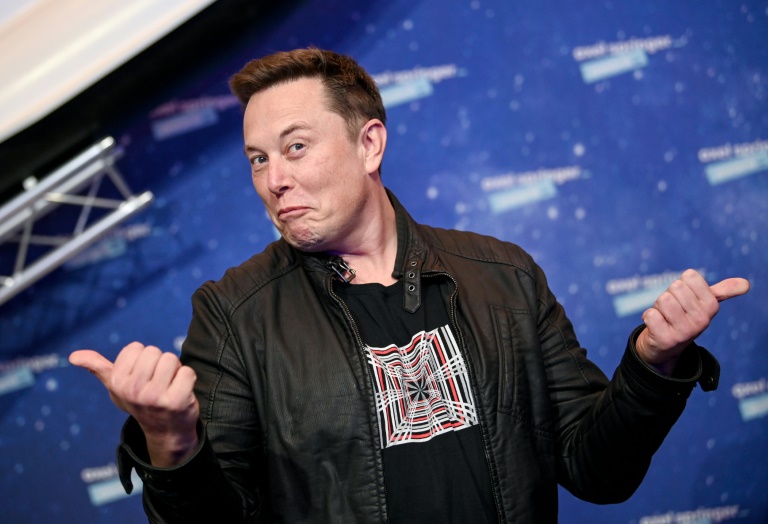
Tesla chief Elon Musk has launched a hostile takeover bid for Twitter, insisting it was a “best and final offer” and that he was the only person capable of unlocking the full potential of the platform.

The move throws another curve into a roller-coaster ride for Musk’s volatile relationship with the global social media service, and raises many questions about what comes next.

“Twitter has extraordinary potential. I will unlock it,” Musk wrote in a filing to US regulators made public Thursday, adding the site has the possibility to be “the platform for free speech around the globe.” 

“The company will neither thrive nor serve this societal imperative in its current form. Twitter needs to be transformed as a private company,” he added.

The world’s richest person offered $54.20 a share, which values the social media firm at some $43 billion, in a filing dated Wednesday with the Securities and Exchange Commission.

Twitter’s board said it would carefully review what it termed Musk’s “unsolicited, non-binding” offer and decide on a course of action that was “in the best interest of the company and all Twitter stockholders.”

Musk last week disclosed a purchase of 73.5 million shares — or 9.2 percent — of Twitter’s common stock, an announcement that sent Twitter shares soaring more than 25 percent.

He was offered a seat on the board but turned it down over the weekend.

Musk went on to use Twitter as a stage to ask whether the social media network was “dying” and to call out users such as singer Justin Bieber, who are highly followed but rarely post.

“Most of these ‘top’ accounts tweet rarely and post very little content,” the Tesla boss wrote, captioning a list of the 10 profiles with the most followers — which includes himself at number eight, with over 81 million followers.

In other weekend tweets, Musk joked about dropping the “w” from Twitter’s name and about converting its San Francisco headquarters to a homeless shelter “since no one shows up anyway.”

He also suggested removing ads, Twitter’s main source of revenue.

“He is such an entitled, privileged man I am not sure the Twitter he has in mind is a platform that will ultimately serve a majority on the people on it today,” said Creative Strategies analyst Carolina Milanesi.

Musk has mused on Twitter about giving verified account checkmarks to everyone paying for premium subscription accounts, which cost $3 monthly.

“I invested in Twitter as I believe in its potential to be the platform for free speech around the globe, and I believe free speech is a societal imperative for a functioning democracy,” Musk said in his filing.

Musk argued in the filing that Twitter needs to be transformed, and that he was offering a price that was 38 percent above its April 1 closing price, the last trading day before his growing stake was revealed.

– ‘Not playing’ –

Musk breaks the mold as a business figure, even in the Silicon Valley world known for disrupting markets and changing lifestyles.

The serial entrepreneur’s endeavors include driving a shift to electric vehicles with Tesla, private space exploration, and linking computers with brains.

His behavior, however, has raised eyebrows, prompted laughs, and sometimes drawn condemnation or even litigation.

Jewish groups blasted his tweet comparing Canadian leader Justin Trudeau to Adolf Hitler over Covid-19 vaccine mandates and Musk later deleted the tweet without apologizing.

Musk used Twitter to insult a British caver who was part of a dramatic effort to rescue boys trapped in a flooded cave in Thailand and to challenge Russian President Vladimir Putin to “single combat” over the invasion of the Ukraine.

“It’s get out the popcorn time as we expect many twists and turns in the weeks ahead as Twitter and Musk walk down this marriage path,” Wedbush analysts said in a note to investors.

Twitter could be pressured to accept the offer by shareholders eager for the premium promised by Musk, or Twitter could seek a better offer elsewhere.

A host of questions likely to swirl around issues of financing, regulatory aspects and balancing Musk’s time between his many companies.

Musk has also sparred repeatedly with federal securities regulators, who cracked down on his social media use after a purported effort to take Tesla private in 2018 fell apart.

“I am not playing the back-and-forth game,” Musk wrote in his filing on the buyout offer. “I have moved straight to the end.”

Pfizer to seek US authorization for third Covid shot in children

Pfizer and BioNTech on Thursday announced positive results from a clinical trial on the safety and immune response of a third dose of their Covid vaccine in children aged five through 11, adding they would soon seek regulatory authorization.

Third doses of the vaccine are recommended for those aged 12 and up, and a fourth dose was recently recommended for people over 50. 

Younger children — except for those with immune compromising conditions — have not been eligible for the third, making them more susceptible to infection from Omicron and its BA.2 subvariant.

BA.2 is now the globally dominant strain, and is behind a current spike in cases in the northeastern United States.

In the phase 2/3 trial, the companies analyzed data from 140 children aged five through 11, approximately six months after the second dose.

The dosage in this group is 10 micrograms, which was selected for safety reasons as children are more susceptible to side effects. The dose for those 12 and up is 30 micrograms.

Across the 140 children analyzed, the third dose was well tolerated, revealing no new safety concerns.

They also analyzed blood sera from a group of 30 individuals, finding that a third dose caused a 36-fold increase in levels of infection-blocking neutralizing antibodies against Omicron, compared to two doses.

Pfizer and BioNTech plan to soon submit the data to the US Food and Drug Administration (FDA), the European Medicines Agency and other regulatory agencies.

Most countries, including the United States, haven’t yet authorized Covid vaccines for infants and very young children.

Last month, Moderna said it was pursuing approval for its vaccine in children aged six months through five years, using a two-dose regimen.

Pfizer’s vaccine for this group was meant to be considered by the FDA in February but the agency postponed the meeting, because it wanted more data on how it would perform with three doses.

Eurozone stocks rise, euro slides as ECB holds fire

Eurozone stock markets rose Thursday while the euro slid as the European Central Bank remained vague about when it will raise interest rates in the face of soaring inflation.

Meanwhile oil prices, whose recent surge has contributed to inflation around the globe reaching the highest levels in decades, came off the boil.

The ECB stood still in the face of record inflation, keeping its stimulus plans and rates unchanged, as the war in Ukraine cast a pall over the eurozone economy.

Meeting for the second time since the outbreak of the conflict, the bank’s 25-member governing council stuck to a plan that “should” see its bond-buying scheme come to an end in the third quarter. 

An interest rate hike would follow “some time” after the stimulus programme comes to an end, and any increases “will be gradual”. 

The decision leaves the ECB further out of step with many of its peers. Central banks such as the Bank of England, US Federal Reserve and the Bank of Canada have already triggered their first interest rate rises in response to soaring inflation.

Prices were already soaring in major economies when Russia’s invasion in late February sent shockwaves through the global energy, food and commodity markets.

Data this week from the United States — the world’s biggest economy — showed inflation at a level not seen in 40 years.

The euro took a knock after the ECB’s decision, losing ground against the dollar and pound.

However, eurozone stocks rose, with Frankfurt and Paris both rising 0.8 percent in afternoon trading.

Wall Street opened higher although another major bank reported a big fall in profits and set aside money due to Russia’s invasion of Ukraine.

Citigroup said its first quarter profits tumbled 46 percent to $4.3 billion, in a similar performance to JPMorgan Chase which reported Wednesday a sharp drop in profits and warned of downside risks from the Ukraine war and surging inflation.

Citigroup said it set aside $1.9 billion in reserves due to Russia’s invasion of Ukraine.

Elsewhere on the corporate front, Tesla chief Elon Musk launched a hostile takeover bid for Twitter, offering to buy 100 percent of its stock and take it private, according to a stock exchange filing.

Musk offered $54.20 a share, but the company’s share price only rose by around 2.4 percent to $46.90 after 10 minutes of trading.

Despite falling Thursday, both main oil contracts stayed firmly above the $100 per barrel mark, with fears swirling about global supply constraints over the invasion of Ukraine by Russia — a major producer of oil and gas.

– Key figures around 1330 GMT –

Frankfurt – DAX: UP 0.8 percent at 14,185.2 points

Paris – CAC 40: UP 0.8 percent at 6,594.80

EURO STOXX 50: UP 0.7 percent at 3,785.59

London – FTSE 100: UP 0.5 percent at 7,619.60 

New York – Dow: UP 0.5 percent at 34,735.73

Tokyo – Nikkei 225: UP 1.2 percent at 27,172.00 (close)

Hong Kong – Hang Seng: UP 0.7 percent at 21,518.08 (close)

Shanghai – Composite: UP 1.2 percent at 3,225.64 (close)

Brent North Sea crude: DOWN 1.3 percent at 107.44 per barrel

West Texas Intermediate: DOWN 1.5 percent at 102.80 per barrel

Euro/dollar – DOWN at $1.0829 from $1.0894 at 2100 GMT

Pound/dollar – DOWN at $1.3085 from $1.3109

Euro/pound – DOWN at 82.78 pence from 83.03 pence

Dollar/yen – DOWN at 125.53 from 125.59

Fed can achieve economic 'soft landing,' but it won't be easy: Williams

The US central bank can bring inflation down by raising interest rates without jeopardizing growth in the world’s largest economy, although it will be a challenge, a top Federal Reserve official said Thursday.

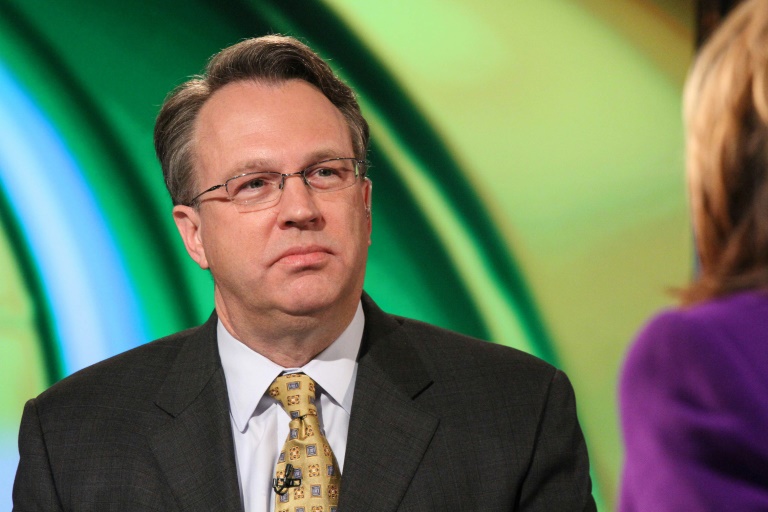
“I think we can achieve a soft landing,” New York Fed President John Williams said in an interview with Bloomberg.

A wave of price increases caused by high demand and supply chain challenges was made worse by the Russian invasion of Ukraine, which hit food and fuel prices, sending US inflation to its highest level in four decades.

But Williams said Fed interest rate hikes are “really well suited” for addressing the imbalances between supply and demand in the US economy without causing a downturn.

The Fed can “just take the froth… out of the economy” to put it on sustainable footing.

But he acknowledged that “it’s not going to be easy,” given the “unique set of circumstances” facing the economy due to the ongoing challenges of the pandemic and the Russian invasion of Ukraine.

Williams serves as vice chair of the Fed’s policy-setting committee, which last month raised the benchmark lending rate for the first time since cutting it to zero at the start of the pandemic in early 2020.

Since then, a steady stream of central bankers have signaled plans for aggressive rate hikes to try to douse the inflation fires, with multiple half-point rate hikes likely starting at the May 3-4 meeting. The Fed also intends to reduce its massive bond holdings, which also should have the effect of tightening policy.

The actions already have had an impact on financial conditions, Williams said, which is “positioning policy well to get the supply and demand back into balance and set us up for bringing inflation down over the next couple of years.”

ECB sticks to the plan as inflation, Ukraine shake eurozone

The European Central Bank on Thursday stood still in the face of record inflation, keeping its stimulus plans and rates unchanged, as the war in Ukraine cast a pall over the eurozone economy.

Meeting for the second time since the outbreak of the conflict, the bank’s 25-member governing council stuck to a plan that “should” see its bond-buying scheme come to an end in the third quarter, it said. 

An interest rate hike would follow “some time” after the stimulus programme comes to an end — a delay the ECB’s President Christine Lagarde stressed could be “between a week and several months” — while any increases “will be gradual”.

The decision leaves the ECB further out of step with many of its peers. 

Central banks such as the Bank of England, US Federal Reserve and the Bank of Canada have already triggered their first interest rate rises in response to soaring inflation.

Calls for the ECB to follow suit as soon as possible from within the governing council have grown stronger as price rises in the eurozone have taken off. 

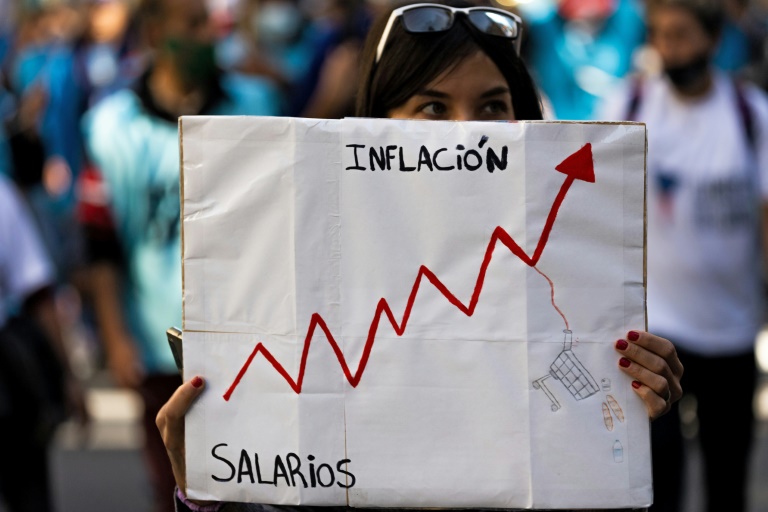
Year-on-year inflation hit 7.5 percent in March, an all-time high for the currency bloc and well above the bank’s own two-percent target.

The surge owes a great deal to the take off in prices for energy, commodities and food as a result of Russia’s invasion of Ukraine. 

At the same time, high energy costs, added disruptions to supply chains and weaker confidence were “severely affecting” the eurozone economy, Lagarde said in a press conference.

The former French finance minister is still testing positive for Covid and had to dial into the press conference via video link.

– ‘Europe is different’ –

The outbreak of the war and the unexpected bound in prices dealt a blow to the ECB’s best-laid plans. 

Lagarde conceded that the bank’s forecasts had been “wrong in the past”, as calls increased for the banks to get out ahead of the inflation wave by raising interest rates.

Minutes from the last ECB meeting in March revealed that many members of the governing council wanted “immediate further steps”.

Central bankers use rate rises as a tool to try and tame inflation, but pulling the trigger too soon risks hurting economic growth.

Any hike would be the ECB’s first in over a decade and would lift rates from their current historic low levels.

The Frankfurt-based institution even set a negative deposit rate of minus 0.5 percent, meaning banks pay to park excess cash at the ECB.

The ECB’s straightforward reiteration of its stimulus planned showed a “somewhat strengthened” commitment to end its bond-buying scheme in the third quarter, said Carsten Brzeski, head of macro at ING bank.

But the status quo stance showed that “Europe is different and the ECB is different” to other countries and central banks, Brzeski said.

The ECB’s gradual plan would see it put an “end to the era of negative interest rates before the end of the year”, he predicted.

– Gas boycott –

Comparing the eurozone with the United States and the policies of the Fed was like “apples and oranges”, Lagarde said.

Just as the risks from the pandemic “have declined”, the European economy will “be more exposed and will suffer more consequences” from the war in Ukraine, she said.

The impact “will depend on how the conflict evolves, on the effect of current sanctions and on possible further measures,” Lagarde said.

Looming over the outlook was the possibility of stop to supplies of Russian gas, which many eurozone countries rely on heavily on the fuel to match their energy needs.

“An abrupt boycott would have a significant impact,” Lagarde said.

While the ECB’s bond-buying stimulus is being phased out, the advent of a fresh crisis has some speculating about the possibility of the bank designing a new tool to contain the impact of the war.

Questioned on the subject, Lagarde simply said the ECB would stay flexible and act “promptly” if new risks emerged and some countries found it harder to finance their response.

Bankrupt Sri Lanka looks to expand airline fleet

Cash-strapped Sri Lanka’s loss-making national carrier revealed plans Thursday to lease up to 21 aircraft, just two days after the government announced a default on its $51 billion foreign debt.

The island nation is in the grip of its most painful economic downturn since independence in 1948, with severe shortages of essential goods and regular blackouts causing widespread misery. 

Huge protests have called for the resignation of the government, which has begged Sri Lankans abroad to send cash home to help pay for essential imports.

Despite the crisis, state-owned Sri Lankan Airlines has unveiled plans to expand its fleet from 24 to 35 planes in the next three years and replace some of its ageing jets.

“Sri Lankan Airlines has issued four requests for proposal to lease up to 21 aircraft to support its long-term business strategy,” it said in a brief statement.

The announcement came after the government suspended repayment of all its foreign borrowings, ahead of negotiations for a debt restructure with the International Monetary Fund next week.

The national carrier did not say how it planned to finance the leases, with its balance sheet showing a $1.7 billion debt and a carried forward loss of $1.56 billion in March 2020. 

It also came the same day international ratings agency Fitch downgraded $175 million in bonds issued by the airline from C to CC, suggesting the carrier was “near default”.

Fitch said the airline’s new rating, on debt due in June 2024, was in line with Sri Lanka’s default announcement.

The IMF has repeatedly urged Sri Lanka to privatise the airline, saying it was a white elephant the country cannot afford.

The airline was profitable before the government cancelled a management agreement with Emirates of Dubai in 2008, following a personal dispute with current Prime Minister Mahinda Rajapaksa.

The carrier had refused to bump fare-paying passengers and give their seats to members of Rajapaksa’s family, who were returning from a holiday in London.

Rajapaksa removed the Emirates-appointed chief executive of Sri Lankan Airlines and made his brother-in-law Nishantha Wickremasinghe head of the company.

An earlier plan to lease eight Airbus A350 jets during Rajapaksa’s tenure is subject to an ongoing criminal investigation. 

The airline’s then-chief executive Kapila Chandrasena and his wife were arrested two years ago after an international investigation found they received at least $2 million in kickbacks over the order. 

Turkey again refuses to raise rates to fight record inflation

Turkey’s central bank on Thursday brushed aside an inflation reading that has soared past 60 percent and kept its benchmark interest rate steady for the fourth month in a row.

The widely-anticipated decision reflects President Recep Tayyip Erdogan’s unorthodox conviction that high interest rates cause inflation rather than slow it down.

But it means that Turkey will continue to rely on expensive economic support measures that could further deplete state coffers and inhibit foreign investors from returning to the once-promising emerging market.

“It would probably take the emergence of severe strains in the banking sector to bring an interest rate hike on to the agenda,” analyst Jason Tuvey of Capital Economics remarked.

The central bank said its decision to hold the main interest rate at 14 percent was driven by expectations of the “disinflation process” starting soon.

Russia’s invasion of Ukraine and the aftereffects of the coronavirus pandemic have sparked energy price spikes and production bottlenecks that pushed US and European cost of living increases to their highest levels in more than 20 years.

But Turkey’s annual inflation rate of 61.1 percent — the highest since Erdogan’s ruling party stormed to power in 2002 — is largely disconnected from most global factors.

Turkey entered an economic tailspin when Erdogan put pressure on the nominally independent central bank to start slashing interest rates last year.

The powerful Turkish leader believes relatively cheap borrowing costs will propel the economy to sustainable growth that supports long-term employment and helps his re-election chances next year.

But the policy pushed people’s return on bank deposits far below the rate at which the lira was losing value against the dollar.

That forced Turks to start converting their liras into dollars at an even greater pace.

The Turkish currency lost 44 percent of its value against the dollar last year and another nine percent since the start of January.

Erdogan’s government has responded by using state banks to buy up liras in a bid to cut the currency’s losses.

The government has also forced exporters to sell a quarter of their foreign currency earnings to the central bank to help buffer its reserves.

Turkish media reported this week that this rate could soon be raised to at least 40 percent.

Erdogan has also shifted Turkey’s geopolitical alignment and tried to reform broken alliances with cash-rich Gulf states.

“Erdogan strategy is I think clear — try and make friends with everyone internationally so as to secure bilateral external financing to sustain the current FX/rates mix until elections by June 2023,” analyst Timothy Ash of BlueBay Asset Management said.

Close Bitnami banner
Bitnami