US Business

Ship stranded off US delights curious, worries environmentalists

Holding binoculars and toting folding chairs the sightseers are laser-focused: the objective is to see the massive container ship Ever Forward, which has been stranded for a month in the mud of the US East Coast’s Chesapeake Bay.

Some bring their families, while others come with friends, popping a squat at the best vantage point around — a park in the city of Pasadena, Maryland which offers an easy view of the vessel that is lodged in some 20 feet (six meters) of muck a few hundred yards from shore.

“Even with the storms we get here in the bay, we don’t get ships grounding like this,” said Frederick Schroeder, a retiree who traveled from nearby Baltimore with his camera and telephoto lens to document the spectacle, which he called “a once in a lifetime thing.”

The hulking vessel, owned by the Taiwan-based company Evergreen, became stuck on the night of March 13 after missing a turn into deeper water. 

The ship, measuring approximately 1,100 feet long and capable of carrying nearly 12,000 containers, is one of many that ply the heavily trafficked waters of the Chesapeake, a gigantic estuary whose banks harbor both the city of Baltimore and Port of Virginia, the second- and third-most substantial ports on the US East Coast.

– Tugs and dredge boats –

The Ever Forward’s misadventure in the Chesapeake is reminiscent of that of the similarly named Ever Given, another Evergreen container ship which famously became stuck in a sandbank in the Suez Canal in March 2021, blocking traffic for almost a week.

The US Coast Guard has been at work trying to dislodge the Ever Forward for more than three weeks, assisted by tugs and dredge boats, but so far without success.

In recent days, cranes have surrounded the ship, laboring to unburden it of as many containers as possible to make the vessel lighter.

Asked by AFP, the Coast Guard said that a total of more than 130 containers had been unloaded so far, but that even more would be removed before a new attempt to refloat the boat — the date for which is still to be determined.

“The skipper who ran aground, he must be beyond embarrassment to do such a thing,” said John Zeglin, a nearly 80-year-old retiree who traveled to see the Ever Forward from Bethesda, Maryland, a Washington suburb about an hour’s drive from the ship.

– ‘Osprey abundance’ –

Doug Myers, a scientist with the Chesapeake Bay Foundation, an environmental association, told AFP he was alarmed at the possibility of a hull breach, potentially releasing hundreds of gallons of fuel.

“Anytime a vessel is aground, you do have that risk,” said Myers, who says he has a lot of experience with oil spills, particularly from having worked in Texas in the 1990s.

Myers also worries the ship could list and lose containers in the bay during dredging operations.

“There has been damage just by the ship running aground in shallow water — these shallow sandbars and oyster bars contain the clams and worms and other really important fish habitats,” he said.

Birds are the most vulnerable animals to an oil spill after those that live in the water, and the Ever Forward became stuck just as migrating birds stop by the bay and even nest there for summer.

“The bay is kind of the epicenter of osprey abundance,” said Myers, who worries about these fish-eating birds of prey.

He said that authorities have not yet taken into account the environmental risks and wants a containment boom — a type of protective barrier — to be placed around the Ever Forward to prevent any oil leaks from spreading.

Even if the danger is not imminent, such a leak could reach both sides of the bay in an hour or more, he said.

“This bay is everything to Marylanders,” Myers said.

“So many people make their living either directly or indirectly because of the bay, whether it be tourism, whether it be fishing, whether it be you know, just the waterfront property.”
Elon Musk launches hostile takeover bid for Twitter

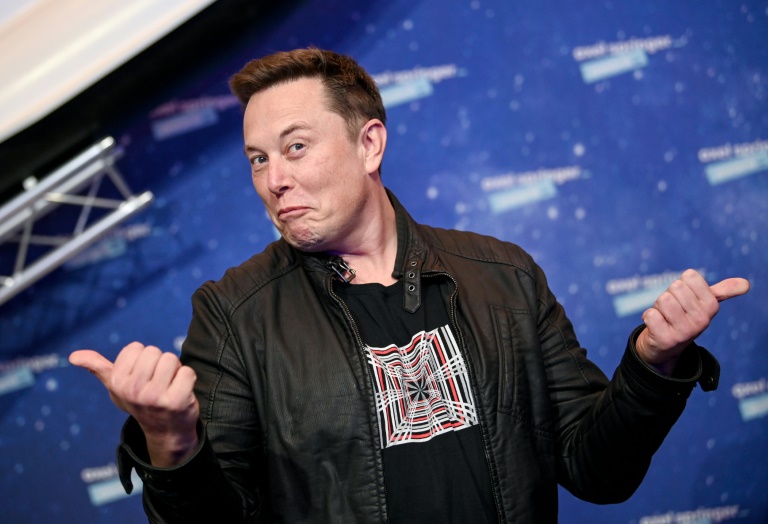
Tesla chief Elon Musk launched a hostile takeover effort for Twitter on Thursday, insisting the platform needs to be transformed but acknowledging his $43-billion bid may fail.

The proposal faces uncertainty on multiple fronts, including possible rejection and the challenge of assembling the cash, but could have wide-reaching impacts on the social media service if consummated.  

Musk cited the promotion of freedom of speech on Twitter as a key reason for what he called his “best and final offer,” and which the firm’s board said it was reviewing.

“My strong intuitive sense is that having a public platform that is maximally trusted and broadly inclusive is extremely important to the future of civilization,” he said in his first spoken comments after the offer was revealed in a regulatory filing.

The world’s richest person offered $54.20 a share, which values the social media firm at some $43 billion, in a filing with the Securities and Exchange Commission made public on Thursday.

Musk told a conference in Canada that he was “not sure” he would succeed and acknowledged a “plan B” but refused to elaborate, though in the filing he noted a rejection would make him consider selling his shares.

Musk last week disclosed a purchase of 73.5 million shares — or 9.2 percent — of Twitter’s common stock, an announcement that sent its shares soaring more than 25 percent.

– ‘Stockholders best interest’ –

Twitter’s board said it would carefully review what it termed Musk’s “unsolicited, non-binding” offer and decide on a course of action that was “in the best interest of the company and all Twitter stockholders.”

Musk said he “could technically afford” the buyout while offering no information on financing, though he would likely need to borrow money or part with some of his mountain of Tesla or SpaceX shares. 

Despite saying he wanted to take the company private, he said the firm would keep up to 2,000 investors — the maximum allowed.

Some investors have already spoken against the proposal, including businessman and Saudi Prince Alwaleed bin Talal.

“I don’t believe that the proposed offer by @elonmusk ($54.20) comes close to the intrinsic value of @Twitter given its growth prospects,” he tweeted.

Morningstar Research analysts echoed that perspective, saying, “While the board will take the Tesla CEO’s offer into consideration, we believe the probability of Twitter accepting it is likely below 50 percent.”

Twitter stock closed down nearly two percent for the day.

Musk’s move throws another curve into the roller-coaster ride of his volatile relationship with the global social media service, and raises many questions about what comes next.

He was offered a seat on the board but turned it down over the weekend.

Musk went on to use Twitter as a stage to ask whether the social media network was “dying” and to call out users such as singer Justin Bieber, who are highly followed but rarely post.

– ‘Twists and turns’ –

“Most of these ‘top’ accounts tweet rarely and post very little content,” the Tesla boss wrote, captioning a list of the 10 profiles with the most followers — which includes himself at number eight, with over 81 million followers.

In other weekend tweets, Musk joked about dropping the “w” from Twitter’s name and about converting its San Francisco headquarters to a homeless shelter “since no one shows up anyway.”

He also suggested removing ads, Twitter’s main source of revenue.

“He is such an entitled, privileged man, I am not sure the Twitter he has in mind is a platform that will ultimately serve a majority of the people on it today,” said Creative Strategies analyst Carolina Milanesi.

Musk has mused on Twitter about giving verified account check marks to everyone paying for premium subscription accounts, which cost $3 monthly.

“I invested in Twitter as I believe in its potential to be the platform for free speech around the globe, and I believe free speech is a societal imperative for a functioning democracy,” Musk said in his filing.

Musk breaks the mold as a business figure, even in the Silicon Valley world known for disrupting markets and changing lifestyles.

The serial entrepreneur’s endeavors include driving a shift to electric vehicles with Tesla, private space exploration and linking computers with brains.

His behavior, however, has raised eyebrows, prompted laughs and sometimes drawn condemnation or even litigation.

“It’s get out the popcorn time as we expect many twists and turns in the weeks ahead as Twitter and Musk walk down this marriage path,” Wedbush analysts said in a note to investors.

N.Korea-tied hackers executed $620 mn crypto heist: FBI

North Korean-tied hackers were responsible for a $620-million cryptocurrency heist last month targeting players of the popular Axie Infinity game, US authorities said Thursday.

The hack was one of the biggest to hit the crypto world, raising huge questions about security in an industry that only recently burst into the mainstream thanks to celebrity promotions and promises of untold wealth.

Last month’s theft from the makers of Axie Infinity, a game where players can earn crypto through game play or trading their avatars, came just weeks after thieves made off with around $320 million in a similar attack.

“Through our investigations we were able to confirm Lazarus Group and APT38, cyber actors associated with (North Korea), are responsible for the theft,” the FBI said in a statement.

Lazarus Group gained notoriety in 2014 when it was accused of hacking into Sony Pictures Entertainment as revenge for “The Interview,” a satirical film that mocked North Korean leader Kim Jong Un.

North Korea’s cyber-program dates back to at least the mid-1990s, but has since grown to a 6,000-strong cyber-warfare unit, known as Bureau 121, that operates from several countries including Belarus, China, India, Malaysia and Russia, according to a 2020 US military report.

John Bambenek, a threat analyst with digital security firm Netenrich, said North Korea is “unique” in employing groups dedicated to cryptocurrency theft. 

“As North Korea is highly-sanctioned, cryptocurrency thefts are also a national security interest for them,” he said. 

North Korean hackers stole around $400 million-worth of cryptocurrency through cyberattacks on digital currency outlets last year, blockchain data platform Chainalysis said in January. 

In the case of the Axie Infinity heist, attackers exploited weaknesses in the set-up put in place by the Vietnam-based firm behind the game, Sky Mavis.

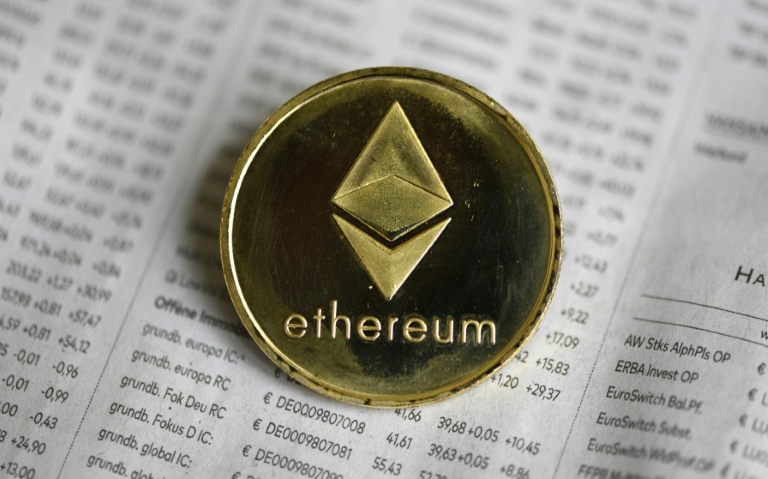
The company had to solve a problem: the ethereum blockchain, where transactions in the ether cryptocurrency are logged, is relatively slow and expensive to use.

To allow Axie Infinity players to buy and sell at speed, the firm created an in-game currency and a sidechain with a bridge to the main ethereum blockchain.

The result was faster and cheaper — but ultimately less secure.

The attack targeting its blockchain netted 173,600 ether and $25.5 million-worth of stablecoin, a digital asset pegged to the US dollar.

Former UK Coca-Cola boss caught taking £1.5m in bribes

A former Coca-Cola boss in the UK on Thursday avoided jail despite taking more than £1.5 million ($1.95 million, 1.8 million euros) in bribes in return for channeling lucrative contracts to favoured companies.

Noel Corry, 56, provided companies with confidential information to give them an advantage over rivals when bidding for electrical services contracts for bottling plants in the UK.

In return, he received payments through “bogus” contracts for work at Coca-Cola Enterprises that was never carried out, or overpaying for work done and pocketing the difference, prosecutors said.

At London’s Southwark Crown Court on Thursday, he was given a 20-month suspended sentence, while two directors of the other companies involved in the scheme, which ran between 2004 and 2013, were each given a 12-month suspended sentence.

“Corry had established a corrupt culture in the procurement exercise, awarding contracts to those companies whose senior managers were prepared to bribe him for doing so,” said Alistair Dickson of the Crown Prosecution Service. 

“Coca-Cola Enterprises were wholly unaware of Corry’s corrupt actions to enrich himself.

Germany seizes world's largest yacht owned by Russian oligarch

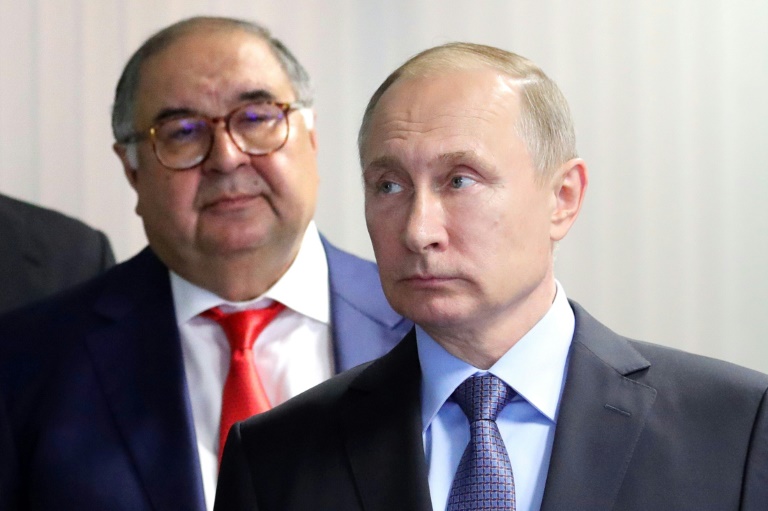
Germany has officially confiscated the world’s largest superyacht owned by Russian oligarch Alisher Usmanov, as part of sanctions against Moscow following the outbreak of war in Ukraine, police sources said Thursday.

The 156-metre (1,680-feet) long “Dilbar” has an estimated value of $600 million ((555 million euros) according to Forbes magazine.

Since last October the boat has been docked for repairs in a Hamburg shipyard.

German customs had been eyeing the superyacht for several weeks, but could not formally seize it earlier due to a legal imbroglio over its ownership.

Eventually the German Federal Judicial Police indicated that they had succeeded “after lengthy investigations, and in spite of concealment via offshore companies, in identifying the owner of the M/S Dilbar and it is Gulbakhor Ismailova, the sister of Alisher Usmanov”.

“The luxury yacht is now under the sanctions regime and so could be confiscated in Hamburg,” police added on Twitter.

The Russian billionaire and his sister are both targeted by European sanctions against Russian oligarchs as well as members of their families.

Usmanov, 68, was ranked sixth in the Sunday Times’ list of the richest people in the UK in 2021.

He is one of dozens of Russian oligarchs hit by Western sanctions since Moscow launched its invasion of Ukraine.

On Wednesday, English Premier League football club Everton suspended its sponsorship agreements with several companies in which Usmanov held shares.  

The confiscation of the “Dilbar” is just the latest in a string of seizures of Russian superyachts under the Western sanctions. 

Haulage strike paralyzes Argentina's farming exports

A four-day-old strike by Argentine grain transporters, demanding higher freight rates in the face of rising diesel prices due to war in Ukraine, has paralyzed farming exports, industry sources said Thursday.

Thousands of trucks that haul grain and its derivatives have parked along the side of the road in the South American country, which is the world’s largest exporter of soybean flour and oil, and one of the main suppliers of wheat, soybean and corn.

“The entire agricultural export complex is paralyzed. The Argentine economy cannot afford this luxury,” said Gustavo Idigoras, president of the Ciara-CEG oil and grain exporters chamber, in a statement.

Haulage companies are unhappy with the amount they are being paid to transport grain since their fuel costs have shot up in recent months due to Russia’s invasion of Ukraine.

“Agricultural businesses are denying the real price of diesel that haulage companies are paying,” said the Argentine Haulage Federation FETRA.

“With this cost, we have to stop because we cannot work anymore,” said Ariel Juarez, a FETRA representative parked along a road near the city of Victoria, 300 kilometers (180 miles) north of Buenos Aires.

The official price of diesel in gas stations is 110 pesos ($0.93) per liter, but FETRA says truckers are being charged 191 pesos ($1.60) due to shortages.

The strike comes during full harvest time in Argentina’s farming industry.

“The strike is causing losses of about $100 million a day. About 200 tons (of produce) have been left unloaded at port terminals. We have 50 boats waiting,” said Idigoras.

Whereas there are normally 3,000 to 4,000 trucks a day arriving at Argentina’s ports, currently there are only around a dozen, he said.

Idigoras also said there was not enough diesel for tractors to harvest the grain in fields.

Argentina’s grain industry was worth $35 billion in 2021.

Euro hits two-year low as ECB holds fire

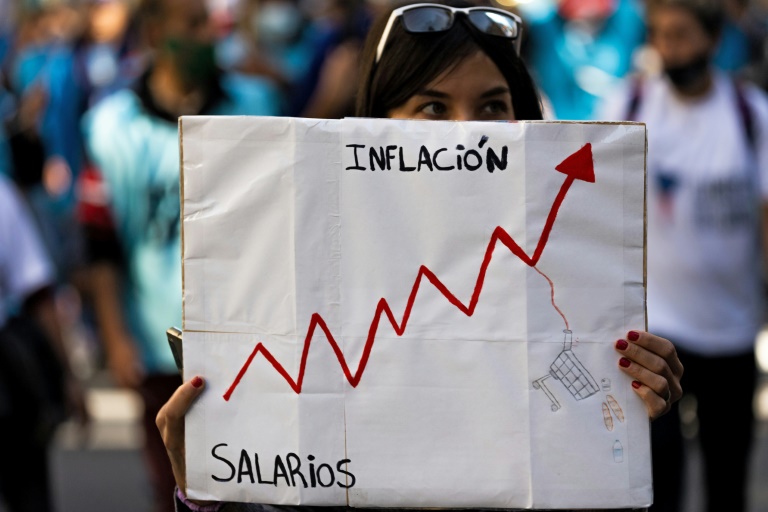
The euro slumped to a near two-year low on Thursday after the European Central Bank remained vague about when it will raise interest rates in the face of soaring inflation.

The drop in the single currency helped boost European stocks, while Wall Street equities resumed a downward slide amid worries over tightening US monetary policy.

The ECB stood still in the face of record eurozone inflation, keeping its stimulus plans and rates unchanged, as the war in Ukraine cast a pall over the eurozone economy.

Meeting for the second time since the outbreak of the conflict, the bank’s 25-member governing council stuck to a plan that “should” see its bond-buying scheme come to an end in the third quarter.

An interest rate hike would follow “some time” after the stimulus program comes to an end, and any increases “will be gradual.” 

The decision leaves the ECB further out of step with many of its peers. Central banks such as the Bank of England, US Federal Reserve and the Bank of Canada have already triggered their first interest rate rises in response to soaring inflation.

The euro took a knock after the ECB’s decision, slipping under $1.08 for the first time since May 2020, falling as low as $1.0758.

The ECB “continues to show little sign of looking to hike rates after leaving rates unchanged at their policy meeting today, while being even handed over the risks facing the eurozone economy,” said market analyst Michael Hewson at CMC Markets UK. 

The ECB announcement provided a boost for eurozone stocks, however, which moved into positive territory and ended the day higher.

– Musk Twitter bid –

Wall Street meanwhile retreated, concluding a holiday-shortened week on a weak note, as the yield on the 10-year US Treasury note surged above 2.8 percent. Treasury yields are seen as a proxy for interest rates.

“Right now, we’re tied to this correlation between rising yields and falling tech shares,” said Art Hogan, strategist at National Securities.

All three major indices fell, with the Nasdaq leading the group by falling 2.1 percent.

Large banks were mixed following a deluge of earnings, with executives describing the US economy as in solid condition, but warning of uncertainty over the Ukraine invasion, inflation and shifting monetary policy.

Citigroup gained 1.6 percent, while Goldman Sachs dipped 0.1 percent and Wells Fargo tumbled 4.5 percent.

Elsewhere on the corporate front, Tesla chief Elon Musk launched a hostile takeover bid for Twitter, offering to buy 100 percent of its stock and take it private, according to a stock exchange filing.

The move follows Musk’s criticism of the platform. Some analysts expressed skepticism about the bid, noting Musk’s history of outrageous and unpredictable conduct

Oil prices, meanwhile, pushed higher following a New York Times report that European officials were drafting a plan for an embargo on Russian crude products.

– Key figures around 2100 GMT –

New York – Dow: DOWN 0.3 percent at 34,451.23 (close)

New York – S&P 500: DOWN 1.2 percent at 4,392.59 (close)

New York – Nasdaq: DOWN 2.1 percent at 13,351.08 (close)

Frankfurt – DAX: UP 0.6 percent at 14,163.85 (close)

Paris – CAC 40: UP 0.7 percent at 6,589.35 (close)

London – FTSE 100: UP 0.5 percent at 7,616.38 (close)

EURO STOXX 50: UP 0.5 percent at 3,848.68 (close)

Tokyo – Nikkei 225: UP 1.2 percent at 27,172.00 (close)

Hong Kong – Hang Seng: UP 0.7 percent at 21,518.08 (close)

Shanghai – Composite: UP 1.2 percent at 3,225.64 (close)

Brent North Sea crude: UP 2.7 percent at $111.70 per barrel

West Texas Intermediate: UP 2.6 percent at $106.95 per barrel

Euro/dollar – DOWN at $1.0832 from $1.0888 at 2100 GMT

Pound/dollar – DOWN at $1.3076 from $1.3117

Euro/pound – DOWN at 82.77 pence from 83.01 pence

Dollar/yen – UP at 125.87 from 125.62

Brazil's Petrobras names new CEO amid fuel price row with Bolsonaro

The board of Brazil’s state-run oil company Petrobras on Thursday named Jose Mauro Coelho as its third CEO in just over a year after President Jair Bolsonaro fired his predecessors in a stand-off over fuel prices.

Coelho was appointed for a one-year term, Petrobras announced in a statement.

He was the government’s choice to succeed Joaquim Silva e Luna, ousted by Bolsonaro last month after slightly more than a year in the post.

The far-right president said then that the petrol price — set by Petrobras but tied to international market movement — was “unaffordable” and amounted to a “crime” against Brazilians.

Silva e Luna’s predecessor Roberto Castello Branco was fired by Bolsonaro in February 2021 for similar reasons.

Bolsonaro, who is seeking reelection in October, is widely blamed by voters for double-digit inflation, polls show, on the back of skyrocketing global and local fuel prices.

Fuel prices in Brazil have risen by nearly 28 percent in the year to March, even as the economy recovers from the fallout of the coronavirus pandemic.

Russia’s war in Ukraine has led to a sharp rise in crude prices in recent weeks, adding to the pressure.

– ‘Guarantee of supply –

Bolsonaro’s initial pick for Petrobras CEO, economist Adriano Pires, withdrew his name from the race last week due to a possible conflict of interest over his other role as head of an energy consulting firm.

Another nominee of Bolsonaro, Rodolfo Landim, withdrew to concentrate his attention on the Flamengo football club, of which he is president.

Several other possible candidates had declined the job, according to the Brazilian press.

The government then picked Coelho, who was the government secretary of petroleum, natural gas and biofuels in 2020 and 2021.

With a degree in industrial chemistry, he enters the job with 25 years of experience in the energy sector.

He has served since 2020 as chairman of the board of the PPSA oil and gas company linked to the ministry of mines and energy.

Coelho said Thursday that “adhering to market prices is a necessary condition for the creation of a competitive business environment, attracting investment… and is a guarantee of supply”. 

This in turn, he added, “leads to increased competition with benefits for the Brazilian consumer”.

Alex Agostini, chief economist at Austin Rating, said no major changes were expected under Coelho in favor or “greater intervention” in fuel pricing.

By the close of trading Thursday, Petrobras shares ended 0.39 percent higher on the Sao Paulo stock exchange.

US banks see upheaval from Fed shift, Russia challenging economy

Large US banks released a deluge of mixed earnings Thursday, pointing to the continued strength of US households and businesses while warning of rising risks from inflation, geopolitical upheaval and fast-changing monetary policy.

Citigroup, Goldman Sachs and Wells Fargo all reported lower profits compared with the year-ago period, when results were boosted by the release of reserves set aside at the outset of the Covid-19 pandemic in case of bad loans. 

Executives painted a complex picture of puts and takes as uncertainty from the war in Ukraine complicates an already unpredictable economy that’s still grappling with Covid-19 disruptions. Geopolitical concerns have also slowed the arrival of initial public offerings, a source of investment banking revenues.

Goldman Sachs Chief Executive David Solomon described a series of “cross currents” coursing through the economy.

“While US unemployment levels are low and wages are increasing, inflation is the highest it’s been in decades,” Solomon said on a conference call with analysts. 

“We’re seeing new stress on supply chain and commodity prices and US households are facing rising gas prices as well as higher prices for food and housing. We’ve also seen an increased risk of stagflation and mixed signals on consumer confidence,” he said.

The Federal Reserve’s shift to a monetary tightening posture adds to the churn, simultaneously helping and hurting banks. 

Wells Fargo, for example, reported higher net interest income reflecting the benefit of being able to charge more for loans.

But the domestic-focused bank, a big player in the US housing market, also experienced its highest quarterly decline since 2003 in the mortgage market as fewer consumers refinance due to higher interest rates.

“The macro outlook for the rest of the year can only be described as complex and uncertain,” said Citigroup Chief Executive Jane Fraser.

– Russia exposure –

Citi reported a 46 percent decline in first-quarter profits to $4.3 billion, while revenues dipped two percent to $19.2 billion.

Citi earnings were dragged lower by increased expenses, while its banking operations had a mixed performance.

Fraser cited a difficult geopolitical and macro environment as a factor in weaker investment banking results, while pointing to trade loans and cross-border transactions as areas of strength.

The New York bank, which is more exposed than competitors to Russia, said it set aside a $1.9 billion in reserves related to the invasion.

About $1 billion in the Citi reserves are for direct exposure to Russia, while the $900 million relate to broader economic risks following the invasion, Citi Chief Financial Officer Mark Mason said on a conference call with reporters.

Since the end of 2021, Citi has reduced its overall exposure to Russia from $9.8 billion to $7.8 billion, Mason said.

At Goldman Sachs, profits came in $3.8 billion, down 43 percent from the year-ago period on a 27 percent drop in revenues to $12.9 billion.

Goldman sustained a big drop in revenues from asset management and equity and debt underwriting, offset by a strong activity in some trading divisions amid market volatility.

The results also included a $300 million hit from Russia. Solomon described Goldman’s exposure to the conflict as “relatively limited,” saying the bank has been focused on reducing exposure.

Wells Fargo, meanwhile, reported profits of $3.7 billion, down 20.8 percent from the 2021 period. Revenues fell 5.1 percent to $17.6 billion.

– Downside risks –

Thursday’s deluge of earnings reports comes a day after JPMorgan Chase also reported lower profits. Chief Executive Jamie Dimon described a “very strong underlying economy,” but warned that rising interest rates, inflation and the war in Ukraine had lifted the risk of recession.

Wells Fargo Chief Executive Charlie Scharf employed a similar tone, noting that “our internal indicators continue to point towards the strength of our customers’ financial position,” while warning that Fed efforts to counter inflation will “certainly reduce economic growth,” with Ukraine bringing “additional risk to the downside.”

But unlike JPMorgan, which added $902 million in reserves in part because of higher recession risk, Wells Fargo released reserves of $1.1 billion on expectations of fewer bad loans due to upheaval from Covid-19.

Shares of Citi rose 1.6 percent to $50.96, while Goldman Sachs dipped 0.1 percent to $321.64. Wells Fargo slumped 4.5 percent to $46.35. 

Biden touts US manufacturing know-how on trip to battleground state

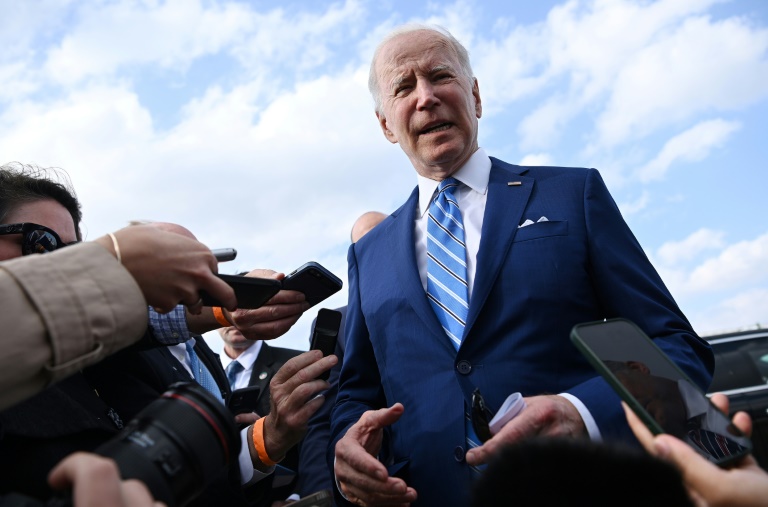
President Joe Biden hailed US innovation Thursday on a visit to the south to promote his efforts to combat inflation, jumpstart high-tech manufacturing and return the United States to pole position in the global economy.

The president said his top priority from his first day in office had been to promote products “made in America” as he met students at the country’s largest historically Black university in Greensboro, North Carolina.

“More is going to change in the next 10 years than has changed in the last 50 years,” Biden told aspiring engineers at a new research complex opened by the North Carolina Agricultural and Technical State University.

“Science and technology is moving so incredibly rapidly. It’s all part of a broader vision that Vice President (Kamala) Harris and I ran on — to build back a better America than even before the pandemic.”

The visit came with the Bureau of Labor Statistics reporting inflation at a 40-year high of 8.5 percent — mainly due, it said, to Russia’s invasion of Ukraine, rent hikes and gas prices.

Biden met faculty and students reading robotics and cybersecurity to discuss how his Bipartisan Innovation Act could boost the economy by improving manufacturing.

“That means stronger supply chains, more manufacturing jobs and lower prices for consumers as we break up the bottlenecks, like semiconductor chips, that have driven inflation over the last year,” the White House said ahead of the trip. 

Deputy press secretary Karine Jean-Pierre told reporters aboard Air Force One that Greensboro was an example of the kind of “regional manufacturing ecosystem” that Biden envisions building across America, to create an industry that can counter China’s growing influence.

One of the administration’s top priorities, the legislation would offer funding to the city of 300,000 and places like it, to promote job creation and business growth.

Biden’s trip — which came with Washington’s political elite bracing for November’s midterm elections — was the political equivalent of a fixture on neutral ground.

North Carolinians have voted for the Republican candidate in every presidential election since the Reagan era except 2008, when the state went for Barack Obama over John McCain.

But five out of its seven governors over the same period have been Democrats, and statistical analytics website FiveThirtyEight described North Carolina in 2020 as a “perennial” swing state.

– Deep underwater –

Biden is deep underwater in recent polling, however, with inflation seen as the Democrats’ biggest challenge if they are to pull off the unlikely feat of holding on to Congress.

A poll released last week by High Point University gave the president a job approval rating of 35 percent in North Carolina, while 53 percent said they disapprove.

His lowest marks were for his handling of inflation (19 percent), including rising gas prices (18 percent), and his stewardship of the economy in general (26 percent).

Nationally, a new Quinnipiac University poll has the president at just 33 percent approval, while 54 percent disapprove of his job performance.

Democrats and Republicans in the House and Senate have been discussing the contours for launching formal negotiations on Biden’s legislation as early as April, with a floor vote expected in May or June.

The Senate passed its own package with a decisive bipartisan 68-32 margin last summer, but that needs to be synced up with a more contentious equivalent passed mostly along party lines in the House.

Republicans argued that the 2,900-page House version wasn’t tough enough on China and overly focused on unrelated issues such as climate change and social equity. 

Biden implored Congress to “take action quickly” to support innovation, saying the “incredibly rapid” changes taking place in manufacturing required an urgent approach.

“Congress: get this bipartisan bill on my desk… national security is on the line,” he said.

Close Bitnami banner
Bitnami