US Business

French prosecutors raid pizza plant after E.coli outbreak

Prosecutors on Wednesday searched a Buitoni frozen pizza factory in northern France, the suspected source of an E. coli outbreak that has left dozens of children sick, as well as the headquarters of its owner Nestle France, authorities told AFP.

An investigation into involuntary manslaughter and deceitful practices was opened on April 1 after authorities learned of more than 70 infections, which may have caused the deaths of a one-year-old and an 18-year-old.

The search at the Caudry factory operated by Buitoni, which is owned by the Swiss food conglomerate Nestle, was confirmed by a police source and the Paris prosecutor’s office, which is leading the investigation.

Nestle France, whose headquarters outside Paris were also raided, announced a recall of the affected Fraich’UP pizzas on March 18, and authorities ordered a halt of their production at Caudry after carrying out two hygiene inspections.

The inspections “revealed a deterioration of food hygiene controls”, the presence of “rodents” and insufficient measures to prevent pests from contaminating a food production site, authorities said in the shutdown order.

Escherichia coli bacteria can lead to severe and long-lasting health complications, including acute kidney failure. French authorities say the reports of possible infections began to occur in late February.

Recalls were also ordered in Belgium and Luxembourg, with the affected pizzas distributed in 20 other countries, including 15 in Africa, according to the EU’s Rapid Alert System for Food and Feed.

Buitoni has said it is cooperating with the investigation and promised to take “appropriate measures” in the wake of the outbreak.

The health scare comes after nine European countries reported a total of 150 salmonella cases thought to be linked to a Kinder chocolate factory in Belgium that has since been closed.

“Most cases are children under 10 years of age, with many being hospitalised,” the European Centre for Disease Prevention and Control and the European Food Safety Authority said in a statement Tuesday.

Kinder’s owner, the Italian confectionery giant Ferrero, has apologised for the outbreak at the height of the Easter holiday season.

JPMorgan Chase profits fall 42%; warns of hit from inflation, Ukraine

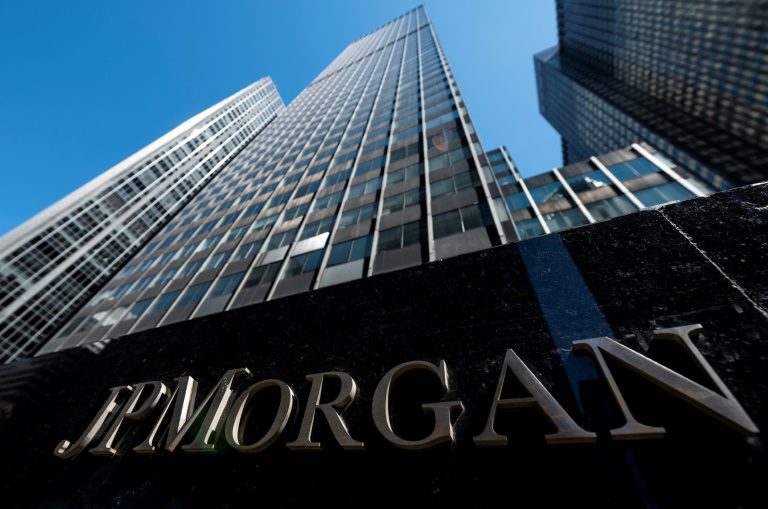
JPMorgan Chase reported Wednesday that quarterly earnings tumbled as the banking giant set aside $902 million for bad loans, citing “downside risks” including the Ukraine war and surging inflation.

The biggest US bank by assets, JPMorgan reported $8.3 billion in first-quarter profits, down 42 percent from the year-ago period. Revenues dipped five percent to $30.7 billion.

The results contrasted sharply with those from a year ago, when JPMorgan’s surging profits including $5.2 billion in funds that it had initially set aside early in the pandemic for potential defaults, but didn’t need because of the surprisingly solid condition of clients.

The bank’s charge offs for the quarter came in at a relatively modest $582 in the first quarter, but JPMorgan Chief Executive Jamie Dimon warned of factors that could lead that figure to rise.

“We remain optimistic on the economy, at least for the short term –- consumer and business balance sheets as well as consumer spending remain at healthy levels –- but see significant geopolitical and economic challenges ahead due to high inflation, supply chain issues and the war in Ukraine,” Dimon said.

In terms of customer trends, Dimon cited an uptick in credit card spending on dining and travel, but said higher mortgage rates had dented home lending originations, while limited vehicle availability crimped car loan originations.

JPMorgan scored higher net interest income, reflecting a boost to lending fees because of higher interest rates. Profits fell in investment banking on lower equity and debt underwriting fees.

Shares fell 1.2 percent to $129.97 in pre-market trading.

iPhone, Macbook makers halt Shanghai production over Covid

Several electronics companies, including iPhone and Macbook makers, have halted production in the Chinese cities of Shanghai and Kunshan, adding to supply chain woes under Beijing’s strict zero-Covid measures.

The business hub of Shanghai has become the heart of China’s biggest Covid-19 outbreak since the virus surfaced more than two years ago.

The city of 25 million has remained almost entirely locked down since the start of the month, while other areas have rolled out less severe restrictions to stamp out Covid flare-ups.

“Local operation in Shanghai area has been temporarily suspended in response to Covid-19 prevention measures,” said Macbook maker Quanta Computer in a filing to the Taiwan Stock Exchange on Wednesday.

The Taiwan-based firm’s expected date of resumption will be advised by authorities later, the notice said.

This came a day after iPhone assembler Pegatron announced it had temporarily suspended work as well, and was “actively cooperating with local authorities” to resume operations soon.

The suspensions apply to two of its subsidiaries, in Shanghai and nearby Kunshan city, the Taiwanese company said.

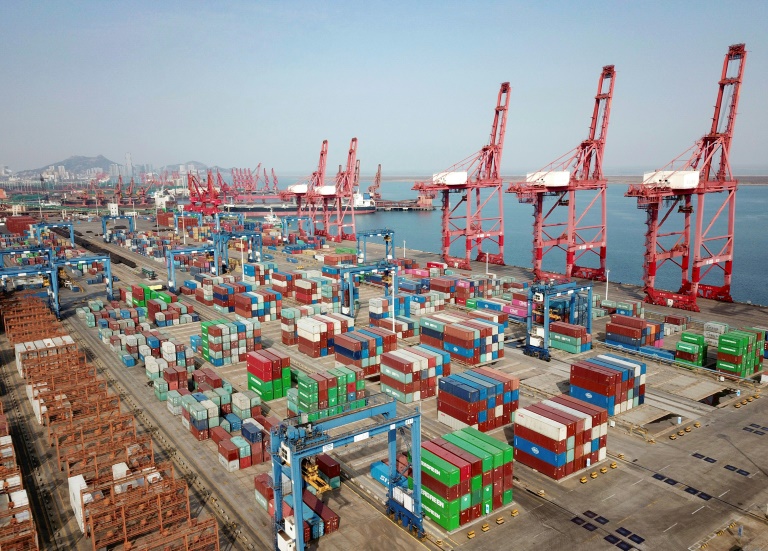
Stay-at-home orders and stringent testing rules have strained supply chains in and around Shanghai, home to the world’s busiest container port and a critical gateway for foreign trade.

China reported nearly 28,000 local virus cases on Wednesday, the vast majority in Shanghai.

Many factories have been forced to halt operations as virus cases have surged, while some staff have been living in their workplaces as businesses struggle to operate.

– Logistics problems –

Pegatron and Quanta Computer’s suspensions are the latest blow to Apple, which has seen disruptions at other suppliers’ assembly lines in recent months as Chinese cities struggle to curb virus outbreaks.

In March, another major supplier Foxconn halted operations in the Chinese tech hub of Shenzhen.

Foxconn has “resumed fundamental operations” in Shenzhen as of late March, the company said.

Consultancy group Trendforce said in a recent report that manufacturers may have just a few more weeks worth of inventories as logistics problems grow over the imposed restrictions.

Chinese authorities have struggled to maintain the flow of goods across the country as tough virus controls slow movement.

A Transport Ministry circular issued late Tuesday barred the “blocking of road transportation” vehicles and personnel, ordering more efficient Covid-19 screening along transport routes.

Anxious about the spring farming season and food supplies, officials in virus-hit areas such as the northeastern province of Jilin have also issued travel passes to let agricultural workers return to farmland on chartered buses.

“The Chinese economy has been facing a rising risk of recession since mid-March”, Nomura analysts warned this week, citing severe disruptions to the delivery of exports, with coastal areas hit hard by controls to rein in the virus.

Russian gas stop promises 'sharp recession' for Germany

An immediate end to Russian energy imports would send Germany into “sharp recession” next year, the country’s leading economic institutes said in a forecast published Wednesday.

Persistently higher energy prices and geopolitical risks herald the beginning of a new era for Europe’s industrial powerhouse, they warned, one which not every company will survive.

“Not all business models that were profitable in Germany in the past will have a future,” Stefan Kooths, vice-president of the IfW Kiel institute, said at a Berlin press conference.

The government must keep this in mind when it considers support measures for struggling firms, he added.

Germany, which is highly dependent on Russian gas for its energy needs, has so far resisted calls for a European boycott in response to the war in Ukraine.

Closing the taps in “mid-April” this year would limit growth to 1.9 percent in 2022 and push Germany into a recession in 2023, causing the economy to shrink by 2.2 percent, according to the forecast.

The impact of a boycott would “not be overcome” over the next two years, the institutes (DIW, Ifo, IfW Kiel, IWH and RWI) said in a joint statement.

Europe’s largest economy could yet suffer a “set back” at the end of 2023 into 2024, as demand for energy rises in the European winter, before “gradually” returning to growth.

Before Moscow began its war in Ukraine, a third of Germany’s oil imports, 45 percent of its coal purchases and 55 percent of gas imports came via pipelines from Russia.

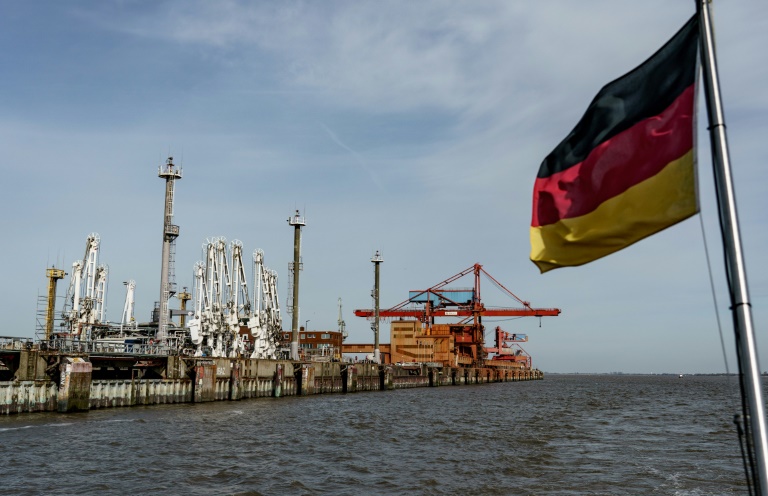
The country has set about weaning itself off Russia energy imports, accelerating investments in renewables and building LNG (liquefied natural gas) terminals on the North Sea coast to import gas from further afield, though they would take years to come online.

Economy Minister Robert Habeck said at the end of March that it would likely take until mid-2024 for Europe’s largest economy to wean itself off Russian deliveries.

– Emergency plan –

German officials have already triggered an emergency plan in anticipation of a gas shortage, which could result in gas rationing among households and businesses.

The government has also prepared legislation that would allow it to expropriate gas suppliers “to assure security of supply”, according to a draft seen by AFP.

The law would make it difficult to close storage facilities without government approval as well.

Last week, Berlin took temporary control of Russian gas giant Gazprom’s German subsidiary, which holds several key pieces of infrastructure, after its parent company unexpectedly withdrew.

European partners, who have already agreed to stop buying coal from Russia, are currently in discussions about further sanctions against Moscow.

While a gas boycott with its serious economic consequences is seen as a last resort, the next target of EU sanctions could well be Russian oil.

– ‘Difficult waters’ –

Even without a gas boycott, the war in Ukraine is “slowing down” Germany’s recovery from the economic shock of the coronavirus pandemic, the institutes said.

The German economy was “navigating difficult waters” as the war and China’s zero-Covid policy added to supply chain disruptions that are hampering industry.

The group slashed their forecast for growth in 2022 to 2.7 percent, from their previous estimate of 4.8 percent made in October last year.

At the same time, they raised their forecast for growth in 2023 to 3.1 percent from 1.9 percent, in a scenario where energy deliveries continue.

Inflation, which has hit new highs as the price for energy has soared, would come out at 6.1 percent in 2022, before falling back to 2.8 percent in 2023, the think-tanks said.

Shutting off supplies from Russia would push the price even higher, taking inflation to 7.3 percent in 2022 and keeping it at five percent in 2023.

Yen drops to 20-year low against dollar

The yen hit its lowest level against the dollar in two decades on Wednesday, extending recent falls as the gap widens between Japan’s ultra-loose monetary policy and US tightening.

Despite being traditionally considered a safe-haven currency, uncertainty fuelled by the war in Ukraine has not caused the yen to strengthen.

Instead, moves by the US Federal Reserve towards a more aggressive policy and the shock of rising oil prices in Japan — a major importer of fossil fuels — have pushed the currency lower, analysts say.

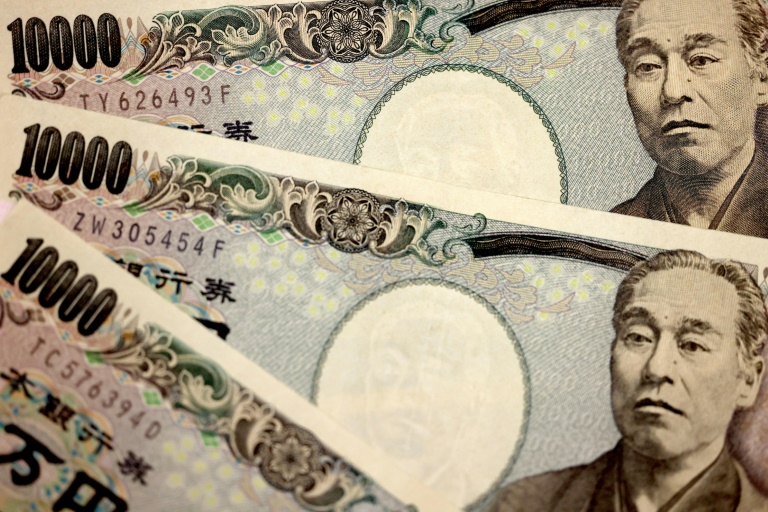
One dollar bought 126 yen on Wednesday afternoon, the lowest rate since 2002.

“The Japanese yen has been one of the weakest currencies anywhere in the world this year,” Dutch banking group ING said in a recent commentary.

“Driving the rally has been the perfect storm of a hawkish Federal Reserve, a dovish Bank of Japan (BoJ), and Japan’s negative terms of trade shock as a major fossil fuel importer.”

Government spokesman Hirokazu Matsuno said “the stability of exchange rates is important and we see rapid currency moves as undesirable”.

“We will monitor trends in the foreign currency market and the impact on the Japanese economy with a sense of urgency,” he added.

The yen had already lost 10 percent of its value against the dollar in 2021 after four years of steady strengthening.

The US central bank has embarked on an aggressive tightening path, pushing up American treasury yields which have strengthened the dollar against the yen.

But its moves stand in contrast to the Bank of Japan’s ultra-loose monetary policy, which will be maintained for now, bank governor Haruhiko Kuroda said earlier Wednesday.

“Given the economy and price situation, the Bank of Japan will seek to realise its two-percent inflation target… by resiliently continuing its current powerful monetary easing,” he said.

Swiss Bank UBS said a weaker yen would likely hit Japanese households’ purchasing power, and domestic-oriented small businesses who will face higher import costs.

“The government is offering fiscal supports and most likely will expand the supports. We think the (yen) purchase intervention is possible if the pace of depreciation is regarded as too fast,” it said in a note.

Tohru Sasaki, head of Japan Market Research at JPMorgan Chase Bank, told AFP that the Bank of Japan “has to do something to slow the pace of the yen’s depreciation”.

“The Japanese government can sell foreign reserve (USD) to intervene, but it is politically difficult,” he said, adding that it would be “strange” if the finance ministry did so while the Bank of Japan keeps its current easing policies.

Asian stocks shrug off red-hot US inflation

Many Asian markets made gains Wednesday, despite losses on Wall Street and across Europe sparked by data showing red-hot US inflation.

The US consumer price index surged 8.5 percent in March compared with a year ago, the biggest jump since December 1981. The CPI climbed 1.2 percent over February’s level.

The report was the first to fully encompass the shock caused by Russia’s invasion of Ukraine and Western sanctions against Moscow, which have caused energy and food prices to spike worldwide.

Though the US Federal Reserve was poised to raise interest rates quickly to tamp down inflation pressures, the effects will not be immediate.

Tokyo shrugged off the gloom, however, with the benchmark Nikkei 225 closing almost two percent higher.

“The Nikkei index rebounded after falling more than 600 points since the start of the week,” Okasan Online Securities said in a note. 

“Growth stocks were bought back as caution about excessive monetary tightening in the US receded.”

Hong Kong closed with small gains, while shares in Seoul, Taipei and Sydney were also up. Mumbai was down.

“Yes, US inflation was hot -– it’s hottest in 40 years. But we’re getting used to these extreme headline prints now,” said Matthew Simpson, senior market analyst at City Index.

“Besides, now high levels of inflation are no longer new news, the focus is now shifting to its trajectory and how long it may take to tail off.”

The lower-than-expected rise in core CPI “was all equity markets needed, using the singular data point to price in peak inflation” in the United States, said Jeffrey Halley, senior market analyst at OANDA.

“The perpetually bullish FOMO gnomes of the equity market, desperately searching for more drinks to keep the party alive, found it in the core inflation (month on month) data for March.”

In Shanghai, where a Covid-19 outbreak has caused mass lockdowns and snarled global trade arteries, stocks closed down by just under one percent.

That came as official data showed China’s imports shrank on-year in March for the first time in nearly two years, hit by the coronavirus and weakening consumer demand.

Imports dropped 0.1 percent, according to data from China’s Customs Administration.

At the open in Europe, shares dropped.

London slipped 0.1 percent, after official data showed UK inflation had rocketed to a 30-year high in March, while Frankfurt shed 0.6 percent and Paris lost 0.2 percent.

– Crude contracts rise –

Both major crude oil contracts were back over $100 per barrel, after Russian President Vladimir Putin vowed to continue the invasion of Ukraine and China partially eased Covid-related curbs.

“Oil seems to be the primary benefactor of (the) Ukraine vs Russia conflict dragging out longer,” noted Stephen Innes of SPI Asset Management.

In currency markets, the yen hit its lowest level against the dollar in two decades, extending recent falls as the gap widens between Japan’s ultra-loose monetary policy and Fed tightening.

Despite being traditionally considered a safe-haven currency, uncertainty fuelled by the war in Ukraine has not caused the yen to strengthen.

Instead, the Fed’s moves towards a more aggressive policy and the shock of rising oil prices in Japan — a major importer of fossil fuels — have pushed the currency lower, analysts say.

One dollar bought 126 yen at around 0630 GMT on Wednesday, the lowest rate since 2002.

– Key figures around 0810 GMT –

Tokyo – Nikkei 225: UP 1.93 percent at 26,843.49 (close)

Hong Kong – Hang Seng Index: UP 0.26 percent at 21,374.37 (close)

Shanghai – Composite: DOWN 0.82 percent at 3,186.82 (close)

London – FTSE 100: DOWN 0.1 percent to 7,568.10

Brent North Sea crude: DOWN 0.05 percent at $104.59 per barrel

West Texas Intermediate: DOWN 0.26 percent at $100.34 per barrel

Euro/dollar: UP at $1.0836 from $1.0818

Pound/dollar: UP at $1.3006 from $1.2977

Euro/pound: DOWN at 83.31 pence from 83.36 pence

Dollar/yen: DOWN at 126.07 from 126.22 yen

New York – Dow: DOWN 0.3 percent at 34,220.36 (close)

— Bloomberg News contributed to this report —

Asian stocks shrug off red-hot US inflation

Many Asian markets made gains Wednesday, despite losses on Wall Street and across Europe sparked by data showing red-hot US inflation.

The US consumer price index surged 8.5 percent in March compared with a year ago, the biggest jump since December 1981. CPI climbed 1.2 percent over February’s level.

The report was the first to fully encompass the shock caused by Russia’s invasion of Ukraine and Western sanctions against Moscow, which have caused energy and food prices to spike worldwide.

Though the US Federal Reserve was poised to raise interest rates quickly to tamp down inflation pressures, the effects will not be immediate.

Tokyo shrugged off the gloom, however, with the benchmark Nikkei 225 closing almost two percent higher.

“The Nikkei index rebounded after falling more than 600 points since the start of the week,” Okasan Online Securities said in a note. 

“Growth stocks were bought back as caution about excessive monetary tightening in the US receded.”

In afternoon trade, Hong Kong was eking out small gains. Shares in Seoul and Sydney were also up, while Mumbai was down.

“Yes, US inflation was hot -– it’s hottest in 40 years. But we’re getting used to these extreme headline prints now,” said Matthew Simpson, senior market analyst at City Index.

“Besides, now high levels of inflation are no longer new news, the focus is now shifting to its trajectory and how long it may take to tail off.”

The lower-than-expected rise in core CPI “was all equity markets needed, using the singular data point to price in peak inflation” in the United States, said Jeffrey Halley, senior market analyst at OANDA.

“The perpetually bullish FOMO gnomes of the equity market, desperately searching for more drinks to keep the party alive, found it in the core inflation (month on month) data for March.”

In Shanghai, where a Covid-19 outbreak has caused mass lockdowns and snarled global trade arteries, stocks were down by just under one percent.

That came as official data showed China’s imports shrank on-year in March for the first time in nearly two years, hit by the coronavirus and weakening consumer demand.

Imports dropped 0.1 percent, according to data from China’s Customs Administration.

– Crude contracts rise –

Both major crude oil contracts were back over $100 per barrel, after Russian President Vladimir Putin vowed to continue the invasion of Ukraine and China partially eased Covid-related curbs.

“Oil seems to be the primary benefactor of (the) Ukraine vs Russia conflict dragging out longer,” noted Stephen Innes of SPI Asset Management.

In currency markets, the yen hit its lowest level against the dollar in two decades, extending recent falls as the gap widens between Japan’s ultra-loose monetary policy and Fed tightening.

Despite being traditionally considered a safe-haven currency, uncertainty fuelled by the war in Ukraine has not caused the yen to strengthen.

Instead, the Fed’s moves towards a more aggressive policy and the shock of rising oil prices in Japan — a major importer of fossil fuels — has pushed the currency lower, analysts say.

One dollar bought 126 yen at around 0630 GMT on Wednesday, the lowest rate since 2002.

– Key figures around 0710 GMT –

Tokyo – Nikkei 225: UP 1.93 percent at 26,843.49 (close)

Hong Kong – Hang Seng Index: UP 0.25 percent at 21,373.20

Shanghai – Composite: DOWN 0.82 percent at 3,186.82

Brent North Sea crude: DOWN 0.18 percent at $104.45 per barrel

West Texas Intermediate: DOWN 0.30 percent at $100.30 per barrel

Euro/dollar: DOWN at $1.0818 from $1.0864

Pound/dollar: DOWN at $1.2977 from $1.3006

Euro/pound: UP at 83.36 pence from 83.28 pence

Dollar/yen: UP at 126.22 yen from 125.61 yen

New York – Dow: DOWN 0.3 percent at 34,220.36 (close)

— Bloomberg News contributed to this report —

Yen drops to 20-year low against dollar

The yen hit its lowest level against the dollar in two decades on Wednesday, extending recent falls as the gap widens between Japan’s ultra-loose monetary policy and Fed tightening.

Despite being traditionally considered a safe-haven currency, uncertainty fuelled by Russia’s war in Ukraine has not caused the yen to strengthen.

Instead, moves by the US Federal Reserve towards a more aggressive policy and the shock of rising oil prices in Japan — a major importer of fossil fuels — have pushed the currency lower, analysts say.

One dollar bought 126 yen at around 0630 GMT on Wednesday, the lowest rate since 2002.

“The Japanese yen has been one of the weakest currencies anywhere in the world this year,” Dutch banking group ING said in a recent commentary.

“Driving the rally has been the perfect storm of a hawkish Federal Reserve, a dovish Bank of Japan (BoJ), and Japan’s negative terms of trade shock as a major fossil fuel importer.”

The yen had already lost 10 percent of its value against the dollar in 2021 after four years of steady strengthening.

The US central bank has taken a hawkish tone as it embarks on an aggressive tightening path, pushing up American treasury yields which have strengthened the dollar against the yen.

Earlier on Wednesday, Bank of Japan governor Haruhiko Kuroda said the bank would maintain its monetary easing policies in a bid to reach its long-held two-percent inflation target.

“Given the economy and price situation, the Bank of Japan will seek to realise its two-percent inflation target… by resiliently continuing its current powerful monetary easing,” he said.

Swiss Bank UBS said a weaker yen would likely hit Japanese households’ purchasing power and domestic-oriented small businesses who will face higher import costs.

“The government is offering fiscal supports and most likely will expand the supports. We think the JPY purchase intervention is possible if the pace of depreciation is regarded as too fast,” it said in a note.

“We cannot completely deny the possibility of the BoJ adjusting policy to cope with public criticism” on the yen’s depreciation, UBS added, noting that the bank under Kuroda “has been quite flexible and pragmatic in the past”.

Prime Minister Fumio Kishida did not comment directly on the yen’s fall when asked on Tuesday, but emphasised the importance of stability in foreign exchange rates.

“I will refrain from commenting on the level of exchange rates, but their stability is important and I think rapid fluctuations are undesirable,” he said.

UK inflation strikes 30-year high

Britain’s annual inflation rate soared to the highest level in three decades last month as energy prices rocket, official data showed Wednesday, worsening a cost-of-living crisis.

Inflation surged to 7.0 percent in March from 6.2 percent in February, the Office for National Statistics said in a statement.

“Broad-based price rises saw annual inflation increase sharply again in March,” said ONS chief economist Grant Fitzner. 

“Amongst the largest increases were petrol costs.”

Prices of restaurant meals and hotel rooms also rose steeply last month after falling a year earlier during a pandemic lockdown in the UK.

Costs are surging worldwide as economies reopen from pandemic lockdowns and on fallout from the war in Ukraine.

US inflation rose by a huge 8.5 percent over the 12 months to March, the biggest jump in four decades, official data showed Tuesday.

Sharp price rises across the board are forcing central banks around the world to hike interest rates, curbing economic growth recovery.

European Central Bank governors meet Thursday to ponder record-high inflation in the eurozone and fresh economic uncertainty caused by the war in Ukraine, with policymakers signalling a willingness to take action sooner rather than later.

The US Federal Reserve and the Bank of England have already announced their first rate hikes to combat price pressures, leaving the ECB looking out of step.

– ‘Worrying time’ –

The Bank of England has predicted that UK annual inflation could reach double figures by the end of the year.

“We’re seeing rising costs caused by global pressures in our supply chains and energy markets which could be exacerbated further by Russian aggression in Ukraine,” Britain’s finance minister Rishi Sunak said Wednesday.

“I know this is a worrying time for many families,” added the embattled chancellor of the exchequer.

Sunak, along with Prime Minister Boris Johnson, confirmed Tuesday that they had been fined for breaching Covid-19 lockdown laws.

British cost-of-living is set to soar even higher owing to an April tax hike on UK workers and businesses and a fresh surge in domestic energy bills that kicked in this month.

“Soaring energy and fuel prices were the main drivers of the rise in (UK) inflation in March, but we are paying more for everything,” Myron Jobson, senior personal finance analyst at Interactive Investor, said following Wednesday’s data.

“Supply shortages and production bottlenecks owing to the pandemic have forced firms to raise their prices of late,” while Russia’s invasion of Ukraine “has made the outlook for inflation worse”, he added.

China's imports fall as Covid outbreaks, lockdowns hit demand

China’s imports shrank on-year in March for the first time in nearly two years, official data showed Wednesday, hit by coronavirus lockdowns and weakening consumer demand.

The world’s second-largest economy has stuck to a strict zero-Covid strategy as it tries to contain outbreaks fuelled by the Omicron variant in recent months.

The economic costs, however, have mounted — the waves of infections and resulting lockdowns have kept consumers at home, halted business operations and snarled supply chains.

Imports dropped 0.1 percent from a year ago, according to data from China’s Customs Administration — the first such decline since August 2020, in the early phase of the pandemic.

The figure was much lower than the forecast from a Bloomberg poll of economists, and a far cry from the 15.5 percent growth for the first two months this year.

“Some unexpected factors in the international and domestic environment have gone beyond our anticipation,” Customs Administration spokesman Li Kuiwen told reporters.

“Achieving the goal of stabilising foreign trade will require greater effort.”

China’s export growth slowed as well in March to 14.7 percent, down from 16.3 percent in the first two months.

While Li did not specify external factors, the drop in exports came during a period where Russia’s invasion of Ukraine and the shockwaves from it have hurt business sentiment and consumer confidence globally.

“The March trade data highlighted the impact of pandemic-related disruptions on economic activity and consumer spending,” said Rajiv Biswas, Asia-Pacific chief economist at S&P Global Market Intelligence.

He added that recent lockdowns in major cities such as Shanghai and Shenzhen “hit consumer spending hard”, while the temporary shutdown of manufacturing plants impacted demand for imported raw materials.

China’s balance of trade in March was $47.4 billion.

European demand for Chinese exports could be “a key risk”, Biswas said, given that “macroeconomic shocks from the Russia-Ukraine war, notably higher oil and gas prices and rising inflation pressures, are resulting in a downgraded EU GDP growth outlook in 2022”.

Customs spokesman Li said that in the first quarter, exports of mechanical and electronic products rose 9.8 percent from a year ago, with increases in solar cells, lithium batteries and automobiles.

“The largest declines in outbound shipments were of electronics, furniture and recreational products, pointing to an unwinding of pandemic-linked demand for these goods,” Julian Evans-Pritchard, senior China economist at Capital Economics.

Close Bitnami banner
Bitnami