US Business

iPhone maker Pegatron halts Shanghai production over Covid

Key iPhone maker Pegatron has halted operations at two subsidiaries in the Chinese cities of Shanghai and Kunshan, as global supply chains feel the pinch of Beijing’s strict zero-Covid measures.

The business hub of Shanghai has become the heart of China’s biggest Covid-19 outbreak since the virus surfaced more than two years ago.

The city of 25 million has remained almost entirely locked down since the start of the month.

“We have temporarily suspended work,” said Pegatron in a filing to the Taiwan Stock Exchange on Tuesday.

The Taiwanese firm said it “actively cooperates with local authorities” and would try to resume operations as soon as possible.

The suspensions apply to two of its subsidiaries, in Shanghai and nearby Kunshan city.

Stay-at-home orders and stringent testing rules have strained supply chains in and around Shanghai, home to the world’s busiest container port and a critical gateway for foreign trade.

China reported nearly 28,000 local virus cases on Wednesday, the vast majority in Shanghai.

Many factories have been forced to halt operations as virus cases have surged, while some staff have been living in their workplaces as businesses struggle to operate.

Pegatron’s suspensions mark the latest blow to Apple, which has seen disruptions at other suppliers’ assembly lines in recent months as Chinese cities struggle to curb virus outbreaks.

In March, another major supplier Foxconn halted operations in the Chinese tech hub of Shenzhen.

Foxconn has “resumed fundamental operations” in Shenzhen as of late March, the company said.

Chinese authorities have struggled to maintain the flow of goods across the country as tough virus controls slow movement.

A Transport Ministry circular issued late Tuesday barred the “blocking of road transportation” vehicles and personnel, ordering more efficient Covid-19 screening along transport routes.

Anxious about the spring farming season and food supplies, officials in virus-hit areas such as the northeastern province of Jilin have also issued travel passes to let agricultural workers return to farmland on chartered buses.

“The Chinese economy has been facing a rising risk of recession since mid-March”, Nomura analysts warned this week, citing severe disruptions to the delivery of exports, with coastal areas hit hard by controls to rein in the virus.

Asian stocks mostly up despite red-hot US inflation

Asian markets mostly started Wednesday with gains, despite a day of losses on Wall Street and across Europe sparked by data showing red-hot US inflation.

Hong Kong and Shanghai bucked the trend though, posting slight losses in morning trade.

The US consumer price index surged 8.5 percent in March compared with a year ago, the biggest jump since December 1981. CPI climbed 1.2 percent over February’s level.

The report was the first to fully encompass the shock caused by Russia’s invasion of Ukraine and Western sanctions against Moscow, which have caused energy and food prices to spike worldwide.

Though the Federal Reserve was poised to raise interest rates quickly to tamp down inflation pressures, the effects will not be immediate.

But Tokyo shrugged off the gloom, with the benchmark Nikkei 225 up by about 1.5 percent.

Shares in Seoul and Sydney were also up, while Mumbai was down.

“Yes, US inflation was hot -– it’s hottest in 40 years. But we’re getting used to these extreme headline prints now, to the point that markets looked past the whopping 8.5 percent y/y print in favour of core CPI only rising 0.3 percent compared to 0.5 percent expected,” said Matthew Simpson, senior market analyst at City Index.

“Besides, now high levels of inflation are no longer new news, the focus is now shifting to its trajectory and how long it may take to tail off.”

“We’re hopeful that this is where (inflation is) going to peak,” Ann Miletti, head of active equity at Allspring Global Investments, told Bloomberg Television.

But she added that markets continued to face the threat of rising rates and the impact of Covid-19 lockdowns in China, which have snarled supply chains.

Both major crude oil contracts were back over $100 per barrel, with Brent topping $105, after Russian President Vladimir Putin vowed to continue the invasion of Ukraine and China partially eased Covid-related curbs.

“Oil seems to be the primary benefactor of Ukraine vs Russia conflict dragging out longer,” noted Stephen Innes of SPI Asset Management.

– Key figures around 0230 GMT –

Tokyo – Nikkei 225: UP 1.6 percent at 26,755.05 (break)

Hong Kong – Hang Seng Index: DOWN 0.18 percent at 21,281.78

Shanghai – Composite: DOWN 0.32 percent at 3,202.98

Brent North Sea crude: UP 0.56 percent at $105.23 per barrel

West Texas Intermediate: UP 0.53 percent at $101.13 per barrel

Euro/dollar: DOWN at $1.0832 from $1.0864

Pound/dollar: UP at $1.3007 from $1.3006

Euro/pound: DOWN at 83.28 pence from 83.53 pence

Dollar/yen: UP at 125.63 yen from 125.61 yen

New York – Dow: DOWN 0.3 percent at 34,220.36 (close)

London – FTSE 100: DOWN 0.6 percent at 7,576.66 (close)

— Bloomberg News contributed to this report —

US crypto expert jailed 63 months for helping N.Korea

A US cryptocurrency expert was sentenced Tuesday to 63 months in prison for advising North Korea on how to create cryptocurrency services and blockchain technology to circumvent US sanctions over its nuclear program, court officials in New York said.

Virgil Griffith, 39, had pleaded guilty to conspiring to violate US law, in a bid to reduce the sentence for a crime that can carry up to 20 years behind bars. 

Prosecutor Damian Williams said “there is no question North Korea poses a national security threat to our nation, and the regime has shown time and again it will stop at nothing to ignore our laws for its own benefit. 

He said that Griffith had “admitted in court he took actions to evade sanctions, which are in place to prevent (North Korea) from building a nuclear weapon.”

In April 2019 Griffith gave a presentation in Pyongyang, the North Korean capital, on cryptocurrency and blockchain technology. He was arrested at Los Angeles airport in November the same year. 

At the conference, Griffith provided information on how North Korea could use the technology to launder money and evade sanctions, including through “smart contracts,” according to the court.

The prosecution said that after the presentation, Griffith “pursued plans to facilitate the exchange of cryptocurrency between the Democratic People’s Republic of Korea and South Korea, despite knowing that assisting with such an exchange would violate sanctions against the DPRK.”

The United States prohibits the export of goods, services or technology to North Korea without special permission from the Treasury Department’s Office of Foreign Assets Control.

In addition to 63 months in jail, Griffith will spend three years on probation. 

Griffith holds a doctorate from the California Institute of Technology and has also worked on Ethereum, a Singapore-based global platform with blockchain technology for business and financial use, which has a cryptocurrency named after it.

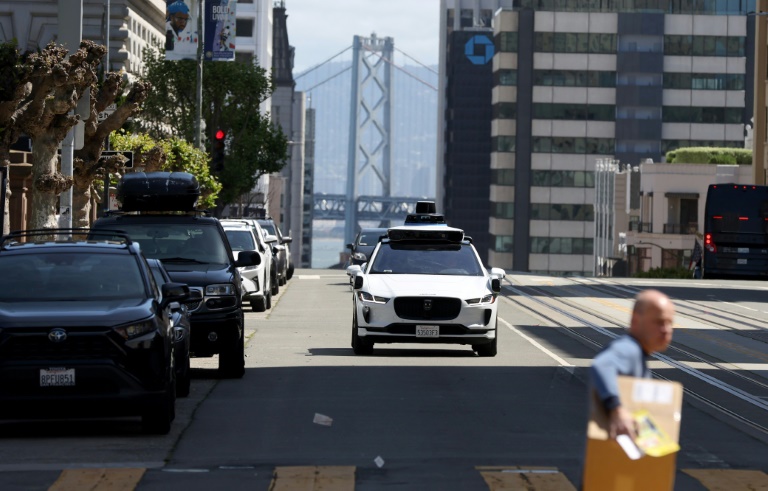
Driverless car stopped in San Francisco puzzles cops

San Francisco police faced an unprecedented problem recently when an officer stopped a car that was driving at night with no headlights on, only to discover there was no one inside. 

The vehicle, it turned out, was a self-driving car, and the police officer’s encounter was captured on film by a passerby, who posted the footage on social media.

The clip, showing bemused officers circling the vehicle and peering through its window for several minutes, has been shared so widely that Cruise, the company that owns the vehicle, reacted on Twitter to explain what had happened.

It said the self-driving car “yielded to the police vehicle, then pulled over to the nearest safe location for the traffic stop, as intended. An officer contacted Cruise personnel and no citation was issued.”

In the footage, as the police are inspecting the parked vehicle, someone can be heard exclaiming, “There’s no one in it, it’s crazy!”

A police spokesperson said that after the police had stopped the car, a maintenance team had taken control of it.

Cruise explained that the headlights were turned off due to human error.

Founded in 2013, Cruise has developed software that allows cars to drive themselves completely autonomously. 

The US manufacturer General Motors owns the majority of shares in the company, valued at more than $30 billion thanks to investments by giants such as Microsoft, Honda and Walmart. 

Since February, Cruise has passed a key threshold in offering individuals the chance to book free trips in the streets of San Francisco in its driverless cars. 

Residents of the Californian city also regularly come across robo-taxis from Waymo, Google’s self-driving subsidiary. 

These camera-clad vehicles take passengers wherever they want, with a driver who is present but does not touch the steering wheel or the pedals.

For Biden's battered approval, 'nothing else matters' like inflation

Historically low joblessness is the kind of thing American leaders dream of, but President Joe Biden also has nightmarishly high inflation that supporters and opponents alike believe may cost his Democratic Party dearly.

Biden’s popularity has sunk in recent months even as the unemployment rate has ticked progressively lower amid booming job creation, which experts attribute to record-high price increases the US economy has weathered as it recovers from the pandemic. 

“Politically speaking, nothing else matters,” said Charlie Cook, a longtime political analyst and founder of the Cook Political Report.

Job growth is a traditional metric of presidential success, and the White House has attempted to focus the public’s attention on the progress made in the labor market, where new applications for jobless aid are at more than half-century lows and the unemployment rate is almost back to where it was before Covid-19 broke out.

But Cook said the spike in consumer prices to levels not seen since 1981 has undercut those arguments because while some voters may benefit from the strengthening jobs market, everyone experiences higher prices for gasoline, food and other necessities.

Biden’s approval ratings are now hovering around 42.2 percent, according to poll aggregator FiveThirtyEight, and with midterm elections in seven months, even Biden’s allies worry that his Democratic party will lose its narrow control of one, or perhaps both, houses of Congress.

“High prices are preventing Americans from feeling the Biden boom,” said Will Marshall, president of the center-left Progressive Policy Institute.

– Losing, not gaining, jobs –

Biden took office at a time when unemployment was on a downward trajectory after spiking to 14.7 percent in 2020 as businesses laid off workers en masse after the pandemic arrived on American shores.

Throughout his presidency, it has fallen steadily to hit 3.6 percent last month, a hair above its pre-pandemic level.

But consumer prices have shot up, jumping by 8.5 percent over the 12 months to March, and polls indicate Americans are pointing the finger at Biden.

Nearly two-thirds of voters disapprove of Biden’s handling of the economy, according to a poll by the Associated Press and NORC Center for Public Affairs Research released late last month, while progressive data firm Navigator Research found more Americans believe the economy is losing jobs than gaining them.

The high inflation rate is a consequence of a collision between global shortages and shipping delays, the Federal Reserve’s low interest rate policies and shocks to commodity markets caused by Russia’s invasion of Ukraine that have sent gas prices soaring.

Another factor is pandemic rescue bills Congress approved under Biden and his Republican predecessor Donald Trump that fattened Americans’ wallets and drove them to buy scarce goods.

While economists debate how much of an effect these policies have had on inflation, Marshall acknowledged missteps in Biden’s congressional priorities as prices rose last year and his administration was reeling from the chaotic withdrawal of US troops from Afghanistan.

The president won bipartisan support for a $1 trillion overhaul to the nation’s infrastructure, but delayed that bill’s passage while trying to unite Democratic lawmakers around Build Back Better, his signature proposal to overhaul the country’s social services, which ultimately failed.

“I think people mistakenly thought, well, this is a second coming of the New Deal,” Marshall told AFP, referring to a 1930s-era Democratic expansion of government in response to the Depression. “I think they overreached.”

– Can he come back? –

Douglas Holtz-Eakin, who served as an economist in Republican former president George W. Bush’s administration, said Democrats might have been worse off if they passed Build Back Better, because voters would have linked its high price tag to inflation.

“I think they benefited more from its failure than it cost them,” said Holtz-Eakin, now the president of the American Action Forum.

Biden’s Democrats control Congress, but only by the thinnest majorities — 12 seats in the House and one vote in the Senate — which he argued does not give them a mandate to enact major legislation.

“They mistakenly think they have to do something. They don’t, they should get out of the way, let the Fed take care of inflation, let the private sector take care of growth,” Holtz-Eakin said.

The Federal Reserve is in the process of raising interest rates, and many economists believe the inflation spike will flatten as the year progresses.

But whether it comes soon enough for Biden remains to be seen. 

It is common for a president’s party to lose ground in the midterm congressional elections, and his two predecessors in the White House were mauled in when their parties lost control of the House — a fate Cook warned Biden appears on course to meet.

“Are we really going to see a meaningful reduction in inflation between now and the time voting starts between late September and October?” he asked. “I don’t think it’s realistic at all.”


Ukraine crisis pushes US inflation to new four-decade high

Americans paid more for gasoline, food and other essentials last month amid an ongoing wave of record inflation made worse by Russia’s invasion of Ukraine, according to government data released Tuesday.

The consumer price index (CPI) climbed 8.5 percent over the 12 months to March, the biggest jump since December 1981 and a sign of the pressure President Joe Biden’s administration is under even as it looks for more ways to punish Moscow for the attack on its neighbor.

The inflation surge has dragged Biden’s approval lower since it began last year, and the president sought to pin the blame on Russian President Vladimir Putin and the invasion’s disruptions to global energy markets.

“Seventy percent of the increase in prices in March came from Putin’s price hike in gasoline,” Biden argued during a speech in Iowa, though the Labor Department said it accounted for closer to half.

Prices began rising last year as the economy recovered from the Covid-19 pandemic, and while the latest report showed costs hitting new heights for many items, it also contained signs the spike may be leveling off.

Compared to February, prices rose 1.2 percent, in line with analysts’ forecasts, but “core” prices, which exclude volatile food and energy sectors, rose 0.3 percent rise, less than expected.

“The Russia-Ukraine war has added further fuel to the blazing rate of inflation via higher energy, food, and commodity prices that are turbo charged by a worsening in supply chain problems,” Kathy Bostjancic of Oxford Economics said.

The potency of the ongoing price jumps bolstered the case that the Federal Reserve will take aggressive action at its policy meeting next month, likely raising the key lending rate by half a percentage point as opposed to the quarter-point increase last month.

“With labor shortages pressuring firms to raise wages, we are in the midst of a wage-price inflation cycle that will require extreme action on the part of the Fed to rid the economy of the spreading inflation threat,” economist Joel Naroff said.

– Real pain –

A collision of factors has fueled the inflation surge, including business’ struggles to find enough workers and supplies, the Fed’s low interest rate policies, and congressionally approved stimulus measures that drove up demand among American consumers.

In response, the White House has scrambled to offer relief, including by releasing strategic oil supplies to lower prices at the pump and waiving a prohibition on selling a lower-price gasoline blend during the summer months, which Biden promoted during his visit to Iowa.

But the most potent actor in Washington against inflation is the Fed. 

Though rate hikes are expected to lower prices in the months to come, central bank Governor Lael Brainard said Tuesday that the fallout from the war in Ukraine “probably skews risks to the upside in inflation.” 

A new pandemic lockdown in China also “has the potential to lengthen out some of those constraints that we’ve seen in supply chains,” Brainard said in a discussion following the data’s release.

The Labor Department data showed Americans are facing real financial pain when they go to purchase must-have items.

Prices for shelter, the category including rents, rose 0.5 percent, while food prices rose one percent overall. 

Prices for groceries were up 1.5 percent in the month, and 10 percent over the past year — the largest such increase since March 1981, according to the data.

– Used cars reverse –

However, prices for used cars, which were one of the first items to surge last year, declined 3.8 percent last month, pushing core CPI lower. New car prices rose only 0.2 percent after seeing monthly gains of more than one percent in the latter months of 2021.

But considering how high prices have risen for other categories, Naroff said some on the Fed’s policy setting committee may advocate for an even more forceful 0.75 point rate increase next month — and that would not necessarily bring prices down quickly.

“The ability of any Fed to sharply raise rates to slow extremely high inflation, while not driving the economy into a recession, is limited, especially given factors such as war that are out of its control,” he said in a note. 

“We are talking about art here, not science, and there is little history of this Fed painting pretty pictures.”

US stocks fall on latest hot inflation report; oil prices rise

Equity markets in Europe and New York fell Tuesday following another report showing red-hot US inflation, while oil prices pushed higher.

The consumer price index surged 8.5 percent in March compared with a year ago, the biggest jump since December 1981. CPI climbed 1.2 percent over February’s level.

The report was the first to fully encompass the shock caused by Russia’s invasion of Ukraine and Western sanctions against Moscow, which have caused energy and food prices to spike worldwide.

Higher prices for food, shelter and fuel are “likely forcing some people to do without,” said economist Joel Naroff.

Though the Federal Reserve is poised to raise interest rates quickly to tamp down inflation pressures, the effects would not be immediate.

“Inflation should moderate, if only because some of the biggest increases are behind us. But there is a difference between decelerating and low,” Naroff said. 

“Since monetary (policy) works with a lag, don’t expect major progress on the inflation front even if the Fed acts aggressively.”

US equities initially climbed on the inflation data, with some analysts appearing to view the report as corroborating “peak inflation” narrative based on the idea that pricing pressures will soon ease.

But stocks lost steam later in the session, with the S&P 500 finishing 0.3 percent lower. Some analysts pointed to nervousness heading into the earnings season.

Shares of large banks fell more than one percent ahead of quarterly results, which kick off Wednesday morning with JPMorgan Chase.

Analysts expect banks to report lower earnings compared with last year, when profits from were lifted by the release of funds set aside early in the pandemic in case of bad loans.

Meanwhile, European markets fell, with London’s FTSE 100 ending the day down 0.6 percent. Frankfurt off 0.5 percent and Paris shedding 0.3 percent.

Oil prices advanced more than six percent, lifting US benchmark West Texas Intermediate back above $100 a barrel.

“The crude correction ended now that the market has mostly priced in the strategic petroleum release plan, China is beginning to lift some of their lockdowns and as negotiations between Russia and Ukraine appear to have hit a dead-end,” said Oanda’s Edward Moya. 

“The energy market expects to remain very tight from the summer and if geopolitical risks remain elevated, $100 oil should easily hold.”

– Key figures around 2040 GMT –

New York – Dow: DOWN 0.3 percent at 34,220.36 (close)

New York – S&P 500: DOWN 0.3 percent at 4,397.45 (close)

New York – Nasdaq: DOWN 0.3 percent at 13,371.57 (close)

London – FTSE 100: DOWN 0.6 percent at 7,576.66 (close)

Paris – CAC 40: DOWN 0.3 percent at 6,537.41 (close)

Frankfurt – DAX: DOWN 0.5 percent at 14,124.95 (close)

EURO STOXX 50: DOWN 0.2 percent at 3,831.47 (close)

Tokyo – Nikkei 225: DOWN 1.8 percent at 26,334.98 (close)

Hong Kong – Hang Seng Index: UP 0.5 percent at 21,319.13 (close)

Shanghai – Composite: UP 1.5 percent at 3,213.33 (close)

Brent North Sea crude: UP 6.3 percent at $104.64 per barrel

West Texas Intermediate: UP 6.7 percent at $100.60 per barrel

Euro/dollar: DOWN at $1.0832 from $1.0884 late Monday

Dollar/yen: DOWN at 125.33 yen from 125.37 yen

Pound/dollar: DOWN at $1.3002 from $1.3030

Euro/pound: DOWN at 83.28 pence from 83.53 pence

burs-jmb 

Ukraine crisis pushes US inflation to new four-decade high

Americans paid more for gasoline, food and other essentials last month amid an ongoing wave of record inflation made worse by Russia’s invasion of Ukraine, according to government data released Tuesday.

The consumer price index (CPI) climbed 8.5 percent over the 12 months to March, the biggest jump since December 1981, which adds pressure to President Joe Biden’s administration even as it looks for more ways to punish Moscow for the attack on its neighbor.

Prices have surged across the world’s largest economy as it tries to recover from the Covid-19 pandemic, dragging Biden’s approval ratings lower, though the Labor Department’s March data contained signs the spike may be leveling off.

“The Russia-Ukraine war has added further fuel to the blazing rate of inflation via higher energy, food, and commodity prices that are turbo charged by a worsening in supply chain problems,” Kathy Bostjancic of Oxford Economics said.

Compared to February, prices rose 1.2 percent, in line with analysts’ forecasts, but if there were signs of deceleration to be found, they were in the lower-than-expected 0.3 percent rise in “core” prices, which exclude volatile food and energy sectors.

The potency of the ongoing price jumps bolstered the case that the Federal Reserve will take aggressive action at its policy meeting next month, likely raising the key lending rate by half a percentage point as opposed to the quarter-point increase last month.

“With labor shortages pressuring firms to raise wages, we are in the midst of a wage-price inflation cycle that will require extreme action on the part of the Fed to rid the economy of the spreading inflation threat,” economist Joel Naroff said.

– Real pain –

While the US economy has bounced back strongly from the mass layoffs that marked the early weeks of the pandemic, inflation has bedeviled the recovery since last year, as businesses struggled to find enough workers and supplies, the Fed kept interest rates low, and Congress approved stimulus measures that drove up demand among American consumers.

Biden’s public support has dropped as prices have increased, leaving the White House scrambling to offer relief, including by releasing strategic oil supplies to lower prices at the pump and waiving a prohibition on selling a lower-price gasoline blend during the summer months, a measure announced just before the data was released on Tuesday.

But the most potent actor in Washington against inflation is the Fed. 

Though rate hikes are expected to lower prices in the months to come, central bank Governor Lael Brainard said Tuesday that the fallout from the war in Ukraine “probably skews risks to the upside in inflation” 

And a new pandemic lockdown in China “has the potential to lengthen out some of those constraints that we’ve seen in supply chains,” Brainard said in a discussion after the data was released.

The Labor Department data showed Americans are facing real financial pain when they go to purchase must-have items.

Gasoline prices rose 18.3 percent last month, accounting for half the overall increase in CPI, while prices for shelter, the category including rents, rose 0.5 percent.

Food prices rose one percent overall, while prices for groceries were up 1.5 percent in the month, and 10 percent over the past year — the largest such increase since March 1981, according to the data.

– Used cars reverse –

However, prices for used cars, which were one of the first items to surge last year, declined 3.8 percent last month, pushing core CPI lower. New car prices rose only 0.2 percent after seeing monthly gains of more than one percent in the latter months of 2021.

Dan Alpert of Westwood Capital tweeted that the data showed signs of deflation “in those things that went bonkers during 2020: transportation, electronics, recreation and leisure. Supply chains are reopened for the most part and demand is becoming sated.”

But considering how high prices have risen for other categories, Naroff said some on the Fed’s policy setting committee may advocate for an even more forceful 0.75 point rate increase next month — and even that would not necessarily bring prices down quickly.

“The ability of any Fed to sharply raise rates to slow extremely high inflation, while not driving the economy into a recession, is limited, especially given factors such as war that are out of its control,” he said in a note. 

“We are talking about art here, not science, and there is little history of this Fed painting pretty pictures.”

Boeing cuts its order book following Ukraine invasion

Boeing has removed orders for 141 jets from its backlog, mostly due to sanctions placed on Russia in the aftermath of the Ukraine invasion, officials from the plane manufacturer said Tuesday.

Most of the planes stripped from Boeing’s official tally were 737 models, with about two-thirds coming as “a result of geopolitical events,” a Boeing spokesperson said. 

The removal of the Russian jets from Boeing’s backlog comes as the company also again reported no deliveries from its 787 Dreamliner for the first quarter.

On the positive side, the company added a net of 145 new jet orders during the quarter as more people traveled and global economies recovered from the worst of the pandemic.

Boeing now holds orders for 4,231 new planes, down from 4,375, according to an update for March orders and deliveries.

The Commerce Department on April 7 announced that Russian state airline Aeroflot, Azur Air and Utair were barred from receiving American goods for the next 180 days.

The move was part of a series of steps by Washington and other Western governments in response to Moscow’s invasion of Ukraine.

In the first quarter, Boeing reported 95 commercial deliveries compared with 77 in the year-ago period. The biggest jump was for the 737, reflecting Boeing’s resumption of deliveries for the 737 MAX following a lengthy grounding.

Deliveries of the 787 have been halted since May as Boeing works to satisfy demands to address quality and manufacturing problems flagged by the Federal Aviation Administration.

Stocks mixed as US inflation jumps to four-decade high

Stock markets diverged on Tuesday as investors digested official data showing US inflation hit a four-decade high in March, raising expectations the  Federal Reserve will act more aggressively to tame prices.

Oil prices, meanwhile, surged as Shanghai began to ease Covid restrictions and the OPEC group of crude-producing nations lowered its forecast for global demand this year, citing the Ukraine war’s impact on the world economy. 

Inflation had already been rising worldwide in recent months as economies emerge from Covid lockdowns, but Russia’s invasion of Ukraine and sanctions against Moscow have pushed energy and food prices even higher worldwide.

US inflation continued to surge in March, sending the consumer price index (CPI) up 8.5 percent over the past 12 months, its largest increase since 1981, according to the US Labor Department.

Wall Street stocks advanced nevertheless, with the Dow Jones Industrial Average rising 0.8 percent, the S&P 500 gaining 1.0 percent and the tech-heavy Nasdaq up 1.5 percent.

European markets fell, with London’s FTSE 100 ending the day down 0.6 percent. Frankfurt fell 0.5 percent and Paris shed 0.3 percent.

Analysts said investors may see the March inflation reading as a sign that the CPI had reached its peak.

“The latest US CPI numbers raised the hope that the surge in price pressures we’ve been seeing over the last 6 months might be starting to show signs of topping out,” said Michael Hewson at CMC Markets UK. 

The headline 8.5 percent figure was higher than expected, the core figure which excludes volatile energy prices, came in lower than expected at 6.5 percent. 

“There had been a widespread expectation that they could well have been a lot worse, and this has prompted some paring back in US yields, which in turn has supported a rebound in stock markets,” said Hewson.

The Fed last month raised interest rates by a quarter point in the first of a series of increases, and since then a chorus of officials — including Fed Chair Jerome Powell — have signalled their openness to half-point rate increases, a more aggressive measure.

– Oil prices surge –

On the oil market, meanwhile, the price of Brent North Sea crude, the international benchmark, surged 6.7 percent to $105.10 per barrel while US contract, WTI, jumped 6.9 percent to $100.77.

Prices had fallen on Monday on fears about the impact of Covid lockdowns in China, the world’s biggest crude consumer.

But they rebounded on Tuesday after OPEC said in a report lowered its demand forecast to 3.7 million barrels per day, a reduction of 500,000 barrels per day, as it said the Ukraine conflict would dent global economic growth.

Craig Erlam at OANDA said that in its report pushed back against calls by the West for it to utilise its spare capacity to replace Russian oil, saying it wasn’t possible. 

“While the EU is continuing to push for higher output which would enable it to consider sanctions on Russian oil without severe economic damage at home — with current prices already causing problems — it seems it’s not going to be aided by the group that remains Russia’s ally in the OPEC+ alliance,” he wrote in a note to clients.

“With that in mind, the brief flirtation with double-digit oil may already be at an end for now,” Erlam added.

– Key figures around 1530 GMT –

New York – Dow: UP 0.8 percent at 34,566.61 points

EURO STOXX 50: DOWN 0.2 percent at 3,831.62

London – FTSE 100: DOWN 0.6 percent at 7,576.66 (close)

Paris – CAC 40: DOWN 0.3 percent at 6,537.41 (close)

Frankfurt – DAX: DOWN 0.5 percent at 14,124.95 (close)

Tokyo – Nikkei 225: DOWN 1.81 percent at 26,334.98 (close)

Hong Kong – Hang Seng Index: UP 0.52 percent at 21,319.13 (close)

Shanghai – Composite: UP 1.46 percent at 3,213.33 (close)

Brent North Sea crude: UP 6.7 percent at $105.10 per barrel

West Texas Intermediate: UP 6.9 percent at $100.77

Euro/dollar: DOWN at $1.0863 from $1.0884 late Monday

Dollar/yen: DOWN at 125.16 yen from 125.37 yen

Pound/dollar: UP at $1.3037 from $1.3030

Euro/pound: DOWN at 83.32 pence from 83.53 pence

burs-rl/ach 

Close Bitnami banner
Bitnami