US Business

World stock markets beat retreat with all eyes on Fed

Global equities sank Wednesday on bets the Federal Reserve will act more aggressively to bring inflation under control, while oil prices rebounded.

Asian and European bourses retreated after heavy falls on Wall Street Tuesday.

The euro hit a one-month dollar low before minutes from the Fed’s latest policy meeting due Wednesday.

London stocks slid also as UK businesses and individuals saw a major tax hike kick in, worsening Britain’s cost-of-living crisis as domestic energy bills rocket.

Minutes from the Fed’s March meeting will be pored over for insights into the thinking of US central bankers, in light of the Ukraine war and recent data suggesting the world’s top economy remains resilient.

– ‘Significant headwinds’ –

“Investor confidence might have improved from the low point in early March when the Ukraine war was unfolding,” said AJ Bell investment director Russ Mould. 

“However, there remain significant headwinds for equities and the latest trouble spot is what the Federal Reserve might do to curb inflation.”

Investors are fretting also over how quickly officials will withdraw their vast pandemic-era financial support.

After last month’s 0.25-percentage-point hike in US interest rates, the focus is now on its plans for May’s meeting, with expectations growing that the Fed will announce a 0.50-point lift followed by several more before the end of the year.

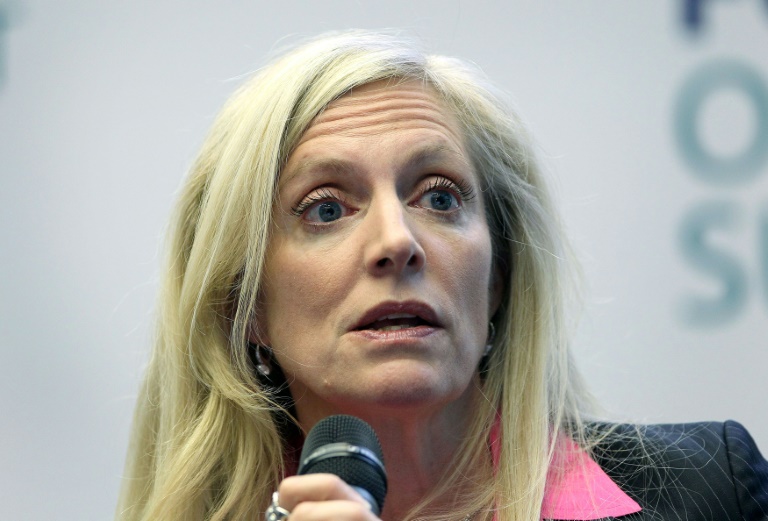
Fed governor Lael Brainard, who is considered a dove, on Tuesday spooked traders by saying bringing US inflation down from 40-year highs was of “paramount importance” and that the bank was “prepared to take stronger action” if warranted.

Brainard also said bank policymakers were ready to start reducing its vast bond holdings, which have helped keep borrowing costs down.

“Brainard’s hawkish comments rocked the markets,” said Swissquote analyst Ipek Ozkardeskaya.

“In this tense environment, investors will be closely watching the Fed minutes today. There would be no surprise if the Fed hinted a 50-basis-point hike (for) the next meeting,” she noted.

All three main indices on Wall Street ended Tuesday in the red, with the Nasdaq off more than two percent owing to tech firms being more susceptible to higher rates.

– Oil rebounds –

Oil prices rebounded on Wednesday, after European Council chief Charles Michel told the European Parliament that it must impose oil and gas sanctions on Russia “sooner or later”.

Crude futures had slid the previous day on the European Union’s decision not to include Russian oil in a fresh round of sanctions.

Adding to downward pressure on crude is a strong dollar thanks to the prospect of a series of US interest rate hikes. 

Oil is priced in dollars, making it more expensive for clients using other currencies.

– Key figures around 1030 GMT –

London – FTSE 100: DOWN 0.5 percent at 7,577.10 points

Frankfurt – DAX: DOWN 1.3 percent at 14,230.52

Paris – CAC 40: DOWN 1.2 percent at 6,564.72

EURO STOXX 50: DOWN 1.5 percent at 3,858.21

Tokyo – Nikkei 225: DOWN 1.9 percent at 27,080.52 (close)

Hong Kong – Hang Seng Index: DOWN 1.3 percent at 22,219.85 (close)

Shanghai – Composite: FLAT at 3,283.43 (close)

New York – Dow: DOWN 0.8 percent at 34,641.18 (close)

Brent North Sea crude: UP 1.5 percent at $108.24 per barrel

West Texas Intermediate: UP 1.8 percent at $103.78 per barrel

Euro/dollar: DOWN at $1.0903 from $1.0905 late Tuesday

Pound/dollar: UP at $1.3080 from $1.3074

Euro/pound: DOWN at 83.37 pence from 83.41 pence

Dollar/yen: UP at 123.96 yen from 123.60 yen

burs-rfj/bcp/lth

Asian, European markets track Wall St retreat on hawkish Fed bets

Equities sank Wednesday after Wall Street tumbled on bets the Federal Reserve will act more aggressively to bring inflation under control, while oil recovered some losses caused by the European Union’s decision not to ban Russian crude.

While the Ukraine war continues to cast a shadow across trading floors, Fed monetary policy is at the top of the agenda this week as investors fret over how quickly officials will withdraw their vast pandemic-era financial support.

After last month’s 0.25-percentage-point hike in interest rates, the focus is now on its plans for May’s meeting, with expectations growing that it will announce a 0.50-point lift followed by several more before the end of the year.

Fed governor Lael Brainard, who is considered a dove, on Tuesday spooked traders by saying bringing inflation down from 40-year highs was of “paramount importance” and that the bank was “prepared to take stronger action” if warranted.

Brainard, who is awaiting congressional confirmation for the position of Fed vice chair, also said bank policymakers were ready to start reducing its vast bond holdings, which have helped keep borrowing costs down.

“The market might have been looking for… Brainard to at least give more balanced remarks — instead, they were at the hawkish end of the spectrum from someone like Brainard,” said Stephen Innes of SPI Asset Management.

“She was not overly hawkish, but neither did she offer anything for the doves to cling to.”

Michael Hewson at CMC Markets added that Brainard’s comments, and those from Mary Daly of the San Francisco Fed, “put into sharp relief the concerns investors have, that in looking to rein back inflation, the Fed might overplay its hand and tighten too aggressively and tip the economy into recession”.

Minutes from the Fed’s March meeting will be released later in the day and will be pored over for insights into officials’ thinking, in light of the war and recent data suggesting the world’s top economy remains resilient for now.

All three main indexes on Wall Street ended in the red, with the Nasdaq off more than two percent owing to tech firms being more susceptible to higher rates.

And the selling seeped through to Asia.

Hong Kong and mainland Chinese investors returned from a break to data indicating a sharp drop in China’s services sector caused by the imposition of lockdowns around the country including Shanghai, its biggest city.

Hong Kong dropped more than one percent but Shanghai recovered from early selling to end marginally higher.

Tokyo, Sydney, Seoul, Singapore, Mumbai, Manila, Jakarta, Bangkok and Wellington also retreated.

London, Paris and Frankfurt opened lower.

“Liquidity remains poor, and no one seems willing to take the other side as air pockets are becoming easier to find these days,” Innes added.

The European Union’s decision not to include Russian oil in a fresh round of sanctions saw both main contracts drop Tuesday and extend losses in early Asian business.

The reliance of the bloc — and particularly Germany — on crude from Russia has kept it from following the United States and Britain in imposing an embargo, though it signalled it wants to hit the country’s coal and shipping.

However, European Council chief Charles Michel told the European Parliament on Wednesday that it must impose oil and gas sanctions “sooner or later”.

Adding to downward pressure on crude is the stronger dollar, which jumped in reaction to Brainard’s comments. Oil is priced in dollars, making it more expensive for clients using other currencies.

A coordinated move by Washington, Brussels and the G7 could also ban “all” new investments in Russia on Wednesday, while the US Treasury said Washington has barred Moscow from making debt payments using funds held at American banks.

Meanwhile, the Asian Development Bank lowered its 2022 growth forecast for developing Asia owing to “increasing” price pressures caused by Russia’s invasion of Ukraine, offsetting the recovery from Covid-19.

“The Ukraine crisis is nowhere near to being resolved,” Amy Wu Silverman, at RBC Capital Markets LLC, told Bloomberg Television. “And then we’re heading into earnings season. Volatility levels are probably too low and will start to pick up.”

– Key figures around 0720 GMT –

Tokyo – Nikkei 225: DOWN 1.6 percent at 27,350.30 (close)

Hong Kong – Hang Seng Index: DOWN 1.3 percent at 22,219.85

Shanghai – Composite: FLAT at 3,283.43 (close)

London – FTSE 100: DOWN 0.2 percent at 7,599.04

Brent North Sea crude: UP 0.5 percent at $107.19 per barrel

West Texas Intermediate: UP 0.3 percent at $102.21 per barrel

Dollar/yen: UP at 123.93 yen from 123.60 yen late Tuesday

Euro/dollar: DOWN at $1.0892 from $1.0903

Pound/dollar: DOWN at $1.3067 from $1.3071

Euro/pound: DOWN at 83.35 pence from 83.38 pence

New York – Dow: DOWN 0.8 percent at 34,641.18 (close)

'TikTok is having a bad war,' say disinformation experts

The war in Ukraine has rapidly positioned TikTok as the number one source of misinformation thanks to its gigantic number of users and minimal filtering of content, experts say. 

Every day, Shayan Sardarizadeh, a journalist with the BBC’s disinformation team, ploughs through a hallucinatory mix of fake and misleading information about the war being spewed out on the video-sharing site. 

“TikTok is really not having a good war,” he told AFP.

“I haven’t seen another platform with so much false content,” he added. 

“We’ve seen it all: videos from past conflicts being recycled, genuine footage presented in a misleading way, things that are so obviously false but still get tens of millions of views.”

He said the most disturbing were fake live-streams in which users pretended to be on the ground in Ukraine, but were actually using footage from other conflicts or even video games — and then asking for money to support their “reporting”. 

“Millions tune in and watch. They even add fake gunshots and explosions,” said Sardarizadeh.

Anastasiya Zhyrmont of Access Now, an advocacy group, said it was no excuse to say that the war came as a surprise. 

“This conflict has been escalating since 2014 and these problems of Kremlin propaganda and misinformation have been raised with TikTok long before the invasion,” she told AFP. 

“They’ve promised to double their efforts and partner with content checkers, but I’m not sure they are taking this obligation seriously,” she added. 

– ‘No context’ –

Zhyrmont said the problem may lie with the lack of Ukrainian language content moderators, making it trickier for TikTok to spot false information. 

TikTok told AFP that it has Russian and Ukrainian speakers, but did not say how many, and said it had added resources specifically focused on the war, but did not provide details. 

But some say the very nature of TikTok makes it problematic when subject matter becomes more serious than funny skits and dance routines. 

“The way you consume information on TikTok — scrolling from one video to another really quickly — means there is no context on any given piece of content,” said Chine Labbe of NewsGuard, which tracks online misinformation. 

NewsGuard ran an experiment to see how long it would take for new users to start receiving false information if they lingered on videos about the war. 

The answer was 40 minutes. 

“NewsGuard’s findings add to the body of evidence that TikTok’s lack of effective content-labelling and moderation, coupled with its skill at pushing users to content that keeps them on the app, have made the platform fertile ground for the spread of disinformation,” it concluded in its report. 

TikTok recognises the problem. 

In a blog post on March 4, it said it was using “a combination of technology and people to protect our platform” and partnering with independent fact-checkers to provide more context. 

– ‘Really troubling’ –

In the meantime, the particular concern with TikTok is the age of its users: a third in the United States, for example, are 19 or younger. 

“It’s hard enough for adults to decipher the real from the propaganda in Ukraine. For a young user to be fed all this false information is really troubling,” said Labbe.

All those interviewed emphasised that misinformation is rampant across all social media, but that TikTok had done even less than Facebook, Instagram or Twitter to combat it. 

TikTok’s relative infancy also means its own users have not yet joined the fight as they have on other platforms. 

“There are communities on Twitter and Instagram who are involved in disinformation,” said Sardarizadeh. 

“Some are starting to do fact-checking and educate people on TikTok, but we’re talking about a dozen or two dozen, compared with hundreds on Twitter.”

Russian cinema in turmoil as Hollywood pulls out

After years spent translating Hollywood films, Russian Mila Grekova was suddenly thrown out of work after Moscow’s military intervention in Ukraine.

Five Hollywood giants — Disney, Warner Bros, Universal, Sony Pictures and Paramount — have all stopped releasing new films there, leaving Russian cinemas bereft of the latest blockbusters.

But it has not made Grekova turn against President Vladimir Putin.

“It’s the West that I hate today and not Putin,” the 56-year-old said.

“Bollywood may replace Hollywood in Russia, but it’s too late for me to learn Hindi,” she said, referring to India’s refusal to condemn Moscow or join in with sanctions.

Russia’s film industry has been thrown into turmoil by the fighting in Ukraine just as it was beginning to recover from the pandemic.

And like in many sectors hit by sanctions, the film industry is turning away from the West, looking inward to its own movies or east to Asia.

Russians are avid cinema-goers with the highest number of admission in Europe, 145.7 million last year, according to the European Audiovisual Observatory. 

Many flock to see Hollywood films, which are often dubbed instead of being shown with subtitles. 

– Looking to Asia –

Before Hollywood’s withdrawal, Russian company Mosfilm-Master was dubbing around 10 foreign films a month, mostly from English.

“Now we have lost two thirds” of business, the company’s director Yevgeny Belin told AFP in its high-tech dubbing studio in Moscow.

“During the pandemic, we had films but no cinemas open. Today, we have our cinemas but no films,” he said.

Russia’s National Association of Cinema Owners said last month that cinemas risk losing up to 80 percent of their revenue.

Looking to adapt, Mosfilm-Master is on the hunt for translators from Korean and Mandarin, even though Belin said he “doubts that Asian films work for Russians” because of cultural differences. 

“Westerners are closer to us,” said the 70-year-old, who has spent three decades in dubbing. 

Olga Zinyakova, the president of Karo, one of Russia’s leading cinema chains, said she is confident the industry can rebuild.

“The situation is extremely difficult but not catastrophic,” the 37-year-old said.

“Since the arrival of Hollywood in post-Soviet Russia 30 years ago, we have gone through a lot of crises: political, economic and the pandemic,” she said, surrounded by empty seats in Moscow’s Oktyabr cinema, home to Europe’s largest screening room with 1,500 places.

– Russian identity –

Since the conflict began on February 24, the number of tickets sold in Karo’s 35 cinemas has fallen by 70 percent, Zinyakova said.

The Russian government has promised major financial support and tax breaks to film production and cinemas, as it looks to replace Hollywood films with more homegrown fare.

“Russians will explore themselves more deeply,” said Zinyakova, pointing to the success of Russian films from the 1990s like the cult movie “Brat” (“Brother”) which is screening again in several Moscow cinemas.

Zinyakova is also preparing to include more Asian and Latin American films among upcoming releases. 

“And when Hollywood comes back, the Russian market and viewers will no longer be the same,” she said.

Pavel Doreuli, a 44-year-old sound designer who works on around 15 Russian films a year, said it was no surprise that Hollywood has pulled out of Russia. 

“World cinema has been hostage to big politics for years,” he said, saying major film festivals like Cannes and Berlin were no longer about art, but about promoting “certain values”.

Still, Doreuli said it would be a shame for Russia to be cut off from world cinema, pointing to the exclusion of official Russian delegations from this year’s Cannes film festival.

“If they are excluded from international festivals, Russians will give up on arthouse cinema that offers a different vision of the world, which is so precious today,” he said.

Twitter to test longed-for edit button

Twitter announced Tuesday it will soon start experimenting with an edit button, but only on its monthly subscription service at first.

The inability to tweak tweets after firing them off has been a key complaint among users of the one-to-many messaging platform.

Word that the company would start testing an edit feature on Twitter Blue came after newly-named board member Elon Musk conducted an online poll.

In a tweet, Musk asked if people wanted an edit button at Twitter. Nearly 4.4 million votes were cast, some 73 percent of them saying “yes.”

“Now that everyone is asking… yes, we’ve been working on an edit feature since last year,” Twitter posted on its communications account.

“No, we didn’t get the idea from a poll,” it added, poking fun at the Tesla boss.

According to Jay Sullivan, the company’s head of consumer product, “Edit” has been the most requested Twitter feature “for many years.”

“People want to be able to fix (sometimes embarrassing) mistakes, typos and hot takes in the moment. They currently work around this by deleting and tweeting again,” Sullivan said in a tweet-thread.

The San Francisco-based internet firm said it will kick off testing in coming months to figure out what works when it comes to letting users tinker with posts after they have gone live.

Twitter Blue lets people pay a monthly subscription fee of $3 to access special content or features.

Blue is available on the Twitter application for Apple or Android smartphones in Australia, Canada, New Zealand and the United States, according to the company.

Twitter also announced Tuesday that Musk will join its board, boosting hopes the eccentric entrepreneur will lift the social media company’s prospects — although some observers expressed wariness of the billionaire’s influence.

Twitter CEO Parag Agrawal called Musk “a passionate believer and intense critic of the service which is exactly what we need,” while Musk said he looked forward to soon making “significant improvements to Twitter.”

Musk, who also leads the SpaceX venture and is the world’s richest man, on Monday had announced his purchase of 73.5 million Twitter shares, or 9.2 percent of the company’s common stock.

Jack Dorsey, the co-founder of Twitter who stepped down as CEO last year, had long opposed an “edit” button on the basis that users could change a tweet that had already been widely shared, changing its meaning or context.

Sullivan addressed those concerns in his posts.

“Without things like time limits, controls, and transparency about what has been edited, Edit could be misused to alter the record of the public conversation,” he said, adding that that company’s top priority is “protecting the integrity of that public conversation.”

He noted that “it will take time” to develop the “Edit” feature and the company will be “actively seeking input and adversarial thinking” in advance of its launch.

Asian markets track Wall St retreat on hawkish Fed bets

Equities sank Wednesday after Wall Street tumbled on bets the Federal Reserve will act more aggressively to bring inflation under control, while oil prices extended losses after the European Union refrained from imposing sanctions on Russian crude.

While the Ukraine war continues to cast a shadow across trading floors, Fed monetary policy is at the top of the agenda this week as investors fret over how quickly officials will withdraw their vast pandemic-era financial support.

After last month’s 0.25 percentage point hike in interest rates, the focus is now on its plans for May’s meeting, with expectations growing that it will announce a 0.50 point lift followed by several more before the end of the year.

Fed governor Lael Brainard, who is considered a dove, on Tuesday spooked traders by saying bringing inflation down from 40-year highs was of “paramount importance” and that the bank was “prepared to take stronger action” if warranted.

Brainard, who is awaiting congressional confirmation for the position of Fed vice chair, also said bank policymakers were ready to start reducing its vast bond holdings, which have helped keep borrowing costs down.

“The market might have been looking for… Brainard to at least give more balanced remarks — instead, they were at the hawkish end of the spectrum from someone like Brainard,” said Stephen Innes of SPI Asset Management.

“She was not overly hawkish, but neither did she offer anything for the doves to cling to.”

Minutes from the Fed’s March meeting will be released later in the day and will be pored over for insights into officials’ thinking in light of the war and recent data suggesting the world’s top economy remains resilient for now.

All three main indexes on Wall Street ended in the red, with the Nasdaq off more than two percent owing to tech firms being more susceptible to higher rates.

And the selling seeped through to Asia, where Hong Kong, Shanghai and Taipei dropped on their return from a break.

Tokyo, Sydney, Seoul, Singapore, Manila, Jakarta and Wellington also retreated.

“Liquidity remains poor, and no one seems willing to take the other side as air pockets are becoming easier to find these days,” Innes added.

The European Union’s decision not to include Russian oil in a fresh round of sanctions saw both main contracts drop Tuesday and extend losses in early Asian business.

The reliance of the bloc — and particularly Germany — on crude from Russia has kept it from following the United States and Britain in imposing an embargo, though it signalled it wants to hit the country’s coal and shipping.

Adding to downward pressure on crude is the stronger dollar, which jumped in reaction to Brainard’s comments. Oil is priced in dollars, making it more expensive for clients using other currencies.

A coordinated move by Washington, Brussels and the G7 could also ban “all” new investments in Russia on Wednesday, while the US Treasury said Washington has barred Moscow from making debt payments using funds held at American banks.

Meanwhile, the Asian Development Bank lowered its 2022 growth forecast for developing Asia owing to “increasing” price pressures caused by Russia’s invasion of Ukraine, offsetting the recovery from Covid-19.

– Key figures around 0230 GMT –

Tokyo – Nikkei 225: DOWN 1.9 percent at 27,262.05 (break)

Hong Kong – Hang Seng Index: DOWN 1.8 percent at 22,106.00

Shanghai – Composite: DOWN 0.7 percent at 3,261.22

Brent North Sea crude: DOWN 0.2 percent at $106.44 per barrel

West Texas Intermediate: DOWN 0.3 percent at $101.68 per barrel

Dollar/yen: UP at 124.00 yen from 123.60 yen late Tuesday

Euro/dollar: DOWN at $1.0895 from $1.0903

Pound/dollar: DOWN at $1.3069 from $1.3071

Euro/pound: DOWN at 83.35 pence from 83.38 pence

New York – Dow: DOWN 0.8 percent at 34,641.18 (close)

London – FTSE 100: UP 0.7 percent at 7,613.72 (close) 

Twitter moves to limit reach of Russian govt accounts

Twitter announced Tuesday it was introducing new measures against Russian government accounts to reduce the impact of official propaganda on the social network. 

The official accounts will no longer be “recommended” to Twitter users across all categories of the app, including in searches, the platform said in a statement. 

The California company, like its rival Meta, parent company of Facebook and Instagram, had already blocked the accounts of the Russian state-run media RT and Sputnik in the European Union. 

Moscow responded by restricting access to Twitter in the country, and blocking Facebook and Instagram.

“We will not amplify or recommend government accounts belonging to states that limit access to free information and are engaged in armed interstate conflict — whether Twitter is blocked in that country or not,” Twitter said in a statement.

“When a government blocks or limits access to online services within their state, undercutting the public’s voice and ability to freely access information, but continues to use online services for their own communications, a severe information imbalance is created,” it said.

The official English account of Russian President Vladimir Putin has only 1.7 million followers. 

Since the start of the Russian offensive in Ukraine on February 24, the authorities have stepped up censorship — which was already strict — to control the way in which the war is portrayed on television and in the press, but also by private individuals on social networks. 

Using words such as “war” or “invasion” to describe the intervention or refer to actions against civilians is prohibited. The Russian government has instead labeled the conflict a “special military operation.”

In addition, the main independent media that still exist in Russia have been blocked or have suspended their work to avoid trouble.

JetBlue seeks to buy Spirit Airways, threatening Frontier deal

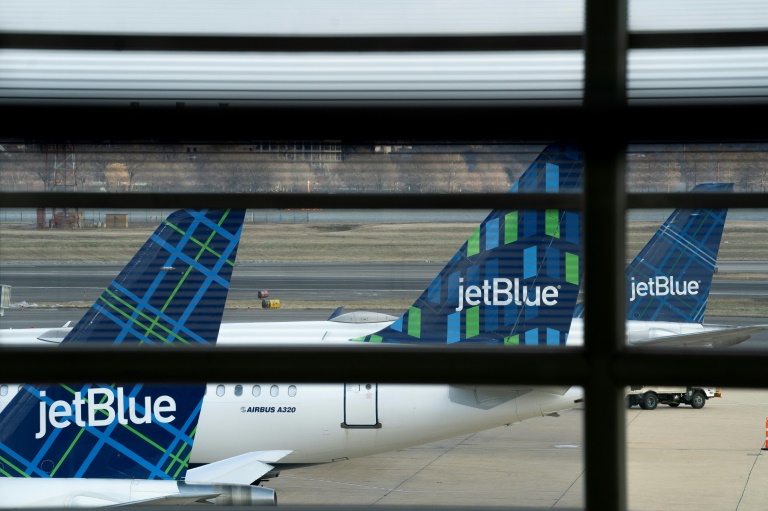
JetBlue Airways announced Tuesday a bid to acquire Spirit Airlines for $3.6 billion, setting up a bidding war with Frontier Airlines in the discount flying market.

The all-cash bid of $33 a share marks a 52 percent premium of Spirit’s price prior to its February 7 announcement of the deal with Frontier, according to JetBlue.

“JetBlue firmly believes its proposal constitutes a ‘superior proposal’ under Spirit’s merger agreement with Frontier and represents the most attractive opportunity for Spirit’s shareholders,” JetBlue said.

Spirit confirmed receipt of the “unsolicited” proposal from JetBlue, adding that its board would weigh the offer.

The board “will work with its financial and legal advisors to evaluate JetBlue’s proposal and pursue the course of action it determines to be in the best interests of Spirit and its stockholders,” Spirit said.

Frontier hit back at the JetBlue announcement and said its proposed merger with Spirit remained “in the best interest of consumers and shareholders,” a Frontier spokesperson said.

“Unlike the compelling Spirit-Frontier combination, an acquisition of Spirit by JetBlue, a high-fare carrier, would lead to more expensive travel for consumers. In particular, the significant East Coast overlap between JetBlue and Spirit would reduce competition and limit options for consumers.”

Frontier also said that JetBlue’s effort was “surprising” given an antitrust lawsuit by the Department of Justice challenging an alliance between American Airlines and JetBlue. 

In announcing the merger between Frontier and Spirit two months ago, executives from the two carriers argued they could together challenge larger US carriers and save about $1 billion in costs. 

JetBlue offered a similar argument Tuesday, saying the deal would “position JetBlue as the most compelling national low-fare challenger to the four large dominant US carriers.”

Shares of Spirit rose 22.4 percent Tuesday, while JetBlue fell 7.1 percent. Frontier Group rose 3.9 percent.

EU stocks sag on prospect of more Russia sanctions

EU stocks sagged on Tuesday after Brussels proposed further sanctions against Russia in response to killings in the Ukrainian town of Bucha that have prompted international condemnation.

Wall Street also ended lower after a top Federal Reserve official said the central bank could act more aggressively against inflation, while Asian equity markets rose. The dollar was mixed against major rivals.

Frankfurt stocks shed 0.7 percent while Paris slumped 1.3 percent after the European Union signaled it wants to impose sanctions on Russian coal and shipping.

“Tensions between Moscow and the West have ticked up, and that has prompted a decline in equities,” said market analyst David Madden at Equiti Capital, pointing to a thinly veiled threat by Russian President Vladimir Putin to withhold food exports to “hostile” nations.

Russia is a major exporter of wheat, as is Ukraine, where production is likely to be severely disrupted due to the invasion.

The EU however did not announce measures targeting Moscow’s oil exports. 

– ‘Pressure is growing’ –

Both Brent North Sea and WTI oil contracts dipped on Tuesday, after the prospects of sanctions on Russia crude had sent oil prices sharply higher Monday.

While coal sanctions are likely to have a limited impact, “the pressure is growing for this commitment to be extended to oil and gas supplies,” said market analyst Michael Hewson at CMC Markets UK. 

“It is becoming ever clearer that Russia is likely to become increasingly more isolated as sanctions get tightened and widened further, with the prospect that inflationary pressure in the global economy will remain more persistent in the coming months,” he added.

The additional EU sanctions came days after dozens of bodies were found on the streets in Bucha, northwest of Kyiv, though some countries remain worried of the potential fallout from targeting Russia’s economy.

Ukrainian President Volodymyr Zelensky blames Russian troops for the killings, but the Kremlin has denied responsibility.

Meanwhile a source told AFP that the United States, in coordination with the G7 and European Union, plans to ban “all” new investments in Russia on Wednesday, while the US Treasury said Washington has barred Russia from making debt payments using funds held at American banks.

In New York, major stock indices retreated after Fed Governor Lael Brainard said the US central bank was “prepared to take stronger action” to reduce inflation that has hit levels not seen since the 1980s.

The remarks helped lift the yield on the 10-year US Treasury note above 2.5 percent, well above where it was throughout the Covid-19 pandemic. 

“We already had the yields moving higher but after Lael Brainard’s comments, it just poured some fuel on the fire,” said Brad Bechtel, managing director at FX Jefferies.

US traders on Wednesday will be keeping a close eye on the minutes from the Fed’s most recent policy meeting, hoping for an insight into officials’ thinking over future monetary policy.

After the Fed’s expected quarter-point interest rate hike last month, central bankers have signaled a half-point increase is possible in May in light of soaring inflation, as strong jobs growth and other data suggest the US economy remains robust enough to absorb higher borrowing costs.

– Key figures around 2145 GMT –

New York – Dow: DOWN 0.8 percent at 34,641.18 (close)

New York – S&P 500: DOWN 1.3 percent at 4,525.12 (close)

New York – Nasdaq: DOWN 0.8 percent at 14,204.17 (close)

EURO STOXX 50: DOWN 0.8 percent at 3,917.85 (close)

London – FTSE 100: UP 0.7 percent at 7,613.72 (close) 

Frankfurt – DAX: DOWN 0.7 percent at 14,424.36 (close)

Paris – CAC 40: DOWN 1.3 percent at 6,645.51 (close)

Tokyo – Nikkei 225: UP 0.2 percent at 27,787.98 (close)

Hong Kong – Hang Seng Index: Closed for a holiday

Shanghai – Composite: Closed for a holiday

Brent North Sea crude: DOWN 0.8 percent at $106.64 per barrel

West Texas Intermediate: DOWN 1.3 percent at $101.96 per barrel

Euro/dollar: DOWN at $1.0903 from $1.0978 late Monday

Pound/dollar: UP at $1.3071 from $1.3114

Euro/pound: DOWN at 83.38 pence from 83.65 pence

Dollar/yen: UP at 123.60 yen from 122.78 yen

burs-rl/gw/cs/hs

Technology boosts pitchers for new baseball season

Pitchers and catchers will be given the option of using new technology to prevent sign-stealing as Major League Baseball looks to move on from its scandal-plagued recent past when the delayed new season finally gets under way on Thursday.

Five years after the Houston Astros claimed a controversial World Series victory over the Los Angeles Dodgers, baseball chiefs said Tuesday that clubs will be allowed to use new “PitchCom” equipment that has been successfully tested during Spring Training.

PitchCom is wearable technology that allows catchers and pitchers to communicate directly without needing to use hand signals — the traditional method of signaling what kind of pitches a batter will face.

Under the new technology, catchers wear a sleeve on their forearm with nine buttons that represent different pitches and the location where they will be thrown.

Messages from the catcher’s device are transmitted to a receiver fitted in the pitcher’s cap.

The Astros were fined $5 million and manager A.J. Hinch was suspended for a season after the MLB found the club had been using a camera hidden in the outfield to decode the signs being used by the Dodgers in the 2017 World Series.

The new technology — which is also aimed at speeding up the pace of play — has received broad support since being tested.

“Anything that can help the pitcher get the sign without anyone knowing what the sign is, we’re moving in the right direction,” was the verdict of Colorado Rockies director of pitching Steve Foster.

New York Yankees ace Luis Severino tested the system for the first time last weekend and was impressed.

“I think it was great,” Severino told reporters. “I was a little doubtful at the beginning, but when we started using it, it was really good. You know what pitch you’re going to throw right away.”

Thursday’s opening round of regular season fixtures comes after an acrimonious off-season dominated by the labor dispute between MLB owners and players.

– Dodgers favored –

The season had been due to start on March 31 but was delayed after negotiations for a new collective bargaining agreement became deadlocked.

The dispute came to an end last month after both sides reached agreement on a new deal that includes increased minimum salaries, a pre-arbitration bonus pool to reward top young players before they can negotiate new deals and a boost to the league’s luxury tax thresholds.

Designated hitters will replace batters in the National League, as they have for many years in the American League.

An expanded playoff format will see 12 teams advance, six from each league, adding two clubs to the post-season championship chase. 

The two top division winners in each league would receive first-round byes.

Bookmakers have installed the Dodgers as early favorites to repeat their World Series triumph from the pandemic-shortened 2020 season.

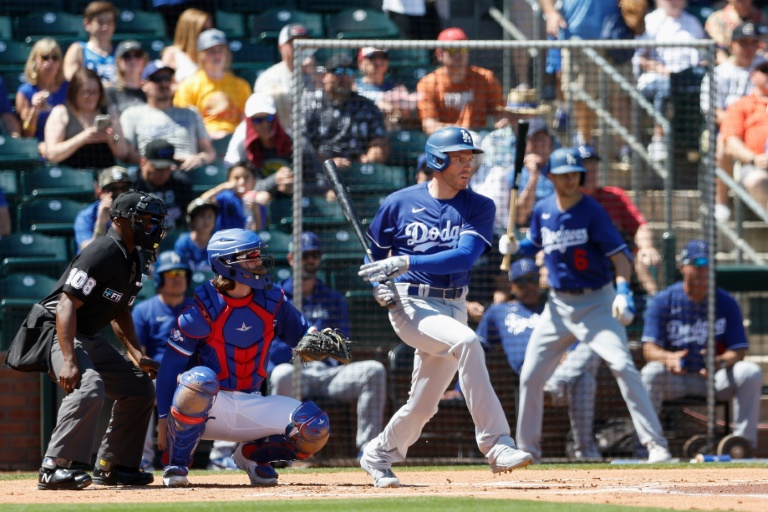
The Dodgers pulled off one of the coups of the off-season by prizing star first baseman Freddie Freeman away from the reigning champion Atlanta Braves.

Freeman, the National League Most Valuable Player in 2020, gives the Dodgers’ already formidable batting line-up another weapon as they chase an eighth World Series.

Although the Dodgers have not strengthened their starting rotation, and doubts continue to swirl around the availability of pitcher Trevor Bauer, who has effectively been frozen out of the league since the emergence of lurid allegations concerning his private life last year, the NL West powerhouses can still call on Walker Buehler, Clayton Kershaw and Julio Urias from the mound.

Dodgers manager Dave Roberts believes if his starters can stay healthy in 2022, his team will win a second title in three seasons.

“We are winning the World Series. Put it on record,” Roberts said last month.

“We are winning the World Series if our starting staff stays healthy. I know that’s vague, but that’s my answer. I think it’s about our starting pitching, just keeping our guys healthy.”

Close Bitnami banner
Bitnami