US Business

Publisher signs over Russian printing houses to Nobel winner

Norwegian publisher Amedia said Tuesday it was transferring control over its Russian printing houses to Nobel Peace Prize winner Dmitry Muratov, chief editor of independent newspaper Novaya Gazeta.

The announcement came as the media group also announced it was leaving Russia over the country’s invasion of Ukraine.

“With what we are currently witnessing in Ukraine from the Russian authorities, it is impossible for Amedia to continue the printing business in the country,” Amedia chief executive Anders Moller Opdahl said in a statement.

“Amedia is now withdrawing, in a way that leaves control to Peace Prize laureate Muratov,” Opdahl added.

Board chairman Andre Stoylen said the company believed this was “the best possible solution given the prevailing circumstances.”

“In this way, the printing houses will be able to continue being important for independent media in Russia in the future,” Stoylen said.

Muratov, who together with Maria Ressa of the Philippines was awarded the 2021 Nobel Peace Prize, would have full control of daily operations and “exercise all shareholder rights at his own discretion” of the four printing houses wholly owned by Amedia’s Russian subsidiary.

Novaya Gazeta, which was already using the printing presses of Amedia’s subsidiary, announced in late March that it had suspended its publication until the end of Russia’s military actions in Ukraine.

“This will support free expression of opinion, and all profits will be contributed to promoting it. Independent media are the antidote to war. We will take care of the open printing business and the employees,” Muratov said in a statement, adding his paper welcomed the resource with “great gratitude.”

Amedia also said it had written down the value of its Russian operations from 38 million Norwegian kroner ($4.4 million, 4 million euros) to zero.

In total the Norwegian publisher owns six printing houses in Russia, four of them wholly-owned and two together with Russian minority shareholders.

“Amedia is working on a solution with the minority shareholders in the last two printing companies, so that the group can withdraw completely from Russia,” the company said, adding that funds from a potential future sale would be used to support independent media in Russia.
Twitter announces Elon Musk to join board of directors

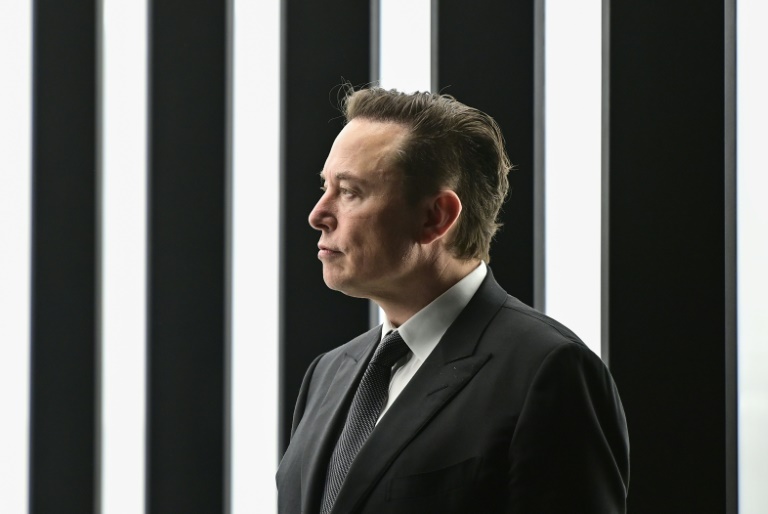
Elon Musk will join Twitter’s board of directors, the social network’s chief executive announced Tuesday, a day after the Tesla boss bought a major stake in the company and became its largest shareholder.

“I’m excited to share that we’re appointing @elonmusk to our board! Through conversations with Elon in recent weeks, it became clear to us that he would bring great value to our Board,” Twitter CEO Parag Agrawal said in a tweet.

He called Musk “a passionate believer and intense critic of the service which is exactly what we need” at the company.

Currently the world’s richest man and with more than 80 million followers on the microblogging platform, Musk on Monday disclosed a purchase of 73.5 million shares or 9.2 percent of Twitter’s common stock.

The billionaire is a frequent user of the platform, regularly mixing in inflammatory and controversial statements about current affairs or other public figures with remarks that range from whimsical to business-focused.

He has also sparred repeatedly with federal securities regulators, who cracked down on his social media use after a purported effort to take Tesla private in 2018 fell apart.

Musk has criticized Twitter for its approach to freedom of speech, launching a poll last month in which he asked if the network adheres to the principle — to which a majority of respondents voted no.

Musk will remain on Twitter’s board until the company’s annual shareholder’s meeting in 2024, and he has promised not to take a stake larger than 14.9 percent in the company during that time, according to a securities filing.

Kinder recalls chocolate eggs after salmonella cases

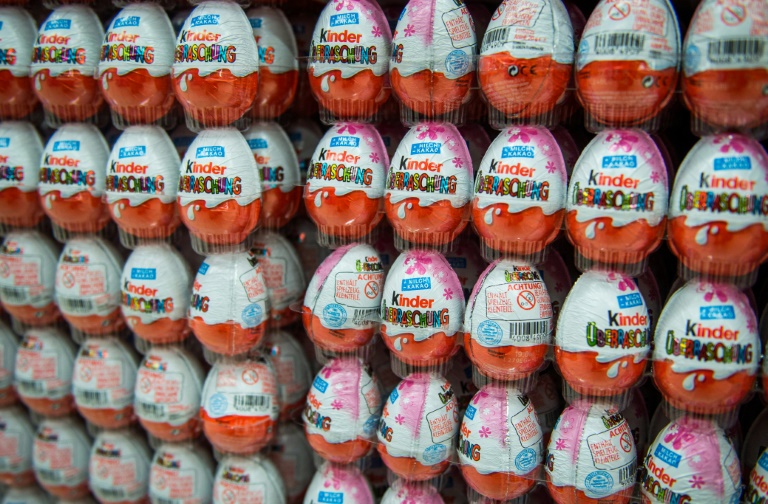
Italian confectionary group Ferrero said Tuesday it has recalled Kinder chocolate eggs in several European countries over possible links to dozens of salmonella cases less than two weeks before Easter.

While none of the toy-filled Kinder Surprise chocolate eggs or other products has been proven to contain salmonella, Ferrero told AFP that it issued the recall as a precautionary step.

It concerns products from Ferrero’s factory in the Belgian town of Arlon that were put on sale in Belgium, Britain, France, Germany and Sweden.

British authorities warned the public on Saturday about the Kinder products “in connection with a potential link to a salmonella outbreak” that included children and said Ferrero had issued a recall as a “precautionary step”.

An official said Tuesday that the number of salmonella cases in Britain had now risen to 63.

In France, 21 cases have been reported and 15 reported having eaten the Kinder products that have now been recalled, according to the French public health service.

The median age of those stricken is four years old.

Salmonella is a type of bacteria that can cause symptoms including diarrhoea, fever and stomach cramps in humans, and is one of the most common food-borne infections.

“None of our Kinder products put on the market have tested positive for salmonella and we have not received any complaints from consumers,” the company said in a statement released Monday on its French website.

In France, the recall totals several hundred tonnes of products, a company spokeswoman said.

The recall concerns the original 20-gram Kinder Surprise milk chocolate egg that contains a small plastic capsule with a toy inside, as well as a larger 100-gram version, with last sale dates between the end of June and end of October 2022.

Kinder Schoko-Bons, Kinder Mini Eggs, Kinder Happy Moments, Kinder Mix and a number of other products have also been recalled. 

Germany closes Russian darknet marketplace Hydra

German police said Tuesday they have taken down Russian-language illegal darknet marketplace Hydra, the largest such network in the world, and seized bitcoins worth 23 million euros ($25 million).

Founded in 2015, Hydra sold illegal drugs but also stolen credit card data, counterfeit currency and fake identity documents, masking the identities of those involved using the Tor encryption network.

The marketplace had around 17 million customer accounts and over 19,000 vendor accounts, according to the BKA federal police.

“The Hydra market was probably the illegal marketplace with the highest turnover worldwide” with sales amounting to at least 1.23 billion euros in 2020 alone, it said in a statement.

Investigators have taken control of Hydra’s servers in Germany and the marketplace has been “shut down”, the BKA said.

Suspects are being investigated for “operating criminal trading platforms on the internet on a commercial basis”, the BKA said. 

Investigators do not know whether Hydra also has servers in other countries but “assume this was the main hub” of the network’s infrastructure, a spokesman for Frankfurt prosecution service’s internet crime office ZIT told AFP.

Investigations into the illegal marketplace started in August 2021 and also involved several US authorities, according to the BKA.

The “Bitcoin Bank Mixer” provided by the platform, a service for concealing digital transactions, had made investigations especially difficult, it added. 

The BKA said it had published a seizure banner on the marketplace’s website.

– ‘Uniquely sophisticated operations’ –

The secret “darknet” includes websites that can be accessed only with specific software or authorisations, ensuring anonymity for users.

Such networks have faced increased pressure from international law enforcement after a boom in usage during the coronavirus pandemic.

The United States, Russia, Ukraine and China dominate in terms of value both sent to and received from darknet markets, according to a 2021 report from blockchain forensics firm Chainalysis.

Hydra accounted for 75 percent of sales in the global darknet market in 2020, the report said.

“Hydra is a big driver of Eastern Europe’s unique crypto crime landscape. Eastern Europe has one of the highest rates of cryptocurrency transaction volume associated with criminal activity,” it said.

The marketplace had become particularly popular with users by developing creative delivery methods, the Chainalysis report added.

“Hydra has developed uniquely sophisticated operations, such as an Uber-like system for assigning drug deliveries to anonymous couriers, who drop off their packages in out-of-the-way, hidden public locations, commonly referred to as ‘drops’,” it said. 

“That way, no physical exchange is made, and unlike with traditional darknet markets, vendors don’t need to risk using the postal system.”

A German-led police sting also last year took down notorious darknet marketplace DarkMarket, which had nearly 500,000 users and more than 2,400 vendors worldwide.

The marketplace had offered for sale “all kinds of drugs” as well as “counterfeit money, stolen and fake credit card data, anonymous SIM cards, malware and much more”, prosecutors said.

Hit by sanctions, Lada factory town braces for tough times

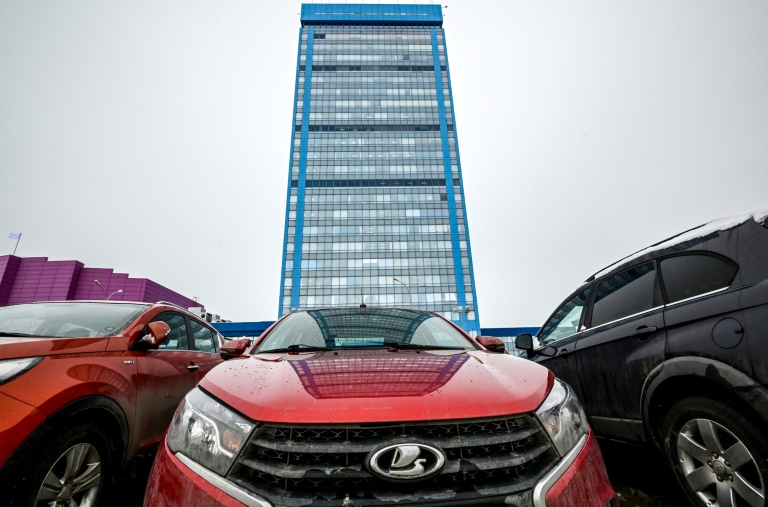
For generations the Russian city of Tolyatti has been synonymous with leading car manufacturer Avtovaz, maker of one of the country’s best-known brands, the Lada automobile.

But with the West piling sanctions on Russia over its military action in Ukraine, Tolyatti and the workers of Avtovaz are bracing for tough times.

Gathered in a small apartment in the city’s Avtozavodsky district, a residential area surrounding the sprawling factory, several workers from the “Yedinstvo” (Unity) trade union said they were worried about their future.

“It’s a factory town. Everyone here works either for the factory or for the police,” said Alexander Kalinin, 45, a freight elevator operator at Avtovaz for 15 years.

Founded in the 1960s for the Soviet Union to meet the growing demand for affordable cars, the Avtovaz factory’s flagship Lada vehicles became widely known for their simplicity and durability.

The factory was set up in the town of Stavropol about 780 kilometres (485 miles) southeast of Moscow, which was renamed Tolyatti after Italian Communist politician Palmiro Togliatti.

The plant survived the economic crisis that followed the 1991 collapse of the Soviet Union and was eventually taken over by French auto group Renault.

“For Tolyatti, the factory is everything. The whole city was built around it,” said 33-year-old Irina Myalkina, a worker in the spare parts warehouse for 11 years.

“When I started, I was full of enthusiasm, I hoped for a good income. I still hope,” Myalkina added with a sad smile.

– ‘People are nervous’ –

Most of the factory’s assembly lines stopped running after Moscow moved troops into Ukraine on February 24 and sanctions meant it could no longer receive components from aboard.

Workers are on paid leave, with two-thirds of their usual wage, which for Myalkina means receiving 13,000 rubles (about $140) instead of her usual 20,000 rubles ($215).

Prices for food and other basic goods are soaring, in Tolyatti as elsewhere in Russia.

“People are nervous,” Myalkina said.

After completing its acquisition of Avtovaz, Renault funnelled billions of euros into the Soviet-era factory, but also carried out huge staff cuts, leaving fewer than 40,000 workers out of 70,000.

“There were many problems with the departure of employees, but nevertheless there was a clear positive trend,” said Andrei Yakovlev, head of the Institute for Industrial and Market Studies at Moscow’s Higher School of Economics.

“A major Russian car manufacturer was being born.” 

Now its future is very much in doubt, with Renault, under intense pressure to boycott Russia, considering whether to withdraw from Avtovaz. 

No one from the company would agree to talk and it even refused to give access to the Lada Museum in Tolyatti during a recent visit.

When AFP was filming near the factory, Avtovaz security called police, who questioned and released the journalists after several hours.

The factory’s employees have been forced to take their three weeks of summer vacation in April, while Renault considers its options.

– Second jobs –

Many employees have already been forced to take up second jobs, like Leonid Emchanov, 31, a mechanic now moonlighting as a security guard to feed his family. 

“I am the only one in the family who works. I have two children, my wife… is on maternity leave. I have to work two jobs, but even this is not enough,” he said.

If Avtovaz is unable to survive this crisis, its demise would mark the end of an industrial era for Russia, and for its many Lada enthusiasts.

In an underground garage in Tolyatti, two men in vintage overalls were busy at work on an ’80s Lada Niva, a legendary four-wheel drive vehicle, that was shining with a fresh coat of red paint. 

“Since childhood, my whole life has been linked to the factory,” said one of the mechanics, Sergei Diogrik.

“All our relatives in Tolyatti worked at the factory and I myself worked there. I had no choice, everything is related to the company,” he added. 

The 43-year-old founded and runs the Lada History Club, bringing together fans of the Soviet car from all over the world.  

“It was a powerful producer. The record in the early 1980s was 720,000 cars per year,” he said, compared to nearly 300,000 cars produced in 2021.

“It was fashionable to come here. Now the fashion is for young people to go to Moscow or somewhere else,” Diogrik added.

He said he is trying to remain hopeful, pointing out that the factory and its workers already survived the economic hardships of the 1990s.

“A Russian person who survived the 90s, especially in Tolyatti, will cope now, everything will be fine.”

Oil extends rally as EU considers more Russia sanctions

Oil prices jumped further Tuesday as the European Union considered further sanctions against major crude producer Russia in response to killings in the Ukrainian town of Bucha that have prompted international condemnation.

Elsewhere, European and Asian stock markets diverged and the dollar dipped versus major rivals.

Oil rising again “is bad news for corporates looking to manage cost pressures, and for consumers already struggling to stomach higher energy bills”, noted Russ Mould, investment director at AJ Bell.

While countries in Europe — particularly Germany — rely heavily on energy from Russia, the possibility of an oil embargo sent both main crude contracts sharply higher Monday.

Brent North Sea and WTI oil continued their rise on Tuesday, each putting on more than 1.5 percent.

That pared some of the sharp losses seen Friday in reaction to a pledge by Washington and other major economies to unleash millions of barrels from their stockpiles to keep a lid on prices, which are fanning already high inflation.

The EU is considering hitting Russia with sanctions on oil or coal, a top official said Tuesday, after dozens of bodies were found on the streets in Bucha, northwest of Kyiv, though some countries remain worried of the potential economic fallout.

Ukrainian President Volodymyr Zelensky blames Russian troops for the killings, but the Kremlin has denied responsibility.

White House National Security Advisor Jake Sullivan signalled more US sanctions were on the way this week.

The continued uncertainty caused by the war in Ukraine, and blow to the global economy it is expected to deal, was unable to prevent another healthy performance Monday on Wall Street.

“Despite all the concerns, equities remain the best bet to achieve returns above today’s elevated inflation,” said markets strategist Louis Navellier.

Equities trading was tepid in Asia on Tuesday, with Hong Kong, Shanghai and Taipei closed for holidays.

Tokyo’s blue-chip shares ended higher, driven by buying of high-tech shares, though the yen’s gyrations weighed on the market.

Traders will be keeping a close eye on the release this week of minutes from the Federal Reserve’s most recent policy meeting, hoping for an insight into officials’ thinking over future monetary policy.

After the Fed’s expected quarter-point interest rate hike last month, there are increasing bets on a half-point lift in May in light of soaring inflation and strong jobs data that suggest the US economy remains robust enough to absorb higher borrowing costs.

– Key figures around 0930 GMT –

Brent North Sea crude: UP 1.5 percent at $109.15 per barrel

West Texas Intermediate: UP 1.7 percent at $104.98 per barrel

London – FTSE 100: DOWN 0.1 percent at 7,551.11 points

Frankfurt – DAX: UP 0.3 percent at 14,557.93

Paris – CAC 40: DOWN 0.4 percent at 6,703.88

EURO STOXX 50: FLAT at 3,952.83

Tokyo – Nikkei 225: UP 0.2 percent at 27,787.98 (close)

Hong Kong – Hang Seng Index: Closed for a holiday

Shanghai – Composite: Closed for a holiday

New York – Dow: UP 0.3 percent at 34,921.88 (close)

Euro/dollar: UP at $1.0983 from $1.0978 late Monday

Pound/dollar: UP at $1.3138 from $1.3114

Euro/pound: DOWN at 83.59 pence from 83.65 pence

Dollar/yen: DOWN at 122.74 yen from 122.78 yen

Scottish town welcomes banking lifeline

Donna Corrigan pops into her local supermarket to pay OneBanks a visit, laden with a heavy box of coins to deposit into her bank account.

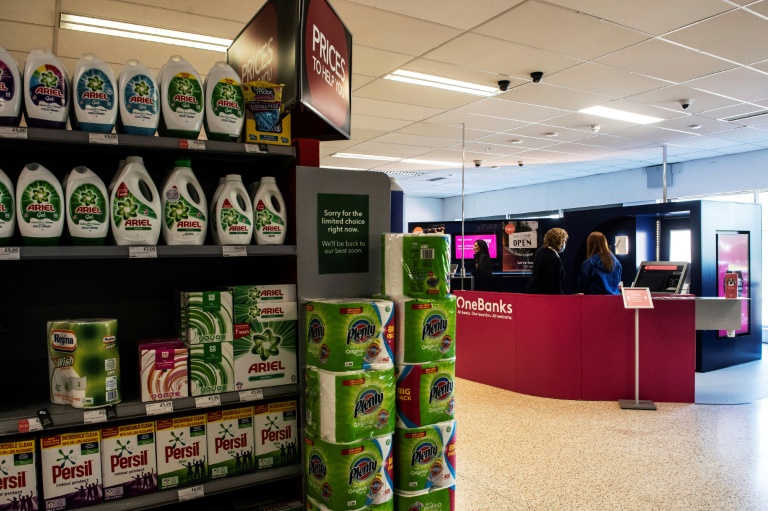
After the closure of its last bank branch in 2018, the Scottish town of Denny has welcomed a hi-tech startup offering everyday banking services inside the town’s Co-op grocery store.

Looking onto shelves filled with Heinz baked beans and Kinder Surprise chocolate eggs, OneBanks’ kiosk — comprising staffed counter services, a cash machine and two computer tablets — opened in late 2020.

The kiosk offers Denny’s 8,000 inhabitants an alternative to traditional bank branches after the rise of online banking allowed lenders battered by the global financial crisis more than a decade ago to save costs by permanently closing outlets.

This is continuing to occur in big numbers.

Among Britain’s biggest banks, HSBC and Lloyds last month said they would close a further 129 branches combined as customers increasingly switched to online banking during the pandemic.

OneBanks, which has raised around five million pounds ($6.6 million, six million euros) from various investors, acts as a go-between for more than 30 banks and their customers.

– ‘Like a regular bank’ –

The OneBanks kiosk “can do everything — it’s like a regular bank for me”, Corrigan, 40, told AFP.

“I’m not a business, I’m just a normal customer who just wants to withdraw cash. So it’s useful for me.”

Behind the counter, a staff member drops spare change into a money-counting machine while making small talk.

OneBanks gives customers physical access to banking services for free. Banks subscribe to the startup’s services to connect with their clients.

Customers can deposit or withdraw cash and pay bills, while advisors provide help to the less tech-savvy.

The disappearance of Denny’s banks left inhabitants with a 20-minute drive to the nearest branches in Cumbernauld, Falkirk or Stirling near to Glasgow.

British consumer group Which? predicts about 5,000 UK bank branches, around half the total, will have disappeared between 2015 and 2022, with Scotland worst affected.

– Dependent on cash –

Swathes of Britain’s population remain dependent on cash, despite the surging popularity of both internet use and contactless payments during the coronavirus pandemic.

The Royal Society of Arts charity estimates almost 20 percent of Britons — particularly the elderly and those in rural areas — would find it hard to cope without cash.

Yet in Denny’s neighbouring town of Bridge of Allan, there is not a branch in sight.

The last bank “closed about four years ago”, said hardware store manager Jennifer Wilson.

“A lot of our customers prefer to pay in cash to keep an eye on what they’re spending,” she added.

Wilson takes 40 percent of payments in cash.

– ‘Cold and sterile’ –

Retired university professor Richard Kilborn laments the lack of human contact now that Bridge of Allan’s three branches have vanished.

“As a member of the older generation, you get used to certain changes, but I also actually relished the person-to-person contact within the bank,” he told AFP.

“Now things have become cold and sterile.”

OneBanks hopes to change that with plans to roll out about 15 additional UK banking kiosks by the end of the year, on top of the three that it has in Scotland.

The group also has international ambitions.

“The problem that banks have — in terms of needing to close branches but also still needing to have some sort of physical presence — is a global problem,” OneBanks founder and chief executive Duncan Cockburn told AFP.

“And therefore I really do see OneBanks as a global solution.”

The broader UK finance sector is working towards addressing the problem.

Top lenders like Barclays, HSBC, Lloyds and NatWest have agreed to fund alternative solutions.

The industry tested various options including OneBanks kiosks. It also wants to improve post office facilities and has trialled banking hub services in conjunction with lenders.

Watchmakers tinker with new materials to draw new buyers

Lab-made diamonds, recycled plastic and 3D printing: this year’s Geneva watch fair was teeming with timepieces crafted from new materials, aimed at seducing a new generation of luxury watch connoisseurs.

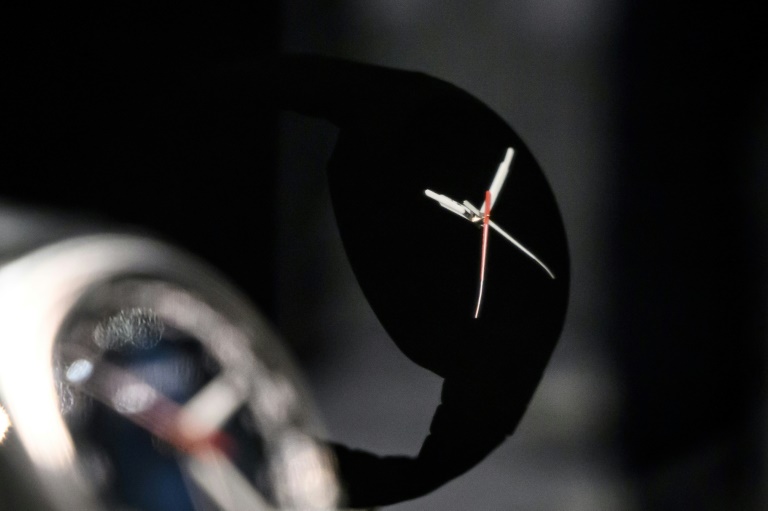
H. Moser, a niche brand producing 2,000 watches a year for wealthy collectors, this year presented a watch covered in Vantablack, a super-black coating that absorbs nearly all light.

Perched against a black background, the watch, which is still in the concept stage, creates the illusion of a black hole, with only the coloured hands visible to the naked eye.

The material, consisting of carbon nanotubes and made by NanoSystems, is considered the darkest pigment in the world.

“I wanted to bring something different than what will be on display in shop windows three months from now,” company chief Edouard Meylan told AFP at the Watches and Wonders fair.

“I wanted to show the future of materials,” he said adding that he had aimed to provide a view to how the watch industry might look five years down the line. 

While the luxury brand has already used Vantablack in its clock faces, this exhibit model is completely covered.

For now, it cannot be touched since the material could lose its properties. More work is needed before it can actually be worn.

– Handcrafted technology –

Black is in high demand this year with new luxury virtuosos, according to Vincent Gregoire, who heads men’s fashion and accessories for the Parisian fashion consultancy NellyRodi.

“This is a clientele that wants beauty, hyper-luxury, with materials of the future, full of technology, but expertly handcrafted,” he said.

Their taste evokes the “Anish Kapoor universe”, he said, referring to the British sculptor who sparked a scandal in 2016 when he bought the exclusive right to use Vantablack in the art field.

A new generation of luxury lovers is emerging, Gregoire said, including a category of “agitators” who are fans of street culture and salvaging, and who want to use their purchasing power for “activist action”.

At a stand dedicated to innovation, the Oris brand is showing off how it recycles plastic waste, shredding it to make a material that resembles multi-coloured marble for its clock faces.

– Lab diamonds-

Tag Heuer, owned by French luxury group LVMH, has meanwhile broken an industry taboo by, for the first time, using diamonds made in a laboratory in one of its flagship models.

These diamonds, crafted from chemical deposits, have not been used to replace their shiny, mine-derived peers.

Instead, they have been chosen to explore how the new technology, which can produce uniquely shaped stones, can provide the dial with a new light-catching texture.

The brand hopes this new technology will allow it to explore new possibilities while remaining firmly anchored in high-end luxury. 

This watch carries a price tag of 350,000 Swiss francs ($380,000, 345,000 euros).

“Lab diamonds have a place in the market,” said Tobias Kormind, head of online jewellery retailer 77Diamonds, enthusing over the watch displayed on Tag Heuer’s website.

“People buy lab diamonds for many reasons, some for affordability reasons, some for environmental reasons,” he said.

He stressed though that “over the long term, natural diamonds are the ones that remain rare and investable.”

Cartier’s stand certainly sparkles with plenty of natural diamonds.

But the jeweller, owned by Richemont, has also dabbled in new technologies this year.

Using 3D printing, it has created a new collection called “Coussin”, with a casing that cedes slightly to pressure before plumping back to its initial shape, like the cushion it is named after.

Oil extends rally on Russia sanctions bets, stocks edge higher

Oil prices extended gains Tuesday on the prospect of further sanctions on Russia for alleged “atrocities” in some occupied Ukrainian cities, while equities edged up after a rally in New York and Europe.

European Union officials were discussing new measures against Moscow after reports — denied by the Kremlin — that troops had executed civilians.

Among the punishments could be a ban on imports of Russian crude, following a similar move by the United States and Britain.

White House National Security Advisor Jake Sullivan also signalled more US sanctions were on the way this week.

While Europe’s economy — particularly Germany’s — relies heavily on energy from Russia, the possibility of an embargo sent both main contracts sharply higher Monday, and they continued their rise in Asia, putting on more than one percent.

That pared some of the sharp losses seen Friday in reaction to a pledge by Washington and other major economies to unleash millions of barrels from their stockpiles to keep a lid on prices, which are fanning already high inflation.

It also offset an expected hit to demand in China from lockdowns in parts of the country — including Shanghai, the biggest city — sparked by a wave of Omicron outbreaks.

“In the wake of ‘Russian atrocities’ claims and the ensuing public outrage, there is a strong chance we could see another layer of sanctions on Russian energy,” said SPI Asset Management’s Stephen Innes. 

“The receptiveness on the part of Europe (including Germany) to refrain from importing Russian gas has put a bid under and should keep energy prices supported.”

The continued uncertainty caused by the war in Ukraine, and the blow to the global economy it is expected to deal, was unable to prevent another healthy performance on Wall Street, where the Nasdaq’s surge led all three main indexes higher.

“Despite all the concerns, equities remain the best bet to achieve returns above today’s elevated inflation,” said markets strategist Louis Navellier.

Trade was tepid in Asia, with Hong Kong, Shanghai and Taipei closed for holidays but most markets rose.

Tokyo, Sydney, Seoul, Singapore, Jakarta, Bangkok and Wellington were slightly up, though Mumbai and Manila dropped.

London, Paris and Frankfurt all opened on the front foot.

Traders will be keeping a close eye on the release this week of minutes from the Federal Reserve’s most recent policy meeting, hoping for an insight into officials’ thinking over monetary policy.

After last month’s expected 0.25 percentage point interest rate hike, there are increasing bets on a half-point lift in May in light of soaring inflation and strong jobs data that suggest the economy remains robust enough to absorb higher borrowing costs.

And National Australia Bank’s Tapas Strickland added: “Profit reporting season in the US kicks off next week and it will be interesting to see how firms are interpreting the tea leaves, and whether earnings guidance is revised down.”

– Key figures around 0720 GMT –

Tokyo – Nikkei 225: UP 0.2 percent at 27,787.98 (close)

Hong Kong – Hang Seng Index: Closed for a holiday

Shanghai – Composite: Closed for a holiday

London – FTSE 100: UP 0.1 percent at 7,567.98

Brent North Sea crude: UP 1.6 percent at $109.20 per barrel

West Texas Intermediate: UP 1.6 percent at $104.93 per barrel

Euro/dollar: UP at $1.0984 from $1.0978 late Monday

Pound/dollar: UP at $1.3142 from $1.3114

Euro/pound: DOWN at 83.56 pence from 83.65 pence

Dollar/yen: DOWN at 122.66 yen from 122.78 yen

New York – Dow: UP 0.3 percent at 34,921.88 (close)

Ecuador banana industry slips over war in Ukraine

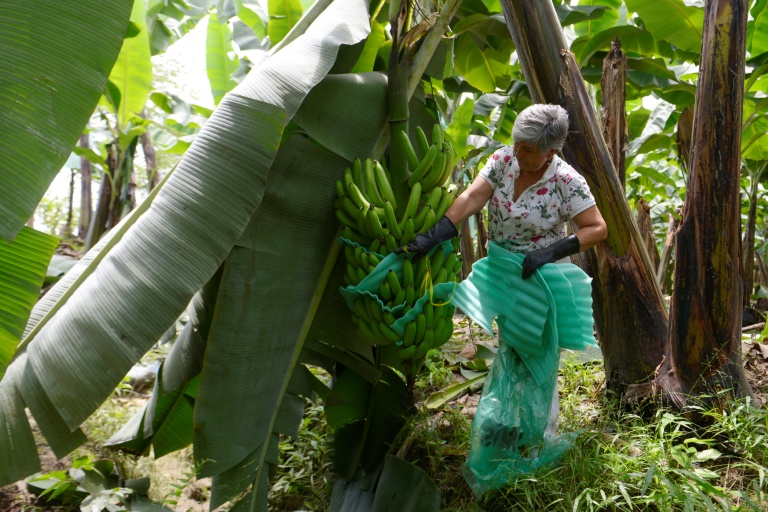
Until recently, the incessant bustle of Ecuadoran banana plantations provided evidence of the industry’s robust export business. But from one week to the next, the groves have fallen silent — trade victims to a conflict half a world away.

Ecuador is the world’s largest banana exporter, but the sector has been hammered by the war in Ukraine. Now, with nowhere to send them, containers of the rotting fruit are piling up not far from where they were originally harvested.

“One in every five bananas produced in Ecuador goes to Ukraine and Russia,” said Franklin Torres, president of Ecuador’s FENABE banana producers federation.

“This war really affected us in that sense.”

The vast majority of that portion goes to Russia, where banana sales are worth $698 million a year to Ecuador, which usually sends almost two million boxes of bananas a week to the eastern European neighbors.

But due to international transport sanctions over its invasion of Ukraine, Russia is not receiving its cargos of bananas.

The conflict has put the brakes on production in El Triunfo, close to Guayaquil, the site of Ecuador’s main port..

“The banana producers are finished, I have not processed a single box for three weeks,” said Mireya Carrera, 62, the owner of the Thalia banana plantation.

“The staff are leaving on their own without being fired because I cannot pay them.”

She used to fill three containers with 3,000 20-kilogram (43-pound) boxes of bananas from her 28 hectare plantation.

“Now I have 7,000 bunches with no buyer,” she told AFP.

– ‘Price crisis’ –

The industry had already been hit by falling prices.

Torres said it costs $5.50 to produce a box of bananas, and even though the internal sales price is $6.25, “right now we’re receiving less than $2 for each box of bananas, we’re receiving $1 or $1.20.

“Truly it’s an insult to any type of business. What we’re receiving is shameful and it’s not even worth picking them.”

He said the industry has lost “more than $10 million in three weeks.”

“Every year we have the problem of low prices, but now it has become impossible to get a contract for bananas. I prefer to give them away,” said Carrera.

Seeing Ecuador’s surplus of bananas, other markets “have started reducing their price offers,” said Richard Salazar, president of the ACORBANEC association for banana commercialization and export.

According to Jose Antonio Hidalgo, director of the AEBE association of banana exporters, within a week of the war starting, the bananas destined for Russia and Ukraine needed a new market, “causing a price crisis.”

Around a million boxes have remained unsold in the last month.

Faced with the prospect of a surplus sending the domestic price plummeting, the banana business union decided to donate them to local food programs.

Ecuador has 160,000 hectares of banana plantations that in 2021 generated almost $3.5 billion in sales around the world.

The South American country has more than 260 banana exporters.

– Unrealistic utopia –

The banana industry generates 50,000 direct jobs and 250,000 indirect ones in Ecuador.

The war has already cost around 6,000 permanent employees their jobs, according to ACORBANEC.

The difficulties have also impacted he El Porvenir plantation in neighboring Puerto Inca, which neighbors Guayaquil.

Having sold a container with more than 1,000 boxes “what we received is to pay salaries,” said the plantation’s administrator Lourdes Cedeno.

El Porvenir already had to halve salaries in March as it was.

Banana producers, who protested in Guayaquil last week, want the government to help them out by buying their fruit for its food programs.

President Guillermo Lasso said that “is not realistic. We need to place them in other markets in the world.”

But for Salazar, “Putting them in other markets is utopian. There’s no other market in the world that can buy as much as Russia,” he said.

Close Bitnami banner
Bitnami