
US Business

Oil extends rally on Russia sanctions bets, stocks wobble

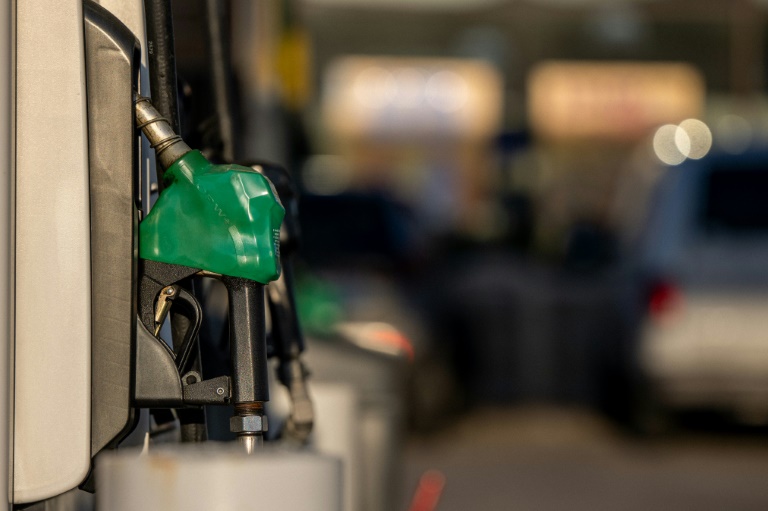
Oil prices extended gains Tuesday on the prospect of further sanctions on Russia for alleged “atrocities” in some occupied Ukraine cities, while equities struggled to build on a rally in New York and Europe.

European Union officials were discussing new measures against Moscow after reports — denied by the Kremlin — that troops had executed civilians.

Among the punishments could be a ban on imports of Russian crude, following a similar move by the United States and Britain.

White House National Security Advisor Jake Sullivan also signalled more US sanctions were on the way this week.

While Europe’s economy relies heavily on energy from Russia, the possibility of an embargo sent both main contracts sharply higher Monday, and they continued their rise in Asia, putting on more than one percent.

That pared some of the sharp losses seen Friday in reaction to a pledge by Washington and other major economies to unleash millions of barrels from their stockpiles to keep a lid on prices, which are fanning already high inflation.

It also offset an expected hit to demand in China from lockdowns in parts of the country — including Shanghai, the biggest city — sparked by a wave of Omicron outbreaks.

The continued uncertainty caused by the war in Ukraine, and the blow to the global economy it is expected to deal, was unable to prevent another healthy performance on Wall Street, where the Nasdaq’s surge led all three main indexes higher.

“Despite all the concerns, equities remain the best bet to achieve returns above today’s elevated inflation,” said markets strategist Louis Navellier.

However, trade was tepid in Asia, with Hong Kong, Shanghai and Taipei closed for holidays.

Tokyo, Sydney, Singapore, Jakarta and Wellington were slightly up, while Seoul and Manila dropped.

Traders will be keeping a close eye on the release this week of minutes from the Federal Reserve’s most recent policy meeting, hoping for an insight into officials’ thinking over monetary policy.

After last month’s expected 0.25 percentage point interest rate hike, there are increasing bets on a half-point lift in May in light of soaring inflation and strong jobs data that suggest the economy remains robust enough to absorb higher borrowing costs.

And National Australia Bank’s Tapas Strickland added: “Profit reporting season in the US kicks off next week and it will be interesting to see how firms are interpreting the tea leaves, and whether earnings guidance is revised down.”

– Key figures around 0200 GMT –

Tokyo – Nikkei 225: UP 0.1 percent at 27,756.54

Hong Kong – Hang Seng Index: Closed for a holiday

Shanghai – Composite: Closed for a holiday

Brent North Sea crude: UP 1.7 percent at $109.31 per barrel

West Texas Intermediate: UP 1.7 percent at $105.00 per barrel

Euro/dollar: DOWN at $1.0969 from $1.0978 late Monday

Pound/dollar: UP at $1.3117 from $1.3114

Euro/pound: DOWN at 83.62 pence from 83.65 pence 

Dollar/yen: DOWN at 122.60 yen from 122.78 yen

New York – Dow: UP 0.3 percent at 34,921.88 (close)

London – FTSE 100: UP 0.3 percent at 7,558.92 (close)
Starbucks interim CEO Schultz to suspend share buyback program

The newly installed interim chief executive of Starbucks Howard Schultz announced Monday he will suspend a share repurchase program as the chain navigates a challenging landscape amid a growing unionization push.

“Starting immediately, we are suspending our share repurchasing program,” the 68-year-old billionaire said in a letter to employees after he resumed leadership of the coffee giant he ran two times previously.

“This decision will allow us to invest more profit into our people and our stores — the only way to create long-term value for all stakeholders.”

Shares fell sharply on the news.

Buyback programs are popular with investors and generally have an appreciative impact on share price. 

But the buybacks have been a target of company critics, including union backers, who say they demonstrate the company’s indifference towards workers. 

Starbucks announced in October 2021 that it was reinstating its buyback program, planning $20 billion in repurchases and dividends over the next years, and as recently as last month confirmed the plans were still in place as it announced Schultz’s appointment as interim CEO and the departure of Kevin Johnson from the company’s helm.

Starbucks has struggled of late to manage rising costs, a tight labor market and supply chain problems caused by the ongoing Covid-19 pandemic.

– Rising union movement –

The company has largely been viewed positively by many political progressives in the United States for its stance on gay marriage, race relations, the environment and other issues. 

But the firm has struggled to find an effective response to the campaign by organized labor, which picked up momentum in December when two stores in upstate New York became the first in the United States to vote to unionize. 

The movement — which has been propelled by mostly younger staff frustrated over pandemic working conditions and seeking more say — has now spread to more than 150 stores.

“We are overworked, exhausted and still being asked to pick up the slack,” workers at a Boston store wrote in a letter to Schultz that announced a unionization campaign and was posted on Twitter by Starbucks Workers United.

“You and your company have said and written a lot about how much you care about your employees, and your vision for a company that does everything through the lens of humanity,” the letter read. “We simply want to help you make that vision a reality.”

Labor backers have also complained of illegal firings of union supporters.

Progressive Senator Bernie Sanders, who has criticized the share buybacks, slammed “union busting” at Starbucks and last month called for the company to recognize a “unionized workforce that can collectively bargain for better wages, better benefits, safer working conditions and reliable schedules.”

The coffee chain has said it respects the right of workers to organize, but that the issues raised by workers do not justify a union. It has also defended the company’s right to speak out against unionization.

Schultz, who grew Starbucks from a small Seattle coffee chain into a global juggernaut in his two prior stints as chief executive, did not mention the union in his missive, but said he would work to improve employee morale.

“My first work is to spend lots of time with partners. To lift up voices,” Schultz said as he called “for us each to be transparent with one another and become accountable for building the future of our company.”

A note from Briefing.com described Schultz’ announcement on buybacks as a “surprise” that “is leaving a bad taste in shareholders’ mouths today.”

Shares closed 3.7 percent lower at $88.09.

Twitter shares take wing, oil prices rebound

Stock markets were relatively subdued on Monday while oil prices rose as Western nations eyed more sanctions on Russia, but Twitter stood out as its shares soared after Elon Musk purchased a major stake in the social network.

Twitter’s stock soared more than 25 percent after news of the Tesla boss’s investment.

According to a document filed with the US Securities and Exchange Commission, Musk acquired nearly 73.5 million Twitter shares — a 9.2-percent stake in the company. 

While Twitter is not large enough in terms of capitalization to impact the wider market, market analyst Patrick O’Hare said the move has bolstered sentiment.

“What the market is really responding to is the timing of Musk’s purchase and the supposition that it is an encouraging signal that longer-term investment opportunities might be availing themselves now in former high-flying stocks,” he said.

European stock markets closed with modest gains, while Wall Street also forged higher.

The tech-rich Nasdaq had an especially buoyant session, climbing nearly two percent behind strong gains in Amazon, Apple and other tech giants.

The EU said it is urgently discussing a new round of sanctions on Russia as it condemned “atrocities” reported in Ukrainian towns that have been occupied by Moscow’s troops, while White House National Security Advisor Jake Sullivan signaled more US sanctions would also be announced this week.

“Even fresh sanctions talk does not appear to be having much of an effect, as the market learns to look past the immediate hit to earnings,” said analyst Chris Beauchamp at online trading platform IG.

“The strength of Friday’s payrolls report remains a motivating factor too, even if it has also emboldened Fed policy makers to think more seriously about a 50 basis point hike next time they meet,” he added.

The world’s top economy added 431,000 jobs in March while the US unemployment rate fell to just slightly above pre-pandemic levels, official data showed Friday. 

Oil prices rallied after falling last week on concerns about demand given Covid lockdowns in China and the 31-nation International Energy Agency agreeing to tap its vast reserves to offset the removal of Russian exports.

“Oil prices have rebounded after last week’s big falls with US prices recovering back above $100 a barrel, in the wake of renewed calls for further sanctions against Russian oil and gas imports,” said market analyst Michael Hewson at CMC Markets.

“This appears to be outweighing concerns over Chinese demand after the whole of Shanghai, a city of 25 million people, was put into a Covid lockdown,” he added.

– Key figures around 2115 GMT –

New York – Dow: UP 0.3 percent at 34,921.88 (close)

New York – S&P 500: UP 0.8 percent at 4,582.64 (close)

New York – Nasdaq: UP 1.9 percent at 14,532.55 (close)

London – FTSE 100: UP 0.3 percent at 7,558.92 (close)

Frankfurt – DAX: UP 0.5 at 14,518.16 (close)

Paris – CAC 40: UP 0.7 percent at 6,731.37 (close)

EURO STOXX 50: UP 0.8 percent at 3,951.12 (close)

Tokyo – Nikkei 225: UP 0.3 percent at 27,736.47 (close)

Hong Kong – Hang Seng Index: UP 2.1 percent at 22,502.31 (close)

Shanghai – Composite: Closed for a holiday

Brent North Sea crude: UP 3.0 percent at $107.53 per barrel

West Texas Intermediate: UP 4.0 percent at $103.28 per barrel

Euro/dollar: DOWN at $1.0978 from $1.1043 late Friday

Pound/dollar: FLAT at $1.3114

Euro/pound: DOWN at 83.65 pence from 84.21 pence 

Dollar/yen: UP at 122.78 yen from 122.52 yen

Twitter shares take wing, oil prices rebound

Global stock markets pushed higher Monday and oil prices rose as Western nations eyed more sanctions on Russia, but Twitter stood out as its shares soared after Elon Musk purchased a large stake in the social network.

Twitter’s stock soared more than 25 percent after news of the Tesla chief’s investment.

According to a document filed with the US Securities and Exchange Commission, Musk acquired nearly 73.5 million Twitter shares — a 9.2-percent stake in the company. 

While Twitter is not large enough in terms of capitalization to impact the wider market, Briefing.com analyst Patrick O’Hare said the move has bolstered sentiment.

“What the market is really responding to is the timing of Musk’s purchase and the supposition that it is an encouraging signal that longer-term investment opportunities might be availing themselves now in former high-flying stocks,” he said.

European stock markets closed with modest gains, while Wall Street also forged higher.

The tech-rich Nasdaq had an especially buoyant session, climbing nearly two percent behind strong gains in Amazon, Apple and other tech giants.

Meanwhile, the EU said it is urgently discussing a new round of sanctions on Russia as it condemned “atrocities” reported in Ukrainian towns that have been occupied by Moscow’s troops.

And White House National Security Advisor Jake Sullivan signaled more US sanctions also could be announced this week.

But that did not seem to rattle investors who are watching the Federal Reserve for more clues about its interest rate hikes especially following another solid employment report.

“Even fresh sanctions talk does not appear to be having much of an effect, as the market learns to look past the immediate hit to earnings,” said analyst Chris Beauchamp at online trading platform IG.

“The strength of Friday’s payrolls report remains a motivating factor too, even if it has also emboldened Fed policy makers to think more seriously about a 50 basis point hike next time they meet,” he added.

The world’s top economy added 431,000 jobs in March while the US unemployment rate fell to just slightly above pre-pandemic levels, official data showed Friday. 

Oil prices rallied after falling last week on concerns about demand given Covid lockdowns in China and after the 31-nation International Energy Agency agreed to tap its vast reserves to offset the hit from the drop in Russian exports due to sanctions.

“Oil prices have rebounded after last week’s big falls with US prices recovering back above $100 a barrel, in the wake of renewed calls for further sanctions against Russian oil and gas imports,” said market analyst Michael Hewson at CMC Markets.

“This appears to be outweighing concerns over Chinese demand after the whole of Shanghai, a city of 25 million people, was put into a Covid lockdown,” he added.

– Key figures around 2115 GMT –

New York – Dow: UP 0.3 percent at 34,921.88 (close)

New York – S&P 500: UP 0.8 percent at 4,582.64 (close)

New York – Nasdaq: UP 1.9 percent at 14,532.55 (close)

London – FTSE 100: UP 0.3 percent at 7,558.92 (close)
Frankfurt – DAX: UP 0.5 at 14,518.16 (close)

Paris – CAC 40: UP 0.7 percent at 6,731.37 (close)

EURO STOXX 50: UP 0.8 percent at 3,951.12 (close)

Tokyo – Nikkei 225: UP 0.3 percent at 27,736.47 (close)

Hong Kong – Hang Seng Index: UP 2.1 percent at 22,502.31 (close)

Shanghai – Composite: Closed for a holiday

Brent North Sea crude: UP 3.0 percent at $107.53 per barrel

West Texas Intermediate: UP 4.0 percent at $103.28 per barrel

Euro/dollar: DOWN at $1.0978 from $1.1043 late Friday

Pound/dollar: FLAT at $1.3114

Euro/pound: DOWN at 83.65 pence from 84.21 pence 

Dollar/yen: UP at 122.78 yen from 122.52 yen

Strong US economy faces unprecedented risks: JPMorgan's Dimon

Major economies worldwide including the United States are facing challenging times amid an unprecedented confluence of events, including the war in Ukraine and “unparalleled” inflation, JPMorgan Chase Chief Executive Jamie Dimon said Monday.

While prices and wages were rising even before the war, Russia’s invasion of its neighbor has caused a surge in energy prices, and Dimon warned in his annual letter to shareholders, “Along with the unpredictability of war itself and the uncertainty surrounding global commodity supply chains, this makes for a potentially explosive situation.”

The US economy remains strong and hopefully “has Covid-19 in its rearview mirror,” but competing factors facing the world’s largest economy “present completely different circumstances than what we’ve experienced in the past — and their confluence may dramatically increase the risks ahead.”

Dimon praised the Federal Reserve for making clear that it will raise interest rates as much and as fast as needed to contain inflation, while also starting to reduce its massive bond holdings.

US consumer price inflation jumped 7.9 percent in February compared to a year earlier, and the Fed last month raised the benchmark lending rate off zero for the first time since the start of the pandemic in March 2020.

Dimon wrote that he doesn’t envy the central bank, which “needs to deal with things it has never dealt with before (and are impossible to model).”

In the wide-ranging, nearly 50-page document, Dimon offered his prescriptions for American political and economic issues and geopolitical challenges, including relations with Russia and China, and also outlined his bank’s strategies.

He argued that US industries will have to restructure supply chains to improve resilience and protect national security.

“You simply cannot rely on countries with different strategic interests for critical goods and services,” he said, adding that change could take place over time to avoid disruption.

He also called on the United States to boost energy production and help Europe wean itself off Russian supply with a new “Marshall Plan.”

JPMorgan’s economists forecast Russia’s GDP will contract by 12.5 percent by midyear — worse than the drop after its 1998 debt default — while the euro area’s growth will be cut in half to about two percent, and the United States will see a 2.5 percent expansion, though Dimon warned those estimates are highly uncertain.

French fruit, vineyards endure coldest April day in 75 years

French wine and fruit growers were hit by the coldest April day since 1947 overnight Sunday and early Monday, the second straight year they have suffered freak spring weather.

Growers burned candles, sprayed water and used wind turbines in efforts to protect their crops as temperatures fell below the freezing point, with a record minus 9.3C in Mourmelon in the Marne department east of Paris.

Experts say freak weather events are increasingly common due to climate change.

Temperatures rose on Monday, according to Meteo France forecaster Patrick Galois, but he warned that freezing weather would still occur between the southwest and central France.

Growers fear the worst.

“It’s very bad. It hit hard overnight. A lot of fruit growers are affected,” Christiane Lambert, president of the FNSEA farmers’ union, told AFP.

The agriculture ministry said it was “too early” to draw conclusions about the damage.

“The damage is only visible after a few days,” it said.

Fruit trees are more vulnerable than vineyards this year, the ministry said.

In the Tarn-et-Garonne department in the southwest, Damien Garrigues sprayed his apple trees to cover buds in ice in a bid to protect them from even lower temperatures.

“For now it’s not as bad as last year,” he said, noting he lost 20 percent of production in 2021.

In Agen in the neighbouring Lot-et-Garonne department, “big losses” are expected for plum growers but not as bad as last year, when “100 percent” were ruined by the cold snap, said Remy Muller, an adviser at the department’s chamber of agriculture.

A wind turbine was used in Eric Chadourne’s vineyard in Bergerac, also in the southwest, in a bit to limit the damage.

But elsewhere, “all early buds, merlot, white grapes and malbec are frozen,” Chadourne said.

A cold snap in April last year cut the harvest of apricots, cherries and pears by half compared to previous years, according to official statistics.

Wine production also fell to a historically low level, down 19 percent on an annual basis.

Prime Minister Jean Castex said money from an emergency fund may be released if necessary to help producers.

fby-ppy-apz-tsq-sb/lth/rl

Twitter shares take wing, oil prices rebound

Stock markets were relatively subdued on Monday while oil prices rose as Western nations eyed more sanctions on Russia, but Twitter stood out as its shares soared after Elon Musk purchased a major stake in the social network.

Twitter’s stock soared 25 percent after news of the Tesla boss’s investment.

According to a document filed with the US Securities and Exchange Commission, Musk acquired nearly 73.5 million Twitter shares — a 9.2-percent stake in the company. 

While Twitter is not large enough in terms of capitalisation to impact the wider market, market analyst Patrick O’Hare said the move has bolstered sentiment.

“What the market is really responding to is the timing of Musk’s purchase and the supposition that it is an encouraging signal that longer-term investment opportunities might be availing themselves now in former high-flying stocks,” he said.

European stock markets closed with modest gains, while Wall Street was flat to higher in late morning trade.

The EU said it is urgently discussing a new round of sanctions on Russia as it condemned “atrocities” reported in Ukrainian towns that have been occupied by Moscow’s troops, while US President Joe Biden also called for new punitive measures.

“Even fresh sanctions talk does not appear to be having much of an effect, as the market learns to look past the immediate hit to earnings,” said analyst Chris Beauchamp at online trading platform IG.

“The strength of Friday’s payrolls report remains a motivating factor too, even if it has also emboldened Fed policy makers to think more seriously about a 50 basis point hike next time they meet,” he added.

The world’s top economy added 431,000 jobs in March while the US unemployment rate fell to just slightly above pre-pandemic levels, official data showed Friday. 

Economists viewed the figures as reinforcing the Federal Reserve’s commitment to forcefully raising interest rates, perhaps by half a percentage point at its meeting next month, which would be double the increase it announced when it began hiking in March.

Oil prices rebounded after falling last week on concerns about demand given Covid lockdowns in China and the 31-nation International Energy Agency agreeing to tap its vast reserves to offset the removal of Russian exports.

“Oil prices have rebounded after last week’s big falls with US prices recovering back above $100 a barrel, in the wake of renewed calls for further sanctions against Russian oil and gas imports,” said market analyst Michael Hewson at CMC Markets.

“This appears to be outweighing concerns over Chinese demand after the whole of Shanghai, a city of 25 million people, was put into a covid lockdown,” he added.

– Sri Lanka crisis –

Elsewhere, Turkey’s lira held relatively steady against the dollar and euro after official data showed the country’s inflation had soared to a fresh record high.

In Sri Lanka, trading was halted on the stock exchange seconds after opening as the island nation’s president offered to share power with the opposition.

Protests demanding the resignation of Gotabaya Rajapaksa grew over unprecedented food and fuel shortages along with record inflation and crippling power cuts in the South Asian country.

Sri Lanka’s stock market slid more than the five percent in value — the threshold needed to trigger an automatic stop.

– Key figures around 1530 GMT –

New York – Dow: UP less than 0.1 percent at 34,830.12 points

EURO STOXX 50: UP 1.0 percent at 3,956.52

London – FTSE 100: UP 0.3 percent at 7,558.92 (close)
Frankfurt – DAX: UP 0.5 at 14,518.16 (close)

Paris – CAC 40: UP 0.7 percent at 6,731.37 (close)

Tokyo – Nikkei 225: UP 0.3 percent at 27,736.47 (close)

Hong Kong – Hang Seng Index: UP 2.1 percent at 22,502.31 (close)

Shanghai – Composite: Closed for a holiday

Brent North Sea crude: UP 3.8 percent at $108.38 per barrel

West Texas Intermediate: UP 4.2 percent at $103.48 per barrel

Euro/dollar: DOWN at $1.0992 from $1.1049 late Friday

Pound/dollar: UP at $1.3120 from $1.3118

Euro/pound: DOWN at 83.79 pence from 84.24 pence 

Dollar/yen: UP at 122.72 yen from 122.49 yen

burs/rl/lth

Elon Musk buys large stake in Twitter, sending stock soaring

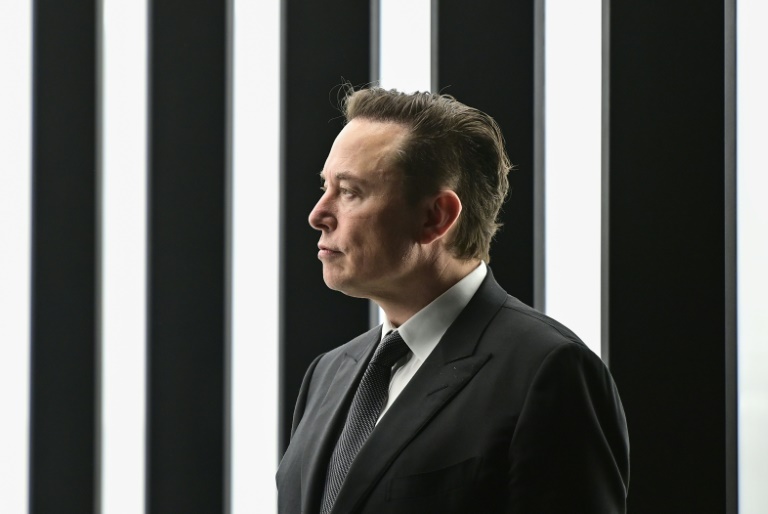
Tesla CEO Elon Musk, who has expressed concern over protecting freedom of speech in the “de facto public town square” of Twitter, disclosed Monday a large stake in the social media company, sending shares soaring.

Musk, who has more than 80 million followers on the microblogging platform, became its largest shareholder following the purchase of 73.5 million shares or 9.2 percent of common stock, according to a securities filing.

The investment is worth about $2.9 billion based on Friday’s share price. Musk is currently the world’s richest man, with a net worth of $287.6 billion, according to Forbes.

The billionaire is a frequent Twitter user, regularly mixing in inflammatory and controversial statements about issues or other public figures with remarks that are whimsical or business-focused. 

He has also sparred repeatedly with federal securities regulators, who cracked down on his social media use after a purported effort to take Tesla private in 2018 fell apart.

Twitter shares rocketed higher on the announcement, surging more than 20 percent to $47.86 in mid-morning trading. 

“We would expect this passive stake as just the start of broader conversations with the Twitter board (and) management that could ultimately lead to an active stake and a (potentially) more aggressive ownership role of Twitter,” analysts Daniel Ives and John Katsingris of Wedbush wrote in a note.

– ‘Just buy Twitter’ –

Disclosure of Musk’s stake follows a recent poll launched by the billionaire to his followers.

Saying “free speech is essential to a functioning democracy,” Musk on March 25 launched a survey on Twitter that asked: “Do you believe Twitter rigorously adheres to this principle?” 

More than two million people voted in the poll, with over 70 percent saying “no.”

“Given that Twitter serves as the de facto public town square, failing to adhere to free speech principles fundamentally undermines democracy. What should be done?” he continued the next day. “Is a new platform needed?”

“Just buy twitter,” was one of the first responses from tens of thousands of users.

US political conservatives have long complained that the platform censors right-wing voices, an assertion the company denies.

Its critics in particular cite Twitter’s decision to ban Donald Trump over the former US president’s role in fomenting the January 6, 2021 attack on the US Capitol. 

Twitter has also at times punished Representative Marjorie Taylor Greene, a far right Georgia congresswoman who has repeatedly posted misinformation about Covid-19 and vaccines against it.

Greene welcomed Musk’s investment on Twitter, tweeting “freedom of speech restored will enable us all to defeat them.”

– SEC deal –

Musk has cited the right to freedom of speech as a driver of his efforts to undo a agreement with the Securities and Exchange Commission (SEC) that tightened his use of the social media platform after he tweeted in August 2018 that funding was “secured” to take Tesla private.

The following month, Musk agreed to pay $20 million to settle SEC charges of securities fraud over the claim, and to institute new controls and procedures to oversee his communications.

But Musk’s attorneys have asked a federal court to cancel the agreement, saying the agency has pursed “endless unfounded investigations” into the Tesla boss and his company because Musk “remains an outspoken critic of the government.”

Musk has also used Twitter to court controversy away from the business world: in March he challenged Russian President Vladimir Putin to a fight following the invasion of Ukraine, and in February, Musk drew condemnation for a tweet comparing Canadian leader Justin Trudeau to Adolf Hitler.

The billionaire famously sparred with a British caver who belittled Musk’s offer to help rescue young soccer players trapped in a cave in Thailand in the summer of 2018.

Musk called the caver, Vernon Unsworth, “pedo guy” on Twitter.

Unsworth sued Musk for defamation, but a Los Angeles jury sided with the billionaire in December 2019 following a trial.

Elon Musk buys large stake in Twitter, sending stock soaring

Elon Musk has taken a major stake in Twitter, regulatory filings showed Monday, sending the social media network’s stock soaring and igniting speculation he could seek an active role in its operations.

Musk, the world’s richest man and CEO of electric vehicle company Tesla, is a frequent Twitter user who often posts controversial messages and announcements, and has long been critical of social media companies.

In one recent post he questioned Twitter’s adherence to free speech and hinted at launching his own platform. 

According to a document filed with the US Securities and Exchange Commission (SEC), the South African-born billionaire acquired nearly 73.5 million Twitter shares — a 9.2 percent stake in the company.

Based on Friday’s closing price of the company’s stock, his investment amounts to nearly $2.9 billion.

Investors responded quickly. At 7.15 am in New York (1115 GMT) Twitter’s stock was trading at about $49, up by around 26 percent.

“We would expect this passive stake as just the start of broader conversations with the Twitter board/management that could ultimately lead to an active stake and a potential more aggressive ownership role of Twitter,” analysts Daniel Ives and John Katsingris of Wedbush wrote in a note.

Musk launched a poll on Twitter on March 25, saying “free speech is essential to a functioning democracy. Do you believe Twitter rigorously adheres to this principle?” 

More than two million people voted in the poll, with over 70 percent saying “no.”

“Given that Twitter serves as the de facto public town square, failing to adhere to free speech principles fundamentally undermines democracy. What should be done?” he continued the next day.

“Is a new platform needed?”

“Just buy twitter,” was one of the first responses from tens of thousands of users.

– Musk, Twitter and controversy –

Musk has wielded Twitter polls to conduct business before: in November last year he offloaded $5 billion in Tesla shares days after asking fellow social media users if he should sell 10 percent of his stake.

In summer 2018 Musk published a tweet where he claimed that he had the appropriate funding to take Tesla private, without providing proof.

The tweet caused a brief spike in Tesla’s share price but the SEC said the statements on Twitter were “false and misleading.”

The mogul then agreed that any tweets capable of moving Tesla’s share price would be screened by lawyers, as part of a deal that saw him pay $20 million to settle a fraud case brought by the SEC.

Then in early March, Musk asked a New York judge to overturn the agreement with the stock market watchdog on his tweets. 

His lawyer said the dispute with the SEC was “yet another attempt to harass Tesla and silence Mr Musk.”

Musk has also used Twitter to court controversy away from the business world: in March he challenged Russian President Vladimir Putin to a fight, with the fate of Ukraine at stake; and in February he drew condemnation for a tweet comparing Canadian leader Justin Trudeau to Adolf Hitler.

Stocks up, oil steady on easing supply, inflation concerns

Stock markets climbed and oil prices steadied Monday on easing concerns over tight crude supplies and decades-high inflation, traders said.

Turkey’s lira was stable against the dollar and euro after official data showed the country’s inflation had soared to a fresh record high.

Elsewhere, trading was halted on Sri Lanka’s stock exchange seconds after opening Monday as the island nation’s president offered to share power with the opposition.

Protests demanding the resignation of Gotabaya Rajapaksa grew over unprecedented food and fuel shortages along with record inflation and crippling power cuts in the South Asian country.

Sri Lanka’s stock market slid more than the five percent in value — the threshold needed to trigger an automatic stop.

On the corporate front, Twitter’s stock soared by more than 25 percent in pre-market trade after Tesla boss Elon Musk took a major stake in the social media giant.

According to a document filed with the US Securities and Exchange Commission, Musk acquired nearly 73.5 million Twitter shares — a 9.2-percent stake in the company. 

Ahead of Wall Street’s reopening, other major stock markets “continued their cautious grind higher, as investors took solace from a US economy which is showing increasing signs of being able to withstand the likely onslaught of interest rate rises to come”, noted Richard Hunter, head of markets at Interactive Investor.

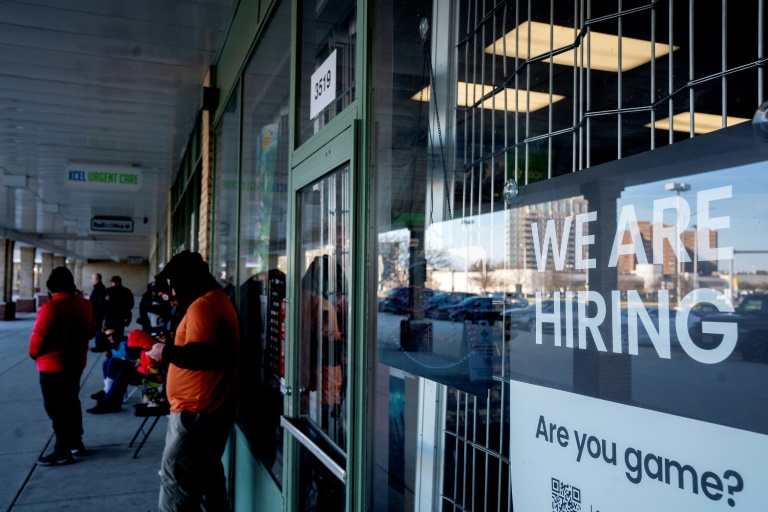
The world’s top economy added 431,000 jobs in March while the US unemployment rate fell to just slightly above pre-pandemic levels, official data showed Friday. 

Economists viewed the figures as reinforcing the Federal Reserve’s commitment to forcefully raising interest rates, perhaps by half a percentage point at its meeting next month, which would be double the increase it announced when it began hiking in March.

Stock markets Monday were helped by steadier oil prices after recent surges triggered by tight supply concerns, notably owing to the invasion of Ukraine by major crude producer Russia.

The 31-nation International Energy Agency on Friday agreed to tap its vast reserves to offset the removal of Russian exports.

There was some cheer also from news of a 60-day ceasefire in Yemen’s six-year civil war that has seen several attacks on Saudi facilities, in turn hitting output from the world’s biggest oil producer.

– Key figures around 1100 GMT –

London – FTSE 100: UP 0.2 percent at 7,555.73 points

Frankfurt – DAX: FLAT at 14,450.49

Paris – CAC 40: UP 0.2 percent at 6,700.38

EURO STOXX 50: UP 0.1 percent at 3,924.35

Tokyo – Nikkei 225: UP 0.3 percent at 27,736.47 (close)

Hong Kong – Hang Seng Index: UP 2.1 percent at 22,502.31 (close)

Shanghai – Composite: Closed for a holiday

New York – Dow: UP 0.4 percent at 34,818.27 (close)

Brent North Sea crude: FLAT at $104.37 per barrel

West Texas Intermediate: FLAT at $99.31 per barrel

Euro/dollar: DOWN at $1.1002 from $1.1049 late Friday

Pound/dollar: DOWN at $1.3098 from $1.3118

Euro/pound: DOWN at 84.00 pence from 84.24 pence 

Dollar/yen: UP at 122.76 yen from 122.49 yen

Close Bitnami banner
Bitnami

