US Business

Asian markets fall further and oil extends steep losses

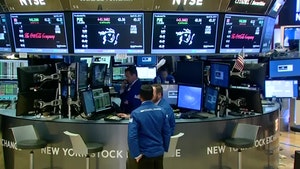
Equities mostly fell Friday after their worst quarter since the early days of the pandemic as traders assess the impact of the war in Ukraine and the Federal Reserve’s plans to fight surging inflation by ramping up interest rates.

And oil extended a sell-off following Thursday’s plunge in response to news that the United States would release a million barrels a day from its reserves as it looks to rein in a price rally fuelled by Russia’s conflict.

Investors suffered a torrid first three months, with markets across the planet first plunged into turmoil over central bank moves to tighten policy and reel in their Covid-era financial support measures, and then by Russian President Vladimir Putin’s invasion of Ukraine.

Inflation had already rocketed to multi-decade highs in several countries before the war in eastern Europe exacerbated the problem as crucial crude supplies from Russia were slashed and sent its price to six-year highs above $100.

The developments came as profit-takers cashed out after a near two-year rally fuelled by central bank and government largesse.

Despite a pick-up in recent weeks, most indexes finished the quarter in the red.

Traders are struggling to ascertain the outlook for the next three months, with the war showing no signs of ending and the Federal Reserve just getting started on its campaign of sharp rate hikes.

The second quarter of 2022 “is going to start as messily as the first quarter has finished, with markets buffeted by a multitude of strong winds from various directions, with the outcome no clearer for the future than ever,” said OANDA’s Jeffrey Halley.

And Anwiti Bahuguna, at Columbia Threadneedle Investments, told Bloomberg Television that a lowering of growth forecasts for the United States, Europe and China are “something to watch very carefully”.

The upcoming earnings season will be closely watched to see what impact higher inflation and the war has had on firms’ bottom line and their forecasts for the year ahead.

The release of US jobs data later in the day will be closely followed for an idea about the state of the world’s top economy.

All three main indexes on Wall Street finished more than one percent down and Asia was also mostly lower.

Tokyo, Hong Kong, Sydney, Seoul, Taipei, Manila, Jakarta, Bangkok and Wellington were all down. 

London, Paris and Frankfurt rose at the open.

However, Shanghai rose as traders kept an eye on the second phase of a Covid lockdown in China’s biggest city that will see restrictions imposed on the western side. Mumbai and Singapore were also up.

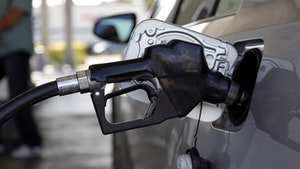
Oil prices shed at least one percent, extending a selloff on Thursday that saw WTI lose seven percent after Joe Biden announced he would release up to 180 million barrels over six months.

The US benchmark struggled to break back above $100.

The president described the move as a “wartime” measure that will defuse Russia’s leverage as an energy power.

However, while the move to ease a global supply crisis was welcomed, commentators warned it would only be a stopgap and could not be a long-term solution.

“It is worth keeping in mind that 180 million barrels is approximately nine days of US demand,” said SPI Asset Management’s Stephen Innes. “And while one million barrels per day is better than nothing and can help balance the four million a day lost from Russia for about six months, what happens after?”

He added: “Markets are still tight, but six months could be a meaningful lifeline and reduce the chances of (more than) $150 oil.”

– Key figures around 0720 GMT –

Tokyo – Nikkei 225: DOWN 0.6 percent at 27,665.98 (close)

Hong Kong – Hang Seng Index: DOWN 0.2 percent at 21,957.38

Shanghai – Composite: UP 0.9 percent at 3,282.72 (close)

London – FTSE 100: UP 0.1 percent at 7,526.08

Brent North Sea crude: DOWN 1.0 percent at $103.69 per barrel

West Texas Intermediate: DOWN 1.1 percent at $99.17 per barrel

Euro/dollar: UP at $1.1069 from $1.1067 late Wednesday

Pound/dollar: DOWN at $1.3125 from $1.3143

Euro/pound: UP at 84.33 pence from 84.20 pence

Dollar/yen: UP at 122.47 yen from 121.69 yen

New York – Dow: DOWN 1.6 percent at 34,678.35 (close)

Disaster tourism: blackouts, shortages hit Sri Lanka recovery hopes

In a Sri Lankan beach guesthouse blacked out by a power cut, the owner’s son illuminates a printed Wifi password with his phone for two European backpackers. A moment later the trio grasp the gesture’s futility.

Electricity stoppages, petrol queues and escalating protests are threatening hopes that a tourism revival could help arrest the island nation’s intensifying financial crisis.

After being ravaged by civil war for decades the country’s coconut palm-lined beaches and exotic wildlife more recently made it a popular stomping ground for both high-end globetrotters and budget travellers.

Tourism became crucial to the economy — its pandemic-enforced closure underlies the foreign exchange shortage that is the root cause of the current situation.

But now the effects of the crisis are putting in jeopardy the industry that is a key element of any possible solution, with many smaller operators expecting to hit the wall soon.

“Because of the power cuts, we can’t serve our customers,” the darkened hostel’s owner Dilip Sandaruwan told AFP. “They’re not satisfied and they’re asking for lower prices.”

His guesthouse a short walk from the beach in the languid coastal town of Mirissa has few reservations, and his family are struggling to pay the interest on borrowings taken to weather the Covid years — let alone the principal.

“We are always tense,” Sandaruwan said. “We don’t know how to pay back our loans, but the banks are putting a lot of pressure on us.” 

Similar tales of woe echo among business owners up and down Mirissa’s back lanes. 

Guests gripe about sweating through tropical nights without air conditioning, hoteliers cannot access online booking platforms, and restaurants fret over how to cater to western tastes when they struggle to source imported coffee.

Worsening fuel shortages are making it harder to move around the country, with long lines of motorbike taxis snarled outside service stations waiting for scarce petrol. 

“I never let the foreigners know that there is a problem with the fuel,” said motorboat tour company owner Pradeep Chandana De Silva. 

He sends staff out before dawn each day to hunt for diesel to ferry tourists across the mangrove lagoons of Balapitiya, pointing out cormorants and baby crocodiles along the way. 

“At the moment the situation is okay, but if there’s longer queues and less fuel, it will be terrible for the entire industry,” he said.

– ‘Pretty crazy’ –

Shortages are making daily life miserable for many in Sri Lanka and resentment is flaring, with security forces deployed around Colombo Friday after protesters attempted to storm the president’s home overnight.

But bewildered foreign adventurers often arrive without knowledge of the crisis, or a grasp of its scale.

“Everyone here is telling you, ‘Hey, we have a lot of problems with gas, fuel, electricity and stuff like that’,” said Nick Reiter, a German tourist waiting to fill up his rented scooter at a petrol station.

“But right now, this is pretty crazy.”

Indian tourist Ayesha Khan said she was unaware of the situation until after booking her flights, and considered cancelling.

“We didn’t know a lot until we actually came here,” she said, breaking off a romantic sunset walk along Mirissa beach with her husband. 

Both knew their driver had waited for hours in petrol lines and said the electricity in their accommodation had regularly cut out without warning, but neither regretted their trip.

“It’s been nothing but a good experience for us,” said Afnan Syed, Khan’s partner. 

“I wouldn’t mind coming here again.”

– ‘Not sufficient at all’ –

Sri Lankan tourism has been plagued by setbacks before, even after the civil war. Islamist attacks on Easter Sunday three years ago targeted hotels and churches, killing 279 people and leading to a wave of cancellations.

A post-pandemic recovery began late last year, with nearly 100,000 coming in February, around 40 percent of previous peaks.

But late that month Russia invaded Ukraine, halting nearly all visits from the number one and three sources of foreign arrivals.

And now even a fully thriving tourism industry would not be enough on its own for Sri Lanka to claw itself out from under its escalating loan repayments, experts say.

“While tourism has picked up since Covid… it’s not sufficient at all,” said Suramya Ameresekera, an economist at the JB Securities advisory firm in Colombo.

“The amount that comes due every month is not covered by the size of the tourism receipts,” she added. “Even in Sri Lanka’s history when tourism was at its peak… we were still running a current account deficit.”

The government is scrambling to insulate holidaymakers from the hardships facing much of the nation’s 22 million people. Accredited tour guides are allowed to skip petrol queues — to the occasional chagrin of other drivers waiting in line.

“We found some problems because they are out of petrol,” said Spanish tourist Nazareth Marina in Galle’s centuries-old Dutch Fort.

But the Sri Lankan people, she added, “treat us really well, so it was really nice to come here now”.

Amazon locked in tight unionization votes in two US states

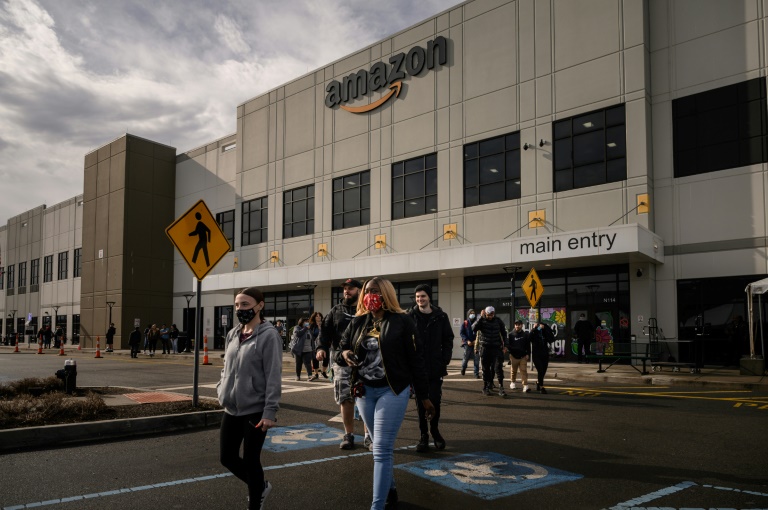
Amazon narrowly led in an effort to prevent unionization in Alabama, according to preliminary results Thursday, but the e-commerce behemoth trailed in a partial tally in a parallel election in New York. 

The results were not final in either case. At stake is Amazon’s ability to remain union-free in its home market, a status it has guarded fiercely since the company was founded in the 1990s.

“We already made history. We defeated a lot of odds to get here,” said Christian Smalls, a leader of the New York campaign who said he was not surprised by the union’s early lead of more than 360 votes.

In the Alabama election, a re-vote after federal officials threw out results of a 2021 referendum, 993 workers voted against the labor group, compared with 875 employees in favor.

But there were 416 “challenged” ballots, a “determinative” amount, according to the National Labor Relations Board, meaning the number of ballots still to be settled is big enough to potentially decide the final result.

The fate of the challenged ballots will be settled following an NLRB hearing that is not expected for at least a couple of weeks.

Stuart Appelbaum, president of the Retail, Wholesale and Department Store Union (RWDSU), said workers “will have to wait just a little bit longer,” on Twitter.

“Every vote must be counted, and every objection heard,” he said.

– ‘Ignited a movement’ –

In New York, union backers had reason for hope as ballots were counted from the Staten Island JFK8 warehouse, where more of the facility’s 5,000 workers turned out compared with Bessemer, which has 6,000 employees.

When the New York count wrapped up for the day early Thursday evening, there were 1,518 workers voting in favor of the union, compared with 1,154 employees voting no.

“It’s very clear that we’ll finish tomorrow,” an NLRB official said shortly before the counting stopped for the day.

At a news conference Thursday, Applebaum noted that their initial campaign last year — which received lots of media coverage and even an official endorsement by President Joe Biden — helped spur similar moves around the country.

“We ignited a movement with this campaign,” said the RWDSU president.

He added that he was “honored” the Alabama campaign was cited by leaders of a successful Starbucks union drive last December in New York — the first for the large coffee chain.

Since then, employees in over 150 Starbucks have requested union votes.

While the outcome of the latest votes remain uncertain, labor advocates hope they represent an inflection point as the overall rate of US private-sector unionization edges lower and unions remain on the outs in several states, especially in the South and West.

Close Bitnami banner
Bitnami