US Business

US financial sanctions target one of Russia's richest men

The US announced financial sanctions targeting one of Russia’s wealthiest men, Vladimir Potanin, the Treasury Department and State Department said Thursday, adding to efforts that curb Moscow’s ability to fund its war in Ukraine.

The actions follow earlier moves by Washington to isolate Russia from the global financial system, and are expected to complement those of the US’s partners, according to authorities.

“The Department of State is imposing sanctions on Vladimir Potanin, one of Russia’s wealthiest oligarchs and a close associate of President (Vladimir) Putin, as well as three members of his immediate family and his company, Interros,” said Secretary of State Antony Blinken.

The department is also identifying Potanin’s yacht, Nirvana, as blocked property, he said.

Meanwhile, the designation of Rosbank and other entities related to Russia’s financial sector “are part of the US government’s efforts to further limit (Russia’s) ability to fund its unconscionable war of choice against Ukraine,” the Treasury Department added in a statement.

It is sanctioning 18 entities in its latest move, with Rosbank in particular being a Russia-based commercial bank that Potanin acquired earlier this year, and seen as a key credit institution.

The Treasury Department’s Office of Foreign Assets Control is also targeting 17 subsidiaries of Russia’s second-largest bank, VTB Bank, the department said.

“By sanctioning additional major Russian banks, we continue to deepen Russia’s isolation from global markets,” said Treasury’s Under Secretary for Terrorism and Financial Intelligence Brian Nelson.

– ‘Clear message’ –

The Treasury Department’s actions run alongside the State Department’s moves to designate Potanin, his network and more than 40 more people linked to the government in Moscow.

Blinken said Thursday that officials also took aim at “29 Russian heads of regions and governors, two of their family members, and an entity owned by one of the family members.” 

“These governors oversee and enforce the conscription of citizens in response to Russia’s recent mobilization order,” he added.

He said the US’s actions “are a clear message that the United States will not hesitate to continue to use the tools at our disposal to promote an end to, and accountability for,” Putin’s war.

Potanin formerly served as a Deputy Prime Minister for the Russian Federation, and has direct ties to Putin, according to the State Department.

The actions come after similar moves were taken against Potanin and his network by Britain and Canada, the State Department said.
Deadly Russian shelling cuts Kherson power

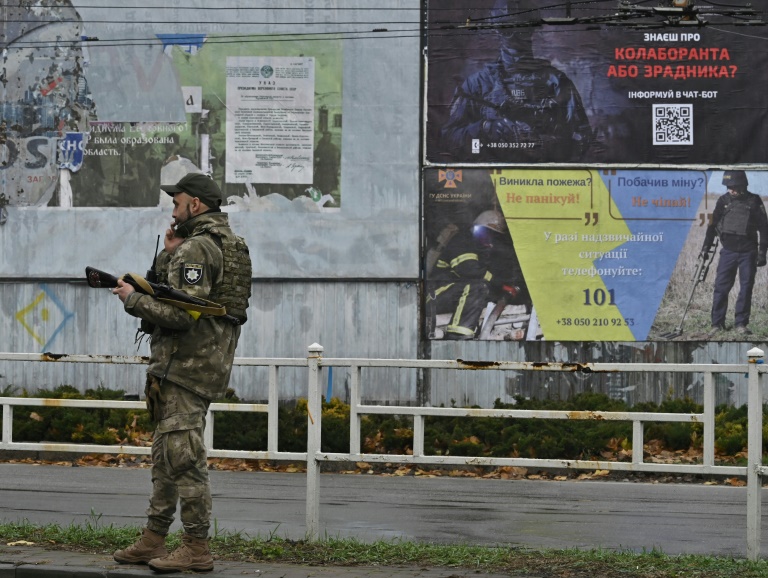
Russian shelling on Thursday killed two people in Kherson and left the southern city “completely without power”, Ukrainian officials said after the latest strikes on infrastructure as temperatures have plummeted.

Russia’s humiliating retreat from the city prompted joy for war-battered Ukrainians, but Kherson remains within the reach of Moscow’s weaponry and thus under constant threat.

The deadly toll of the invasion has grown steadily since Russia’s attack in February, and the UN rights chief said Moscow’s forces summarily killed hundreds of civilians in just the first weeks. 

Thursday’s strikes on Kherson killed two people, the deputy head of the president’s office Kyrylo Tymoshenko said. 

The city that was the only regional capital held by Moscow was also left “completely without power”, the regional governor Yaroslav Yanushevych said. 

Since being retaken by Kyiv, Kherson has seen an almost daily barrage of missiles, prompting local authorities to encourage evacuations. 

“Unfortunately, constant shelling prevents (Kherson city) from fully restoring normal life,” Ukraine’s ministry responsible for reintegrating recaptured territory Iryna Vereshchuk was cited as saying by the ministry.

Around 11,000 people have left Kherson since it was recaptured, Vereshchuk said.

– Explosions in Donetsk –

The strikes on infrastructure, leaving millions of Ukrainians without power, heating or water have become a regular strategy from Russia facing a tense situation on the ground.

Having retreated from parts of southern Ukraine, Moscow’s forces were engaged in fierce battles in the east, particularly in the Donetsk region.

In Donetsk, “the epicentre of the fighting remains the Bakhmut and Avdiivka directions,” deputy defence minister Ganna Malyar said during a briefing. 

Ukrainian soldiers speaking to AFP in the area acknowledged that “the enemy is hard to beat.”

“Staying on the frontline is very difficult. They sustain heavy losses, but so do we,” military unit chief Petro told AFP.

The Donetsk region has since 2014 been partly controlled by Moscow-backed separatists. 

On Thursday, separatist authorities reported “the most massive shelling since 2014” on the administrative centre of the region, also called Donetsk.

At least one person was killed and nine more injured in the strikes, Russian proxies said.

Along with Lugansk, Zaporizhzhia and Kherson, Donetsk is one of the regions Moscow claims to have annexed in votes denounced as a sham by Ukraine and the West. 

– Summary killings –

Regarding summary killings, UN rights chief Volker Turk said his office had documented the summary executions and direct killings of 441 civilians across just three regions of Ukraine from the time Russia’s full-scale invasion began on February 24 until April 6.

Noting that the “actual figures are likely to be considerably higher” he said “there are strong indications that the executions… may constitute the war crime of wilful killing.”

Beyond the period examined by the report, Turk said his team had continued to document ongoing gross violations affecting both civilians and combatants in the conflict, including arbitrary detention, enforced disappearances, torture and sexual violence.

But so far, he warned, “accountability remains sorely lacking.”

ECB slows rate hike pace but warns of 'long game' to tame inflation

The European Central Bank opted for a smaller interest rate increase of half a percentage point on Thursday but warned of more hikes to come in the “long game” to tame red-hot inflation.

The ECB has been lifting borrowing rates at an unprecedented pace in recent months to bring down record-high consumer prices after Russia’s war in Ukraine sent energy and food costs surging.

Following two consecutive “jumbo” hikes of 75 basis points, the ECB’s governing council agreed to downshift to an increase of 50 basis points at its final meeting of 2022.

The move mirrors the half-point steps taken by the US Federal Reserve on Wednesday, and the Bank of England earlier on Thursday.

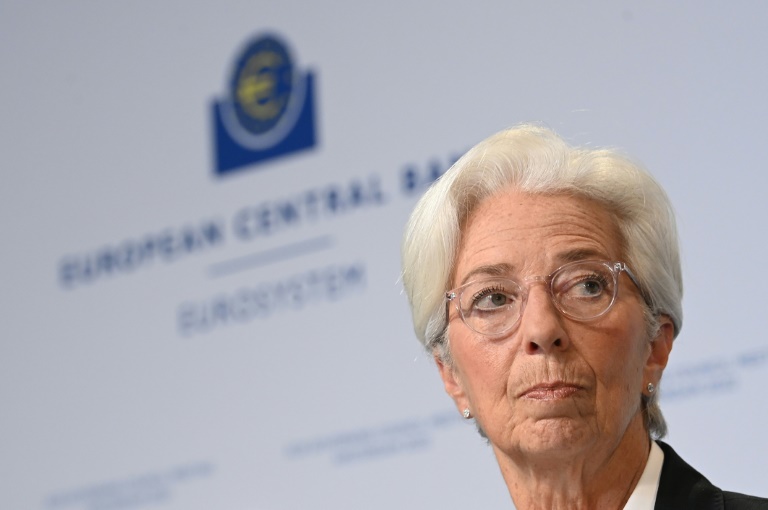
But ECB president Christine Lagarde warned that inflation in the 19-nation eurozone was still “far too high” and more action needed to be taken. 

“We have more ground to cover, we have longer to go and we are in for a long game,” Lagarde told reporters. 

Interest rates will still have to “rise significantly at a steady pace,” she said, adding that the eurozone should expect further rises “at 50 basis-point pace for a period of time”.

Eurozone inflation eased in November for the first time in 17 months, partly thanks to efforts by European governments to shield consumers from energy price shocks.

At 10 percent however, inflation remains five times higher than the ECB’s target.

ING bank economist Carsten Brzeski said the ECB’s comments were “surprisingly hawkish”.

The ECB’s closely-watched bank deposit rate — one of its three main rates — will now finish the year at 2.0 percent, the highest level since 2008.

– ‘Short-lived and shallow’ –

“The ECB is now more worried about tightening too little and would accept some short-term economic pain to bring inflation back to target,” said Berenberg Bank economist Salomon Fiedler.

Like other central banks, the ECB is walking a fine line as it seeks to raise borrowing costs enough to cool inflation without dampening demand so much it triggers a deep economic downturn.

The ECB’s latest quarterly projections on Thursday showed that the eurozone economy was expected to contract in the final quarter of 2022 and the first quarter of 2023.

But the ECB said the winter recession would likely be “relatively short-lived and shallow”, echoing analysts’ expectations as households and businesses feel the impact of government interventions and gas storage facilities are fuller than usual at this time of year.

The ECB however slashed its outlook for economic growth in 2023, from 0.9 percent previously to 0.5 percent. Stronger growth of 1.9 percent should then be achieved for 2024, it said. 

“The war against Ukraine and its people remains a significant downside risk to the economy,” Lagarde cautioned.

The Frankfurt institution also unveiled its first-ever inflation projection for 2025, set to come in at 2.3 percent.

While still above the ECB’s two-percent target, it’s a far cry from the 6.3 percent inflation projected in 2023, followed by 3.4 percent in 2024. 

Both are higher figures than previously forecast.

Lagarde acknowledged the “substantial upward revision” on inflation, the latest in a long line as the ECB faces criticism for having consistently underestimated price pressures in recent months.

Lagarde added that the bank was keeping a close eye on wage growth, as workers demand salary increases to keep up with higher prices for goods and services.

The ECB sees wages growing “at rates well above historical averages, and pushing up inflation”, Lagarde said.

– Bloated portfolio –

The ECB also opened up another front in its battle against high inflation, outlining for the first time when and how it plans to start slimming down its five-trillion-euro bond portfolio after years of hoovering up corporate and government debt.

The bank said it would stop reinvesting the proceeds from some maturing bonds from March, reducing its balance sheet by 15 billion euros per month on average though June.

Further details of the “quantitative tightening” plan will be announced in February.

US industrial output slips in November

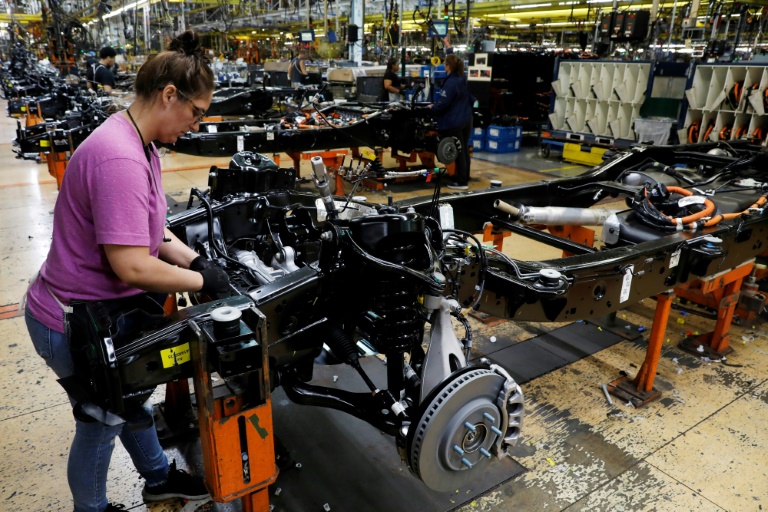
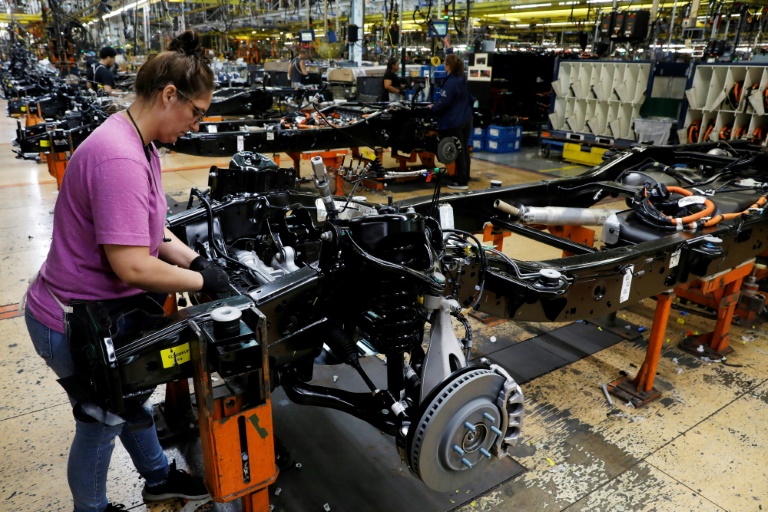
Industrial production in the US slumped in November with “broad based” decreases, the Federal Reserve said Thursday, as output for bigger-ticket consumer products and manufacturing fell.

While tangled supply chains and surging costs which weighed on businesses are easing, in a boost to production, firms are now contending with weakening demand as interest rates rise.

The Fed has raised its benchmark lending rate seven times this year in an effort to cool the world’s biggest economy, making borrowing more expensive with policy effects rippling across sectors.

Total output dropped 0.2 percent in November, with the first decline in months defying analysts’ expectations of an uptick, according to Fed data.

“Decreases were broad based across market groups,” the report said.

It added that the output of consumer durables fell about two percent, referring to products that do not have to be purchased very often. The decline was led by automotive goods.

Manufacturing output dropped 0.6 percent as well, while that of mining fell 0.7 percent, only partly offset by a rebound in utilities, the Fed added.

“Headline production was flattered by a weather-related 4.8 percent jump in utilities output, which is hugely volatile,” said economist Kieran Clancy of Pantheon Macroeconomics in a note.

The main factor bogging down manufacturing output is likely “softening capital spending, in the wake of higher borrowing costs,” he added.

“The next few months will be rough; the downturn in manufacturing output has further to run,” he said.

US industrial output slips in November

Industrial production in the US slumped in November with “broad based” decreases, the Federal Reserve said Thursday, as output for bigger-ticket consumer products and manufacturing fell.

While tangled supply chains and surging costs which weighed on businesses are easing, in a boost to production, firms are now contending with weakening demand as interest rates rise.

The Fed has raised its benchmark lending rate seven times this year in an effort to cool the world’s biggest economy, making borrowing more expensive with policy effects rippling across sectors.

Total output dropped 0.2 percent in November, with the first decline in months defying analysts’ expectations of an uptick, according to Fed data.

“Decreases were broad based across market groups,” the report said.

It added that the output of consumer durables fell about two percent, referring to products that do not have to be purchased very often. The decline was led by automotive goods.

Manufacturing output dropped 0.6 percent as well, while that of mining fell 0.7 percent, only partly offset by a rebound in utilities, the Fed added.

“Headline production was flattered by a weather-related 4.8 percent jump in utilities output, which is hugely volatile,” said economist Kieran Clancy of Pantheon Macroeconomics in a note.

The main factor bogging down manufacturing output is likely “softening capital spending, in the wake of higher borrowing costs,” he added.

“The next few months will be rough; the downturn in manufacturing output has further to run,” he said.

EU faces subsidy race with US in trade spat

EU leaders debated how to protect their industries from subsidised American competition, amid fears of a state spending race between the economic superpowers.

Arriving at an EU summit, French President Emmanuel Macron said a response was needed “to maintain fair competition”, one which “allows us to match what the Americans are doing”.

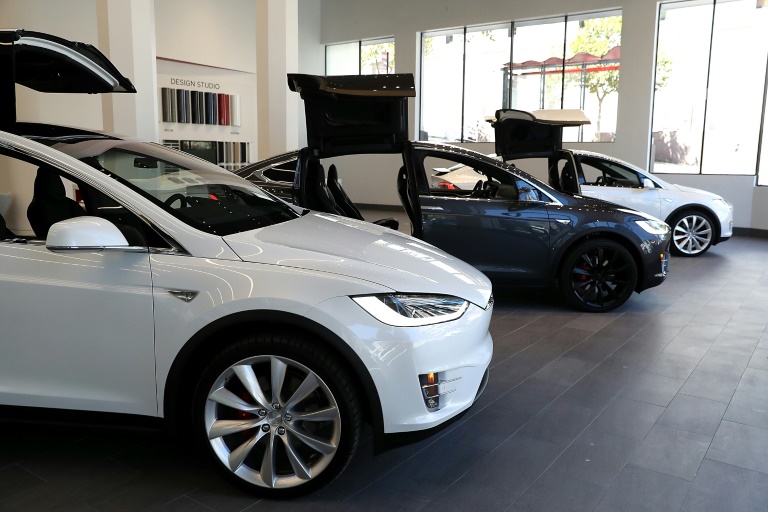
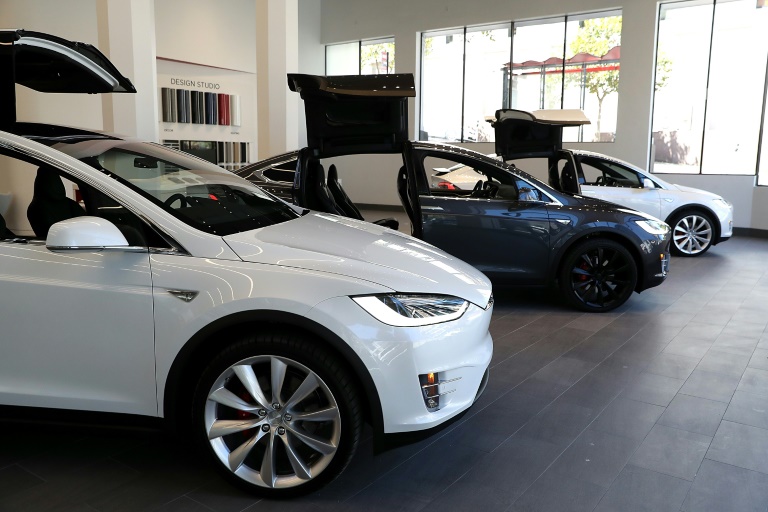
The European bloc is unsettled by parts of a multi-billion-dollar US Inflation Reduction Act (IRA) that lavishes subsidies and tax cuts for US purchasers of electric vehicles — if they “Buy American”.

The European Commission sees that as discriminatory against European car manufacturers, a breach of World Trade Organization rules, and a threat to investment in Europe.

It is urging EU leaders to sign off on a plan that would loosen state aid rules and boost public investment in cleaner energy.

In the summit room, leaders stressed “the strategic and deep ties between the EU and US across the full breadth of the relationship,” an EU official said.

But they agreed on the need “to safeguard Europe’s economic, industrial and technological base”.

They directed the European Commission to develop proposals next month “on mobilising relevant national and EU tools and improving conditions for investment”.

– ‘Delicate’ phase –

The commission was also told to come up with ways to boost competitiveness and productivity.

Commission chief Ursula von der Leyen said before the summit that such measures were needed because the IRA provisions “risk un-levelling the playing field and discriminating against European companies”.

Her Vice President Margrethe Vestager has warned: “We already have war in Europe (in Ukraine). The last thing we need is a trade war on top.”

Macron and the commission have tried to persuade US President Joe Biden to change the contentious parts of the IRA, to no avail apart from receiving promises of some “tweaks”. 

Biden and his administration believe the EU is free to come up with its own subsidy arrangement for electric vehicles — a sector in which China has outsized advantages when it comes to batteries and rare-earth supplies.  

There were some concerns among EU countries that the bloc’s main car-exporting nation, Germany, might go it alone with its own subsidies, as it already did with measures on energy.

European Council President Charles Michel, chairing the summit, said as he went in that economic ties between the United States and the EU were in a “delicate” phase.

– Migrant dispute –

The EU summit was also to study an internal dispute, between Austria and Bulgaria, over migrants.

Austria is blocking Bulgaria’s bid to join the border check-free Schengen zone encompassing most EU members and a couple of neighbouring countries. 

Vienna fears Bulgaria’s inclusion would further spur irregular migration onto Austrian territory. 

“We have more than 100,000 asylum applications in Austria, more than 75,000 of those who make these applications are not registered,” Austrian Chancellor Karl Nehammer said.

That “security problem” had to be solved before Bulgaria — and the linked bid by Romania — could be allowed into the Schengen club, he said. 

“They are countries that should protect the external border,” Nehammer said.

Bulgaria’s President Rumen Radev said as he went into the summit that his country was “highly committed to secure our border” but needed EU help.

“We request Bulgaria to be treated as a solid country,” he said. “Please don’t leave us alone.”

EU faces subsidy race with US in trade spat

EU leaders debated how to protect their industries from subsidised American competition, amid fears of a state spending race between the economic superpowers.

Arriving at an EU summit, French President Emmanuel Macron said a response was needed “to maintain fair competition”, one which “allows us to match what the Americans are doing”.

The European bloc is unsettled by parts of a multi-billion-dollar US Inflation Reduction Act (IRA) that lavishes subsidies and tax cuts for US purchasers of electric vehicles — if they “Buy American”.

The European Commission sees that as discriminatory against European car manufacturers, a breach of World Trade Organization rules, and a threat to investment in Europe.

It is urging EU leaders to sign off on a plan that would loosen state aid rules and boost public investment in cleaner energy.

In the summit room, leaders stressed “the strategic and deep ties between the EU and US across the full breadth of the relationship,” an EU official said.

But they agreed on the need “to safeguard Europe’s economic, industrial and technological base”.

They directed the European Commission to develop proposals next month “on mobilising relevant national and EU tools and improving conditions for investment”.

– ‘Delicate’ phase –

The commission was also told to come up with ways to boost competitiveness and productivity.

Commission chief Ursula von der Leyen said before the summit that such measures were needed because the IRA provisions “risk un-levelling the playing field and discriminating against European companies”.

Her Vice President Margrethe Vestager has warned: “We already have war in Europe (in Ukraine). The last thing we need is a trade war on top.”

Macron and the commission have tried to persuade US President Joe Biden to change the contentious parts of the IRA, to no avail apart from receiving promises of some “tweaks”. 

Biden and his administration believe the EU is free to come up with its own subsidy arrangement for electric vehicles — a sector in which China has outsized advantages when it comes to batteries and rare-earth supplies.  

There were some concerns among EU countries that the bloc’s main car-exporting nation, Germany, might go it alone with its own subsidies, as it already did with measures on energy.

European Council President Charles Michel, chairing the summit, said as he went in that economic ties between the United States and the EU were in a “delicate” phase.

– Migrant dispute –

The EU summit was also to study an internal dispute, between Austria and Bulgaria, over migrants.

Austria is blocking Bulgaria’s bid to join the border check-free Schengen zone encompassing most EU members and a couple of neighbouring countries. 

Vienna fears Bulgaria’s inclusion would further spur irregular migration onto Austrian territory. 

“We have more than 100,000 asylum applications in Austria, more than 75,000 of those who make these applications are not registered,” Austrian Chancellor Karl Nehammer said.

That “security problem” had to be solved before Bulgaria — and the linked bid by Romania — could be allowed into the Schengen club, he said. 

“They are countries that should protect the external border,” Nehammer said.

Bulgaria’s President Rumen Radev said as he went into the summit that his country was “highly committed to secure our border” but needed EU help.

“We request Bulgaria to be treated as a solid country,” he said. “Please don’t leave us alone.”

Equities sink as central banks hike rates further

Global stocks sank Thursday as central banks hiked interest rates again and signalled they needed to go higher to fight inflation.

Both the Bank of England and the European Central Bank mirrored the Fed’s half-point hike on Wednesday to tackle soaring inflation, after rate increases in Norway and Switzerland.

Sentiment was hammered after the Fed suggested that it saw US rates topping out next year at 5.1 percent, higher than markets had predicted. 

Meanwhile the BoE, which lifted its key rate to the highest level in 14 years, warned that labour market tightness and inflationary pressures justified “a further forceful monetary policy response”.

The ECB delivered a similar message.

“Inflation remains far too high and is projected to stay above the target for too long,” it said.

ECB president Christine Lagarde warned “we should expect to raise interest rates at a 50 basis-point pace for a period of time”.

Market analyst Patrick O’Hare at Briefing.com said “these policy moves were expected, but that still hasn’t helped matters given the understanding that higher rates will inevitably weigh on economic activity.” 

Wall Street opened with deeper losses than it posted on Wednesday following the Fed’s hikes. The Dow dropped 1.0 percent at the start of trading. 

The S&P 500 fell 1.2 and tech-heavy Nasdaq Composite 1.4 percent.

– Fresh recession fears –

In Europe, London shed 0.6 percent, while Frankfurt and Paris tumbled 2.4 percent.

The Fed also warned that the world’s biggest economy would grow less than expected next year, fuelling fresh recession fears.

Data released Thursday showing retail sales sliding by 0.6 percent in November from October, as well a drop in industrial output, fanned those fears.  

The BoE and ECB also had downbeat messages about growth.

Rising rates fan recession concerns because they push up loan repayments for consumers and companies, denting expenditure, investment and economic activity.

At the same time, however, the world’s major central banks are seeking to dampen red-hot inflation, which has been fuelled partly by fallout from Russia’s invasion of Ukraine.

Recent official data painted a picture of slowing inflation in Britain and the United States, although consumer prices remain elevated.

“The interest rate hikes keep on coming and this trend is almost certainly going to remain intact in early 2023,” noted AJ Bell investment director Russ Mould.

“Raising rates makes it more expensive for consumers and businesses to borrow money and theoretically causes a reduction in spending and investment which should help to ease the economy and bring down prices.

“This takes time to work its way through the system and so central banks will continue their rate hiking path until there is adequate evidence to support a shift in policy.”

Markets had rallied earlier this week after data showed the US consumer price index rose less than forecast in November, marking a fifth straight slowdown and the lowest level since December last year.

But the Fed appeared less inclined to accept that the recent figures were enough to indicate enough progress was being made.

“Fifty basis points is still a historically large increase, and we still have some ways to go,” Fed boss Jerome Powell told reporters after the announcement.

Oil prices slid on fears recession would dent crude demand.

– Key figures around 1430 GMT –

London – FTSE 100: DOWN 0.6 percent at 7,451.03 points

Frankfurt – DAX: DOWN 2.4 percent at 14,112.11

Paris – CAC 40: DOWN 2.4 percent at 6,566.64

EURO STOXX 50: DOWN 2.6 percent at 3,872.25

New York – Dow: DOWN 1.0 percent at 33,624.24

Tokyo – Nikkei 225: DOWN 0.4 percent at 28,051.70 (close)

Hong Kong – Hang Seng Index: DOWN 1.6 percent at 19,368.59 (close)

Shanghai – Composite: DOWN 0.3 percent at 3,168.65 (close)

Euro/dollar: UP at $1.0707 from $1.0684 on Wednesday

Dollar/yen: UP at 136.51 yen from 135.45 yen

Pound/dollar: DOWN at $1.2321 from $1.2424

Euro/pound: UP at 86.91 pence from 85.96 pence

Brent North Sea crude: DOWN 0.5 percent at $82.25 per barrel

West Texas Intermediate: DOWN 0.6 percent at $76.79 per barrel

burs-rl/jj

Patriot missiles: crucial but limited help for Ukraine

The United States is expected to announce it will equip Ukraine with Patriot missile units, boosting its defenses against Russia’s assault on its infrastructure.

The move will also send a strong message to both Moscow and European allies that Washington is prepared to support Kyiv with some of its most advanced weaponry to battle Russian invaders.

Patriots are “far from a silver bullet,” against the low-flying cruise missiles and drone bombs that Russian forces have pummeled Ukraine with, according to Ian Williams of the Missile Defense Project at the Center for Strategic and International Studies in Washington.

But they will add a layer of protection on top of Ukraine’s current systems, and also defend against short-range ballistic missiles that Western officials think Russia is seeking from Iran, Williams said.

“Having layered defenses is helpful when you’re dealing with this kind of complex air attack,” he told AFP.

– What is the Patriot system? –

Made by Raytheon, the MIM-104 Patriot is a surface-to-air missile (SAM) system initially developed to intercept high-flying aircraft. It was modified in the 1980s to focus on the new threat of tactical ballistic missiles. Patriots proved themselves against Iraq’s Russian-made Scuds in the first Gulf War.

Patriot systems come in fully mobile batteries that include a command center, a radar station to detect incoming threats, and launchers.

The launchers can handle a pod of four PAC-2 missiles at a time, which have a 160 kilometer (100 mile) range, or 16 of the newer PAC-3, which have a range of 40 kilometers but greater precision with onboard radar.

– Why are Patriots needed? –

To battle Russia’s low-flying cruise missiles and bomb-like Shahed-136 drones, Ukraine has used a number of different short-range air defense systems, including Russian-made Buks and S-300s, old-generation US-made Hawk missiles,  and modern SAM systems from allies like Germany and Italy. 

The arrival of two US NASAM systems in October helped limit the damage from Russia’s massive November 17 barrage; they were reportedly 100 percent effective in hitting their incoming targets, said Williams.

But modern SAM system launchers and missiles are in extremely short supply. For example, the US can’t send any more NASAM systems until late next year. 

Meanwhile, Russia is expected to continue its air assault on Ukraine infrastructure.

Ukraine “needs capacity, they need volume” for air defense, said Williams.

The Patriot “allows them to layer their defenses a bit more.”

– What Patriots can do –

The Patriots’ biggest value is countering high-flying tactical ballistic missiles. Russia has not used many ballistic missiles in its war on Ukraine, but that could change if it does acquire them from Iran.

The Patriots have proven very effective in Saudi Arabia against Iranian-design ballistic missiles fired from Yemen.

Against cruise missiles and drones, Williams points out, Patriots have limited value because their radar systems only cover a 120 degree portion of the horizon, unlike the 360 degree coverage of NASAMs. 

“In the kind of environment we’re seeing in Ukraine, where threats can come in from multiple directions, you either have to have more radars or more batteries,” said Williams.

If the US gives Ukraine the longer-range PAC-2, he said, the likely target is the current cruise missile and drone threat. PAC-3s will indicate the focus is ballistic missiles.

The number of batteries the US will supply at first, he said, is likely to be just one or two. Training takes time, and US forces don’t have many if any spare systems. Washington might have to coax batteries from one of the 17 countries which have them. 

Then the question is where to put them: one battery could defend a city, or a power station, but not a broad swathe of territory.

“You have to decide what you’re going to defend. You have to prioritize. It’s not going to defend the whole country,” said Williams

Another limiting issue is the cost: an individual Patriot missile runs about $3 million, triple the price of a NASAM missile. 

Israeli technology aims to curb male chick culling

Israeli scientists have created a species of egg-laying hens that only produce females, a breakthrough that could help end the annual culling of around seven billion male chicks globally. 

The chicks, born from egg-laying, are destroyed en masse by suffocation or crushing because they are not suitable for meat production and do not lay eggs. 

Animal rights activists have denounced the practice as barbaric, and it has been banned in several European states. 

A German prohibition on male chick culling came into effect this year. French farmers have until year’s end to comply with new restrictions. 

A team at the Israeli Agricultural Research Organization-Volcani Center has used gene editing to develop a new species of hens that only gives birth to females. They say this is the only option to substantially curb mass male chick culling around the world. 

“This is a world first and the only solution that is easy for industry players to implement,” team leader Yuval Cinnamon, a Volcani Center embryologist, told AFP. 

He said technologies that seek to identify whether an egg is carrying a male or female embryo are not reliable.

The Volcani Center, based in the Tel Aviv suburbs, developed the species following seven years of research in partnership with the American-Israeli firm Huminn, which in part specialises in commercially viable sustainable food production. 

– ‘Most serious problem’ –     

The technology involves genetically modifying egg-laying hens so that, when carrying male embryos, those do not progress and hatch. 

“After fertilisation the male embryos do not develop, and the female embryos develop normally without being genetically modified and hatch normally,” Cinnamon explained. 

“This will provide a real answer to what is probably the most serious animal welfare problem in the world today,” he added.

Beyond the animal rights benefits, the technology could offer poultry producers huge savings in terms of the space and energy required to operate incubators while reducing the significant culling costs. 

“It costs a dollar to cull each male chick, so that’s seven billion in savings a year,” Cinnamon said.

Huminn has forecast that commercial benefits from the technology could emerge within two years. 

At a meeting in October, European Union agriculture ministers said they would consider a bloc-wide ban on culling male chicks from egg-laying hens, pending the results of an impact assessment. 

Close Bitnami banner
Bitnami