World

Boeing delivers first 787 in a year

Boeing delivered a 787 Dreamliner to American Airlines on Wednesday, the first of that aircraft to be sent to a customer in over a year due to defects discovered in the plane.

US air safety regulators on Monday cleared the aviation giant to resume deliveries of the top-selling widebody after Boeing made changes to its production process.

“We have resumed 787 deliveries, following our thorough engineering analysis, verification and rework activities to ensure all airplanes conform to Boeing’s exacting specifications and regulatory requirements,” a company spokesperson confirmed to AFP.

It was the first delivered to a customer since June 2021. 

But for American the wait was longer.

“Today is an exciting day! We’re thrilled to welcome our first BoeingAirplanes 787-8 delivery since April 2021,” the company said on Twitter.

The 787’s travails date to late summer 2020, when the company uncovered manufacturing flaws with some jets, and subsequently identified additional issues, including with the horizontal stabilizer.

The difficulties curtailed deliveries between November 2020 and March 2021. Boeing suspended deliveries later in spring 2021 after more problems surfaced.

However, the company said none of the issues posed “an immediate safety of flight concern for the in-service 787 fleet.”

The news will be welcomed by US airlines and travelers who have suffered from massive delays and canceled flights in recent weeks, partly due to the shortage of aircraft.

American said it currently has 47 of the planes in its fleet, and has ordered another 42.

Inability to deliver the Dreamliner has dragged down Boeing’s profits, which plunged 67 percent in the second quarter. And the manufacturing changes have led to billions in additional costs for the company.

The firm has delivered just over 1,000 of the planes since it was first introduced in 2004.

Trump declines to answer questions in New York civil probe

Donald Trump on Wednesday declined to answer questions under oath about alleged fraud at his family business, as legal pressures pile up for the former president whose house was raided by the FBI just two days ago.

Trump said he had “no choice” but to invoke the Fifth Amendment — which allows individuals to remain silent under questioning — during hours of deposition at the New York attorney general’s office in Manhattan.

“I declined to answer the questions under the rights and privileges afforded to every citizen under the United States Constitution,” Trump said in a statement.

“When your family, your company, and all the people in your orbit have become the targets of an unfounded, politically motivated Witch Hunt supported by lawyers, prosecutors, and the Fake News Media, you have no choice.”

After about six hours, Trump emerged from the office building where the deposition took place, waving through the closed windows of his vehicle at a small crowd of onlookers as his motorcade pulled away.

“A very professional meeting,” he wrote his Truth Social site. “Have a fantastic company with great assets, very little debt, and lots of CASH. Only in America!”

The deposition followed a Federal Bureau of Investigation search earlier this week at Trump’s Mar-a-Lago residence in Florida, signaling an escalation of legal woes for the 45th president.

– ‘Pursue the facts’ –

Trump on Wednesday again took aim at the search, decrying what he called a lack of “moral and ethical bounds of decency.”

He said his team had complied with an official request to install an extra lock on a storage area at the residence.

“Then on Monday, without notification or warning, an army of agents broke into Mar-a-Lago, went to the same storage area, and ripped open the lock,” he said on Truth Social.

Trump had arrived in a convoy of cars guarded by Secret Service agents at the offices of New York Attorney General Letitia James.

James suspects the Trump Organization fraudulently overstated the value of real estate properties when applying for bank loans, while understating them with tax authorities to pay less in taxes.

If James, a Democrat, finds any evidence of financial misconduct, she can sue the Trump Organization for damages but cannot file criminal charges, as it is a civil investigation.

“Attorney General Letitia James took part in the deposition during which Mr Trump invoked his Fifth Amendment right,” her office said in a statement.

“Attorney General James will pursue the facts and the law wherever they may lead.”

The Manhattan district attorney’s office, meanwhile, is running a parallel probe into the Trump Organization that does have the potential for criminal charges.

That investigation could be a reason Trump’s legal team advised him to remain silent, as his deposition could energize the case.

The brash billionaire, 76, did not mince words in attacking James, calling her a “failed politician who has intentionally colluded with others to carry out this phony years-long crusade.”

The Trumps have denied any wrongdoing. Trump and his eldest children, Donald Jr and Ivanka, had been due to start testifying under oath in July, but the depositions were postponed due to the death of the former president’s first wife.

– Possible White House return –

Trump’s myriad legal battles have the potential to complicate any bid for another run for the White House in 2024.

The FBI declined to provide a reason for the raid on Trump’s Florida home.

But US media outlets said agents were conducting a court-authorized search related to the potential mishandling of classified documents that had been sent to Mar-a-Lago after Trump left the White House in January 2021.

White House officials say President Joe Biden did not have any advance notice about the raid and respected the independence of the Justice Department.

Since leaving office, Trump has remained the country’s most divisive figure, continuing to sow falsehoods that he won the 2020 presidential vote.

He also has faced legal scrutiny for his efforts to overturn the results of the 2020 election, and over the January 6 attack on the US Capitol by his supporters.

Economists urge US to return Afghanistan's frozen assets

Several dozen prominent US and international economists urged the United States Wednesday to hand over to Afghanistan $7 billion in central bank reserves frozen when the Taliban seized control of the country nearly one year ago.

“We are deeply concerned by the compounding economic and humanitarian catastrophes unfolding in Afghanistan, and, in particular, by the role of US policy in driving them,” 71 economists and development experts said in a letter to US President Joe Biden and US Treasury Secretary Janet Yellen. 

“Without access to its foreign reserves, the central bank of Afghanistan cannot carry out its normal, essential functions,” they wrote.

“Without a functioning central bank, the economy of Afghanistan has, predictably, collapsed.”

The signatories included Nobel economics prize winner Joseph Stiglitz and Yanis Varoufakis, who served as Greece’s minister of finance when the country was negotiating with creditors after the 2008 economic collapse.

In the letter they argued the United States could not justify holding onto the reserves, which it froze in American banks as the prior Washington-backed government in Kabul fell to the Islamist Taliban in August 2021.

The economists said that the plunge in economic activity and the sharp cuts to foreign aid by previous supporters of the country after the US military withdrawal had sent the Afghan economy into a tailspin.

“Seventy percent of Afghan households are unable to meet their basic needs,” they wrote. “Some 22.8 million people — over half the population — face acute food insecurity, and three million children are at risk of malnutrition.” 

This is worsened by the refusal of the United States to return to the Afghan central bank the $7 billion in foreign exchange reserves, as well as $2 billion blocked by Britain, Germany, and the United Arab Emirates, they said.

“These reserves were critical to the functioning of the Afghan economy, in particular, to manage money supply, to stabilize the currency and to pay for the imports  — chiefly food and oil — on which Afghanistan relies,” they wrote.

The economists said a recent US offer to give the Taliban access to half the money by setting up a trust with international oversight was not enough.

“By all rights, the full $7 billion belong to the Afghan people,” they said.

“Returning anything less than the full amount undermines the recovery of a devastated economy.”

US inflation eases in July amid falling oil prices

Red-hot US inflation cooled slightly in July, which could open the door for the Federal Reserve to dial back its aggressive interest rate hikes while bringing a much-needed boost to President Joe Biden just months before crucial midterm elections.

Helped by the drop in energy costs dropping in recent weeks, the annual consumer price index dipped to 8.5 percent last month, the Labor Department reported Wednesday, lower than markets were projecting.

That 12-month increase soared 9.1 percent in June, the highest in 40 years, fueled by aggressive consumer spending of pandemic savings, global supply chain snarls, domestic worker shortages and Russia’s war on Ukraine.

But the big surprise was that the latest data showed the key inflation index was flat compared to June, a dramatic shift from the steep jump the prior month. Other than the drop in prices seen at the start of the pandemic, it was the first time monthly CPI was unchanged since June 2019.

“Today we received news that our economy had zero percent inflation in the month of July. Zero percent,” Biden said at a White House event.

“We are seeing signs that inflation may be beginning to moderate,” he said, although he acknowledged that the global challenges remain and the economy could face “additional headwinds.”

When volatile food and energy prices are excluded from the calculation, the so-called core CPI rate rose just 0.3 percent in the month — the smallest in four months — according to the report. But the annual increase remained stuck at the same level as June.

Soaring prices have squeezed family budgets — and by extension Biden’s popularity — with many costs still rising, especially food and housing.

Biden’s opponents accuse the president of precipitating the inflationary spike with a gigantic $1.9 trillion coronavirus relief package, enacted in March last year shortly after assuming office.

Republicans have renewed their criticism of Biden’s economic policy, warning that Sunday’s passage in the Senate of his massive climate and health care bill titled the “Inflation Reduction Act,” would do the opposite of its stated purpose.

But the president said his plan is working.

In addition to cooling inflation “jobs are booming” and wages are rising, he said. “That’s what happens when you build an economy from the bottom up from the middle out.”

“Our work is far from over… (but) the economic plan is working.”

– Devil in the details –

Still, the devil is in the details. 

Economists caution against taking too much solace from a single good report, or betting the Fed will ease up on its anti-inflation campaign.

The US central bank has increased borrowing costs four times this year, to a range of 2.25 to 2.5 percent, including two consecutive 0.75-point hikes.

Fed officials have made it clear that a third jumbo rate increase remains on the table at next month’s policy meeting.

Neel Kashkari, head of the Minneapolis Fed Bank, said while the latest data is welcome “this is just the first hint that maybe inflation is starting to move in the right direction.”

Policymakers are “far, far, far away from declaring victory,” he said at a conference Wednesday, and they remain committed to bringing inflation back down to the 2 percent goal.

But investors did not let the comments spoil their optimism. Wall Street shares soared, with the benchmark Dow gaining more than 500 points, even as economists say the Fed is likely to produce another big rate hike next month.

The question now facing Washington is whether it will be possible to bring inflation down without plunging the world’s largest economy into recession, after two quarters of economic contraction in the first half of the year.

Spending has remained resilient and the US enjoys a robust jobs market, which pushed the July unemployment rate to the pre-pandemic level of 3.5 percent. 

But that has a downside: There are still nearly two job openings for every available worker, and labor costs have risen sharply, which pushes wages up and fuels more inflation.

Rubeela Farooqi of High-Frequency Economics cautioned that “prices remain uncomfortably high.”

“Coupled with strength in job growth and wages, the data support the case for another aggressive rate hike in September,” she said in an analysis.

Mexico says rescuers close to entering mine where workers trapped

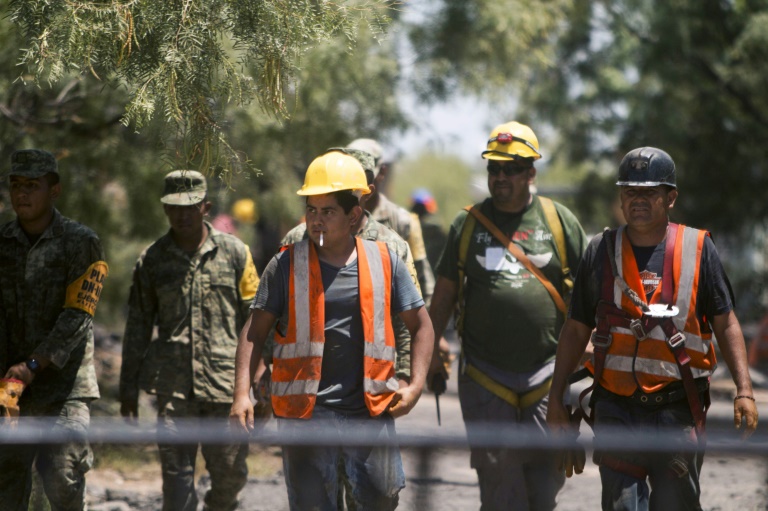
Rescuers hope to enter a flooded coal mine in northern Mexico soon to search for 10 workers who have been trapped for a week, authorities said Wednesday.

“We are very close to being able to enter,” civil defense national coordinator Laura Velazquez said.

“All rescuers have the necessary equipment to be able to enter at any time, hopefully today,” she told reporters in Mexico City by video link. 

Hundreds of soldiers and other rescuers using 25 pumps and two underwater drones are taking part in the operation in Agujita in the northern state of Coahuila.

The focus so far has been on pumping out water from the 60-meter (200-feet) deep, crudely constructed mine.

The water in the shafts has fallen significantly, from more than 30 meters initially, but needs to be reduced by several more meters before it is safe to enter, Velazquez said.

News that rescuers were preparing to go inside the mine was met with a cautious welcome by anxious relatives.

“Let’s hope that now it’s true. Every day they say the same thing,” said Juan Orlando Mireles, whose father is among the missing.

According to authorities, the miners were carrying out excavation work when they hit an adjoining mine full of water.

Five workers managed to escape in the initial aftermath of the accident on August 3, but there has been no contact with the others.

Coahuila, Mexico’s main coal-producing region, has seen a series of fatal mining incidents over the years.

The worst accident was an explosion that claimed 65 lives at the Pasta de Conchos mine in 2006.

Last year, seven miners died when they were trapped in the region.

Swoop on drug cartels sparks chaos in two Mexican states

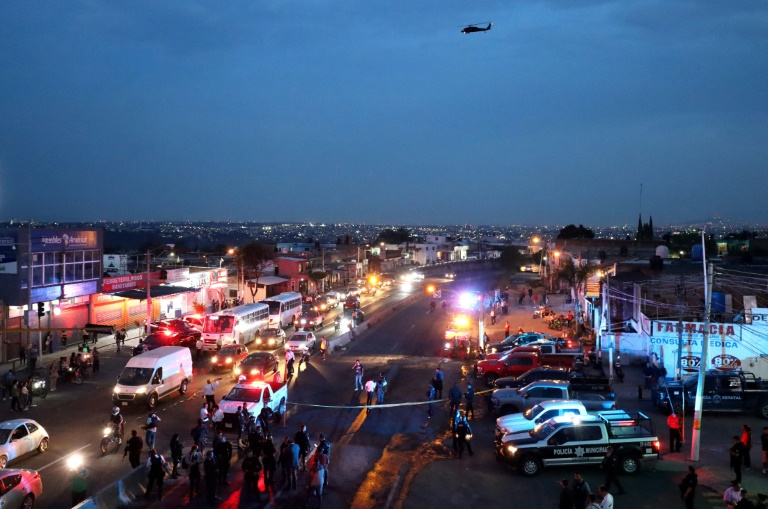
Suspected drug cartel members went on the rampage in Mexico, setting fire to vehicles after a military operation targeted an apparent meeting of gang bosses, authorities said Wednesday.

One alleged criminal was killed and several arrested after the chaos on Tuesday night in Jalisco and Guanajuato, two of Mexico’s most violent states, according to officials.

“Apparently there was a meeting, a meeting of two gangs,” President Andres Manuel Lopez Obrador told reporters.

Troops arrived, resulting in clashes and the arrest of cartel figures at the meeting, he said, without naming them.

Burnt out vehicles were left blocking highways in Jalisco — a tactic used by criminal groups to try to prevent the capture of their members and arrival of security reinforcements.

Surveillance camera footage showed gunmen forcing a driver out of his car before setting it on fire near the city of Guadalajara, a stronghold of the powerful Jalisco New Generation Cartel.

The incidents prompted the US consulate in Guadalajara to issue a security alert warning US citizens in the area to seek shelter.

It is not the first time drug cartel members have sown chaos in retaliation for military operations against them.

In 2019, cartel members angered by the arrest of notorious drug kingpin Joaquin “El Chapo” Guzman’s son launched a massive assault in the northwestern city of Culiacan, prompting security forces to release him.

In March, gunmen clashed with security forces in the northeastern city of Nuevo Laredo after the capture of an alleged drug lord, who was quickly handed over to the United States.

First Ukrainian wheat shipments expected next week: UN

The first wartime wheat from Ukraine should ship next week under a landmark deal also signed by Russia aimed at tackling the global food crisis, a top UN official said on Wednesday.

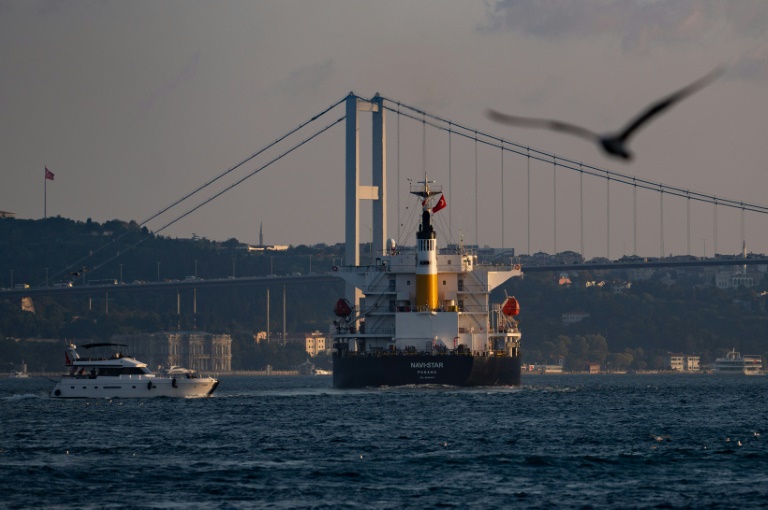
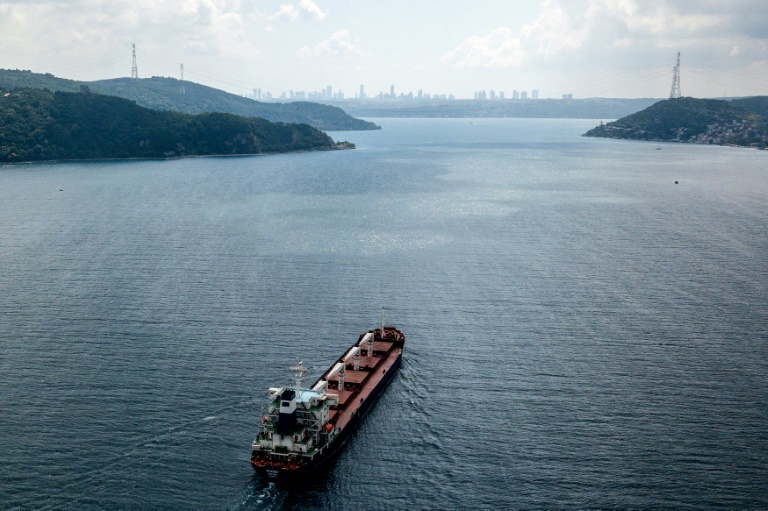
The first 12 ships to leave the three Black Sea ports designated by the agreement were carrying 370,000 tonnes of corn and foodstuffs, according to Frederick Kenney, interim UN coordinator at the joint centre in Istanbul overseeing the deal.

But that should change once the ships docked in Ukraine when Russian invaded its neighbour in February leave their ports and new ones come in to pick up wheat that has accumulated with this year’s harvest, Kenney told reporters.

“We are dealing with three ports that were essentially frozen in time,” Kenney said.

“The silos were full of corn and the ships that were there have been loaded with corn,” he said.

“It’s imperative to get those ships out to get new ships in …. that can deal with the food crisis.”

The agreement, signed by the warring parties and UN and Turkish officials last month in Istanbul, was hailed as a major opportunity to tackle the global food crisis caused by the war.

But Ukraine needed to first deal with the corn — much of it used as animal feed — that was contractually agreed with global clients at the time of Russia’s invasion.

“We’re actually transitioning to wheat,” Kenney said.

“We have cleared the first ship inbound” to Ukraine through the Bosphorus Strait, he said. “That should occur some time next week.”

– First ship finally docks –

The deal was dealt an early setback when the first ship to leave Ukraine — the Sierra Leone-flagged vessel Razoni — failed to reach its destination in Lebanon because of a contractual dispute.

Ukrainian officials said the shipment’s five-month delay prompted the Lebanese buyer to cancel the deal once the ship was already at sea.

The Razoni docked in Turkey’s Mediterranean Sea port of Mersin on Wednesday following a report that its maize has found a new buyer.

The “cargo sold…. It will (unload) at Mersin,” shipping agent Ahmed al-Fares of the Ashram Maritime Agency told the Middle East Eye news site.

Kenney stressed that his Istanbul centre did not get involved in contractual disputes, focusing on its mission of safely navigating ships through a designated corridor cutting through mine-strewn Black Sea waters.

The ships are inspected coming into and out of the Bosphorus.

“We’re seeing steady progress in the number of ships coming in and out,” he said. “We’re off to a good start.”

Cuba fuel depot blaze 'under control'

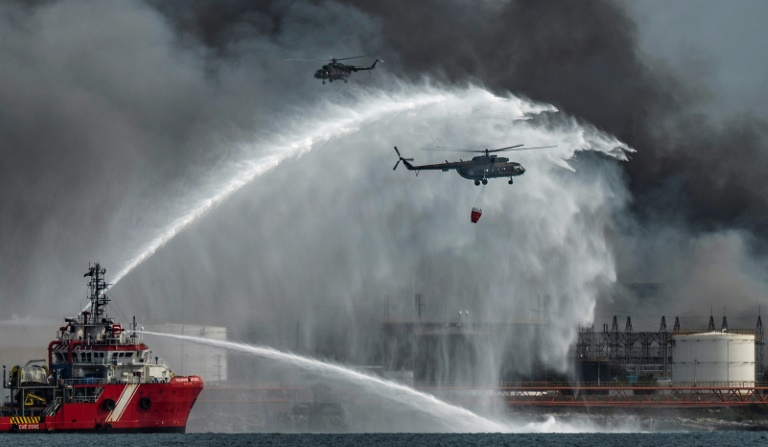
Firefighters on Wednesday declared that a days-old blaze engulfing a fuel depot has finally been brought under control, although not yet extinguished.

The fire, which started on Friday after lightning struck one of the tanks at the depot outside the western city of Matanzas, left a 60-year-old firefighter dead and 14 colleagues missing, feared dead, according to authorities.

“We can now say that the fire is under control,” said deputy fire chief Alexander Avalos Jorge.

Four of the eight tanks at the site — each with the capacity to hold 50 million liters of fuel — collapsed during the blaze that injured more than 100 people, with 22 still receiving hospital treatment.

“Today we feel more calm,” said Avalos, although he revealed there were still some fires burning and that they will not be put out on Wednesday.

Cuba has received support from Venezuela and Mexico, who both sent firefighters, fuel fire experts, equipment and materials.

Earlier on Wednesday, the crew of a Mexican helicopter battling the blaze had said it was beginning to be controlled.

Images supplied by the helicopter crew showed less smoke coming from one of the burning tanks than on previous days, while the crew said the flames engulfing another tank had practically gone out.

From the city of Matanzas, some four kilometers from the depot, less smoke and flames were visible than on previous days, AFP reporters noted.

On Tuesday, Cuba President Miguel Diaz-Canel told reporters that once the flames have been extinguished and the temperature has dropped “we will be able to go in and recover the victims,” in reference to the missing firefighters.

“It will be a very tough moment. We will have to be prepared to support these families.”

The Matanzas depot, built in the 1980s and modernized several times, supplies the Antonio Guiteras thermoelectric plant, the largest in the communist nation.

The plant resumed activities on Wednesday after a two-day shutdown due to contaminated water caused by the depot fire.

The disaster comes at a time when Cuba — with an outdated energy network and persistent fuel shortages — has faced mounting difficulties in meeting energy demands.

First Ukraine grain ship docks in Turkey after being turned away

The first grain ship to leave Ukraine under a UN-backed deal last week docked in Turkey on Wednesday, marine traffic sites showed, following a report that it has finally found a buyer for its maize.

The Sierra Leone-flagged vessel Razoni left the Ukrainian port of Odessa on August 1 carrying 26,000 tonnes of corn and had been expected to dock in the Lebanese port of Tripoli last weekend.

But Ukrainian officials said the shipment’s five-month delay caused by Russia’s invasion prompted the Lebanese buyer to cancel the deal once the ship was already at sea.

Marine traffic sites showed the Razoni docked in Turkey’s Mediterranean Sea port of Mersin after spending several days anchored just off the coast.

The Middle East Eye news site cites a shipping agent as saying that a Turkish buyer has been found for the maize.

The “cargo sold…. It will (unload) at Mersin,” Ahmed al-Fares of the Ashram Maritime Agency told the news site.

An agreement signed by the warring parties with UN and Turkish officials in Istanbul last month lifted a Russian blockade of Ukraine’s ports and established safe corridors through the mines laid by Kyiv to ward off any amphibious assault by Moscow.

The top UN official overseeing the deal said on Wednesday that the first 12 ships to leave Ukrainian ports under the deal were mostly carrying corn instead of wheat because that was the harvest stored in silos at the time of Russia’s invasion.

“We’re actually transitioning to wheat,” Frederick Kenney told reporters.

“We have cleared the first ship inbound” to Ukraine through the Bosphorus Strait to pick up the wheat, he said. “That should occur some time next week.”

Arson suspected as huge French wildfire reignites

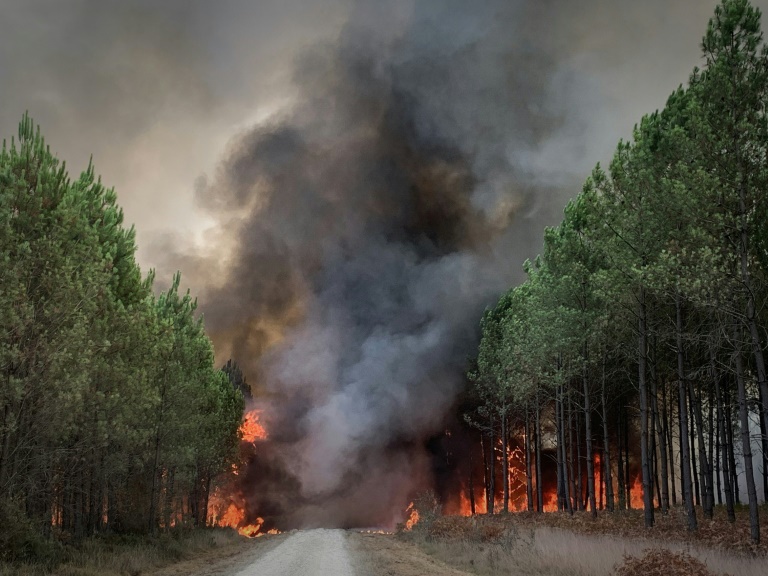
A wildfire that officials thought was under control in southwest France has reignited amid a record drought and extreme heat, possibly the result of arson, officials said Wednesday.

More than 6,000 hectares (15,000 acres) of tinder-dry forest have burned in just 24 hours in the so-called Landiras blaze, the largest of several that scorched the region last month.

It had been brought under control — but not fully extinguished — after burning nearly 14,000 hectares, before flaring up on Tuesday, forcing the evacuation of some 6,000 people.

The government said Interior Minister Gerald Darmanin would travel to the frontline of fire-fighting efforts in the southwestern French region of Gironde on Thursday.

No one has been injured but 16 homes were destroyed or damaged near the village of Belin-Beliet, and officials said six fire engines had been burned.

“The risks are very high” that parched conditions will allow the fire to spread further, said Martin Guespereau, prefect of the Gironde department.

“The weather is very unfavourable because of the heat, the dry air, the record drought and the fact that there is a lot of peat in the ground… the fire didn’t go out in July, it went underground,” he told journalists.

Darmanin said more than 1,000 firefighters were now battling the blaze, adding that investigators suspected arson may be involved.

“There were eight fires that erupted between 8:00 and 9:00 am (0600 and 0700 GMT) that erupted at intervals of a few hundred metres, which is extremely unusual,” he said in Mostuejouls, north of the Mediterranean city of Montpellier, where another fire was raging in the Grands Causses natural park.

He also told reporters that Sweden and Italy would send fire-fighting aircraft to France within 24 hours to help.

– ‘The sky was roaring’ –

“It’s a major fire… much more intense and fast-moving” than at the height of the Landiras blaze last month, Marc Vermeulen of the regional fire-fighting authority told journalists.

“I opened the door last night and there was (a) red wall in front of us, the sky was roaring like the ocean,” said Eliane, a 43-year-old at a temporary shelter for evacuees in Belin-Beliet.

For Christian Fostitchenko, 61, and his partner Monique, waiting at a martial arts dojo in nearby Salles, it was their second evacuation of the summer from their home in Saint-Magne.

“This time we were really scared — the flames were less than 100 metres (328 feet) from the house,” he said.

The fire was spreading toward the A63 motorway, a major artery linking Bordeaux to Spain, with thick smoke forcing the road’s closure between Bordeaux and Bayonne.

France has been buffeted this summer by a record drought that has forced water-use restrictions nationwide, as well as a series of heatwaves that many experts warn are being driven by climate change.

Wildfires have also ignited in the dry hills of the southeast and even in the normally lush areas of Brittany along the coast.

On Wednesday, officials in western France said a wildfire near Angers and Le Mans has burned 1,200 hectares since Monday as nearly 400 firefighters struggle to contain it.

Close Bitnami banner
Bitnami