World

Stocks climb, oil jumps

European and US stock markets climbed Friday despite persistent recession concerns, while oil prices surged.

European stocks closed solidly higher after official data showed eurozone growth holding up in the face of soaring inflation.

Frankfurt rose 1.5 percent and Paris climbed 1.7 percent.

The EU’s official data agency said the 19-country eurozone’s economy grew by 0.7 percent in the second quarter.

But the euro failed to gain much traction, which analysts put down to the other piece of data released Friday: inflation rose to a new record of 8.9 percent in July. 

“This means that consumers are facing even more pressure on their disposable incomes, which should translate into lower spending and thus weaker economic activity,” said Fawad Razaqzada at City Index and FOREX.com.

Meanwhile, Wall Street continued to add to a rally that began Wednesday on the belief that the US Federal Reserve will now slow its pace of interest rate hikes, after hiking them by three-quarters of a percentage point.

The belief even overcame data Thursday showing the US economy shrank by 0.9 percent in the period from April to June, and Friday’s data that prices are continuing to rise faster than consumers’ income.

That followed a 1.6 percent contraction in the preceding three months, meaning that the world’s largest economy had met the technical definition of a recession of two consecutive quarters of contraction.

But the reading was taken as a sign of good news, since it could give the Fed room to take its foot off the pedal.

Treasury yields — considered a barometer of future interest rates — eased, while stocks surged higher.

Companies are in the midst of reporting quarterly earnings, and many are showing the strains from inflation and disrupted supply chains.

But the fact that earnings have been broadly better than investors feared has created positive sentiment.

Market analyst Michael Hewson at CMC Markets said investors are “taking comfort from earnings numbers that have by and large been better than expected, despite concerns about the growth outlook.”

And while debate rages over whether the US is really in recession — the formal determination is made by the National Bureau of Economic Research — the consensus is that the economy is struggling.

“The more important point is that the economy has quickly lost steam in the face of four-decade high inflation, rapidly rising borrowing costs, and a general tightening in financial conditions,” said Sal Guatieri, of BMO Capital Markets.

China is also struggling, hit by Covid-induced lockdowns in major cities including Shanghai and Beijing that have hammered all sectors and supply chains.

But oil traders didn’t focus Friday on the risk of recession destroying demand for crude, choosing instead to focus on supply concerns.

“Oil prices are rising again amid reports that OPEC+ will leave output targets unchanged next month when it meets on Wednesday,” said Craig Erlam at OANDA trading platform.

The main US contract, WTI, surged by more than five percent to rise back above $100 per barrel.

– Key figures at around 1530 GMT –

New York – Dow: UP 0.2 percent at 32,582.21 points

EURO STOXX 50: UP 1.5 percent at 3,708.10

London – FTSE 100: UP 1.1 percent at 7,423.43 (close)

Frankfurt – DAX: UP 1.5 percent at 13,484.05 (close)

Paris – CAC 40: UP 1.7 percent at 6,448.50 (close)

Tokyo – Nikkei 225: DOWN 0.1 percent at 27,801.64 (close)

Hong Kong – Hang Seng Index: DOWN 2.3 percent at 20,156.51 (close)

Shanghai – Composite: DOWN 0.9 percent at 3,253.24 (close)

Euro/dollar: UP at $1.0201 from $1.0197 Thursday

Pound/dollar: DOWN at $1.2171 from $1.2177 

Euro/pound: UP at 83.81 pence from 83.70 pence

Dollar/yen: DOWN at 133.41 yen from 134.25 yen

Brent North Sea crude: UP 3.0 percent at $110.33 per barrel

West Texas Intermediate: UP 4.8 percent at $101.08 per barrel

burs-rl/pvh
Pope headed to Arctic for last leg of penitential Canada trip

Pope Francis on Friday was to fly to Nunavut, the territory that covers most of the Canadian Arctic, on his final stop in a landmark tour apologizing for the abuse of Indigenous children in Catholic-run schools.

The 85-year-old pontiff made a speech first to a delegation of Indigenous peoples in Quebec City, where he told them he was “returning home greatly enriched… I also feel a part of your family.”

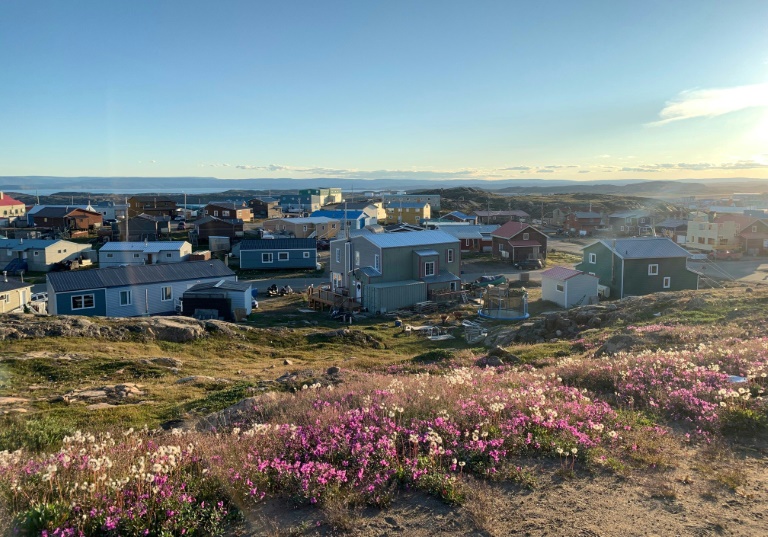
Later, he is to travel to the vast northern territory’s capital, Iqaluit, which means “the place of many fish.”

There, he will first meet with survivors of the residential school system — which saw Indigenous children separated from their families, language and culture in a bid to stamp out their identity — before appearing at a public event hosted by the Inuit.

Residents in Iqaluit, where small houses line the rocky ocean shore, have listened closely to the pope’s words so far on his trip. 

“It’s not going to solve anything, but an apology to the world, it means a lot to us. It does,” Iqaluit stay-at-home mother Elisapee Nooshoota, 36, told AFP in the community of just over 7,000 people on Thursday. 

– ‘Should be doing more’ –

From the late 1800s to the 1990s, Canada’s government sent about 150,000 children into 139 residential schools run by the Catholic Church. Many were physically and sexually abused, and thousands are believed to have died of disease, malnutrition or neglect.

The pope kicked off his trip to Canada on Monday with an apology for the abuse.

While survivors have said his words were overwhelming, many have made clear they see the apology as only the beginning of a process of healing and reconciliation.

“They should be doing more by having counseling, wellness centers, recovery,” said Iqaluit resident Israel Mablick, a 43-year-old survivor of one of the schools.

Others have pointed out that the pope has not yet specifically mentioned the sexual abuse of First Nations, Metis and Inuit children in his comments — a criticism that was echoed by Iqualuit residents.

Kilikvak Kabloona, the chief executive of an organization representing the Inuit in Nunavut, said Francis had not “recognized the Roman Catholic institutional role in protecting abusers.”

“This protection allows sexual violence to flourish, and we were expecting an apology for the sexual abuse,” she said. 

The pope is also expected to be asked once more to intervene in the case of a fugitive French priest, Johannes Rivoire, 93, who was accused of sexually abusing Inuit children in Nunavut decades ago before fleeing to France.

Earlier this year, Canadian police issued a new arrest warrant for him, and an Inuit delegation asked Francis at the Vatican to personally intervene.

“The pope is the leader of the Catholic church and… he must be able to require Rivoire to face his charges,” Kabloona said.

“We would like Rivoire to be extradited to Canada to face his charges in court.”

The spiritual leader of the world’s 1.3 billion Catholics began his six-day trip in western Canada before traveling to Quebec. 

In Quebec City on Friday, Francis also alluded to his own health, stating: “I have come as a pilgrim, despite my physical limitations, to take further steps forward with you and for you.”

The pope has spent much of the Canada trip in a wheelchair because of pain in his right knee.

Blinken leads US bid to counter Russian charm offensive in Africa

US Secretary of State Antony Blinken will travel next month to South Africa, the Democratic Republic of Congo and Rwanda, the State Department announced Friday, as Washington ramps up diplomacy in Africa to counter a Russian charm offensive.

The US ambassador to the United Nations, Linda Thomas-Greenfield, will also go in August to Ghana and Uganda and the US aid chief, Samantha Power, recently completed a trip to longtime US ally Kenya, as well as troubled Somalia, where she highlighted the rise in malnutrition aggravated by Russia’s invasion of Ukraine.

The diplomacy comes as Russian Foreign Minister Sergei Lavrov undertakes his own extensive tour of Africa, where he has sought to cast spiraling global food prices as a consequence of Western sanctions — an idea rejected by Washington, which points to Moscow’s blockade of Ukrainian ports.

Blinken will send a message that “African countries are geostrategic players and critical partners on the most pressing issues of our day, from promoting an open and stable international system, to tackling the effects of climate change, food insecurity and global pandemics to shaping our technological and economic futures,” a State Department statement said.

South Africa, a leader in the developing world, has emerged as a key diplomatic battleground as it has remained studiously neutral on the Ukraine war, refusing to join Western calls to condemn Moscow, which still enjoys affection over its opposition to apartheid.

Blinken will visit Johannesburg and the capital Pretoria from August 7-9. He will then head to the Democratic Republic of Congo’s capital Kinshasa in a bid to show support for sub-Saharan Africa’s vastest country as it tries to turn the page on decades of conflict.

He will complete his trip in Rwanda, which has seen a flare-up in tensions with DR Congo after it accused its neighbor to the east of backing M23 rebels, a charge Kigali denies.

The State Department said Blinken will press for the release of Paul Rusesabagina, who is credited with saving hundreds of lives during the 1994 genocide and inspired the movie “Hotel Rwanda.”

A US permanent resident, Rusesabagina is a critic of Rwandan President Paul Kagame and was sentenced to a 25-year prison term for “terrorism” after a plane he believed was bound for Burundi landed in Kigali in 2020.

Blinken will be paying his second trip to sub-Saharan Africa since he took office last year with President Joe Biden’s administration. 

Late last year, he traveled to Kenya, Nigeria and Senegal as he sought to highlight democracies.

Before Russia’s February invasion of Ukraine, US efforts in Africa had a heavy subtext on competition with China, which has poured money into infrastructure building on the continent and contrasts itself with the United States by making no demands on democracy or human rights.

– Rejecting Russian narrative –

While the Biden administration identifies China as the primary long-term competitor of the United States, it has focused in the short-term on countering Russia. 

Western nations have overwhelmingly voiced outrage and sought to punish Moscow over its invasion of Ukraine but developing nations, especially in Africa and South Asia, have been more hesitant.

Yoweri Museveni, the veteran leader of Uganda where Thomas-Greenfield is heading, met Tuesday with Lavrov and said, “How can we be against somebody who has never harmed us?”

Lavrov, speaking the next day in Ethiopia, urged Africa to resist a world “totally subordinated to the United States” and warned that other nations risked punishment if they run afoul of Western interests.

Blinken on Wednesday described Lavrov’s trip as “a desperate game of defense to justify to the world the actions that Russia has taken” including its “aggression” in Ukraine.

President Emmanuel Macron of France, which has a long history in Africa, on a visit to Benin on Wednesday called Russia “one of the last imperial colonial powers.”

Power, administrator of the US Agency for International Development, on her trip to the Horn of Africa unveiled more than $1 billion in emergency assistance to fight rising hunger and challenged other nations such as China and Russia to follow suit.

15 dead in 'devastating' Kentucky flooding, toll expected to rise

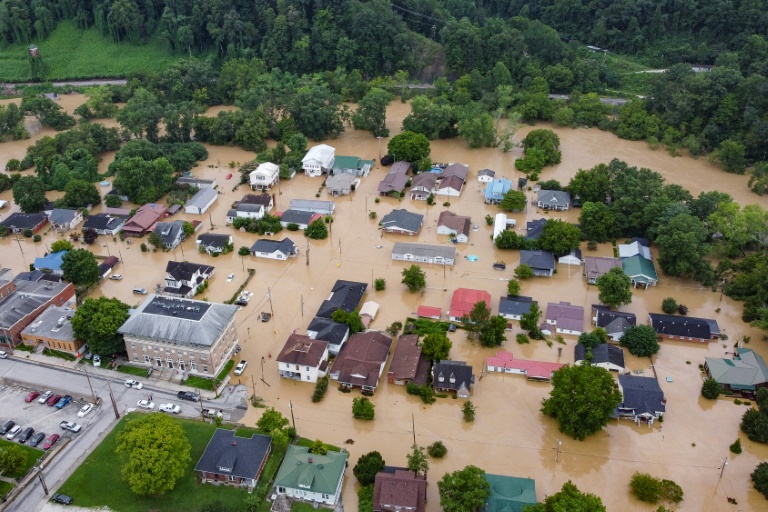
At least 15 people have died in Kentucky in flash flooding caused by torrential rains that swept away homes and left some residents stranded on rooftoops, the governor of the US state said Friday.

“It is devastating,” Governor Andy Beshear told CNN. “Our number of Kentuckians we’ve lost is now at 15.

“I expect it to more than double,” Beshear said. “And it’s going to include some children.”

“Some people’s houses were completely swept away in the middle of the night while they were sleeping,” the governor added.

He said hundreds of people had been rescued by boat and there had been about 50 aerial rescues using National Guard helicopters.

With many roads washed out “we still can’t get to a lot of people,” he said.

“The current is so strong it’s not safe for some of those water rescues that we need to do.”

Eastern Kentucky has had flash flooding previously “but we’ve never seen something like this,” Beshear said.

“Folks who deal with this for a living, who have been doing it for 20 years, have never seen water this high.”

Some areas of the state’s Appalachia region reported receiving more than eight inches (20 centimeters) of rain in a 24-hour period.

The water level of the North Fork of the Kentucky River at Whitesburg rose to a staggering 20 feet within hours, well above its previous record of 14.7 feet.

– Disaster declaration –

Many roads resembled rivers, mangled cars littered the landscape and muddy brown floodwaters lapped against the rooftops of low-lying houses.

Kayla Brown, 29, and Joe Salley Jr., 56, residents of Perry County, told the Lexington Herald-Leader that the fast-rising flood waters trapped them in their mobile home.

“It was like a wave coming at you out of the ocean,” Salley said.

Neighbors came to their rescue after their trailer was knocked off its foundations.

The eastern Kentucky flooding is the latest in a series of extreme weather events that scientists say are an unmistakable sign of climate change.

Nearly 60 people were killed in western Kentucky by a tornado in December 2021.

The National Weather Service warned that more heavy rain was expected.

President Joe Biden issued a disaster declaration for Kentucky, allowing federal aid to supplement state and local recovery efforts.

Deanne Criswell, head of the Federal Emergency Management Agency, is travelling to Kentucky on Friday and will report back to the president.

Musk, Twitter get Oct. 17 trial in buyout fight

Twitter’s lawsuit to force Elon Musk to complete his $44 billion buyout bid is set to go to trial on October 17, a US judge has ordered, in a case with major stakes for both sides.

The trial is due to open in a court in the eastern state of Delaware and is set to last five days to decide whether Musk can walk away from the deal.

The Tesla boss wooed Twitter’s board with a $54.20 per-share offer, but then in July announced he was “terminating” their agreement on accusations the firm misled him regarding its tally of fake and spam accounts.

Twitter has countered by saying Musk already agreed to the deal and can’t back out now.

An order from the judge handling the case, Kathaleen McCormick, lays out an expedited schedule to resolve a fight that has left Twitter in limbo.

She reminds both sides that they “shall cooperate in good faith” on matters like handing over information to each other, a key topic that can result in delays. 

Billions of dollars are at stake, but so is the future of Twitter, which Musk has said should allow any legal speech — an absolutist position that has sparked fears the network could be used to incite violence.

Twitter blamed disappointing results last week on “headwinds,” including the uncertainty imposed on the company by Musk’s chaotic buyout bid.

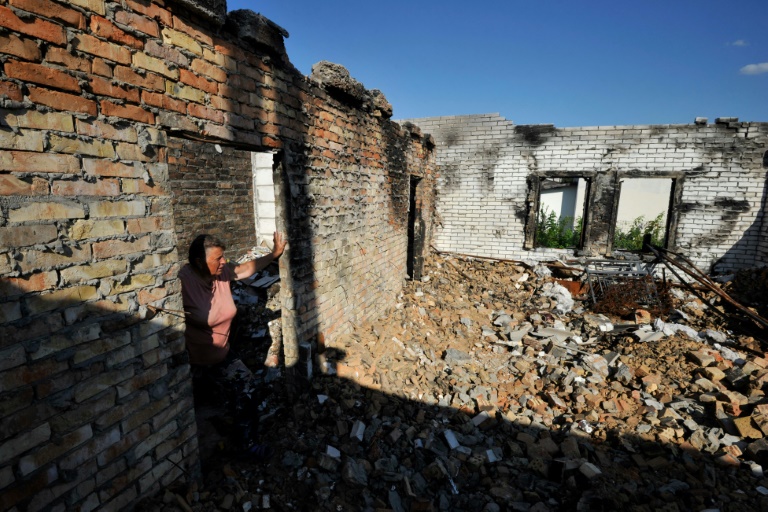
War in Ukraine: latest developments

Here are the latest developments in the war in Ukraine:

– Blame traded over strike on POW jail –  

Russia and Ukraine blame each other for striking a jail holding Ukrainian prisoners of war in Russian-held Olenivka, with Moscow saying 40 prisoners and eight prison staff were killed.

Russia’s defence ministry says Ukraine carried out strikes with US-supplied long-range missiles, in an “egregious provocation” designed to stop soldiers from surrendering.

It says that among the dead were Ukrainian forces that had laid down their arms after repelling Moscow’s assault on the sprawling Azovstal steel works in Mariupol.

Ukraine’s military denies carrying out the attack, blaming Russia’s forces for “a targeted artillery shelling” on the detention facility.

– First grain ship loaded – 

Ukrainian President Volodymyr Zelensky visits the port of Chornomorsk in southern Ukraine to oversee the loading onto a Turkish ship of the first grain for export since Russia’s February 24 invasion.

A deal last week brokered by the UN and Turkey to lift a Russian blockade of Ukraine’s grain exports is aimed at helping mitigate a global food crisis causing prices to soar in some of the poorest nations.

“The first vessel, the first ship is being loaded since the beginning of the war. This is a Turkish vessel,” Zelensky said, according to a presidency statement.

The statement says exports could start in “the coming days” under the plan aimed at getting millions of tonnes of grain from one of the top grain exporters to world markets.

– First war crime sentence slashed –

The Kyiv court of appeals reduces to 15 years a life sentence handed to a Russian soldier in May for pre-meditated murder in the country’s first war crimes trial.

Russian soldier Vadim Shishimarin, 21 at the time of the ruling, was found guilty of war crimes for killing an unarmed civilian and handed a life sentence, in the first verdict of its kind after Russia’s invasion.

The sergeant from Siberia had admitted to killing a 62-year-old civilian, Oleksandr Shelipov, as he was riding his bike in the village of Chupakhivka in northeast Ukraine.

Shishimarin claimed he shot Shelipov under pressure from another soldier as they tried to retreat and escape back into Russia in a stolen car on February 28.

– Five dead in bus stop strike – 

Russian strikes kill five people and wound seven more at a bus stop in the heavily bombed city of Mykolaiv, the regional governor Vitaliy Kim says on social media.

Mykolaiv, near the Black Sea, has been shelled daily for weeks. It is the largest Ukrainian-controlled urban hub near the frontlines in the southern Kherson region, where Kyiv’s army has launched a counter-offensive to regain control of the economically and strategically important coastal territory.

In the eastern Donetsk region, the current focus of Russia’s fighting, governor Pavlo Kyrylenko says Moscow’s forces have killed eight people and wounded 19 more in attacks over the previous day.

– Macron lobbies controversial Saudi prince – 

French President Emmanuel Macron and Saudi Crown Prince Mohammed bin Salman agree to work “to ease the effects” of the Ukraine war, Macron’s office says after a meeting in Paris.

Western leaders snubbed the 36-year-old prince over his suspected role in the murder of Washington Post journalist Jamal Khashoggi in 2018.

But the heir to the Middle East’s most powerful throne is being courted again as Europe and its allies urgently seek alternative sources of fossil fuels to replace lost Russian production.

Analysts say Saudi Arabia is one of few countries worldwide with the capacity to increase its oil production, though its margin for manoeuvre is seen as limited.

burs-jmy/eab/kjm

European stocks end week higher on growth hopes

European stock markets rose robustly on Friday as official data showed eurozone growth holding up in the face of soaring inflation.

Stock markets in Asia ended the session lower after data showed that the US economy contracted again, reinforcing recession fears.

Wall Street opened higher, adding to Wednesday’s rally on expectations that the US Federal Reserve will slow its pace of interest rate hikes.

After an extended period of pessimism on trading floors, investors were beginning to speculate that the market may be bottoming out. 

The EU’s official data agency said the 19-country eurozone’s economy grew by 0.7 percent in the second quarter, even though inflation rose to a new record of 8.9 percent in July. 

A day earlier, US data showed the world’s biggest economy shrank by 0.9 percent in the period from April to June after already contracting by 1.6 percent in the preceding three months. 

But the reading was taken as a sign of good news, since it could give the Fed room to take its foot off the pedal and treasury yields — considered a barometer of future interest rates — eased.

Officials were expected to continue raising US interest rates, but analysts estimate they would announce a half-point rise in September, compared with three-quarters of percentage point at the past two meetings.

“Stocks continued their rally in Europe on Friday … as market sentiment improved following reassuring macro data in addition to positive corporate results,” said ActivTrades analyst Pierre Veyret.

The prospect of US interest rates not rising as fast as previously expected has knocked the dollar slightly after soaring against other major currencies in recent months.

A second successive contraction in growth is widely considered a technical recession, although it is not officially considered so in the United States until identified as such by the National Bureau of Economic Research.

But while debate rages over that issue, the consensus is that the economy is struggling.

“The more important point is that the economy has quickly lost steam in the face of four-decade high inflation, rapidly rising borrowing costs, and a general tightening in financial conditions,” said Sal Guatieri, of BMO Capital Markets.

China is also struggling, hit by Covid-induced lockdowns in major cities including Shanghai and Beijing that have hammered all sectors and supply chains.

The euro failed to get much mileage from the surprisingly good eurozone growth figures as investors focused on the inflation data, which was worse than expected.

“This means that consumers are facing even more pressure on their disposable incomes, which should translate into lower spending and thus weaker economic activity,” said Fawad Razaqzada at City Index and FOREX.com.

After initially rising after the data release, it later fell back against the dollar.

Crude prices jumped by three percent as traders focused on supply concerns, with the main US contract, WTI, rising back above $100 per barrel.

“Oil prices are rising again amid reports that OPEC+ will leave output targets unchanged next month when it meets on Wednesday,” said Craig Erlam at OANDA trading platform.

– Key figures at around 1330 GMT –

London – FTSE 100: UP 1.0 percent at 7,446.27 points

Frankfurt – DAX: UP 1.3 percent at 13,449.94

Paris – CAC 40: UP 1.8 percent at 6,453.45

EURO STOXX 50: UP 1.4 percent at 3,704.06

New York – Dow: UP less than 0.1 percent at 32,534.12

Tokyo – Nikkei 225: DOWN 0.1 percent at 27,801.64 (close)

Hong Kong – Hang Seng Index: DOWN 2.3 percent at 20,156.51 (close)

Shanghai – Composite: DOWN 0.9 percent at 3,253.24 (close)

Euro/dollar: DOWN at $1.0158 from $1.0197 Thursday

Pound/dollar: DOWN at $1.2081 from $1.2177 

Euro/pound: UP at 84.10 pence from 83.70 pence

Dollar/yen: UP at 134.35 yen from 134.25 yen

Brent North Sea crude: UP 3.0 percent at $110.39 per barrel

West Texas Intermediate: UP 3.8 percent at $100.12 per barrel

burs-rl/pvh

US prices accelerate in June, outpacing income gains

A key US inflation measure accelerated again in June, outpacing gains in income, government data showed Friday, heaping pressure on President Joe Biden and policymakers trying to ease the pain for American families.

The data showing the biggest inflation surge in four decades comes on the heels of dismal economic growth figures and another super-sized interest rate increase by the Federal Reserve.

The Fed’s preferred inflation gauge, the personal consumption expenditures (PCE) price index, rose 6.8 percent compared to June 2021, the Commerce Department reported.

And inflation jumped 1.0 percent compared to May, in line with economists’ expectations but outpacing personal income, which rose just 0.6 percent, the same increase as the prior month, according to the report.

Consumers buoyed by a stockpile of savings during the pandemic splurged on goods, cars and homes last year, but global supply chain snarls and worker shortages pushed prices higher — factors worsened by Russia’s war on Ukraine, which sent food and energy prices soaring worldwide.

Excluding the volatile food and energy components, the “core” PCE price index gained a more moderate 4.8 percent in the last 12 months, just a tenth higher than May but continuing a gradual slowing.

The Fed focuses on the PCE price index, as it reflects consumers’ actual spending, including shifts to lower cost items, unlike the more well-known consumer price index, which jumped 9.1 percent in June.

The PCE also gives less weight to things like rent, vehicles and airline fares, which have contributed to the blistering pace of the CPI rise

The Fed has been aggressively raising borrowing rates this year, with the fourth increase announced Wednesday, as it aims to cool the economy.

Central bankers face the difficult task of easing price pressures that are squeezing US households without causing a severe economic downturn.

One concern is that demands for higher pay amid a worker shortage could cause a wage-price spiral.

In a separate data report, the Labor Department said worker compensation, including wages and benefits, rose 1.3 percent in the three-months ended in June and up 5.1 percent in the latest 12 months.

Nancy Vanden Houten of Oxford Economics said the hotter-than-expected gain does not provide the compelling evidence of slowing inflation the central bank is seeking.

“The Q2 employment cost data doesn’t provide any evidence that wage growth is slowing and leaves the Fed on track to lift the funds rate another 75bps at its September meeting,” she said.

Price hikes boost P&G profits despite lower China sales

Higher prices helped Procter & Gamble score increased quarterly profits despite a hit to China sales, and executives on Friday described inflation as having a relatively limited impact thus far on demand.

Chief Executive Jon Moeller alluded to “significant headwinds” faced by the consumer products giant including a strengthening US dollar, higher costs and Covid upheaval, but praised the performance of the firm behind well-known brands like Pampers diapers and Crest toothpaste.

The company “delivered strong top-line growth, earnings growth and significant cash return to shareholders in the face severe cost and operational headwinds,” Moeller said in a statement.

Profits in the final quarter of the company’s fiscal year rose $3.1 billion, up five percent on revenues of $19.5 billion, which were three percent higher than the year-ago period.

Sales were boosted by an eight percent increase in pricing. 

However, P&G executives said sales in China suffered an 11 percent hit due to Covid-19 lockdowns, with the earnings release highlighting the impact in beauty, grooming and health care.

With restrictions in China easing “we are seeing a gradual return to consumer mobility,” said Chief Financial Officer Andre Schulten. “And that is certainly helping consumption.”

Schulten said P&G has seen relatively little incidence of consumers “trading down” to lower-priced products because of inflation.

“You see consumers may be skimp for a period of time, use up inventory,” he told reporters on a briefing. “But it’s more benign than we would have expected based on historical data.”

Moeller, in an interview with CNBC, did not discount the possibility that the US economy could be heading into a recession, but said consumers were still showing robustness.

“We’ve got a very strong labor market. Consumer balance sheets are generally strong,” Moeller told the network. “So based on that slice that we see, at least some of the US economy, things are very good.”

P&G’s earnings-per-share of $1.21 missed analyst expectations by two cents, while revenues slightly topped estimates.

Shares fell 4.7 percent to $141.18 just after trading opened.

Kentucky flood toll at least 15, expected to double: governor

Flash flooding caused by torrential rains has killed at least 15 people in eastern Kentucky and the death toll is expected to double, the US state’s governor said Friday.

“It is devastating. Our number of Kentuckians we’ve lost is now at 15, expected to more than double. And it’s going to include some children,” Governor Andy Beshear told CNN.

He said hundreds of people had been rescued by boat and there had been about 50 aerial rescues using helicopters deployed by the National Guard.

“Eastern Kentucky floods a lot but we’ve never seen something like this,” Beshear said.

“Folks who deal with this for a living who have been doing it for 20 years have never seen water this high.”

Some areas reported receiving more than eight inches (20 centimeters) of rain in a 24-hour period.

The water level of the North Fork of the Kentucky River at Whitesburg rose to a staggering 20 feet, well above its previous record of 14.7 feet.

Close Bitnami banner
Bitnami