World

Powerful earthquake hits northern Philippines

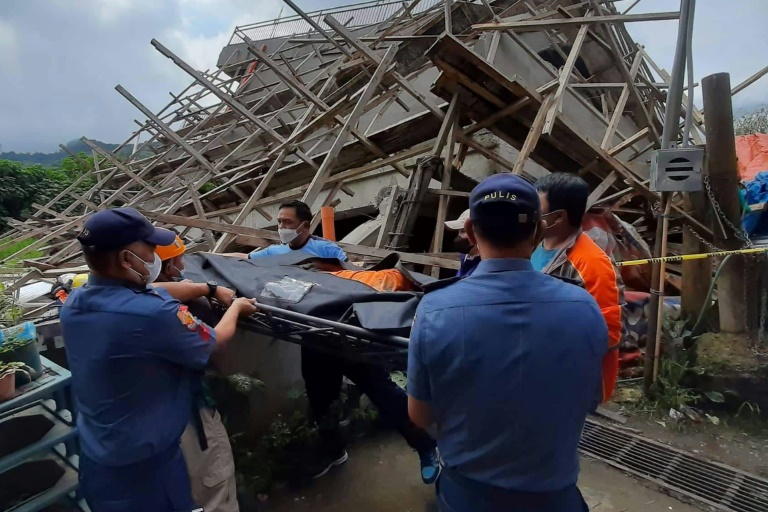
A 7.0-magnitude earthquake killed at least five people in the northern Philippines Wednesday, toppling buildings and shaking high-rise towers more than 300 kilometres (185 miles) away in the capital Manila.

The shallow and powerful quake struck the mountainous and lightly populated province of Abra on the main island of Luzon at 8:43 am (0043 GMT), the US Geological Survey said.

Shallow earthquakes tend to cause more damage than deeper ones. This one left more than a hundred people injured across the hilly region, triggered dozens of landslides, damaged buildings, and knocked out power.

“We felt really strong shaking. We started shouting and rushed outside,” said university student Mira Zapata in the San Juan municipality of Abra, which took the full force of the quake.

“Our house is OK but houses down the hill were damaged.”

As buildings shook and walls cracked in the municipality of Dolores, people ran outside, Police Major Edwin Sergio told AFP.

“The quake was very strong,” Sergio said, adding that windows of the local market were broken.

In Bangued, the provincial capital of Abra, a 23-year-old woman was killed after a wall fell on her, police said. At least 78 were injured in the province.

A video posted on Facebook and verified by AFP showed cracks in the asphalt road and ground in Bangued.

“Some of the buildings here show cracks,” police chief Major Nazareno Emia added. “Power was cut off and internet as well.”

Two construction workers in the nearby landlocked province of Benguet died in separate incidents, police said. 

Another person was killed when boulders smashed into the building site where he was working in Kalinga province, police said. Six other workers were injured.

Police said an elderly woman in Suyo municipality in Ilocos Sur province suffered fatal injuries after she was buried by a landslide while out walking.

In Vigan City, a UNESCO World Heritage site in Ilocos Sur, centuries-old structures built during the Spanish colonial period were damaged, police said.

– Ring of Fire –

The Philippines is regularly rocked by quakes due to its location on the Pacific “Ring of Fire”, an arc of intense seismic activity that stretches from Japan through Southeast Asia and across the Pacific basin.

Wednesday’s quake was one of the strongest recorded in the Philippines in years and was felt across swathes of Luzon island, the most populous in the archipelago.

It was followed by nearly 300 aftershocks, the local seismological agency said. Several of the subsequent quakes measured from magnitude 4.7 to 5.2, according to USGS.

Residents and office workers in Manila were evacuated from high-rise buildings.

“I grabbed money and our belongings and then I went out with my parents,” said Christina Gonzales, 19, after fleeing a city hotel. 

Verified video footage posted on Facebook showed the Bantay Bell Tower in the popular tourist destination of Vigan partially crumbling.

Two visitors suffered minor injuries from falling debris, an official said.

Other buildings in the city were also damaged. 

“We can’t rule out the possibility of another strong earthquake,” said Renato Solidum, director of the Philippine Institute of Volcanology and Seismology.

President Ferdinand Marcos Jr, whose family stronghold is in the north, said he would delay visiting the region to avoid causing disruption.

He urged people to remain in emergency shelters until their homes have been checked for damage.

Military personnel have been deployed to Abra to help with rescue operations.

At least 58 landslides have been reported, Interior Secretary Benjamin Abalos said.

National disaster agency spokesman Mark Timbal said road-clearing operations were under way. There had been no reports of damage to local dams. 

In October 2013, a magnitude 7.1 earthquake struck Bohol Island in the central Philippines, killing more than 200 people and triggering landslides.

Old churches in the birthplace of Catholicism in the Philippines were badly damaged. Nearly 400,000 were displaced and tens of thousands of houses were damaged. 

The powerful quake altered the island’s landscape and a “ground rupture” pushed up a stretch of ground by about three metres, creating a wall of rock above the epicentre. 

In 1990, a 7.8-magnitude earthquake in the northern Philippines created a ground rupture stretching over a hundred kilometres.

Fatalities were estimated to reach over 1,200, with major damage to buildings in Manila.
Powerful earthquake hits northern Philippines

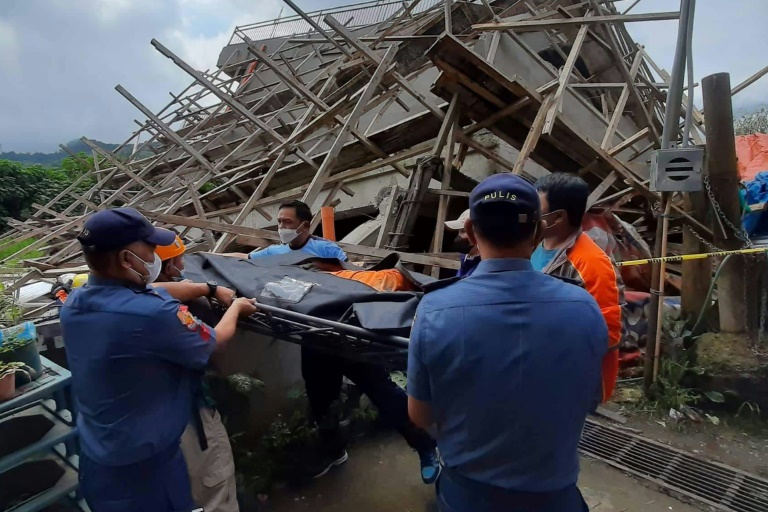
A 7.0-magnitude earthquake killed at least five people in the northern Philippines Wednesday, toppling buildings and shaking high-rise towers more than 300 kilometres (185 miles) away in the capital Manila.

The shallow and powerful quake struck the mountainous and lightly populated province of Abra on the main island of Luzon at 8:43 am (0043 GMT), the US Geological Survey said.

Shallow earthquakes tend to cause more damage than deeper ones. This one left more than a hundred people injured across the hilly region, triggered dozens of landslides, damaged buildings, and knocked out power.

“We felt really strong shaking. We started shouting and rushed outside,” said university student Mira Zapata in the San Juan municipality of Abra, which took the full force of the quake.

“Our house is OK but houses down the hill were damaged.”

As buildings shook and walls cracked in the municipality of Dolores, people ran outside, Police Major Edwin Sergio told AFP.

“The quake was very strong,” Sergio said, adding that windows of the local market were broken.

In Bangued, the provincial capital of Abra, a 23-year-old woman was killed after a wall fell on her, police said. At least 78 were injured in the province.

A video posted on Facebook and verified by AFP showed cracks in the asphalt road and ground in Bangued.

“Some of the buildings here show cracks,” police chief Major Nazareno Emia added. “Power was cut off and internet as well.”

Two construction workers in the nearby landlocked province of Benguet died in separate incidents, police said. 

Another person was killed when boulders smashed into the building site where he was working in Kalinga province, police said. Six other workers were injured.

Police said an elderly woman in Suyo municipality in Ilocos Sur province suffered fatal injuries after she was buried by a landslide while out walking.

In Vigan City, a UNESCO World Heritage site in Ilocos Sur, centuries-old structures built during the Spanish colonial period were damaged, police said.

– Ring of Fire –

The Philippines is regularly rocked by quakes due to its location on the Pacific “Ring of Fire”, an arc of intense seismic activity that stretches from Japan through Southeast Asia and across the Pacific basin.

Wednesday’s quake was one of the strongest recorded in the Philippines in years and was felt across swathes of Luzon island, the most populous in the archipelago.

It was followed by nearly 300 aftershocks, the local seismological agency said. Several of the subsequent quakes measured from magnitude 4.7 to 5.2, according to USGS.

Residents and office workers in Manila were evacuated from high-rise buildings.

“I grabbed money and our belongings and then I went out with my parents,” said Christina Gonzales, 19, after fleeing a city hotel. 

Verified video footage posted on Facebook showed the Bantay Bell Tower in the popular tourist destination of Vigan partially crumbling.

Two visitors suffered minor injuries from falling debris, an official said.

Other buildings in the city were also damaged. 

“We can’t rule out the possibility of another strong earthquake,” said Renato Solidum, director of the Philippine Institute of Volcanology and Seismology.

President Ferdinand Marcos Jr, whose family stronghold is in the north, said he would delay visiting the region to avoid causing disruption.

He urged people to remain in emergency shelters until their homes have been checked for damage.

Military personnel have been deployed to Abra to help with rescue operations.

At least 58 landslides have been reported, Interior Secretary Benjamin Abalos said.

National disaster agency spokesman Mark Timbal said road-clearing operations were under way. There had been no reports of damage to local dams. 

In October 2013, a magnitude 7.1 earthquake struck Bohol Island in the central Philippines, killing more than 200 people and triggering landslides.

Old churches in the birthplace of Catholicism in the Philippines were badly damaged. Nearly 400,000 were displaced and tens of thousands of houses were damaged. 

The powerful quake altered the island’s landscape and a “ground rupture” pushed up a stretch of ground by about three metres, creating a wall of rock above the epicentre. 

In 1990, a 7.8-magnitude earthquake in the northern Philippines created a ground rupture stretching over a hundred kilometres.

Fatalities were estimated to reach over 1,200, with major damage to buildings in Manila.
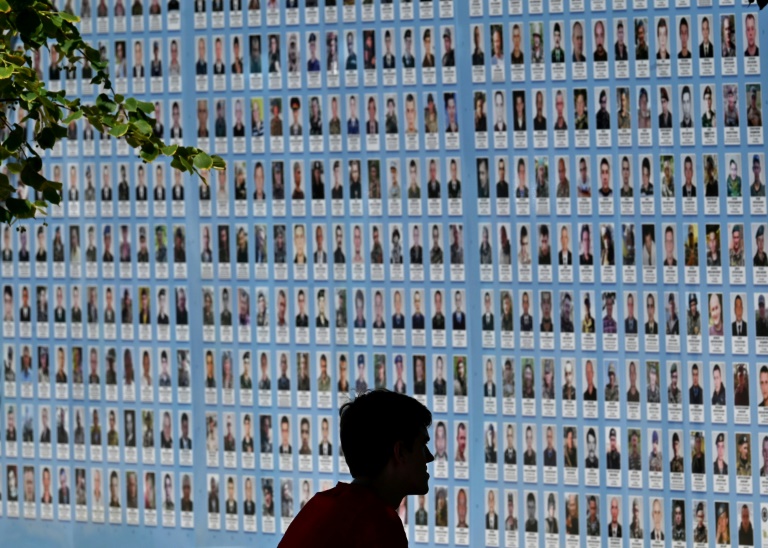
Ukraine strikes key bridge in Russian-held Kherson

Ukrainian artillery on Wednesday struck a key bridge in Moscow-controlled territory in south Ukraine, damaging an important supply route as Kyiv’s forces look to wrest back the Kherson region.

The strike on the Antonivskiy bridge over the Dnipro river came hours ahead of the opening in Istanbul of a joint observation centre to monitor Ukrainian grain exports that have been blocked by the Kremlin’s warships.

German authorities said Russian energy giant Gazprom had drastically cut gas deliveries to Europe via the Nord Stream pipeline to about 20 percent of capacity, after the European Union agreed a plan to slash its usage this winter.

Kirill Stremousov, the deputy head of the Russian-installed regional administration in Kherson, confirmed the bridge had been hit overnight and traffic had been halted.

But he sought to downplay the damage, insisting that the attack would not affect the outcome of the hostilities “in any way.”

“The special military operation is continuing,” Stremousov said in a video posted on social media, using the Kremlin’s preferred term to refer to their invasion.  

Ukrainian forces in recent weeks have been clawing back territory in the Kherson region, which fell to Russian forces easily and early after their invasion launched on February 24.

Their counter-offensive supported by Western-supplied long-range artillery has seen its forces push closer to Kherson city, which had a pre-war population of under 300,000 people.

– ‘Leave Kherson’ –

Ukrainian officials in the region have said their forces in the Black Sea region have changed tack, from defensive to offensive and that Kherson will “definitely” be liberated by the end of September.

Russian forces “should leave Kherson while it is still possible. There may not be a third warning,” Ukrainian presidential advisor Mykhaylo Podolyak said on Twitter after the attack.

Later Wednesday, the United Nations and Turkey are due to open a joint centre with Russia and Ukraine in Istanbul to coordinate the resumption of grain deliveries across the Black Sea.

The two sides agreed a mechanism last week to unblock millions of tonnes of grain trapped by a Russian blockade of Ukrainian ports — an accord called into question by Russian strikes on Ukraine’s Odessa port within 24 hours.

Kyiv insists it is still preparing for the first ships to leave and said Monday that it hopes to restart exports “this week”.

The blockage of deliveries from two of the world’s biggest grain exporters has contributed to a spike in prices that has made food imports prohibitively expensive for some of the world’s poorest countries.

Erdogan wants Turkey — on good terms with both Kyiv and Moscow — at the centre of diplomatic efforts to halt the five-month war.

Russian news agencies — citing Moscow’s embassy in Ankara — said Wednesday that a previously announced meeting between Erdogan and Russian leader Vladimir Putin would take place next Friday at the Russian Black Sea resort city of Sochi.

– ‘Thrown into the barn’ –

While Ukrainian forces have been piling pressure on Russian positions in the south, the eastern Donbas region has seen intense fighting.

AFP journalists in Bakhmut, one of the remaining towns in Donbas under Ukrainian control, heard sporadic artillery fire and saw a house on the outskirts that had been hit by a Russian shell.

“I was in the barn and was going to go out. I heard a whistle. And I don’t remember anything. It exploded and I was thrown into the barn by explosion wave, 51-year-old Roman told AFP.

The head of the Donetsk region in Donbas, said on social media that Russian artillery had hit a hotel and initial reports suggested the strikes had left people dead and injured.

Deepening an energy crisis in Europe sparked by the war, Germany’s energy regulator said gas flows via the key Nord Stream pipeline had dropped to 20 percent of capacity on Wednesday from 40 percent.

EU states have rejected Gazprom’s claims of technical problems and accuse the Kremlin of squeezing supplies in retaliation for Western sanctions over Moscow’s war in Ukraine.

The 27-nation bloc in response on Tuesday agreed a plan to reduce gas consumption by 15 percent this winter to break its dependence on Russia.

Singapore extends visa for Sri Lanka's ex-leader: local media

Singapore has extended a short-stay visa for Sri Lanka’s deposed president Gotabaya Rajapaksa, local media in the city-state reported on Wednesday. 

Rajapaksa fled his country on July 13, after his official residence was stormed by thousands of protesters who had demonstrated for months against the island nation’s painful economic crisis.

He first escaped to the Maldives in a military plane and travelled on to Singapore, where he has been staying on a short-term visit pass since July 14. 

Rajapaksa’s 14-day visit pass has been extended, allowing him to stay until August 11, the Straits Times newspaper reported Wednesday, without citing a source.

Singapore’s Immigration and Checkpoints Authority told AFP it had no further comment apart from a previous statement that confirmed Rajapaksa was allowed to enter Singapore. 

Authorities had earlier said Rajapaksa entered the country on a “private visit” and was not seeking asylum.

Sri Lanka’s cabinet spokesperson Bandula Gunawardena told reporters in Colombo on Tuesday that Rajapaksa is not in hiding and is expected to return to his country, but added that the government has not been informed about his travel plans.

“He is not in hiding and my understanding is that he will return, but if there is anything to the contrary, the state authorities will inform him and ensure that there is no danger for the ex-president,” he said. 

Protesters blamed Rajapaksa’s government for mismanaging the country’s finances, with the island nation defaulting on its $51 billion debt and unable to afford to import even the most basic necessities. 

The country of 22 million people has suffered through months of lengthy blackouts, acute food and fuel shortages and galloping inflation in its most severe economic downturn since gaining independence.

From exile, Russia's TV Rain seeks to counter Kremlin storm

In a small studio in Paris, Russian journalist Denis Kataev prepares his evening news show that he hopes will play its part in countering the Kremlin narrative about the invasion of Ukraine.

Kataev works for Russian channel Dozhd (Rain), which for over a decade from its Moscow base was the country’s most prominent independent broadcast media in a scene dominated by voices loyal to President Vladimir Putin.

But Russia’s invasion of Ukraine led to the channel being blocked in Russia and forced to suspend operations for over four months. Defiantly, it has now resumed broadcasting from a headquarters in Latvia but also from Amsterdam, Tbilisi and Paris, where Kataev is based.

“I am optimistic,” said Kataev as he prepared to present Dozhd’s flagship evening news show “Here and Now” from an impromptu studio set up in a Paris journalism school.

Kataev, a prominent figure in the Moscow journalism scene before going into exile in the wake of the invasion, will from September have to find a new studio when journalism courses resume at the school.

But he insisted that there was an audience for Dozhd’s broadcasting inside Russia.

“The war in Ukraine is, for me, the end of Russia, the end of our hopes,” he told AFP.

“For me Russia is finished and it’s also a question of my conscience, that is why I left my country.”

– ‘No to War’ –

But he added: “We feel this demand for information in Russia. We have to continue. There is an audience in Russia who thinks differently, who are against Putin’s regime, like me, who are against this war. 

“So we have to fight the propaganda.”

Dozhd wound up its Russia operations and suspended broadcasting from Russia with an emotional show on March 3, less than a fortnight after the war started, anchored by the channel’s owner Natalya Sindeyeva.

Declaring “No Pasaran” (They Shall not Pass) and “No to War” the channel’s entire workforce walked off at the end of the broadcast to leave an empty set and close an extraordinary chapter in the history of Russian media.

The channel has started broadcasting in 2010, dubbing itself the “optimistic channel” to counter the turgid output of state TV and even won a degree of official endorsement when then president Dmitry Medvedev, at the time nodding to reform, visited its studios in 2011.

But the winter of that year saw Dozhd boldly cover protests that followed parliamentary elections observers said were rigged and its voice become far less welcome when Putin returned to the presidency in 2012.

In 2021 it was labelled as being a “foreign agent”, a status that placed it under heavy administrative constraints and put it at risk of heavy fines and being banned.

The invasion of Ukraine — and legislation prohibiting broadcasters from using the word war to describe what the Kremlin calls a special military operation or face up to 15 years in jail — sealed its fate.

– ‘Difficult’ –

Dozhd resumed broadcasting on July 18 from studios based in Riga, with an evening news show anchored by its editor-chief Tikhon Dyzadko, who told viewers that there was “no longer the possibility of Dozhd working in Russia” due to the repressive laws.

Dozhd now has some 60 journalists working outside Russia and, while under no illusions over the challenges of covering a country from exile, remains defiant.

“Of course, it is difficult to work in other countries. You have to find the cameras, the studios, but also get visas, which Russian citizens today have great difficulty in obtaining,” Dzyadko told AFP from Latvia.

But he added: “Millions of Russians want to receive independent information. They are ready to pay and will continue to support us.”

He said that Dozdh has some 50,000 Russian paying subscribers. The channel can be watched live on YouTube for a monthly subscription from as little as two euros a month and hopes its main website will soon be back up so subscribers with a VPN can open it from Russia.

Now with an EU broadcast license, is also enjoying the backing of other media, with Latvian, Georgian and Dutch TV allowing use of their studios and allowing Dozhd to keep up the slick presentation that marked its Moscow years.

With its headquarters in Riga, Dozhd’s presence makes the Latvian capital even more of a hub for exiled opposition media. The city already hosts the prominent news website Meduza.

The channel, which was once offered on cable, can only be viewed online. But even this may not save it from Kremlin reprisals. “They can block YouTube, they can block the internet. But we can’t, shouldn’t think about it. But we need above all to work,” said Dyzadko.

China says US will 'bear all consequences' if Pelosi visits Taiwan

China warned Wednesday that Washington would “bear the consequences” if US House Speaker Nancy Pelosi visits Taiwan, with tensions soaring ahead of an expected phone call between the two countries’ leaders.

Beijing has hit back hard against the United States after reports emerged last week that Pelosi, a Democrat who is second in line to the presidency, could visit the self-ruled island of Taiwan in August.

The potential visit is likely to dominate a phone call between Chinese President Xi Jinping and US counterpart Joe Biden, which the US leader has said he expects will take place this week.

Ties between the two global superpowers have continued to deteriorate under Biden’s presidency, over issues including Taiwan, human rights and technology sector competition.

Beijing this week warned that it was “getting ready” for a possible visit by Pelosi, which would be the first to Taiwan by a sitting US House speaker since 1997.

“We are firmly opposed to Speaker Pelosi’s visit to Taiwan,” Chinese foreign ministry spokesman Zhao Lijian said at a regular press conference Wednesday.

“If the US pushes ahead and challenges China’s bottom line… the US side will bear all the consequences,” he added.

A possible visit by Pelosi — yet to be confirmed by the senior Democrat — has stirred alarm in Biden’s administration, which fears the trip may cross red lines for China.

It also comes at an especially fraught time as Chinese President Xi Jinping prepares to cement his rule later this year at a major party meeting amid economic headwinds.

Last week Biden said the US military thought a visit was “not a good idea right now”.

– ‘Show support’ –

Democratic Taiwan lives under constant threat of being invaded by China, which views it as part of its territory to be seized by force if necessary.

China’s air incursions near Taiwan have risen sharply this year as Beijing works to isolate the island on the international stage.

Pelosi told reporters last week it was “important for us to show support for Taiwan”, while denying Congress was pushing for independence for the island.

In 1979 Washington switched relations from Taipei to Beijing, and successive administrations have been careful to recognise only “one China” by not sending top-ranking officials to Taiwan.

Washington has had a long-standing policy of strategic ambiguity on whether it would intervene militarily in the event of a Chinese attack on the island.

Biden recently said the United States was ready to defend Taiwan militarily in an invasion — going beyond just providing weapons — although the White House has walked back his remarks.

The US State Department in April approved the potential sale of equipment, training and other items to support Taiwan’s Air Defense System in a deal valued at up to $95 million.

But Taiwan enjoys bipartisan backing in divided Washington and China’s warnings have only fuelled calls for Pelosi to go ahead.

She has long been an outspoken critic of Beijing’s human rights record, in 1991 outraging her hosts by unfurling a banner in Tiananmen Square in memory of pro-democracy demonstrators killed there two years earlier.

Taipei has said it welcomes visits from any “friendly foreign guests” and Premier Su Tseng-chang on Wednesday said Taiwan was “very grateful to Speaker Pelosi for her support and friendliness… over the years”.

A previous House speaker, Newt Gingrich, visited in 1997 but the Republican was from the rival party of the White House and Beijing’s reaction was relatively muted.

CIA chief Bill Burns said last week that Xi appears committed to the option of using force against Taiwan, despite lessons from Russia’s struggles in Ukraine. 

“I wouldn’t underestimate President Xi’s determination to assert China’s control” over Taiwan, he said.

Powerful earthquake hits northern Philippines

A 7.0-magnitude earthquake killed at least four people in the northern Philippines Wednesday, toppling buildings, and shaking high-rise towers more than 300 kilometres (185 miles) away in the capital Manila.

The shallow but powerful quake struck the mountainous and lightly populated province of Abra on the main island of Luzon at 8:43 am (0043 GMT), the US Geological Survey said.

Shallow earthquakes tend to cause more damage than deeper ones. This one left more than a hundred people injured across the hilly region, triggered dozens of landslides, damaged buildings, and knocked out power.

“We felt really strong shaking. We started shouting and rushed outside,” said university student Mira Zapata in San Juan municipality of Abra, which took the full force of the quake.

“Our house is ok but houses down the hill were damaged.” 

As buildings shook and walls cracked in the municipality of Dolores in Abra, people ran outside, Police Major Edwin Sergio told AFP.

“The quake was very strong,” Sergio said, adding that windows of the local market were broken.

“Vegetables and fruits sold in the market were also disarranged after tables were toppled.”

In Bangued, the provincial capital of Abra, a 23-year-old woman was killed after a wall fell on her, police said. At least 62 people were injured in the province.

A video posted on Facebook and verified by AFP showed cracks in the asphalt road and ground in Bangued.

“Some of the buildings here show cracks,” police chief Major Nazareno Emia added. “Power was cut off and internet as well.”

Two construction workers in the nearby landlocked province of Benguet died in separate incidents, police said. 

Another person was killed when he fell off a building site in the mountains of Kalinga province, where eight people were also injured, police said. 

In Vigan City, a UNESCO World Heritage site in the province of Ilocos Sur, centuries-old structures built during the Spanish colonial period were damaged, police said.

– Ring of Fire –

The Philippines is regularly rocked by quakes due to its location on the Pacific “Ring of Fire”, an arc of intense seismic activity that stretches from Japan through Southeast Asia and across the Pacific basin.

Wednesday’s quake was one of the strongest recorded in the Philippines in years and was felt across swathes of Luzon island, the most populous in the archipelago.

It was followed by nearly 300 aftershocks, the local seismological agency said. Several of the subsequent quakes measured from magnitude 4.7 to 5.2, according to USGS.

Residents and office workers in Manila were evacuated from high-rise buildings.

“I grabbed money and our belongings and then I went out with my parents,” said Christina Gonzales, 19, after fleeing a city hotel. 

Verified video footage posted on Facebook showed the Bantay Bell Tower in the popular tourist destination of Vigan partially crumbling. 

Two visitors suffered minor injuries from falling debris, an official said.

Other buildings in the city were also damaged. 

“We can’t rule out the possibility of another strong earthquake,” said Renato Solidum, director of the Philippine Institute of Volcanology and Seismology.

President Ferdinand Marcos Jr, whose family stronghold is in the north, said he would delay visiting the region to avoid causing disruptions.

He urged people to remain in emergency shelters until their homes have been checked for damage.

Military personnel have been deployed to Abra to help with rescue operations.

At least 58 landslides have been reported, Interior Secretary Benjamin Abalos said.

National disaster agency spokesman Mark Timbal said road-clearing operations were underway. There had been no reports of damage to local dams. 

In October 2013, a magnitude 7.1 earthquake struck Bohol Island in the central Philippines, killing over 200 people and triggering landslides.

Old churches in the birthplace of Catholicism in the Philippines were badly damaged. Nearly 400,000 were displaced and tens of thousands of houses were damaged. 

The powerful quake altered the island’s landscape and a “ground rupture” pushed up a stretch of ground by about three meters, creating a wall of rock above the epicentre. 

In 1990, a magnitude 7.8 earthquake in the northern Philippines created a ground rupture stretching over a hundred kilometres. 

Fatalities were estimated to reach over 1,200 and caused major damage to buildings in Manila.
Powerful earthquake hits northern Philippines

A 7.0-magnitude earthquake killed at least four people in the northern Philippines Wednesday, toppling buildings, and shaking high-rise towers more than 300 kilometres (185 miles) away in the capital Manila.

The shallow but powerful quake struck the mountainous and lightly populated province of Abra on the main island of Luzon at 8:43 am (0043 GMT), the US Geological Survey said.

Shallow earthquakes tend to cause more damage than deeper ones. This one left more than a hundred people injured across the hilly region, triggered dozens of landslides, damaged buildings, and knocked out power.

“We felt really strong shaking. We started shouting and rushed outside,” said university student Mira Zapata in San Juan municipality of Abra, which took the full force of the quake.

“Our house is ok but houses down the hill were damaged.” 

As buildings shook and walls cracked in the municipality of Dolores in Abra, people ran outside, Police Major Edwin Sergio told AFP.

“The quake was very strong,” Sergio said, adding that windows of the local market were broken.

“Vegetables and fruits sold in the market were also disarranged after tables were toppled.”

In Bangued, the provincial capital of Abra, a 23-year-old woman was killed after a wall fell on her, police said. At least 62 people were injured in the province.

A video posted on Facebook and verified by AFP showed cracks in the asphalt road and ground in Bangued.

“Some of the buildings here show cracks,” police chief Major Nazareno Emia added. “Power was cut off and internet as well.”

Two construction workers in the nearby landlocked province of Benguet died in separate incidents, police said. 

Another person was killed when he fell off a building site in the mountains of Kalinga province, where eight people were also injured, police said. 

In Vigan City, a UNESCO World Heritage site in the province of Ilocos Sur, centuries-old structures built during the Spanish colonial period were damaged, police said.

– Ring of Fire –

The Philippines is regularly rocked by quakes due to its location on the Pacific “Ring of Fire”, an arc of intense seismic activity that stretches from Japan through Southeast Asia and across the Pacific basin.

Wednesday’s quake was one of the strongest recorded in the Philippines in years and was felt across swathes of Luzon island, the most populous in the archipelago.

It was followed by nearly 300 aftershocks, the local seismological agency said. Several of the subsequent quakes measured from magnitude 4.7 to 5.2, according to USGS.

Residents and office workers in Manila were evacuated from high-rise buildings.

“I grabbed money and our belongings and then I went out with my parents,” said Christina Gonzales, 19, after fleeing a city hotel. 

Verified video footage posted on Facebook showed the Bantay Bell Tower in the popular tourist destination of Vigan partially crumbling. 

Two visitors suffered minor injuries from falling debris, an official said.

Other buildings in the city were also damaged. 

“We can’t rule out the possibility of another strong earthquake,” said Renato Solidum, director of the Philippine Institute of Volcanology and Seismology.

President Ferdinand Marcos Jr, whose family stronghold is in the north, said he would delay visiting the region to avoid causing disruptions.

He urged people to remain in emergency shelters until their homes have been checked for damage.

Military personnel have been deployed to Abra to help with rescue operations.

At least 58 landslides have been reported, Interior Secretary Benjamin Abalos said.

National disaster agency spokesman Mark Timbal said road-clearing operations were underway. There had been no reports of damage to local dams. 

In October 2013, a magnitude 7.1 earthquake struck Bohol Island in the central Philippines, killing over 200 people and triggering landslides.

Old churches in the birthplace of Catholicism in the Philippines were badly damaged. Nearly 400,000 were displaced and tens of thousands of houses were damaged. 

The powerful quake altered the island’s landscape and a “ground rupture” pushed up a stretch of ground by about three meters, creating a wall of rock above the epicentre. 

In 1990, a magnitude 7.8 earthquake in the northern Philippines created a ground rupture stretching over a hundred kilometres. 

Fatalities were estimated to reach over 1,200 and caused major damage to buildings in Manila.

Pair of new studies point to natural Covid origin

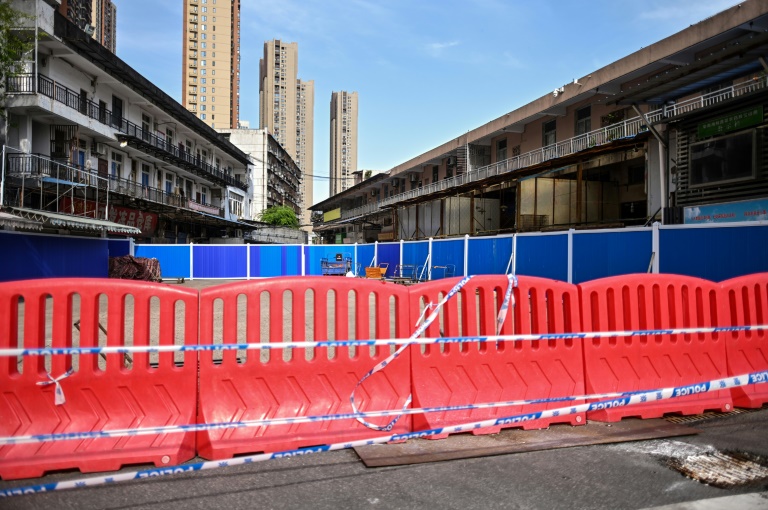
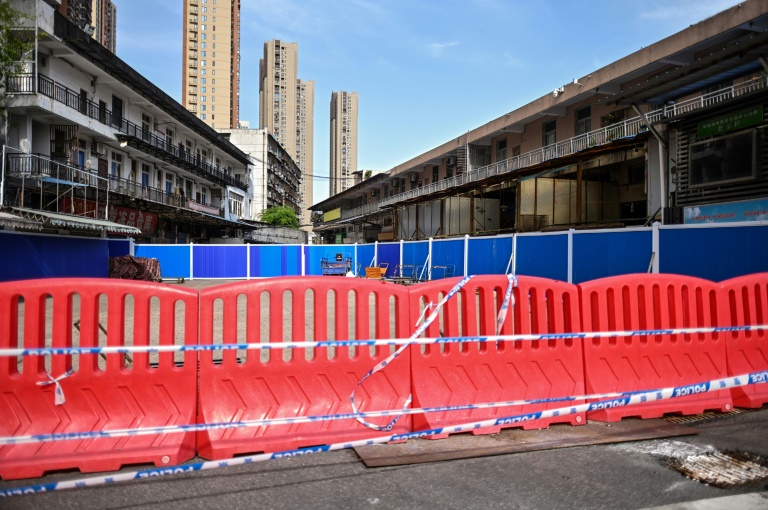
An animal market in China’s Wuhan really was the epicenter of the Covid pandemic, according to a pair of new studies in the journal Science published Tuesday that claimed to have tipped the balance in the debate about the virus’ origins.

Answering the question of whether the disease spilled over naturally from animals to humans, or was the result of a lab accident, is viewed as vital to averting the next pandemic and saving millions of lives.

The first paper analyzed the geographic pattern of Covid cases in the outbreak’s first month, December 2019, showing the first cases were tightly clustered around Wuhan’s Huanan Seafood Wholesale Market. 

The second examined genomic data from the earliest cases to study the virus’ early evolution, concluding it was unlikely the coronavirus circulated widely in humans prior to November 2019.

Both were previously posted as “preprints” but have now been vetted by scientific peer review and appear in a prestigious journal.

Michael Worobey of the University of Arizona, who co-authored both papers, had previously called on the scientific community in a letter to be more open to the idea that the virus was the result of a lab leak.

But the findings moved him “to the point where now I also think it’s just not plausible that this virus was introduced any other way than through the wildlife trade at the Wuhan market,” he told reporters on a call.

Though previous investigation had centered on the live animal market, researchers wanted more evidence to determine it was really the progenitor of the outbreak, as opposed to an amplifier.

This required neighborhood-level study within Wuhan to be more certain the virus was “zoonotic” — that it jumped from animals to people.

The first study’s team used mapping tools to determine the location of most of the first 174 cases identified by the World Health Organization, finding 155 of them were in Wuhan.

Further, these cases clustered tightly around the market — and some early patients with no recent history of visiting the market lived very close to it.

Mammals now known to be infectable with the virus — including red foxes, hog badgers and raccoon dogs — were all sold live in the market, the team showed.

– Two introductions to humans –

The study authors also tied positive samples from patients in early 2020 to the western portion of the market, which sold live or freshly butchered animals in late 2019.

The tightly confined early cases contrasted with how it radiated throughout the rest of the city by January and February, which the researchers confirmed by drilling into social media check-in data from the Weibo app.

“This tells us the virus was not circulating cryptically,” Worobey said in a statement. 

“It really originated at that market and spread out from there.”

The second study focused on resolving an apparent discrepancy in the virus’ early evolution.

Two lineages, A and B, marked the early pandemic. 

But while A was closer to the virus found in bats, suggesting the coronavirus in humans came from this source and that A gave rise to B, it was B that was found to be far more present around the market.

The researchers used a technique called “molecular clock analysis,” which relies on the rate at which genetic mutations occur over time to reconstruct a timeline of evolution — and found it unlikely that A gave rise to B.

“Otherwise, lineage A would have had to have been evolving in slow motion compared to the lineage B virus, which just doesn’t make biological sense,” said Worobey.

Instead, the probable scenario was that both jumped from animals at the market to humans on separate occasions, in November and December 2019. The researchers concluded it was unlikely that there was human circulation prior to November 2019.

Under this scenario, there were probably other animal-to-human transmissions at the market that failed to manifest as Covid cases.

“Have we disproven the lab leak theory? No, we have not. Will we ever be able to know? No,” said co-author Kristian Andersen of The Scripps Research Institute.

“But I think what’s really important here is that there are possible scenarios and they’re plausible scenarios and it’s really important to understand that possible does not mean equally likely.”

The WHO’s technical lead for Covid, Maria Van Kerkhove, welcomed the studies’ publication in a tweet on Tuesday.

“(It is) critical we continue to study the origins of the #COVID19 pandemic to ensure that we are better prepared to prevent and mitigate future outbreaks, epidemics and pandemics,” she said.

Pair of new studies point to natural Covid origin

An animal market in China’s Wuhan really was the epicenter of the Covid pandemic, according to a pair of new studies in the journal Science published Tuesday that claimed to have tipped the balance in the debate about the virus’ origins.

Answering the question of whether the disease spilled over naturally from animals to humans, or was the result of a lab accident, is viewed as vital to averting the next pandemic and saving millions of lives.

The first paper analyzed the geographic pattern of Covid cases in the outbreak’s first month, December 2019, showing the first cases were tightly clustered around Wuhan’s Huanan Seafood Wholesale Market. 

The second examined genomic data from the earliest cases to study the virus’ early evolution, concluding it was unlikely the coronavirus circulated widely in humans prior to November 2019.

Both were previously posted as “preprints” but have now been vetted by scientific peer review and appear in a prestigious journal.

Michael Worobey of the University of Arizona, who co-authored both papers, had previously called on the scientific community in a letter to be more open to the idea that the virus was the result of a lab leak.

But the findings moved him “to the point where now I also think it’s just not plausible that this virus was introduced any other way than through the wildlife trade at the Wuhan market,” he told reporters on a call.

Though previous investigation had centered on the live animal market, researchers wanted more evidence to determine it was really the progenitor of the outbreak, as opposed to an amplifier.

This required neighborhood-level study within Wuhan to be more certain the virus was “zoonotic” — that it jumped from animals to people.

The first study’s team used mapping tools to determine the location of most of the first 174 cases identified by the World Health Organization, finding 155 of them were in Wuhan.

Further, these cases clustered tightly around the market — and some early patients with no recent history of visiting the market lived very close to it.

Mammals now known to be infectable with the virus — including red foxes, hog badgers and raccoon dogs — were all sold live in the market, the team showed.

– Two introductions to humans –

The study authors also tied positive samples from patients in early 2020 to the western portion of the market, which sold live or freshly butchered animals in late 2019.

The tightly confined early cases contrasted with how it radiated throughout the rest of the city by January and February, which the researchers confirmed by drilling into social media check-in data from the Weibo app.

“This tells us the virus was not circulating cryptically,” Worobey said in a statement. 

“It really originated at that market and spread out from there.”

The second study focused on resolving an apparent discrepancy in the virus’ early evolution.

Two lineages, A and B, marked the early pandemic. 

But while A was closer to the virus found in bats, suggesting the coronavirus in humans came from this source and that A gave rise to B, it was B that was found to be far more present around the market.

The researchers used a technique called “molecular clock analysis,” which relies on the rate at which genetic mutations occur over time to reconstruct a timeline of evolution — and found it unlikely that A gave rise to B.

“Otherwise, lineage A would have had to have been evolving in slow motion compared to the lineage B virus, which just doesn’t make biological sense,” said Worobey.

Instead, the probable scenario was that both jumped from animals at the market to humans on separate occasions, in November and December 2019. The researchers concluded it was unlikely that there was human circulation prior to November 2019.

Under this scenario, there were probably other animal-to-human transmissions at the market that failed to manifest as Covid cases.

“Have we disproven the lab leak theory? No, we have not. Will we ever be able to know? No,” said co-author Kristian Andersen of The Scripps Research Institute.

“But I think what’s really important here is that there are possible scenarios and they’re plausible scenarios and it’s really important to understand that possible does not mean equally likely.”

The WHO’s technical lead for Covid, Maria Van Kerkhove, welcomed the studies’ publication in a tweet on Tuesday.

“(It is) critical we continue to study the origins of the #COVID19 pandemic to ensure that we are better prepared to prevent and mitigate future outbreaks, epidemics and pandemics,” she said.

Close Bitnami banner
Bitnami