World

Europe counts cost of heatwave as French fires come under control

Europe counted the cost of a record heatwave on Wednesday as French firefighters brought twin blazes near Bordeaux under control and climate change protesters pointed to the sizzling weather as a wake up call for the continent. 

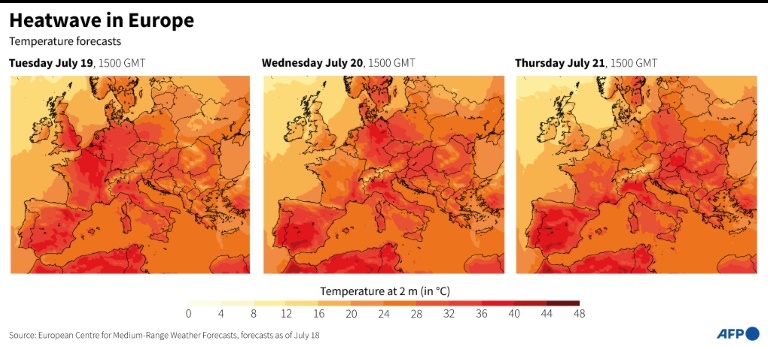
Temperatures of more than 40 degrees Celsius (100 degrees Fahrenheit) over previous days have spelled misery for millions and shattered heat records, focusing attention on the impact of global warming.

Cooler air swept in Wednesday, bringing relief to people from Portugal to Britain, but thousands of firefighters continued to tackle mass fires that have broken out in multiple countries in recent days after months of drought-like conditions.

“Our assessment is generally positive. The situation improved overnight,” French fire service spokesman Arnaud Mendousse told AFP from the southwestern Gironde region where two huge blazes have engulfed 20,600 hectares (50,900 acres) of tinder-dry forest since last week.

The infernos had barely expanded overnight, with lower temperatures and the construction of a 300-metre wide fire break helping stem the spread of the flames.

President Emmanuel Macron was set to visit later on Wednesday to speak to emergency services members and some of the 37,000 people who have been evacuated in the popular Atlantic Ocean region that is teaming with tourists in the summer months.

Two firefighters were severely injured overnight, government spokesman Olivier Veran told reporters.

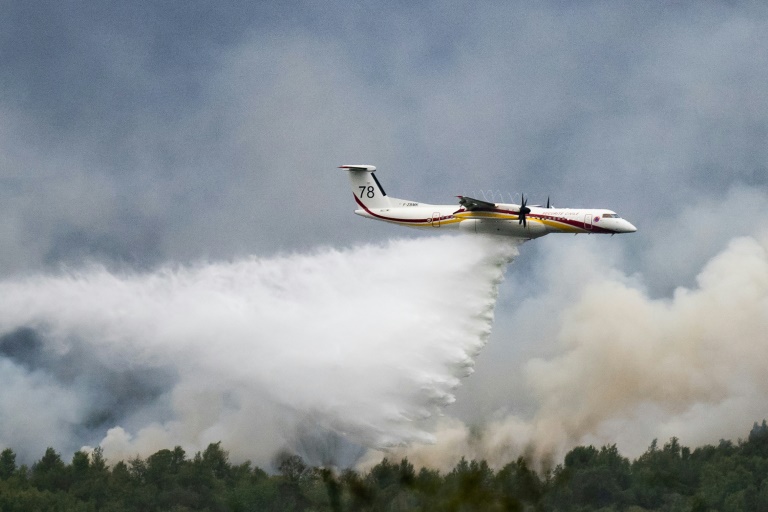
Separate blazes in the Monts d’Arree area of northwestern Brittany continued to rage on Wednesday, with aircraft dropping water from above.

Greek planes and helicopters were also in action against a wildfire that has forced hundreds of people to flee mountainside suburbs north of Athens. 

Greece had been spared the scorching heatwave experienced in western Europe, but the flames fanned by high winds were threatening the suburbs of Penteli, Pallini, Anthousa and Gerakas, home to tens of thousands of people.

“The civil protection authority was late in alerting us,” a Pallini resident who lost his car and shed to the flames told ERT television. “The fire was scorching our backs, we left in the nick of time. Had we stayed another 30 seconds it would have burned us.” 

Firefighters have also been pressed into action in Portugal, Spain and Italy in recent weeks to tackle wild fires. 

– Heat records –

The heatwave saw a host of local records set in France and a new all-time record for Britain where the national weather service clocked 40.3C in eastern England, surpassing the previous high set in 2019.

Grassland fires erupted on Tuesday on the edge of London, with one forcing the evacuation of 14 people as farm buildings, houses and garages were consumed by the flames.

Sixteen firefighters were injured around the capital with two taken to hospital, the London Fire Brigade said.

“Yesterday was the busiest day for the fire service in London since the Second World War,” the city’s mayor Sadiq Khan told Sky News on Wednesday, urging the public to remain vigilant despite temperatures now falling.

Khan also accused Conservative leadership candidates vying to succeed Prime Minister Boris Johnson of ignoring “the elephant in the room” of climate change.

Climate demonstrators triggered a lengthy tailback on Britain’s busiest motorway encircling London on Wednesday as they sought to highlight the need for greater action to reduce greenhouse gases which are responsible for global heating.

Members of the group Just Stop Oil climbed gantries over the M25 arterial motorway, causing police to intervene and vehicles to back up for several miles (kilometres) in one direction.

“This is the moment when climate inaction is truly revealed in all its murderous glory for everyone to see: as an elite-driven death project that will extinguish all life if we let it,” the activist group said in a statement.

burs-adp/jh/bp
Europe counts cost of heatwave as French fires come under control

Europe counted the cost of a record heatwave on Wednesday as French firefighters brought twin blazes near Bordeaux under control and climate change protesters pointed to the sizzling weather as a wake up call for the continent. 

Temperatures of more than 40 degrees Celsius (100 degrees Fahrenheit) over previous days have spelled misery for millions and shattered heat records, focusing attention on the impact of global warming.

Cooler air swept in Wednesday, bringing relief to people from Portugal to Britain, but thousands of firefighters continued to tackle mass fires that have broken out in multiple countries in recent days after months of drought-like conditions.

“Our assessment is generally positive. The situation improved overnight,” French fire service spokesman Arnaud Mendousse told AFP from the southwestern Gironde region where two huge blazes have engulfed 20,600 hectares (50,900 acres) of tinder-dry forest since last week.

The infernos had barely expanded overnight, with lower temperatures and the construction of a 300-metre wide fire break helping stem the spread of the flames.

President Emmanuel Macron was set to visit later on Wednesday to speak to emergency services members and some of the 37,000 people who have been evacuated in the popular Atlantic Ocean region that is teaming with tourists in the summer months.

Two firefighters were severely injured overnight, government spokesman Olivier Veran told reporters.

Separate blazes in the Monts d’Arree area of northwestern Brittany continued to rage on Wednesday, with aircraft dropping water from above.

Greek planes and helicopters were also in action against a wildfire that has forced hundreds of people to flee mountainside suburbs north of Athens. 

Greece had been spared the scorching heatwave experienced in western Europe, but the flames fanned by high winds were threatening the suburbs of Penteli, Pallini, Anthousa and Gerakas, home to tens of thousands of people.

“The civil protection authority was late in alerting us,” a Pallini resident who lost his car and shed to the flames told ERT television. “The fire was scorching our backs, we left in the nick of time. Had we stayed another 30 seconds it would have burned us.” 

Firefighters have also been pressed into action in Portugal, Spain and Italy in recent weeks to tackle wild fires. 

– Heat records –

The heatwave saw a host of local records set in France and a new all-time record for Britain where the national weather service clocked 40.3C in eastern England, surpassing the previous high set in 2019.

Grassland fires erupted on Tuesday on the edge of London, with one forcing the evacuation of 14 people as farm buildings, houses and garages were consumed by the flames.

Sixteen firefighters were injured around the capital with two taken to hospital, the London Fire Brigade said.

“Yesterday was the busiest day for the fire service in London since the Second World War,” the city’s mayor Sadiq Khan told Sky News on Wednesday, urging the public to remain vigilant despite temperatures now falling.

Khan also accused Conservative leadership candidates vying to succeed Prime Minister Boris Johnson of ignoring “the elephant in the room” of climate change.

Climate demonstrators triggered a lengthy tailback on Britain’s busiest motorway encircling London on Wednesday as they sought to highlight the need for greater action to reduce greenhouse gases which are responsible for global heating.

Members of the group Just Stop Oil climbed gantries over the M25 arterial motorway, causing police to intervene and vehicles to back up for several miles (kilometres) in one direction.

“This is the moment when climate inaction is truly revealed in all its murderous glory for everyone to see: as an elite-driven death project that will extinguish all life if we let it,” the activist group said in a statement.

burs-adp/jh/bp
Climate deniers sow weather-map heatwave misinfo

Climate-change deniers have a viral way of spreading misinformation on social media during a heatwave: by publishing weather maps out of context to imply forecasters are exaggerating global heating.

During the two recent heatwaves in Europe, users in various countries and languages misleadingly juxtaposed weather maps, suggesting the colours had been changed to red by media or authorities seeking to create panic. 

AFP Fact Check has debunked several versions of the claim, which have surfaced in languages including English, German, Spanish, French, Hungarian and Polish.

“LEFT – Old school weather forecast. Happy and sunshiny. Right – New style weather forecast. Designed to look like fear and destruction. It’s called summer,” read a text with one pair of UK weather maps shared on Twitter during this week’s British heatwave.

The two side-by-side maps under the post showed hot weather over Britain. The left one was light green with sun symbols, the right-hand one dark red.

UK Met Office weatherman Aidan McGivern branded it a “ridiculous comparison,” in his own Twitter thread.

He said the colour scheme had been redesigned last year to make the contrasts more visible to those who were colour blind.

“The new temperature colour scale does go darker (red) when it gets hotter (especially >38.7 C, the UK record),” he said. “It also goes darker (blue) when it gets colder.”

He added that the right-hand image was from a “one-off” Met Office tweet dating from 2016 – not from the current heatwave.

– Coloured red? – 

One post shared in Spanish and Catalan during this week’s heatwave said: “Now they have to colour the map as if we were in hell itself.”

The two side-by-side maps under the post showed hot weather over Spain. One was white with sun symbols, the other dark red.

A digital investigation by AFP revealed they were two different types of map, from different sources – not, as the post claimed, from a single forecaster that had manipulated its colour scheme. 

In English and German, numerous similar claims circulated during hot weather in May and June.

One Facebook post showed side-by-side maps showed similar temperatures over Sweden. One was green and dated 1986, the other orange and dated 2022. 

A digital investigation revealed that the years on the maps were incorrect and they were from different news organisations that use different colour codes. 

Thousands of social media users shared the same image in French, claiming it was evidence of a “global warming scam.” 

Posts in Germany in June showed two maps from the news show Tagesschau, claiming it had changed their colour from green in 2009 to red in 2019 to hype the climate threat.

Tagesschau explained that the red map was a temperature forecast, and even in 2009 such maps had used red. The green one was a general weather forecast with different colour scheme and variables.

– Climate change is real –

Climate scientists overwhelmingly agree that carbon emissions from humans burning fossil fuels are heating the planet, raising the risk and severity of heatwaves and other extreme weather events.

With temperatures topping 40 C, the heatwave in Britain this week prompted comparisons with the summer of 1976, when the temperature peaked at 35.9 C.

“Of course there have been heatwaves in the past, but the big difference with 1976 is what the rest of the world looked like,” said Friederike Otto, senior lecturer at Imperial College London’s Grantham Institute for Climate Change.

“In ’76 there was a heatwave in (Britain), in 2022 there are heatwaves everywhere in the world and so there have been in 2021, ’20, ’19,” she told reporters on Monday.

Nostalgia for 1976 — sometimes accompanied by misleading map-sharing — irritated some users on social media. 

“Folk keep sharing the fake f**king image showing ‘WEATHER in my day’ bla bla bla,” wrote one user, identified as Talent Stockport, on July 17.

“Its misleading” (sic), the post continued. “Your spreading miss information which could actually put peoples lives in danger, and its the same type of people too. The people who are unable to process basic facts.” 

The fact-check investigations cited in this story can be found in different languages at factcheck.afp.com.

Climate deniers sow weather-map heatwave misinfo

Climate-change deniers have a viral way of spreading misinformation on social media during a heatwave: by publishing weather maps out of context to imply forecasters are exaggerating global heating.

During the two recent heatwaves in Europe, users in various countries and languages misleadingly juxtaposed weather maps, suggesting the colours had been changed to red by media or authorities seeking to create panic. 

AFP Fact Check has debunked several versions of the claim, which have surfaced in languages including English, German, Spanish, French, Hungarian and Polish.

“LEFT – Old school weather forecast. Happy and sunshiny. Right – New style weather forecast. Designed to look like fear and destruction. It’s called summer,” read a text with one pair of UK weather maps shared on Twitter during this week’s British heatwave.

The two side-by-side maps under the post showed hot weather over Britain. The left one was light green with sun symbols, the right-hand one dark red.

UK Met Office weatherman Aidan McGivern branded it a “ridiculous comparison,” in his own Twitter thread.

He said the colour scheme had been redesigned last year to make the contrasts more visible to those who were colour blind.

“The new temperature colour scale does go darker (red) when it gets hotter (especially >38.7 C, the UK record),” he said. “It also goes darker (blue) when it gets colder.”

He added that the right-hand image was from a “one-off” Met Office tweet dating from 2016 – not from the current heatwave.

– Coloured red? – 

One post shared in Spanish and Catalan during this week’s heatwave said: “Now they have to colour the map as if we were in hell itself.”

The two side-by-side maps under the post showed hot weather over Spain. One was white with sun symbols, the other dark red.

A digital investigation by AFP revealed they were two different types of map, from different sources – not, as the post claimed, from a single forecaster that had manipulated its colour scheme. 

In English and German, numerous similar claims circulated during hot weather in May and June.

One Facebook post showed side-by-side maps showed similar temperatures over Sweden. One was green and dated 1986, the other orange and dated 2022. 

A digital investigation revealed that the years on the maps were incorrect and they were from different news organisations that use different colour codes. 

Thousands of social media users shared the same image in French, claiming it was evidence of a “global warming scam.” 

Posts in Germany in June showed two maps from the news show Tagesschau, claiming it had changed their colour from green in 2009 to red in 2019 to hype the climate threat.

Tagesschau explained that the red map was a temperature forecast, and even in 2009 such maps had used red. The green one was a general weather forecast with different colour scheme and variables.

– Climate change is real –

Climate scientists overwhelmingly agree that carbon emissions from humans burning fossil fuels are heating the planet, raising the risk and severity of heatwaves and other extreme weather events.

With temperatures topping 40 C, the heatwave in Britain this week prompted comparisons with the summer of 1976, when the temperature peaked at 35.9 C.

“Of course there have been heatwaves in the past, but the big difference with 1976 is what the rest of the world looked like,” said Friederike Otto, senior lecturer at Imperial College London’s Grantham Institute for Climate Change.

“In ’76 there was a heatwave in (Britain), in 2022 there are heatwaves everywhere in the world and so there have been in 2021, ’20, ’19,” she told reporters on Monday.

Nostalgia for 1976 — sometimes accompanied by misleading map-sharing — irritated some users on social media. 

“Folk keep sharing the fake f**king image showing ‘WEATHER in my day’ bla bla bla,” wrote one user, identified as Talent Stockport, on July 17.

“Its misleading” (sic), the post continued. “Your spreading miss information which could actually put peoples lives in danger, and its the same type of people too. The people who are unable to process basic facts.” 

The fact-check investigations cited in this story can be found in different languages at factcheck.afp.com.

European stocks, euro drop awaiting Russia gas move, ECB

European stocks and the euro retreated Wednesday as the EU took precautionary measures in the face of reduced Russian gas supplies.

Traders were also looking ahead to a key ECB meeting Thursday.

European assets headed south despite sizeable gains in Asia and Tuesday’s surge on Wall Street.

US stocks rebounded strongly Tuesday as companies’ earnings soothed concerns about the impact on their bottom lines from soaring inflation and rising interest rates.

While several firms — such as Apple and Johnson & Johnson — have indicated they have concerns about the outlook, there is a feeling that the sell-off across markets could be reaching a bottom.

And some commentators have suggested the second half could see a healthy rally, despite official data continuing to show inflation rising strongly worldwide.

UK annual inflation hit a new 40-year high at 9.4 percent in June on surging motor fuel and food prices.

The same month, inflation in South Africa soared to its highest level in 13 years at 7.4 percent.

Against a backdrop of decades-high inflation also in the eurozone, all eyes were on the European Central Bank, which is Thursday widely expected to announce its first rate hike in more than a decade.

Officials have their work cut out for them as they must also try not to drive a stake through the eurozone economy, which has also been hammered by an energy crisis.

Talk of a half-point hike — instead of the quarter-point lift most expect — has boosted the euro against the dollar since last week falling below parity for the first time in 20 years.

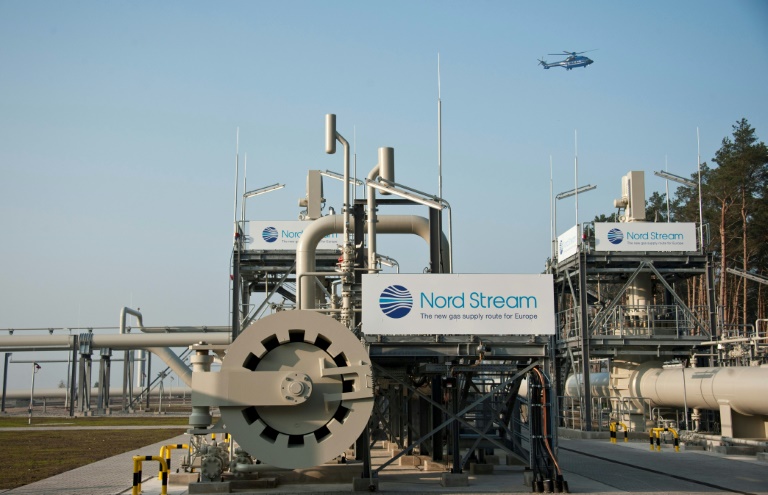
The European single currency had risen earlier Wednesday, helped also by a Bloomberg News article saying Russia’s Gazprom would resume deliveries through the Nord Stream 1 pipeline Thursday, albeit at reduced capacity.

Moscow shut down deliveries to Germany for technical reasons last week, but there had been fears it would keep the taps off in retaliation for European sanctions over its invasion of Ukraine.

Taking no chances, the European Commission on Wednesday urged EU countries to reduce their demand for natural gas by 15 percent over the coming winter months to overcome Russia’s energy supply “blackmail”.

In a statement, the EU’s executive arm also asked member states to give it special powers to force through needed demand cuts if Russia cuts the Europe’s gas lifeline.

“Russia is blackmailing us. Russia is using energy as a weapon and therefore, in any event, whether it’s a partial major cut off of Russian gas or total cut off… Europe needs to be ready,” Commission president Ursula von der Leyen told reporters.

– Key figures at around 1100 GMT –

London – FTSE 100: DOWN 0.3 percent at 7,274.05 points

Frankfurt – DAX: DOWN 0.5 percent at 13,249.05

Paris – CAC 40: DOWN 0.4 percent at 6,178.59

EURO STOXX 50: DOWN 0.4 percent at 3,571.50

Tokyo – Nikkei 225: UP 2.7 percent at 27,680.26 (close)

Hong Kong – Hang Seng Index: UP 1.1 percent at 20,890.22 (close)

Shanghai – Composite: UP 0.8 percent at 3,304.72 (close)

New York – Dow: UP 2.4 percent at 31,827.05 (close)

Euro/dollar: DOWN at $1.0180 from $1.0226 Tuesday

Pound/dollar: DOWN at $1.1966 from $1.2002 

Euro/pound: DOWN at 85.09 pence from 85.19 pence

Dollar/yen: DOWN at 138.20 yen from 138.21 yen

West Texas Intermediate: DOWN 1.7 percent at $102.50 per barrel

Brent North Sea crude: DOWN 1.4 percent at $105.80 per barrel

Carlsen not to defend title at 2023 World Chess Championship

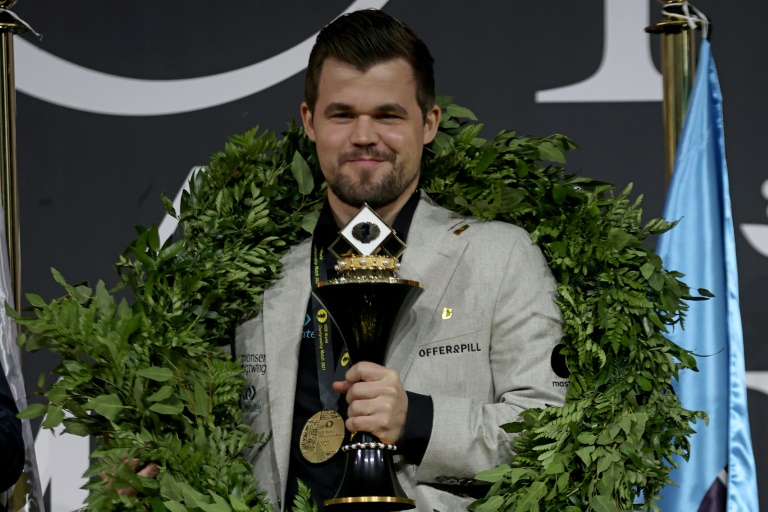
Chess world number one Magnus Carlsen on Wednesday announced that he would not defend his world championship title in 2023, but stressed that he was not retiring from chess.

“I am not motivated to play another match… I simply feel that I don’t have a lot to gain. I don’t particularly like it,” Carlsen said in the first episode of his podcast “The Magnus Effect”.

Carlsen has repeatedly hinted that, bored with a title he has held for nearly 10 years, he may give up his throne without a fight.

The 31-year-old crushed Russian Ian Nepomniachtchi 7.5-3.5 in his fifth straight victorious title match last December.

“Although I’m sure a match would be interesting for historical reasons and all of that, I don’t have any inclination to play and I will simply not play the match,” Carlsen told the podcast released Wednesday.

A sixth successful title match would have brought Carlsen level with German Emanuel Lasker, the champion from 1894 to 1921, and Soviet Mikhail Botvinnik.

Botvinnik held the title between 1948 and 1963, although during that time he twice lost and regained the title and his two successful defences came in drawn matches.

“Overall I feel like it’s my time to go from the World Championship matches. I don’t rule out a return in the future but I wouldn’t particularly count on it,” Carlsen said.

But Carlsen also stressed that he was not retiring from the sport.

“Just so there is no ambiguity here, I’m not retiring from chess, I’m still going to be an active player.”

High treason: Ukraine's Zelensky moves against 'spies'

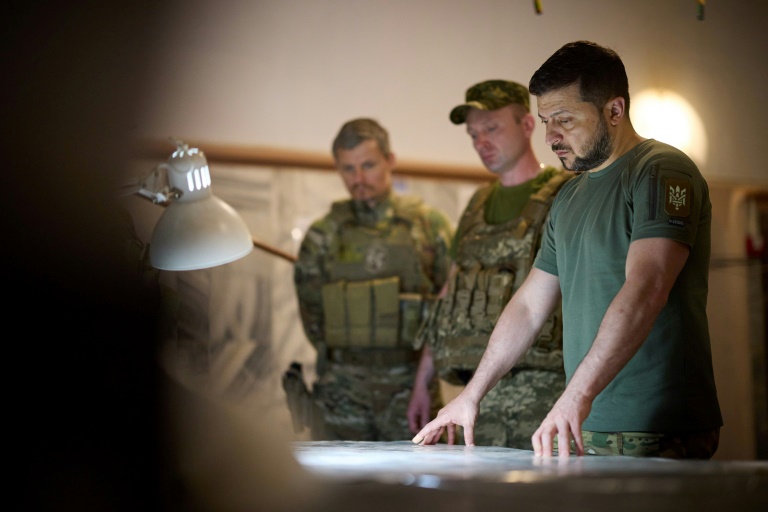
Ukraine’s army is putting up fierce frontline resistance against  Russian troops, but President Volodymyr Zelensky’s shock dismissal of two top law enforcement officials has revealed another  front in the war closer to home — against spies and Kremlin sympathisers.

His dismissal of SBU security chief Ivan Bakanov, a childhood friend of President Zelensky, and of prosecutor general Iryna Venediktova, is unprecedented since the start of the invasion.

The decision was announced Sunday and approved by parliament on Tuesday, with Zelensky berating the pair for their failure to counter the activities of Russian spies and collaborators in Ukraine.

In his daily video address, he said there were over 650 cases involving officials suspected of treason and aiding Russia, including 60 “working against our state” in Russian-held areas of the country.

“Everyone was expecting… more tangible results” from Bakanov and Venediktova in “fighting collaborators and traitors”, said Andriy Smyrnov, deputy head of the presidential administration.

– ‘The last straw’ –

“The president and his cabinet were not pleased with the work of Bakanov and Venediktova” even before the Russian invasion, Ukrainian political analyst Volodymyr Fesenko told AFP.

In the last few months, at least three top SBU officials have been accused of high treason.

One of them, Oleg Kulinich, who was sacked in March and was arrested on Sunday, had been based in the southern region of Kherson.

Situated close to the Crimean peninsula which was annexed by Moscow in 2014, the region was quickly taken over by Russian troops at the start of the invasion — a significant setback for which the government was heavily criticised.

“This man was collaborating with Russian secret services. It is a very serious blow. In my view, it was the last straw for Zelensky,” Fesenko said.

Zelensky had already sacked the regional head of the SBU for Kherson, Sergiy Kryvoruchko.

Another SBU official is suspected of having shared with Russian troops top secret maps of minefields intended to hamper their advance.

Zelensky on Monday said there would be a “review” within the SBU, pointing out that 28 agents could be sacked for “unsatisfactory” work.

One of Bakanov’s deputies has also been sacked.

– Prisoner exchanges at risk? –

Venediktova was heading up the high-profile investigations into atrocities committed by Russian forces, particularly in the town of Bucha, which became a symbol of the alleged Russian war crimes.

According to the influential news site Ukrainska Pravda, she incurred the wrath of the presidency by attracting excessive media attention and for rushing through trials of captured Russian soldiers.

According to the report, the trials angered Moscow and made negotiations over prisoner swaps — a priority for Zelensky — more difficult.

For many observers in Ukraine, the reshuffle appears to have been a move to reinforce presidential control over law enforcement.

The interim replacements of both Bakanov and Venediktova — their respective deputies — are considered to be more politically docile.

“It is clear” that these men “will execute all the political orders” of the presidency, said Tetyana Shevchuk, an expert from the Centre for Action Against Corruption, a non-governmental organisation, cited by Forbes Ukraine.

Human food waste 'threat' to polar bears: report

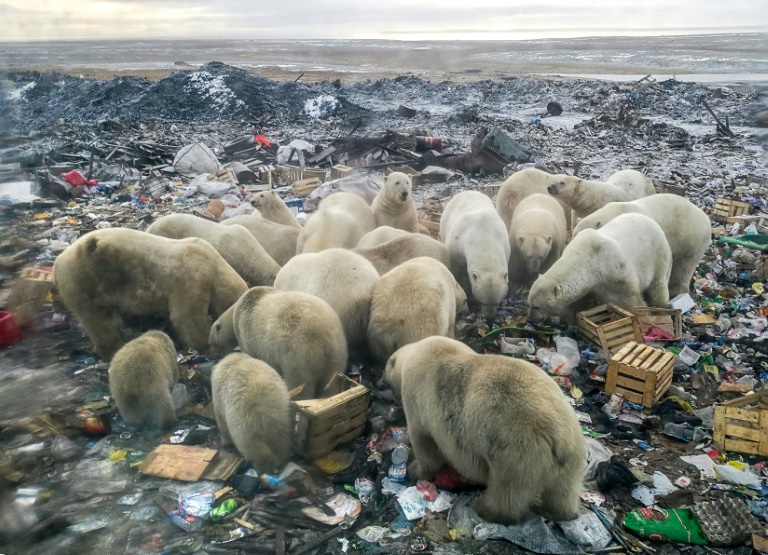
The invasion of a remote Russian village by dozens of ravenous polar bears three years ago captured headlines around the world, with images of groups of animals gorging on rubbish in an open garbage dump. 

Scientists and conservationists warned Wednesday that it was just one of a growing number of incidents showing the threat food waste poses to the at-risk animals. 

Polar bears are acutely threatened by climate change, with the Arctic region warming about three times faster than the global average, meaning there is less sea ice that the animals rely on to hunt for food.  

“We’ve been seeing this slow and steady increase in negative human polar bear interactions, fuelled largely by loss of sea ice pushing more bears onshore for longer periods and in more places,” said Geoff York, Senior Director of Conservation at Polar Bears International. 

In the new analysis, researchers looked at how discarded food, particularly in garbage dumps, is drawing polar bears towards human communities and into danger. 

“We know from the brown and black bear world in Europe and North America that dumps are a huge problem for bears. Human food is a huge problem for bears,” said York, who co-authored the report in the conservation journal Oryx. 

“It’s likely to get worse if it’s not addressed.”

– Eating plastic –

The report draws together a number of case studies in recent years and calls for greater awareness of the risks and better waste management in Arctic communities. 

These include isolated incidents where one or two bears approached villages or encampments — sometimes being shot after attacking local people — and much larger congregations. 

In Kaktovik, Alaska, the protected beach dumping site for the remnants of bowhead whales, which the Inupiat community has traditionally hunted, attracts as many as 90 polar bears from up to 160 kilometres (a hundred miles) each autumn.  

The authors said the dramatic scenes in the Russian village of Belushya Guba in 2019, where more than 50 bears were drawn to an open dump on a bad ice year, were an extreme example of what can happen when sites are left unsecured.

Polar bears have evolved to eat a high fat diet, so that the weight they put on in the spring when they hunt ice seal pups will last them much of the rest of the year. 

But with ice melting earlier in this crucial period, York said bears are now sometimes returning to shore without having put on enough weight and even those that do return well fed are staying on land for longer.  

In this case an accessible rubbish dump can present a “bonanza of calories”, he said, although dramatically less nourishing than their normal diet. 

“What they don’t know is they’re also ingesting plastics, they’re ingesting toxic materials that are also in the landfill,” said York. 

He added that there was also a disease risk from garbage like cat food as well as proximity to humans and other animals at the dumps. 

– Uncertain future –

York said communities in the Arctic region were faced with steep costs for dealing with household waste, because the frozen and rocky ground offers limited options for landfill. 

Dumping or low temperature burning are often used, but he said high temperature burning could be a better, if imperfect, approach. 

Meanwhile some communities have formed patrols to chase bears from landfill sites before they get a taste for human food. 

Other ideas the authors put forward include education around the issue, and the use of non-lethal deterrents like air horns and electric fences.   

Given the significant threat posed to polar bears by climate change, is it worth bothering about the risks from food waste? 

“I say yes, because every bear matters, especially as we’re starting to see declining populations,” he said. 

“We have solutions. So let’s do what we can while we can and make sure they have the best ride possible as they’re heading into this uncertain future.”

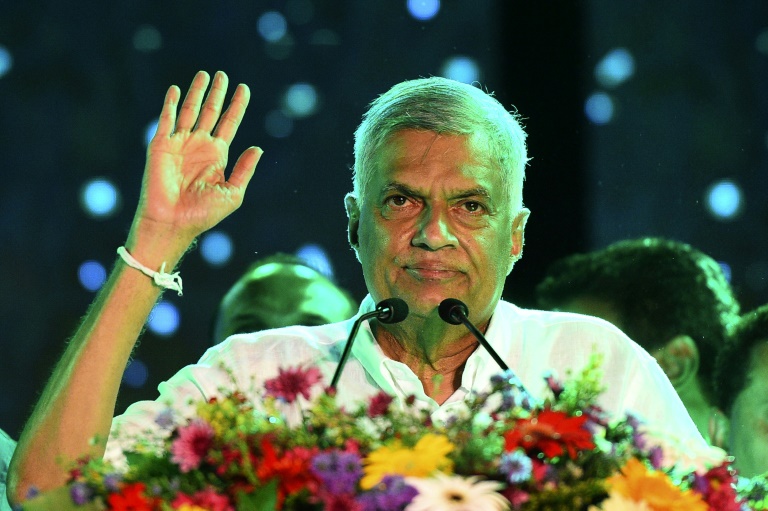
Six-time PM Wickremesinghe elected Sri Lanka president

Six-time prime minister Ranil Wickremesinghe was elected as crisis-wracked Sri Lanka’s new president in a parliamentary vote Wednesday, with the backing of the disgraced former leader’s party.

Official results gave the veteran politician 134 votes, an absolute majority in the 225-member parliament, after Gotabaya Rajapaksa fled the country and resigned in the wake of protesters overrunning his palace.

“Our divisions are now over,” Wickremesinghe said in a brief acceptance speech in parliament, urging his defeated rivals “to join me and work together to bring the country out of the crisis we are facing”.

Wickremesinghe takes charge of a bankrupt nation that is in bailout talks with the IMF, with its 22 million people enduring severe shortages of food, fuel and medicine.

But he was backed by the Rajapaksas’ SLPP party — still the largest in parliament — and is despised as a proxy for the former leader by the protesters who forced him from his palace after months of demonstrations over the unprecedented economic crisis.

They have also been demanding the departure of Wickremesinghe, who has pledged to crack down hard if protesters take to the streets.

Hundreds of heavily armed troops and police stood guard outside the parliament, but there were no signs of demonstrators.

Outside the presidential secretariat, where protesters camped for months to demand Rajapaksa step down, actress Damitha Abeyrathne, 45, said: “We lost. The whole country lost.”

The struggle would continue, she told AFP. 

“The politicians are fighting for their power. They are not fighting for the people. They have no feeling for people who are suffering.” 

– Law and order –

One by one, the legislators entered ballot booths set up on the floor of the chamber to choose between the three candidates.

Previous elections have been marred by allegations of corruption and vote-buying, and mobile phones were banned to prevent anyone taking photos of the ballots. 

Wickremesinghe is elected for the balance of Rajapaksa’s term, which runs until November 2024, and the speaker’s office said he would be sworn in on Thursday.

According to analysts he is likely to appoint his school-mate Dinesh Gunawardena, a strong ally of the once-powerful Rajapaksa clan, as prime minister.

Wickremesinghe appears to be indebted to the Rajapaksas, a clan of four brothers who have dominated Sri Lankan politics for much of the last two decades, for his victory.

Gotabaya’s departure wounded the group after two of his brothers also quit their posts as premier and finance minister earlier this year.

But former president Mahinda Rajapaksa, the deposed Gotabaya’s elder brother and the head of the family, remained in the country, and party sources said he had pressed SLPP legislators to support the veteran operator.

As acting president, Wickremesinghe extended a state of emergency that gives police and security forces sweeping powers.

On Wednesday, a court ordered the protesters to vacate their camp near the Presidential Secretariat and confine themselves only to an area designated as a protest site.

A top police official said anyone damaging state property would be dealt with severely. Protesters occupying a part of president’s office have been ordered to leave by Wednesday evening or face eviction.

Opposition MP Dharmalingam Sithadthan said ahead of the vote that Wickremesinghe’s hardline stance against demonstrators had gone down well with MPs who had been at the receiving end of mob violence, describing him as the “law-and-order candidate”.

Political analyst Kusal Perera said he had “regained the acceptance of the urban middle classes by restoring some of the supplies like gas”. 

Clearing government buildings of protesters also showed the 73-year-old’s “firmness”, Perera said.

– ‘Petrol and gas’ –

Wickremesinghe’s main opponent in the vote was SLPP dissident and former education minister Alahapperuma, 63, a former journalist who was supported by the opposition and received 82 votes.

The third candidate, leftist Anura Dissanayake, 53, was embarrassed when the final tally showed that the pile of rejected votes was one more than the three he polled.

But 72-year-old Zarook, a retired seaman who gave only one name and lives in Slave Island, an impoverished area of the capital, was indifferent to the result. 

“If Ranil comes, if another man comes, we have to do our daily jobs. So we don’t care,” he said. 

He hoped for “petrol and gas”, he told AFP, “the daily products we need”.

Firefighters battle wildfire in Athens suburbs

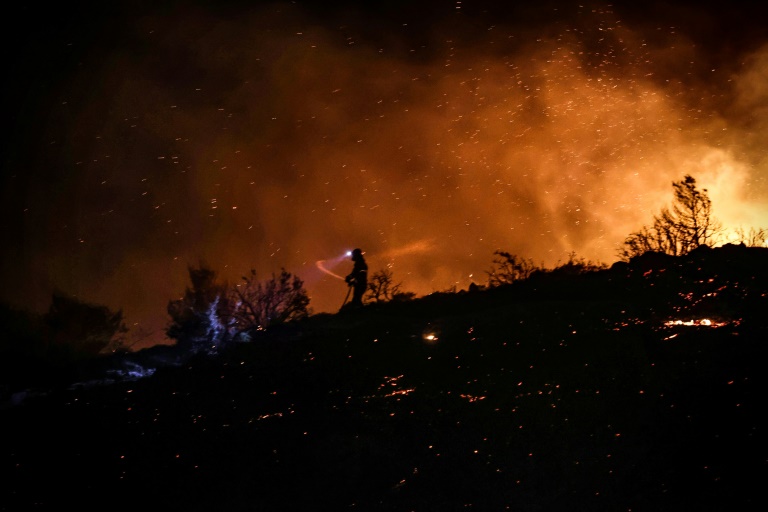
Greek planes and helicopters on Wednesday stepped up their battle against a wildfire raging for a second day that has forced hundreds of people to flee mountainside suburbs north of Athens.  

Nearly 500 firefighters, 120 vehicles, nine planes and 10 helicopters supported by army units sought to prevent the flames from causing further damage in the suburbs of Penteli, Pallini, Anthousa and Gerakas, home to tens of thousands of people.

Greece has been so far spared a scorching heatwave that saw deadly wildfires destroy vast tracts of land in France, Portugal and Spain, but has instead faced gale-force winds.

Experts blame climate change for extreme weather events and warn that worse is yet to come.

Thirty people, including three firefighters, required medical attention for burns and breathing difficulty, the Greek fire department said.

Several buildings have sustained varying degrees of damage, AFP images showed.

“The sky was red… we left without taking anything with us,” a Pallini resident who lost his car and shed to the flames told ERT television.

“The civil protection authority was late in alerting us. The fire was scorching our backs, we left in the nick of time. Had we stayed another 30 seconds it would have burned us,” he added.

The house next door was completely gutted, the man said.

– ‘Two active fronts’ –

Authorities warned residents to stay indoors and keep their windows shut. 

With winds racing at over 100 kilometres (62 miles) per hour, smoke from the fire billowed as far as the island of Crete, hundreds of kilometres to the south, satellite imagery showed.

Residents say fires have struck the area three times in the last three decades.

Greek media reported that an 80-year-old man in Anthousa shot himself dead in despair over the fire, which broke out on Tuesday afternoon.

The wildfires around Mount Penteli north of Athens were fanned overnight by strong winds that constantly changed direction.

“There are two active fronts,” civil protection official Vassilis Kokkalis told Athens 98.4 radio. “The winds are so strong that the planes are prevented from making targeted water drops,” he added.

The fire was threatening businesses on a major Athens highway, he added.

“It’s a fire that will be a cause for concern for several days,” Kokkalis said.

Residents in several areas, a paediatric hospital and the national observatory at Athens were evacuated as a precautionary measure.

– ‘Insane’ –

The police said some 600 people had been moved to safety overnight.

“It was insane, we did not know where to flee,” an elderly resident of Anthousa told ERT.

“Embers were falling from the sky, I’ve never seen anything like it,” he said.

Greece has set up a crisis cell and firefighters battled 117 wildfires in the country in the last 24 hours.

Another 87 firefighters were battling a blaze in the Peloponnese, a southern peninsula.

Athens has asked European countries to send firefighters. A squad from Romania was assisting in Wednesday’s fire.

A heatwave and wildfires last year destroyed 103,000 hectares (255,000 acres) and claimed three lives in Greece.

The country’s worst fire disaster in 2018 in the coastal suburb of Mati, claiming 102 lives, was just a few kilometres from the area affected by Wednesday’s blaze.

Close Bitnami banner
Bitnami