World

Record temperatures in Shanghai as heatwave bakes China

Shanghai roasted under some of its hottest temperatures ever recorded on Wednesday as a searing heatwave in China triggered a flurry of weather alerts and strained the farming and energy sectors.

Swathes of the northern hemisphere have sweltered under extreme heat this week, with France and Britain set to endure soaring temperatures on Wednesday as firefighters in western Europe battle forest blazes.

China has also suffered extreme weather this summer, with record floods last month forcing hundreds of thousands of people out of their homes while other regions have simmered in road-buckling heat.

Scientists say that heatwaves have become more frequent due to climate change, and will likely become longer and more intense as global temperatures continue to rise.

At a central Shanghai weather station on Wednesday, the mercury climbed to 40.9 degrees Celsius (105.6 Fahrenheit) by 2:30 pm, the official news site of the national meteorological service reported.

The figure “matched the record highest air temperature in the local area since records began in 1873,” the article said.

Social media users bemoaned the stifling weather, with one user on the popular Weibo platform saying they “felt like meat on a barbecue when I went for my Covid test just now.”

“Maybe it’ll burn off all the virus,” another commented.

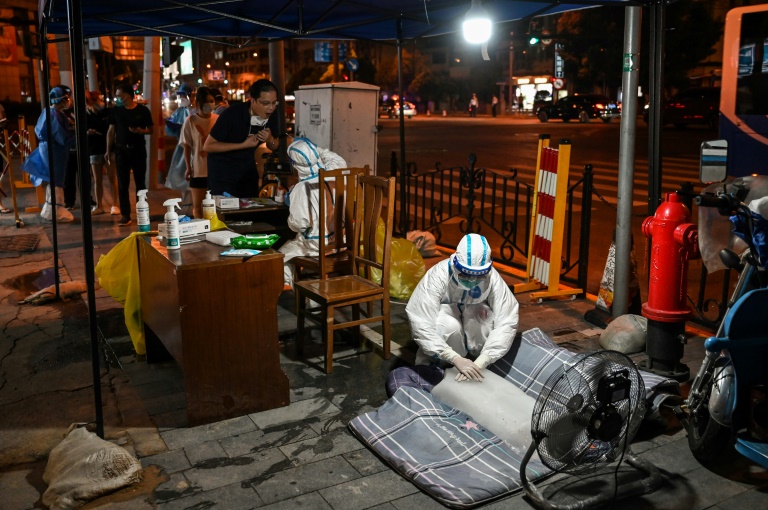
Photos on social media showed health workers in Shanghai sitting or lying on blocks of ice to cool down as they carried out a mass testing drive aimed at stemming a rise in Covid-19 cases.

The economic hub experienced a gruelling virus lockdown earlier this year that confined most of its 25 million residents to their homes for around two months.

A spate of heat warnings were in place across eastern and southern China on Wednesday as authorities warned that temperatures could hit 42C in certain areas. 

Some media outlets reported heat-related deaths.

Authorities have also warned of potential damage to agriculture, saying Monday that the heat was “not conducive” for the growth or harvest of rice, corn, cotton and other crops.

Electricity consumption has hit records in several parts of the country as people and businesses have cranked up air conditioners to stay cool, Bloomberg News reported.

China is no stranger to hot summers, but this year is shaping up to be a scorcher even by the country’s standards.

Authorities in seven provinces last month warned millions of residents not to go outdoors as temperatures edged towards 40C, as state media showed footage of roads that had cracked under extreme heat.

At the same time, multiple places across the south chalked up record rainfall and flood levels after the National Climate Centre forecast “relatively worse” and “more extreme” deluges than previous years.
Supply risks still haunt market despite high oil prices: IEA

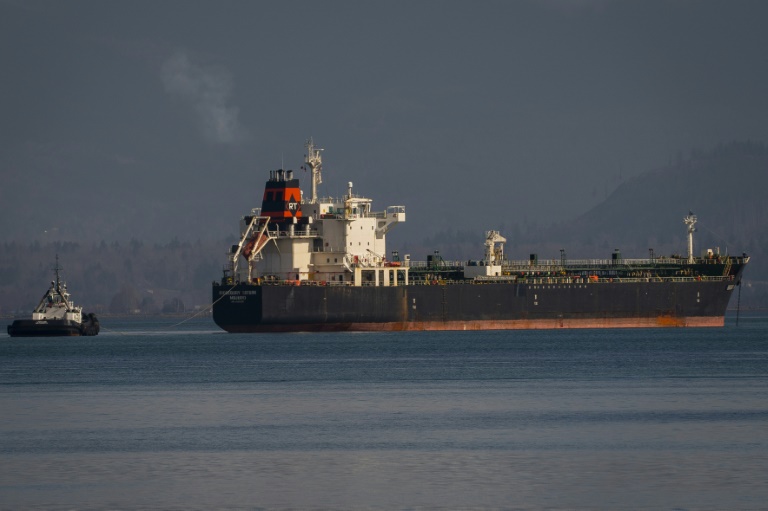
High oil prices have yet to dampen demand which is set to continue rising and may soon outstrip supply, the International Energy Agency warned Wednesday.

It cautioned that the global economic recovery could be derailed unless governments take measures to reduce consumption and fuel prices that pose a threat to stability in some nations.

“Without strong policy intervention on energy use, risks remain high that the world economy falls off-track for recovery,” the Paris-based agency that advises industrialised nations on energy policy said in its latest monthly report on oil markets.

Oil prices have surged from around $80 per barrel earlier this year to over $120 at times as Russia’s invasion of Ukraine has sparked supply concerns and the reopening of China’s economy from Covid lockdowns has boosted demand.

If high petrol prices have started to dent demand in industrialised nations, the IEA said this has been counterbalanced by larger-than-expected rebounds in demand by China and some emerging and developing nations.

The IEA now expects oil demand to rise this year to 99.2 million barrels per day (mbd) and to 101.3 mbd next year.

Meanwhile, supply climbs to 100.1 mbd this year. But even if it hits an expected record of 101.1 mbd next year, it will fall below demand.

The IEA noted that the world has little spare capacity to increase production, with the combined buffer of Saudi Arabia and the United Arab Emirates set to fall to just 2.2 mbd in August.

It said the production of OPEC+ nations could even fall next year if Russia’s supply is impacted as expected by tightening international sanctions.

Coupled with tight refinery margins causing imbalances in certain product markets and putting upward pressure on prices, “it may be up to demand side measures to bring down consumption and fuel costs that pose a threat to stability, most notably in emerging markets,” the IEA said.

It added the strengthening of the dollar versus other currencies as the US Federal Reserve hikes interest rates has compounded the pain of already rising import costs for food and oil for numerous developing and emerging nations, including Sri Lanka which has been gripped by social unrest.

Sri Lanka's turmoil explained

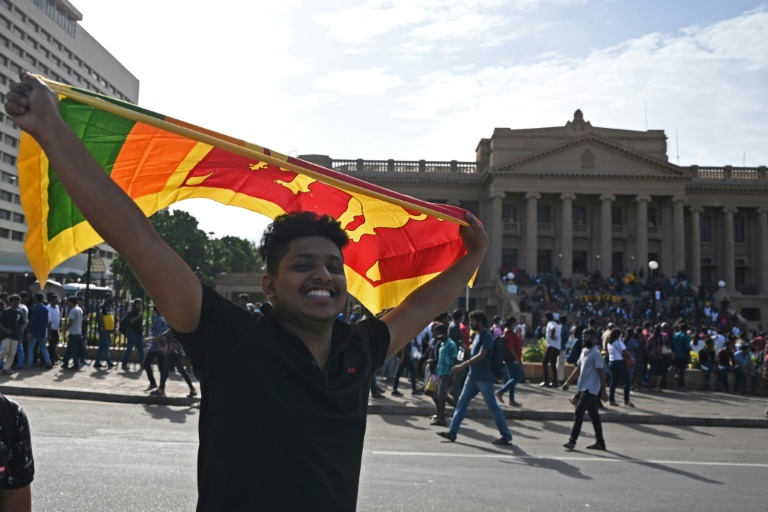
Sri Lanka has declared a state of emergency after the crisis-hit nation’s president fled to the Maldives, with protesters also demanding the prime minister quit.

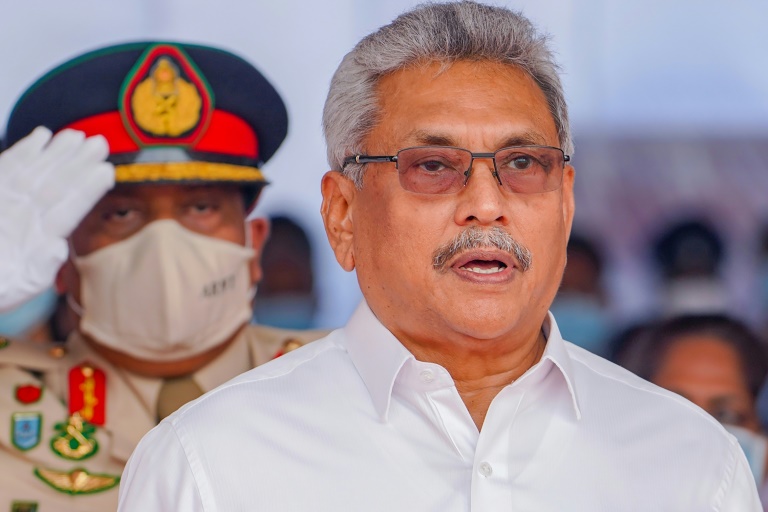
President Gotabaya Rajapaksa has said he will resign, after months of protests against his government over the worst economic crisis in the nation’s history.

– What happened to the economy? –

Sri Lanka’s vital tourism sector was first hammered by Islamist extremist bomb attacks on churches and hotels in 2019 and again the next year by the coronavirus pandemic.

Its coffers further depleted by government tax cuts, Sri Lanka ran out of foreign currency needed to import everything from medicines to food and fuel.

Even with help from India and others, the country defaulted in April on its $51 billion foreign debt pile and has been in bailout talks for months with the International Monetary Fund.

– How has this affected ordinary people? –

Sri Lankans have endured months of medicine and food shortages and electricity blackouts while fuel stations have run out of petrol and diesel despite pleas to Russia and others for discounted oil.

Unofficial inflation rates are second only to those of Zimbabwe, making many goods — if they can be found — too expensive for many people to afford.

The United Nations has warned that Sri Lanka is facing a dire humanitarian crisis, with millions already in need of aid.

More than three-quarters of the population had reduced their food intake due to the country’s severe food shortages, the UN says.

– Who are the Rajapaksas? –

President Gotabaya Rajapaksa, 73, head of state since 2019, is just one member of a clan that has dominated politics in the South Asian nation of 22 million people for years.

Brother Mahinda, 76, was president for a decade until 2015 and oversaw the bloody end to Sri Lanka’s long-running civil war in 2009 when Gotabaya — dubbed “The Terminator” — ran the security services.

Under Mahinda, Sri Lanka moved closer to China and borrowed billions of dollars for vanity projects like cricket stadiums and airports as well as a deep-sea port since leased to Beijing.

– How did the Rajapaksas respond to the crisis? –

After months of protests, Rajapaksa loyalists went on the rampage in May. At least nine people were killed in nationwide violence while the homes of ruling party members were torched.

Mahinda quit as prime minister — escorted by security forces from his residence — but Gotabaya clung on and replaced him with veteran politician Ranil Wickremesinghe, 73.

Wickremesinghe has little to show for his efforts and his home was set ablaze last week by protesters — he was absent — even as he offered to resign.

President Rajapaksa fled Sri Lanka on Wednesday for the Maldives.

– What now? –

The speaker of parliament earlier said that Gotabaya — whose presidential palace remains occupied by protesters — would formally resign on Wednesday to ensure a “peaceful transition”.

But with no formal announcement of his exit, thousands of demonstrators mobbed the office of Wickremesinghe demanding his exit too.

Rajapaksa on Wednesday named Wickremesinghe as acting president in his absence.

A successor must be chosen through a vote in parliament within a month of Rajapaksa stepping down, but the speaker has promised a new leader within a week.

However, it is unclear who if anyone would be able to garner enough support among lawmakers to succeed Rajapaksa.

burs-qan/je

Asian stocks, crude bounce from losses but recession fears linger

Asian stockswere mixed Wednesday as trader struggled to recover some of the losses suffered at the start of the week, while oil bounced from a rout, though recession alarms continue to ring loud.

The euro clawed its way back slightly after hitting parity with the dollar for the first time in two decades, though it remains under pressure from growing concerns about an energy crisis across the eurozone and the European Central Bank’s slower pace of monetary tightening.

Traders are also awaiting the release of a series of key indicators this week, including the all-important consumer price index later Wednesday, with expectations for another increase to a fresh 41-year high.

Another big spike in prices will reinforce the Federal Reserve’s determination to lift interest rates 75 basis points for a second successive month in July, adding to concerns that officials could go too far and tip the economy into recession.

Still, Lauren Goodwin of New York Life Investments said policymakers were unlikely to shift from their hawkish tilt for now.

“This is widely expected to be a really strong print,” she told Bloomberg Television.

“Even if it is not, I don’t think that changes the Fed’s perspective in a couple of weeks. We won’t have enough evidence that inflation is convincingly turning over.”

In a further sign of the pressure being felt around the world from surging prices, the New Zealand and South Korean central banks each lifted rates 0.5 percentage points Wednesday, the first such increase by Seoul since 1999. 

After losses on Wall Street, Asian equities were mixed. Shanghai edged up after data showed a forecast-beating jump in Chinese exports, while there were also gains in Tokyo, Sydney, Seoul, Wellington and Taipei.

However, Hong Kong was unable to hold earlier gains, while Singapore, Manila and Jakarta and Mumbai were in the red.

London fell despite data showing the UK economy unexpectedly saw growth last month. Paris and Frankfurt also fell. 

– Europe gas crisis –

Stephen Innes at SPI Asset Management said equities could continue to struggle owing to a perfect storm of crises engulfing trading floors.

“Typically, equity markets can deal with one risk relatively well,” he said in a note. “But the current setup of sticky inflation, rapid Fed tightening, growth/recession risks and excessive rates volatility, to name a few, have at times left investors defenceless. 

“And with the market coalescing to a bearish consensus, stocks are having trouble sustaining a meaningful rally.”

Both main crude contracts rose but were and nowhere near recovering the more than seven percent drops suffered Tuesday, hit by bets on a drop in demand and fears of more Covid-19 lockdowns in Shanghai.

The commodity has lost a large chunk of the gains seen after Vladimir Putin’s invasion of Ukraine, despite bans on imports from Russia, with some analysts saying consumers were simply choosing not to buy fuel because of the high price.

Data from the American Petroleum Institute showed US stockpiles rose 4.76 million barrels last week, Bloomberg News reported citing people familiar with the figures, indicating demand slacking off even during the key summer driving season.

Joe Biden’s visit to Saudi Arabia on Friday will be followed intently as he tries to persuade the crude giant to pump more to help reduce prices.

On currency markets, the euro held just above $1.0 a day after hitting parity on Tuesday for the first time since late 2022, with a worsening energy crisis fanning expectations that the eurozone will plunge into recession.

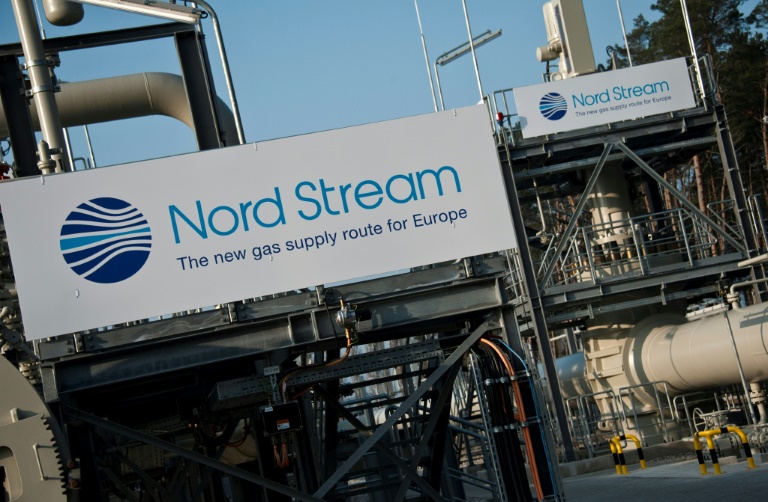
With Russian energy giant Gazprom starting 10 days of maintenance Monday on its Nord Stream 1 pipeline, the bloc — and particularly gas-reliant Germany — is waiting nervously to see if the taps are turned back on.

“A prolonged cut to the gas supply would halt a lot of economic activity, sending (Germany) deep into recession,” said Tapas Strickland at National Australia Bank.

He said July 21 — when the gas should be switched back on — will be a crucial date.

“That date also happens to be the day of the next ECB meeting,” he added. “Either of these events are key risk events. Russia playing gas politics by not switching on the gas supply would likely see the euro lurch much lower.”

– Key figures at around 0810 GMT –

Tokyo – Nikkei 225: UP 0.5 percent at 26,478.77 (close)

Hong Kong – Hang Seng Index: DOWN 0.2 percent at 20,797.95 (close)

Shanghai – Composite: UP 0.1 percent at 3,284.29 (close)

London – FTSE 100: DOWN 0.9 percent at 7,143.57

Euro/dollar: DOWN at $1.0035 from $1.0037 Tuesday

Pound/dollar: UP at $1.1912 from $1.1889 

Euro/pound: DOWN at 84.27 pence from 84.40 pence

Dollar/yen: UP at 137.07 yen from 136.84 yen

West Texas Intermediate: UP 0.9 percent at $96.74 per barrel

Brent North Sea crude: UP 1.0 at $100.51 per barrel

New York – Dow: DOWN 0.6 percent at 30,981.33 (close)

End of the line for Sri Lanka's 'Terminator' president

Known as “The Terminator” to family and foes alike for his ruthless crushing of Tamil rebels to end a decades-long civil war, Sri Lankan President Gotabaya Rajapaksa’s rule is drawing to a close with him a fugitive and his island’s economy in ruins.

Rajapaksa, one of a clan of four brothers who have dominated the country’s politics in recent years, was defence secretary under his brother Mahinda’s Rajapaksa’s presidency from 2005-15.

He denied allegations that at least 40,000 minority Tamil civilians were killed by troops under his command during the closing months of the war, but the accusations bolstered his tough-guy image in the eyes of the majority Sinhalese.

He was also considered the architect of “white van” abductions under Mahinda, when dissidents and journalists were grabbed in unmarked vehicles and disappeared, allegedly the victims of extrajudicial killings.

He made no bones about winning the 2019 elections with the overwhelming support of his own majority Sinhala-Buddhist community.

For Sri Lanka’s influential Buddhist clergy he was the reincarnation of Sinhalese warrior king Dutugemunu the Great, who is known for vanquishing a Tamil ruler.

Dutugemunu reigned for 24 years, but Rajapaksa fled less than three years into his rule — and a resignation would make him Sri Lanka’s shortest-lived directly elected president.

The 73-year-old leader flew to the neighbouring Maldives on Wednesday, four days after his presidency crumbled and tens of thousands of protesters overran his official residence.

That came after months of demonstrations demanding his resignation over an economic crisis, triggered by the coronavirus pandemic but exacerbated by mismanagement.

The former soldier marketed his lack of political expertise as a virtue but Tamil legislator Dharmalingam Sithadthan said what Rajapaksa projected as his strength was actually his weakness.

“His lack of political knowledge showed in the way he worked,” Sithadthan told AFP. “He flip-flopped from one crisis to another. He thought by simply issuing orders things would materialise.

“Every time I met with him, he would say he is focused on the economy and law-and-order, but he failed in both.”

– ‘Prosperity and Splendour’ –

Rajapaksa came to power on a manifesto promising “Vistas of Prosperity and Splendour”, but according to the UN the country now desperately needs humanitarian aid.

The coronavirus pandemic hammered tourism and overseas remittances — both mainstays of the economy — leaving it facing a foreign exchange crisis.

Lengthy power cuts are in place as the country does not have dollars to import oil for generators, the nation’s 22 million people have been enduring acute shortages of food, fuel and medicines since late last year, and poverty is spreading.

When he took over in November 2019, Sri Lanka’s foreign reserves were at $7.5 billion, but dropped to just “one million dollars” recently, according to prime minister Ranil Wickremesinghe.

Under Rajapaksa, Sri Lanka defaulted on its foreign debt for the first time in April. The country declared bankruptcy and inflation soared in June.

The once prosperous country recorded its worst recession in 2020 as the economy contracted 3.6 percent, and it is expected to shrink seven percent this year.

“This pariah stole our future,” shouted former legislator Hirunika Premachandra leading a recent demonstration outside Rajapaksa’s home. “Gota is a pariah. We must get rid of him.”

– #GotaGoHome –

Rajapaksa’s tenure was marked by policy U-turns. Critics say he has revoked more than 100 government decrees, earning him the moniker “Gazette Reverse”.

He abandoned democratic reforms of the previous administration and made the presidency more powerful, but in the final months of his presidency agreed to return those powers to parliament.

Soon after coming to power he drastically cut taxes to win over his financial backers, a move partly blamed for Sri Lanka’s dire economic crisis. Those taxes are now being raised.

Arguably his biggest policy blunder was the banning of agrochemicals in April last year. He reversed the ban six months later, but by then more than half of the crops had failed.

The government promised but failed to compensate millions of farmers affected under Rajapaksa’s disastrous drive to become the world’s first 100-percent organic farming nation.

As shortages of food and fuel gripped the country and prices soared, cities and towns across the country were dotted with protests calling on him to go.

During the pandemic his refusal to allow Muslims, the country’s second-largest minority, to bury their Covid-19 dead according to Islamic rites and instead forcing cremations drew condemnation from the Islamic world as well as from rights groups.

Buddhist monks welcomed his stubborn refusal to allow Muslim burials, but the tables turned quickly: a year later, a shortage of gas forced Buddhists to bury their dead over their preferred cremations.

#GotaGoHome become a trending hash-tag on social media. After overrunning his official residence on Saturday, activists hung Rajapaksa’s effigy in a symbolic gesture of what they wanted to do to him.

Fukushima operator ex-bosses ordered to pay $95 bn: media

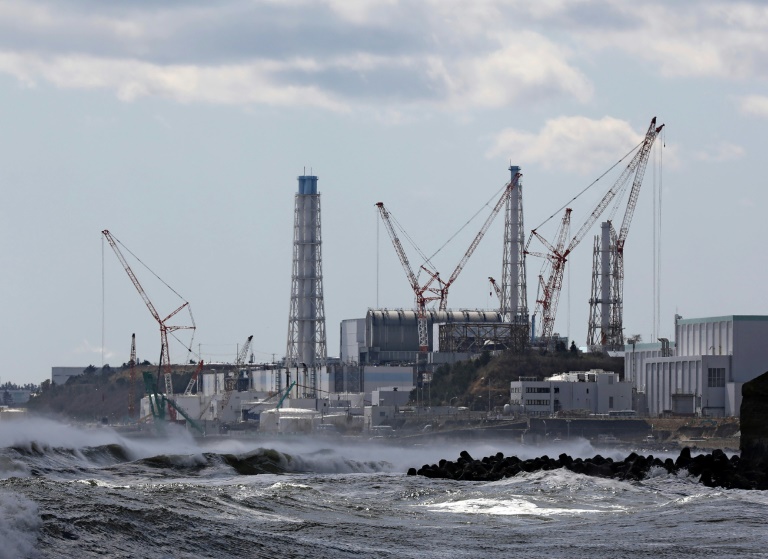
A Tokyo court Wednesday ordered former executives from the operator of the Fukushima nuclear plant involved in the 2011 disaster to pay around 13 trillion yen ($94.8 billion) in damages, local media said.

Four ex-bosses of Tokyo Electric Power Company (TEPCO) were ordered to pay the damages in a suit brought by shareholders over the nuclear disaster triggered by a massive tsunami.

Plaintiffs emerged from the Tokyo court holding banners reading “shareholders win” and “responsibility recognised.”

Hiroyuki Kawai, a lawyer representing shareholders, said when the suit was filed that senior managers at TEPCO must be made to pay.

“Warnings have to be issued that, if you make wrong decisions or do wrong, you must compensate with your own money,” he told a press conference in 2012.

“You may have to sell your house. You may have to spend your retirement years in misery. In Japan, nothing can be resolved and no progress can be made without assigning personal responsibility.”

The shareholders argued that the disaster could have been prevented if TEPCO bosses had listened to research and carried out preventative measures like placing an emergency power source on higher ground.

But officials argued the studies they were presented were not credible and risks could not have been predicted.

In a statement read to AFP by a TEPCO spokesman, the firm said: “we again express our heartfelt apology to people in Fukushima and members of the society broadly for causing trouble and worry” with the disaster.

But it declined to comment on the ruling, including whether there would be any appeal.

Three of the Fukushima Daiichi nuclear plant’s six reactors were operating when a massive undersea quake triggered a devastating tsunami on March 11, 2011.

They went into meltdown after their cooling systems failed when waves flooded backup generators.

The accident was the worst nuclear disaster since Chernobyl and prompted the declaration of an evacuation zone around the plant.

Tens of thousands of residents around the Fukushima plant were ordered to evacuate their homes, or chose to do so.

Around 12 percent of the Fukushima region was once declared unsafe but no-go zones now cover around two percent, although populations in many towns remain far lower than before.

TEPCO has been pursued in the courts by survivors of the disaster as well as shareholders, and six plaintiffs this year took the firm to court over claims they developed thyroid cancer because of radiation exposure.

In 2019, a court acquitted three former TEPCO officials in the only criminal trial to stem from the disaster.

They had faced up to five years in prison if convicted of professional negligence resulting in death and injury, but the court ruled that they could not have predicted the scale of the tsunami that triggered the disaster.

TEPCO is currently engaged in a decades-long effort to decommission the plant, a costly and difficult process.

No one was killed in the nuclear meltdown, but the tsunami left 18,500 dead or missing.

Fukushima operator ex-bosses ordered to pay $95 bn: media

A Tokyo court Wednesday ordered former executives from the operator of the Fukushima nuclear plant involved in the 2011 disaster to pay around 13 trillion yen ($94.8 billion) in damages, local media said.

Four ex-bosses of Tokyo Electric Power Company (TEPCO) were ordered to pay the damages in a suit brought by shareholders over the nuclear disaster triggered by a massive tsunami.

Plaintiffs emerged from the Tokyo court holding banners reading “shareholders win” and “responsibility recognised.”

Hiroyuki Kawai, a lawyer representing shareholders, said when the suit was filed that senior managers at TEPCO must be made to pay.

“Warnings have to be issued that, if you make wrong decisions or do wrong, you must compensate with your own money,” he told a press conference in 2012.

“You may have to sell your house. You may have to spend your retirement years in misery. In Japan, nothing can be resolved and no progress can be made without assigning personal responsibility.”

The shareholders argued that the disaster could have been prevented if TEPCO bosses had listened to research and carried out preventative measures like placing an emergency power source on higher ground.

But officials argued the studies they were presented were not credible and risks could not have been predicted.

In a statement read to AFP by a TEPCO spokesman, the firm said: “we again express our heartfelt apology to people in Fukushima and members of the society broadly for causing trouble and worry” with the disaster.

But it declined to comment on the ruling, including whether there would be any appeal.

Three of the Fukushima Daiichi nuclear plant’s six reactors were operating when a massive undersea quake triggered a devastating tsunami on March 11, 2011.

They went into meltdown after their cooling systems failed when waves flooded backup generators.

The accident was the worst nuclear disaster since Chernobyl and prompted the declaration of an evacuation zone around the plant.

Tens of thousands of residents around the Fukushima plant were ordered to evacuate their homes, or chose to do so.

Around 12 percent of the Fukushima region was once declared unsafe but no-go zones now cover around two percent, although populations in many towns remain far lower than before.

TEPCO has been pursued in the courts by survivors of the disaster as well as shareholders, and six plaintiffs this year took the firm to court over claims they developed thyroid cancer because of radiation exposure.

In 2019, a court acquitted three former TEPCO officials in the only criminal trial to stem from the disaster.

They had faced up to five years in prison if convicted of professional negligence resulting in death and injury, but the court ruled that they could not have predicted the scale of the tsunami that triggered the disaster.

TEPCO is currently engaged in a decades-long effort to decommission the plant, a costly and difficult process.

No one was killed in the nuclear meltdown, but the tsunami left 18,500 dead or missing.

Sri Lanka declares state of emergency after president flees to Maldives

Sri Lanka declared a state of emergency Wednesday as thousands of people mobbed the prime minister’s office after the country’s president flew to the Maldives, following months of widespread protests against an economic crisis.

President Gotabaya Rajapaksa had promised at the weekend to resign on Wednesday and clear the way for a “peaceful transition of power” after fleeing his official residence in Colombo just before tens of thousands of protesters overran it.

As president, Rajapaksa enjoys immunity from arrest, and he is believed to have wanted to go abroad before stepping down to avoid the possibility of being detained.

He, his wife and two bodyguards were the four passengers on board an Antonov-32 military aircraft that took off from Sri Lanka’s main international airport, immigration sources told AFP.

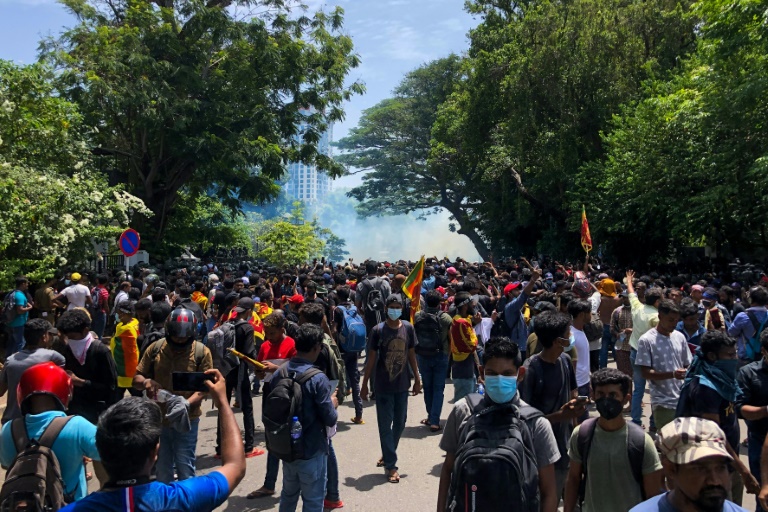
Hours later, with no formal announcement he was stepping down, thousands of demonstrators mobbed the office of Prime Minister Ranil Wickremesinghe — who would automatically become acting president in the event of a resignation — demanding both officeholders should go.

“Go home Ranil, Go home Gota,” they shouted.

Police fired tear gas to hold them back from overrunning the compound and officials declared a nationwide state of emergency “to deal with the situation in the country”, the prime minister’s spokesman Dinouk Colombage told AFP.

Police imposed an indefinite curfew across the Western Province, which includes Colombo, “to contain the situation”, a senior police officer said.

Wickremesinghe has himself announced his willingness to resign if consensus is reached on forming a unity government.

His office confirmed Wednesday that Rajapaksa had left the country, but said it had no schedule for any resignation announcement.

The presidential succession process could take between three days — the minimum time needed for parliament to elect an MP to serve out Rajapaksa’s term, which ends in November 2024 — and a maximum of 30 days allowed under the statute. 

– A complicated exit –

Rajapaksa is accused of mismanaging the economy to a point where the country has run out of foreign exchange to finance even the most essential imports, leading to severe hardships for its 22 million people.

Earlier Wednesday, smiling Sri Lankans again thronged the corridors of the president’s official residence after his departure, with young couples walking around hand in hand in a mood of quiet celebration.

“People are very happy, because these people robbed our country,” said retired civil servant Kingsley Samarakoon, 74. “They’ve stolen too much money, billions and billions.”

But he held little hope for an immediate improvement in Sri Lanka’s plight. “How are people going to run the country without money?” he asked. “It’s a problem.”

The departure of Rajapaksa, 73 and once known as “The Terminator”, had been stymied for more than 24 hours in a humiliating stand-off with immigration personnel in Colombo.

He had wanted to fly to Dubai on a commercial flight, but staff at Bandaranaike International withdrew from VIP services and insisted that all passengers had to go through public counters. 

The presidential party was reluctant to go through regular channels, fearing public reactions, a security official said, and as a result, missed four flights on Monday that could have taken them to the United Arab Emirates.

Clearance for a military flight to land in nearby India was not immediately secured, a security official said, and at one point on Tuesday the group headed to a naval base with a view to fleeing by sea.

On arrival in the Maldives, his party were driven to an undisclosed location under police escort, an airport official in the capital Male said.

Rajapaksa’s youngest brother Basil, who resigned in April as finance minister, missed his own Emirates flight to Dubai early Tuesday after a tense standoff of his own with airport staff.

Basil — who holds US citizenship in addition to Sri Lankan — tried to use a paid concierge service for business travellers, but airport and immigration staff said they had withdrawn from the fast-track service.

The leader of the main opposition Samagi Jana Balawegaya party, Sajith Premadasa, who lost the 2019 presidential election to Rajapaksa, has said he will stand for the position.

Premadasa is the son of former president Ranasinghe Premadasa, who was assassinated in a Tamil rebel suicide bombing in May 1993.

Sri Lanka defaulted on its $51-billion foreign debt in April and is in talks with the IMF for a possible bailout.

The island has nearly exhausted its already scarce supplies of petrol. The government has ordered the closure of non-essential offices and schools to reduce commuting and save fuel.

US VP Harris launches Pacific push with new embassies, envoy

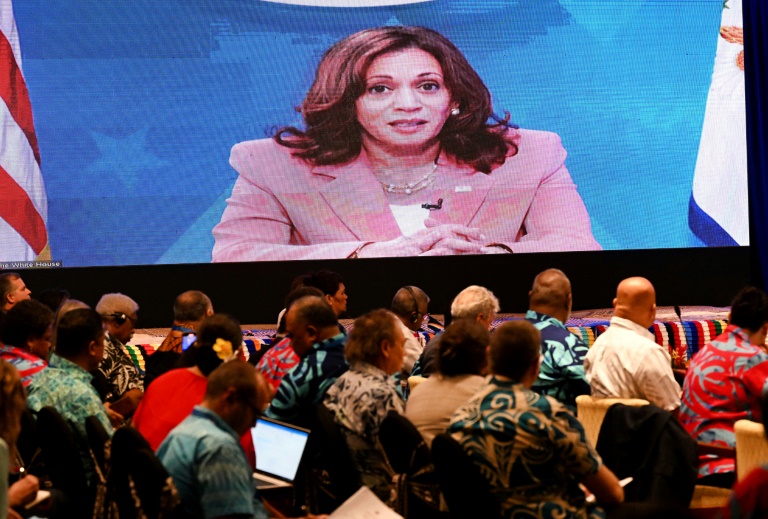
The United States launched a major push into the Pacific Wednesday as it seeks to hold off China’s advances in the region, with Vice President Kamala Harris announcing the opening of two new embassies at a key regional summit.

Washington will open missions in Tonga and Kiribati and also appoint its first-ever Pacific regional envoy, Harris said as she pledged $600 million in funding for the region in her address to the Pacific Islands Forum in Fiji.

The video-link appearance was a diplomatic coup for the United States, with China’s attempts to secure a meeting on the sidelines of the summit rebuffed.

The forum marks the first time Pacific leaders have met since the Solomon Islands signed a controversial security pact with China earlier this year.

And the mounting US-China rivalry in the Pacific has directed intense interest towards this year’s meeting, which brings together leaders from across the strategically important region.

Tongan Prime Minister Siaosi Sovaleni told AFP his country was “really happy that the US will be opening an embassy in Tonga, it will be the first time”.

“It is a big milestone. We are very happy we are finally having a US presence in Tonga,” he said.

Forum secretary general Henry Puna also welcomed Harris’ announcements, calling them “a breath of fresh air”.

“We have a long history of association and friendship with the US. But in recent years, they’ve gone missing from the region,” he told AFP.

– US v China –

At least one official from the local Chinese embassy was in the room for the vice president’s address and was asked to move from an area reserved for media, causing a stir among organisers.

Harris said she and President Joe Biden acknowledged the Pacific may not have previously received enough attention or support in the past.

“We are going to change that,” she promised, adding the United States wanted to “significantly deepen our presence in the Pacific region”.

Washington’s Pacific push — backed by a decade-long pledge of $60 million annually to the Forum Fisheries Agency and the relaunch of the Peace Corps in the Pacific — reflected a desire to “embark on a new chapter”, Harris said.

The United States will also appoint its first-ever regional envoy and launch an inaugural national strategy for the region.

Harris said the United States wanted to collaborate on maritime security, disaster relief and infrastructure projects that “do not result in insurmountable debt” — a subtle swipe at Beijing’s lending policies.

Pacific expert Tess Cain said “it was a bit of a surprise that the vice president got that speaking slot”, given the forum is traditionally restricted to Pacific leaders, Australia and New Zealand.

– Australia arrives –

New Australian Prime Minister Anthony Albanese landed Wednesday in Fiji to attend the forum, his first visit to the Pacific since his election victory.

Albanese will try to mend his nation’s fractured relationships within the region after Australia’s attempts to muzzle climate change announcements saw the last forum meeting descend into shouting and tears.

“Under the previous Australian government, they simply refused to do anything meaningful on climate change. And this has been felt as a personal affront by a generation of Pacific leaders,” Pacific expert Wesley Morgan of the Climate Council said.

But US-China rivalry and a shock decision by Kiribati’s Beijing-aligned leaders to withdraw from the forum on the eve of the summit have threatened to sideline climate at the talks.

Tuvaluan Foreign Minister Simon Kofe told AFP it was “the responsibility of the Pacific to reaffirm the importance of climate change”.

New Zealand Prime Minister Jacinda Ardern said there was a need for “greater transparency” about what China had agreed with the Solomon Islands.

The United States and its allies worry China is using security aid to develop a military foothold in the Pacific Islands.

Ardern expressed “deep concern” about any moves that caused “the militarisation of our region.”

South Korea vows probe of 2019 North Korean repatriations

The South Korean government on Wednesday slammed the controversial 2019 repatriation of two North Koreans, after releasing photos that appeared to show one of them resisting the handover.

Then-president Moon Jae-in’s administration had expelled the men after investigators said the pair murdered 16 crewmates before taking their fishing boat to South Korean waters.

The government said at the time that the men — described by officials as “dangerous criminals” — had no intent to defect. At least two officials said the pair did not want to stay in South Korea.

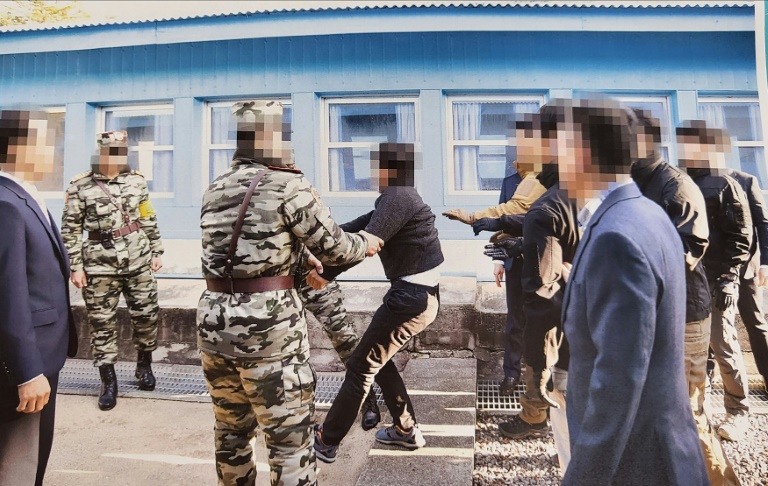
But images of their transfer at the truce village of Panmunjom, released on Tuesday by the new, conservative government, showed one man desperately resisting the handover.

If they were “forcibly sent” to North Korea, it would be “a crime against humanity that violates both international law and the Constitution,” President Yoon Suk-yeol’s spokeswoman Kang In-sun told reporters.

The government will “fully determine the truth behind this case”, she said.

One image showed a man collapsed on the ground, with officials apparently dragging him to the Military Demarcation Line between the two Koreas.

In other photos, the two men appeared tied with ropes and blindfolded before their repatriation.

Rights groups have said in the past that the transfer was a violation of international law because of the likelihood of the men being tortured or worse in North Korea.

South Korean media had reported at the time that the two men were blindfolded on their journey and only became aware of their fate when their masks were removed to reveal North Korean soldiers ready to take them into custody.

One of them immediately collapsed, the conservative Chosun Ilbo had reported.

– ‘Disgusting and callous’ –

The hawkish Yoon has been sharply critical of his predecessor’s dovish approach, accusing the liberal Moon of appeasing Pyongyang.

The 2019 case was the first-ever transfer from the South to the North since the end of the Korean War.

It was roundly condemned at the time as a breach of law by human rights groups, which also accused Moon of trying to curry favour with North Korean leader Kim Jong Un.

Under the South Korean constitution, all North Koreans are automatically considered citizens, and those who reach its territory and express a desire to defect are routinely able to stay.

A Moon government official said in 2019 that the two men were sent back because they would “pose a threat” to society, and that as “dangerous criminals” they could not be considered refugees.

And Kim Yeon-chul, Moon’s unification minister, told lawmakers at the time that the fishermen did not want to stay. He said they told South Korean authorities: “Even if we die, we’d like to die in our home country.”

But Phil Robertson, deputy Asia director at Human Rights Watch, said Wednesday that the men’s “desperate resistance to being forced back” was clear in the newly released photos.

He accused Moon — a former human rights lawyer — and his administration of having “a disgusting and callous disregard for human rights”.

The photos show that the deported men “understood they were fighting for their lives”, Robertson added.

Since Yoon took office in May, prosecutors have reopened the case.

And last week, South Korea’s intelligence agency also requested a formal investigation into allegations that its former chief under Moon, Suh Hoon, ordered the premature closure of an internal investigation into the matter.

Close Bitnami banner
Bitnami