World

China growth slumps on virus lockdowns, real estate woes: poll

China’s economic expansion slumped in the second quarter to levels not seen since early 2020, an AFP poll of analysts found, owing to painful Covid lockdowns and lingering weakness in the real estate sector.

Leaders of the world’s second-biggest economy remain firmly wedded to a zero-Covid approach of stamping out clusters as they emerge, but the fallout has sapped growth and is pushing policymakers’ annual target of around 5.5 percent out of reach.

The slowdown comes after the country’s biggest city Shanghai was sealed off for two months over a virus resurgence — snarling supply chains and causing factories to shut — while dozens of others grappled with tightened rules to fight local outbreaks.

Gross domestic product is estimated to have expanded 1.6 percent on-year in April-June, according to the AFP poll of experts from 12 financial institutions.

Several analysts expect the economy to shrink on a quarterly basis — a first since 2020 at the height of the pandemic.

According to key gauges, activity in both the services and manufacturing sectors contracted in April and May, said Rabobank senior macro strategist Teeuwe Mevissen.

China’s property sector, an important economic driver, was also “still in limbo”, while lockdowns have severely hit supply and demand, he told AFP.

New home sales for the top 100 developers was 43 percent down on-year in June, according to China Real Estate Information Corporation data, with Nomura analysts adding that metro passenger trips in major cities remained below 2021 levels.

China has only logged a GDP contraction once in recent decades, and analysts expect the latest reading will drag full-year growth to around four percent, slashing earlier estimates.

Economists have long questioned the accuracy of official Chinese data, suspecting that figures are massaged for political reasons. 

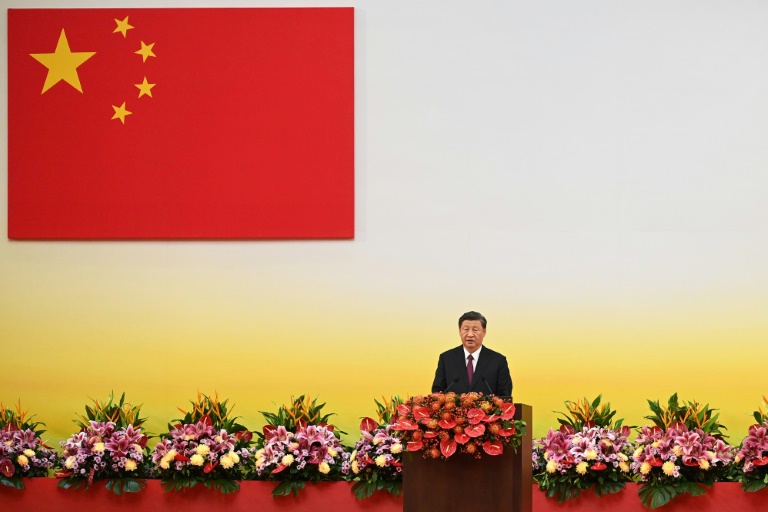
And Friday’s official release will be closely watched as the Communist Party gears up for its 20th Congress when Xi Jinping is expected to be given another five-year term as president.

– Zero-Covid vs growth –

China’s policymakers want both zero-Covid and growth, an aim made clear during April’s Politburo meeting, said Macquarie economist Larry Hu in a recent report.

Authorities have vowed efforts to meet this year’s target, a goal reiterated by Xi last month, and leaders will likely “decide whether to double down or back down” in July, Hu said.

“Rhetorically, policymakers are unlikely to drop the name of ‘zero-Covid’ any time soon. That said, they could still redefine ‘zero-Covid’ to make it less and less disruptive to the economy,” he added.

Last Thursday, Premier Li Keqiang said the foundations for China’s recovery are “still unstable” and called for more work to stabilise the economy.

And “multiple uncertainties” also surround the latest rebound, said ANZ Research in a report.

Besides unexpected Covid outbreaks which could trigger more restrictions on movement, “a slowdown in the US economy and the Fed’s hiking moves may cloud the outlook for China’s exports,” ANZ added.

Domestically, consumer inflation climbed in June to the highest in two years as pork prices spiked, official data showed Saturday, threatening relative stability from a global surge in food prices.

China’s economy has started to recover after lockdown restrictions were lifted in Shanghai from June 1, said Oxford Economics’ lead economist Tommy Wu.

But even if future outbreaks are less disruptive as authorities fine-tune their strategies, “pressure on consumption will likely persist”, he added.

This week, an auto industry association downgraded its 2022 sales forecast on weaker demand.

“Consumer sentiment is unlikely to turn sanguine as strict mobility restrictions will be imposed even when the number of Covid cases in a small neighbourhood is very low,” Wu added.
Asian markets fluctuate as oil, euro struggle on recession fears

Asian markets fought Wednesday to recover some of the losses suffered at the start of the week as recession alarms continue to ring loud and oil struggled to erase the previous day’s sharp drop owing to growing demand fears.

The euro clawed its way back slightly after hitting parity with the dollar for the first time in two decades, though it remains under pressure from growing concerns about an energy crisis across the eurozone and the European Central Bank’s slower pace of monetary tightening.

Traders are also awaiting the release of a series of key indicators this week, including the all-important consumer price index later Wednesday, with expectations for another increase to a fresh 41-year high.

Another big spike in prices will reinforce the Federal Reserve’s determination to lift interest rates 75 basis points for a second successive month in July, adding to concerns that officials could go too far and tip the economy into recession.

Still, Lauren Goodwin of New York Life Investments said policymakers were unlikely to shift from their hawkish tilt for now.

“This is widely expected to be a really strong print,” she told Bloomberg Television.

“Even if it is not, I don’t think that changes the Fed’s perspective in a couple of weeks. We won’t have enough evidence that inflation is convincingly turning over.”

In a further sign of the pressure being felt around the world from surging prices, the South Korean central bank lifted rates 0.5 percentage points Wednesday, the first such increase since 1999.

While European markets enjoyed a rare advance thanks to bargain-buying, all three main indexes on Wall Street dropped.

Asian equities fluctuated, with Tokyo, Hong Kong, Seoul, Wellington and Taipei slightly higher but Shanghai, Sydney, Singapore, Manila and Jakarta in the red.

– Europe gas crisis –

Stephen Innes at SPI Asset Management said equities could continue to struggle owing to a perfect storm of crises engulfing trading floors.

“Typically, equity markets can deal with one risk relatively well,” he said in a note. “But the current setup of sticky inflation, rapid Fed tightening, growth/recession risks and excessive rates volatility, to name a few, have at times left investors defenceless. 

“And with the market coalescing to a bearish consensus, stocks are having trouble sustaining a meaningful rally.”

Both main crude contracts were flat, staying below $100 and nowhere near recovering the more than seven percent drops suffered Tuesday, hit by bets on a drop in demand and fears of more Covid-19 lockdowns in Shanghai.

The commodity has lost a large chunk of the gains seen after Vladimir Putin’s invasion of Ukraine, despite bans on imports from Russia, with some analysts saying consumers were simply choosing not to buy fuel because of the high price.

Data from the American Petroleum Institute showed US stockpiles rose 4.76 million barrels last week, Bloomberg News reported citing people familiar with the figures, indicating demand slacking off even during the key summer driving season.

Joe Biden’s visit to Saudi Arabia on Friday will be followed intently as he tries to persuade the crude giant to pump more to help reduce prices.

On currency markets, the euro held just above $1.0 a day after hitting parity on Tuesday for the first time since late 2022, with a worsening energy crisis fanning expectations that the eurozone will plunge into recession.

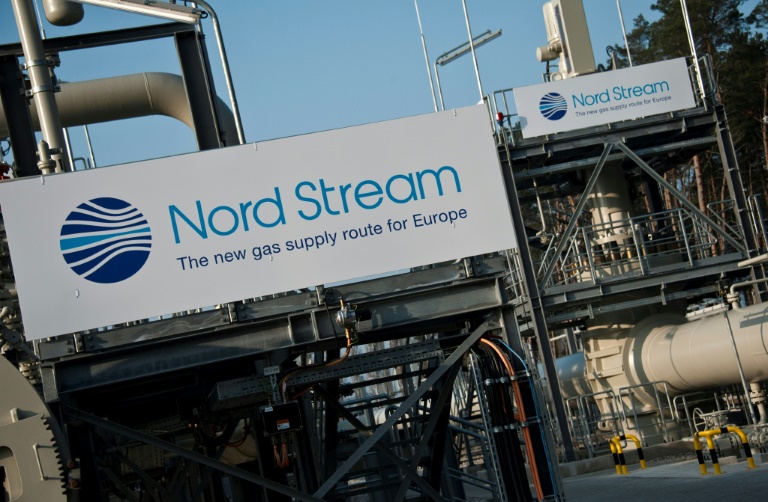
With Russian energy giant Gazprom starting 10 days of maintenance Monday on its Nord Stream 1 pipeline, the bloc — and particularly gas-reliant Germany — is waiting nervously to see if the taps are turned back on.

“A prolonged cut to the gas supply would halt a lot of economic activity, sending (Germany) deep into recession,” said Tapas Strickland at National Australia Bank.

He said July 21 — when the gas should be switched back on — will be a crucial date.

“That date also happens to be the day of the next ECB meeting,” he added. “Either of these events are key risk events. Russia playing gas politics by not switching on the gas supply would likely see the euro lurch much lower.”

– Key figures at around 0250 GMT –

Tokyo – Nikkei 225: UP 0.3 percent at 26,423.11 (break)

Hong Kong – Hang Seng Index: UP 0.6 percent at 20,963.55

Shanghai – Composite: DOWN 0.3 percent at 3,270.99

Euro/dollar: DOWN at $1.0032 from $1.0037 Tuesday

Pound/dollar: UP at $1.1893 from $1.1889 

Euro/pound: DOWN at 84.34 pence from 84.40 pence

Dollar/yen: UP at 137.14 yen from 136.84 yen

West Texas Intermediate: FLAT at $95.80 per barrel

Brent North Sea crude: FLAT at $99.52 per barrel

New York – Dow: DOWN 0.6 percent at 30,981.33 (close)

London – FTSE 100: UP 0.2 percent at 7,209.86 (close)

Israel to laser in on Iranian drone threat as Biden visits

Moments after US President Joe Biden touches down in Tel Aviv on Wednesday, the Israeli military will show him new hardware it says is essential to confronting Iran: anti-drone lasers.

While Israel has long been known for its efforts to thwart Tehran’s nuclear ambitions, Israeli officials have increasingly been sounding the alarm over Iran’s fleet of unmanned aerial vehicles (UAVs).

This month, the Israeli military said it had intercepted a total of four unarmed drones headed for an offshore gas rig. It said the drones were Iranian-made and launched by the Lebanese group Hezbollah, which is backed by Tehran.

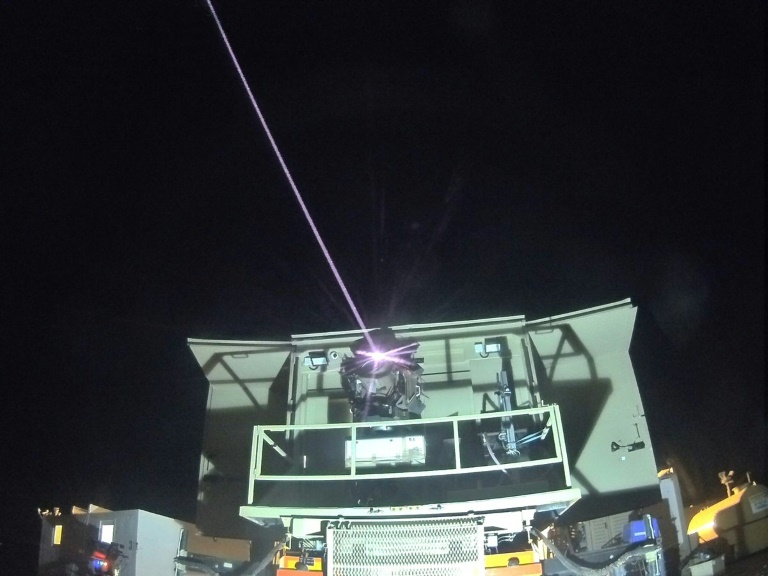
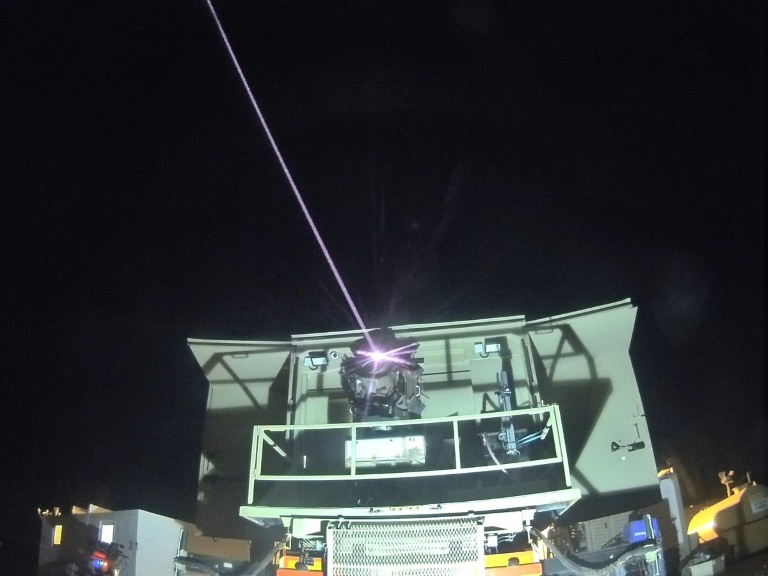
As concerns mount over drone warfare, Israel hopes the new “Iron Beam” system will secure its skies.

While not yet operational, the military hardware was described as a “game-changer” in April by then-prime minister Naftali Bennett. 

Presenting such technology to Biden is a strategic move for Israel, which saw Washington approve a billion-dollar package in September for Israel’s active Iron Dome system. 

The defence system has been used countless times to intercept rockets fired by militants from the Gaza Strip, which is controlled by Iran’s ally Hamas.

The Iron Dome costs roughly $50,000 per launch, while Bennett priced the Iron Beam at $3.50 per deployment.

He said the new defence system was “silent” and could “intercept incoming UAVs, mortars, rockets and anti-tank missiles.”

Uzi Rubin, a former Israeli defence ministry specialist in anti-missile systems, said intercepting drones was a significant challenge.

“The laser technology will have more capacity against drones than rockets and missiles,” said Rubin, who is based at the Jerusalem Institute for Strategy and Security.

“It is going to help if we get some American financing” for the Iron Beam, he added. 

– Rare regional talks –

For Israel, a priority of Biden’s Middle East tour is broadening US-backed security cooperation among regional countries with shared hostility towards Iran.

The US president will fly Friday to Saudi Arabia, Iran’s main regional rival, following meetings with Israeli and Palestinian officials. 

Saudi Arabia and its neighbour the United Arab Emirates have both come under drone attack by Yemen’s Iran-backed Huthi rebels since 2019.

The Wall Street Journal reported last month that senior Israeli and US military officials had visited Egypt to discuss Iranian drones.

Participants in the talks included the UAE and Bahrain, which both normalised ties with Israel in 2020, as well as Saudi Arabia and Qatar, which don’t recognise the Jewish state.

Israel’s Defence Minister Benny Gantz subsequently made comments which were widely interpreted as confirming the discussions.

“We are building our wide partnership with additional countries in the region to ensure a secure, stable and prosperous Middle East. Among other things, this also includes aerial defence,” Gantz said.

The race to develop arsenals of UAVs in the region has been described as a “drone revolution” by Washington’s Middle East Institute.

The normalisation of ties with the Jewish state has “opened new horizons” for Abu Dhabi’s tech sector, the institute said in March, as Israel has been “at the forefront of the drone industry since the 1980s”.

– ‘Significant platform’ –

According to Eyal Pinko, a former Israeli navy intelligence officer, Israel has been anticipating the rising threat of drones from Iran and its regional proxies.

“Since 2009, there was an understanding among Israeli naval intelligence that Hezbollah’s UAVs would be a threat to Israeli rigs,” said Pinko, a specialist at Tel Aviv’s Bar-Ilan University.

“Iran understood many years ago that drones were force multipliers, a significant platform and relatively cheap,” he told AFP.

Earlier this year, the Israeli military said that in March 2021 it had intercepted two Iranian drones laden with weapons for Gaza militants.

Tehran “is positioning itself as a major drone power in the region”, according to an article published by the European Council on Foreign Relations think tank.

“The country built up its vast drone fleet over many years mainly out of necessity, aiming to compensate for its old and decaying air force, which has been battered by decades of sanctions,” the May report said.

Its fleet includes the “Gaza” drone, which can fly for 35 hours, according to Iran’s Fars News Agency.

On Monday, the White House revealed intelligence that Tehran was “preparing to provide Russia with up to several hundred UAVs… on an expedited timeline” for use in the war in Ukraine.

While Israel aims to counter Iranian UAVs with new technology and regional alliances, it may also be going on the offensive.

In March, Israeli media said the army had launched an attack on an Iranian site storing dozens of armed drones.

But weeks later, Iranian state television broadcast footage of a facility hidden in the mountains: an underground base for scores of military UAVs.

Israel to laser in on Iranian drone threat as Biden visits

Moments after US President Joe Biden touches down in Tel Aviv on Wednesday, the Israeli military will show him new hardware it says is essential to confronting Iran: anti-drone lasers.

While Israel has long been known for its efforts to thwart Tehran’s nuclear ambitions, Israeli officials have increasingly been sounding the alarm over Iran’s fleet of unmanned aerial vehicles (UAVs).

This month, the Israeli military said it had intercepted a total of four unarmed drones headed for an offshore gas rig. It said the drones were Iranian-made and launched by the Lebanese group Hezbollah, which is backed by Tehran.

As concerns mount over drone warfare, Israel hopes the new “Iron Beam” system will secure its skies.

While not yet operational, the military hardware was described as a “game-changer” in April by then-prime minister Naftali Bennett. 

Presenting such technology to Biden is a strategic move for Israel, which saw Washington approve a billion-dollar package in September for Israel’s active Iron Dome system. 

The defence system has been used countless times to intercept rockets fired by militants from the Gaza Strip, which is controlled by Iran’s ally Hamas.

The Iron Dome costs roughly $50,000 per launch, while Bennett priced the Iron Beam at $3.50 per deployment.

He said the new defence system was “silent” and could “intercept incoming UAVs, mortars, rockets and anti-tank missiles.”

Uzi Rubin, a former Israeli defence ministry specialist in anti-missile systems, said intercepting drones was a significant challenge.

“The laser technology will have more capacity against drones than rockets and missiles,” said Rubin, who is based at the Jerusalem Institute for Strategy and Security.

“It is going to help if we get some American financing” for the Iron Beam, he added. 

– Rare regional talks –

For Israel, a priority of Biden’s Middle East tour is broadening US-backed security cooperation among regional countries with shared hostility towards Iran.

The US president will fly Friday to Saudi Arabia, Iran’s main regional rival, following meetings with Israeli and Palestinian officials. 

Saudi Arabia and its neighbour the United Arab Emirates have both come under drone attack by Yemen’s Iran-backed Huthi rebels since 2019.

The Wall Street Journal reported last month that senior Israeli and US military officials had visited Egypt to discuss Iranian drones.

Participants in the talks included the UAE and Bahrain, which both normalised ties with Israel in 2020, as well as Saudi Arabia and Qatar, which don’t recognise the Jewish state.

Israel’s Defence Minister Benny Gantz subsequently made comments which were widely interpreted as confirming the discussions.

“We are building our wide partnership with additional countries in the region to ensure a secure, stable and prosperous Middle East. Among other things, this also includes aerial defence,” Gantz said.

The race to develop arsenals of UAVs in the region has been described as a “drone revolution” by Washington’s Middle East Institute.

The normalisation of ties with the Jewish state has “opened new horizons” for Abu Dhabi’s tech sector, the institute said in March, as Israel has been “at the forefront of the drone industry since the 1980s”.

– ‘Significant platform’ –

According to Eyal Pinko, a former Israeli navy intelligence officer, Israel has been anticipating the rising threat of drones from Iran and its regional proxies.

“Since 2009, there was an understanding among Israeli naval intelligence that Hezbollah’s UAVs would be a threat to Israeli rigs,” said Pinko, a specialist at Tel Aviv’s Bar-Ilan University.

“Iran understood many years ago that drones were force multipliers, a significant platform and relatively cheap,” he told AFP.

Earlier this year, the Israeli military said that in March 2021 it had intercepted two Iranian drones laden with weapons for Gaza militants.

Tehran “is positioning itself as a major drone power in the region”, according to an article published by the European Council on Foreign Relations think tank.

“The country built up its vast drone fleet over many years mainly out of necessity, aiming to compensate for its old and decaying air force, which has been battered by decades of sanctions,” the May report said.

Its fleet includes the “Gaza” drone, which can fly for 35 hours, according to Iran’s Fars News Agency.

On Monday, the White House revealed intelligence that Tehran was “preparing to provide Russia with up to several hundred UAVs… on an expedited timeline” for use in the war in Ukraine.

While Israel aims to counter Iranian UAVs with new technology and regional alliances, it may also be going on the offensive.

In March, Israeli media said the army had launched an attack on an Iranian site storing dozens of armed drones.

But weeks later, Iranian state television broadcast footage of a facility hidden in the mountains: an underground base for scores of military UAVs.

US VP Harris launches Pacific push with new embassies, envoy

The United States launched a major push into the Pacific Wednesday as it seeks to hold off China’s advances in the region, with Vice President Kamala Harris announcing the opening of new embassies in Tonga and Kiribati at a key regional summit.

Washington will also appoint its first-ever envoy to the Pacific, Harris said as she pledged $600 million in funding for the region in her address to the Pacific Islands Forum in Fiji.

The video-link appearance at the summit was a diplomatic coup for the United States, with China’s attempts to secure a meeting on the sidelines of the summit rebuffed.

The forum marks the first time Pacific leaders have met since the Solomon Islands signed a controversial security pact with China earlier this year.

And the mounting US-China rivalry in the Pacific has directed intense interest towards this year’s meeting, which brings together leaders from across the strategically important region.

Tongan Prime Minister Siaosi Sovaleni told AFP his country was “really happy that the US will be opening an embassy in Tonga, it will be the first time”.

“It is a big milestone. We are very happy we are finally having a US presence in Tonga,” he said.

– US v China –

At least one official from the local Chinese embassy was in the room for the vice president’s address, causing a stir among organisers.

Harris said she and US President Joe Biden acknowledged the Pacific may not have previously received enough attention or support in the past.

“We are going to change that,” she promised, adding the US wanted to “significantly deepen our presence in the Pacific region”.

America’s Pacific push — backed by a decade-long pledge of $60 million annually to the Forum Fisheries Agency and the relaunch of the Peace Corps in the Pacific — reflected a desire to “embark on a new chapter”, Harris said.

The US will also appoint its first-ever regional envoy and launch an inaugural national strategy for the region.

Harris said the US wanted to collaborate on maritime security, disaster relief and infrastructure projects that “do not result in insurmountable debt”.

Pacific expert Tess Cain told AFP that “it was a bit of a surprise that the vice president got that speaking slot”, given the forum is traditionally restricted to Pacific leaders, Australia and New Zealand.

“It’s possibly a surprise that it was the vice president and not the president that spoke with leaders this morning,” Cain said.

– Australia arrives –

New Australian Prime Minister Anthony Albanese landed Wednesday in Fiji to attend the forum, his first visit to the Pacific since his election victory.

Albanese will try to mend his nation’s fractured relationship with the Pacific after Australia’s attempts to muzzle climate change announcements saw the last forum meeting descend into shouting and tears.

“I look forward to discussing the issues and dealing with climate change,” he said at the airport on arrival.

But the US-China rivalry and a shock decision by Kiribati’s Beijing-aligned leaders to withdraw from the forum on the eve of the summit have threatened to sideline climate at the summit.

Tuvaluan foreign minister Simon Kofe told AFP it was “the responsibility of the Pacific to reaffirm the importance of climate change”.

Cosmic cliffs and dancing galaxies: Webb begins era of discovery

The cosmic cliffs of a stellar nursery and a quintet of galaxies bound in a celestial dance: NASA released the next wave of images from the James Webb Space Telescope Tuesday, heralding a new era of astronomy.

“Every image is a new discovery,” said NASA administrator Bill Nelson. “Each will give humanity a view of the universe that we’ve never seen before.”

Released one by one starting from 10:30 am Eastern (1430 GMT) at the Goddard Space Flight Center, the new images demonstrated the full power of the $10 billion observatory, which uses infrared cameras to gaze into the distant universe with unprecedented clarity.

“They’re beautiful and they’re full of wonderful discoveries and science, and lots of things we haven’t identified are in there,” Nobel-winning cosmologist and Webb senior project scientist John Mather told AFP.

On Monday, Webb revealed the sharpest image to date of the early universe, teeming with thousands of galaxies going back more than 13 billion years.

The latest tranche included the “mountains” and “valleys” of a star-forming region called NGC 3324 in the Carina Nebula, dubbed the “Cosmic Cliffs,” 7,600 light years away.

“For the first time we’re seeing brand new stars that were previously completely hidden from our view,” said NASA astrophysicist Amber Straughn.

– Stellar nurseries and graveyards –

Webb also revealed never-before-seen details of Stephan’s Quintet, a grouping of five galaxies including four that experience repeated close encounters, which provide insights into how early galaxies formed at the start of the universe.

At the center of the cluster is a black hole called an active galactic nucleus, “which means stuff is flowing in, it gets cooked to high temperatures, and some of it gets spit back out again,” explained Mather.

Studying the black hole will allow scientists to better understand the one at the center of our own Milky Way, called Sagittarius A*.

A dim star at the center of the Southern Ring Nebula was found for the first time to be cloaked in dust, as it spews out rings of gas and dust in its death throes.

Understanding the molecules present in such stellar graveyards can help scientists learn more about the process of stellar death.

The telescope also detailed water vapor in the atmosphere of a faraway giant gas planet. 

The spectroscopy — an analysis of light that reveals detailed information — was of planet WASP-96 b, which was discovered in 2014.

Scientists will next hope to train the spectrographic instruments on small rocky worlds such as our own, to search for signs of habitability.

– Fundamental discoveries expected –

Webb’s first images have set the space community alight, and will also be shown on giant screens in New York City’s Times Square and in London.

Launched in December 2021 from French Guiana on an Ariane 5 rocket, Webb is orbiting the Sun at a distance of a million miles (1.6 million kilometers) from Earth, in a region of space called the second Lagrange point.

It remains in a fixed position relative to the Earth and Sun, with minimal fuel required for course corrections and maneuvering its instruments.

A wonder of engineering, Webb is one of the most expensive scientific platforms to date, comparable to the Large Hadron Collider at CERN, and also among the most complex machines ever built.

Webb’s primary mirror is over 21 feet (6.5 meters) wide and is made up of 18 gold-coated mirror segments. Like a camera held in one’s hand, the structure has to remain very still for the best shots, with Webb’s engineers minimizing its wobble to just 17 millionths of a millimeter.

Its pointing accuracy is equivalent to firing a bullet from Washington and hitting a coin on top of a tower in Los Angeles, Charlie Atkinson, chief engineer for its main builder Northrop Grumman, told AFP.

After the first images, astronomers around the globe will get shares of time on the telescope, with projects selected competitively through a process in which applicants and selectors don’t know each other’s identities, to minimize bias.

Thanks to an efficient launch, NASA estimates Webb has enough propellant for a 20-year life, as it works in concert with the Hubble and Spitzer space telescopes to answer fundamental questions about the cosmos — including those scientists don’t yet know to ask.

“We don’t know what we don’t know yet,” said Straughn.  

Hubble played a key role in discovering that dark energy is causing the universe to expand at an ever-growing rate, “so it’s hard to imagine what we might learn with this 100 times more powerful instrument.”

Cosmic cliffs and dancing galaxies: Webb begins era of discovery

The cosmic cliffs of a stellar nursery and a quintet of galaxies bound in a celestial dance: NASA released the next wave of images from the James Webb Space Telescope Tuesday, heralding a new era of astronomy.

“Every image is a new discovery,” said NASA administrator Bill Nelson. “Each will give humanity a view of the universe that we’ve never seen before.”

Released one by one starting from 10:30 am Eastern (1430 GMT) at the Goddard Space Flight Center, the new images demonstrated the full power of the $10 billion observatory, which uses infrared cameras to gaze into the distant universe with unprecedented clarity.

“They’re beautiful and they’re full of wonderful discoveries and science, and lots of things we haven’t identified are in there,” Nobel-winning cosmologist and Webb senior project scientist John Mather told AFP.

On Monday, Webb revealed the sharpest image to date of the early universe, teeming with thousands of galaxies going back more than 13 billion years.

The latest tranche included the “mountains” and “valleys” of a star-forming region called NGC 3324 in the Carina Nebula, dubbed the “Cosmic Cliffs,” 7,600 light years away.

“For the first time we’re seeing brand new stars that were previously completely hidden from our view,” said NASA astrophysicist Amber Straughn.

– Stellar nurseries and graveyards –

Webb also revealed never-before-seen details of Stephan’s Quintet, a grouping of five galaxies including four that experience repeated close encounters, which provide insights into how early galaxies formed at the start of the universe.

At the center of the cluster is a black hole called an active galactic nucleus, “which means stuff is flowing in, it gets cooked to high temperatures, and some of it gets spit back out again,” explained Mather.

Studying the black hole will allow scientists to better understand the one at the center of our own Milky Way, called Sagittarius A*.

A dim star at the center of the Southern Ring Nebula was found for the first time to be cloaked in dust, as it spews out rings of gas and dust in its death throes.

Understanding the molecules present in such stellar graveyards can help scientists learn more about the process of stellar death.

The telescope also detailed water vapor in the atmosphere of a faraway giant gas planet. 

The spectroscopy — an analysis of light that reveals detailed information — was of planet WASP-96 b, which was discovered in 2014.

Scientists will next hope to train the spectrographic instruments on small rocky worlds such as our own, to search for signs of habitability.

– Fundamental discoveries expected –

Webb’s first images have set the space community alight, and will also be shown on giant screens in New York City’s Times Square and in London.

Launched in December 2021 from French Guiana on an Ariane 5 rocket, Webb is orbiting the Sun at a distance of a million miles (1.6 million kilometers) from Earth, in a region of space called the second Lagrange point.

It remains in a fixed position relative to the Earth and Sun, with minimal fuel required for course corrections and maneuvering its instruments.

A wonder of engineering, Webb is one of the most expensive scientific platforms to date, comparable to the Large Hadron Collider at CERN, and also among the most complex machines ever built.

Webb’s primary mirror is over 21 feet (6.5 meters) wide and is made up of 18 gold-coated mirror segments. Like a camera held in one’s hand, the structure has to remain very still for the best shots, with Webb’s engineers minimizing its wobble to just 17 millionths of a millimeter.

Its pointing accuracy is equivalent to firing a bullet from Washington and hitting a coin on top of a tower in Los Angeles, Charlie Atkinson, chief engineer for its main builder Northrop Grumman, told AFP.

After the first images, astronomers around the globe will get shares of time on the telescope, with projects selected competitively through a process in which applicants and selectors don’t know each other’s identities, to minimize bias.

Thanks to an efficient launch, NASA estimates Webb has enough propellant for a 20-year life, as it works in concert with the Hubble and Spitzer space telescopes to answer fundamental questions about the cosmos — including those scientists don’t yet know to ask.

“We don’t know what we don’t know yet,” said Straughn.  

Hubble played a key role in discovering that dark energy is causing the universe to expand at an ever-growing rate, “so it’s hard to imagine what we might learn with this 100 times more powerful instrument.”

Sri Lanka president flees to Maldives ahead of expected resignation

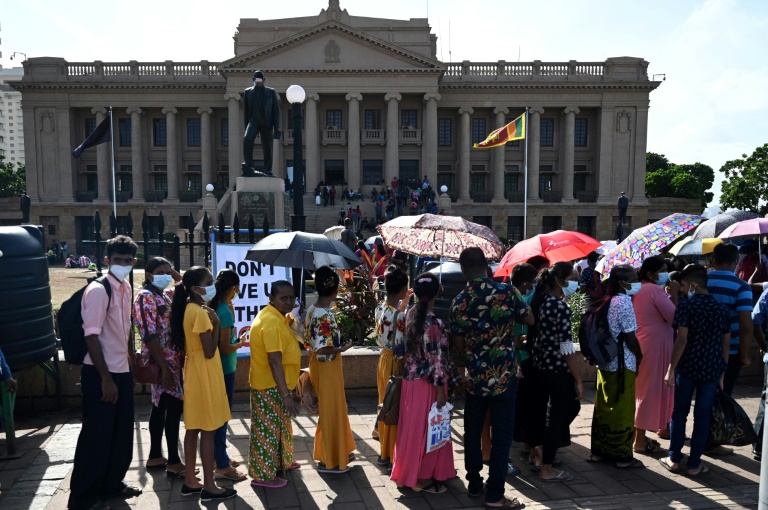
Sri Lanka’s embattled president flew out of his country to the Maldives early Wednesday, in a probable prelude to his resignation after months of widespread protests against his island nation’s worst-ever economic crisis.

Gotabaya Rajapaksa had promised at the weekend to resign on Wednesday and clear the way for a “peaceful transition of power” after fleeing his official residence in Colombo just before tens of thousands of protesters overran it.

As president, Rajapaksa enjoys immunity from arrest, and he is believed to have wanted to go abroad before stepping down to avoid the possibility of being detained.

He, his wife and a bodyguard were among four passengers on board an Antonov-32 military aircraft which took off from Sri Lanka’s main international airport, immigration sources told AFP.

On arrival in the Maldives they were driven to an undisclosed location under police escort, an airport official in Male said.

The departure of the 73-year-old leader once known as ‘The Terminator’ had been stymied for more than 24 hours in a humiliating stand-off with immigration personnel in Colombo.

He had wanted to fly to Dubai on a commercial flight, but staff at Bandaranaike International withdrew from VIP services and insisted that all passengers had to go through public counters. 

The presidential party were reluctant to go through regular channels fearing public reactions, a security official said, and as a result, missed four flights on Monday that could have taken them to the United Arab Emirates.

Clearance for a military flight to land in the closest neighbour India was not immediately secured, a security official said, and at one point on Tuesday the group headed to a naval base with a view to fleeing by sea.

Rajapaksa’s youngest brother Basil, who resigned in April as finance minister, missed his own Emirates flight to Dubai early Tuesday after a tense standoff of his own with airport staff.

Basil — who holds US citizenship in addition to Sri Lankan nationality — tried to use a paid concierge service for business travellers, but airport and immigration staff said they had withdrawn from the fast track service.

“There were some other passengers who protested against Basil boarding their flight,” an airport official told AFP. “It was a tense situation, so he hurriedly left the airport.”

– Unity government –

Basil had to obtain a new US passport after leaving his behind at the presidential palace when the Rajapaksas beat a hasty retreat to avoid mobs on Saturday, a diplomatic source said.

Official sources said a suitcase full of documents had also been left behind at the stately mansion along with 17.85 million rupees (about $50,000) in cash, now in the custody of a Colombo court.

There was no official word from the president’s office about his whereabouts, but he remained commander-in-chief of the armed forces with military resources at his disposal.

Rajapaksa is accused of mismanaging the economy to a point where the country has run out of foreign exchange to finance even the most essential imports, leading to severe hardships for the 22 million population.

If he steps down as promised, Prime Minister Ranil Wickremesinghe will automatically become acting president until parliament elects an MP to serve out the presidential term, which ends in November 2024.

But Wickremesinghe has himself announced his willingness to step down if consensus is reached on forming a unity government.

The succession process could take between three days — the minimum time taken to convene parliament — and a maximum of 30 days allowed under the statute. If Rajapaksa does step down on Wednesday, the vote would take place on July 20, the parliamentary speaker has said.

The leader of the main opposition party Samagi Jana Balawegaya party, Sajith Premadasa, who lost the 2019 presidential election to Rajapaksa, has said he will stand for the position.

Premadasa is the son of former president Ranasinghe Premadasa, who was assassinated in a Tamil rebel suicide bombing in May 1993.

Sri Lanka defaulted on its $51-billion foreign debt in April and is in talks with the IMF for a possible bailout.

The island has nearly exhausted its already scarce supplies of petrol. The government has ordered the closure of non-essential offices and schools to reduce commuting and save fuel.

Russia and Ukraine seek to break grain impasse in Turkey

Russia and Ukraine were due Wednesday to hold their first talks with UN and Turkish officials aimed at breaking a months-long impasse over grain exports that has seen food prices soar and millions face hunger.

The four-way meeting in Istanbul comes with Russia’s invasion of Ukraine showing no sign of abating and the threat of food shortages spreading across the poorest parts of the world.

Ukraine is a vital exporter of wheat and grains such as barley and maize. It has also supplied nearly half of all the sunflower oil traded on global markets.

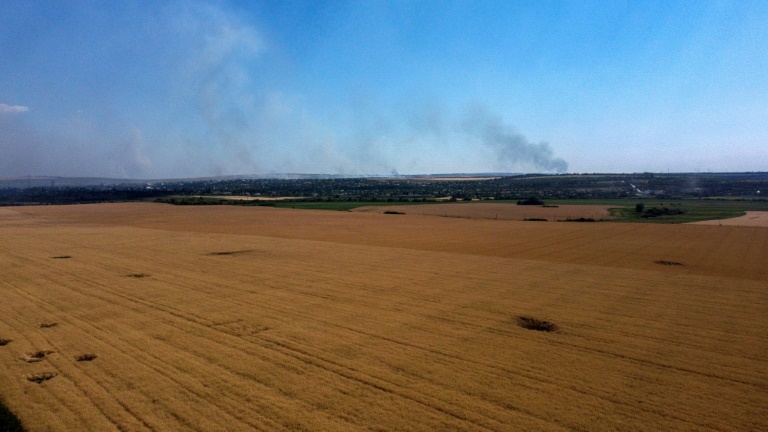
But exports across the Black Sea have been blocked by Russian warships and mines Kyiv has laid to avert a feared amphibious assault.

The negotiations are being complicated by growing suspicions that Russia is trying to export grain it has stolen from Ukrainian farmers in regions under its control.

US space agency data released last week showed 22 percent of Ukraine’s farmland falling under Russian control since the February 24 invasion.

UN Secretary-General Antonio Guterres tried on Tuesday to play down expectations from the Istanbul talks.

“We are working hard indeed, but there is still a way to go,” the UN chief told reporters.

The meeting will involve military delegations from the three countries and diplomats from the UN.

Turkish Defence Minister Hulusi Akar said they would focus “on the safe shipment to international markets of grain waiting in Ukrainian ports”. 

– Safe corridors –

NATO member Turkey has been using its good relations with both the Kremlin and the Western-backed leaders in Kyiv to try and broker an agreement on a safe way to deliver the grain.

Turkey says it has 20 merchant ships waiting in the region that could be quickly loaded and sent to world markets.

A plan by the UN proposes the ships follow safe “corridors” that run between the known location of mines.

Experts say de-mining the Black Sea is a complex operation that could take months — too long to address the growing global food crisis.

Ukraine estimates that up to 25 million tonnes of grain are currently blocked in its ports.

A report by the International Rescue Committee international relief group warned last month that 47 million people faced the threat of “acute hunger” this year.

The talks have been gaining momentum since Ukraine’s recapture this month of the tiny but strategic Snake Island from the Russians.

The uninhabited rock sits near routes used to export the grain.

Its return has already enabled Ukraine to start the first shipments along the nearby Danube River running to Romania.

– Erdogan-Putin meeting –

The talks in Istanbul precede a meeting in Tehran next Tuesday between Turkish President Recep Tayyip Erdogan and his Russian counterpart Vladimir Putin.

The two leaders’ first meeting since Russia’s invasion will be held on the sidelines of a three-way summit on Syria hosted by Iranian President Ebrahim Raisi.

The war in Ukraine has contributed to Turkey’s mounting economic problems and further complicated Erdogan’s path to a third decade in power in elections due within the next year.

Erdogan has been offering to meet Putin for months — only to be rebuffed.

Both Ukraine and Russia have laid out firm demands entering Wednesday’s talks.

A Russian foreign ministry spokesman said Moscow wanted to be able to “control and search the ships to avoid the contraband of weapons, and Kyiv’s commitment not to stage provocations”.

Ukraine said it sought to ensure any solution did not threaten “the security of our southern regions” along the Black Sea.

Kyiv has also asked that its merchant vessels be accompanied by warships from a friendly country such as Turkey.

Remote repast: Dining at the world's northernmost Michelin restaurant

You can only get there by boat or helicopter, but Michelin-starred chef Poul Andrias Ziska hopes his restaurant in remote Greenland, far above the Arctic Circle, is worth the journey. 

The 30-year-old chef relocated his restaurant KOKS from the Faroe Islands in mid-June, leaving behind his relatively accessible address for Ilimanaq, a hamlet of 50 inhabitants hidden behind icebergs on the 69th parallel north. 

Housed in a narrow black wooden house, one of the oldest in Greenland, the restaurant can only accommodate about 20 people per service, and experiments with local produce, including whale and seaweed, with fresh produce almost impossible to find in the harsh climate. 

“We try to focus on as much Greenlandic products as possible, so everything from Greenland halibut to snow crabs to musk ox to Ptarmigan, different herbs and different berries,” the tousled-haired, bearded chef tells AFP.

The young chef previously ran KOKS at home in the remote Faroe Islands, where he won his first star in 2017, his second in 2019, and the title of the world’s most isolated Michelin restaurant.

He plans to return there for a permanent installation, but explains he had always wanted to stretch his gastronomical legs in another territory in the far north, like Iceland, Greenland or even Svalbard. 

He finally chose Ilimanaq, located an hour’s boat trip from Ilulissat, the third-largest town in Greenland and famous for its huge glacier.

– Local products –

“We just found it more suitable, more fun to do something completely different before we move back in our permanent restaurant,” he tells AFP from his kitchen, set up in a trailer outside the house with the dining area.

With 20 courses, the extensive tasting menu will delight the taste buds for some 2,100 kroner ($280), excluding wine and drinks.

“The menu is exquisite and sends you to the far north and back,” Devid Gualandris, a charmed visitor, tells AFP.

“From the whale bites to the wines, from the freshly caught fish and shellfish to the curated desserts, everything is bursting with flavour.”

While whale meat is a staple food in Greenland and Ziska’s native Faroe Islands, whaling is banned in most of the world and activists have called for an end to the practice.  

An unlikely locale for a gourmet restaurant, Ilimanaq — Greenlandic for “place of hope” — is home to a small community living in picturesque wooden houses, next to hiking trails and more fittingly a luxury hotel, making it an ideal stopover for wealthy tourists seeking to explore new frontiers. 

For Ziska, the customers in Greenland are different.

“There are a lot of people for which the number one priority is to visit Greenland and then they come to our restaurant,” he says.

“In the Faroe Islands we had mainly people interested in coming and eating at our restaurant and then obviously also visiting the Faroe Islands,” the chef explains.

In addition to the adventurers who have already been lured by the Arctic landscape, the Greenlandic Tourist Board hopes the restaurant will also help attract gourmet travellers.   

“The unique combination of high-level gastronomy, the inherent sustainability of the North Atlantic cuisine and the characteristic nature and resources of the Disko Bay, speaks to all our senses,” Visit Greenland’s director, Hjortur Smarason, said when announcing the arrival of KOKS.

A long-overlooked destination, Greenland — an Arctic island territory nine times the size of the UK — welcomed more than 100,000 tourists in 2019, nearly double its population, before Covid cut the momentum.

Smarason said the presence of KOKS “is exactly what we strive for in our effort to reach a certain distinguished kind of guests”. 

Close Bitnami banner
Bitnami