World

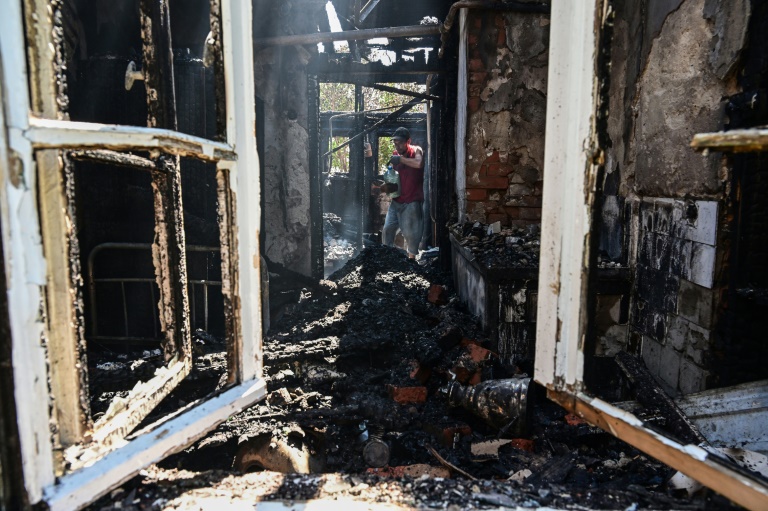
In Ukraine's Bakhmut, war is never far away

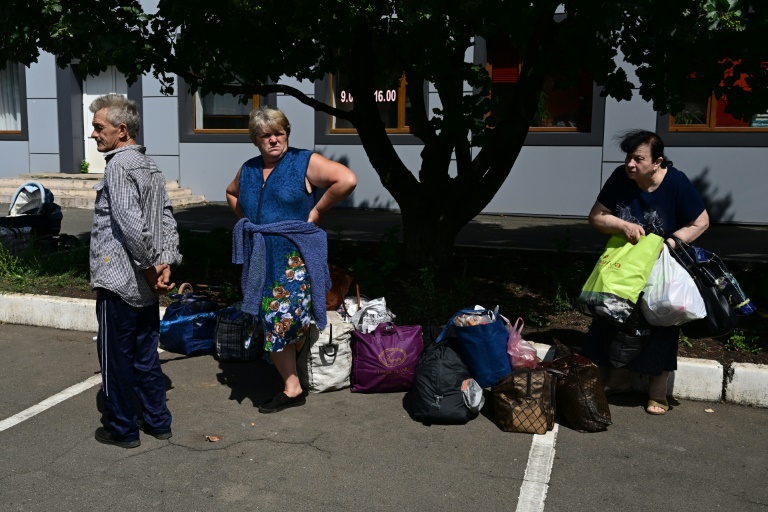
Lyubov Mozhayeva does not flinch at the sound of artillery fire in the distance as she comes to pick up a humanitarian food package in the centre of Ukraine’s eastern city of Bakhmut.

At first sight the city is quiet, with sunlight flooding the square in front of the town hall and locals calmly walking by. 

But the boom of artillery fire and the wail of air raid sirens remain a stark reminder that the frontline of the war with Russia is not far away. 

“You can’t run away from war and you never know where it will find you,” says Mozhayeva, a 60-year-old agronomist. 

“You never get used to war, it’s dreadful and scary,” the dark-haired woman with blue eyes tells AFP. 

Bakhmut lies southeast of Kramatorsk, a major city and an administrative centre of the Donbas, a region in east Ukraine that Russia seeks to take full control of.

Bakhmut and Kramatorsk are among the few remaining cities under Ukrainian control in the region.

With the frontline only a few kilometres away, Bakhmut has seen heavy shelling in recent weeks and Kyiv is expecting the fighting to intensify further.

Taking Bakhmut would give Russia control of a strategic highway and supply route, opening the road towards Kramatorsk.

After Russia invaded Ukraine on February 24, many of Bakhmut’s residents left the town, known as a leading producer of table salt and sparkling wine.

More than a third of the city’s population of 73,000 have fled, says Dmytro Podkuyidko, an official in charge of evacuations. 

– Evacuations more difficult –

Behind a large municipal building, some 30 people are preparing to board two buses that will take them to Dnipro, a city in central Ukraine about a four-hour drive away. 

But the evacuations are becoming more difficult as intensive shelling is making the roads more dangerous, according to one of the drivers, Dima.

“If it gets worse, I’ll end up leaving too,” Podkuyidko says.

At the town square, eight-year-old Sofia watches the departing buses with her stuffed toy tiger.

“I would like to evacuate too but my parents don’t want to. Everyone has left, there is only one kid my age left in the neighbourhood,” she says, fiddling with her pearl bracelet. 

Her mother, a former real estate agent, confirms that they plan to stay: “We will not leave. We have a shelter.”

However, most families with children have left Bakhmut while many residents that remain are either elderly or have nowhere to go. 

Others see no reason to leave.

“It’s sad, we were fine before and now it’s very unstable and I don’t even know who I should support: the Russians or the Ukrainians?” wonders Valery Pashchenko. 

“Maybe the Russians will come and give me access to natural gas,” adds the former construction worker who uses a wheelchair after one of his legs was amputated.

Nearby, 86-year-old Svetlana Pergat nods in agreement. 

“I am not afraid of anything or anyone, but I want it to stop. I didn’t think war was possible,” says the woman, who lived through the Nazi occupation of Bakhmut between 1941 and 1943.

The city also experienced an outbreak of heavy fighting after war broke out in 2014 between pro-Russian separatists and Ukraine’s government.

The separatists briefly took control of Bakhmut before it was recaptured by Ukrainian forces just over two months later. 
Migration tops agenda in Biden talks with Mexican president

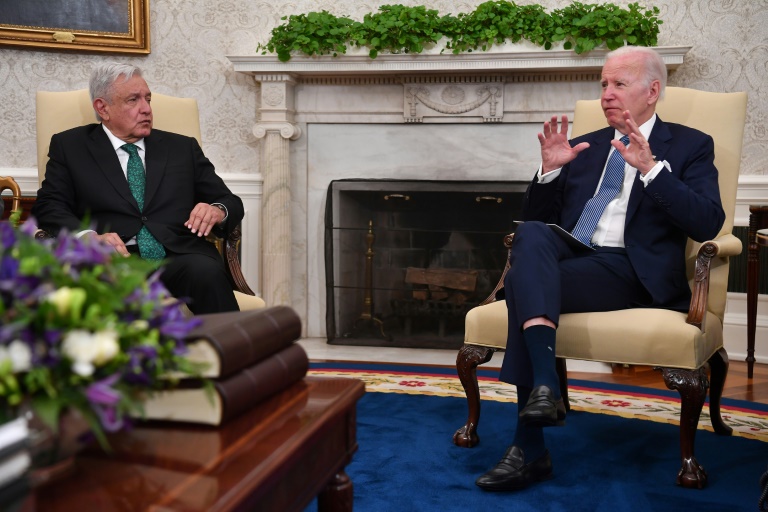
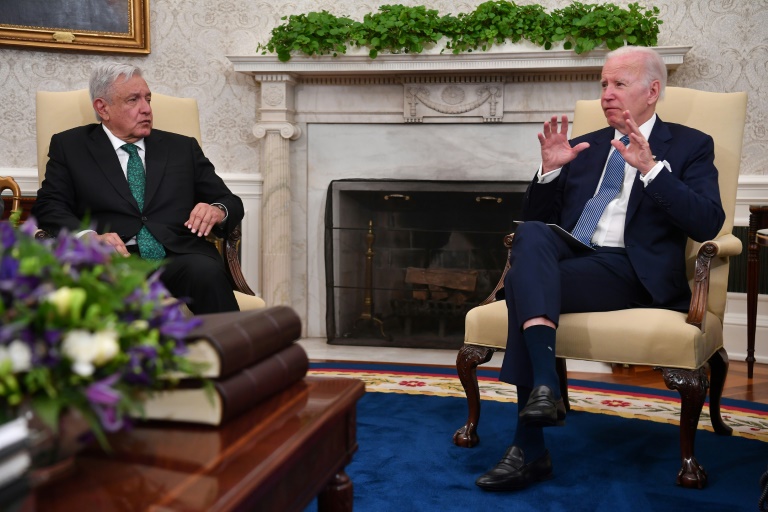
A month after he snubbed Joe Biden’s Americas summit, Mexican President Andres Manuel Lopez Obrador sat down with his US counterpart Tuesday at the White House, amid rising tensions over migration.

Biden underscored the need to address “migration as a shared hemispheric challenge” in remarks ahead of the meeting, describing long-time ally and neighbor Mexico as an “equal partner.”

He said his administration was expanding legal pathways for work in the United States from Mexico and Central America, citing “a record” 300,000 temporary work visas issued for Mexican workers last year.

And he thanked Lopez Obrador for “stepping up” and issuing visas for Central American migrants in Mexico.

The Mexican president called for a “bold program” to tackle migration issues, calling on the United States — facing a labor shortage — to allow more skilled Mexican and Central American laborers into the country “to support” the work force.

“It is indispensable for us to regularize and give certainty to migrants who for years have lived and worked in a very honest manner and are also contributing to the development of this great nation,” he said.

Lopez Obrador acknowledged likely pushback from US Republican politicians, who frequently claim Biden has left the southern US border unprotected against unauthorized crossings.

Tuesday’s talks also touched on security and economic cooperation, including the need to invest in development projects in Central America to deter people from leaving.

The two countries agreed last year to overhaul their fight against drug trafficking to address root causes of migration, and to step up efforts to curb cross-border arms smuggling.

Human trafficking was also center stage following the death late last month of more than 50 migrants — many of them Mexicans — abandoned in a scorching hot trailer in San Antonio, Texas.

Biden touched on the tragedy, saying the United States is working to slow human smuggling and ramping up efforts to stop illegal drug trafficking.

Amid soaring inflation on both sides of the border, Lopez Obrador said he’d suggested suspending tariffs and regulations to “lower prices for consumers in both our countries.”

He also floated a joint public-private investment plan to produce more goods.

The visit was Lopez Obrador’s second to the White House since Biden took office last year, despite a sometimes tense relationship with his US counterpart.

Lopez Obrador boycotted in June the Summit of the Americas hosted in Los Angeles — where migration was again a key subject — over Biden’s refusal to invite Cuba, Venezuela and Nicaragua.

Biden said Tuesday “overhyped headlines” mischaracterized “a strong, productive relationship” between the two leaders.

But Lopez Obrador was more cautious, saying “in spite of our grievances that are not easy to forget… on many occasions we’ve been able to coincide and work together as true allies.”

However, he said Mexico had “trust” in Biden “because you respect our sovereignty.” 

“Count on us always,” he added.

Migration tops agenda in Biden talks with Mexican president

A month after he snubbed Joe Biden’s Americas summit, Mexican President Andres Manuel Lopez Obrador sat down with his US counterpart Tuesday at the White House, amid rising tensions over migration.

Biden underscored the need to address “migration as a shared hemispheric challenge” in remarks ahead of the meeting, describing long-time ally and neighbor Mexico as an “equal partner.”

He said his administration was expanding legal pathways for work in the United States from Mexico and Central America, citing “a record” 300,000 temporary work visas issued for Mexican workers last year.

And he thanked Lopez Obrador for “stepping up” and issuing visas for Central American migrants in Mexico.

The Mexican president called for a “bold program” to tackle migration issues, calling on the United States — facing a labor shortage — to allow more skilled Mexican and Central American laborers into the country “to support” the work force.

“It is indispensable for us to regularize and give certainty to migrants who for years have lived and worked in a very honest manner and are also contributing to the development of this great nation,” he said.

Lopez Obrador acknowledged likely pushback from US Republican politicians, who frequently claim Biden has left the southern US border unprotected against unauthorized crossings.

Tuesday’s talks also touched on security and economic cooperation, including the need to invest in development projects in Central America to deter people from leaving.

The two countries agreed last year to overhaul their fight against drug trafficking to address root causes of migration, and to step up efforts to curb cross-border arms smuggling.

Human trafficking was also center stage following the death late last month of more than 50 migrants — many of them Mexicans — abandoned in a scorching hot trailer in San Antonio, Texas.

Biden touched on the tragedy, saying the United States is working to slow human smuggling and ramping up efforts to stop illegal drug trafficking.

Amid soaring inflation on both sides of the border, Lopez Obrador said he’d suggested suspending tariffs and regulations to “lower prices for consumers in both our countries.”

He also floated a joint public-private investment plan to produce more goods.

The visit was Lopez Obrador’s second to the White House since Biden took office last year, despite a sometimes tense relationship with his US counterpart.

Lopez Obrador boycotted in June the Summit of the Americas hosted in Los Angeles — where migration was again a key subject — over Biden’s refusal to invite Cuba, Venezuela and Nicaragua.

Biden said Tuesday “overhyped headlines” mischaracterized “a strong, productive relationship” between the two leaders.

But Lopez Obrador was more cautious, saying “in spite of our grievances that are not easy to forget… on many occasions we’ve been able to coincide and work together as true allies.”

However, he said Mexico had “trust” in Biden “because you respect our sovereignty.” 

“Count on us always,” he added.

US drone strike kills Islamic State Syria chief: Pentagon

A man who US officials called the leader of the Islamic State militant group in Syria was killed Tuesday in a drone strike while riding a motorcycle in the northern part of the country,  the Pentagon and local organizations said.

Maher al-Agal was killed near Jindires in northern Syria, and one of his top aides was seriously injured in the attack, Pentagon Central Command spokesman Lieutenant Colonel Dave Eastburn told AFP.

The volunteer Syrian Civil Defense Force, known as the “White Helmets,” said the attack targeted the two while they were on a motorcycle outside Aleppo.

President Joe Biden said the strike “takes a key terrorist off the field and significantly degrades the ability of ISIS to plan, resource, and conduct their operations in the region.”

– Threat to Syrian Kurds –

The Syrian Observatory for Human Rights confirmed Agal’s death and said he was the Islamic State governor for the Levant region.

The US Central Command called the victim “one of the top five” leaders of Islamic State overall.

“In addition to being a senior leader within the group, Al-Agal was responsible for aggressively pursuing the development of IS networks outside of Iraq and Syria,” it said in a statement.

According to a spokesman for the US-allied Kurdish Syrian Democratic Forces, both the men who were targeted had links to Ahrar al-Sharqiya, an armed group operating in northern Syria.

The group has integrated former leaders and members of Islamic State and other jihadist groups, and has conducted attacks against Kurdish targets inside Turkish-controlled areas of northern Syria. 

Ahrar al-Sharqiya was responsible for the 2019 assassination of prominent Kurdish female politician Hevrin Khalaf, which sparked international condemnation.

The US Treasury placed the group on its sanctions blacklist in July 2021.

“Ahrar al-Sharqiya has committed numerous crimes against civilians, particularly Syrian Kurds, including unlawful killings, abductions, torture, and seizures of private property,” the Treasury said at the time.

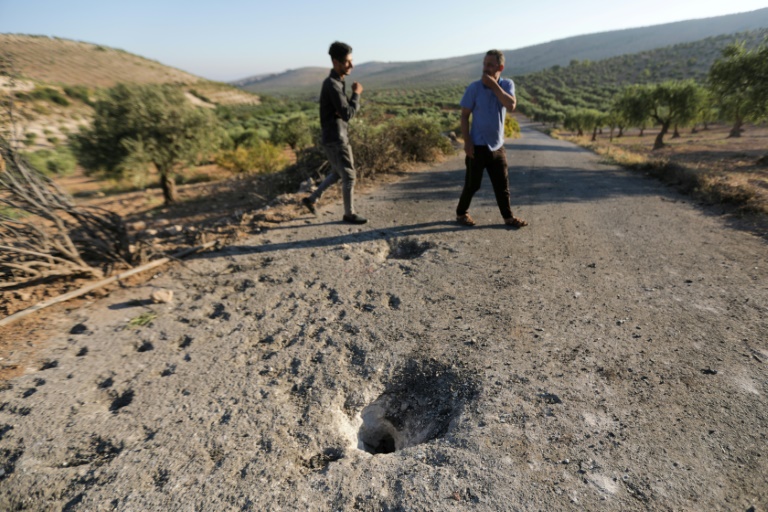
At the site of the drone strike, there were two small craters in the road and debris from the destroyed motorcycle.

Local villagers told AFP that the two IS members did not live in the area where they were killed.

– IS diminished-

Damien Ferre, founder of the consultancy Jihad Analytics, downplayed the strike, saying Islamic State in Syria is “barely a shadow” of what it used to be.

“They are still able to carry out attacks against Syrian government forces and undertake operations here and there against the Kurdish forces,” he said.

But the group is far weaker compared to the period of the Islamic State “caliphate” that came to control large parts of Iraq and Syria between 2011 and 2019, he said.

“It is important to remember that each time an Islamic State head is killed, they are replaced immediately,” added Ferre. “It really should not impact their activities.”

The last two targeted killings of Islamic State leaders took place in Turkish-controlled areas of northern Syria, where groups like Ahrar al-Sharqiya are active and have local knowledge of the terrain and families.

The strike came five months after a nighttime US raid in the town of Atme, which led to the death of the overall Islamic State leader, Abu Ibrahim al-Qurashi.

US officials said Qurashi died when he detonated a bomb to avoid capture.

Eight candidates in race to become next UK prime minister

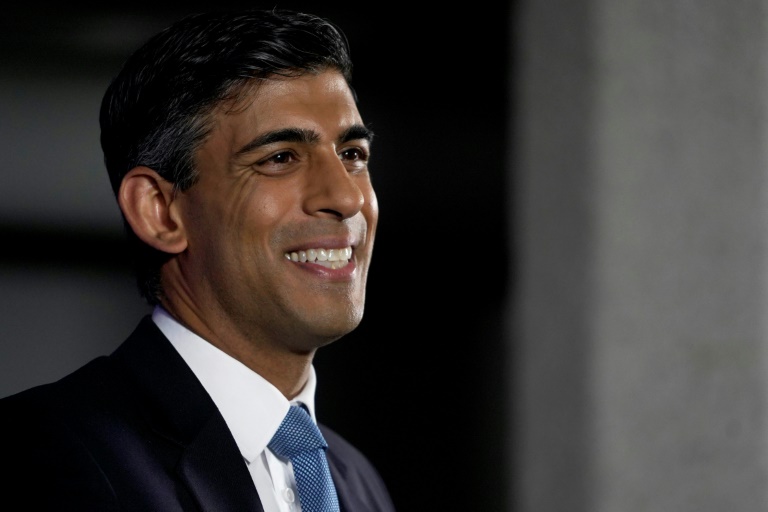
Eight Conservative MPs will vie to become UK prime minister, the party announced Tuesday, with frontrunner Rishi Sunak launching his campaign by saying he would not “demonise” the outgoing Boris Johnson, despite triggering his demise.

Former finance minister Sunak, his successor Nadhim Zahawi, Foreign Secretary Liz Truss, former defence minister Penny Mordaunt and ex-health minister Jeremy Hunt all received the support of more than 20 MPs, the threshold required to enter the race.

They are joined by outsiders Kemi Badenoch, Suella Braverman, and Tom Tugendhat in Wednesday’s first round of voting, where at least one will be eliminated.

Sunak, 42, and health minister Sajid Javid quit last week in protest at Johnson’s scandal-hit administration, setting off a wave of government resignations that forced him to step down as Conservative leader. 

Javid announced he was running, but pulled out on Tuesday having not gained enough support.

Johnson is staying on in Downing Street as prime minister until the internal party contest finds his successor. The result is due on September 5.

But the main opposition Labour party said it would try to force a vote of no confidence in the government to try to get him out of office sooner.

Labour leader Keir Starmer said that by their actions last week, the Tories had “concluded that the prime minister is unfit for office”.

Labour wanted the vote on Wednesday, but the Daily Telegraph reported that the government has refused time to debate the motion.

“As the Prime Minister has already resigned and a leadership process is underway we do not feel this is a valuable use of parliamentary time,” the paper cited a government source as saying.

“Should Labour amend their motion appropriately, they can have the next business day for it to be debated.”

– ‘Remarkable’ –

Sunak, who was appointed chancellor of the exchequer in early 2020 just as the Covid pandemic hit, is the early favourite with bookmakers.

But he refused to distance himself from Johnson’s administration, in which he played a key role supporting businesses and workers during the pandemic.

He called Johnson “one of the most remarkable people I’ve met”.

“Whatever some commentators may say, he has a good heart,” he told cheering supporters, after one Johnson ally accused Sunak of being a treacherous “snake”.

“I will have no part in a rewriting of history that seeks to demonise Boris, exaggerate his faults or deny his efforts,” he added.

Johnson’s departure was a spectacular fall from grace for a politician who secured a landslide election win in December 2019 and took the country out of the European Union just a month later.

Sunak said he would not shy away from praising that or recognising Johnson’s stewardship of the fightback against Covid or his hawkish support for Ukraine.

He has secured the backing of Transport Secretary Grant Shapps and Justice Secretary Dominic Raab.

– Patel out –

Home Secretary Priti Patel — who like Truss is a favourite of the Tory right — was rumoured to be about to join the fray but ruled out a bid.

After days of sniping among leading contenders, Patel expressed hope “the contest will be conducted in a good spirit that brings our party together”.

Those failing to get 30 votes in Wednesday’s vote will be eliminated. A series of votes will be held into next week until there are just two left in the race.

Grassroots party members will then be balloted.

Sunak, who if successful would become Britain’s first Hindu prime minister, said he had a plan to steer the country through troubled economic times, not least the soaring cost of living.

But unlike several other candidates, he said it was “not credible to promise lots more spending and lower taxes”.

And he rejected claims that as part of Johnson’s tarnished administration, he was not the fresh start he was claiming.

He said he had already responded to revelations about his wealthy wife — after it emerged that she was not paying UK tax on overseas income — and that he had a green card for US residency even while serving as chancellor.

Sunak and Johnson were also both fined by police for attending a lockdown-breaking party in Downing Street.

Kyiv 'destroys' Russian arms depot, as EU, US pledge nearly $3 bn

Kyiv said Tuesday it had launched artillery barrages that destroyed a Russian arms depot and carried out a “special operation” to free military captives in the Moscow-controlled Kherson region.

The bombardments in the south came as Washington and the EU announced nearly $3 billion combined for Ukraine, and Turkey said delegations from Moscow and Kyiv would meet in Istanbul Wednesday to discuss restarting stalled grain deliveries across the Black Sea.

Ukrainian military officials said the strikes had destroyed artillery, armoured vehicles “and a warehouse with ammunition” in the town of Nova Kakhovka.

Russian-backed authorities accused Ukraine, however, of damaging civilian infrastructure and killing at least seven people, a toll that could not be independently verified.

“Warehouses were hit, as were shops, a pharmacy, petrol stations and even a church,” the head of the city’s Moscow-backed administration, Vladimir Leontiev, said on social media.

Ukrainian military intelligence said separately its forces had freed five captives in a “special operation” in Kherson, including a military serviceman and former police officer, without specifying when.

The Ukrainian army has for several weeks been waging a counter-offensive to recapture Kherson, which was taken by Russian troops early in the invasion of Ukraine.

The deputy head of the pro-Russian authorities in Kherson, Ekaterina Gubareva, said Ukraine had used long-range, precision artillery systems supplied by the United States in the strikes in Nova Kakhovka.

– Western financial aid –

Military analysts are crediting newly arrived systems from the West — including HIMARS from the United States — with attacks deeper into Russian-controlled territory across the front line.

EU member states, which have been supplying Ukraine with military support, on Tuesday approved one billion euros ($1 billion) in financial help for Kyiv, billing it as the first instalment of a promised nine-billion-euro rescue package agreed in May.

The United States separately announced $1.7 billion for Ukraine to help fund recovery.

“This aid will help Ukraine’s democratic government provide essential services for the people of Ukraine,” Treasury Secretary Janet Yellen said of the funds that are part of a $7.5 billion aid package signed by President Joe Biden in May.

Moscow was striking back across Ukraine, with officials in the southern city of Mykolaiv saying Russian forces had bombed two medical facilities and homes, injuring 12 people.

Five people were injured in Russian shelling on Ukraine’s second city Kharkiv, said regional governor Oleg Synegubov, after strikes the previous day left seven dead across that region.

But the heaviest fighting in recent weeks has centred on the Donbas where Moscow’s forces have slowly advanced under fierce resistance since failing to capture Kyiv after the February 24 invasion.

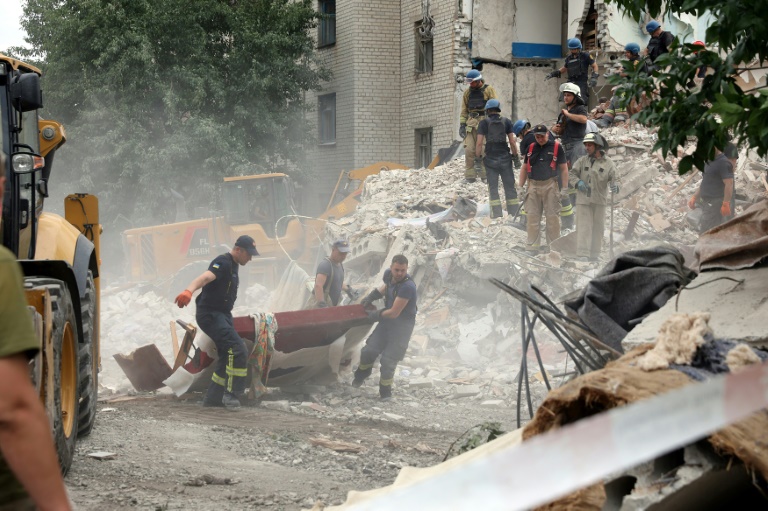
Ukrainian emergency services said the death toll had risen to 45, two days after Russian bombardment flattened a residential building in the eastern town of Chasiv Yar, in the Donetsk region of the Donbas.

In Bakhmut — one of the few remaining cities under Ukrainian control in Donbas — AFP journalists could hear nearby artillery fire.

– Upcoming grain talks –

“The front is getting closer,” said municipal official, Dmytro Podkuyidko, estimating that more than one-third of the town’s population of 73,000 have fled.

“If it gets worse, I’ll end up leaving too,” Podkuyidko said.

Turkey announced meanwhile that Russian and Ukrainian delegations had agreed to meet in Istanbul Wednesday for talks to break an impasse on allowing Ukrainian grain to leave its southern ports which are mined and blocked by Russian warships. 

The four-way meeting with Turkish officials and the United Nations comes as food prices soar globally due to Russia’s invasion of Ukraine.

“Unblocking Ukrainian ports is one of the key components of global food security,” Ukrainian presidential aide Andryi Yermak said on Telegram.

Turkish President Recep Tayyip Erdogan is due to meet Russian leader Vladimir Putin for the first time since the invasion at talks hosted by Iranian President Ebrahim Raisi in Tehran next Tuesday.

The talks are due to focus on the situation in war-ravaged Syria, but the Kremlin said Putin and Erdogan will hold a separate meeting that is almost certain to focus heavily on Ukraine.

The Kremlin has been working to consolidate its hold over territories it controls like Kherson, both militarily and bureaucratically since the beginning of the conflict.

After Putin on Monday passed a decree fast-tracking Russian passports for all Ukrainians, Ukraine’s breakaway Donetsk People’s Republic on Tuesday unveiled its “embassy” in central Moscow.

Top Russian officials did not attend the ceremony amid a beefed-up police presence.

burs-jbr-acl/bp

War in Ukraine: Latest developments

Here are the latest developments in the war in Ukraine:

– Ukraine claims arms depot hit –

Ukraine says it has destroyed an arms depot as part of a barrage of rockets and missiles on Russian military targets in southern Ukraine.

Ukrainian military officials say the strikes in the Kherson region destroyed artillery, armoured vehicles “and a warehouse with ammunition in Nova Kakhovka”.

Russian authorities in the city say Ukrainian strikes damaged civilian infrastructure and left at least seven people dead, a toll that could not be independently verified.

The Ukrainian army has for several weeks been waging a counter-offensive designed to recapture Kherson, which was taken by Russian troops early in the February invasion of Ukraine.

– Five Ukrainians rescued in special op –

In another development in the Kherson region, Ukrainian military intelligence says that its troops have rescued five Ukrainians in a special operation there.

It says a military serviceman, a former police officer and three civilians were freed, and that one of those released has “a serious combat wound”.

– US, EU pledge nearly $3 billion –

The United States Treasury announces it will send an additional $1.7 billion in economic aid to Ukraine to help fund its recovery from Russia’s invasion.

“This aid will help Ukraine’s democratic government provide essential services for the people of Ukraine,” Treasury Secretary Janet Yellen says in a statement. The funds are part of the $7.5 billion aid package signed by President Joe Biden in May.

And European Union finance ministers approve one billion euros ($1 billion) in financial aid to Ukraine, a first instalment of a promised nine-billion-euro package for Kyiv agreed in May.

“This will give Ukraine the necessary funds to cover urgent needs and ensure the operation of critical infrastructure,” says Czech Finance Minister Zbynek Stanjura, whose country holds the bloc’s rotating presidency.

– Turkey to host grain talks –

Turkey says it will host Russian and Ukrainian delegations together with UN diplomats on Wednesday to discuss the resumption of stalled grain deliveries across the Black Sea.

The meeting with Turkish officials comes as food prices soar around the world due to Russia’s invasion of Ukraine.

Ukraine is one of the world’s biggest exporters of wheat and other grains.

But its shipments have been blocked by Russian warships and mines that Kyiv has laid across the Black Sea.

– Toll climbs after eastern strike –

The death toll from a Russian missile strike which partially destroyed an apartment building in the town of Chasiv Yar on Sunday rises to 38, as Moscow’s forces seek to consolidate their control over the eastern Donbas region.

Meanwhile, Russian forces launch “massive” strikes on the southern Ukrainian city of Mykolaiv, with missiles hitting two medical facilities and residential buildings, the city’s mayor Oleksandr Sienkevych says.

The regional head, Vitaliy Kim, says 12 people were wounded.

– Lego pulls out –


The world’s largest toymaker, Denmark’s Lego, says it will stop all its Russian operations, ending the employment of its Moscow staff and a partnership with a company operating 81 stores in Russia.

A Lego spokeswoman says the company has decided to “indefinitely cease commercial operations in Russia given the continued extensive disruption in the operating environment”. 

Western Europe wilts under second heatwave in weeks

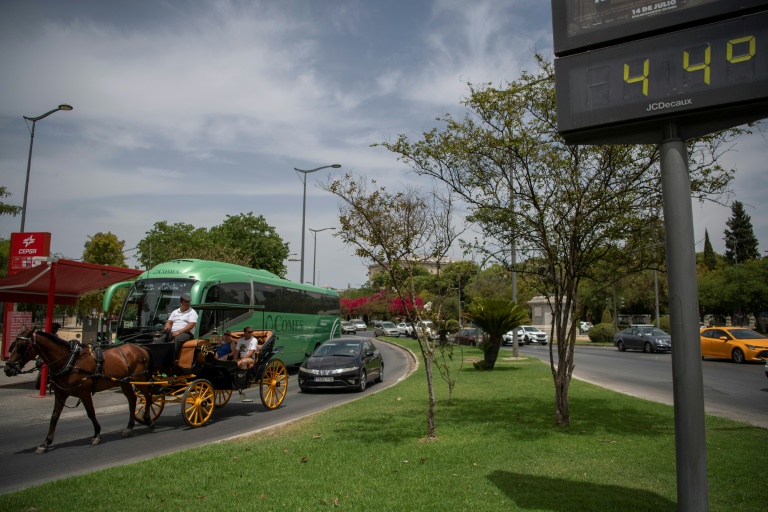
Firefighters battled wildfires in Spain and Portugal Tuesday as Western Europe faced its second heatwave in weeks which threatened glaciers in the Alps and worsened drought conditions.

The mass of hot air which have pushed temperatures above 40 degrees Celsius (104 Fahrenheit) in large parts of the Iberian Peninsula since Sunday is set to spread to the north and east within days.

“We do expect it to worsen,” World Meteorological Organization spokeswoman Clare Nullis told a briefing in Geneva on Tuesday.

“Accompanying this heat is drought. We’ve got very, very dry soils,” she said.

“The glaciers in the Alps are really being punished at the moment. It’s been a very bad season for the glaciers. And we’re still relatively early in the summer.”

Last week an avalanche triggered by the collapse of the largest glacier in the Italian Alps amid unusually warm temperatures killed 11 people.

Heatwaves have become more frequent due to climate change, scientists say. As global temperatures rise over time, heatwaves are expected to become more intense.

The previous heatwave to blight France, Portugal and Spain occurred in mid-June.

In Spain, some 300 firefighters backed by 17 planes and helicopters were battling a wildfire in the eastern region of Extremadura which has ravaged 2,500 hectares (6,180 acres), local officials said.

The blaze, which began on Monday due to a lightening strike, “will probably last several days”, the head of the regional government of Extremadura, Guillermo Fernandez Vara, told reporters.

– ‘Oppressive’ –

Temperatures are forecast to keep rising in Spain until Thursday, with highs of up to 44C expected in Guadalquivir valley in Seville in the south.

Spain’s health ministry warned the “intense heat” could affect people’s “vital functions” and provoke problems like heat stroke.

It advised people to drink water frequently, wear light clothes and “remain as long as possible” in the shade or in air-conditioned places.

People who work outdoors struggled.

“It’s hard because the temperature is a bit oppressive,” said Miguel Angel Nunez, a 54-year-old bricklayer at a construction site in central Madrid.

In neighbouring Portugal, firefighters were battling a blaze which has ravaged some 2,000 hectares of land in the central municipality of Ourem since Thursday. 

The blaze was brought under control on Monday but flared up again on Tuesday.

With temperatures set to surpass 40C on Tuesday in much of the country, Portuguese Prime Minster Antonio Costa urged “a maximum of caution”.

– ‘Affects people’s health’ –

“We have experienced situations like this in the past and we will certainly experience them in the future,” he added.

The government has issued a “situation of alert” for wildfires for the whole country until at least Friday, raising the readiness levels of firefighters, police and emergency medical services.

The current situation is stirring memories of devastating wildfires in 2017 which claimed the lives of over 100 people in Portugal.

Officials in the town of Sintra near Lisbon closed a series of tourist attractions such as palaces and monuments in a verdant mountain range popular with visitors as a precaution.

In France, temperatures could spike to 39C in some areas on Tuesday, the national weather service Meteo France predicted.

Prime Minister Elisabeth Borne urged all government ministers to be ready to deal with the consequences of the heatwave which is forecast to last for up to 10 days.

“The heat affects people’s health very quickly, especially that of the most vulnerable,” her office said in a statement.

Britain issued an extreme heat warning, with temperatures forecast to hit 35C in the southeast of the country in the coming days.

The extreme heat warning was classified as “amber”, the second-highest alert level, indicating a “high impact” on daily life and people.

Western Europe wilts under second heatwave in weeks

Firefighters battled wildfires in Spain and Portugal Tuesday as Western Europe faced its second heatwave in weeks which threatened glaciers in the Alps and worsened drought conditions.

The mass of hot air which have pushed temperatures above 40 degrees Celsius (104 Fahrenheit) in large parts of the Iberian Peninsula since Sunday is set to spread to the north and east within days.

“We do expect it to worsen,” World Meteorological Organization spokeswoman Clare Nullis told a briefing in Geneva on Tuesday.

“Accompanying this heat is drought. We’ve got very, very dry soils,” she said.

“The glaciers in the Alps are really being punished at the moment. It’s been a very bad season for the glaciers. And we’re still relatively early in the summer.”

Last week an avalanche triggered by the collapse of the largest glacier in the Italian Alps amid unusually warm temperatures killed 11 people.

Heatwaves have become more frequent due to climate change, scientists say. As global temperatures rise over time, heatwaves are expected to become more intense.

The previous heatwave to blight France, Portugal and Spain occurred in mid-June.

In Spain, some 300 firefighters backed by 17 planes and helicopters were battling a wildfire in the eastern region of Extremadura which has ravaged 2,500 hectares (6,180 acres), local officials said.

The blaze, which began on Monday due to a lightening strike, “will probably last several days”, the head of the regional government of Extremadura, Guillermo Fernandez Vara, told reporters.

– ‘Oppressive’ –

Temperatures are forecast to keep rising in Spain until Thursday, with highs of up to 44C expected in Guadalquivir valley in Seville in the south.

Spain’s health ministry warned the “intense heat” could affect people’s “vital functions” and provoke problems like heat stroke.

It advised people to drink water frequently, wear light clothes and “remain as long as possible” in the shade or in air-conditioned places.

People who work outdoors struggled.

“It’s hard because the temperature is a bit oppressive,” said Miguel Angel Nunez, a 54-year-old bricklayer at a construction site in central Madrid.

In neighbouring Portugal, firefighters were battling a blaze which has ravaged some 2,000 hectares of land in the central municipality of Ourem since Thursday. 

The blaze was brought under control on Monday but flared up again on Tuesday.

With temperatures set to surpass 40C on Tuesday in much of the country, Portuguese Prime Minster Antonio Costa urged “a maximum of caution”.

– ‘Affects people’s health’ –

“We have experienced situations like this in the past and we will certainly experience them in the future,” he added.

The government has issued a “situation of alert” for wildfires for the whole country until at least Friday, raising the readiness levels of firefighters, police and emergency medical services.

The current situation is stirring memories of devastating wildfires in 2017 which claimed the lives of over 100 people in Portugal.

Officials in the town of Sintra near Lisbon closed a series of tourist attractions such as palaces and monuments in a verdant mountain range popular with visitors as a precaution.

In France, temperatures could spike to 39C in some areas on Tuesday, the national weather service Meteo France predicted.

Prime Minister Elisabeth Borne urged all government ministers to be ready to deal with the consequences of the heatwave which is forecast to last for up to 10 days.

“The heat affects people’s health very quickly, especially that of the most vulnerable,” her office said in a statement.

Britain issued an extreme heat warning, with temperatures forecast to hit 35C in the southeast of the country in the coming days.

The extreme heat warning was classified as “amber”, the second-highest alert level, indicating a “high impact” on daily life and people.

Russia seeks Iran drones after losses in Ukraine: White House

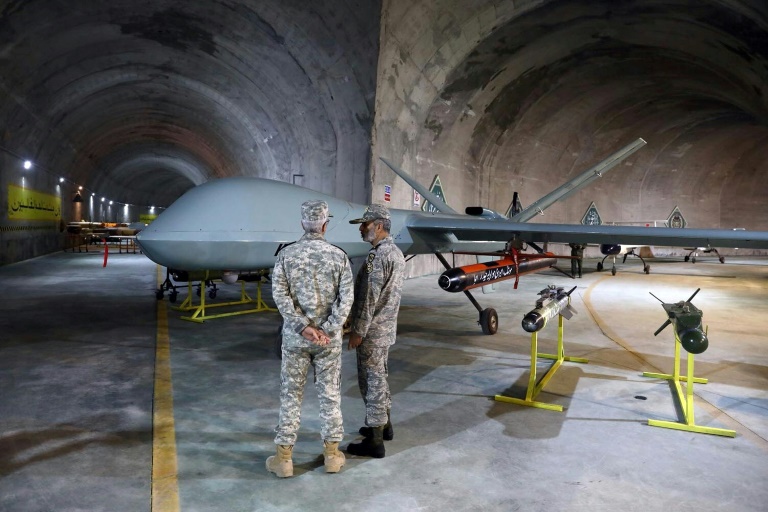
A senior US official said Tuesday that Russia’s plan to acquire hundreds of combat drones from Iran shows its urgent need to reinforce due to heavy losses four months after invading Ukraine.

John Kirby, a spokesman for the national security council, said the deal, revealed by the White House on Monday, also shows Iran’s willingness to support Moscow’s war on Ukraine.

But he said supply the drones would not necessarily affect US ongoing attempts to negotiate a return to the 2015 six-party deal to prevent Tehran from developing nuclear weapons.

“We continue to want to see a nuclear deal that takes Iran’s  nuclear ambitions, at least its nuclear weapons ambitions, off the table,” Kirby said.

On Monday the White House revealed intelligence that Russia and Iran are moving quickly on a drone supply pact, which comes as Russia forces face stiff Ukrainian resistance in their push to consolidate control of eastern and southern Ukraine.

“The Iranian government is preparing to provide Russia with up to several hundred UAVs (unmanned aerial vehicles), including weapons-capable UAVs, on an expedited timeline,” White House National Security Advisor Jake Sullivan told reporters.

“Our information further indicates that Iran is preparing to train Russian forces to use these UAVs, with initial training sessions slated to begin as soon as early July,” he said.

– Divulging intelligence –

Kirby told CNN that the drones can be both for reconnaissance and to deliver munitions, and explained why the information was divulged.

“It was important to make it clear to  the world that we know that Russia needs these additional capabilities,” he said. “They are expanding their resources at an accelerated rate.”

Russian forces have incurred heavy losses in recent weeks, especially to ammunition depots and command posts, after the United States and allies began providing longer-range precision weapons to Ukrainian force, like the Himars precision-guided missiles.

That could stall the Russian military’s ability to advance, and could enhance the capacity of Ukraine forces to push them back.

Iran responded on Tuesday by saying that “no special development” had taken place in technological cooperation with Russia following the invasion of Ukraine in February.

Without specifically mentioning drones, Iran’s foreign ministry spokesman Nasser Kanani said cooperation with Russia “in the field of some modern technologies predates the war in Ukraine, and there has been no special development in that regard recently.”

Tehran’s position regarding the war “is quite clear and has been officially announced many times,” he added.

Iran has maintained that it is against the war in Ukraine and called for a political solution, while blaming the roots of the crisis on the United States and NATO’s expansion.

“The claim of the American official (Sullivan) comes as the US and the Europeans have for years turned the occupying and aggressor countries, including in the West Asia region, into a storehouse of their various deadly weapons,” Kanani added.

Sullivan said it was not clear whether Iran had delivered any of the drones to Russia yet.

He noted that Iran’s drones have been used by the Huthi rebels in Yemen to attack Saudi Arabia.

– Drones play key role –

Drones have played a crucial role on both sides of the war in Ukraine, for everything from firing missiles from a distance, to dropping small bombs on targets, to conducting reconnaissance.

Ukraine’s forces have had particular success in using Turkish-made Bayraktar armed combat UAVs, and the United States and other allies have supplied Kyiv with many types of smaller drones.

“We have already provided hundreds of UAVs to Ukraine. We are in constant conversation with them about their needs,” Kirby said.

Kirby stressed that the conflict could not be simplified as a “drone versus drone war.”

“It depends on what these UAVs are used for,” he said. “It  is not just about one capability.  It really is all the capabilities taken in sum,” he added, mentioning the Himars systems.

Close Bitnami banner
Bitnami