World

Ecuadoran Indigenous protester dies in anti-government demos

An Indigenous protester died Tuesday in clashes with law enforcement during a ninth day of demonstrations against the Ecuadorian government that the military has described as a “grave threat.”

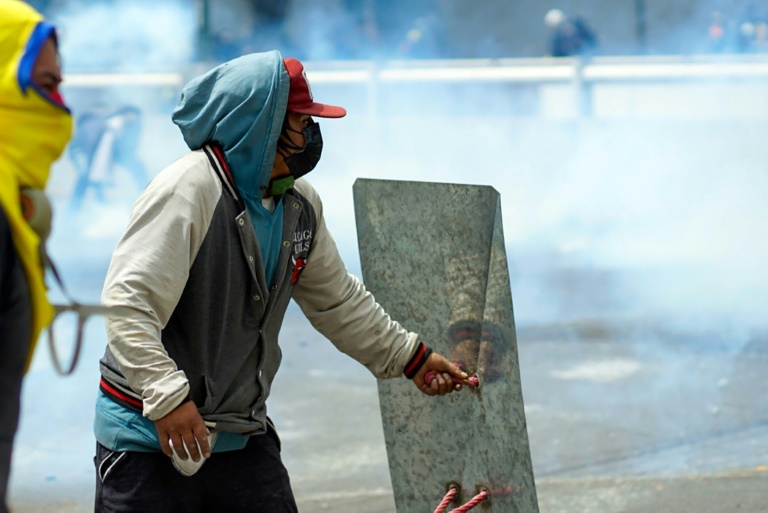
An estimated 10,000 Indigenous people, many of whom traveled to Quito on foot or on the backs of trucks, took to the streets of the capital wielding sticks, fireworks and shields made from road signs, angry at fuel prices and President Guillermo Lasso’s conservative government.

The biggest clashes were concentrated in the north of the capital Quito, a city of more than two million, where officers, including some on motorcycles and horseback, attempted to disperse the crowds using anti-riot vehicles equipped with tear gas and water cannons.

The city’s cultural centre, a building surrounded by mirrors that has been a traditional meeting point for Indigenous people, was taken over by law enforcement on Sunday as they tried to control the crowds.

“Today’s objective is to retake the Casa de la Cultura,” protester Wilson Mazabanda told AFP before police used pepper spray to break up the group.

Several hours south of Quito, in the Amazon town of Puyo, a member of the Quichua Indigenous group was killed while participating in a roadblock when he was “hit in the face, apparently with a tear gas bomb” during a confrontation with law enforcement, lawyer Lina Maria Espinosa of the Alliance for Human Rights organization told AFP.

Police, however, said “it was presumed that the person died as a result of handling an explosive device.”

His death followed that of a young man who earlier this week fell into a ravine in a town on the outskirts of Quito where protests were taking place. The prosecutor’s office has opened a homicide investigation into the incident, which police have declared an accident.

Amid the violence, President Lasso agreed to participate “for the good of the country” in a “frank and respectful dialogue process” with the powerful Confederation of Indigenous Nationalities of Ecuador (Conaie), which called the protests.

Its leader, Leonidas Iza, however, conditioned any talks on a repeal of the state of emergency that had been called in six of Ecuador’s 24 provinces, allowing the military to mobilize. 

In a statement broadcast on social media, the Indigenous leader said the government’s response to the protests “has only managed to exacerbate the spirit of the population and generate serious escalations of conflict.”

The Alliance for Human Rights reported that at least 90 people have been injured and 87 detained since the start of the protests on June 13.

The police, for their part, have reported 101 uniformed personnel including soldiers injured, another 27 held by protesters and 80 protesters arrested.

Earlier in the day, Defense Minister Luis Lara said Ecuador’s democracy “faces a grave threat from… people who are preventing the free movement of the majority of Ecuadorans” with widespread blockades.

Flanked by the heads of the army, navy and air force, Lara warned the military “will not allow attempts to break the constitutional order or any action against democracy and the laws of the republic.”

Quito Mayor Santiago Guarderas said on Twitter the demonstrations “continue to escalate” and that the capital’s markets were running out of supplies.

– ‘Tired of this government’ –

Conaie — credited with helping topple three presidents between 1997 and 2005 — called for the demonstrations as Ecuadorans increasingly struggle to make ends meet.

Indigenous people comprise more than a million of Ecuador’s 17.7 million inhabitants and wield much political clout, but are disproportionately affected by rising inflation, unemployment and poverty exacerbated by the coronavirus pandemic.

“We are already tired of this government,” Mazabanda, a university student, said of ex-banker Lasso’s one-year-old term.

Tito Zamora, a small-scale farmer, added that costs have risen sharply, “but not the price we get for our products.”

Fuel prices have risen steeply since 2020, almost doubling for diesel from $1 to $1.90 per gallon and rising from $1.75 to $2.55 for gasoline.

Conaie is demanding a price cut to $1.50 a gallon for diesel and $2.10 for gasoline.

It also wants jobs and food price controls.

The movement has been joined by students, workers and other Ecuadorans feeling the economic pinch.

Ecuador is losing about $50 million a day as a result of the protests, without counting oil production — the country’s main export product.

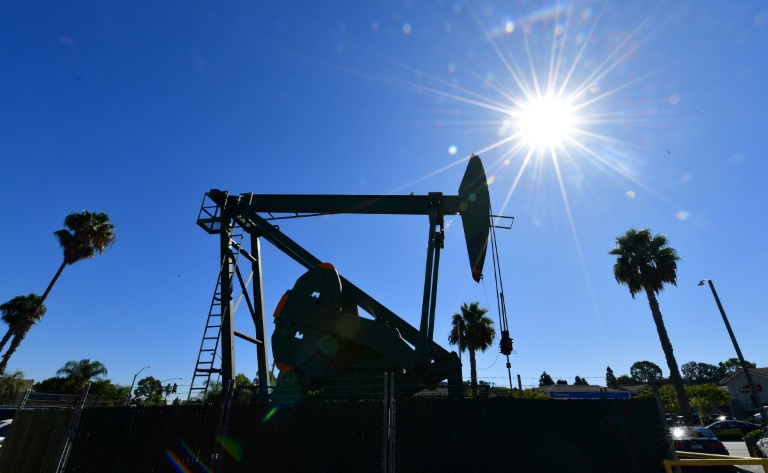
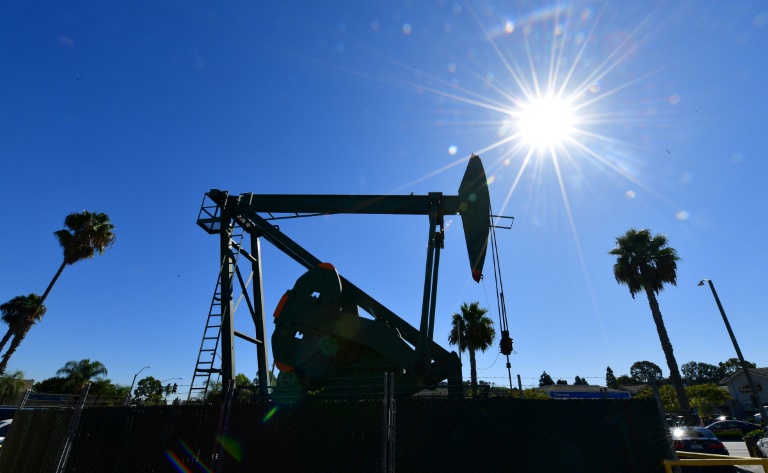
The CEO of state-owned Petroecuador, Italo Cedeno, said Tuesday output had dropped by about 100,000 barrels a day during the protests, in part because demonstrators have targeted both oil wells and power plants.

In 2019, Conaie-led protests left 11 people dead and more than 1,000 injured but forced then-president Lenin Moreno to abandon plans to eliminate fuel subsidies.
Stocks, oil dive as recession fears return after brief market respite

Equities and oil prices tumbled Wednesday after a brief respite from last week’s painful rout across world markets, with recession fears continuing to build as central banks hike interest rates to combat decades-high inflation.

While Asia, Wall Street and Europe all enjoyed healthy gains on Tuesday, analysts warned the downbeat mood on trading floors means the selling is unlikely to end any time soon.

Federal Reserve boss Jerome Powell’s two-day testimony to Congress this week will be pored over for an idea about officials’ plans for fighting runaway prices, which are being fanned by supply chain snarls, China’s lockdowns and the war in Ukraine.

Most observers expect them to hike rates by three-quarters of a point several more times this year, having announced such a move in June — the sharpest lift in almost 30 years.

However, while many believe the Fed’s front-loaded tightening drive is needed — allowing it to begin cutting sooner as price rises settle back — there is a building consensus that the world’s top economy is heading for a contraction next year.

“The Fed has entered into a policy cocktail that we would describe as hammer time,” Gene Tannuzzo, at Columbia Threadneedle Investments, told Bloomberg Television.

“You have to be planning defensively at this point. There are a lot of questions on all risk assets.”

In Asian trade, Hong Kong, Tokyo, Shanghai, Sydney, Singapore, Seoul, Manila, Taipei, Jakarta and Bangkok were all deep in the red.

London followed suit, dropping more than one percent after official data showed UK inflation had reached a fresh 40-year high.

– Crude prices hammered –

Stephen Innes at SPI Asset Management said that while the selling from last week had abated, traders continued to fret over a recession and the prospect of more rate hikes, adding that the Fed could be more compelled to respond if oil prices surge again and push up inflation further.

“One cause of the market malaise could be the thought of business confidence catching down to consumer confidence; hence the risk in equities is for an earnings downgrade,” he wrote in a note.

“We could see that play out in the context of weaker University of Michigan sentiment on Friday, which could lead investors to conclude US consumers will start tightening their purse strings.

“Indeed, an extremely powerful equity market sell signal.”

Oil prices were feeling the heat from recessionary fears, with both main contracts tanking Wednesday on demand worries caused by any recession, despite China’s reopening moves, the US holiday driving season and tight supplies. 

Still, Goldman Sachs said that with demand still outpacing supplies, the market remains tight.

“Investors should remember that Fed-induced slowdowns are simply a short-term abatement of the symptom, inflation, and not a cure for the problem, underinvestment,” it added.

Bets on the Fed’s rate hikes and the Bank of Japan’s refusal to move from its policy of ultra-low rates continue to pile pressure on the yen, which is sitting at a 24-year low above 136.50 to the dollar.

Japanese Prime Minister Fumio Kishida’s comment that it “is up to the central bank” how to maintain its easy money policy added to pressure on the country’s currency, though famed economist Nouriel Roubini said he expects Tokyo to take action if the yen hits 140.

“If you go well above 140, the BoJ will have to change policy and the first change in policy is going to be yield curve control,” he said referring to a policy of keeping long-term rates artificially at a chosen level.

“So I think another 10 percent fall in the yen will imply a change in policy,” he told Bloomberg Television at the Qatar Economic Forum.

– Key figures at around 0720 GMT –

Tokyo – Nikkei 225: DOWN 0.4 at 26,149.55 (close)

Hong Kong – Hang Seng Index: DOWN 2.4 percent at 21,040.37

Shanghai – Composite: DOWN 1.2 percent at 3,267.20 (close)

London – FTSE 100: DOWN 1.3 percent at 7,057.87

West Texas Intermediate: DOWN 5.1 percent at $103.92 per barrel

Brent North Sea crude: DOWN 5.6 percent at $108.62 per barrel

Euro/dollar: DOWN at $1.04.86 from $1.0535 late Tuesday

Pound/dollar: DOWN at $1.2218 from $1.2273

Euro/pound: UP at 85.81 pence from 85.80 pence

Dollar/yen: DOWN at 136.54 yen from 136.64 yen

New York – Dow: UP 2.2 percent at 30,530.25 (close)

Stocks, oil dive as recession fears return after brief market respite

Equities and oil prices tumbled Wednesday after a brief respite from last week’s painful rout across world markets, with recession fears continuing to build as central banks hike interest rates to combat decades-high inflation.

While Asia, Wall Street and Europe all enjoyed healthy gains on Tuesday, analysts warned the downbeat mood on trading floors means the selling is unlikely to end any time soon.

Federal Reserve boss Jerome Powell’s two-day testimony to Congress this week will be pored over for an idea about officials’ plans for fighting runaway prices, which are being fanned by supply chain snarls, China’s lockdowns and the war in Ukraine.

Most observers expect them to hike rates by three-quarters of a point several more times this year, having announced such a move in June — the sharpest lift in almost 30 years.

However, while many believe the Fed’s front-loaded tightening drive is needed — allowing it to begin cutting sooner as price rises settle back — there is a building consensus that the world’s top economy is heading for a contraction next year.

“The Fed has entered into a policy cocktail that we would describe as hammer time,” Gene Tannuzzo, at Columbia Threadneedle Investments, told Bloomberg Television.

“You have to be planning defensively at this point. There are a lot of questions on all risk assets.”

In Asian trade, Hong Kong, Tokyo, Shanghai, Sydney, Singapore, Seoul, Manila, Taipei, Jakarta and Bangkok were all deep in the red.

London followed suit, dropping more than one percent after official data showed UK inflation had reached a fresh 40-year high.

– Crude prices hammered –

Stephen Innes at SPI Asset Management said that while the selling from last week had abated, traders continued to fret over a recession and the prospect of more rate hikes, adding that the Fed could be more compelled to respond if oil prices surge again and push up inflation further.

“One cause of the market malaise could be the thought of business confidence catching down to consumer confidence; hence the risk in equities is for an earnings downgrade,” he wrote in a note.

“We could see that play out in the context of weaker University of Michigan sentiment on Friday, which could lead investors to conclude US consumers will start tightening their purse strings.

“Indeed, an extremely powerful equity market sell signal.”

Oil prices were feeling the heat from recessionary fears, with both main contracts tanking Wednesday on demand worries caused by any recession, despite China’s reopening moves, the US holiday driving season and tight supplies. 

Still, Goldman Sachs said that with demand still outpacing supplies, the market remains tight.

“Investors should remember that Fed-induced slowdowns are simply a short-term abatement of the symptom, inflation, and not a cure for the problem, underinvestment,” it added.

Bets on the Fed’s rate hikes and the Bank of Japan’s refusal to move from its policy of ultra-low rates continue to pile pressure on the yen, which is sitting at a 24-year low above 136.50 to the dollar.

Japanese Prime Minister Fumio Kishida’s comment that it “is up to the central bank” how to maintain its easy money policy added to pressure on the country’s currency, though famed economist Nouriel Roubini said he expects Tokyo to take action if the yen hits 140.

“If you go well above 140, the BoJ will have to change policy and the first change in policy is going to be yield curve control,” he said referring to a policy of keeping long-term rates artificially at a chosen level.

“So I think another 10 percent fall in the yen will imply a change in policy,” he told Bloomberg Television at the Qatar Economic Forum.

– Key figures at around 0720 GMT –

Tokyo – Nikkei 225: DOWN 0.4 at 26,149.55 (close)

Hong Kong – Hang Seng Index: DOWN 2.4 percent at 21,040.37

Shanghai – Composite: DOWN 1.2 percent at 3,267.20 (close)

London – FTSE 100: DOWN 1.3 percent at 7,057.87

West Texas Intermediate: DOWN 5.1 percent at $103.92 per barrel

Brent North Sea crude: DOWN 5.6 percent at $108.62 per barrel

Euro/dollar: DOWN at $1.04.86 from $1.0535 late Tuesday

Pound/dollar: DOWN at $1.2218 from $1.2273

Euro/pound: UP at 85.81 pence from 85.80 pence

Dollar/yen: DOWN at 136.54 yen from 136.64 yen

New York – Dow: UP 2.2 percent at 30,530.25 (close)

UK inflation hits fresh 40-year high

British annual inflation has hit a fresh 40-year high, official data showed Wednesday, further eroding workers’ wages and pressuring the Bank of England to keep on raising interest rates.

The rate edged higher to 9.1 percent in May from 9.0 percent in April, remaining at the highest level since 1982, the Office for National Statistics (ONS) said in a statement.

UK inflation is set to top 11 percent before the end of the year according to the Bank of England, fuelled by soaring energy prices that have raised the prospect of a global recession.

UK inflation increased in May on “continued steep food price rises and record high petrol prices”, said ONS chief economist Grant Fitzner.

This was offset by clothing costs rising by less than a year earlier and a drop in prices of computer games, he added.

Decades-high inflation is causing a cost-of-living crisis.

Britain’s railway workers are this week staging the sector’s biggest strike action in more than 30 years, as soaring prices erode the value of wages.

– ‘Severe pressure’ –

“The further increase in Consumer Prices Index inflation to 9.1 percent underscores the severe pressure that businesses and households are under,” said David Bharier, head of research at the British Chambers of Commerce.  

“This inflationary surge sits alongside a poor economic outlook and unless the government acts with urgency to encourage businesses to invest, the chances of a recession will only increase.”

Countries around the world are being hit by soaring inflation as the Ukraine war and the easing of Covid restrictions fuel energy and food price hikes.

That has forced central banks to hike interest rates, risking the prospect of recession as higher borrowing costs hit investment and consumers further in the pocket.

The Bank of England has raised its key interest rate five times since December.

“The modest rise in CPI inflation… won’t prevent the Bank of England from raising interest rates further, but it may encourage it to opt again for a quarter-point rate hike at its next meeting in August rather than upping the ante” with a half-point rise, predicted Paul Dales, chief UK economist at Capital Economics.

It comes as Britain faces strikes across other sectors. Lawyers in England and Wales having voted to walk out from next week in a row over legal aid funding.

Teaching staff, workers in the state-run National Health Service and the postal service are also mulling strike action.

Sri Lanka bets on casino magnate to revive wrecked economy

Sri Lankan casino magnate Dhammika Perera entered parliament on Wednesday with a mandate to revive the bankrupt island nation’s wrecked economy — working alongside a premier who once accused him of corruption.

The 54-year-old Perera is a long-time loyalist of the powerful Rajapaksa clan, whom protesters have accused of mismanaging the country into its current predicament.

He replaces President Gotabaya Rajapaksa’s youngest brother, Basil, who resigned from parliament this month after stepping down as finance minister in April.

“He was nominated by the president and will shortly take over the investment promotion portfolio and enter the cabinet,” a ruling party official told AFP. 

Perera will serve in a unity government formed to tackle the crisis alongside Prime Minister Ranil Wickremesinghe, who in 2015 accused the casino boss of being a “demon who protected the corrupt regime of Rajapaksas”.

Wickremesinghe has also described Perera as one of four most corrupt businessmen in the country.

Both men shook hands on Wednesday soon after Perera was sworn into parliament before the chamber’s speaker. 

Perera — who also has interests in banking, hotels, manufacturing, logistics and exports — takes office at a time when Sri Lanka is suffering through months-long shortages of food, fuel and other essential goods. 

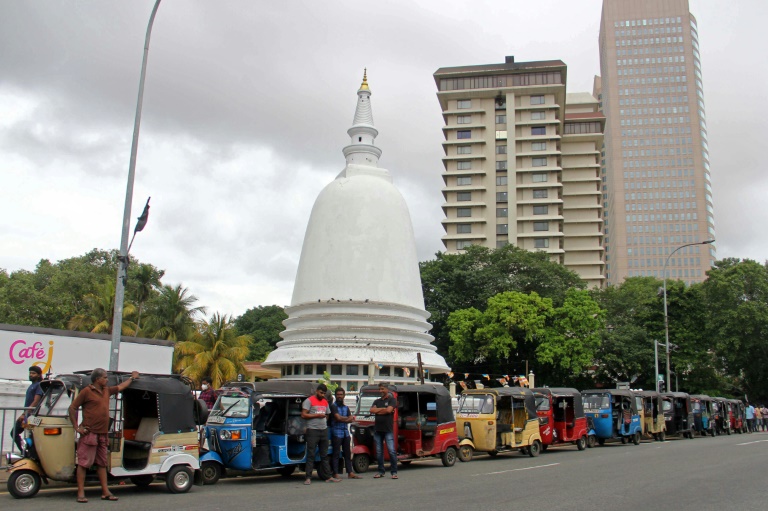
Long queues form outside gas stations each day for scarce petrol supplies, while regular blackouts and runaway inflation have made life difficult for the island nation’s 22 million people.

The government has defaulted on its $51 billion foreign debt and is seeking an International Monetary Fund bailout. 

Perera has claimed to have devised a plan to raise Sri Lanka’s per capita income more than threefold to $12,000 — a figure higher than China’s.

He has also pledged to address Sri Lanka’s critical foreign currency shortage by selling 10-year visas to foreigners willing to deposit at least $100,000 in local bank accounts — a scheme already in place since April. 

France's eye in the sky: Tracking Russian vessels in the Baltic

The cluster of dots on the Atlantique 2’s screens may seem like a confusing mess to the untrained eye, but not to the crew of the French naval surveillance aircraft tasked with telling friend from foe in the Baltic Sea.

“Another tarantula,” says an operator as the Russian corvette of the Tarantul class becomes visible, travelling in a pack with other Russian vessels as several nearby NATO ships also criss-cross the placid northeastern European sea.

“It’s busy down there,” the soldier observes.

France’s Atlantique 2 aircraft, in service since the 1980s to detect surface vessels and submarines, has been dispatched to track Russian and Russia-friendly ships, a task that became key after President Vladimir Putin’s invasion of Ukraine.


– ‘Rapidly distinguish’ –


The patrol aircraft took off from Brittany, western France, early in the morning and stopped over in Germany before heading north to scour much of the Baltic, now a strategic focal point for Western and Russian forces.

Once the aircraft passes the island of Ruegen — where work for the Nord Stream 2 gas pipeline between Russia and Germany was abruptly frozen — the eyes of the 14-strong crew (12 men and two women) become focused.

The plane’s most senior officer Lieutenant Commander Guillaume — who according to French military tradition gives only his first name — gives the order for the radar’s protective shell to emerge from the plane’s hull. 

The equipment may look old-fashioned, but it is full of state-of-the-art technology.

The sea is calm and the weather clear, but frantic action is visible in a zone, some 50 kilometres (30 miles) wide, between the Swedish and Polish coastlines.

“We have to be able to rapidly distinguish between friendly, neutral and suspicious vessels so our forces can find the best navigation path,” said Guillaume.

French forces have orders to avoid flying too close to some coastal waters and Russian ships to avert any escalation, or entering potential danger zones where Baltic rim countries may have flagged military activities.


– ‘A strange crane’ –


The flurry of activity coincides with the end of the annual NATO military exercise BALTOPS, which the Russians responded to with manoeuvres of their own. 

Both undertakings demonstrate a determination on both sides not to give up any areas, even if it means sending huge numbers of warships into the Baltic where they co-exist with countless merchant ships and pleasure boats.

A well-rehearsed procedure kicks off. Radar operator Chief Petty Officer Maxime watches the signals, known as “tracks”.

Next to Maxime sits Lieutenant Alain, the tactical coordinator also known as “Tacco”, who picks the tracks he believes require more detailed observation, such as traces from ships who fail to activate their automatic identification system (AIS), which is mandatory for civilian vessels.

Alain shares his observations with Chief Petty Officer Christopher, to his right, who operates the Wescam camera placed at the bottom of the aircraft and that yields a detailed picture of targets even tens of kilometres away.

Finally Christopher and Petty Officers Roxane and Nicolas frantically check various databases hoping to properly identify the ship.

“It has a strange crane near the bow,” says Christopher as he zooms in on a ship that has attracted their attention despite looking civilian at first glance.

“In fact, it’s a Moma class,” responds Roxane, confirming that the vessel is a Russian water survey ship suspected of gathering intelligence. It promptly gets an AXRU label on the situation screen, an acronym for Russian auxiliary vessel.

There’s no shortage of acronyms: DDG UK, PBF LT, MLE FI and FFL SE designate British, Lithuanian, Finnish and Swedish vessels.


– ‘Quite crowded’ –


Russians are marked in red, such as the Tarantul or Parchim-class corvettes identified on this flight.

As soon as the Atlantique 2 flies over a quieter stretch, the Tacco hands his notes to Chief Petty Officer Romain. 

The latter is in charge of electronic warfare and transmissions and sends the plane’s observations via a dedicated chat system to French and NATO command centres. A full report can wait until their return.

“This small space has gotten quite crowded, which shows how interested everybody is in everybody else,” says Lieutenant Henri over the plane’s noise.

The Baltic is where Russia’s attack on February 24 has prompted rapid geopolitical change. 

Sweden and Finland have applied to join NATO which, if successful, will isolate Russia even more in the Baltic which Moscow needs for access to the world’s oceans.

“The Baltic will in effect become a NATO lake,” said Robert Dalsjo at the Swedish Defence Research Agency FOI.

Sweden’s membership in particular would remove a factor of uncertainty, he told AFP, “because the Baltic countries couldn’t be sure about how Sweden would act in a crisis”.

The plane changes direction to fly close to the forbidden Kaliningrad zone to catch a glimpse of the military activity in the highly militarised enclave, then heads north.

Once it reaches the latitude of Riga, the plane makes a U-turn and checks on the Russian ships in the southern zone one last time before heading home.

The day’s work? Nearly 7,000 kilometres of flight and around a dozen Russian vessels identified including, to the crew’s delight, the stunning sail training vessel Sedov, the world’s largest sailing ship still in operation.

France's eye in the sky: Tracking Russian vessels in the Baltic

The cluster of dots on the Atlantique 2’s screens may seem like a confusing mess to the untrained eye, but not to the crew of the French naval surveillance aircraft tasked with telling friend from foe in the Baltic Sea.

“Another tarantula,” says an operator as the Russian corvette of the Tarantul class becomes visible, travelling in a pack with other Russian vessels as several nearby NATO ships also criss-cross the placid northeastern European sea.

“It’s busy down there,” the soldier observes.

France’s Atlantique 2 aircraft, in service since the 1980s to detect surface vessels and submarines, has been dispatched to track Russian and Russia-friendly ships, a task that became key after President Vladimir Putin’s invasion of Ukraine.


– ‘Rapidly distinguish’ –


The patrol aircraft took off from Brittany, western France, early in the morning and stopped over in Germany before heading north to scour much of the Baltic, now a strategic focal point for Western and Russian forces.

Once the aircraft passes the island of Ruegen — where work for the Nord Stream 2 gas pipeline between Russia and Germany was abruptly frozen — the eyes of the 14-strong crew (12 men and two women) become focused.

The plane’s most senior officer Lieutenant Commander Guillaume — who according to French military tradition gives only his first name — gives the order for the radar’s protective shell to emerge from the plane’s hull. 

The equipment may look old-fashioned, but it is full of state-of-the-art technology.

The sea is calm and the weather clear, but frantic action is visible in a zone, some 50 kilometres (30 miles) wide, between the Swedish and Polish coastlines.

“We have to be able to rapidly distinguish between friendly, neutral and suspicious vessels so our forces can find the best navigation path,” said Guillaume.

French forces have orders to avoid flying too close to some coastal waters and Russian ships to avert any escalation, or entering potential danger zones where Baltic rim countries may have flagged military activities.


– ‘A strange crane’ –


The flurry of activity coincides with the end of the annual NATO military exercise BALTOPS, which the Russians responded to with manoeuvres of their own. 

Both undertakings demonstrate a determination on both sides not to give up any areas, even if it means sending huge numbers of warships into the Baltic where they co-exist with countless merchant ships and pleasure boats.

A well-rehearsed procedure kicks off. Radar operator Chief Petty Officer Maxime watches the signals, known as “tracks”.

Next to Maxime sits Lieutenant Alain, the tactical coordinator also known as “Tacco”, who picks the tracks he believes require more detailed observation, such as traces from ships who fail to activate their automatic identification system (AIS), which is mandatory for civilian vessels.

Alain shares his observations with Chief Petty Officer Christopher, to his right, who operates the Wescam camera placed at the bottom of the aircraft and that yields a detailed picture of targets even tens of kilometres away.

Finally Christopher and Petty Officers Roxane and Nicolas frantically check various databases hoping to properly identify the ship.

“It has a strange crane near the bow,” says Christopher as he zooms in on a ship that has attracted their attention despite looking civilian at first glance.

“In fact, it’s a Moma class,” responds Roxane, confirming that the vessel is a Russian water survey ship suspected of gathering intelligence. It promptly gets an AXRU label on the situation screen, an acronym for Russian auxiliary vessel.

There’s no shortage of acronyms: DDG UK, PBF LT, MLE FI and FFL SE designate British, Lithuanian, Finnish and Swedish vessels.


– ‘Quite crowded’ –


Russians are marked in red, such as the Tarantul or Parchim-class corvettes identified on this flight.

As soon as the Atlantique 2 flies over a quieter stretch, the Tacco hands his notes to Chief Petty Officer Romain. 

The latter is in charge of electronic warfare and transmissions and sends the plane’s observations via a dedicated chat system to French and NATO command centres. A full report can wait until their return.

“This small space has gotten quite crowded, which shows how interested everybody is in everybody else,” says Lieutenant Henri over the plane’s noise.

The Baltic is where Russia’s attack on February 24 has prompted rapid geopolitical change. 

Sweden and Finland have applied to join NATO which, if successful, will isolate Russia even more in the Baltic which Moscow needs for access to the world’s oceans.

“The Baltic will in effect become a NATO lake,” said Robert Dalsjo at the Swedish Defence Research Agency FOI.

Sweden’s membership in particular would remove a factor of uncertainty, he told AFP, “because the Baltic countries couldn’t be sure about how Sweden would act in a crisis”.

The plane changes direction to fly close to the forbidden Kaliningrad zone to catch a glimpse of the military activity in the highly militarised enclave, then heads north.

Once it reaches the latitude of Riga, the plane makes a U-turn and checks on the Russian ships in the southern zone one last time before heading home.

The day’s work? Nearly 7,000 kilometres of flight and around a dozen Russian vessels identified including, to the crew’s delight, the stunning sail training vessel Sedov, the world’s largest sailing ship still in operation.

Warming climate upends Arctic mining town

Tor Selnes owes his life to a lamp. He miraculously survived a fatal avalanche that shed light on the vulnerability of Svalbard, a region warming faster than anywhere else, to human-caused climate change.

On the morning of December 19, 2015, the 54-year-old school monitor was napping at home in Longyearbyen, the main town in the Norwegian archipelago halfway between mainland Norway and the North Pole.

Suddenly, a mass of snow hurtled down from Sukkertoppen, the mountain overlooking the town, taking with it two rows of houses.

Selnes’ home was swept away 80 metres (263 feet). The room where he was sleeping was completely demolished amid “a scraping sound like metal against a road”.

To avoid being buried under the snow, he grabbed onto a ceiling lamp. 

“It’s like I was in a washing machine, surrounded by planks, glass, sharp objects, everything you can imagine”, recalls Selnes.

He survived, suffering just scrapes and bruises. His three children, who were in another part of the house, were unhurt.

But two neighbours — Atle, with whom he played poker the night before, and Nikoline, a two-year-old girl — lost their lives.

The accident, which had been unthinkable in locals’ eyes, sent shockwaves through the small community of under 2,500 people.

“There’s been a lot of talk of climate change ever since I came… but it was kind of difficult to take in or to see,” author and journalist Line Nagell Ylvisaker, who has lived in Longyearbyen since 2005, tells AFP.

“When we live here every day, it’s like seeing a child grow — you don’t see the glaciers retreat,” she says.

– Eye-opener –

In Svalbard, climate change has meant shorter winters; temperatures that yo-yo; more frequent precipitation, increasingly in the form of rain; and thawing permafrost — all conditions that increase the risk of avalanches and landslides.

In the days after the tragedy, unseasonal rains drenched the town. The following autumn, the region saw record rainfalls, and then a new avalanche swept away another house in 2017, this time with no victims.

“Before there was a lot of talk about polar bears, about new species, about what would happen to the nature around us” with climate change, Ylvisaker explains, adding: “The polar bear floating on an ice sheet is kind of the big symbol”.

The string of extreme weather incidents “was really an eye-opener of how this will affect us humans as well”.

After the two avalanches, authorities condemned 144 homes they considered at risk, or around 10 percent of the town’s homes, and installed a massive, granite anti-avalanche barrier at the foot of Sukkertoppen.

It is an ironic turnaround for Longyearbyen, which owes its existence to fossil fuels.

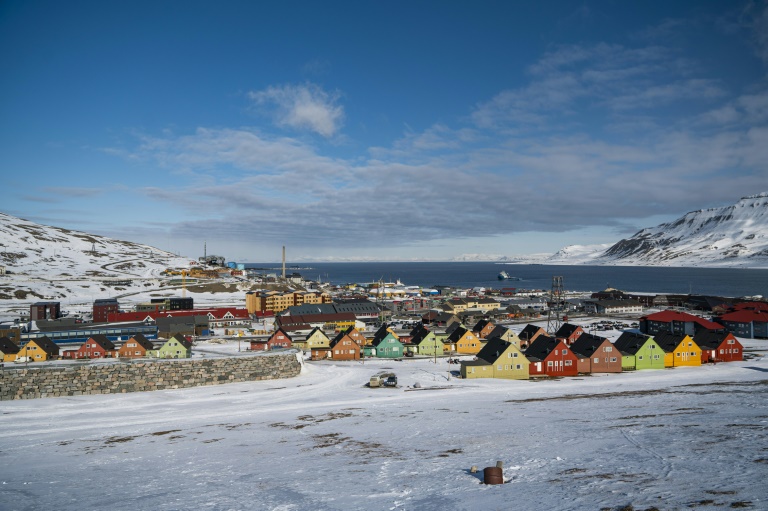
The town was founded in 1906 by US businessman John Munro Longyear, who came to extract coal. It grew up around the mines in a jumble of brightly coloured wooden houses.

Almost all the mines are now closed, the last one due to shutter next year. An enormous sci-fi-like hangar of trolleys towers over the town, bearing witness to its past as a mining town.

Now it is human-caused climate change that is making its mark on the landscape here.

– Hot spot –

According to Ketil Isaksen, a researcher at the Norwegian Meteorological Institute, the Svalbard region is “the place on Earth where temperatures are rising the most”.

In the northernmost part of the Barents Sea where the archipelago is located, temperatures are rising five to seven times faster than on the planet as a whole, according to a study he co-authored and recently published in scientific journal Nature.

Why? The shrinking sea ice, explain scientists. It normally acts as a layer of insulation preventing the sea from warming the atmosphere in winter and protecting the sea from the sun in summer.

In Longyearbyen, thawing permafrost means the soil is slumping. Lamp posts are tilting and building foundations need to be shored up because the ground is shifting. Gutters, once unnecessary in this cold and dry climate, have started appearing on roofs.

On the edge of town, people used to snowmobile across the now not-so-aptly named Isfjorden (Ice fjord), which hasn’t frozen over since 2004.

Even the famed Global Seed Vault, designed to protect the planet’s bio-diversity from man-made and natural disasters, has had to undergo major renovations after the entrance tunnel bored into a mountainside unexpectedly flooded. 

At the offices of local newspaper Svalbardposten, chief editor Borre Haugli sums up the region’s climate change: “We don’t discuss it. We see it”.  

Egypt calls for 'reality check' in UN climate talks

Egypt hopes to jump-start the action needed to face a warming world when it takes the presidency of major UN climate talks in November, but warns that countries need a “reality check” as progress stalls. 

Presiding over the inflection point when a decades-long United Nations climate process switches from negotiation to “implementation”, Egypt has set a high bar for its leadership of this year’s COP27 climate summit.

But the challenge of maintaining international momentum on climate change has been made even harder as the world faces a catalogue of challenges, with Russia’s invasion of Ukraine and spiralling food, energy and economic crises. 

“Because of the geopolitical situation, climate change is being pushed back,” said Ambassador Mohamed Nasr at a meeting in the German city of Bonn meant to lay the groundwork for the Egyptian conference.

“We are facing a big challenge.” 

Outgoing UN climate leader Patricia Espinosa had told delegates that when global leaders gather in Sharm el-Sheikh in November the world will “look nothing like” it did during the climate talks in Glasgow last year. 

The international community has agreed that climate change poses an existential threat to human systems and the natural world. 

But action to cut carbon pollution and prepare for the accelerating impacts is lagging, as is support for vulnerable countries confronting the ravages of a changing climate. 

“It’s time to start the reality check. We have been planning and planning,” said Nasr. Now the question must be: “Is it delivering on the ground or not?”

– Loss and damage –

Nasr said that while Egypt’s presidency of the conference would have “African flavour and African vision”, it would remain resolutely international in focus.

Added to the geopolitical crises are the surging frustrations of vulnerable nations least responsible for climate change over a lack of funding from rich polluters to help them cope with a warming world. 

A promise of $100 billion a year from 2020 is still not met. 

Another flashpoint is “loss and damage”, UN speak for climate damages already incurred. Developing countries have called for a separate financing facility but have only got a “dialogue” instead.

The issue dominated the Bonn talks last week and with little resolved looks likely to be a major theme at COP27 as developing countries push to get it on the agenda. 

“It is not what we hoped for,” said Nasr. 

He said the historic 2015 Paris Agreement was a “very delicate balance” between pushing ever-more ambitious action on emissions reductions alongside work to help countries prepare for future impacts and deal with damages. 

While countries have ramped up ambitions — if not action — to meet the Paris goal of capping warming to 1.5 degrees Celsius above pre-industrial levels, he said the other elements have yet to be afforded the same level of urgency.

“We need to give assurances to the big constituency of developing countries that their priorities are being dealt with on the same level,” said Nasr.  

Another key challenge will be to harness the financial clout of the development banks and private sector to remove barriers hampering the investments needed to reduce emissions and build the infrastructure countries require to grapple with climate change. 

“We need this transformation that has happened here (in the UN process) to find its way into those institutions,” said Nasr, calling for more innovative ways to open up access to investments.  

“We cannot continue in a business-as-usual scenario when it comes to finance.” 

Egypt will release its own updated climate plan within weeks, said Nasr, promising “ambitious targets”, as the country looks to cut emissions in sectors including energy and transport.

But the country, currently battered by record inflation and a severe economic crisis, faces an uphill battle to clean up polluting sectors.

Nasr stressed that “like the overwhelming majority of developing countries, the fulfilment and implementation” of the country’s strategy would depend on appropriate finance.

– ‘Start delivery’ –

The UN’s annual Conference of the Parties involves nearly 200 countries, with hundreds of observers, NGOs and — very often — mass demonstrations designed to ramp up the pressure on political leaders. 

In Glasgow, large, colourful street protests involving young campaigners, indigenous groups and local communities filled the streets for several days.  

Nasr said such gatherings would be allowed around the conference in Egypt, which has outlawed demonstrations, although he said protesters would need to inform and “coordinate with authorities in advance”. 

He also sought to give reassurances about access for observers to the UN process after hotel room costs escalated dramatically for some, adding that the government had booked 10,000 rooms at two- and three-star hotels. 

As for the decision-makers due to gather in Sharm el-Sheikh, he said that after almost three decades of UN climate talks, they know what is needed to reignite momentum.    

“They should make it easier on the presidency and on each other and start delivery,” he said.

Air tickets set to keep climbing from pandemic low: experts

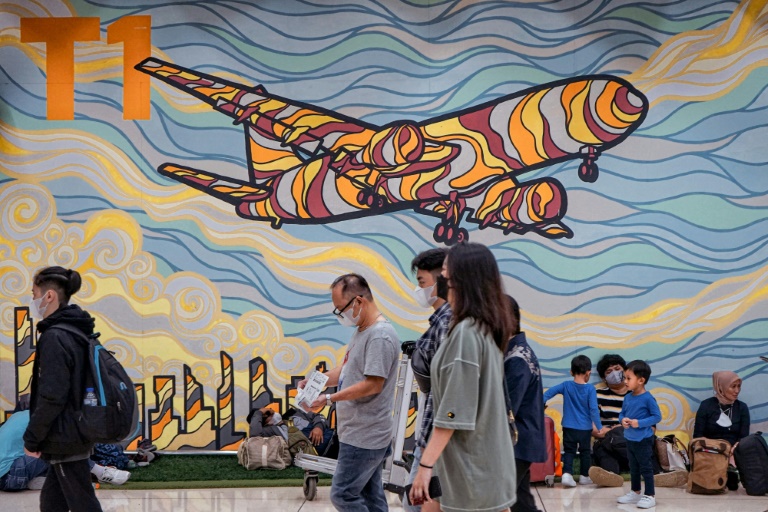
Propelled by inflation, the price of air tickets has begun to take off again after tumbling during the pandemic, a reversal that looks set to intensify due to environmental pressures, experts say.

For members of the International Air Transport Association, gathered in Doha for their annual meeting this week, minds are focused on how far such increases risk undermining passenger growth targets.

The IATA is also pleading for government support in reconciling the long-term commitment to net zero carbon emissions with those ambitious targets.

The aviation industry has just gone through two years where planes flew with rows of empty seats, even as they offered fares much lower than before the Covid-19 pandemic.

But with the sector still mired in the red despite movement restrictions being largely lifted, the bargain bonanza for passengers is very much over.

In the United States, the average price of an internal flight has shot up, from $202 in October 2021 to $336 in May this year, according to the Federal Reserve Bank of Saint Louis.

In the European Union, the price of a return ticket before tax in April returned to that seen in the same month of 2019, after a near-20 percent fall in 2020, according to aviation research specialists Cirium.

The oil price shock stoked by Russia’s invasion of Ukraine is the most obvious factor in these price rises.

Airlines estimate that fuel prices will account for 24 percent of their total costs this year, up five percentage points from last year.

Ticket prices are also being stoked by wider inflation — now at 40-year-highs in developed markets — as well as stronger-than-expected demand for tickets and labour shortages.

– Reality check –

But Scott Kirby, chief executive of United Airlines, said despite the trend clearly rising, prices had yet to shoot beyond historical norms.

“In real terms, pricing is back to 2014 levels… and it’s lower than it was essentially every year before” then, he said.

“So… I don’t think we’re going to see demand destruction.”

But Vik Krishnan, a partner at McKinsey & Co, is cautious about how long the current high demand will last.

“Some of the travel that we’re seeing right now is a function of all the stimulus that governments” pumped into economies during the pandemic, boosting citizens’ spare income, he said.

“The number one discretionary income spending is travel and that’s what people are doing.

But “how long that lasts remains to be seen”, he added.

– Climate crisis versus cheap holidays –

Beyond rising costs and fears that government stimulus will fade, airlines face commitments that sit very uneasily alongside each other.

On the one hand, they target carrying a total of 10 billion passengers by 2050, up from 4.5 billion in 2019.

And yet over the same time horizon, they are beholden to achieving “net zero” carbon emissions.

The total cost of transitioning the sector to “net zero” is estimated by the IATA at an eye-watering $1.55 trillion.

“Airlines don’t have the ability to absorb” the cost of that transition, IATA director general Willie Walsh said this week.

To reduce carbon emissions, the industry focus is on sustainable aviation fuels (SAFs), which are currently two to four times more expensive than fossil-based aviation fuel.

Some governments have already imposed SAF quotas, albeit in small quantities, resulting in airlines in turn imposing surcharges.

On Tuesday, the IATA urged governments to provide subsidies to ensure SAF production reaches 30 billion litres in 2030, up from 125 million litres in 2021. It also wants price curbs.

But even if such subsidies are forthcoming, “the transition to net zero will have to be reflected in ticket prices,” Walsh said.

Could that reverse the long-standing global trend of air travel progressively extending beyond the wealthy?

Krishnan believes such “democratisation” will become “harder”.

But he also said “low cost airlines have unleashed a world where people living in Northern Europe took it for granted that they could go on cheap vacations in Southern Europe”.

It would be “very hard for governments to unwind” such entrenched expectations, he warned.

Close Bitnami banner
Bitnami