World

Old tricks, new crises: how US misinformation spreads

With gun control under debate and monkeypox in the headlines, Americans are facing a barrage of new twists on years-old misinformation in their social media feeds.

Accurate news stories about mass shootings have attracted eyeballs but algorithms have also spurred baseless conspiracy theories from trolls who want to push lies to attract traffic. And thousands have unwittingly shared them on Facebook, Twitter and other sites.

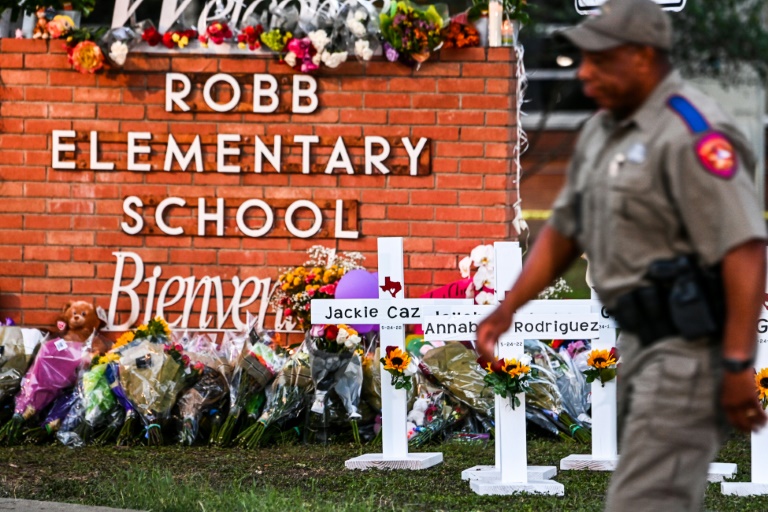
The May 24 attack at Robb Elementary School in Uvalde, Texas was a “false flag” operation aimed at pushing restrictive gun laws, according to Telegram posts from supporters of QAnon. 

Carl Paladino, a New York congressional candidate, was among those who shared a similar theory on Facebook, later deleting it.

Others misidentified a shooting victim as “Bernie Gores” — a made-up name paired with an image of a YouTuber who has been wrongly linked to other major news events, including the Russian invasion of Ukraine.

Experts say such misinformation is part of a pattern in which unscrupulous operators intentionally repurpose old narratives.

“A lot of this stuff is put together almost in this factory production style,” said Mike Caulfield, a misinformation researcher at the University of Washington’s Center for an Informed Public. 

“You have a shooting event, you have these various tropes you can apply.”

Groundless claims of a “false flag” operation, which refers to political or military action that is carried out with the intention of blaming an opponent, can be traced back to the 2012 mass shooting at Sandy Hook Elementary School in Newtown, Connecticut.

After 20 children and six staff members were killed, InfoWars founder Alex Jones falsely claimed the Newtown casualties were “crisis actors” — people who are paid or volunteer to play disaster victims. 

In November 2021, a Connecticut judge found Jones liable for damages in a defamation suit brought by parents of the victims.

But regardless, allegations of staged mass shootings have routinely spread from fringe online networks such as 4chan to mainstream platforms — including the social media feeds of politicians such as Republican congresswoman Marjorie Taylor Greene and, more recently, Arizona state senator Wendy Rogers. 

Hoax posts misidentifying gunmen or victims as internet personalities have also become common.

In the race to capture online attention following breaking news, recycled narratives can be produced quickly and are easier for audiences to digest, Caulfield said. Content producers “make guesses” about what may go viral based on past popular tropes, which can help monetize that attention.

“When you spread this stuff, you want to be seen as in the know,” he said, even though the information is demonstrably false or misleading.

– Copying the Covid-19 playbook –

Similarly, false claims about the recent spread of monkeypox — a rare disease related to smallpox — borrow from Covid-19 misinformation.

Since the outbreak, social media posts have claimed without evidence that the virus is a bioweapon, that the outbreak was planned, and that Microsoft co-founder Bill Gates is behind it. Others have falsely equated monkeypox to other viruses, including shingles.

Those claims resemble debunked conspiracy theories from the early days of the Covid-19 pandemic.

Memetica, a firm that conducts digital investigations, has researched some of the top Covid-19 misinformation recycled for monkeypox. One widespread theory points to a 2021 threat preparation exercise conducted by the Nuclear Threat Initiative (NTI) as purported evidence that the outbreak was planned.

That conspiracy theory is nearly identical to claims about Event 201, a pandemic simulation held in October 2019, that circulated online in early 2020.

“What was surprising to me was how similar (Covid-19 misinformation) is now to monkeypox,” Adi Cohen, chief operating officer at Memetica, told AFP. 

“It’s the same exact story — oh, this is all planned, it’s a ‘plandemic,’ here’s the proof.”

Some monkeypox theories have been shared by conservative figures including Glenn Beck and anti-vaccine advocate Robert F. Kennedy Jr, according to Memetica’s research. Both have previously promoted misinformation about Covid-19.

Cohen said such tactics may be an effective way to get engagement on social media, regardless of the falsity of the information being shared.

“It’s the replication of what seems to work in the past,” he said. “Why work hard when you don’t have to?”
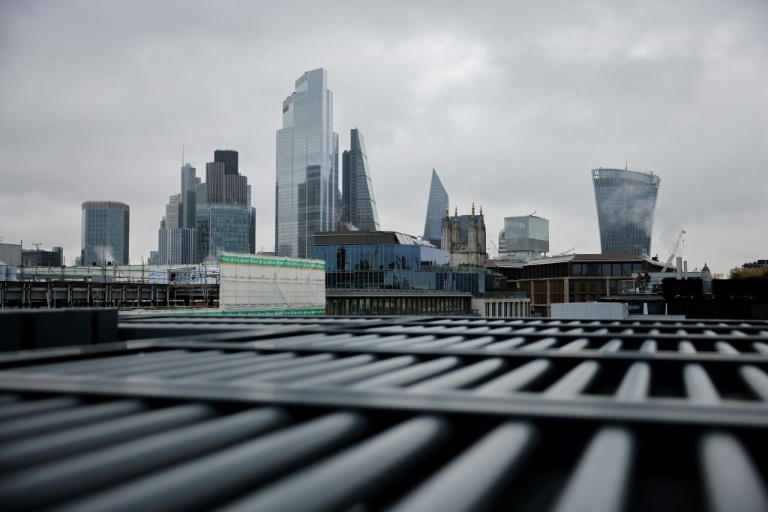
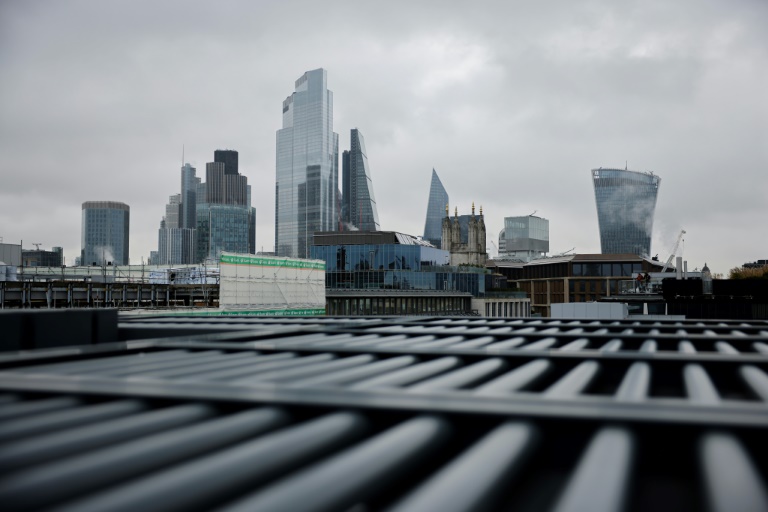
Toxic cocktail darkens outlook for British pound

A toxic cocktail of sluggish growth and high inflation, plus Brexit and fallout from the coronavirus pandemic, is set to weigh on the pound in the coming months, economists warned.

Since the start of the year, sterling has fallen by more than seven percent against the dollar, which is benefiting from rises in US interest rates.

The pound has also fallen by 1.7 percent against the euro since the beginning of 2022.

This comes despite the Bank of England having raised UK borrowing costs four times this year to fight inflation.

By contrast, the European Central Bank is waiting until July to raise its key interest rates for the first time in more than a decade.

BoE rate rises have “been insufficient to offset the headwinds weighing on the pound”, said Rabobank analyst Jane Foley. 

“Concerns about growth have been central to the poor performance of the pound,” she said.

Fears of recession in the UK and elsewhere are gaining momentum as soaring inflation — fuelled by rocketing energy prices — hits investment and consumer spending.

Oil and gas demand has surged as economies emerge from pandemic lockdowns, while supplies have been hit by the invasion of Ukraine by major producer Russia. 

Britain’s annual inflation rate stands at nine percent, a 40-year high, while the Bank of England is forecasting the UK economy to contract at the end of the year. 

The Bank of England’s next rate decision is due June 16 when it is expected to take its main borrowing cost above one percent.

“Hiking rates against a sharply slowing economy is never a good look for any currency,” said Bank of America currency strategist, Kamal Sharma.

– Brexit cost –

The pound has dropped to around $1.25 compared with $1.40 before the 2016 vote in favour of Brexit, or Britain’s departure from the European Union.

After the UK entered its first pandemic lockdown in March 2020, sterling sank to $1.14, the lowest level since 1985.

And the pound took a knock this week after embattled British Prime Minister Boris Johnson faced a vote of no confidence from his own Conservative MPs. 

Although Johnson survived, 41 percent of those who voted failed to back him as their leader.

Another big factor affecting the pound is that the BoE “remains wholly unwilling to discuss” the full consequences of Brexit on the UK economy, according to Sharma.

This could partly be due to the fact that it is difficult to pin down the exact financial fallout, with Britain’s departure from the European Union formalised only during the economic shock caused by the Covid-19 pandemic.

Meanwhile, political paralysis in Northern Ireland, a direct consequence of Brexit, poses further problems for the pound, according to economists.

“The added risk is that there is another Brexit bust-up, perhaps over the Northern Ireland Protocol,” Capital Economics analyst Paul Dales told AFP. 

“The latter could result in the pound weakening below $1.22.” 

The protocol was agreed upon as part of Britain’s Brexit divorce deal with Brussels, recognising Northern Ireland’s status as a fragile, post-conflict territory that shares the UK’s new land border with the EU.

But Britain is readying new legislation to rewrite its Brexit commitments to fix trade distortions in the province.

Sharma expressed concern “that the increasing politicisation of UK policy undermines the pound”.

Whatever the financial cost of Brexit, “underpinning the market’s concerns about growth was the recent IMF (International Monetary Fund) projection that the UK is set to have the slowest pace of growth in the G7” group of rich nations next year, said Foley.

Other global financial bodies, such as the Paris-based Organisation for Economic Co-operation and Development (OECD), have also slashed their growth outlooks for Britain, as well as for other major economies.

Toxic cocktail darkens outlook for British pound

A toxic cocktail of sluggish growth and high inflation, plus Brexit and fallout from the coronavirus pandemic, is set to weigh on the pound in the coming months, economists warned.

Since the start of the year, sterling has fallen by more than seven percent against the dollar, which is benefiting from rises in US interest rates.

The pound has also fallen by 1.7 percent against the euro since the beginning of 2022.

This comes despite the Bank of England having raised UK borrowing costs four times this year to fight inflation.

By contrast, the European Central Bank is waiting until July to raise its key interest rates for the first time in more than a decade.

BoE rate rises have “been insufficient to offset the headwinds weighing on the pound”, said Rabobank analyst Jane Foley. 

“Concerns about growth have been central to the poor performance of the pound,” she said.

Fears of recession in the UK and elsewhere are gaining momentum as soaring inflation — fuelled by rocketing energy prices — hits investment and consumer spending.

Oil and gas demand has surged as economies emerge from pandemic lockdowns, while supplies have been hit by the invasion of Ukraine by major producer Russia. 

Britain’s annual inflation rate stands at nine percent, a 40-year high, while the Bank of England is forecasting the UK economy to contract at the end of the year. 

The Bank of England’s next rate decision is due June 16 when it is expected to take its main borrowing cost above one percent.

“Hiking rates against a sharply slowing economy is never a good look for any currency,” said Bank of America currency strategist, Kamal Sharma.

– Brexit cost –

The pound has dropped to around $1.25 compared with $1.40 before the 2016 vote in favour of Brexit, or Britain’s departure from the European Union.

After the UK entered its first pandemic lockdown in March 2020, sterling sank to $1.14, the lowest level since 1985.

And the pound took a knock this week after embattled British Prime Minister Boris Johnson faced a vote of no confidence from his own Conservative MPs. 

Although Johnson survived, 41 percent of those who voted failed to back him as their leader.

Another big factor affecting the pound is that the BoE “remains wholly unwilling to discuss” the full consequences of Brexit on the UK economy, according to Sharma.

This could partly be due to the fact that it is difficult to pin down the exact financial fallout, with Britain’s departure from the European Union formalised only during the economic shock caused by the Covid-19 pandemic.

Meanwhile, political paralysis in Northern Ireland, a direct consequence of Brexit, poses further problems for the pound, according to economists.

“The added risk is that there is another Brexit bust-up, perhaps over the Northern Ireland Protocol,” Capital Economics analyst Paul Dales told AFP. 

“The latter could result in the pound weakening below $1.22.” 

The protocol was agreed upon as part of Britain’s Brexit divorce deal with Brussels, recognising Northern Ireland’s status as a fragile, post-conflict territory that shares the UK’s new land border with the EU.

But Britain is readying new legislation to rewrite its Brexit commitments to fix trade distortions in the province.

Sharma expressed concern “that the increasing politicisation of UK policy undermines the pound”.

Whatever the financial cost of Brexit, “underpinning the market’s concerns about growth was the recent IMF (International Monetary Fund) projection that the UK is set to have the slowest pace of growth in the G7” group of rich nations next year, said Foley.

Other global financial bodies, such as the Paris-based Organisation for Economic Co-operation and Development (OECD), have also slashed their growth outlooks for Britain, as well as for other major economies.

US Capitol riot probe puts Trump at heart of 'attempted coup'

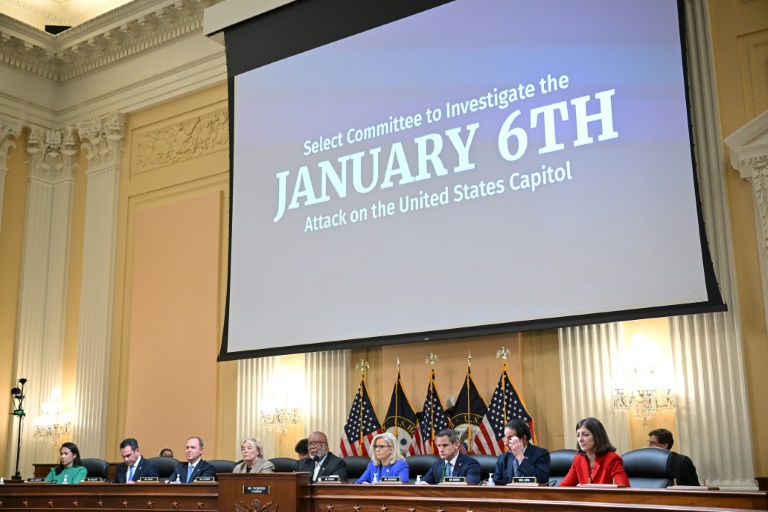
A congressional panel investigating last year’s mob assault on the US Capitol laid out its case Thursday that Donald Trump and his claims of a stolen election were at the heart of what amounted to an “attempted coup” to remain in power.

In a prime-time presentation of its findings from a year-long probe, the special committee sought to persuade a divided country of the existence of a deep-rooted and ongoing plot — orchestrated by the former president — to overturn the result of the 2020 election won by Joe Biden.

“President Trump summoned the mob, assembled the mob and lit the flame of this attack,” the Republican vice chairwoman of the panel, Liz Cheney, said in her opening remarks at the first in a series of hotly anticipated summer hearings.

Minutes earlier, Democratic committee chief Bennie Thompson accused Trump of being “at the center of this conspiracy.”

“January 6 was the culmination of an attempted coup — a brazen attempt, as one rioter put it shortly after January 6 — to overthrow the government. The violence was no accident,” he said.

Rioters acted “at the encouragement of the president of the United States,” to march on Congress and block the formal transfer of power by lawmakers to Biden, he added.

The panel’s carefully produced presentation made use of testimony given behind closed doors by some of Trump’s most senior and trusted advisors, including former attorney general Bill Barr and Trump’s son-in-law and senior aide, Jared Kushner.

– ‘Witch hunt’ –

The panel aims to demonstrate that the violence was part of a broader — and ongoing — drive by Trump and his inner circle to illegitimately cling to or regain power, tearing up the Constitution and more than two centuries of peaceful transitions from one administration to the next.

Thursday’s session and five subsequent hearings over the coming weeks will focus on Trump’s role in the multi-pronged effort to return him to the Oval Office by disenfranchising millions of voters. 

Trump has defiantly dismissed the probe as a baseless “witch hunt” — but the public hearings were uppermost in his mind Thursday as he fired off a largely false tirade on his social media platform, defending the insurrection as “the greatest movement in the history of our Country to Make America Great Again.”

Following the hearing, he lashed out again on Truth Social, accusing the committee of bias and doubling down on his election fraud claims.  

“The Unselect Committee of political HACKS refuses to play any of the many positive witnesses and statements,” he wrote.

The case the committee wants to make is that Trump laid the groundwork for the insurrection through months of lies about fraud in an election described by his own administration as the most secure ever.

His White House is accused of involvement in several potentially illegal schemes to aid the effort, including a plot to seize voting machines and another to appoint fake “alternative electors” from swing states who would ignore the will of their voters and hand victory to Trump. 

– ‘Slipping in people’s blood’ –

Thursday’s hearing featured live testimony from two people who interacted with members of the neofascist organization the Proud Boys on January 6 and in the days leading to the violence.

Emmy-winning British documentary filmmaker Nick Quested testified about his experience shadowing members of the Proud Boys in the days leading up to January 6 and his interactions with them on the day itself.

Quested recalled being shocked by “the anger” he saw among the group’s members, and described the larger rally crowd as transforming “from protesters to rioters to insurrectionists.”

“I was surprised at the size of the group, the anger and the profanity,” he said.

Capitol Police Officer Caroline Edwards, who was present at the breach of the first barricade, described sustaining head injuries in clashes with the Proud Boys, whose leader has been charged with seditious conspiracy, along with four lieutenants.

“I can just remember my breath catching in my throat, because what I saw was just a war scene. It was something like I’d seen out of the movies,” she said.

“I couldn’t believe my eyes. There were officers on the ground — they were bleeding, they were throwing up… I saw friends with blood all over their faces. I was slipping in people’s blood.”

– Court of public opinion –

The series of hearings will differ from Trump’s two impeachments in that he will not be represented in the room as he is not on trial — except perhaps in the court of public opinion.

Nevertheless, a number of his most loyal counter-punchers are expected to circle the wagons, challenging the investigation at every turn. 

“It is the most political and least legitimate committee in American history,” the leader of the House Republican minority, Kevin McCarthy, told reporters.

In fact, Congress has wide-ranging oversight powers, and a Trump-appointed federal judge last month emphatically rejected Republicans’ arguments that the committee is illegitimate.

The panel has not confirmed what it plans to do after the initial slate of hearings, but at least one more presentation and a final report are expected in the fall.

Asteroid samples contain 'clues to origin of life': Japan scientists

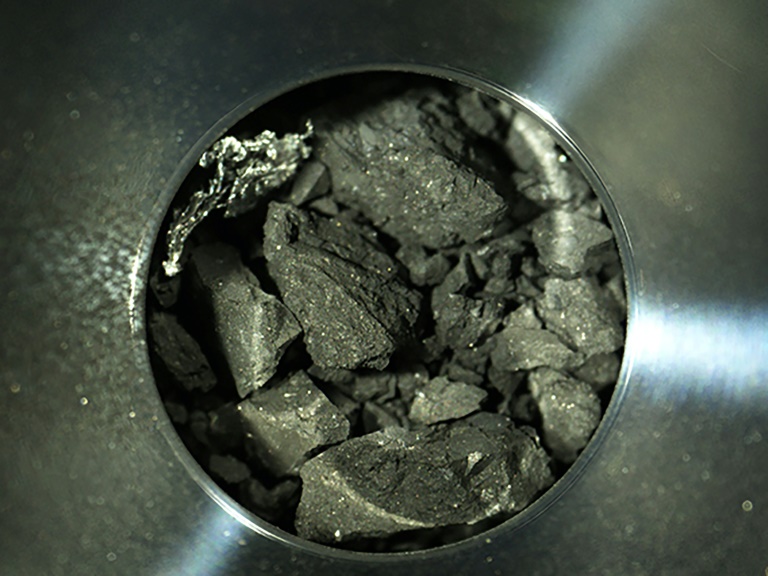
Asteroid dust collected by a Japanese space probe contains organic material that shows some of the building blocks of life on Earth may have been formed in space, scientists said Friday.

Pristine material from the asteroid Ryugu was brought back to Earth in 2020 after a six-year mission to the celestial body around 300 million kilometres away.

But scientists are only just beginning to discover its secrets in the first studies on small portions of the 5.4 grams (0.2 ounces) of dust and dark, tiny rocks.

In one paper published Friday, a group of researchers led by Okayama University in western Japan said they had discovered “amino acids and other organic matter that could give clues to the origin of life on Earth”.

“The discovery of protein-forming amino acids is important, because Ryugu has not been exposed to the Earth’s biosphere, like meteorites, and as such their detection proves that at least some of the building blocks of life on Earth could have been formed in space environments,” the study said.

The team said they found 23 different types of amino acid while examining the sample collected by Japan’s Hayabusa-2 probe in 2019.

The dust and rocks were stirred up when the fridge-sized spacecraft fired an “impactor” into the asteroid.

“The Ryugu sample has the most primitive characteristics of any natural sample available to mankind, including meteorites,” the Japan Aerospace Exploration Agency (JAXA) said in a statement.

It is believed that part of the material was created about five million years after the birth of the solar system and has not been heated above 100 degrees Celsius (210 degrees Fahrenheit).

Another study published in the US-based journal “Science” said the material has “a chemical composition that more closely resembles the Sun’s photosphere than other natural samples”.

Kensei Kobayashi, an astrobiology expert and professor emeritus at Yokohama National University, hailed the discovery.

“Scientists have been questioning how organic matter — including amino acids — was created or where it came from, and the fact that amino acids were discovered in the sample offers a reason to think that amino acids were brought to Earth from outer space,” he told AFP.

Another mainstream theory about the origin of amino acids is that they were created in Earth’s primitive atmosphere through lightning strikes, for example, after Earth cooled down.

Asteroid samples contain 'clues to origin of life': Japan scientists

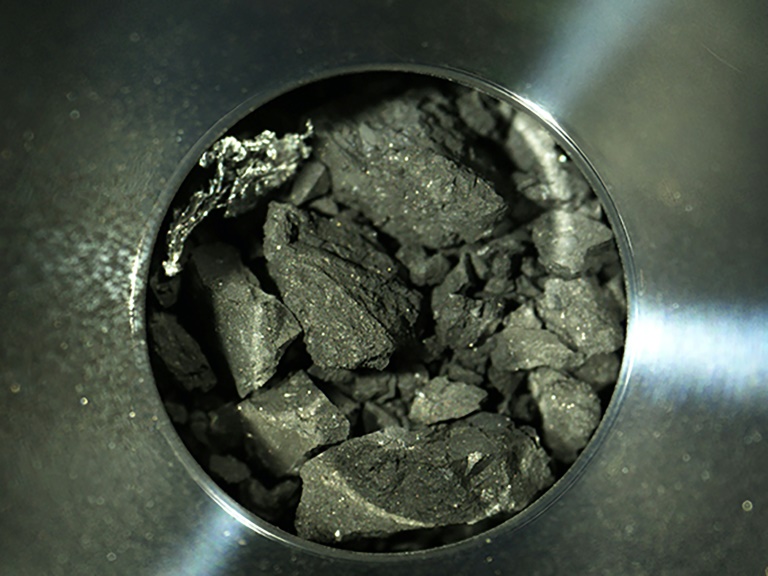
Asteroid dust collected by a Japanese space probe contains organic material that shows some of the building blocks of life on Earth may have been formed in space, scientists said Friday.

Pristine material from the asteroid Ryugu was brought back to Earth in 2020 after a six-year mission to the celestial body around 300 million kilometres away.

But scientists are only just beginning to discover its secrets in the first studies on small portions of the 5.4 grams (0.2 ounces) of dust and dark, tiny rocks.

In one paper published Friday, a group of researchers led by Okayama University in western Japan said they had discovered “amino acids and other organic matter that could give clues to the origin of life on Earth”.

“The discovery of protein-forming amino acids is important, because Ryugu has not been exposed to the Earth’s biosphere, like meteorites, and as such their detection proves that at least some of the building blocks of life on Earth could have been formed in space environments,” the study said.

The team said they found 23 different types of amino acid while examining the sample collected by Japan’s Hayabusa-2 probe in 2019.

The dust and rocks were stirred up when the fridge-sized spacecraft fired an “impactor” into the asteroid.

“The Ryugu sample has the most primitive characteristics of any natural sample available to mankind, including meteorites,” the Japan Aerospace Exploration Agency (JAXA) said in a statement.

It is believed that part of the material was created about five million years after the birth of the solar system and has not been heated above 100 degrees Celsius (210 degrees Fahrenheit).

Another study published in the US-based journal “Science” said the material has “a chemical composition that more closely resembles the Sun’s photosphere than other natural samples”.

Kensei Kobayashi, an astrobiology expert and professor emeritus at Yokohama National University, hailed the discovery.

“Scientists have been questioning how organic matter — including amino acids — was created or where it came from, and the fact that amino acids were discovered in the sample offers a reason to think that amino acids were brought to Earth from outer space,” he told AFP.

Another mainstream theory about the origin of amino acids is that they were created in Earth’s primitive atmosphere through lightning strikes, for example, after Earth cooled down.

From Saddam to IS: Iraq still exhuming mass graves

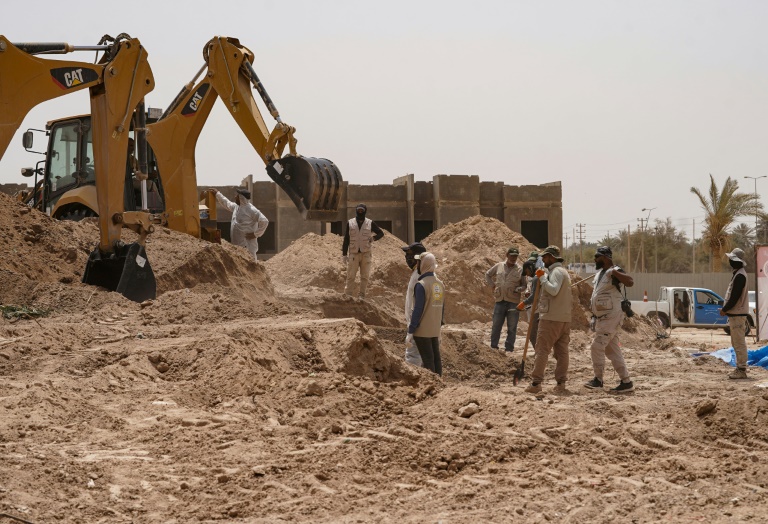
A noisy backhoe digs up earth to uncover yet another mass grave in Iraq, human remains are exhumed and the forensics experts get to work on their grim task. 

A skull is freed from a layer of clay, a tibia is placed in a body bag — all bound for a laboratory to be genetically checked against blood samples from relatives of the disappeared.

The site near the central shrine city of Najaf is one of many in a country that suffered through more than four decades of bloody conflict and turmoil.

Dictator Saddam Hussein went to war with Iran from 1980 to 1988. Next came the 1991 Gulf war over Kuwait, then the 2003 US-led invasion, years of sectarian bloodletting and most recently the Islamic State group’s reign of terror until 2017.

The years of violence have made Iraq one of the countries with the highest number of missing persons in the world, says the International Committee of the Red Cross.

In Najaf, work began in May to dig up a 1,500-square-metre (1,800-square-yard) plot to exhume the bones of around 100 victims of a 1991 uprising against Saddam.

The mass grave was discovered by chance when property developers wanted to prepare the land for construction.

– ‘We waited, he never came’ –

Intissar Mohammed was summoned to provide a drop of her blood as a sample because the authorities suspect her brother’s remains could be found in the mass grave.

Hamid disappeared in 1980 under Saddam’s iron-fisted regime.

At the time, Intissar and the rest of the family had moved to neighbouring Syria but Hamid had stayed in Iraq for his studies, planning to join his family later. 

“We waited for him, but he never came,” recalled a tearful Intissar. The young man was reportedly kidnapped, she said, “and we never heard from him again”.

Intissar, who returned to Iraq in 2011, remains hopeful that she will find out more.

Her DNA will be “compared with the bones found in situ”, said Wissam Radi, a technician at the forensic medicine department in Najaf.

The identification process takes time and wears down the patience of relatives, who often complain that they feel abandoned.

Opening a mass grave is a mammoth task and “the biggest obstacles are financial”, said Dergham Kamel of the Martyrs’ Foundation, a state body in charge of managing mass graves. 

He said another government institution, the Directorate for the Protection of Mass Graves, had received “no funding from the government” between 2016 and 2021.

The centralisation of the Iraqi system is another hurdle as genetic comparisons are conducted exclusively in the capital Baghdad. 

In the former IS bastion Mosul and elsewhere in northern Iraq, forensic scientists are making slow progress in analysing the 200 or so mass graves left behind by the jihadists. 

– ‘May God have mercy’ –

Hassan al-Anazi, director of forensic medicine in the north’s Nineveh province, has asked for the missing person database to include all the region’s IS victims, but so far to no avail. 

“There are thousands of missing people,” he said. “Every day, about 30 families come to us to ask for news of their loved ones.”

However, he said, “due to a lack of political will” the Khasfa mass grave in Mosul, one of the largest, has still not been opened. 

It contains the remains of officers, doctors and academics killed by the IS, with a total of around 4,000 victims. 

Bereaved Mosul mother Umm Ahmed is seeking information about the fate of her sons, police officers Ahmed and Faris, who were abducted by the IS when it took over the city.

“I knocked on every door,” she said. “I even went to Baghdad. But I got no answer.”

The lack of information also raises a financial issue. Until the remains of a missing person have been identified, relatives receive no compensation from the Iraqi state. 

In many cases, the fathers, sons and brothers killed by the IS were breadwinners. 

To help the families, Dalia al-Mamari has created The Human Line association in Mosul, which advises on the compensation process. 

“The government is very slow,” she said. “Often all they tell us is: ‘Your children are dead, may God have mercy on them’.”

Israel's govt marks one year but future uncertain

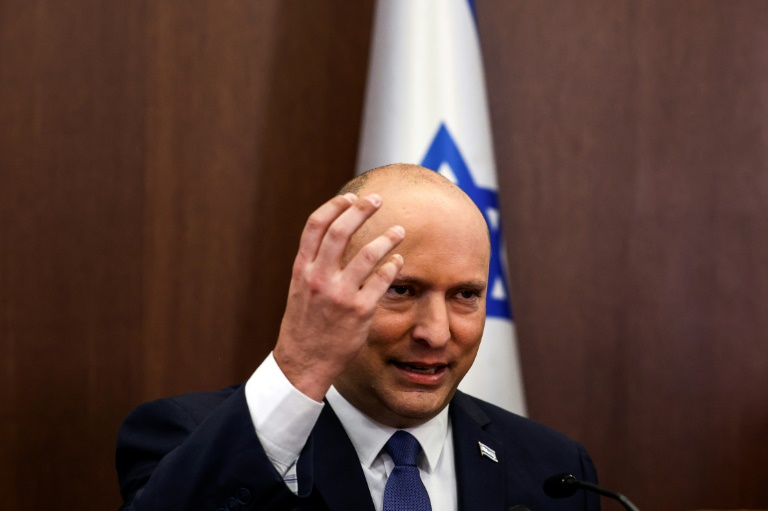
Even Israeli Prime Minister Naftali Bennett, who leads an ideologically divided coalition perpetually facing collapse, has voiced doubts about the viability of his eight-party government. 

“A year ago, I wasn’t sure that it could be done,” the religious-nationalist leader told AFP, 12 months after he ended the long reign of right-wing premier Benjamin Netanyahu.

Under the deal he struck with the coalition’s architect, Foreign Minister Yair Lapid, the two are meant to trade posts halfway through their four-year term.

The first anniversary of their motley alliance falls next Monday, but some pundits say a second is highly unlikely. Others doubt it will survive until the end of the month.  

Looming demise is nothing new for a coalition that spans the political spectrum from hard-line right-wingers like Bennett to centrists, doves and Arab Islamists.

The defection in April by a member of the premier’s Yamina alliance stripped it of its majority in Israel’s 120-seat parliament.

It even endured several days as a minority government after a left-wing Arab lawmaker bolted last month, but she then returned and the coalition now is hanging on with 60 seats. 

The current crisis, rooted in one of Israel’s most sensitive fault-lines, may however prove fatal.  

– New threat –

Lawmakers from two coalition supporters, the United Arab List (Raam) and the dovish Meretz party, have refused to renew a measure ensuring Jewish settlers in the occupied West Bank are subject to Israeli law. 

Any concession to the notion that the settlers are living outside Israel is anathema to other coalition partners, notably Yamina and the hawkish New Hope party led by Justice Minister Gideon Saar. 

It remains uncertain whether the government will survive this dispute or what the next crisis may entail. 

But in written responses to AFP’s interview questions, Bennett argued the alliance had already proved its worth and shown the merit of compromise among rivals. 

“After a year of actually running this government, my biggest realisation is that Israel is at its best when we work together, overcome our differences and focus on the good of this country,” he wrote.  

“What started out as a political accident turned into a purpose. It’s working,” he added, highlighting the November passage of a budget, Israel’s first in three years.

“One year ago Israel was headed towards its fifth election in two years and was paralysed by polarisation,” Bennett said, recalling the turbulence that marked the last years under Netanyahu. 

“This government is the antidote to polarisation.”

– ‘No peace plan’ –

Bennett, a hard-liner on the Palestinian conflict, was not previously known for a commitment to political inclusivity.

When the former head of a settler lobby first ran for office in 2012-2013, he drew attention for delivering nationalist messages with a modern twist.

“There are certain things that most of us understand will never happen,” ran a campaign line. “The Sopranos are not coming back for another season… and there will never be a peace plan with the Palestinians.”

Bennett has not changed ideologically: he opposes Palestinian statehood and affirmed there will be no peace talks during his tenure, while his government has approved new West Bank settler homes.

Bennett has said he instead wants to broaden economic opportunities for Palestinians, including through access to higher-wage Israeli jobs. 

But some experts say Bennett’s first year in charge has revealed that he was, in part, miscast as an unswerving hard-liner.

“He puts the interests of the state before the interests of the ideological camp that he represents,” said Yedidia Stern, president of the Jewish People Policy Institute and law professor at Bar-Ilan University. 

– ‘Safeguarding democracy’ –

Bennett’s coalition was forged through a shared antipathy towards Netanyahu, who was in power from 1996 to 1999 and again from 2009 until June last year.

While many of Bennett’s partners share Netanyahu’s hawkish views, they broke with him over fears he was undermining state institutions to serve his personal ambition and to survive a trial on corruption charges, which he denies.

Many saw Netanyahu, a close ally of former US president Donald Trump, as fuelling right-wing populism and fostering conspiracy theories about malevolent judges, bureaucrats and journalists.

Ami Pedahzur, author of “The Triumph of Israel’s Radical Right”, argued that Bennett’s government is made up of “institutionalists” who resisted the narrative of a “cabal or the deep state trying to take power from the people”.

Left-right divisions were temporarily suppressed by a shared desire to “defend the institutions, for a while”, said Pedahzur, an Israeli-born professor at the University of Texas at Austin.

Bennett, in a similar vein, praised his coalition for “safeguarding the integrity of Israel’s democracy”.

“It’s not about making the left happy one day and the right happy another day,” he wrote. “It’s about listening to each other, hearing different perspectives and at times compromising.”

Rolex worn during WWII 'Great Escape' sells for $189,000 in New York

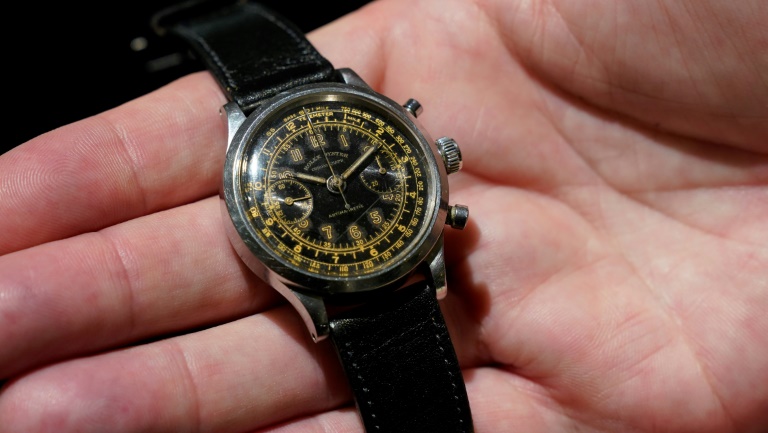
A Rolex watch worn by a British prisoner during the real-life “Great Escape” from the Nazi Stalag Luft III prisoner-of-war camp sold for $189,000 on Thursday in New York.

The final sum for the timepiece, sold to an anonymous buyer, was less than the $200,000 and $400,000 expected by Christie’s.

The watch was worn by Gerald Imeson on the night of March 24, 1944, when a group of Allied soldiers undertook the daring escape that inspired the 1963 movie starring Steve McQueen.

Imeson had ordered the watch from Rolex in Switzerland, who shipped it via the Red Cross to the prison camp near the present-day Polish town of Zagan, Christie’s said.

The steel watch with a black luminous dial and hands was “instrumental in the planning and execution” of their bid for freedom, the auction house added.

Christie’s said it believed Imeson’s watch helped calculate the time it would take the prisoners to crawl through tunnels used in the breakout as well as timing the patrols of the camp guards.

Imeson wore the Oyster Chronograph watch as he waited 172nd in line to escape, according to Christie’s.

Of the 200 prisoners who participated in the plan, 76 briefly escaped. Imeson was not among them. All but three of the men were captured and 50 were executed.

Imeson was liberated from another POW camp at the end of the war in 1945.

He wore the watch until his death in 2003 at the age of 85. It was first auctioned in Britain in 2013.

The watch was sold along with several other items, including a Royal Air Force whistle and a membership card for The Goldfish Club — reserved for pilots and crew who have crash landed into the sea and survived.

Ukraine war sparks debate over Finland's 'Achilles heel'

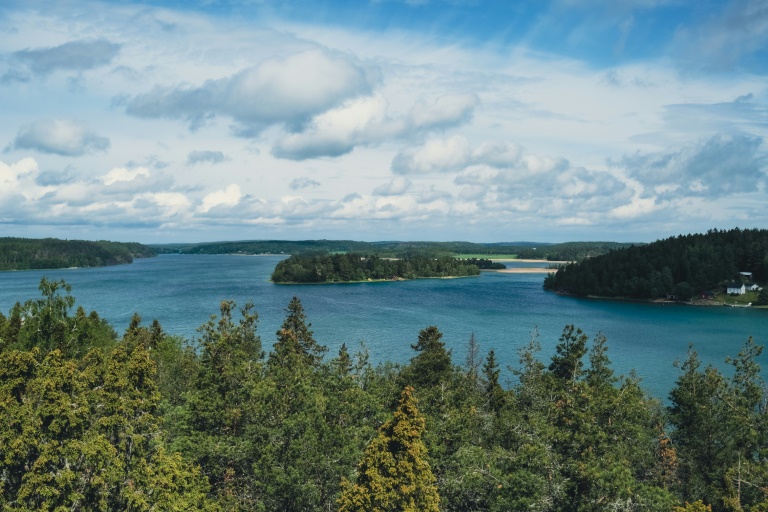
Sprayed between Sweden and Finland, the autonomous Aland Islands are a picturesque archipelago once part of Russia and demilitarised since 1856.

But the region’s unique status is the object of intense debate since Russia’s invasion of Ukraine rattled neighbouring Finland into applying for NATO membership in May.

Under international treaties signed after the Crimean War, no troops or fortifications can be placed on the strategic Baltic Sea islands.

“It is the Achilles’ heel of Finland’s defence,” Alpo Rusi, a professor and former presidential advisor, told AFP.

Home to about 30,000 mostly Swedish-speaking Finns, the area is characterised by rocky islands, lush green forests, old stone churches and wooden architecture — all under the watchful eye of a Russian consulate.

“We have always thought, ‘Who would want to attack us when we have nothing worth taking?’,” 81-year-old Ulf Grussner told AFP.

“But that has changed with Putin’s war on Ukraine”, said the pensioner, one of many here who want Aland to remain demilitarised.

In June, a poll showed 58 percent of Finns would approve of a military presence on Aland, which celebrated the 100th anniversary of its autonomy on Thursday.

“There is concern over whether Finland could react fast enough militarily in the event of a sudden intrusion on Aland,” Rusi said.

Armies wrestled for control of the archipelago in both World Wars.

“Why should we trust the idea … that troops would not rush to control Aland as fast as possible,” said Charly Salonius-Pasternak, a researcher at the Finnish Institute of International Affairs.

– Aland rejects troops –

Alanders, on the other hand, are keen to  protect their special status and have so far firmly rejected the idea of ending the demilitarisation.

“Why should we change it? I think it’s a stabilising factor in the Baltic Sea area that we are demilitarised,” Veronica Thornroos, 59, premier of the Aland government, told AFP.

Besides, if the archipelago were attacked, Finland would defend it “very quickly”, she said.

The Finnish government has said it has no intention of touching Aland’s special status.

Sia Spiliopoulou Akermark, director of the Aland Peace Institute, meanwhile noted that the “Aland regime” of autonomy, cultural guarantees and demilitarisation is a “complex knot” that should be considered as a whole.

– Russian presence –

Like the rest of Finland, Aland was part of the Russian empire from 1809 to 1917. 

At the time, the archipelago was viewed as an important outpost in the defence of Saint Petersburg and control of the Baltic Sea.

Finland gained independence from Russia in 1917, and was granted sovereignty over Aland in 1921 despite protests from the islands’ Swedish-speaking majority.

The Nordic country went on to fight two bloody wars against the Soviet Union during World War II.

As part of their peace deal, the demilitarisation of Aland was to be monitored by a Soviet consulate in the archipelago’s main town of Mariehamn.

The consulate still exists to this day, although it is now run by Russia.

A group of locals gather every day outside the high metal fence protecting the consulate, to protest Russia’s war in Ukraine.

“They have no business being here. Russia is always a threat”, one of the protestors, Mosse Wallen, 71, told AFP.

– Putin’s property –

Russia also owns a seaside property north of Mariehamn in Saltvik, which was acquired in the 1947 peace deal.

“They gave my mother three days to move out”, said Ulf Grussner, whose idyllic childhood home is now fenced in by the consulate.

Grussner’s father was a German geologist, and the peace deal stipulated that all German possessions in Finland were to be ceded to the Soviets.

In 2009, ownership of a piece of the property was transferred to the Russian presidency.

Concern has mounted in Finland in recent years over Russian property deals across the country.

Grussner feared that Russia might intend to use his family’s property and the demilitarisation as a “pretext” to increase its presence in the area.

“It is far-fetched, but on the other hand it’s not impossible,” he said.

Close Bitnami banner
Bitnami