World

Activists urge Meta to overhaul policies for Iran content

Three rights groups on Thursday urged Facebook and Instagram owner Meta to overhaul its policies for Persian-language content on Iran, complaining restrictions had impeded the ability of Iranians to share information during ongoing protests.

London-based freedom of expression group Article 19, global digital rights group Access Now and the New York-based Center for Human Rights in Iran (CHRI) said Meta had to change policies on potentially sensitive content as well as human and automated moderation.

With the internet heavily censored in Iran, Instagram is now the main platform for communication in the Islamic republic as it remains unblocked.

Other social media services such as Telegram, YouTube and Twitter as well as Facebook are all blocked inside Iran.

The groups said Instagram “suffers from a deficit in trust and transparency” among Persian-language users and Meta needed to ensure “its content moderation practices uphold and protect human rights and freedom of expression.”

All these concerns have been raised at a discussion with a Meta content policy manager, they added.

Iran has seen several weeks of protests against its leadership under supreme leader Ayatollah Ali Khamenei, triggered by price rises.

But activists complain Meta has taken down some content documenting the protests uploaded to Instagram, depriving users of a key resource of what is happening inside the country.

The temporary blocking earlier this year of #IWillLightACandleToo to remember the victims of the shooting down by Iran of an Ukrainian airliner in 2020 also triggered anger.

The statement expressed concern over takedowns of content on Instagram containing the protest chant “Death to Khamenei” or similar slogans against the Iranian leadership.

Meta previously issued a temporary exception for such chants in July 2021 and has also now granted exemptions related to Russia’s war against Ukraine.

Calling for consistency from Meta, the organisations expressed concern “this lack of nuance… causes problematic takedowns of newsworthy protest posts or posts that could help directly or indirectly corroborate human rights abuses.”

The groups also called for “more transparency” on automated processes, where media banks are used for automatic takedowns based on certain phrases, images or audio.

Following allegations in a report by BBC Persian that Iranian officials tried to bribe Persian-language moderators for Meta at a Germany-based content moderation contractor, concerns were also raised “about the oversight of human moderation processes”, they said.

Meta at the time denied ever having ties to the Iranian government and said moderators review a randomized selection of content to check if it violates rules “removing any room for subjectivity”.
Xbox expands cloud gaming service to Samsung smart TVs

Microsoft on Thursday announced that the ability to play Xbox games will be built into Samsung smart televisions in its latest cloud gaming move.

Microsoft is considered the streaming video game heavyweight with its Xbox Game Pass service and large community of players who use its consoles and desktop computers.

And while the US tech titan makes Xbox video game consoles, it has been leading a shift to letting people play titles on internet-linked devices of their choosing with titles hosted in the cloud.

“We’re on a quest to bring the joy and community of gaming to everyone on the planet, and bringing the Xbox app to smart TVs is another step in making our vision a reality,” Microsoft Gaming chief Phil Spencer said in a post.

Microsoft had already made some Xbox games available for play on Samsung Galaxy smartphones.

An Xbox application will become part of a gaming hub on 2022 model Samsung smart televisions in 27 countries at the end of this month, the South Korean consumer electronics giant said.

Players will need to wirelessly connect videogame controllers to televisions using Bluetooth.

The more than 100 titles available for streaming at the Xbox Game Pass subscription service will include Halo Infinite, Hades and Forza Horizon 5, according to the companies.

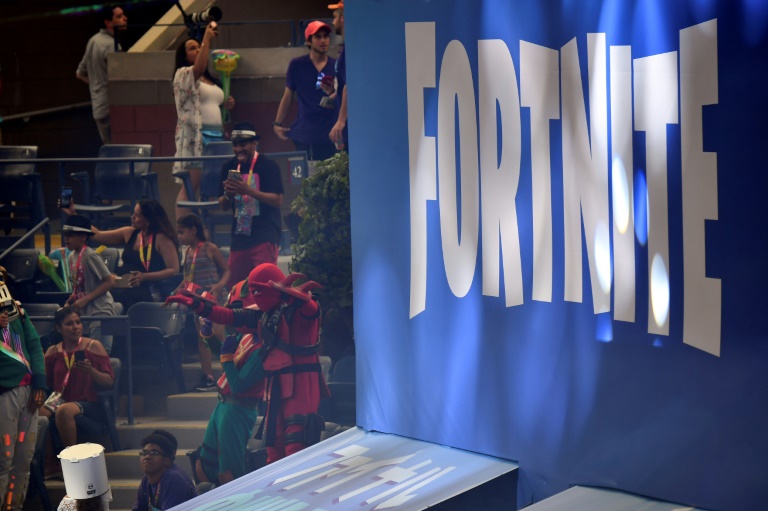
Hit videogame “Fortnite” will be available to play free, said Ashley McKissick, a corporate vice president at Microsoft.

“We created Xbox Game Pass and continue expanding Cloud Gaming to new devices so that we can open up the ways people can play across the devices they already own: PC, console, mobile, tablet devices, and now Smart TVs,” McKissick said.

Amazon early this  year launched its Luna video game streaming service for the general public in the United States, aiming to expand its multi-pronged empire into the booming gaming industry.

Luna allows players to access games directly online with no need for a console as part of the cloud gaming technology that is seen as a future direction of the industry.

Luna takes on Microsoft and PlayStation-maker Sony as well as Stadia fielded by Google.

Microsoft catapulted itself into the big league in one of the world’s most lucrative markets early this year by announcing a $69 billion deal to take over video game maker Activision Blizzard — the biggest acquisition in the sector’s history.

Iran removal of monitoring cameras may scupper nuclear talks: IAEA

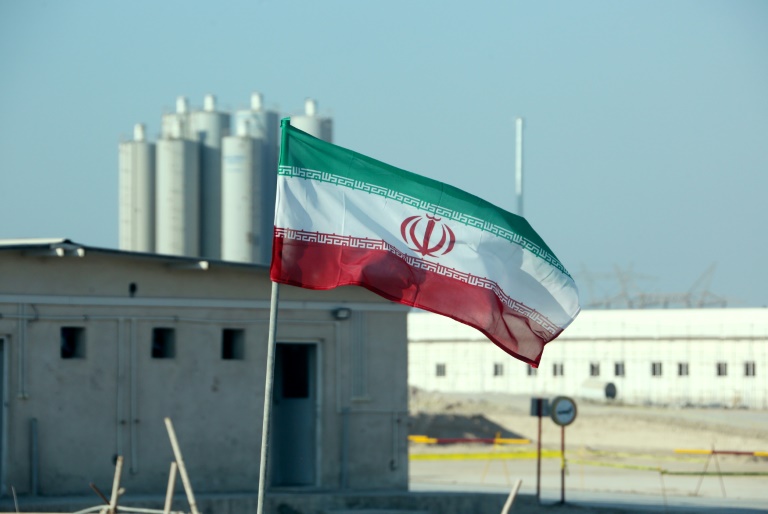
The UN atomic energy watchdog said Thursday that Iran was removing 27 surveillance cameras at its nuclear facilities, warning this could be a “fatal blow” to negotiations to revive a 2015 nuclear deal.

Talks began in April last year to bring the United States back into that landmark agreement, after then president Donald Trump withdrew in 2018 and left it hanging by a thread.  

The negotiations also aim to lift sanctions against Iran and bring it back into compliance with nuclear commitments it made to world powers as part of the deal. 

But the ever-delicate dialogue has been stalled since March, and raising tensions, International Atomic Energy Agency (IAEA) members on Wednesday passed a resolution censuring Iran over its lack of cooperation with the watchdog.

Iran has condemned the rebuke as “unconstructive” and announced on Wednesday it had disconnected some IAEA cameras monitoring its nuclear sites. 

IAEA chief Rafael Grossi said Thursday his agency had been informed that 27 cameras were being removed, leaving about 40 still in place. 

“So this of course poses a serious challenge to our ability to continue working there,” Grossi told reporters, urging Iran to engage with him “immediately”. 

He said if a solution was not found within three to four weeks, “a fatal blow” will have been dealt to negotiations.

– ‘Deepening isolation’ –

Wednesday’s motion — approved by 30 of the 35 members of the IAEA board of governors, with only Russia and China voting against — was the first to criticise Iran since June 2020.

The resolution — submitted by the United States, Britain, France and Germany — came after the IAEA said Iran continued to fail to explain adequately the previous discovery of traces of enriched uranium at three sites which Tehran had not declared as having hosted nuclear activities.

US Secretary of State Antony Blinken warned Thursday that Iran’s actions will undermine attempts to restore the 2015 deal.

“The only outcome of such a path will be a deepening nuclear crisis and further economic and political isolation for Iran,” Blinken said in a statement.

Iran’s President Ebrahim Raisi, an ultraconservative who was elected last year, said Thursday the Islamic republic will not be deterred.

“We won’t back down, not even a step from our position,” state news agency IRNA quoted him as saying on Thursday.

Iran has repeatedly denied any ambition to develop a nuclear weapons capability.

It had already responded angrily to Grossi’s decision to visit its arch-foe Israel ahead of the board of governors meeting. It has also accused the UN watchdog of relying too much on “fabricated” Israeli intelligence reports.

Israeli Prime Minister Naftali Bennett welcomed the censure of Iran before he headed to the United Arab Emirates, a fellow Iran critic, for a previously unannounced visit on Thursday.

– ‘Added pressure’ –

Eric Brewer, an analyst at the non-profit Nuclear Threat Initiative, told AFP that Iran’s removal of the cameras “will certainly put added pressure” on the talks to revive the 2015 agreement “to force a decision one way or the other”.

The landmark agreement set limits to Iran’s nuclear activities in return for relief from international sanctions. But it has been in disarray since Trump unilaterally withdrew and reimposed crippling sanctions.

In response, Iran began rolling back on its own commitments under the deal.

Western capitals have expressed mounting concern over how far Iran has gone in resuming nuclear activities since the US began reimposing sanctions.

Iran has built up large stockpiles of enriched uranium, some of it enriched to levels far higher than those needed for nuclear power generation.

The foreign ministry in Tehran said on Wednesday that besides deactivating the cameras in response to the IAEA censure motion, Iran has also installed additional advanced centrifuges for uranium enrichment.

The IAEA head said on Monday it would be “a matter of just a few weeks” before Iran could obtain sufficient material for a nuclear weapon, if it continues to develop its programme.

Several people in a Tehran shopping area said on Thursday that they wished their country would be more amenable to the IAEA. 

“We call on the authorities to cooperate more so that the problems do not get worse,” Ebrahim Ahmadpour, a 60-year-old private sector employee, told AFP.

burs-jza/dwo

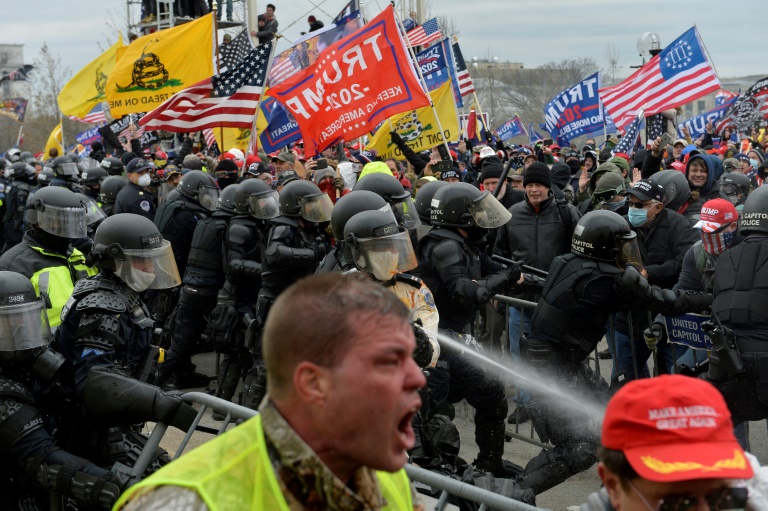
US Capitol riot hearings to link Trump election plots to insurrection

The year-long congressional panel probing the 2021 assault on the US Capitol begins outlining its findings Thursday, promising explosive new revelations that will tie the deadly violence to Donald Trump’s attempts to overturn his election defeat.

The first hearing — an evening primetime presentation — will serve as an “opening statement” on the January 6 insurrection, according to aides of the investigating House select committee, which began its work last July.

It will also aim to demonstrate that the violence was part of a broader conspiracy by Trump and his inner circle to illegitimately hold on to power, tearing up the Constitution and more than two centuries of peaceful transitions from one administration to the next.

“We will be revealing new details showing that the violence of January 6 was the result of a coordinated multi-step effort to overturn the results of the 2020 election and stop the transfer of power from Donald Trump to Joe Biden,” a select committee aide said.

“And indeed that former president Donald Trump was at the center of that effort.”

A slickly-produced 90-plus minutes of television — and five subsequent hearings over the coming weeks — will focus on Trump’s role in the multi-pronged effort to return him to the Oval Office as an unelected president by disenfranchising millions of voters. 

The case the committee plans to make is that Trump laid the groundwork for the insurrection through months of lies about fraud in an election described by his own administration as the most secure in history.

His White House is accused of involvement in several potentially illegal schemes to aid the effort, including a plot to seize voting machines and another to appoint fake “alternative electors” from swing states who would ignore the will of their voters and hand victory to Trump. 

– ‘Chilling’ conspiracy –

The select committee’s Republican vice-chairwoman Liz Cheney said on Sunday that the assault on the Capitol was part of a “chilling” conspiracy.

“It is extremely broad. It’s extremely well organized,” she told CBS.

The committee is planning to present live testimony Thursday from two people who interacted with members of the neofascist organization the Proud Boys on January 6 and in the days leading to the violence.

Cheney and chairman Bennie Thompson will make opening arguments before explaining how each of the six hearings, organized by theme, is expected to play out.

They will feature previously unseen video clips of the violence itself and excerpts from a trove of 1,000 interviews, including a “meaningful portion” of discussions with Trump’s senior White House and campaign officials — as well as members of his family.

Trump’s daughter Ivanka and her husband Jared Kushner, as well as the former president’s eldest son Don Jr., have all cooperated voluntarily with the committee.

British documentary filmmaker Nick Quested will testify Thursday about his experience shadowing members of the Proud Boys in the days leading up to January 6 and his interactions with them on the day itself.

The Emmy Award-winning director’s evidence is seen as crucial, said a committee aide, because he was on the scene during the first moments of violence against the Capitol Police and “all the chaos that ensued.”

– ‘Ongoing threats’ –

Capitol Police Officer Caroline Edwards, who was present at the breach of the first barricade, will describe sustaining head injuries in clashes with the far-right group, which saw its leader and four lieutenants charged on Monday with seditious conspiracy.

The hearings will differ from Trump’s two impeachments, however, in that he will not be represented in the room as he is not on trial — except perhaps in the court of public opinion.

Nevertheless, a number of his most loyal counter-punchers are expected to circle the wagons on Capitol Hill, questioning any damning testimony and challenging the validity of the investigation in TV appearances. 

“It is the most political and least legitimate committee in American history,” the leader of the House Republican minority, Kevin McCarthy, told reporters at the Capitol.

In fact, Congress has wide-ranging oversight powers, and a Trump-appointed federal judge last month emphatically rejected Republicans’ arguments that the committee is illegitimate, overtly partisan and has no real legislative or oversight purpose.

AFP asked Trump spokesman Taylor Budowich for details of the plan for Trump’s defense, but there was no response.

The committee has not confirmed its plans for after the initial slate of hearings, but at least one more presentation and a final report are expected in the fall.

The panel, which sees Trump as a potential threat to the next election, will make legislative recommendations to ensure there is no repeat of the events of January 6.

“The investigation has flagged ongoing threats to our democracy, and our job is to tell the story of what happened,” said an aide.

“And, frankly, to let others judge about continuing threats and what needs to be done.”

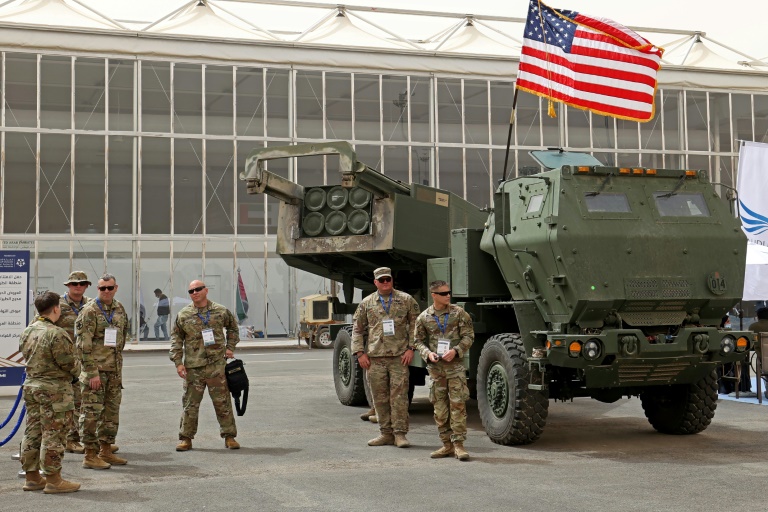
Ukraine forces need deliberate training on new rocket system: US

Ukraine wants new Himars artillery from the United States on the battlefield now, but the Pentagon is stressing the need for comprehensive training to make sure the long-range precision rocket systems are used effectively against Russian forces.

Joint Chiefs Chairman General Mark Milley said Wednesday that while four of the Himars systems were being prepared for Ukraine, training was focused on building one platoon at a time to operate them, a process that could slow their delivery.

Himars is a “very sophisticated long-range system,” Milley told reporters. “We have to certify these guys to make sure that they know how to use the system properly.” 

He said the Pentagon is coordinating closely with the Ukrainian military on preparing the teams to operate Himars — an agile, wheels-based unit that can fire 227 mm precision-guided munitions up to 80 kilometers (50 miles).

That is around double the distance by the more conventional artillery that both sides have on the ground now.

Ukraine pushed for months to obtain the weapons, and the administration of President Joe Biden announced the decision to provide them on May 31.

But at the time, the Pentagon said it would take some three weeks to train teams to operate them, and another two weeks for maintenance.

“What we decided to do, in coordination with the Ukrainians, was to build one platoon at a time,” Milley said, noting that they will have a battery in a few weeks, and that the program will build up from there.

“We have got to start this thing with a program that is rational and deliberate,” Milley said.

“It would do no good just to throw these weapon systems into the battle. You’ve got to be trained on it in order to get the maximum use of the weapons.”

Ukraine and Western allies hope Himars — and the similar track-based M270 Multiple Launch Rocket System being provided by Britain and another unnamed country — will give Ukraine a battlefield edge over invading Russian forces.

The current fight along the frontlines in eastern and southern Ukraine heavily depends on dueling artillery, much of it without precision-guided fire capability.

“If they use it properly, effectively, they’ll have a very, very good effect on the battlefield,” Milley said of Himars.

Stocks extend losses as ECB eyes multiple rate hikes

Global stocks moved deeper into the red on Thursday after the European Central Bank said it was planning a series of rate hikes from next month to rein in runaway inflation.

The ECB said after its policy meeting that it would raise interest rates for the first time in over a decade in July, bringing the curtain down on the era of cheap money in the single currency area.

While the announcement had been widely anticipated, stock prices in Frankfurt, London and Paris — which had been weaker all morning — closed in the red and yields on eurozone countries’ sovereign bonds moved higher.

On the other side of the Atlantic, Wall Street stocks also traded lower in midday trading. 

After refusing to act while other central banks around the world already started tightening monetary policy, ECB chief Christine Lagarde cautioned that the first quarter-point rate hike in July was not expected to have an immediate effect on inflation.

As a first step, the ECB said it would end its massive bond-buying stimulus as of July 1.

The central bank also sharply upgraded its inflation forecasts for this year and 2023 while lowering the economic growth outlook.

Craig Erlam, market analyst at online trading platform OANDA, said that while the ECB took a “hawkish shift”, it “doesn’t come out of today looking particularly good”.

“It’s sat by and watched all year while other central banks have conceded defeat and made this move assuming its situation would be different. The reality is it never was and now it’s left itself a lot to do,” he added.

In foreign exchange, the euro softened against the dollar and pound.

Inflation around the world has soared to the highest levels in decades, fuelled largely by rocketing oil and gas prices.

Energy demand has surged as economies emerge from pandemic lockdowns, while supplies have been disrupted by the invasion of Ukraine by major producer Russia.

Oil prices fell slightly on Thursday.

– ‘Gloomy summer’ –

Traders were also awaiting US inflation data due Friday.

Analysts expect the Federal Reserve to stick to its hawkish path and hike US interest rates by half a point for at least three more meetings this year as it tries to tame American consumer prices.

“Until we reach peak inflation, which will trigger a less hawkish Fed and lower recession odds, it could be a gloomy summer for global stock pickers,” forecast SPI Asset Management’s Stephen Innes. 

There was fresh uncertainty over the economic outlook in China as Covid fears linger over the world’s second-biggest economy.

While data showed China’s exports rebounded strongly in May, with factories restarting and supply chains untangling as Shanghai slowly emerged from a gruelling lockdown, the metropolis will Saturday shut a district of 2.7 million people for mass coronavirus testing.

– Key figures at around 1530 GMT –

London – FTSE 100: DOWN 1.5 percent at 7,476.21 points (close)

Frankfurt – DAX: DOWN 1.7 percent at 14,198.80 (close)

Paris – CAC 40: DOWN 1.4 percent at 6,358.46 (close)

EURO STOXX 50: DOWN 1.7 percent at 3,724.45

New York – Dow: DOWN 0.5 percent at 32,752.12

Tokyo – Nikkei 225: FLAT at 28,246.53 (close)

Hong Kong – Hang Seng Index: DOWN 0.7 percent at 21,869.05 (close)

Shanghai – Composite: DOWN 0.8 percent at 3,238.95 (close)

Brent North Sea crude: DOWN 0.2 percent at $123.39 per barrel

West Texas Intermediate: DOWN 0.3 percent at $121.69 per barrel

Dollar/yen: DOWN at 134.06 yen from 134.29 yen late Wednesday

Euro/dollar: DOWN at $1.0657 from $1.0720 

Pound/dollar: DOWN at $1.2522 from $1.2535

Euro/pound: DOWN at 85.10 pence from 85.54 pence

burs/imm/lth

Foreign fighters in Ukraine sentenced to death by pro-Russians

Pro-Russian rebels sentenced to death two British fighters and a Moroccan who were captured while fighting for Ukraine, as a Ukrainian governor called for western arms on Thursday to win the battle for a crucial eastern city.

The death sentences come as Moscow concentrates its firepower on the strategic industrial hub of Severodonetsk, where Ukrainian President Volodymyr Zelensky says the fierce fighting could determine the fate of the entire Donbas area.

Separatist authorities in the Donetsk region, which is part of the Donbas, ordered the death penalty for Aiden Aslin, Shaun Pinner and Saaudun Brahim after they were accused of acting as mercenaries for Kyiv, Russian media reported.

Britain said it was “deeply concerned” by the sentences.

“Under the Geneva Convention, prisoners of war are entitled to combatant immunity,” said a spokesman for Prime Minister Boris Johnson.

The two Britons surrendered in April in Mariupol, the southern port city that was captured by Russian troops after a weeks-long siege. They later appeared on Russian TV calling on Johnson to negotiate their release.

Brahim surrendered in March in the eastern town of Volnovakha.

During a trial that lasted three days, the men pleaded guilty to committing “actions aimed at seizing power and overthrowing the constitutional order of the Donetsk People’s Republic”, Russian news agency Interfax said.

– ‘Fate of Donbas’ –

Western countries have provided weapons and aid for Ukraine since the February 24 invasion, while a number of people from abroad have come to fight against Russian forces.

The fiercest fighting is now focused on Severodonetsk in the Lugansk region, where Ukrainian officials say their outgunned forces are still holding out amid street battles despite the city being mostly under Russian control. 

The regional governor of Lugansk — also part of the Donbas — said Western artillery would quickly help secure a Ukrainian victory for the bombarded city.

“As soon as we have long-range artillery to be able to conduct duels with Russian artillery, our special forces can clean up the city in two to three days,” governor Sergiy Gaiday said.

In his evening address to the Ukrainian people on Wednesday, Zelensky said the battle for the city was “probably one of the most difficult throughout this war.

“In many ways, the fate of our Donbas is being decided there.”

Up to 100 Ukrainian soldiers were being killed every day in frontline fighting and as many as 500 wounded, Defence Minister Oleksiy Reznikov said.

The city of Lysychansk, which is separated from Severodonetsk by a river, is still in Ukrainian hands but under fierce Russian bombardment.

– ‘Foreign mercenaries’ –

After being repelled from Kyiv following their February 24 invasion, Russian President Vladimir Putin’s troops have refocused their offensive on the Donbas. 

Pro-Russian separatists have held part of that region since 2014.

Moscow, which has repeatedly warned the West against getting involved in the conflict, said it had targeted a Ukrainian training centre for “foreign mercenaries” in the Zhytomyr region, west of Kyiv.

The Ukrainian presidency said four people were killed in a Russian air strike on Toshkivka, a village around 25 kilometres (14 miles) south of Severodonetsk.

Four more people were killed in fighting in Donetsk and shelling killed two in the north-eastern city of Kharkiv, it said. Another person was killed in the Mykolayiv region in the south. 

The war’s shockwaves are spreading around the world. At the United Nations, Secretary-General Antonio Guterres added his voice to increasingly dire warnings. 

“For people around the world, the war is threatening to unleash an unprecedented wave of hunger and destitution, leaving social and economic chaos in its wake,” he said.

Zelensky on Thursday called for Russia to be expelled from the UN’s Food and Agriculture Organization (FAO), blaming Moscow for “causing hunger” and spurring the global grain crisis by invading his country.

– ‘Nobody to help’ –

Ukraine’s Black Sea ports usually export millions of tonnes of grain each year but have been blocked since the invasion, while western sanctions on Russia have prevented Moscow selling much of its grain abroad, sending food prices soaring.

The FAO warned that poor countries will suffer the most from the crisis as they were “paying more but receiving less food.”

Russia and Turkey made little headway during talks on Wednesday in striking a deal to secure safe passage for grain exports stuck in Ukraine.

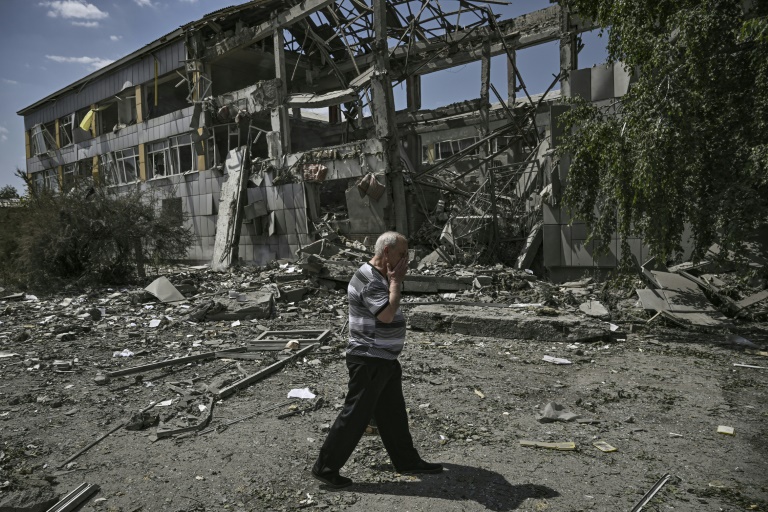
The situation on the ground is increasingly desperate. 

In Severodonetsk’s twin city Lysychansk, residents who had chosen to stay were facing fierce Russian bombardments. 

“Every day there are bombings and every day something burns. A house, a flat… There is nobody to help me,” 70-year-old Yuriy Krasnikov told AFP.

“I tried to go to the city authorities, but nobody’s there, everyone has run away.”

Separately, English football’s Premier League suspended its six-year deal with a Russian broadcaster following the Ukraine invasion.

burs-dk/jm

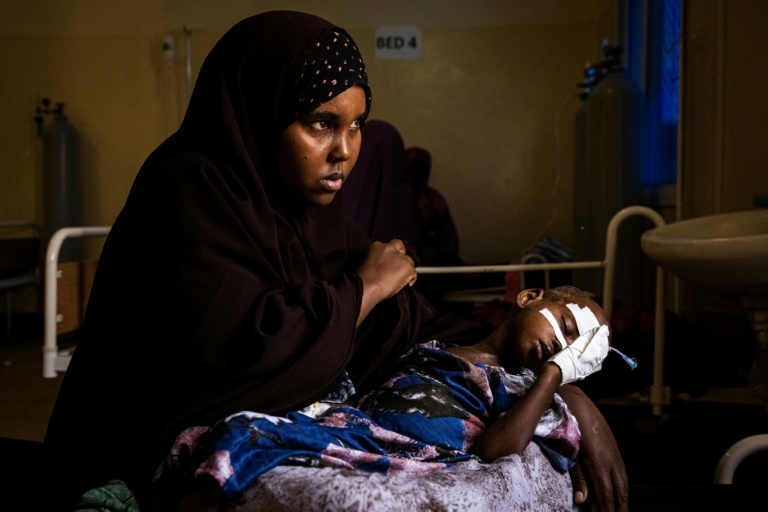
Somalia president urges global community to help avert famine

Somalia’s newly-elected president, Hassan Sheikh Mohamud, used his inauguration speech on Thursday to  appeal to the diaspora and international community to help stave off the famine that threatens his drought-stricken country.

Aid agencies have warned of an approaching famine as cases of severe malnutrition among children shoot up in the troubled Horn of Africa nation, which is battling a record drought following four failed rainy seasons.

“There are fears that starvation may strike in some areas,” Mohamud said, urging “the diaspora and the world to play a role in saving our people who were affected by the drought.”

“These conditions were caused by accumulated problems including climate change, destruction of our economic resources and the weakness of our government institutions. Therefore, my government will establish an agency for environmental matters,” he said.

Multiple appeals for aid have gone largely unnoticed so far, with nearly half the country’s population going hungry and more than 200,000 people on the brink of starvation, the United Nations said Monday.

The drought crisis has also hit Somalia’s neighbours, Ethiopia and Kenya, whose presidents were among the foreign leaders attending Thursday’s ceremony, held under heavy security in the Mogadishu airport complex.

In addition to tackling the looming famine, Mohamud — who previously served as president between 2012 and 2017 — faces a grinding Islamist insurgency in parts of the country, making humanitarian access a challenge.

In a sign of the lingering threat, militants fired several rounds of mortar shells in neighbourhoods near the airport in an overnight attack.

– Foster unity –

A former academic and peace activist, Mohamud’s first term was dogged by high-profile corruption scandals and political turmoil, with two of his three prime ministerial appointees forced out, and two central bank governors resigning.

The first Somali leader to win a second term, he has promised to transform Somalia into “a peaceful country that is at peace with the world” and repair damage inflicted by months of political infighting, both at the executive level and between states and the central government.

He vowed Thursday to foster “political stability through consultation, mutual endorsement, and unity among… the federal government and federal member states,” striking a contrasting tone to his confrontational predecessor Mohamed Abdullahi Mohamed, better known as Farmajo.

Somalia’s international partners have welcomed the election of President Mohamud, with many hoping it will draw a line under a long-running political crisis that has distracted the government from tackling the Al-Shabaab insurgency and the devastating drought.

Meanwhile, calls for international aid have raised less than 20 percent of the money needed to avert a repeat of the 2011 famine that killed 260,000 people — half of them children under the age of six.

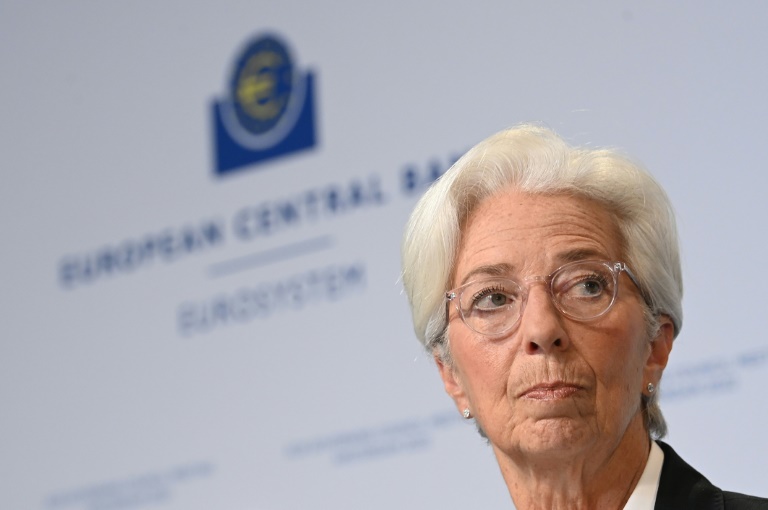
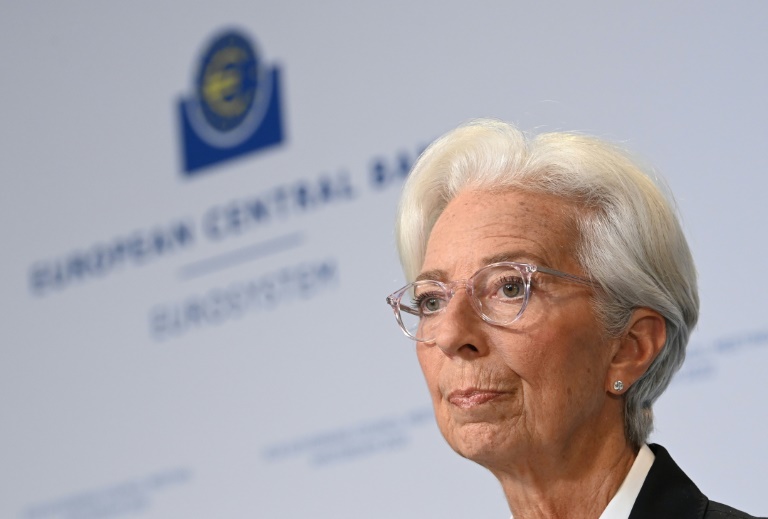
ECB gears up for 'series' of rate hikes to fight inflation

The European Central Bank on Thursday ended its bond-buying stimulus and unveiled plans for a series of interest rate hikes from July, the first in more than a decade, to combat soaring inflation.

The keenly-awaited announcements bring down the curtain on the ECB’s cheap money era, after policymakers faced growing pressure to catch up with other major central banks that have already moved to rein in prices.

ECB governors, exceptionally meeting in Amsterdam instead of Frankfurt, agreed as a first step to halt their multi-billion-euro bond-buying stimulus as of July 1.

The bank’s governing council then plans “to raise the key ECB interest rates by 25 basis points” at its next meeting on July 21, the ECB said in a statement.

It will raise rates again in September, with the size dependent on the economic outlook. 

ECB president Christine Lagarde, who said Thursday’s decisions were unanimous, said the bank was embarking on “a journey” that would include “a series of moves over the course of the next months”.

The last time the ECB hiked rates was in 2011.

Inflation in the 19-nation euro area rose to a record 8.1 percent in May, well above the ECB’s two-percent target.

The surge has largely been driven by Russia’s war against Ukraine, which has pushed up the cost of energy, food and raw materials around the globe.

The ECB on Thursday made “a correct move, but one that comes too late”, said Clemens Fuest, president of the Ifo think tank in Munich. “Price increases are spreading beyond energy and food to impact other areas.”

Several ECB governors had on Thursday argued for a 50 basis point hike in July already, a central banking source told AFP — a more aggressive move already undertaken by the US Federal Reserve.

– Wages rising –

In updated forecasts, the ECB said it expected eurozone consumer prices to soar to 6.8 percent in 2022, up from 5.1 percent previously.

Inflation is seen easing to 3.5 percent in 2023 before falling back to 2.1 percent in 2024.

The ECB also slashed its economic growth forecast for the 19-nation club to 2.8 percent in 2022 and 2.1 percent in 2023, from 3.7 and 2.8 percent previously.

The weaker outlook underscores the difficult task ahead for Lagarde in finding the right balance between raising borrowing costs enough to cool inflation, without jeopardising the eurozone’s already stuttering economy.

The war in Ukraine “is disrupting trade, is leading to shortages of materials, and is contributing to high energy and commodity prices,” the ECB said, while renewed coronavirus restrictions in China were worsening supply chain bottlenecks.

But the ECB still saw reason for optimism.

“Once current headwinds abate, economic activity is expected to pick up again,” it said.

“The conditions are in place for the economy to continue to grow on account of the ongoing reopening of the economy, a strong labour market, fiscal support and savings built up during the pandemic.”

Policymakers are, however, keeping a close eye on eurozone wages, Lagarde said, in a nod to fears of a “wage-price spiral” where higher prices push workers to demand salary increases, in turn pushing prices up further.

– ‘Lift off’ –

The July 1 end to the ECB’s bond-buying scheme will draw a line under the last in a series of debt-purchasing measures worth a total of around five trillion euros ($5.4 trillion) since 2014.

Scrapping the scheme paves the way for what Lagarde has called a “lift off” in rates.

The ECB has three key rates: a main refinancing operations rate that currently stands at zero, a marginal lending facility at 0.25 percent and a bank deposit rate of minus 0.5 percent — meaning lenders pay to park their excess cash at the ECB. 

The roadmap laid out by Lagarde sees the central bank exiting eight years of negative rates by the end of September.

The former French finance minister kept the door open to a September hike higher than 25 basis points.

Quizzed on how the bank would respond if borrowing costs started to diverge across the eurozone, Lagarde said the ECB “will not tolerate fragmentation”.

She declined to spell out what action the bank might take, saying only that “we know how to deploy new instruments if and when necessary”.

The spread between Italian and benchmark German 10-year bonds is currently at its widest since the early stages of the pandemic.

S.Africa president lashes 'dirty tricks' in burglary scandal

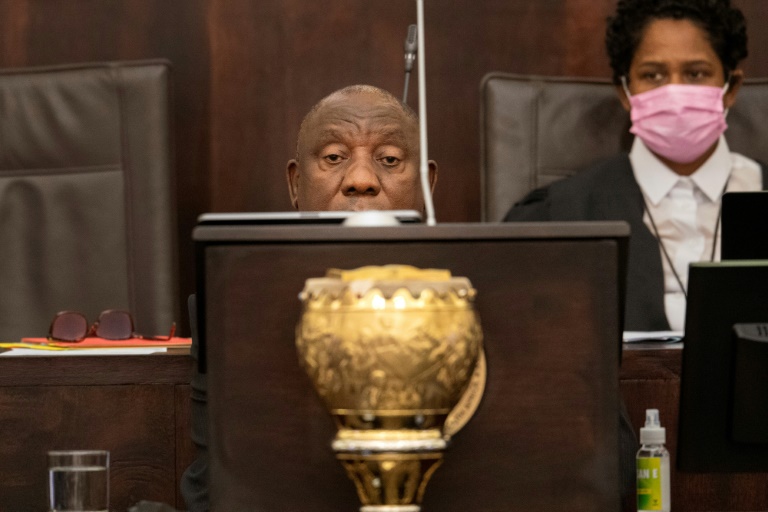
South African President Cyril Ramaphosa on Thursday said he was the victim of “dirty tricks” in a damaging burglary scandal, as a rowdy opposition heckled him in parliament. 

Last week Ramaphosa was accused of bribing burglars to keep quiet about a February 2020 heist at his farmhouse, where they stole cash worth some $4 million.

“In recent days we have seen those who stand to lose the most from the fight against corruption resorting to dirty tricks and intimidation in a bid to get us to back down,” he said in a budget speech.

“But we will not waver. We will not blink. We will finish what has been started,” Ramaphosa said in a speech interrupted by hecklers.

Ramaphosa is a former trade unionist who became a hugely successful businessman in post-apartheid South Africa before entering politics.

He took office in 2018 vowing to clean up the corruption that defined the presidency of his predecessor Jacob Zuma.

South Africa’s former spy boss Arthur Fraser last week reported to police that robbers allegedly broke into Ramaphosa’s Phala Phala farm in the northeast of the country where they found $4 million in cash hidden in furniture.  

Ramaphosa hid the heist from police and the tax authorities, Fraser said.

Instead, Fraser alleged, Ramaphosa organised the kidnapping and questioning of the burglars, and then bribed them to keep quiet.

Ramaphosa has acknowledged the burglary but disputes the amount of money involved and says the cash came from legitimate sales of game at his farm.

He denies the alleged kidnapping and bribery, saying he reported the burglary to the police after he had learned of it.

Ramaphosa will face party members at a conference in December during which he could be ousted from the top job by the ruling African National Congress (ANC).

South Africa’s top anti-corruption official has opened a case into the affair.

Close Bitnami banner
Bitnami