World

Displaced by rebel clashes, people in east DR Congo make uneasy trek home

People who fled fighting between DR Congo’s army and M23 rebels have begun to make a nervous return home, with tensions in the volatile east of the country remaining on a hair trigger.

Last month, clashes with the M23, a primarily Congolese Tutsi group, erupted in North Kivu province and spread near its capital Goma, a trading hub of a million people. 

The fighting sparked concerns that the city would fall — as well as fears that it would trigger a regional conflagration by drawing in neighbouring Rwanda.  

The Democratic Republic of Congo (DRC) has accused Rwanda of backing the M23 — an allegation that caused relations between the two central African states to plummet. Rwanda has denied the claim.

Returnees who had fled clashes in Nyiragongo, a territory in the foothills of two volcanoes, said their future was clouded.

“I’ve only just got back, but we’re not going to sleep here, we’re afraid of the Rwandan army returning at any moment,” said a young woman named Deborah, speaking outside her home in Kabuhanga, which lies close to the border.

Like other local people, the 17-year-old said she had seen Rwandan regulars fighting alongside M23 rebels. 

On May 24, heavy shelling forced her to leave her home, said Deborah, whose last name AFP is withholding for security reasons. 

“When we got home, we found nothing in the house. Everything had been looted.” 

Some 72,000 people fled Nyiragongo and neighbouring Rutshuru territory in just eight days, according to the United Nations. 

– ‘I saw them’ –

M23 fighters captured Goma in late 2012 before the Congolese army quelled the rebellion the following year. 

But the militia resumed fighting in late 2021 after accusing the government of failing to respect a 2009 agreement under which its fighters were to be incorporated into the army.

Since last week, DRC’s government has accused Rwanda of backing the group, and it barred flights from Rwanda’s national carrier as part of the worsening spat.

Congolese security forces also detained two Rwandan soldiers it said had been trespassing in the east of the country, before announcing on Tuesday that they would be released.

Rwanda, for its part, said a Hutu rebel group in DRC had kidnapped the soldiers. It also accused DRC last month of firing shells into its territory. 

Several people interviewed by AFP in the areas where recent clashes occurred claimed that M23 rebels had fought alongside Rwandan soldiers. 

In the village of Kingarama, residents said a freshly-dug grave contained the remains of a 40-year-old farmer named Gato Basisite, allegedly killed during a mixed Rwandan-M23 attack.

“I saw them with my own eyes,” said a man named Augustin, aged 30. “They were in Rwandan uniforms, and the M23 had Congolese uniforms,” he added.

AFP was unable to independently confirm the account.

– ‘Bullets over hunger’ –

While some people have begun to return home, others are apparently staying away. 

Kabuhanga, a usually bustling border settlement, is deserted. Most of the town’s population has fled closer to Goma. The nearby hospital has also shut its doors since medical staff fled the M23 offensive.

Many of those who have braved returning home did so after the DRC’s army regained some of the initiative against the rebels. 

Esperance, a 40-year-old mother of six, was one such woman. “We have to build a wall and close the border with Rwanda,” she told AFP, while peeling potatoes in her vegetable plot.

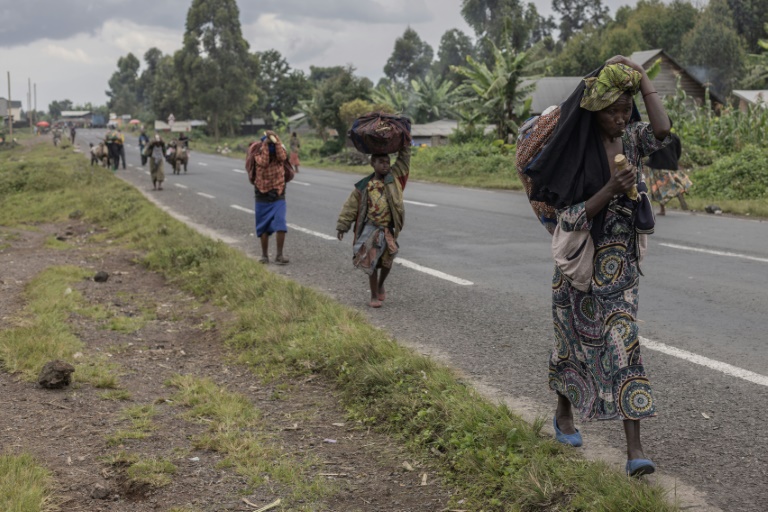
The road leading north out of Goma now has a heavy military presence. People trudge home along it under a low grey sky, lugging goods and trailed by sheep. 

Ndagijimana Barayavuga, standing beside his wife and four children with a rolled-up mattress on his head, said he had no choice but to return home. 

“It’s better to die from a bullet than from hunger,” he said. 

Heard 'absolutely not' able to pay Depp $10.4 million in damages: lawyer

Actress Amber Heard is unable to pay her ex-husband Johnny Depp more than $10 million in damages, her lawyer said Thursday, after a US jury took the side of the “Pirates of the Caribbean” star in a bitter defamation trial.

The lengthy, high-profile televised court battle ended Wednesday, when a seven-person jury found that Depp and Heard had defamed each other, but weighed in far more strongly with Depp.

The jury awarded him $10.35 million in damages, in contrast with $2 million awarded to Heard.

Asked on NBC’s TODAY show if Heard will be able to pay up, her attorney Elaine Bredehoft answered: “Oh no, absolutely not.”

She added that Heard wants to appeal the verdict.

The 58-year-old Depp, who lost a libel case against The Sun tabloid in London in 2020 for calling him a “wife-beater,” celebrated the split verdict in the case as a victory while Heard said she was “heart-broken.”

Depp sued Heard over an op-ed she wrote for The Washington Post in December 2018 in which she described herself as a “public figure representing domestic abuse.”

The Texas-born Heard, who had a starring role in “Aquaman,” did not name Depp in the piece, but he sued her for implying he was a domestic abuser and sought $50 million in damages.

The 36-year-old Heard countersued for $100 million, saying she was defamed by statements made by Depp’s lawyer, Adam Waldman, who told the Daily Mail her abuse claims were a “hoax.”

Bredehoft said Depp’s legal team worked to “demonize” Heard and suppressed crucial evidence in the trial, preventing the jurors from examining evidence of Depp’s alleged abuse.

“A number of things were allowed in this court that should not have been allowed, and it caused the jury to be confused,” she said.

The lawyer said the ruling bodes ill for the MeToo movement and will discourage women from reporting sexual harassment and abuse.

“It’s a horrible message,” Bredehoft said. “It’s a significant setback, because that’s exactly what it means.

“Unless you pull out your phone and you video your spouse or your significant other beating you, effectively you won’t be believed.” 

For his part, Depp welcomed the verdict, saying “The jury gave me my life back.”

“The best is yet to come and a new chapter has finally begun,” Depp said in a statement.

Blessing at former Franco gravesite sparks Spanish army probe

The Spanish military has suspended an army officer for taking his troops for a blessing at the former burial site of dictator Francisco Franco, military sources said Thursday. 

“The captain who headed the company has been suspended and an investigation has been opened,” the army said in a statement to AFP, without giving further details nor saying whether the move was temporary or permanent. 

A group of soldiers angered by the gesture published footage of it on the “Citizens in Uniform” Telegram account, denouncing it as “a shameful video”.

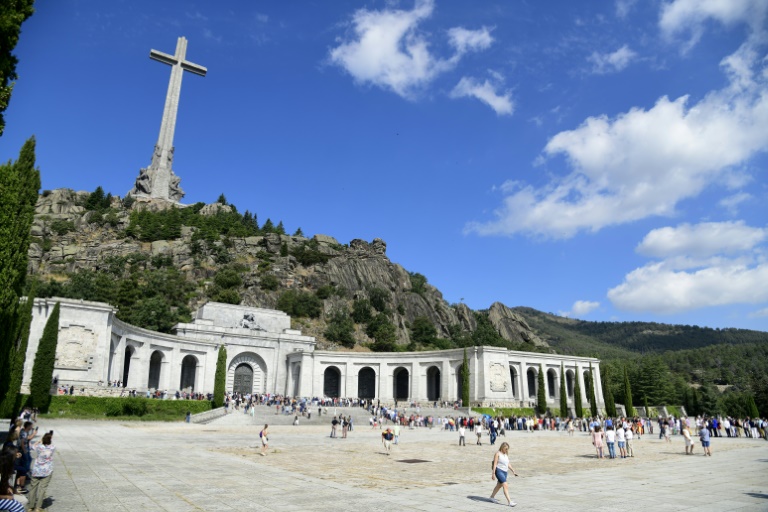
In the footage, several dozen of soldiers, one carrying the company’s flag, can be seen kneeing on the stone steps in front of the late dictator’s former mausoleum outside Madrid. 

A few steps up stands a priest in a white cassock who reads a blessing.

“Citizens in Uniform” said the captain had organised a march to the Valley of the Fallen, 50 kilometres (30 miles) outside Madrid, “with the idea of having the company’s flag blessed at the basilica”.

They said he had cancelled all leave for that particular day and required that all company members attend. 

The imposing basilica is part of what used to be a grandiose hillside mausoleum topped by a 150-metre (500-foot) cross where Franco was buried after his death in 1975.

It is a deeply divisive symbol of a past that Spain still finds difficult to digest.

In October 2019, Franco’s body was exhumed and moved to a more discreet grave in a carefully-choreographed operation led by Spain’s left-wing government. 

Built by Franco’s regime after the 1936-1939 civil war — in part by the forced labour of some 20,000 political prisoners — the site contains the remains of more than 33,000 dead from both sides of the civil war.

It has long been a draw for those nostalgic for the Franco era, who used to hold masses in his honour and celebrate his memory. 

The exhumation was strongly opposed by the dictator’s living relatives as well as by the prior of the Benedictine monks who manage the site. 

OPEC debates oil output boost amid Russian isolation

Major oil producers led by Saudi Arabia and Russia began talks Thursday on whether to adjust output, hard on the heels of an EU ban on Russian oil imports.

Analysts had expected OPEC+ producers to likely stick to their policy of only increasing output modestly, as they have done since May 2021.

However, a Wall Street Journal report on Monday that said OPEC was considering suspending Russia from the output deal has sown doubts.

“Such a move would effectively bring a premature end to the group’s supply agreement and pave the way for an unrestricted increase in output,” Stephen Brennock, an analyst at PVM Energy, said.

Oil prices sank more than two percent early Thursday on a similar Financial Times report that said Saudi Arabia was considering a plan to boost output as Russia struggles to meet targets owing to Ukraine war-linked sanctions.

The 13 members of the Organization of the Petroleum Exporting Countries, chaired by Saudi Arabia, and their 10 partners, led by Russia, drastically slashed output in 2020 as demand slumped because of the coronavirus pandemic and worldwide lockdowns.

They have increased output modestly to the tune of around 400,000 barrels per day each month since last year, resisting pressure by top consumers, including the United States, to open the taps wider.

The expectation was that output would increase by another 432,000 barrels per day in July.

“OPEC will likely stick to its production increase plan and won’t make miracles at this week’s meeting,” said Ipek Ozkardeskaya, a senior analyst at Swissquote Bank.

She added, however, that the group may revise its strategy “by the end of September”, with Saudi Arabia and United Arab Emirates possibly filling some of the gap. 

“The quota system doesn’t make sense when Russia is held back from increasing its production due to the fresh European sanctions,” she said.

– Russia a ‘pariah’ –

Talks by videoconference began at the technical level around 1225 GMT coordinated by the OPEC headquarters in Vienna, before moving into a plenary session.

European Union leaders agreed on Monday to ban more than two-thirds of Russian oil imports as part of a sixth package of sanctions on Moscow over its offensive in Ukraine.

Britain has already said it plans to phase out Russian oil imports by the end of 2022 and eventually stop importing its gas.  

The United States, too, banned Russian oil and gas days after Russia’s invasion began on February 24.

“Russia has now transformed into a pariah… Apparent elevated US-Saudi shuttle diplomacy lately may indicate that change in OPEC+ may be near,” Seb analyst Bjarne Schieldrop commented.

“More oil from Saudi and the UAE will allow the West to implement sharper bans forcing Russian oil exports lower while not blowing up the oil price,” Schieldrop added.

– OPEC ‘reticence’ –

Russia’s invasion of Ukraine has exacerbated concerns about oil supplies, sending prices to record highs this year.

As the economic screws have tightened around Russia, prices have further soared, putting pressure on the cartel to open the valves more widely and relieve the market.

But Saudi Arabia, OPEC+’s de facto leader, has given no indication it is inclined to make such a move.

Saudi Foreign Minister Prince Faisal bin Farhan told last week’s World Economic Forum in Davos that the kingdom had “done what it could” for the oil market.

“It’s more complex than simply adding barrels to the market,” he added.

Members of the G7 club of industrialised nations last week underlined OPEC+’s “key role” in the face of the tightening of international markets.

Soaring oil prices have stimulated the Gulf region’s economies, with Saudi Arabia recording its highest growth rate in 10 years in the first quarter of 2022.

Susannah Streeter, an analyst at Hargreaves Lansdown, said there “is likely to still be reticence about turning on the taps too freely” as a result.

“OPEC has also previously warned that it will be impossible to replace all the volumes lost from Russia due to sanctions, which is still likely to stem further significant drops in crude prices.”

burs-jza/kjm

Yemen's warring parties renew two-month truce: UN

Yemen’s warring parties have agreed to renew a two-month truce, the United Nations said on Thursday, in an 11th-hour move on the day it was set to expire.

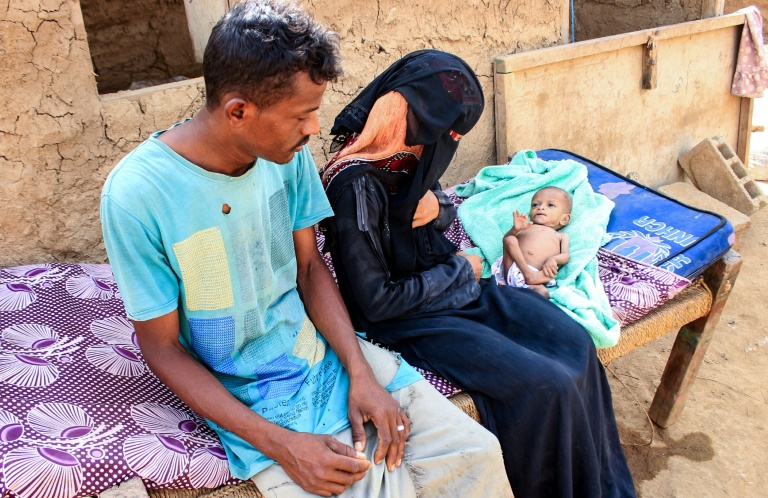
Aid agencies and Western governments had urged the Yemeni government and Huthi rebels to extend the truce, which went into effect in April and significantly reduced the intensity of fighting in a conflict the UN says has triggered the world’s worst humanitarian crisis.

“I would like to announce that the parties to the conflict have agreed to the United Nations’ proposal to renew the current truce in Yemen for two additional months,” the UN special envoy on Yemen, Hans Grundberg, said in a statement.

“The extension of the truce comes into effect when the current truce period expires, today 2 June 2022 at 19:00 Yemen time (1600 GMT).”

Yemen has been gripped by conflict since the Iran-backed Huthi rebels took control of the capital Sanaa in 2014, triggering a Saudi-led military intervention in support of the beleaguered government the following year.

Grundberg said the truce was extended under the same terms as the previous one.

The Norwegian Refugee Council welcomed the development, saying it “shows a serious commitment from all parties to end the senseless suffering of millions of Yemenis”.

“We hope this extension of the truce will allow for further progress on the reopening of roads linking cities and regions, allow more displaced people to return to their homes, and ensure humanitarian aid can reach people who have been out of reach because of the fighting,” NRC’s Yemen country director, Erin Hutchinson, said in a statement.

– ‘Additional steps’ –

On Wednesday, a Yemeni aircraft left Sanaa for Cairo on the first commercial flight between the two cities since 2016.

It was the seventh such flight under the truce, with the previous six all heading to the Jordanian capital Amman. 

Beyond opening Sanaa airport to some commercial flights –- a lifeline to Yemenis needing medical care abroad –- the truce has allowed oil tankers to dock in the rebel-held port of Hodeida, potentially easing fuel shortages in Sanaa and elsewhere. 

But a provision for the rebels to ease their siege of Yemen’s third-largest city Taez has yet to be implemented, to the anger of the government which is demanding roads to the city be opened. 

The rebels in turn have called on the government to pay the salaries of public sector employees working in areas under their control. 

“In order for the truce to fully deliver on its potential, additional steps will need to be taken, particularly on the matters of road openings and commercial flight operations,” Grundberg said.

“I will continue engaging with the parties to implement and consolidate all elements of the truce in full, and move towards a sustainable political settlement to the conflict that meets the legitimate aspirations and demands of Yemeni women and men.”

A Sanaa resident, Nabil al-Qanis, said Yemenis simply wanted the war to be over. 

“The Yemenis are tired of this war and they are really fed up with the current situation,” he told AFP.

“All parties must work hard to stop the war… and the UN must put pressure on any obstinate party.”

The war has killed hundreds of thousands of people and left millions on the brink of famine.

More than four million people have been displaced by the conflict, and 19 million stand to go hungry this year, Stephane Dujarric, spokesman for UN chief Antonio Guterres, said on Wednesday. 

That includes “more than 160,000 who will face famine-like conditions”, he said.

Hong Kong rights lawyer says he fled 'cold winds' of suppression

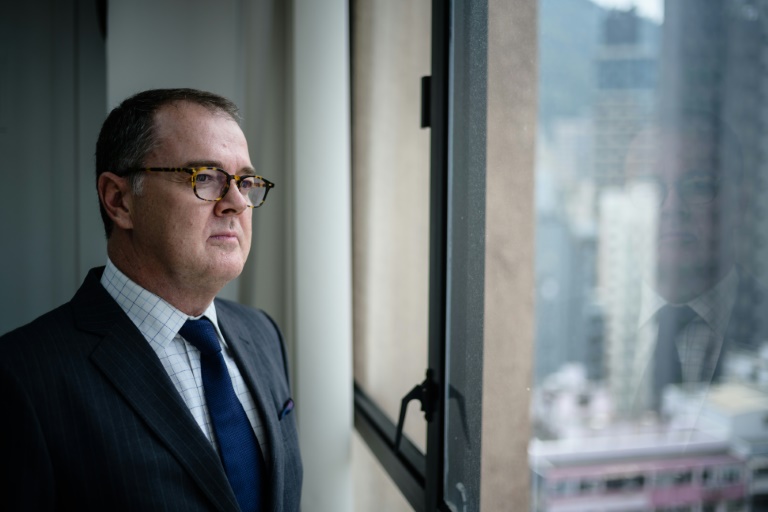
When he saw the crowd of reporters waiting for him at Hong Kong airport, British human rights lawyer Michael Vidler knew he had been right to close his firm and flee the city.

“Are you afraid of being arrested? Are you afraid of Hong Kong’s security law?” journalists from pro-Beijing newspapers shouted as they chased him, cameras pointing at his face.

The events that led Vidler to leave the city he had called home for over three decades with just two days’ notice are testament to the withering of Hong Kong’s once-vibrant civil society — and the stifling of dissent brought by the national security law that Beijing imposed in 2020.

Vidler decided to shutter his firm when it was singled out in a national security case in February.

Two months later, when the closure was announced, he was attacked in state-associated media and accused of helping demonstrators who took part in huge pro-democracy protests that engulfed Hong Kong three years ago. 

Vidler told AFP he never represented any of the 2019 protesters in court and that he was not contacted by national security police.

But “when I was accused of being an ‘anti-China black hand’, I had seen how that had worked out for people”, he said. “That’s why I left.”

He is not the first to make that calculation.

The scenes at the airport were almost identical to those in early March when Paul Harris, another British rights lawyer and former chairman of Hong Kong’s Bar Association, headed swiftly for a night flight just hours after a long conversation with national security police.

Harris too was labelled “anti-China” and a “favourite lawyer of the black-clad violence” — a pejorative term for the 2019 demonstrations.

“You only need to have a look at the way rights lawyers have been dealt with in mainland China to know where the wind is blowing and I believe those cold winds have arrived in Hong Kong,” Vidler said.

In April he boarded a one-way flight out of the city and his firm, Vidler & Co. Solicitors, officially ceased to operate on Friday.

– No space to operate –

Hong Kong faces scrutiny over whether its legal system can maintain its independence as China cracks down on dissent with the security law.

In March, two of Britain’s most senior judges pulled out of sitting on Hong Kong’s top court, citing the law’s impact on freedoms, though nine other foreign judges said they would stay.

Vidler’s decision to shut his practice after 19 years was taken as he felt “it was no longer possible for me to conduct the sort of work that I had set up the firm to do”.

The company was known for judicial reviews that skewered government policies on constitutional tests, ranging from human trafficking and sexual violence to LGBTQ rights and country park development.

And some of their 2019 protest cases attracted the authorities’ wrath.

They defended Veby Indah, an Indonesian journalist who was shot in her right eye by a police projectile, and represented “Ms X”, a woman allegedly raped by officers at a police station.

Chris Tang, then police chief and now Hong Kong’s security minister, openly accused Ms X of giving a false statement and put her name on the wanted list.

But Vidler said it was after the security law took effect that the firm’s space to operate collapsed, with people no longer willing to come forward, NGOs dissolving or withdrawing, and political opposition largely wiped out.

“Any criticism of the government appears to be described as a national security offence or sedition,” Vidler said.

“Hong Kong, I’ve felt over the last two years, is frankly a place I don’t recognise anymore,” he added. “Civil society has all but disappeared.”

– ‘Deeply troubling’ –

The last straw for Vidler & Co. came when Stanley Chan, a fiery security judge, named the company six times in a judgement convicting four protesters of unlawful assembly and possession of offensive weapons. 

Chan said the firm’s phone number was on some “legal assistance resources” cards found on the defendants, and that the cards “reflected a sense of organisation behind the incidents”.

“I would not comment whether these individuals, institutions or companies… are involved in accessorial or inchoate liability,” Chan wrote.

The “deeply troubling” legal analysis sent a chill down Vidler’s spine, who interpreted it as a “call to action for the national security police”.

“I thought it was really only a matter of time before I became the subject of an investigation,” he said.

When the closure’s announcement prompted the press attacks, he decided to leave straight away.

Vidler said he had been overwhelmed by messages of support since he left, including some from former and current members of the city’s judiciary.

“I feel conflicted leaving,” he said. “But wiser people than me said I made the right decision.”

Eurozone markets rise as oil prices fall on production increase reports

Eurozone markets rose Thursday as oil prices fell on reports of an increase in output to make up for a Russian shortfall.

The Frankfurt DAX index was up by 0.6 percent at 14,423.36 points, while the Paris CAC 40 rose 0.8 percent at 6,469.92 points. London’s FTSE 100 was shut for a holiday.

Equities fell in Asia as traders grow increasingly worried that central bank moves to rein in inflation could tip economies into recession.

Energy prices have soared since Russia invaded Ukraine on February 24, fuelling a sharp rise in inflation.

The OPEC+ group of major oil producers, led by Saudi Arabia and Russia, is expected to continue its policy of modestly raising production when it meets to discuss output later on Thursday, days after the EU agreed to ban most Russian crude.

But there was some relief for those concerned about inflation as oil sank more than two percent on a Financial Times report that Saudi Arabia was considering a plan to boost output as Russia struggles to meet targets owing to Ukraine war-linked sanctions.

The benchmark Brent crude was down 2.6 percent at $113.26 per barrel, with West Texas Intermediate also down 2.6 percent at $112.25.

Concerns about tighter Russian supplies have sent crude soaring this year, just as demand picks up owing to the reopening of economies but Riyadh has ignored previous calls to pump more. 

The FT report follows a Wall Street Journal article saying OPEC was considering removing Russia from an agreement that has locked producers into limited output increases, which analysts said could lead to an early end of the pact and allow nations to open the taps more.

“Everything rests on the OPEC+ meeting today,” said Jeffrey Halley, analyst at online trading platform OANDA.

“If Russia is sidelined, I mean exempted from its production quotas, with other members stepping up, European markets could find themselves with a decent tailwind today. A business-as-usual outcome is likely to see a disappointing reaction,” he said.

– ‘Brace yourself’ –

After a weak lead from Wall Street, Asia was mostly in negative territory. Hong Kong shed one percent, while Tokyo, Sydney, Seoul, Singapore, Wellington, Manila, Jakarta and Taipei were also well down. Shanghai and Mumbai edged up.

Concern over the outlook was shared by Wall Street titan Jamie Dimon, who warned that the wave of unprecedented crises were combining to cause an economic superstorm.

“That hurricane is right out there down the road coming our way,” the JPMorgan Chase & Co boss said. “We don’t know if it’s a minor one or Superstorm Sandy. You better brace yourself.”

However, in sign of the huge uncertainty coursing through markets, a top strategist at the bank, Marko Kolanovic, painted a more positive picture, forecasting a market recovery through 2022.

“We remain positive on risky assets due to near record-low positioning, bearish sentiment, and our view that there will be no recession given support from US consumers, global post-Covid reopening, and China stimulus and recovery,” he wrote in a note.

– Key figures at around 1030 GMT –

Frankfurt – DAX: UP 0.6 percent at 14,423.36 

Paris – CAC 40: UP 0.8 percent at 6,469.92

EURO STOXX 50: UP 0.5 percent at 3,778.16 

London – FTSE 100: Closed for a holiday

New York – Dow: DOWN 0.5 percent at 32,813.23 (close)

Tokyo – Nikkei 225: DOWN 0.2 percent at 21,413.88 (close)

Hong Kong – Hang Seng Index: DOWN 1.0 percent at 21,082.13 (close)

Shanghai – Composite: UP 0.4 percent at 3,195.46 (close)

Euro/dollar: UP at $1.0686 from $1.0658 on Wednesday

Pound/dollar: UP at $1.2547 from $1.2492

Euro/pound: DOWN at 85.19 pence from 85.25 pence

Dollar/yen: DOWN at 129.77 yen from 130.15 yen

Brent North Sea crude: DOWN 2.6 percent at $113.26 per barrel

West Texas Intermediate: DOWN 2.6 percent at $112.25 per barrel

Russia tightens noose around key Ukraine city on 99th day of war

Russian forces on Thursday hammered the last Ukrainian defences holding a strategic city in the Donbas region as the war approached its 100th day and Washington warned it could still last for months.

Vladimir Putin’s troops have set their sights on capturing eastern Ukraine since Ukrainian forces repelled them from seizing Kyiv after the Russian invasion began on February 24.

Defending the east has come at a high cost for Ukraine, with President Volodymyr Zelensky reportedly admitting that up to 100 Ukrainian soldiers are dying daily.

Russia’s invasion — set to enter its 100th day on Friday — has killed thousands of people and sent millions of Ukrainians fleeing.

The industrial hub of Severodonetsk in Lugansk, part of the Donbas, has become a key target for Moscow, and the local governor said that 80 percent of the city was already now under Russian control.

“The most difficult situation is in the Lugansk region, where the enemy is trying to displace our units,” said Valeriy Zaluzhnyi, the commander in chief of Ukraine’s armed forces in a statement.

“Street fighting continues” in Severodonetsk, said Lugansk regional governor Sergiy Gaiday on Telegram, vowing that Ukrainian forces would fight “until the end”.

Severodonetsk’s Azot factory, one of Europe’s biggest chemical plants, was targeted by Russian soldiers who fired on one of its administrative buildings and a warehouse where methanol was stored.

Ukrainian troops were still holding an industrial zone, Gaiday said, a situation reminiscent of Mariupol where a huge steel works was the south-eastern port city’s last holdout until Ukrainian troops finally surrendered in late May.

– ‘Fuel to the fire’ –

Ukraine’s commander in chief pleaded for modern armaments from NATO, telling France’s top general, Thierry Burkhard that “the enemy has a decisive advantage in artillery.”

“It will save the lives of our people”.

This week, US President Joe Biden announced that more advanced rocket systems were on the way.

The Himars multiple launch rocket system, or MLRS, is a mobile unit that can simultaneously launch multiple precision-guided missiles up to 80 kilometres (50 miles) away.

They are the centrepiece of a $700 million package unveiled Wednesday that includes air-surveillance radar, more Javelin short-range anti-tank rockets, artillery ammunition, helicopters, vehicles and spare parts.

But analysts caution against a sudden battlefield game changer, not least because Ukrainian troops need time to learn how to use them effectively.

Kremlin spokesman Dmitry Peskov accused Washington of “adding fuel to the fire” with the new weapons, although US officials insist Ukraine has promised not to use them to strike inside Russia. 

US Secretary of State Antony Blinken said there were no signs of Russia pulling back its forces: “As best we can assess right now, we are still looking at many months of conflict.”

Overnight, a missile struck railway infrastructure near the comparatively stable western city of Lviv, injuring five people, regional governor Maksym Kozytsky said Thursday.

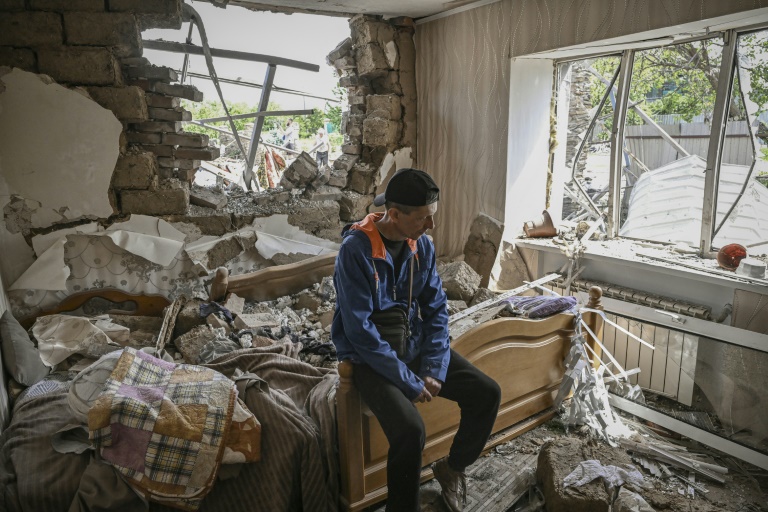
West of Severodonetsk, in the city of Sloviansk, AFP journalists saw buildings destroyed by a rocket attack.

On Wednesday, at least one person died and two others were injured in Soledar, between Sloviansk and Severodonetsk, AFP saw.

The European Union has also sent weapons and cash for Ukraine, while levelling unprecedented economic sanctions on Moscow.

– Hunger crisis –

Germany said Wednesday it would deliver an air defence system capable of shielding a major city from Russian air raids, although it will take months to get to the frontline.

EU leaders agreed this week to ban most Russian oil imports but played down the prospects of shutting off Russian gas on which many member states are hugely dependent.

The sanctions are biting — a panel of investors said Wednesday Russia has failed to pay $1.9 million of accrued interest on a sovereign bond.

Russian energy giant Gazprom said its gas exports to countries outside the former Soviet Union dropped by more than a quarter year-on-year between January and May after losing several European clients.

The war also risks triggering a global food crisis.

Ukraine — one of the world’s main producers — will likely export only half the amount of grain that it did in the previous season, the Ukrainian Grain Association said.

The conflict was already translating into huge costs for consumers purchasing essentials from cereals to sunflower oil to maize, with the poorest among the hardest hit.

The head of the African Union, Senegalese President Macky Sall, was preparing to travel to Russia for talks with Putin to avert a hunger crisis.

The visit on Friday is aimed at “freeing up stocks of cereals and fertilisers, the blockage of which particularly affects African countries”, along with easing the Ukraine conflict, Sall’s office said Thursday. 

burs-hmn/jm

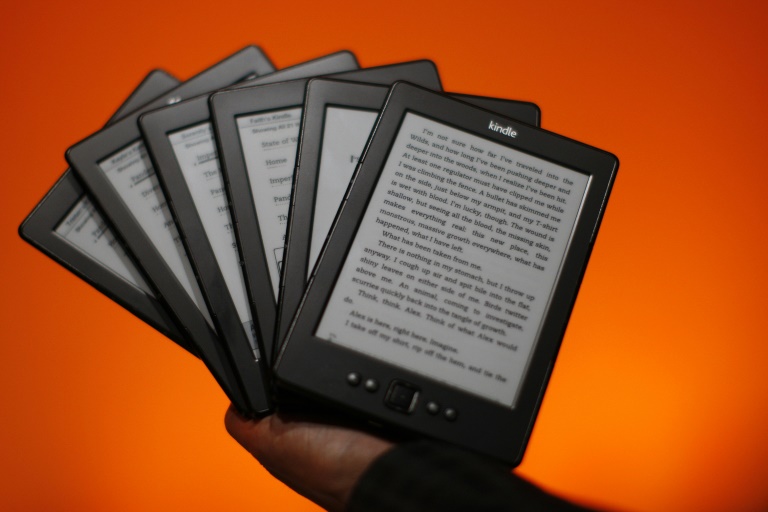
Amazon to close Kindle e-bookstore in China

US tech giant Amazon said Thursday that it will stop operating its Kindle e-bookstore in China from next year, closing the chapter on a massive consumer market.

The e-commerce pioneer has in recent years appeared to admit defeat to local Chinese rivals such as Alibaba and JD.com, ending its online retail operations for Chinese consumers in 2019.

Amazon’s decision to pull the Kindle service comes about eight years after it first set up an official store for the e-book reader on Alibaba’s Tmall platform.

“Amazon will stop operating its Kindle e-bookstore in China a year from now on June 30, 2023,” the company said Thursday in a statement on Chinese social media platform Weibo.

This means that customers can no longer buy new e-books, although those that have been purchased can still be downloaded until June 2024 and will remain readable afterwards, it said.

It did not give a reason for ending the service, but said its remaining China businesses would “continue to innovate and invest”.

“As a global business, we periodically evaluate our offerings and make adjustments, wherever we operate,” it added.

Customers can still buy Kindle devices from other Tmall retailers, but not from its official online store.

Amazon said in a separate notice that although it announced “the adjustment of Kindle-related business in China”, this does not change its long-term commitment to the market.

“Millions of Kindle reading devices” were sold in China between 2013 and 2018, according to state media outlet China Daily.

The report added that by end-2016, China became the biggest market for these devices.

Kindle’s exit is the latest among global brands, after US internet services giant Yahoo! pulled out of mainland China last year and Microsoft said it would close its career-oriented social network LinkedIn in the country.

Microsoft cited a “challenging operating environment” as Beijing tightened control over tech firms.

While e-commerce is very popular with Chinese consumers, Amazon has struggled to make headway in the country.

Local competitors such as Alibaba and JD.com have capitalised on their supplier networks and understanding of Chinese consumers to gain market share, before Amazon could acquire a foothold.

Asked about Kindle’s exit, Chinese commerce ministry spokesman Gao Feng said was “normal… to adjust products and services according to market development”.

Amazon has more than 10,000 staff and offices in 12 cities across China including Beijing, Shanghai, Hangzhou and Shenzhen, the company said.

OPEC debates oil output boost amid Russian isolation

Major oil producers led by Saudi Arabia and Russia hold talks Thursday on whether to adjust output, hard on the heels of an EU ban on Russian oil imports.

Analysts had expected OPEC+ producers to likely stick to their policy of only increasing output modestly, as they have done since May 2021.

However, a Wall Street Journal report on Monday that said OPEC was considering suspending Russia from the output deal has sown doubts.

“Such a move would effectively bring a premature end to the group’s supply agreement and pave the way for an unrestricted increase in output,” Stephen Brennock, an analyst at PVM Energy, said.

Oil prices sank more than two percent on Thursday on a similar Financial Times report that Saudi Arabia was considering a plan to boost output as Russia struggles to meet targets owing to Ukraine war-linked sanctions.

The 13 members of the Organization of the Petroleum Exporting Countries, chaired by Saudi Arabia, and their 10 partners, led by Russia, drastically slashed output in 2020 as demand slumped because of the coronavirus pandemic and worldwide lockdowns.

They have increased output modestly to the tune of around 400,000 barrels per day each month since last year, resisting pressure by top consumers, including the United States, to open the taps wider.

The expectation was that output would increase by another 432,000 barrels per day in July.

“OPEC will likely stick to its production increase plan and won’t make miracles at this week’s meeting,” said Ipek Ozkardeskaya, a senior analyst at Swissquote Bank.

She added, however, that the group may revise its strategy “by the end of September” with Saudi Arabia and United Arab Emirates possibly filling some of the gap. 

“The quota system doesn’t make sense when Russia is held back from increasing its production due to the fresh European sanctions,” she said.

– Russia a ‘pariah’ –

Talks by videoconference begin at the technical level at 1200 GMT coordinated by the OPEC headquarters in Vienna, before moving into a plenary session.

European Union leaders agreed on Monday to ban more than two-thirds of Russian oil imports as part of a sixth package of sanctions on Moscow over its offensive in Ukraine.

Britain has already said it plans to phase out Russian oil imports by the end of 2022 and eventually stop importing its gas.  

The United States, too, banned Russian oil and gas days after Russia’s invasion began on February 24.

“Russia has now transformed into a pariah… Apparent elevated US-Saudi shuttle diplomacy lately may indicate that change in OPEC+ may be near,” Seb analyst Bjarne Schieldrop commented.

“More oil from Saudi and the UAE will allow the West to implement sharper bans forcing Russian oil exports lower while not blowing up the oil price,” Schieldrop added.

– OPEC ‘reticence’ –

Russia’s invasion of Ukraine has exacerbated concerns about oil supplies, sending prices to record highs this year.

As the economic screws have tightened around Russia, prices have further soared, putting pressure on the cartel to open the valves more widely and relieve the market.

But Saudi Arabia, OPEC+’s de facto leader, has given no indication it is inclined to make such a move.

Saudi Foreign Minister Prince Faisal bin Farhan told last week’s World Economic Forum in Davos that the kingdom had “done what it could” for the oil market.

“It’s more complex than simply adding barrels to the market,” he added.

Members of the G7 club of industrialised nations last week underlined OPEC+’s “key role” in the face of the tightening of international markets.

Soaring oil prices have stimulated the Gulf region’s economies, with Saudi Arabia recording its highest growth rate in 10 years in the first quarter of 2022.

Susannah Streeter, an analyst at Hargreaves Lansdown, said there “is likely to still be reticence about turning on the taps too freely” as a result.

“OPEC has also previously warned that it will be impossible to replace all the volumes lost from Russia due to sanctions, which is still likely to stem further significant drops in crude prices.”

burs-jza/lth

Close Bitnami banner
Bitnami