World

China premier issues warning on Covid-hit economy

China’s premier called for more to be done to stabilise the world’s second-largest economy, issuing an unusually stark warning as the country’s zero-Covid strategy bites into growth.

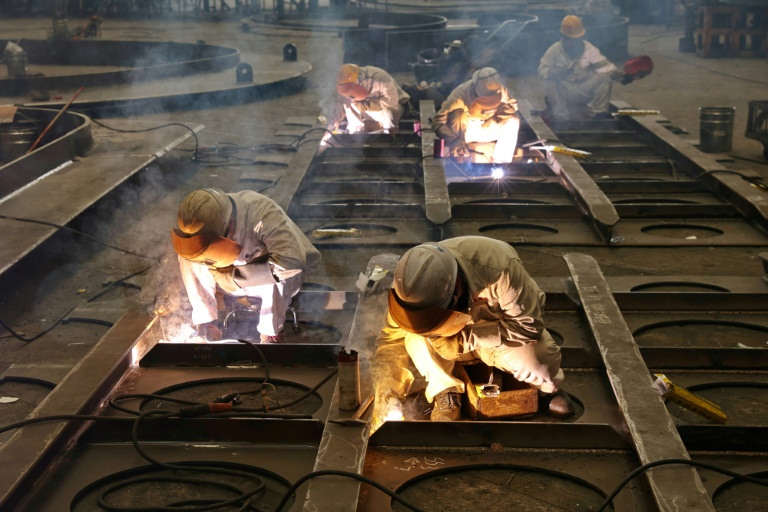
China is the last major economy welded to a policy of mass testing and hard lockdowns to eliminate virus clusters, but the strict curbs have battered businesses.

Restrictions around the nation in recent months — including on the manufacturing hubs of Shenzhen and Shanghai, as well as the breadbasket province of Jilin — have tangled supply chains and dragged economic indicators to their lowest levels in around two years.

In some ways, the challenges now are “greater than when the pandemic hit hard in 2020”, Premier Li Keqiang told a State Council meeting on Wednesday, according to a readout by the official Xinhua news agency.

“We are currently at a critical juncture in determining the economic trend of the whole year,” Xinhua quoted Li as saying.

“We must seize the time window and strive to bring the economy back onto a normal track.”

Li also said officials ought to make sure there is “reasonable” growth in the second quarter, fuelling fears that the country’s target for yearly expansion of around 5.5 percent may not be met.

Li’s remarks are the latest in a growing chorus of calls from officials and business leaders for more balance between stopping the virus and helping the ailing economy.

On Monday, the central bank and banking regulator urged financial institutions to boost lending, citing pressure on the economy, Chinese media reported.

This came as retail sales plunged 11.1 percent on year in April while factory output sank 2.9 percent — the worst showing since the early days of the Covid crisis.

And the urban unemployment rate edged back towards its February 2020 peak.

In March, and particularly in April, indicators including employment, industrial production and freight dropped “significantly”, Li said at the Wednesday meeting.

He stressed the importance of coordinating virus control and economic development, according to Xinhua.

On Thursday, the State Council will also send teams to 12 provinces to oversee local work in implementing state policies, the report said.

– Wilting growth –

Two more companies sounded a warning Thursday on the impact of the stringent Covid measures, with e-commerce titan Alibaba reporting its annual profit was down nearly 60 percent.

The group warned its domestic business has been “significantly affected by the Covid-19 resurgence in China”, and said it had decided not to offer its usual financial outlook for the year ahead.

In addition, tech giant Baidu reported $140 million in net loss over the January-March period, while co-founder Robin Li warned that “challenges related to the virus continue to pressure” their operations.

China’s current outbreak — fuelled by the Omicron variant — is the worst since early in the pandemic in 2020.

Financial hub Shanghai has been almost entirely sealed off since April, crushing businesses, while curbs are creeping in across the capital Beijing with no clear end in sight.

The government has offered tax relief and a bond drive to help industries, and President Xi Jinping earlier called for an “all-out” infrastructure push.

But analysts cautioned that growth will keep wilting until China eases its rigid virus controls.

S&P Global Ratings this month lowered its full-year growth forecast for China from 4.9 percent to 4.2 percent due to Covid curbs.

And Nomura analysts warned in a recent note that there is “increasing potential for negative GDP growth in the second quarter”.

Wednesday’s State Council teleconference involved an unusually large cohort of officials, Chinese outlet The Economic Observer reported.

The economic woes come in a pivotal political year for Xi, who is eyeing another term in power at the Communist Party Congress this autumn.

China’s economy is a key driver of global growth and is crucial domestically for the Communist Party, which has based its legitimacy on delivering steady expansion and improved standards of living.
Chipmaker Broadcom to buy VMware for $61 bn

Broadcom announced Thursday a $61-billion deal to purchase cloud computing firm VMware in a giant tech transaction that expands the chipmaker’s software offerings.

The cash and stock deal — one of the biggest tech mergers ever — will merge chipmaker Broadcom’s software assets into those of VMware, a leader in cloud computing and virtualization technology.

The combination is designed to boost Broadcom’s offerings to customers enabling “greater choice and flexibility to build, run, manage, connect and protect applications at scale across diversified, distributed environments,” said a joint press release from the companies announcing the deal.

Led by chief executive Hock Tan, Broadcom has grown by acquisition, reporting fiscal 2021 revenues of about $27.5 billion.

In 2017, Broadcom made an unsolicited offer to acquire rival chipmaker Qualcomm for $117 billion, but the transaction was blocked by then-president Donald Trump’s administration on national security grounds. 

Qualcomm’s activities are mostly in the United States, but it is based in Singapore.

The deal with VMware would dilute Broadcom’s dependence on semiconductor revenues amid concerns of “chip cycle peaking,” said a note from UBS that also alluded to concerns about higher debt levels due to the deal.  

Under the transaction, VMware shareholders can elect to receive either $142.50 in cash or slightly more than one-fourth of a Broadcom share for each VMware share. That represents a premium of 49 percent compared with VMware’s stock price Friday before news reports of the deal surfaced.

Broadcom will also assume $8 billion of VMware debt.

VMware was spun out of Dell Technologies in 2021.

Michael Dell and private equity firm Silver Lake, who own 40.2 percent and 10 percent of VMware shares respectively, have signed in support of the deal so long as the VMware board backs the transaction, the press release said,

Shares of VMware rose 0.9 percent to $121.65 in morning trading, while Broadcom gained 1.9 percent to $541.89.

Alibaba profit slumps nearly 60% as tech crackdown, Covid bite

Chinese e-commerce giant Alibaba said Thursday its profit fell 59 percent in the last fiscal year, joining other tech firms that reported lacklustre results while grappling with Covid-19 restrictions and a sector crackdown.

China’s economy has been battered by the fallout from strict Covid curbs including lockdowns and transport restrictions that have kept consumers home, pushed up unemployment, and tangled supply chains.

Alibaba has also had to contend with heightened competition and a wide-ranging regulatory crackdown on alleged anti-competitive practices by China’s tech giants, driven by fears that massive internet companies control too much data and expanded too quickly.

The Hangzhou-based group warned it would not give forward-looking financial guidance due to Covid risks and uncertainty after full-year profit slumped to 62 billion yuan ($9.8 billion).

Citing “macro challenges that impacted supply chains and consumer sentiment”, Alibaba also announced a loss of 16.2 billion yuan for the January-March quarter, as the value of its investments fell.

The tech behemoth has seen its market value plummet since Beijing launched its sweeping crackdown in 2020 on some of China’s largest home-grown companies.

The crackdown included a last-minute cancellation of a planned IPO by Alibaba’s financial arm Ant Group — which would have been the world’s largest public offering at the time.

The company was also hit with a record $2.75 billion fine for alleged unfair practices last year.

But Alibaba — seen as a gauge of consumer sentiment — said Thursday its revenue grew nine percent in the last quarter to 204.1 billion yuan.

This was better than expected in a Bloomberg forecast, after Chinese consumers took to online shopping during Covid lockdowns that kept millions at home.

The company’s revenues — generated mainly by its core e-commerce operations — were up 19 percent for the fiscal year ending March 31.

– Covid ‘uncertainties’ –

In a sign of a patchy outlook however, the company warned that its domestic business has been “significantly affected by the Covid-19 resurgence in China, particularly in Shanghai”. 

“Considering the risks and uncertainties arising from Covid-19… we believe it is prudent at this time not to give financial guidance as we typically do at the start of the fiscal year,” it added.

Alibaba’s earnings follow a series of sluggish results by prominent Chinese tech firms, with internet giant Baidu on Thursday reporting a net loss of 885 million yuan ($140 million) in the first quarter.

Baidu’s business has been “negatively impacted” by China’s recent Covid-19 resurgence since mid-March, co-founder Robin Li said in a statement.

He added that virus-related challenges continue to pressure its near-term operations.

Tencent last Wednesday reported record low quarterly revenue growth at 135.5 billion yuan ($20.1 billion) in the first quarter, putting year-on-year expansion at nearly zero.

China is the last major economy to stick to a strict zero-Covid policy, which is now being tested by the infectious Omicron variant.

The country’s economic slowdown now appears to have motivated a softer approach towards the vast, money-spinning tech sector.

In recent weeks the government has said it will roll out measures to support the virus-battered economy, and indicated that it will ease the crackdown.

Chinese tech shares surged in late April after officials pledged support for internet firms at a Politburo meeting.

Eleven babies die in Senegal hospital blaze

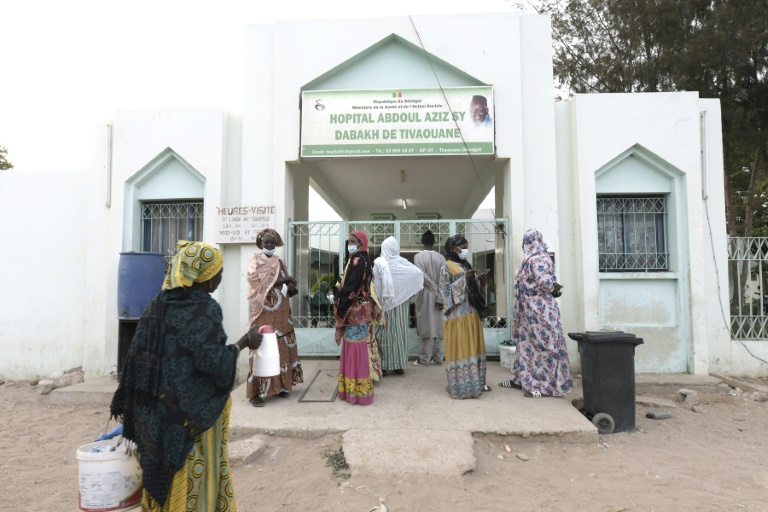
Eleven newborn babies have perished in a hospital fire blamed on an electrical short circuit in the western Senegalese city of Tivaouane, authorities said Thursday.

In the latest in a series of hospital deaths that have exposed the weaknesses of the nation’s healthcare system, President Macky Sall announced the tragedy on Twitter just before midnight (0000 GMT).

“I have just learned with pain and dismay about the deaths of 11 newborn babies in the fire at the neonatal department of the public hospital,” Sall wrote.

“To their mothers and their families, I express my deepest sympathy,” he tweeted.

“Where is Mohamed?,” asked one of the distraught mothers outside Mame Abdou Aziz Sy Dabakh Hospital in the transport hub of Tivaouane.

Her baby son was taken to the hospital ten days ago and was baptised on Monday, Mohamed’s 54-year-old father Alioune Diouf said.

The city’s mayor Demba Diop said the fire had been caused by “a short circuit and spread very quickly”.

Local media quoted witnesses saying gas bottles exploded preventing any rescue attempts.

Health Minister Abdoulaye Diouf Sarr was quoted in media reports also blaming an electrical fault.

– ‘Beyond heartbroken’ –

The maternity unit was equipped to take care of 13 babies. 

“At the time of the fire, there were 11, whom nurses were unable to save,” the minister said.

Mayor Demba Diop said “three babies were saved”.

World Health Organization chief Tedros Adhanom Ghebreyesus tweeted that he was “beyond heartbroken with this tragic news.

“I’m sending my deepest condolences to the parents and families of the babies who lost their lives.” 

Health Minister Sarr, who had been in Geneva attending a meeting with the World Health Organization, said “an investigation is under way to see what happened”.

The tragedy in Tivaouane comes after several other public health incidents in Senegal, which suffers from a great disparity between urban and rural areas in healthcare services. 

In the northern town of Linguere in late April, a fire broke out at a hospital and four newborn babies were killed. The town’s mayor cited an electrical malfunction in an air conditioning unit in the maternity ward.

– ‘This is unacceptable’ –

Wednesday’s accident came over a month after the nation mourned the death of a pregnant woman who waited in vain for a caesarean section.

The woman, Astou Sokhna, arrived at a hospital in the northern city of Louga in pain. The staff refused to accommodate her request for a C-section, saying it was not scheduled. 

She died on April 1, 20 hours after arrival.

Sokhna’s death caused a wave of outrage across the country over the dire state of the health system. Minister Sarr acknowledged two weeks later that the death could have been avoided. 

Three midwives on duty the night Sokhna died were given a six-month suspended prison sentence on May 11 by the High Court of Louga for “failure to assist a person in danger” in connection with her case. 

Amnesty International’s Senegal director Seydi Gassama said his organisation had called for an inspection and upgrade for neonatology services in hospitals across Senegal after the “atrocious” death of the four babies in Linguere.

With the new tragedy, Amnesty “urges the government to set up an independent commission of inquiry to determine responsibility and punish the culprits, no matter the level they are at in the state apparatus”, he tweeted. 

Opposition lawmaker Mamadou Lamine Diallo also responded with outrage to the Tivaouane blaze. 

“More babies burned in a public hospital… this is unacceptable @MackySall,” he tweeted. 

“We suffer with the families to whom we offer our condolences. Enough is enough.”

Louvre ex-director charged in art trafficking case

A former director of the Louvre Museum in Paris has been charged with conspiring to hide the origin of archaeological treasures that investigators suspect were smuggled out of Egypt in the chaos of the Arab Spring, a French judicial source said Thursday.

Jean-Luc Martinez was charged Wednesday after being taken in for questioning along with two French specialists in Egyptian art, who were not charged, another source close to the inquiry told AFP.

The Louvre, which is owned by the French state, is the world’s most visited museum with around 10 million visitors a year before the Covid-19 pandemic and is home to some of Western civilization’s most celebrated cultural heritage.

The museum declined to comment when contacted by AFP.

French investigators opened the case in July 2018, two years after the Louvre’s branch in Abu Dhabi bought a rare pink granite stele depicting the pharaoh Tutankhamun and four other historic works for eight million euros ($8.5 million).

Martinez, who ran the Paris Louvre from 2013 to 2021, is accused of turning a blind eye to fake certificates of origin for the pieces, a fraud thought to involve several other art experts, according to French investigative weekly Canard Enchaine.

He has been charged with complicity in fraud and “concealing the origin of criminally obtained works by false endorsement,” according to the judicial source.

Martinez is currently the French foreign ministry’s ambassador in charge of international cooperation on cultural heritage, which focuses in particular on fighting art trafficking.

“Jean-Luc Martinez contests in the strongest way his indictment in this case,” his lawyers told AFP in a statement.

– Arab Spring looting –

“For now, he will reserve his declarations for the judiciary, and has no doubt that his good faith will be established,” they said.

French investigators suspect that hundreds of artefacts were pillaged from Egypt and other Middle Eastern countries during protests in the early 2010s that became known as the Arab Spring.

They suspect the artefacts were then sold to galleries and museums that did not ask too many questions about previous ownership.

Martinez’s indictment comes after the German-Lebanese gallery owner who brokered the sale, Robin Dib, was arrested in Hamburg in March and extradited to Paris for questioning.

Marc Gabolde, a French Egyptologist, was quoted by Canard Enchaine as saying that he informed Louvre officials about suspicions related to the Tutankhamun stele but received no response.

The opening of the inquiry in 2018 roiled the Paris art market, a major hub for antiquities from Middle Eastern civilisations.

In June 2020, prominent Paris archaeology expert Christophe Kunicki and dealer Richard Semper were charged with fraud for false certification of looted works from several countries during the Arab Spring.

They also had a role in certifying another prized Egyptian work, the gilded sarcophagus of the priest Nedjemankh that was purchased by the Metropolitan Museum of Art in New York in 2017.

Gabolde said an Egyptian art dealer, Habib Tawadros, was also involved in both suspect deals.

After New York prosecutors determined that the sarcophagus had been stolen during the revolts against Egyptian president Hosni Mubarak in 2011, the Met said it had been a victim of false statements and fake documentation, and returned the coffin to Egypt.

Alibaba full-year profit slumps nearly 60% on tech crackdown, Covid

Chinese e-commerce giant Alibaba said Thursday its profit fell 59 percent in the last fiscal year, joining other tech firms that reported lacklustre results while grappling with Covid-19 restrictions and a sector crackdown.

China’s economy has been battered by the fallout from strict Covid curbs including lockdowns and transport restrictions that have kept consumers home, pushed up unemployment, and tangled supply chains.

Alibaba has also had to contend with a wide-ranging regulatory crackdown on alleged anti-competitive practices by China’s tech giants.

The Hangzhou-based group cited “macro challenges that impacted supply chains and consumer sentiment” as it announced a loss of 16.2 billion yuan ($2.56 billion) for the January-March quarter. 

It warned it would not give forward-looking financial guidance due to Covid risks and uncertainty.

Alibaba has seen its market value plummet since Beijing launched its sweeping crackdown in 2020 on some of China’s largest home-grown companies.

The crackdown included a last-minute cancellation of a planned IPO by Alibaba’s financial arm Ant Group — which would have been the world’s largest public offering at the time.

The company was also hit with a record $2.75 billion fine for alleged unfair practices last year.

But Alibaba Group said Thursday its revenue grew around nine percent in the last quarter to 204.1 billion yuan, better than expected in a Bloomberg forecast.

The company’s revenues — generated mainly by its core e-commerce operations — were up 19 percent for the fiscal year ending March 31.

Meanwhile, its full-year profit came to 62 billion yuan ($9.8 billion).

“Since mid-March 2022, our domestic businesses have been significantly affected by the Covid-19 resurgence in China, particularly in Shanghai,” the company said. 

“Considering the risks and uncertainties arising from Covid-19… we believe it is prudent at this time not to give financial guidance as we typically do at the start of the fiscal year,” it added.

Alibaba’s earnings follow a series of sluggish results by prominent Chinese tech firms, with internet giant Baidu on Thursday reporting a net loss of 885 million yuan ($140 million) in the first quarter.

Baidu’s business has been “negatively impacted” by China’s recent Covid-19 resurgence since mid-March, co-founder Robin Li said in a statement. 

Virus-related challenges continue to pressure Baidu’s near-term operations, Li said.

Tencent last Wednesday reported record low quarterly revenue growth at 135.5 billion yuan ($20.1 billion) in the first quarter, putting year-on-year expansion at nearly zero.

China is the last major economy to stick to a strict zero-Covid policy, which is now being tested by the infectious Omicron variant.

Japan to allow mass tourism, but only in tour groups

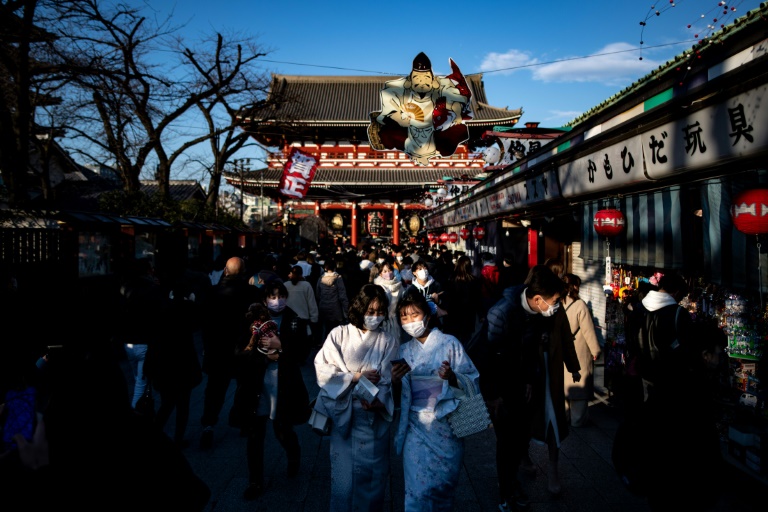
Japan announced Thursday it will reopen to tourists from 36 countries starting June 10, ending a two-year pandemic closure, but travellers will only be allowed in with tour groups.

The decision comes after the government last week said it would test allowing small group tours with visitors from the United States, Australia, Thailand and Singapore from this month.

On Thursday, the government revised border controls to resume accepting package tours from 36 countries and regions where the Covid situation is relatively stable, it said in a statement.

The countries include Britain, Spain, Canada, Saudi Arabia, and Malaysia.

Japan will also expand the number of airports that accept international flights to seven, adding Naha in its southern Okinawa prefecture and Chitose near Sapporo in northern Hokkaido.

For most of the pandemic Japan has barred all tourists and allowed only citizens and foreign residents entry, though even the latter have periodically been shut out.

All arrivals have to test negative before travel to Japan and most must be tested again on arrival, though triple-vaccinated people coming from certain countries can skip the additional test as well as a three-day quarantine required for others.

Tour groups are expected to take responsibility for ensuring visitors respect Japan’s near-universal mask-wearing and other measures that have helped keep the toll from Covid-19 comparatively low.

Just how many people will be able to take advantage of the careful reopening is unclear. A daily cap on people entering Japan is to be doubled to 20,000 next month, though tour groups are not expected to be counted in that figure, local media has reported.

Japanese Prime Minister Fumio Kishida has said he wants to ease border control measures, but moves are expected to proceed slowly, with strong public support for the current restrictions.

Japan welcomed a record 31.9 million foreign visitors in 2019 and had been on track to achieve its goal of 40 million in 2020 before the pandemic hit.

Shanghai to gradually reopen schools in June as lockdown eases

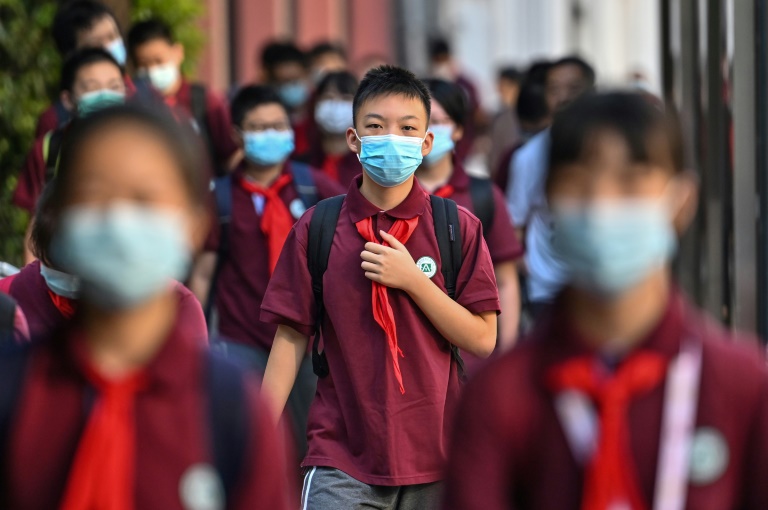
Shanghai schoolchildren will gradually resume some in-person classes in June with daily Covid-19 tests, the local government said Thursday, as the Chinese metropolis gradually emerges from a lengthy lockdown that brought it to a standstill.

The country has been fighting its worst coronavirus outbreak since the start of the pandemic, with the epicentre Shanghai banning its 25 million residents from leaving their homes for weeks.

Some of the city’s restrictions have recently eased as cases dwindle, though much of the population is still not allowed to venture outside for more than a few hours a day at most.

Schools have been shut since March 12, weeks before the megacity’s lockdown officially began. 

Students in the last two years of high school — who must prepare for the all-important college entrance examinations — will return to their campuses on June 6, Shanghai education official Yang Zhenfeng said at a press conference on Thursday.

They will be joined a week later by students in the final grade of middle school, while all other students are to remain home and attend online classes, Yang said.

“We will ensure that students get swabbed on campus after school every day,” with results from their PCR tests available by the next morning, Yang said.

Shanghai’s lockdown has taken a heavy toll on business and morale, pushing city authorities to allow some factories and public transport lines to resume operation in a patchy reopening.

China is the last major economy hewing to a zero-Covid policy with mass lockdowns, routine tests and movement restrictions whenever infection clusters emerge.

Those who test positive for Covid — even if they have no symptoms — are sent to mass quarantine centres or isolation facilities.

In another sign of slowing infections in Shanghai, state media reported that a 7,300-bed makeshift quarantine centre had been closed Wednesday. 

Converted from the Shanghai World Expo Exhibition and Convention Center, the hospital was the city’s first large-scale quarantine site for patients with mild to no symptoms.

Patients who stayed there and in other makeshift quarantine halls complained to AFP of inadequate sanitary conditions and overworked staff. 

China’s zero-Covid approach has been severely challenged by the rise of the Omicron variant, which has caused hundreds of thousands of infections nationwide this year.

Authorities have also turned greater attention to the low vaccination rate among the elderly population, long a weak point in the country’s defense against the virus.

Officials have ramped up incentives for older people to get jabbed, including one neighbourhood near Beijing’s Temple of Heaven which is dangling as much as 1000 yuan ($149) in gift cards for residents over 80 who get their first shot.

Party or not? Couples in Ukraine face wedding quandary

As wedding season gets under way in Ukraine despite months of war, couples are faced with a difficult choice — celebrate their unions in style or stay discreet so as not to upset anyone.

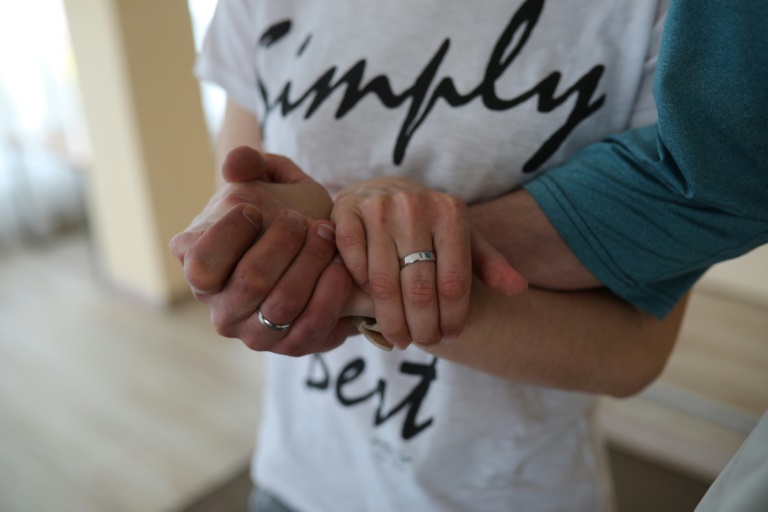
At the wedding registry in Irpin, a town close to Kyiv that has been devastated by Russia’s invasion, Ivan Khvatov, 39, and Olesya Khvatova, 41, celebrated their nuptials in restrained fashion.

There were no guests or witnesses present, the couple wore jeans and trainers and Wednesday’s ceremony conducted by a registrar was over in minutes — just time for a kiss after signing the registry.

“We didn’t tell anyone about it,” the groom told AFP.

“First of all, a lot of people who evacuated at the start of the war have not come back… also people might tell us that now is not the time.

“Many people, including our friends, lost their homes. They might not understand,” Khvatov said.

“Despite the war, we want to keep on living. We feel full of joy but we’re trying to hide it.”

Irpin found itself on the front line in the weeks after Russia invaded on February 24 and lived under Russian occupation for a month.

– ‘Bring back the hope’ –

Unlike in Kyiv, which has seen 3,800 weddings during the war, registry offices in the surrounding region shut down as Russian tanks advanced and many future brides fled across Europe. Men aged between 18 and 60 were eligible for military service and not allowed to leave.

In Irpin, the registry only re-opened on May 10.

“Morally it was hard after what the town went through,” said Liana Samoylenko, head of the Irpin department of registration of civil status acts, which deals with both weddings and death notices.

“Life is returning. And the weddings resuming bring back the hope that everything will be fine.

“These families that are being created will bring a new generation that will revive Ukraine,” she said.

Khvatov and Khvatova, who met at a glassware factory where they work, had been due to marry on March 17.

But, when the war began, Khvatova fled. She returned only when Russian troops withdrew and began focusing their attacks on the south and east of the country.

Mykhaylo Dewberry, 26, and his bride Anastasia, 20, also fled during the Russian occupation of the area.

– ‘Life has not stopped’ –

But they decided to have a much larger celebration with over 40 loved ones present.

The newly-weds also decided to pose for wedding photos in front of some charred ruins in Bucha, a town close to Irpin that has become synonymous with the alleged war crimes carried out by Russian troops.

“There have been many tragedies in this place, and we wanted to show that there can also be renewal… That life has not stopped,” said Dewberry, the adopted son of US evangelists.

As the couple posed, she in a long white dress and veil, he in a bright blue suit, passing drivers honked their horns to congratulate them.

Dewberry and Anastasia met at a Christian camp two years ago and he asked her to marry him a year ago.

The invasion forced the couple to put their preparations on hold.

“When I came back, I cried. So many people lost their lives!” Dewberry said.

“But God has said that after the darkness, there is light.”

Critically endangered elephant, unborn baby suspected poisoned in Indonesia

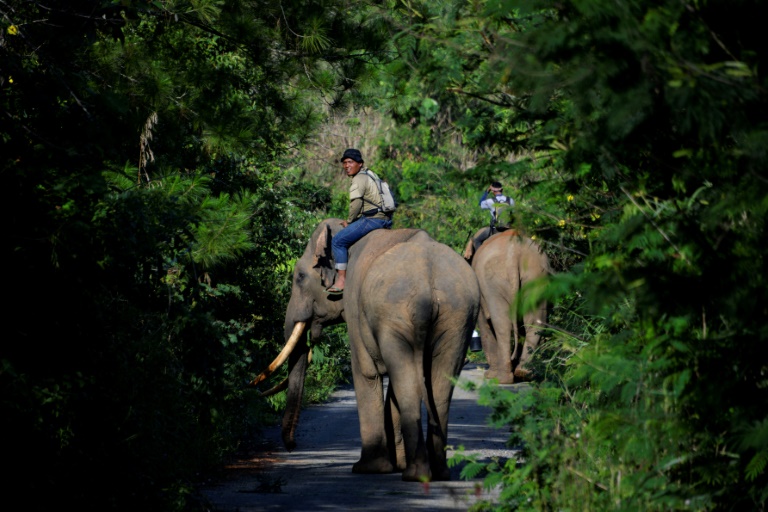
A critically endangered Sumatran elephant and its unborn baby were found dead from suspected poisoning in western Indonesia, a conservation official said on Thursday.

The carcass of the heavily pregnant mammal was found next to a palm plantation in Riau province on Sumatra, a large island home to some of the world’s rarest animals.

The archipelago nation faces an ongoing battle against wildlife crime and several elephant poisoning cases have been reported in recent years, including one in 2019 when a Sumatran elephant was found decapitated with its tusks ripped off.

A plantation worker discovered the mother, who was 22 months pregnant, on Thursday and immediately reported the carcass to authorities who collected samples before burying the body.

“We estimated the female elephant to be around 25 years old and during the necropsy test we found that it was pregnant and was close to giving birth,” said Hartono, the head of the local chapter of the Natural Resource Conservation Agency.

Officials are still testing samples to determine the cause of death, added Hartono, who like many Indonesians goes by one name.

They suspect poisoning because the mother was foaming at the mouth when she was discovered.

According to the World Wildlife Fund, Sumatran elephants are on the brink of extinction with only about 2,400-2,800 left in the world. 

The elephant population is also threatened by rampant poachings because of their tusks, which are prized in the illegal wildlife trade. 

Rampant deforestation has reduced the critically endangered elephants’ natural habitat and brought them into increasing conflict with humans.

Close Bitnami banner
Bitnami