World

Sandstorms pose serious risk to human health

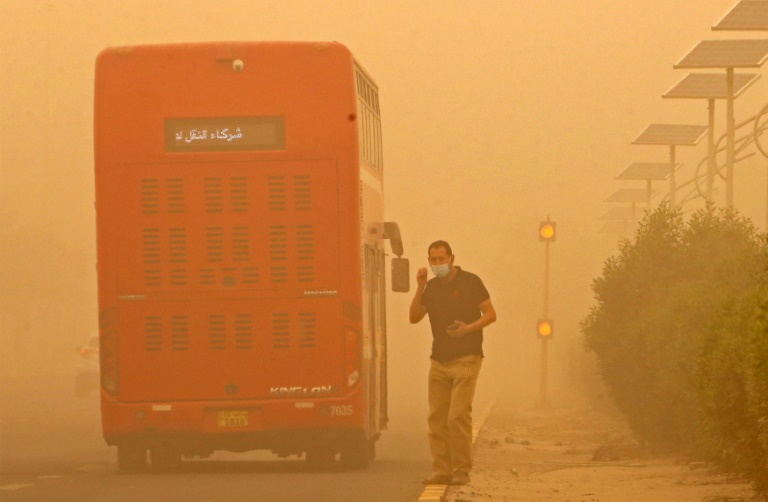
Sandstorms have engulfed the Middle East in recent days, in a phenomenon experts warn could proliferate because of climate change, putting human health at grave risk.

At least 4,000 people went to hospital Monday for respiratory issues in Iraq where eight sandstorms have blanketed the country since mid-April.

That was on top of the more than 5,000 treated in Iraqi hospitals for similar respiratory ailments earlier this month.

The phenomenon has also smothered Iran, Kuwait, Saudi Arabia and the United Arab Emirates with more feared in the coming days.

Strong winds lift large amounts of sand and dust into the atmosphere, that can then travel hundreds, even thousands, of kilometres (miles).

Sandstorms have affected a total of 150 countries and regions, adversely impacting on the environment, health and the economy, the World Meteorological Organization (WMO) said.

“It’s a phenomenon that is both local and global, with a stronger intensity in areas of origin,” said Carlos Perez Garcia-Pando, a sand and dust storm expert at the Barcelona Supercomputing Center and the Catalan Institution for Research and Advanced Studies.

The storms originate in dry or semi-dry regions of North Africa, the Arabian Peninsula, Central Asia and China.

Other less affected areas include Australia, the Americas and South Africa.

The UN agency WMO has warned of the “serious risks” posed by airborne dust.

The fine dust particles can cause health problems such as asthma and cardiovascular ailments, and also spread bacteria and viruses as well as pesticides and other toxins.

“Dust particle size is a key determinant of potential hazard to human health,” the WMO said.

Small particles that can be smaller than 10 micrometres can often become trapped in the nose, mouth and upper respiratory tract, and as a result it is associated with respiratory disorders such as asthma and pneumonia.

– ‘Unbreathable’ –

The most at-risk are the oldest and youngest as well as those struggling with respiratory and cardiac problems.

And the most affected are residents in countries regularly battered by sandstorms, unlike in Europe where dust coming from the Sahara is rare, like the incident in March.

Depending on the weather and climate conditions, sand dust can remain in the atmosphere for several days and travel great distances, at times picking up bacteria, pollen, fungi and viruses.

“However, the seriousness is less than with ultrafine particles, for example from road traffic, which can penetrate the brain or the blood system,” says Thomas Bourdrel, a radiologist, researcher at the University of Strasbourg and a member of Air Health Climate collective.

Even if the sand particles are less toxic than particles produced by combustion, their “extreme density during storms causes a fairly significant increase in cardio-respiratory mortality, especially among the most vulnerable,” he said.

With “a concentration of thousands of cubic micrometres in the air, it’s almost unbreathable”, said Garcia-Pando.

The sandstorms’ frequency and intensity could worsen because of climate change, say some scientists.

But the complex phenomenon is “full of uncertainties” and is affected by a cocktail of factors like heat, wind and agricultural practices, Garcia-Pando told AFP.

“In some areas, climate change could reduce the winds that cause storms, but extreme events could persist, even rise,” he said.

With global temperatures rising, it is very likely that more and more parts of the Earth will become drier.

“This year, a significant temperature anomaly was observed in East Africa, in the Middle East, in East Asia, and this drought affects plants, a factor that can increase sandstorms,” the Spanish researcher said.
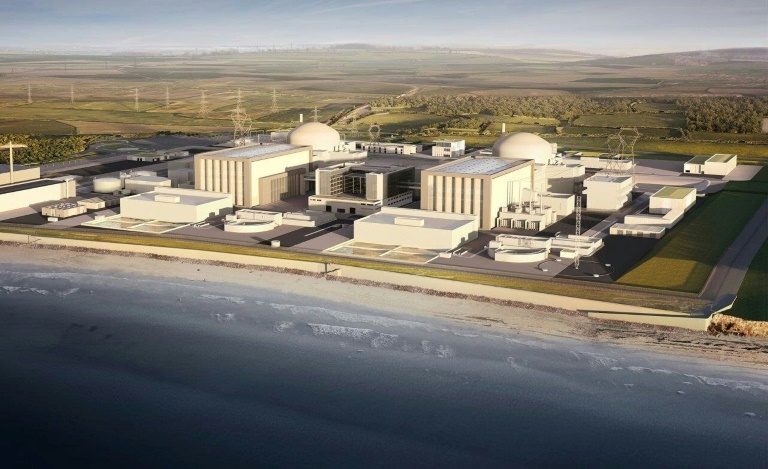
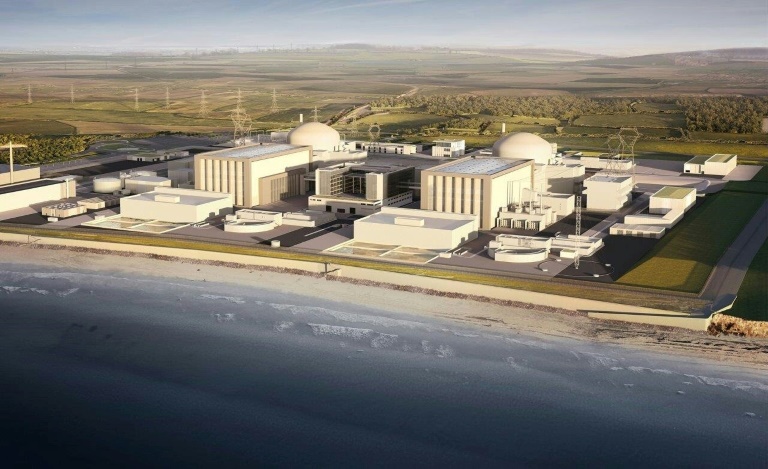
New one year delay at UK Hinkley Point nuclear plant: EDF

An already-delayed giant nuclear plant in southwest England will open a year later than planned and cost up to £3 billion more than previously thought, French electricity giant EDF said Thursday.

The total cost of Hinkley Point C, which aims to provide seven percent of Britain’s total power needs, had already swelled to as much as £23 billion and had been due to begin generation in June 2026, already well behind schedule.

Hinkley Point is Britain’s first new nuclear power plant in more than two decades.

“The start of electricity generation for Unit 1 is targeted for June 2027, the risk of further delay of the two units is assessed at 15 months, assuming the absence of a new pandemic wave and no additional effects of the war in Ukraine,” EDF said in a statement adding that costs were now estimated between £25 billion ($31 billion, 30 billion euros) and £26 billion. 

EDF said in its statement that there would be no additional cost to British consumers.

“During more than two years of the Covid-19 pandemic, the project continued without stopping. This protected the integrity of the supply chain and allowed the completion of major milestones. However, people, resources and supply chain have been severely constrained and their efficiency has been restricted. 

“In addition, the quantities of materials and engineering as well as the cost of such activities, including, in particular marine works have risen,” it added.

– ‘Risky and expensive’ –

Britain has a total of 15 nuclear reactors at eight sites around the country, but many of them are now approaching the end of their lifespan.

However, the government wants to maintain the 20 percent of electricity it generates from nuclear to help meet its pledge to reduce carbon emissions to net zero by 2050 and tackle climate change.

Critics have focused on the proposed design, which uses a new European Pressurised Reactor (EPR) system that has been beset by huge cost overruns and delays at sites in France and Finland.

Britain’s National Audit Office has long criticised the scheme, with the watchdog saying the government has “locked consumers into a risky and expensive project with uncertain strategic and economic benefits”.

Launched in 1992 as the pinnacle of French nuclear technology, the EPR was originally developed by Areva in a joint venture with Germany’s Siemens, which later withdrew.

Later taken over by EDF, the project called for a plant able to operate for 60 years using pressurised water technology, the most widely-used in reactors around the world.

Similar problems to those at Hinkley have hit EDF’s project at Flamanville in western France, although the firm has successfully launched two reactors with Chinese partners in Taishan, China.

New one year delay at UK Hinkley Point nuclear plant: EDF

An already-delayed giant nuclear plant in southwest England will open a year later than planned and cost up to £3 billion more than previously thought, French electricity giant EDF said Thursday.

The total cost of Hinkley Point C, which aims to provide seven percent of Britain’s total power needs, had already swelled to as much as £23 billion and had been due to begin generation in June 2026, already well behind schedule.

Hinkley Point is Britain’s first new nuclear power plant in more than two decades.

“The start of electricity generation for Unit 1 is targeted for June 2027, the risk of further delay of the two units is assessed at 15 months, assuming the absence of a new pandemic wave and no additional effects of the war in Ukraine,” EDF said in a statement adding that costs were now estimated between £25 billion ($31 billion, 30 billion euros) and £26 billion. 

EDF said in its statement that there would be no additional cost to British consumers.

“During more than two years of the Covid-19 pandemic, the project continued without stopping. This protected the integrity of the supply chain and allowed the completion of major milestones. However, people, resources and supply chain have been severely constrained and their efficiency has been restricted. 

“In addition, the quantities of materials and engineering as well as the cost of such activities, including, in particular marine works have risen,” it added.

– ‘Risky and expensive’ –

Britain has a total of 15 nuclear reactors at eight sites around the country, but many of them are now approaching the end of their lifespan.

However, the government wants to maintain the 20 percent of electricity it generates from nuclear to help meet its pledge to reduce carbon emissions to net zero by 2050 and tackle climate change.

Critics have focused on the proposed design, which uses a new European Pressurised Reactor (EPR) system that has been beset by huge cost overruns and delays at sites in France and Finland.

Britain’s National Audit Office has long criticised the scheme, with the watchdog saying the government has “locked consumers into a risky and expensive project with uncertain strategic and economic benefits”.

Launched in 1992 as the pinnacle of French nuclear technology, the EPR was originally developed by Areva in a joint venture with Germany’s Siemens, which later withdrew.

Later taken over by EDF, the project called for a plant able to operate for 60 years using pressurised water technology, the most widely-used in reactors around the world.

Similar problems to those at Hinkley have hit EDF’s project at Flamanville in western France, although the firm has successfully launched two reactors with Chinese partners in Taishan, China.

Canada bans Huawei and ZTE from 5G networks

Canada will ban Chinese telecommunications giants Huawei and ZTE from its 5G wireless networks due to national security concerns, officials said Thursday.

The long-awaited move follows the United States and other key allies, and comes on the heels of a diplomatic row between Ottawa and Beijing over the detention of a senior Huawei executive on a US warrant, which has now been resolved.

The United States has warned of the security implications of giving Chinese tech companies access to telecommunications infrastructure that could be used for state espionage.

Both Huawei and Beijing have rejected the allegations, while Beijing warned of repercussions for nations placing restrictions on the telecoms equipment provider.

The company did not immediately respond to an AFP request for comment on Canada’s ban.

Canadian Industry Minister Francois-Philippe Champagne and Public Safety Minister Marco Mendicino made the announcement at a news conference.

“Today, we’re announcing our intention to prohibit the inclusion of Huawei and ZTE products and services in Canada’s telecommunication systems,” Champagne said.

“This follows a full review by our security agencies and in consultation with our closest allies.”

Canada had been reviewing the 5G technology and network access for several years, repeatedly delaying a decision that was first expected in 2019.

It remained silent on the telecoms issue after China jailed two Canadians — diplomat Michael Kovrig and businessman Michael Spavor — in what observers believed was in retaliation for the arrest of Huawei chief financial officer Meng Wangzhou in Vancouver in December 2018 at the request of the United States.

All three were released in September 2021 after Meng reached a deal with US prosecutors on the fraud charges, ending her extradition fight.

Champagne said Canadian telecommunications companies “will not be permitted to include in their networks products or services that put our national security at risk.”

“Providers who already have this equipment installed will be required to cease its use and remove it,” he said.

– ‘Hostile actors’ –

Huawei already supplies some Canadian telecommunications firms with 4G equipment.

Most, if not all, had held off using Huawei in their fifth-generation (5G) wirelesss networks that deliver speedier online connections with greater data capacity, or looked to other suppliers while Ottawa hemmed and hawed.

Mendicino said 5G innovation “represents a major opportunity for competition and growth” but “also comes risks.”

“There are many hostile actors who are ready to exploit vulnerabilities” in telecom networks, he said.

The United States, Australia, Britain, New Zealand, Japan and Sweden have already blocked or restricted the use of Huawei technology in their 5G networks.

The US government considers Huawei a potential security threat due to the background of its founder and CEO Ren Zhengfei, a former Chinese army engineer who is Meng’s father.

The concern escalated as Huawei rose to become the world leader in telecoms networking equipment and one of the top smartphone manufacturers, and following Beijing’s passage of a 2017 law obliging Chinese companies to assist the government in matters of national security.

Canada’s two spy agencies had reportedly been divided initially over whether or not to ban Huawei from Canada’s 5G networks — one favouring a ban while the other argued risks could be mitigated.

The Canadian Security Intelligence Service and the Communications Security Establishment had been tasked with conducting a cybersecurity review to evaluate the risks as well as the economic costs to Canadian telecoms and consumers of blacklisting the equipment supplier.

Huawei was already prohibited from bidding on Canadian government contracts and core network equipment such as routers and switches.

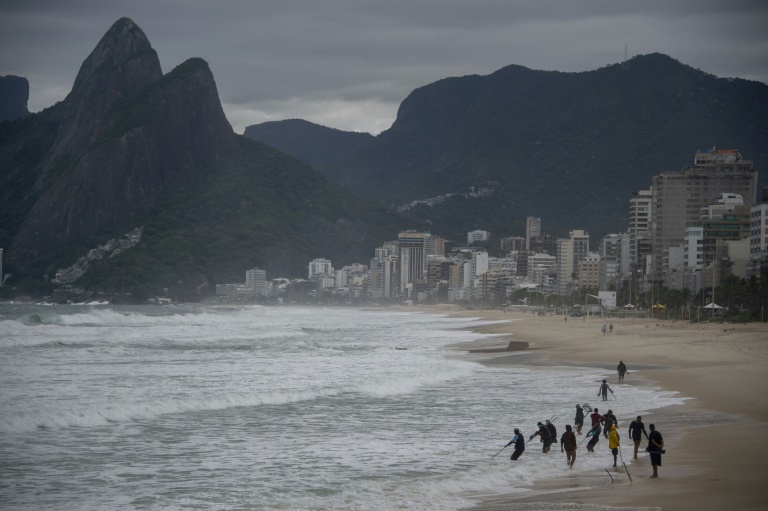
Record-breaking cold in Brazil threatens homeless, crops

Coats and scarves have come out prematurely in Brazil, as the south of the tropical country experiences a record-breaking cold spell, a menace for both homeless people and crops.

With 1.4 degrees Celsius, the capital Brasilia recorded the coldest temperature in its history on Thursday, with more than a month to go until the official start of winter.

On the website of the Inmet meteorological agency, the entire southern half of a map of Brazil is colored orange and captioned: “Cold wave (danger).”

In Sao Paulo, Latin America’s largest city, the thermometer stood at 6.6 C on Wednesday morning, a record for May since 1990. The “feels like” temperature was -4 C.

A 66-year-old homeless man died in Sao Paulo on Wednesday after falling ill in a food distribution line. According to local media, he had spent the night in the street. 

Sao Paulo City Hall this week announced 2,000 additional shelter beds, bringing total capacity to about 17,000. 

But Brazil’s economic capital has nearly 32,000 homeless people, almost a third more than three years ago, before the coronavirus pandemic. 

In the southern state of Santa Catarina, which recorded temperatures under 2 C for several days, snow has enthralled tourists. 

According to Estael Sias of the Metsul meteorological agency, the “atypical cold wave” was due to Cyclone Yakecan affecting southern Brazil and Uruguay.

“This cyclone is an anomaly, which certainly fits in with extreme events related to climate change,” she said.

Inmet has warned of “possible consequences” of the cold snap and frost on agriculture in one of the world’s biggest food producers.

Twitter adds warning labels to false Ukraine war posts

Twitter on Thursday said it will put warning labels on demonstrably false posts about Russia’s war in Ukraine under a new “crisis misinformation policy.”

Tweets violating the new rule will be hidden behind messages saying that misleading information in the posts could cause real-world harm, said Twitter head of safety and integrity Yoel Roth.

Twitter users will then have to click on a link to see an offending post.

“While this first iteration is focused on international armed conflict, starting with the war in Ukraine, we plan to update and expand the policy to include additional forms of crisis,” Roth said in a blog post.

Examples of the kinds of posts that would merit warning labels included false reports about what is happening on the ground and how the international community is responding.

Twitter said it will make a priority of adding warning labels to tweets from high-profile accounts such as state-affiliated media outlets, governments, and users whose identities have been verified.

“Conversation moves quickly during periods of crisis, and content from accounts with wide reach are most likely to rack up views and engagement,” Roth said.

He added that the new policy will guide Twitter’s efforts “to elevate credible, authoritative information, and will help to ensure viral misinformation isn’t amplified or recommended by us during crises.”

The content moderation move comes as Twitter faces the prospect of being bought by billionaire Elon Musk.

The controversial Tesla chief openly advocates for anyone to be able to say whatever they want on Twitter, no matter how untrue, as long as it doesn’t break the law.

Harley-Davidson shares fall as it suspends plants for 2 weeks

Harley-Davidson suspended most assembly operations and shipments for two weeks due to an unspecified supply chain problem, the motorcycle maker announced Thursday.

Shares of the transport company tumbled following the announcement, which affects factories in Wisconsin and Pennsylvania.

The move does not affect operations of Harley’s LiveWire electric motorcycle business, the company said. 

“This decision, taken out of an abundance of caution, is based on information provided by a third-party supplier to Harley-Davidson late on Tuesday concerning a regulatory compliance matter relating to the supplier’s component part,” Harley-Davidson said.

A Harley spokesperson declined further comment.

The motorcycle maker has previously been among the many companies in transport to cite the shortage of semiconductors as a drag on operations, leading to leaner profit margins in the most recent quarter.

Shares fell about 10 percent to $32.22 in early-afternoon trading.

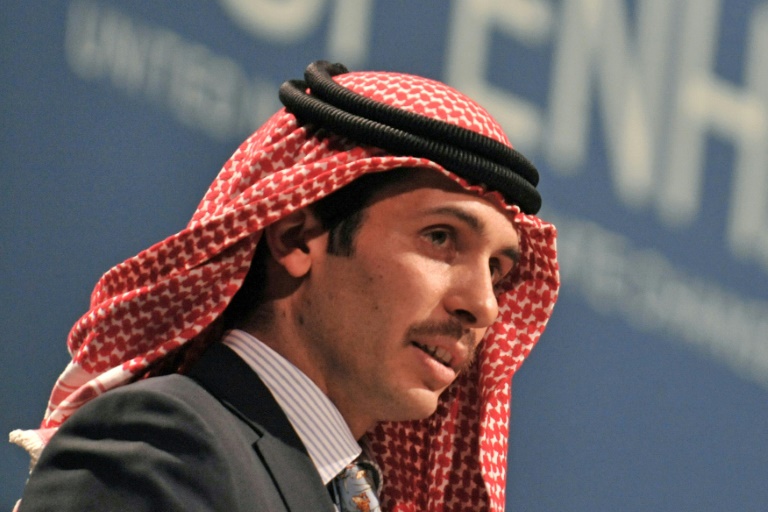
Jordan king says 'delusional' half-brother to remain under house arrest

Jordan’s King Abdullah II said Thursday his half-brother Prince Hamzah, accused of involvement in a coup plot last year, is in a state of “delusion” and will remain under house arrest.

Authorities in Jordan announced in April last year that they had foiled a bid to destabilise the Western-allied kingdom, marking a rare crisis in a nation seen as a pillar of regional stability.

Two former officials were sentenced to 15 years in jail in July after they were found guilty of conspiring to topple the king. Prince Hamzah escaped prosecution but was ordered into house arrest.

The king said in a statement released on Thursday that his half-brother would remain under house arrest, and that further restrictions would be imposed upon him.

“A Royal Decree was issued, approving the recommendation of the council formed in accordance with the Royal Family Law, to restrict the communications, place of residence, and movement of Prince Hamzah,” the statement from the royal palace said.

“We will provide Hamzah with all that he requires to live a comfortable life, but he will not have the space he once abused to offend the nation, its institutions, and his family, nor to undermine Jordan’s stability,” Abdullah II said, in a letter to the Jordanian people.

“I will never allow our country to be held hostage to the whims of someone who has done nothing to serve his country,” he added.

– ‘Stranger than fiction’ –

Hamzah, 42, had in April announced he was “renouncing the title of prince”, a month after a royal court statement said he had apologised to the king for “his actions and offences”.

But Abdullah II said on Thursday that Hamzah had during the past year or so “exhausted all opportunities to restore himself on the right path”.

“The delusion he lives in is not new,” the king said.

“Not long after vowing to renounce his erroneous ways, he goes back on his promises and returns to the path he chose years ago, putting his interests before the nation.”

The king appointed Hamzah as crown prince in 1999, at the request of his late father, King Hussein, but removed him from the post in 2004, later naming his son, Prince Hussein, as next in line to the Hashemite throne.

“Over the past years, I have exercised the highest degrees of tolerance, self-restraint, and patience with my brother… and have been disappointed time and again,” the king added.

Hamzah’s mother, American-born Queen Noor, said on Twitter shortly after the king’s announcement that “some truly bizarre and stranger than fiction stuff (is) circulating right now,” without elaborating.

The two officials convicted last year were former royal court chief Bassem Awadallah and an ex-envoy to neighbouring Saudi Arabia, Sharif Hassan bin Zaid.

Both were reported to have had close ties to Riyadh, and were found guilty of “incitement against the ruling system” and “acts that could threaten society and create sedition”.

Hamzah was not charged in the trial, but the charge sheet said he was “determined to fulfil his personal ambition to rule, in violation of the Hashemite constitution and customs”.

In April last year, in a video message posted online, Hamzah accused Jordan’s rulers of corruption and ineptitude.

On Thursday, the royal palace said they would “not be surprised” if Hamzah were to release other messages.

“I, and our people, will not waste time responding to him,” Abdullah II said. “I am convinced he will continue to spread this false narrative, but we do not have the luxury of time to deal with it.”

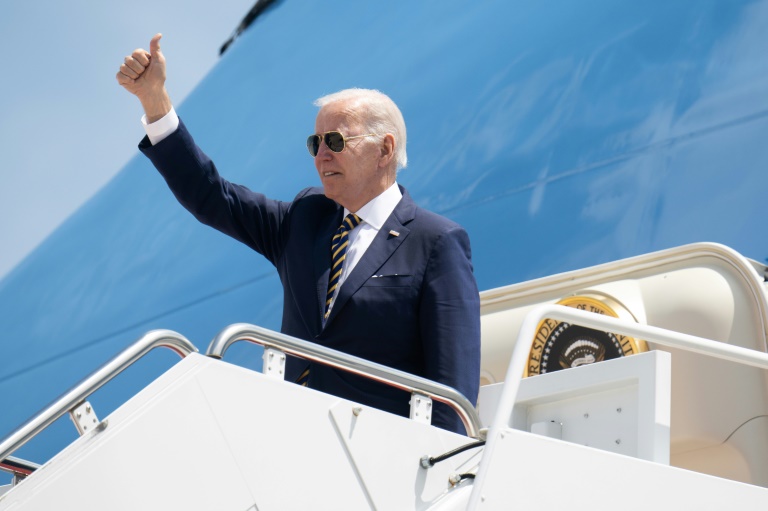
Biden leaves for Asia under Ukraine, N.Korea nuclear shadows

President Joe Biden left Thursday for South Korea and Japan to cement US leadership in Asia at a time when the White House’s attention has been pulled back to Russia and Europe — and amid fears of a North Korean nuclear test during his trip.

Biden wants the trip to build on recent moves accelerating a years-long US pivot to Asia, where rising Chinese commercial and military power is undercutting Washington’s dominance.

But highlighting the competing demands from Europe, Biden met right before his departure with the leaders of Finland and Sweden to celebrate their applications for joining NATO — a seismic development sparked by Russia’s invasion of Ukraine.

Also overshadowing Biden’s first Asia trip as president is fear that the unpredictable leadership in North Korea will choose the moment to grab attention with a test of its nuclear capable missiles or even a test explosion.

Despite a spiralling Covid outbreak, Pyongyang’s “preparations for a nuclear test have been completed and they are only looking for the right time,” South Korean lawmaker Ha Tae-keung said after being briefed by Seoul’s spy agency.

US intelligence also says there is a “genuine possibility” that North Korea’s Kim Jong Un could stage this “provocation” after Biden arrives in Seoul late Friday, a senior US official said.

Biden will head to Japan from South Korea on Sunday. He will hold talks with the leaders of both countries, as well as joining a regional summit of the Quad — a grouping of Australia, India, Japan and the United States — while in Tokyo.

During the first leg, he will visit US and South Korean troops, but will not make the traditional presidential trek to the fortified frontier known as the DMZ between South and North Korea, the White House said.

Hours ahead of Biden arriving, South Korea’s newly elected, strongly pro-US President Yoon Suk-yeol signaled a warm welcome, tweeting “A mountain shows its way to the summit to those who seek it. I am confident the ROK-US alliance that seeks to uphold the values of democracy and human rights shall only elevate in the future.” 

– Taiwan lessons? –

Briefing reporters on Wednesday, National Security Advisor Jake Sullivan said Biden is bound for Asia with “the wind at our back” after successful US leadership in the Western response to President Vladimir Putin’s now almost three-month-long invasion of Ukraine.

The high military, diplomatic and economic cost imposed on Russia is seen in Washington as a cautionary tale for China, given Beijing’s stated ambitions to gain control over democratic-ruled Taiwan, even if that means going to war.

Earlier this month, CIA Director William Burns said Beijing is watching “carefully.”

“I think they’ve been struck by the way in which particularly the transatlantic alliance has come together to impose economic costs on Russia as a result of that aggression,” he said.

Sullivan said the administration wants not so much to confront China on the trip as to use Biden’s diplomacy to show that the West and its Asian partners will not be divided and weakened.

He pointed to cooperation from South Korea and Japan, among others, in the sanctions regime against Russia led by European powers and the United States. He also referred to Britain’s role in the recently created security partnership AUKUS.

This “powerful message” will be “heard in Beijing,” Sullivan said, “but it’s not a negative message and it’s not targeted at any one country.”

– North Korean wild card –

Officials say North Korea’s nuclear weapons program is a wild card on the trip.

Sullivan said it was possible that North Korea, which has defied UN sanctions in conducting an array of nuclear-capable missile tests this year, could use Biden’s visit to sabre rattle.

This could mean “further missile tests, long-range missile tests or a nuclear test, or frankly both, in the days leading into, on or after the president’s trip,” he said.

The Biden administration is prepared to “make both short and longer-term adjustments to our military posture” in response.

Sullivan said the situation was being “closely” coordinated with South Korea and Japan and that he had also spoken about the issue with his Chinese counterpart on Wednesday.

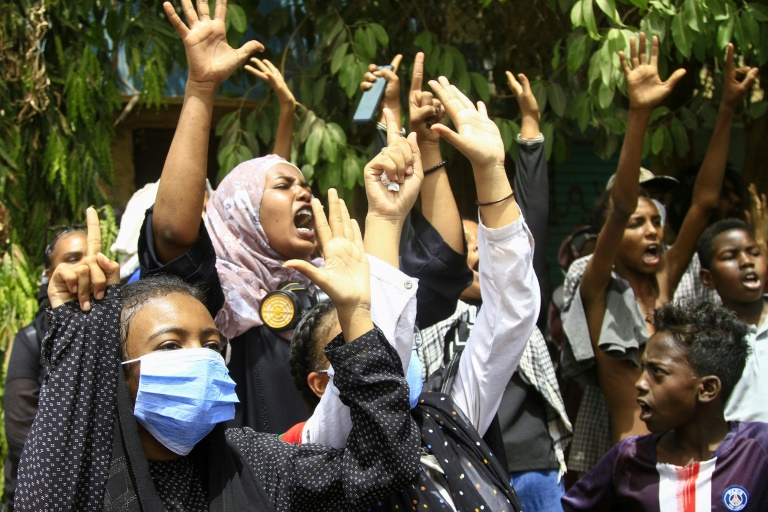
Sudan arrests Communist Party figures as thousands protest coup

Sudanese security forces arrested leading anti-coup figures on Thursday, their party said, during protests by thousands against last year’s military takeover.

“Security forces raided the house of the political secretary of the Sudanese Communist Party Mohammed Mukhtar al-Khatib,” the party said in a statement. 

Another leading party member was also arrested at Khartoum airport, and the two men were taken to an “unknown location,” the party said. 

The arrests came despite a pledge by coup leader General Abdel Fattah al-Burhan to free political detainees to set the stage for talks among Sudanese factions. 

Last month, authorities released several anti-coup civilian leaders arrested in a crackdown. 

The Communist Party members were detained following a trip to Juba, South Sudan where they met with rebel leader Abdel Wahid Nour who has refused to sign a landmark 2020 peace deal with the Sudanese government, according to the party statement. 

They also visited rebel-held areas in South Kordofan controlled by Abdelaziz al-Hilu, who also abstained from the 2020 deal, it said. 

Thousands of protesters on Thursday took to the streets, mainly in Khartoum but also elsewhere, to again call for civilian rule in the latest rally against the October coup led by Burhan, according to AFP correspondents. 

The pro-democracy Central Committee of Sudan Doctors said security forces fired tear gas “in large quantities” to quell the protests.

Regular mass demonstrations have rocked Sudan since the coup which derailed a fragile political transition set in motion after the 2019 ouster of longtime autocrat Omar al-Bashir.

Demonstrations have been met by a violent crackdown which has so far killed at least 95 protesters and wounded hundreds of others, according to medics. 

The United Nations, along with the African Union and regional bloc IGAD, have been pushing to facilitate Sudanese-led talks to resolve the crisis after the northeast African country’s latest coup.

UN special representative Volker Perthes in late March said the country was heading towards “an economic and security collapse” unless its civilian-led transition was restored. 

Burhan threatened to expel Perthes for  alleged “interference” in the country’s affairs.

Close Bitnami banner
Bitnami